Disney says Fox acquisition will close on March 20

More than a year after the deal was first announced, it looks like Disney’s acquisition of 21st Century Fox is about to close.

Disney announced today that the deal is “expected to become effective at 12:02 a.m. Eastern Time on March 20, 2019,” suggesting that it has obtained the final approval needed, specifically from regulators in Mexico.

Disney had initially agreed to acquire Fox for $52.4 billion, before a counter-offer from Comcast prompted it to increase its bid to $71.3 billion.

The acquisition will see Disney buying Fox’s film and television studios, giving it control of the “Avatar” franchise and the film rights to a number of Marvel characters, including the Fantastic Four, the X-Men and Deadpool. It will allow Disney to double its stake in Hulu, from 30 to 60 percent.

Bringing the two entertainment giants together is also expected to lead to more than 4,000 layoffs.

Meanwhile, Fox News, the Fox broadcast network and other assets that Disney is not buying, are being spun out into a new entity called Fox Corporation.

Only 3 days left to save on TC Sessions: Robotics + AI 2019 tickets

We can’t wait to see all of you at TechCrunch Sessions: Robotics + AI, which takes place April 18 at UC Berkeley’s Zellerbach Hall. That’s still slightly more than a month away, but your opportunity to buy an early-bird ticket — and save $100 — disappears in just three short days. When that day arrives, the admission price goes up to $329. Why spend more than necessary? Go buy your early-bird ticket right now.

This is the first time we’ve rolled AI into the robotic mix, and it makes perfect sense. Our day-long intensive event highlights the top leaders and the most innovative startups in these two converging and rapidly evolving fields. You’ll hear from — and rub elbows with — the most influential makers, researchers, founders and investors in robotics and AI. Here’s a quick sampling of the programming you’ll enjoy.

Investing in robotics is a wild ride, and no one knows that better than Helen Liang, founding and managing partner of FoundersX Ventures, and Andy Wheeler, a general partner at GV (formerly Google Ventures). They’ll grace our stage to share their insight and experience. Liang, who also serves as founding president at Tech for Good, has invested in 20 early-stage robotics and AI startups. Wheeler focuses on bringing early-stage tech to market and has invested in Carbon, Farmer’s Business Network, Abundant Robotics and Orbital Insight.

If you wonder how and when robots will become a part of the construction crew, join Noah Ready-Campbell (Built Robotics) and Saurabh Ladha (Doxel AI) as they discuss whether robots can help us build faster, smarter and for less.

Who doesn’t love an awesome robot demo? Don’t miss Marc Raibert’s presentation, The Best Robots on Four Legs. He’ll demo SpotMini, Boston Dynamic’s latest creation, and talk about what it takes to bring a robotic product to market.

We still have a few surprises up our non-robotic sleeve, so keep checking our event agenda for the latest updates.

We’re expecting more than 1,000 people to attend this immersive event, and if you really want to stand out and connect with dream makers and game changers, consider buying a demo table. The price, $1,500, includes three attendee passes.

You’ll find comradery, connection and opportunity at TechCrunch Sessions: Robotics + AI. And if you buy an early-bird ticket, all that goodness will cost $100 less. You have just three days left to save. Buy your ticket today.

Daily Crunch: Facebook pulls Warren ads criticizing Facebook

The Daily Crunch is TechCrunch’s roundup of our biggest and most important stories. If you’d like to get this delivered to your inbox every day at around 9am Pacific, you can subscribe here.

1. Facebook’s ad team shoots itself in the foot by pulling Elizabeth Warren campaign ads

Facebook’s advertising department pulled Elizabeth Warren campaign ads touting the senator’s proposal to break up big tech. According to Politico, the offending ads were pulled over their use of the Facebook brand in their copy.

The removal appears to be short-lived, but it has given the Warren campaign ammunition for their argument.

2. Marking 30 years of the web, Tim Berners-Lee calls for a joint fight against disinformation

“If we give up on building a better web now, then the web will not have failed us,” said the inventor of the World Wide Web in an open letter. “We will have failed the web.”

3. Google paid $105 million to two executives accused of sexual harassment

The suit, filed by shareholder James Martin, confirms the board of directors approved a $90 million exit package for Andy Rubin “as a goodbye present to him. No mention, of course, was made about the true reason for Rubin’s ‘resignation’ — his egregious sexual harassment while at Google.”

4. Twitter’s new prototype app ‘twttr’ launches today

Initially, the new twttr app will focus on testing new designs for conversations. As the company demonstrated at CES, the app will show a different format for replies, where conversations themselves have a more rounded chat-like shape and are indented so they’re easier to follow.

5. Russia blocks encrypted email provider ProtonMail

The block was ordered by the state Federal Security Service, formerly the KGB, according to a Russian-language blog, which obtained and published the order after the agency accused the company and several other email providers of facilitating bomb threats.

6. Hulu and Spotify launch an even more steeply discounted bundle of $9.99 per month

This effectively lowers the price of Hulu’s ad-supported service to nothing.

7. Amazon reportedly nixes its price parity requirement for third-party sellers in the US

Amazon will stop forbidding third-party merchants who list on its e-commerce platform in the United States from selling the same products on other sites for lower prices, according to Axios.

Uber agrees to pay drivers $20 million to settle independent contractor lawsuit

At a time when the gig economy is under heavy scrutiny around its practices of classifying workers as 1099 independent contractors, IPO-bound Uber has officially settled a six-year-long case regarding this exact topic.

Today, Uber agreed to pay $20 million to settle the class-action lawsuit, brought forth by Douglas O’Connor and Thomas Colopy way back in 2013. This comes after a judge rejected Uber’s offer to settle for $100 million back in 2016.

The suit claimed Uber classified its drivers as contractors to avoid paying them a minimum wage and providing benefits. Since its original filing, the suit was granted class-action status to represent hundreds of thousands of drivers in California and Massachusetts. That victory for drivers was short-lived when an appeals court ruled Uber’s arbitration agreements were valid and enforceable. That decision reduced the number of drivers in the class to about 13,600.

Those eligible for a payout from the settlement include those who drove for Uber between August 16, 2009, and February 28, 2019, in California or Massachusetts. They must also not be bound by Uber’s arbitration clause.

In addition to the $20 million settlement, Uber has agreed to implement a comprehensive written deactivation policy, a formal appeals process for certain deactivation decisions and quality courses for drivers.

“Uber has changed a lot since 2013. We have made the driver experience even better through improvements like in-app tipping, a redesigned driver app and new rewards programs like Uber Pro,” an Uber spokesperson told TechCrunch. “We’re pleased to reach a settlement on this matter and we’ll continue working hard to improve the quality, security and dignity of independent work.”

But for Shannon Liss-Riordan, the lawyer for the plaintiffs, this is not the end of the issue. While Liss-Riordan said she’s pleased to have reached a settlement, it’s just for a small number of drivers.

“As a result, while we were able to pick up the pieces and achieve this substantial settlement for the drivers not covered by arbitration clauses, other drivers would need to pursue their claims in individual arbitration if they wanted to attempt to recover anything on their claims,” she said in a statement to TechCrunch.

Meanwhile, she’s actively pursuing other cases against gig economy companies that classify their workers as independent contractors. 

“We continue to have cases pending against Amazon, GrubHub, Lyft, DoorDash, Postmates, Handy and many others that are exploiting their workers through this business model,” she said. “Because of arbitration clauses, we are fighting many battles to overcome arbitration, and at the same time, we are also pursuing mass arbitrations against many of these companies.”

The case is O’Connor v. Uber, 13-cv-03826 in the U.S. District Court for the Northern District of California (San Francisco).

Harvard-MIT initiative grants $750K to projects looking to keep tech accountable

Artificial intelligence, or what passes for it, can be found in practically every major tech company and, increasingly, in government programs. A joint Harvard-MIT program just unloaded $750,000 on projects looking to keep such AI developments well understood and well reported.

The Ethics and Governance in AI Initiative is a combination research program and grant fund operated by MIT’s Media Lab and Harvard’s Berkman-Klein Center. The small projects selected by the initiative are, generally speaking, aimed at using technology to keep people informed, or informing people about technology.

AI is an enabler of both good and ill in the world of news and information gathering, as the initiative’s director, Tim Hwang, said in a news release:

“On one hand, the technology offers a tremendous opportunity to improve the way we work — including helping journalists find key information buried in mountains of public records. Yet we are also seeing a range of negative consequences as AI becomes intertwined with the spread of misinformation and disinformation online.”

These grants are not the first the initiative has given out, but they are the first in response to an open call for ideas, Hwang noted.

The largest sum of the bunch, a $150,000 grant, went to MuckRock Foundation’s project Sidekick, which uses machine learning tools to help journalists scour thousands of pages of documents for interesting data. This is critical in a day and age when government and corporate records are so voluminous (for example, millions of emails leaked or revealed via FOIA) that it is basically impossible for a reporter or even team to analyze them without help.

Along the same lines is Legal Robot, which was awarded $100,000 for its plan to mass-request government contracts, then extract and organize the information within. This makes a lot of sense: People I’ve talked to in this sector have told me that the problem isn’t a lack of data but a surfeit of it, and poorly kept at that. Cleaning up messy data is going to be one of the first tasks any investigator or auditor of government systems will want to do.

Tattle is a project aiming to combat disinformation and false news spreading on WhatsApp, which, as we’ve seen, has been a major vector for it. It plans to use its $100,000 to establish channels for sourcing data from users, because, of course, much of WhatsApp is encrypted. Connecting this data with existing fact-checking efforts could help understand and mitigate harmful information going viral.

The Rochester Institute of Technology will be using its grant (also $100,000) to look into detecting manipulated video, both designing its own techniques and evaluating existing ones. Close inspection of the media will render a confidence score that can be displayed via a browser extension.

Other grants are going to AI-focused reporting work by The Seattle Times and by newsrooms in Latin America, and to workshops training local media in reporting AI and how it affects their communities.

To be clear, the initiative isn’t investing in these projects — just funding them with a handful of stipulations, Hwang explained to TechCrunch over email.

“Generally, our approach is to give grantees the freedom to experiment and run with the support that we give them,” he wrote. “We do not take any ownership stake but the products of these grants are released under open licenses to ensure the widest possible distribution to the public.”

He characterized the initiative’s grants as a way to pick up the slack that larger companies are leaving behind as they focus on consumer-first applications like virtual assistants.

“It’s naive to believe that the big corporate leaders in AI will ensure that these technologies are being leveraged in the public interest,” wrong Hwang. “Philanthropic funding has an important role to play in filling in the gaps and supporting initiatives that envision the possibilities for AI outside the for-profit context.”

You can read more about the initiative and its grantees here.

It’s time to disrupt nuclear weapons

Beatrice Fihn
Contributor

Beatrice Fihn is the executive director of the International Campaign to Abolish Nuclear Weapons and the winner of the 2017 Nobel Peace Prize.

“Atomic bombs are primarily a means for the ruthless annihilation of cities.”

Those are the words of Leo Szilard, one of the scientists who pushed for the development of nuclear weapons. He wrote them as part of a petition signed by dozens of other scientists who had worked on the Manhattan Project pleading with President Harry Truman not to use the nuclear bomb on Japan.

Mere months after its introduction in 1945, the architects of today’s nuclear world feared the implications of the technology they had created.

Nearly 75 years later it’s time again to ask technologists, innovators, entrepreneurs and academics: will you be party to the ‘ruthless annihilation of cities’? Will you expend your talents in the service of nuclear weapons? Will you use technology to create or to destroy?

Our moment of choice

Humanity is at another turning point.

A new nuclear arms race has begun in earnest with the US and Russia leading the way; tearing up the promise of lasting peace in favor of a new Cold War. Russia’s latest weapon is built to destroy entire coast lines with a radioactive tsunami. The US is building new nuclear weapons that are ‘more likely to be used’.

Meanwhile, North Korea appears to again be building its nascent nuclear weapons program. And India and Pakistan stand on the verge of open nuclear conflict, which climate modeling shows could lead to a global famine killing upwards of 2 billion people.

An Indian student wearing a mask poses with her hands painted with a slogans for peace during a rally to mark Hiroshima Day, in Mumbai on August 6, 2018. (PUNIT PARANJPE/AFP/Getty Images)

How do we stop this march toward oblivion?

The Treaty on the Prohibition of Nuclear Weapons has created an opening — a chance to radically change course with the power of international law and shifting norms. The nuclear ban treaty will become international law once 50 nations have ratified it. We are already at 22.

The financial world is also recognizing the risk, with some of the world’s biggest pension funds divesting from nuclear weapons. But there is something even more powerful than the almighty dollar; human capital.

“It took innovation, technological disruption, and ingenuity to create the nuclear dawn. We will need those same forces in greater measure to bring about a nuclear dusk.”

The nuclear weapons industrial complex relies on the most talented scientists, engineers, physicists and technologists to build this deadly arsenal. As more of that talent moves into the tech sector, defense contractors and the Pentagon is seeking to work with major technology companies and disruptive startups, as well as continue their work with universities.

Without those talented technologists, there would be no new nuclear arms race. It’s time to divest human capital from nuclear weapons.

A mistake to end humanity?

Just over one year ago Hawaiians took cover and frantically Googled, “What to do during a nuclear attack”. Days later many Japanese mobile phone users also received a false alert for an inbound nuclear missile.

The combination of human error and technological flaws these incidents exposed makes accidental nuclear attacks an inevitability if we don’t move to end nuclear weapons before they end us.

The development of new machine learning technologies, autonomous weapons systems, cyber threats and social media manipulation are already destabilizing the global political order and potentially increasing the risk of a nuclear cataclysm. That is why it’s vital that the technology community collectively commits to using their skills and knowledge to protect us from nuclear eradication by joining the effort for global nuclear abolition.

A mock “killer robot” is pictured in central London on April 23, 2013 during the launching of the Campaign to Stop “Killer Robots,” which calls for the ban of lethal robot weapons that would be able to select and attack targets without any human intervention. The Campaign to Stop Killer Robots calls for a pre-emptive and comprehensive ban on the development, production, and use of fully autonomous weapons. (Photo: CARL COURT/AFP/Getty Images)

We need to stop this foolish nuclear escalation in its tracks. Our commitment must be to a nuclear weapons-free world, by disrupting the trajectory we are currently heading on. Business as usual will likely end in nuclear war.

It took innovation, technological disruption, and ingenuity to create the nuclear dawn. We will need those same forces in greater measure to bring about a nuclear dusk — the complete disarmament of nuclear-armed states and safeguards against future proliferation.

The belief that we can keep doing what we have done for seven decades for another seven decades is naive. It relies on a fanciful, misplaced faith in the illogical idea of deterrence. We are told simultaneously that nuclear weapons keep the world safe, by never being used. They bestow power, but only make certain states powerful.

This fallacy has been exposed by this moment in time. Thirty years after the end of the Cold War, nuclear weapons have proliferated. Key treaties have been torn up or are under threat. And even more states are threatening to develop nuclear weapons.

So I am putting out a call to you: join us with this necessary disruption; declare that you will not have a hand in our demise; declare that you will use technology for good.

Elizabeth Warren also wants to break up Apple

Massachusetts Senator and 2020 presidential candidate Elizabeth Warren made waves yesterday when she outlined her plan for breaking up big tech companies like Amazon, Google and Facebook. Now, The Verge reports Warren also wants to break up Apple. This, of course, makes sense given that Apple falls into the bucket of a platform utility with more than $25 billion in global annual revenues.

Specifically, Warren believes Apple should not be able to both run the Apple App Store and distribute apps in it.

“It’s got to be one or the other,” Warren told The Verge. “Either they run the platform or they play in the store. They don’t get to do both at the same time.”

Warren’s proposal includes passing legislation to designate companies that offer marketplaces, exchanges or platforms for connecting third-parties with annual global revenues of more than $25 billion as “platform utilities.”

“These companies would be prohibited from owning both the platform utility and any participants on that platform,” Warren wrote on Medium yesterday. “Platform utilities would be required to meet a standard of fair, reasonable, and nondiscriminatory dealing with users. Platform utilities would not be allowed to transfer or share data with third parties.”

That would mean Amazon, for example, would not be able to sell its Amazon Basics line of products on its marketplace. Same goes for Apple, under Warren’s proposal.

“If you run a platform where others come to sell, then you don’t get to sell your own items on the platform because you have two comparative advantages,” Warren said. “One, you’ve sucked up information about every buyer and every seller before you’ve made a decision about what you’re going to sell. And second, you have the capacity — because you run the platform — to prefer your product over anyone else’s product. It gives an enormous comparative advantage to the platform.”

In a comment to TechCrunch, a spokesperson for Warren confirmed that Apple is indeed covered by her policy.

“They are above $25 billion in revenue and so they would have to structurally separate – choosing between, for example, running the App Store or offering their own apps,” the spokesperson said.

My little robot dude

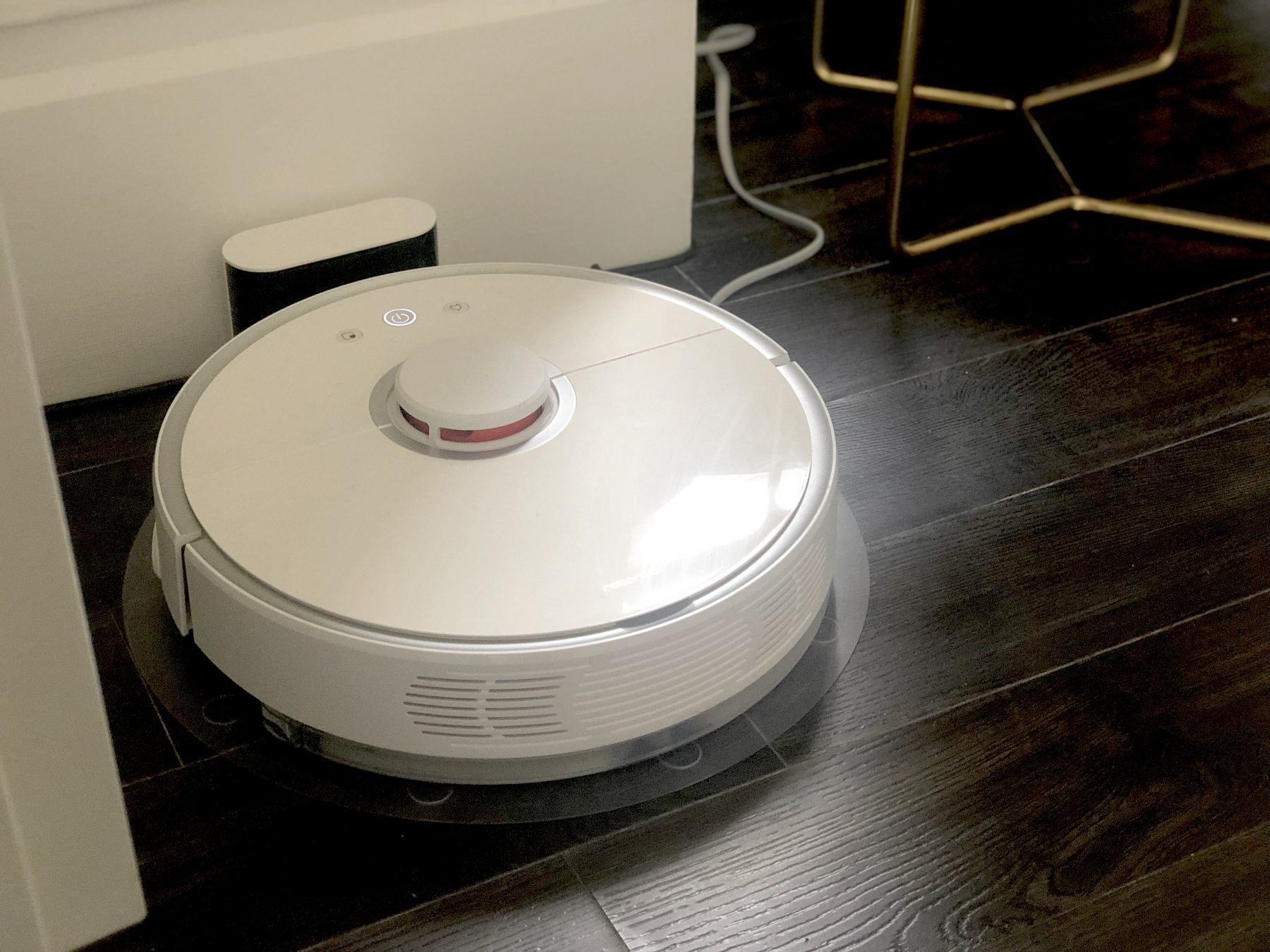
It was only a matter of time before I let a robot enter my apartment and run wild. Roomba’s have been around since 2002, so it’s somewhat odd that it took me so long to get on board the robot vacuum train. But, alas, I’ve been testing the Roborock S5, a combo vacuum and mop, in my apartment for the last few weeks.

TL;DR: I love him. We’ve only been together for a little while but I’ve grown to care for him, and I worry about him when he goes on a rug that’s just a bit too shaggy for his liking. I remember coming home one day and he was nowhere to be found. He wasn’t at his little docking station, which is where I last saw him. So, naturally, horror quickly set in. I feared my little robot dude had gone rogue and was hiding behind a corner, waiting to make his move to kick off the house robot revolt.

Turns out, he was just trying to be helpful by putting himself to work while I was gone. Before I left for the day, I had asked him to vacuum while I was home, but he ran out of battery (I didn’t fully charge him before his first job) and had to recharge.

Once he got enough juice, he went back to work but got stuck on the bathroom rug. He looked so helpless, just sitting there — immobile and only able to say “error.” I wondered how long he had been stuck there like that. I felt empathy for my little robot dude. This is why I don’t leave him home alone anymore while he’s on the job.

The Roborock S5 features 13 sensors to ensure it doesn’t fall off cliffs, hit walls and all of that fun stuff. It also comes with intelligent mapping and smart carpet identification. But, I suppose some rugs are just no match for my little robot dude.

A map of where my little robot dude went to work

Through the app, you can set specific zones for the robot to clean or avoid. When it senses it’s low on battery, Roborock S5 automatically returns to its docking charger.

My main qualm is around the mopping. The mop itself works great, but my little robot dude created some anxiety for me. It required a bit too much in-app customization for me to ensure he wouldn’t try to mop my rugs.

I had a moment where I thought to myself, “You know, it’d probably be faster for me to just mop the floors myself than keep fiddling with this app.” But maybe that’s because it was my first time using the mopping functionality. For future mopping sessions, I can set and save no-go zone and barriers.

There are a bunch of other technical features that I’m not going to go into here, but my takeaway is that it knows where it is in my apartment and works quite well. It currently retails for $546.99 on Amazon, while Roomba’s retail from $548 to $1K+ on Amazon. Roborock is backed by Xiaomi, along with other investors.

Why Warriors’ Andre Iguodala joined African unicorn Jumia’s board of directors

Andre Iguodala, a key member of the Golden State Warriors basketball team, is no stranger to the tech industry. He’s invested in Tristan Walker’s Walker & Company, which has since been acquired by Procter & Gamble, electric scooter startup Lime and many others. Now, he’s joined the board of directors over at Jumia, an African e-commerce startup that became the continent’s first unicorn back in 2016.

“For me, it’s really important because I have a lot of roots in Africa with my father being from Nigeria,” Iguodala told TechCrunch over the phone this week. “I’m proud of that and willing to do a lot of things with a company that’s on the forefront of the e-commerce space as a whole.”

This is not Iguodala’s first time serving on a startup’s board of directors, but it’s the only one he’s currently serving on. Iguodala previously served on the board of Twice, an online clothing resale store, which eventually sold to eBay. At Jumia, Iguodala is on the compensation committee, where he looks at hiring, and how to attract talent and ensure Africans continue to have a place at the table. It’s worth noting that Jumia co-CEOs Sacha Poignonnec and Jeremy Hodara are not African.

“We’re having conversations about diversity and making sure the African culture is in the company, and Sacha [CEO Sacha Poignonnec] is doing a great job with that,” Iguodala said. “I want to make sure we’re hiring from within and making sure the people we’re affecting and helping are involved with the company as far as hires go.”

Within Africa’s tech scene, there’s an ongoing conversation about the role of Westerners, expats and repats.

“That’s definitely something that’s been on my radar,” Iguodala told me. He pointed to how Africa has a wealth of natural resources, including petroleum, natural gas, gold, diamonds and more.

“Everyone is about growth and where they align themselves financially,” he said. “You can do it morally the right way.”

Iguodala says he’s also helped brainstorm new business opportunities for Jumia. For example, Iguodala said he suggested to Poignonnec that the startup expands into brick and mortar. Given the trend in America where e-commerce companies establish themselves online and then open brick and mortar locations (e.g. Amazon), Iguodala suggested that as a possibility for Jumia.

Down the road, Iguodala envisions exploring additional opportunities in Africa’s tech scene, but that it’s “not something I’m trying to rush.” He has a couple of trips to Africa planned for this summer, but his main focus right now is on Jumia.

“I feel really strongly about it especially because I have roots there,” Iguodala said. “I’m trying to incorporate the roots of Africa within the company and continue to expand and get people on the platform. There’s so much room for growth — not just for the company but for the continent.”

Did Sam Altman make YC better or worse?

Y Combinator revealed yesterday that its president, Sam Altman, is stepping down from his role to become the accelerator program’s chairman. This change, said YC, will allow Altman to “spend more time focusing on OpenAI,” the San Francisco-based nonprofit that was cofounded by Altman and Elon Musk three years ago to get ahead of the risks posed by artificial intelligence.

The timing may not be so coincidental. Two weeks ago, Musk separated from OpenAI, whose operations Musk and Altman have funded, along with Reid Hoffman, Peter Thiel, YC cofounder Jessica Livingston, and Stripe’s former CTO Greg Brockman, who is today the CTO of OpenAI . Musk cited disagreements about the company’s development as reason to “part ways on good terms.” A source tells us now that Altman actually intends to become CEO of the organization, though asked about this directly yesterday, Altman said he was too busy to discuss his immediate plans.

Either way, Altman’s newest move begs a question that industry watchers are likely to be asking for some time, and that is whether Altman – – who was part of the first YC startup class in 2005, began working part-time as a YC partner in 2011, and was made the head of the organization five years ago — made YC better or worse during his tenure at the top.

Certainly, it is much changed. When Altman was handed the reins, YC had just graduated 67 startups, all of them from the U.S. It was a record number at the time, but Altman has since more than tripled the number of startups that YC will process in one batch, with YC set to present 205 startups to investors over two days across two stages in San Francisco two weeks from now.

Those numbers merely hint at Altman’s ambition. In the past two years, YC has launched Startup School, a free 10-week online program; the Series A program, which coaches seed-stage alums on how to nab follow-on funding; the YC Growth program, a 10-week dinner series that it characterizes as a kind of grad school program; Work at a Startup, a platform that connects engineers with YC companies; and YC China, a standalone program that will be run out of Beijing once it gets up and going.

Even with a network that has 4,000 alumni and 1,900 companies, Altman has long said that he thinks YC can do even more. “Part of our model is to make the cost of mistakes really low, and then make a lot of mistakes,” he said at TechCrunch Disrupt in 2017. “We’ll fund a lot of people doing a lot of things that sound really dumb, and most of the time they will be. And some of the time, it will seem like a bad idea and be jaw-droppingly brilliant. The very best startup ideas are at the intersection of the Venn diagram of, ‘sounds like a bad idea,’ ‘is in fact a good idea.’”

Some worry that Altman may have taken YC to unsustainable extremes, encouraging too many people with wobbly ideas to forsake safer, more conventional options for a chance to become the next Brian Chesky, and encouraging them, specifically, to come to the Bay Area for its accelerator program, despite overcrowding and soaring costs.

Others wonder if startups might eventually revolt against YC’s terms, which see it investing $150,000 in exchange for 7 percent of each company — a stake that it can maintain throughout the company’s life it it so chooses, per its pact with its founders.

While the halo effect of YC is real, giving away so big a piece of one’s company for so little funding vexes some founders later.

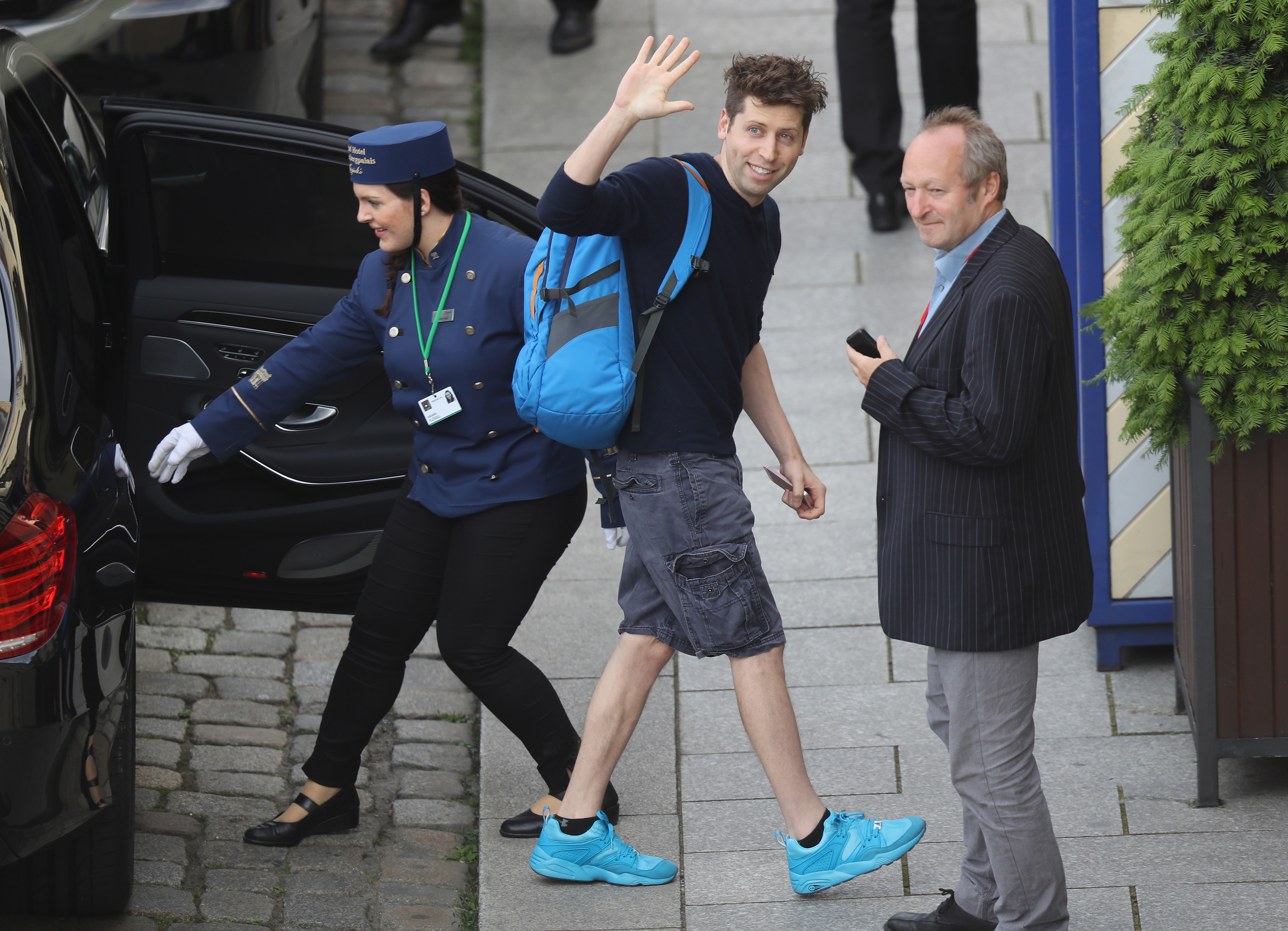
DRESDEN, GERMANY – JUNE 09: Sam Altman, President of Y Combinator, arrives at the Hotel Taschenbergpalais Kempinski Dresden for the 2016 Bilderberg Group conference on June 9, 2016 in Dresden, Germany. The Taschenbergpalais is hosting the 2016 Bilderberg Group gathering that will bring together 130 leading international players from politics, industry, finance, academia and media to discuss globally-relevant issues from today until June 12. A wide spectrum of groups have announced protests to be held nearby. Critics charge the secretive nature of the Bilderberg Group annual meetings is undemocratic. (Photo by Sean Gallup/Getty Images)

VCs — many of whom have a love-hate relationship with the powerful accelerator  — have also whispered at times about possible conflicts of interest owing to Hydrazine Capital, a venture fund that Altman formed before being appointed as head of YC, with “significant investment” from Peter Thiel, as described in a 2017 New Yorker article about Altman.

Still, even people who might be tempted to take Altman down a notch say he has done a phenomenal job of running Y Combinator, including by turning the outfit into a global brand, creating a constant stream of new products, and by overseeing the development of infrastructure and software that has allowed the company to continue to scale for the foreseeable future.

Altman also diversified the types of founders that YC admits (though it could do better); 15 percent of the founders to pass through the accelerator last summer were women. And whereas the program was once dominated by consumer startups, it now graduates business-to-business software and services startups, healthcare startups, blockchain startups, real estate, govtech and fintech startups, among others.

Equally important, Altman — a masterful networker who isn’t known for being a terribly warm boss — ensured that everyone at the partner level at Y Combinator enjoys the same economics. It’s a surprisingly rare structure in venture capital, where it’s more often the case that a small group of investors is accruing most of the financial rewards based on how long they’ve been involved with an outfit or their specific contributions.

Indeed, Altman’s obvious drive will make it all the more interesting to see what he does with OpenAI, which just two weeks ago said it had developed an AI system that can create fake news so authentic looking that it decided not to release the full research to the public so it can better weigh its ramifications.

In the meantime, one guesses that YC, where Altman has not been involved operationally for some time, will be fine without him at the helm, including thanks to the continued involvement of Altman and YC founders Livingston and Paul Graham at the board level. More crucially, YC has Michael Seibel, its CEO, who has led the core YC program for the last four-and-a-half years. (Others of its numerous partners have also been with the firm for years.)

As one VC told us yesterday, even with a YC that looks very different than it did five years ago — or perhaps because of it — investors would be “idiots not to pay attention” to the founders it backs. Many of even the most nascent YC startups have begun raising funding at valuations that make it too expensive for angels or some seed-stage firms to participate — and that these founders may later regret when the market downturn inevitably comes.

But for Series A and later-stage investors, there’s still no better avenue to reaching up-and-coming founders. When it comes to curating talent, says this investor, YC “is just too good.”

Small VC funds continue to raise, despite pressure from above

Jason Rowley
Contributor

Jason Rowley is a venture capital and technology reporter for Crunchbase News.

Recently, we bore out with data what has been felt for several years in most U.S. tech scenes: a rising venture market raises funds of all sizes. But it’s a trend that most favors entrenched firms, which raise ever-larger funds to accommodate a shift in the startup life cycle. Private companies are dawdling at the exit door, postponing graduation to public markets because private-market money is cheap and plentiful, for now.

In a time when “blitzscaling” is the business strategy du jour, some high-growth companies raise supergiant nine and 10-figure VC rounds to help them build moats around walled-garden markets they’re trying to build up from both sides, or they’ll die trying.

This is all to point out that, at the high end of the assets-under-management (AUM) spectrum, fund size has ballooned. This nets the biggest size class of VC funds a supermajority of all the capital general partners (GPs) call down from limited partners (LPs). This trend has accelerated in more recent fund vintages.

Small-dollar funds may get less of the overall fundraising pie, but their ranks continue to grow as more fund managers enter the industry. In most cases, sub-$100 million funds aren’t competing for the same institutional capital or sovereign wealth that typically invests in much bigger funds.

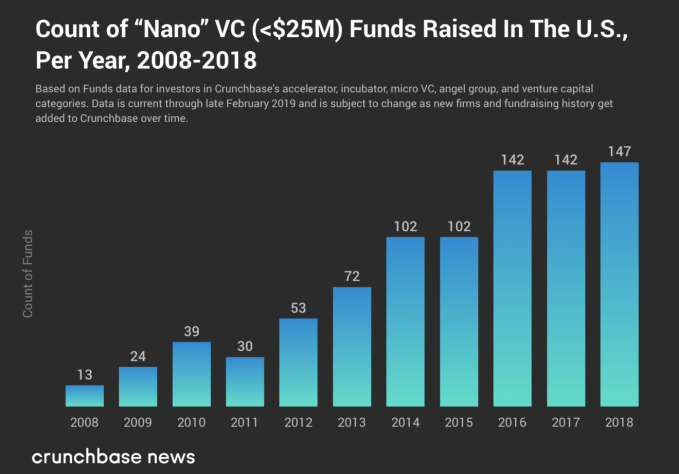
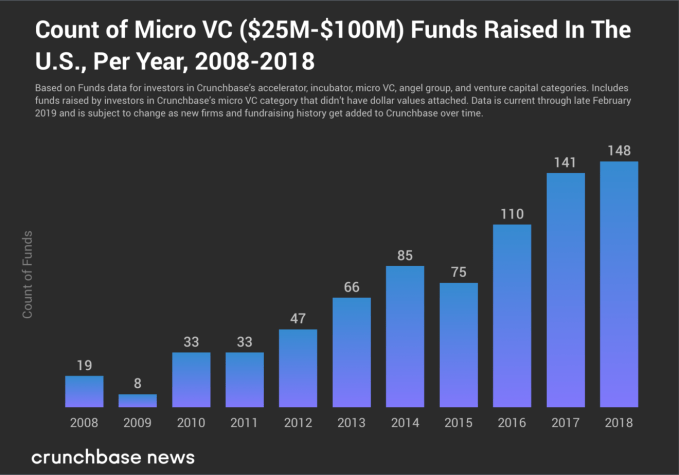
All this said, the upswing in smaller-sum funds continues. U.S.-based general partners raised more sub-$100 million venture funds in 2018 than in any year prior. This is true for two separate size classes: “Micro” and “Nano,” which exhibit similar growth patterns over time.

Featherweight funds soar on market thermals

Let’s tackle the smallest funds first. “Nano VC” is a relatively new entrant into the venture lexicon, and its definition is somewhat in flux. Samir Kaji, a managing director at First Republic Bank who has tracked the phenomenon of small venture funds for years, coined the term in early 2017 to describe new venture funds raising $15 million or less. Recently, we’ve heard the term “Nano VC” used to reference funds under $25 million, a slightly more expansive definition (perhaps accounting for growing seed and early-stage deal size).

Below, we plot the count of new U.S. Nano VC funds raising $25 million or less, by year announced (via press release or regulatory filing), over time. It is based on a snapshot of Crunchbase’s data taken at the time of writing.

Funds at these sizes are mostly focused on pre-seed, seed and Series A deals. Many are led by first-time and other “emerging” fund managers early on in their investing careers, according to follow-up research by Kaji.

The next size class up, Micro VC, includes venture funds in the $25 million to $100 million range. (Quick terminology note: Sometimes, people refer to all funds under $100 million as Micro, without designating Nano funds as a separate size class.) Micro VC funds are also generally focused on investing in seed and early-stage companies, and are also commonly run by new and emerging managers.

Creation of Micro VC funds also picked up over time, as well.

Although it’s a tidy little coincidence that our analysis shows roughly the same number of Micro and Nano VC funds raised in 2018, it’s important to remember that we’re sometimes talking about an order-of-magnitude difference in AUM between the two size classes. Nano and Micro VC funds accounted for roughly 24 and 25 percent, respectively, of the count of new venture firms announced or disclosed (via SEC filing) in 2018. However, Micro VC funds ($25 million-$100 million) raised six percent of the total capital raised by venture firms, while Nano VC funds (<$25 million) accounted for roughly one percent of total LP-GP dollar volume in 2018.

Good reason for caution

Lately, there’s been a lot of talk about declines in the reported number of seed-stage deals, a primary destination for capital raised by smaller funds. However, it’s likely that these declines aren’t as precipitous as the numbers may suggest. There are known delays in seed and early-stage deal reporting, as documented by Crunchbase News (in our quarterly reporting and methodology guide) and others. And, at least anecdotally, it seems like startups are staying in “stealth mode” longer, which only serves to exacerbate the reporting lag.

All this being said, projections (which try to compensate for delays using historical patterns of deal disclosures) from our Q4 2018 report on U.S. and Canadian venture investing found that seed-stage deal volume has declined for the past couple of quarters, while total dollar volume raised by seed-stage companies rose slightly in the final quarter of last year. Projected early-stage deal volume leveled off in the past several quarters, while projected dollar volume grew more than 11 percent quarter over quarter.

In other words, both seed and early-stage deals are getting bigger, on average, at the same time deal volume growth is stagnating in the U.S. and Canada. If this trend continues, funds on the smaller end of the AUM spectrum may face deal-flow pipeline problems in the future, or get priced out of bidding wars for a diminishing supply of equity in fledgling technology ventures with high growth potential.

Transportation Weekly: Waymo unleashes laser bear, Bird spreads its wings, Lyft tightens its belt

Welcome back to Transportation Weekly; I’m your host Kirsten Korosec, senior transportation reporter at TechCrunch . This is the fifth edition of our newsletter and we love the reader feedback. Keep it coming.

Never heard of TechCrunch’s Transportation Weekly? Catch up here, here and here. As I’ve written before, consider this a soft launch. Follow me on Twitter @kirstenkorosec to ensure you see it each week. (An email subscription is coming.) 

This week, we explore the world of light detection and ranging sensors known as LiDAR, young drivers, trouble in Barcelona, autonomous trucks in California, and China among other things.


ONM …

There are OEMs in the automotive world. And here, (wait for it) there are ONMs — original news manufacturers. (Cymbal clash!) This is where investigative reporting, enterprise pieces and analysis on transportation lives.

This week, we’re going to put on our analysis hats as we explore the world of LiDAR, a sensor that measures distance using laser light to generate highly accurate 3D maps of the world around the car. LiDAR is considered by most in the self-driving car industry (Tesla CEO Elon Musk being one exception) a key piece of technology required to safely deploy robotaxis and other autonomous vehicles.

There are A LOT of companies working on LiDAR. Some counts track upwards of 70. For years now, Velodyne has been the primary supplier of LiDAR sensors to companies developing autonomous vehicles. Waymo, back when it was just the Google self-driving project, even used Velodyne LiDAR sensors until 2012.

Dozens of startups have sprung up with Velodyne in its sights. But now Waymo has changed the storyline.

To catch you up: Waymo announced this week that it will start selling its custom LiDAR sensors — the technology that was at the heart of a trade secrets lawsuit last year against Uber.

Waymo’s entry into the market doesn’t necessarily upend other companies’ plans. Waymo is going to sell its short-range LiDAR, called Laser Bear Honeycomb, to companies outside of self-driving cars. It will initially target robotics, security and agricultural technology.

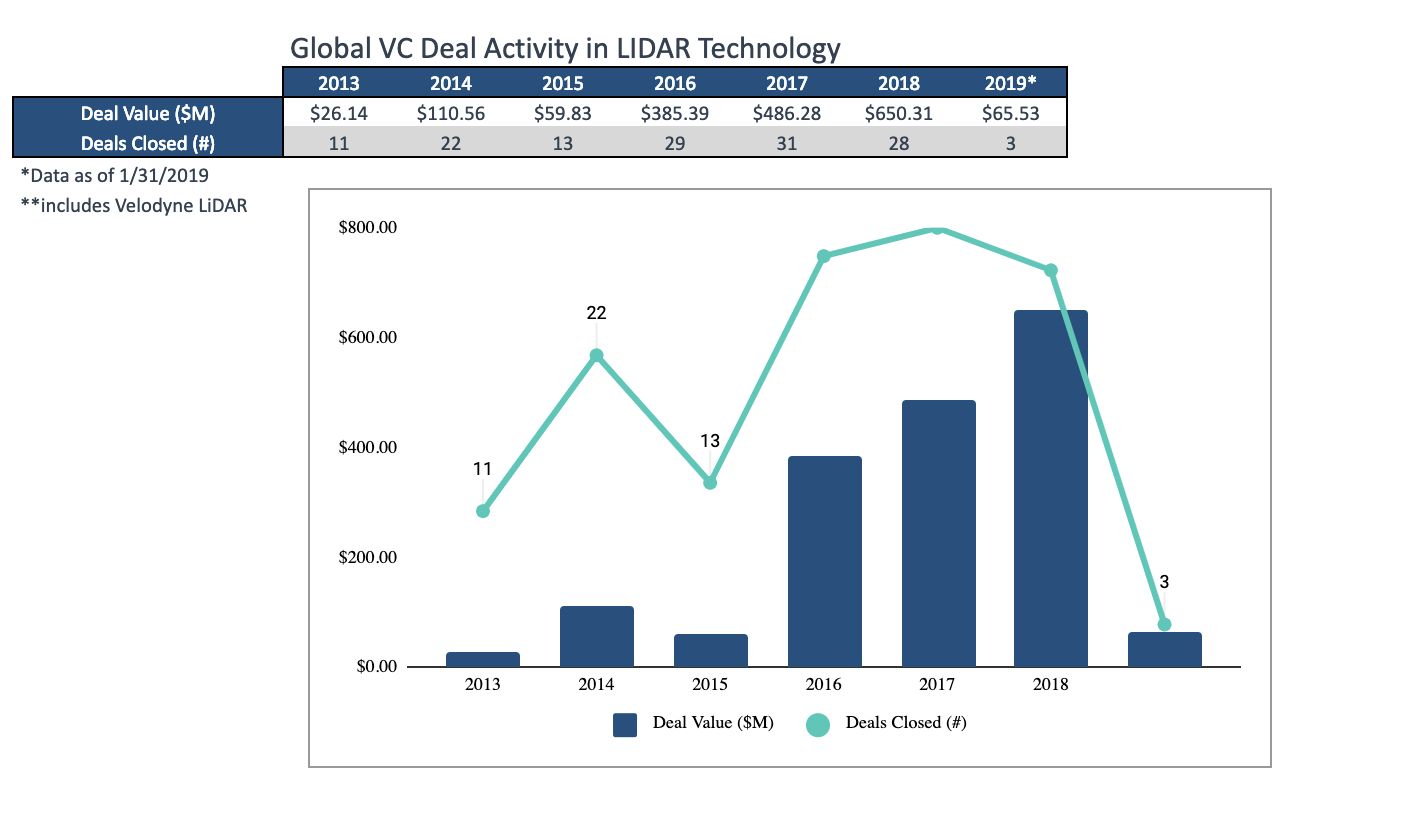
It does put pressure on startups, particularly those with less capital or those targeting the same customer base. Pitchbook ran the numbers for us to determine where the LiDAR industry sits at the moment. There are two stories here: there are a handful of well-capitalized startups, and we may have reached “peak” LiDAR. Last year, there were 28 VC deals in LiDAR technology valued at $650 million. The number of deals was slightly lower than in 2017, but the values jumped by nearly 34 percent.

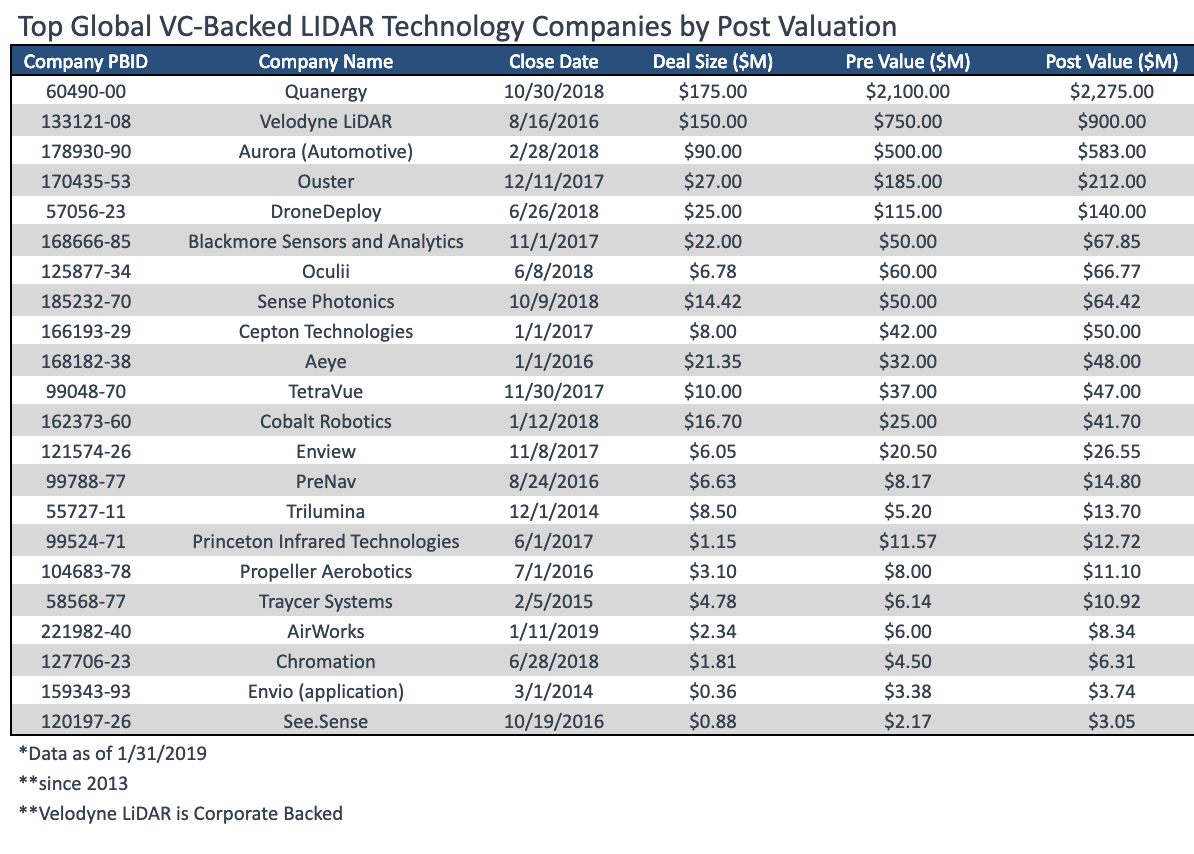
The top global VC-backed LiDAR technology companies (by post valuation) are Quanergy, Velodyne (although mostly corporate backed), Aurora (not self-driving company Aurora Innovation), Ouster, and DroneDeploy. The graphic below, also courtesy of Pitchbook, shows the latest figures as of January 31, 2019.

Dig In

Researchers discovered that two popular car alarm systems were vulnerable to a manipulated server-side API that could be abused to take control of an alarm system’s user account and their vehicle.

The companies — Russian alarm maker Pandora and California-based Viper (or Clifford in the U.K.) — have fixed the  security vulnerabilities that allowed researchers to remotely track, hijack and take control of vehicles with the alarms installed. What does this all mean?

Our in-house security expert and reporter Zack Whittaker digs in and gives us a reality check. Follow him @zackwhittaker.

Since the first widely publicized car hack in 2015 proved hijacking and controlling a car was possible, it’s opened the door to understanding the wider threat to modern vehicles.

Most modern cars have internet connectivity, making their baseline surface area of attack far greater than a car that doesn’t. But the effort that goes into remotely controlling a vehicle is difficult and convoluted, and the attack — often done by chaining together a set of different vulnerabilities — can take weeks or even longer to develop.

Key fob or replay attacks are far more likely than, say, remote attacks over the internet or cell network. A key fob sends an “unlock” signal, a device captures that signal and replays it. By replaying it you can unlock the car.

This latest car hack, featuring flawed third-party car alarms, was far easier to exploit, because the alarm systems added a weakness to the vehicles that weren’t there to begin with. Carmakers, with vast financial and research resources, do a far greater job at securing their vehicles than the small companies that focus on functionality over security. For now, the bigger risk comes from third parties in the automobile space, but the carmakers can’t afford to drop their game, either.


A little bird …

We hear a lot. But we’re not selfish. Let’s share.

blinky-cat-bird

The California Department Motor Vehicles is the government body that regulates autonomous vehicle testing on public roads. The job of enforcement falls to the California Highway Patrol.

In an effort to gauge the need for more robust testing guidelines, the California Highway Patrol decided to hold an event at its headquarters in Sacramento. Eight companies working on autonomous trucking technology were invited. It was supposed to be a large event with local and state politicians in attendance. And it was supposed to validate autonomous trucking as an emerging industry.

There’s just one problem: only one AV trucking company is willing and able to complete this course. We hear that this AV startup actually already went ahead and completed the test course.

The California Highway Patrol has postponed event, for now, presumably until more companies can join.

Got a tip or overheard something in the world of transportation? Email me or send a direct message to @kirstenkorosec.


Deal of the week

Instead of highlighting one giant deal, let’s step back and take a broader view of mobility this week. The upshot: 2018 saw a decline in total investments in the sector and money moved away from ride-hailing and toward two-wheeled transportation.

According to new research from EY, mobility investments in 2018 reached $39.1 billion, down from $55.2 billion in the previous year. (The figures EY provided was through November 2018.)

Ride-hailing companies raised $7.1 billion in 2018, a 73 percent decline from the previous year when $26.7 billion poured into this sector.

Investors, it seems, are shifting their focus to other business models, notably first- and last-mile connectivity. EY estimates $7 billion was invested in two-wheeler mobility companies such as bike-sharing and electric scooters in 2018. The U.S. and China together have contributed to more than 80 percent of overall two-wheeler mobility investments this year alone, according to EY research shared with TechCrunch.

Other deals:


Snapshot

Let’s talk about Generation Z, that group of young people born 1996 to the present, and one startup that is focused on turning that demographic into car owners.

There’s lots of talk and hand-wringing about young people choosing not to get a driver’s license, or not buying a vehicle. In the UK, for instance, about 42 percent of young drivers aged 17 to 24 hold a driver’s license. That’s about 2.7 million people, according to the National Travel Survey 2018 (NTS) of the UK government’s department of transport. An additional 2.2 million have a provisional or learner license. Combined, that amounts to about 13 percent of the car driving population of the UK.

In the UK, evidence suggests that a rise in motoring costs have discouraged young people from learning. And therein lies one opportunity that a new startup called Driver1 is targeting.

Driver 1 is a car subscription service designed exclusively for first car drivers aged 17 to 24. The company has been in stealth mode for about a year and is just now launching.

“The young driver market is being underserved by the car industry,” Driver1 founder Tim Hammond told TechCrunch. “And primarily it’s the financing that’s not available for that age group. It’s also something that’s not really affordable for any of the car subscription models like Fair.com, and it’s not suitable for the OEM subscription services, either financially or from an age perspective for young drivers.”

The company’s own research has found this group wants a newer car for 12 to 15 months.

“The car is the extension of their device,” Hammond said, noting these drivers don’t want the old junkers. “They want their iPhones and they want the car that goes with it.”

The company is working directly with leasing companies — not dealerships — to provide young drivers with 3- to 5-year-old cars that have lost 60 percent or so of their value. Driver1 is targeting under $120 a month for the customer and has a partnership with remarketing company Manheim, which is owned by Cox Automotive.

The startup is focused on the UK for now and has about 600 members who have reserved their cars for purchase. Driver1 is aiming to capture about 10 percent of the 1 million or so young people in the UK who pass their learners permit each year. The company plans to expand to France and other European countries in the fall.


Tiny but mighty micromobility

Bird Rocking Out GIF - Find & Share on GIPHY

Ca-caw, ca-caw! That’s the sound of Bird gearing up to launch Bird Platform in New Zealand, Canada and Latin America in the coming weeks. The platform is part of Bird’s mission to bring its scooters across the world “and empower local entrepreneurs in regions where we weren’t planning to launch to run their own electric-scooter sharing program with Bird’s tech and vehicles,” Bird CEO Travis VanderZanden told TechCrunch.

MRD’s two cents: Bird Platform seems like a way for Bird to make extra cash without having to do any of the work i.e. charging the vehicles, maintaining them and working with city officials to get permits. Smart!

Meanwhile, the dolla dolla bills keep pouring into micromobility. European electric scooter startup Voi Technology raised an additional $30 million in capital. That was on top of a $50 million Series A round just three months ago.

Oh, and because micromobility isn’t just for startups, Volkswagen decided to launch a kind of weird-looking electric scooter in Geneva. Because, why not?

Megan Rose Dickey

One more thing …

Lyft is trimming staff to prepare for its IPO. TechCrunch’s Ingrid Lunden learned that the company has laid off about 50 staff in its bike and scooter division. It appears most of these folks are people who joined the Lyft through its acquisition of  electric bike sharing startup Motivate, a deal that closed about three months ago.


Notable reads

It’s probably not smart to suggest another newsletter, but if you haven’t checked out Michael Dunne’s  The Chinese Are Coming newsletter, you should. Dunne has a unique perspective on what’s happening in China, particularly as it relates to automotive and newer forms of mobility, such as ride-hailing. One interesting nugget from his latest edition: there are more than 20 other new electric vehicle makers in China.

“Most will fall away within the next 3 to 4 years as cash runs out,” Dunne predicts.

Other quotable notables:

Here’s a fun read for the week. TechCrunch’s Lucas Matney wrote about a YC Combinator startup Jetpack Aviation.The startup has launched pre-orders this week for the moonshot of moonshots, the Speeder, a personal vertical take-off and landing vehicle with a svelte concept design that looks straight out of Star Wars or Halo.


Testing and deployments

Spanish ride-hailing firm Cabify is back operating in Barcelona, Spain despite issuing dire warnings that new regulations issued by local government would crush its business and force it to fire thousands of drivers and leave forever. Turns out forever is one month.

The Catalan Generalitat issued a decree last month imposing a wait time of at least 15 minutes between a booking being made and a passenger being picked up. The policy was made to ensure taxis and ride-hailing firms are not competing for the same passengers, following a series of taxi strikes, which included scenes of violence. Our boots on the ground reporter Natasha Lomas has the whole story.

Sure, Barcelona is just one city. But what happened in Barcelona isn’t an isolated incident. The early struggles between conventional taxis and ride-hailing operations might be over, but that doesn’t mean the matter has been settled altogether.

And it’s not likely to go away. Once robotaxis actually hit the road en masse — and yes, that’ll be awhile — these same struggles will pop up again.

Other deployments, or, er, retreats ….

Bike share pioneer Mobike retreats to China

On the autonomous vehicle front:

China Post, the official postal service of China, and delivery and logistics companies Deppon Express, will begin autonomous package delivery services in April. The delivery trucks will operate on autonomous driving technologies developed by FABU Technology, an AI company focused on intelligent driving systems.


On our radar

There is a lot of transportation-related activity this month. Come find me.

SXSW in Austin: TechCrunch will be at SXSW. And there is a lot of mobility action here. Aurora CEO and co-founder Chris Urmson was on stage Saturday morning with Malcolm Gladwell. Mayors from a number of U.S. cities as well as companies like Ford and Mercedes are on the scene. Here’s where I’ll be. 

  • 2 p.m. to 6:30 p.m. (local time) March 9 at the Empire Garage for the Smart Mobility Summit, an annual event put on by Wards Intelligence and C3 Group. The Autonocast, the podcast I co-host with Alex Roy and Ed Niedermeyer, will also be on hand.
  • 9:30 a.m. to 10:30 a.m. (local time) March 12 at the JW Marriott. The Autonocast and founding general partner of Trucks VC, Reilly Brennan, will hold a SXSW podcast panel on automated vehicle terminology and other stuff.
  • 3:30 p.m (local time) over at the Hilton Austin Downtown, I’ll be moderating a panel Re-inventing the Wheel: Own, Rent, Share, Subscribe. Sherrill Kaplan with Zipcar, Amber Quist, with Silvercar and Russell Lemmer with Dealerware will join me on stage.
  • TechCrunch is also hosting a SXSW party from 1 pm to 4 pm Sunday, March 10, 615 Red River St., that will feature musical guest Elderbrook. RSVP here

Nvidia GTC

TechCrunch (including yours truly) will also be at Nvidia’s annual GPU Technology Conference from March 18 to 21 in San Jose.

Self Racing Cars

The annual Self Racing Car event will be held March 23 and March 24 at Thunderhill Raceway near Willows, California.

There is still room for participants to test or demo their autonomous vehicles, drive train innovation, simulation, software, teleoperation, and sensors. Hobbyists are welcome. Sign up to participate or drop them a line at [email protected].

Thanks for reading. There might be content you like or something you hate. Feel free to reach out to me at [email protected] to share those thoughts, opinions or tips. 

Nos vemos la próxima vez.

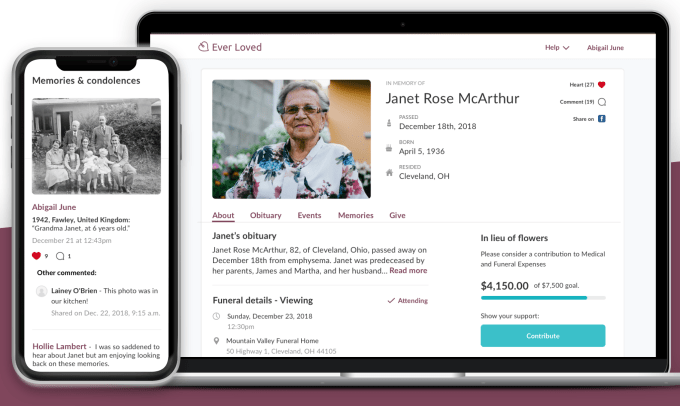
Funerals are tough. Ever Loved helps you pay for them

Alison Johnston didn’t plan to build a startup around death. An early employee at Q&A app Aardvark that was bought by Google, she’d founded tutoring app InstaEDU and sold it to Chegg. She made mass market consumer products. But then, “I had a family member who was diagnosed with terminal cancer and I thought about how she’d be remembered” she recalls. Inventing the next big social app suddenly felt less consequential.

I started looking into the funeral industry and discovered that there were very few resources to support and guide families who had recently experienced a death. It was difficult to understand and compare options and prices (which were also much higher than I ever imagined), and there weren’t good tools to share information and memories with others” Johnston tells me. Bombarded by options and steep costs that average $9,000 per funeral in the US, families in crisis become overwhelmed.

Ever Loved co-founder and CEO Alison Johnston

Johnston’s startup Ever Loved wants to provide peace of mind during the rest-in-peace process. It’s a comparison shopping and review site for funeral homes, cemeteries, caskets, urns, and headstones. It offers price guides and recommends top Amazon funeral products and takes a 5 percent affiliate fee that finances Ever Loved’s free memorial site maker for sharing funeral details plus collecting memories and remembrances. And families can even set up fundraisers to cover their costs or support a charity.

The startup took seed funding from Social Capital and a slew of angel investors about a year ago. Now hundreds of thousands of users are visiting Ever Loved shopping and memorial sites each month. Eventually Ever Loved wants to build its own marketplace of funeral services and products that takes a 10 percent cut of purchases, while also selling commerce software to funeral homes.

“People don’t talk about death. It’s taboo in our society and most people don’t plan ahead at all” Johnston tells me. Rushing to arrange end-of-life logistics is enormously painful, and Johnston believes Ever Loved can eliminate some of that stress. “I wanted to explore areas where fewer people in Silicon Valley had experience and that weren’t just for young urban professionals.”

There’s a big opportunity to modernize this aging industry with a sustainable business model and empathy as an imperative. 86 percent of funeral homes are independent, Johnston says, so few have the resources to build tech products. One of the few big companies in the space, the $7 billion market cap public Service Corporation International, has rolled up funeral homes and cemeteries but has done little to improve pricing transparency or the user experience for families in hardship. Rates and reviews often aren’t available, so customers can end up overpaying for underwhelming selection.

On the startup side, there’s direct competitors like FuneralWise, which is focused on education and forums but lacks robust booking features or a memorial site maker. Funeral360 is Ever Loved’s biggest rival, but Ever Loved’s memorial sites looked better and it had much deeper step-by-step pricing estimates and information on funeral homes.

Johnston wants to use revenue from end-of-life commerce to subsidize Ever Loved’s memorial and fundraiser features so they can stay free or cheap while generating leads and awareness for the marketplace side. But no one has hit scale and truly become wedding site The Knot but for funerals.

I’ve known Johnston since college, and she’s always had impressive foresight for what was about to blow up. From an extremely early gig at Box.com to Q&A and on-demand answers with Aardvark to the explosion of online education with InstaEDU, she’s managed to get out in front of the megatrends. And tech’s destiny to overhaul unsexy businesses is one of the biggest right now.

Amazon has made us expect to see prices and reviews up front, so Ever Loved has gathered rate estimates for about two-thirds of US funeral homes and is pulling in testimonials. You can search for 4-star+ funeral homes nearby and instantly get high-quality results. Meanwhile, funeral homes can sign up to claim their page and add information.

Facebook popularized online event pages. But its heavy-handed prerogatives, generalist tone, and backlash can make it feel like a disrespectful place to host funeral service details. And with people leaving their hometowns, newspapers can’t spread the info properly. Ever Loved is purpose-built for these serious moments, makes managing invites easy, and also offers a place to collect obituaries, photos, and memories.

Rather than having to click through a link to a GoFundMe page that can be a chore, Ever Loved hosts fundraisers right on its memorial sites to maximize donations. That’s crucial since funerals cost more than most people have saved. Ever Loved only charges a processing fee and allows visitors to add an additional tip, so it’s no more expensive that popular fundraising sites.

Next, “the two big things are truly building out booking through our site and expanding into some of the other end of life logistics” Johnstone tells me. Since the funeral is just the start of the post-death process, Ever Loved is well positioned to move into estate planning. “There are literally dozens of things you have to do after someone passes away — contacting the social security office, closing out bank accounts and Facebook profiles…”

Johnston reveals that 44 percent of families say they had arguments while divvying up assets — a process that takes an average of 560 hours aka 3 months of full-time work. As the baby boomer era ends over the next 30 years, $30 trillion in assets are expected to transfer through estates, she claims. Earning a tiny cut of that by giving mourners tools outlining popular ways to divide estates could alleviate disagreements could make Ever Loved quite lucrative.

“When I first started out, I was pretty awkward about telling people about this. We’re death averse, and that hinders us in a lot of ways” Johnston concludes. My own family struggled with this, as an unwillingness to accept mortality kept my grandparents from planning for after they were gone. “But I quickly learned was this was a huge conversation starter rather than a turn off. This is a topic people want to talk about more and educate themselves more on. Tech too often merely makes life and work easier for those who already have it good. Tech that tempers tragedy is a welcome evolution for Silicon Valley.”

The other smartphone business

With the smartphone operating system market sewn up by Google’s Android platform, which has a close to 90% share globally, leaving Apple’s iOS a slender (but lucrative) premium top-slice, a little company called Jolla and its Linux-based Sailfish OS is a rare sight indeed: A self-styled ‘independent alternative’ that’s still somehow in business.

The Finnish startup’s b2b licensing sales pitch is intended to appeal to corporates and governments that want to be able to control their own destiny where device software is concerned.

And in a world increasingly riven with geopolitical tensions that pitch is starting to look rather prescient.

Political uncertainties around trade, high tech espionage risks and data privacy are translating into “opportunities” for the independent platform player — and helping to put wind in Jolla’s sails long after the plucky Sailfish team quit their day jobs for startup life.

Building an alternative to Google Android

Jolla was founded back in 2011 by a band of Nokia staffers who left the company determined to carry on development of mobile Linux as the European tech giant abandoned its own experiments in favor of pivoting to Microsoft’s Windows Phone platform. (Fatally, as it would turn out.)

Nokia exited mobile entirely in 2013, selling the division to Microsoft. It only returned to the smartphone market in 2017, via a brand-licensing arrangement, offering made-in-China handsets running — you guessed it — Google’s Android OS.

If the lesson of the Jolla founders’ former employer is ‘resistance to Google is futile’ they weren’t about to swallow that. The Finns had other ideas.

Indeed, Jolla’s indie vision for Sailfish OS is to support a whole shoal of differently branded, regionally flavored and independently minded (non-Google-led) ecosystems all swimming around in parallel. Though getting there means not just surviving but thriving — and doing so in spite of the market being so thoroughly dominated by the U.S. tech giant.

TechCrunch spoke to Jolla ahead of this year’s Mobile World Congress tradeshow where co-founder and CEO, Sami Pienimäki, was taking meetings on the sidelines. He told us his hope is for Jolla to have a partner booth of its own next year — touting, in truly modest Finnish fashion, an MWC calendar “maybe fuller than ever” with meetings with “all sorts of entities and governmental representatives”.
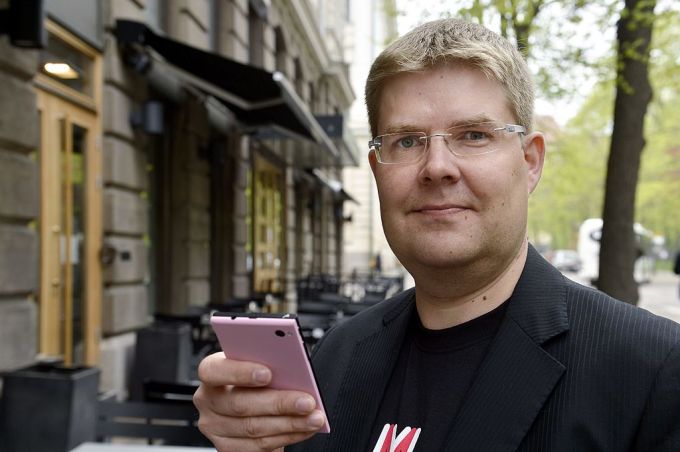
Jolla co-founder, Sami Pienimaki, showing off a Jolla-branded handset in May 2013, back when the company was trying to attack the consumer smartphone space. 
(Photo credit: KIMMO MANTYLA/AFP/Getty Images)

Even a modestly upbeat tone signals major progress here because an alternative smartphone platform licensing business is — to put it equally mildly — an incredibly difficult tech business furrow to plough.

Jolla almost died at the end of 2015 when the company hit a funding crisis. But the plucky Finns kept paddling, jettisoning their early pursuit of consumer hardware (Pienimäki describes attempting to openly compete with Google in the consumer smartphone space as essentially “suicidal” at this point) to narrow their focus to a b2b licensing play.

The early b2b salespitch targeted BRIC markets, with Jolla hitting the road to seek buy in for a platform it said could be moulded to corporate or government needs while still retaining the option of Android app compatibility.

Then in late 2016 signs of a breakthrough: Sailfish gained certification in Russia for government and corporate use.

Its licensing partner in the Russian market was soon touting the ability to go “absolutely Google-free!“.

Buy in from Russia

Since then the platform has gained the backing of Russian telco Rostelecom, which acquired Jolla’s local licensing customer last year (as well as becoming a strategic investor in Jolla itself in March 2018 — “to ensure there is a mutual interest to drive the global Sailfish OS agenda”, as Pienimäki puts it).

Rostelecom is using the brand name ‘Aurora OS‘ for Sailfish in the market which Pienimäki says is “exactly our strategy” — likening it to how Google’s Android has been skinned with different user experiences by major OEMs such as Samsung and Huawei.

“What we offer for our customers is a fully independent, regional licence and a tool chain so that they can develop exactly this kind of solution,” he tells TechCrunch. “We have come to a maturity point together with Rostelecom in the Russia market, and it was natural move plan together, that they will take a local identity and proudly carry forward the Sailfish OS ecosystem development in Russia under their local identity.”

“It’s fully compatible with Sailfish operating system, it’s based on Sailfish OS and it’s our joint interest, of course, to make it fly,” he adds. “So that as we, hopefully, are able to extend this and come out to public with other similar set-ups in different countries those of course — eventually, if they come to such a fruition and maturity — will then likely as well have their own identities but still remain compatible with the global Sailfish OS.”

Jolla says the Russian government plans to switch all circa 8M state officials to the platform by the end of 2021 — under a project expected to cost RUB 160.2 billion (~$2.4BN). (A cut of which will go to Jolla in licensing fees.)

It also says Sailfish-powered smartphones will be “recommended to municipal administrations of various levels,” with the Russian state planning to allocate a further RUB 71.3 billion (~$1.1BN) from the federal budget for that. So there’s scope for deepening the state’s Sailfish uptake.

Russian Post is one early customer for Jolla’s locally licensed Sailfish flavor. Having piloted devices last year, Pienimäki says it’s now moving to a full commercial deployment across the whole organization — which has around 300,000 employees (to give a sense of how many Sailfish powered devices could end up in the hands of state postal workers in Russia).
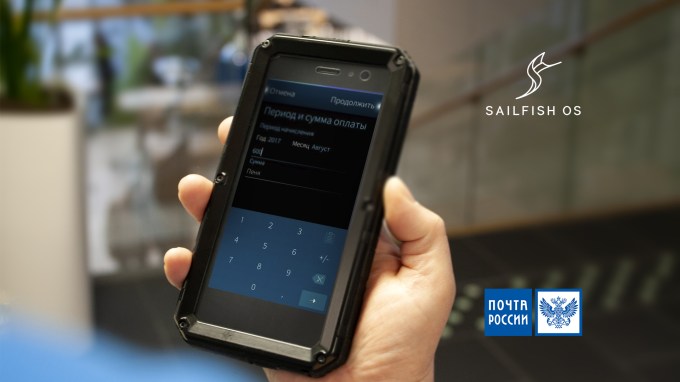
A rugged Sailfish-powered device piloted by Russian post

Jolla is not yet breaking out end users for Sailfish OS per market but Pienimäki says that overall the company is now “clearly above” 100k (and below 500k) devices globally.

That’s still of course a fantastically tiny number if you compare it to the consumer devices market — top ranked Android smartphone maker Samsung sold around 70M handsets in last year’s holiday quarter, for instance — but Jolla is in the b2b OS licensing business, not the handset making business. So it doesn’t need hundreds of millions of Sailfish devices to ship annually to turn a profit.

Scaling a royalty licensing business to hundreds of thousands of users is sums to “good business”, , says Pienimäki, describing Jolla’s business model for Sailfish as “practically a royalty per device”.

“The success we have had in the Russian market has populated us a lot of interesting new opening elsewhere around the world,” he continues. “This experience and all the technology we have built together with Open Mobile Platform [Jolla’s Sailfish licensing partner in Russia which was acquired by Rostelecom] to enable that case — that enables a number of other cases. The deployment plan that Rostelecom has for this is very big. And this is now really happening and we are happy about it.”

Jolla’s “Russia operation” is now beginning “a mass deployment phase”, he adds, predicting it will “quickly ramp up the volume to very sizeable”. So Sailfish is poised to scale.

Step 3… profit?

While Jolla is still yet to turn a full-year profit Pienimäki says several standalone months of 2018 were profitable, and he’s no longer worried whether the business is sustainable — asserting: “We don’t have any more financial obstacles or threats anymore.”

It’s quite the turnaround of fortunes, given Jolla’s near-death experience a few years ago when it almost ran out of money, after failing to close a $10.6M Series C round, and had to let go of half its staff.

It did manage to claw in a little funding at the end of 2015 to keep going, albeit as much leaner fish. But bagging Russia as an early adopter of its ‘independent’ mobile Linux ecosystem looks to have been the key tipping point for Jolla to be able to deliver on the hard-graft ecosystem-building work it’s been doing all along the way. And Pienimäki now expresses easy confidence that profitability will flow “fairly quickly” from here on in.

“It’s not an easy road. It takes time,” he says of the ecosystem-building company Jolla hard-pivoted to at its point of acute financial distress. “The development of this kind of business — it requires patience and negotiation times, and setting up the ecosystem and ecosystem partners. It really requires patience and takes a lot of time. And now we have come to this point where actually there starts to be an ecosystem which will then extend and start to carry its own identity as well.”

In further signs of Jolla’s growing confidence he says it hired more than ten people last year and moved to new and slightly more spacious offices — a reflection of the business expanding.

“It’s looking very good and nice for us,” Pienimäki continues. “Let’s say we are not taking too much pressure, with our investors and board, that what is the day that we are profitable. It’s not so important anymore… It’s clear that that is soon coming — that very day. But at the same time the most important is that the business case behind is proven and it is under aggressive deployment by our customers.”

The main focus for the moment is on supporting deployments to ramp up in Russia, he says, emphasizing: “That’s where we have to focus.” (Literally he says “not screwing up” — and with so much at stake you can see why nailing the Russia case is Jolla’s top priority.)

While the Russian state has been the entity most keen to embrace an alternative (non-U.S.-led) mobile OS — perhaps unsurprisingly — it’s not the only place in the world where Jolla has irons in the fire.

Another licensing partner, Bolivian IT services company Jalasoft, has co-developed a Sailfish-powered smartphone called Accione.

Jalasoft’s ‘liberty’-touting Accione Sailfish smartphone

It slates the handset on its website as being “designed for Latinos by Latinos”. “The digitalization of the economy is inevitable and, if we do not control the foundation of this digitalization, we have no future,” it adds.

Jalasoft founder and CEO Jorge Lopez says the company’s decision to invest effort in kicking the tyres of Jolla’s alternative mobile ecosystem is about gaining control — or seeking “technological libration” as the website blurb puts it.

“With Sailfish OS we have control of the implementation, while with Android it is the opposite,” Lopez tells TechCrunch. “We are working on developing smart buildings and we need a private OS that is not Android or iOS. This is mainly because our product will allow the end user to control the whole building and doing this with Android or iOS a hackable OS will bring concerns on security.”

Lopez says Jalasoft is using Accione as its development platform — “to gather customer feedback and to further develop our solution” — so the project clearly remains in an early phase, and he says that no more devices are likely to be announced this year.

But Jolla can point to more seeds being sewn with the potential, with work, determination and patience, to sprout into another sizeable crop of Sailfish-powered devices down the line.

Complexity in China

Even more ambitiously Jolla is also targeting China, where investment has been taken in to form a local consortium to develop a Chinese Sailfish ecosystem.

Although Pienimäki cautions there’s still much work to be done to bring Sailfish to market in China.

“We completed a major pilot with our licensing customer, Sailfish China Consortium, in 2017-18,” he says, giving an update on progress to date. “The public in market solution is not there yet. That is something that we are working together with the customer — hopefully we can see it later this year on the market. But these things take time. And let’s say that we’ve been somewhat surprised at how complex this kind of decision-making can be.”

“It wasn’t easy in Russia — it took three years of tight collaboration together with our Russian partners to find a way. But somehow it feels that it’s going to take even more in China. And I’m not necessarily talking about calendar time — but complexity,” he adds.

While there’s no guarantee of success for Jolla in China, the potential win is so big given the size of the market that even if they can only carve out a tiny slice, such as a business or corporate sector, it’s still worth going after. And he points to the existence of a couple of native mobile Linux operating systems he reckons could make “very lucrative partners”.

That said, the get-to-market challenge for Jolla in China is clearly distinctly different vs the rest of the world. This is because Android has developed into an independent (i.e. rather than Google-led) ecosystem in China as a result of state restrictions on the Internet and Internet companies. So the question is what could Sailfish offer that forked Android doesn’t already?
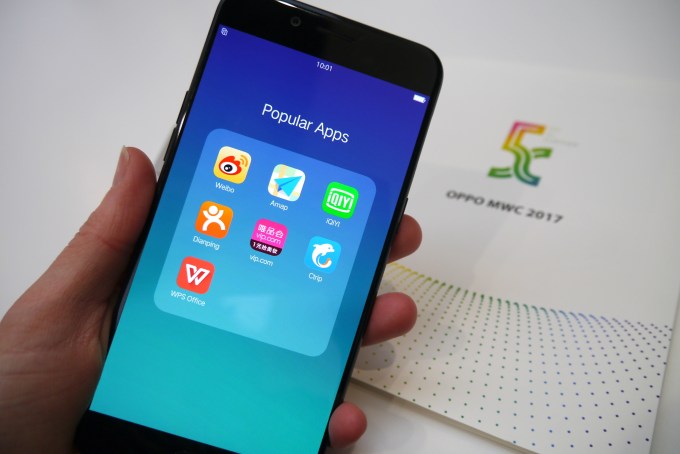
An Oppo Android powered smartphone on show at MWC 2017

Again, Jolla is taking the long view that ultimately there will be appetite — and perhaps also state-led push — for a technology platform bolster against political uncertainty in U.S.-China relations.

“What has happened now, in particular last year, is — because of the open trade war between the nations — many of the technology vendors, and also I would say the Chinese government, has started to gradually tighten their perspective on the fact that ‘hey simply it cannot be a long term strategy to just keep forking Android’. Because in the end of the day it’s somebody else’s asset. So this is something that truly creates us the opportunity,” he suggests.

“Openly competing with the fact that there are very successful Android forks in China, that’s going to be extremely difficult. But — let’s say — tapping into the fact that there are powers in that nation that wish that there would be something else than forking Android, combined with the fact that there is already something homegrown in China which is not forking Android — I think that’s the recipe that can be successful.”

Not all Jolla’s Sailfish bets have paid off, of course. An earlier foray by an Indian licensing partner into the consumer handset market petered out. Albeit, it does reinforce their decision to zero in on government and corporate licensing.

“We got excellent business connections,” says Pienimäki of India, suggesting also that it’s still a ‘watch this space’ for Jolla. The company has a “second move” in train in the market that he’s hopeful to be talking about publicly later this year.

It’s also pitching Sailfish in Africa. And in markets where target customers might not have their own extensive in-house IT capability to plug into Sailfish co-development work Pienimäki says it’s offering a full solution — “a ready made package”, together with partners, including device management, VPN, secure messaging and secure email — which he argues “can be still very lucrative business cases”.

Looking ahead and beyond mobile, Pienimäki suggests the automotive industry could be an interesting target for Sailfish in the future — though not literally plugging the platform into cars; but rather licensing its technologies where appropriate — arguing car makers are also keen to control the tech that’s going into their cars.

“They really want to make sure that they own the cockpit. It’s their property, it’s their brand and they want to own it — and for a reason,” he suggests, pointing to the clutch of major investments from car companies in startups and technologies in recent years.

“This is definitely an interesting area. We are not directly there ourself — and we are not capable to extend ourself there but we are discussing with partners who are in that very business whether they could utilize our technologies there. That would then be more or less like a technology licensing arrangement.”

A trust balancing model

While Jolla looks to be approaching a tipping point as a business, in terms of being able to profit off of licensing an alternative mobile platform, it remains a tiny and some might say inconsequential player on the global mobile stage.

Yet its focus on building and maintaining trusted management and technology architectures also looks timely — again, given how geopolitical spats are intervening to disrupt technology business as usual.

Chinese giant Huawei used an MWC keynote speech last month to reject U.S.-led allegations that its 5G networking technology could be repurposed as a spying tool by the Chinese state. And just this week it opened a cybersecurity transparency center in Brussels, to try to bolster trust in its kit and services — urging industry players to work together on agreeing standards and structures that everyone can trust.

In recent years U.S.-led suspicions attached to Russia have also caused major headaches for security veteran Kaspersky — leading the company to announce its own trust and transparency program and decentralize some of its infrastructure, including by spinning up servers in Europe last year.

Businesses finding ways to maintain and deepen the digital economy in spite of a little — or even a lot — of cross-border mistrust may well prove to be the biggest technology challenge of all moving forward.

Especially as next-gen 5G networks get rolled out — and their touted ‘intelligent connectivity’ reaches out to transform many more types of industries, bringing new risks and regulatory complexity.

The geopolitical problem linked to all this boils down to how to trust increasing complex technologies without any one entity being able to own and control all the pieces. And Jolla’s business looks interesting in light of that because it’s selling the promise of neutral independence to all its customers, wherever they hail from — be it Russia, LatAm, China, Africa or elsewhere — which makes its ability to secure customer trust not just important but vital to its success.

Indeed, you could argue its customers are likely to rank above average on the ‘paranoid’ scale, given their dedicated search for an alternative (non-U.S.-led) mobile OS in the first place.

“It’s one of the number one questions we get,” admits Pienimäki, discussing Jolla’s trust balancing act — aka how it manages and maintains confidence in Sailfish’s independence, even as it takes business backing and code contributions from a state like Russia.

“We tell about our reference case in Russia and people quickly ask ‘hey okay, how can I trust that there is no blackbox inside’,” he continues, adding: “This is exactly the core question and this is exactly the problem we have been able to build a solution for.”

Jolla’s solution sums to one line: “We create a transparent platform and on top of fully transparent platform you can create secure solutions,” as Pienimäki puts it.

“The way it goes is that Jolla with Sailfish OS is always offering the transparent Sailfish operating system core, on source code level, all the time live, available for all the customers. So all the customers constantly, in real-time, have access to our source code. Most of it’s in public open source, and the proprietary parts are also constantly available from our internal infrastructure. For all the customers, at the same time in real-time,” he says, fleshing out how it keeps customers on board with a continually co-developing software platform.

“The contributions we take from these customers are always on source code level only. We don’t take any binary blobs inside our software. We take only source code level contributions which we ourselves authorize, integrate and then we make available for all the customers at the very same moment. So that loopback in a way creates us the transparency.

“So if you want to be suspicion of the contributions of the other guys, so to say, you can always read it on the source code. It’s real-time. Always available for all the customers at the same time. That’s the model we have created.”

“It’s honestly quite a unique model,” he adds. “Nobody is really offering such a co-development model in the operating system business.

“Practically how Android works is that Google, who’s leading the Android development, makes the next release of Android software, then releases it under Android Open Source and then people start to backboard it — so that’s like ‘source, open’ in a way, not ‘open source’.”

Sailfish’s community of users also have real-time access to and visibility of all the contributions — which he dubs “real democracy”.

“People can actually follow it from the code-line all the time,” he argues. “This is really the core of our existence and how we can offer it to Russia and other countries without creating like suspicion elements each side. And that is very important.

“That is the only way we can continue and extend this regional licensing and we can offer it independently from Finland and from our own company.”

With global trade and technology both looking increasingly vulnerable to cross-border mistrust, Jolla’s approach to collaborative transparency may offer something of a model if other businesses and industries find they need to adapt themselves  in order for trade and innovation to keep moving forward in uncertain political times.

Antitrust and privacy uplift

Last but not least there’s regulatory intervention to consider.

A European Commission antitrust decision against Google’s Android platform last year caused headlines around the world when the company was slapped with a $5BN fine.

More importantly for Android rivals Google was also ordered to change its practices — leading to amended licensing terms for the platform in Europe last fall. And Pienimäki says Jolla was a “key contributor” to the Commission case against Android.

European competition commissioner Margrethe Vestager, on April 15, 2015 in Brussels, as the Commission said it would open an antitrust investigation into Google’s Android operating system. (Photo credit: JOHN THYS/AFP/Getty Images)

The new Android licensing terms make it (at least theoretically) possible for new types of less-heavily-Google-flavored Android devices to be developed for Europe. Though there have been complaints the licensing tweaks don’t go far enough to reset Google’s competitive Android advantage.

Asked whether Jolla has seen any positive impacts on its business following the Commission’s antitrust decision, Pienimäki responds positively, recounting how — “one or two weeks after the ruling” — Jolla received an inbound enquiry from a company in France that had felt hamstrung by Google requiring its services to be bundled with Android but was now hoping “to realize a project in a special sector”.

The company, which he isn’t disclosing at this stage, is interested in “using Sailfish and then having selected Android applications running in Sailfish but no connection with the Google services”.

“We’ve been there for five years helping the European Union authorities [to build the case] and explain how difficult it is to create competitive solutions in the smartphone market in general,” he continues. “Be it consumer or be it anything else. That’s definitely important for us and I don’t see this at all limited to the consumer sector. The very same thing has been a problem for corporate clients, for companies who provide specialized mobile device solutions for different kind of corporations and even governments.”

While he couches the Android ruling as a “very important” moment for Jolla’s business last year, he also says he hopes the Commission will intervene further to level the smartphone playing field.

“What I’m after here, and what I would really love to see, is that within the European Union we utilize Linux-based, open platform solution which is made in Europe,” he says. “That’s why we’ve been pushing this [antitrust action]. This is part of that. But in bigger scheme this is very good.”

He is also very happy with Europe’s General Data Protection Regulation (GDPR) — which came into force last May, plugging in a long overdue update to the bloc’s privacy rules with a much beefed up enforcement regime.

GDPR has been good for Jolla’s business, according to Pienimäki, who says interest is flowing its way from customers who now perceive a risk to using Android if customer data flows outside Europe and they cannot guarantee adequate privacy protections are in place.

“Already last spring… we have had plenty of different customer discussions with European companies who are really afraid that ‘hey I cannot offer this solution to my government or to my corporate customer in my country because I cannot guarantee if I use Android that this data doesn’t go outside the European Union’,” he says.

“You can’t indemnify in a way that. And that’s been really good for us as well.”