FTC smacks down robocallers, but the penalties don’t match their heinous crimes

The fight against robocallers is just getting started, and the wheel of justice turns slowly, but the FTC just took down a handful of major operations responsible for billions of unwanted calls, some of them adding additional fraud to the mix. The money coming out of the cases is surprisingly small, however — but there’s a reason for that.

In an announcement yesterday, the FTC said it had taken down four operations: NetDotSolutions, which did all kinds of marketing with a custom mass dialing platform; Higher Goals Marketing, which promised fake debt relief; Pointbreak Media, which threatened to delist companies from Google unless they paid; Veterans of America, AKA Saving Our Soldiers, AKA Act of Valor, whose creator Travis Deloy Peterson deserves a special place in hell for scamming people trying to donate vehicles to vets.

Together they accounted for some two billion calls, which in the context of the five billion made every month may seem to be a drop in the bucket, but at this point even a slight reduction is welcome.

What is less heartening is the scale of the penalties. Although the cases resulted in judgments totaling some 24 million dollars, the actual amount the scammers will end up paying will end up closer to $3-4 million. One scammer whose judgments totaled more than $5 million will be suspended when he pays just $18,332 — and whatever comes from the sale of his shiny new Mercedes.

I talked with an FTC spokesperson about why this is the case. They explained that the judgment amount is essentially a ceiling defined by how much consumer harm was done, but most times the defendants have nowhere near that much available as money or assets. You can only get as much as they have, and sometimes that’s not a lot.

Especially in Florida, they went on, where the Homestead rule means that houses can’t be seized in these proceedings — meaning a robocall scammer based in the state could make 10 million bucks, drop it all on a house, and then declare they have no assets when the FTC or whoever comes knocking. This seems likely to be the case with Mr “I only have 18 grand and a 2017 Mercedes CLS” above, who is indeed a Floridian.

The FTC goes to great lengths to investigate and enumerate a defendant’s assets, but they can’t seize what isn’t there. In the case of a large company like Dish, a massive judgment like last year’s $180 million one may end up being paid in full — but individuals and small, fly-by-night businesses are considerably harder to pin down.

Even so, the agency collects quite a bit of cash to return to affected consumers, which should happen with the money here as well. You won’t see a dime just for getting annoyed by calls, though — you’d need to show that it was one of these companies and that they defrauded you, or attempted to.

More importantly, the people and companies in question are immediately shut down and the people involved forbidden from doing anything like this again. Consumer relief is the FTC’s goal, and if they chose to litigate, the case could be drawn out for years, all while the company and call network continues to operate or develops layers of insulation against the law.

You can read the full release and order documents at the FTC’s site — but be warned it may make you angry to hear about these slimeballs living the high life.

Mattress startup Casper valued at $1.1B with new funding

Direct-to-consumer mattress business Casper has secured a $100 million Series D investment from existing investors Target, NEA, IVP and Norwest Venture Partners.

The fresh infusion of capital values Casper at $1.1 billion, Bloomberg first reported and Casper confirmed.

“We are in the very early chapters of our growth story as demand for Casper products continues to expand across the globe,” Casper chief executive officer and co-founder Philip Krim said in a statement. “Today’s financing accelerates Casper’s vision to become the world’s largest end-to-end sleep company. Our growth will continue to be catalyzed by state-of-the-art sleep products, best-in-class customer experiences, and world-class leadership.”

Casper posted $373 million in net revenue in 2018, according to leaked financials published by The Information this week. In a press release issued today, however, Casper said 2018 revenue topped $400 million. The company, of course, isn’t profitable, with losses reaching $64 million last year, again per The Information. According to Casper’s projections, it will become profitable on an EBITDA basis in 2019 and is expecting revenues of $556 million this year.

Casper has previously raised $240 million in equity funding from celebrity investors Leonardo DiCaprio and 50 Cent, as well as institutional investors, including Lerer Hippeau .

Founded in 2014, the New York business will use the latest investment to expand overseas and open additional brick-and-mortar stores. Competing with other well-funded startups in the business of sleep, like the publicly traded Purple and the VC-backed Leesa Sleep, Casper has taken to physical retail to augment its following. The company opened its first store in New York City in 2018 and has detailed additional plans to open another 200 stores.

An initial public offering is likely the next step for the sleep products retailer, which sells pillows and an $89 sleep-friendly light, in addition to mattresses. Per a recent Reuters report, Casper is in the process of hiring underwriters for its IPO.

How to make sure that your product is accessible to all users

Beth Franssen
Contributor

Beth Franssen is an expert in digital accessibility, WCAG and Section 508 compliance. She helps fintech, retail and payment companies implement digital accessibility strategies for Nexient, a leading provider of 100% US-based Agile software product development.

Every founder wants an eye-catching website or app, but it’s easy to overlook a basic fact: not all your potential visitors will experience your content with their eyes. If you haven’t considered whether a user with differing visual, motor or hearing abilities can easily navigate your software, it’s time to get serious about digital accessibility.

As tempting as it might be to prioritize a stunning visual and mobile experience over an accessible design, accessibility is a legal requirement—not an option—for many businesses.

Just ask high-profile founder Beyoncé Knowles. In January, Beyoncé’s Parkwood Entertainment was hit with a class-action lawsuit that includes “all legally blind individuals in the United States who have attempted to access Beyonce.com.” The lawsuit claims that the site’s lack of visual alternatives make the site inaccessible to blind users like the plaintiff and therefore illegal.

Failing to accommodate people with disabilities not only limits your market (blind people buy concert tickets and merchandise too), it can also bring legal and reputational consequences.

The Americans with Disabilities Act (ADA) requires US businesses that serve the public to provide equal access and accommodations to everyone, whether through a physical building or a digital experience. Just as stores provide ramps as well as stairs, websites need to accommodate people with varying abilities, from movement disorders to visual and auditory impairments. The number of website accessibility lawsuits raised against private companies more than doubled last year. A single plaintiff won $100K in a similar ADA lawsuit in 2017.

While ADA is the enforcing legislation in the United States for the private sector, the Web Content Accessibility Guidelines (WCAG) provide de facto global standards web designers should follow. The guidelines are based on four principles: content must be perceivable, operable, understandable and robust.

If you’re not sure whether your digital content (websites, apps, e-books, etc) is WCAG-compliant, have a certified accessibility consultant conduct an assessment immediately, and contact your legal team should you identify any risks.

However, simple compliance is only the first step. Understanding how accessibility is defined will broaden your understanding of the overall user experience, so you can create better content for all users.

This article is part of Extra Crunch’s exclusive “Startup Law A to Z” series, following previous articles on employment law, customer contracts, intellectual property (IP) and corporate matters. This series is designed to provide founders the information needed to assess legal risks in the areas common to most startups.

Should you identify legal risks facing your startup after reading this or other articles in the series, Extra Crunch resources can help. You can reach out to the Verified Experts of Extra Crunch, who focus on serving companies at your stage, for further guidance in the particular issues at hand.

The Web Content Accessibility Checklist:

  • Perceivable
    • Time-based media
    • Text alternatives
    • Adaptable
    • Distinguishable (Use of color)
  • Operable
    • Keyboard accessible
    • Navigable
    • Input modalities
    • Enough time
    • Seizures and physical reactions
  • Understandable
    • Readable
    • Predictable
    • Input assistance
  • Robust
    • Compatible for various assistive technologies (Links can be programmatically determined)

Perceivable

A website must present content so that users of different abilities can perceive it. That means providing alternatives for any non-text content, like images or music.

For time-based media (audio and video), captions, content descriptions and sign language are acceptable options. 

Digging into Apple’s media transformation

Extra Crunch offers members the opportunity to tune into conference calls led and moderated by the TechCrunch writers you read every day. This week, TechCrunch Editor-in-Chief, Matthew Panzarino, offered his analysis on the major announcements that came out of Apple’s keynote event this past Monday.

Behind a series of new subscription and media products, Apple has set the stage for one of the largest transformations in the company’s history. Matthew touches on all of Apple’s major product initiatives including Apple’s new credit card, its push into original content, its subscription gaming platform, and its subscription news service, which features Extra Crunch as one of the debut publications.

“I don’t think many of the things that Apple announced here, on an individual basis, are earth-shattering. I think it shapes up to be a really solid, nice offering for people with some distinct advantages but at the same time it’s not breaking huge molds here. I think the same thing applies across all of the offerings that they put out there.

I just felt that together, it’s solid but not scintillating and we need to see how they develop, how they launch, and then what they do with these platforms…

…Seems relatively straightforward. However, some of the stuff people have glossed over is very intriguing.”

Matthew goes into more detail on why he didn’t view the announcements as individually earth-shattering, and why he sees compelling opportunities for Apple to position its offerings as a symbiotic ecosystem. He also goes under the hood to discuss some of Apple’s overlooked competitive advantages in media and to paint a picture of how Apple’s new product lines might evolve in the long-term.

For access to the full transcription and the call audio, and for the opportunity to participate in future conference calls, become a member of Extra Crunch. Learn more and try it for free. 

Nuro CEO Dave Ferguson at TC Sessions: Mobility on July 10 in San Jose

Autonomous delivery startup Nuro, fresh with nearly $1 billion in capital from SoftBank, is bursting with ideas — as some recent patent filings (and our recent deep dive into the company) suggest. And we can’t wait to learn more about what Nuro has planned.

It’s only fitting that Nuro co-founder and CEO Dave Ferguson is our first announced guest for TechCrunch’s inaugural TC Sessions: Mobility, a one-day event on July 10, 2019 in San Jose, Calif., that’s centered around the future of mobility and transportation.

Ferguson has been working on robotics and machine learning for nearly two decades and is an early pioneer of self-driving vehicle technology. He led the planning group for Carnegie Mellon University’s team that won the DARPA Urban Grand Challenge in 2007.

Ferguson holds an MS and PhD in robotics from Carnegie Mellon and a bachelor’s in computer science and mathematics from the University of Otago. He went on to become a senior research scientist at Intel and then developed machine learning trading strategies at Two Sigma, an investment firm.

Ferguson, who has been awarded more than 100 patents, eventually headed to Google’s self-driving program, now known as Waymo, serving as the machine learning and computer vision team lead.

TC Sessions: Mobility will present a day of programming with the best and brightest founders, investors and technologists who are determined to inventing a future Henry Ford might never have imagined. TC Sessions: Mobility aims to do more than highlight the next new thing. We’ll dig into the how and why, the cost and impact to cities, people and companies, as well as the numerous challenges that lie along the way, from technological and regulatory to capital and consumer pressures.

Nuro was founded in June 2016 by Ferguson and another former Google engineer, Jiajun Zhu. Nuro completed its first Series A funding round in China just three months later, in a previously unreported deal that gave NetEase founder Ding Lei (aka William Ding) a seat on Nuro’s board.

In February, Nuro hit the big leagues with a whopping $940 million in financing from the SoftBank Vision Fund, capital that will be used to expand its delivery service, add new partners, hire employees and scale up its fleet of self-driving bots. The startup has raised more than $1 billion from partners, including SoftBank, Greylock Partners  and Gaorong Capital.

Nuro’s focus has been developing a self-driving stack and combining it with a custom unmanned vehicle designed for last-mile delivery of local goods and services. The vehicle has two compartments that can fit up to six grocery bags each. Nuro’s aspirations don’t stop there.

A recent patent application details how its R1 self-driving vehicle could carry smaller robots to cross lawns or climb stairs to drop off packages. The company has even taken the step of trademarking the name “Fido” for delivery services.


Early-Bird tickets are now on sale — save $100 on tickets before prices go up.

Students, you can grab your tickets for just $45.

Asus was warned of hacking risks months ago, thanks to leaky passwords

A security researcher warned Asus two months ago that employees were improperly publishing passwords in their GitHub repositories that could be used to access the company’s corporate network.

One password, found in an employee repo on the code sharing, allowed the researcher to access an email account used by internal developers and engineers to share nightly builds of apps, drivers and tools to computer owners. The repo in question was owned by an Asus engineer who left the email account’s passwords publicly exposed for at least a year. The repo has since been wiped clean, though the GitHub account still exists.

“It was a daily release mailbox where automated builds were sent,” said the researcher, who goes by the online handle SchizoDuckie, in a message to TechCrunch. Emails in the mailbox contained the exact internal network path where drivers and files were stored.

The researcher shared several screenshots to validate his findings.

The researcher didn’t test how far the account access could have given him, but warned it could have been easy to pivot onto the network. “All you’d need is send one of those emails with an attachment to any of the recipients for a real nice spearphishing attack,” he said.

The researcher’s findings would not have stopped the hackers who targeted Asus’ software update tool with a backdoor, revealed this week, but reveals a glaring security lapse that could have put the company at risk from similar or other attacks. Security firm Kaspersky warned Asus on January 31 — just a day before the researcher’s own disclosure on February 1 — that hackers had installed a backdoor in the company’s Asus Live Update app. The app was signed with an Asus-issued certificate and hosted on the company’s download servers. More than a million users were pushed the backdoored code, researchers have estimated. Asus confirmed  the attack in a statement and released a patched version.

Through the company’s dedicated security email, the researcher warned Asus of the exposed credentials. Six days later, he could no longer log in to the mailbox and assumed the matter was resolved.

But he found at least two other cases of Asus engineers exposing company passwords on their GitHub pages.

One Asus software architect based in Taiwan — where the company has its headquarters — left a username and password in code on his GitHub page. Another Taiwan-based data engineer also had credentials in his code.

“Companies have no clue what their programmers do with their code on GitHub,” said the researcher.

A day after we alerted Asus to the researcher’s email, the repos containing the credentials were pulled offline and wiped clean. Yet when reached, Asus spokesperson Randall Grilli told TechCrunch that the computer maker was “unable to verify the validity” of the claims in the researcher’s emails. “Asus is actively investigating all systems to remove all known risks from our servers and supporting software, as well as to ensure there are no data leaks,” he added.

Granted, this isn’t an issue limited to Asus. Other companies have been put at risk by exposed and leaked credentials or hardcoded secret keys. Last week, academics found more than 100,000 public repos storing cryptographic keys and other secrets.

Among the most famous examples of exposed credentials was Uber, in which an engineer mistakenly left cloud keys in a GitHub repository, which when discovered and exploited by hackers was used to pilfer data on 57 million users. Uber was later ordered to pay $148 million in a data breach settlement.

But given Asus knew of the issues months ago amid a backdoor threat that affected more than a million users, you would have hoped for a better, more active response.

Ocean drone startup merger spawns Sofar, the DJI of the sea

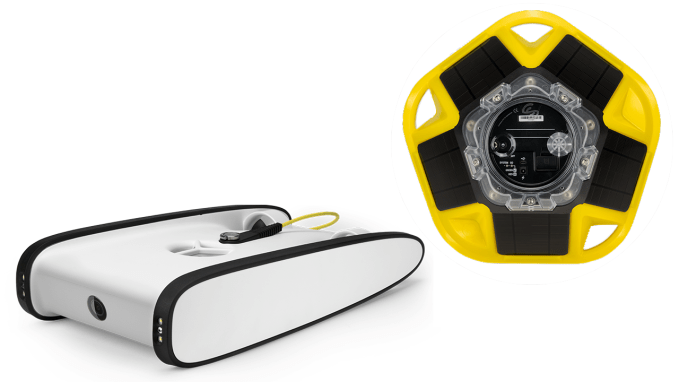
What lies beneath the murky depths? SolarCity co-founder Peter Rive wants to help you and the scientific community find out. He’s just led a $7 million Series A for Sofar Ocean Technologies, a new startup formed from a merger he orchestrated between underwater drone maker OpenROV and sea sensor developer Spoondrift. Together, they’re teaming up their 1080p Trident drone and solar-powered Spotter sensor to let you collect data above and below the surface. They can help you shoot awesome video footage, track waves and weather, spot fishing and diving spots, inspect boats or infrastructure for damage, monitor acquaculture sites or catch smugglers.

Sofar’s Trident drone (left) and Spotter sensor (right)

“Aerial drones give us a different perspective of something we know pretty well. Ocean drones give us a view at something we don’t really know at all,” former Spoondrift and now Sofar CEO Tim Janssen tells me. “The Trident drone was created for field usage by scientists and is now usable by anyone. This is pushing the barrier towards the unknown.”

But while Rive has a soft spot for the ecological potential of DIY ocean exploration, the sea is crowded with competing drones. There are more expensive professional research-focused devices like the Saildrone, DeepTrekker and SeaOtter-2, as well as plenty of consumer-level devices like the $800 Robosea Biki, $1,000 Fathom ONE and $5,000 iBubble. The $1,700 Sofar Trident, which requires a cord to a surface buoy to power its three hours of dive time and two meters per second speed, sits in the middle of the pack, but Sofar co-founder David Lang things Trident can win with simplicity, robustness and durability. The question is whether Sofar can become the DJI of the water, leading the space, or if it will become just another commoditized hardware maker drowning in knock-offs.

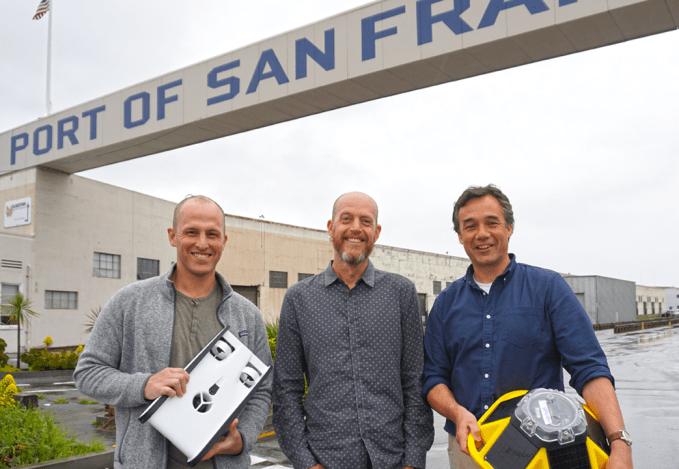
From left: Peter Rive (chairman of Sofar), David Lang (co-founder of OpenROV) and Tim Janssen (co-founder and CEO of Sofar)

Spoondrift launched in 2016 and raised $350,000 to build affordable ocean sensors that can produce climate-tracking data. “These buoys (Spotters) are surprisingly easy to deploy, very light and easy to handle, and can be lowered in the water by hand using a line. As a result, you can deploy them in almost any kind of conditions,” says Dr. Aitana Forcén-Vázquez of MetOcean Solutions.

OpenROV (it stands for Remotely Operated Vehicle) started seven years ago and raised $1.3 million in funding from True Ventures and National Geographic, which was also one of its biggest Trident buyers. “Everyone who has a boat should have an underwater drone for hull inspection. Any dock should have its own weather station with wind and weather sensors,” Sofar’s new chairman Rive declares.

Spotter could unlock data about the ocean at scale

Sofar will need to scale to accomplish Rive’s mission to get enough sensors in the sea to give us more data on the progress of climate change and other ecological issues. “We know very little about our oceans since we have so little data, because putting systems in the ocean is extremely expensive. It can cost millions for sensors and for boats,” he tells me. We gave everyone GPS sensors and cameras and got better maps. The ability to put low-cost sensors on citizens’ rooftops unlocked tons of weather forecasting data. That’s more feasible with Spotter, which costs $4,900 compared to $100,000 for some sea sensors.

Sofar hardware owners do not have to share data back to the startup, but Rive says many customers are eager to. They’ve requested better data portability so they can share with fellow researchers. The startup believes it can find ways to monetize that data in the future, which is partly what attracted the funding from Rive and fellow investors True Ventures and David Sacks’ Craft Ventures. The funding will build up that data business and also help Sofar develop safeguards to make sure its Trident drones don’t go where they shouldn’t. That’s obviously important, given London’s Gatwick airport shutdown due to a trespassing drone.

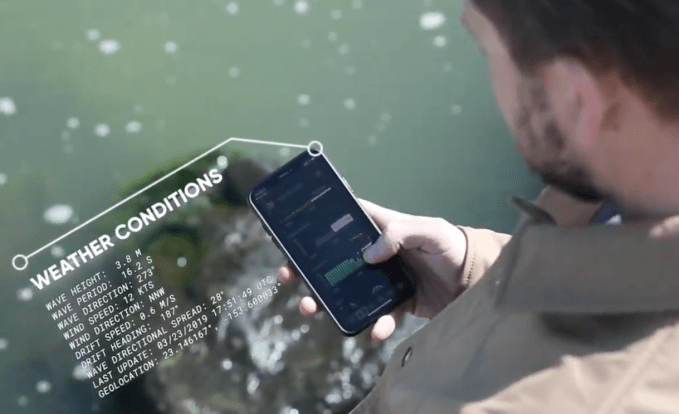
Spotter can relay weather conditions and other climate data to your phone

“The ultimate mission of the company is to connect humanity to the ocean as we’re mostly conservationists at heart,” Rive concludes. “As more commercialization and business opportunities arise, we’ll have to have conversations about whether those are directly benefiting the ocean. It will be important to have our moral compass facing in the right direction to protect the earth.”

Lightspeed co-founder Chris Schaepe is out over college admissions scandal; a sports blogger exposed his son’s involvement

Silicon Valley venture capitalist Chris Schaepe is out at Lightspeed Venture Partners, after telling his partners about having hired Rick Singer, the Newport Beach, Calif., businessman in the middle of the college bribery scandal.

According to Axios, which broke the news of Schaepe’s departure, Schaepe insists he didn’t knowingly participate in any bribery schemes, but that he had hired Singer to help with his son’s college admissions process, paying a hefty $630,000 via cash and stock donations to an alleged nonprofit that Singer ran.

Specifically, Schaepe’s son, who’d been the manager for his high school’s basketball and football teams, aspired to attend the University of Texas. In an effort to guarantee a slot, Singer made an introduction to the school’s men’s tennis coach, Michael Center, who then helped secure a letter of intent for Schaepe’s son to attend the school.

The idea, suggests Axios, was to make it look like Schaepe’s son would manage the tennis team, though later, as a student, he managed the university’s college basketball team.

Sources say that soon after the admissions scandal broke, Schaepe hired a lawyer, then told Lightspeed, which soon after made the decision to part ways with him. But seemingly, a sports blogger named Brooks Melchior also played a role in the news and why it burst into public view today.

As Melchior noted in a post on Monday, Center, the tennis coach, was heard on an FBI wiretap confirming to Singer that he had received nearly $100,000 “in exchange for which [he] would designate a student as a recruit to the (UT) tennis team, thereby facilitating his admission to (UT).”

Center has since been fired, but Melchior noted that the parent in the case involving Center was neither named nor indicted, so Melchior did some digging. What he found: a screenshot of Singer’s now-deleted website that happened to feature a picture of Schaepe’s son, front and center, alongside NBA star Kevin Durant and a testimonial, reading:

Hey Rick,

I wanted to thank you personally for all your help in getting me into the University of Texas in Austin, and for helping me secure a managers position with the UT basketball team. And, can you believe it, here is a picture of me with basketball star, Kevin Durrant at the UT Summer Basketball Camp.

A source says the testimonial was manufactured from whole cloth by Singer after Schaepe’s wife sent him the photo. Nevertheless, it very publicly ties Schaepe to Singer.

Schaepe’s son, who began attending the school in 2015, is set to graduate next year, according to his LinkedIn profile. It further states that he is currently working at an automotive marketing company in Austin, where the school is based.

Asked for comment, Lightspeed sent us the following statement:

Lightspeed Partner Chris Schaepe recently made the firm aware of a personal matter. We determined to separate from Chris to ensure this matter does not interfere with firm operations. The matter does not involve the firm, its personnel or its portfolio companies.

Courtesy of Axios, Schaepe’s spokesperson has also released a statement, though some will presumably question it given the sum of money paid by Schaepe to Singer:

We are deeply disturbed that the person we had trusted to guide us through the college application process was engaged in inappropriate acts. Like countless other families, we believed that his services and his foundation were all above board, and we are shocked by his deception.

Schaepe, who co-founded Lightspeed 19 years ago, has already been removed from the firm’s website.

He’d spent the previous nine years as an investor with Weiss, Peck & Greer Venture Partners, leaving with colleagues Barry Eggers, Ravi Mhatre and Peter Nieh to form Lightspeed.

Eggers and Mhatre talked about the firm’s earliest days during a small industry event hosted in 2017 by this editor. Schaepe has meanwhile long operated in the background, orchestrating major wins for Lightspeed and, in the process, winning accolades, including from peer and sometimes rival Bill Gurley. As Gurley told Bloomberg in a 2017 story about Lightspeed’s rise, “Schaepe has been crushing it for years—without recognition.”

Given the scope of Singer’s network, Schaepe may not be the last investor caught up in the admissions scandal. According to an earlier Bloomberg report, Singer ran an apparently legitimate college counseling firm, the Edge College & Career Network, before about 2011. Some of his other past clients include John Doerr and Ted Schlein of Kleiner Perkins.

As with Schaepe, investor Bill McGlashan also lost a plum role, one at the top of the investment firm TPG, after it was revealed two weeks ago that he participated in schemes orchestrated by Singer on behalf of his own son.

Update: This post originally posited that Melchior’s post, which TC discovered earlier and independently today, may have played a role in these developments at Lightspeed; sources however insist that Schaepe and Lightspeed talked initially weeks ago about his involvement with Singer and next steps. Lightspeed has not responded to questions regarding an exact timeline of events.

The most important developments in Crypto 2.0

Something strange is happening in the world of cryptocurrencies. To the investor, the speculator, or the casual observer, the industry is in the midst of the “crypto winter” marked by dwindling public interest and stagnant prices after last year’s massive plunges.

But to the engineer or the founder, it is an industry which has never been so feverish; a sector erupting and overflowing with new initiatives, new developments, and new technologies. What follows is a brief, oversimplified summary of what I view as the most important current initiatives.

Outsiders ask, quite reasonably: will anyone outside of a tiny minority ever really care? But “ever” is a long time, and blockchainers are still fairly flush with funding from the boom, and — more importantly — armed with two of the most potent weapons known to humankind: technical brilliance and true belief.

This self-driving AI faced off against a champion racer (kind of)

Developments in the self-driving car world can sometimes be a bit dry: a million miles without an accident, a 10 percent increase in pedestrian detection range, and so on. But this research has both an interesting idea behind it and a surprisingly hands-on method of testing: pitting the vehicle against a real racing driver on a course.

To set expectations here, this isn’t some stunt, it’s actually warranted given the nature of the research, and it’s not like they were trading positions, jockeying for entry lines, and generally rubbing bumpers. They went separately, and the researcher, whom I contacted, politely declined to provide the actual lap times. This is science, people. Please!

The question which Nathan Spielberg and his colleagues at Stanford were interested in answering has to do with an autonomous vehicle operating under extreme conditions. The simple fact is that a huge proportion of the miles driven by these systems are at normal speeds, in good conditions. And most obstacle encounters are similarly ordinary.

If the worst should happen and a car needs to exceed these ordinary bounds of handling — specifically friction limits — can it be trusted to do so? And how would you build an AI agent that can do so?

The researchers’ paper, published today in the journal Science Robotics, begins with the assumption that a physics-based model just isn’t adequate for the job. These are computer models that simulate the car’s motion in terms of weight, speed, road surface, and other conditions. But they are necessarily simplified and their assumptions are of the type to produce increasingly inaccurate results as values exceed ordinary limits.

Imagine if such a simulator simplified each wheel to a point or line when during a slide it is highly important which side of the tire is experiencing the most friction. Such detailed simulations are beyond the ability of current hardware to do quickly or accurately enough. But the results of such simulations can be summarized into an input and output, and that data can be fed into a neural network — one that turns out to be remarkably good at taking turns.

The simulation provides the basics of how a car of this make and weight should move when it is going at speed X and needs to turn at angle Y — obviously it’s more complicated than that, but you get the idea. It’s fairly basic. The model then consults its training, but is also informed by the real-world results, which may perhaps differ from theory.

So the car goes into a turn knowing that, theoretically, it should have to move the wheel this much to the left, then this much more at this point, and so on. But the sensors in the car report that despite this, the car is drifting a bit off the intended line — and this input is taken into account, causing the agent to turn the wheel a bit more, or less, or whatever the case may be.

And where does the racing driver come into it, you ask? Well, the researchers needed to compare the car’s performance with a human driver who knows from experience how to control a car at its friction limits, and that’s pretty much the definition of a racer. If your tires aren’t hot, you’re probably going too slow.

The team had the racer (a “champion amateur race car driver,” as they put it) drive around the Thunderhill Raceway Park in California, then sent Shelley — their modified, self-driving 2009 Audi TTS — around as well, ten times each. And it wasn’t a relaxing Sunday ramble. As the paper reads:

Both the automated vehicle and human participant attempted to complete the course in the minimum amount of time. This consisted of driving at accelerations nearing 0.95g while tracking a minimum time racing trajectory at the the physical limits of tire adhesion. At this combined level of longitudinal and lateral acceleration, the vehicle was able to approach speeds of 95 miles per hour (mph) on portions of the track.

Even under these extreme driving conditions, the controller was able to consistently track the racing line with the mean path tracking error below 40 cm everywhere on the track.

In other words, while pulling a G and hitting 95, the self-driving Audi was never more than a foot and a half off its ideal racing line. The human driver had much wider variation, but this is by no means considered an error — they were changing the line for their own reasons.

“We focused on a segment of the track with a variety of turns that provided the comparison we needed and allowed us to gather more data sets,” wrote Spielberg in an email to TechCrunch. “We have done full lap comparisons and the same trends hold. Shelley has an advantage of consistency while the human drivers have the advantage of changing their line as the car changes, something we are currently implementing.”

Shelley showed far lower variation in its times than the racer, but the racer also posted considerably lower times on several laps. The averages for the segments evaluated were about comparable, with a slight edge going to the human.

This is pretty impressive considering the simplicity of the self-driving model. It had very little real-world knowledge going into its systems, mostly the results of a simulation giving it an approximate idea of how it ought to be handling moment by moment. And its feedback was very limited — it didn’t have access to all the advanced telemetry that self-driving systems often use to flesh out the scene.

The conclusion is that this type of approach, with a relatively simple model controlling the car beyond ordinary handling conditions, is promising. It would need to be tweaked for each surface and setup — obviously a rear-wheel-drive car on a dirt road would be different than front-wheel on tarmac. How best to create and test such models is a matter for future investigation, though the team seemed confident it was a mere engineering challenge.

The experiment was undertaken in order to pursue the still-distant goal of self-driving cars being superior to humans on all driving tasks. The results from these early tests are promising, but there’s still a long way to go before an AV can take on a pro head-to-head. But I look forward to the occasion.

Magic Leap’s headset will go on sale at a few AT&T stores next week

While Magic Leap’s first augmented reality headset launch wasn’t the earth-shattering drop they had sort of pitched the world on, the company is about to see a major corporate partnership push their device in front of more consumers’ eyes. Next week, the $2,295 headset will be going up for sale at flagship AT&T stores in Boston, San Francisco and Chicago.

Having more channels of distribution than direct-to-consumer orders from the web is obviously good for Magic Leap, and distills some sort of bleeding-edge innovation marketing ethos for AT&T, but as the Magic Leap One appears to be exiting the dev kit phase of its life cycle, what relatively normal person out there is really going to be interested in buying this thing?

I think it’s fair to say that there isn’t a great reason to own one of these as a consumer, aside from just exploring a new piece of technology that’s pretty interesting.

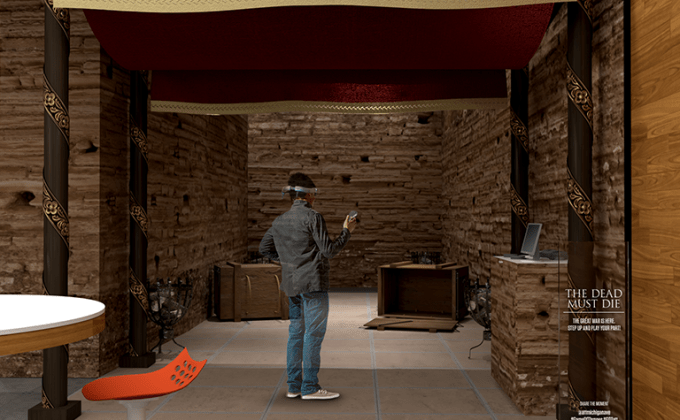
VR platforms from Oculus and Valve have built up far more robust storefronts, but that’s going to be a big challenge for Magic Leap to do on its own. The company has showcased plenty of brief demos, but there isn’t a huge amount of gaming content for the device, and Magic Leap doesn’t seem to have realized any substantial new consumer hits. At AT&T’s in-store demos, Magic Leap will be showing off a Game of Thrones experience they’ve built with HBO.

The enterprise market is perhaps the more realistic sell, and while it would seem like most customers would know whether they want something like this, having the opportunity to take it for a whirl, albeit with some GoT content, might be the added push they need.

Twitch launches a four-person ‘Squad Stream’ feature to help creators get discovered

Twitch today announced the launch of a new feature called “Squad Stream,” which offers a way for up to four creators to go live and stream together within one window. The feature will allow creators to grow their communities by teaming up with others, as it gives streamers increased exposure by playing to a wider range of fans.

Helping viewers find new people to follow is an area of ongoing interest for the company which has, in the past, faced accusations from smaller streamers who complain they just broadcast to empty channels and have trouble growing a fan base.

To address this, Twitch today offers a feature called Raids, which allows creators to work together to grow their respective communities by driving traffic to each other’s channels. Squad Streams is an expansion on that as it’s actually allowing streamers to broadcast together. That is, instead of redirecting traffic, they’re sharing it.

To participate in Squad Streams, creators can join up with one another from their dashboard by way of a new Squad Stream widget. They can then start their own squad by inviting others to join in, or they can accept an invite to join another squad. By default, any channels the streamers follow, have friended or are on the same team can send out Squad Stream invites. But this can be changed in the settings.

During streams, viewers get to watch all creators in one window, which gives them different views on the action, Twitch explains.

During streaming, fans can chat or cheer whoever is in the primary slot — an option they get to choose by clicking on any of the channels’ video player to make in the larger screen. Ads will play only in the primary slot, and viewership also only gets counted when a channel is in the primary slot, Twitch also notes.

Unfortunately, the feature is launching first to Partners — the top-level streamers who are less in need of growing their community than smaller streamers. Twitch says this rollout strategy is due to the need for video quality options (transcodes) on the Squad Streams — an option Partners have on their streams by default. (Affiliates only receive them as they’re available, with priority access.)

The video quality options allows the Squad Stream feature to display the video in the non-primary slots in a lower-quality mode, like 480p. Most streamers, however, stream in 720p or above, which is why the options are needed for Squad Stream to work, says Twitch.

The company says its plan is to roll out Squad Stream to Affiliates and all other streamers in time, as it expands its transcodes capacity.

Squad Stream’s launch is being kicked off by a schedule of four-person streams over the weeks ahead. (A full schedule is here.) Users can also look for the Squad Stream tag on the main Twitch page to find these streams.

Facebook is finally banning white supremacy that goes by other names

Facebook is abandoning a longstanding policy of allowing white supremacy to flourish on its platform under the guise of terms like white nationalism and white separatism.

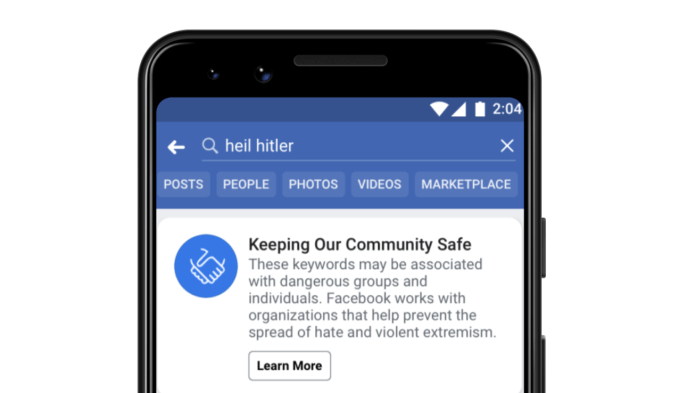
Motherboard first reported that the decision came out of a conversation on platform moderation out of Facebook’s Content Standards Forum yesterday and will go into effect next week. Under the new rules, detailed in a Facebook Newsroom post, the company will direct users who search for content related to white supremacy to Life After Hate, an organization that helps individuals leave violent far-right groups.

As Facebook explains in its Newsroom post:

… Over the past three months our conversations with members of civil society and academics who are experts in race relations around the world have confirmed that white nationalism and separatism cannot be meaningfully separated from white supremacy and organized hate groups. Our own review of hate figures and organizations – as defined by our Dangerous Individuals & Organizations policy – further revealed the overlap between white nationalism and separatism and white supremacy. Going forward, while people will still be able to demonstrate pride in their ethnic heritage, we will not tolerate praise or support for white nationalism and separatism.

As we wrote last year, Facebook foolishly took the distinction between white nationalism and white supremacy seriously even while most white supremacists don’t. For hate groups, hiding behind the guise of a slightly more benign term like white nationalism is a very useful way to obscure the fact that many of these superficially disparate ideologies have nearly total ideological overlap.

Last year, leaked internal documents revealed that Facebook policy formally distinguished between white supremacy and white nationalism. That misguided policy failed to see that white nationalism, white pride and white separatism are guises for and generally synonymous with the ideals set forth by white supremacy, a dangerous form of race-motivated radicalism that inspires hate-based violence.

Image via Facebook

Six months ago, Facebook indicated that it would review its policy on white nationalism and white separatism after speaking with civil rights groups that decried the company’s stance toward forms of white supremacy on its platform.

“Color Of Change alerted Facebook years ago to the growing dangers of white nationalists on its platform, and today, we are glad to see the company’s leadership take this critical step forward in updating its policy on white nationalism,” Color Of Change President Rashad Robinson said of the upcoming policy shift.

“… Facebook’s update should move Twitter, YouTube, and Amazon to act urgently to stem the growth of white nationalist ideologies, which find space on platforms to spread the violent ideas and rhetoric that inspired the tragic attacks witnessed in Charlottesville, Pittsburgh, and now Christchurch.”

TechCrunch has reached out to Facebook for more details about the new policy on white nationalism and white separatism and will be following the story as it develops.

Facebook’s shift toward taking white supremacism in its many forms more seriously is a big deal. Online platforms, particularly those driven by algorithms, play a big role in funneling users toward suggested content. As long as white supremacy, under the guise of white nationalism or white separatism, has a place on major tech platforms, users expressing even passing interest in white supremacist themes and language will be funneled deeper down the radicalization rabbit hole.

Facebook has taken major strides in the last year, taking action against white supremacy-adjacent groups like the Proud Boys, which relied on the platform for international recruitment. Still, it wasn’t very long ago that a simple search of a ubiquitous white supremacist term like “1488” would steer Facebook users toward a wealth of memes, posts and groups promoting violence against Jews and the black community, normalizing race-based hate in the process.

Proxy raises $13.6M to unlock anything with Bluetooth identity

You know how kings used to have trumpeters heralding their arrival wherever they went? Proxy wants to do that with Bluetooth. The startup lets you instantly unlock office doors and reserve meeting rooms using Bluetooth Low Energy signal. You never even have to pull out your phone or open an app. But Proxy is gearing up to build an entire Bluetooth identity layer for the world that could invisibly hover around its users. That could allow devices around the workplace and beyond to instantly recognize your credentials and preferences to sign you into teleconferences, pay for public transit or ask the barista for your usual.

Today, Proxy emerges from stealth after piloting its keyless, badgeless office entry tech with 50 companies. It’s raised a $13.6 million Series A round led by Kleiner Perkins to turn your phone into your skeleton key. “The door is a forcing function to solve all the hard problems — everything from safety to reliability to the experience to privacy,” says Proxy co-founder and CEO Denis Mars. “If you’re gonna do this, it’s gonna have to work right, and especially if you’re going to do this in the workplace with enterprises where there’s no room to fix it.”

But rather than creepily trying to capitalize on your data, Proxy believes you should own and control it. Each interaction is powered by an encrypted one-time token so you’re not just beaming your unprotected information out into the universe. “I’ve been really worried about how the internet world spills over to the physical world. Cookies are everywhere with no control. What’s the future going to be like? Are we going to be tracked everywhere or is there a better way?” He figured the best path to the destiny he wanted was to build it himself.

Mars and his co-founder Simon Ratner, both Australian, have been best buddies for 10 years. Ratner co-founded a video annotation startup called Omnisio that was acquired by YouTube, while Mars co-founded teleconferencing company Bitplay, which was bought by Jive Software. Ratner ended up joining Jive where the pair began plotting a new startup. “We asked ourselves what we wanted to do with the next 10 or 20 years of our lives. We both had kids and it changed our perspective. What’s meaningful that’s worth working on for a long time?”

They decided to fix a real problem while also addressing their privacy concerns. As he experimented with Internet of Things devices, Mars found every fridge and light bulb wanted you to download an app, set up a profile, enter your password and then hit a button to make something happen. He became convinced this couldn’t scale and we’d need a hands-free way to tell computers who we are. The idea for Proxy emerged. Mars wanted to know, “Can we create this universal signal that anything can pick up?”

Most offices already have infrastructure for badge-based RFID entry. The problem is that employees often forget their badges, waste time fumbling to scan them and don’t get additional value from the system elsewhere.

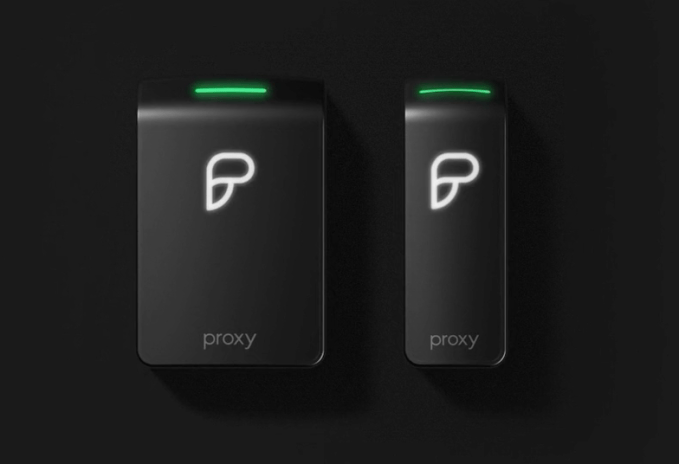
So rather than re-invent the wheel, Proxy integrates with existing access control systems at offices. It just replaces your cards with an app authorized to constantly emit a Bluetooth Low Energy signal with an encrypted identifier of your identity. The signal is picked up by readers that fit onto the existing fixtures. Employees can then just walk up to a door with their phone within about six feet of the sensor and the door pops open. Meanwhile, their bosses can define who can go where using the same software as before, but the user still owns their credentials.

“Data is valuable, but how does the end user benefit? How do we change all that value being stuck with these big tech companies and instead give it to the user?” Mars asks. “We need to make privacy a thing that’s not exploited.”

Mars believes now’s the time for Proxy because phone battery life is finally getting good enough that people aren’t constantly worried about running out of juice. Proxy’s Bluetooth Low Energy signal doesn’t suck up much, and geofencing can wake up the app in case it shuts down while on a long stint away from the office. Proxy has even considered putting inductive charging into its sensors so you could top up until your phone turns back on and you can unlock the door.

Opening office doors isn’t super exciting, though. What comes next is. Proxy is polishing its features that auto-reserve conference rooms when you walk inside, that sign you into your teleconferencing system when you approach the screen and that personalize workstations when you arrive. It’s also working on better office guest check-in to eliminate the annoying iPad sign-in process in the lobby. Next, Mars is eyeing “Your car, your home, all your devices. All these things are going to ask ‘can I sense you and do something useful for you?’ ”

After demoing at Y Combinator, thousands of companies reached out to Proxy, from hotel chains to corporate conglomerates to theme parks. Proxy charges for its hardware, plus a monthly subscription fee per reader. Employees are eager to ditch their keycards, so Proxy sees 90 percent adoption across all its deployments. Customers only churn if something breaks, and it hasn’t lost a customer in two years, Mars claims.

The status quo of keycards, competitors like Openpath and long-standing incumbents all typically only handle doors, while Proxy wants to build an omni-device identity system. Now Proxy has the cash to challenge them, thanks to the $13.6 million from Kleiner, Y Combinator, Coatue Management and strategic investor WeWork. In fact, Proxy now counts WeWork’s headquarters and Dropbox as clients. “With Proxywe can give our employees, contractors and visitors a seamless smartphone-enabled access experience they love, while actually bolstering security,” says Christopher Bauer, Dropbox’s physical security systems architect.

The cash will help answer the question of “How do we turn this into a protocol so we don’t have to build the other side for everyone?,” Mars explains. Proxy will build out SDKs that can be integrated into any device, like a smoke detector that could recognize which people are in the vicinity and report that to first responders. Mars thinks hotel rooms that learn your climate, wake-up call and housekeeping preferences would be a no-brainer. Amazon Go-style autonomous retail could also benefit from the tech.

When asked what keeps him up at night, Mars concludes that “the biggest thing that scares me is that this requires us to be the most trustworthy company on the planet. There is no ‘move fast, break things’ here. It’s ‘move fast, do it right, don’t screw it up.’ “