Equity Shot: Lyft is public — what does that mean for other IPO-ready unicorns?

Hello and welcome back to Equity, TechCrunch’s venture capital-focused podcast, where we unpack the numbers behind the headlines.

Sure, we just aired a new episode, but things keep happening, and after talking about this crop of IPOs for so long, we can’t help ourselves. (You can follow us on Twitter, here and here, by the way, if Equity isn’t enough for you.)

Lyft, as you know, started trading today, closing the loop on a long saga that brought the smaller of the two domestic ride-hailing unicorns to the public markets.

After so much speculation about which of the two would get out the door first, Lyft did, and now we get to see what sort of pricing shenanigans happen next. Does Uber drop rates and punish Lyft? Or does Uber work to cut its losses, lowering its expenses and providing a clearer path toward profitability before its April IPO roadshow kicks off? (Not a path to profitability, mind; Uber and Lyft need to show a path to the direction of profitability first.)

We hit all the bases, going over the company’s pricing path, its varying share figures, final raise metrics and more. If you want the hard stuff, we’ve got a shot for you.

Now that the Lyft IPO has wrapped, we’ll be shifting our focus to Pinterest, Zoom and, of course, Uber. Stay tuned.

OK, now we’re done. Until next Friday. Unless something else happens.

Equity drops every Friday at 6:00 am PT, so subscribe to us on Apple PodcastsOvercast, Pocket Casts, Downcast and all the casts.

Apple sells wireless charging AirPods, cancels charger days later

“Works with AirPower mat”. Apparently not. It looks to me like Apple doesn’t treat customers with the same “high standard” of care it apparently reserves for its hardware quality. Nine days after launching its $199 wireless charging AirPods headphones that touted compatibility with the forthcoming Apple AirPower inductive charger mat, Apple has just scrapped AirPower entirely. It’s an uncharacteristically sloppy move for the “it just works” company. This time it didn’t.

Given how soon after the launch this cancellation came, there is a question about whether Apple  knew AirPower was viable before launching the new AirPods wireless charging case on March 20th. Failing to be transparent about that is an abuse of customer trust. That’s especially damaging for a company constantly asking us to order newly announced products we haven’t touched when there’s always another iteration around the corner. It should really find some way to make it up to people, especially given it has $245 billion in cash on hand.

TechCrunch broke the news of AirPower’s demise. “After much effort, we’ve concluded AirPower will not achieve our high standards and we have cancelled the project. We apologize to those customers who were looking forward to this launch. We continue to believe that the future is wireless and are committed to push the wireless experience forward,” said Dan Riccio, Apple’s senior vice president of Hardware Engineering in an emailed statement today.

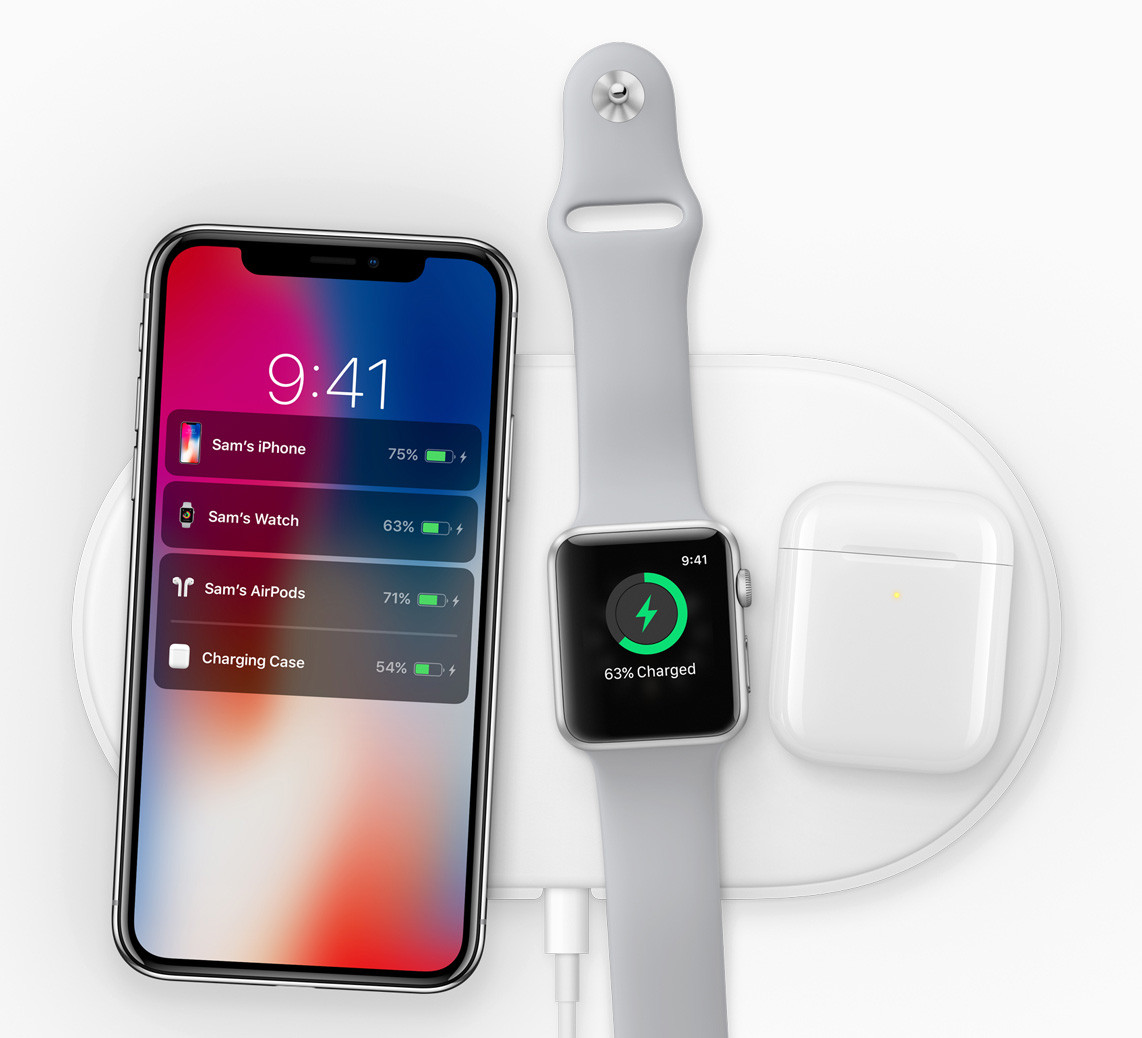
That comes as a pretty sour surprise for people who bought the $199 wireless charging AirPods that mention AirPower compatibility or the $79 standalone charging case with a full-on diagram of how to use AirPower drawn on the box.

Apple first announced the AirPower mat in 2017 saying it would arrive the next year along with a wireless charging case for AirPods. 2018 came and went. But when the new AirPods launched March 20th with no mention of AirPower in the press release, suspicions mounted. Now we know that issues with production, reportedly due to overheating, have caused it to be canceled. Apple decided not to ship what could become the next Galaxy Note 7 fire hazard.

The new AirPods with wireless charging case even had a diagram of AirPower on the box. Image via Ryan Jones

There are plenty of other charging mats that work with AirPods, and maybe Apple will release a future iPhone or MacBook that can wirelessly pass power to the pods. But anyone hoping to avoid janky third-party brands and keep it in the Apple family is out of luck for now.

Thankfully, some who bought the new AirPods with wireless charging case are still eligible for a refund. But typically if you get an Apple product personalized with an engraving (I had my phone number laser-etched on my AirPods since I constantly lose them), there are no refunds allowed. And then there are all the people who bought Apple Watches, or iPhone 8 or later models who were anxiously awaiting AirPower. We’ve asked Apple if it will grant any return exceptions.

Combined with an apology for the disastrously fragile keyboards on newer MacBooks, an apology over the Mac Pro, an apology for handling the iPhone slowdown messaging wrong, Apple’s recent vaporware services event where it announced Apple TV+ and Arcade despite them being months from launch, and now an AirPower apology and cancellation, the world’s cash-richest company looks like a mess. Apple risks looking as unreliable as Android if it can’t get its act together.

Lyft closes up 9% on first day of trading

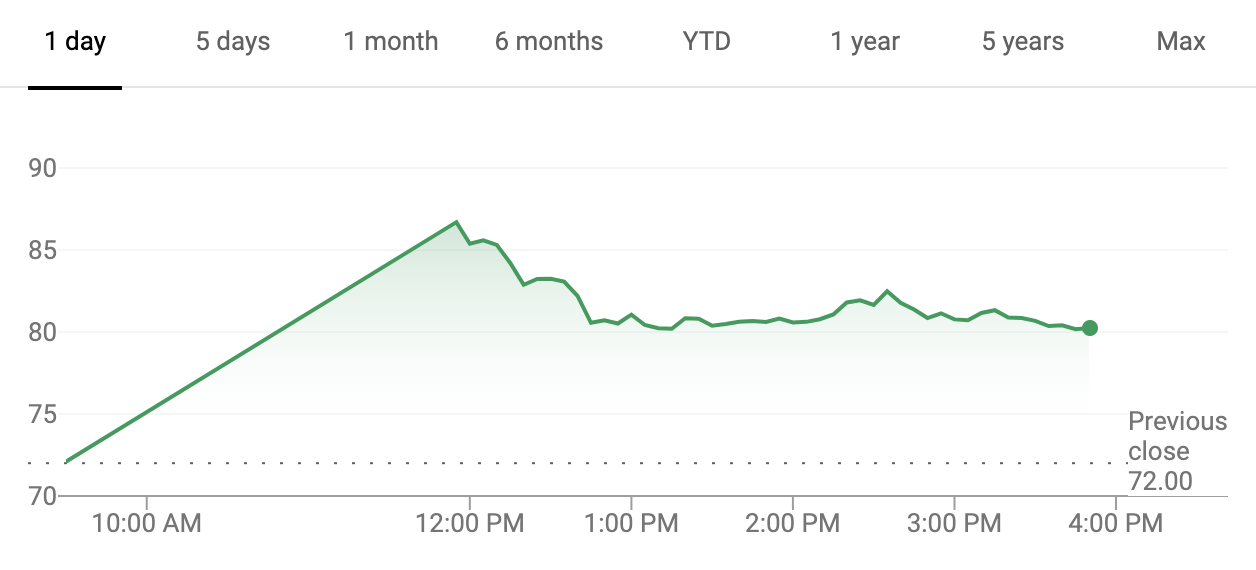
Pink confetti fell from the ceiling Friday as Lyft co-founders Logan Green and John Zimmer celebrated their company’s IPO. The stock offering was a bona fide success, with shares selling for $87.24 apiece Friday morning — 21 percent higher than Lyft’s initial $72 share price — and closing at $78.29 per share.

Lyft raised roughly $2.3 billion Thursday evening, hours before ringing the opening bell of the Nasdaq on Friday around noon Pacific. The IPO gave Lyft an initial market cap of about $24 billion, representing an 11x revenue multiple and a 1.6x step-up from its most recent private valuation of $15.1 billion. 

On Bloomberg TV, Lyft’s co-founders discussed the company’s long-term prospects, including international growth, autonomous vehicle plans, the future of car ownership and insurance.

“We are confident that the business will be very profitable,” Green told Emily Chang. “We are making tremendous progress going after this once-in-a-generation shift where this entire industry, a $1.2 trillion market, could flip from an ownership model to a service model and we are leading the way there.”

The pair opted to host their IPO in Los Angeles, Lyft’s largest market.

“We want to make a point that you can both invest in communities and build a great business,” Zimmer said. “It was fun to ring the bell with several members of our driver community and have many of them participate in our IPO because we gave them a bonus to do so.”

ServiceNow teams with Workplace by Facebook on service chatbot

One of the great things about enterprise chat applications, beyond giving employees a common channel to communicate, is the ability to integrate with other enterprise applications. Today, Workplace, Facebook’s enterprise collaboration and communication application, and ServiceNow announced a new chatbot to make it easier for employees to navigate a company’s help desks inside Workplace Chat.

The beauty of the chatbot is that employees can get answers to common questions whenever they want, wherever they happen to be. The Workplace-ServiceNow integration happens in Workplace Chat and can can involve IT or HR help desk scenarios. A chatbot can help companies save time and money, and employees can get answers to common problems much faster.

Previously, getting these kind of answers would have required navigating multiple systems, making a phone call or submitting a ticket to the appropriate help desk. This approach provides a level of convenience and immediacy.

Companies can brainstorm common questions and answers and build them in the ServiceNow Virtual Agent Designer. It comes with some standard templates, and doesn’t require any kind of advanced scripting or programming skills. Instead, non-technical end users can adapt pre-populated templates to meet the needs, language and workflows of an individual organization.

Screenshot: ServiceNow

This is all part of a strategy by Facebook to integrate more enterprise applications into the tool. In May at the F8 conference, Facebook announced 52 such integrations from companies like Atlassian, SurveyMonkey, HubSpot and Marketo (the company Adobe bought in September for $4.75 billion).

This is part of a broader enterprise chat application trend around making these applications the center of every employee’s work life, while reducing task switching, the act of moving from application to application. This kind of integration is something that Slack has done very well and has up until now provided it with a differentiator, but the other enterprise players are catching on and today’s announcement with ServiceNow is part of that.

Rela, a Chinese lesbian dating app, exposed 5 million user profiles

??????????

Rela (??), a popular dating app for gay and queer women, has exposed millions of user profiles and private data because a server wasn’t protected with a password.

Rela disappeared from app stores in May 2017 after it was reportedly shut down by Chinese regulators, though the government never confirmed it took action. But the app returned a year later, according to its app store listing, on a different cloud provider. LGBTQ+ rights in China remain highly limited, even though it was decriminalized in 1997. Many in the community still fight discrimination and attitudes have been slow to change.

Victor Gevers, a security researcher at the GDI Foundation, found the exposed database this week, he told TechCrunch, containing more than 5.3 million app users.

It’s believed the database had been exposed since June 2018, a month after the app returned, Gevers said.

Each record included their nicknames, dates of birth, height and weight, ethnicity, and sexual preferences and interests. Records also, where users allowed, included their precise geolocation. The database also contained over 20 million “moments,” or status updates — including private data.

“The privacy of five-plus million LGBTQ+ people face a lot of social challenges in China because their are no laws protecting them from discrimination,” said Gevers. “This data leak that has been open for years make it even more damaging for the people involved who were exposed.”

In a brief response, a company spokesperson confirmed the database had been secured.

Gay dating apps remain big business — even for companies in China, despite the legal complexities that’s seen several major apps shut down. Zank, a popular app used mostly by gay and bisexual men, was shut down in April 2017 citing the government’s rules for broadcasting pornographic content.

Yet, more established apps like Blued remain popular in the country.

Chinese gaming giant bought a 60 percent stake in U.S.-based gay dating app Grindr in 2017 and later acquired the entire company, but is reportedly up for sale amid concerns that the company poses a risk to U.S. national security.

Read more:

Apple Watch ECG capabilities arrive for users across Europe and Hong Kong

Apple’s latest-generation Apple Watch doesn’t just have a curved display and a new industrial design, one of the major features of the Watch when it launched last year were its advanced health-tracking capabilities, particularly in regards to heart health and AFib detection.

Those features arrived in the US in December, but users abroad have had to wait. Today, Apple announced that the electro-cardiogram feature and irregular rhythm detection functionality is coming to 19 European countries and Hong Kong in the Watch’s latest update. These users will also gain access to the irregular rhythm detection features available on Watch models Series 1 and later.

Supported countries include Austria, Belgium, Denmark, Finland, France, Germany, Greece, Hong Kong, Hungary, Ireland, Italy, Luxembourg, Netherlands, Norway, Portugal, Romania, Spain, Sweden, the U.K and Switzerland.

Irregular rhythm detection is available on Apple Watch Series 1 and later. The ECG app is only available on the Apple Watch Series 4, but if you’re a European or Hong Kong-based user and curious of the new capabilities, update your Watch to 5.2 then open the Health app on your updated iPhone and go through the on-boarding process.

Palantir wins $800 million contract to build the U.S. Army’s next battlefield software system

Palantir just landed a landmark contract with the U.S. Army worth north of $800 million. The Washington Posts reports that the Silicon Valley data analytics company was tapped over traditional defense contractor Raytheon on the project, which tasks Palantir with delivering a comprehensive combat intelligence hardware and software suite to replace the Army’s outdated system, known as DCGS-A.

A year ago, the Army named Palantir and Raytheon as finalists to compete for the contract, which will totally overhaul the Army’s “system-of-systems” that provides comprehensive data to “to assist the commander’s visualization and understanding of the threat and other relevant aspects of the operational environment.”

While the DCGS-A contract marks Palantir’s only deal with the military big enough to have its own line item with Congress, the company does have existing military ties. The largest contract that Palantir has previously entered into with the Army was for $22,401,901, starting in 2015. The company also picked up a number of contracts with the Navy over the years, though none approaching the scale of the new potentially $800 million project. Palantir’s largest Navy contracts were for $23,750,000 and $35,804,181 in 2014 and 2017, respectively. The company’s largest previous military contract to date was $216,872,321 for software services for U.S. Special Operations Command. That contract was awarded in 2016 and is set to run through next year.

Palantir has seen massive recent success with the Department of Defense, but as BuzzFeed reported in 2017, the company has experienced some friction within its CIA and FBI relationships. In 2016, Palantir successfully won an unusual lawsuit against the Army for the right to bid on the massive DCGS replacement contract with its own commercial software. The lawsuit opened the doors for Palantir to vie to provide the government an off-the-shelf product to replace its bespoke $3 billion-plus intelligence system, which took a decade to build.

Apple ‘sorry’ for latest MacBook keyboard woes

Apple’s continued to improve the MacBook line’s butterfly switch keyboards. In fact, the technology is on its third generation, which added a rubberized membrane designed to fix ongoing issues and reduce that loud clacking sound.

But even the most devoted Apple fans have continued to have gripes, from stuck keys to random misfires. True story: One time at an Amazon event in Seattle I sent an employee on a mad dash for some compressed air inside the Spheres. I can’t remember which consonant I lost, but it seemed pretty vital to the delivery of breaking news at the time. I think maybe it was “M.”

More recently, I had to take my laptop into IT after it was firing off random spaces and periods. I might have screamed at my desk a few times over that one. Then there was this, wic onestly couldn’t ave appened at a worse time.

I kid you not, te "H" key on my Macbook just started acting up. Only firing alf te time

— Matthew Panzarino (@panzer) March 25, 2019

Apple’s acknowledged issues in the past, suggesting free repairs. And now it’s offered The Wall Street Journal a bit of an apology for the ongoing woes.

“We are aware that a small number of users are having issues with their third-generation butterfly keyboard and for that we are sorry,” the company writes. “The vast majority of Mac notebook customers are having a positive experience with the new keyboard.”

It goes on to suggest users contact AppleCare over any issues that might arise. I will say that the latest keyboards are a step in the right direction for the company, but enough of the original problems continue to persist that Apple really ought to go back to the drawing board on this one.

Before breaking up with Shopify, Mailchimp quietly acqui-hired LemonStand, a Shopify competitor

Here’s an interesting twist on the story from last week about the break-up between Shopify and Mailchimp, after the two said they were at odds over how customer data was shared between the two companies. It turns out that before it parted ways with Shopify, Mailchimp quietly made an acquisition of LemonStand, one of the e-commerce platform’s smaller competitors, to bring more integrated e-commerce features into its platform.

After news broke of the rift between Mailchimp and Shopify, rumors started to circulate among people in the world of e-commerce about Mailchimp buying Vancouver-based LemonStand, which announced on March 5 that it was shutting down its service in 90 days, on June 5, without much of an explanation why.

We were tipped off on those rumors, so we contacted Ross Paul, LemonStand’s VP of growth and an investor in the startup, who suggested we contact Mailchimp. (Paul now lists Mailchimp as his employer on his LinkedIn profile.) Mailchimp confirmed the deal, describing it as an acqui-hire, with the team now working on light e-commerce functionality.

“Mailchimp acqui-hired the team behind LemonStand at the end of February,” Mailchimp said in a statement provided to TechCrunch. It did not provide any financial terms for the deal.

Mailchimp — which is privately held and based in Atlanta — said it made the acquisition to provide more features to its customers, specifically those in e-commerce.

“Mailchimp helps small businesses grow, and our e-commerce customers have been asking us to add more functionality to our platform to help them market more effectively,” the company said in a statement. “The LemonStand team is helping us build out our e-commerce light functionality.”

But Mailchimp is clear to say that its acqui-hire was not related to ending its relationship with Shopify.

“Our decision to discontinue our partnership with Shopify last week is unrelated to LemonStand,” Mailchimp said. “Shopify knew we were working on e-commerce features long before we hired the LemonStand team. In fact, we launched Shoppable Landing Pages last fall in partnership with Square, and Shopify chose not to partner with us on the launch.”

But even if the LemonStand deal is not related to its rift with Shopify, the acquisition of one and the breakup with the other both point to the same thing: the growing role of Mailchimp’s e-commerce business.

The company — which provides email marketing and other marketing services to business — has been slowly building a revenue stream in e-commerce by integrating a number of features into its platform to let its customers, for example, sell items as part of the marketing process. These are less about building full check-out experiences or commerce backends, but for offering, say, one-off sale items as part of a particular promotion or campaign.

Last year, when Mailchimp launched those new shoppable landing pages with Square, it said that 50 percent of its revenues were now coming from e-commerce, with its customers selling more than $22 billion worth of products in the first half of 2018. Mailchimp made some $600 million in revenue in 2018, which — if its 50 percent e-commerce figure remained consistent — meant that it made $300 million last year just from e-commerce-related services.

The Square partnership is instructive in light of this acquisition. While Mailchimp is indeed building some native e-commerce features for its platform, it will continue to work with third parties (if not Shopify, the biggest of them all) to provide other functionality.

“We believe small businesses are best served when they can choose which technology they use to run their businesses, which is why we integrate with more than 150 different apps and platforms including e-commerce platforms,” Mailchimp said in its statement to TechCrunch.

“We’re not trying to become an e-commerce platform or compete directly with companies like Shopify,” it added, “and we think that adding e-commerce features in Mailchimp will help our e-commerce partners. Companies will be able to start their businesses with Mailchimp and have a seamless experience, and eventually use Mailchimp along with one of our e-commerce partners.”

Lyft increases IPO price

Lyft, expected to hit public markets in a landmark initial public offering Friday, has increased its share price range. In a new filing published Wednesday afternoon, the company outlined plans to charge between $70 and $72 per share.

In an amended IPO prospectus filed last week, the company said it would sell 30.7 million shares at between $62 and $68 a piece. Following high demand from Wall Street — its IPO was said to be oversubscribed on the second day of its roadshow — Lyft has opted to ask for more from its public market investors.

If Lyft sells 30.7 million shares at $72 apiece, it will bring in more than $2.2 billion at an initial valuation north of $20 billion. Lyft was previously valued at $15.1 billion by private market investors with a $600 million Series I round in 2018.

Lyft plans to trade on the Nasdaq under the ticker symbol “LYFT.”

Lyft posted $8.1 billion in bookings and $2.1 billion in revenues in 2018 on losses of $911.3 million. The company is rapidly shrinking its losses in proportion to revenue, recording revenues of $343.3 million in 2016 on losses of $682 million.

According to its S-1, Lyft chief executive officer and co-founder Logan Green will have 29.31 percent share of the voting power of the outstanding stock, while co-founder and president John Zimmer will own 19.45 percent.