These are the best products we tested, handled, and carried with us this month.
Category: Tech news
hacking,system security,protection against hackers,tech-news,gadgets,gaming
Startups Weekly: Why Lyft’s $2.2B IPO wasn’t “crazy land” or “nuts”
Lyft completed its long-awaited IPO this week, trading 21 percent higher Friday than its initial offering price of $72 per share. It closed its first day of trading at about $78 per share, up roughly 9 percent.
I spoke to IPO guru Brian Hamilton, the CEO of banking software company Sageworks, about Lyft’s offering to get a sense of how Wall Street views the buzzworthy tech unicorn. As I wrote earlier this week, Wall Street doesn’t seem to care about profitability, prioritizing growth instead. Lyft is definitely growing, quickly, and working hard to shrink its losses. Hamilton said the price per share was reasonable, and, given Lyft’s positive cash flows, he seemed confident the company will fare well on the Nasdaq this year.
He was especially clear about one thing: Lyft’s offering is nothing like Snap’s. “The camera company,” if you remember, had posted only $404.5 million in revenue ahead of its IPO, which valued it at $23.8 billion: “It’s not crazy land; it’s not nuts; it’s not Twitter, it’s not Snap; it’s reasonable actually, I’m surprised,” Hamilton told TechCrunch. “I’ve seen some of these tech companies go for much higher valuations [and] those companies commanded much higher sales multiples.”
Ultimately, Lyft commanded an 11x revenue multiple, on par with what we expect from Uber next month. Lyft could have priced higher given demand, though my Equity co-host Alex Wilhelm argued against that prospect on this special episode, where we discuss Lyft’s first day of trading.
Hamilton, like Alex and I, also emphasized the benefit of beating Uber to the public markets and debuting on the stock exchange at peak bull market: “The markets are hot, people want to put their money somewhere,” he said. “Even the people that have been on the fence want [Lyft stock].”
Here’s what else happened this week.
…Careem, its Middle Eastern counterpart. Uber will pay a whopping $3.1 billion to acquire the seven-year-old company. The deal had been rumored for months and is expected to close in Q1 2020, pending applicable regulatory approvals.

Airbnb announced this week that it has checked in half-a-billion guests to its 6 million global participating properties. Damn. It’s also closing in on some of the larger hospitality industry incumbents like Hilton and Marriott. This paints a nice picture for a company that is more than ready to IPO and is surely preparing its pitch to public market investors. No word yet on when Airbnb will file, but it’s looking like it’s still several months out.
I promised myself I wouldn’t write Casper and unicorn in the same sentence, but it seems inevitable at this point. The mattress startup raised a $100 million Series D this week at a valuation of $1.1 billion and became the newest entry to the unicorn club. Target — which once tried to acquire Casper — NEA, IVP and Norwest Venture Partners participated in the round. Casper has previously raised $240 million in equity funding from celebrity investors Leonardo DiCaprio and 50 Cent, as well as institutional investors, including Lerer Hippeau.
Restaurant manager Toast raises $250M at $2.7B valuation
Airwallex raises $100M at a valuation north of $1B
Vlocity nabs $60M Series C on $1B valuation
Lola.com raises $37M to take on SAP
Boundless gets $7.8M to help immigrants navigate the green card process
Jon Sakoda, a former partner at the esteemed venture capital firm NEA, has taken the wraps off his new, Cisco-backed fund, called Decibel. Sakoda can’t disclose the precise size of the fund yet, but he told TechCrunch he’s working very collaboratively with Cisco, including its corporate venture arm, Cisco Investments. Plus, 500 Startups has raised $33 million for its Middle Eastern-focused fund, 500 Falcons.
This week’s recommended read for our Extra Crunch subscribers: What’s the cost of buying users from Facebook and 13 other ad networks? Subscribe to EC here.

Spotify is making good on its promise to spend millions on podcast M&A, following its purchases of Gimlet and Anchor for $340 million. This week, the music streaming giant announced that it had acquired a small podcasting studio called Parcast, known best for true-crime and other factual serials in genres like mystery, science fiction and history.
Meet Evan Spiegel’s sister, Caroline
She spoke to TechCrunch about her first big project. Called Quinn, Caroline plans to launch a website dedicated to sexy text and audio on April 13th. She describes Quinn as “a much less gross, more fun Pornhub for women.” Read TechCrunch’s Josh Constine’s full interview with Caroline here.
If you enjoy this newsletter, be sure to check out TechCrunch’s venture-focused podcast, Equity. In this week’s episode, available here, TechCrunch’s Connie Loizos, Crunchbase News’ Alex Wilhelm and I chat about Wall Street’s appetite for unicorns, Casper’s big round and more. Then, in a special Equity Shot, we discuss Lyft’s first day trading on the Nasdaq.
Want more TechCrunch newsletters? Sign up here.
5 Best Rain Jackets for 2019: Lightweight, Hiking, and More
We test-drove more than a dozen rain jackets to get you outside this spring. These heavy and lightweight waterproof jackets kept us cool and dry in the city and on the trails.
Apple AirPods (2019) Review: Little, Better, Not That Different
You’d think the new AirPods would be leaps and bounds better. That’s not the case.
*The Matrix* Is Nothing Without Its Sequels—Nothing!
A cultural majority of dweeby gasbags holds that the *Matrix* sequels are trash. Go unplug yourself.
17 Best Deals on Laptops, 4K TVs, and More Awesome Tech
Peruse our picks from Dell’s March Madness sale, along with cheap workout headphones, smart tablets, and more.
Machine Learning for March Madness Is a Competition In Itself
You’re more likely to win the Powerball jackpot than fill out the perfect bracket. So statisticians are using AI to improve these dismal odds as much as possible.
The Biggest ‘Matrix’ Question of All: Red Pill or Blue Pill?
Is it better to free your mind? Or live in blissful ignorance? Two WIRED writers argue it out.
The Jeep Gladiator Pickup Is an Off-Roading Tough Mudder
The $33,545 Gladiator is made for the toughest off-road conditions you can find—with a few creature comforts thrown in.
In San Francisco, a fight over a homeless shelter shines a harsh light on a conflicted population
As of 2017, there were roughly 7,000 people living without homes in San Francisco, a number that comprises minors — a lot of them. The San Francisco Unified School District estimates that as of 2017, roughly 2,100 of the children in the school system were homeless — a number that it said looked to be escalating, not shrinking.
While parents may not hesitate to send their offspring to these same schools, some in the city’s northeast corner may be uncomfortable with the idea of homeless adults and families seeking shelter in close proximity. Such appears to be the point of a GoFundMe campaign that was launched late last week called “Safe Embarcadero for All.” Its objective: to raise $100,000 for legal counsel to push against the creation of a shelter along the city’s eastern waterfront region.
The campaign is a reaction to an idea introduced earlier this month by San Francisco Mayor London Breed to turn a parking lot along Embarcadero that’s owned by the Port of San Francisco into a center that would provide health and housing services and round-the-clock stays for up to 200 of the city’s homeless residents.
It isn’t just theoretical. If the Port Commission agrees to the plan, Breed estimated the center could be open by summer. Thus the GoFundMe campaign, which has now raised $71,250 as of this writing from 180 people, some of whom presumably live in the luxury high-rise apartments nearby and others who share the campaign organizers’ concerns that the shelter could introduce “public safety, drug use, and other problems.”
It’s a frustrating state of affairs, though some are finding inspiration in a new, rival campaign that was created yesterday in support of the center and which is fast gaining financial support. Called a “SAFER Embarcadero for ALL,” it has already raised more than the earlier GoFundMe campaign, with more than 1,021 donors contributing more than $76,000 as of this writing. Two of its backers: Twilio CEO Jeff Lawson and Salesforce CEO Marc Benioff, who has been a frequent and public supporter of Breed and a number of her initiatives.
Lawson appears to have given $20,000; Benioff has given at least $10,000 to the campaign and is using Twitter as a platform to drum up more support.
Join me in supporting @TheCoalitionSF and @fbach4 and @LondonBreed in building a new navigation center in San Francisco on the Embarcadero. Homelessness is our number crisis and it requires all of our attention and resources. https://t.co/hY6KxeT5D9
— Marc Benioff (@Benioff) March 29, 2019
Some are heralding their involvement as proof that tech CEOs do care about San Francisco’s homeless population, which they’re often accused of exacerbating by planting themselves in the city, paying their employees high wages, and driving up the cost of everything from rent to groceries in the process.
Even GoFundMe itself has joined sides, donating $5,000 to the new campaign in support of the homeless center or, more specifically the Coalition on Homelessness, which has been promised the monies.
“I don’t think the tech industry is doing enough about the homeless issue,” GoFundMe CEO Rob Solomon told the San Francisco Chronicle this morning. “We wanted to do our small part, even though we’re not located in San Francisco.”
No doubt critics will argue that because GoFundMe is 25 miles south of San Francisco, in Redwood City, the company has less at stake.
Still, proponents of the center will take support wherever they can find it.
As Jennifer Friedenbach, executive director of the Coalition on Homelessness, told the Chronicle earlier today, the group is already planning to use the new funds to help with public education, to get input on the center, and to educate residents about what they grossly misunderstand about the city’s homeless population.
Valve is building its own high-end VR headset called ‘Index’
Valve is ready to sell its own full VR hardware getup.
The gaming giant behind some classic titles and the ubiquitous Steam store has revealed a teaser image on its site of a VR headset called the Valve Index. Alongside the photo, text reads “Upgrade your experience. May 2019” suggesting a near-term full announcement or release date of what is likely a high-end VR system.
Valve has long been a present name in virtual reality circles but it hasn’t shipped a dedicated headset of its own, instead focusing its work on the underlying software technologies. Valve has been at the forefront of the technology and was making substantial advancements while Oculus was in the process of releasing their first developer kits. Valve’s work eventually surfaced in the HTC Vive which operated on the SteamVR platform, but there hasn’t been widespread adoption from other OEMs of Valve’s VR technologies.
In a lot of ways it has been turning into a two-horse race for consumer VR platforms between Oculus and Microsoft’s Windows Mixed Reality. While SteamVR once seemed a likely choice to be a standard across VR devices, announced products never ended up shipping and the VR market cool-down left HTC pivoting to enterprise.

Things were just as unclear when the company laid off several of its VR hardware-focused employees a few weeks ago, leaving people to wonder whether that meant a release was never coming or one was imminent.
Well, now we know.
Now, there’s admittedly not a ton to go off of with this teaser image.
The look matches the Valve prototype headset that UploadVR found images of this past fall. That report detailed that the headset would have a display resolution similar to HTC’s Vive Pro while stretching that resolution over a wider 135-degree field-of-view. This compares to the near-110-degree FoV on the Oculus Rift and HTC Vive.
This image is a pretty clear shot at Oculus in that while there aren’t many discernible features from the base of the headset, there is what definitely appears to be an IPD adjustment slider which allows users to define the distance between the lenses to accommodate for the space between their eyes. The exclusion of a physical IPD adjustment tool was undoubtedly the most controversial choice on Oculus’s Rift S headset, and prompted the company’s ousted founder to pen a blog post complaining about the omission.
Beyond that control, there are a couple of other things we can infer. First, this is almost definitely a PC-powered headset based on the company’s previous work, thus, the company will likely rely on their SteamVR 2.0 tracking system. The big question is then what those onboard cameras in the image are for. The most likely answer if I saw this headset from anyone else is that they were for inside-out tracking but the more likely answer is that they’re for “mixed reality” passthrough experiences, especially since the cameras both appear to be pointed forward though they are also a bit far apart.
This product’s release might not be great for Oculus, which has seemed to walk away from their position pushing high-end PC VR, but it’s far worse for HTC. The Taiwanese company’s consumer ambitions have kind of dried up in their pivot to enterprise markets though they have still seemed to be marketing towards consumers. For most users the best features of the Vive are features developed largely by Valve including the tracking system and software platform, so getting a high-end device direct from Valve seems like a very easy sell to these customers.
Again, not a huge amount to go off from this landing page, but it seems we’ll hear more in a couple months.
Apple’s AirPower Gets the Ax, Rickshaws Get a Boost, and More News
Catch up on the most important news today in 2 minutes or less.
Lyft’s IPO Heralds a Wave of Gig-Economy Offerings
Lyft got a jump on rival Uber with its IPO. Investors liked the offering despite the ride-hailing company’s growing losses.
RIP AirPower: Apple Kills Its Elusive Wireless Charging Pad
The iPhone charging accessory was announced in September 2017 but failed to materialize. And now it never will.
Toast, the restaurant management platform, has raised $250M at a $2.7B valuation
Restaurant sales hit $825 billion last year in the U.S., but with margins averaging at only three to five percent per business, they’re always looking for an edge on efficiency and just generally running things in a smarter way. A startup called Toast, which has built a popular platform for restaurant management, has closed a hefty round of funding to double down on that opportunity to do that.
The company has raised $250 million on a valuation of $2.7 billion, money that it will use to invest in building technology to help restaurants with marketing, recruitment and operational efficiency, as well as start to think about expanding to more territories outside the U.S.
The basics of the funding were flagged earlier today by Prime Unicorn Index and we reached out to the company to confirm. It is being led by TCV and Tiger Global Management, with participation from Bessemer Venture Partners and T. Rowe Price Associates funds and other existing investors.
This Series E is a big bump up for the company: in its previous round in July 2018, the company was valued at $1.4 billion — partly the result of strong growth at the company. While it’s not disclosing revenue numbers or whether it is yet profitable, Toast currently serves tens of thousands of businesses — covering a range of sizes from independent venues to smaller chains — and in the last year tallied up transactions in the tens of billions of dollars, seeing growth of some 148 percent in its revenues, according to CFO Tim Barash.
The restaurant business represents a big opportunity for e-commerce companies, but there have been some notable stumbles where ambitions have not been met with success. Groupon, which spent several years acquiring and organically building a point of sale and restaurant management business, first drastically cut down and then finally called it quits and sold off its efforts, called Breadcrumb, in 2016. Amazon also pulled out of point of sale services (aimed at more than restaurants) and has in certain regions also pulled back on other restaurant efforts like its order management and delivery platform.
Barash said in an interview that he thinks the key to why Toast has steadily grown its business through all that is because a large proportion of its own employees — some 70 percent — have worked in the food service industry themselves.
“I was first a busboy, and then I worked in pizza delivery for years,” he said. “Seventy percent of our employees have worked at restaurants, including those in our product leadership, and that helps us understand the problem.”
Restaurants, as Barash points out, are complicated. “They are essentially manufacturers and retailers at the same time, all in one small physical footprint,” and so the key to building products for them is to understand that and the challenges they face in building and running those businesses.
And that’s before you consider the many other factors that can make restaurants a dicey game, from changing cuisine tastes, to changing eating habits — many get food delivered today — to the precariousness of the commercial real estate market and so much more.
The aim of Toast is to build tools to apply data science and orderly IT processes to address whichever of those variables that can be controlled by the restaurant.
Today, Toast’s products include point of sale services as well as reporting and analytics; display systems for kitchens; online ordering and delivery interfaces; and loyalty programs. It also builds its own hardware, which includes handheld order pads, payment and ordering terminals, self-service kiosks and displays for guests. It also offers links through to a network of some 100 partners, such as Grubhub for takeout food, when a restaurant does not cover those services or functions directly, to help stitch together services to work on its platform.
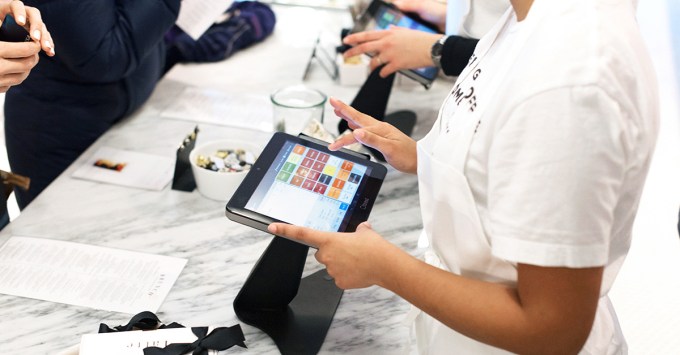
Tomorrow, the plan is to use the funding to enhance all of those with more advanced features that speak to some of the bigger issues and concerns Barash said its customers are voicing today.
That will include better and more services aimed at guest engagement and retention; better ways to recruit and keep people in an industry that has a high turnover of employees; and of course more tools to address how efficiently a business is operating to make it more profitable. The company has committed some $1 billion in the next five years to R&D to build more hardware and software.
Having access to this kind of tech and platform is a big deal, especially for independently owned places that hope to compete against bigger chains without having to compromise on their core competency: making unique and delicious food.
In the meantime, Barash said that while Toast itself is no stranger to approaches from larger players itself — he declined to say who but said many who have ambitions to do more business with the restaurant industry had approached it over the years — the company’s long-term vision is to grow bigger and remain its own boss.
It’s an ambition that has hit the spot with investors that have an appetite for high-growth businesses.
“At TCV, we invest in companies that have the potential to reshape entire industries. By providing restaurants of all sizes with access to innovative technology, Toast is leveling the playing field and leading the industry’s transition to the cloud,” said David Yuan, general partner at TCV, in a statement, who is joining the board with this round. “Our investment will enable Toast to extend their platform beyond point-of-sale and guest-facing technology, and in doing so, create a powerful SaaS platform with a superlative business model. We’re excited to partner with Toast as they accelerate the growth of the community they serve.”