Apple Music cuts prices in India

This morning, The WSJ reported Apple’s streaming music service overtook Spotify in paid subscribers in the U.S., and now it hopes to do the same in the Indian market by way of a big price cut. The company’s individual plan in India is now 99 rupees per month ($1.43 USD), versus the 120 rupees per month ($1.73 USD) it was previously.

In addition, the price for the Apple Music student plan dropped from 60 rupees per month to 49 rupees; and the Family Plan is now 149 rupees per month versus the 190 rupees per month it was before the price cuts.

The news was first reported by The Indian Express and was shared across social media.

Apple has revised Apple Music price in India. Each plan now costs less. pic.twitter.com/bMjEDXtgsA

— Manish Singh (@refsrc) April 5, 2019

The new, lower prices are available to both existing subscribers and new customers, it appears.

India is a crucial market for streaming services, and one that’s a more recent battleground for major U.S. tech companies in addition to Spotify.

In March, YouTube Music and its paid subscription service, YouTube Premium, launched in India, following Amazon and Google, which already operate their music services in the region. This year, Spotify also entered India amid a complicated licensing dispute with Warner Music, which impacted the number of tracks available.

But these companies aren’t just duking it out with one another for domination.

India today has a rich music scene that includes local players like Gaana, JioSaavn (created via the JioMusic and Saavn merger), Wynk and others.

And recently, JioSaavn and Gaana both slashed their annual subscription prices by 70 percent. Those cuts were focused on locking down customers for a year — keeping them away from YouTube, Spotify and Apple, as a result. The recent discounts saw JioSaavn’s premium tier drop to Rs 299 per year — 70 percent down from Rs 999. Meanwhile,Gaana Plus was discounted to Rs 298 per year instead of Rs 1098, as before.

Apple doesn’t disclose its Apple Music subscriber count in India, but it has 56 million subscribers on a global basis.

The service has been customized for the Indian market, with playlists that feature local music, including those popular in regional languages like Malayalam and Tamil, The Indian Express noted. It also has 14 localized radio stations and deals with leading Indian labels like Saregama, T series, Zee Music, YRF, Universal and Sony.

Falcon Heavy’s first real launch on Sunday is the dawn of a new heavy-lift era in space

The Falcon Heavy has flown before, but now it’s got a payload that matters and competitors nipping at its heels. It’s the first of a new generation of launch vehicles that can take huge payloads to space cheaply and frequently, opening up a new frontier in the space race. Watch it lift off Sunday afternoon (we’ll post a reminder).

On the 7th, Falcon Heavy will fly for the first time since its inaugural test last February, delivering the now-infamous Tesla Roadster and “Starman” into a trajectory that has taken them past Mars. That successful launch garnered SpaceX its first customer for the system, and Sunday’s launch will take Arabsat-6A, a Lockheed-built communications satellite, into geosynchronous orbit.

A static fire today went well, so, weather permitting, takeoff should take place as scheduled at around 3:36 Sunday afternoon. Notably, SpaceX CEO Elon Musk pointed out on Twitter that the Block 5 Falcon Heavy (that is to say, the production revision as opposed to the test version we saw) has 10 percent more thrust capacity than before, which also translates to a better safety margin if using less than its maximum.

So why exactly is Falcon Heavy important? After all, launch vehicles capable of putting a hundred tons of material into or beyond orbit have existed since Apollo. Simply speaking, the difference comes down to price.

Putting anything into space is difficult enough. But heavier payloads get exponentially more difficult to lift: The equations we’ve known for a century or so governing how much lift is needed to get a certain amount of mass into orbit, and how much fuel is needed in turn to generate that lift, are clear on this.

As advances in materials and rocket engines have progressed, they have disproportionately benefited small and medium launch vehicles. Combined with the decreasing size of satellite payloads, this has created a new and promising era for small craft, which can be launched in great numbers — as we’re seeing in the many promises to deploy constellations thousands strong.

Efficiently made disposables like Rocket Lab’s Electron and reusable ones like the Falcon 9 have begun the process of pushing the price of small and medium-size launches down to a fraction of what they once were.

But heavy and super-heavy launch vehicles have remained phenomenally expensive due to the fundamentally difficult nature of building these physics-defying monsters. So while putting 10 tons in orbit has gotten cheap enough that startups can do it, putting 100 tons up there remains the province of global superpowers.

Falcon Heavy is really the first to start a similar price shift for this category, cutting the cost of putting large payloads up by a huge amount. And while an estimated price tag of around $100 million per launch is hardly pocket change, it’s a whole lot less than the $350-$500 million a Delta IV might cost.

That level of savings can transform an entire space program. NASA could add an entire planetary exploration mission to its budget for the price difference of one launch alone. This math may not always add up (the Delta IV’s excellent launch record rightly commands a premium), but it’s impossible to ignore.

A Delta IV takes off in 2016

The market for heavy launches is, like that for small ones, heavily supply-limited. Governments and major corporations are lined up for years to put major items into or beyond orbit. SpaceX will sell room on Falcon Heavy systems as fast as it can make them. And because its side stages are reusable, it can make them faster than others can make theirs! It stands to make a huge amount of money while also massively empowering the global space community.

Falcon Heavy has little competition at payloads above the 50-ton threshold, but below that the field is getting crowded. ULA, Ariane Group, Russia and China, even upstart rival Blue Origin are preparing cheaper next-generation platforms to take part in the new ecosystem. (A comprehensive accounting of this new phase of launch vehicles is a worthwhile endeavor, but one for another time.)

For now, though, Falcon Heavy is an anomaly, but a welcome one. Lowering the cost and complexity of more distant and ambitious space projects is an exciting prospect, and Sunday’s launch is one of the first indications that we are witnessing that change take place.

Snap is channeling Asia’s messaging giants with its move into gaming

Snap is taking a leaf out of the Asian messaging app playbook as its social messaging service enters a new era.

The company unveiled a series of new strategies that are aimed at breathing fresh life into the service that has been ruthlessly cloned by Facebook across Instagram, WhatsApp and even its primary social network. The result? Snap has consistently lost users since going public in 2017. It managed to stop the rot with a flat Q4, but resting on its laurels isn’t going to bring back the good times.

Snap has taken a three-pronged approach: extending its stories feature (and ads) into third-party apps and building out its camera play with an AR platform, but it is the launch of social games that is the most intriguing. The other moves are logical, and they fall in line with existing Snap strategies, but games is an entirely new category for the company.

It isn’t hard to see where Snap found inspiration for social games — Asian messaging companies have long twinned games and chat — but the U.S. company is applying its own twist to the genre.

Cybercrime groups continue to flourish on Facebook

You might be surprised what you can buy on Facebook, if you know where to look. Researchers with Cisco’s Talos security research team have uncovered a wave of Facebook groups dedicated to making money from a variety of illicit and otherwise sketchy online behaviors, including phishing schemes, trading hacked credentials and spamming. The 74 groups researchers detected boasted a cumulative 385,000 members.

Remarkably, the groups weren’t even really trying to conceal their activities. For example, Talos found posts openly selling credit card numbers with three-digit CVV codes, some with accompanying photos of the card’s owner. According to the research group:

The majority of these groups use fairly obvious group names, including “Spam Professional,” “Spammer & Hacker Professional,” “Buy Cvv On THIS SHOP PAYMENT BY BTC ??,” and “Facebook hack (Phishing).” Despite the fairly obvious names, some of these groups have managed to remain on Facebook for up to eight years, and in the process acquire tens of thousands of group members.

Beyond the sale of stolen credentials, Talos documented users selling shell accounts for governments and organizations, promoting their expertise in moving large sums of money and offering to create fake passports and other identifying documents.

The new research isn’t the first time that Facebook users have been busted for dealing in cybercrime. In 2018, Brian Krebs reported 120 groups with a cumulative 300,000-plus members engaged in similar activities, including phishing schemes, spamming, botnets and on-demand DDoS attacks.

As Talos researchers explain in their blog post, “Months later, though the specific groups identified by Krebs had been permanently disabled, Talos discovered a new set of groups, some having names remarkably similar, if not identical, to the groups reported on by Krebs.”

“While some groups were removed immediately, other groups only had specific posts removed,” Talos researcher Jaeson Schultz wrote. “Eventually, through contact with Facebook’s security team, the majority of malicious groups was quickly taken down, however new groups continue to pop up, and some are still active as of the date of publishing.”

Cybercrime groups are yet another example of the game of enforcement whack-a-mole that Facebook continues to play on its massive platform. At the social network’s scale — and without the company dedicating sufficient resources to more comprehensive detection methods — it’s difficult for Facebook to track the kinds of illicit or potentially harmful behaviors that flourish in unmonitored corners of its sprawling platform.

“These groups violated our policies against spam and financial fraud and we removed them,” a Facebook spokesperson told TechCrunch. “We know we need to be more vigilant and we’re investing heavily to fight this type of activity.”

The Roku Channel adds support for HBO just in time for ‘Game of Thrones’

Just days ahead of the return of “Game of Thrones,” Roku has forged a deal with HBO that now gives the media device maker the ability to sell the premium channel as a subscription through its dedicated content hub, The Roku Channel. Originally a destination for free and ad-supported movies and TV, The Roku Channel in January rolled out a significant update that put it in more direct competition with Amazon Channels with the launch of premium subscriptions.

Now, alongside the free content, Roku users can choose to subscribe to premium channels like Showtime, Starz, EPIX and others — including, as of this week, HBO. Those channels’ content can then be streamed directly through The Roku Channel itself on TVs as well as within Roku’s updated mobile app.

When The Roku Channel’s subscription platform made its debut earlier this year, HBO was one of the biggest names to come up missing, along with Netflix and Hulu.

But Netflix and Hulu don’t tend to allow subscriptions through third-party platforms like The Roku Channel (or, more recently, via Apple TV+). HBO, however, does. The premium channel and home to “Game of Thrones” is available as an add-on across a range of streaming services and à la carte TV providers — including The Roku Channel’s biggest competitor, Amazon Prime Video Channels. 

Without HBO in The Roku Channel, users who wanted to stream one of TV’s biggest shows would have to leave Roku’s hub and navigate back to the Roku home screen where they could access HBO directly through its dedicated Roku app. That was bad news for Roku, as it’s trying to keep users’ viewing activity centralized and contained in one spot in order to promote the ad-supported fare that helps Roku make money.

Roku says users can now opt into a free seven-day HBO trial in The Roku Channel, which then converts to a $14.99 per month subscription if the trial isn’t cancelled.

Those who subscribe to HBO through The Roku Channel won’t be able to log in to HBO’s standalone apps, HBO NOW or HBO Go, but will instead watch its content through Roku’s hub, where its programs are featured alongside Roku’s more than 10,000 free movies and TV episodes.

Like other Roku Channel subscriptions, HBO will appear on users’ one monthly bill.

For consumers, keeping all your add-on TV subscriptions in one place makes it easier to track what you’re paying for, and simplifies the cancellation process when you’re ready to adjust your cord cutting mix.

Boomplay, a Spotify-style music and video streaming service for African music and Africa, raises $20M

While Spotify dukes it out with Apple and other big tech names to target high-end users in mostly developed markets, a startup out of China has raised some money to expand its music streaming business in the massive but still nascent market of Africa.

Boomplay, a service founded by Transsnet — a joint venture between Chinese phone maker Transsion and Chinese consumer apps giant NetEase — has raised $20 million in outside funding as it looks to break into more sub-Saharan countries and continue to build up its database of music tracks.

The company currently has some 5 million music tracks and videos on its platform — with a huge emphasis on African artists — with 42 million monthly active users, some 85 percent of which are on the African continent (primarily Nigeria, Ghana, Kenya and Tanzania). It is adding on average about 2 million users each month, a mix of paid and free subscribers, the latter seeing ads when they use the service.

Relatively speaking, this is just a small dent in the African market, which has around 1.2 billion inhabitants.

The funding is coming from Chinese investors Maison Capital and Seas Capital, with other undisclosed investors. Boomplay is not disclosing its valuation, but Phil Choi, the head of international partnerships at Boomplay, confirmed that it was up on its previous round and that the company has raised $25.5 million to date — modest numbers, considering the hundreds of millions that have been poured into Spotify, Deezer and many other streaming services, but a size that fits what is still a very nascent target market.

“The board feels it’s better to be a stable company and work at a slower pace rather than taking on more funding and going too fast,” Choi added.

The Apple Music of Africa?

Some have described Boomplay as the Spotify of Africa (the same description one of its local competitors, Spinlet, also gets), but I think it sounds more like the Apple Music of Africa.

The company got its start in 2015 when Transsion — the biggest supplier of phones to the African market, with about a 40 percent share at the moment, a mix of feature and smartphones, says Choi — decided to build mobile data services that it could sell to consumers to make its mobile phones more attractive, and to potentially make a little extra service margin on top of hardware sales.

It turned to NetEase — one of the big Chinese mobile content developers that publishes games, has its own music service and more (it even has its own TikTok clone, Vskit, pronounced “V-skit”) — in 2017 to help develop it and other content services, which were tightly integrated into the phone’s platform. In 2017 they formed a JV to run it called Transsnet. Boomplay — which also offers video and entertainment news (another Apple parallel) — is now a partially owned subsidiary of Transsnet; it does not disclose the size of its stake.
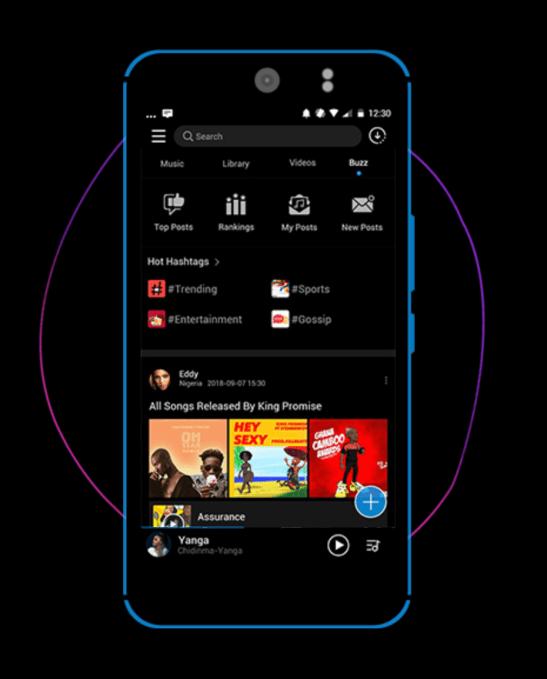
The service still benefits from Transsion’s large market share, but it has also published mobile apps for Android and iOS that tap users on a wider range of smartphones.

And it’s also tapping an international growth opportunity, specifically by marketing itself to Africans that have emigrated to other parts of the world and continue to listen to music from the continent.

“Music has no borders, and we’re committed to providing a rich and high-quality music experience for all users — not just in Africa, but around the world,” said Boomplay CEO Joe He. “This investment will help us do just that, by fostering cultural interchange and helping people communicate through the universal language of music.”

Boomplay’s rise in Africa, meanwhile, comes at a time when streaming services that dominate in other parts of the world, such as Spotify and Apple Music, have yet to really break into the African continent. Spotify launched its first service in Africa in the continent’s most developed market — South Africa — in March 2018, and has yet to expand to more countries, while Apple — with its premium pricing — has by Choi’s estimate sold less than 1 million iPhones in the region, which limits its potential growth.

Boomplay’s growth has — predictably — mirrored that of the handsets where it is preinstalled, but notably covers a number of countries in the sub-Saharan region, as well as a strong range of local music alongside more international tracks, by way of deals with large labels like Universal Music and Warner Music.

The role that China has played in developing tech in Africa has been an interesting one. It started years ago when Chinese companies like ZTE — looking for growth outside their home market — were winning big deals to build telecoms infrastructure at a time when tele-density on the continent was the lowest in the world. Rather than building fixed-line infrastructure, they built mobile infrastructure, and that eventually led to a wave of Chinese OEMs, making cheap feature and smartphones, becoming some of the biggest handset suppliers. “The Chinese government has really pushed investing in Africa since they see a lot of potential there,” Choi said.

Despite the very homegrown nature of the arts in Africa — specifically in areas like music and cinema — the development of services like Boomplay to deliver that content has been a natural progression in China’s wider tech growth in the region.

But if you follow the African market, you know that despite the big potential — of the 1.2 billion inhabitants, the average age is 21, Choi said, a great market for streaming music services — the economy is still underdeveloped, which hinders significant growth.

In the case of Boomplay, that translates not just to adding more users in countries that rank as some of the poorest in the world, but in getting them efficient ways to pay if they do want to do so.

“We’ve seen healthy growth, but one of the problems is that there isn’t really a sustainable or efficient mobile payment system,” Choi noted. Processing payments, he said, “takes really long and can be unreliable, for example, halfway through a transaction, errors may occur.” He said the company already accepts Mpesa, one of the key mobile payment services that was originally founded in Kenya, along with other payment methods, but the plan is to add more to that soon.

Longer term, Choi said that will likely lead to more funding being raised. Whether that comes from China again or elsewhere will be interesting to watch. “Chinese investors see Africa as the China of 10 years ago,” he said, “so they feel they can apply the same models to it, and bring it up to being a very prosperous region.”

“Africa is full of opportunity, from its young demographics to its vibrant culture, and Boomplay sits in the middle of all of that greatness,” said Tony Li, managing director of Maison Capital, in a statement. “Boomplay has incorporated NetEase’s experience in the music streaming business with Transsion’s expertise in local operations, and in doing so Boomplay became the dominant player in the region in a very short period of time. As more of Africa comes online, we are confident that Boomplay will continue to be a major force in business and culture.”


Daily Crunch: The corporate fallout of the Bezos divorce

The Daily Crunch is TechCrunch’s roundup of our biggest and most important stories. If you’d like to get this delivered to your inbox every day at around 9am Pacific, you can subscribe here.

1. MacKenzie Bezos giving ex-husband Jeff 75 percent of Amazon stock, voting control

MacKenzie Bezos noted in a tweet that her 26-year marriage to Amazon CEO Jeff Bezos has been formally dissolved. She added that she will be giving the executive all interest in the Bezos-owned Washington Post and privatized space company, Blue Origin.

The deal also finds MacKenzie giving her ex 75 percent of their joint Amazon stock, with Jeff also retaining voting control in her remaining 25, “to support his continued contributions with the teams of these incredible companies.”

2. Google pulls the plug on AI council that included Heritage Foundation leader

Critics questioned the inclusion of Kay Coles James, leader of the right-wing think tank the Heritage Foundation, on the eight-person panel. In response, the company has apparently chosen to drop the whole thing.

3. Snapchat launches Mario Party-style multiplayer games platform

The Snap Games platform lets you play real-time, multiplayer games while texting and talking with your friends. The platform is based on Snap’s secret late-2017 acquisition of Australian game studio PrettyGreat.

4. EU goes after Valve for ‘geo-blocking’ Steam activation codes

“In a true Digital Single Market, European consumers should have the right to buy and play video games of their choice regardless of where they live in the EU,” said Commissioner Margrethe Vestager in a statement.

5. Amazon reportedly readying its Alexa-powered answer to AirPods

A report from Bloomberg details the upcoming hardware, which sounds a lot like AirPods: a pair of small wireless in-ear buds, a case that doubles as a charger and built-in controls and a mic so you can control your music, talk to friends and ask Alexa things on the go.

6. Nintendo is bringing Zelda and Mario into virtual reality

Nintendo’s Labo VR kit may just be a little cardboard experiment, but Nintendo is taking a chance on throwing its most beloved titles into the headset.

7. The uncertain future of shared electric scooters

The rise of electric scooters is often compared to the rise of ride hailing, but there are some key differences at play. (Extra Crunch subscription required.)

The Google Assistant on Android gets more visual responses

About half a year ago, Google gave the Assistant on phones a major visual refresh. Today, the company is following up with a couple of small but welcome tweaks that’ll see the Assistant on Android provide more and better visual responses that are more aligned with what users already expect to see from other Google services.

That means when you ask for events now, for example, the response will look exactly like what you’d see if you tried the same query from your mobile browser. Until now, Google showed a somewhat pared-down version in the Assistant.

Also — and this is going to be a bit of a controversial change — when the Assistant decides that the best answer is simply a list of websites (or when it falls back to those results because it simply doesn’t have any other answer), the Assistant used to show you a couple of boxes in a vertical layout that were not exactly user-friendly. Now, the Assistant will simply show the standard Google Search layout.

Seems like a good idea, so why would that be controversial? Together with the search results, Google will also show its usual Search ads. This marks the first time that Google is showing ads in the Assistant experience. To be fair, the Assistant will only show these kinds of results for a very small number of queries, but users will likely worry that Google will bring more ads to the rest of the Assistant.

Google tells me that advertisers can’t target their ads to Assistant users and won’t get any additional information about them.

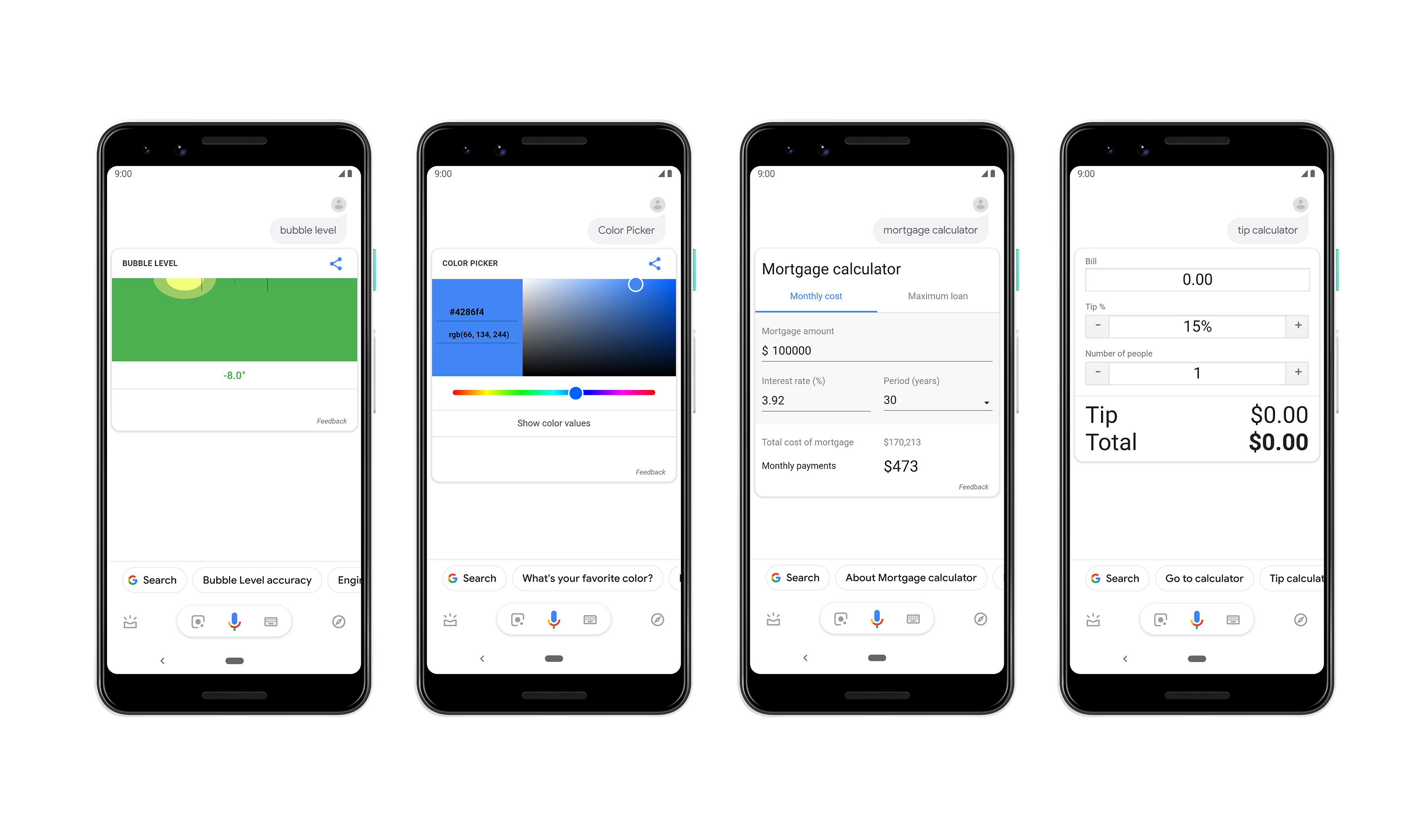
The Assistant will now also show built-in mortgage calculators, color pickers, a tip calculator and a bubble level when you ask for those. Also, when you ask for a stock quote, you’ll now see a full interactive graph, not just the current price of the quote.

These new features are rolling out to Android phones in the U.S. now. As usual, it may take a bit before you see them pop up on your own phone.

Landed raises $7.5 million Series A to help teachers buy homes

Teachers are notoriously underpaid, and buying homes is notoriously expensive. This is where Landed, which just raised a $7.5 million Series A round led by Initialized Capital, comes in.

Landed helps educators buy homes by providing them with down-payment assistance. That’s because many teachers leave their jobs due to a lack of stable housing. In Berkeley, Calif., for example, more than half of the school district’s employees reported they considered leaving because of the high costs of housing.

“Our mission is to help these people build financial security and help them remain committed to their communities,” Landed co-founder Alex Lofton said. “We try to stay flexible to people’s realities. We don’t require people to buy in any particular city.”

To date, Landed has helped more than 200 educators buy homes in the San Francisco Bay Area, Denver and Seattle.

Currently, the maximum amount of support Landed gives is $120,000 in the Bay Area, but Lofton says people generally take less than that. Unlike some of the city-run housing programs, there’s no income restriction with Landed.

“A lot of people we work with make a bit too much money to qualify for those programs,” Lofton said.

Landed, which manages the funds it sets up, offers down-payment assistance in exchange for a cut of the home’s appreciated value. Landed, Inc., which is a licensed real estate brokerage, gets money on every transaction.

Given the influx of new cash into the SF Bay Area via IPOs from tech companies, Landed expects the market to become more challenging.

“With all of these economic booms in a market that’s already really supply-constrained with housing, it will be even more challenging,” he said.

While that’s surely discouraging to potential homebuyers, Landed is prepared to expand into additional markets and diversify where it offers support.

“[IPOs] will affect us but it won’t end our mission,” Lofton said. “For the community that we’re a part of, in our backyard, it does make us all here a bit nervous.”

With the funding, Landed will be able to expand to more cities and serve educators beyond K-12.

“I’ve followed the team at Landed for several years in their mission of providing more equitable access to homeownership to some of the most important community members – our educators and teachers,” Initialized Capital partner Kim Mai-Cutler* said in a statement. “Not only is Landed attacking a profound issue affecting teacher retention in metros and school districts throughout the country, this is a promising market opportunity to build a trusted brand and institution to help essential professionals achieve their lifetime financial goals.”

*Kim-Mai Cutler is a former colleague of mine, but this relationship had no bearing on coverage.

Peter Kraus dishes on the market

During my recent conversation with Peter Kraus, which was supposed to be focused on Aperture and its launch of the Aperture New World Opportunities Fund, I couldn’t help veering off into tangents about the market in general. Below is Kraus’ take on the availability of alpha generation, the Fed, inflation versus Amazon, housing, the cross-ownership of U.S. equities by a few huge funds and high-frequency trading.

Gregg Schoenberg: Will alpha be more available over the next five years than it has been over the last five?

To think that at some point equities won’t become more volatile and decline 20% to 30%… I think it’s crazy.

Peter Kraus: Do I think it’s more available in the next five years than it was in the last five years? No. Do I think people will pay more attention to it? Yes, because when markets are up to 30 percent, if you get another five, it doesn’t matter. When markets are down 30 percent and I save you five by being 25 percent down, you care.

GS: Is the Fed’s next move up or down?

PK: I think the Fed does zero, nothing. In terms of its next interest rate move, in my judgment, there’s a higher probability that it’s down versus up.