Proposed bill would forbid big tech platforms from using dark pattern design

A new piece of bipartisan legislation aims to protect people from one of the sketchiest practices that tech companies employ to subtly influence user behavior. Known as “dark patterns,” this dodgy design strategy often pushes users toward giving up their privacy unwittingly and allowing a company deeper access to their personal data.

To fittingly celebrate the one-year anniversary of Mark Zuckerberg’s appearance before Congress, Senators Mark Warner (D-VA) and Deb Fischer (R-NE) have proposed the Deceptive Experiences To Online Users Reduction (DETOUR) Act. While the acronym is a bit of a stretch, the bill would forbid online platforms with more than 100 million users from “relying on user interfaces that intentionally impair user autonomy, decision-making, or choice.”

“Any privacy policy involving consent is weakened by the presence of dark patterns,” Senator Fischer said of the proposed bipartisan bill. “These manipulative user interfaces intentionally limit understanding and undermine consumer choice.”

While this particular piece of legislation might not go on to generate much buzz in Congress, it does point toward some regulatory themes that we’ll likely hear more about as lawmakers build support for regulating big tech.

The bill, embedded below, would create a standards body to coordinate with the FTC on user design best practices for large online platforms. That entity would also work with platforms to outline what sort of design choices infringe on user rights, with the FTC functioning as a “regulatory backstop.”

Whether the bill gets anywhere or not, the FTC itself is probably best suited to take on the issue of dark pattern design, issuing its own guidelines and fines for violating them. Last year, after a Norwegian consumer advocacy group published a paper detailing how tech companies abuse dark pattern design, a coalition of eight U.S. watchdog groups called on the FTC to do just that.

Beyond eradicating dark pattern design, the bill also proposes prohibiting user interface designs that cultivate “compulsive usage” in children under the age of 13 as well as disallowing online platforms from conducting “behavioral experiments” without informed user consent. Under the guidelines set out by the bill, big online tech companies would have to organize their own Institutional Review Boards. These groups, more commonly called IRBs, provide powerful administrative oversight in any scientific research that uses human subjects.

“For years, social media platforms have been relying on all sorts of tricks and tools to convince users to hand over their personal data without really understanding what they are consenting to,” Senator Warner said of the proposed legislation. “Our goal is simple: to instill a little transparency in what remains a very opaque market and ensure that consumers are able to make more informed choices about how and when to share their personal information.”

The full text of the legislation is embedded below.

France’s tax on tech giants passes first vote

The lower house of the French parliament has voted in favor of the new tax on tech giants without any modification. Big tech companies that generate significant revenue in France will be taxed on their revenue generated in France.

Economy Minister Bruno Le Maire has been lobbying other European countries so that big tech companies would stop optimizing their European corporate structure to lower their effective tax rate.

But changing taxation rules in Europe is a tough road. You need to convince every single member of the European Union and get a unanimous vote. Some European countries that attract a lot of regional headquarters for tech giants weren’t on board.

The French government didn’t want to wait and wrote this new piece of legislation. So here’s what’s happening. If you’re running a company that generates more than €750 million in global revenue and €25 million in France, you will have to pay 3 percent of your French revenue in taxes.

This tax is specifically designed for tech companies in two categories — marketplace (Amazon’s marketplace, Uber, Airbnb…) and advertising (Facebook, Google, Criteo…).

It’s a weird taxation model, as it is based on revenue and not profit. It’ll also require some work from the taxation administration, as French revenue means that it involves all transactions with somebody with a French mailing address or a French IP address. France expects to generate €400 million in revenue with this new tax in 2019.

Eventually, Le Maire hopes that other European countries will change their attitudes. The OECD has also been working on a way to properly tax tech companies with a standardized set of rules.

If the European Union or the OECD find a way to properly tax tech companies in countries where they operate, the French government says that it would replace today’s new tax.

The upper house of the French parliament will now debate and vote for the plan. But it seems like it’ll be an easy one.

Labelbox raises $10 million for its services to support machine learning applications

Labelbox, a provider of services to create, manage and maintain data sets for machine learning applications, has raised $10 million in a new round of funding.

The financing came from Gradient Ventures, Google’s AI-focused venture fund, with participation from previous investors Kleiner Perkins, First Round Capital and Sumon Sadhu, an angel investor.

Labelbox manages the process of outsourcing data labeling for organizations and provides toolkits for companies or organizations to manage the data they’re receiving and ensuring the quality of that data, according to chief executive Manu Sharma.

For the Labelbox founders — Sharma; Dan Rasmuson, the company’s chief technology officer; and Brian Rieger, the chief operating officer — the tools they developed are simply an extension of the services they’d needed at their previous employers — companies like DroneDeploy, Planet Labs and Boeing.

Financing from the round will be used to double the size of its team from 11 employees to 22, and build out its sales and marketing teams.

Labelbox counts around 50 customers for its service and charges them based on the volume of data that companies upload and the breadth of services they use, Sharma said. Some named customers include FLIR Systems, Lytx, Airbus, Genius Sports and KeepTruckin.

As we’d reported when Labelbox launched from stealth last year, anyone can use the company’s toolkit for free. Companies are charged once they hit a certain usage threshold. Lytx, for instance, uses Labelbox for its DriveCam, a system installed on half a million trucks with cameras that use AI to detect unsafe driver behavior so they can be coached to improve. And the media and publishing giant Conde Nast is using Labelbox to match runway fashion to related items in their archive of content.

“Labelbox substantially reduces model development times and empowers data science teams to build great machine learning applications,” said Sharma in a statement. “With the new funding, Labelbox will continue to double down on bringing data labeling infrastructure to the machine learning teams with powerful automation, collaboration, and enterprise-grade features.”

Gradient Ventures was interested enough in the technology to invest, and sees promise in the company’s ability to support the development of machine learning tools globally.

“Labelbox is well-positioned to fuel the industrialization of machine learning across many sectors, such as manufacturing, transportation and healthcare. In doing so, they will unlock the potential of AI for companies across the globe,” said Anna Patterson, founder and managing partner at Gradient Ventures.

The Lone Star State has more capital, as LiveOak closes its newest fund with $105 million

Texas may have suffered a heartbreaking defeat during last night’s NCAA men’s championship basketball game, but the state does have something to celebrate today. Local outfit LiveOak Venture Partners, a venture firm focused exclusively on Texas-based startups, has closed a new fund with $105 million in capital commitments.

It’s the second vehicle for the firm, formed in 2013 by longtime investors Venu Shamapant, Krishna Srinivasan and Ben Scott, all of whom met while working together at Austin Ventures in 2000 — and who seem to know what they’re doing as a team.

LiveOak has already seen two of its portfolio companies sell for meaningful amounts (Digital Pharmacists sold last month to K1 Investment Management for more than $100 million; Opcity was snatched up last summer by News Corp. for $210 million). They also have at least two portfolio companies whose valuations have risen considerably since LiveOak funded them, including CS Disco, which raised $83 million in January, and OJO Labs, which raised $45 million just a few weeks ago.

We were in touch with the trio late last week to learn more about what they are seeing on the local startup scene.

TC: You’ve all been based in Austin for a very long time. What are the biggest shifts you’ve seen since meeting each other 19 years ago, during the peak of the dot-com bubble?

KS: There are three primary dimensions where Texas has evolved since 2000. Talent is perhaps the most significant improvement since 2000. There’s been a massive inflow of strong talent — in particular from the coasts — and we also have a maturation of locally cultivated talent. [Both have created a] critical mass of people across functions and industries that have been through a startup cycle.

While, like any other market, Texas had plenty of local capital in 2000, that quickly dried up, leaving Austin Ventures, where we worked at the time, as the only really meaningful source of local capital in Texas. [After the more recent financial crisis], between 2009 and 2012, all local early-stage capital really dried up, in contrast with the continued growth in the talent. But that created the opportunity for us to start LiveOak and today, there’s strong capital availability locally and from outside, setting up a really vibrant entrepreneurial scene in town.

I’d also say that while Texas is certainly more skewed toward the enterprise / B2B market, it has become much more diversified than in 2000. We have completely [moved] away from semiconductors and hardware and heavily accelerated into verticalized software and tech-enabled services. Some of the leaders in our portfolio are players in legal tech, real estate tech, health tech. We’re also seeing some early growth in consumer, but that’s an area where we’ll need to import talent heavily.

TC: How has the founder profile changed, if at all?

KS: While we haven’t reached peak Texas by any means, we have seen a tipping point in terms of cost-of-living factors in coastal states bringing in serial entrepreneurs to start and scale companies that would have otherwise been founded in other parts of the country in past years. In fact, over half of the six investments we’ve already made out of our new fund were founded by entrepreneurs who moved to Texas in the past five years.

TC: And what’s happening in terms of valuations? Any trends you’ve observed over the last year or two?

VS: Valuations in Texas companies are very dependent on the stage of the company. For early-stage companies, while there has been some uptick in valuations, on average, they continue to be at a discount to national valuation trends. For later-stage capital, where these companies target the same national investor base, the valuations tend to converge towards national levels of valuations.

TC: What size checks are you writing, and has that changed with this new fund? 

KS: Our strategy is to be one of the first institutional investors in a company. For post seed-stage companies that are raising their first institutional round of financing, our first check can range from $1.5 million to $4 million. Over the life cycle of a company, we’re comfortable investing from $8 million to $10 million [altogether].

Can the law be copyrighted?

UpCodes wants to fix one of the building industry’s biggest headaches by streamlining code compliance. But the Y Combinator-backed startup now faces a copyright lawsuit filed against it by the International Code Council, the nonprofit organization that develops the code used or adopted in building regulations by all 50 states.

The case may have ramifications beyond the building industry, including for compliance technology in other sectors and even individuals who want to reproduce the law. At its core are several important questions: Is it possible to copyright the law or text that carries the weight of law? Because laws and codes are often written by private individuals or groups instead of legislators, what rights do they continue to have over their work? Several relevant cases, including ones involving building codes, have been decided by different circuits in the United States Court of Appeals, which means the UpCodes lawsuit may potentially be heard by the Supreme Court.

Brothers Scott and Garrett Reynolds founded UpCodes in 2016. While working as an architect, Scott says he realized how laborious code compliance is for builders, who are required by law to follow codes that determine things like the height of handrails from the ground, minimum width of openings for bedroom windows, placement of light switches or how many electrical outlets to have in a hallway.

These details are important to ensure buildings are safe and accessible and an oversight may subject builders and property owners to legal penalties, fines and costly rebuilding. Firms that can afford to do so hire code consultants, but on an industry-wide level, the process of code compliance has been cited as a key reason for reduced productivity in the construction industry and rising home prices.

Scott decided to leave architecture to develop tools that would simplify the process, and was joined by his brother Garrett, then a software engineer at construction management software company PlanGrid. The two completed Y Combinator’s accelerator program in 2017 and so far have announced $785,000 in funding from angel investors, Y Combinator and Foundation Capital.

Brothers Scott and Garrett Reynolds, who founded UpCodes to streamline building code compliance

UpCodes’ first product, an online database, gives free access to codes, code updates and local amendments from 32 states, as well as New York City. For building professionals and others who want more advanced search tools and collaboration features, UpCodes sells individual and team subscriptions. In 2018, UpCodes released its second product, called UpCodes AI. Described as a “spellcheck for buildings,” the plug-in scans 3D models created with building information modeling (BIM) data and highlights potential errors in real time.

Just as technology has dramatically streamlined the compliance process in other highly regulated sectors, including finance and healthcare, Scott and Garrett Reynolds say tools like UpCodes’ can increase productivity in the building industry. The startup currently has more than 200,000 monthly active users, and has served over 10 million page views and 2 million users since launch.

It argues that its use of building codes is covered by fair use. The ICC, on the other hand, claims that products like UpCodes’ database harm its ability to make revenue and continue developing code. The ICC wants UpCodes to take down the building code on which it claims copyright, and has also sued for damages.

Making building codes more accessible

Served on UpCodes in September 2017 by the ICC and the American Society of Construction Engineers (ASCE), the lawsuit also names each of the brothers as a defendant. (UpCodes settled out of court with the ASCE).

‘We have a very long tradition that in a society governed by the rule of law, people have the right to access the law by which they are governed.’ Corynne McSherry, legal director of the Electronic Frontier Foundation

The brothers say they were shocked because they believed they were covered by the fair use doctrine. In the US, fair use is determined using four factors: the purpose and character of the use, the nature of the copyrighted work, the amount and substantiality of the portion taken and the effect of the use on the potential market for or value of the copyrighted work. In one of the circuit court cases that involved building code, Veeck v Southern Building Code Congress International (2002), the judges ruled that when model codes are enacted into law, they enter the public domain.

“The people who are impacted are obviously architects, engineers, industry professionals, but also any homeowners or people living in a house or apartment are affected, too,” says Scott Reynolds. “If you want to do a renovation or move a wall or add an extension to your house, it is the exact same law that governs those as well. It’s a pretty dangerous precedent to set, copyrighting law in a democracy.”

The brothers see their database as an easy-to-use resource for anyone who wants to research building code. For example, they say they heard from an older couple who used UpCodes’ free access to confirm they had the right to demand a broken elevator in their building be fixed within a certain timeframe.

Formed in 1994 by the merger of three regional model code groups, the International Code Council is a nonprofit with 64,000 members headquartered in Washington DC. Its model codes and standards are developed by committees made up of volunteers from its membership and ICC staff. The ICC lobbies for the code to be enacted into law, and earns revenue by selling code books and running accreditation programs.

Some places, including Michigan, direct people who want to research building codes to buy the books from the ICC’s site. The ICC’s website has code posted for free viewing, but copy and paste, highlighting, printing and other functions are disabled unless users pay a subscription fee. Scott and Garrett Reynolds say this makes it more difficult to research code compliance, especially for non-professionals. UpCodes uploads building codes from various sources, including government websites, the ICC’s site and ICC code books ordered online, scanned and put into its database. The ICC argues that this violates its copyright and hurts the organization’s ability to raise revenue through code book sales.

“What is really at the crux of this lawsuit is that we develop the highest quality codes that are adopted and used by governments at essentially no cost to the taxpayers and UpCodes is misappropriating ICC codes to generate their for-profit business,” says Mel Oncu, ICC’s general counsel.

When adopting code, many jurisdictions look at what others are doing, which has helped increase the use of ICC’s code. But codes still vary between cities and states, with the Economist reporting in 2017 that American counties and municipalities use a combined total of 93,000 different building codes, and are updated frequently, adding another layer of complexity to the compliance process.

Corynne McSherry, legal director of digital liberties advocacy group the Electronic Frontier Foundation, says at stake in the case is the principle of access to the law.

“Many of us don’t think about this area of law, but it’s one of the most influential to our daily lives. We think of law in terms of what we see onscreen, but not too many of us normally have to engage with a crucial constitutional problem like those portrayed in movies. Hopefully most of us don’t have to encounter criminal law that much. But building codes actually shape our daily lives in incredibly concrete ways,” McSherry says.

Because the codes are legally binding, “that makes a pretty significant difference under copyright law and under fundamental constitutional law. We have a very long tradition that in a society governed by the rule of law, people have the right to access the law by which they are governed,” she adds.

An issue that’s come up before

Questions surrounding copyright and access to the law have been litigated several times in the United States courts of appeals. Two cases in particular may help UpCodes’ argument: Building Officials and Code Administration (BOCA) v Code Technology (1980) and Veeck v Southern Building Code Congress International (SBCCI) (2002). Two more recent cases involving Public.Resource.org, a nonprofit group that publishes public domain materials to its website, may also bolster UpCodes’ position: Code Revision Commission v Public.Resource.org (2017) and American Society for Testing and Materials et al. v Public.Resource.org (2018).

BOCA (one of the three groups that merged into ICC in 1994) developed a model building code that was adopted by Massachusetts, with some minor modifications, which BOCA then published as the Commonwealth of Massachusetts State Building Code. When private publisher Code Technology began publishing and selling its own edition of the code, BOCA sued. The case made it to the First Circuit, which ruled in Code Technology’s favor, stating that it was “far from persuaded that BOCA’s virtual authorship of the Massachusetts building code entitles it to enforce a copyright monopoly over when, where and how the [code] is reproduced and made publicly available.”

Then more than two decades later, another case resulted in a similar ruling. The Southern Building Code Congress International, another one of the three regional groups that formed the ICC, published a model building code adopted by local governments, including the towns of Anna and Savoy in Texas. Peter Veeck, who ran a website with free information about North Texas, bought copies of the code from the SBCCI, then scanned and uploaded them.

When the SBCCI demanded he stop, Veeck responded in a court filing that posting the code did not violate the Copyright Act and was covered by fair use. The SBCCI counterclaimed for copyright infringement. While the district court ruled in the SBCCI’s favor, the appeal made it to the Fifth Circuit, where Judge Edith Jones wrote in her opinion for the nine-judge majority that “as law, the model codes enter the public domain and are not subject to the copyright holder’s exclusive prerogatives.” The SBCCI’s attempt to appeal to the Supreme Court was denied.

The Economist reports there are 93,000 building codes in use between American jurisdictions and municipalities

Building codes and copyright were also at the center of the two cases involving Public.Resource.org. A lawsuit filed by the state of Georgia’s Code Revision Commission in 2015 sought to stop it from publishing the Official Code of Georgia Annotated (OCGA) after founder Carl Malamud purchased a hard copy of the OCGA, scanned it and sent copies on USB sticks to Georgia legislators. The Code Revision Commission argued that the annotations they wrote placed it under state copyright, but the Eleventh Circuit ruled in Public.Resource.org’s favor last year.

In another recent case, six industry groups, including the American Society for Testing and Materials, sued Public.Resource.org for scanning and publishing building, fire and safety codes they considered their copyrighted property. After the District Court for the District of Columbia ruled against Public.Resource.org, the case went on appeal to the DC Circuit. In July 2018, a three-judge panel reversed the decision, and sent the case back to the district court for further consideration, stating that “in many cases, it may be fair use for PRO to reproduce part or all of a technical standard in order to inform the public about the law.”

One difference between the Public.Resource.org cases and UpCodes’ is that Public.Resource.org is a non-commercial group, a fact that strengthens their fair use argument. UpCodes, on the other hand, is a commercial company, which will become part of the fair use analysis if their case makes it to trial. But that is not a decider, says McSherry, who represented Public.Resource.org in both cases, and the judges are likely to consider the Public.Resource.org cases, as well as the Veeck and other building code cases.

Because the Veeck case never made it to the Supreme Court, that means it hasn’t heard a case on the copyright availability of legal codes, or codes with the force of law, in a very long time, says Joe Gratz, a lawyer who has litigated several high-profile internet copyright and trademark disputes and is representing UpCodes and the Reynolds brothers. This opens the possibility of the ICC lawsuit making it to the Supreme Court.

“So now you have at least three of the circuits — DC, Fifth and Eleventh — all totally lined up, effectively saying that Veeck was right,” Gratz adds.

The ICC’s argument

But the ICC’s position is that the Veeck case is “bad law,” says Oncu, adding that the decision was made two decades ago, before developments in technology allowed the organization to host free access to codes on its own website.

The ICC’s lawyers note that the organization also works with third-party distributors that license the code. “UpCodes could have come to ICC at any point and asked to lawfully reproduce the codes that we own. The idea that they can’t accomplish their mission without violating our copyright doesn’t make much sense to me,” says Oncu.

(In response, Garrett Reynolds says “It’s absurd to license the law.  ICC thinks they’re the gatekeepers and anyone wanting to share the law needs to pay their toll.  ICC doesn’t get to decide who’s allowed to create new innovations to help people follow the law.” UpCodes did not ask ICC to license the code.)

There are two copyright cases, decided in circuit court, that support ICC’s position, says lawyer Kevin Fee, a Morgan Lewis partner who is representing the organization: CCC Information Services v. Maclean Hunter Market Reports (1994) and Practice Management Information v. American Medical Association (1998).

’The idea that they can’t accomplish their mission without violating our copyright doesn’t make much sense to me.’ Mel Oncu, International Code Council’s general counsel

In 1994, the Second Circuit sided with Maclean, publisher of used car valuation reference Red Book, which alleged CCC, a data and service provider for the automotive industry, violated its copyright by uploading information from the guide to its online network. In its decision, the court said “We are not prepared to hold that a state’s reference to a copyrighted work as a legal standard for valuation results in loss of the copyright.”

In the second case, Practice Management Information, a medical coding products company, sued the American Medical Association over the use of Current Procedural Terminology (CPT), a medical code set that is required by Medicare and HIPAA and appears in the Federal Register. Practice Management claimed that this meant AMA’s copyright was invalid, but the Ninth Circuit disagreed, writing in its 1997 decision that “the AMA’s right under the Copyright Act to limit or forgo publication of the CPT poses no realistic threat to public access.”

The ICC claims that its training and education certification business isn’t enough to fund code development.

“Copyright protection of our codes is essential to our ability to continue to update our codes,” says Oncu. She adds that the ICC believes if the lawsuit is ruled in UpCodes’ favor, it may potentially set a precedent that will make it difficult for it to have a revenue stream and continue creating high-quality codes.

Scott and Garrett Reynolds, however, say that the ICC appears to have healthy revenue. In its 2016 annual report, the ICC said its consolidated revenue in 2015 was $66 million, an increase of $4.3 million compared to 2014, and that it “consistently records over $1 million in sales per month” through its online store. Then from 2015 to 2016, ICC’s revenue increased by $12 million, according to a report presented by chief executive officer Dominic Sims at an annual meeting. (The ICC did not disclose an amount for consolidated revenue in its 2017 annual report, and hasn’t released its 2018 annual report yet.)

The UpCodes founders also note that Sims, the ICC’s CEO, was paid $709,000 in 2016, according to a tax filing, much more than the $104,000 median annual salary for nonprofit CEOs. (Oncu says that ICC’s salaries are comparable to other standards organizations.)

Potential implications for innovation

One of UpCodes’ angel investors, Cyrus Lohrasbpour, decided to back the company when he saw them present during Y Combinator’s Demo Day. Lohrasbpour says he was impressed by the accessibility of the website and its team collaboration tools.

“I immediately understood the value proposition of the company,” he says. “It was hard for me to understand why building codes didn’t have something like this already.” Lohrasbpour was one of two investors deposed by the ICC as part of the lawsuit, but despite being questioned for five hours by lawyers, he says the experience made him more determined to support UpCodes. “If you invest in a company that will disrupt an incumbent, there is always a chance that something like this occurs.”

Scott and Garrett Reynolds say that lawsuits like the one they are facing may potentially deter other developers from working on tools to automate building and safety processes, such as calculating fire resistance in walls. The UpCodes suit, and the other cases that came before it, aren’t just relevant to builders. Technology has been able to streamline the process of regulatory and legal compliance in several industries, but innovation may slow if would-be founders are unclear about how copyright law applies to them.

The Electronic Frontier Foundation takes on clients like Public.Resource.org pro bono because “lawsuits can be a way of shutting down innovation in its infancy,” says McSherry. “It can be intimidating to people trying to experiment in this space.”

ICC’s stance is that it is already making its code more accessible by putting it online.

“Code compliance has never been easier. If you wanted to access the codes before the internet, you had to buy a hard copy of the codes or go to the library to figure it out. Now ICC has made its codes available online for free. All you need is a phone in your hand or internet access to know what the codes say,” says Fee.

But UpCodes’ argument is that part of the value of their product is its ease of use, including the ability to cut, paste and highlight text, which ICC’s online codes lack unless you pay a subscription fee. At the same time, the government website of many municipalities direct residents to the ICC’s website to read or purchase code, including Michigan and California.

“I think citizens being able to freely access and discuss laws is critical to democracy and to hold the government accountable,” says Garrett Reynolds. “If one private entity controls access to the law and they get to decide who can access it when and how, it might be appropriate in a dictatorship, but not in a democracy. The people are the owners of the law.”

Uber, Lyft and the challenge of transportation startup profits

How much does transportation cost you?

In most cities, bus or subway fare might set you back $3 or so. A tank of gas, maybe $30 or $40 depending on your car. An hour of street parking? Sometimes it’s free, sometimes it’s a few bucks. And you can usually snag an economy seat on a round-trip U.S. domestic flight for less than $300.

These numbers probably ring true for most people. There’s just one problem: Everything you know about the cost of transportation is wrong.

Despite a massive infusion of venture capital into the transportation sector over the past few years, mobility startups are starting to learn what every transportation business has known for generations: transportation profits are elusive, and the system is mainly held together by subsidies. Will this be the first generation of transportation businesses to escape history?

Voyage CEO Oliver Cameron at TC Sessions: Mobility on July 10

Some of the first users of autonomous taxis are senior citizens living in a massive retirement community in Florida.

It’s there, in a 40-square-mile area known as The Villages, that autonomous driving startup Voyage has planted its flag. Once the door-to-door self-driving taxi service is fully operational, all 125,000 residents will have the ability to summon a self-driving car to their doorstep using the Voyage mobile app.

Voyage’s strategy to target retirement communities makes the startup, and its founders, stand out in a sea of emerging competitors. And now, TechCrunch is excited to announce an opportunity to gain insight into Voyage, its mission and plans for the future.

Co-founder and CEO of Voyage Oliver Cameron will participate in TechCrunch’s inaugural TC Sessions: Mobility, a one-day event on July 10, 2019 in San Jose, Calif., that is centered around the future of mobility and transportation.

Cameron previously led the autonomous vehicle, artificial intelligence and deep learning curriculum at Udacity . Voyage spun out of Udacity in 2017. Since then, Voyage has piloted its autonomous taxi services in two retirement communities, one in San Jose and another in Florida. And more will likely follow.

TC Sessions: Mobility will present a day of programming with the best and brightest founders, investors and technologists who are determined to invent a future Henry Ford might never have imagined. In case you missed it, Nuro co-founder and CEO Dave Ferguson was our first announced guest for TC Sessions: Mobility.

TC Sessions: Mobility aims to do more than highlight the next new thing. We’ll dig into the how and why, the cost and impact to cities, people and companies, as well as the numerous challenges that lie along the way, from technological and regulatory to capital and consumer pressures.

Early-Bird tickets are now on sale — save $100 on tickets before prices go up.

Students, you can grab your tickets for just $45.

Daily Crunch: China considers Bitcoin mining ban

The Daily Crunch is TechCrunch’s roundup of our biggest and most important stories. If you’d like to get this delivered to your inbox every day at around 9am Pacific, you can subscribe here.

1. Regulators in China are weighing a ban on Bitcoin mining

Cryptocurrency mining has become the latest target for the Chinese government seeking to phase out industries considered to be a drag on the country’s economy.

The National Development and Reform Commission, the top economic planning agency in the world’s largest market for bitcoin mining, released a list of sectors it plans to promote, restrict or eliminate. Crypto mining, the process of creating Bitcoin and other digital currencies through the use of computing power, was namechecked.

2. To cut down on spam, Twitter cuts the number of accounts you can follow per day

The idea with the new limit is that it helps prevent spammers from rapidly growing their networks by following then unfollowing Twitter accounts in a “bulk, aggressive or indiscriminate manner” — something that’s a violation of the Twitter Rules.

3. Apple could release a 31.6-inch 6K external display this year

Analyst Ming-Chi Kuo has released a new report about future Apple products.

(From left to right) David Liu, Chief Product Officer; Bernie Xiong, Chief Technology Officer and Co-Founder; Anita Ngai, Chief Revenue Officer; Eric Gnock Fah, Chief Operating Officer and Co-Founder; Ethan Lin, Chief Executive Officer and Co-Founder (PRNewsfoto/Klook)

4. Travel activities platform Klook raises $225M led by SoftBank’s Vision Fund

Klook was founded in 2014 and it serves as an activities platform for users who travel overseas. That covers areas like visits to adventure parks, scuba diving, more localized tours or basics — all of which can be found and paid for using Klook’s platform.

5. UK sets out safety-focused plan to regulate internet firms

The government is now proposing a mandatory duty for platforms to take reasonable steps to protect their users from a range of harms — including but not limited to illegal material such as terrorist and child sexual exploitation and abuse.

6. Don’t worry, RED’s $1,595 titanium Hydrogen One is finally shipping

Fear not, the Titanium version of RED’s wholly ridiculous Hydrogen One is finally here. And yes, it costs as much as you remember.

7. Dote raises $12M and introduces live-streamed Shopping Parties

Shopping Party allows influencers to share live video while browsing different products on Dote and chatting with fans.

Walmart to expand in-store tech, including Pickup Towers for online orders and robots

Walmart is doubling down on its technology innovations in its brick-and-mortar stores in an effort to better compete with Amazon. The retailer today announced the expanded rollout of several technologies — ranging from in-store Pickup Towers to help customers quickly grab their online orders to floor-scrubbing robots. These jobs were, in many cases, previously handled by people instead of machines.

The retailer says it will add to its U.S. stores 1,500 new autonomous floor cleaners, 300 more shelf scanners, 1,200 more FAST Unloaders and 900 new Pickup Towers.

The “Auto-C” floor cleaner is programmed to clean and polish the store’s floor after the area is first prepped by associates. Publicly introduced last fall, the floor cleaner uses assisted autonomy technology to clean the floors instead of having an associate ride a scrubbing machine — a process that today eats up two hours of an employee’s time per day.

Built in partnership with Brain Corp., Walmart said in December it planned to deploy 360 floor-cleaning robots by the end of January 2019. It’s now bumping that rollout to include 1,500 more this year, bringing the total deployment to 1,860.

The Auto-S shelf scanners, meanwhile, have been in testing since 2017, when Walmart rolled out 50 robots to U.S. stores. It’s now adding 300 more to production to reach a total of 350.

These robots are produced by California-based Bossa Nova Robotics, and roll around aisles to scan prices and check inventory. The robots sit in a charging station until given a task by an employee — like checking inventory levels to see what needs restocking, identifying and finding misplaced items or locating incorrect prices or labeling.

In the backroom, Walmart has been testing FAST Unloaders that are capable of unloading a truck of merchandise along a conveyor belt in a fraction of the time it could be done by hand. The machines automatically scan and sort the items based on priority and department to speed up the process and direct items appropriately.

Unloading, the company noted earlier in testing, was also a heavily disliked job — and one it had trouble keeping staffed. Last summer, Walmart said it had 30 unloaders rolled out in the U.S. and was on pace to add 10 more a week.

Now, 1,200 more are being added to stores, bringing the total to 1,700.

The Pickup Towers have also been around since 2017, when they arrived in 200 stores. A sort of vending machine for online orders, the idea is that customers could save on orders by skipping last-mile deliveries, as shipping to a store costs Walmart less. Customers then benefit by getting a better price by not paying for shipping, and could get their items faster.

In April 2018, Walmart rolled out 500 more towers to U.S. stores. It’s now adding 900 more, which will see 1,700 total towers in use across its stores.

The company claims all this tech will free up its employees’ time from focusing on the “more mundane and repetitive tasks” so they can instead serve customers face-to-face.

Of course, that’s what they all say when turning over people’s jobs to robots and automation — whether that’s fancy coffee-making robotic kiosks, burger-flipping robots or restaurants staffed by a concierge but no kitchen help besides machines.

Walmart, however, claims to still have plenty of work for its staff — like picking groceries for its booming online grocery business, for example. Grocery shopping, generally, accounts for more than half its annual sales, and more of that business is shifting online.

The company also said that many of the jobs it automated were those it struggled to find, hire and retain associates to do, and by taking out the routine work, retention has improved.

“What we’re seeing so far suggests investments in store technology are shaping how we think about turnover and hours. The technology is automating pieces of work or tasks, rather than entire jobs,” a Walmart spokesperson said. “As that’s happening, we have been able to use many of the hours being saved in other areas of the store — focused more on service and selling for customers,” they continued.

“We have now added over 40,000 jobs for the online grocery picking role in stores over the last year and a half. These jobs didn’t exist a short time ago. The result so far: we’ve seen our U.S. store associate turnover reduced year-over-year,” the spokesperson added.

The tech announced today will roll out to U.S. stores “soon,” Walmart says, but didn’t provide exact dates.

Talk key takeaways from Google Cloud Next with TechCrunch writers

Google’s Cloud Next conference is taking over the Moscone Center in San Francisco this week and TechCrunch is on the scene covering all the latest announcements.

Google Cloud already powers some of the world’s premier companies and startups, and now it’s poised to put even more pressure on cloud competitors like AWS with its newly-released products and services. TechCrunch’s Frederic Lardinois will be on the ground at the event, and Ron Miller will be covering from afar. Thursday at 10:00 am PT, Frederic and Ron will be sharing what they saw and what it all means with Extra Crunch members on a conference call.

Tune in to dig into what happened onstage and off and ask Frederic and Ron any and all things cloud or enterprise.

To listen to this and all future conference calls, become a member of Extra Crunch. Learn more and try it for free.

Tesla’s Enhanced Summon set for a wider release to U.S. owners next week

Tesla is preparing for a wider roll out a more capable and robust version of its “eventual” automated parking feature known as Enhanced Summon next week, CEO Elon Musk tweeted Saturday.

The tweet comes just days after the company released a new version of Navigate on Autopilot, an advanced driving feature that is viewed as a step towards full automated driving on highways.

In the tweet, Musk writes “Tesla Enhanced Summon coming out in U.S. next week for anyone with Enhanced Autopilot or Full Self-Driving option.”

Enhanced Summon is a parking assist feature designed to vehicles to navigate a parking lot autonomously and find its driver — under specific conditions. For instance, the driver, who uses the Tesla app to remotely call the car, must be within a certain distance of the vehicle. At this point, the feature doesn’t park for the driver, only exit the parking spot and find the driver. As one reader noted via Twitter recently, it’s more of an automated come-to-you-from-a-parked-position feature for now.

Using the feature, the vehicle will pull out of a parking space, navigate around objects and come to the owner. Musk has been teasing this feature for some time now and owners in the early access program have used it. It’s started to be available more widely a few weeks ago to some owners. (There are already numerous video demonstrations of Enhance Summon in action) Now it appears it will have a wider release, based on Musk’s tweet.

Tesla Enhanced Summon coming out in US next week for anyone with Enhanced Autopilot or Full Self-Driving option

— Elon Musk (@elonmusk) April 6, 2019

Tesla’s vehicles are not self-driving. Autopilot is an advanced driver assistance system that can be described as a Level 2 system, a designation by the SAE that means partial automation. Level 2 can control two ADAS features simultaneously like adaptive cruise (accelerating and deceleration along with the vehicle ahead) and lane steering in certain conditions. However, the human driver is expected to maintain control at all times.

(Others have referred to it as semi-autonomous system, but that terminology has been recently shunned by industry insiders)

Navigate on Autopilot, which is supposed to guide a car from a highway on-ramp to off-ramp, including navigating interchanges and making lane changes, is Tesla’s most advanced driver assistance feature to date. The feature was initially held back when the automaker released the latest version of its in-car software, 9.0. When Navigate on Autopilot was eventually released in late October, Tesla placed some limitations on it, including that it mad a lane change suggestion that required the driver to confirm by tapping the turn signal before it would proceed.

In this newest iteration, drivers will now have the option to use Navigate on Autopilot without having to confirm lane changes via the turn stalk. The new version offers “a more seamless active guidance experience,” the company wrote in a blog post April 3.

For a bit of history, Tesla announced in October 2016 that it would started producing electric vehicles with a more robust suite of sensors, radar, and cameras—called Hardware 2—that would allow higher levels of automated driving. Owners of these Hardware 2 vehicles would be able to opt for one of two advanced driving packages, Enhanced Autopilot or Full Self-Driving, the latter of which is supposed to push the automated driving feature to new levels of capability and eventually drive autonomously without human intervention.

Owners with Enhanced Autopilot have vehicles capable of adaptive cruise control, Autosteer (essentially lane keeping), Summon and Navigate on Autopilot. But then in October 2018, the same month it started rolling out Navigate on Autopilot, Tesla removed that “full self-driving” option (FSD).

Then suddenly this year, Tesla changed the terminology and pricing again — and it brought back FSD.

Enhanced Autopilot is no longer available to new owners. Instead, owners can opt for Autopilot or FSD. Autopilot includes the Autosteer and adaptive cruise control features.

Owners who want the more advanced features like Navigate on Autopilot have to buy FSD. Navigate on Autopilot is considered a step towards that still on-met full self-driving promise.

Autopilot costs $3,000 and Full Self-Driving, costs an additional $5,000. So to get FSD owners have to plunk down $8,000.

GPS Rollover is today. Here’s why devices might get wacky

The Global Positioning System time epoch is ending and another one is beginning, an event that could affect your devices or any equipment or legacy system that relies on GPS for time and location.

Most clocks obtain their time from Coordinated Universal Time (UTC). But the atomic clocks on satellites are set to GPS time. The timing signals you can get from GPS satellites are very accurate and globally available. And so they’re often used by systems as the primary source of time and frequency accuracy.

When Global Positioning System was first implemented, time and date function was defined by a 10-bit number. So unlike the Gregorian calendar, which uses year, month and date format, the GPS date is a “week number,” or WN. The WN is transmitted as a 10-bit field in navigation messages and rolls over or resets to zero every 1,024 weeks.

Since that time, the count has been incremented by one each week, and broadcast as part of the GPS message.

The GPS week started January 6, 1980 and it became zero for the first time midnight August 21, 1999.  At midnight April 6, the GPS WN is scheduled to reset, which could be problematic for legacy systems and impact time and the time tags in location data. Utilities and cellular networks also use GPs receivers for timing and controlling certain functions. For instance, the U.S. power grid uses timestamps embedded in GPS. The U.S. Department of Energy says that “GPS supports a wide variety of critical grid functions that allow separate components on the electric system to work in unison.”

It should be noted that the WN restart date could be different in some devices, depending on when the firmware was created.

The bug, which some has described as the Y2K of GPS, will cause problems in some GPS receivers such as resetting the time and corrupting location data. The GPS WN rollover event may hurt the reliability of the reported UTC, according to U.S. Department of Homeland Security. HDS said an GPS device that conforms to the latest IS-GPS-200 and provides UTC should not be adversely affected. The agency also provided a word of caution:

However, tests of some GPS devices revealed that not all manufacturer implementations correctly handle the April 6, 2019 WN rollover. Additionally, some manufacturer implementations interpret the WN parameter relative to a date other than January 5, 1980. These devices should not be affected by the WN rollover on April 6, 2019 but may experience a similar rollover event at a future date.

If you own a newer commercial device with updated software, it’s most likely fine. But double check and make sure the software is up-to-date.

The U.S. Naval Observatory suggests contact the manufacturer of your GPS receiver if you have been effected by the GPS week number rollover. Some GPS receiver manufacturers can be found at the GPS World website.

Work has been done to avoid this kind of rollover issue — or at least punt it down the line. The modernized GPS navigation message uses a 13-bit field that repeats every 8,192 weeks.

Scooters, remote workers, ethics, the future of fintech, etc.

Editor’s Note: refocused newsletters

It was another dizzying week here at Extra Crunch as you will shortly see in this newsletter.

One change that we are making: we are simplifying our newsletters to keep you better informed on what is happening on Extra Crunch. We are merging the daily, weekly, and article editions of this newsletter into a “roundup” format that will come out twice per week. The goal is to keep the signal high, and the noise in your inbox low.

To control which newsletters you receive from Extra Crunch (and TechCrunch more broadly), feel free to go to our newsletters page while logged in. And as always, if you have feedback, do let me know at [email protected].

Scooters may kill the sharing economy?

TechCrunch’s scooter aficionado Megan Rose Dickey dived into the current state of the scooter market, and came back decidedly non-plussed. Scooters seem like a viable solution to the last-mile problem of urban transportation, but the reality is that the sharing economics behind them are weak, and huge regulatory barriers are being erected that will almost certainly slow their advance. Even worse, sharing may disappear entirely:

Space tech rockets higher

Joanna Glasner
Contributor

Venture investment in space technology is hitting stratospheric heights in recent quarters. But investors in the sector are betting it will rocket higher still.

The latest example of high-velocity funding is satellite internet startup OneWeb, which recently announced a galactic-sized $1.25 billion venture funding round in the wake of a successful launch. The financing, which included a long investor list featuring the ever spendy SoftBank, brought total funding for the Arlington, Va. company to a whopping $3.4 billion.

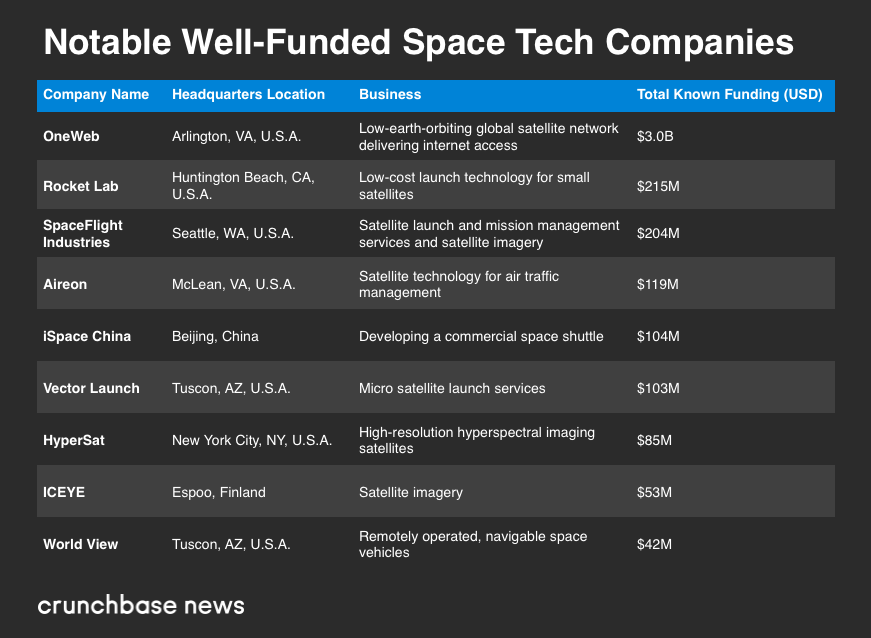
But OneWeb is far from the only space tech company to secure a big round recently. A Crunchbase News roundup of large investments in the sector unearthed a sizable list of companies attracting attention and big checks from venture capitalists, with at least a half dozen securing rounds of $50 million or more since 2018.

What’s the draw? Largely, it’s the oft-repeated tale of a startup sector seeing valuations rise as early-stage companies mature, said Chad Anderson, CEO of investor group Space Angels.

“The barriers to entry came down in 2009, when SpaceX provided increased access to space through low-cost launch and transparent pricing,” Anderson said. “We saw the first pioneering companies, like Planet [former Planet Labs]*, take advantage of that new access starting in 2013.”

Now, the crop of space tech companies that launched five or six years ago is middle-aged by startup standards and ripe for larger, later-stage rounds.

Economics of satellite design and launch have also become a lot more compelling for investors in recent years. Whereas satellites previously cost hundreds of millions (or even billions) to design, manufacture, and launch, today a small satellite can be built for tens of thousands of dollars and launched for a few hundred thousand dollars, Anderson said.

Venture capitalists seem to like that math. Over the past 10 calendar years, Space Angels estimates that venture capital funds have invested nearly $4.2 billion into space companies. Of that total, 70 percent was deployed in the last three calendar years.

More firms are getting into the space, as well. Currently, Anderson calculates that just over 40 percent of the Top 100 venture capital firms now have at least one space investment. Their investments are concentrated in two areas: satellites and launch technology, particularly for the small satellite space.

To get an idea of where the money is going, we put together a chart below showing the space tech companies that have secured some of the largest funding rounds since last year:

While space tech is generating a lot of venture investment, however, not a lot of startups have yet made it to exit. That’s not entirely surprising, if we presume that typical venture startup-to-exit timelines apply. If the current crop of funded startups launched in the 2013 time frame, we’d expect to see exits pick up in a few years.

It is worth noting, however, that the one most famous and pioneering of the current crop of venture-backed space companies, Elon Musk’s SpaceX, has also stayed private. Certainly SpaceX has the name recognition and track record to support a blockbuster IPO.

Yet Anderson contends that’s unlikely to happen — at least not for a very long time. For one, Musk has laid out the company’s ultimate goal as colonizing Mars. That doesn’t jibe well with the typical public company duties, like meeting quarterly numbers. It doesn’t help that Musk has already gotten into hot water with regulators for his approach at Tesla.

Yet as SpaceX pursues its grand ambitions, the company has also served as a launchpad for a number of other space tech entrepreneurs — we put together a list of nine startups with a SpaceX alum as founder or core team member.

So while colonizing Mars remains a risky bet, the odds in favor of blockbuster space tech exits on Earth are getting a lot higher.

*Planet and SpaceX are Space Angels portfolio companies.

Dissecting what Lyft’s IPO means for Uber and the future of mobility

Extra Crunch offers members the opportunity to tune into conference calls led and moderated by the TechCrunch writers you read every day. This week, TechCrunch’s Kirsten Korosec and Kate Clark led a deep-dive discussion into Lyft’s IPO and the outlook for the business going forward.

After skyrocketing nearly 10% on its first day hitting the public markets, Lyft stock has faded back down towards its IPO price as some investors grow more concerned over the company’s path to profitability (or lack thereof) and the long-term fundamentals of the business. But Lyft’s public listing is bigger than just the latest in increasingly common unicorn IPOs. As the first public “transportation-as-a-service” company, Lyft offers the first inside glimpse into the business model and its economics, and its development may ultimately act as the canary in the coal mine for the future of transportation.

“Lyft, hasn’t just survived, they’ve grown. 18.6 million people took at least one ride in the last quarter of 2018. That’s up from 16.6 million in late-2016. That illustrates the growth that the company has had. They’ve also said that they have 39% share of the ride-sharing market in the US. That’s up from 22% in 2016.

To me, the big question is let’s say they had Uber’s share, which is 66%, would they be able to make a profit? Is that the determination? And I’m not convinced that it is, which is why all these other aspects of the transportation-as-a-service business model [micromobility, AVs, etc.] are going to be really important.”
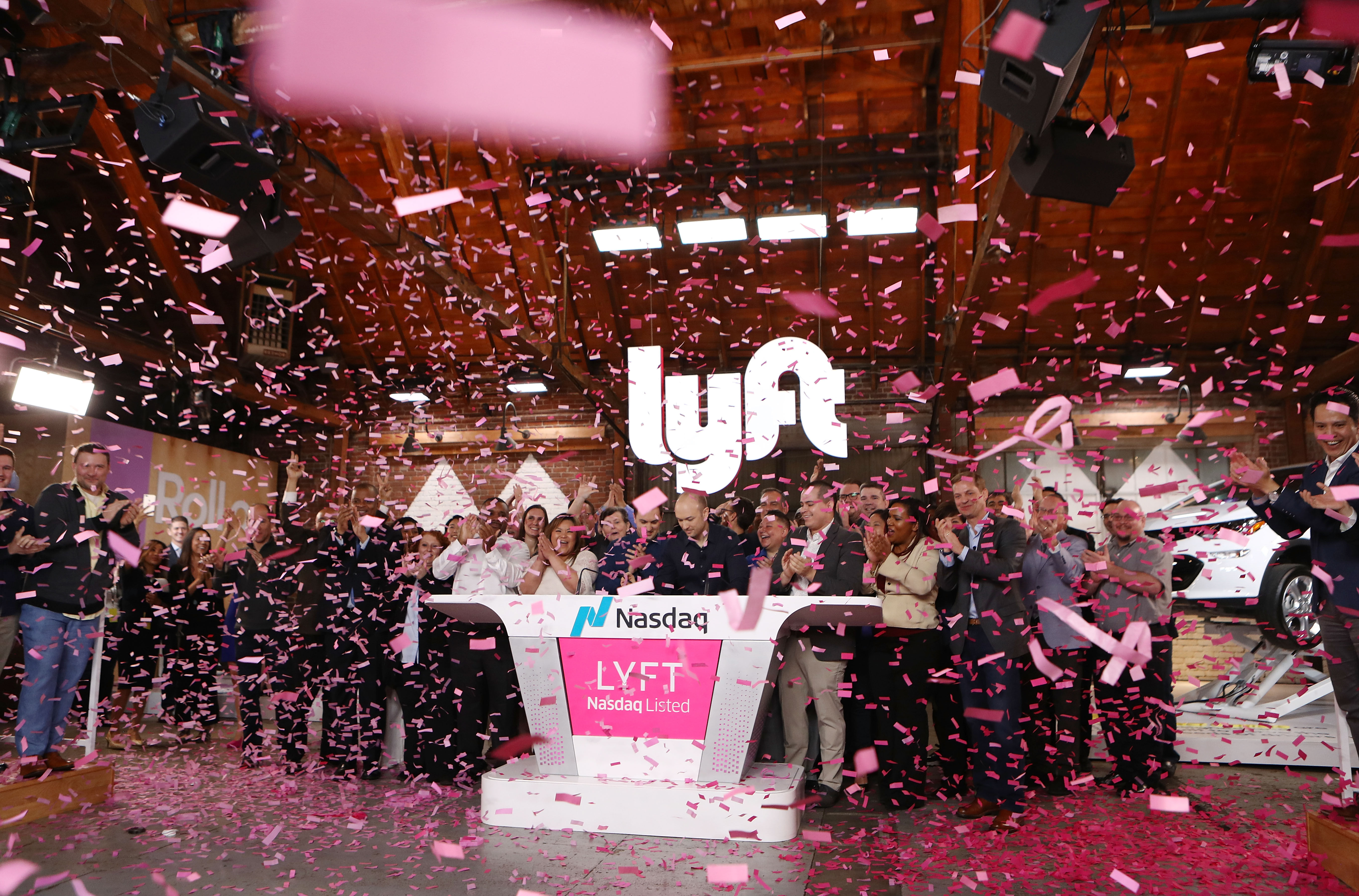
Image via Getty Images / Mario Tama

Kirsten and Kate dive deeper into what the market response to Lyft means for Uber and the timeline for its impending IPO. The two also elaborate on their skepticism of ride-hailing economics and debate which innovative transportation model will ultimately drive the path to profitability for Lyft, Uber and others.

For access to the full transcription and the call audio, and for the opportunity to participate in future conference calls, become a member of Extra Crunch. Learn more and try it for free. 

Danny Crichton: Good afternoon and good morning everyone this is Danny Crichton, executive editor of Extra Crunch. Thanks so much for joining us today with TechCrunch reporters Kate and Kirsten.

I’ll start with a quick introduction for our two writers today. We have Kate Clark, our venture capital reporter. Kate has been with us for a while now covering everything in the startup and venture world. She’s also one of the hosts of TechCrunch’s podcast Equity and also writes our Startups Weekly newsletter.

Our other writer today is Kirsten, our intrepid automotive writer covering all things Elon Musk, Tesla, and everything else in the autonomous vehicle space. Kirsten has also been with us for quite some time and also writes a newsletter that she just introduced in the last couple of weeks, around transportation. So with that, I’m going to hand off the conversation to the two of them now.

Kirsten Korosec: Thanks so much Danny. This is Kirsten Korosec here. The newsletter is in a bit of a soft launch but it is being published Fridays and we hope to have an email subscription coming sometime in the future, so just keep an eye out for that.

I should also mention I too have a podcast centered around autonomous vehicles and future transportation called The Autonocast that comes out weekly. Thanks so much for joining the call and just a reminder, we want participation. So at about the halfway point, we’ll turn and open up the line and answer questions. Let’s get started.

Before we dig into all the hot takes out there, I think it’s worth providing a primer of sorts — a general timeline of events. We all probably know Lyft of course and most of us think of 2012 as the launch date when it came to San Francisco, but really Lyft was build out of the service of Zimride. Which is the ride-sharing company that John Zimmer and Logan Green founded in 2007.

A lot of attention has been placed on Lyft in 2018 with what happened in the past year, in the run-up to the IPO. But I think it is worth noting the intense activity and growth that happened between 2014 and 2016. These are critically important years for Lyft, just a frenzy of activity in a period where the company gained ground, investors, and partners.

To showcase the amount of activity that was happening; Lyft had two separate funding rounds, one for $530 million another for $150 million, just two months apart in 2015. You might also recall in early-2016 its partnership with GM and the automakers’ $500 million dollar investment as part of the Series F $1 billion dollar fundraising effort.

That was really interesting because GM’s president at the time Dan Ammann took a seat on the board, which he has since vacated. As Lyft and GM started realizing that they were competitors. Now, Dan is the CEO of GM Cruise which is the self-driving unit of GM.

2017 and 2018 were also big years, as Lyft launched their first international market in Toronto. They made big moves on the autonomous vehicle front, which we’ll talk about today, and in micromobility. Their scooter business launched in Denver in 2018. They bought Motivate, which is the oldest and largest electric bike share company in North America. Then, we finally get to the end of 2018, and this is when Lyft confidentially files a statement with the FDC and we’re off with the races to the IPO.

The last two months or three months is when Lyft unveiled its prospectus, met with investors, priced its IPO and made its public debut. So Kate what are the nuts and bolts of the IPO and what’s happening right now?

Kate Clark: Hi everybody this is Kate. So I’m just going to mention really quickly the timeline these last couple of months in the run-up to Lyft’s highly historical IPO. So going back to December, that’s when Lyft initially filed confidentially to go public. We later find out that they are going public on the NASDAQ when they eventually unveiled their S1 in early March.

This is after Lyft had raised $5 billion in debt and equity funding at a $15 billion dollar valuation, so there are a lot of people paying attention to what was the first ever rideshare IPO. So then in early-March, we’re able to get a closer look at Lyft’s S1, which tells us that the company has $911 million in losses in 2018 and revenues of $2.2 billion. So after calculating and pulling together some data, a lot of people were quick to find out that that means Lyft has some of the largest losses ever for any IPO. But also has some of the largest revenues ever for any pre-IPO company, just following Google and Facebook in that category.

So this is a really interesting IPO for a lot of people given these sky-high losses but also these huge, huge revenues. The next we see Lyft price their IPO between $62 and $68 dollars a share. Some people were quick to say that that was maybe a little underpriced, given that this was a highly anticipated IPO with a ton of demand. So on the second day of Lyft’s roadshow, the process, they say that their IPO is oversubscribed. So demand is apparently huge, their oversubscribed, so they decide we’re going to increase the price of our shares.

Image via GettyImages / maybefalse

So Lyft then says they gonna charge a max of $72 per share and then on the day of their IPO they charge $72 per share, the next day opening at $87 per share. So we see a huge IPO pop that I don’t think was particularly surprising given that they already spoke of this demand, and we had already known that there was a lot of demand on Wall Street. Not just for Lyft but just for unicorn IPO’s of this stature, given that there are so few of these. So Lyft began trading hitting $87 per share though, if you’ve been following the news that’s not were Lyft is today.

Kirsten: Yeah so I was just about to ask — Kate give me the latest numbers, you know a lot of focus is on that opening day but things haven’t exactly sustained. So what’s happened in the past few days?

Kate: Yeah it’s really tough to manage expectations after an IPO. I mean, I think there has been a lot of criticism towards Lyft now and I think it’s trading below its initial share price. So as I mentioned Lyft opened at $87 per share, it priced at $72, but almost immediately they began trading below that $72 price per share. So they closed Tuesday trading at $68.96 per share. Still boasting a market cap larger than $19 billion. So they’re still significantly valued at more than they were as a private company at $15 billion but it doesn’t look good to be trading below a price per share so quickly.

However, it actually did hit its IPO price for just a minute today, so maybe let’s give it a few more hours and see where it closes. It’s possible that it will sort of jump towards that $72, but it’s still trading quite significantly below that $87.

Kirsten: With IPOs like this, and especially such a high profile one, there’s going to be a ton of attention on share price and on volatility. And so I’m wondering, in your view, what did this first week, or first few days of volatility say to you? What does it say about Lyft’s future and, well certainly, its present?

Kate: Yeah. I mean, it’s hard to say. I think a lot of people were questioning if Wall Street was going to be interested in a company like Lyft that’s extremely unprofitable at this time and has years left before it will reach profitability, if indeed it ever reaches profitability.

So at this point you got to wonder, do some of these investors that did buy Lyft right off the bat, were they really long on Lyft? Because it does look like a lot of those investors have already sold their stock and perhaps weren’t as invested in Lyft’s long-term profitability plan, which involves a lot of very iffy things, like the future of autonomous vehicles, which we’ll talk about later in this call. And there’s a lot of uncertainty there.

But with that said, it’s not uncommon for a stock to experience volatility right off the bat, and you can’t assume the future of that stock price just because of some early volatility.

And we gathered some examples of IPOs where there was some early volatility that did not determine the long term future. So Carvana, for example, which is an online used car dealer in the automotive space, and it did experience volatility at first, with the stock sliding in the first few months but ultimately trended upward.

Kate: So Carvana opened at $13.50 a share, falling below its IPO price, so it didn’t even have the IPO pop. And then in 2018, it hit an all-time high of $65 per share. Today, it’s trading around $58 per share, so that’s ultimately a positive story to be told there.

And then another example on the other side of things is Snap, which actually took four months to dip beneath its 2017 IPO price, and we all know Snap has definitely not been a success story and it’s trading well below its offer price. But then finally, Facebook, for example, dropped below its IPO price on its second day of trading and then actually had a rough first year on the stock market before the stock ultimately took off and became a very obvious success.

Kirsten: So, Kate, I’m wondering why you think that there was that initial run up on that first day. Was it excitement? Was there something material that was pushing the price up? What was the cause?

Kate: I think there was a lot of excitement and demand around this IPO because it was very much one-of-a-kind, and there were a lot of investors that it seemed were really long on the possibility of Lyft becoming this hugely profitable company. And I think a lot of that was because in the S1, although you did see these really, really big losses — quite major, just ridiculously huge losses — you did see that they were shrinking over time and that there was definitely a path in which Lyft could take where it would reach profitability, say, in the next five years.

And I think Wall Street was really paying attention to that, and they were not paying attention to some of the other metrics. Now, they’ve taken off their rose-colored glasses and they’re looking at Lyft as a public company, and it’s just a little bit different now that it’s actually completed its debut.

Kirsten: Well, so, I mean, I like to view IPOs often times, and especially in Lyft’s case, as a measure of an investors’ faith in the company’s growth prospects, because this is a company that while it does have quite a bit of revenue, it has significant losses and it’s really planning not just for the present day but for the future. It’s been called a disruptive business for a reason, and it is certainly very forward-looking. So I’m wondering if you think it was a good strategy for Lyft. They wanted to open it up to “the everyman” when they actually went to market. They did a different approach, and do you think this might have had an effect? I mean, it’s very on-brand for them to do this, but I’m wondering if you thought that means that some of the investors aren’t as disciplined.

Kate: Do you mean with the fact they were providing bonuses to their employees and drivers to actually participate in the IPO as well?

Kirsten: Absolutely. That’s actually a really good point that maybe you can elaborate on. Lyft did a little bit of a more open approach for its IPO. Typically IPOs can be closed off to only large, institutional investors. So did this set them up perhaps to have more volatility?

Kate: Yeah, Lyft provided some of their drivers up to, I think, $10,000 to, in theory, actually buy stock in the IPO. Do I think that had a high impact? I don’t know. I think there’s not enough comparison, not enough data to really make a decision or to make a hot take on whether that really was part of the volatility. I think just given the uncertain nature of Lyft’s future and their big losses, I think their volatility was pretty inevitable, and I think people paying attention to this are probably not particularly surprised by how the stock has fared in these first couple days.

And I do want to add there’s this six-month lock-up period for the venture capital funds that own Lyft and as well as their employees, so I think we’re not sure what’s going to happen when that lock-up period ends and those holders can just sell their stock right then or how that will impact the stock price, as well.
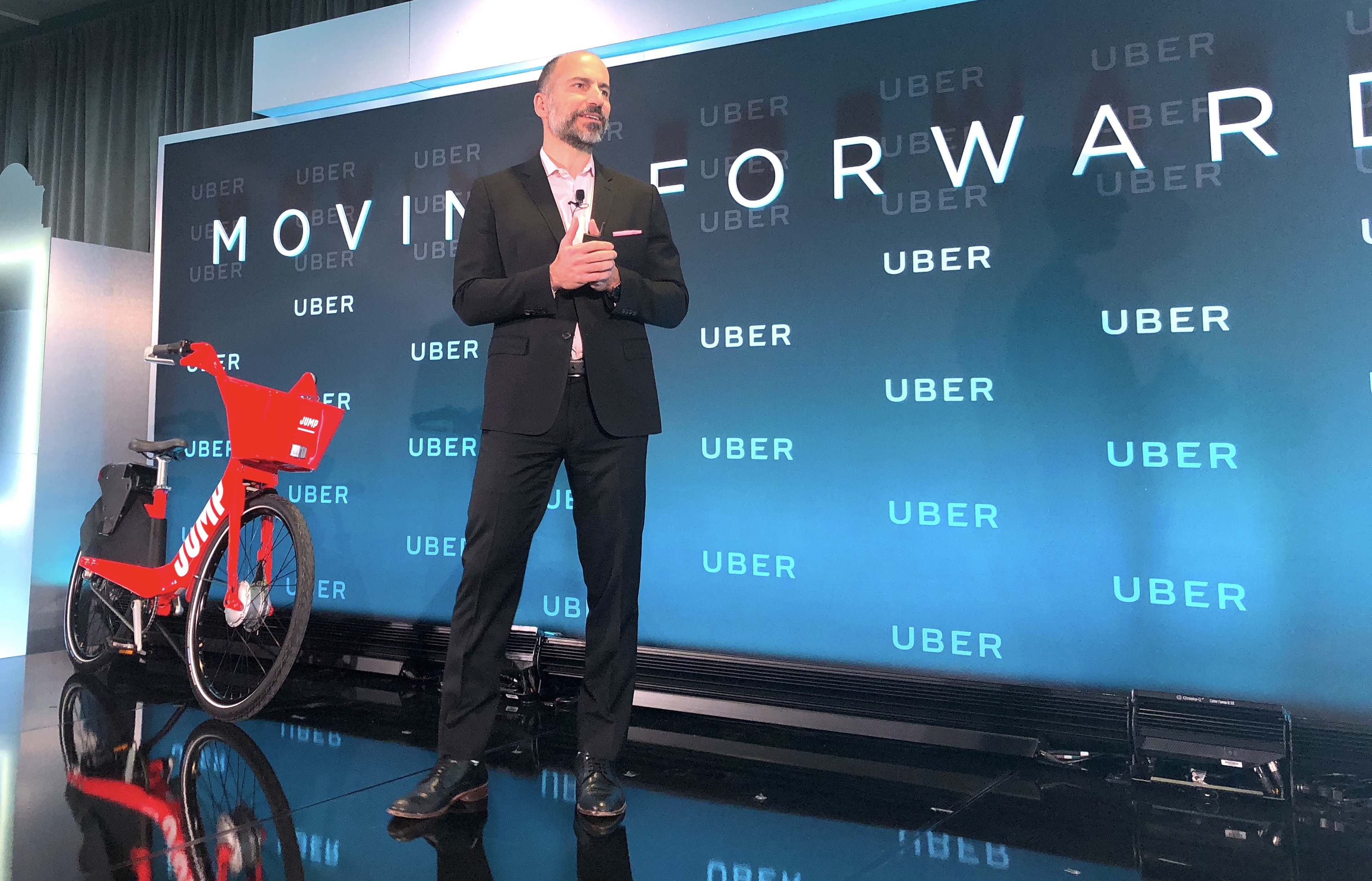
Image via TechCrunch/MRD

Kirsten: So something to keep an eye on. It reminds me a lot of a company I write a lot about, which is Tesla, and I’ve been covering them for years. And it’s one of the most volatile stocks, and their investors, they certainly have large, institutional investors, but the number of fanboys that they have with smaller investors, either prop up the share price sometimes or add to that volatility, and I’m kind of really curious to see if that happens with Lyft. If you go to a shareholder meeting at Tesla, for example, it’s filled with people who are passionate about the brand and its CEO, Elon Musk.

And Lyft and possibly Uber, if they end up finally going through with their IPO, you can see that potentially happening because people feel very strongly about the brand and also the service it provides. So I’m curious to see how this all sort of shakes out. And I tend to take the view that I invest personally in mutual funds and things like that. I don’t invest in any of these companies, but the long, patient view tends to be the better one, and trying to catch a falling knife, as investors have told me, is never really a good idea.

So I’m curious to see if investors sort of grow up and learn with Lyft, if they’ll become disciplined and just sort of wait it out and see them play out the growth prospects for the company in the long term. So, we’ve been talking about Lyft and I can’t not talk about Uber as a result. I’m wondering what you think this might mean for Uber. The big story initially was let’s beat Uber to IPO and I’m wondering what this means then. Is this indicative of what Uber is going to experience?

Kate: I think that question is really at the top of everyone’s mind right now, including my own. I will say that I still do think it was highly beneficial for Lyft to get out first. Because imagine if and when Uber does too experience volatility, which it probably will, if it were to have gone first, I think that would have frightened Lyft a lot more than Lyft’s volatility may or may not be frightening Uber. So, with that said, I think I’m of two minds right now with my thoughts on how this impacts Uber’s IPO. I think that if Lyft stock continues to be volatile and perhaps even falls lower than it already has. I do think that there is a chance Uber may ultimately decide to push its IPO back.

I think that for a few reasons, namely being that Uber is not in a huge rush to go public. They do have the ability to wait. They have filed to go public. So it’s likely to happen quite soon, but it may not happen in April as they are reportedly planning to do.

On the other hand, Lyft went public at like a $24 or $25 billion dollar market cap. Whereas Uber is going to debut at maybe a $120 billion dollar initial market cap. So these IPOs, although they are both ride hail IPOs and they are very similar companies in a lot of ways, they’re also very different and Uber is operating on an entirely different scale though it still is unprofitable. And has some of the same issues that, investors are probably noting about Lyft.

I think it’s either going to be that it’s maybe that they do decide to push it back or maybe that Uber is like, well we’re five times larger, six times larger. We have much larger statistics to show to investors. There’s just a chance it could go either way. I wish I had a better, more concrete answer, but I just don’t think we know yet.

Kirsten: Well I’m okay with not taking hot takes just a few days into this IPO. I think this is a good time to open it up to questions. While we wait for a question, I will do one quick follow up with you Kate. What do you think this means for Uber? Will it delay its IPO?

Kate: Right now, no, I don’t think they’re going to. But it’s like I said, it’s tough to say given that it’s only been a few days of Lyfts IPO. But no, I think you’ve got to imagine that they are ready to discuss the possibilities of Lyfts IPO and already planned ahead if there was volatility. They maybe already assumed that would happen, given that that’s not uncommon. So right now I’m going to say no, I don’t think they’re going to delay, but it’s certainly still a possibility.

Kirsten: Okay, great. I think another really interesting piece for Uber was their acquisition of Careem. This is a deal that was made right before their IPO, so it was shifting attention away from Lyft, just for a moment.

Why did Uber do this? Is this not a signal that they’re delaying their IPO? Is this just prepping for it? What are you hearing on it? I’m wondering if this might have just been a strategy to show the world investors, specifically potential shareholders, what the road ahead is going to look like. Or is it some other reason — Is it to justify their really big losses?
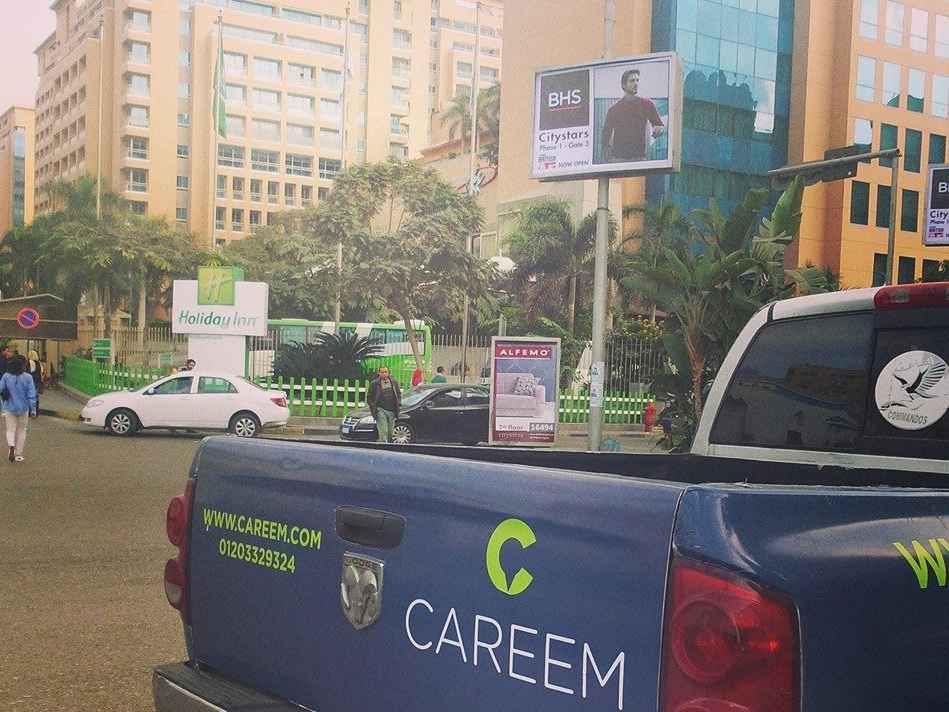
Image via Careem / Facebook

Kate: I think it’s the latter two things you said.  Just to give some background Uber is paying about $3.1 billion to acquire Careem, which is a Middle Eastern ride-hailing company. So basically just the Uber of the Middle East. Uber does have a history of acquiring, smaller competitors like this in different markets where it’s not active, just as a way for Uber to quickly grow essentially.

So I do think it’s a big deal to make just before going public. So I guess we don’t know if they necessarily will go public in April, but I think it was a move to present to public market investors as a prep for an IPO, to show “we just acquired this company, here’s more evidence of future growth”. Like you mentioned, it’s definitely a justification of those huge losses that we know Uber has.

Kirsten: Thanks for that. Questions?

Caller Question: Hi there, so when we talk about looking ahead and moving towards profitability — what role, if any, do you think the acquisition of a scooter or other mobility companies will have for companies like Lyft and Uber?

Kirsten: That’s a great question. I think it’s going to be a huge piece of both of their businesses. A lot of people describe this as the first ride-hailing IPO. We need to stop calling this a ride-hailing company. These are transportation-as-a-service companies and they’re making money. But generating revenue as opposed to making profit is a totally different thing. When you start talking about ridesharing, it’s a tough business. With those it’s an asset-light business, right? They don’t own the cars and then they technically don’t employ these drivers.

But at the same time, as of 2016 only something like 1% of people in the US were using rideshare. So you see this opportunity, but they’re not pushing forward. There is a ton of car ownership still that’s happening. Yes, sharing has absolutely increased, but 17 million new cars were sold in the US last year. So scooters, bike share and other businesses are going to be key to their paths to profitability because ride-sharing alone is just difficult to make a profit. It’s not difficult to generate revenue. It’s difficult to make a profit on.

And I’m wondering, talking about that road to profitability, I do think it’s worth noting how much they have grown. Lyft, hasn’t just survived, they’ve grown. 18.6 million people took at least one ride in the last quarter of 2018. That’s up from 16.6 million in late 2016, that illustrates the growth that the company has had.

They’ve also said that they have 39% share of the ride-sharing market in the US. That’s up from 22% in 2016. To me, the big question is let’s say they had Uber’s share, which is 66%, would they be able to make a profit? Is that the determination? And I’m not convinced that it is, which is why all these other aspects of the transportation-as-a-service business model are going to be really important.

Kate: I think what you pointed out is important, about Lyft and Uber both becoming transportation businesses, not ride-hailing companies and I think their long-term visions involve scooters, bikes, autonomous vehicles, all sorts of different models of transportation beyond just car sharing.

Kirsten: I hate to be wishy-washy here and say, I don’t know, but I do really think that it’s going to come down to a variety of items all coming together. It’s just not going to be enough for Lyft to scale up its ride-hailing business. And I should point out that Uber should be treated in some ways the same way, but there are some distinct differences. But it’s important for us to think of Lyft as a transportation-as-a-service business. I mean they say in their prospectus that transportation is a massive market opportunity. The hard part of course is turning that into a profit. There might be opportunity there.

So there’s this asset-light business that they have right now, which is the ride-hailing, but then they are making acquisitions in the micromobility space and that is going to become more capital intensive. And that’s going to force them to change their business. And then there’s the autonomous vehicle piece. And then finally, I actually think that one of the pieces of their S1 that has really not received much attention at all is what they’re pursuing in terms of public transportation. And they have said that they, and Uber, intend on being a piece of the public transit ecosystem.

Now that doesn’t mean that they’re going to necessarily be operating buses, but there are people that I’ve talked to in the industry who actually feel like, in Uber’s case, they want to control every mode of transportation. For Lyft, I see them seeing more of the opportunity financially with the data piece and becoming more of a platform and becoming that one-stop shop where you use an app to figure out if you want to use the scooter or a bike, or ride-hailing or buy that ticket for the L in Chicago or the Bart System.

So I really think that the public transit piece often gets ignored and cities are having so much more control now and weighing in. We see this in New York City with congestion pricing. It’s going to force Lyft and Uber to take advantage of these opportunities and use their platform in a way that perhaps accelerates faster than they had intended.

Kate: I’m very interested in the public transportation element, but I’m also very skeptical of the scooters and bikes in the future for Lyft, I think, given the unit economics, I certainly wouldn’t rely on them to be Lyft’s path to profitability. I think autonomous vehicles are a much more interesting path towards profitability. So a lot of companies, Uber, Lyft, Waymo and more are focusing on autonomous vehicles and their development, whether that be with hardware or software. How does Lyft’s strategy with autonomous vehicles differentiate from some of their competitors or does it does differentiate?

Kirsten: It does differentiate, and the funny thing is, is that so you don’t see micromobility necessarily as the oath to profitability and are interested in AVs and I write about AVs, but I see that AVs as a harder path to profitability in a way because of the nuts and bolts that it takes to develop them.

So just to weigh in really quickly on the micromobility piece and then I’ll move on to AVs; To show the opportunity but also the volatility in a real-world example for micromobility, I was in Austin for South by Southwest, I think you were there too, and you probably saw scooters everywhere, right? 18 months ago there were no scooters or bike share in the city. Then bike share came first.

Image via Flickr / Austin Transportation / https://www.flickr.com/photos/austinmobility/41536051644/in/album-72157669223418248/

And I was talking to that mayor of Austin and one of the folks from Spin, which is a Ford owned business, and they told me something that was really remarkable that I hadn’t thought about, which was that scooters were disrupting the bike share business. So bikes share came in and then scooters came in and all of a sudden they’re pulling bikes off the streets because no one was using them or were not using them at the same level as scooters.

Lyft is going to go through these same exact growing pains and people are figuring out what works. And as you mentioned, the unit economics are an issue, the wear and tear on the scooters alone is driving up costs and driving down revenues certainly, but pretty much making it very difficult to make a profit on it.

But that’s a near term business, right? So it’s at least generating revenue right now. On the other hand, you have this other piece, which is the AV piece. Lyft is doing some really interesting things on the AV piece — they kind of have a two-prong approach.

So they basically created a ton of partnerships to use their platform. So this started a couple of years ago and companies like Aptiv, drive.ai, even Waymo and nuTtonomy, which Aptiv just recently bought about a year ago and GM, and Lyft basically allows developers to use their platform and connect to their autonomous vehicle and offer these rides.

And the best example of this, if you’ve been to CES or if you have been to Las Vegas I should say more specifically, is this partnership that Lyft has with Aptiv — and Aptiv as a tier one supplier, they used to be called Delphi, they spun out, they bought nuTonomy, and they’re Aptiv now. And this is taking Aptiv automated BMW, which are on the Lyft network. If you hail a ride, you might be asked if you want a self-driving car, or “are you okay with a self-driving car?” And they have a safety driver, no humans have been pulled away from it yet. But they provided about 35,000 rides since I want to say January 2018.

Then they’re also doing Level 5, a dedicated self-driving vehicle division that launched in 2017. And here they’re basically creating an open self-driving system or open SDS. On top of that, they have partnered with Magna, an auto parts producer, to develop these self-driving systems that can be manufactured at scale.

And so you just see a rush of partnerships and sort of dual approaches and all of that costs a lot of money. And I can’t emphasize the amount of money that it costs or will cost to develop these systems and deploy them commercially. And I hear from other companies figures like $5 billion to get self-driving vehicles. So developing the full stack, doing fleet management, maintenance, all of that — that’s a lot of money. And, I’m not sure where Lyft, will get that capital, will they get it from the open market or will they have to go and ask for more capital.

Kate: So when do you think then that Lyft will be able to commercialize autonomous vehicles?

Kirsten: The timeline? So depending on who you talk to, you can hear from any of these developers between five years and 30 years. I think it’s important to talk about language and how we talk about autonomous vehicles. So to be clear, there is currently not a single commercial autonomous vehicle deployment where a human being or safety driver has been pulled away from the wheel. It just doesn’t exist.

There are plenty of pilots and Waymo is probably considered the leader in that list, though it is a bit of a confusing one for me because they have so many partnerships and they’ve become competitors to some of those partnerships. The analogy I use is “Survivor,” the reality show. Everyone wants to make these alliances so they don’t get voted off the island.

And now we’re at that point where autonomous vehicle development has entered what we call the trough of disillusionment, which is heads down, “let’s get away from the hype, let’s do the hard work.” And I think we’re going to see a lot of those partnerships and headwinds really come up in the next year, 18 months. So to put a target date on Lyft, it’s really going to depend on which one of those partnerships really play out and are real. I think the one with Aptiv seems the most real to me based on what I know the company is doing and I can see them doing a lot more pilots in the next 18 months.

Does that mean commercial deployment without a human safety driver behind the wheel? I’m not sure I can see a lot more these pilots with a human safety driver expanding beyond Las Vegas. I see pilots happening absolutely in the next year to 18 months. The issue is going to be when is that human safety driver going to be pulled out and with which partner.

Kate: So should we open it up to questions again?

Caller Question: Hi, I was just wondering how we should think about the regulatory risks that might exist as these companies expand to new cities, new markets, or even the public transport use case you mentioned. Thanks.

Kirsten: The regulatory piece is an interesting one. Let’s talk about ride-hailing first. We’ve already seen the regulatory environment, in cities, push back against companies like Uber and Lyft. I think the congestion pricing model that just launched in New York City is going to be one to watch and could be something that will put pressure on, on businesses like Lyft.

Kate: I agree and just to speak, quickly on the scooters; I think the narrative around scooters has been pretty dominated by how cities have forced them out or cities push these strict regulatory barriers on them. And I think that’s still playing out very much. There are even some scooter providers that have had to pull out of cities that they worked very hard to get into in the first place. So I think that has slowed down some of the growth there. And given that Lyft has micromobility as such a key part of their road to profitability, I think that’s partially why I am a little bit skeptical of how that’s gonna play out.

Kirsten: One thing we’ve found, and something to consider for Uber as well, in the future, if any of these AV developers end up, filing for IPOs on their own — there’s been chit chat about Waymo someday doing that or GM cruise someday— the implications for all of these companies and their relationship with cities should not be ignored or undervalued.

And I think you see a bit of that playing out with the present day track we have, which is the ride-hailing scooters and bike share cities and transit agencies or the DOT of different counties finding that they are in a more powerful position than they’ve ever been before. And they are exerting that power.

And so you will see instances like Los Angeles where they have put forth a mandatory data sharing component if you want to operate in their city. This raises some privacy concerns by the way, but it also adds another cost to a company or certainly forces them to look at their business a little bit differently.

Then you start talking about AVs and where are they will operate, how they will operate, where are they will park, what type of vehicle will be allowed in the urban center. In places like Europe, there are strict emissions rules, so that’s going to go to an AV or hybrid profile. And it’s important to think about what that regulatory framework might be and acknowledge the fact that it’s really a mishmash.

There are voluntary guidelines on the federal level right now, but there were no mandates. And so it’s really left up to the cities, counties and states to decide how an AV might be deployed. It’s going to mean probably more lobbyists in DC working with federal folks to ensure that their business doesn’t get hamstrung as a result as well as more of a presence in those cities and states and counties.

But Kate, I’m wondering what is your view from a startup perspective? Do you think of Lyft as a startup anymore are they acting like a startup or are they acting like a company that could handle all of these different complicated, various challenges? I mean, we’ve got pricing pressure, regulatory pressure or you’ve got AV development, opportunities with scooters and all this other stuff. So are they acting like a company that is able to handle this?
Image via Getty Images / Jeff Swensen

Kate: That’s an interesting question. I mean, they’re definitely not a startup anymore by, by anybody’s definition. You maybe could have still used that word, if they were still private, but even then, I know many people would yell at you for using that term for a company worth $15 billion. But now it’s a public company. It’s not a startup. I don’t think they’re acting like a startup, no. I think that they are mature in the way that they’re handling all of these different, so-called paths to profitability.

But we need to wait and see. Let’s see how this year goes, let’s see how they handle all the criticism that they’re going to undoubtedly take from Wall Street or from everyone who’s either interested in buying or just taking a seat and watching how the stock favors and then we’ll know what kind of lessons they took from all those years as a private company. Then we can decide if their behavior is really that of a mature public company.

Kirsten: I do want to make one point that I think is an interesting one on Lyft’s strategy versus Uber is in terms of AVs. Let’s all put a big asterisk that says no, AVs are still a ways out. It is important to note the Lyft and Uber’s strategies for AVs are wildly different and Uber does not take this dual approach. Uber is throwing a ton of capital towards developing their own, self-driving stack and also they’ve done, some acquisitions as well.

They’ve also had quite a bit of trouble. Last year Uber had the first self-driving vehicle fatality that happened in Tempe, Arizona, which looked like it was going to derail their self-driving unit, but it did not. They’re back, testing in a very limited way, but Lyft’s is all about what they call the democratization of autonomous vehicles.

And we can look at that as marketing speech, but I do think that it’s important to look at those words because it shows what their business model is. Their business model is partnerships, alliances, opening up the platform and casting the widest net possible. What I’m very interested to find out is which approach will end up being the winner. It’s going to be a very long game. It’s not going to be anything that’s going to be determined in the next year. I think what Lyft’s proven is that when they look like they’re down and out, they come back.

We’ll see what the better approach is. Do you do everything in-house and launch your own robo-taxi service? Or take capital partners on or do the Lyft approach, with multiple partners? Are partnerships actually too complicated? As someone who covers the startup world, do you have a thought on which one might work or not?

Kate: I have no idea which will work better and I’m sort of excited to see where this all goes, especially as Uber and Lyft are now going to be public.

That’s a good spot to end the call on.

Kirsten: Thanks so much for joining. Thanks again for being Extra Crunch subscribers, we really appreciate it. Bye everyone.