Data tells us that investors love a good story

Russ Heddleston
Contributor

Russ is the cofounder and CEO of DocSend. He was previously a product manager at Facebook, where he arrived via the acquisition of his startup Pursuit.com, and has held roles at Dropbox, Greystripe, and Trulia. Follow him here: @rheddleston and @docsend
More posts by this contributor

Hundreds of billions of dollars in venture capital went into tech startups last year, topping off huge growth this decade. Here at DocSend, we’re seeing the downstream effects in our data: investors who receive DocSend links are reviewing more pitch decks than ever, as more people build companies and try to get a slice of the funding opportunities.

So it stands to reason that making your pitch deck stand out is critical to raising a round. But how do you do that in such a competitive landscape?

After analyzing both successful and failed fundraising pitch decks, we’ve learned that storytelling matters and this hasn’t changed over the last few years. This makes intuitive sense — who doesn’t love a good story?

But does telling a story help founders raise capital successfully? And more importantly, do you fail to fundraise if you don’t tell a story? In this post, I’m going to share some hard evidence.

It follows up on my post over on TechCrunch, looking at three big mistakes we see in failed pitch decks.

Before we start diving into the data, here’s why we know: our document sharing and tracking platform is used every day by thousands of startups to share their decks securely with investors, with visits to pitch decks shared via DocSend having grown 4x from 2017 to 2018. Controlling for DocSend’s growth, we estimate that investors are viewing 35% more decks in 2018 than they did in 2017.

In total, over 100,000 users have shared over 2.2 million links through DocSend since we launched in 2014, and these documents have received over 220 million views; while we’ve grown quickly among sales, business development and customer success teams, startup pitch decks have continued to be a popular use-case. We’ve also been analyzing the pitch data in a collaboration with Harvard Business School since 2015, so we’re experienced at analyzing and interpreting this data.

First impressions stick

The old adage “you only get one chance to make a first impression” is true when it comes to pitch decks, and in fact that was the case for our company’s own fundraising process. When I pitched DocSend for our seed round, I knew what we were up against — why will this be a big business? And, why won’t Google build this? Our product was still in private beta, and we had no revenue. However, we had an MVP and those who were using our product, including our potential investors, found the product to be very useful.

Pitching your product will kill your fundraising

Russ Heddleston
Contributor

Russ is the cofounder and CEO of DocSend. He was previously a product manager at Facebook, where he arrived via the acquisition of his startup Pursuit.com, and has held roles at Dropbox, Greystripe, and Trulia. Follow him here: @rheddleston and @docsend
More posts by this contributor

Fundraising has always been something of a black box. High-flying companies make it seem like a breeze, but most entrepreneurs lose sleep over it. My first startup was called Pursuit.com and although we successfully raised a seed round, it was incredibly tough (we were eventually aqui-hired by Facebook). DocSend is my second startup, and it has taught me a lot about the process — not only because of our own fundraising, but because the product itself reveals big pitching trends in a unique way.

Since 2014, over 100,000 users have shared over 2.2 million links through our document tracking and sharing platform, and these documents have received over 220 million views. Thousands of founders share their funding decks with prospective investors every day, in addition to our product’s other uses for sales, business development and customer success. To get insights about all this activity, we have a long-running partnership with Harvard Business School, where we’ve been analyzing the anonymized fundraising data of startups attempting to raise a Seed or an A round.

We shared our early learnings in a TechCrunch article in 2015, Lessons from a study of perfect pitch decks. In this post, I’ll update our findings based on the last four years of data (and a lot of user growth on our side).

So what differentiates a winning seed round pitch deck from those that fail to raise capital? While both successful and failed pitch decks are about the same length, an average of 18 pages, how the content is structured is vastly different. And while investors spend the same amount of time on both, 3.7 minutes on average, where they spend time tells us a lot about what successful pitches and failed pitches have in common. Below, I detail three mistakes that you want to avoid.

If you want to check out more details on what you should do in your deck, read my follow-up article “Data tells us that investors love a good story over on Extra Crunch.

Mistake 1: Don’t start with your product

It’s very tempting, especially for technical founders, to start pitch decks with how incredible their product is, how much time they’ve spent building it, their unique tech stack, and how convinced they are that they have just the right MVP for launch. But guess what?

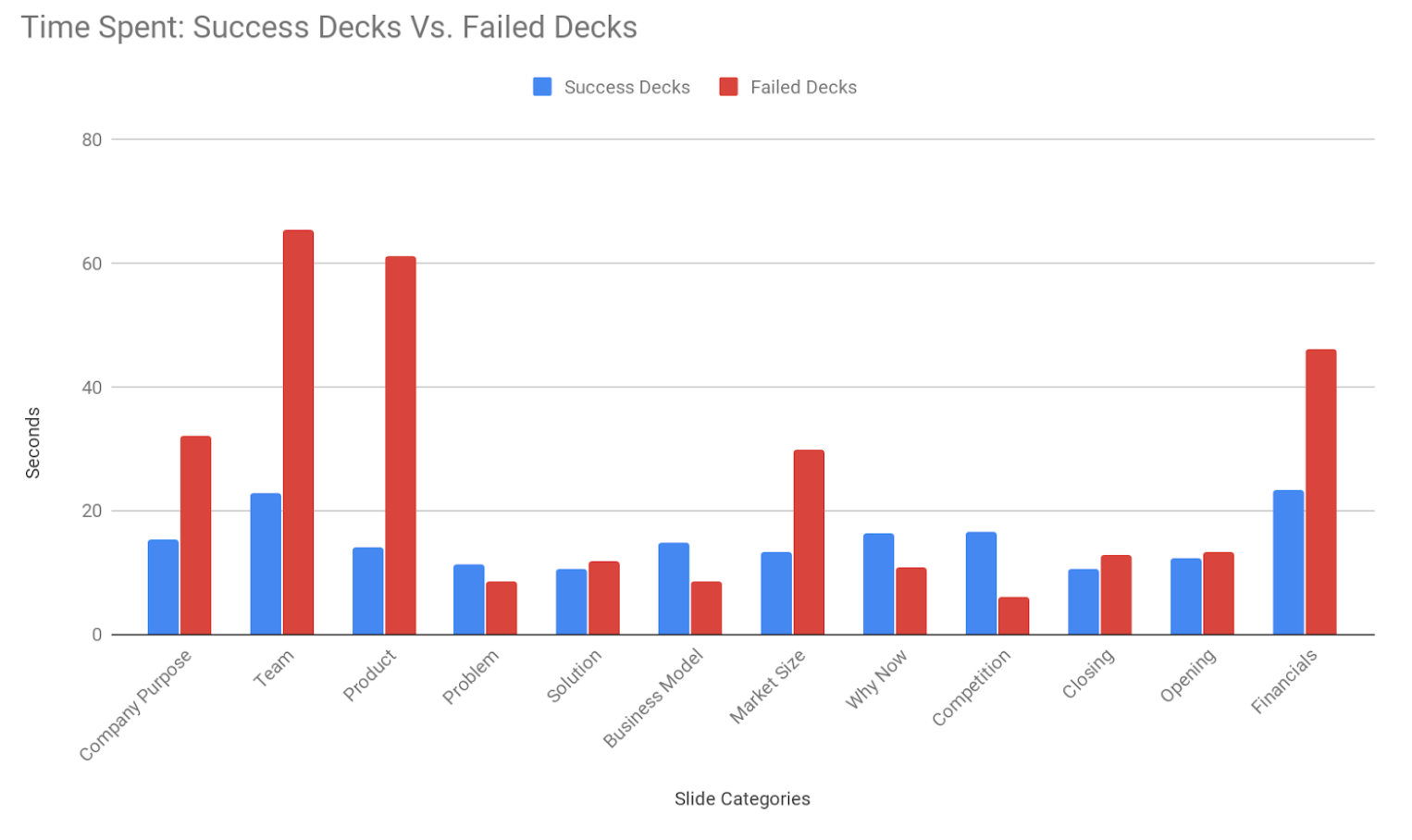
All failed pitch decks start with the product. Investors spend 4x more time on product slides in failed pitch decks than they do in successful pitch decks.

You might think that’s a good thing. More time on my product slides, right? No. Data tells us that they are probably digging into the details trying to map your product‘s value to the current market needs and they are not coming away with a clear connection between the two.

Your target investors are also not your target customer. Showing screenshots and product details are just confusing for them. What are they looking at? Why does this matter? Most products are capable of being built; the question they are trying to answer is why is this product going to create a big business?

Image via DocSend

Mistake 2: Not starting with the “Why?”

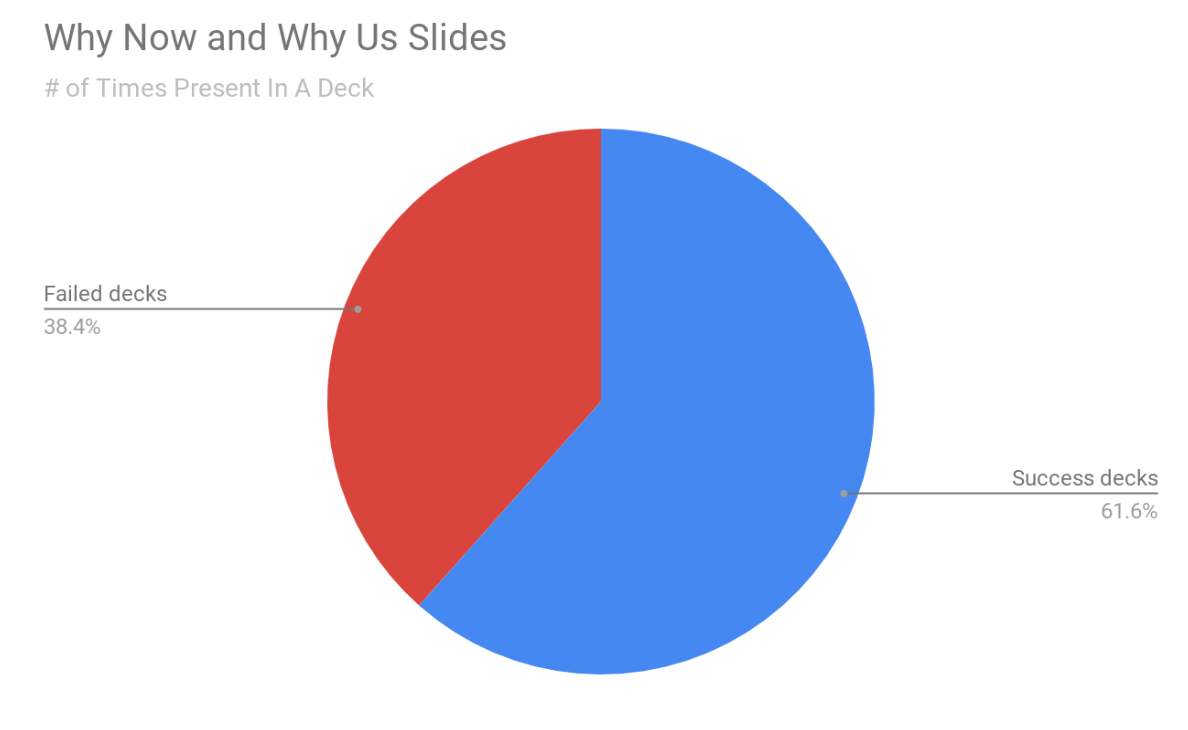
By now Simon Sinek has beaten this one into our collective brains with his start with the why Ted Talk and yet what we see in our data is that in failed decks, the “why now” and “why you” question has been left to the end. Successful pitches start with their company purpose, followed by why this team, and why the timing is right for this particular product.

All successful pitch decks start with the company’s purpose, their raison d’être.

In successful decks, investors spend 27 seconds on an average on “why now” and “why you” slides but in failed decks, they spend 62 seconds on these slides. We read this as investors are spending more time researching your team and your capabilities than they do with successful pitch decks. More time spent on these pages means that investors are not as convinced about this venture as the entrepreneur would like them to be. Entrepreneurs should focus on making their “why” slides part of a seamless narrative that leaves the investors wondering why this isn’t already a huge business.

Image via DocSend

Mistake 3: Not telling a story

Everyone loves a good story and investors are no exception to this rule. All successful pitch decks tell a compelling story and follow a similar narrative thread. They start with the company purpose, the big problem they are trying to solve, why now is the right time, and why they are the right team to solve it. Failed pitch decks start with the product, followed by business model, and competitive landscape. Successful decks cover these too but they invariably follow a narrative that makes intuitive sense while in failed decks there is no compelling narrative.

In failed decks, investors spend more time on product, team, and financials, 6 minutes on average, vs. 2 minutes in successful decks.

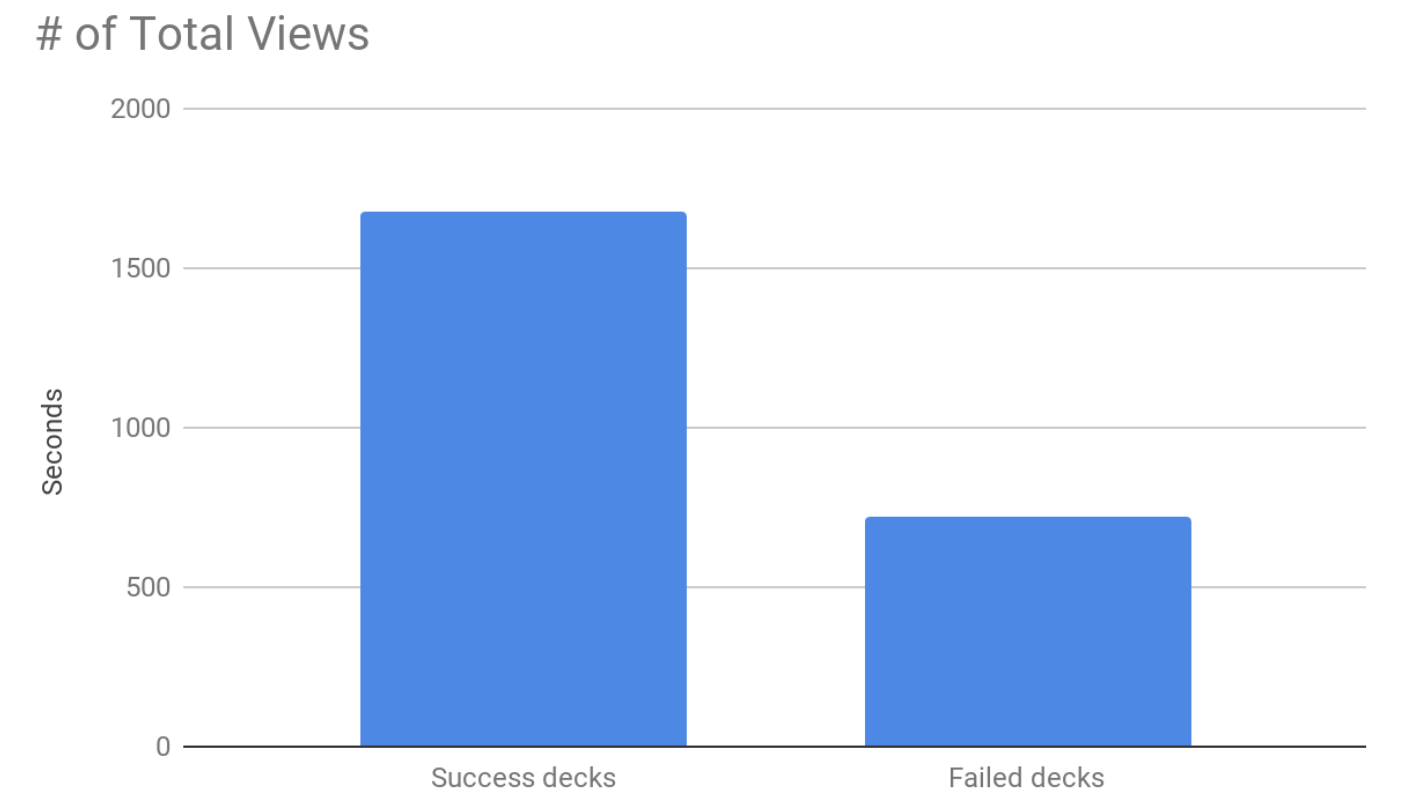
Successful decks also get more repeat visits, they are visited 2.3 times more than failed decks and are forwarded along more often than failed pitch decks.

Image via DocSend

Your purpose is more important than your product

In the early days, entrepreneurs spend most of their time conceiving and building their minimum viable product (MVP). Naturally, they feel compelled to pitch this to investors. Although unintuitive, data suggests that you should restrain yourself from talking about your product before you have painted a narrative about the business opportunity: why now and why you. Once investors are convinced of those key points, by all means, go through all the product details and roadmaps. Just don’t lead with your product.

This is the first of a series of articles about fundraising. My followup article now available on Extra Crunch reveals what our data shows you should do with your deck. In future installments, I’ll be sharing more about the difference between Seed, Series A, and Series B rounds as well as how fundraising challenges change as your company grows. For the next post, I’ll be writing about why some pitch decks raise way more money than others. In the meantime, have questions about the best way to raise money? Check out our blog or reach out to us on Twitter at: @rheddleston or @docsend.

Facebook spent $20 million last year on Zuckerberg’s personal protection

2018 was by all means a very rough year for Facebook . The company, which spent the year reeling from the Cambridge Analytica scandal and a general bubbling-up of public anger, also had to deal with animosity toward the company’s founder, and gave the executive a lot of cash to handle a full security detail for himself and his family.

While Facebook CEO Mark Zuckerberg takes a $1 annual salary and does not earn an annual bonus, he gets millions in “other compensation” largely related to security costs. In an SEC document published this afternoon, the company reveals that Zuckerberg earned more than $22 million in “other compensation” in 2018, up from more than $9 million in 2017.

About $2.6 million of the 2018 figure is compensation for Zuckerberg’s personal travel on a private jet, but nearly $20 million of that figure is related to Zuckerberg’s personal security costs.

He was awarded $9,956,847 in pre-tax 2018 income for security related to his personal travel and residential protection. Additionally the company game him another pre-tax allowance of $10 million to cover “additional costs” related to his and his family’s personal security. This all adds up to an amount that nearly triples the costs of personal protection he had in 2017.

“Because of the high visibility of our company, our compensation & governance committee has authorized an ‘overall security program’ for Mr. Zuckerberg to address safety concerns due to specific threats to his safety arising directly as a result of his position as our founder, CEO, Chairman, and controlling stockholder,” the company document reads.

Personal security program compensation was also given to Facebook COO Sheryl Sandberg, who earned $3.8 million in “other compensation” in 2018, $2.9 million of which was for her personal security costs.

A focus on diversity reaps rewards for this Los Angeles investor

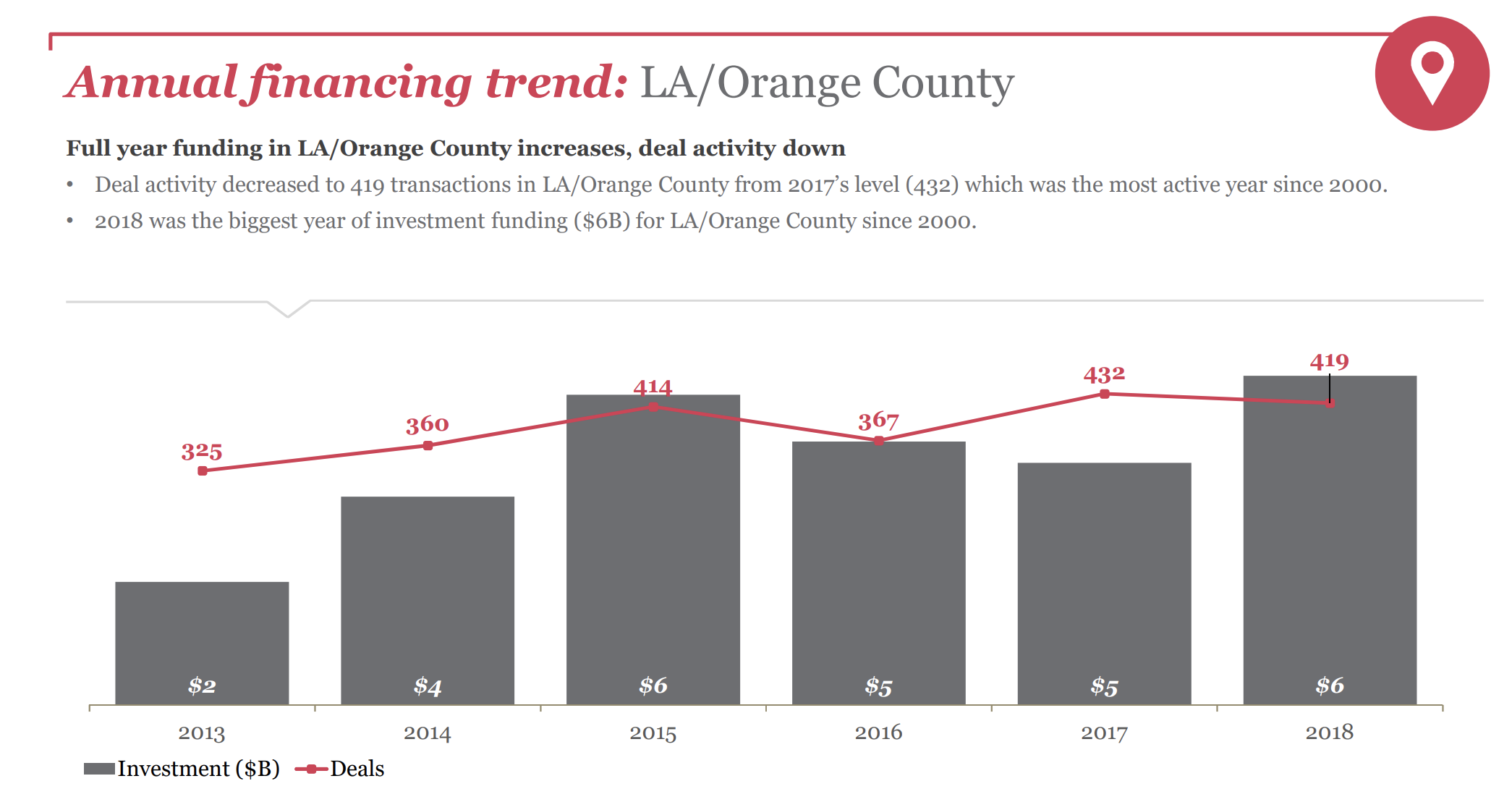
The Los Angeles startup scene has come a long way in the three-and-a-half years since Marlon Nichols, Troy Carter and Trevor Thomas launched Cross Culture Ventures. The city and its surrounding Orange County exurbs were at the beginning of a venture capital surge that has seen invested capital in the region rise from $3.63 billion in 2015 to $6 billion last year.

Since Cross Culture landed on the Los Angeles scene with a $50 million fund, Nichols and his partners have notched three exits and seen the paper value of the fund’s portfolio grow by an aggregate of 2,085 percent, according to people with knowledge of the firm.

And Nichols and his partners have done it by backing one of the most diverse pools of startup founders in any firm’s portfolio.

The road to Cross Culture

The path from growing up in one of the towns on the outer edges of New York to the center of Los Angeles’s burgeoning venture capital industry wasn’t a straight line for Nichols (unlike many other venture investors). Cross Culture’s architect had to make his own way through the tech ranks after college, through a professional career in Europe, then back to business school before finally landing an opportunity with Intel Capital.

His father had worked as a train engineer in Jamaica and relocated the family to New York, where his mother worked as a housekeeper before getting her beautician license and opening her own shop. The couple had moved from Jamaica two years before Nichols would take the trip himself — time he spent living with his aunt and grandmother.
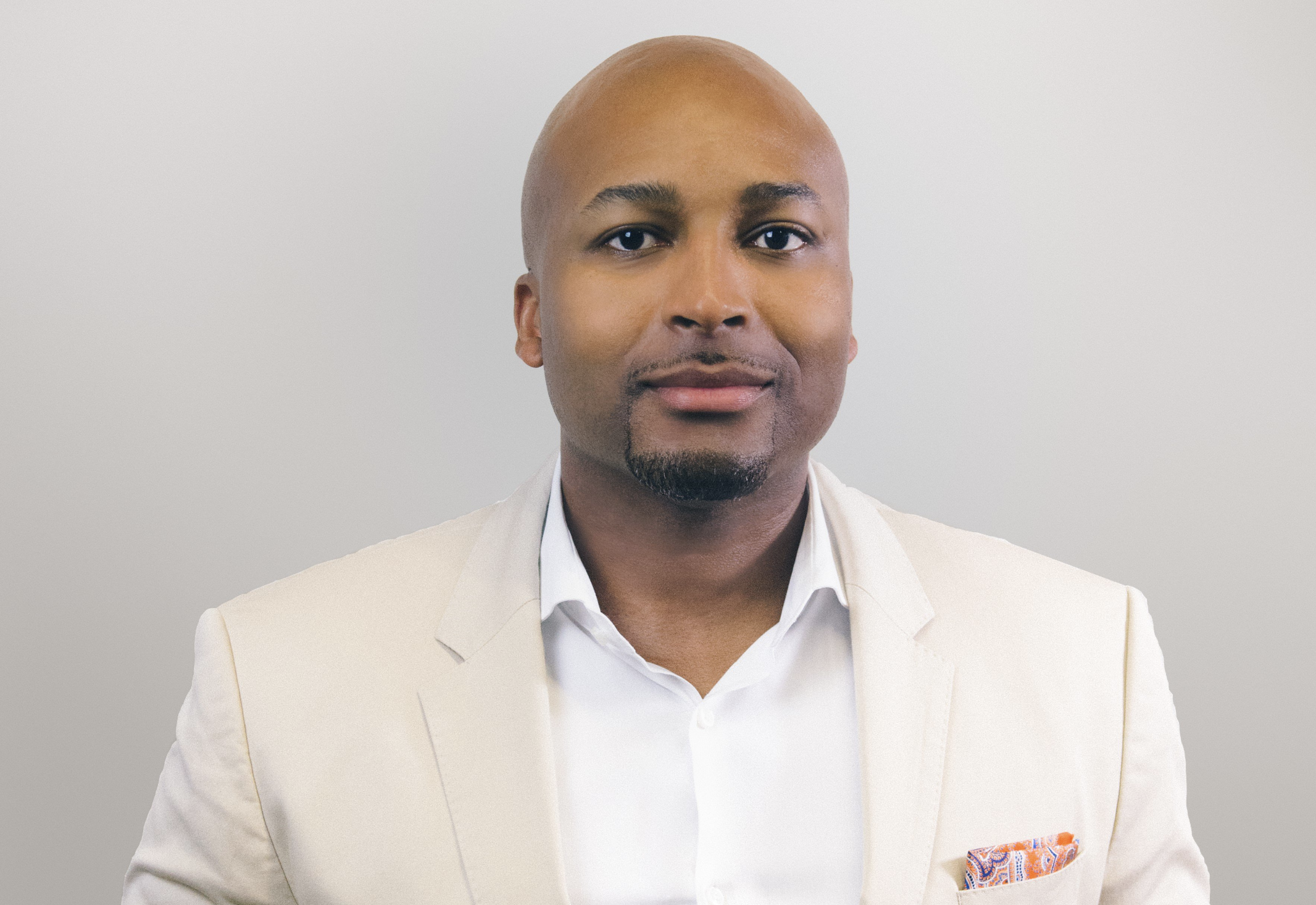
Marlon Nichols, co-founder and managing partner, Cross Culture Ventures

Growing up in Mt. Vernon, NY, just north of the Bronx where he’d moved with his parents, Nichols had always expressed an interest in technology. He’d been playing around with computers ever since his parents bought him a Commodore 64.

The first person to attend college in his family, Nichols transferred to Northeastern’s newly developed major in Management Information Systems after starting out in architecture. College gave Nichols his first exposure to life in Silicon Valley, as well. Northeastern had an internship program that sent students out of Boston to try their hands in the business world — and Nichols was placed at Hewlett Packard in Cupertino, Calif.

He’d intended to move out to Silicon Valley after graduation, but instead took a job in the Boston offices of Frictionless Commerce — and it was there that Nichols first confronted the constraints that the city’s lack of diversity could mean.

“In Boston there was definitely a racial undertone,” says Nichols. “Going out as a professional… you weren’t treated well.”

He took the opportunity to move to London when it was presented and spent a few years there — playing semi-professional basketball in the evenings and working for Frictionless Commerce during the day.

After the company’s acquisition by SAP in 2006, Nichols consulted at the Blackstone Group and Warner Media. “In those rooms I was again the only one [who was a minority],” he says. “I started getting annoyed by it and started thinking about it a little bit more — I thought about education and opportunities and just knowing that there’s even an opportunity out there for this career path.”

So Nichols created a nonprofit that would help inner city students get into colleges. “I never had an SAT prep-course,” says Nichols. “I didn’t have anyone coaching me.”

The program helped students start to think about applying to Cornell, Vassar and Penn, when they were initially thinking about City University in New York.

As the nonprofit took off, Nichols returned to school — Cornell University on a full scholarship to its business school.

“When I started going through that process I saw even fewer of the folks that looked like me,” Nichols recalls.

From Cornell, where Nichols ran the university’s venture capital fund, he was recruited to Intel Corp. as part of a management training program. Although Nichols was supposed to rotate through three different business divisions at Intel, once he was placed in Intel Capital he advocated to stay there.

And it was there that he was able to bring his passion for creating opportunities for under-represented minorities and women to an industry that sorely needed it.

It was around the time that the diversity numbers at big technology companies — long held as an island of meritocracy in a sea of industries that were rife with sexism, racism and nepotism — were generating more criticism. When Tracy Chou called for reporting on diversity numbers in 2013, Nichols saw a repeating pattern that perhaps he could do something about at Intel.

Alongside Lisa Lambert, a managing director in Intel Capital’s software and services group, Nichols, who’d been in the new user experience group at Intel Capital, advocated for the creation of a diversity fund at Intel.

“We thought that there’s got to be a way that the folks in charge of deploying capital can be involved in diversity,” Nichols says of the creation of the fund. “Diversity was front and center and then it goes away and then it’s front and center again… There had to be something that could be done from a venture perspective.”

While the diversity fund had no problem finding companies to invest in, these companies were having trouble when they sought additional capital in subsequent rounds, said Nichols.

“I saw that some of the companies — after receiving the funding — were having trouble being viewed as a high-class company which had raised money from one of the largest institutional investors in the world,” says Nichols.

The problem, as Nichols sees it, is that these companies were solving global problems for a broad base of consumers, but their perceived financing as a “diversity” play was an obstacle to their future success.

“I was like, all right… I’m not going to put this tag on their back that would make it difficult for them to raise capital in the future,” Nichols says. “Instead I’m going to look at culture from a global perspective and try to identify emerging trends — if we are successful in doing that — and can be successful in picking trends — I’m going to get a high number of diverse entrepreneurs solving problems for the 99 percent.”

Chart courtesy of PWC Moneytree/CB Insights

Cross Culture and the Los Angeles opportunity

By the time Nichols was ready to form Cross Culture, other obstacles had emerged at the Intel fund. The focus on diversity had predominantly settled on trying to address venture’s gender problem to the exclusion of other representation issues that Nichols thought the firm had to deal with: race and ethnicity.

In addition, many of the entrepreneurs solving problems in billion-dollar industries that Nichols identified didn’t fall within the Intel mandate. The corporate investor had to back companies that aligned with its strategic vision — something of a challenge when advocating for investments in consumer-focused beauty products for the African American community (for instance).

So, after a stint in the Kauffman Fellows program, Nichols came away with a desire to strike out on his own with the help of a few anchor investors (like Freada Kapor Klein). Klein introduced Nichols to Troy Carter of Atom Factory as another potential investor in the fund.

“I flew down to L.A. and I sat with Troy… we talked for two hours and we really got along and… at the end of the meeting he said, ‘Good to meet you, but I’m not going to invest in your fund.’ ”

Two weeks after that initial rejection, Nichols got another call from Carter — instead of investing, the music impresario suggested a partnership. With Carter on board as founding partner, the two began laying the groundwork for the fund that would close on its first capital within the next year.

SAN FRANCISCO, CA – SEPTEMBER 23: Troy Carter of Atom Factory speaks onstage during TechCrunch Disrupt SF 2015 at Pier 70 on September 23, 2015 in San Francisco, California. (Photo by Steve Jennings/Getty Images for TechCrunch)

Cross Culture has built a portfolio where 72 percent of the founders are white women and women and men of color. It’s the only firm to back several African American founders that have gone on to raise significant capital in their A or B rounds, including Blavity, PlayVS, Mayvenn and WonderSchool.

The firm has also already enjoyed some success from early exits.

Gimlet, the podcasting company that Cross Culture backed at a $36 million post-money valuation, sold to Spotify for approximately $230 million. The firm’s other exits include MessageYes, which was sold to Nordstrom, and Skurt, which was acquired by Fair in February of last year.

Nichols has been instrumental in getting the firm in front of fast-growing companies like Airspace Technologies, a provider of on-demand logistics services; PlayVS, the company bringing esports to high schools around the country; and the new mobility company revolutionizing rental cars, Fair. These companies have all seen their value jump in recent months.

After Cross Culture was given the opportunity to invest in Fair through the Skurt acquisition, Fair’s valuation increased by 150 percent when SoftBank added another $385 million in financing to the rental car company. Airspace’s valuation saw a 733 percent increase in less than eight months when Scale Venture Partners led the company’s $20 million Series B (at a valuation over $100 million) and PlayVS saw its value increase by 329 percent in the six months since Cross Culture invested, according to a person familiar with the fund’s portfolio.

Diishan Imira, the chief executive of Mayvenn, recently raised $23 million for his business selling hair extensions and beauty products to the African American community, up from the $10 million the company had closed when Cross Culture invested as part of the startup’s Series A.

Mayvenn was Cross Culture’s first investment and is a testament to the long-term relationship building behind much of Nichols’ work in the venture community.

“Kirk Collins put together a group of four or five people to get together for me to pitch to and for me to get some money. Marlon was one of the people there… and me and Marlon argued the entire time,” Imira says of that first meeting with Nichols. “We argued for 30 minutes and nothing came of it. But we kept in touch. He always offered advice or support here and there. He kept tracking us. And then… prior to our whole Series A… he had just started Cross Culture. I was like ‘Yo man, I want you guys to come in.’ ”

Meanwhile, the problem of representation in venture capital was not improving, as the rest of the venture capital industry is failing to keep pace. Only 1 percent of founders of startup companies receiving venture capital backing are African American, and only 1.8 percent of founders are Latinx, according to data from RateMyInvestor and Diversity VC.

Nichols sees a potential to reverse those trends by focusing on cities and investing in ecosystems that have been historically ignored by venture capital’s white-shoe firms and traditional rainmakers.

“We had an office in Palo Alto and an office down here in Culver City,” Nichols recalled. “For the first two years I would come down every other week and Troy would come up every other week. [But] coming down here I could see there was something happening that I hadn’t seen before. Unlike in the Bay Area, I was seeing things being created for a greater percentage of the population.”

Fueled by exits in Dollar Shave Club, Snap and Oculus, more capital was coming in to the ecosystem to back a more diverse group of founders who’d proven they could find success south of the Bay Area.

“Most of the things that are coming out of the Valley these days are meant to be used by people in the Valley as opposed to people in the Bronx, or Queens or Baltimore,” says Nichols. “This is the time to be here. If you are going to invest in the companies of tomorrow you have to go where the world is moving to — and that’s black and brown, honestly.”
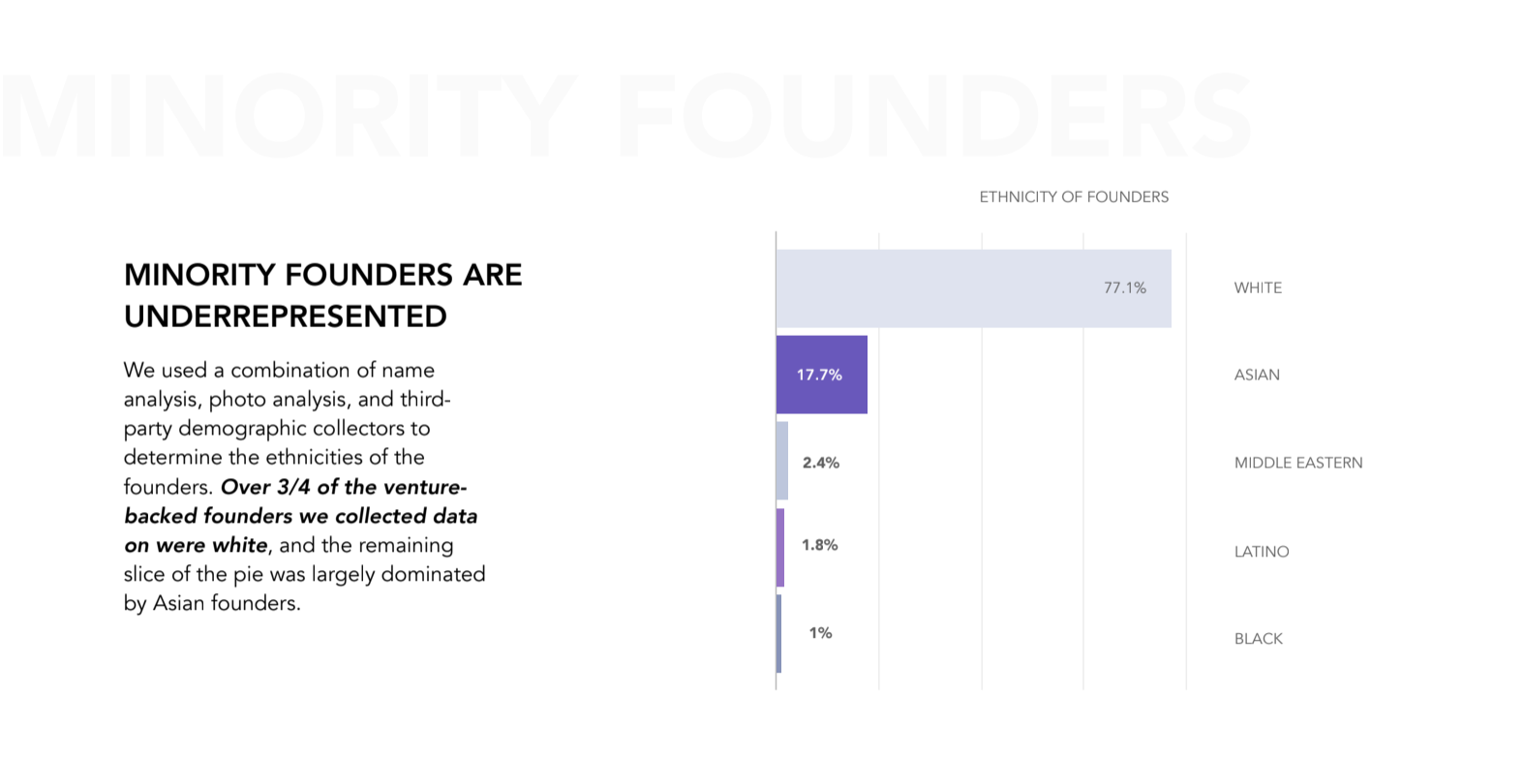
Minority founder data

The census supports Nichols’ assessment. By 2044, the United States will see a majority minority population, and the next generation of consumers is already showing its preferences. Companies like Ipsy, founded by Michelle Phan, is a billion-dollar beauty business built by a minority founder; Pat McGrath Labs, another billion-dollar makeup brand launched by make-up artist Pat McGrath, raised $60 million from Eurazeo Brands.

Cross Culture isn’t just sitting in Los Angeles waiting to find these companies. Nichols and his firm are taking the opportunity on the road. He spent a month in Miami meeting with entrepreneurs and has organized a series of “Culture and Code” events in Detroit and Atlanta to get exposure to startups in those cities as well. Nichols describes them as pop-ups to meet entrepreneurs and investors in those communities.

For Cross Culture, the decision to travel to these urban hubs far from technology’s traditional perch in Silicon Valley is simply an extension of the firm’s broader vision.

“Only 2 percent of venture capital is black and Latinx and .002 is black women. Part of that is that young folks that look like me don’t know what venture capital is,” says Nichols. “It was kind of eye-opening in the sense of how a good portion of our population thinks about these demographics and what they’re capable of and it was very sad.”

Now, as Cross Culture is mostly deployed, the firm needs to make a decision about its future. There’s the potential that Cross Culture could go out for another $50 million to $100 million, or, potentially raise a larger new vehicle.

To date, the firm’s average investment size has been roughly $250,000 into the 34 companies the firm has backed so far.

For Nichols, the success of these companies is an imperative. Not just to make money, or to prove out his thesis, but because of what failure would mean for other firms that take a broad approach to their investment thesis trying to back the best founders — no matter their background. Nichols believes it’s important for the venture industry, for the economy and for the broader society.

“There is no way I can fail at this,” Nichols says. “I have to win.”

Facebook taps Peggy Alford for its board, Reed Hastings and Erskine Bowles to depart

Facebook’s board is undergoing its biggest shakeup in memory. On Friday, the company announced that Peggy Alford would be nominated to join the company’s board of directors.

“Peggy is one of those rare people who’s an expert across many different areas — from business management to finance operations to product development,” Facebook CEO Mark Zuckerberg said of the change. “I know she will have great ideas that help us address both the opportunities and challenges facing our company.”

Alford, currently senior vice president of Core Markets for PayPal, will become the first black woman to serve on Facebook’s board. She previously served as the chief financial officer of the Chan Zuckerberg Initiative, Mark Zuckerberg and Priscilla Chan’s massive charitable foundation.

Facebook announced some serious departures along with the news of Alford’s nomination. Longtime Facebook board members Reed Hastings and Erskine Bowles will leave the board, marking a major shakeup for the board’s composition. Both Hastings, the CEO of Netflix, and Bowles, a former Democratic political staffer, have served on the board since 2011. Both men have been critical of Facebook’s direction in recent years. Hastings reportedly clashed with fellow board member Peter Thiel over his support for the Trump administration and Bowles famously dressed down Facebook’s top brass over Russia’s political interference on the platform.

Alford’s nomination will come to a vote at Facebook’s May 30 shareholder meeting.

“What excites me about the opportunity to join Facebook’s board is the company’s drive and desire to face hard issues head-on while continuing to improve on the amazing connection experiences they have built over the years,” Alford said of her nomination. “I look forward to working with Mark and the other directors as the company builds new and inspiring ways to help people connect and build community.”

IAM Robotics puts a unique spin on warehouse automation

Before robots get to do the fun stuff, they’re going to be tasked with all of the things humans don’t want to do. It’s a driving tenet of automation — developing robotics and AI designed to replace dull, dirty and dangerous tasks. It’s no surprise, then, that warehouses and fulfillment centers have been major drivers in the field.

Earlier this week, we reported that Amazon would be acquiring Canvas, adding another piece to its portfolio, adding to the 100,000 or so robotics it currently deploys across 25 or so fulfillment centers. Even Boston Dynamics has been getting into the game, acquiring a vision system in order to outfit its Handle robot for the warehouse life.

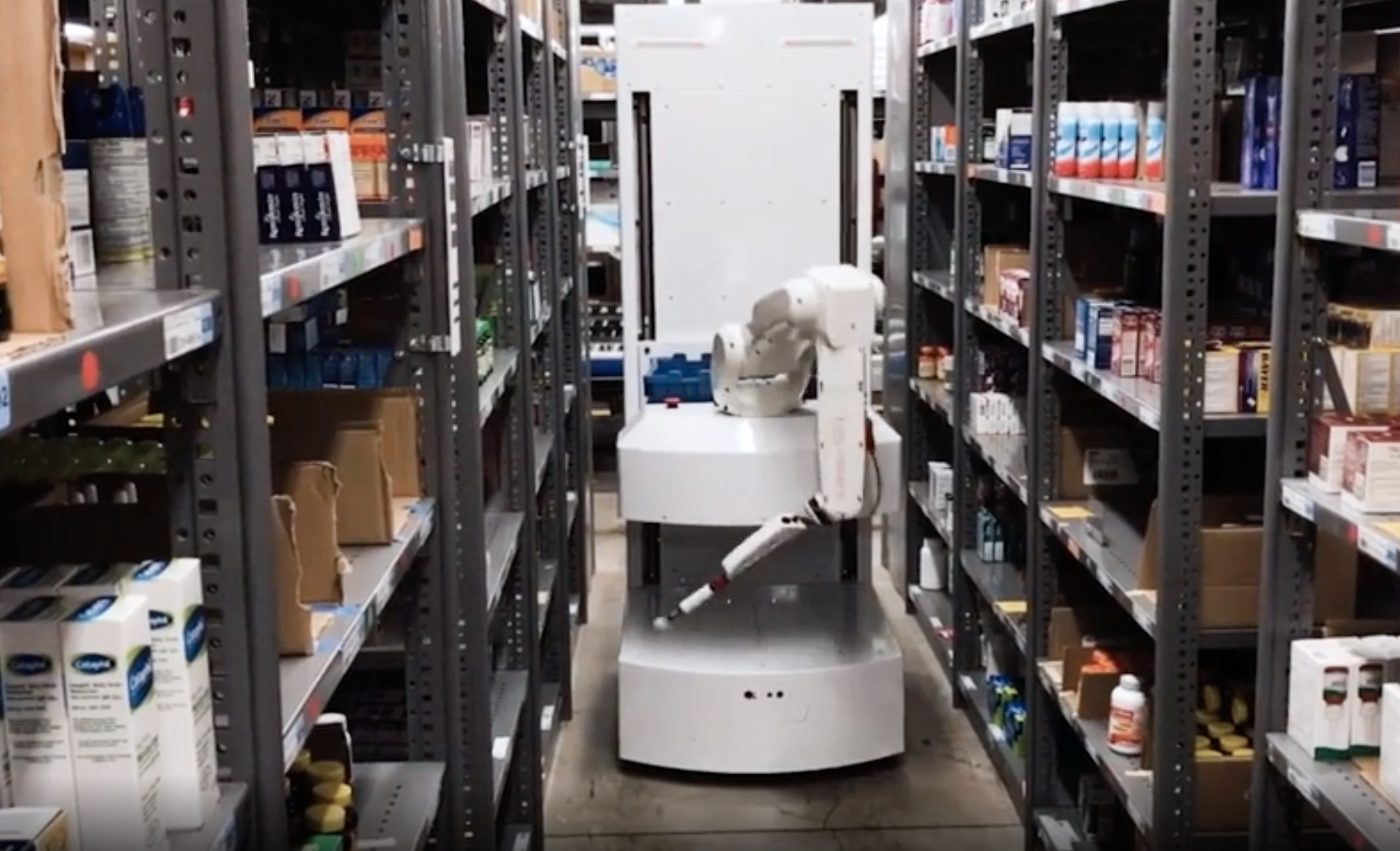
Like so much of the robotics world, Pittsburgh is a key player in the world of automation. IAM Robotics is one of the more compelling local entrants in the space. We paid the company a visit on a recent trip to town. Located in a small office outside of the city, the startup offers a unique take on the increasingly important pick and place robotics, combining a robotic arm with a mobile system.

“What’s unique about IAM robotics is we’re the only ones with a mobile robot that is also capable of manipulating objects and moving things around the warehouse by itself,” CEO Joel Reed told TechCrunch. “It doesn’t require a person in the loop to actually physically handle things. And what’s unique about that is we’re empowering machine with AI and computer vision technologies to make those decisions by itself. So it’s fully autonomous, it’s driving around, using its own ability to see.”

The startup has mostly operated quietly, in spite of a $20 million venture round led by KCK late last year. After a quick demo in the office, it’s easier to see how early investors have found promise in the company. Still, the demo marks a pretty stark contrast from the Bossa Nova warehouse where we spent the previous day.

There are a couple of small rows of groceries in a corner of the office space, a few feet away from where the rest of IAM’s staff is at work. A pair of the company’s Swift robots go to work, traveling up and down the small, makeshift aisle. When the robot locates the desired product on a shelf, a long, multi-segmented arm drops down, positioning itself in front of a box. The suction cup tip attaches to the product, then the arm swivels back around to release it into a bin.

Used correctly, the Swift could help companies staff difficult-to-fill positions, while adding a layer of efficiency in the warehouse. “Our customers or prospective customers are looking to automate to both reduce costs, but also to alleviate this manual labor shortage,” says Reed. “So we have a younger generation that’s just more interested in doing jobs like gig economy jobs, drive for Uber, Lyft, those kinds of things, because they can make more money than they could in working at a warehouse.”

Facebook accidentally shipped VR hardware with conspiratorial messages hidden inside

In the almost weekly tradition of Facebook talking about something embarrassing they did on a Friday, the company is now fessing up to the fact that thousands of their next-gen virtual reality headset controllers have “easter-egg” messages inscribed on internal components that weren’t meant to be on non-prototype editions.

“Tens of thousands” of unreleased consumer units have the phrases “This Space For Rent” and “The Masons Were Here.” written while some of the developer units have “Hi iFixit! We See You!” and, perhaps most embarrassing, “Big Brother Is Watching” inscribed internally.

The admission was made by Facebook head of VR product Nate Mitchell in a set of tweets.

The messages on final production hardware say “This Space For Rent” & “?The Masons Were Here.?” A few dev kits shipped with “?Big Brother is Watching?” and “Hi iFixit! We See You!?” but those were limited to non-consumer units. [2/3] pic.twitter.com/po1qyQ10Um

— Nate Mitchell (@natemitchell) April 12, 2019

The company is gearing up for the releases of two new virtual reality products, the $399 standalone Oculus Quest VR system and the $399 PC-tethered Oculus Rift S. Despite being geared toward pretty different audiences, the systems will both share the same Touch controllers that this “issue” affects.

For the most part this is just kind of dumb and funny; it’s a bit embarrassing for a finished hardware product to have phrases with a conspiratorial slant inside of them, but it’s also affecting buyers in zero meaningful ways as it’s not visible unless you pry it open, which you have limited reason to do unless you are indeed iFixit.

That said, it’s better that they come clean rather than have consumers or developers pry their headsets open to find some of these phrases. For a company with so many privacy screw-ups in the past year, having your big hardware releases ship to some developers with ‘Big Brother Is Watching” inscribed inside isn’t the best look.

OpenStack Stein launches with improved Kubernetes support

The OpenStack project, which powers more than 75 public and thousands of private clouds, launched the 19th version of its software this week. You’d think that after 19 updates to the open-source infrastructure platform, there really isn’t all that much new the various project teams could add, given that we’re talking about a rather stable code base here. There are actually a few new features in this release, though, as well as all the usual tweaks and feature improvements you’d expect.

While the hype around OpenStack has died down, we’re still talking about a very active open-source project. On average, there were 155 commits per day during the Stein development cycle. As far as development activity goes, that keeps OpenStack on the same level as the Linux kernel and Chromium.

Unsurprisingly, a lot of that development activity focused on Kubernetes and the tools to manage these container clusters. With this release, the team behind the OpenStack Kubernetes installer brought the launch time for a cluster down from about 10 minutes to five, regardless of the number of nodes. To further enhance Kubernetes support, OpenStack Stein also includes updates to Neutron, the project’s networking service, which now makes it easier to create virtual networking ports in bulk as containers are spun up, and Ironic, the bare-metal provisioning service.

All of that is no surprise, given that according to the project’s latest survey, 61 percent of OpenStack deployments now use both Kubernetes and OpenStack in tandem.

The update also includes a number of new networking features that are mostly targeted at the many telecom users. Indeed, over the course of the last few years, telcos have emerged as some of the most active OpenStack users as these companies are looking to modernize their infrastructure as part of their 5G rollouts.

Besides the expected updates, though, there are also a few new and improved projects here that are worth noting.

“The trend from the last couple of releases has been on scale and stability, which is really focused on operations,” OpenStack Foundation executive director Jonathan Bryce told me. “The new projects — and really most of the new projects from the last year — have all been pretty oriented around real-world use cases.”

The first of these is Placement. “As people build a cloud and start to grow it and it becomes more broadly adopted within the organization, a lot of times, there are other requirements that come into play,” Bryce explained. “One of these things that was pretty simplistic at the beginning was how a request for a resource was actually placed on the underlying infrastructure in the data center.” But as users get more sophisticated, they often want to run specific workloads on machines with certain hardware requirements. These days, that’s often a specific GPU for a machine learning workload, for example. With Placement, that’s a bit easier now.

It’s worth noting that OpenStack had some of this functionality before. The team, however, decided to uncouple it from the existing compute service and turn it into a more generic service that could then also be used more easily beyond the compute stack, turning it more into a kind of resource inventory and tracking tool.

Then, there is also Blazer, a reservation service that offers OpenStack users something akin to AWS Reserved Instances. In a private cloud, the use case for a feature is a bit different, though. But as some of the private clouds got bigger, some users found that they needed to be able to guarantee resources to run some of their regular, overnight batch jobs or data analytics workloads, for example.

As far as resource management goes, it’s also worth highlighting Sahara, which now makes it easier to provision Hadoop clusters on OpenStack.

In previous releases, one of the focus areas for the project was to improve the update experience. OpenStack is obviously a very complex system, so bringing it up to the latest version is also a bit of a complex undertaking. These improvements are now paying off. “Nobody even knows we are running Stein right now,” Vexxhost CEO Mohammed Nasar, who made an early bet on OpenStack for his service, told me. “And I think that’s a good thing. You want to be least impactful, especially when you’re in such a core infrastructure level. […] That’s something the projects are starting to become more and more aware of but it’s also part of the OpenStack software in general becoming much more stable.”

As usual, this release launched only a few weeks before the OpenStack Foundation hosts its bi-annual Summit in Denver. Since the OpenStack Foundation has expanded its scope beyond the OpenStack project, though, this event also focuses on a broader range of topics around open-source infrastructure. It’ll be interesting to see how this will change the dynamics at the event.

Harry Potter, the Platform, and the Future of Niantic

What is Niantic? If they recognize the name, most people would rightly tell you it’s a company that makes mobile games, like Pokémon GO, or Ingress, or Harry Potter: Wizards Unite.

But no one at Niantic really seems to box it up as a mobile gaming company. Making these games is a big part of what the company does, yes, but the games are part of a bigger picture: they are a springboard, a place to figure out the constraints of what they can do with augmented reality today, and to figure out how to build the tech that moves it forward. Niantic wants to wrap their learnings back into a platform upon which others can build their own AR products, be it games or something else. And they want to be ready for whatever comes after smartphones.

Niantic is a bet on augmented reality becoming more and more a part of our lives; when that happens, they want to be the company that powers it.

This is Part 3 of our EC-1 series on Niantic, looking at its past, present, and potential future. You can find Part 1 here and Part 2 here. The reading time for this article is 24 minutes (6,050 words)

The platform play

After the absurd launch of Pokémon GO, everyone wanted a piece of the AR pie. Niantic got more pitches than they could take on, I’m told, as rights holders big and small reached out to see if the company might build something with their IP or franchise.

But Niantic couldn’t build it all. From art, to audio, to even just thinking up new gameplay mechanics, each game or project they took on would require a mountain of resources. What if they focused on letting these other companies build these sorts of things themselves?

That’s the idea behind Niantic’s Real World Platform. This platform is a key part of Niantic’s game plan moving forward, with the company having as many people working on the platform as it has on its marquee money maker, Pokémon GO.

There are tons of pieces that go into making things like GO or Ingress, and Niantic has spent the better part of the last decade figuring out how to make them all fit together. They’ve built the core engine that powers the games and, after a bumpy start with Pokémon GO’s launch, figured out how to scale it to hundreds of millions of users around the world. They’ve put considerable work into figuring out how to detect cheaters and spoofers and give them the boot. They’ve built a social layer, with systems like friendships and trade. They’ve already amassed that real-world location data that proved so challenging back when it was building Field Trip, with all of those real-world points of interest that now serve as portals and Pokéstops.

Niantic could help other companies with real-world events, too. That might seem funny after the mess that was the first Pokémon GO Fest (as detailed in Part II). But Niantic turned around, went back to the same city the next year, and pulled it off. That experience — that battle-testing — is valuable. Meanwhile, the company has pulled off countless huge Ingress events, and a number of Pokémon GO side events calledSafari Zones.” CTO Phil Keslin confirmed to me that event management is planned as part of the platform offering.

As Niantic builds new tech — like, say, more advanced AR or faster ways to sync AR experiences between devices — it’ll all get rolled into the platform. With each problem they solve, the platform offering would grow.

But first they need to prove that there’s a platform to stand on.

Harry Potter: Wizards Unite

Niantic’s platform, as it exists today, is the result of years of building their own games. It’s the collection of tools they’ve built and rebuilt along the way, and that already powers Ingress Prime and Pokémon GO. But to prove itself as a platform company, Niantic needs to show that they can do it again. That they can take these engines, these tools, and, working with another team, use them for something new.

Matt Cutts on solving big problems with lean solutions at the US Digital Service

Updating the federal government’s digital infrastructure seems like a Herculean task akin to cleaning out the Augean stables. Where do you even start shoveling? Former Googler and current head of the U.S. Digital Service Matt Cutts says it’s not quite that hard — but he’s had to leave his Silicon Valley startup outlook at the door.

“In the Valley and San Francisco, they’re geared to move fast and break things. And that’s fantastic to explore a space,” Cutts told me in an interview. “But the government has to move purposefully and fix things. It’s more about finding the right decision, achieving consensus, creating good communication.”

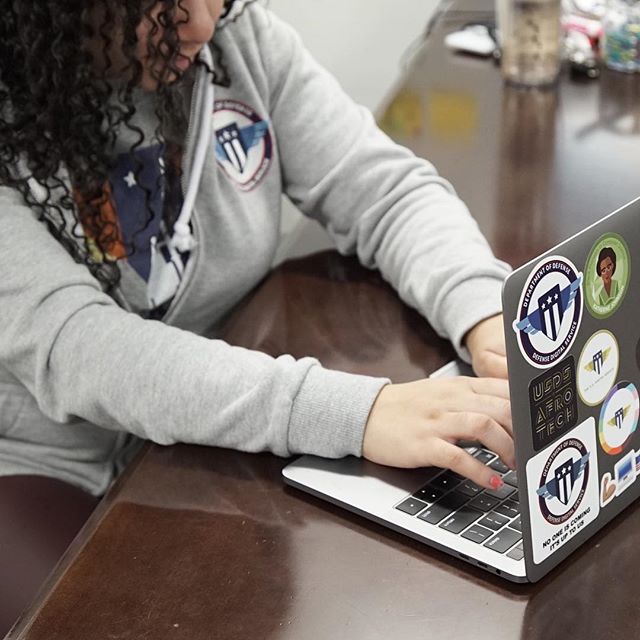
The USDS is a small (and actively recruiting) department that takes on creaking interfaces and tangled databases of services for, say, veteran benefit management or immigration documentation, buffing them to a shiny finish that may save their users months of literal paperwork.

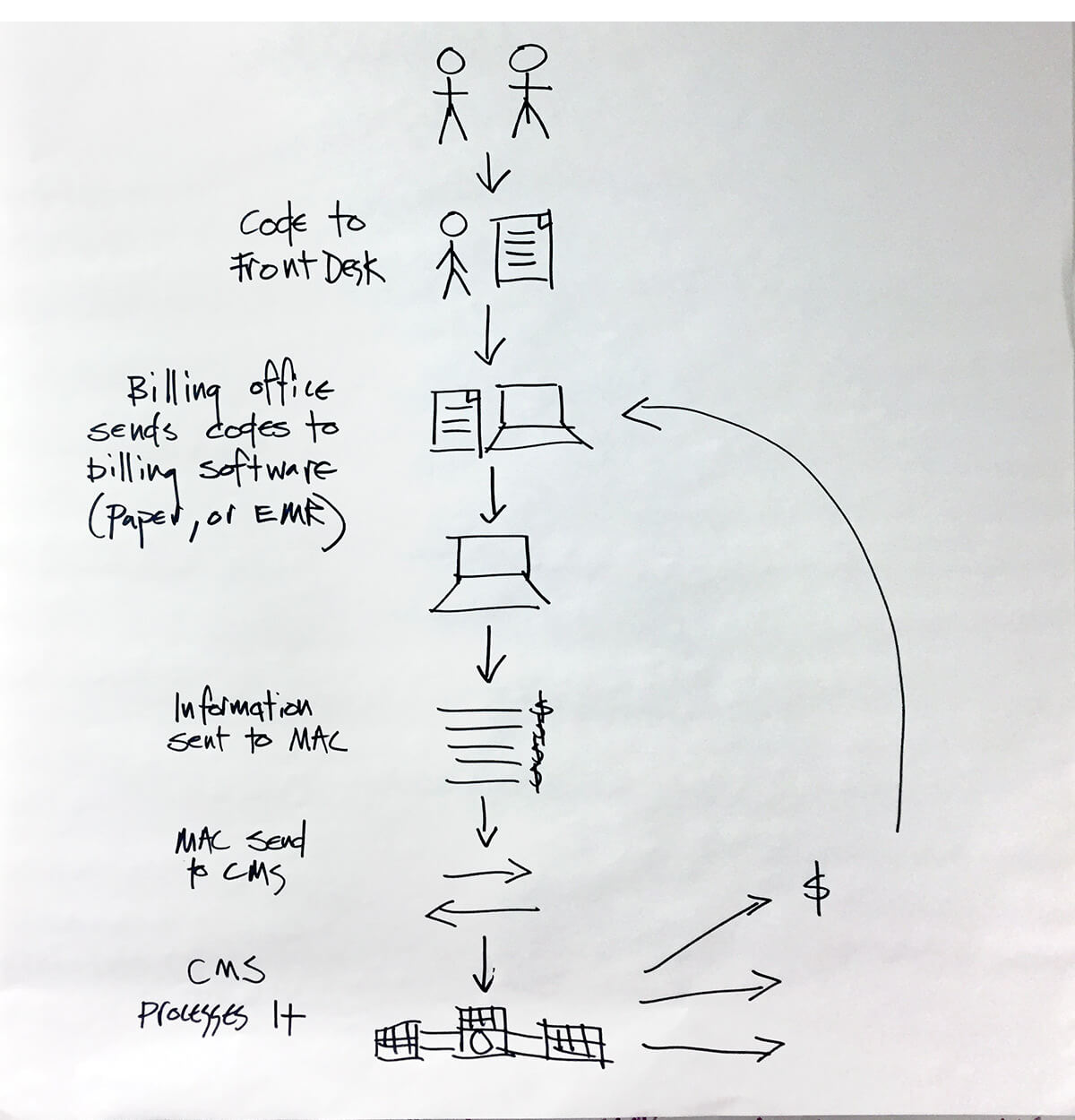
Some notes from the USDS’s work on modernizing the Medicare payment system

Recently, for instance, the USDS overhauled VA.gov, which is how many veterans access things like benefits, make medical appointments and so on. But until recently it was kind of a mess of interconnected sub-sites and instructional PDFs. USDS interviewed a couple thousand vets and remade the site with a single login, putting the most-used services right on the front page. Seems obvious, but the inertia of these systems is considerable.

“Oftentimes we build a front end and it still talks to an abysmal, or maybe antiquarian, system in the back end,” Cutts said. “VA.gov required a special version of Internet Explorer!”

There are always paper alternatives, but those can be so slow and clunky that they might take three or four months to complete, and can be so complex that people will hire a lawyer to do them rather than risk further delay. These are ostensibly free and open services available to all vets — but they weren’t in practice. And there were accessibility problems all over the place, Cutts noted, which is especially troubling with a disability-heavy population like veterans.

These projects are often short-term, putting modern web and backend standards to work and handing the results off to the agency or department that requested it. The USDS isn’t built for long-term support, but acts as a strike team putting smart solutions in place that may seem obvious in startup culture but haven’t yet become standard operating procedure in the capitol.

The work they do is guided by impact, not politics, which is likely part of the reason they’ve managed to avoid interference by the Trump administration, which has treated many other Obama-era initiatives like pests to be exterminated. Yet the nature of the work is in a way fundamentally progressive, in that it is about bottom-up accessibility and helping under-represented or unprivileged groups.

For instance, they’ve been hard at work on immigration issues that would expedite both asylum seekers and seasonal farm workers at the Mexican border. That’s a political live wire right now, even if the decision to do it was strictly based on helping a large population frustrated by outdated digital tools.

The new farmers.gov, built for the Department of Agriculture, vastly streamlines the H-2A visa application process, centralizing documentation and services that were previously spread across several other major departments and websites. That’s inarguably a good thing, but like anything relating to immigration and foreign labor, it is possible it could get swept up in the partisan twister. Fortunately that doesn’t seem to have happened.

The new, improved and simplified farmers.gov provides app integration and straightforward design

“The fact is we get good support,” Cutts said when I asked him about the current political environment. It may not be loud in that support, but quiet actions like appointing former USDS officials and engineers to important roles within administration are common, he said.

There are plenty of other programs looking to modernize federal as well as state systems, he pointed out; it’s a rising tide and it’s lifting a lot of boats.

“I signed up for a three-month tour, and that was three years ago,” he said. “It’s really a whole civic tech movement here, there are a ton of people sort of holding hands and working together. There’s also stuff happening at the state and local level, at the international level, from the U.K. to Estonia and Singapore — everyone’s starting to realize this matters.”

Recruitment, however, is more difficult than he’d like, perhaps partly because of self-imposed hiring practices made to reflect the diversity of the country.

“We get the best results when we represent all of America,” said Cutts. “So I go to Microsoft and Ann Arbor, regular events, but also like, Lesbians Who Tech or Grace Hopper Fest.”

Still, startups and big tech companies regularly poach talent or otherwise lure them away. “They’re just better at recruiting,” he said. And there’s some kind of fundamental disconnect at work, too, perhaps the comfortable contempt many young people have for the government — but he suggested that those seeking to do good might want to do a more serious evaluation of the tech landscape.

“I joined Google because I wanted to make the world a better place,” he said. “But if you look at the #metoo movement, how the tech industry has been acting lately… everyone at those companies has to ask that question, am I really having that impact?”

If you’re not sure, you might consider doing a tour at the USDS. They’re launching products and helping people just like startups aim to do, but they’re beholden to ordinary citizens in need, not investors. That sounds like a step up to me.

Trump, FCC unveil plan to accelerate 5G rollout

In a press conference today in the White House’s Roosevelt Room, the president laid out a number of initiatives focused on helping accelerate the U.S. role in the 5G race.

“This is, to me, the future,” Trump said, opening the press conference flanked by Ajit Pai, Ivanka Trump and a room full of communications representatives in cowboy and hard hats.

“It’s all about 5G now,” Trump told the audience. “We were 4G and everyone was saying we had to get 4G, and then they said before that, ‘we have to get 3G,’ and now we have to get 5G. And 5G’s a big deal and that’s going to be there for a while. And at some point we’ll be talking about number six.”

The apparently off-script moment echoed Trump’s recent call on Twitter for the U.S. to get 6G technology “as soon as possible.” There’s something to be said for the spirit, perhaps, but it’s probably a little soon to be jumping the gun on a technology that doesn’t really exist just yet.

Trump used the opportunity to downplay earlier rumors that the government might be building its own 5G network, instead promoting a free-market method, while taking a shot at the government’s capabilities. “In the United States, our approach is private sector-driven and private sector-led,” he added. “The government doesn’t have to spend lots of money.”

In recent months, however, both the administration and the FCC have been discussing ways to make America more competitive in the race to the soon-to-be-ubiquitous cellular technology. Earlier today, the FCC announced plans to hold the largest spectrum auction in U.S. history, offering up the bands to wireless carriers. The planned auction is set to kick off on December 10.

“To accelerate and incentivize these investments, my administration is freeing up as much wireless spectrum as needed,” Trump added, echoing Pai’s plans.

Earlier today Pai and the FCC also proposed a $20.4 billion fund design to help connect rural areas. The chairman said the commission believes the fund could connect as many as four million small businesses and residences over the course of the next decade.

The focus is understandable, of course. 5G’s value will go far beyond faster smartphones, providing connections for a wide range of IoT and smart technologies and potentially helping power things like robotics and autonomous vehicles. The technology will undeniably be a key economic driver, touching as of yet unseen portions of the U.S. workforce.

Nancy Pelosi warns tech companies that Section 230 is ‘in jeopardy’

In a new interview with Recode, House Speaker Nancy Pelosi made some notable comments on what by all accounts is the most important law underpinning the modern internet as we know it.

Section 230 of the 1996 Communications Decency Act is as short as it is potent — and it’s worth getting familiar with. It states “No provider or user of an interactive computer service shall be treated as the publisher or speaker of any information provided by another information content provider.”

When asked about Section 230, Pelosi referred to the law as a “gift” to tech companies that have leaned heavily on the law to grow their business. That provision, providing tech platforms legal cover for content created by their users, is what allowed services like Facebook, YouTube and many others to swell into the massive companies they are today.

Pelosi continued:

It is a gift to them and I don’t think that they are treating it with the respect that they should, and so I think that that could be a question mark and in jeopardy… I do think that for the privilege of 230, there has to be a bigger sense of responsibility on it. And it is not out of the question that that could be removed.

Expect to hear a lot more about Section 230. In recent months, a handful of Republicans in Congress have taken aim at the law. Section 230 is what’s between the lines in Devin Nunes’ recent lawsuit accusing critics for defaming him on Twitter. It’s also the extremely consequential subtext beneath conservative criticism that Twitter, Facebook and Google do not run “neutral” platforms.

While the idea of stripping away Section 230 is by no means synonymous with broader efforts to regulate big tech, it is the nuclear option. And when tech’s most massive companies behave badly, it’s a reminder to some of them that their very existences hinge on 26 words that Congress giveth and Congress can taketh away.

Whatever the political motivations, imperiling Section 230 is a fearsome cudgel against even tech’s most seemingly untouchable companies. While it’s not clear what some potentially misguided lawmakers would stand to gain by dismantling the law, Pelosi’s comments are a reminder that tech’s biggest companies and users alike have everything to lose.

HQ Trivia replaces Quiz Daddy Scott Rogowsky

Quiz Khalifa aka Host Malone aka Trap Trebek aka HQ Trivia’s Scott Rogowsky has been pushed out of the live mobile gaming startup. The two split due to disagreements about Rogowsky attempting to take a second full-time job hosting sports streaming service DAZN’s baseball show ChangeUp while moving to only hosting HQ on weekends, TMZ first reported. HQ wanted someone committed to their show.

Now HQ co-founder and CEO Rus Yusupov confirms to TechCrunch that Rogowsky will no longer host HQ Trivia. He tells me that the company ran a SurveyMonkey survey of its top players and they voted that former guest host Matt Richards rated higher than Rogowsky. Yusupov says HQ is excited to have Richards as its new prime time host. It’s also putting out offers to more celebrity guests to host for a few shows, a few weeks or even a whole season of one of its time slots.

HQ Trivia’s new host Matt Richards

The departure could still shake HQ’s brand since Rogowsky had become the de facto face of the company. But he was also prone to talking a lot on the air and promoting himself, sometimes in ways that felt distracting from the game. Rogowsky has also been using HQ’s brand to further his stand-up comedy career, splashing its logo on advertising for his shows like this one below at a casino where “The centerpiece is a live trivia competition,” he told WPTV5.

[Update: Rogowsky has since commented on his departure via tweetstorm. He thanked the team and viewers for their support but didn’t mention the startup’s founders, confirmed his ChangeUp gig led to leaving HQ, and threw a dig at the company noting “I wasn’t given the courtesy of a farewell show.”]

Sadly, it won’t be possible for me to continue hosting HQ concurrently as I had hoped, and because I wasn’t given the courtesy of a farewell show, please allow me to use this thread to say all the things I would have said on my final broadcast. (2/5)

— Scott Rogowsky (@ScottRogowsky) April 12, 2019

Rogowsky also issued TechCrunch this statement:

“Nothing in my decade-plus entertainment career has meant more to me personally and professionally than my involvement with HQ. I am tremendously grateful to the talented team of engineers, writers, animators and producers at Intermedia Labs who helped me grow the show into the international phenomenon it became, and above all, I will forever be thankful for the millions of HQties around the world who will always hold a special place in my heart. While the decision to leave HQ was a difficult one, I am delighted to begin this next chapter in my career with the amazing people at MLB and DAZN. If you miss me on HQ, you can now get three hours of me every weeknight watching ChangeUp on DAZN.”

TechCrunch had predicted that Rogowsky might depart if he wasn’t properly compensated with equity in HQ Trivia that would only vest and earn him money if he stuck around. The damage to HQ could worsen if he’s scooped up by Facebook, Snapchat or another tech company to build out their own live video gaming shows.

Rogowsky used HQ Trivia branding to promote his own in-person comedy and trivia shows

HQ Trivia provided this statement on Rogowsky’s exit:

We continue to build an incredible company at HQ Trivia, from drawing hundreds of thousands of players to the platform daily, to increasing the size of the prize, to attracting strong talent. We’ve come a long way since Scott Rogowsky’s first trivia game and we’re grateful for everything he’s done for the platform. This is a team that creates products for talent to really shine—we’re just getting started at HQ Trivia, and as he makes his next move, wanted to take a minute to thank him for being part of our journey.

Yusupov tells me he’s excited about exploring new hosts, noting that Richards is a person of color who brings more diversity to HQ’s lineup. Richards is a stand-up comic who has appeared on CBS’ 2 Broke Girls, Nickelodeon’s School of Rock and was a voice-over host for game show Trivial Takedown on FUSE. Yusupov says the team feels jazzed about the new creative opportunities beyond Rogowsky, though the CEO says he appreciates all that its former host contributed.

Richards will have the tall task of trying to revive HQ’s popularity. It climbed the app store charts to become the No. 3 top game and No. 6 overall app in January 2018, and peaked at 2.38 million concurrent players in March 2018. But it’s been on a steady decline since, falling to the No. 585 overall app in August, and it dropped out of the top 1,500 last month, according to App Annie. HQ Trivia was installed more than 160,000 times last month on iOS and Android, with approximately $200,000 in in-app purchase revenue, according to Sensor Tower. But that’s just 8 percent as many downloads as the 1.97 million new installs HQ got in March 2018.

Exhaustion with the game format, so many winners splitting jackpots to just a few dollars per victor and laggy streams have all driven away players. The introduction of a new Wheel of Fortune-style HQ Words game in August hasn’t stopped the decline. And the tragic death of HQ co-founder and former CEO Colin Kroll may have impeded efforts to turn things around. There’s a ton of pressure on the company after it raised $23 million, including a $15 million round at a $100 million valuation.

Even if HQ Trivia fades from the zeitgeist, it and Rogowsky will have inspired a new wave of innovation in what it means to play with our phones.