Thumbtack is raising up to $120M on a flat valuation

Thumbtack, one of the first players in what is now known as the gig economy, has hit the fundraising circuit once again.

The online services marketplace that matches customers with nearby professionals is raising up to $120 million in Series H shares, according to a Delaware stock authorization filing uncovered by the Prime Unicorn Index. Thumbtack did not respond to a request for comment.

At more than 10 years old, the business has previously raised nearly $300 million in a combination of debt and equity funding. The upcoming round comes at a flat valuation to its 2015 Series G funding of $125 million, which valued Thumbtack at $1.3 billion. Scottish asset manager Baillie Gifford led that round, which increased its valuation roughly 60% from $804 million, according to PitchBook:

Thumbtack’s funding history

June 2009: $650,000 Series A | $3.3M valuation

Jan. 2012: $4.4B Series C | $16.5M valuation

June 2013: $12.5M Series D | $46.5M valuation

May 2014: $30M Series E | $230M valuation

Aug. 2014: $100M Series F | $804M valuation

Sept. 2015: $125M Series G | $1.3B valuation

June 2019: ~$120M Series H | ~$1.3B valuation

Source: PitchBook

As Thumbtack has worked its way through the fundraising alphabet, the business has sought acquisition offers, TechCrunch has learned. Ahead of filing to raise another nine-digit round, we’ve heard Thumbtack was exploring M&A opportunities with a competing or complementary companies.

Raising venture capital at a flat valuation is typically a sign a company’s investors are dubious of the business’s future prospects. It’s possible an acquisition deal fell through and Thumbtack, not yet prepared for an initial public offering, turned back to its investors for a necessary capital infusion.

Founded by Marco Zappacosta, whose parents were the founders of Logitech, Thumbtack helps professionals find work close by, from home maintenance, to gardening, to DJing a party. The business is supported by investment firms such as CapitalG, Sequoia Capital and Draper Associates, as well as individual investors Scott Banister, Cyan Banister and Jason Calacanis, among others.

Here’s a full look at Thumbtack’s Delaware stock authorization:

Here’s why you should exhibit in Startup Alley at Disrupt SF 2019

Don’t miss your chance to navigate your early-stage startup through an ocean of opportunity at Disrupt San Francisco 2019, our flagship event that takes place October 2-4. We’re talking about exhibiting in Startup Alley, the entrepreneurial heart and soul of every Disrupt.

Exhibiting in the Alley places your business in the path of more than 10,000 attendees and 400 media outlets. Cash, media coverage and customers are essential elements for early startup success and, whether you’re looking for investors, a profile by an accredited tech journalist or to build relationships with prospective customers, you’ll increase your odds significantly when you show your stuff in Startup Alley.

Last year, exhibitors using CrunchMatch — our attendee networking platform — scheduled more than 1,300 meetings and collectively raised $31 million in the months following Disrupt SF 2018. Not too shabby, right?

You have two ways to score an exhibitor table in Startup Alley. First up, founders of early-stage startups in any tech category can buy a Startup Alley Exhibitor Package. The package includes three Founder passes and one day to exhibit your startup. You also get full access to all three days at DSF ’19 — including the Startup Battlefield competition, speakers, workshops, Q&A Sessions, the complete attendee list via Disrupt Mobile App, CrunchMatch and a bunch more perks.

If you like free (and who doesn’t?), you’re going to love the other way to exhibit in Startup Alley. Apply to participate in our TC Picks program. Important note: To qualify, your startup must fall into one of these tech categories: AI + Machine Learning, Biotech + Healthtech, Blockchain, Fintech, Mobility, Privacy + Security, Retail + E-commerce, Robotics + IoT + Hardware, SaaS and Social Impact + Education.

TechCrunch editors vet each application and hand-pick up to five startups to represent each category. It’s a selective, competitive process, but if you’re chosen you’ll get a free Startup Alley Exhibition Package good for one full day of exhibiting in Startup Alley. You also receive three Founder passes, CrunchMatch, the complete Disrupt SF 2019 press list and invitations to special events at Disrupt SF — plus a boatload of media and investor attention.

Chart your course for success in Startup Alley at Disrupt San Francisco 2019. No matter how you get there, it’s a stellar opportunity to find new customers, get media attention and meet future investors. Join us!

Is your company interested in sponsoring at Disrupt SF 2019? Contact our sponsorship sales team by filling out this form.

Destiny 2 goes free to play and gains cross-saving on all platforms

Bungie aims to fortify the popular but flagging Destiny 2 with an expanded free-to-play plan and universal cross-platform saving, the company announced today. It’s an interesting and player-friendly evolution of the “games as a service” model, and other companies should take note.

The base game, which is to say the original campaign and the first year of updates, will be available on PC, Xbox One, PlayStation 4, and Google Stadia. You can play as much as you want, and your progress will be synced to your account, so you can do some easy patrols on console and then switch to your PC’s mouse and keyboard for the more difficult raids.

The PS4 cross-save ability is a surprise, since Sony has resisted this sort of thing in the past and rumors had it before the announcement that they would be left out of the bargain. It’s heartening to see this level of cooperation, if that’s what it is, in the new gaming economy.

Confirmed! https://t.co/WKWtPZ7mtD

— PlayStation (@PlayStation) June 6, 2019

As part of Bungie’s separation from Activision, which published Destiny 2 to begin with, the game is now switching over to Steam on the PC. That’s probably a good thing for most, and you won’t lose any progress. It’s also being renamed “Destiny: New Light,” because why not?

Importantly, no platform will have any content advantage over another — no Xbox-specific guns or PC-specific levels. At a time when consoles are fighting one another on the basis of exclusives, this is a breath of fresh air.

The news was announced in a stream this morning, though players got a sneak peak when a publication I shall not name posted it slightly early. But we also learned more ahead of Bungie’s announcement when Google’s Stadia event showed the game coming to the streaming service in free form.

The developers at Bungie reveal Destiny 2: Shadowkeep.

A new chapter for Destiny 2 and the studio begins this September.

? Watch the full ViDoc: https://t.co/A1dBgdxgMQ pic.twitter.com/nHbAW9CuYA

— Bungie (@Bungie) June 6, 2019

Destiny 2 came out two years ago and has had a number of expansions — and has also been free for limited times or platforms a handful of times. The base game was really a bit threadbare and honestly may not convince new players that it’s worth it to pay. But the price is right and if you like the basic gameplay the expansions, which improved considerably on the game and added a lot of contents, can be bought year by year.

The move is obviously meant to help Destiny 2 compete with other games-as-services, such as the constantly improving Warframe and youth-devouring Fortnite. And it’s a good test bed for the new cross-platform economy that gamers are beginning to demand. You’ll be able to test it out for yourself on September 17, when the switchover is set to take effect — more details should be available well ahead of the relaunch.

HTC launches Vive Pro Eye stateside, costs four times as much as Rift S

HTC had the hottest VR headset out of the gate in 2016, but the thinning margins on consumer hardware thanks to Oculus have pushed them into the enterprise business.

Today, the company released the Vive Pro Eye headset, its latest enterprise play that integrates eye-tracking camera to give users an additional input mode and a way for users to signal attention. It’s available in a bundle with SteamVR 2.0 base stations and Vive controllers for $1,599.

The only difference over the previous-generation Vive Pro (with a $1,399 bundle price) is the eye-tracking capabilities. The $200 premium for that feature seems a bit healthy, but I suppose you don’t need much of an excuse to charge enterprise users more.

As a consumer, there’s really no reason to buy this. Few titles are going to boost eye-tracking support until more consumer-grade headsets integrate the tech. It’s worth contrasting the price point here with other headsets like the Valve Index which is several hundred dollars less and then the Rift S which is $1,200 less.

Protecting the integrity of US elections will require a massive regulatory overhaul, academics say

Ahead of the 2020 elections, former Facebook chief security officer Alex Stamos and his colleagues at Stanford University have unveiled a sweeping new plan to secure U.S. electoral infrastructure and combat foreign campaigns seeking to interfere in U.S. politics.

As the Mueller investigation into electoral interference made clear, foreign agents from Russia (and elsewhere) engaged in a strategic campaign to influence the 2016 U.S. elections. As the chief security officer of Facebook at the time, Stamos was both a witness to the influence campaign on social media and a key architect of the efforts to combat its spread.

Along with Michael McFaul, a former ambassador to Russia, and a host of other academics from Stanford, Stamos lays out a multi-pronged plan that incorporates securing U.S. voting systems, providing clearer guidelines for advertising and the operations of foreign media in the U.S. and integrating government action more closely with media and social media organizations to combat the spread of misinformation or propaganda by foreign governments.

The paper lays out a number of suggestions for securing elections, including:

  • Increase the security of the U.S. election infrastructure
  • Explicitly prohibit foreign governments and individuals from purchasing online advertisements targeting the American electorate
  • Require greater disclosure measures for FARA-registered foreign media organizations
  • Create standardized guidelines for labeling content affiliated with disinformation campaign producers
  • Mandate transparency in the use of foreign consultants and foreign companies in U.S. political campaigns
  • Foreground free and fair elections as part of U.S. policy and identifying election rights as human rights
  • Signal a clear and credible commitment to respond to election interference

A lot of heavy lifting by Congress and media and social media companies would be required to enact all of these policy recommendations, and many of them speak to core issues that policymakers and corporate executives are already attempting to manage.

For lawmakers, that means drafting legislation that would require paper trails for all ballots and improving threat assessments of computerized election systems, along with a complete overhaul of campaign laws related to advertising, financing and press freedoms (for foreign press).

The Stanford proposals call for the strict regulation of foreign involvement in campaigns, including a ban on foreign governments and individuals from buying online ads that would target the U.S. electorate with an eye toward influencing elections. The proposals also call for greater disclosure requirements indicating articles, opinion pieces or media produced by foreign media organizations. Furthermore, any campaign working with a foreign company or consultant or with significant foreign business interests should be required to disclose those connections.

Clearly, the echoes of Facebook’s Cambridge Analytica and political advertising scandals can be heard in some of the suggestions made by the paper’s authors.

Indeed, the paper leans heavily on the use and abuse of social media and tech as a critical vector for an attack on future U.S. elections. And the Stanford proposals don’t shirk from calling on legislators to demand that these companies do more to protect their platforms from being used and abused by foreign governments or individuals.

In some cases, companies are already working to enact suggestions from the report. Facebook, Alphabet and Twitter have said that they will work together to coordinate and encourage the spread of best practices. Media companies need to create (and are working to create) norms for handling stolen information. Labeling manipulated videos or propaganda (or articles and videos that come from sources known to disseminate propaganda) is another task that platforms are undertaking, but an area where there is still significant work to be done (especially when it comes to deep fakes).

As the report’s authors note:

Existing user interface features and platforms’ content delivery algorithms need to be utilized as much as possible to provide contextualization for questionable information and help users escape echo chambers. In addition, social media platforms should provide more transparency around users who are paid to promote certain content. One area ripe for innovation is the automatic labeling of synthetic content, such as videos created by a variety of techniques that are often lumped under the term “deepfakes”. While there are legitimate uses of synthetic media technologies, there is no legitimate need to mislead social media users about the authenticity of that media. Automatically labeling content, which shows technical signs of being modified in this manner, is the minimum level of due diligence required of the major video hosting sites.

There’s more work that needs to be done to limit the targeting capabilities for political advertising and improving transparency around paid and unpaid political content as well, according to the report.

And somewhat troubling is the report’s call for the removal of barriers around sharing information relating to disinformation campaigns that would include changes to privacy laws.

Here’s the argument from the report:

At the moment, access to the content used by disinformation actors is generally restricted to analysts who archived the content before it was removed or governments with lawful request capabilities. Few organizations have been able to analyze the full paid and unpaid content created by Russian groups in 2016, and the analysis we have is limited to data from the handful of companies who investigated the use of their platforms and were able to legally provide such data to Congressional committees. Congress was able to provide that content and metadata to external researchers, an action that is otherwise proscribed by U.S. and European law. Congress needs to establish a legal framework within which the metadata of disinformation actors can be shared in real-time between social media platforms, and removed disinformation content can be shared with academic researchers under reasonable privacy protections.

Ultimately, these suggestions are meaningless without real action from Congress and the president to ensure the security of elections. As the events of 2016 — documented in the Mueller report — revealed, there are a substantial number of holes in the safeguards erected to secure our elections. As the country looks for a place to build walls for security, perhaps one around election integrity would be a good place to start.

Siri Shortcuts comes built in on iOS 13, allows for more powerful shortcuts

At last year’s Worldwide Developer Conference, Apple announced the new app Siri Shortcuts which allows iOS users to create custom voice commands for their apps. Today, the company unveiled a series of updates to its Siri Shortcuts app to improve the experience for users and app developers alike. It also noted the app would now come pre-installed on iOS devices as of iOS 13 instead of being offered only as a download from the App Store.

In today’s version of Siri Shortcuts, users are prompted to record their own voice command to launch a favorite app or take a specific action. For example, “order my coffee” could trigger a mobile order placed in a coffee shop’s ordering app. Developers have been able to place a button in their app to direct users to create a Shortcut as well as suggest a phrase as part of this process. However, users would have to actually go through the steps of pressing record and saying the command before they could use it.

That may have impeded some users from adopting Siri shortcuts. Maybe they were confused about the process, or didn’t want to perform the extra steps. Or maybe they tapped the “Add to Siri” button to see what it did, but weren’t in a place where they wanted to record their voice command — like in a public place, perhaps.

With the updated Siri Shortcuts, developers can suggest a voice command as before, but instead of recording it, users can opt to use it with just a tap of a button.

Apple is also responding to one of developers’ biggest requests with the introduction of parameters in Shortcuts. This will make Shortcuts more conversational, Apple explains. For example, if a user wanted to find something to cook from their preferred recipes app they could launch it via a Shortcut to see a list of their favorite recipes. When they picked a recipe from the list, it would then take the user to that recipe and start playing the cooking instructions.

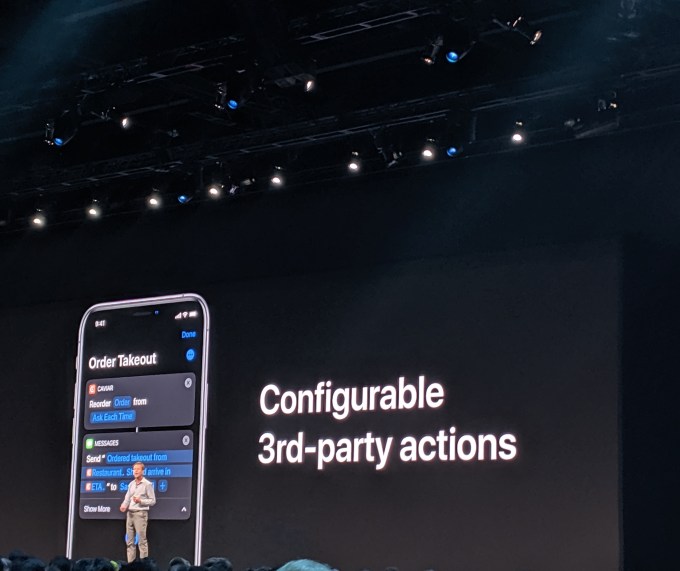
This is made possible through Siri’s new ability to ask follow-up questions. If you told Siri to order takeout, for example, the assistant may ask which order you wanted.

Another new feature, also by popular request, is support for automation. This is available from a new Automations tab in the app and allows users to set when to run any Shortcut when creating a custom command in the Siri Shortcuts apps. For instance, you could configure a Shortcut to run based on time of day, when you start a workout on your Apple Watch, when you connect to CarPlay, and more.

The editor in the updated Shortcuts app now enables full configuration of an app’s actions, including the ability to pass information in or out of the action through parameters. This allows an app’s actions to be combined with others for more robust, multi-step shortcuts. In practice, this would allow users to do something like run a Shortcut for a restaurant delivery app, choose their meals, place the order, then text the whole family what’s for dinner and when it will arrive.

Siri is also getting smarter about when to suggest a shortcut to the end user which could increase user adoption, says Apple. In iOS 13, Siri can detect events in your apps and create suggestions to add them to Calendar, reminders to check in with your app, or directions when needed. This learning takes place on the device, not in the cloud, in order to protect user privacy.

The Shortcuts app itself will also have an improved gallery view in iOS 13 where you can see preconfigured shortcuts from your apps.

All the Shortcuts work across Apple’s platforms, including iPhone, iPad, Apple Watch and HomePod.

The changes to Shortcuts were announced this afternoon to developers attending Apple’s Worldwide Developer Conference.

Earlier in the day, Apple also announced a new more natural voice for Siri and the ability to respond to messages via Siri using AirPods.

Google and Amazon today get a lot of attention for their voice platforms because of HomePod’s niche share of the consumer smart speaker market. But Apple today reminded the audience of Siri’s massive reach. Its intelligent assistant today has over 500 million monthly active devices making over 15 million requests, the company noted.


Mercedes-Benz is expanding its luxury subscription service

Mercedes-Benz is expanding a pilot subscription service that lets users switch between different luxury models to a third U.S. city a year after launching in Nashville and Philadelphia.

The pilot is another example of how automakers are experimenting — with mixed levels of success — with different ways to make money beyond producing and selling cars, trucks and SUVs. Cadillac, Volvo, Porsche and Audi have also launched subscription plans. Cadillac shuttered its service after a year; it’s recently announced plans to re-launch the service, but this time involving dealers more.

The luxury automaker, which is owned by Daimler, plans to bring its so-called “Mercedes-Benz Collection” to Atlanta, the same city where its U.S. headquarters are located. Clutch Technologies will continue to operate the subscription platform. That’s the same city where Porsche initially launched its subscription service.

Mercedes also plans to test a new subscription tier in Atlanta that will consist exclusively of the company’s high-performance AMG models.

The decision to expand is based on the success in its two initial markets, according to Mercedes. It’s been an especially fruitful program at attracting younger customers and those who have never owned a Mercedes. The automaker says 82% of its subscribers are new to Mercedes-Benz, and

“Interestingly, families and couples are equally accessing the service whether for use as their primary car, for fun or as a way to test drive a wide variety of models,” said Adam Chamberlain, vice president of sales for MBUSA.

The concierge-style service gives customers a choice between more than 50 model variants, depending on what tier a customer has subscribed to. The program has three tiers that range in price from $1,095 to $2,995 a month. Subscribers also pay a one-time activation fee of $495. The monthly subscription fee for the tier also includes insurance, 24/7 roadside assistance, vehicle maintenance and no mileage limitations.

Each tier also allows access to the company’s popular high-performance Mercedes-AMG models.

Once customers have downloaded the app and passed a credit check, they can access the portfolio and request a vehicle. A concierge delivers the new vehicle washed, with a full tank of gas and takes away the previous vehicle.

Apple will soon require apps with any third-party logins to offer Sign In With Apple also

Something from the fine print out of today’s WWDC keynote. Sign In With Apple didn’t get a ton of time on-stage today, but it should prove a nice new feature for the company — and for those concerned about handing over sensitive information to third-parties.

Turns out it will also be required for app developers utilizing any sort of third party login service. If they offer social logins or other third party options, they’ll have to offer Sign In With Apple as an option.

TechCrunch has learned that the company will require the new feature for developers utilizing services like Google and Facebook’s third-party login. Apple acknowledges the requirement at the tale end of its newly updated App Store Review Guidelines.

“Sign In with Apple will be available for beta testing this summer,” the company writes. “It will be required as an option for users in apps that support third-party sign-in when it is commercially available later this year.”

Yes, that means that apps with third party logins like Google or Facebook or whatever other service must offer Apple’s sign in service as well — once the service is out of beta later this year. Apple’s position on this is that there is a real benefit to offering users a sign-in option that does not require a user to hand over their personal data to an outside third-party company when trying to use a service.

A company like Bird, for instance, would want to offer customers the quickest possible signup process to get them onto a scooter. Right now, that means a social login that can put a user as little as one tap away from a ride. The tradeoff, of course, is that now Facebook knows that user is logging into that app and whatever information they’ve chosen to share with Facebook can be anonymously paired with that data to serve ads etc.

Apple’s argument is that the consumer benefits if they do not have to pass along information to anyone other than the direct company they are working with — and even then they do not have to give them anything personally identifiable.

Apple noted the lengths it took to ensure user privacy during today’s event. The ability to auto-generate a random “relay” email address that forwards to the users’ received one of the biggest applause breaks of the event.

It wasn’t clear on stage but unless a developer requests an email there is literally no second step to signing into/up for an app or service with Apple’s new sign-in service. It’s literally the holy grail of signups – one single tap and it’s done. This is huge for apps that want to get people onboarded as fast as possible, especially for use in the moment. And, it’s worth noting, they also get the benefit of not having to hand off inferred usage data to outside sign-in services from other companies.

Requiring developers to utilize the feature could go a ways toward minimizing the use of popular logins like Facebook — though it could also rub a few companies the wrong way in the process.

A closer look at Apple’s reinvented Mac Pro

Apple only announced one new piece of hardware at its event today, but it was a doozy. After years of promising a refresh for the long-lamented Mac Pro line, the high-end desktop finally got its modular upgrade.

To mark the occasion, Apple devoted a considerable amount of space to showcasing the device is various states, powering multimedia work stations and alone on the table for all the world to see.

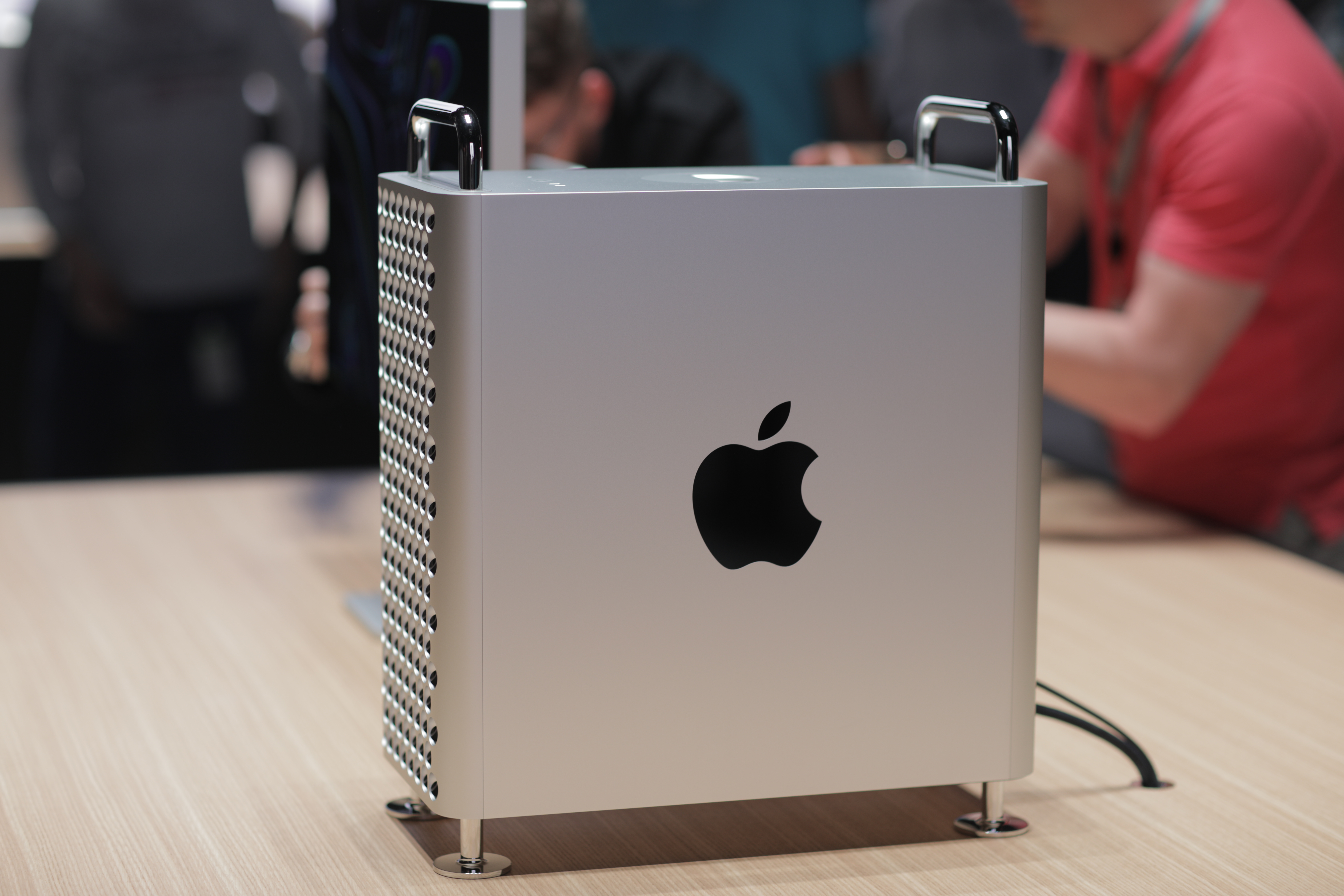
The Pro’s certainly striking. Looks-wise, it’s a more direct descendent of the shiny metal Power Mac G5 tower of yore than the more recent trashcan Pro. There are plenty of tweaks, of course. It appears a bit smaller than the G5, while the vent holes have been made much larger, for a kind of cheese grater design, at first glance — an effect that’s only enhanced by the prominent handle up top.

Otherwise, the enclosure is relatively minimal, with a soft metal design and massive Apple logo on the side. The tower is elevated slightly, atop a pair of shiny metal legs (optional wheels have returned, as well, for those who require a slightly more mobile experience). At the top is a large swiveling handle that can be used to move the computer around (in lieu of wheels) or removing the aluminum housing with a pull, for easier access inside.

The more traditional tower design allows for additional modularity. That, of course, was one of the major issues with the previous Mac Pro, which caused Apple to head back to the drawing board. Apple’s version of customization naturally centers around its own engineering, but there’s plenty of potential power to be had here, including the MPX graphic modules with dual Radeon Pro Vega IIs and Intel Xeon chips with up to 28 cores.

The company’s once vice-like grip over the world of creative professionals has been challenged in recent years with lines like Microsoft’s Surface. The iMac Pro represented a reasonable stopgap for the company as it went back to scratch with the Mac Pro line. But while the all-in-one is powerful, those with truly demanding workflows no doubt found it lacking.

The company happily discussed how much it had undercut the competition at $5,999 — but it’s important to note that those who are really serious about the category are almost certainly going to want to upgrade from some of the base-level specs including, notably, the 256GB SSD. When we’re having conversations about editing 4K and 8K video, you’re going to want something beefier out of the box.

The Pro Display XDR  6K monitor is also quite lovely. And it’s interesting to see the company getting back in the monitor game after handing off a lot of the heavy lifting to the likes of LG. At $4,999, it’s $1,000 cheaper than the Pro — until you add back in the optional $1,000 stand.

There are some nice tricks here, too, like the ability to swivel to portrait mode for specific editing needs. Though once you start totaling up that Apple shopping cart, you may need to look into a second mortgage.

As far as firepower goes, however, Apple looks to have delivered with the Pro’s return.

Apple attacks Facebook by becoming the asocial network

Sharing with everyone is passé and more than a little bit scary these days. We want to send photos to friends without posting them publicly. We want to reminisce without being permanently defined by our timelines. And we want the utility of apps without giving away our contact info to developers.
The problem is that this philosophy is hard to monetize for a social network that needs to maximize broadcasted content and engagement to score ad views. But it’s easy to monetize if you sell the phone and then let people be as private as they want on it. That’s why today at WWDC, Apple showed off changes that turn iOS into the asocial network — software that mimics the tools of Facebook but without the pressure to overshare.

Most stunningly, Apple will require apps that offer third-party login options like those from Facebook and Google to integrate its new Sign In With Apple feature that lets users hide their email addresses from developers. It’s a power move that makes Facebook look wreckless with your contact info by comparison.

Privacy has been a core Apple talking point for years, from the iPhone’s secure enclave and FaceID to message encryption to protection against tracking. But those safeguards have been focused on getting out of the way to let Apple’s products to ‘just work’. Increasingly, Apple is moving privacy further forward in the user experience to highlight how you can get more out of sharing less. That’s a wise strategy since the company has proven its inability to build full scale social networks out of Ping, Apple Music Connect, and iMessage.

“At Apple, we believe privacy is a fundamental human right and we engineer it into every single thing we do” said Apple SVP Craig Federighi .  Mark Zuckerberg declared “The future is private” at Facebook’s F8 conference a month ago, but proved it wasn’t his company’s past or present by failing to launch products that protect users. Now like Google did at I/O a few weeks ago with a slew of privacy tech launches, Apple is actually living up to its talking points with today’s beta release of iOS 13.

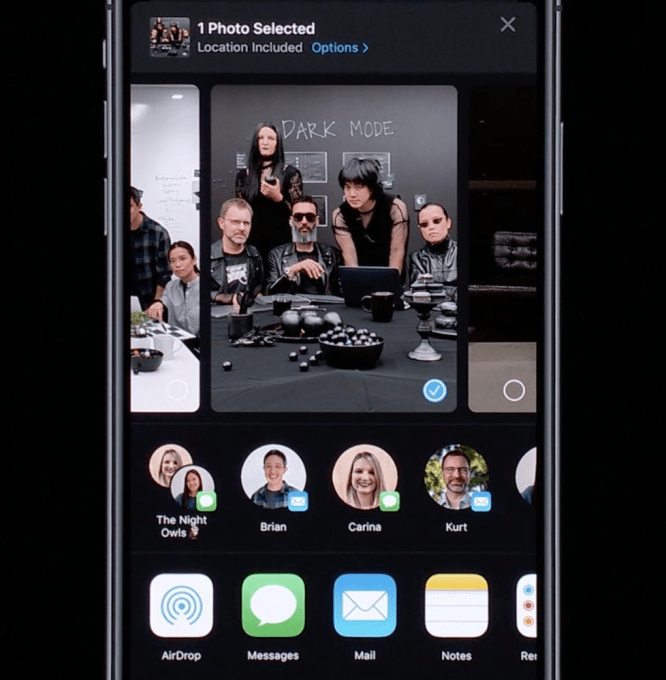
Photo Message Recommendations – When you bring up the Share Sheet for a photo or video in iOS 13, Apple will recommend people to send it to over iMessage or Mail based on who you frequently share with and if friends appear in the content. With a few taps you can privately deliver your imagery to a slew of your closest friends and favorite group chats, which could eliminate the need to post it more widely on Facebook or Instagram.
Asocial Media Tools – Instagram offers no way to download a photo or video you edit without first posting it to the feed first. That greedy growth hack leaves room for Apple to usurp more of the creative process. iOS 13 will let you edit videos for lighting, color, contrast, and more plus rotate clips you accidentally shot sideways — all which Instagram and Facebook can’t do. Forgoing the social network side lets Apple focus on tools that you’re free to use however you want.

And with the new Photo Day feature, Apple automatically hides and emphasizes different photos from each day to create magazine-style layouts. These ignite nostalgia and create a visual diary without the embarassment of all that content being on social media to power those TimeHop and Facebook On This Day features.

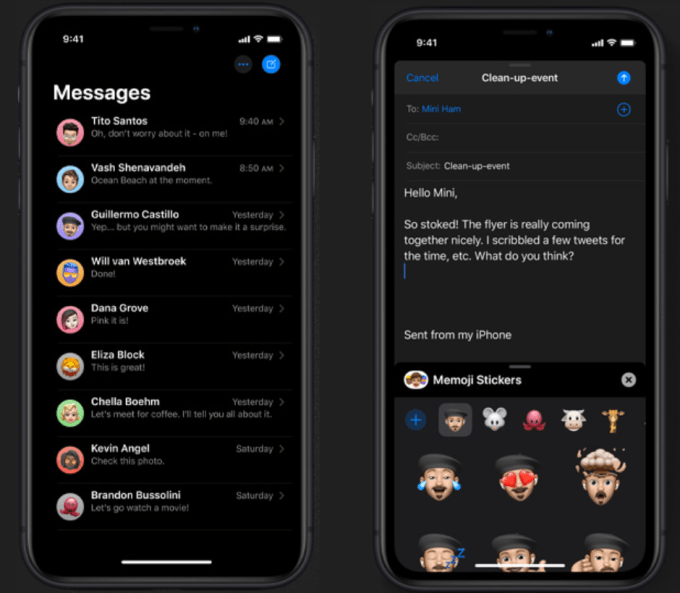
Memoji – To date, Apple’s interest in animated avatar masks that look like you has centered around FaceTime and video messages. But now it’s realizing how these virtual mini-me’s can enhance privacy while connecting more deeply. iOS 13 will let you opt to share your name and Memoji (or a real photo) as your message thread thumbnail in iMessage so new conversation partners like group chat friends-of-friends can better identify you without showing strangers your actual face. And Memoji can now be used as pre-generated stickers in chat, making it a direct competitor to Snapchat’s Bitmoji and Facebook’s Avatars that just launched today.
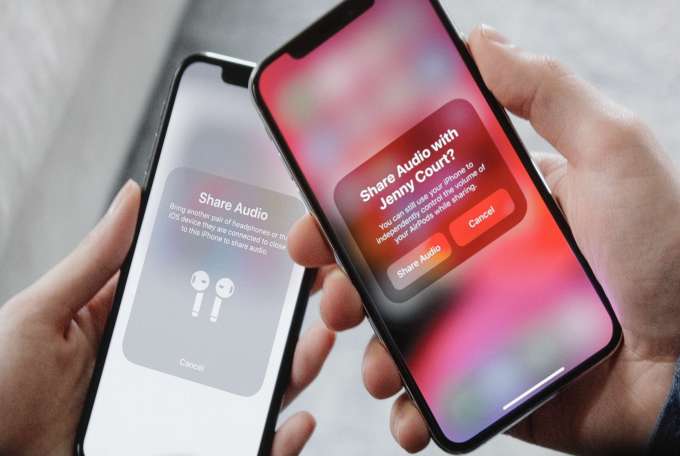
AirPods Audio Sharing – What if instead of trumpeting what you’re listening to on social media or fumbling to text a song link to a friend, they could just instantly pipe the sound into their headphones too so you’re rocking out in sync? That’s how the upcoming AirPods Audio Sharing works to let you exchange music privately over Bluetooth without exposing your guilty pleasure jams.
Sign In With Apple, Not Facebook

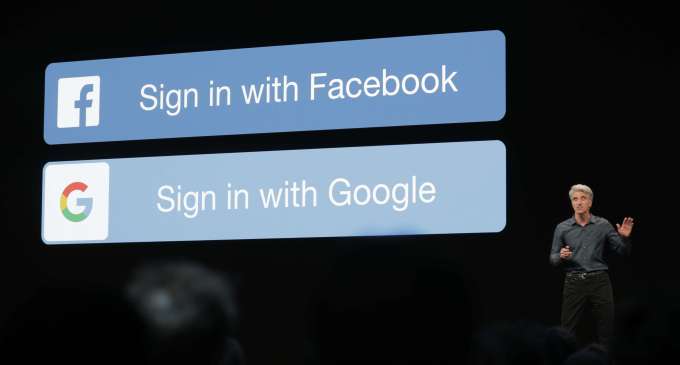
Apple’s most brazen attack saw it call out the social network by name on screen at WWDC. Flashing logos for “Sign In With Facebook” and “Sign In With Google” that are popular for joining new apps without setting up an account, Federighi noted that “This can be convenient, but it also can come at the cost of your privacy. Your personal information sometimes gets shared behind the scenes. These logins can be used to track you.”
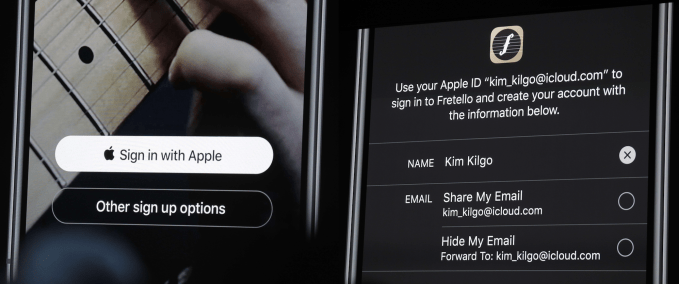
As an alternative, Apple is launching “Sign In With Apple”. It uses FaceID in lieu of asking you to create a new username and password to register for a third-party app. Federighi told users they can opt to hide their email addresses from app developers and instead have Apple provide a randomized proxy address that forwards to their real one. That means users can permanently block spam messages from the app, prevent the developer from sharing or selling their contact info, and avoid being targeted with marketing via their email address as with Facebook Custom Audience ads. 

The announcement drew the loudest cheers of any at WWDC. And it seems Apple is determined to wring as much competitive advantage out of its Sign In feature as possible. You might imagine that adoption by developers would be outside of Apple’s control, and it’d have to prove it drove more lifetime value than login options that always provide a user’s real email.

But while Apple failed to mention this on stage, the fine print of its developer news brief notes that “Sign In with Apple will be available for beta testing this summer. It will be required as an option for users in apps that support third-party sign-in when it is commercially available later this year.”

That’s right. Apple is going to force developers to add its sign in tool. It’s also requiring use of its new location sharing permissions screen that offers one-time access for developers instead of just permanent snooping. But for now, Apple doesn’t specify exactly how. That means the tech giant will have to convince developers to offer Sign In With Apple as prominently as Facebook and Google’s options…even though privacy could be detrimental to their business.
Sure, developers want to maximize signups by minimizing onboarding friction, which is why Sign In With features that don’t make you remember more passwords have grown popular. Adding the Apple sign-in option should theoretically help. But developers also rely on sucking in email addresses to wake up lapsed users with message blasts, target them and people similar to them with reengagement or install ads, and exclude existing users to save money when buying ads to recruit new users.

If developers fear Sign In With Apple’s proxy email address feature will hurt them by cannibalizing registrations made with Facebook or Google that don’t offer users a way to hide their real contact info more than the convenience of a third sign-in option will help, they may try their best to bury or minimize the mandatory feature. Apple might have to incentivize growth for developers in other ways, such as heavily promoting them in the App Store if they prioritize its login option to offset the lifetime value per user decline from the loss of contact info. Unless compelled by some moral imperative, developers aren’t likely to risk their business any more than they have to in the name of privacy.

It’s here that Apple will learn that taking the high road can have its speed bumps. It might monetize selling hardware, but its developer partners often still rely on constantly grabbing our attention.

Privacy is often an abstract concept to the mainstream consumer, that doesn’t dictate their decisions, judging by Facebook’s continued user growth. That’s why promotional campaigns around the philosophy of privacy can seem to have little impact. But by building products and platforms that are objectively more useful yet more privacy-friendly than those of competitors, Apple can allow natural market forces to sweep users in the right direction — which just happens to lead into its shiny retail stores.

Aptiv’s self-driving BMWs have made more than 50,000 rides on the Lyft app in Las Vegas

A little more than a year ago, self-driving software company Aptiv and Lyft launched a pilot project to test a robotaxi service — with human safety drivers still behind the wheel — in Las Vegas during the week of CES.

That one-week pilot never ended. And now, the companies say they’ve given more than 50,000 rides in Aptiv’s self-driving BMW 5 series vehicles via the Lyft app. The average ride received a rating of 4.97 out of 5 stars, according to Lyft, which added that 92% of riders said they felt very safe or extremely safe during the ride.

The milestone illustrates how far Aptiv and Lyft has come in a span of 18 months. It also shows that in spite of amassing so many rides, there’s much left to achieve before humans leave the driver’s seat for good.

Lyft and Aptiv first launched the pilot in January 2018. By August, they had surpassed 5,000 self-driving rides. Aptiv’s investment in Las Vegas expanded as those ridership numbers grew. The company opened a 130,000-square-foot technical center in the city to house its fleet of autonomous vehicles as well as an engineering team dedicated to research and development of software and hardware systems, validation and mapping.

However, this is not a pure robotaxi business, yet. The autonomous vehicles still have safety drivers behind the wheel. And the rides are mostly — but not completely — done in autonomous mode. The cars are required to be in manual mode in parking lots and hotel pick up areas, according to Lyft.

The Lyft-Aptiv program will continue indefinitely, according to Lyft.  It could even expand. The ride-hailing said it anticipates “working together to continue to bring self-driving technology to new cities and passengers.”

Apple’s updated TestFlight will let users submit feedback with a screenshot

Apple’s TestFlight app testing platform is getting an upgrade. With the new version of Xcode 11 announced this afternoon at Apple’s Worldwide Developer Conference, TestFlight apps will automatically enable user feedback. Now, when a user shares a screenshot from the Testflight app they’re trialing, they will have a new option to share it as beta feedback while also optionally adding their comments. The idea is to prompt more users to offer feedback, by making it more of built-in experience than before.

It’s also a feature found in the popular app feedback platform, Instabug. It was a feature in Buddybuild, which Apple acquired in January 2018.

Developers will be able to review all the feedback they receive on App Store Connect, and can download the details for later reference.

The update, while minor, could allow developers to catch more bugs and other issues during the user testing process before launching their app to the wider public on the iOS App Store. And for the end user, it simplifies the process of testing apps and giving feedback — something in the past they may have neglected to do since it may have required filling out a form or emailing the developer directly.

The change was one of two updates related to app feedback announced today.

Additionally, when users opt into sharing, app developers will also receive anonymized metrics for battery life, launch time, and memory leaks. These will be aggregated and display in the organizer next to the crash and energy use metrics, and are meant to offer developers another way to monitor and improve their app’s performance.

Apple notes that it actually began collecting these aggregated metrics this spring with iOS 12.2, so many apps will already have this data available.

Meet Apple’s secret weapon for keeping Wall Street happy

Apple has been shifting their business strategy over the past couple years to push the revenues earned from top customers higher and higher, but if you thought a $999 starting price for the iPhone XS was bold, Apple announced earlier today that they’re selling the freaking stand for the display of their new Mac Pro for $999.

As the price of the stand was announced as an aside towards the end of the WWDC keynote, audible murmurs broke out in the crowd visibly catching the presenter off-guard and causing him to lose his train of thought.

The company’s new Mac Pro starts at $5,999, which is incredibly pricey but ultimately it’s a machine that hit plenty of the high-points that the company’s power users were hoping for. The company’s $4,999 Pro Display XDR also hits some high points though its pricing might raise your eyebrows a bit more, but then you find out that the stand doesn’t even come with the freaking thing, and it’s $999.

Surely something with this kind of price tag can do something other than hold up the display! It can, you can also swivel the display 90 degrees much like you can on your $89 ViewSonic.

Apple sees the professional market as a cash cow with non-existent price sensitivities and as its device sales stall this could be a great market to seize, but, come on, this is a pretty egregious middle-finger to professional customers. You can buy a display that matches the Pro Display XDR on many — but not all — fronts and it will cost less than this stand.