Top voting machine maker reverses position on election security, promises paper ballots

Voting machine maker ES&S has said it “will no longer sell” paperless voting machines as the primary device for casting ballots in a jurisdiction.

ES&S chief executive Tom Burt confirmed the news in an op-ed.

TechCrunch understands the decision was made around the time that four senior Democratic lawmakers demanded to know why ES&S, and two other major voting machine makers, were still selling decade-old machines known to contain security flaws.

Burt’s op-ed said voting machines “must have physical paper records of votes” to prevent mistakes or tampering that could lead to improperly cast votes. Sen. Ron Wyden introduced a bill a year ago that would mandate voter-verified paper ballots for all election machines.

The chief executive also called on Congress to pass legislation mandating a stronger election machine testing program.

Burt’s remarks are a sharp turnaround from the company’s position just a year ago, in which the election systems maker drew ire from the security community for denouncing vulnerabilities found by hackers at the annual Defcon conference.

Security researchers at the conference’s Voting Village found a security flaw in an old but widely used voting machine in dozens of states. Their findings prompted a response by senior lawmakers on the Senate Intelligence Committee, who said that independent testing “is one of the most effective ways to understand and address potential cybersecurity risks.”

But ES&S disagreed. In a letter firing back, Burt said he believed “exposing technology in these kinds of environments makes hacking elections easier, not harder, and we suspect that our adversaries are paying very close attention.”

Days later, NSA cybersecurity chief Rob Joyce criticized the response. “Ignorance of insecurity does not get you security,” he tweeted. “The investigation of these devices by the hacker community is a service, not a threat.”

Although unexpected, election security experts have generally applauded ES&S’ shift in position.

Matt Blaze, a cryptography and computer science professor at the University of Pennsylvania, said in a tweet he was “genuinely glad” the company is calling for paper ballots and mandatory security testing.

“Hopefully they’ll also stop threatening to sue people like me and the Defcon Voting Village when we examine and report on their equipment and software,” he said. Blaze, who co-founded the Voting Village, faced legal pressure from ES&S at the time. The election security experts responded to the “vague and unsupportable threats” by accusing the voting machine maker of “discouraging” researchers from examining its machines “at a time when there is significant concern about the integrity of our election system.”

ES&S spokesperson Katina Granger said the company “supports third-party, white-hat, ethical research and penetration testing,” and added that it “believes Congress should establish a mandated security testing program for all voting machine manufacturers, holding each of us to the same standards of testing and research to help restore faith in the security of our nation’s elections.”

The company denied making legal threats.

Updated with comment from ES&S.

Read more:

Apple puts accessibility features front and center

Although the meat of Apple’s accessibility news from WWDC has been covered, there still are other items announced that have relevancy to accessibility as well. Here, then, are some thoughts on Apple’s less-headlining announcements that I believe are most interesting from a disability point of view.

Accessibility goes above the fold

One of the tidbits I reported during the week was that Apple moved the Accessibility menu (on iOS 13 and iPadOS) to the top level of the Settings hierarchy. Instead of drilling down to Settings > General > Accessibility, the accessibility settings are now a “top level domain,” in the same list view as Notifications, Screen Time, and so on. Apple also told me this move applies to watchOS 6 as well.

Apple confirmed to me Accessibility, the menu, has been moved to front page of Settings. Also, selecting acccessibility features is now part of first-run “setup buddy” process. I’m told goal of both moves was to increase visibility of accessibility feature set as a whole.

— Steven Aquino (@steven_aquino) June 3, 2019

Similarly, Apple said they’ve added accessibility to the first-run “setup buddy” experience. When someone sets up a new iPhone or other device for the first time, the system will prompt them to configure any desired accessibility features such as VoiceOver.

Both changes are long overdue and especially important symbolically. While it may not affect the average user much, if at all, the fact Apple is making this move speaks volumes about how much they care for the accessibility community. By moving Accessibility to the front page in Settings, it gives disabled users (and by extension, accessibility) just a bit more awareness.

As a disabled person myself, this is not insignificant. This change reinforces Apple’s position as the leader in the industry when it comes to making accessibility a first-class citizen; by elevating it to the top level, Apple is sending the message that accessibility is a critical aspect of the operating system, and a critical part of the user experience for so many, myself included.

Handoff for HomePod

I enjoy my HomePod for listening to music, podcasts, and controlling our HomeKit devices. Until now, however, one of the biggest annoyances with HomePod has been the inability to pick up where I left off. If I come home from the supermarket listening to music or a podcast and want to keep going, I have to stop and change the output source to my office’s HomePod. It’s not difficult to do, but from an accessibility perspective it’s a lot of extra taps. I definitely feel that bit of friction, and curse the dance every time I have to go through the rigamarole.

With iOS 13, that friction goes away. All I need to do is place my iPhone XR close to the HomePod (as if I were setting it up) and the iPhone will “hand off” whatever audio is playing to the speaker. Again, changing source is not a huge deal in the grand scheme of things, but as a disabled person I’m attuned to even the slightest inconveniences. Likewise with the ability to hear incoming iMessages read aloud to you on AirPods, these little refinements go a long way in not only having a more enjoyable, more seamless experience—it makes the experience more accessible, too. In this sense, this technology is magical in more ways than one.

The victory of Voice Control

The addition of Voice Control is definitely a headliner, but the backstory to it certainly isn’t.

Everyone I’ve spoken to during the week, whether it be fellow reporters, developers or Apple employees, shared the same sentiment: Voice Control is so great. In fact, the segment of John Gruber’s live episode of his podcast, The Talk Show, where he and special guests Craig Federighi and Greg Joswiak discussed the feature is a perfect example. It totally meshes with what I was told. Federighi explained how he had “friggin’ tears in my eyes” after watching an internal demo from somebody on Apple’s accessibility team.

I’ll have fuller thoughts on it later, but the unbridled joy and enthusiasm for Voice Control is unlike anything I’ve seen in my years covering Apple. It’s not just the Apple community either—the people who worked on it that I’ve talked to cannot stop raving.

— Steven Aquino (@steven_aquino) June 5, 2019

Similarly, it was a hot topic of conversation at the accessibility get-together at the conference. So many of the engineers and other members of Apple’s accessibility group shared with me how proud they are that Voice Control exists. I’ve heard that its development was a considerable undertaking, and for everyone involved to see it released to the world—in beta for now, at least—is thrilling and affirming of the hard road the team took to get here.

At a high level, Voice Control strikes me as emblematic of Apple’s work in accessibility. Just watch the video:

It feels impossible, magical—but it’s entirely real. And the best part is this is a game-changing feature that will enhance the experience of so many, so immensely. Federighi was not wrong to cry; it’s amazing stuff.

Watch Microsoft’s Xbox E3 press conference live

This year’s E3 is already off to an interesting start. Sony’s nowhere to be seen, and Nintendo, per usual, has opted to go online only. That leaves Microsoft as the only member of the big three with its own, honest to goodness press conference.

The company’s got a big opportunity here, and we’re hoping for some big things. On the gaming side, we expect some big news about Gears 5, Halo: Infinite and, perhaps, Age of Empires and a new Fable title.

News about the company’s Stadia competitor, Project xCloud, seems like a distinct possibility. We might even get a glimpse at the gaming giant’s next generation console. More info on all of the rumors from next week’s big show can be found here

The big show kicks off this afternoon at 1PM PT/4PM ET. It’s available on YouTube, Twitch, Facebook and Twitter

Microsoft shares pricing details for Xbox Game Pass on PC

Update: The beta is live today.

Ahead of the Xbox E3 keynote this afternoon, Microsoft has dropped the pricing for their Xbox Game Pass plan which gives PC users access to a library of top games. The Service will be launching at a very reasonable $4.99 per month (though they note that’s an “introductory price,” MSRP is $9.99).

The Windows 10 service operates much like the console variety, letting you get access to titles on a subscription basis. Users can play the titles in an unlimited capacity as a subscriber and can buy the games at a 20% discount if they decide they want to own it.

You can join for $1 per month ahead of its official launch though the library looks to have just around ten titles during this period. When the full service launches, the company says you’ll have access to 100 titles and there are some hits among them including Halo: The Master Chief Collection, Gears of War 5 and Forza Horizon.

We’re down at E3 in Los Angeles gearing up for Microsoft’s keynote in a few hours, where we’re expecting to hear a lot about new Xbox services products and a bit about some new hardware on the horizon.

It’s interesting that they are adopting the Xbox branding for this PC gaming-focused service. We’ll likely hear a lot more about the Xbox strategy beyond PC today.

What happens if there’s no Vision Fund II?

While I’d like to recommend panicking as a general response to the world, a smaller or fully neutered Vision Fund II won’t crash everything in the sphere of giant private companies.

Recent headlines describe a world that might never see a Vision Fund II. The Wall Street Journal reported over the weekend, for example, that “SoftBank Faces Challenges Raising Latest $100 Billion Fund.” The Washington Post this morning noted that SoftBank’sMasa Finds Not Everyone Shares His Vision.” And so on.

What matters for tech shops, startups and unicorns alike is that instead of their being an eventual Brady Bunch of Vision Funds, vision-ing around the world like buzzy, cash-laden drones, the franchise might halt after its first installment.

The $100 billion-ish vehicle has caused disturbances of all sorts in the fabric of the private capital markets, deploying cash with hurricane speed. Checks into companies of all sorts have come from the epic capital pool, sourced in large part from theocratic monarchies. (As we learned from SoFi last week, this is de rigueur.)

But as the Vision Fund’s aggression has kept the media enthralled, and founders’ hopes alive, troubles have circled. According to the Journal, raising money from Vision Fund I backers has proved tough:

But several of these [prior] investors plan to make limited or no contributions, people familiar with the matter said. They include Canada Pension Plan Investment Board and Saudi Arabia’s Public Investment Fund, whose $45 billion check made it the largest backer of SoftBank’s first tech fund, known as the Vision Fund.

You can read this two ways. First, that quite a lot of private capital is going to sit out the late-stage market. Or, second, that that same capital is instead going to put itself to work. The Journal continues:

Many of the biggest funds already have established programs to invest directly in late-stage startups and aren’t interested in paying fees to another party, people close to them said.

This is why it’s bad news of sorts for founders that the second Vision Fund might never exist, or might be born small. But only bad news to a degree, as it seems a decent percentage of the money that might have gone into the second Vision Fund will still be invested, albeit by folks likely a bit more conservative than SoftBank’s Masayoshi Son.

The Vision Fund era overvalued Uberfunded its competitors, fired too much money into Wag (whose growth has been called into question) and more. Whether that fund is going to pay itself back and provide a sufficient return to make the entire project worthwhile is unclear. It might. But that may not be a good enough reason for investors to promise another $100 billion.

Original Content podcast: Netflix’s ‘Always Be My Maybe’ is a surprisingly sweet romantic comedy

“Always Be My Maybe” — a new film starring and co-written by Ali Wong and Randall Park — continues Netflix’s streak of solid romantic comedies.

That said, anyone expecting it to match Wong’s delightfully dirty stand-up (showcased in the Netflix specials “Baby Cobra” and “Hard Knock Wife”) might be disappointed. Instead, “Always Be My Maybe” feels like a throwback to ’90s romantic comedies; after all, Park and Wong have cited “When Marry Met Sally” and “Boomerang” as inspirations.

On this week’s episode of the Original Content podcast, we’re joined by Catherine Shu to review the film, which tells the story of Marcus (Park) and Sasha (Wong), two childhood friends who grow up together in the Bay Area, lose their virginity to each other and then drift apart — until they cross paths again in their 30s.

We didn’t all love the movie: Anthony, in particular, found some of the jokes and the character arcs to be a little formulaic. But we all had a good time, thanks to the sharply-drawn characters, the rapid-fire humor and an excellent cameo.

Anthony and Catherine also discuss how the film resonates with their own personal experiences, and how it compares to “Crazy Rich Asians.”

You can listen in the player below, subscribe using Apple Podcasts or find us in your podcast player of choice. If you like the show, please let us know by leaving a review on Apple. You can also send us feedback directly. (Or suggest shows and movies for us to review!)

And if you want to skip ahead, here’s how the episode breaks down:

0:00 Introduction and discussion of upcoming TV shows
10:18 Spoiler-free review of “Always Be My Maybe”
26:14 Spoiler discussion

Week-in-Review: Google makes a losing bet, Bezos plots his space take-over

Hey, weekend readers. This is Week-in-Review where I get hopped up on caffeine and give a heavy amount of analysis on one story while scouring the rest of the hundreds of stories that emerged on TechCrunch this week to surface my favorites for your reading pleasure.

Last week, I talked about the Apple device that was putting a kink in the company’s new pricing strategy. Of course, this week we saw that strategy reach new heights with the Mac Pro, but more on that in a bit.


I’m a couple hours away from flying down to Los Angeles to check out the E3 gaming expo, but one of the biggest gaming announcements of the month already happened this past week when Google shared some more details on its Stadia cloud gaming platform.

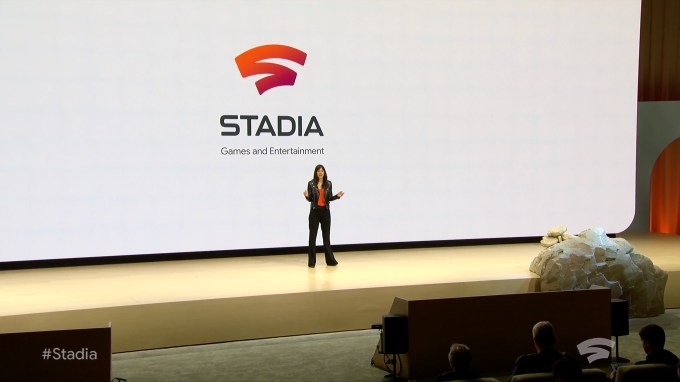
Stadia’s approach is far from unprecedented, but Google’s solution might be one of the more thoughtful efforts we’ve seen. We got some more details this week, here’s my story, and here are the top-level details:

  • U.S. pricing for the pro-tier is $9.99 per month for unlimited 4K 60fps streaming and access to a library of titles, though you’ll still have to pay for most new games.
  • You’ll need a 35 mpbs connection to stream Stadia Pro when it launches in November.
  • There’s a 1080p free tier, launching later, that will allow gamers to play titles they buy from the Stadia store.

This is a pretty aggressive showing for Google.

Given the infrastructure costs, $9.99 is pretty cheap and adding a free tier is a bold call. Google’s strategy might be as formidable as they could make it, but that doesn’t mean that they’re going to win the cloud gaming market…
The first thing to acknowledge is that because of the incredibly stiff infrastructure/network demands of these plays, the only companies that can likely take on Google here are Amazon and Microsoft.

The AWS giant is already renting out some very expensive cloud GPUs but they haven’t made any indication of a foray into a gaming-focused subscription, though it may not be long if this market finds legs. Microsoft on the other hand is probably hours away from making its announcement. At 1pm PT Sunday, the company’s Xbox head is expected to share the company’s cloud-gaming plans, I’ll be there reporting on the news.

Google is acting plenty aggressive but Microsoft still has a huge upper hand. Becoming a gaming company is about far more than infrastructure and Google doesn’t have much history on its side when it comes to high-end gaming or… the games.

YouTube Gaming is probably Stadia’s best asset and integrations there can leverage that platform’s reach to encourage experimenting with the platform, but I still don’t trust the company to follow through with the resources to get enough developers to bring their titles to Stadia. The initial market that Stadia is grabbing for just feels so niche and Google hasn’t exactly been known to follow-through on consumer efforts that take longer than a few rounds of internal performance reviews to take off.

The Stadia team has already shown off a few games, but there are tens of millions of Xbox Ones out there filled with purchased titles and Google might just be probably overestimating the appeal of their cross-platform approach.

Google’s understated claim is that this is a limitless platform that can bring your desktop games to phones, tablets, laptops and TVs, but how many places do consumers really want desktop-class games? Can it truly claim to be a mobile-friendly platform when it only supports a few of its own phones at launch? More so, do people want to connect a game controller to their phone? It all seems like a fairly niche grab.

Google’s Stadia marketing seems to be looking to convert console users to ChromeCast users but given that YouTube Gaming is the company’s best discovery method, what’s likely going to end up happening is that Stadia drags in a very niche subset of aspiring PC gamers who don’t want to pay for high-end rigs. This will probably bring in some free Stadia Base 1080p users, but it’s going to be the latency — no matter how minimal Google can claim it to be — that shuts out a lot of PC die-hards from signing onto the Stadia Pro plan.

For single-player experiences, Stadia won’t have too many issues, but a lot of the top game publishers are focusing their full efforts on multi-player. Google barely touched on the topic of multi-player at its event, the fact is if developers enable cross-platform play with Stadia, those users are likely going to be at a tactical disadvantage. For a platform like Xbox One, Microsoft has enough existing reach that they can probably cordon off those streaming users into their own servers and keep the odds even, but Google may have some issues here fresh-out-the-gate.

There is still quite a bit we don’t know about Stadia, and I’m very anxious to see what Microsoft has up its sleeve, but Google just doesn’t feel like the right kind of company to pull this off… Let me know what your thoughts are though.

Send me feedback
on Twitter @lucasmtny or email
[email protected]

On to the rest of the week’s news.

Trends of the week

Here are a few big news items from big companies, with green links to all the sweet, sweet added context.

  • Apple’s hardware finally goes Pro
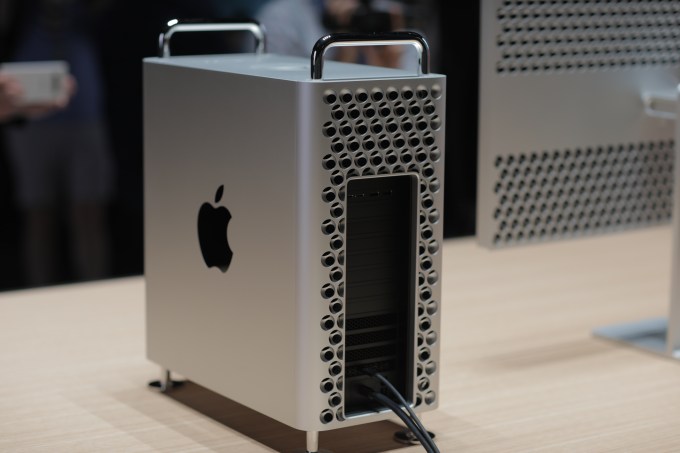
    You might have a MacBook Pro or an iPad Pro but chances are most of you aren’t much in the way of a professional. If you thought blowing $899 on a tablet made you a deep spender, try blowing $999 on the stand for your monitor. At its WWDC keynote this week, Apple went back to basics design-wise on its Mac Pro, but it cranked the pricing up to 11 with a $5,999 starting price for the tower and a $4,999 starting price for its 6K display. This falls in line with Apple’s latest trend towards pushing hardware prices higher, but, Jesus, this took things to a new level for Pros. Here’s our hands-on with the monster.
  • Looker catches Google’s eye
    $2.6 billion is a fair amount of cash but it’s pocket change in the war for the cloud. Google announced Thursday that it was acquiring analytics startup Looker to strengthen its Google Cloud offering in the face of competition from AWS and Azure. More here.
  • ZuckCoin
    Facebook is getting ready to show off its own cryptocurrency later this month. The coin, codenamed Libra, will be getting its own white paper on June 18th and will reportedly be pegged to a batch of current coins and will be managed by an external entity. Read more here.
  • Bezos takes over space
    Amazon CEO Jeff Bezos talked about his plans to create the infrastructure network for space startups at the company’s re:Mars conference. “You cannot start an interesting space company today from your dorm room. The price of admission is too high and the reason for that is that the infrastructure doesn’t exist,” Bezos noted. “So my mission with Blue Origin  is to help build that infrastructure, that heavy lifting infrastructure that future generations will be able to stand on top of the same way I stood on top of the U.S. Postal Service and so on.” Check our more of what he had to say in our story.
GAFA Gaffes

How did the top tech companies screw up this week? This clearly needs its own section, in order of awfulness:

  1. GAFA getting eyed by some three-letter agencies:
    [Apple, Alphabet, Amazon and Facebook are in the crosshairs of the FTC and DOJ ]
  2. YouTube pisses off gay creators:
    [YouTube says homophobic taunts don’t violate its policies]
  3. Google Play Store gets its antitrust moment-in-the-sun:
    [Aptoide, a Play Store rival, cries antitrust foul over Google hiding its app]
  4. Apple pricing gets egregious, earns keynote groans:
    [Meet Apple’s secret weapon for keeping Wall Street happy]
Extra Crunch

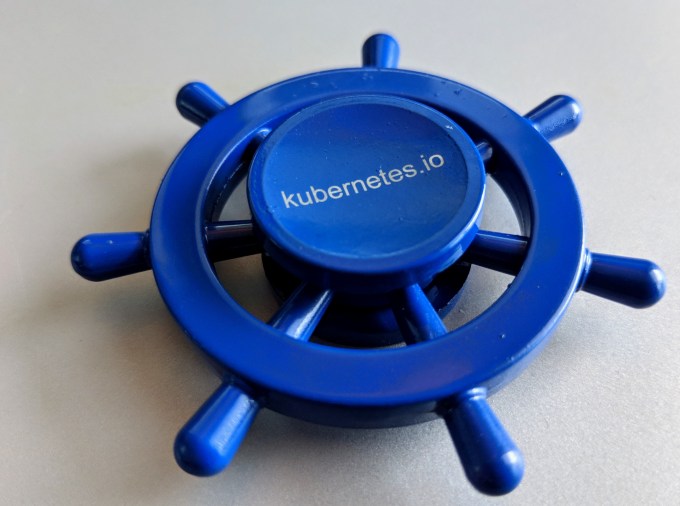
Our premium subscription service had another week of interesting deep dives. TechCrunch’s Frederic Lardinois wrote about the interesting rise of Kubernetes and chatted with some of the key players involved in its ascension.

How Kubernetes came to rule the world

“…To talk about how Kubernetes came to be, I sat down with Craig McLuckie, one of the co-founders of Kubernetes at Google (who then went on to his own startup, Heptio, which he sold to VMware);  Tim Hockin, another Googler who was an early member on the project and was also on Google’s  Borg team; and Gabe Monroy, who co-founded Deis, one of the first successful Kubernetes startups, and then sold it to Microsoft, where he is now the lead PM for Azure Container Compute (and often the public face of Microsoft’s  efforts in this area)..”

Here are some of our other top reads this week for premium subscribers. This week TechCrunch writers talked a bit about ROI, and how security startups are capturing M&A attention…

Want more TechCrunch newsletters? Sign up here.

Equity transcribed: What happens to late-stage VC if the Vision Fund goes away?

Welcome back to the transcribed edition of the wildly popular TechCrunch podcast, Equity. This week Kate Clark and Alex Wilhelm convened in the new studio to discuss the biggest venture capital news of the week.

There was a lot of news to get to so they started with some quick hits about Thumbtack, Bird, Scoot, Mirror and Looker. Then they got down to business and went in-depth on SoftBank’s Vision Fund and whether the money has dried up.

And folks from Social Capital are back with a new firm called Tribe Capital that looks a lot like … Social Capital.

Kate: I think the TLDR here is, if the Vision Fund doesn’t raise a Vision Fund Two, we will feel changes in the market. I think we will see deal sizes come back to earth a little bit, and I think we may see at least not increasingly large valuations, because I think that people may, especially now that it’s been a couple of years, people may underestimate the force that is a Vision Fund. We don’t have the Vision Fund, you know that obvious force that dark cloud is gone.

Alex: You’ll feel the lack. Yes. Couple of quick notes about why this might be. It isn’t just that people like Kate and I think this way. I mean, there’s been structural problems with the Vision Fund. There’s been some discussions about opacity and how it operates. How its decisions are made, and I would throw in there, there’s probably some questions about the prices it has paid. Uber managed to claw back above it’s IPO price for a hot second, and is back under it today.

Kate: And didn’t last long.

Want more Extra Crunch? Need to read this entire transcript? Then become a member. You can learn more and try it for free.