Daily Crunch: Fortnite-maker acquires Houseparty

The Daily Crunch is TechCrunch’s roundup of our biggest and most important stories. If you’d like to get this delivered to your inbox every day at around 9am Pacific, you can subscribe here.

1. Fortnite maker Epic acquires social video app Houseparty

The company behind the Unreal Engine and the ridiculously successful Fortnite phenomenon has just picked up Houseparty . Terms of the deal were not disclosed.

Founded in 2015, Houseparty is a social network that delivers video chat across a number of different platforms, including iOS, Android and macOS. Epic CEO Tim Sweeney said, “By teaming up, we can build even more fun, shared experiences than what could be achieved alone.”

2. Facebook will not remove deepfakes of Mark Zuckerberg, Kim Kardashian and others from Instagram

The work, featured in a site-specific installation in the U.K. as well as circulating in video online, was the first high-profile test of Facebook’s content review policies since the company’s decision not to remove a manipulated video of House Speaker Nancy Pelosi.

3. Here’s Mary Meeker’s 2019 Internet Trends report

Meeker highlighted slowed growth in e-commerce sales, increased internet ad spending, data growth, as well as the rise of freemium subscription business models, telemedicine, photo-sharing, interactive gaming, the on-demand economy and more.

4. Uber will start testing Eats drone delivery

This comes after the Federal Aviation Administration awarded Uber and San Diego the right to test commercial food delivery via drone.

5. Adjust raises $227M to measure mobile ads and prevent fraud

Adjust says it’s now being used in more than 25,000 mobile apps for customers like NBCUniversal, Zynga, Robinhood, Pinterest and Procter & Gamble.

6. Facebook’s Blood Donations feature arrives in US, will alert donors in times of need

Since 2017, the company has been working with blood donation centers worldwide that have been able to use the platform to reach potential donors and then reach out to them in times of need. Now, Facebook is bringing its Blood Donations feature to the U.S.

7. The future of car ownership: Building an online dealership

Several young companies — like Carvana, Shift, Vroom and Joydrive — are attempting to put the dealership online, allowing customers to buy, trade-in and even test drive vehicles without talking to a salesman in an oversized golf pullover. (Extra Crunch membership required.)

London’s LocalGlobe just closed on two funds totaling $295 million

Seven months ago, TechCrunch’s Steve O’Hear reported that LocalGlobe had begun the fundraising process for two separate funds. The London-based seed-stage venture firm was raising yet another seed-stage venture fund, O’Hear said at the time; he also noted that LocalGlobe was also expect to raise its first opportunities fund.

Fast-forward and today, the firm, founded by father and son duo Robin and Saul Klein, says it has closed both, having secured $115 million in capital commitments for its seed fund and $180 million in capital commitments for the second fund, dubbed “Latitude,” which it says it will use to support its “winners” at the Series B and later stages.

As we’d written earlier, it’s no surprise that LocalGlobe decided to institutionalize some of its later-stage investments. It’s become a trend in recent years for early-stage firms to raise separate funds to capture more of the upside when their portfolio companies begin to break away from the pack, rather than watch their stakes get hammered down in subsequent funding rounds.

And LocalGlobe already has a bit of a track record in supporting its growing portfolio companies, writing follow-on checks to companies like the property listings startup Zoopla and the money transfer service TransferWise, for example. (Others of the outfit’s best-known investments include the transportation app Citymapper and the SpatialOS software company Improbable.)

Still, LocalGlobe remains even more active on the pre-seed and seed-stage front, where it has funded hundreds of startups over the years. Among the very newest of these is a bet on Yapily, a two-year-old, London-based maker of an API for connecting enterprises to banks that just raised $5.4 million in seed funding co-led by LocalGlobe and HV Holtzbrinck Ventures.

Another new investment is Soda Says, a two-year-old, U.K.-based e-commerce marketplace for daily tech gadgets, from breast pumps to alarm clocks. It raised $2.5 million from investors, including LocalGlobe, late last month.

Do VC associates matter, women’s fertility, online auto marketplaces, and Salesforce + Tableau

Editor’s Note: New feedback buttons

You might have noticed at the top and bottom of this newsletter that we have added new feedback buttons. These are a quick way to express your happiness (or unhappiness, as it were) about this Extra Crunch Roundup newsletter. What do you like, and what do you don’t? All feedback is welcome and extremely valuable as we continue to improve Extra Crunch for members. And as always, you can just hit reply and let me know directly.

Fundraising 101: Do VC associates matter?

There are hundreds of associates working at VC firms traipsing through meetups and coffee meetings trying to find the best new startups. If you are looking to fundraise though — and fundraise quickly — how do you approach these nebulous non-check-writers?

This week, I wrote a guide based on my experience as a VC associate at two firms. The answer is that yes, they can matter, and it usually is quickly apparent how valuable they can be.

Associates can be helpful, they can and should be nice, and they have a useful role to play in the venture landscape. But let’s be clear: they can’t write checks, and checks is what you are looking for. They can be useful mechanisms to get the right meetings with the right partners at exactly the moment you are ready to fundraise. You probably shouldn’t piss them off by being an asshole to them, but at the end of the day, they are not the decision-maker. And if you learn anything about sales, it is that you want to pitch the person that holds the purse strings.


What top VCs look for in women’s fertility startups

Women’s fertility is a major area of investment for VC firms these days, and several prominent investors are doing deep dives into the space. Our healthtech writer Sarah Buhr interviewed several VCs about what they’re seeing in the space and why fertility is suddenly in the limelight:

Against Gravity is building a VR world that won’t stop growing

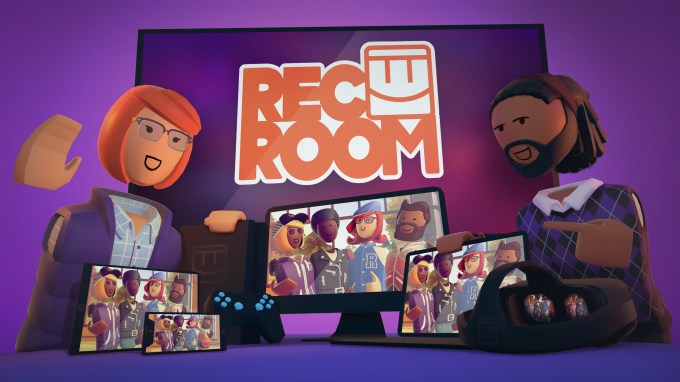
The quest to create a social auditorium in virtual reality has eaten many VC dollars over the years. While plenty of contenders have emerged, it’s likely Against Gravity’s<a href=”https://rec.net/”> Rec Room has been the most creative in its approach to capturing a niche market while plotting how to build a sustainable business based on users in VR headsets talking to one another.

The Seattle startup has told TechCrunch exclusively that it has bagged $24 million over two rounds of funding. The studio’s Series A was led by Sequoia and their Series B, which just recently closed, was led by Index Ventures . Against Gravity has a bevy of top investors that also participated in the rounds, including First Round Capital, Maveron, Anorak Ventures, Acequia Capital, Betaworks and DAG Ventures.

The company didn’t break down the specific details of the rounds. Against Gravity was authorized to raise up to $15.4 in its Series B at up to a $126 million post-money valuation, according to Delaware stock authorization docs we got from PitchBook. The company didn’t comment on the valuation.

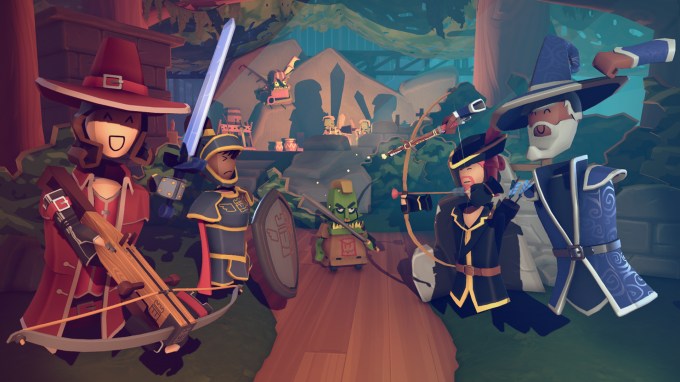
Rec Room is hardly a household name compared to some major console titles, but among virtual reality users, the title has been a standby known for the diversity of gameplay available inside its walls and its wide support for hardware. Users are able to create experiences or “rooms” that can be accessed by other users. They don’t need any coding knowledge to build these spaces, as creation all happens within the game and can be done by multiple users simultaneously.

Rec Room is also about to surpass one million rooms created by users on the platform. The company says these environments include “sports games, shooters, adventure quests, nightclubs, club houses, and escape rooms.”

While companies like Linden Labs, the creator of Second Life, have focused their VR efforts on realistic but unvarying user-created environments, Against Gravity has seemingly one-upped their strategy by focusing on dynamic gameplay modes where the emphasis is on user interactions as opposed to graphic fidelity.

The Seattle startup, which was founded in 2016, now has 35 employees building out and maintaining Rec Room. The company is playable on a variety of platforms, and is about to add iOS support to its roster, an expansion that could bring a lot more users onto the VR-centric platform.

Rec Room’s content isn’t monetized too aggressively at the moment. CEO Nick Fajt thinks some of the user-generated experiences are going to offer an interesting opportunity down the road, prompting users to spend in-game tokens on more than just upgrades to the platform’s Playmobil-like avatars.

“I think a direction that we’re actually excited about is that we want to let the users creating some of this content charge tokens to play them,” Fajt tells TechCrunch. “I think that’s one that we’re kind of on the cusp of doing and we’re hoping to get that out later this year.”

For Against Gravity, timing has always been a key consideration for expansion, especially inside the slow-growing VR market, which has only recently seemed to hit a stride. I chatted with Fajt back in 2017, and he told me that the key for VR startups surviving was staying lean and biding their time until standalone mobile headsets with positional tracking and motion controllers were released. Facebook’s Oculus Quest headset, which came out less than a month ago, is perhaps the first clear device to fit that vision.

One of Facebook’s head AR/VR executives shared earlier this week that more than $5 million in Quest content had been sold in the company’s store in the first two weeks after the device’s launch. That’s a major development for an industry that hasn’t seen many smash hits, but for free-to-play game makers like Against Gravity, which has now raised $29 million to date, there’s plenty of maturation in the VR market that still needs to happen.

MIT develops a better way for robots to predict human movement

People and robots working together has tremendous potential for factory and construction site settings, but robots are also potentially incredibly dangerous to people, especially when they’re large and powerful, which is typically the case for industrial robots.

There are plenty of efforts to make “corobotics” a reality, including production machines like the YuMi produced by German robotics giant ABB . But a new algorithm created by MIT researchers could help make humans and robots working together even safer.

Researchers working with automaker BMW and observing their current product workflow noticed that the robots were overly cautious when it came to watching out for the humans in the plant — they’d lose lots of potentially productive time waiting for people to cross their paths long before there was any chance of the people actually doing that.

They’ve now developed a solution that greatly improves the ability of robots to anticipate the trajectory of humans as they move — allowing robots that typically freeze in the face of anything even vaguely resembling a person walking in their path to continue to operate and move around the flow of human foot traffic.

Researchers managed this by eschewing the usual practice of borrowing from how music and speech processing works for algorithmic prediction, which are much better when it comes to predicting predictable paths of travel, and instead came up with a “partial trajectory” method that references real-time trajectory data with a large library of reference trajectories gathered before.

This is a much better way of anticipating human movement, which is very rarely consistent and involves a lot of stops and starts, even in a factory worker performing the same action repeatedly over thousands of instances.

This could have potential consumer applications too — researchers note that human movement even in the home would be better predicted using this, which could have benefits in terms of robotic long-term in-home care for the elderly, for instance.

Fiat Chrysler partners with Aurora to develop self-driving commercial vans

Aurora, the autonomous vehicle technology startup backed by Sequoia Capital and Amazon, has struck a deal with Fiat Chrysler Automobiles to develop self-driving commercial vehicles.

The partnership will focus on integrating Aurora’s technology into FCA’s line of Ram Truck commercial vehicles, a portfolio that includes cargo vans and trucks. The deal could extend to FCA’s Fiat Professional brand as well, TechCrunch has learned.

The deal with Aurora aims to specifically develop and deploy self-driving commercial vehicles that could be used by any third party with a delivery-to-consumer need. For instance, once Aurora’s technology is integrated into its commercial vans, FCA could sell them to a third-party logistics company — like say, Amazon — that intends to use autonomous vehicles for deliveries.

Neither company disclosed financial terms of the deal.

The high cost of developing and bringing technology such as electrification and autonomous vehicles to market has prompted automakers, including FCA, to seek out partnerships and alliances, sometimes even with competitors.

In May, FCA proposed a 50-50 merger with French automaker Renault, arguing that it would create a more capital efficient enterprise that could develop global vehicle platforms, architectures, powertrains and technologies.

FCA has since withdrawn its merger offer. However, more partnerships are likely to emerge.

“As part of FCA’s autonomous vehicle strategy we will continue to work with strategic partners in this space to address the needs of consumers in a rapidly changing industry,” FCA CEO Mike Manley said in a statement.

FCA has an existing partnership with autonomous vehicle technology company Waymo, the former Google moonshot project that is now a business under Alphabet. These two relationships are tackling different aspects of autonomous vehicle technology — at least for now.

Two years ago, FCA said it would produce about 100 Chrysler Pacifica Hybrid minivans integrated with Waymo’s suite of self-driving hardware and software. Waymo uses these self-driving minivans for testing as well as for its Waymo One autonomous ride-hailing business in the Phoenix area. The autonomous vehicles used in the Waymo One service still have a human safety driver behind the wheel.

FCA and Waymo expanded on their relationship in 2018 with FCA announcing it would supply Waymo with up to 62,000 more Chrysler  Pacifica minivans.

Unlike Waymo, Aurora has never indicated plans publicly to launch a robotaxi service. Instead, it’s focused on supplying and then integrating its full self-driving stack to companies hoping to deploy autonomous vehicles or services.

Aurora, founded in early 2017 by Sterling Anderson, Drew Bagnell and Chris Urmson, has integrated its technology into six vehicle platforms, including sedans, SUVs, minivans, a large commercial vehicle and a Class 8 truck.

Aurora is just a few months removed from announcing its hefty $530 million Series B round that was led by Sequoia Capital and included “significant investment” from Amazon and T. Rowe Price Associates. The round pushed Aurora’s valuation to more than $2.5 billion. Aurora announced a $90 million Series A round last February from Greylock Partners  and Index Ventures, bringing its total raised to date to more than $620 million.

The company has offices in Palo Alto, San Francisco and Pittsburgh and previously announced partnerships with Volkswagen Group, Hyundai and Chinese electric vehicle startup Byton.

Doom, Fallout and the rest of the trailers from Bethesda’s E3 press conference

E3 may not officially start until Tuesday, but the announcements are coming fast a furious. A few short hours after Microsoft previewed its streaming service and next get console, Bethesda took to the stage a few blocks a way, with footage from new Elder Scroll and Doom titles, along with a lot more Fallout 76 gameplay.

Here’s what you missed.

Elder Scrolls: Blades for Switch – The mobile game is heading to Switch this fall — and best of all, it’s free.

Fallout 76: Nuclear Winter – As the company noted, fallout 76 didn’t get off to the most auspicious of starts. The publisher announced a number of new updates for the post-apocalyptic title, including, the addition of Nuclear Winter, a battle royale mode.

Ghostwire: Tokyo – A new creepy action adventure game from Resident Evil director, Shinji Mikami.

Commander Keen: The 90s id game returns as a free-to-play iOS title.

Elder Scrolls: Legends – The mobile title is getting addition content.

Rage 2 – The first-person shooter gets new enemies, new vehicles and more.

Wolfenstein: Youngblood – More footage of the Terror Twins doing a number on Nazis.

Deathloop: We didn’t get a lot of info on this one, but it sure did look purdy.

Doom: Eternal – More info, more footage and now, finally, a date. Doom: Eternal arrives November 22.

Fallout 76 is getting a 52-player battle royale mode

Tonight’s Bethesda E3 press conference was all about free additions. In fact, the company actually took to the stage to apologize for Fallout 76’s rocky launch. The publisher quickly added that it’s continued to improve on the title since late last year, listening to player feedback and adding all sorts of additional content.

That includes the arrival of a bunch of NPCs, and, more importantly, the launch of Nuclear Winter, a 52-player battle Royale mode that is arriving as an update tomorrow. The mode will be free to play on all platforms for the week of June 10 to 17.

Asked last year whether a battle royale mode was in the works for the post-apocalyptic title, SVP Pete Hines noted that the company doesn’t like to follow trends set out by other companies, stating, “just because battle royale is popular doesn’t mean it’s a good fit for us.” He did leave open the possibility — though seemingly unenthusiastically — and now here we are.

Of course, the mode has become tremendously popular in recent years, thanks to the likes of Fortnite and PUBG. Bethesda’s embrace of the mode has been met with…mixed reaction on Twitter, though the audience at tonight’s presser was appropriately enthusiastic.

Here are the game trailers from Microsoft’s E3 2019 press conference

Trailers. You love them, Microsoft’s got them. According to the company, there were a ridiculous 60 games trotted out on stage at today’s big E3 kickoff. Looks like the Xbox got a little extra love at the event since Sony’s MIA this year. Along with more information on its streaming service Project XCloud a sneak peek at its next console and a very special appearance by Keanu, the company had a LOT of games to show off.

Here are the biggest trailers from today’s event.

Minecraft: Dungeons – Everyone’s favorite building block title gets its very own single and multiplayer RPG adventure.

Ori and the Will of the Wisps: Announced in 2017, Moon Studio’s platformer finally arrives next February.

Bleeding Edge: Ninja Theory’s latest is a multiplayer melee combat title.

Flight Simulator: You know, you love it — or are otherwise indifferent. The classic simulator returns in 2020.

Age of Empires II: Definitive Edition – Coming later this year, the title will also be available for Xbox Game Pass for PC.

Wasteland 3: The party-based role-playing sequel takes players to…Colorado Springs?

Battletoads: Don’t call it a comeback. Zitz, Pimple and Rash return for a new Gamepass title.

Gear 5: Probably the most eagerly anticipated game of the press conference, the new Gears is launching September 10.

Gears 5: Terminator Dark Fate – Here’s a fun reveal. Those who buy Gears 5 by September 16 with get a character pack, featuring the T-800 Endoskeleton from the forthcoming Terminator sequel.

Forza Horizon 4 Lego Speed Champions: The popular racing series gets the Lego treatment.

Kitten Around with RAAM: A series of animated shorts based on characters from Gears POP.

State of Decay Heartland: A new DLC pack for Heartland 2, features two stories and will be available as part of GamePass.

CrossfireX: The latest version of Smilegate’s FPS is arriving on Xbox One.

Halo: Infinite – What’s this, then? Why it’s a brand new Halo title, launching alongside Microsoft’s next-gen Project Scarlett console during the 2020 holiday season.

George R.R. Martin’s Elden Ring RPG is official

Among the more eagerly anticipated titles of this year’s E3, Elden Ring leaked out just a few days ago. The forthcoming action role-playing title was created by George R.R. Martin, fresh off the end of his wildly popular HBO series, Game of Thrones.

The game made its debut as part of Microsoft’s big E3 kickoff today, as it will be coming to both the Xbox One and Windows PC. It’s going to be arriving on PlayStation 4, as well, but Sony didn’t have its own event this year, leaving Microsoft to bask in all of the glory of FromSoftware’s “largest game to date.”

Along with the A Song of Ice and Fire author, Hidetaka Miyazaki is heavily involved in the game. Up to now, he’s best known for the role he’s played in FromSoftware’s popular Souls series.

We don’t have much to go on yet (including no date, specific or otherwise), but the trailer sets the stage for a dark game that looks to have taken more a few queues from the likes Lord of the Rings.

More info as we get it.

Microsoft teases 8K Xbox

Microsoft is working to create its most powerful Xbox yet as it gears up for the next wave of gaming console hardware. Xbox shared some details on its next hardware at E3 and it sounds appropriately next-gen.

The company teased some huge factoids in a teaser about what it’s calling “Project Scarlett.” The upcoming console will have 8K capability, will be able to handle frame rates up to 120fps and will utilize SSD storage to keep load times low. The hardware will be powerful enough to enable real-time ray tracing.

“This generation is going to be a bigger leap than any generation before,” a video describing the new hardware detailed. Microsoft says the new hardware will be four times as powerful as the Xbox One X.

The next-generation console will be arriving in the holiday season of 2020, the company says. It will be launching alongside a new Halo title, Halo Infinite.

“A console should be designed and built and optimized for one thing: gaming,” Xbox head Phil Spencer said onstage at the company’s E3 presser.

We’ve already heard a bit about PlayStation’s plan for their next generation console, mainly details regarding the system’s transition to SSD storage and its reliance on a third-generation AMD Ryzen CPU.

We’ll see how the systems stack up against each other as we hear more.

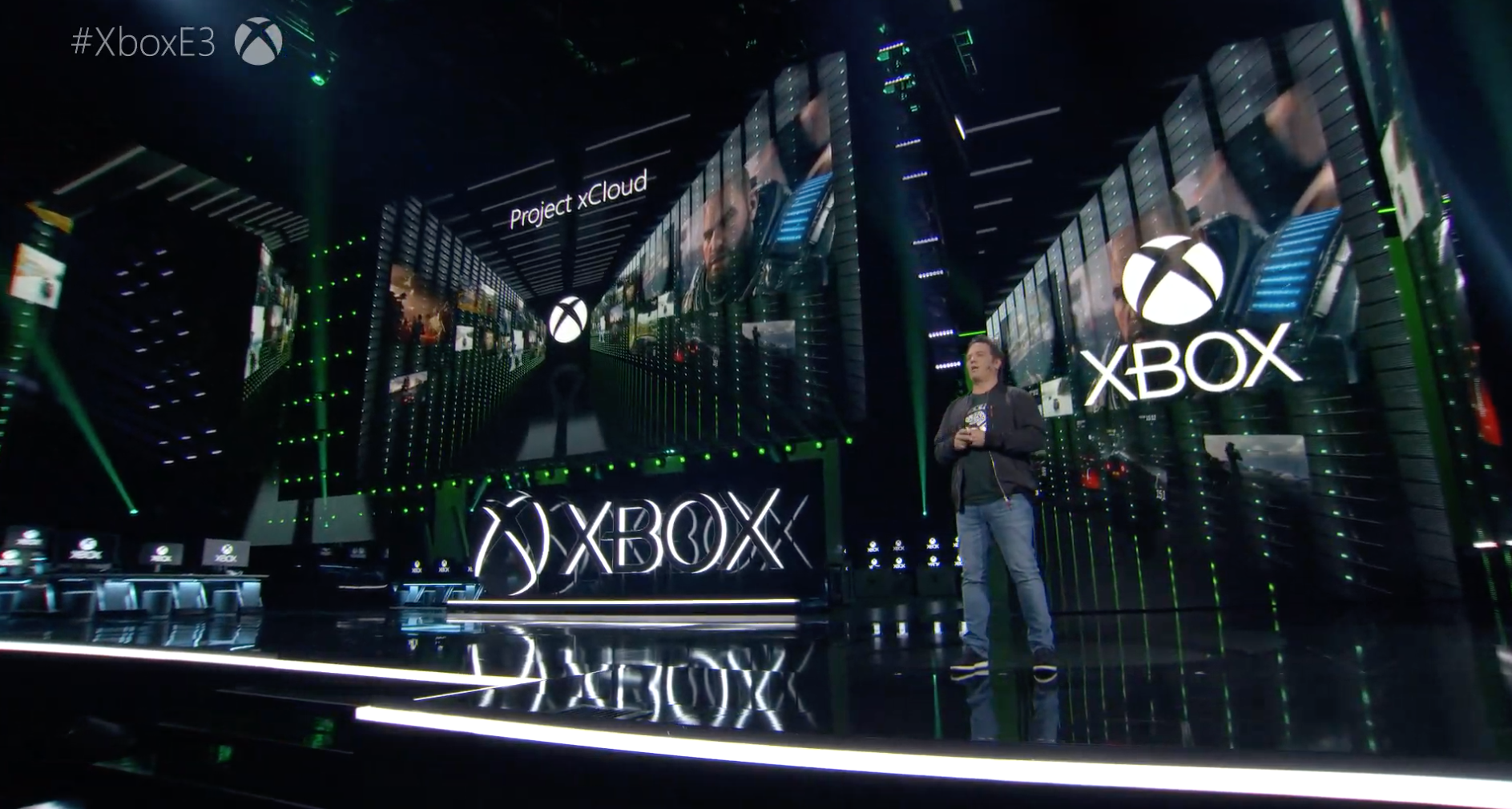
Microsoft’s Project xCloud preview launches in October

Big news out of today’s Microsoft press conference. A few days after Google finally revealed some long awaited details about its Stadia offering, Microsoft just gave us a lot more info on its competitor, Project xCloud.

Announced back in October, the game streaming service is designed to offer a hardware agnostic gaming experience. Unlike Google’s offering, Microsoft’s got the power of its own cutting edge consoles on its side. As such, the company will be leveraging that technology to let gamers use their own Xbox One as a personal cloud server. For everyone else, the computation will happen on Microsoft’s own servers.

A preview of xCloud will be available for E3 attendees this week. We’ll report back as soon as we get some hands on time with the project — including some insight into what the lag is like on the system. For everyone else, a preview version of the offering launches in October — a year after it was first announced.

More information including pricing coming soon, no doubt.

Microsoft acquires Psychonauts-maker Double Fine Productions

As it did last year, Microsoft used its Xbox E3 keynote to announce its moves in bulking up its in-house gaming content.

At its press conference, the company’s Xbox Game Studios head announced that Microsoft had acquired SF-based Double Fine Productions, a game creator that’s been around since 2000 and was founded by LucasArts’s Tim Schafer. As is the case with past acquisitions, it sounds like Double Fine Productions will continue to operate largely externally, now beneath the Xbox Game Studios entity.

Double Fine’s team

There may be more studio acquisition announcements on the way, we’ll keep this post updated if so…

Double Fine Productions notably raised around $3 million in a Kickstarter campaign to create a title, later called Broken Age. The idea of crowdfunding a game was pretty novel at the time when they did it 2012. It is of course, more commonplace now.

The company’s first title Psychonauts was released in 2005. Following the acquisition announcement, the studio showed off a trailer for Psychonauts 2 which is coming to Xbox Game Pass, Xbox One and PC.

Acquiring a host of small indie game studios seems to be Microsoft’s recent strategy in building out its content on Xbox Game Pass, bringing the service its own constant stream of original content.

Game Pass Ultimate brings Xbox subscriptions together at a discount

Update 1:38pm PT: At its E3 conference, Xbox announced that the service will also be integrating Xbox Game Pass for PC as well.

Xbox wants the future of the gaming business to lean heavily on subscription services. The company’s Game Pass service has let users download games from a pool of dozens of titles, now Microsoft is trying to make the offer too good to refuse by bundling Xbox Live Gold with the service for $14.99.

Xbox Live Gold offers online play, but the extras included with the subscription like free games and Store discounts represent some of Microsoft’s more aged strategies in getting more revenue per user and building out Xbox loyalists. Game Pass brings users unlimited access to a library of 100+ games that include some console classics.

Live Gold retails for $9.99 per month as does Game Pass so the combo offers a nice discount and will likely be an easy sell to existing Live Gold users who are already ponying up subscription fees to Microsoft.

We’ll hear more about Microsoft’s plans with Game Pass Ultimate at their press conference, which begins soon.

Feedback loops and online abuse

I’ve long thought that much of the world can be explained by feedback loops. Why are small companies nimbler than large ones? Why are private companies generally more efficient than governments? Primarily because in each case, the former has a better feedback loop. When faced with a baffling question — such as, “why do online companies do such a terrible job at dealing with abuse?” — it’s often helpful to look at the feedback loops.

Let’s look at the small vs. large and private vs. government comparisons first, as examples. Small companies have extremely tight feedback loops; a single person makes a decision, sees the results, and pivots accordingly, without the need for meetings or cross-division consensus. Larger companies have to deal with other departments, internal politics, red tape, the blessing of multiple vice-presidents, legal analysis, etc., before they can make meaningful changes.

Similarly, if a private company’s initiative isn’t going well, its revenue immediately begins to plummet, a very strong signal that it needs to change its course quickly. If a government initiative isn’t going well, the voters render their verdict … at the next election, mingled with their verdicts on all the other initiatives. In the absence of specific and meaningful external feedback, various proxies exist … but it’s difficult to definitively determine actual signal from noise.

And when a social-media platform, especially an algorithm-driven one, determines what content to amplify — which implicitly means deciding which content to de-amplify — and which content to ban … what is its feedback loop? Revenue is one, of course. Amplifying content which leads to more engagement leads to more revenue. So they do that. Simple, right?

Ahahahahahaha no, as you may have noticed. Anything but simple. Content which is amplified is often bad content. Abuse. False news. Horrifyingly creepy YouTube videos. Etcetera.

Suppose that (many of) the employees of these platforms genuinely wish to deal with and hopefully eliminate these problems. I know that seems like a big supposition, but let’s just imagine it. Then why have they consistently seemed so spectacularly bad at doing so? Is it purely because they are money-grubbing monsters making hay off bullying, vitriol, the corrosion of the social contract, etc.?

Or is it that, because it did not occur to them to try to measure the susceptibility and severity of the effects on their own systems by bad actors, they had to rely on others — journalists, politicians, the public — for a slow, imprecise form of feedback. Such as: “your recommendation algorithm is doing truly terrible things” or “you are amplifying content designed to fragment our culture and society” or “you are consistently letting assholes dogpile-abuse vulnerable people, while suspending the accounts of the wronged,” to name major criticisms most often leveled at Google, Facebook, and Twitter respectively.

But this is a subtle and sluggish feedback loop, one primarily driven by journalists and politicians, who in turn have their own agendas, flaws, and their own feedback loops to which they respond. There is no immediately measurable response like there is with, say, revenue. And so whatever they do in response is subject to that same slow and imprecise feedback.

So when Google finally responds by banning right-wing extremism, but also history teachers, which is clearly an insanely stupid thing to do, is this a transient, one-time, edge-case bug, or a sign that Google’s whole approach is fundamentally flawed and they need to rethink things? Either way, how can we tell? How can they tell?

(Before you object, no, it’s not done purely by algorithms or neural networks. Humans are in the loop — but clearly not enough of them. I mean, look at this channel which YouTube recently banned; it’s clear at first glance, and confirmed by subsequent study, that this is not right-wing extremism. This should not have been a tough call.)

I’ve long been suspicious of what I call “the scientific fallacy” — that if something cannot be measured, it does not exist. But at the same time, in order to construct meaningful feedback loops which allow your system to be guided in the desired direction, you need a meaningful measure for comparisons.

So I put it to you that a fundamental problem (although not the fundamental problem) with tackling the thorny problem of content curation in social media is that we have no way to concretely measure the scale of what we’re talking about when we say “abuse” or “fake news” or “corrupted recommendation algorithms.” Has it gotten better? Has it gotten worse? Your opinion is probably based on, er, your custom-curated social-media feed. That may not be the best source of truth.

Instead of measuring anything, we seem to be relying on Whack-a-Mole in response to viral outrage and/or media reports. That’s still much better than doing nothing at all. But I can’t help but wonder: do the tech platforms have any way of measuring what it is they’re trying to fight? Even if they did, would anyone else believe their measurements? Perhaps what we need is some form of trusted, or even crowdsourced, third-party measure of just how bad things are.

If you would look to make a meaningful difference to these problems — which are admittedly difficult, although, looking back at the banned history teacher’s YouTube channel, perhaps not so difficult as the companies claim — you could come up with a demonstrable, reliable way to measure them. Even an imprecise one would be better than the “outrage Whack-a-Mole” flailing quasi-responses which seem to be underway at the moment.