Cruise is sharing its data visualization tool with robotics geeks everywhere

Cruise is sharing a software platform with roboticists that was initially created to give its own engineers a better understanding of the petabytes of data generated every month from its fleet of autonomous vehicles.

The platform is a data visualization tool called Webviz, a web-based application aimed at anyone working in robotics, a field that includes autonomous vehicles. Researchers, students and engineers can now access the tool and get visual insight into their data by dragging their robotics data into an ROS bag file.

Robots and, specifically autonomous vehicles, capture loads of data from various sensors, like lidar, radar and cameras. The tool is supposed to make it easier to take that data and turn it from binary code into something visual. The tool lets users configure different layouts of panels, each one displaying information like text logs, 2D charts and 3D depictions of the AV’s environment.

The tool is a product of a Cruise hackathon that was held a couple of years ago. It was apparently such a hit that engineers at the self-driving car company now use it daily to calibrate lidar sensors, verify machine learning models and debug test rides. Webviz now has 1,000 monthly active users within the company, according to Cruise.

As engineers developed Webviz, they found it could have applications outside of Cruise. The company decided to open-source it as general robotics data inspection tool. For this initial release, Cruise settled on a suite of general panels that any robotics developer can leverage to explore their own data with minimal setup, the company said in a Medium post Tuesday.

A demo video provided by Cruise is posted below.

Prior to Webviz, Cruise engineers who wanted to turn binary AV data into something more visual would have to access a suite of tools within the ROS open-source community. While the system worked well, setting up the platform and then replicating it on a co-worker’s machine was time-consuming. It also required manually positioning windows running separate tools, such as logging message or viewing camera images.

The tool created out of the hackathon essentially helped lower the barrier to entry for engineers to explore and understand its autonomous vehicle data.

Cruise shared a piece, or an application, of Webviz earlier this year, called Worldview — a library that can turn data into 3D scenes. Cruise has also developed and open-sourced rosbag.js, a JavaScript library for reading ROS bag files. Both of these projects were developed as engineers created and built out Webviz, according to Cruise.

Cruise isn’t the only robotics-focused company (or autonomous vehicle company for that matter) to open-source data sets or other tools. For instance, Aptiv released last year nuScenes, a large-scale data set from an autonomous vehicle sensor suite.

And it likely won’t be the last. Not only are moves like this part of the engineering culture, there are other benefits as well, including recruitment. Plus, by releasing it into the world, it’s likely that other outsiders will build upon the tool and improve it, or use it to make engineering breakthroughs in robotics.

SafeAI raises $5M to develop and deploy autonomy for mining and construction vehicles

Startup SafeAI, powered by a founding talent team with experience across Apple, Ford and Caterpillar, is emerging from stealth today with a $5 million funding announcement. The company’s focus is on autonomous vehicle technology, designed and built specifically for heavy equipment used in the mining and construction industries.

Out the gate, SafeAI is working with Doosan Bobcat, the South Korean equipment company that makes Bobcat loaders and excavators, and it’s already demonstrating and testing its software on a Bobcat skid loader at the SafeAI testing ground in San Jose. The startup believes that applying advances in autonomy and artificial intelligence to mining and construction can do a lot to not only make work sites safer, but also increase efficiencies and boost productivity — building on what’s already been made possible with even the most basic levels of autonomy currently available on the market.

What SafeAI hopes to add is an underlying architecture that acts as a fully autonomous (Level 4 by SAE standards, so no human driver) platform for a variety of equipment. Said platform is designed with openness, modularity and upgradeability in mind to help ensure that its clients can take advantage of new advances in autonomy and AI as they become available.

“We have seen and experienced deploying autonomous mining truck in production for last 10 years,” explained SafeAI Founder and CEO, Bibhrajit Halder in an email. “Now it’s time to take it to next level. At SafeAI, we are super excited to built the future of autonomous mine by creating autonomous mining equipment that just works.”

While SafeAI doesn’t have product in market yet, it is running its software on actual construction hardware at its proving ground, as mentioned, and it’s working with an as-yet unnamed large global mining company to deploy SafeAI in a mining truck, according to Halder. The company’s plan is to focus its efforts entirely on deploying fully Level 4 autonomy as its first available commercial product, with a vision of a future where multiple pieces of mining equipment are working together “seamlessly,” the CEO says.

Today’s $5 million round includes investment led by Autotech Ventures, and includes participation from Brick & Mortar Ventures, Embark Ventures and existing investor Monta Vista Capital.

House lawmakers demand end to warrantless collection of Americans’ data

Two House lawmakers are pushing an amendment that would effectively defund a massive data collection program run by the National Security Agency unless the government promises to not intentionally collect data of Americans.

The bipartisan amendment — just 15 lines in length — would compel the government to not knowingly collect communications — like emails, messages and browsing data — on Americans without a warrant.

Reps. Justin Amash (R-MI, 3rd) and Zoe Lofgren (D-CA, 19th) have already garnered the support from some of the largest civil liberties and rights groups, including the ACLU, the EFF, FreedomWorks, New America and the Sunlight Foundation.

The Amash-Lofgren amendment (Image: supplied)

Under the current statute, the NSA can use its Section 702 powers to collect and store the communications of foreign targets located outside the U.S. by tapping into the fiber cables owned and run by U.S. telecom giants. But this massive data collection effort also inadvertently vacuums up Americans’ data, who are typically protected from unwarranted searches under the Fourth Amendment.

The government has consistently denied to release the number of how many Americans are caught up in the NSA’s data collection. For the 2018 calendar year, the government said it made more than 9,600 warrantless searches of Americans’ communications, up 28% year-over-year.

In a letter to lawmakers, the groups said the amendment — if passed into law — would “significantly advance the privacy rights of people within the United States.”

A coalition of tech giants — including Apple, Facebook, Google and Microsoft — also rallied behind the amendment.

“RGS believes this amendment is a step in the right direction for U.S. foreign intelligence surveillance policy,” said the Reform Government Surveillance group in a statement. (Verizon Media, which owns TechCrunch, is also a coalition member.)

Last year, Section 702 was reauthorized with almost no changes, despite a rash of complaints and concerns raised by lawmakers following the Edward Snowden disclosures into mass surveillance.

The EFF said in a blog post Tuesday that lawmakers “must vote yes in order to make this important corrective.”

Updated with statement from the tech coalition. 

Google now lets you flag deceptive sites with a new Chrome extension

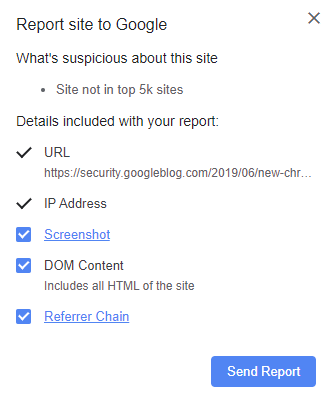
Google today launched a new Chrome extension that allows you to flag suspicious sites for inclusion in the company’s Safe Browsing index, which is used by Chrome and a number of third-party browsers.

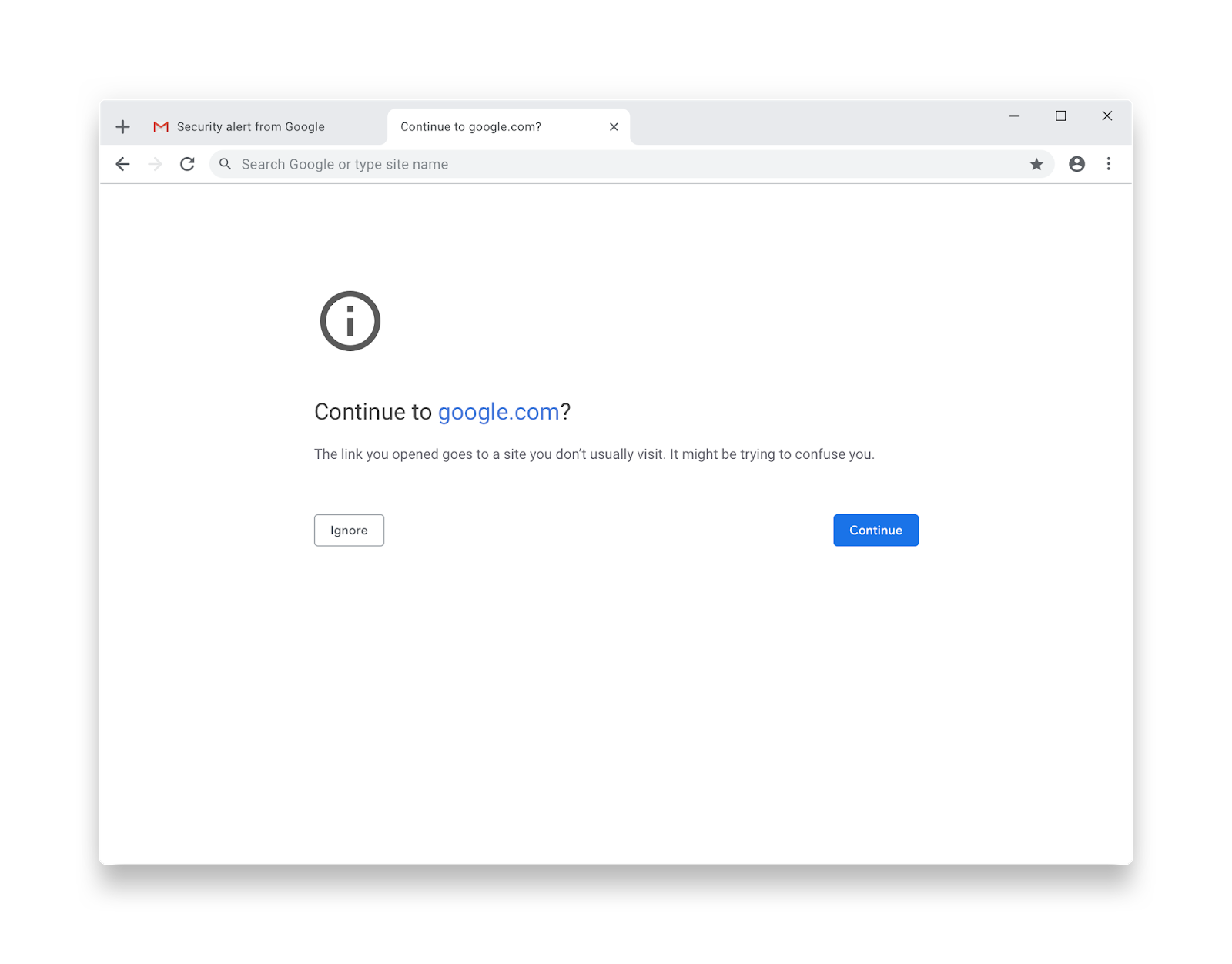
In addition, Google is also launching a new warning in Chrome that puts up a roadblock before you visit a site that is potentially trying to trick you into giving up your credentials or download malware.

Typically, Safe Browsing automatically crawls the web and looks for suspicious sites. With this new extension, you can flag sites that the system hasn’t detected yet. The overall process is pretty simple and the extension gives you the option to include screenshots, the referrer chain that led you to the site and the DOM content of your browser. You get to choose which one of these to send and the screenshot option is off by default.

The extension also puts up a flag in your browser bar that changes color based on how legitimate it thinks a given site is. Because it turns orange for any site that isn’t a top 5,000 site, though, it’s not exactly as useful a warning as it could be.

As for the new warning in Chrome 75, Google notes that it is meant to keep you from visiting sites that are trying to trick you with deceptive URLs (think “go0gle.com” and “google.com”). Chrome will now throw up a full-screen roadblock to warn you about these sites.

“This new warning works by comparing the URL of the page you’re currently on to URLs of pages you’ve recently visited,” the team explains. “If the URL looks similar, and might cause you to be confused or deceived, we’ll show a warning that helps you get back to safety.”

Google announces $1B, 10-year plan to add thousands of homes to Bay Area

The housing crisis in the Bay Area, particularly in San Francisco, is a complex and controversial topic with no one-size-fits-all solution — but a check for a billion dollars is about as close as you’re going to get, and Google has just announced it’s writing one.

In a blog post, CEO Sundar Pichai explained that in order to “build a more helpful Google,” the company would be making this major investment in what it believes is the most important social issue in the area: housing.

San Francisco is famously among the most expensive places in the world to live now, and many residents of the city, or perhaps I should say former residents, have expressed a deep and bitter hatred for the tech industry they believe converted the area to a playground for the rich while leaving the poor and disadvantaged to fend for themselves.

Google itself has been the subject of many a protest, and no doubt it is aware that its reputation as a friendly and progressive company is in danger from this and numerous other issues, from AI ethics to advertising policies.

To remedy this, and perhaps even partly as an act of conscience, Google has embarked on a billion-dollar charm offensive that will add thousands of new homes to the Bay Area over the next 10 years.

And $750 million of that comes in the form of repurposing its own commercial real estate for residential purposes. This will allow for 15,000 new homes “at all income levels,” and while Pichai said that they hope this will help address the “chronic shortage of affordable housing options,” the blog post did not specify how many of these new homes would actually be affordable, and where they might be.

Another $250 million will be invested in a fund that will “provide incentives to enable developers to build at least 5,000 affordable housing units across the market.” Again, it’s hard to imagine this will have a bad effect, but the specifics will matter here — it’s unclear what the incentives are and which developers are willing to take this on.

Lastly, and in its most direct and immediately effective act of giving, the company will step up its grants to nonprofits working against homelessness. Over the last five years, Google.org has given $18 million — this year alone it proposes to give $50 million. This kind of immediate aid is what keeps shelters, clinics and other resources alive.

We’ll look forward to more details on Google’s new housing plan, indeed so new that it hasn’t been given a catchy name like Google Cares. Pichai notes that the company is in talks with municipalities on topics like rezoning and planning, and that construction will ideally start more or less immediately.

Shyp is preparing for a comeback under new management

Fifteen months after shutting down, Shyp is getting ready to launch again. The startup tweeted today that “We are back! We’re hard at work to rebuild an unparalleled shipping experience. Before we begin operations again, we’d love to hear your feedback in this quick survey. We look forward to working with you and can’t wait to change the future of shipping!”

We are back! ? We’re hard at work to rebuild an unparalleled shipping experience. Before we begin operations again, we’d love to hear your feedback in this quick survey.

We look forward to working with you and can’t wait to change the future of shipping!https://t.co/VqyxGOMrIG

Shyp (@shyp) June 14, 2019

Most of the survey questions focus on online shopping returns, asking how easy or difficult it was to package the product for return, print the prepaid label, purchase postage or ship the product. The last question offers a hint about what direction the rebooted Shyp might take, asking “When returning a product, how likely would you be to use a service that picked up and shipped the product instead of having to ship it yourself?”

Shyp’s website doesn’t say when it will be back or what services it will offer, but it does mention that Shyp restarted in January 2019 under new management and backed by angel investors “with plans to disrupt the industry with what it does best: cutting-edge technology and a superior customer experience.”

Once one of the hottest on-demand startups, Shyp shut down in March 2018 after missing targets to expand to cities outside of San Francisco. When it first launched in 2014, Shyp initially offered on-demand service for almost anything customers wanted shipped, charging $5 plus postage to pick up, package and bring the item to a shipping company. Eventually it introduced a pricing tier in 2016 as it tried to find new approaches to its business model, before closing down two years later.

If the new Shyp does focus on making online returns easier, it will be bringing back one of its most popular services. The company expanded into online returns in 2015 after noticing that many customers used the app to return products they had purchased online.

TechCrunch has emailed Shyp for more information.

Getting remote work working, A16Z in LatAm, transferring H-1Bs, and Uber Air taxis

How to make remote work work

TechCrunch columnist Jon Evans has an Extra Crunch-exclusive look on what it takes to get remote work working within an organization. Evans, who has been the remote CTO of technology consulting firm HappyFunCorp for many years, finds that “you need decisive confidence, clear direction, iterative targets, independent responsibilities, asynchronous communications, and cheerful chatter” to build out a harmonious remote work culture.

Decisive confidence. Suppose Vivek in Delhi, Diego in Rio, and Miles in Berlin are all on a project. (An example I’m drawing from my real life.) It’s late your time. You have to make a decision about the direction of their work. If you sleep on it, you’re writing off multiple developer-days of productivity.

Sometimes they have enough responsibilities to have other things to work on. (More on that below.) Sometimes you don’t have to make the decision because they have enough responsibility to do so themselves. (More on that below.) But sometimes you have to make the business-level decision based on scant information. In cases like this, remember the military maxim: “Any decision is better than no decision.”

How to negotiate term sheets with strategic investors

Over the last few years, we’ve seen the rise of hundreds of strategic investors, typically large corporates with venture wings with the mission to invest in the next wave of startups targeting their existing business lines. While many of these funds are structured at least symbolically as traditional venture capital firms, their specific concerns during deal negotiation can be quite different.

Equity transcribed: Silicon Valley’s founder fetish infantilizes public companies

Welcome back to this week’s transcribed edition of Equity.

This was a big week of news that the Equity duo had to cover. Kate was at the Code Conference, Fortnite maker, Epic Games bought Houseparty, and a bit more on the Bird-Scoot deal.

Then came talk of the CrowdStrike IPO, which gave way to a heated discussion about dual-class shares.

Alex Wilhelm: I think it’s honest. I think giving the public one vote per share, and giving yourself 10 so you retain greater than 50% of voting is a sop. I think it’s ridiculous. Just fly under your own flag. If you don’t want to share any control, then don’t. If you want to have a company with a functional governance, that adheres to historical norms for how this stuff works, then have votes. This 10 versus 1 thing is a fracking farce, because I can’t swear on this show, so you can fill that in yourself. If you want to look at a historical example of a company that didn’t have this setup, it was Amazon, which historically thinks far ahead, and has done fantastically well. It’s public company growing from a, I believe, under nine-figure revenue. The idea you can’t do it is trash. The idea that it always works is wrong. To me, it’s dishonest. If you’re going to sell shares, go public, and float, share the voting power with your shareholders. Don’t treat them like children, and you like a god. You’re not.

Kate Clark: Alex is getting really worked up, but I totally agree with you. That’s why I want to-

Wilhelm: I’m not worked up, I’m angry.

Clark: That’s why I wanted to talk about it though, because I think it’s important. I think what you just said is a perfect summary of why it’s messed up. The only thing I think that will really change this, is to see whether these dual-class stocks, versus single-class stocks, perform differently on the market. As far as I know, they’re not, which means that people don’t care. Or, people don’t know, I don’t know. If a company isn’t going to lose any money doing it … If they’re not going to have any consequences whatsoever, they’re not going to be up against any negative feedback from shareholders, then of course, they’re going to keep doing it. Like I said, it’s not really talked about very much.

Want more Extra Crunch? Need to read this entire transcript? Then become a member. You can learn more and try it for free. 

Meet TezLab, the Fitbit for Tesla vehicles

Some of the best real-time insights into Tesla and its global fleet of electric vehicles — outside the confines of its Silicon Valley headquarters — might be through the lens of TezLab, a tiny upstart in Brooklyn.

Now, a little more than two years after its founding, TezLab is on the verge of hitting what its founders believe is a tipping point of users, a milestone that could finally trigger a path to monetization. And it’s adding lots of new features to help accelerate that plan.

For the non-Tesla owner, the name TezLab is likely a foreign one. In certain circles though, namely Tesla owners obsessed with understanding how their electric vehicle performs, TezLab is a familiar friend.

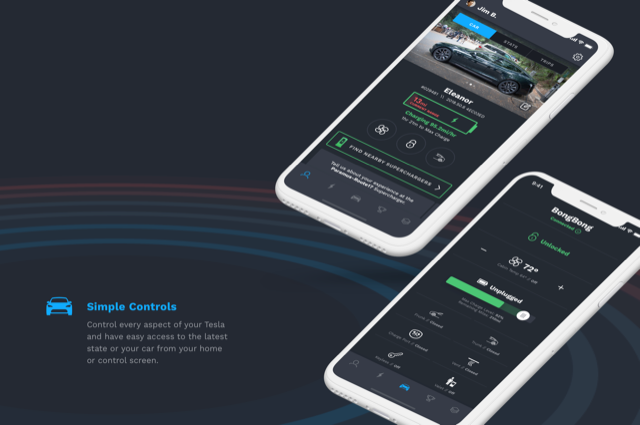
Tezlab is a free app that’s like a Fitbit for a Tesla vehicle. Tesla owners who download the app can track their efficiency, total trip miles and use it to control certain functions of the vehicle, such as locking and unlocking the doors and heating and air conditioning. There’s even a gamification piece that lets users earn badges for hitting milestones or completing tasks.
The company has started to add new features as part of a longer term plan aimed at monetization.

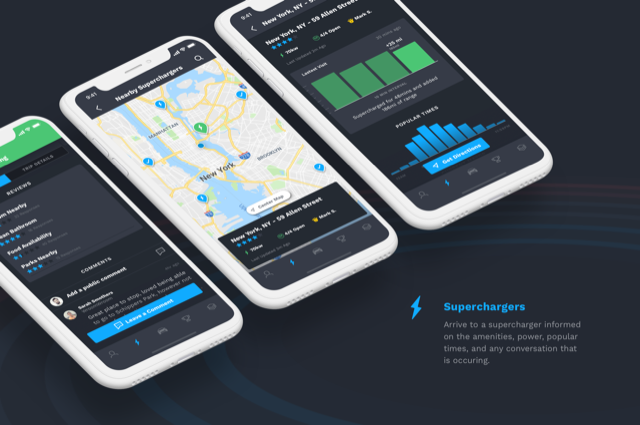
One of these features, which crowdsources data like Waze to give insights and ratings on Tesla Supercharger stations, is rolling out now. The video below shows how this supercharger feature will function.

The Waze for supercharger feature is considered “phase one” of the company’s plans to broaden its crowdsourcing and social community.

Origin story

The six-person team behind TezLab was born out of HappyFunCorp, a software engineering shop that builds apps for mobile, web, wearables and Internet of Things devices for clients that include Amazon, Facebook and Twitter, as well as an array of startups.

HFC’s engineers, including co-founders Ben Schippers and William Schenk, were attracted to Tesla largely because of its techcentric approach and one important detail: the Tesla API endpoints are accessible to outsiders.

The Tesla API is technically private. But it exists, allowing Tesla’s own first-party app to communicate with the cars to do things like read battery charge status and lock doors. When reverse-engineered, it’s possible for a third-party app to communicate directly with the API. (Tesla CEO Elon Musk has talked recently about opening up the API to third-party developers)

“Essentially, the plumbing is already built to connect to the server,” Schippers told TechCrunch recently. “This was the catalyst for us.”

A Tesla vehicle buying trend was triggered at HFC. Schippers, Schenk and a number of other software engineers and staffers at HFC bought, and still own, Tesla vehicles like the Model 3. The company’s HFC fund provided the initial $350,000 to build the first version of TezLab.

Repository of data

TezLab hasn’t captured anywhere near every Tesla owner. But Schippers believes they’re getting close to reaching a critical mass of users. More than 200 owners are downloading the app each week, and that rate is accelerating, he said.

TezLab has 16,000 total installs on the Apple App Store and Google Play, according to Sensor Tower . The figures are all unique, new installs. The firm doesn’t count re-installs or downloads to multiple devices belonging to the same user. However, that total install number is likely closer to 18,000 because many are listed under TestFlight, an online service used to test apps.

In comparison, Tesla delivered 245,506 vehicles globally in 2018. TezLab doesn’t expect every Tesla owner to download the app. Instead, Schippers is initially aiming for 10% of owners — a target he believes is within reach — and eventually higher.

Even at its current numbers, TezLab has become a massive repository of Tesla data. The company is storing between 850,000 to 1 million events a day, and that volume is growing. That translates to more than 1 GB of data a day, according to Schippers.

“We now have enough data in our system to start making large assumptions of what the fleet is doing and why,” said Schippers, who is CEO of HappyFunCorp and head of product at TezLab.
tezlab

The data is aggregated and anonymous and isn’t shared publicly. And there are no plans to sell that data.

“I think we can create something really meaningful, without getting into the business of selling data,” Schippers told TechCrunch.

Of course, what Schippers and others at TezLab have built could, theoretically, end overnight if Tesla were to change access.

Tesla could do to us what Facebook did to Zynga, and we don’t want that,” Schippers said.

Tesla declined to comment on this topic.

What TezLab does provide publicly on its website are insights based on that crunched data. For instance, anyone visiting the site can get a breakdown of model ownership, the average trip length and average time between plugging in.

As the company adds more features to the app, an understanding of how people use their Tesla vehicles should deepen.

In the background, of course, TezLab knows more than what it shows on its website. It can quickly spot phantom drain issues, if the Tesla API goes offline or chart spikes in charging use. For instance, Tezlab was able to determine that visits to Tesla Supercharger stations were 84% higher on Memorial Day than on an average day in 2019.

The Strava model

Capturing and storing that data is at the core of TezLab’s plan to make money. The app will remain free even as more features are added.

The company plans to follow the business model of the social fitness network Strava,  which is charge for storage, not features. That data could become a lot more valuable to owners as new features are added. TezLab is looking at tracking Autopilot miles and is looking into doing “interesting stuff with Sentry mode,” the security feature now live in Tesla vehicles.

This summer, the app will introduce clubs that Schippers hopes will build up the community. The feature will let Tesla owners join a specific club, say in Norway, Brooklyn or San Francisco. It will be designed so owners can easily find and converse with other owners. And Schippers added, only people who own Tesla are allowed in.

TezLab’s staff puts itself squarely in the “protector of the realm” category when it comes to Tesla. In the end, all of this is to help Tesla succeed, said Schippers.

“We look at what Fitbit did for walking and exercise and motivation,” he said. “And we’ll bring that to the space of electric vehicles.”


Original Content podcast: ‘Black Mirror’ returns with one of its strongest seasons

Less than six months after releasing the disappointing interactive experiment “Bandersnatch,” Netflix’s science fiction anthology series “Black Mirror” is back with three traditionally-structured episodes.

On the latest installment of the Original Content podcast, we weigh in with our thoughts on the new season. We didn’t entirely agree on which episodes were strongest, but we agreed that there wasn’t a real misfire in the bunch.

Darrell and Jordan were most impressed the season opener, “Striking Vipers” — which uses a VR fighting game as a launching point for a thorny exploration of sexuality and friendship — while Anthony preferred “Smithereens,” in which the the driver with an Uber-style app takes a social media intern hostage. And we also had a good time with “Rachel, Jack and Ashley Too,” which stars as Miley Cyrus as a pop star who’s merchandised as a friendly AI assistant.

Not all of the new episodes end happily, but in general, the show’s penchant for bleakness seems to have lifted (or perhaps it was simply channeled into “Bandersnatch”), leaving room for more emotional complexity. If we had any complaints, they had more to do with the relatively abbreviated season length, and with our skepticism about some of the show’s near-future technology.

You can listen in the player below, subscribe using Apple Podcasts or find us in your podcast player of choice. If you like the show, please let us know by leaving a review on Apple. You can also send us feedback directly. (Or suggest shows and movies for us to review!)

And if you want to skip ahead, here’s how the episode breaks down:

0:00 Intro
1:33 “Black Mirror” spoiler-free review
31:00 Spoiler discussion

Startups Weekly: #CodeCon, the ‘techlash’ and ill-prepared CEOs

Hello and welcome back to Startups Weekly, a newsletter published every Saturday that dives into the week’s noteworthy venture capital deals, funds and trends. Before I dive into this week’s topic, let’s catch up a bit. Last week, I wrote about Peloton’s upcoming initial public offering. Before that, I noted the proliferation of billion-dollar companies. 

Remember, you can send me tips, suggestions and feedback to [email protected] or on Twitter @KateClarkTweets. If you don’t subscribe to Startups Weekly yet, you can do that here

Now I know this newsletter is supposed to be about startups, but we’re shifting our focus to Big Tech today. Bear with me.

I spent the better part of the week in Scottsdale, Ariz. where temperatures outside soared past 100 and temperatures inside were icy cold. Both because Recode + Vox cranked the AC to ungodly levels but also because every panel, it seemed, veered into a debate around the “techlash” and antitrust.

If you aren’t familiar, the Financial Times defines the techlash as “the growing public animosity toward large Silicon Valley platform technology companies.” Code Conference has in the past been an event that underscores innovation in tech. This year, amid growing tensions between tech’s business practices and the greater good, things felt a little different.

The conference began with Peter Kafka grilling YouTube’s CEO Susan Wojcicki. Unfortunately for her, CodeCon took place the week after an enormous controversy struck YouTube. You can read about that here. Wojcicki wasn’t up to the task of addressing the scandal, at least not honestly. She apologized to the LGBTQ community for YouTube’s actions but was unable to confront the larger issue at hand: YouTube has failed to take necessary action toward eliminating hate speech on its platform, much like other social media hubs.

From there, The Verge’s Casey Newton asked Instagram head Adam Mosseri and Facebook vice president of consumer hardware Andrew Bosworth point blank if Facebook should be broken up. Unsurprisingly, neither of the two men are fond of the idea.

“Personally, if we split [Facebook and Instagram] it might make my life easier but I think it’s a terrible idea,” Mosseri, who was named CEO of Instagram last fall, said. “If you split us up, it would just make it exponentially more difficult to keep people safe. There are more people working on safety and integrity issues at Facebook than all the people that work at Instagram.”

Bosworth, who manages VR projects at Facebook, had this to say: “You take Instagram and Facebook apart, you have the same attack surfaces. They now aren’t able to share and combine data … So this isn’t circular logic. This is an economy of scale.”

Wojcicki, when asked whether YouTube should separate from Google, had a less nuanced and frankly shockingly ill-prepared response:

This is the actual answer YouTube's CEO gave @pkafka when asked what it would mean if the company was spun off from Google due to antitrust: “I don’t know. I’ve been really busy this week working with all these other concerns… I don’t know. We would figure it out.” #CodeCon

— Alex Heath (@alexeheath) June 10, 2019

There’s more where that came from, but this newsletter isn’t about big tech! It’s about startups! Here’s all the startup news you missed this week.

IPO Corner

CrowdStrike’s IPO went really well: After pricing its IPO at $34 per share Tuesday evening and raising $612 million in the process (a whole lot more than the planned $378 million), the company’s stock popped 90% Wednesday morning with an initial share price of $63.50. A bona fide success, CrowdStrike boasted an initial market cap of $11.4 billion, nearly four times that of its last private valuation, at market close Wednesday. I chatted with CrowdStrike CEO George Kurtz on listing day. You can read our full conversation here.

Fiverr climbs: The marketplace had a good first day on the NYSE. The company priced its IPO at $21 per share Wednesday night, raising around $111 million. It then started trading Thursday morning at $26 apiece, with shares climbing for most of the day and closing at $39.90 — up 90% from the IPO price. Again, not bad. Read TechCrunch’s Anthony Ha’s conversation with Fiverr CEO Micha Kaufman here.

Get ready for … Slack’s highly-anticipated direct listing next week (June 20). Catch up on direct listings here and learn more about Slack’s journey to the public markets here.

Bird confirmed its acquisition of Scoot

As is usually the case with these things, parties from both Bird and Scoot declined to tell us any details about the deal, so we went and found the details ourselves! First, The Wall Street Journal’s Katie Roof reported the (mostly stock) deal was valued at roughly $25 million. We confirmed with our sources that it was indeed less than $25 million and came after Scoot struggled to raise additional capital from venture capital investors.

It’s a mostly stock deal so value is largely contingent on what happens to Bird from here https://t.co/dcTL9ovmeL

— Katie Roof (@Katie_Roof) June 13, 2019

Fortnite throws a Houseparty 

While we’re on the subject of M&A, Epic Games, the creator of Fortnite, acquired Houseparty, a video chatting mobile app, this week. The deal comes shortly after Epic Games raised a whopping $1.25 billion. Founded in 2015, Houseparty is a social network that delivers video chat across a number of different platforms, including iOS, Android and macOS. Like Fortnite, the offering tends to skew younger. Specifically, the app caters toward teen users, providing a more private and safer space than other, broader platforms.

Startup Capital

Symphony, a messaging app, gets $165M at a $1.4B valuation
BetterUp raises $103M to fast-track employee development
Neurobehavioral health company BlackThorn pulls in $76M from GV
Against Gravity, maker of the VR hit ‘Rec Room,’ nabs $24M
Simpo secures $4.5M seed round to help drive software adoption

~Extra Crunch~

If you’ve been unsure whether to sign up for TechCrunch’s awesome new subscription service, now is the time. Through next Friday, it’s only $2 a month for two months. Seems like a no-brainer. Sign up here. Here are some of my personal favorite EC pieces of the week:

Silicon Valley’s founder fetish infantilizes public companies

If you enjoy this newsletter, be sure to check out TechCrunch’s venture-focused podcast, Equity. In this week’s episode, available here, Crunchbase News editor-in-chief Alex Wilhelm and I debate dual-class stock, discuss my takeaways from #CodeCon and review the biggest rounds of the week. You can subscribe to Equity here or wherever else you listen to podcasts.