Google will start attributing lyrics in its search results to their third-party providers

Earlier this week, music lyrics repository Genius accused Google of lifting lyrics and posting them on its search platform. Genius told the Wall Street Journal that this caused its site traffic to drop. Google, which initially denied wrongdoing but later said it was investigating the issue, addressed the controversy in a blog post today. The company said it will start including attribution to its third-party partners that provide lyrics in its information boxes.

When Google was first approached by the Wall Street Journal, it told the newspaper that the lyrics it displays are licensed by partners and not created by Google. But some of the lyrics (which are displayed in information boxes or cards called “Knowledge Panels” at the top of search results for songs) included Genius’ Morse code-based watermarking system. Genius said that over the past two years it repeatedly contacted Google about the issue. In one letter, sent in April, Genius told Google it was not only breaking the site’s terms of service, but also violating antitrust law—a serious allegation at a time when Google and other big tech companies are facing antitrust investigations by government regulators.

After the WSJ article was first published, Google released a statement that said it was investigating the problem and would stop working with lyric providers who are “not upholding good practices.”

In today’s blog post, Satyajeet Salgar, a group product manager at Google Search, wrote that the company pays “music publishers for the right to display lyrics, since they manage the rights to these lyrics on behalf of songwriters.” Because many music publishers license lyrics text from third-party lyric content providers, Google works with those companies.

“We do not crawl or scrape websites to source these lyrics. The lyrics you see in information boxes on Search come directly from lyrics content providers, and they are updated automatically as we receive new lyrics and corrections on a regular basis,” Salgar added.

These partners include LyricFind, which Google has had an agreement with since 2016. LyricFind’s chief executive told the WSJ that it does not source lyrics from Genius.

While Salgar’s post did not name any companies, he addressed the controversy by writing “news reports this week suggested that one of our lyrics content providers is in a dispute with a lyrics site about where their written lyrics come from. We’ve asked our partner to investigate the issue to ensure that they’re following industry best practices in their approach.”

In the future, Google will start including attribution to the company that provided the lyrics in its search results. “We will continue to take an approach that respects and compensates rights-holders, and ensures that music publishers and songwriters are paid for their work,” Salgar wrote.

Genius, which launched as Rap Genius in 2009, has been at loggerheads with Google before. In 2013, a SEO trick Rap Genius used to place itself higher in search results ran afoul of Google’s web spam team. Google retaliated by burying Rap Genius links under pages of other search results. The conflict was resolved after less than two weeks, but during that time Rap Genius’ traffic plummeted dramatically.

Harry Potter: Wizards Unite will launch on June 21st

After a year of teasing out Harry Potter: Wizards Unite, Niantic (the company behind Pokémon GO) and WB Games have at long last announced an official release date: June 21st.

The news came this evening at a press event held just outside of Universal Studios’ Wizarding World (where else?), where Niantic also confirmed plans to hold events similar to its Pokémon GO Fests for this new Potter title.

The game first rolled out in a limited “beta” phase in early May, available only in Australia and New Zealand. I asked if the “June 21st” date was for a worldwide rollout, and was told June 21st marks the beginning of a wider country-by-country rollout beginning with the US and UK.

The real risk of Facebook’s Libra coin is crooked developers

Everyone’s worried about Mark Zuckerberg controlling the next currency, but I’m more concerned about a crypto Cambridge Analytica.

Today Facebook announced Libra, its forthcoming stablecoin designed to let you shop and send money overseas with almost zero transaction fees. Immediately, critics started harping about the dangers of centralizing control of tomorrow’s money in the hands of a company with a poor track record of privacy and security.

Facebook anticipated this, though, and created a subsidiary called Calibra to run its crypto dealings and keep all transaction data separate from your social data. Facebook shares control of Libra with 27 other Libra Association founding members, and as many as 100 total when the token launches in the first half of 2020. Each member gets just one vote on the Libra council, so Facebook can’t hijack the token’s governance even though it invented it.

With privacy fears and centralized control issues at least somewhat addressed, there’s always the issue of security. Facebook naturally has a huge target on its back for hackers. Not just because Libra could hold so much value to steal, but because plenty of trolls would get off on screwing up Facebook’s currency. That’s why Facebook open-sourced the Libra Blockchain and is offering a prototype in a pre-launch testnet. This developer beta plus a bug bounty program run in partnership with HackerOne is meant to surface all the flaws and vulnerabilities before Libra goes live with real money connected.

Yet that leaves one giant vector for abuse of Libra: the developer platform.

“Essential to the spirit of Libra . . . the Libra Blockchain will be open to everyone: any consumer, developer, or business can use the Libra network, build products on top of it, and add value through their services. Open access ensures low barriers to entry and innovation and encourages healthy competition that benefits consumers,” Facebook explained in its white paper and Libra launch documents. It’s even building a whole coding language called Move for making Libra apps.

Apparently Facebook has already forgotten how allowing anyone to build on the Facebook app platform and its low barriers to “innovation” are exactly what opened the door for Cambridge Analytica to hijack 87 million people’s personal data and use it for political ad targeting.

But in this case, it won’t be users’ interests and birthdays that get grabbed. It could be hundreds or thousands of dollars’ worth of Libra currency that’s stolen. A shady developer could build a wallet that just cleans out a user’s account or funnels their coins to the wrong recipient, mines their purchase history for marketing data or uses them to launder money. Digital risks become a lot less abstract when real-world assets are at stake.
In the wake of the Cambridge Analytica scandal, Facebook raced to lock down its app platform, restrict APIs, more heavily vet new developers and audit ones that look shady. So you’d imagine the Libra Association would be planning to thoroughly scrutinize any developer trying to build a Libra wallet, exchange or other related app, right? “There are no plans for the Libra Association to take a role in actively vetting [developers],” Calibra’s head of product Kevin Weil surprisingly told me. “The minute that you start limiting it is the minute you start walking back to the system you have today with a closed ecosystem and a smaller number of competitors, and you start to see fees rise.”

That translates to “the minute we start responsibly verifying Libra app developers, things start to get expensive, complicated or agitating to cryptocurrency purists. That might hurt growth and adoption.” You know what will hurt growth of Libra a lot worse? A sob story about some migrant family or a small business getting all their Libra stolen. And that blame is going to land squarely on Facebook, not some amorphous Libra Association.
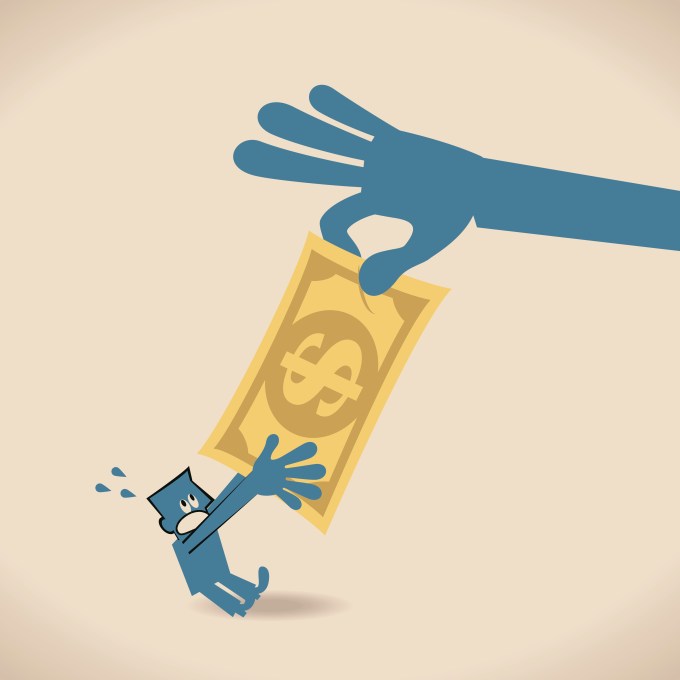
Image via Getty Images / alashi

Inevitably, some unsavvy users won’t understand the difference between Facebook’s own wallet app Calibra and any other app built for the currency. “Libra is Facebook’s cryptocurrency. They wouldn’t let me get robbed,” some will surely say. And on Calibra they’d be right. It’s a custodial wallet that will refund you if your Libra are stolen and it offers 24/7 customer support via chat to help you regain access to your account.

Yet the Libra Blockchain itself is irreversible. Outside of custodial wallets like Calibra, there’s no getting your stolen or mis-sent money back. There’s likely no customer support. And there are plenty of crooked crypto developers happy to prey on the inexperienced. Indeed, $1.7 billion in cryptocurrency was stolen last year alone, according to CypherTrace via CNBC. “As with anything, there’s fraud and there are scams in the existing financial ecosystem today . . .  that’s going to be true of Libra too. There’s nothing special or magical that prevents that,” says Weil, who concluded “I think those pros massively outweigh the cons.”

Until now, the blockchain world was mostly inhabited by technologists, except for when skyrocketing values convinced average citizens to invest in Bitcoin just before prices crashed. Now Facebook wants to bring its family of apps’ 2.7 billion users into the world of cryptocurrency. That’s deeply worrisome.
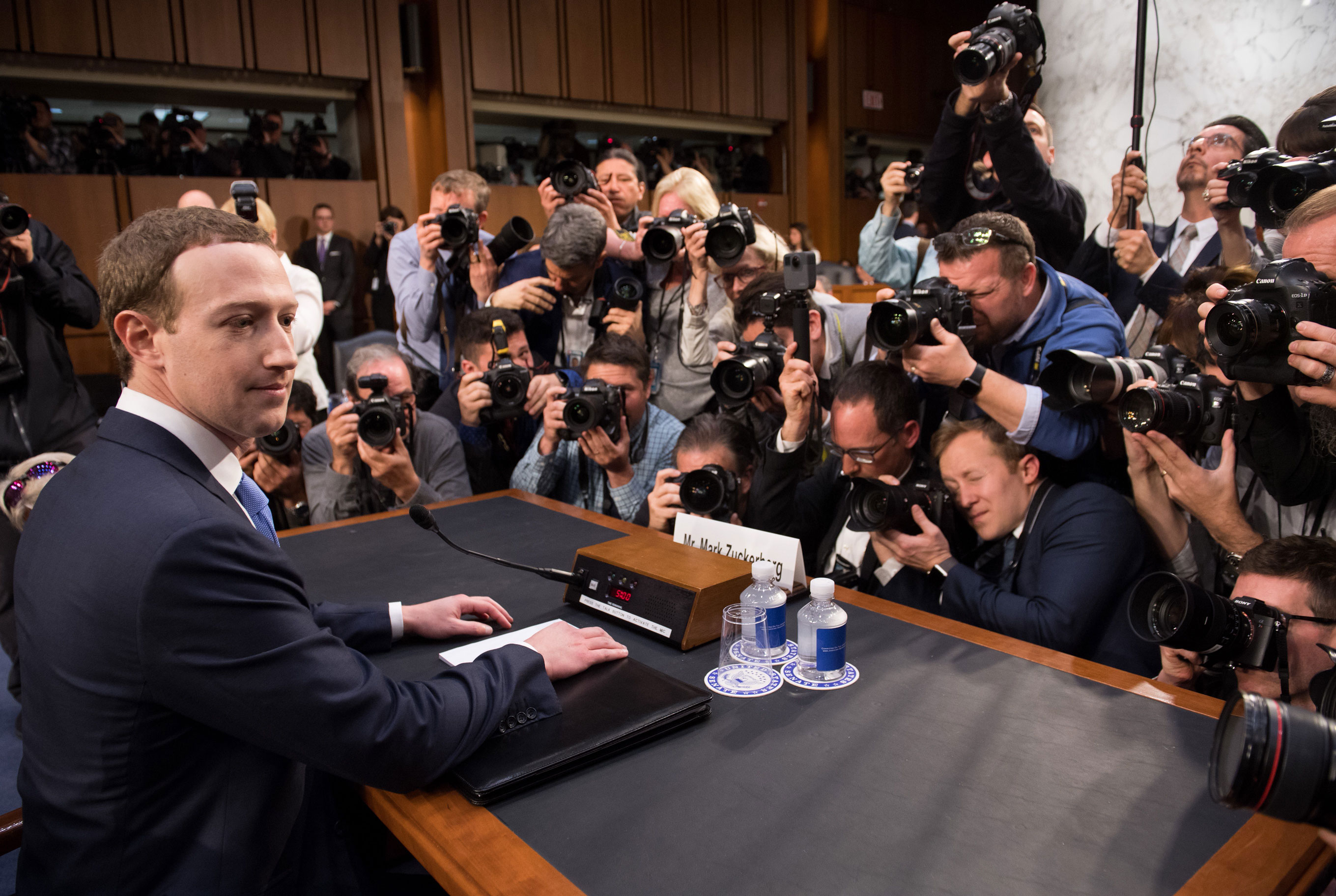
Facebook founder and CEO Mark Zuckerberg arrives to testify during a Senate Commerce, Science and Transportation Committee and Senate Judiciary Committee joint hearing about Facebook on Capitol Hill in Washington, DC, April 10, 2018. (Photo: SAUL LOEB/AFP/Getty Images)

Regulators are already bristling, but perhaps for the wrong reasons. Democrat Senator Sherrod Brown tweeted that “We cannot allow Facebook to run a risky new cryptocurrency out of a Swiss bank account without oversight.” And French Finance Minister Bruno Le Maire told Europe 1 radio that Libra can’t be allowed to “become a sovereign currency.”

Most harshly, Rep. Maxine Waters issued a statement saying, “Given the company’s troubled past, I am requesting that Facebook agree to a moratorium on any movement forward on developing a cryptocurrency until Congress and regulators have the opportunity to examine these issues and take action.”

Yet Facebook has just one vote in controlling the currency, and the Libra Association preempted these criticisms, writing, “We welcome public inquiry and accountability. We are committed to a dialogue with regulators and policymakers. We share policymakers’ interest in the ongoing stability of national currencies.”

That’s why as lawmakers confer about how to regulate Libra, I hope they remember what triggered the last round of Facebook execs having to appear before Congress and Parliament. A totally open, unvetted Libra developer platform in the name of “innovation” over safety is a ticking time bomb. Governments should insist the Libra Association thoroughly audit developers and maintain the power to ban bad actors. In this strange new crypto world, the public can’t be expected to perfectly protect itself from Cambridge Analytica 2.$.

Get up to speed on Facebook’s Libra with this handy guide:

Apple Watch’s own built-in apps can be deleted in watchOS 6

Good news for Apple Watch owners who don’t want to clutter up their Watch with unused apps. With the release of the new watchOS 6 operating system later this year, Apple will allow Apple Watch device owners to remove many more of the built-in, first-party apps from their smartwatch — including previously unremovable apps like Alarm, Timer, Stopwatch, Remote, Camera Remote, Radio and others, as well as health apps like ECG, Breathe, Noise and Cycle Tracking.

Currently, Apple Watch owners can easily remove the third-party apps they install from the App Store. They can either press and hold on the app to make it wiggle, then tap the “X” that appears to delete it, or they can go into the Apple Watch app settings and toggle off the switch that says “Show on Apple Watch.”

Additionally, users can opt to remove many of the built-in apps from their iPhone, which also then removes its Apple Watch counterpart.

But the dedicated Watch apps (like Timer or Radio) couldn’t be removed from the Watch because they had no iOS counterpart to uninstall.

That will change with the launch of watchOS 6 due out later this fall.

This week, Apple gave these previously unremovable apps their own App Store listings (see chart below).

App release dates — image courtesy of Sensor Tower

This means these apps will also now be deletable, as the user can opt to reinstall them from the App Store if they change their mind later. To delete these apps, the Watch owner can press and hold then hit the “X” to remove them, as they could with third-party apps before.*

Not all of the built-in iOS and watchOS can be removed, however. Some, like Heart Rate and Messages, will remain.

The move to make more of the default Watch apps deletable will likely go over well with Apple Watch owners, as it did when Apple made some of its built-in iOS apps removable several years ago with the release of iOS 10. (Remember how great it was to delete Stocks?)

After all, not everyone wants to use the full set of default apps that come with Apple Watch.

Some people don’t get into the whole self-care vibe, like what’s offered by the Apple Watch Breathe app, for example. Meanwhile, only women will have use for the newly launched Apple Watch Cycle Tracking app.

This change to the apps follows news from Apple’s Worldwide Developer Conference (WWDC) earlier this month, where the company announced how watchOS 6 will bring an on-device App Store to the Apple Watch for the first time. This will allow the Watch apps to act more independently from their iOS counterparts. They no longer have to be bundled with the iPhone/iPad app. In fact, developers don’t even have to create an iOS version, if there’s no need.

* This process doesn’t work in the current watchOS 6 beta, but was described to us by sources familiar with the plan as to how these apps will become “deleteable.”

People familiar with Slack’s upcoming public offering share what to expect

Slack, the popular workplace messaging company, is expected to list on the New York Stock Exchange on Thursday in the second major direct listing in the U.S. after Spotify introduced the concept to investors in April of last year.

At this point, plenty of industry observers think it makes sound sense for Slack to embrace the direct listing approach, wherein a company places its stock on a public exchange without raising any money or using underwriters. Though the company warned last week that its operating losses are widening as it chases new customers, it has $800 million on its balance sheet, meaning it doesn’t need to raise more right now.

Slack also doesn’t need underwriters who typically discount a company’s shares in order to ensure that they appreciate in value when they begin trading. It’s a known brand in the tech world, and that universe is broadening by the day. Put another way, Slack doesn’t need to be “sold” for investors to want to snap up its shares.

Still, we wondered about some of the thinking that has gone into preparing Slack for its move into the world of publicly traded companies, so we talked with a couple of people who are familiar with what’s happening behind the scenes to find out more. They asked not to be named, but here’s what we learned:

1) Unlike with the popular streaming music platform Spotify, which has more than 100 million premium subscribers and roughly twice as many active monthly users, Slack wasn’t as well-known to Wall Street as Silicon Valley might imagine. In fact, we’re told the bankers that were selected to advise Slack on its offering — Morgan Stanley, Goldman Sachs and Allen & Co., which are the same three that advised Spotify — had to provide more education to analysts and institutional investors this time around.

2) There will (hopefully) be enough shares to go around, while also not a glut of them. The big concern in a direct offering — which does not feature a lock-up period — is that too many people will dump their shares on the market, crushing the company’s share price, or else that too few will part with their holdings, turning the buying and selling of the company’s shares into a financial game of chicken. We’ll see what happens here, but we’re told the banks have spent the last six months trying to ensure that many — but not all — of the company’s institutional shareholders will be selling some of their stakes at the offering, Also worth noting is that unlike with Spotify, some Slack employees have restricted stock units that will vest upon its public listing and so be part of the supply of shares on its first day.

3) In establishing guidance around how Spotify’s shares should be valued, the banks advising the company looked almost entirely to its private market trades, of which there were many. There has been less secondary activity with Slack’s shares, so the banks are likely to rely on these sales but also to use other inputs. We’ll learn soon enough what they settle on, but based on the latest prices at which its shares have traded in the private market, Slack’s presumed valued right now is at $16.7 billion, or 36 times trailing 12-month sales.

4) You might imagine that banks hate direct listings because of the rich underwriting fees they aren’t collecting, and they probably do. Still, even with a direct listing, they get paid pretty well, thanks to both advisory fees and also because investors often trade through the banks named as advisers in the prospectus. There are also fewer mouths to feed on a deal with a direct listing. In Slack’s case — as happened with Spotify — Morgan Stanley, Goldman Sachs and Allen & Co. will reportedly reap almost all of the spoils — or a reported 90% of the $22 million in fees earmarked for all the advisers involved in the deal. In a traditional IPO, a longer number of banks that promise research coverage are given shares to sell, which eats into lead underwriters’ allotment.

5) One risk that Slack shouldn’t necessarily run into but that may have adversely impacted Uber’s IPO is its investor base. According to Slack’s S-1, its biggest outside shareholders include Accel (it owns 24% sailing into the offering), Andreessen Horowitz (13.3%), Social Capital (10.2%) and SoftBank (7.3 %). Why it matters: Slack doesn’t have to worry about less traditional private company backers like mutual funds not wanting to buy up its shares because they’re too busy trying to offload some.

6) Direct listings may well become a more popular product for consumer companies because companies can avoid further dilution, and there’s no lock-up on their shares, creating a shorter path to liquidity for the company and its employees and its investors. Still, Slack is probably anomalous as an enterprise company with a high enough profile to pull one off. The listings are really for companies that don’t need money any time soon and whose shares are already of interest to investors, who don’t need inducements to pay attention.

7) This is the second direct listing of a highly valued privately held company and, for the second time, it’s happening on the NYSE, with the same market maker, Citadel Securities, charged with ensuring orderly trading; the same bank, Morgan Stanley, selected to advise Citadel; and even the same law firms that worked on Spotify’s direct listing pulled back into service.

It’s nice if you’re part of this particular club, and no one can blame Slack for not wanting to reinvent the wheel. But one wonders how nervous it makes Nasdaq, as well as other banks and law firms, to be shut out of this process a second time.

This $99 AirPower knockoff is available for order now

There are a number of key differences between Apple’s AirPower and lookalike knockoff, AirUnleashed. The most pertinent one, however, is that one of the two is actually available for purchase.

Apple gave up the AirPower ghost back in March, after having gone silent on the product for some time, citing an inability to “achieve [its] high standards.” The company released little additional information, but most reports came down to engineering problems with densely packed charging coils that could ultimately have caused the product to overheat.

Plenty of companies were no doubt planning their own off-brand take on the product, but Apple’s decision to pull out of the category ahead of launch has opened an AirPower-sized hole in the wireless charging mat market. And there are plenty of products waiting in the wings to fill it.

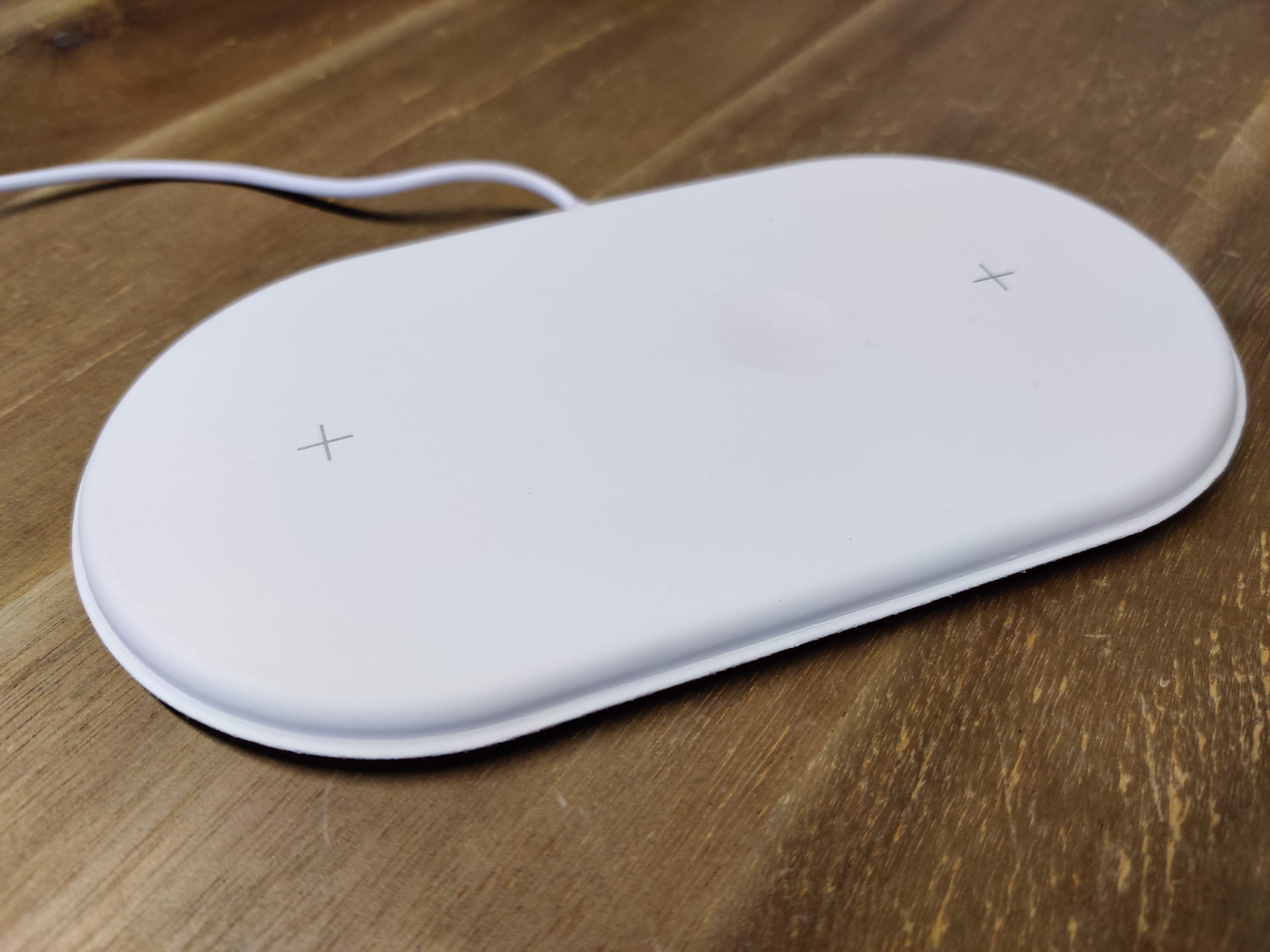
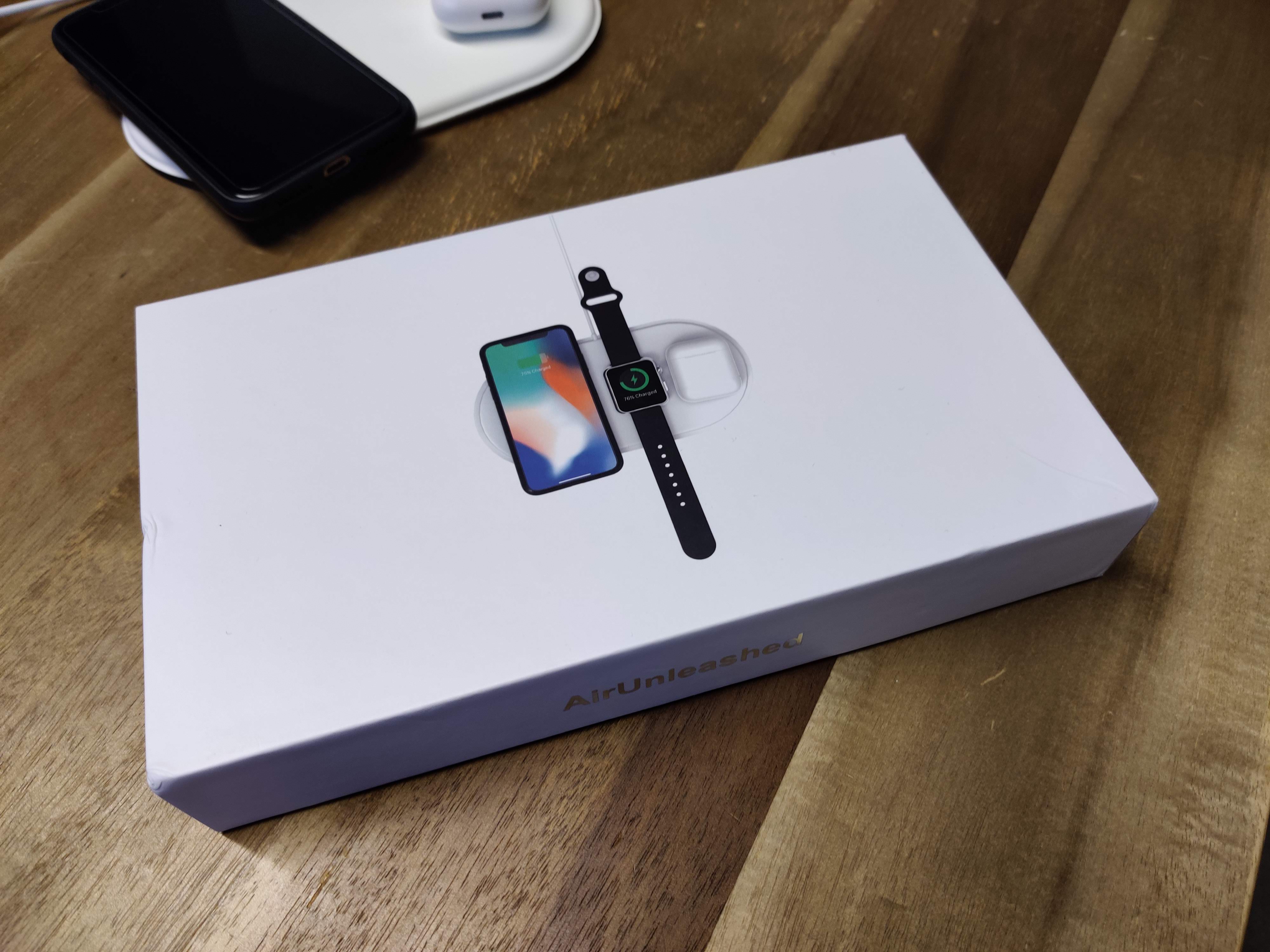
AirUnleashed is pretty shameless in its approach, right down to a minimalist white box that takes more than a few cues from the Cupertino design department. That’s doubly the case with the pad itself, which retains the same pill-shaped form factor, albeit with an off-white (cream? ivory?) coloring.

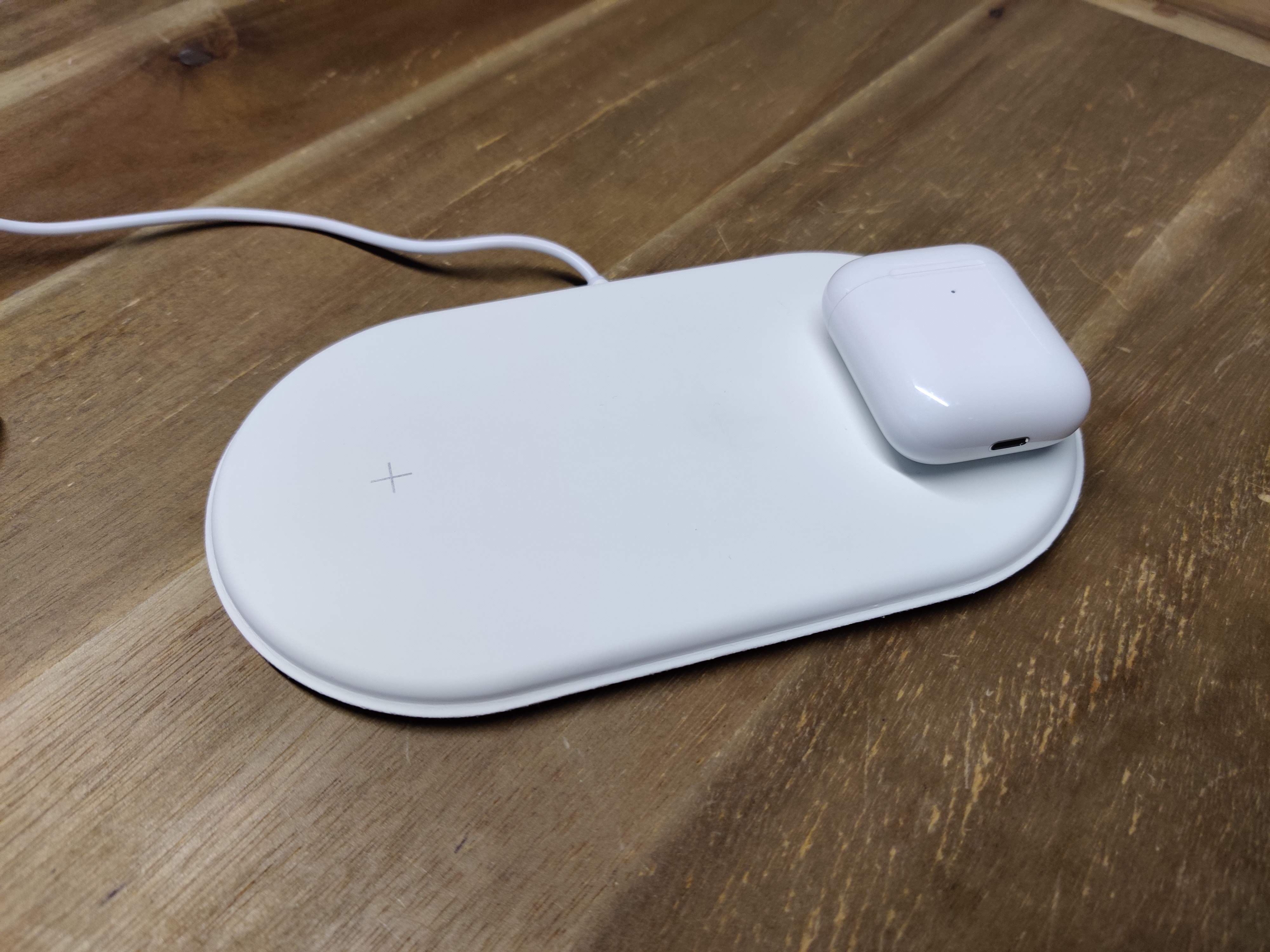
There are also two plus symbols flanking a small concave circle. The product’s designers designated three distinct spots for the three Apple products (iPhone, Apple Watch and AirPods). Rather than the numerous overlapping charging coils AirPower was said to have, this one sports three, with different wattages for the different devices (7.5, 2 and 5, respectively).

You can use these interchangeably to some degree, but for all sorts of reasons, it’s best to use the allotted wattage for the device category intended. Because the device uses the Qi standard, however, it’s compatible with a pretty broad array of wireless devices.

Both the iPhone and AirPods 2 started charging as soon as I placed them on the pad. The Apple Watch was a no go. I reached out to the company about that one — turns out it required updating to the last version of watchOS, which did seem to fix the issue. The fact that the pad just sports the three coils means you’ve got the position the devices correctly, and even after the OS update, I still had trouble getting the watch in the right spot.

At $99, it’s $50 cheaper than the rumored AirPower price. Weirdly, that doesn’t factor in the price of a wall charger, which is going to set you back another $14 if you decide to go with AirUnleashed’s version. Though given the fact that you’re already dealing with an Apple knockoff, I don’t see why you would.

A cursory look at Amazon finds a number of other AirPower-esque charging pads at a fraction of the price, and all appear to use a similar three-coil solution. I can’t vouch for those, but after a few hours, at least, AirUnleashed seems to be working reasonably well.

An open letter to Google and Apple: Stop hindering Iranian entrepreneurs

Mike Davis
Contributor

Mike Davis is an American-Iranian serial entrepreneur in industries as wide ranging as IT consulting, residential contracting, diaper delivery, student loans and a new long-horizon private equity firm.

To the executives of Google and Apple:

I am Persian. In 1979, when I was just two years old, revolution upended Iran and permanently altered the country’s foundation. His vocation as an academic made my father a direct target of the new regime, and so — like so many other families — we fled Iran and began again in the United States. That was exactly 40 years ago. Today, I am a father, a husband and an entrepreneur with a deep love of America, but I think often of the country to which I have still been unable to return.

Iran is a land of strong-willed people. It is a land of grit and of hard-earned success. I see that most clearly in its emergent generation of entrepreneurs, birthed from the country’s 30+% unemployment rates. If you’ve been paying attention, you’ll know that Iran’s entrepreneurship sector is skyrocketing; in 2018 alone, the country moved up 13 spots on the Global Entrepreneurship Index. And the goals driving these new businesses are equally as impressive — things like improving women’s education, sustainability, urban waste management, advocacy of the arts. Forbes has said that Iran could become an entrepreneurial powerhouse, “if nothing gets in the way.” Unfortunately, Google and Apple are doing just that.

Two years ago, under the guise of complying with American sanctions against Iran — sanctions that have existed for decades — Apple started removing Iranian apps from its platform. Today, the App Store is completely unavailable to Iranians. Google’s Play Store followed suit. Access to software systems can be (and regularly is) cut off without notice, like Google’s Firebase, a platform for creating push notifications. For young businesses, these programs can be the difference between life and death, function and failure.

Take away my toolbox and ask me to be a carpenter; this is what you ask of them.

As many people much smarter than me have pointed out — like The New York Times’ Thomas Erdbrink and Vindu Goel — the timing of these decisions doesn’t make much sense, and neither does the reasoning behind it. Take DigiKala for example, one of Iran’s biggest e-commerce sites, or Snapp and Delion, Iran’s wildly popular cab-hailing and food delivery apps, respectively. These companies, along with almost every single one of Iranian app creators, transferred to an internal payment system called shaparak in early 2017 in order to comply with U.S. sanctions against online business transactions. But it turned out this was all for naught: less than six months later, Apple removed them all from the App Store.

As a serial entrepreneur myself, I identify with these young app developers. Like me, they have ideas. Like me, they execute. But unlike me, they are profoundly and increasingly disadvantaged by an entrepreneurial environment that restricts them right from the get-go and denies them a viable marketplace. As a result of Google and Apple’s actions, they are required to operate as entrepreneurs without the resources innately necessary for the job. Take away my toolbox and ask me to be a carpenter; this is what you ask of them.

Admittedly, you are not solely to blame. Much of this is a political game being played high above our heads. But your decision has a distinctly human impact. It is a direct threat to the livelihoods of tens of thousands of young people in Iran. As leaders in your industry, you have both the capacity and the responsibility to correct this practice. Your potential for impact here is substantial, and the same is true of Iranian entrepreneurs if they have the right tools — tools that you can and must provide. So what is a credible first step? Let’s start with an open conversation. Let’s sit down at a table together and brainstorm ways to align our interests, American executives and Iranian entrepreneurs alike.

There’s a concept called homophily. It posits that we as humans build networks with those similar to ourselves. It’s the very foundation of our species. Take a minute to remember your roots and I think you’ll see some similarities between Iran’s entrepreneurs and your own founders. What would our world look like today, if Larry Page, Sergey Brin and Steve Jobs never got their shot?

Atlassian’s co-CEO Scott Farquhar will join us at TC Sessions: Enterprise

Few companies have changed the way developers work as profoundly as Atlassian. Its tools like Jira and Confluence are ubiquitous, and over the course of the last few years, the company has started to adapt many of them for wider enterprise usage outside of developer teams.

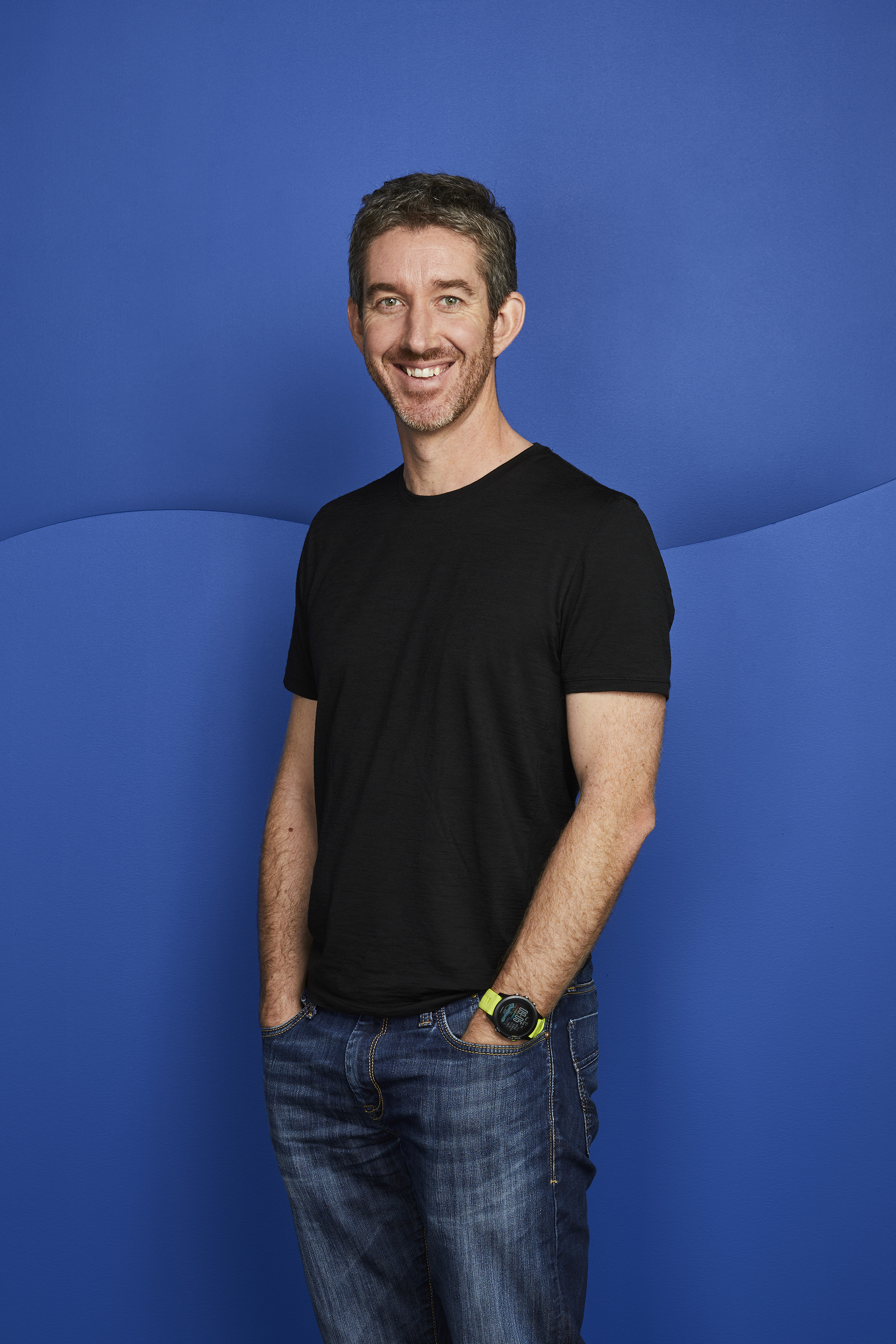
To talk about Atlassian’s story from being a small shop in Australia to a successful IPO — and its plans for the future — the company’s co-founder and co-CEO Scott Farquhar will join us at our inaugural TechCrunch Sessions: Enterprise event on September 5 in San Francisco.

Farquhar co-founded Atlassian with Mike Cannon-Brookes, in 2001. It wasn’t until 2010, though, that the company raised its first major venture round ($60 million from Accel Partners). Even by that point, though, the company already had thousands of customers and a growing staff in Sydney and San Francisco.

Today, more than 150,000 companies use Atlassian’s tools. These range from the likes of Audi to Spotify, Twilio and Visa, with plenty of startups and small and medium businesses in between.

It’s no secret that Farquhar and Cannon-Brookes consider themselves accidental billionaires, so it’s maybe no surprise that in 2015, ahead of Atlassian’s successful IPO that valued it at well above $10 billion, he also signed on to the 1% Pledge movement.

Today, Farquhar also makes his own venture investments as part of Skip Capital, which he co-founded.

TC Sessions: Enterprise (September 5 at San Francisco’s Yerba Buena Center) will take on the big challenges and promise facing enterprise companies today. TechCrunch’s editors will bring to the stage founders and leaders from established and emerging companies to address rising questions, like the promised revolution from machine learning and AI, intelligent marketing automation and the inevitability of the cloud, as well as the outer reaches of technology, like quantum computing and blockchain.

Tickets are now available for purchase on our website at the early-bird rate of $395; student tickets are just $245.

We have a limited number of Startup Demo Packages available for $2,000, which includes four tickets to attend the event.

For each ticket purchased for TC Sessions: Enterprise, you will also be registered for a complimentary Expo Only pass to TechCrunch Disrupt SF on October 2-4.

Careteam aims to unite patients and healthcare providers with a platform approach

How best to untangle the Gordian knot that is navigating your own healthcare? It’s a tricky question, and one that seems to have become only more complicated as technology improves, in many regards — systems don’t necessarily speak to one another, and it’s still hard for an ordinary patient without specialist knowledge to make sense of everything. Careteam is a Canadian startup hoping to address that, looking to replicate the kind of advances made possible by technology in industries like e-commerce and enterprise software.

Careteam co-founder and CEO Dr. Alexandra Greenhill has experienced the frustration of being a tech-savvy person in a world of healthcare that can seem technologically inept — both as a practicing GP and as someone who depends on the healthcare system as a patient and a relative of patients with more sophisticated medical needs.

“I spent more than 15 years innovating within the healthcare system,” Greenhill told me in an interview. “I computerized hospitals, helped doctors adopt electronic medical records and other types of innovation practices. And then for the last eight years, I’ve been in tech, trying to figure out how to build the kind of technology we need in health, and especially digital health.”

All that experience led Greenhill to the realization that while there were many companies building specific solutions for real, but relatively narrow problems, that didn’t reflect how most people experienced care. Greenhill and her team of three other co-founders (Jeremy P. Smith, Robert I. Atwell and Kevin Lysyk) had all had unfortunate, but eye-opening experiences with family members in need of treatment for major diseases.

“You step in and you discover that cancer care, palliative care, post-surgical care — there’s so many things that would have gone wrong if we didn’t have the expertise ourselves,” Greenhill said. “But in the meantime, you end up being sort of pulled into multiple directions and saying ‘this makes no sense.’ You know, I can purchase stuff online in my private life; I can use all kinds of tools in the business world, and yet it’s back to paper and voice in health, which matters most.”

Careteam CEO and founder Dr. Alexandra Greenhill

What Careteam provides is collaboration for care — true collaboration, designed to span patients, their doctors and other healthcare pros, their families and anyone who matters to them in the course of pursuing their care. It provides the ability to communicate instantly, build care plans that integrate all aspects of their tailored health plans, receive custom-configurable notifications and measure progress toward specific goals set by patient and healthcare providers.

Part of the reason this process has become opaque or difficult is precisely due to innovation: Greenhill takes issue with the prevailing narrative that the healthcare industry is somehow allergic to innovation.

“There’s this sort of perception that healthcare doesn’t innovate, but it’s also almost insulting to the healthcare system, because we have innovated — we save people from cancer, where we couldn’t,” she noted. “We cure HIV, in some cases, and we prevent it from being transmitted to unborn babies of mothers with full-blown AIDS and things that in my working lifetime were impossibilities; it was science fiction to help someone with HIV. And, and we’ve managed to do all of that, and it’s a success story. We’ve created complexity, we’ve created people who live with 12 conditions for many, many years and take complicated drug regiments.”

In addition to advances in treatment, Greenhill notes that she and her team couldn’t have build Careteam five years ago, because cloud storage wasn’t secure and everything had to be done on a site-specific instance, and that would’ve been cost-prohibitive to build. In other words, technology has been applied to, and vastly improved, healthcare overall, regardless of the general perception of the industry as an innovation laggard.

That’s why Greenhill’s startup doesn’t shy away from complexity — they embrace it. Careteam is designed not to try to normalize and standardize the varied and highly specialized landscape of healthcare solutions and providers through anything like a one-size-fits-all API. Instead, the company’s tech development is cleverly designed to be flexible when it comes to integrations.

“We collectively spent $1.9 billion in Canada, to try and digitize the healthcare system, create standards and create some exchange between data,” Greenhill said. “The NHS tried the same, big U.S. hospital systems have created their own little sort of islands, including Kaiser and Mayo and others. And the conclusion of all of that is standardization in healthcare just doesn’t seem to catch on.”

Careteam’s approach has been instead to integrate specific clinics, and let practitioners and patients derive benefits and help spur the adoption of the platform to their companion organizations and clinics. It’s a sort of rhizomatic approach that starts with a node central to a patient’s care and spreads through the healthcare professionals and members of the patient’s support network that the product helps. And integration is made possible without technical demands on the part of partners thanks to the work of CTO Lysyk, according to Greenhill.

The Vancouver-based startup is working with the Centre for Aging + Brain Health in Toronto, Ontario in a validation program announced last year, and also raised a seed round of funding this time last year, led by BCF Ventures with participation from Right Side Capital, Globalive Capital, Atrium Ventures, and angels Barney Pell and Ajay Agarwal .

For pen testing firm IOActive, security is cultural not transactional

IOActive may not be a household name but you almost certainly know its work.

The Seattle-headquartered company has been behind some of the most breathtaking hacks in the past decade. Its researchers have broken into in-flight airplanes from the ground and reverse engineered an ATM to spit out gobs of cash. One of the company’s most revered hackers discovered a way to remotely shock a pacemaker out of rhythm. And remember that now-infamous hack that remotely killed the engine of a Jeep? That was IOActive, too.

If it’s connected, they will bet that they can hack it.

IOActive has made a name for itself with its publicly reported findings, but its bread and butter is helping its corporate customers better understand how they approach security.

Since its founding more than two decades ago, the penetration testing and ethical hacking company now serves customers mostly in the Global 1000 largest companies to help assess and test their security posture.

“You can have the absolute most sophisticated alarm in the entire world, and I guarantee our team can break in,” said Jennifer Steffens, IOActive’s chief executive, in a call with TechCrunch. “But if you left your front door unlocked lock, hackers are going to walk right through”

“Don’t pay us to show you how to break into the alarm before someone learns how to lock the door,” she said.

Probably Genetic helps families identify genetic conditions early with AI and DNA tests

Children on the autism spectrum often suffer from other medical conditions. As many as one-fifth of those diagnosed with the neurodevelopmental disorder, which affects communication and behavior, have epilepsy, for example, according to research on the subject.

Probably Genetic, which recently graduated from the startup accelerator Y Combinator, wants to test the DNA of children with autism to provide them early diagnoses of more than 15 severe genetic diseases that are often grouped under the initial autism diagnosis. Using machine learning and direct-to-consumer DNA tests, Probably Genetic hopes to provide families of children on the spectrum with more complete and correct diagnoses and a path to appropriate treatment and therapy.

“There is really low awareness still in the medical community for a lot of these diseases,” Probably Genetic co-founder and chief executive officer Lukas Lange tells TechCrunch. “The actual testing happens really really late in the process … Even once you decide that you want to get your kid genetically tested, that process itself is really difficult because if you don’t have a physician in favor of it, patients spend months lobbying to get the test done.”

The startup, which plans to launch this summer, is backed with venture capital funding from Khosla Ventures, TenOneTen Ventures, the Oxford Angel Fund and angel investors. Lange, a current PhD candidate in bioinformatics and genetics at the University of Oxford, said the company is keeping the precise amount of capital they’ve raised private, citing a focus on building the best service for special needs families.

“We measure ourselves by how many families we’ve helped, as opposed to how much money we’ve raised,” Lange said.

Unlike 23andMe, which similarly provides genetic testing direct-to-consumer, Probably Genetic is patient-initiated physician-ordered testing, meaning a physician is in the loop throughout the entire process and a DNA test must be deemed “medically necessary” by a Probably Genetic physician — the company partners with several doctors — before it can be ordered.

Probably Genetic performs whole-exome sequencing, a process that can cost upwards of $5,000, to test for genetic disorders in children already diagnosed with autism. Lange said the team is still determining the price of its genetic tests, but assures it will fall under $1,000, or significantly less than other options on the market. Unfortunately, the tests will not be covered by insurance.

The company doesn’t perform genetic sequencing in-house, rather, it partners with a U.S.-based clinical sequencing provider accredited by the College of American Pathologists (CAP) and certified through Clinical Laboratory Improvement Amendments (CLIA). Probably Genetic also partners with a bioinformatics service provider that’s plugged into the lab for data analysis purposes.

Parents of children with autism oftentimes have difficulty having their children tested, as Lange mentioned. Not only are these tests costly and infrequently covered by insurance, but they are also not offered by general care practitioners. A family has to receive a referral from their doctor to visit a specialist who will then have the test ordered. Using Probably Genetic, Lange and his co-founder, chief technology officer Harley Katz, hope to create a one-stop shop for complete and early diagnoses, access to genetic counseling services, and information and resources for families of people on the spectrum.

The genetic counseling services, which exist to help families better understand the results of their genetic tests, will be offered through an external service provider initially. In the long-term, Lange said, Probably Genetic will consider hiring their own full-time counselors.

Lange met Katz, a PhD in theoretical astrophysics from the University of Cambridge, six years ago. The pair quickly realized a common interest in accurate diagnosis, or lack thereof, before they decided to focus on autism and its associated conditions.

“We initially thought we are going to build a catch-all for 7,000 different rare diseases,” Lange said. “Pretty quickly we realized a whole lot of people coming to your door have undiagnosed diseases but not all are genetic in nature so if you try to build a catch-all you wouldn’t be able to help a lot of people. So we decided let’s focus on one area that has a much higher likelihood that the patients that come through your door actually have something genetic.”

According to a 2018 report from the Center for Disease Control and Prevention, one in 59 children is diagnosed with autism. Boys are four times more likely to be diagnosed than girls.

“There’s a big opportunity here to focus on a category that we know already genetics plays a huge role but still an opportunity to find kids who don’t ‘just have autism’ but where there is actually something bigger at play and autism is only a part of their disease presentation.”


Tesla is turning its showrooms into arcades

Tesla might not engage in traditional advertising. That doesn’t mean the automaker isn’t keen on getting new customers and retaining the ones it already has.

Most of Tesla’s methods have focused on leveraging its existing customer base to attract new buyers. And that strategy has continued. This time, the company is turning its showrooms into arcades and inviting owners to bring their family and friends to try it out through June 30.

Tesla sent out an email earlier Tuesday with the promotion that invites people “to experience the new Tesla Arcade.” People who are interested are asked to RSVP to their local showrooms via this link.

The showroom promotion — and a video posted Tuesday on Twitter and Instagram showcasing its newest game, Beach Buggy Racing 2 — is part of a bigger push to draw attention to one of Tesla’s funner features — an arcade app. The app is a bundle of games that were first added last August via a software update. The initial games included Missile Command, Asteroids, Lunar Lander and Centipede.

The video games can be accessed through the touchscreen and played if the vehicle is in park. Games now include Atari Missile Command, Asteroid and kart-racing game Beach Buggy Racing 2, which started rolling out Tuesday.

Your next charging session is going to be SO ? MUCH ? FUN ? pic.twitter.com/5YzSL36kCC

— Tesla (@Tesla) June 18, 2019

Other games have been added since the initial rollout, including 2048 and Atari’s Super Breakout. The company has also created a new “toybox,” basically an easy-to-find location on the display where all the games are housed.

Todd Howard, the director of Bethesda Games, said last week in an interview with CEO Elon Musk at E3 that the company’s “Fallout Shelter” game could be coming to Tesla displays.

VidAngel ordered to pay $62.4M for copyright infringement

The VidAngel story seemingly ended in late 2017 when it declared Chapter 11 bankruptcy. But the bad news wasn’t over for the streaming service, which promised to edit all of the dirty bits out of other people’s films.

This week a federal jury in California ordered the Provo, Utah-based startup to pay $62.4 million to studios over copyright infringement. That amounts to $75,000 per film, paid out to studios including Disney and Warner Bros.

“The jury today found that VidAngel acted willfully,” the studios said in a statement issued after the ruling, “and imposed a damages award that sends a clear message to others who would attempt to profit from unlawful infringing conduct at the expense of the creative community.”

VidAngel CEO Neal Harmon is naturally not thrilled with this latest bit of bad news for a site purporting to offer sanitized versions of popular films. The executive promised to fight back with an appeal.

“We disagree with today’s ruling and have not lessened our resolve to save filtering for families one iota,” Harmon said in the company’s own statement. “VidAngel plans to appeal the District Court ruling, and explore options in the bankruptcy court. Our court system has checks and balances, and we are pursuing options on that front as well.”

VidAngel’s primary streaming offering shut down in late 2016, but the startup continues to operate a service for skipping “unacceptable” parts from Netflix and Amazon Prime.

YouTube’s new AR Beauty Try-On lets viewers virtually try on makeup while watching video reviews

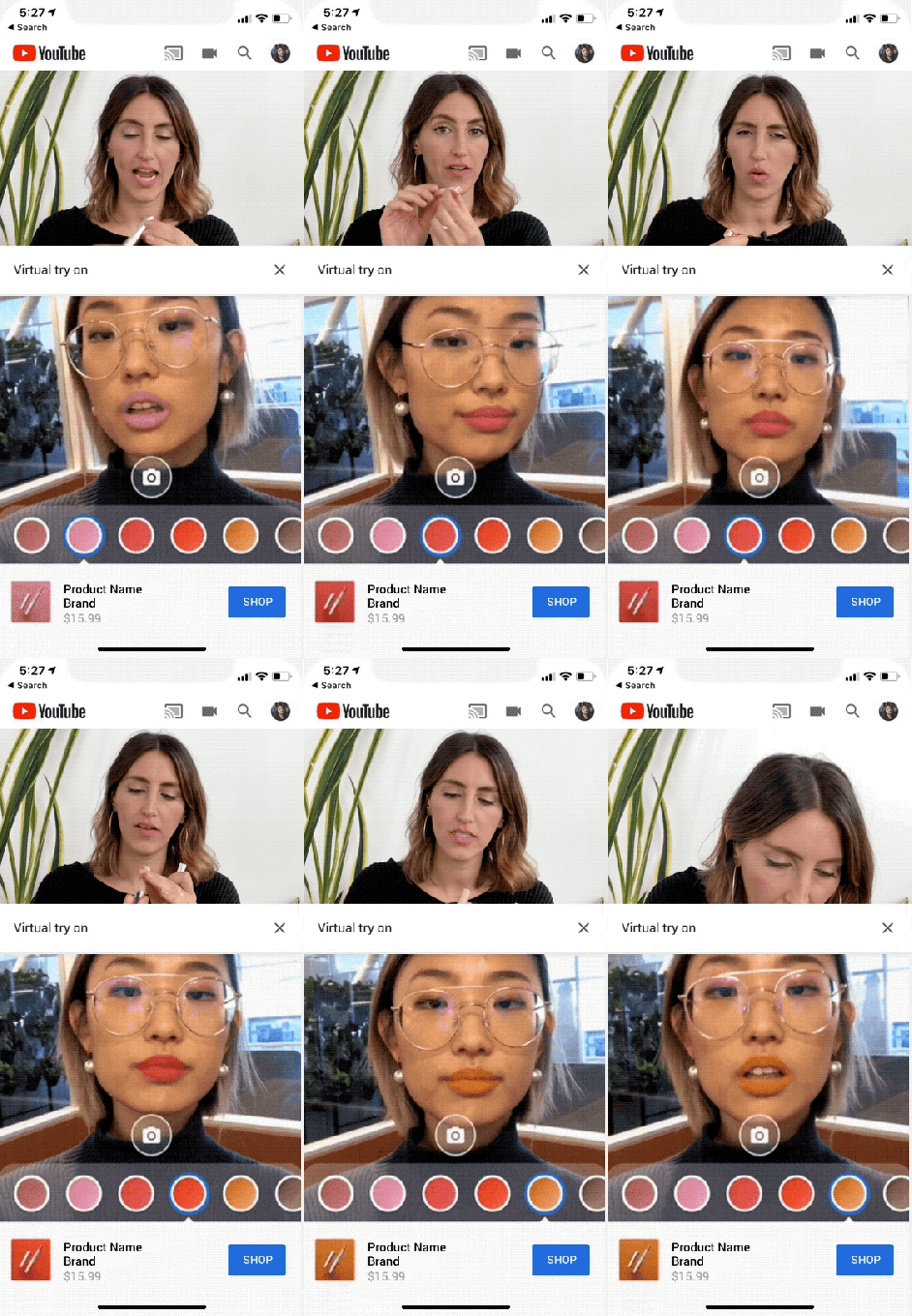
Makeup tutorials and reviews are some of the most popular content on YouTube, as they help people learn about new products as well as how to apply them. YouTube is now kicking that experience up a notch with the introduction of a new AR feature for virtual makeup try-on right from the YouTube app. Called AR Beauty Try-On, the feature is designed to be used in a split-screen experience while YouTube viewers watch the makeup tutorial.

When available, the YouTube makeup review or tutorial video plays at the top of the screen, with a stream from your own front-facing camera below. Here, a YouTube viewer could access a palate of colors — like new lipstick shades, for example — and tap to apply them to their own face while the video plays above.

The feature is currently in the very early stages of development — alpha testing — and is being offered to YouTube creators through Google’s in-house branded content program, FameBit. Through this program, brands are connected with YouTube influencers who market their products through paid sponsorships.

YouTube says it already tested AR Beauty Try-On with several beauty brands, and found that 30% of viewers chose to activate the experience when it was available in the YouTube iOS app. While that’s not a majority by any means, those who did try the feature were fairly engaged, spending more than 80 seconds trying on the virtual lipstick shades.

M·A·C Cosmetics is the first brand to launch an AR Beauty Try-On campaign, which includes the ability for the brand to see real-time results from the try-on activity.

AR Beauty Try-On is the latest of several AR initiatives from Google, including also the recent launch of AR in Google Search and updates to its developer platform ARCore.

However, Google is not the first to offer a virtual makeup try-on experience. Beyond the fun makeup filters in various social networking apps, there are a number of AR beauty apps offering a similar experience to YouTube’s AR Beauty Try-On, including YouCam Makeup, Sephora’s Virtual Artist, Ulta’s GLAMLab and others. L’Oréal also offers Live Try-On on its website, and partnered with Facebook last year to bring virtual makeup to the site. Target’s online Beauty Studio also offers virtual makeup across a number of brands and products.

The difference with YouTube’s AR Try-On is that it’s really more about offering an AR-powered ad campaign, not just a fun consumer product or a tool for on-site e-commerce conversions.

The AR ad format launch is one of several new ad products Google announced today.

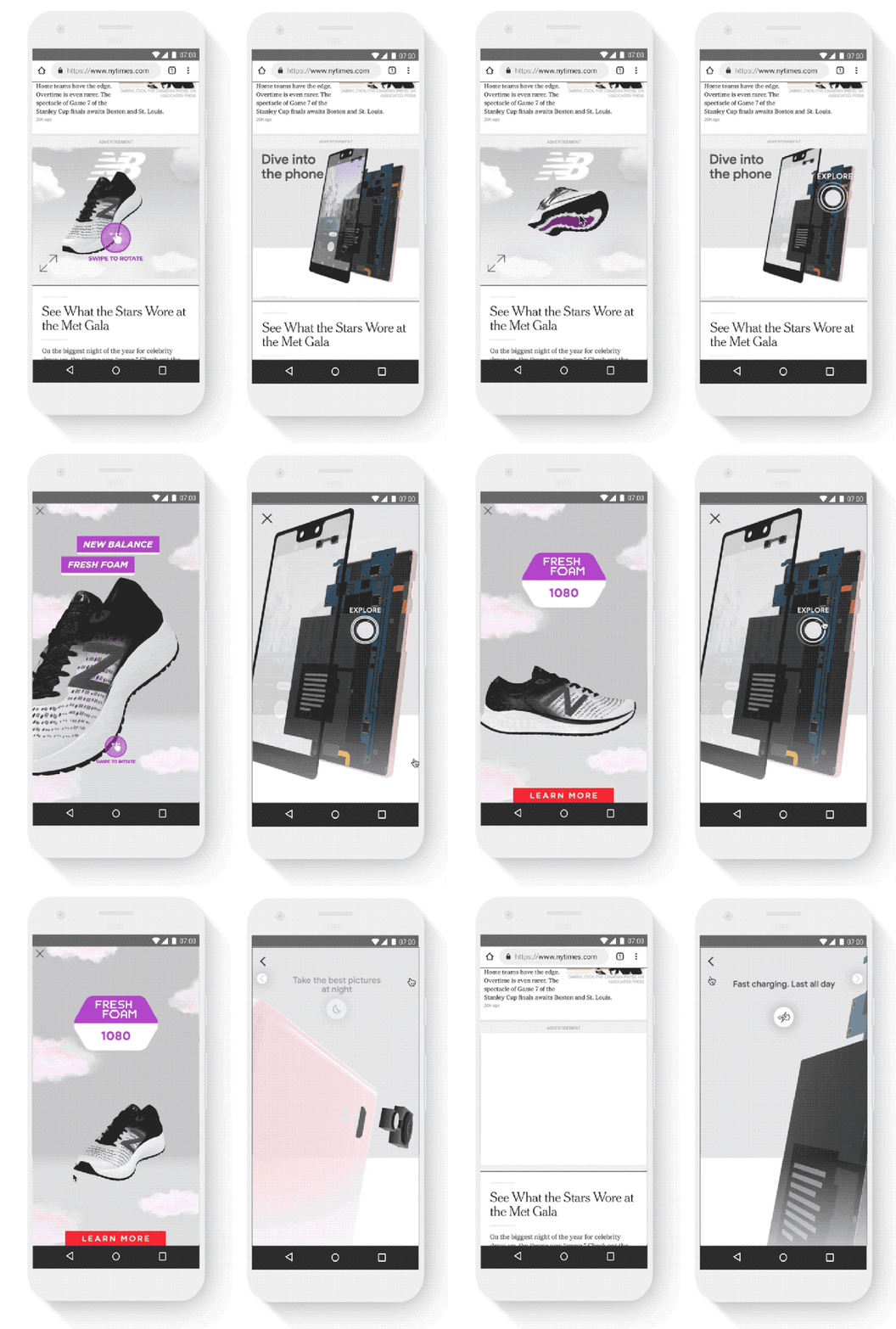
The company is also introducing a new immersive display format called Swirl for the mobile web that lets consumers view products in a 360 format. Swirl allows for rotating a product, zooming in and out, or playing an animation.

The format is only available through Display and Video 360, says Google. Brands will be able to use a new editor on Google’s 3D platform Poly to create their Swirl display ads. If they already have 3D assets, they can build a Swirl ad using the 3D/Swirl component in Google Web Designer instead.

Perfume maker Guerlain is using Swirl for ads that animate to capture consumers’ attention.

Another new format in Display & Video 360 lets brands run their YouTube live stream content in display ads, which can also be built with Google Web Designer.

The new tools will be available to brands and advertisers this summer, Google says.

Fresh off a $2.65B valuation, Plaid co-founder William Hockey is leaving

William Hockey, co-founder, chief technology officer and president of the fast-growing fintech business Plaid, will step down next week, TechCrunch has learned.

The former Bain associate (pictured above left) co-founded the startup in 2012 alongside chief executive officer Zach Perret. Today, the San Francisco-based company employs 300 with additional offices in Salt Lake City and New York.

Plaid has confirmed the news, stating that Hockey will remain on the company’s board of directors.

“This conclusion was neither a rash nor a recent decision,” Hockey writes in a blog post shared with TechCrunch. “Over the past couple of years, I have known that there would come a point at which I would choose to move to a purely strategic and advisorial role.”

Most companies should be constantly running running at least one exec search. Post-product/market fit, the limiting factor to scale generally derives from some version of not having enough great leaders.

— Zachary Perret (@zachperret) June 18, 2019

Plaid builds infrastructure that allows consumers to interact with their bank account on the web, powering a number of third-party applications, like Venmo, Robinhood, Coinbase, Acorns and LendingClub. It rose to prominence recently, closing a $250 million Series C investment at a $2.65 billion valuation late last year. The deal was led by famed venture capitalist and author of the Internet Trends report Mary Meeker, who’s joined the startup’s board of directors.

In total, Plaid has secured $310 million in venture capital funding from Andreessen Horowitz, Index Ventures, Norwest Venture Partners, Coatue Management, Goldman Sachs, NEA, Spark Capital and others.

Plaid has integrated with 15,000 banks in the U.S. and Canada and says 25% of people living in those countries with bank accounts have linked with Plaid through at least one of the hundreds of apps that leverage Plaid’s application program interfaces (APIs) — an increase from 13% last year. Last month, the company launched its fintech platform in the U.K.

“As we’ve done in the U.S., Plaid will become the foundation for that growth by providing access to a financial network that allows developers to deliver the experience users expect from their financial apps,” the company wrote in a blog post.

TechCrunch participated in a panel discussion with Hockey and Brex CEO Henrique Dubugras last month, in which Hockey gave no indication of impending plans to leave the business. In fact, taking off just as Plaid amps up its global expansion efforts and accelerates growth is strange timing for a founder to depart.

Oftentimes, when a startup co-founder steps down from the C-suite, it’s to make room for a more experienced executive to lead the company through periods of fast growth. Recently, for example, Lime announced its co-founder Toby Sun would transition out of the CEO role to focus on company culture and R&D. Brad Bao, a Lime co-founder and longtime Tencent executive, assumed chief responsibilities.

Other times, it comes amid turmoil. Mike Cagney’s departure from SoFi, of course, is an example of this. One month after reports of a sexual harassment and wrongful termination lawsuit against the online lending business surfaced, SoFi announced Cagney would step down.

In Hockey’s case, the move was planned and calculated, he said. Plaid chief operating officer Eric Sager, who joined earlier this year, Perret and other executives will take over engineering and product reports, among Hockey’s other responsibilities.

“In tech, it has historically been taboo to talk about founders or executives transitioning to different roles inside companies,” Hockey writes. “Leadership transitions need to become a bedrock of any company that desires to endure across decades.”