BMW’s EV concept gets Blade Runner-style sound

BMW Vision M NEXT, the electric vehicle concept that had its world debut June 25, won’t be in showrooms anytime soon, if ever. But let’s hope the sound of the vehicle, which was created by famous film score composer Hans Zimmer and Renzo Vitale, an acoustic engineer and sound designer at the BMW Group, makes into the automaker’s next line of vehicles.

Sure, electric vehicles are silent. They don’t need to sound like a vehicle with an internal combustion engine. And this concept doesn’t. But it could be a fun add-on feature that drivers could opt to turn on or off.

Earlier this month, BMW promoted Zimmer’s role in shaping the sound for the Vision M NEXT concept and possibly its next-generation of electric vehicles. It wasn’t clear what the concept sounded like because the video released at the time made it difficult to pick out the noise of electric vehicle against the background music.

Now, BMW has added a webpage where visitors can get a closer look into the futuristic car. People can 3D print a smaller version of the vehicle thanks to a free STL file. They can download wallpaper. Or they can listen to the sound that Zimmer created for the Vision M NEXT.

The video file below plays a recording of what the BMW Vision M NEXT sounds like when it accelerates in “Boost+ Mode.”

The beginning of the track sounds a lot like the THX opener that plays in movie theaters right before a film and then transitions to a pop — that’s the boost — and continues to build into a high pitch that evokes a feeling of speed.

It’s reminiscent of Blade Runner — and that’s a good thing.

The vehicle, which debuted at the NEXTGen event in Munich, is meant to should show where the automaker is headed in terms of design, electric vehicle plans and technology like its next generation adaptive cruise control system, which will be able to detect and automatically stop at red lights.

BMW customers can expect the next generation of electric vehicles to come with special acoustics meant to mimic the feeling a driver might get when they’re behind an M5 or other BMW with an internal combustion engine. And it appears BMW’s next slate of electric vehicles could arrive sooner than originally planned.

The automaker announced at the NEXTGen event that it’s running ahead of schedule in its efforts to produce least 25 electrified vehicles. BMW, which was aiming for 2025, now says that it will offer these 25 vehicles by 2023.

Unregulated facial recognition technology presents unique risks for the LGBTQ+ community

Carlos Gutierrez
Contributor

Carlos Gutierrez is deputy director and general counsel at LGBT Tech.

It seems consumers today are granted ever-dwindling opportunities to consider the safety and civil liberties implications of a new technology before it becomes widely adopted. Facial recognition technology is no exception. The well-documented potential for abuse and misuse of these tools built by giant and influential companies as well as government and law enforcement agencies should give serious pause to anyone who values their privacy – especially members of communities that have been historically marginalized and discriminated against.

The cavalier attitude toward unregulated surveillance tools demonstrated by some law enforcement and other local, state, and federal government entities seem to reinforce the notion that forfeiting your personal data and privacy for greater convenience, efficiency, and safety is a fair trade. For vulnerable communities this could not be further from the truth. Without proper oversight, facial recognition technology has the potential to exacerbate existing inequalities and make daily life challenging and dangerous for LGBTQ+ individuals.

Biometric data can provide a uniquely intimate picture of a person’s digital life. Skilled and persistent hackers seeking to exploit access to an individual’s messages on social media, financial records, or location data would view the information collected by facial recognition software as a particularly valuable and worthwhile target, especially as biometric data has become increasingly popular as a form of authentication.

Without proper privacy protections in place, data breaches that target facial recognition data may become far more likely. In the wrong hands, a person’s previously undisclosed sexual orientation or gender identity can become a tool for discrimination, harassment, or harm to their life or livelihood.

The risks to transgender, nonbinary, or gender non-conforming individuals is even more acute.  Most facial recognition algorithms are trained on data sets designed to sort individuals into two groups – often male or female. The extent of the misgendering problem was highlighted in a recent report that found that over the last three decades of facial recognition researchers used a binary construct of gender over 90 percent of the time and understood gender to be a solely physiological construct over 80 percent of the time.

Consider the challenge – not to mention emotional toil – for a transgender individual trying to catch a flight who is now subject to routine stops and additional security screening all because the facial recognition systems expected to be used in all airports by 2020 are not built to be able to reconcile their true gender identity with their government issued ID.

Members of the LGBTQ+ community cannot shoulder the burden of lax digital privacy standards without also assuming unnecessary risks to their safety online and offline. Our vibrant communities deserve comprehensive, national privacy protections to fully participate in society and live without the fear that their data – biometric or otherwise – will be used to further entrench existing bias and prejudice.

Our communities face the challenge of trying to protect themselves from rules that neither they, or the people implementing them, fully understand. Congress must act to ensure that current and future applications for facial recognition are built, deployed, and governed with necessary protections in mind.

This is why LGBT Tech signed on to a letter by the ACLU, along with over 60 other privacy, civil liberties, civil rights, and investor and faith groups to urge Congress to put in place a federal moratorium on face recognition for law enforcement and immigration enforcement purposes until Congress fully debates what, if any, uses should be permitted.

Given the substantial concerns, which representatives on both sides of the aisle recognized at a recent hearing, prompt action is necessary to protect people from harm.  We should not move forward with the deployment of this technology until and unless our rights can be fully safeguarded.

Rocket Lab successfully launches seventh Electron rocket for ‘Make It Rain’ mission

Private rocket launch startup Rocket Lab has succeeded in launching its ‘Make It Rain’ mission, which took off yesterday from the company’s private Launch Complex 1 in New Zealand. On board Rocket Lab’s Electron rocket (its seventh to launch so far) were multiple satellites flow for various clients in a rideshare arrangement brokered by Rocket Lab client Spaceflight.

Payloads for the launch included a satellite for Spaceflight subsidiary BlackSky, which will join its existing orbital imaging constellation. There was also a CubeSat operated by the Melbourne Space Program, and two Prometheus satellites launched for the U.S. Special Operations Command.

Rocket Lab had to delay launch a couple of times earlier in the week owing to suboptimal launch conditions, but yesterday’s mission went off without a hitch at 12:30 AM EDT/4:30 PM NZST. After successfully lifting off and achieving orbit, Rocket Lab’s Electron also deployed all of its payloads to their target orbits as planned.

Later this year, Rocket Lab hopes to have a second privately owned launch complex fully constructed and operational, located in Virginia on Wallops Island. The company, founded by engineer Peter Beck, intends to be able to serve both U.S. government and commercial missions as frequently as monthly from this second launch site.

Startups Weekly: What’s next for WeWork?

Hello and welcome back to Startups Weekly, a weekend newsletter that dives into the week’s noteworthy startups & venture capital news. Before I jump into today’s topic, let’s catch up a bit. Last week, I wrote about scooter companies struggling to raise cash. Before that, I noted my key takeaways from Recode + Vox’s Code Conference in Scottsdale, Arizona.

Remember, you can send me tips, suggestions and feedback to [email protected] or on Twitter @KateClarkTweets. If you don’t subscribe to Startups Weekly yet, you can do that here.

I’m sure you’re familiar with the co-working behemoth WeWork at this point but if not, here’s a quick primer: The real estate business posing as a “tech startup” offers office spaces to individuals and companies across thousands of co-working spots scattered across the globe.

Led by an eclectic chief executive by the name of Adam Neumann, WeWork made headlines this week after announcing its acquisition of building access app Waltz. The deal represents WeWork’s third M&A transaction of 2019, following that of spatial analytics platform Euclid and office management system Managed By Q. As is often the case, WeWork didn’t disclose terms of the deal.

In the last few years, WeWork has acquired nearly a dozen startups, making it one of the most — if not the most — acquisitive unicorn in the valley. Those acquisitions, a revolving door of venture capital investment and an eventual IPO are all part of WeWork’s world domination plan.

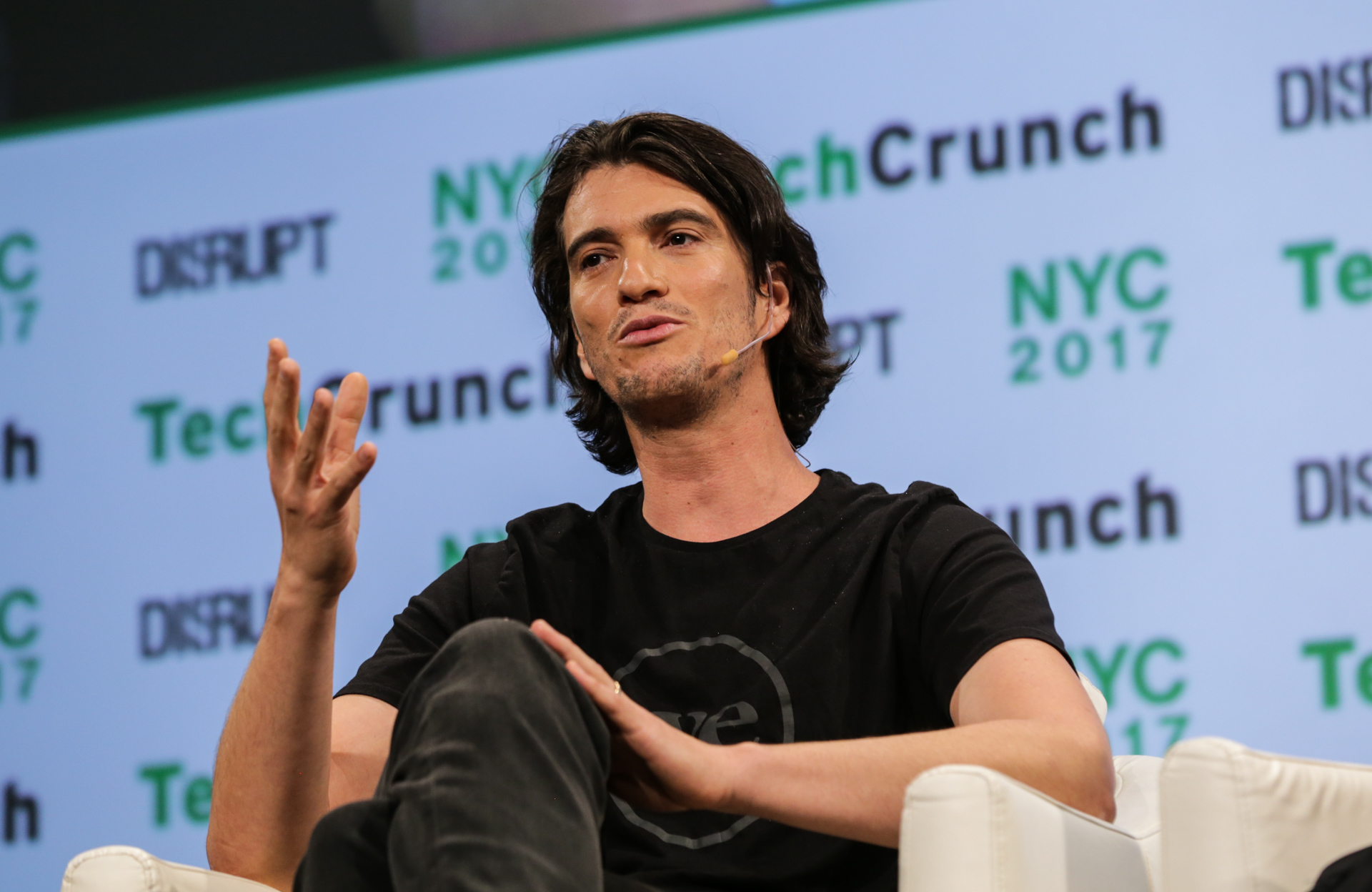
Adam Neumann (WeWork) at TechCrunch Disrupt NY 2017

WeWork filed confidentially to go public this spring shortly after securing new capital from the SoftBank Vision Fund. Now, WeWork is preparing itself for Wall Street’s scrutiny by buying growth, investing in new technologies and doubling down on talented teams. As we’ve pointed out before, WeWork isn’t profitable nor anywhere near profitability. Rather, the company’s value (a laughably high $47 billion) is based on its potential future growth, not its current revenue. Making strategic investments to expand its revenue streams is good business.

WeWork could be a bit more choosy with its deals, though. I will never forget when it took a big stake in Wavegarden, a company that makes wave pools. Yes, really, that happened.

Now that WeWork has officially entered the pre-IPO stage, it must take a closer look at its leadership. The 9-year-old company has an all-male board, something Canvas Ventures’ Rebecca Lynn pointed out to me on this week’s episode of Equity, TechCrunch’s venture capital-focused podcast. We were discussing a new lawsuit filed by former WeWork executives that alleges age and gender discrimination when she noted the troubling statistic.

For a company of that stature to not have appointed a woman to its board by now is mind-boggling. It may be one of the most highly-valued companies in the world on paper, but to succeed as a public company, it has more than one thing to figure out.

Anyways…

960x0

IPO Corner:
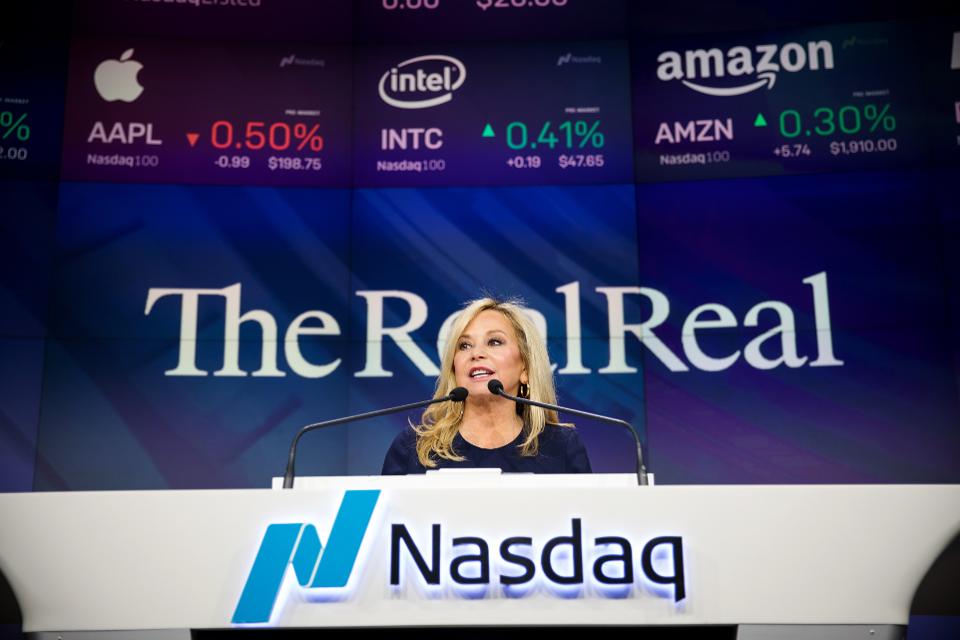
The Real Real: The marketplace for luxury consignment jumped 50% Friday in its Nasdaq IPO. The company, led by founder and CEO Julie Wainwright, raised $300 million in the process.

Livongo: The digital health business submitted paperwork for an IPO this week, joining a long line of companies opting to go public in 2019. Livongo posted $68.4 million in revenue last year.

Postmates: Google’s vice president of finance Kristin Reinke joined Postmates’ board of directors this week in what was the latest sign the on-demand food delivery startup is prepping for an imminent IPO.

Startup Capital:
SpaceX seeks $300M in fresh funding
Corporate travel platform TripActions secures $250M
Fungible gets $200M from the SoftBank Vision Fund
StockX raises $110M at $1B valuation
Cameo nabs $50M to deliver personalized messages from celebrities
Superhuman secures $33M Series B
SV Academy raises $9.5M to offer tuition-free training for tech jobs

Data!
Social Capital co-founder Chamath Palihapitiya is spinning out a company from his venture capital fund-turned-family-office, TechCrunch has learned. The new entity, temporarily dubbed CaaS (short for capital-as-a-service) Technologies, will focus on providing data-driven insights to VC firms. We’ve got the scoop here.

Theranos!

Elizabeth Holmes, the founder of the now-defunct biotech unicorn Theranos, will face trial in federal court next summer with penalties of up to 20 years in prison and millions of dollars in fines. Jury selection will begin July 28, 2020, according to U.S. District Judge Edward J. Davila, who announced the trial will commence in August 2020 in a San Jose federal court Friday morning.

Extra Crunch:
If you’ve been unsure whether to sign up for TechCrunch’s awesome new subscription service, now is the time. We’ve been publishing a lot of great content, here are my favorites this week:

#EquityPod:
If you enjoy this newsletter, be sure to check out TechCrunch’s venture-focused podcast, Equity. In this week’s episode, available here, TechCrunch editor Connie Loizos, Canvas Ventures general partner Rebecca Lynn and I discuss Brandless’ current dilemma and big rounds for Cameo and StockX.

Huawei can buy from US suppliers again — but things will never be the same

U.S. President Donald Trump has handed Huawei a lifeline after he said that U.S. companies are permitted to sell goods to the embattled Chinese tech firm following more than a month of uncertainty.

It’s been a pretty dismal past month for Huawei since the American government added it and 70 of its affiliates to an “entity list” which forbids U.S. companies from doing business with it. The ramifications of the move were huge across Huawei’s networking and consumer devices businesses. A range of chip companies reportedly forced to sever ties while Google, which provides Android for Huawei devices, also froze its relationship. Speaking this month.

All told, Huawei founder and chief executive Ren Zhengfei said recently that the ban would cost the Chinese tech firm — the world’s third-larger seller of smartphones — some $30 billion in lost revenue of the next two years.

Now, however, the Trump administration has provided a reprieve, at least based on the President’s comments following a meeting with Chinese premier Xi Jinping at the G20 summit this weekend.

“US companies can sell their equipment to Huawei. We’re talking about equipment where there’s no great national security problem with it,” the U.S. President said.

Those comments perhaps contradict some in the US administration who saw the Huawei blacklisting as a way to strangle the company and its global ambitions, which are deemed by some analysts to be a threat to America.

President Trump has appeared to soften his tone on Chinese communications giant Huawei, suggesting that he would allow the company to once again purchase US technology https://t.co/4YNJCyKLTg pic.twitter.com/jr45f40ghP

— CNN International (@cnni) June 29, 2019

Despite the good news, any mutual trust has been broken and things are unlikely to be the same again.

America’s almost casual move to blacklist Huawei — the latest in a series of strategies in its ongoing trade battle with China — exemplifies just how dependent the company has become on the U.S. to simply function.

Huawei has taken steps to hedge its reliance on America, including the development of its own operating system to replace Android and its own backup chips, and you can expect that these projects will go into overdrive to ensure that Huawei doesn’t find itself in a similar position again in the future.

Of course, decoupling its supply chain from US partners is no easy task both in terms of software and components. It remains to be seen if Huawei could maintain its current business level — which included 59 million smartphones in the last quarter and total revenue of $107.4 billion in 2018 — with non-US components and software but this episode is a reminder that it must have a solid contingency policy in case it becomes a political chess piece again in the future.

Beyond aiding Huawei, Trump’s move will boost Google and other Huawei partners who invested significant time and resources into developing a relationship with Huawei to boost their own businesses through its business.

Indeed, speaking to press Trump, Trump admitted that US companies sell “a tremendous amount” of products to Huawei. Some “were not exactly happy that they couldn’t sell” to Huawei and it looks like that may have helped tipped this decision. But, then again, never say never — you’d imagine that the Huawei-Trump saga is far from over despite this latest twist.

Spotify needs to crack down on labels snatching user data

Spotify seems to have learned little from the Facebook developer platform’s scandals despite getting a huge boost from the social network in its early days. Spotify has been caught allowing record labels to grab tons of unnecessary user data and permissions to even control their accounts just so people can “pre-save” upcoming song releases.

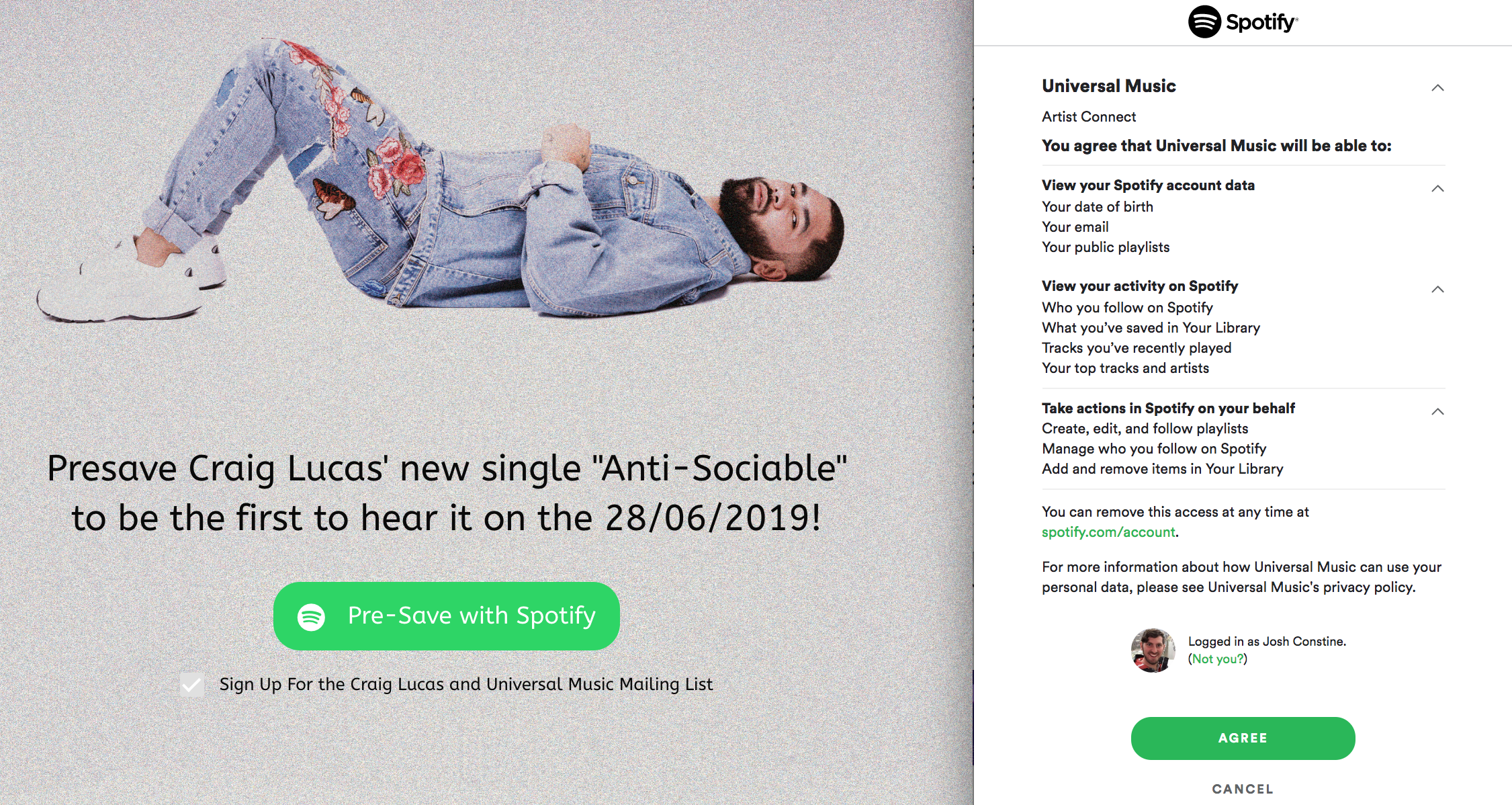
An investigation by Billboard’s Micah Singleton found major label Sony’s app for pre-saving demanded access to users’ email address, what you’ve listened to and saved to your library, playlists you’ve made or subscribed to, artists you follow, and what you’re playing right now. It also asks to be able to take actions on your behalf including change who you follow, add or remove songs from your library, create/edit/follow playlists, and even control Spotify on your devices.

Spotify Pre Save Developer Abuse

An example of Universal Music Group’s pre-save app that asks for unnecessary user data and access permissions

This means that by agreeing to use a pre-save feature, a record label could index you music tastes and determine your current mood for marketing purposes, subscribe you to all of their artists and playlists, force you to create playlists that include their artists or add them to your existing playlists, and delete or unfollow any music or artists represented by their competitors.

Since users often speed through platform app permission screens assuming they’re just asking for what’s required, many likely gave up valuable data about themselves and the ability to manipulate their accounts without fully understanding what was happening. Other major labels like Warner and Universal’s pre-save apps like this one similarly ask for 10 types of permission — most extraneous.

In reality, the only permission a pre-save app should need is to be able to add the song you wanted to pre-save to your library. Anything else is theoretically prohibited by Spotify’s developer policy section 5.2: “You will only request the data you need to operate your Spotify Developer Application.” If you’ve used these apps, you can go into your Spotify account settings here to remove their access.

In a post-Cambridge Analytica world, platforms like Spotify should know better than to let developers run amok without proper oversight. That’s why I was so disappointed when Spotify refused to provide a statement, explanation, or even talk with me about the issue.

Offering a flexible developer platform has plenty of advantages for users. Apps for DJing with streaming music, discovering new bands, or synchronizing playback with friends could be built with rightful and transparent use of Spotify’s APIs. But for something as simple and common as volunteering to have a new song from your favorite band show up in your library on the day it’s released shouldn’t become a lure for an exploitative data grab.

That’s why Spotify should build its own in-house pre-save app that labels could all use to pre-promote their releases. Approved labels and their artists should be able to punch in their upcoming single’s Spotify URL and get a shareable link back that they can distribute through social media or wherever that only grants permission to pre-save that specific song, and that expires once that action is completed.

Spotify vs Apple Music Subsscribers

Spotify is widening its subscriber lead over Apple Music

Otherwise, Spotify risks losing all the goodwill its built up with listeners by being a music-first company compared to competitors like Apple and Google where music is a rounding error. Apple Music provides app developers with less data about users.

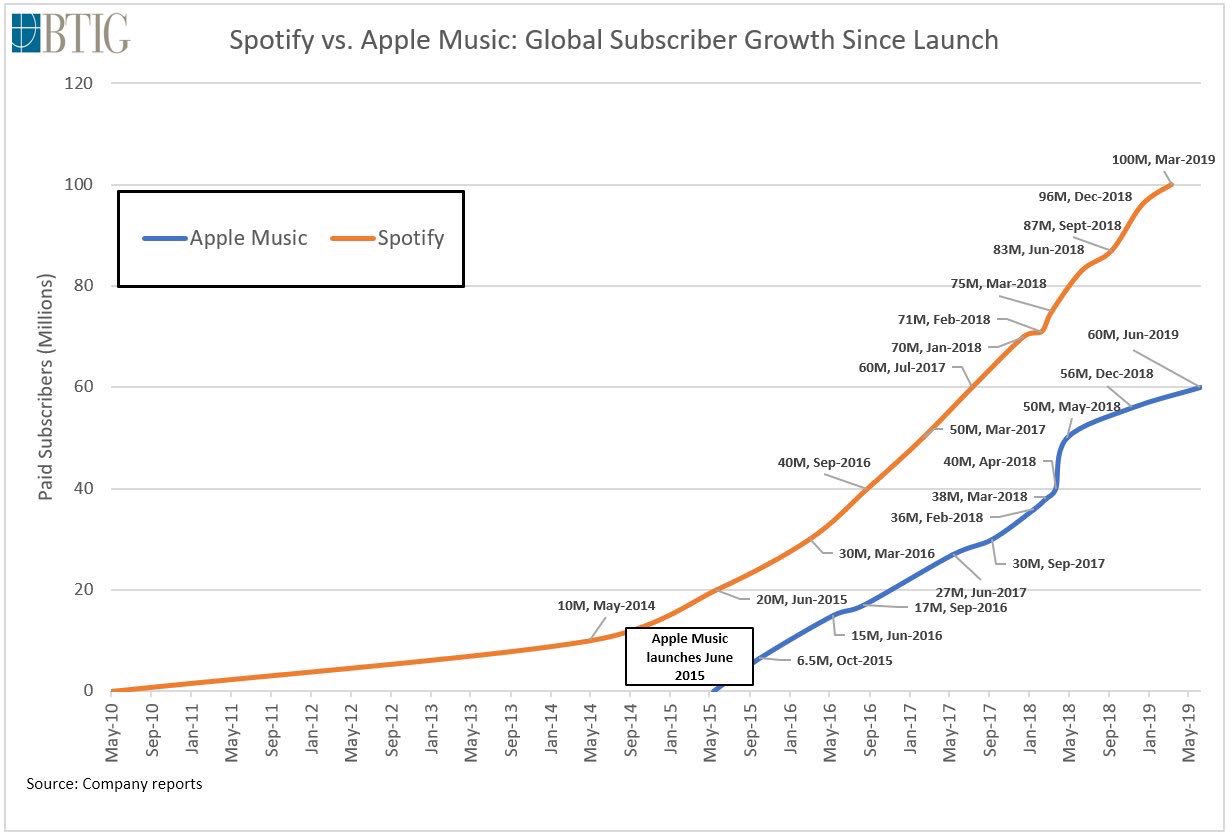
Just today Apple Music announced it has 60 million subscribers, lagging increasingly further behind Spotify which now has 100 million subscribers and 217 million total monthly users. Spotify already dominates cultural mind share for streaming, having used the playlists it controls to become a hit-maker and gain leverage over the labels for royalty negotiations. But turning a blind eye to shady developers just because they own the music it streams could make listeners question their loyalty and stray to Apple, which is notoriously serious about privacy.

If Spotify is unwilling to push back on data abuse by its record label partners, then it’s undeserving of users’ ears and subscription dollars.

SV Academy just landed $9.5 million to offer tuition-free training that puts people in tech jobs

When you live in Silicon Valley, it feels like nearly everyone works in tech and that entry into the industry is wide open. Of course, the reality is very different. Even as software eats the world, not everyone has the training or connections to land a high-paying job in either the traditional tech industry or with a company that’s actively embracing its digital future.

In fact, it would be challenging to interest an executive recruiter in someone who doesn’t have a tech background and didn’t go to college, yet a company called SV Academy is doing just that. According to cofounder and CEO Rahim Fazal, the nearly two-and-a-half-year-old, Bay Area company is currently helping 100 people every 30 days — or 1,200 per year — land jobs at companies like SurveyMonkey, Palo Alto Networks, and PayPal.

Very notably, it costs these job candidates nothing. Employers pay SV Academy between $12,000 to $15,00 per hire; all the prospects really need to do is convince SV Academy that they have the drive required to take a 12-week, training program that teaches the skills necessary for tech-based sales roles, plus a year of ongoing training and mentorship for a year after they graduate.

It sounds like a great deal, and it is, which is why SV Academy says it has more interest than it can handle. Fazal tells us that the company, which received 1,000  applications over eight months in its first year of operations, is now receiving 1,000 applications a week from people who’ve largely heard of the company through word of mouth.

Because it’s focused on grooming candidates who are serious about developing new careers (and will stay in their jobs), SV Academy is loath to scale up to accommodate that kind of demand. Still, a new round of funding should help widen the funnel a bit. Until recently, the company was backed by $2 million that it raised a couple of years ago from Bloomberg Beta, Rethink Education, Precursor Ventures, Uprising Ventures, 500 Startups and WTI.

The money was enough for SV Academy to achieve profitability and get to the point of placing employers on a waiting list. But with demand beginning to more seriously outpace its supply of candidates, SV Academy recently hit the market again, sharing exclusively that it has just closed on $9.5 million in Series A funding led by Owl Ventures with participation from Kapor Capital, Strada Education Network, and several earlier backer participating, namely Bloomberg, Rethink, and Uprising.

It isn’t the first time that Fazal has started a company that has taken off. He cofounded a company a decade ago that sold to Oracle, where he spent the next two and a half years. But SV Academy is even closer to his heart, given that he is exactly the kind of person the SV Academy wants to lift up — someone smart but lacking resources. Fazal himself grew up in government housing. He didn’t go to college. He knows firsthand that with determination and right amount of guidance and support, apparent obstacles like a lack of financial stability or a fancy degree can fall away.

Fazal also recognizes the importance of having the right cofounder, which he seems to have landed on with Joel Scott, who is also the company’s COO. A Stanford-trained lawyer, Scott was previously VP of operations at Hewlett Packard, and according to Fazal has trained upwards of 500 SaaS salespeople since college.

Indeed, Scott played a major role in creating SV Academy’s curriculum, which is very focused on training people for SaaS jobs (for now) and that is entirely virtual, from the 12-week-training period, to the coaching that comes afterward. The reason: it enables it to reach students in the U.S. wherever they may be, and whatever their experience might be.

Though some of the applicants who it accepts are college graduates, many are also “working full-time jobs, or they’re caretakers, and it’s impossible for them to drive into the city several times a week for classes,” Fazal explains.

Whatever the case, it seems to be working. Fazal says that 100% of the individuals who complete the program are not only receiving median job offers of $79,000 plus benefits and, in many cases, equity, but 70% of them are also receiving promotions within their first year. Yes, the law of small numbers is a factor, but it’s also easy to understand investors’ enthusiasm for what they are seeing — including the cautious approach SV Academy is taking to expanding.

“Real transformation is difficult,” says Fazal. “You can’t create outcomes like this by throwing software at the problem.”

Above, left to right: Joel Scott and Rahim Fazal of SV Academy

DoorDash double downs on controversial pay model

There’s seemingly no end in sight for DoorDash’s compensation model where it subsidizes driver wages with customer tips. The mildly bright side, however, is that DoorDash is now providing more transparency after each completed delivery, DoorDash CEO Tony Xu wrote in a blog post today.

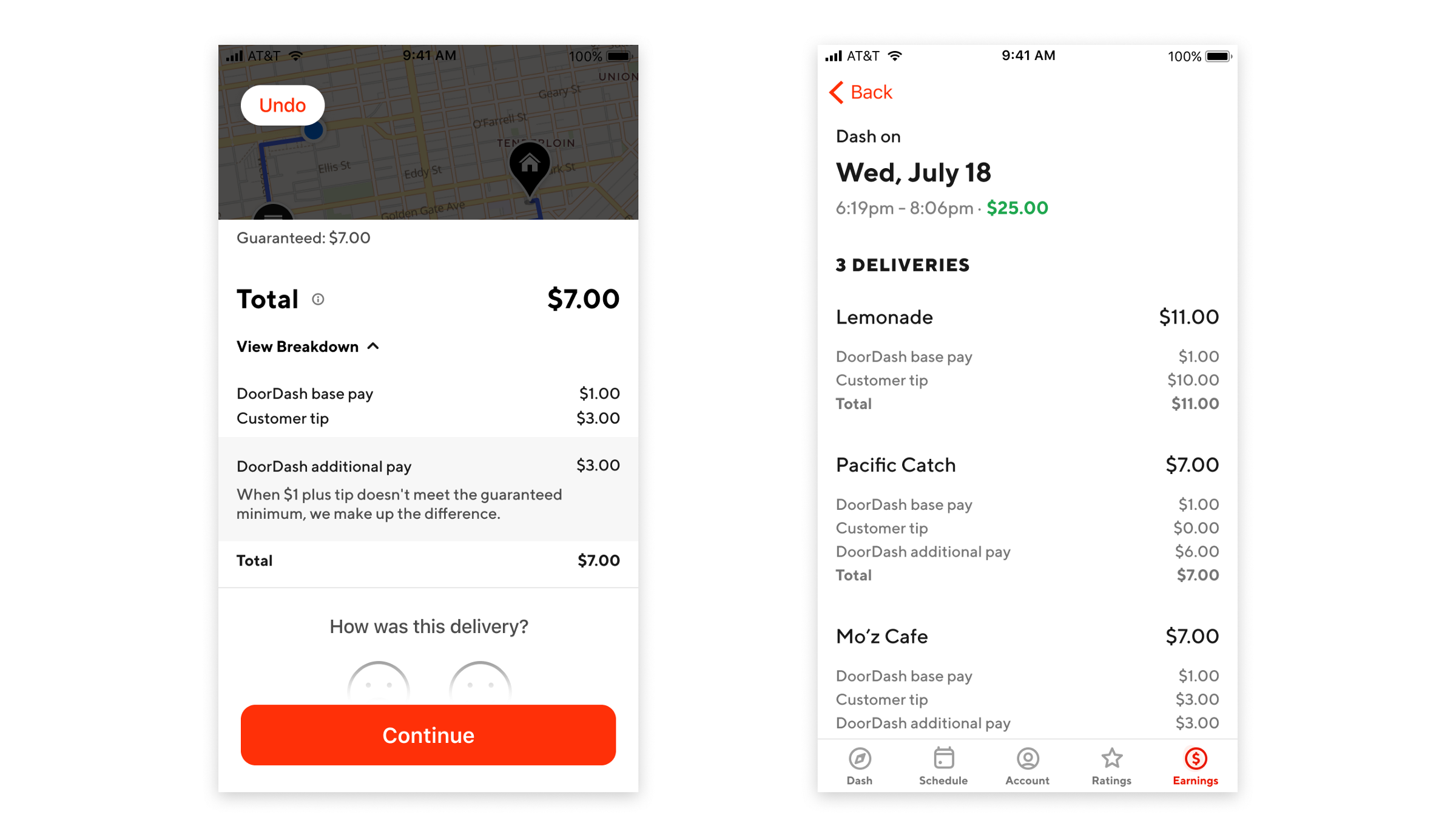
“With our current pay model, Dashers see a guaranteed minimum?—?including tips?—?prior to accepting a delivery,” Xu wrote. “The guaranteed minimum is based on the estimated time and effort required to complete the delivery. Providing this guarantee upfront means that Dashers are more likely to accept all kinds of deliveries because they know what their earnings will be even if the customer provides little or no tip.”

That means DoorDash’s base pay is sometimes just $1.

“Talking about transparency is good,” labor rights group Working Washington said in a statement to TechCrunch. “And admitting you pay $1/job is better than denying it. But $1 is still $1.”

In light of pay controversies at Instacart, DoorDash and Postmates, Working Washington formed the Pay Up Campaign, which unites thousands of workers across all those gig economy platforms.

1 3cx7jL 7v EJ8l7meVceNQ

“They continue to subtract tips from worker pay,” the organization said in its statement. “And they continue to mislead customers about where their tips are going. When a customer tips more, DoorDash pays less — in other words, the customer is tipping the company.”

Despite what DoorDash said in its blog post about what workers want, the Pay Up campaign says it wants a minimum pay floor of $15 per hour plus expenses for time with an active job, tips, and a detailed breakdown of pay.

Freemium’s public moment

Ben Spero
Contributor

Ben Spero is managing director of Spectrum Equity. His areas of investment focus include internet, software and information services. Prior to joining Spectrum, Ben worked at Bain & Company and co-founded TouchPak, Inc.

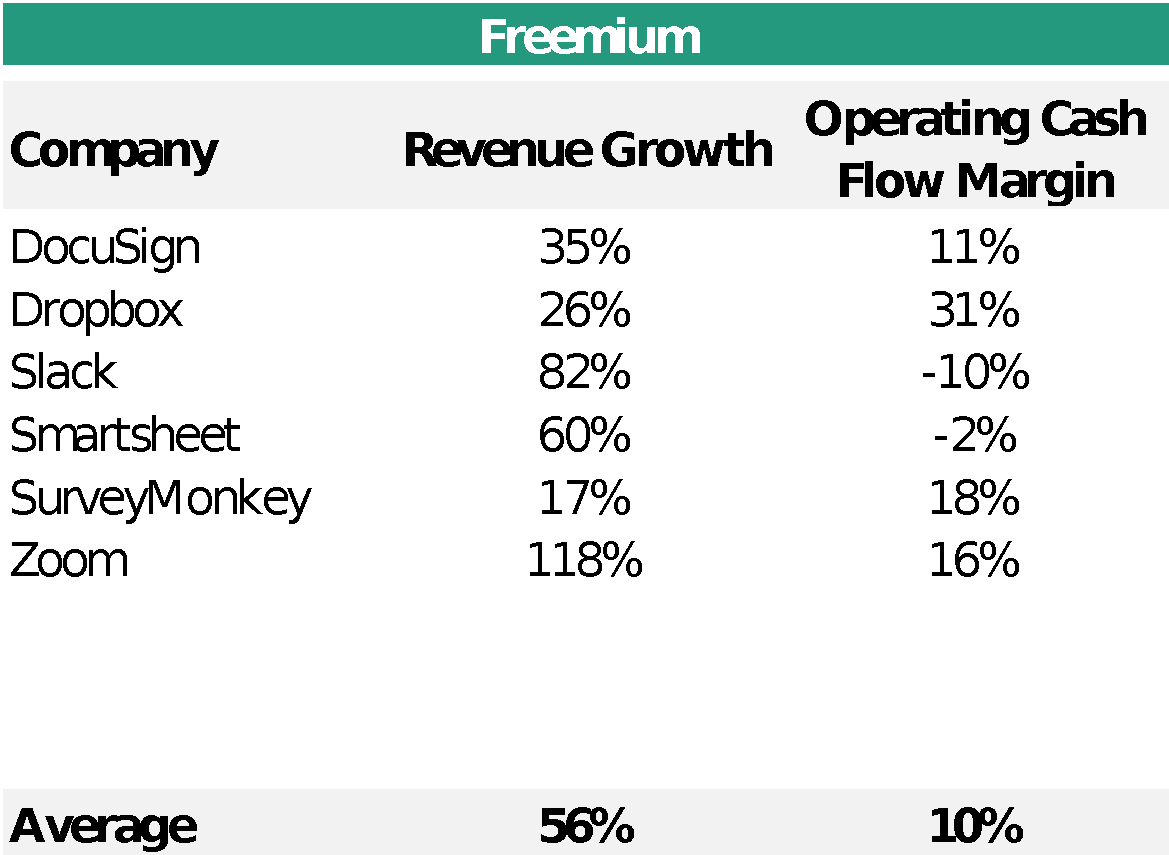
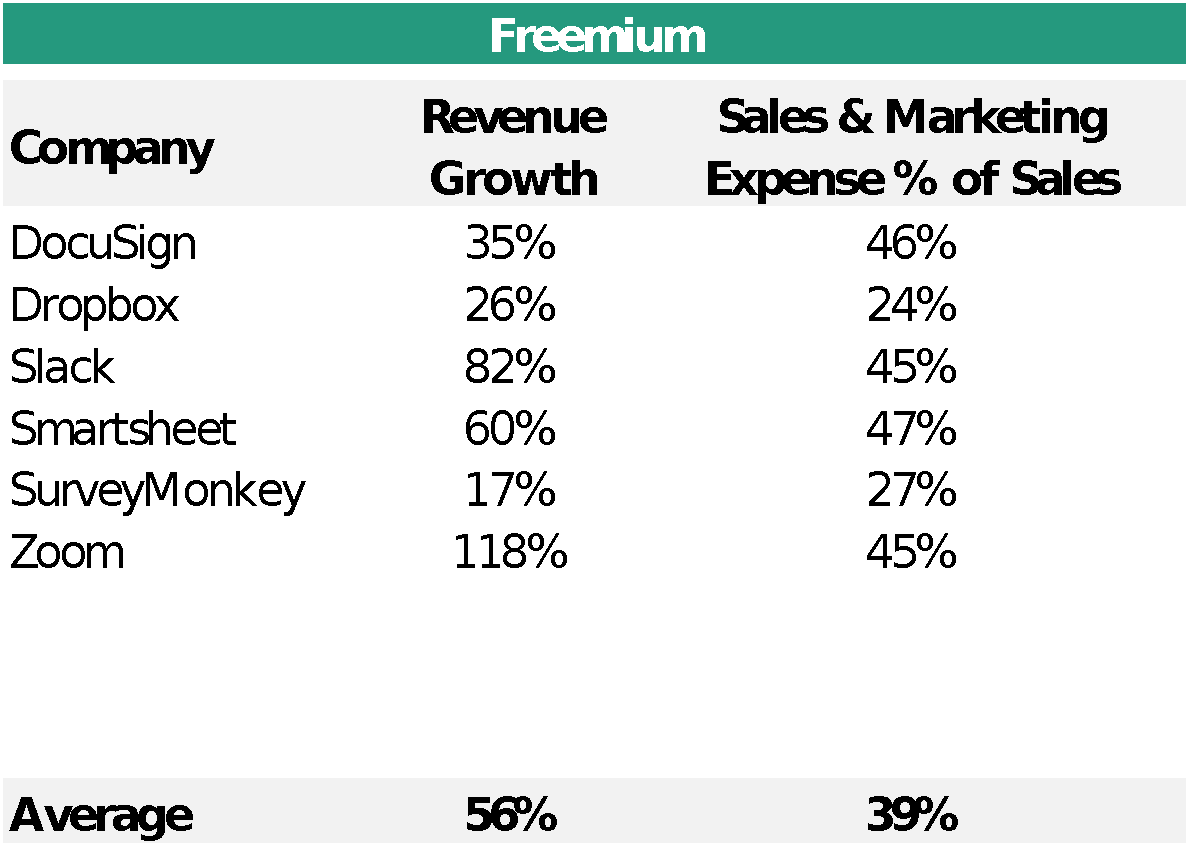
Slack’s recent direct listing marks a momentous 15-month stretch for freemium SaaS businesses. With Slack joining the public company ranks, six companies will have tapped the public markets since Dropbox’s IPO last March. This group of companies now has a collective market value of more than $50 billion.

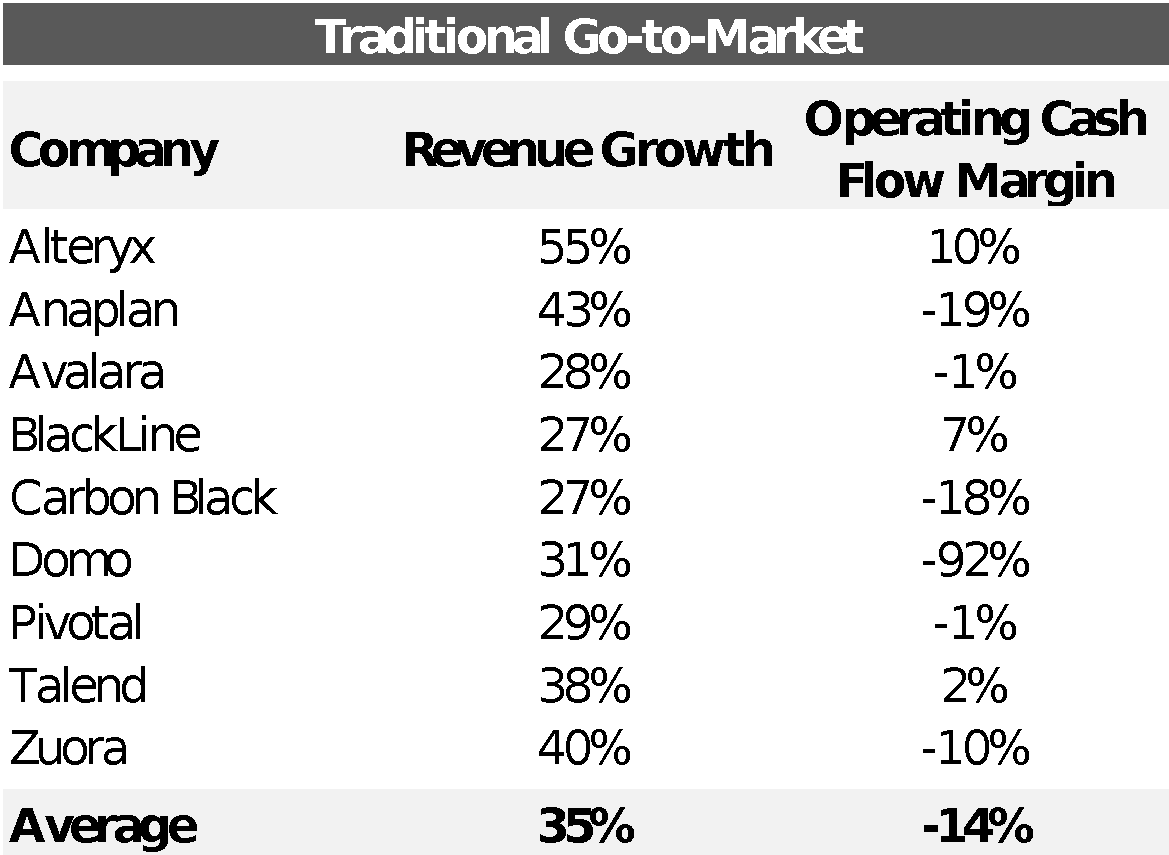
When Zoom filed its public S-1, the tech industry fawned over the company’s financial profile. Here was a company growing revenue over 100% that had somehow managed to be cash flow positive. Conventional wisdom among many Silicon Valley investors has recently been that profits and rapid growth are mutually exclusive.

Uber and other high-growth tech companies aspire to be the next Amazon, foregoing profits into the foreseeable future to establish a dominant market position. This land grab mentality has held sway with most of the SaaS businesses that go to market with a traditional enterprise sales force. In contrast, the recent crop of public freemium businesses show they can actually make money while sustaining attractive growth rates.

Recent IPOs

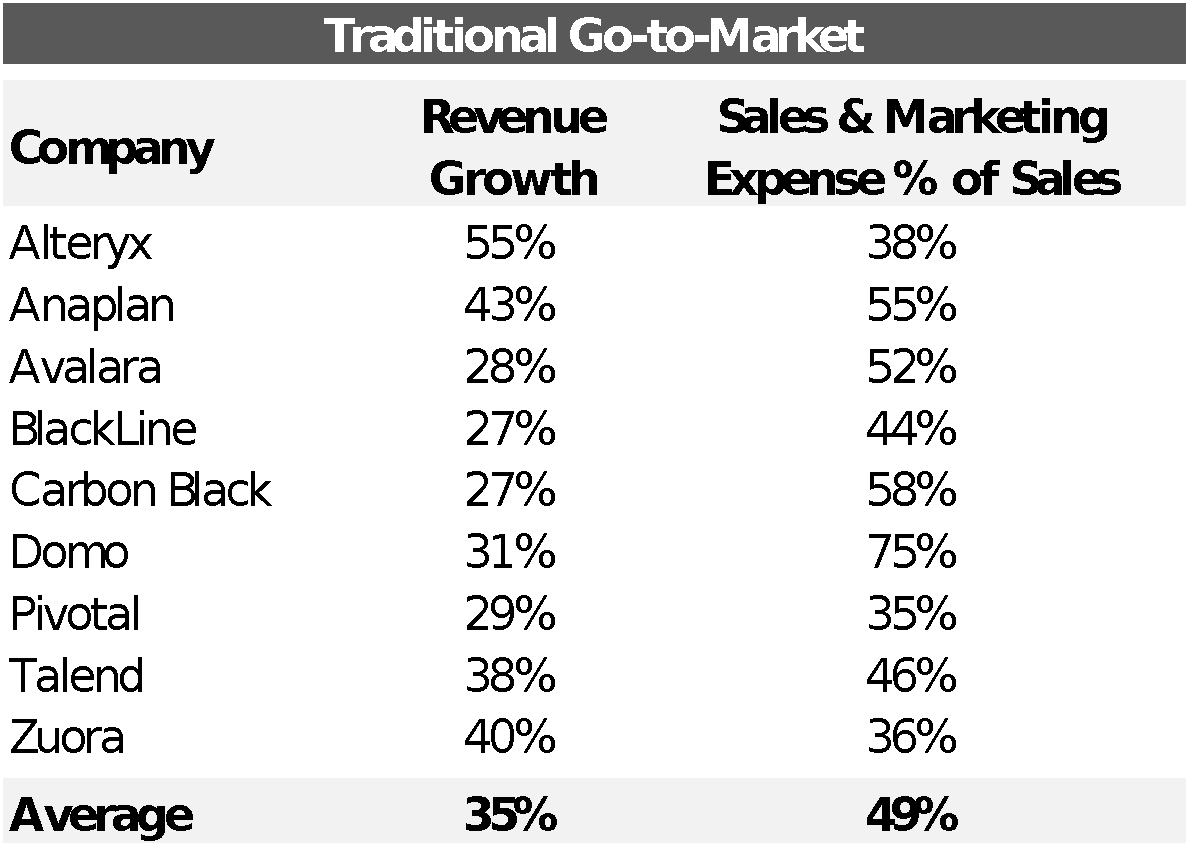
How can this flavor of enterprise software business run so much more efficiently than their traditional enterprise brethren? The answer heavily lies in their approach to sales and marketing. Despite similar growth rates, traditional enterprise SaaS businesses spend an average of 10% more of their revenue on sales and marketing than their freemium comparables.

Freemium vs. enterprise: Different paths to sales success

A common criticism of freemium businesses is that their retention rates dramatically lag those of traditional enterprise software businesses. Customer relationships for freemium businesses usually begin online. An individual employee wants to use a product for her/his own productivity and simply charges a credit card to pay for a subscription. In contrast to larger-ticket enterprise relationships with multiple stakeholders that tend to renew at 90%+ annually, the retention profile of these individual users often resembles consumer subscription businesses — usually in the 60-80% range. When it comes time to renew the subscription a year later, the person may have changed jobs, changed credit cards or only used the product episodically.

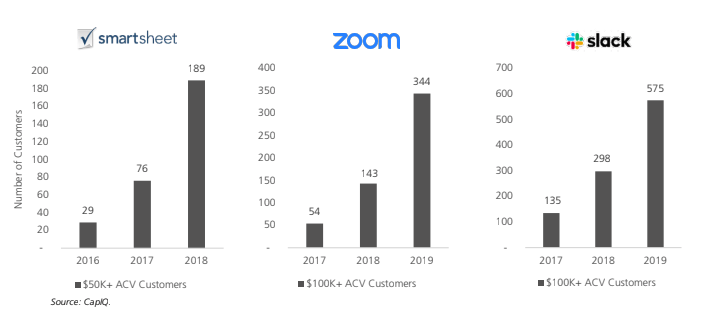
It’s less well understood that many of these business models are evolving in real time as they leverage widespread individual adoption to establish broader enterprise customer relationships. When sales reps for freemium products call on enterprise buyers, they usually have hundreds, or even thousands, of their employees already using the product individually or in small teams.

Their products and brands are already widely known and loved, with power-users clamoring for broader internal support and acting as advocates in the sales process. This internal validation makes it much easier to convince an enterprise buyer that the product will deliver compelling value to end users. While some hands-on sales support is usually required to land a contract over $5,000, this job can be done by less-experienced and lower-cost sales reps. If you visit the offices of freemium businesses and ask to walk their sales floor, you’ll see a sea of millennials closing sizeable contracts over the phone.

Legacy enterprise players have historically successfully fended off competition from freemium businesses by accusing them of not being “enterprise-grade” technology. It can take years to build out robust security infrastructure, deep integration into other systems and administration and reporting capabilities, all of which are needed in the enterprise procurement process. This was a muscle that freemium businesses, whose product orientation was around end-user design rather than back-end infrastructure capabilities, needed to build. They also had to build sales motions to navigate the longer, complex sales cycles that come with six and seven-figure annual recurring revenue (ARR) deals.

However, the financial results of these public freemium companies show just how well this is now working, and there are many more private companies following their lead.

Freemium’s enterprise traction

Most public companies don’t report granular renewal rates for their larger enterprise relationships, but the unit economics of these businesses are incredibly compelling.

Lucid Software now has more than 3,000 enterprise customers, which generates more than 60% of the company’s revenue, up from just 350 and 15% when we invested in the company three years ago. The logo renewal rate for their 3,000+ enterprise customers is more than 95% and net revenue retention is more than 130% annually, because end user seat growth more than outstrips any customer losses.

At Spectrum Equity, we’re watching with interest as these early freemium leaders emerge as successful public companies and the broader industry better understands how these business models work. Since leading SurveyMonkey’s first financing more than 10 years ago, Spectrum has invested in Lucid Software, Bitly, Litmus and Prezi, which are all charting a similar course from freemium online through to the enterprise. A number of Spectrum’s content businesses, such as Lynda.com, Teachers Pay Teachers, Headspace, DataCamp, Offensive Security and Digital Marketing Institute, have also successfully built hybrid individual and enterprise distribution strategies.

We believe companies that create the most compelling end-user experiences will win over the long term, and this trend of the consumerization of enterprise technology has only just begun.

(Note from Spectrum Equity: The specific companies identified above may not represent all of Spectrum’s investments, and no assumptions should be made that any investments identified were or will be profitable. View the complete list of our portfolio companies.)

Apple Music surpasses 60 million subscribers

Today’s major Apple news may be the departure of its design guru Jony Ive, but the even as the company stomachs the executive loss, their software plows ahead. Today, in an interview with French news site Numerama, Apple honcho Eddy Cue revealed that the number of Apple Music subscribers has now climbed to 60 million.

The company seems to give updates every time it surpasses another additional 10 million subscribers, we last heard that they had crossed the 50 million mark back in April.

Now, the company’s music service is well past the halfway market in its mission to surpass Spotify which currently has 100 million subscribers.

Hans Zimmer is composing the sound for BMW’s electric vehicles

Hans Zimmer, the film score composer behind dozens of Hollywood movies including The Lion King and Inception, is shaping what the next generation of BMW electric vehicles sound like.

Zimmer and Renzo Vitale, an acoustic engineer and sound designer at the BMW Group, recently composed the sound for the BMW Vision M NEXT, the concept that had its world debut June 25.

BMW’s project with Zimmer ties into its new “BMW IconicSounds Electric” sound brand.

“We want to get BMW IconicSounds Electric in position for customers who value emotional sound. With BMW IconicSounds Electric they will be able to experience the joy of driving with all their senses”, Jens Thiemer, senior vice president of the BMW brand, said in a statement.

The pair composed the drive sounds and sound signs for the BMW Vision M NEXT together in Zimmer’s studios in London and Los Angeles. Watch the video below and listen for the wooshing sound that is produced as the vehicle accelerates. Sadly, it’s not the soundtrack of Inception playing on repeat.


The vehicle, which debuted at the NEXTGen event in Munich, will not be in your local BMW dealership any time soon. It’s a concept that should show where the automaker is headed in terms of design, electric vehicle plans and technology like its next generation adaptive cruise control system, which will be able to detect and automatically stop at red lights.

But customers can expect the next generation of electric vehicles to come with special acoustics meant to mimic the feeling a driver might get when they’re behind an M5 or other BMW with an internal combustion engine. It appears BMW’s next slate of electric vehicles could arrive sooner than originally planned.

The automaker announced at the NEXTGen event that it’s running ahead of schedule in its efforts to produce least 25 electrified vehicles. BMW, which was aiming for 2025, now says that it will offer these 25 vehicles by 2023.
The idea isn’t to make an electric car sound like an ICE vehicle. Instead, the sound is meant to match the power and speed of the electric vehicle.

It turns out that BMW has been working on artificially generated sound since at least 2009. Engineers wanted to increase awareness of the traditional quiet electric vehicles, which at the time include the MINI E test fleet.

Since the launch of the BMW i3, customers have been able to choose acoustic pedestrian protection as optional equipment. Legislation has required automakers to adopt acoustic pedestrian protection, a feature being rolled out as standard in all plug-in hybrids and all-electric vehicles from BMW. The aim in the development was to fulfill the warning function without disturbing pedestrians.

Pepsi is going to start putting its Aquafina water in aluminum cans

PepsiCo is planning to replace its plastic bottles of Aquafina with aluminum cans at locations around the U.S.

The move is part of a broader initiative from the company to reduce its plastic use as a consumer backlash against plastic use grows across the country. Microplastics, found in both air and water, block up the guts of animals and insects and can potentially have incredibly harmful consequences on ocean ecosystems.

The move could be calamitous for startups like Liquid Death, the direct to consumer retail startup pitching canned “tallboys” of water with a metal message and a veneer of environmental responsibility.

Aluminum is nearly 100% recyclable and has a better overall environmental footprint as a packaging material than plastic, according to some advocates.

For now, Pepsi’s canned water will only be available at food vendors who stock its products, but the company is considering a broader transition to aluminum cans across its supply chain.

The company also announced that its LIFEWTR brand would only be sold in 100% recycled polyethylene terephthalate and its bubly product will no longer be packaged in plastic.

The changes, which the company said will go into effect next year, will eliminate 8,000 metric tons of virgin plastic and roughly 11,000 metric tons of greenhouse gas emissions.

Pepsi has set a goal of using nothing but recyclable, compostable or biodegradable packaging by 2025, the company said.

“As one of the world’s leading food and beverage companies, we recognize the significant role PepsiCo can play in helping to change the way society makes, uses, and disposes of plastics,” said PepsiCo Chairman and CEO Ramon Laguarta, in a statement. “We are doing our part to address the issue head on by reducing, recycling and reinventing our packaging to make it more sustainable, and we won’t stop until we live in a world where plastics are renewed and reused.”

Police body-cam maker Axon says no to facial recognition, for now

Facial recognition is a controversial enough topic without bringing in everyday policing and the body cameras many (but not enough) officers wear these days. But Axon, which makes many of those cameras, solicited advice on the topic from and independent research board, and in accordance with its findings has opted not to use facial recognition for the time being.

The company, formerly known as Taser, established its “AI and Policing Technology Ethics Board” last year, and the group of 11 experts from a variety of fields just issued their first report, largely focused (by their own initiative) on the threat of facial recognition.

The advice they give is unequivocal: don’t use it — now or perhaps ever.

More specifically, their findings are as follows:

  • Facial recognition simply isn’t good enough right now for it to be used ethically.
  • Don’t talk about “accuracy,” talk about specific false negatives and positives, since those are more revealing and relevant.
  • Any facial recognition model that is used shouldn’t be overly customizable, or it will open up the possibility of abuse.
  • Any application of facial recognition should only be initiated with the consent and input of those it will affect.
  • Until there is strong evidence that these programs provide real benefits, there should be no discussion of use.
  • Facial recognition technologies do not exist, nor will they be used, in a political or ethical vacuum, so consider the real world when developing or deploying them.

The full report may be read here; there’s quite a bit of housekeeping and internal business, but the relevant part starts on page 24. Each of the above bullet points gets a couple pages of explanation and examples.

Axon, for its part, writes that it is quite in agreement: “The first board report provides us with thoughtful and actionable recommendations regarding face recognition technology that we, as a company, agree with… Consistent with the board’s recommendation, Axon will not be commercializing face matching products on our body cameras at this time.”

Not that they won’t be looking into it. The idea, I suppose, is that the technology will never be good enough to provide the desired benefits if no one is advancing the science that underpins it. The report doesn’t object except to advise the company that it adhere to the evolving best practices of the AI research community to make sure its work is free from biases and systematic flaws.

One interesting point that isn’t always brought up is the difference between face recognition and face matching. Although the former is the colloquial catch-all term for what we think of as being potentially invasive, biased, and so on, in the terminology here it is different from the latter.

Face recognition, or detection, is just finding the features that make up a face in the picture — this can be used by a smartphone to focus its camera or apply an effect, for instance. Face matching is taking the features of the detected face and comparing it to a database in order to match it to one on file — that could be to unlock your phone using Face ID, but it could also be the FBI comparing everyone entering an airport to the most wanted list.

Axon uses face recognition and tracking to process the many, many hours of video that police departments full of body cams produce. When that video is needed as evidence, faces other than the people directly involved may need to be blurred out, and you can’t do that unless you know where the faces are. (Update: This paragraph originally stated that Axon was using a “lesser form of face matching,” which matches faces within videos but not with any central database, that it calls face re-identification. In fact this technology is not currently deployed commercially and is only in the research phase.)

That particular form of the technology seems benign in its current form, and no doubt there are plenty of other applications that it would be hard to disagree with. But as facial recognition techniques grow more mainstream it will be good to have advisory boards like this one keeping the companies that use them honest.