Alphabet’s Wing launches OpenSky, a safety app for Australian drone operators

Drone delivery service Project Wing (or just Wing as it’s now called) graduated from Google X last year to become an independent Alphabet business, and recently won governmental approval to operate in the suburbs outside the Australian capital, Canberra. There, its service delivers food, coffee, pet supplies and more to area residents. Related to these efforts, Wing this week launched a new app for drone flyers, OpenSky, to help them find safe places and times to fly their drones or drone fleets.

The app quietly launched on the iOS App Store and Google Play on Tuesday, and is targeted at both recreational drone owners as well as commercial drone operators.

As the Wing website explains, OpenSky wants to make it easier to find out when and where you can fly, whether you’re a “hobbyist who loves to fly” or a business that “uses unmanned aircraft to survey land or deliver goods.”

Screen Shot 2019 07 05 at 11.34.12 AM

CASA (Civil Aviation Safety Authority) says it’s retiring its own “Can I fly there?” app in favor of a remotely piloted aircraft systems (RPAS) digital platform to which app developers can connect their own drone safety apps. OpenSky is the first third-party app to be approved that uses this new system.

In addition to its launch on the app stores, OpenSky is also available on the web.

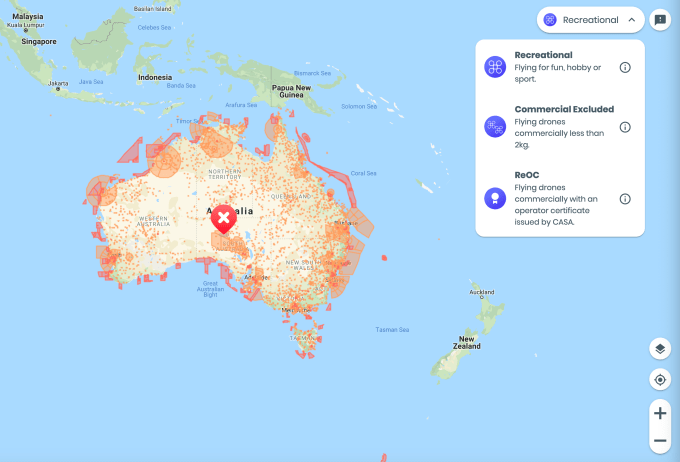
The new app itself is straightforward to use. From a menu, you select what type of drone operator you are — either recreational, commercial (flying drones commercially less than 2kg) or ReOC (flying drones commercially with an operator certificate issued by CASA).

Screen Shot 2019 07 05 at 10.49.25 AM

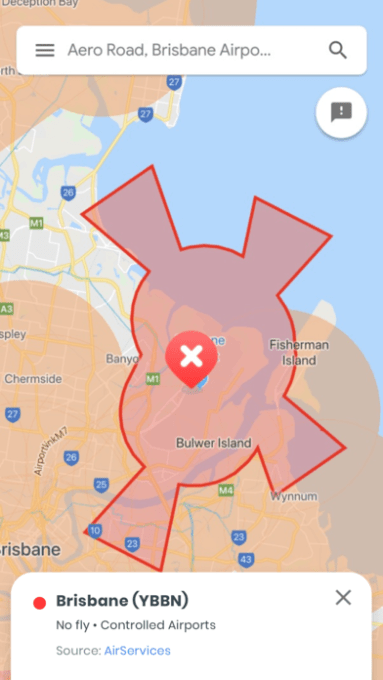
You can then enter addresses in the map’s search box to look up information about the no-fly zones and other restrictions that may be in place, as well as view the related CASA compliance maps for guidance. There are also features to help you identify flight hazards and a link to report unsafe drone operations directly to CASA.

In June, Wing published a blog post explaining that it would assist CASA with launching an ecosystem of apps to support safe drone flight. However, it hadn’t yet said what sort of apps it was launching or when they would arrive.

696x696bb 3

“Australia’s Civil Aviation Safety Authority (CASA) is taking an innovative approach to giving drone operators information to enable safe and predictable flight,” wrote Wing Project Manager Reinaldo Negron, in the post. “By allowing the drone industry to implement a diverse ecosystem of apps and services which drone flyers can use to obtain flight-related information, CASA is creating space for innovation while ensuring a strong baseline of public safety and regulatory oversight,” he said.

In addition to the drone safety apps, Wing said it also is developing tools for CASA to communicate with drone flyers during major events such as sporting matches, concerts and emergency response incidents.

696x696bb 2

“Over time, a CASA-approved ecosystem of apps and services will enhance drone operator choice, public safety, and spur further innovation in the drone industry. By enabling this ecosystem, CASA and the Australian Government provide a compelling example to other countries seeking to safely integrate drones into their national aviation system, and we’re excited to help support the future of Australian drone flight with them,” said Negron.

We reached out to Wing for more information, and will update if the company comments further.

New LightSail 2 mission dashboard lets anyone check in on solar sail spacecraft’s progress

The Planetary Society has launched a new mission control dashboard for LightSail 2, a crowdfunded spacecraft currently in orbit that’s going to test the performance of a true solar sail that’s moved only by the force of photons from the sun bouncing off its fabric. The dashboard provides the most up-to-date information available for anyone to check, and even download for whatever use they might have for this kind of info.

It’s definitely in keeping with the spirit of LightSail 2, which raised more than $1 million during its Kickstarter crowdfunding campaign. The project, organized and led by Bill Nye’s Planetary Society nonprofit organization, saw its second prototype spacecraft launch aboard SpaceX’s most recent Falcon Heavy rocket launch.

The LightSail 2 Mission Control dashboard will tell you when it last got data from the spacecraft, which is preparing to actually deploy its solar sail for the first time. It gets data whenever LightSail 2 is within communications range of one of the ground communications stations on Earth that The Planetary Society is working with for its research, hence the sometimes delayed info.

Visitors can see how long LightSail 2 has been on its mission, whether the solar sail is stowed or deployed, how much power it has in its onboard battery, what the temperature is inside the craft, its degree of rotation and what control mode it’s currently using to control its attitude (basically its orientation in space). You also can check out a map with the LightSail 2’s current location, and any overhead passes it’ll make relative to where you are when you’re checking out the dashboard. This is handy, because you’ll potentially be able to see the spacecraft from Earth once its sails are deployed, which is the next major mission milestone.

If you want even more information, you can hit “Download recent data” at the bottom of the dashboard to get a full archive of all the data transmitted by the spacecraft to date. There’s… a lot, and it’s beyond me, but it could be a wonderful research for amateur and professional space enthusiasts and researchers.

Karamel is an app to find activities for your kids

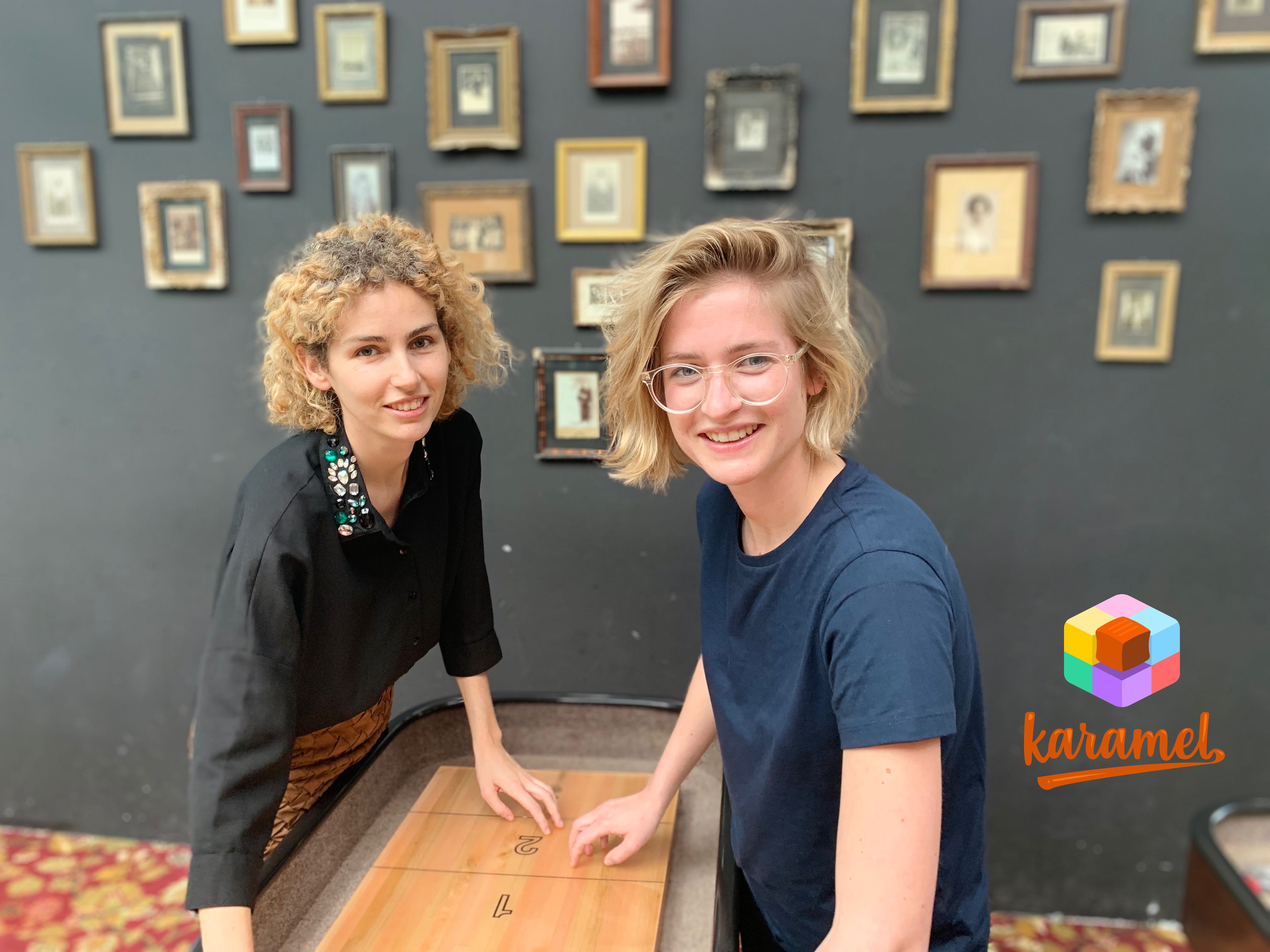
French startup Karamel wants to help you find things to do for your kids. The company is launching a mobile app that lets you find and book kid-friendly activities around you.

The startup also just raised a $560,000 round (€500,000) from Kima Ventures, Roxanne Varza, Thibaud Elzière and Oleg Tscheltzoff. Varza participates in the Atomico Angel Programme, which means that Atomico handed out $100,000 to invest in multiple early-stage companies. Atomico and Varza both see returns if the company eventually succeeds.

Karamel wants to become a one-stop shop for things your kids can do. When you open the app, you get a curated selection of activities around you so that you can find something to do this weekend, for instance.

If you’re looking for something specific, you can search for activities based on multiple criteria, such as the age of your child, an activity category, price, distance and day of the week.

You also can find recurring activities in case your child really wants to learn a new instrument or start a new sport, for instance.

On the other side of the marketplace, there are many different organizations in charge of activities. It’s a fragmented market, and those organizations don’t always know how to reach parents efficiently.

Thanks to Karamel, those organizations should get more traffic and could focus more on activities themselves. The startup doesn’t charge any monthly subscription fee. Instead, Karamel is taking a cut on transactions. Parents pay the same price if they book directly or though Karamel.

The service is currently live in Paris. And if you live in Marseille, Lyon, Bordeaux or Montpellier, you can search for activities but can’t book through the app just yet.

In the U.S., KidPass provides something vaguely similar, but with a monthly subscription fee. KidPass opted for a credit-based system like Audible or ClassPass.

Karamel

Toyota testing improved solar roof for electric cars that can charge while driving

Toyota is testing a new and improved version of the solar power cells it previously launched on the Japan-exclusive Prius PHV, in a pilot along with partners Sharp and Japanese national research organization NEDO. This demo car’s prototype cells can convert solar energy at 34% and up, which is much better than the existing commercial version’s 22.5%. And, unlike its predecessor, it also can charge the car’s driving battery while the car is actually moving, recouping significant range while the vehicle is in use.

The new system will provide up to 44.5 km (27.7 miles) of additional range per day while parked and soaking up sun, and can add up to 56.3 km (35 miles) of power to both the driving system and the auxiliary power battery on board, which runs the AC, navigation and more.

Using a redesigned solar battery cell film that measures only 0.03 mm (that’s 0.001 inches), the vehicle’s engineers could put the film over a much broader surface area of the vehicle compared to the existing production version, with solar cells that wrap around covered body components, the rear door and the hood with relative ease. And as mentioned, the system can now work while the car is actually driving, thanks to changes in how generated power is fed to the system, which is a huge step up from the last generation, which could only push power to that auxiliary battery to run the radio, etc. when in motion.

This new test vehicle will hit the road in Japan in late July, and perform trials across a range of different regions to test its abilities in different weather and driving conditions. Ultimately, the goal is to use this research to facilitate the commercial deployment of more efficient solar power generation tech that can work in a number of transportation applications.

Solar-powered cars to date have been a bit of an outlier proposition: There’s Toyota’s own Prius PHV, but it’s quite limited in terms of what you gain versus a traditional plug-in electric. Lightyear One, a startup from The Netherlands, unveiled its own solar electric consumer car last month, but production on that vehicle isn’t set to start until 2021, and it’s a new entrant into the market, at that.

Internet group brands Mozilla ‘internet villain’ for supporting DNS privacy feature

An industry group of internet service providers has branded Firefox browser maker Mozilla an “internet villain” for supporting a DNS security standard.

The U.K.’s Internet Services Providers’ Association (ISPA), the trade group for U.K. internet service providers, nominated the browser maker for its proposed effort to roll out the security feature, which they say will allow users to “bypass UK filtering obligations and parental controls, undermining internet safety standards in the UK.”

Mozilla said late last year it was planning to test DNS-over-HTTPS to a small number of users.

Whenever you visit a website — even if it’s HTTPS enabled — the DNS query that converts the web address into an IP address that computers can read is usually unencrypted. The security standard is implemented at the app level, making Mozilla the first browser to use DNS-over-HTTPS. By encrypting the DNS query it also protects the DNS request against man-in-the-middle attacks, which allow attackers to hijack the request and point victims to a malicious page instead.

DNS-over-HTTPS also improves performance, making DNS queries — and the overall browsing experience — faster.

But the ISPA doesn’t think DNS-over-HTTPS is compatible with the U.K.’s current website blocking regime.

Under U.K. law, websites can be blocked for facilitating the infringement of copyrighted or trademarked material or if they are deemed to contain terrorist material or child abuse imagery. In encrypting DNS queries, it’s claimed that it will make it more difficult for internet providers to filter their subscribers’ internet access.

The ISPA isn’t alone. U.K. spy agency GCHQ and the Internet Watch Foundation, which maintains the U.K.’s internet blocklist, have criticized the move to roll out encrypted DNS features to the browser.

The ISPA’s nomination quickly drew ire from the security community. Amid a backlash on social media, the ISPA doubled down on its position. “Bringing in DNS-over-HTTPS by default would be harmful for online safety, cybersecurity and consumer choice,” but said it encourages “further debate.”

One internet provider, Andrews & Arnold, donated £2,940 — around $3,670 — to Mozilla in support of the nonprofit. “The amount was chosen because that is what our fee for ISPA membership would have been, were we a member,” said a tweet from the company.

Mozilla spokesperson Justin O’Kelly told TechCrunch: “We’re surprised and disappointed that an industry association for ISPs decided to misrepresent an improvement to decades old internet infrastructure.”

“Despite claims to the contrary, a more private DNS would not prevent the use of content filtering or parental controls in the UK. DNS-over-HTTPS (DoH) would offer real security benefits to UK citizens. Our goal is to build a more secure internet, and we continue to have a serious, constructive conversation with credible stakeholders in the UK about how to do that,” he said.

“We have no current plans to enable DNS-over-HTTPS by default in the U.K. However, we are currently exploring potential DNS-over-HTTPS partners in Europe to bring this important security feature to other Europeans more broadly,” he added.

Mozilla isn’t the first to roll out DNS-over-HTTPS. Last year Cloudflare released a mobile version of its 1.1.1.1 privacy-focused DNS service to include DNS-over-HTTPS. Months earlier, Google-owned Jigsaw released its censorship-busting app Infra, which aimed to prevent DNS manipulation.

Mozilla has yet to set a date for the full release of DNS-over-HTTPS in Firefox.

Updated with remarks from Mozilla.

MoviePass temporarily suspends service to improve its mobile app

MoviePass is temporarily suspending its service, starting on July 4, in order to finish working on improvements to its mobile app, the company announced today. The hiatus comes after a difficult year for the cash-burning company, and as Regal, the second-largest movie theater chain in the United States, is reportedly preparing to launch its own ticket subscription service.

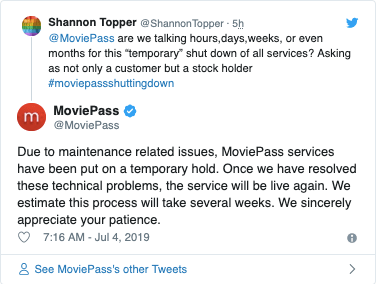
MoviePass’ announcement said the hiatus will start at 5 A.M. Eastern Time on July 4 and that subscribers will be automatically credited for the number of affected days once service resumes. It did not say when service would return, but replies to customers from its Twitter account say the company “estimate[s] this process will take several weeks.”

Screenshot from MoviePass' Twitter replies

This is an especially inopportune time for a hiatus because the July 4 holiday is when many major titles are released. In a press statement, MoviePass CEO Mitch Lowe said “There’s never a good time to have to do this. But to complete the improved version of our app, one that we believe will provide a much better experience for our subscribers, it has to be done.”

He added that “We have listened and we understand the frustrations of our subscribers. To provide the level of service you deserve and we can be proud of, we need to improve our mobile app. We plan to make this improvement by utilizing an enhanced technology platform, which is in the final stages of completion.”

MoviePass (owned by Helios and Matheson Analytics) and competitor Sinemia both offer subscription plans that give users access to multiple films in one month for a flat fee, but they have been locked in an expensive war of attrition as they compete for subscribers and box office sales. Both companies have also been hit with constant complaints about poor customer service. When Sinemia launched, it was able to capitalize on anti-MoviePass sentiment, but quickly began to rack up its own negative feedback about hidden fees, cancellations without refunds and poor app performance.

This makes room for new rivals to step in. For example, AMC’s A-List service reached 785,000 subscribers in May and if Regal’s version comes to fruition, it may also appeal to movie-goers who are willing to stick to one chain in exchange for consistent service.

VC-turned-renowned executive coach Jerry Colonna on the unsorted baggage of CEOs

Jerry Colonna was a good venture capitalist. Still, when he became engulfed in a dangerous depression after the dot.com bubble’s burst — owing to the economic crash, to the terrorist attack in New York, to the approach of middle age — he saved himself by leaving VC, a kind of accidental if lucrative profession for him, and by learning how to coach others.

What he tells them from the outset — as he learned about himself firsthand — is that many executives hobble themselves unwittingly out of fear or some other driving force that they have no idea even exists, a driver that has be to identified to be conquered.

Colonna learned, for example, that he associated money with safety, having grown up in a chaotic environment with an alcoholic father, a mother with mental illness, and six siblings who were at times separated and cared for by other family members. Among these were Colonna’s grandparents who owned a building in New York and provided their grandchildren both love — as well as that missing sense of security.

Of course, not everyone has access to Colonna, or his team of roughly 25 other coaches, or to one of his executive bootcamps. It’s for this reason that Colonna recently authored the book “Reboot,” in which he shares many of his own stories while also signaling to readers the importance of recognizing that they aren’t crazy, that much of modern life is a pretense, and that with some introspection, it’s possible to understand the roots of one’s character structure and, perhaps, stop embracing them unconsciously.

We talked with Colonna today about the book in a conference call attended by dozens of Extra Crunch readers. We’ll be releasing a transcript of that call shortly. In the meantime, we wanted to share part of our exchange that centered on the question: are most executives ultimately trying to impress their parents — either living or dead? (Colonna had told us that the first person to come to him for real advice — when Colonna was still advising startups as a board member — was a young attorney who hated his profession but went to law school to please his father.)

In a nutshell, the answer, perhaps unsurprisingly, is yes — at least to some degree. “I think most of us are in an interesting dialogue with the belief systems we developed as children, and that most leaders are shaped, consciously or not, by those early belief systems,” he said earlier today. “If you believe the world is a dog-eat-dog world, where everybody is out to get their own, you’re going to unconsciously build an organization that’s filled with self-optimizers. Then you’re going to call a coach and ask, “Geez, why isn’t anyone trusting each other?”

Indeed, Colonna’s view (and he has seen a lot of executives over the years) is that “one of the most important forces of any child’s life are their parents. They shape positively and negatively our whole world view because they give us the sense of love, safety and belonging; they give us our sense of worthiness as human beings.” It’s why when he’s doing his leadership coaching and development work, he works to “really understand the early structures of a person’s life — not so we can spend the entire time therapeutically going through it, but so we can have a context for what they might be struggling with right now.”

It was a wide-ranging chat, touching on whether people can become great leaders without facing some childhood adversity, the reason that coping skills sometimes become impediments, whether millennial leaders have it better or worse than their predecessors, and why the 30s can be the trickiest decade of all for people who are leading organizations.

More on our chat soon, and if you don’t subscribe to Extra Crunch, you can learn more here.

Superhuman removes email location logging, will turn read receipts off by default

Superhuman, the buzzy and currently invite-only email startup that you might have come across even if you yourself don’t have access if you’ve ever encountered a “Sent via Superhuman” email signature, is making some changes based on community feedback. These include removing location logging altogether, getting rid of all existing location data and turning off read receipts by default and making them an opt-in feature for users.

The email app’s default email tracking behavior (embedding the commonly used advertising tool of a “pixel” in emails to report back to senders info like whether an email’s been opened or not) raised a number of concerns, centered around this blog post by former Twitter design executive Mike Davidson. Davidson’s post generated a lot of community response, and now Superhuman founder Rahul Vohra has issued a response to that response, including a list of actions that his company is taking to address concerns. Specifically, Superhuman’s product changes are focused around mitigating the potential for abuse of sharing location data – which could be very dangerous in the hands of a sender with ill intent for their recipient.

These include immediately stopping any location logging for any emails sent by the service, and also rolling out new versions of the app that don’t show location data in the interface. All existing logged location data will also be deleted so it’s not even discoverable through means other than the UI, Vohra says in a blog post detailing the changes.

Superhuman won’t be getting rid of its “read status” feature entirely however — it’ll still provide info to Superhuman users about whether or not an email was opened. This feature will be turned off by default, however, so it’s on users to activate it. Note that that still doesn’t change anything for recipients of Superhuman emails with read receipts turned on — they don’t get an option to consent to sending read receipts. Finally, Superhuman will enable disabling of remote image loading, which is itself a way to block incoming tracking pixels.

Vohra said on Twitter the reason Superhuman hasn’t issued a response to this previously, despite a few days of heated conversation about their company, is that the startup was considering how best to address the concerns. As Matthew noted in an article Tuesday on the subject, this is actually how discussion and debate should work.

Pod Foods gets VC backing to reinvent grocery distribution

Larissa Russell and Fiona Lee founded a cookie startup called Green Pea Cookie in 2014. The cookies were 100% natural, vegan and “handcrafted with love.”

The company failed, but not because the cookies weren’t selling. The business couldn’t keep up with the antiquated wholesale food distribution system’s steep costs. Two incumbent players, United Natural Foods Inc. and KeHE Distributors, essentially controlled its only pathway to grocery stores across the country. So the founders shut down Green Pea and focused their efforts on building the tool Green Pea had needed to survive: Pod Foods, a distribution and logistics platform for emerging food brands.

“We were like so many other young entrepreneurs,” Russell, Pod Foods’ chief executive officer, tells TechCrunch. “I had studied government and economics and did the cookie company because I wanted to create something better for the world but we realized there was a much bigger issue at hand and it wasn’t enough to solve for the end product, we needed to solve for the way the product reached consumers.”

fullsizeoutput ff

Pod Foods co-founders Fiona Lee (left) and Larissa Russell

“The distribution system hasn’t evolved since World War II,” Lee adds. “For so many years, there’s been little evolution in this space, even since the advent of technology and the internet.”

Today, Pod Foods is announcing a $3 million seed round led by Moment Ventures, with participation from M12 and Unshackled Ventures to fuel the growth of its software and data-enabled platform. The capital follows a $250,000 pre-seed investment from Unshackled, a venture capital firm that invests in immigrant founders and, if necessary, helps them navigate the complex visa process.

Lee immigrated to the U.S. from Singapore five years ago to double down on Green Pea Cookie. Her business partner, Russell, had been handling operations in the U.S. while she helped build the business from her home country. With Pod Foods up and running, the founders now have the opportunity to bring Green Pea back from the dead. Instead, they tell me their focus and efforts are entirely on scaling their B2B software upstart. Green Pea is gone for good.

Pod Foods is an end-to-end platform that connects retailers with manufacturers, facilitating the overly complex wholesale-food distribution market. The startup works with a third-party network that handles both fulfillment and logistics to create a tool beneficial to emerging brands, big retailers and consumers. The company charges retailers on a subscription basis and takes a cut of each transaction. The end goal is to simplify an age-old process, allow startup brands the opportunity to sell products inside big retailers and make great products accessible to customers at a lower price.

The San Francisco-based startup has launched in the Bay Area and Chicago. Currently, it’s working with 350 food brands and 100 retailers. With a fresh funding deal, Pod Foods plans to scale 10x in the next 12 months.

“We want to change the way food is distributed,” Russell said. “We want to turn [the system] on its head so the consumer can get what they would like to buy in retail stores at an affordable price.”

Lotus’ first electric hypercar finally has a name

The Goodwood Festival of Speed is shaping up to be a big moment for Lotus. The company is finally taking “some” of the wraps off of its first major model launch — and its first electric hypercar — under the new ownership of Geely.

And now, one day before attendees will get a glimpse, Lotus has given it a name. The vehicle, previously referred to as Type 130 electric hypercar, will be named the Lotus Evija. And in case you’re wondering, Lotus says it’s pronounced ‘ev-eye-a.”

The name means “the first in existence” or “the living one,” according to Lotus. And it’s certainly an apt name for the vehicle.

There’s a lot riding on the success of this vehicle, which will have a limited production run. Lotus Cars CEO Phil Popham noted that the Evija “will re-establish our brand on the global automotive stage.” So, no pressure.

Lotus won’t fully reveal the Evija at Goodwood. No, a hypercar debut requires months of hints and teasers. But attendees who go to the Lotus stand will get to view what is being described as a “dramatic light show” that will show new details of the exterior design.

The Lotus Evija will be unveiled in full in London later this month.

Lotus is expected to start production of the Evija in 2020. Only 130 of the vehicles will be produced at the Lotus factory in Hethel, Norfolk.

Earios is a new podcast network for women creators

It might seem like you’ve now got podcasts covering any and every conceivable topic, but comedy writer and actor Maria Blascucci argued that there’s still “this whole untapped market” — namely, podcasts created by women.

Certainly, some of the most successful shows are hosted by women — but if you look at a list of popular podcasts, you’ll see a lot of men. Similarly, most of the major podcasting networks and companies (like Gimlet, Crooked Media and Earwolf) were founded by men.

So Blascucci teamed up with her friends Amanda Lund (also a writer and actor) and Priyanka Mattoo (a former agent at United Talent Agency and William Morris Endeavor) and created a new company called Earios. They raised $26,000 on Kickstarter last year, and launched their first shows this week.

“As we saw the landscape of podcasts changing and becoming more like television … we started to realize that we might as well carve out a space for ourselves, a community of funny women, instead of just letting it happen to us,” Lund told me.

The goal is to launch 12 shows this year, including four this week — Filling the Void (where “Love” creator Lesley Arfin talks to her friends about their passions and hobbies), Foxy Browns (with Mattoo and Camille Blackett discussing beauty and wellness from the perspective of women of color), Web Crawlers (where Melissa Stetten and Ali Segel explore strange and mysterious things on the web) and The Big Ones (where Blascucci and Lund discuss moral dilemmas).

Upcoming shows include titles from comedian Margaret Cho and musician Feist.

“What we have been trying to do is just trying to do projects and [find] really interesting voices and perspectives that alone will make our shows stand out,” Lund said. “With podcasting, there is a template for it. It sounds like this, and your art looks like this, and we’re conscious of not necessarily falling into that same template. We’re still trying to do things outside of the box whenever possible and keep the medium cracked open, in a way.”

As for monetization, while there are startups exploring subscriptions and paywalls (with some hiccups), Earios is focused on running ads in partnership with Acast.

Mattoo suggested that there’s a similar untapped market here, recalling that as she talked to ad sales companies, “The refrain we heard over and over again was, ‘We have all these ads targeted at women and nowhere to put them.’ ”

With Super Mario Maker 2, Nintendo both unleashes and leashes creators

Nintendo’s Mario Maker series is among the most generous gifts the company could have given to its fans, and the new installment on Switch is better than its predecessor in every way. Yet despite the freedom and encouragement it gives, it’s hard not to feel a gentle tug groundward when your ambitions begin to soar.

For those unfamiliar with Mario Maker, the original was a totally unexpected joy on the Wii U and one of the few games that truly took advantage of that console’s unusual hardware. It allowed players to use the touchscreen and stylus to put together Mario levels in a variety of styles, and the resulting number and complexity of creations boggled minds worldwide.

The sequel, Super Mario Maker 2, announced in February and released at the end of June, is a natural evolution of the previous game. It adds new items, new styles, new ways to sculpt the landscape and a variety of other complexifiers like conditions you can impose on players: no jumping, carry this item to the goal and so on.
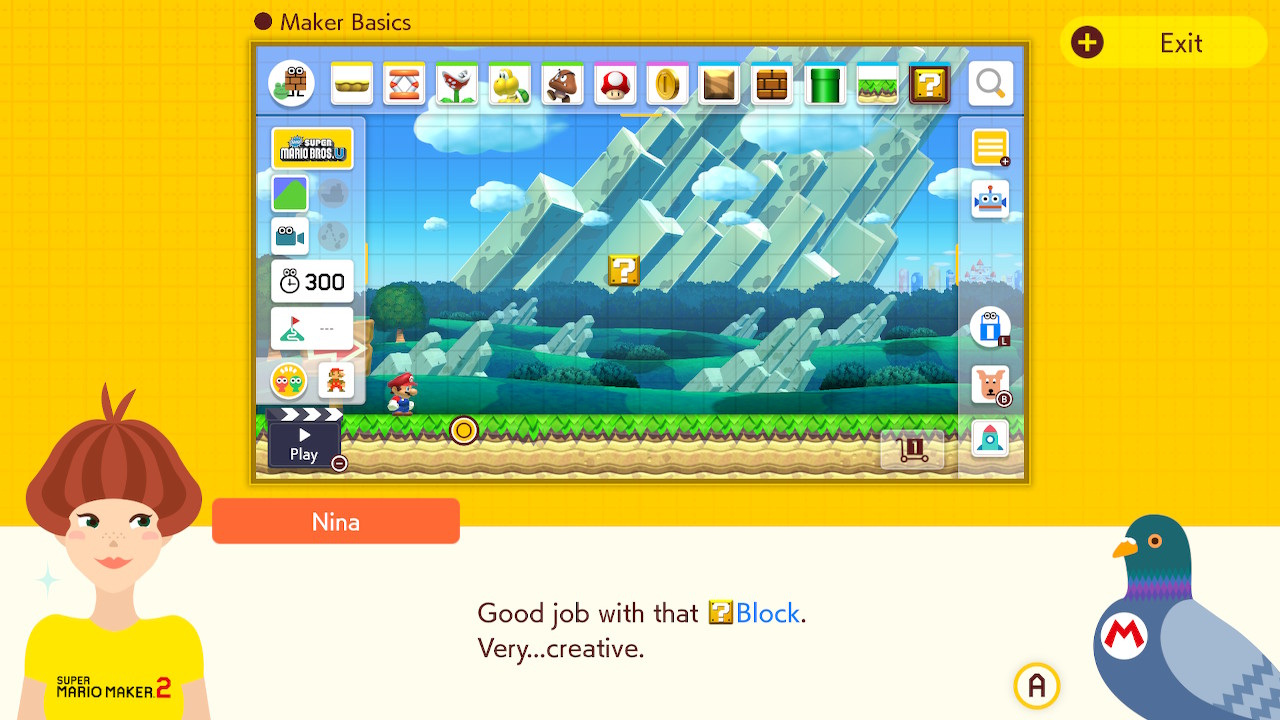
mario tutorial

A welcome addition is the robust tutorial for the maker mode, featuring the weird/cute duo Nina and Kawamura (a girl and a pigeon) walking the player through the tools and providing what amounts to platformer design 101. There’s also a single-player campaign: A hundred unconnected levels that let you have some good old Nintendo-designed Mario fun, but also serve as inspiration for how to use various blocks and level styles.
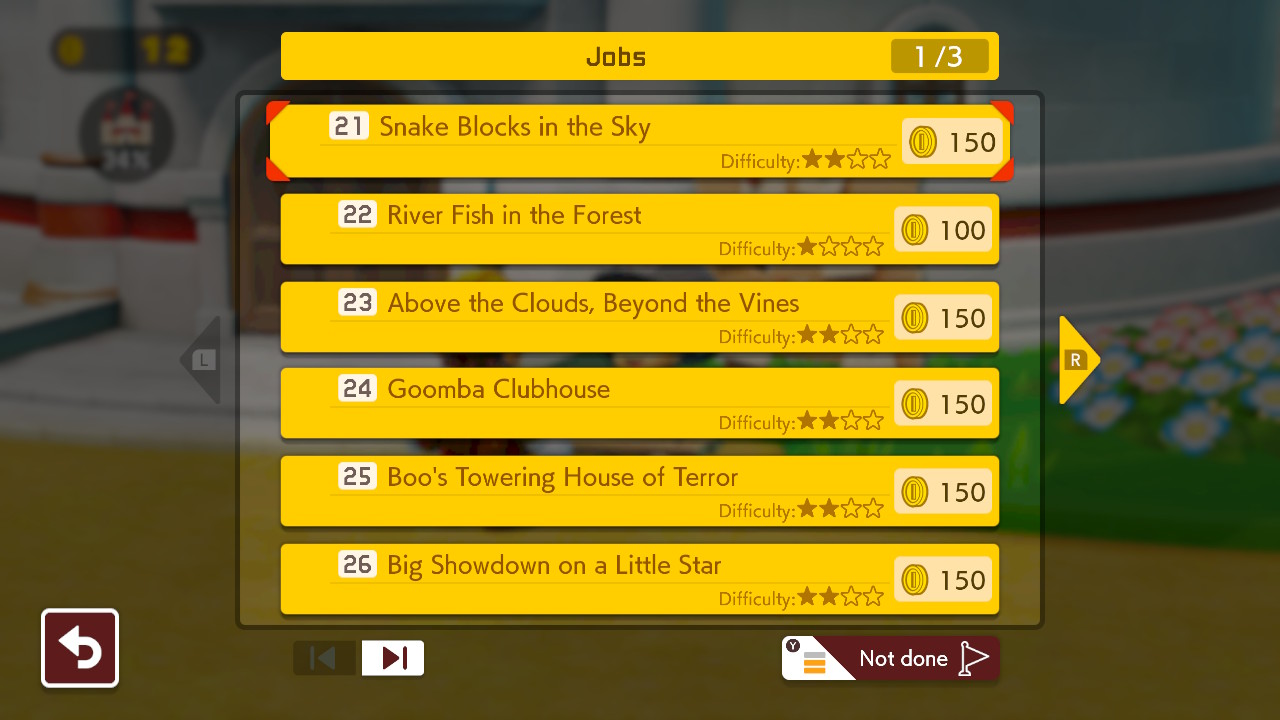
storymode levels

Within days of release, the “Course World” is already brimming with strange and fun levels to play, full of ingenious ideas and uses for blocks and enemies that will have you shaking your head — and biting your controller with rage. There’s even a whole category for “auto-Mario” levels (a strange and wonderful genre that sprang out of the original Mario Maker) that take the player through an adventure sometimes without any input at all.

Importantly, this game adds a few things that Mario levels really need: locked doors and keys, for instance, or checkpoints so players don’t have to replay a punishing section. That opens up things considerably and already I have seen lots of interesting levels taking advantage of this to make you visit multiple areas, beat a certain enemy before proceeding, and such.

puzzle

This devious little level is nothing like Mario, yet uses Mario rules

I’ll let other reviews go into detail about the various more granular improvements the game makes. Suffice it to say here that it’s a ton of fun, making levels is hard and between the single-player, multiplayer and Course World modes, Mario Maker 2 more than justifies its purchase price. For my part I want to call attention to something I feel is important about the game and the carefully thought-out limitations it places on creators.

Nintendo’s zeal for seeking and destroying copyright violations is well known; just last week we had Mario Royale shut down almost instantly. And the company is also well known for its highly conservative stance on licensing, in some ways at least — for instance, only ever letting Zelda games appear on Nintendo consoles rather than having them come out on Sony and Microsoft platforms as well. There are plenty of good reasons for that, I’m just making a note of it.

Nintendo’s fan base, however, is the only one that rivals it for zeal, and over the years they have found many ways to modify or reuse the properties that Nintendo has been happy to either let lie or recycle tamely via Virtual Console. Nintendo would never, for example, have made Mario Royale. Nor would it make something like the A Link to the Past Randomizer, which changes the locations of items in the classic game to make each playthrough unique. (A similar one exists for Super Metroid and other beloved and much-played classics.)

Again, Nintendo’s philosophy forbids many of these things — their idea of games is a much more pure one and it’s hard to fault it when the results are things like Super Mario Odyssey and Breath of the Wild. But players want more, and they regularly do whatever they can to break Nintendo’s creations out of the carefully manicured walled gardens the company has long cultivated for them.

Enter Mario Maker.

This title essentially performs a bleed on the community that is so fervently dedicated to playing Nintendo’s games outside of Nintendo’s rules. By letting players make their own levels, and by giving them a tool that’s really quite powerful to do so, they remove a great deal of the pressure that has built up and resulted in things like rom hacks.
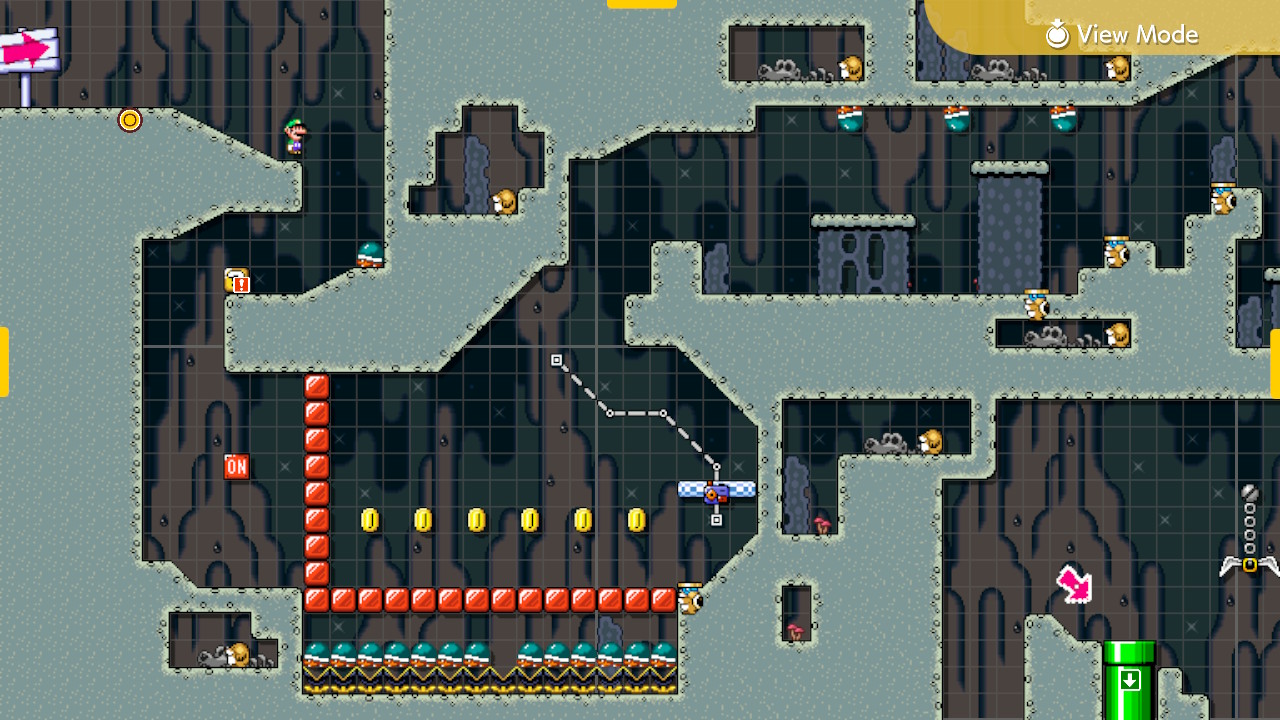
mycourse

A course I’m working on: Infiltrating Moleville

The second game especially opens up the creative floodgates, since the new items and capabilities make possible the complex levels that have made up the best of Mario from the beginning. Straight-up platforming is always fun, but Nintendo’s level designers have learned to theme each level with a specific skill set or feel in mind, and the sequel’s tools enable that to take place in a much greater way than before.

And yet there are some purposeful omissions. The most purposeful is the lack of any ability to tie together levels using an overworld map or even a 1-1, 1-2, 1-3 structure. While it’s possible some creators may be able to circumvent this in a small way, this is a clear sign from Nintendo that this is a tool for making levels, not games.

Withholding higher structure (that could be as simple as designing playlists) is a strategic move that reserves that structure for official games. And allowing for easy sharing of levels and playlists, instead of relying on Nintendo’s own algorithms and onerous number-based sharing system, makes it trivial for the company to control the means of distribution.
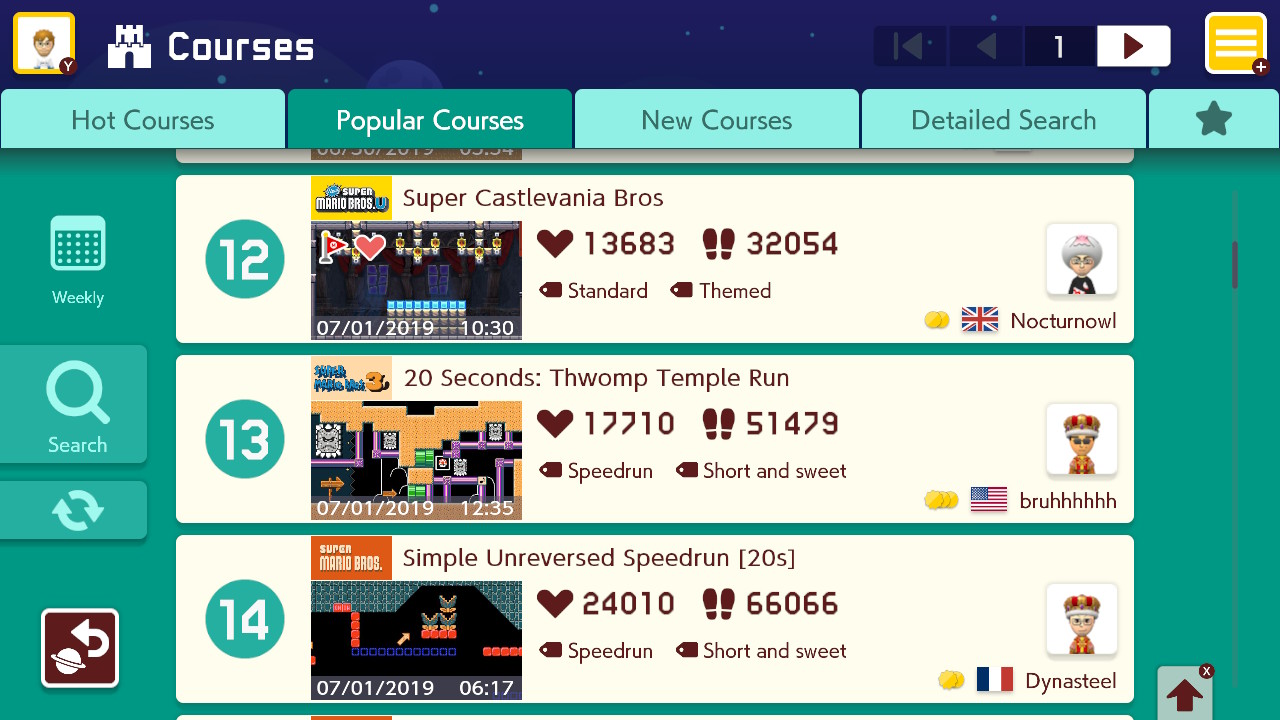
courseworldAgain, I’m not saying they shouldn’t, exactly — and there will be thousands and thousands of levels worth playing, more than any one player could possibly want. But what’s clear from the popularity of Mario Maker is that millions of players also want to see Nintendo’s creations unbound by Nintendo’s strict rules. And while Mario Maker 2 loosens those rules considerably, it also indicates the limits of what Nintendo is willing to allow its community to do.

That said, within those limits there are near infinite variations and, in fact, it’s probable that the game’s creators deliberated intensely on what to include and what to exclude. I’m desperately missing the invincible giant moles from SMW, but would having them (and a dozen other rare critters) in the enemy selection just clutter it up? I’d like to have an overworld, but for the casual maker or speedrunning level maker, wouldn’t that really just be an extra step that would be skipped more often than not? The intention of the game is to facilitate creation, but part of that is knowing what tools not to provide.

Ultimately my wish that Nintendo demolish the walls of its garden amounts to nothing more than asking them to give away the keys to the castle, so to speak. And it’s not like I’m being oppressed here — I can barely put together a decent course of my own, and others are happy to work within these constraints. Not being a genius Maker myself, I tend to see the restrictions rather than the possibilities.

I just want more Mario, and in fact more Mario than Nintendo is willing to give. With Mario Maker it has secured me a constant drip-feed of Mario-adjacent content that’s just enough to keep me playing but also just limited enough that I look forward with immense impatience to the next “real” game. Whether that’s a kindness or a cruelty I can’t say, but whatever it is, it’s going to take up a hell of a lot of my time over the next couple of years.


Bird investor Upfront Ventures eyes $250M growth fund

Upfront Ventures, a Los Angeles-based venture capital firm, has filed paperwork with the U.S. Securities and Exchange Commission to raise its third growth-stage investment fund.

Though the firm typically invests at the seed and Series A, capital from Upfront Growth III will be used for follow-on or late-stage deals.

The firm, known for its investments in Bird, Goat, Ring, ThredUP and Parachute, plans to raise $250 million for the effort. Mark Suster and Yves Sisteron, listed on the filing, lead the firm as managing partners. Upfront’s investor line-up also includes partners Kobie Fuller, Greg Bettinelli, Kara Nortman and Kevin Zhang.

One of the oldest VCs rooted in LA, Upfront previously closed on $400 million for its sixth flagship early-stage fund in 2017.

LA is on pace for a banner year of VC investment, attracting $33 billion across more than 1,000 deals already in 2019, according to PitchBook. Last year, companies headquartered in LA raised more than $60 billion.

Appeals court rules Amazon can be held liable for third-party products

In a blow to Amazon, a U.S. appeals court ruled that the mega-retailer can be held accountable for faulty third-party sales. The ruling arrived this week via the 3rd U.S. City Court of Appeals in Philadelphia, running counter to a past lower court ruling that had come out in Amazon’s favor.

If upheld, the ruling could have a big impact on the way the company does business. Nearly half of the items sold through the site are handled by third-party sellers. That accounted for around $11 billion in Amazon’s revenue for the previous quarter.

The ruling is in line with Pennsylvania law — liability for products often varies from state to state. Resident Heather Oberdorf sued the company in federal court back in 2016 over a retractable dog leash that snapped, breaking her glasses and causing permanent loss of vision in her left eye.

“It’s gratifying that the 3rd Circuit agreed with our argument and recognized that the existing interpretation of product liability law in Pennsylvania was not addressing the reality, the dominance that Amazon has in the marketplace,” Oberdorf’s lawyer told Reuters.

Amazon has yet to comment on the case, but it seems likely the company will ultimately appeal the ruling. A lower court will rule on whether the leash that caused Oberdorf’s injury was, indeed, defective.