For all the attention on sophisticated nation-state attacks, the malware that’s most likely to hit your phone is much more mundane.
Category: Tech news
hacking,system security,protection against hackers,tech-news,gadgets,gaming
‘Snowpiercer’ Trains an Eye on TV—and Its Genre DNA Runs Deep
Under the watch of the creator of ‘Orphan Black,’ the post-apocalyptic thrill-ride folds in elements of ‘Westworld,’ ‘The Leftovers,’ and more.
Phase 4 of the Marvel Cinematic Universe Isn’t Cinematic
A good portion of the upcoming Marvel Studio’s slate will be streaming on Disney+.
*Star Trek: Picard* Shows Where the Franchise Is Boldly Going
It’s also a look at CBS All Access’ future.
‘Snowpiercer,’ ‘Picard,’ and More Awesome Trailers Hit Comic-Con
Comic-Con’s biggest day brought the most massive trailers of the convention.
Watch Patrick Stewart grow bored of his winery in first ‘Star Trek: Picard’ trailer
Yes, Captain Jean-Luc Picard is indeed coming back. We knew this from previous announcements, but CBS All Access turned heads at this year’s San Diego Comic Con with an actual trailer of Sir Patrick Stewart Picarding his heart out. He says “engage!” for god’s sake.
From what I can grasp from this trailer, the plot of this Picard-centric follow-up to Star Trek: The Next Generation is that Jean-Luc has retired to a quiet life running a winery but quickly realizes that he’s not through adventuring. For some reason, he has Data stored in pieces in a drawer. He’s convinced to come out of retirement with what looks like a fairly rag-tag crew. Then Data is back somehow.
All of which is to say that this looks awesome and I wish it was here now instead of its “early 2020” release date on the CBS streaming service.
NASA’s Orion crew capsule is officially complete and ready to prep for its first Moon mission
NASA’s 50th anniversary celebrations weren’t limited to just remembrances of past achievements – the space agency also marked the day by confirming that the Orion crew capsule that will bring astronauts back to the Moon for the first time since the end of the Apollo program is ready for its first trip to lunar orbit, currently set for sometime after June 2020.
Orion won’t be carrying anyone for its first Moon mission – instead, as part of Artemis 1, it’ll fly uncrewed propelled by the new Space Launch System, spend a total of three weeks in space including six days orbiting the Moon, and then return back to Earth. Once back, it’ll perform a crucial test of high speed re-entry into Earth’s atmosphere, to demonstrate the efficacy of the Orion capsule’s thermal shielding prior to carrying actual crew for Artemis 2 in 2022, and ultimately delivering astronauts back to the lunar surface with Artemis 3 in 2024.
This isn’t Orion’s first trip to space, however – that happened back in 2014 with Exploration Flight Test 1, another uncrewed mission in which Orion spent just four-hours in space, orbiting the Earth twice and then returning to ground. This mission used a Delta IV rocket instead of the new SLS, and was meant to test key systems prior to Artemis.
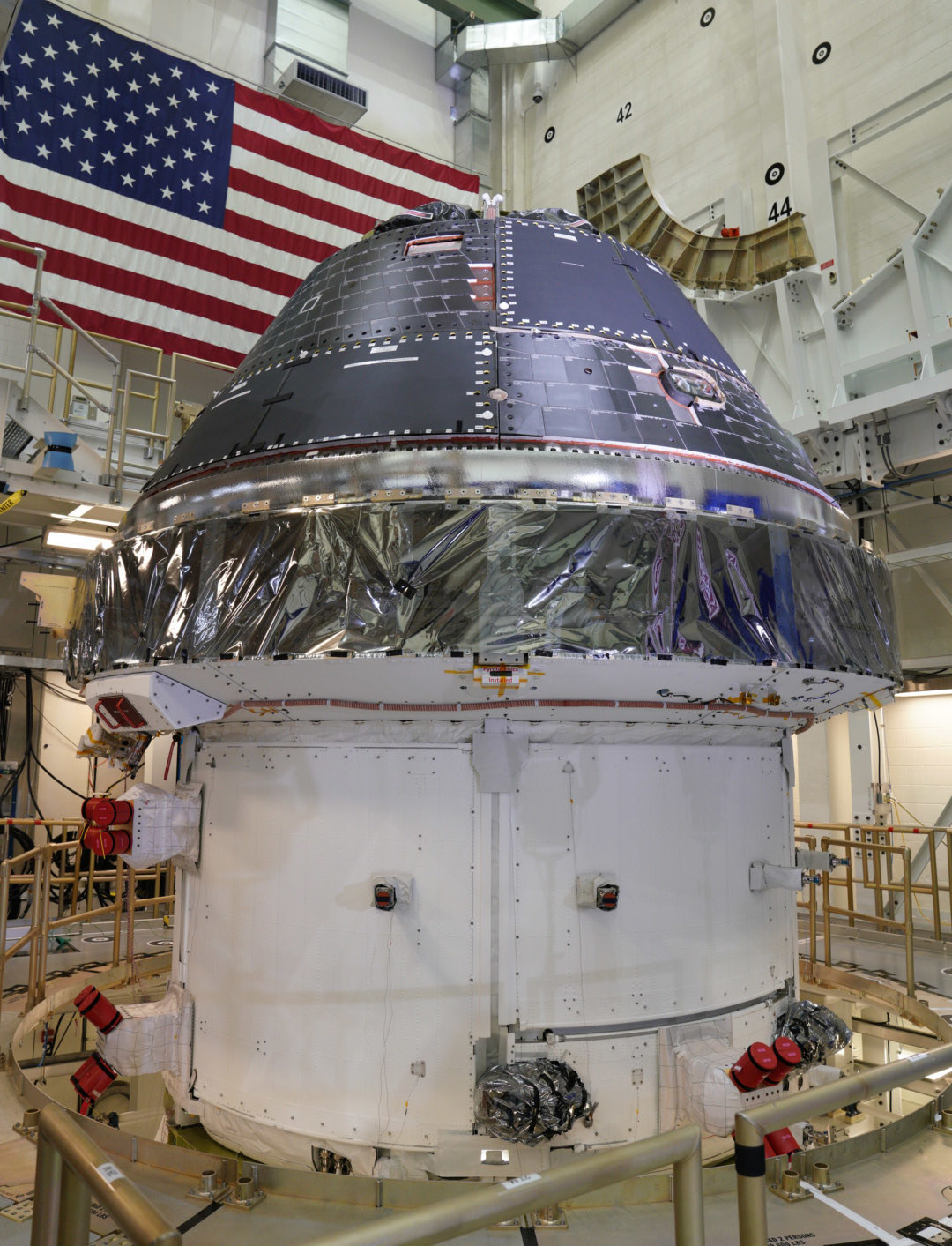
On the anniversary of the Apollo Moon landing, the Lockheed Martin-built Orion capsule for the Artemis 1 mission to the Moon is declared finished.
NASA contractor Lockheed Martin, which is responsible for the Orion spacecraft’s construction, also noting that the combined crew module and service module are currently being properly integrated, and then will undergo a series of tests before returning to Kennedy Space Center in Florida by the end of the year to begin the final preparations before launch.
US national security, climate change, startup HR, and launching in the Midwest
Reminder: Extra Crunch Event Discounts for Summer Party
TechCrunch’s annual Summer Party is just around the corner next week — come meet all the staff at the Park Chalet beer garden on the Pacific Coast in San Francisco this Thursday evening. We handed out 50 free tickets to EC subscribers this past week by email, but if you weren’t able to snag one, be sure to use your event discount (part of the annual EC subscription offering) by emailing your member customer service representative at [email protected].
How US national security is holding the internet hostage
I have written quite a bit about CFIUS, the inter-agency process for reviewing venture capital investments and company acquisitions made by foreigners. Now, our special correspondent Mark Harris explores a much less well-known group known as Team Telecom who has been actively reviewing — and denying — additional fiber bandwidth beneath the Pacific Ocean.
Comic-Con’s Batman VR Experience Soars—While Others Fall Flat
A couple of experiences shone in San Diego, but most of them proved that AR and VR need care—and money—to excel.
Elon Musk says Starship prototypes will have first test flights in ‘2 to 3 months’
SpaceX CEO Elon Musk believes that both the Texas and Florida Starship prototype rockets being developed by the private space company will fly “in 2 to three months,” which is an aggressive timeline considering the planned untethered flight of its Starhopper demonstration prototype missed its target of running this past week.
SpaceX is developing two Starship prototypes in parallel, at both its Texas and Florida facilities, in what is sometime referred to in the technology industry as a ‘bake-off.’ Both teams develop their own rockets independently, in an attempt to spur a sense of internal competition and potentially arrive at combined progress that wouldn’t be possible with just a single team working together on the task.
Earlier this month, Musk stated that the inaugural untethered test of its Starhopper (Hopper for short) Starship tech demo prototype would happen this past Tuesday, July 16. Those plans were derailed when a preliminary test firing of its engines resulted in a large fireball captured on camera by many local observers. Musk later said on Twitter that this was the result of a “post test fuel leak” but added that there was actually no significant damage to the sub-scale Starhopper itself.
The SpaceX CEO then continued with a new timeline for the untethered test, saying it should happen sometime this coming week instead. That’s definitely a required step for the company to take ahead of any test flights of the more complete Starhopper prototypes.
Those initial test will be sub-orbital flights, Musk said on Friday, with orbital tests to follow some “2 to 3 months” after those first test flights 2 to 3 months from today – so, that puts the earliest orbital test flights for Starship at just 4 to 6 months from now. Based on how Musk’s stated timelines match up with reality, you should definitely consider that an extremely optimistic assessment.
Musk also shared some detail about how Starship will launch – it’ll use a launch structure, which is currently under construction at another site, much like Falcon 9 and Falcon Heavy does today.
Hold the first Moon rock ever collected with your smartphone
NASA is celebrating the 50th anniversary of the Apollo 11 Moon landing in a variety of ways today, but here’s one you can experience no matter where you are, provided you have a modern smartphone. NASA’s Astromaterials Research & Exploration Science (ARES) department has released a fully detailed model of the first ever sample of lunar soil and rock, bagged by Astronaut Neil Armstrong during humanity’s first-ever trip to the Moon’s surface.
The rock is fully manipulable provided you visit this link on a smartphone with the capability to display interactive 3D field on the web, so you can twist and turn it using touch to get a better look. It has an incredible level of detail, (“research-grade,” in fact, according to ARES, and is part of a larger effort to make more of the organization’s larger library of lunar and antarctic meteroite samples available to more people, both for research and for education.
 These 3D models are created using extremely high resolution photography that captures high megapixel images of the actual samples from 240 different angles, which can offer resolution as detailed as just 30 to 60 microns (doubt the width of a human hair).
But that’s just a start – software uses computer vision to ensure the 3D image provides accurate volume and text true information, and a process that involves the use of X-rays to get a cross-section image without actually slicing up the samples is also employed to ensure fully accurate representation.
If somehow you don’t have a smartphone but you do have those basic red/blue 3D glasses, then you can also view the image below in eye-popping detail. Meanwhile, NASA’s also opening up its lab of Moon rock samples to geologists for the first time, so they can study them directly in person, after years of keeping them under strict lock and key.
Original Content podcast: We’re not on the same page about ‘Frankenstein’s Monster’s Monster, Frankenstein’
Just to get this out of the way: “Frankenstein’s Monster’s Monster, Frankenstein” is a great title. In fact, it’s probably the best thing about the new comedy special on Netflix .
That’s not a complaint about the special itself, which stars David Harbour (a.k.a. Chief Hopper on “Stranger Things”), as both David Harbour Jr — an actor taking on the role of Frankenstein in a play also called “Frankenstein’s Monster’s Monster, Frankenstein” — and David Harbour III, an actor who investigates his father’s life decades later.
If this sounds needlessly complicated don’t worry. As we explain on the latest episode of the Original Content podcast, the plot mostly serves as a springboard lots for jokes about actorly jealousy, Chekhov’s gun and the fact that no one can remember that Frankenstein and his monster are two different people. Anthony and Darrell, at least, found the whole thing to be pretty darn delightful.
Jordan, on the other hand, was baffled and unimpressed, and no matter how much time her co-hosts spent over-explaining the various gags, we couldn’t win her over.
In addition to our review, we discuss Netflix’s recent earnings report and try to figure out why, for one of the first times in its history, the streaming service reported a net loss in U.S. subscribers.
You can listen in the player below, subscribe using Apple Podcasts or find us in your podcast player of choice. If you like the show, please let us know by leaving a review on Apple. You can also send us feedback directly. (Or suggest shows and movies for us to review!)
If you’d like to skip ahead, here’s how the episode breaks down:
0:00 Intro
1:50 Netflix subscriber numbers
22:53 “Frankenstein’s Monster’s Monster, Frankenstein” review
Are Humans the Meanest Species in the Universe?
Melinda Snodgrass’ novel *The High Ground* examines human cruelty in an alien first-contact scenario.
Browser Extensions Scraped Data From Millions of People
Slack passwords, NSO spyware, and more of the week’s top security news.
Startups Weekly: The opportunities & challenges for mental health tech
Hello and welcome back to Startups Weekly, a weekend newsletter that dives into the week’s noteworthy startups and venture capital news. Before I jump into today’s topic, let’s catch up a bit. Last week, I wrote about Zoom and Superhuman’s PR disasters. Before that, I noted the big uptick in VC spending in 2019.
Remember, you can send me tips, suggestions and feedback to [email protected] or on Twitter @KateClarkTweets. If you don’t subscribe to Startups Weekly yet, you can do that here.

Now let’s talk about mental health startups. VCs may be confident in the potential of teletherapy, but struggling companies in the space tell another story.
Nine months ago Basis launched a website and app for guided conversations via chat or video with pseudo-therapists or people trained in research-backed approaches but who lack the same certifications as a counseling or clinical psychologist. I wrote a story noting that the company, led by former Uber VP Andrew Chapin, had raised a $3.75 million round from Bedrock, Wave Capital and Lightspeed Venture Partners.
But last month, things took a turn for the worse. Basis quietly shut down its website and app, its co-founder and chief science officer, Lindsay Trent, a former research psychologist at Stanford, exited and a good chunk of eight-person team went out the door.
Basis was one of many startups to benefit from VCs’ growing appetite for innovative businesses in the mental health sector. As the stigma associated with seeking mental health support has dwindled and technology developments have allowed for personalized mental health tools and practices, more entrepreneurs have entered the space. Basis, despite having many of the ingredients needed for startup success, couldn’t achieve success with its direct-to-consumer approach to therapy.
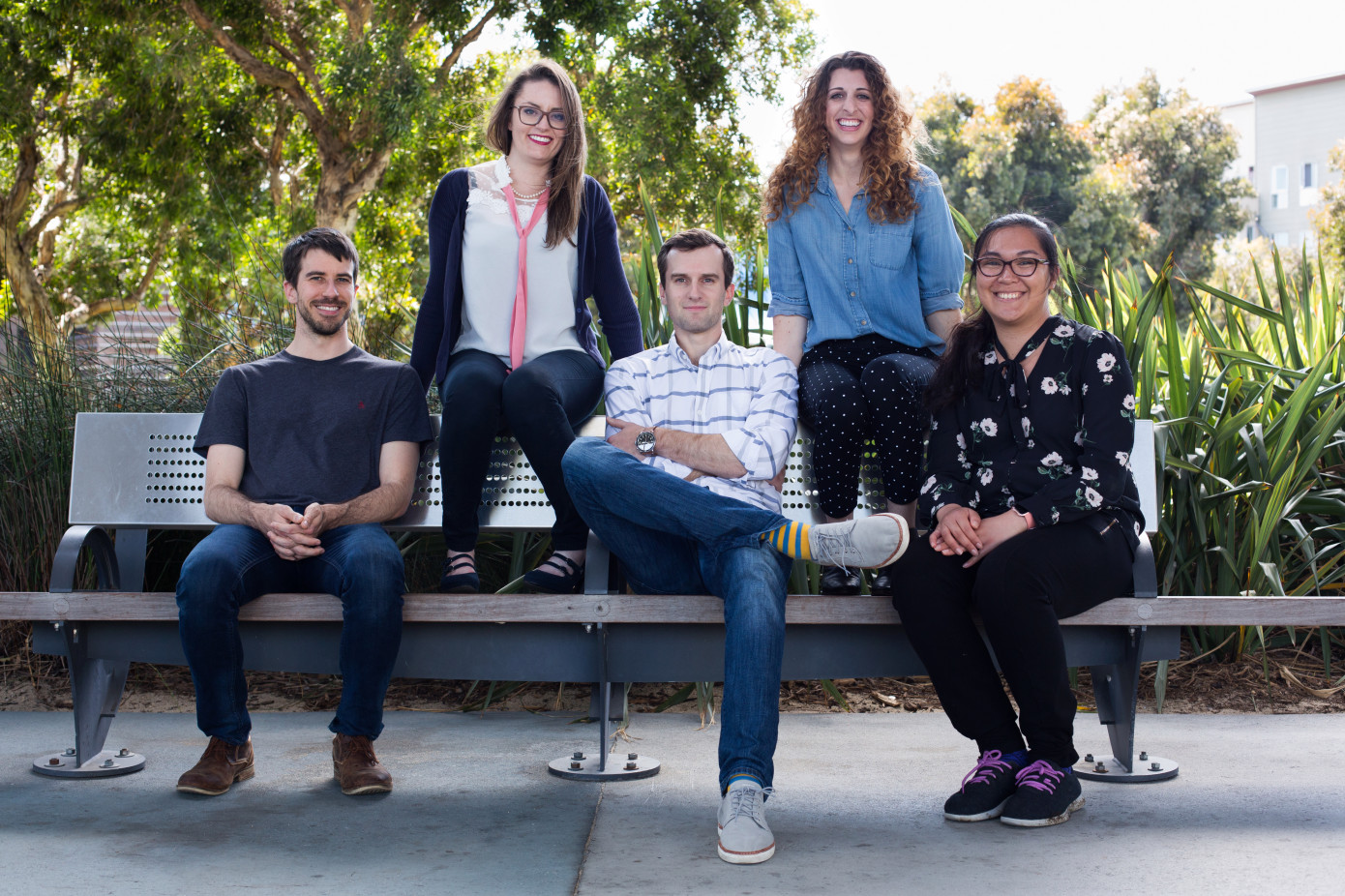
Basis co-founder and CEO Andrew Chapin (center) with the founding team last year
When asked why the Basis app and website were no longer active, Chapin said the company is in the process of “shifting business models.” He declined to provide further details. Lightspeed declined to comment. Wave Capital and Bedrock did not respond to requests for comment.
Basis, which did not claim to treat diagnosable conditions like bipolar disorder or schizophrenia, charged $35 per 45-minute phone call with its paraprofessionals. Its use of unlicensed therapists sparked concern in the mental health provider community. Harley Therapy founder Sheri Jacobson, an accredited counselor and psychotherapist, noted flaws with the service: “For me, replacing professional therapists and all of their lived experience and empathy with telepsychiatry administered by novice advisers could be potentially dangerous,” Jacobson said in a statement. “Would you let a learner driver navigate an oil tanker?”
What could go wrong?
“Because Basis works with paraprofessionals — people trained in research-backed approaches but who don’t have the same certifications as a counseling or clinical psychologist — it’s a much cheaper alternative to paying for a therapist.”
— Christina Farr (@chrissyfarr) October 4, 2018
Consumer mental health startups continue to attract capital from private market investors. Workplace mental health service Unmind, Blackthorn Therapeutics (a neurobehavioral health company using machine learning to create personalized medicine for mental health) and Talkspace (a leader in the online counseling space) have all closed funding rounds in 2019.
Whether Basis will find its footing is TBD. What’s clear is VCs are still willing to dole out checks as they experiment with the mental health space, but if startups don’t start proving viable business models and learn to navigate the complex adoption curve, we’ll see additional startups cease operations and mental health tech’s moment in the sun will end all too soon.
Now for a quick look at the top VC and startup news of the week:

Adam Neumann (WeWork) at TechCrunch Disrupt NY 2017
The eccentric co-founder and CEO of the international real estate co-working startup WeWork has reportedly cashed out of more than $700 million from his company ahead of its upcoming IPO. According to Axios, a majority of that capital came in the form of loans while the remaining $300 million came from stock sales. The size and timing of the payouts is unusual, considering that founders typically wait until after a company holds its public offering to liquidate their holdings. But even with the big sale, Neumann remains the single largest shareholder in WeWork.
The customer experience management platform priced shares of its stock at $21 apiece Thursday, closing up Friday a whopping 76%. Money left on the table? I think so, and I bet Bill Gurley does too. The nearly two-decades-old company sold a total of 15.5 million shares in its IPO, raising $326 million at a $2.5 billion valuation in the process. Medallia’s $268 million in VC funding came from Sequoia Capital — which owned a roughly 40% pre-IPO stake — Saints Capital, TriplePoint Venture Growth and Grotmol Solutions.
The stock was dramatically mispriced by an archaic hand allocated matching process that needs to go away. This is 2019 and everyone intelligent knows there is a better way to match supply and demand. These are failures.
— Bill Gurley (@bgurley) June 29, 2019
Uber finally sets diversity and inclusion goals
Within the next three years, Uber aims to increase the percentage of women at levels L5 and higher (manager and above) to 35% and increase the percentage of underrepresented employees at levels L4 and higher to 14%. Currently, Uber is 9.3% black and 8.3% Latinx compared to just 8.1% black and 6.1% Latinx last year. Uber’s tech team, however, is just 3.6% black, 4.4% Latinx and 2.7% multi-racial. Unsurprisingly, there’s little representation of black and brown people in leadership roles. While Uber CEO Dara Khosrowshahi commented that he’s proud the promotion rates for women have improved over the last couple of years, he added, “I can’t yet say the same for promotions for people of color.”
Email platforms and productivity apps and subscription tools, oh my!
Startups focused on improving productivity and email are unstoppable this year. The latest to close VC rounds are Substack and Notion. Andreessen Horowitz is betting that there’s still a big opportunity in newsletters, leading a $15.3 million Series A in Substack. The company, which consists of just three employees working out of a living room, says that newsletters on the platform have now amassed a total of 50,000 paying subscribers (up from 25,000 in October) and that the most popular Substack authors are already making hundreds of thousands of dollars per year. As for Notion, The Information reported this week that it raised $10 million at an $800 million valuation. Notion is a note-taking and task management app that hasn’t sought much VC funding and, as a result, VCs have been desperately knocking at its door.
Other notable funding events of the week:
- India’s Oyo valued at $10B after founder buys back shares
- Car-sharing marketplace Turo gets $250M at $1B valuation
- Banking startup N26 raises another $170M at $3.5B valuation
- Patreon secures $60M Series D, targets international growth and customization
- Business travel SaaS startup TravelPerk nabs $60M
- Esports company 100 Thieves raises $35M Series B
- Serena Williams, Marc Cuban back Mahmee, a network for new moms
Silicon Valley has many dreams. One dream — the Hollywood version anyway — is for a down-and-out founder to begin tinkering and coding in their proverbial garage, eventually building a product that is loved by humans the world over and becoming a startup billionaire in the process. But when it comes to that Silicon Valley dream of a nice house from a decent return on exit, it’s getting narrower and less widely distributed. Blitzscaling is making a lot of people a lot of wealth, but early employees? Not so much.
Read more from TechCrunch editor Danny Crichton.
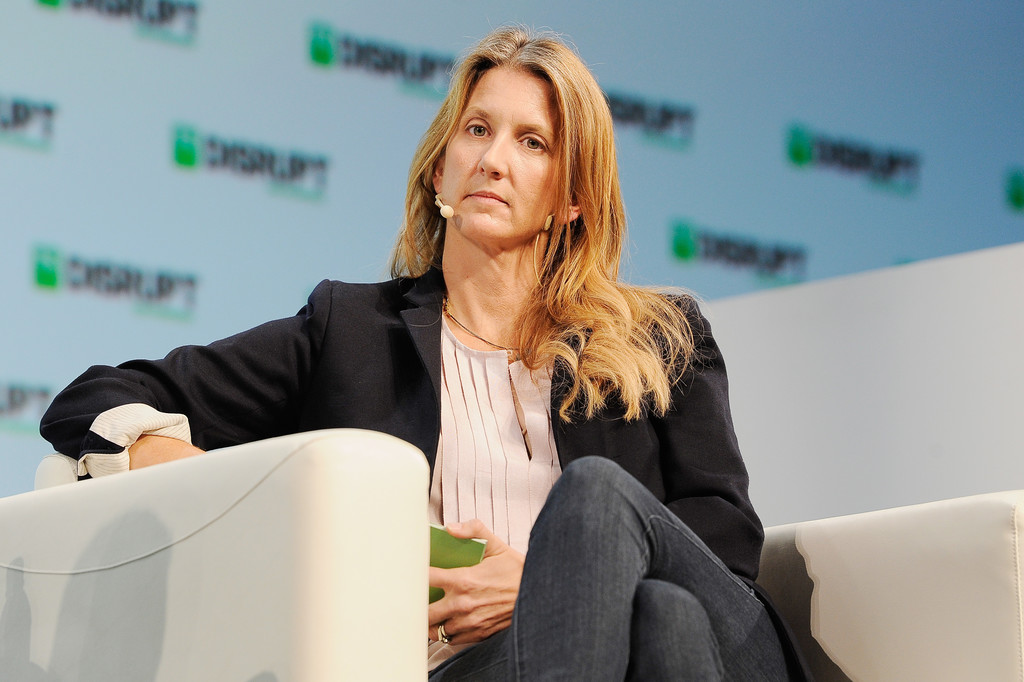
TechCrunch’s senior transportation reporter Kirsten Korosec.
TechCrunch senior transportation reporter Kirsten Korosec has something great in the works. All of us here at TechCrunch are very excited to announce The Station, a new TechCrunch newsletter all about mobility. Each week, in addition to curating the biggest transportation news, Kirsten will provide analysis, original reporting and insider tips on the fast-growing industry. Sign up here to get The Station in your inbox beginning in August.
While we’re on the subject of amazing TechCrunch #content, it’s probably time for a reminder for all of you to sign up for Extra Crunch. For a low price, you can learn more about the startups and venture capital ecosystem through exclusive deep dives, Q&As, newsletters, resources and recommendations and fundamental startup how-to guides. Here are some of my personal favorite EC posts from the past week:
- The Roblox EC-1, Part 1: The Origin Story // How Roblox avoided the gaming graveyard and grew into a $2.5B company by Sherwood Morrison.
- What seed-stage dilution tells us about changing investor expectations // A little-noticed startup financing trend has big implications for how VC firms evaluate companies raising Series A and B rounds by Dale Chang.
- Which types of startups are most often profitable? // One answer: E-commerce, Chrome extensions, mobile apps, enterprise SaaS, SMB SaaS — in that order by Julian Shapiro.
If you enjoy this newsletter, be sure to check out TechCrunch’s venture-focused podcast, Equity. In this week’s episode, available here, Equity co-host Alex Wilhelm and I debate Forbes’ latest next billion-dollar startups list.
Extra Crunch subscribers can read a transcript of each week’s episode every Saturday. Read last week’s episode here and learn more about Extra Crunch here. Equity drops every Friday at 6:00 am PT, so subscribe to us on Apple Podcasts, Overcast, Pocket Casts, Downcast and all the casts.
That’s all, folks.