Following record FTC fine, Facebook stock pops on Q2 earnings beat

Hours after receiving a record $5 billion FTC fine on privacy violations, Facebook delivered a Q2 earnings beat with revenue of $16.9 billion with $1.99 adjusted EPS compared to the Zacks Consensus Estimate of $1.90 EPS on revenue of $16.45 billion.

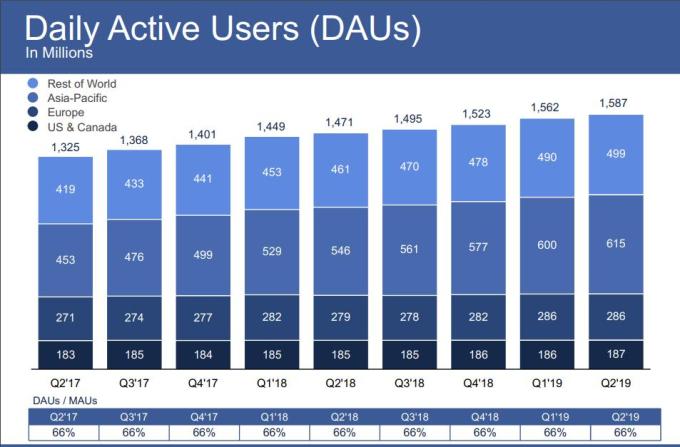
Facebook reported it has 1.59 billion DAUs and 2.1 billion daily active users of its family of apps. The U.S. & Canada and Asia-Pacific contingents continued to see nearly flat growth while the company saw quicker growth in its European and “Rest of World” sectors.

EARTU4AAffxT

The company’s stock was up around 3% in after-hours trading.

Facebook detailed that it will be paying a $5 billion FTC fine and submitting to certain stipulations, as was confirmed this morning, but for those hoping this agreement signaled the end of Facebook’s FTC troubles, the earnings report detailed that may not be the case. The release disclosed that last month the FTC opened an antitrust investigation of Facebook; this news follows reports of a DOJ investigation into the company — among others — as well.

“The online technology industry and our company have received increased regulatory scrutiny in the past quarter,” the earnings release reads. “In June 2019, we were informed by the FTC that it had opened an antitrust investigation of our company. In addition, in July 2019, the Department of Justice announced that it will begin an antitrust review of market-leading online platforms.”

Postmates’ self-driving delivery rover will see with Ouster’s lidar

Postmates’ cooler-inspired autonomous delivery robot, which will roll out commercially in Los Angeles later this year, will rely on lidar sensors from Ouster, a burgeoning two-year-old startup that recently raised $60 million in equity and debt funding.

Postmates unveiled the first generation of its self-described “autonomous rover” — known as Serve — late last year. The vehicle uses cameras and light detection and ranging sensors called lidar to navigate sidewalks, as well as a backup human who remotely monitors the rover and can take control if needed.

A new second-generation version made its debut onstage earlier this month at Fortune’s Brainstorm Tech event. This newer version looks identical to the original version except a few minor details, including a change in lidar sensors. The previous version was outfitted with sensors from Velodyne, a company that has long dominated the lidar industry.

The supplier contract is notable for Ouster, a startup trying to carve out market share from the giant Velodyne and stand out from a global pack of lidar companies that now numbers close to 70. And it could prove substantial for the company if Postmates takes Serve to other cities as planned.

Lidar measures distance using laser light to generate highly accurate 3D maps of the world around the car. It’s considered by most in the self-driving car industry a key piece of technology required to safely deploy robotaxis and other autonomous vehicles.

Ouster’s strategy has been to cast a wider net for customers by selling its lidar sensors to other industries, including robotics, drones, mapping, defense, building security, mining and agriculture companies. It’s an approach that Waymo is also pursuing for its custom lidar sensors, which will be sold to companies outside of self-driving cars. Waymo will initially target robotics, security and agricultural technology.

Ouster’s business model, along with its tech, has helped it land 437 customers to date and raise a total of $90 million.

The contract with Postmates is its first major customer announcement. COAST Autonomous announced earlier this week that it was using Ouster sensors for its a low-speed autonomous shuttles. Self-driving truck companies Kodiak and Ike Robotics have also been using the sensors this year.

Ouster, which has 125 employees, uses complementary metal-oxide-semiconductor (CMOS) technology in its OS1 sensors, the same tech found in consumer digital cameras and smartphones. The company has announced four lidar sensors to date, with resolutions from 16 to 128 channels, and two product lines, the OS-1 and OS-2.

Snap overtakes its IPO debut price

Snap may no longer be the laughing stock of the New York Stock Exchange.

On the heels of renewed user growth and an earnings beat, Snap closed Wednesday with a share price at $17.60, up 18.68% for the day, giving the company its first close above its $17 IPO debut price since March of last year.

After a highly anticipated debut sent Snap’s share price climbing 44% on its first day of trading in March of 2017, the company’s stock soon plummeted as its first earnings report detailed slowed user growth that would continue for the next several periods. It was only a few months later that the company’s stock dipped below its $17 debut share price, a number it briefly rose above in early 2018 before sinking to an all-time low of $4.82 in late December.

The company’s earnings report yesterday may signify a turning point for the social media company that has reportedly struggled to retain executive and engineering talent in recent months in the face of rapidly declining investor enthusiasm. In the company’s Q2 earnings report, Snap executives highlighted their strengths as they highlighted a 13 million quarter-over-quarter increase in daily active users and a command over the 18-24 age bracket.

The key to maintaining that growth will be whether Snap can continue to deliver viral hits that bring users to the platform, like its augmented reality lenses that the company said contributed 7-9 million of the new users that came aboard last quarter.

Wednesday’s rally will give Snap more breathing room to pursue its original content strategy and its more ambitious efforts, like its game development and augmented reality platforms.

Peer-to-peer parking marketplace Rover tests monthly subscriptions

In today’s installment of “the future is 100% subscription-based,” Toronto-based startup Rover is testing out subscriptions for its parking marketplace. Rover lets users list their unused parking spots for on-demand rental by others on the service, giving them a passive way to earn some income while hopefully increasing the utilization rate of parking spaces at the same time.

Rover has offered the spots on their platform on a per-use, on-demand basis before now, but it’s going to pilot a monthly subscription starting this summer, with a planned test phase extending into early fall. The company says it’s going to try out a few different versions of a monthly sub, including potential perks like a percentage discount versus individual on-demand parking charges, advanced booking and premium customer service.

Pricing should be in the ballpark of between $5 and $15 Canadian depending on the features you’re willing to pay for, and this should inform eventual subscription price points for the startup’s services should they move beyond this pilot phase. Rover currently offers spots in Toronto, Montreal and Ottawa, with plans to expand to Canada’s west coast and eventually California in the future.

Uber recently debuted a subscription pilot that rolls in its ride-hailing, Eats, bikes and scooter rental services, and Rover cites this move as an example of the move to subscriptions generally in the on-demand space. Subscriptions are a great way for consumers to easily take care of known recurring costs, but the rise of this business model across a range of industries will definitely test the limits of consumer willingness to trade cost for convenience.

Dataplor raises $2M to digitize small businesses in Latin America

There’s a gap forming in Latin America between the growing digital food delivery market and the number of businesses in the region that are actually online. 

Food delivery startups continue to replicate and expand throughout the region, and VCs are channeling mega rounds into them with the hope of capitalizing on consumer online buying trends within growing digital populations.

VCs from all over the world have collectively invested billions into food delivery in the Latin American region. One of the largest rounds to date in Latin American startup history is Movile’s $400 million raise for Brazilian delivery business iFood. SoftBank recently confirmed a $1 billion investment into Colombia’s Rappi in March. 

As big checks, new business models and consolidation mold a new on-demand landscape in Latin America, smaller players are coming in to supplement existing marketplaces like Rappi and iFood.

Dataplor founder and CEO Geoffrey Michener saw an opportunity to bring more vendors online. That’s why he invented Dataplor, a platform that indexes micro businesses in emerging markets. Now, Dataplor has raised a third round of seed capital, bringing the company’s total raised to $2 million. Quest Venture Partners led the company’s most recent funding, along with participation from ffVC, Magma Partners, Sidekick Fund and the Blue Startups accelerator. 

What does Dataplor actually do? The 13-person company created a platform that recruits, trains and manages what has grown to more than 100,000 independent contractors — or what Dataplor calls Explorers.

Explorers are tasked with feet-on-the-street visits to businesses to capture information like latitude and longitude points, photos, hours of operation, owners’ names and contact info, and whether or not a business accepts credit cards. Dataplor then licenses that data to companies like American Express, iZettle and PayPal. Dataplor also works within a joint partnership to digitize Mexico with Google and Virket. 

GettyImages 1091916996

Michener says that 80% of Mexican businesses don’t have any digital footprint, and less than 5% of businesses have a website. This impacts the reach of what Google can index, as well as from where companies like iFood subsidiaries or Rappi can deliver.

Dataplor, founded in 2016, says it’s responsible for getting 150,000 businesses onto Google in its three years of operation. Michener says Dataplor pays Explorers above-market wages, and is careful about “not using the Uber model to drive down the cost of paying contractors.”

Michener likes to think of his business model as a trifecta of helping small businesses get onto Google for free, creating part-time opportunities for a growing workforce in LatAm and using its tech to help Google and Uber become better populated with accurate info in geos that might be more difficult for a foreign company to access.

Take Mexico for example. Michener says that 80% of Mexican businesses don’t have any digital footprint, and less than 5% of businesses have a website. This impacts the reach of what Google can index, as well as from where companies like iFood or Rappi can deliver. Basically, offline businesses are missing out on new digital distribution opportunities and, therefore, big cash.

In the United States and Europe, companies like Google and Uber scrape data from online directories in order to power their platforms. But this process works differently in Latin America. A small business’ chance of showing up in Google’s index is a lot slimmer, because most businesses are still offline in growing economies. Dataplor first launched in Mexico and bootstrapped its way into Brazil — an aggressive move for a young company due to Brazil’s competitive startup scene and Spanish-Portuguese language barriers. Dataplor says it will expand to Chile, Peru and Colombia in 2019.

Michener tested the minimum viable product by literally going on Craigslist Mexico City and sending money over PayPal to people willing to go out and gather data about small businesses. Turns out there was some traction.

What happens when all the businesses in Latin America are online? Dataplor plans to make money by licensing its data; but there’s another component to the equation. Dataplor is building a relationship with these businesses. Google will pay to know when a menu changes, hours of operation shift or a restaurant goes out of business. 

Dataplor’s tech stack could pique interest for any company that wants a hand in the digitization of growing markets. Now that they’ve built a playbook for Explorer logistics, that operational piece of their business may be interesting to companies like Google, Apple and Uber too. 

Team TUM wins SpaceX Hyperloop Pod Competition with record 288 mph top speed

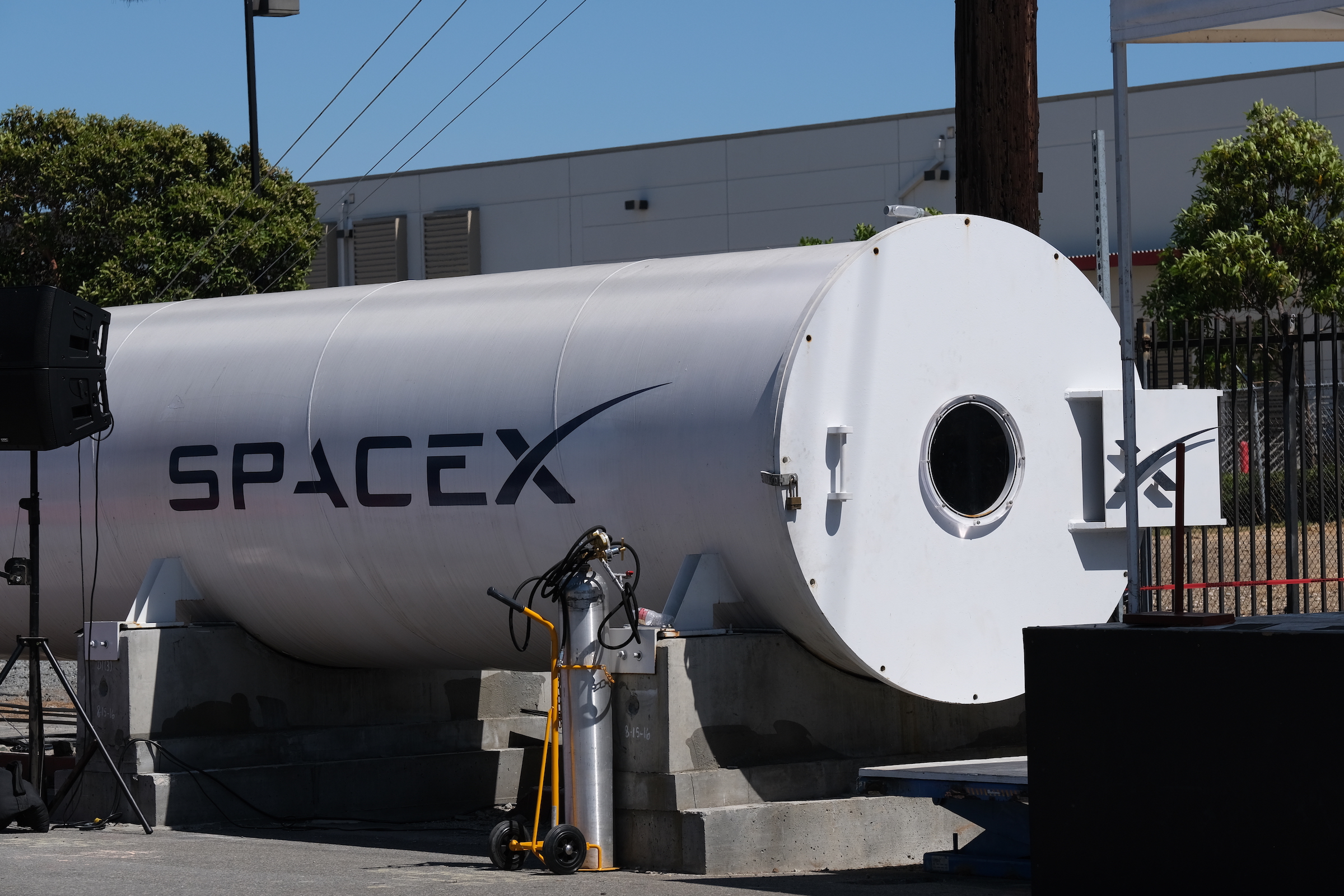
SpaceX hosted its fourth annual SpaceX Hyperloop Pod Competition finals on Sunday at the test tube it built outside its Hawthorne HQ. We were on site for the competition, and watched as Team TUM, from the Technical University of Munich, took home the win thanks to achieving the top speed overall of any team to run in the finals.

TUM (formerly known as team WARR Hyperloop in past competitions) is a repeat winner, and achieved a top speed of 288 mph in this year’s finals. That’s the fastest overall for a Hyperloop pod thus far – it beat its own record from last year of 284 mph set during the third SpaceX student run-off. It wasn’t without incident, however – near the end of its run, there was a spark and some debris appeared to fly off the craft, but it still survived the run mostly intact and satisfied SpaceX judges to qualify for the win.

TUM beat out three other finalist competitors, including Delft Hyperloop, EPFL Hyperloop, and Swissloop. Delft unfortunately had a communication error that cut their run short at just around 650 feet into the just over 3/4 mile SpaceX Hyperloop test track. EPFL managed a top speed of 148 mph and Swissloop topped out at 160 mph.

hyperloop pod competition DSCF2408

SpaceX Hyperloop Pod test track at its Hawthorne HQ. This is the end where student teams load in their test pod during the annual competition.

For the teams that did get to run on Sunday, the process involved loading their pod, which are roughly the size of bobsleds but little more than engines on wheels, onto the single track which runs the length of the interior of the Hyperloop test tube. The tube is then sealed and de-pressurized to near vacuum, which is essentially how Musk’s original Hyperloop concept envisioned the super-speed transportation method would work.

All the teams gave a good showing, and the total number of student teams was actually 21, with over 700 individual sin total taking part in the competition from a variety of schools including Cal Poly, the University of Wisconsin-Madison, the Indian Institute of Technology and my own alma mater the University of Windsor (who worked with St. Clair College on their pod).

Teams had to prove to their SpaceX and Boring Company staff advisors that they were ready to run in the tube in order to qualify for the finals, and spent two weeks prior to the finals on Sunday trying to do just that. Of those 21 teams, only the four finalists managed to get the green light to run in the final competition, based on advisor criteria that includes safety and survivability of their pod design. There’s a kind of ‘good luck’ mantra at the competition of saying ‘Break a pod’ prior to a run, but SpaceX engineers don’t actually want team pods to experience catastrophic failure inside the tube while on a run. This year, the competition was even more challenging because all pods have to use their own communication systems for the first time, and the pods must be designed to propel themselves to within 100 feet of the far end of the tube before they stop.

hyperloop pod competition 2019

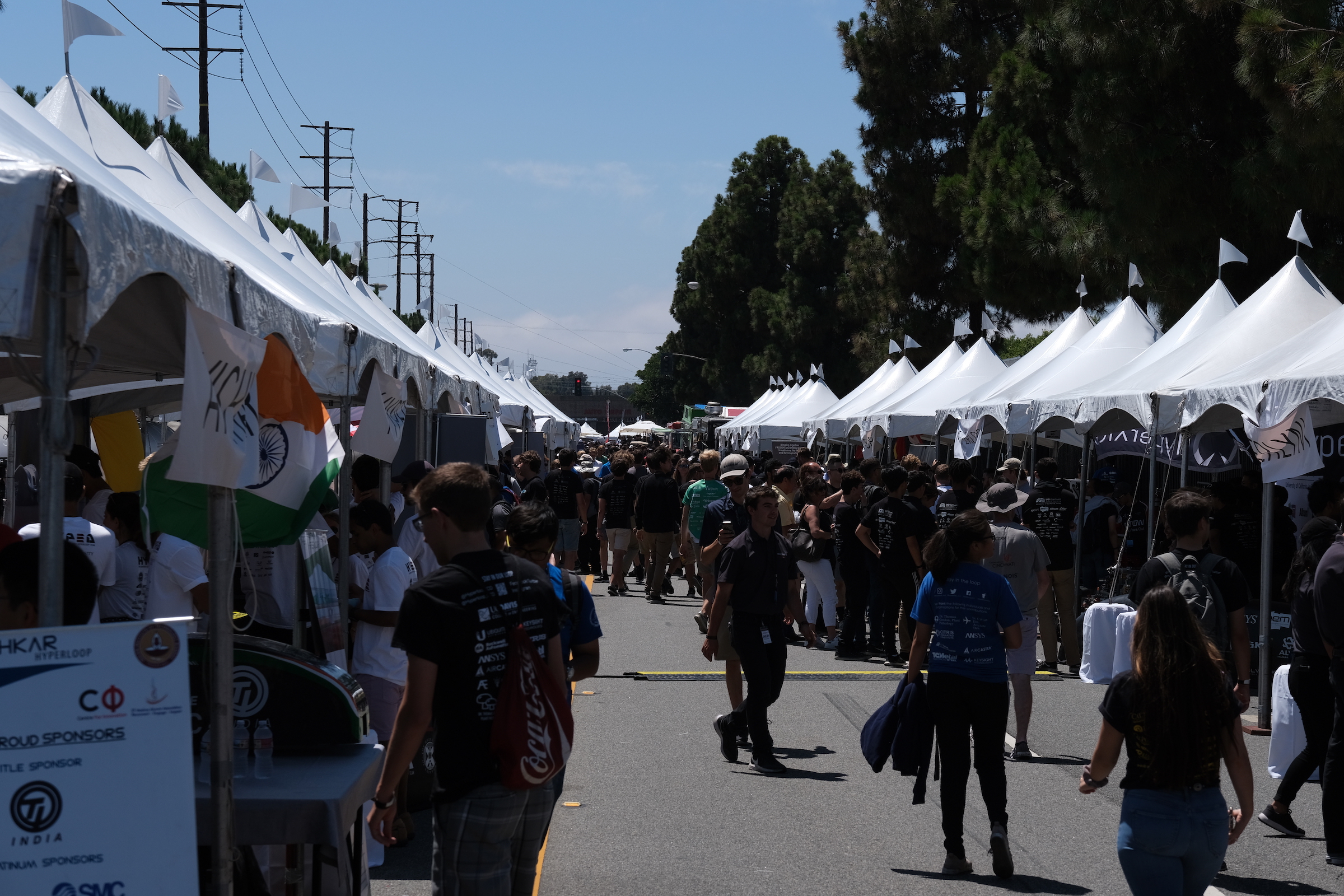
21 teams in total competed in this year’s competition, and they all brought their pods to display on race day, even though only four finalists actually ran their pods through the test track.

Most of the teams I spoke to who failed to qualify were dismayed but also resolute on coming back and qualifying next year. Some did express a bit of frustration about the gap between some of the teams from smaller schools, and those in the final four (who do qualify repeatedly year after year). Many of the finalists have deep-pocketed corporate backers, including Airbus, while some of the smaller schools have next to no funding – resulting in a cost delta of hundreds of thousands of dollars when it comes to the total bill for the test pods built.

That said, all the teams are clearly thrilled to be able to participate, and see the competition as a chance to essentially get scored to work at one of Musk’s many high tech ventures, including SpaceX, Tesla and The Boring Company. For those companies, too, it seems like a no-brainer to attempt to recruit from the engineering ranks of these best-in-class technical undergrad and graduate students.

hyperloop pod competition epfl 1

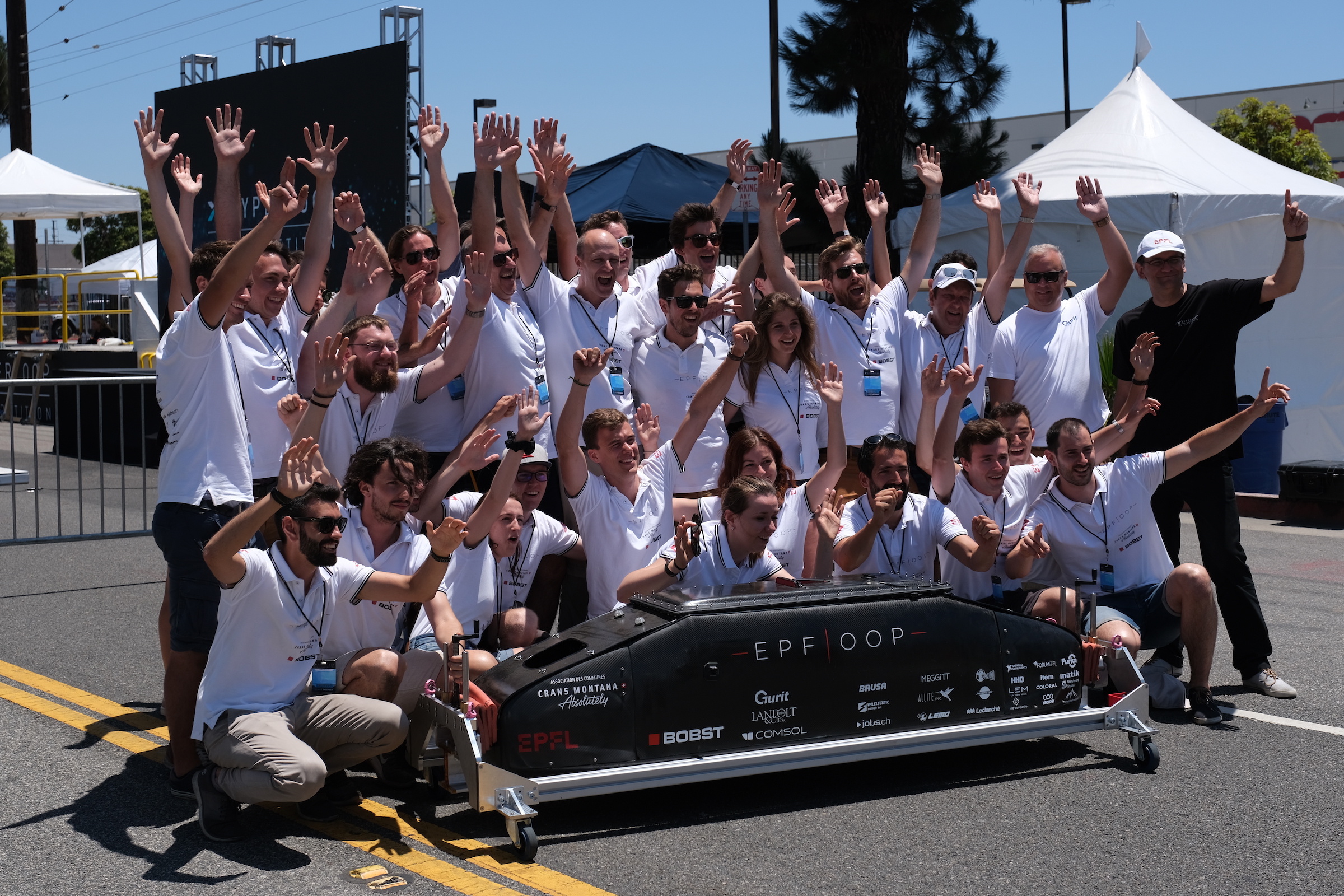
EPFL Hyperloop didn’t win the competition – but they have reason to celebrate, since at least some graduates will probably ‘win’ jobs at Musk’s various companies.

“I think the competition is fun, and inspiring and also useful technology comes out of it,” Musk said regarding the purpose of the event, before answering a final question from Boring Company President Steve Davis about whether or not there will be another competition next year – “Oh yeah of course,” Musk replied, to much applause from the crowd of competitors.

Cities must plan ahead for innovation without leaving people behind

Yung Wu
Contributor

Yung Wu is the CEO of MaRS Discovery District, a Toronto-based innovation hub.

From Toronto to Tokyo, the challenges faced by cities today are often remarkably similar: climate change, rising housing costs, traffic, economic polarization, unemployment. To tackle these problems, new technology companies and industries have been sprouting and scaling up with innovative digital solutions like ride sharing and home sharing. Without a doubt, the city of the future must be digital. It must be smart. It must work for everyone.

This is a trend civic leaders everywhere need to embrace wholeheartedly. But building a truly operational smart city is going to take a village, and then some. It won’t happen overnight, but progress is already under way.

As tech broadens its urban footprint, there will be more and more potential for conflict between innovation and citizen priorities like privacy and inclusive growth. Last month, we were reminded of that in Toronto, where planning authorities from three levels of government released a 1,500-page plan by Alphabet’s Sidewalk Labs meant to pave the way for a futuristic waterfront development. Months in the making, the plan met with considerably less than universal acclaim.

But whether it’s with Sidewalk or other tech partners, the imperative to resolve these conflicts becomes even stronger for cities like Toronto. If they’re playing this game to win, civic leaders need to minimize the damage and maximize the benefits for the people they represent. They need to develop co-ordinated innovation plans that prioritize transparency, public engagement, data privacy and collaboration.

Transparency

The Sidewalk Labs plan is full of tech-forward proposals for new transit, green buildings and affordable housing, optimized by sensors, algorithms and mountains of data. But even the best intentions of a business or a city can be misconstrued when leaders fail to be transparent about their plans. Openness and engagement are critical for building legitimacy and social license.

Sidewalk says it consulted 21,000 Toronto citizens while developing its proposal. But some critics have already complained that the big decisions were made behind closed doors, with too many public platitudes and not enough debate about issues raised by citizens, city staff and the region’s already thriving innovation ecosystem.

In defense of Sidewalk Labs and Alphabet, their roots are in Internet services. They are relative newcomers to the give and take of community consultation. But they are definitely now hearing how citizens would prefer to be engaged and consulted.

As for the public planners, they have a number of excellent examples to draw from. In Barcelona, for example, the city government opened up its data sets to citizens to encourage shared use among private, public and academic sectors. And in Pittsburgh, which has become a hub for the testing of autonomous vehicles, the city provided open forum opportunities for the public to raise questions, concerns and issues directly with civic decision-makers.

Other forward-looking cities, such as San Francisco, Singapore, Helsinki and Glasgow, are already using digital technology and smart sensors to build futuristic urban services that can serve as real-world case studies for Toronto and others. However, to achieve true success, city officials need to earn residents’ trust and confidence that they are following and adapting best practices.

Toronto skyline courtesy of Shutterstock/Niloo

Data privacy

Access to shared data is crucial to informing and improving tech-enabled urban innovation. But it could also fuel a technologically driven move toward surveillance capitalism or a surveillance state – profiteering or big brother instead of trust and security.

The Sidewalk proposal respects the principles of responsible use of data and artificial intelligence. It outlines principles for guiding the smart-city project’s ethical handling of citizen data and secure use of emerging technologies like facial recognition. But these principles aren’t yet accompanied by clear, enforceable standards.

Members of the MaRS Discovery District recently co-authored an open-source report with fellow design and data governance experts, outlining how privacy conflicts could be addressed by an ethical digital trust. A digital trust ought to be transparently governed by independent, representative third-party trustees. Its trustees should be mandated to make data-use decisions in the public interest: how data could be gathered, how anonymity could be ensured, how requests for use should be dealt with.

They come with big questions to be resolved. But if a digital trust were developed for the Sidewalk project, it could be adapted and reused in other cities around the world, as civic leaders everywhere grapple with innovation plans of their own.

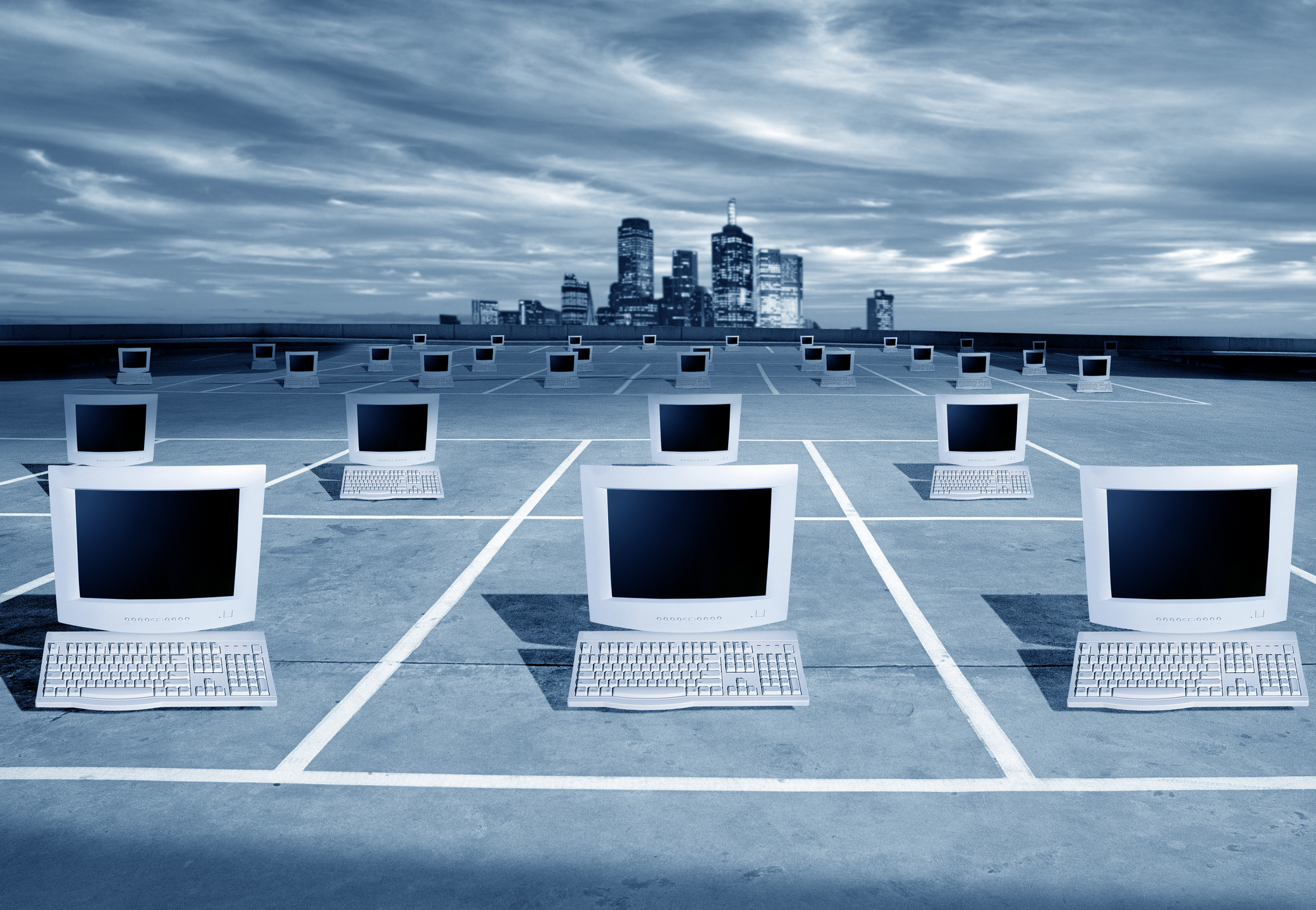
PCs on a grid in front of a city skyline.

Image courtesy of Getty Images/Colin Anderson

Collaboration

The private sector creates jobs and economic growth. Academia and education offers ideas, research and a sustainable flow of tech-savvy workers. The public sector provide policy guidance and accountability. Non-profits mobilize public awareness and surplus capital.

As Toronto is learning, it isn’t always easy to get buy-in, because every player in every sector has its own priorities. But civic leaders should be trying to pull all these innovation levers to overcome urban challenges, because when the mission is right, collaboration creates more than the sum of its parts.

One civic example we like to point to is New York, where the development of the High Line park and the rezoning of the West Chelsea Special District created a “halo effect.” A $260-million investment increased property values, boosted city tax revenues by $900-million and brought four million tourists per year to a formerly underused neighborhood.

A mission-oriented innovation ecosystem connects the dots between entrepreneurs and customers, academia and corporates, capital and talent, policymakers and activists, physical and digital infrastructure – and systems financing models can help us predict and more equitably distribute the returns. Organizations like Civic Capital Lab (disclaimer: a MaRS partner) work to repurpose projects like the High Line into real-life frameworks for other cities and communities.

That kind of planning works because the challenges cities face are so similar. When civic leaders are properly prepared to make the best of modern tech-driven innovation, there’s no problem they can’t overcome.

Lyft’s dockless e-bikes have made their way to SF, but it wasn’t easy

When tech companies sue cities, it’s rare to see a resolution — albeit a temporary one — in favor of the tech company happen so quickly, if at all. Lyft sued San Francisco in early June, claiming the city was in violation of a 10-year contract that would give Lyft exclusive rights to operate bike-share programs.

Now, the city has granted Lyft an interim permit to deploy its dockless e-bikes, and is holding off on granting to permits to other operators. Lyft officially deployed its bikes on Friday.

“We’re thrilled to share our new ebikes with riders in San Francisco,” Lyft Head of Micromobility Policy Caroline Samponaro said in a statement. “We’ll be rolling out bikes starting today and appreciate our riders’ patience as we waited for the green light from SFMTA.”

In its lawsuit, Lyft sought a preliminary injunction or temporary restraining order to prevent the city from issuing permits to operators for stationless bike-share rentals. While the court denied Lyft’s request for a TRO, it did approve a preliminary injunction to temporarily stop the San Francisco Municipal Transportation Agency from issuing dockless permits to operators other than Lyft, without at least giving Lyft the first opportunity to submit a proposal.

The whole process, called “Right of First Offer,” may take months, according to the SFMTA. That’s why it decided to offer Lyft an interim permit to operate up to 1,900 of its dockless, hybrid e-bikes in addition to its classic bikes offered through its station-based service, once known as Ford GoBike.

“These new bikes will allow Lyft to address the severe bicycle availability issues that Bay Wheels has faced since Lyft removed e-bikes from service in April,” the SFMTA wrote in a blog post. “Essentially, the interim permit allows the existing system to return to functionality even as we negotiate with Lyft for a potential future expansion.”

The lawsuit was in light of SF announcing it would take applications for operators seeking permits to deploy additional stationless bikes. San Francisco, however, said the contract does not apply to dockless bike-share, but only station-based bike-share. Well, a judge has since said the agreement did “not draw a distinction between docked/stationed and stationless/dockless bikes…Plaintiff therefore is entitled to unconditional exclusivity for stationed or stationless ‘traditional’ bikes during the term of the agreement.”

While the process continues in court, the SFMTA has also extended JUMP’s permit for up to 500 stationless bikes in order to ensure more reliable services.

“We’re pleased that the court agrees with us and the SFMTA that no company has a monopoly over ebikes in San Francisco, and are excited that JUMP bikes can stay on the road over the course of the next 90 days,” an Uber spokesperson told TechCrunch. “Riders win when bikeshare companies compete in San Francisco, and we look forward to hopefully expanding our program in the future.”

In healthcare these days, ‘There’s an app for that’… unless you really need it

Sarah Lisker
Contributor

Sarah Lisker is a Program Manager at the UCSF Center for Vulnerable Populations and a collaborator in The OpEd Project. She manages SOLVE Health Tech, which bridges private sector innovation with public health expertise to make digital health accessible.

When a digital health company announces a new app, everyone seems to think it’s going to improve health. Not me.

Where I work, in San Francisco’s public health system, in a hospital named after the founder of Facebook, digital solutions promising to improve health feel far away.

The patients and providers in our public delivery system are deeply familiar with the real-world barriers to leveraging technology to improve health. Our patients are low-income (nearly all of them receive public insurance) and diverse (more than 140 languages are spoken). Many of them manage multiple chronic conditions. The providers that care for them struggle with fragmented health records and outdated methods of communication, like faxes and pagers.

So when companies tell us they will cure diseases, drive down costs, and save lives with state-of-the-art technology, I am often hesitant. 

More than thirty billion dollars have been invested in digital health since 2011. The resulting technological innovations, such as mobile applications, telemedicine, and wearables, promise to help patients fight diabetes, treat chronic disease, or lose weight, for example.

However, we have yet to see digital health drive meaningful improvements in health outcomes and reductions in health expenditures. This lack of impact is because digital health companies build products that often don’t reach beyond the “worried well” – primarily healthy people who make up a small proportion of health expenditures and are already engaged in the healthcare system.

If we’re designing health apps for those who already have access to healthcare, nutritious food, clean air to breathe, and stable housing, we’re missing the point.

It’s no surprise that health apps are incongruous with the needs of low-income, diverse, and vulnerable patients when these populations are unlikely to be a part of user testing. In addition, the science that technology developers draw from is generated by clinical trials conducted on participants who often do not reflect the diversity of the United States.

Over 80% of clinical trial participants are white, and many are young and male. Women, racial and ethnic minorities, as well as older adults must be included in clinical trials to ensure the results — drawn on not only for product development but also for clinical care and policy — are relevant for diverse populations. 

Research conducted by my colleagues at the UCSF Center for Vulnerable Populations demonstrates that patients who are low-income are unable to access many digital health apps. One of our patients testing a popular depression-management app said, “I’d get really impatient with this” and expressed concern that “Somebody that’s not too educated would be like, ‘now, what do I do here?’” A caregiver testing a different app also voiced frustration, saying “Yeah, it’s an app that makes you feel like an idiot.” Yet, despite these barriers, the majority of our study participants (most of whom have smart phones) also express a high interest in using technology to manage their health.

 While the private sector is great for innovation, it will fail to improve health in a meaningful way without real-world evidence generated in partnership with diverse patients. In addition, these for-profit companies face long odds to benefit their shareholders in a substantial way without learning how to reach the 75 million patients on Medicaid (including 1 in 3 Californians) who stand to benefit from digital health solutions.

 There’s an answer, though, and it’s within reach. To truly improve health outcomes, digital health companies must partner with public health experts and patients to not only ground themselves in evidence-based research, but also build products that meet the needs of all patients. 

Along with the compelling business potential of innovating for Medicaid, infrastructure to support this work is growing. For example, organizations like HealthTech4Medicaid are bending the arc of innovation towards the patients who need it most through advocacy and key partnerships with payers, policy makers, care providers, and technology developers.

To truly revolutionize health, let’s demand that technology creators and scalers include diverse end users early and often. Otherwise, the app “for that” will be for them, not for all of us.

Don’t hold your breath for the moon

In the house in which I grew up, a single framed newspaper front page loomed over us. “MAN ON MOON“, it declared jubilantly, in an enormous, suitably momentous typeface. Subheadings included “‘It’s very pretty up here … a fine, soft surface’” and, of course, “A giant leap for mankind.”

One leap forward, three steps back. That newspaper was dated fifty years ago today, as I type this. Apollo 17 — “the most recent time humans have travelled beyond low Earth orbit” — took place in December 1972, a date at which a large majority of humanity today was not yet born.

Space travel is not the stuff of science fiction. It is the stuff of history books, of yesteryear, of scratchy black-and-white TV, of that newspaper which was already faded in my youth.

What happened? I mean, lots, but ultimately the costs were too high, the tangible benefits too nonexistent, and the Space Shuttle was too much of an unmitigated disaster from start to finish in every way.

What happens next? Well, there we have a quick answer: we’re going back! America is going to land the first woman on the moon by 2024! Absolutely!

…you’re absolutely right to be very skeptical.

There are numerous “lunar exploration architectures,” or ways to return to the Moon. My friend Casey Handmer, a physicist, space enthusiast, and former levitation engineer, itemizes them in this excellent blog post from a few months ago. One of them is NASA’s proposed Lunar Gateway, which will place a space station into high Moon orbit, from and to which lunar landings will descend and return.

Is this a good idea? …Well, it’s an idea. But it’s better to have a plan and to be making progress on it than not, right? Right? …Except the last few months have seen a bewildering flurry of chaos and confusion which makes NASA’s lunar program more closely resemble a headless chicken than a smoothly oiled machine.

First, an unsigned five-page document, riddled with spectacular grammar and spelling errors such as

There is no feasible means to redesign it or any other heavy left rocket to more transport the lunar landing elements

(!) was shared by “the Gateway program office at Johnson Space Center in Houston,” reported Ars Technica. (Casey wrote an exegesis of this dubious document, if you want to see it deconstructed in detail.) Then, earlier this month, NASA demoted and replaced its executives in charge of human space exploration.

Does this sound like the behavior of a lunar project accelerating to an on-target, on-time landing? Or more like a bureaucratic catastrophe thrashing frantically while failing to get anywhere at all? “As it stands, few experts believe NASA’s plan for returning to the moon in 2024 is feasible,” says Vox mordantly. You don’t say.

I’d be so delighted to see a woman walk on the moon in 2024. But I’m not exactly holding my breath. By 2032 we will have gone sixty years, three generations, between human lunar excursions. Some people think we shouldn’t go back at all, that there is too much of more importance to do here on Earth. I disagree, strongly, but I think even they might still agree that it would be sad beyond belief if, if and when we next land on the Moon, there’s no one around who remembers the last time.

Week in Review: The one-way web and Elon Musk’s Neuralink

Hello, weekenders. This is Week-in-Review, where I give a heavy amount of analysis and/or rambling thoughts on one story while scouring the rest of the hundreds of stories that emerged on TechCrunch this week to surface my favorites for your reading pleasure.

Last week, I offered up some mildly interesting takes on how Waymo was shaping the future of autonomous vehicles inside of a virtual space rather than wholly on physical roads.


The big story

There are two internets. There’s the one where we click through interfaces and hit menu buttons and dive down predictable lines of inquiry and find predictable ends. And then there are ads. We don’t understand why we get what we get but we the content flows from platform to user with asymmetric information of the “how?”.

Advertising is the economic backbone of the free consumer web, but users are haplessly oblivious to where that generated content comes from and why. What intrigues me here is that a few days ago Instagram announced that it was further rolling out a test to hide like counts from users and that it has been further minimizing the prominence of follower counts on profiles.

It’s an (admittedly small) step in the evolution but it hinges a bit more on how internet giants have come to realize UX transparency can actually lead to some negatives.

There’s of course the ethical argument where you think about the responsibility that Facebook has not to make people feel shitty about themselves by offering a dopamine-hit conveyor belt as a platform, but a more fascinating idea is what a change like this opens up to the company in terms of returns and what it means for how platforms portray the nebulous idea of “engagement.”

One of the easy returns I bet Instagram finds as they expand this test is that by eliminating the conforming social pressures inherent to seeing what other users are enjoying, Instagram might paint a clearer picture of its users. Without giving users a groupthink crutch to influence their own decisions on what to click the heart button on, a web of content less-focused on stats might lead them to things that actually break into.

What’s the most interesting — that this change sort of lightly grazes across — is that we’ve spent the past few decades with the necessary evil of a web predicated on a cause and effect interface. We’ve had a decent idea of why we’re coming across some piece of content and the statistics of why are often user-facing. But do we need to know how the internet works? Do we need to know why we’re seeing anything?

We’ve been thrust fully into this world of algorithmic feeds and while we’re seeing variation across platforms, we’re seeing the potential and pitfalls of the various platforms. Instagram has flirted with serving users content more boldly outside of things they’ve specifically followed with the Explore feed, but the question is when that smartly-sourced content that will come to dominate a user’s central feed and be their main touchpoint with the platform.

We’ve also seen the dangers of algorithmic content where the “why” is invisible to users, YouTube’s platform has grown immensely based off  ad-like invisibly sourced “watch next” suggestions, but can social platforms pull this off as well or are the fundamentals of today’s algorithmic feeds based around user actions and follows going to stay true down the road?

Send me feedback
on Twitter @lucasmtny or email
[email protected]

On to the rest of the week’s news.

Trends of the week

Here are a few big news items from big companies, with green links to all the sweet, sweet added context:

  • Musk’s Neuralink makes its first promises
    The SpaceX founder is known for his moonshots, but this one kind of takes the cake. On Tuesday, Musk spoke about the progress and long-term goals of the company he hoped would allow humans to “achieve a sort of symbiosis with artificial intelligence.” Read more about the promises made in our report.
  • FaceApp goes viral, again
    If you used the internet at all this week, chances are that you saw somebody posting an old-looking photo of themselves that was algorithmically generated by an app called FaceApp. There was an awful lot of backlash to the app’s Russian ties and its user permissions, but we tried to break down what was actually happening.
  • SpaceX’s ‘Starhopper’ bursts into flames
    It was only a test vehicle, but uncontrolled explosions generally aren’t the best sign when it comes to testing components for space flight. Check out the video and the company’s explanation here.

GAFA Gaffes

How did the top tech companies screw up this week? This clearly needs its own section, in order of badness:

  1. Libra shortcomings:
    [Congressional testimony reveals some faults in Facebook’s digital currency plans]
  2. Facebook continues to contradict itself:
    [Facebook accused of contradicting itself on claims about platform policy violations]

GettyImages 1091991690

Extra Crunch

Our premium subscription service had another week of interesting deep dives. This week, we showcased the beginning of our deep dive on Roblox, the wildly popular kids gaming platform that has grown beyond unicorn status.

How Roblox avoided the gaming graveyard and grew into a $2.5B company

“…In some ways, Roblox stayed trendy: for instance, it launched sales of its Robux currency in 2008 and virtual goods for developers in 2013, adding microtransactions at a time that much of the game industry was still trying to come to grips with the idea of free gaming. It also supported and nourished a community of unpaid content creators during a time that few other companies had done so, with a few exceptions like YouTube.

Still, the activity taking place in gaming was a philosophical threat. When a company in Roblox’s space hit it big, years before Roblox itself had any hope to, that winning strategy became a temptation. “There are friends, acquaintances, competitors chattering in your ear and saying, maybe you can just do that,” says Dusek…”

Here are some of our other top reads this week for premium subscribers. This week, we talked about seed stage dilution and startup profitability.

We’re excited to announce The Station, a new TechCrunch newsletter all about mobility. Each week, in addition to curating the biggest transportation news, Kirsten Korosec will provide analysis, original reporting and insider tips. Sign up here to get The Station in your inbox beginning in August.