Samsung readies Galaxy Fold for September release

When it was unveiled on stage, the Galaxy Fold was heralded as the next big thing. Samsung seeded units to reviews and prepared for launch. And then a funny thing happened on the way to a smartphone paradigm shift: it started breaking. Multiple review units were sent back to Samsung with busted screens.

It was a small sample size, to be sure. First Samsung blamed reviewers themselves. Ultimately, however, there was enough concern to cause the company to pump the breaks entirely. Now, nearly three months to the day after the device was set for release, Samsung’s finally got concrete information on the long delayed foldable. The company just announced a September (of 2019, presumably) launch date for the device. No concrete date just yet — but at least that’s better than the “coming weeks” line we’ve been hearing about timeframe for a few months now. 

The fixes are pretty much what we’ve expected from the outset, but here’s the full breakdown straight from the company,

  • The top protective layer of the Infinity Flex Display has been extended beyond the bezel, making it apparent that it is an integral part of the display structure and not meant to be removed.
  • Galaxy Fold features additional reinforcements to better protect the device from external particles while maintaining its signature foldable experience:
  • The top and bottom of the hinge area have been strengthened with newly added protection caps
  • Additional metal layers underneath the Infinity Flex Display have been included to reinforce the protection of the display
  • The space between the hinge and body of Galaxy Fold has been reduced.

The first bullet point is a direct response to those reviewers who peeled off the protective layer, thinking it was temporary. Again, Samsung put the onus on reviewers there, but ultimately shouldered the blame from a top layer that looked almost exactly like the laminate Galaxy devices ship with to avoid scratching. This fix hides those corners — and the temptation to peel them.

The next three, meanwhile, are reactions to a larger design flaw with the initial Fold, which allowed particles to fall between hinges. Once trapped behind the display, pressing the touchscreen would cause it to push up against the particles, damaging it in the process.

“Samsung has taken the time to fully evaluate the product design,” the company writes, “make necessary improvements and run rigorous tests to validate the changes we made.” The phone maker has, hopefully, learned a lessen from the Note 7 debacle from a few years back. After being too eager to get the product back to market, Samsung was ultimately forced to issue a second recall for the phablet and ultimately discontinued the product altogether.

This issue will likely have less of an impact on the company’s bottom line, as it was discovered before the product officially came to market. It has, however, been viewed by many as an indictment nascent foldables category. It was also apparently enough to cause Huawei to hit pause on the release of its own Mate X foldable, which has since been subject to additional rigorous tests.

A number of retailers have since canceled preorders. Likely the initial hiccup has also left many early adopters second guessing the decision to drop $2,000 on an unproven product. Samsung seemed ready for the Fold to be something of a niche product regardless, but the on-going saga could ultimately compound that.

More release details are being promised “closer to launch.” Turns out Samsung might have exactly the right stage for that big announcement a few weeks from now.

SpaceX untethered StarHopper ‘hop’ test flight aborted after engines briefly flare

SpaceX encountered a snag in an attempted test key to the development of its next-generation Starship spacecraft. Specifically, the StarHopper sub scale demonstration and testing craft it’s using to work on the Starthip’s propulsion system fails to undertake its first untethered test flight at a testing site in Boca Chica Beach in Texas,

The plan was to have the demonstration craft take off and fly to a height of 20 meters before returning to Earth, all under tis own power and directed by its own guidance system. Instead, It seemed to fire rockets and then was engulfed in smoke, before venting fire out of the top of the test craft for a few minutes prior to extinguishing, with StarHopper looking relatively unscathed. We’re still waiting on official confirmation of what happened from SpaceX, but they characterized this as an “abort” on a livestream of the test.

Last week during a static test fire, the StarHopper vehicle was engulfed in a large ball of flame. This wasn’t a planned event, but did not result in significant damage to the spacecraft, SpaceX later said.

StarHopper succeeded in flying its first tethered flight at the beginning of April, and has undergone further testing since then to prepare for its untethered trip. SpaceX CEO Elon Musk said earlier this month that a successful untethered test would pave the way for a full presentation of SpaceX’s Starship spacecraft plans at the end of July, but the test has encountered a few issues since then.

The reason SpaceX and other companies run tests like these is to identify potential issues early in the development process, so it’s good to see them making progress even if that doesn’t mean a “success” in the traditional sense of actually having achieved untethered flight.

SpaceX designed Starship will be fully reusable once complete, unlike Falcon 9 and Falcon Heavy, so it’ll reduce the cost of launches, and the company hopes to eventually use it to fly all its missions, though it’ll keep Falcon 9 and Falcon Heavy in service for its paying customers as long as there’s appetite.

9 reasons the Facebook FTC settlement is a joke

The FTC just announced the details of its settlement agreement with Facebook over years of privacy practices in violation of a previous order. To say the settlement is favorable to Facebook, even with the record $5 billion penalty, is an understatement; the company’s lawyers are probably popping champagne right about now. Here’s why.

1. $5 billion is a laugh

$5 billion may sound like a lot, but in this context it is simply not a meaningful amount. Leaving aside that Facebook at this point probably makes that in a month, it simply does not correspond to the harm done or rewards reaped.

It’s highly likely that Facebook’s “unjust enrichment,” made as a result of the forbidden user data collection in which it engaged, is more than $5 billion. As Commissioner Rohit Chopra says in his dissenting statement, “breaking the law has to be riskier than following it.” In other words, you shouldn’t be able to steal $100, then pay a fine of $50 to get off the hook.

“The fact that Facebook’s stock value increased with the disclosure of a potential $5 billion penalty may suggest that the market believes that a penalty at this level makes a violation profitable,” wrote Commissioner Rebecca Kelly Slaughter in her own dissent.

In the case of Google, which in spirit is similar to this one, the settlement with the FTC amounted to several times the company’s unjust enrichment. Why isn’t that the case with Facebook? Because the investigation didn’t look into it.

2. The investigation was rushed and incomplete

No one likes it when serious investigations of wrongdoing (not that Facebook officially admits to any) drag on for too long, since in the meantime the wrongdoing may very well continue. But this case isn’t a simple one where Facebook may have violated one or two of the FTC’s prohibitions for a short period of time in 2014. The company ignored the government-ordered restrictions systematically for years, meriting an investigation on a similar scale.

Instead of getting deep into the questions of who was responsible, how much money was made, whether public statements were misleading, the extent of public harm, etc, the investigators opted to quickly establish a pattern of violating behavior and slap the company with a nice round number. (Let’s hope the antitrust investigation announced today is a bit more thorough.)

The brevity and limitations of the investigation are evident from the fact that…

3. They didn’t grill any executives

“The Commissioners supporting this outcome do not cite a single deposition of Zuckerberg or any other Facebook officer or director,” writes Chopra. Although there may have been off-record conversations or letters from execs in response to questions sent by investigators, they did not put Zuckerberg or Sandberg or any other big players in the hot seat. Seems fundamental when the investigation alleges complicity at the highest levels, right?

But not only were no executives put to the question…

4. There are no charges or consequences for them either
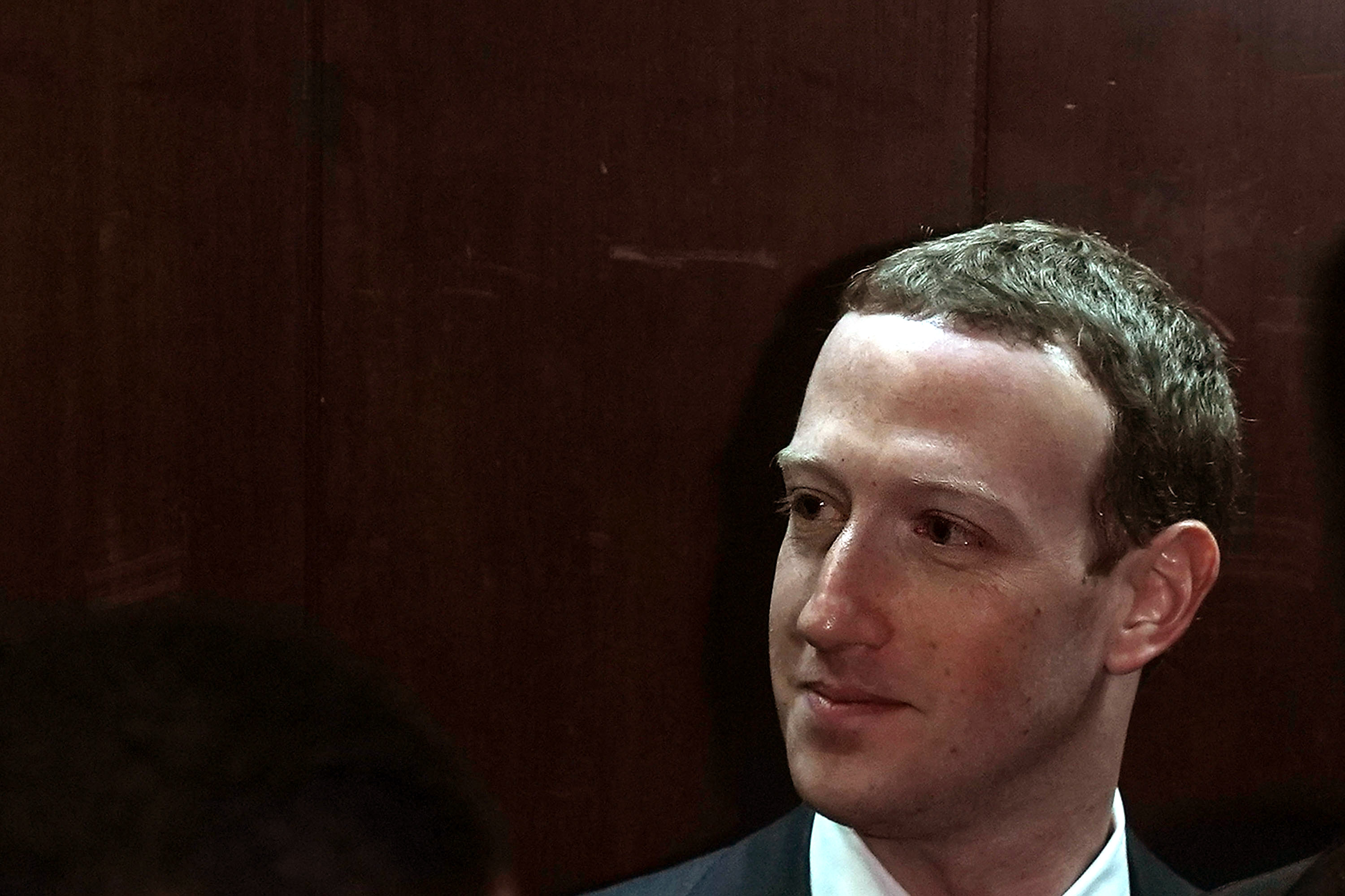
“I started Facebook, and at the end of the day I’m responsible for what happens on our platform,” wrote Mark Zuckerberg last year during the fracas surrounding his questioning by Congress. Nor is that only his opinion. There is a great deal of precedent for leveling additional, complementary charges at executives alongside those aimed at the company. They might not even need testimony to do it:

“I believe there is already sufficient evidence, including through public statements, to support a charge against Mark Zuckerberg for violating the 2012 order,” writes Chopra, and Commissioner Slaughter concurred. Even if that weren’t the case, they could state with certainty that leadership, if it was not directly complicit in rulebreaking, at least failed in their responsibility to prevent it.

Going after individuals, however, may involve separate fact-finding work, expensive and time-consuming litigation, and of course the risk that after all that, the judge will rule against the FTC and officially exonerate the defendant and set an unsavory precedent. They may have decided that risk was too great, but surely if some revealing information comes to light tomorrow individual charges may result.

About that…

5. You get immunity! And YOU get immunity!

It’s ordinary in settlements like to this to “release” companies from claims that they violated an agreement — like a plea bargain where you get probation and no record in exchange for a fine and community service. But the Facebook settlement gives both the company and its executives blanket immunity, not just for any violations the FTC has claimed, but for any violations it hasn’t claimed.

In other words, it’s giving Facebook a blank slate not only for violations it definitely did, but for any it might have secretly done between 2012 and 2018. “A release of this scope is unjustified by our investigation and unsupported by either precedent or sound public policy,” writes Slaughter. “I have not been able to find a single Commission order — certainly not one against a repeat offender — that contains a release as broad as this one,” concurs Chopra.

It’s extraordinary that a repeat offender that has shown a disdain for the FTC’s authority would get such comprehensive, top-to-bottom immunity. This isn’t just a plea bargain, it’s a plenary indulgence.

6. The privacy measures are honor system
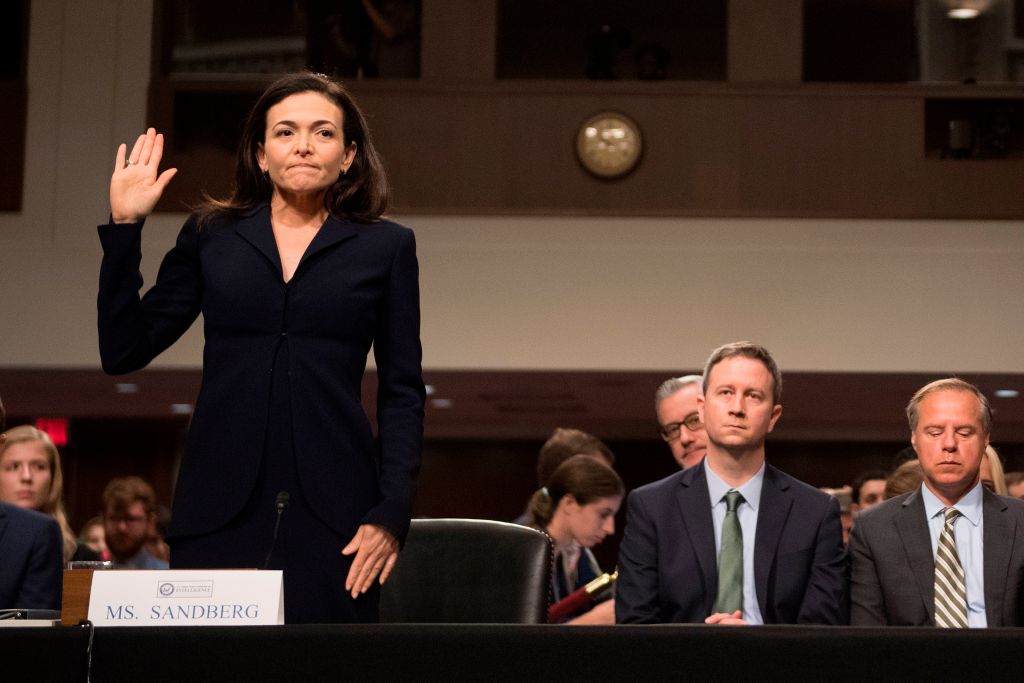
This was perhaps the FTC’s best chance to lay down strong rules as to what Facebook can and can’t do with user data going forward — especially considering the previous ones were shrugged off. Instead, apart from a few new rules like better notification of facial recognition systems, it basically just told Facebook it can do what it wants as long as it files the paperwork.

The settlement requires Facebook to document lots of things. If a new product is a potential risk, Facebook has to write a report on what data will be collected, how it will notify users, whether they can opt out, and how it is (and isn’t) planning to reduce that risk. Nowhere does the FTC spell out what constitutes unreasonable risk, minimum notification or opt-out requirements, or whether a product or strategy (like absorbing WhatsApp) is automatically suspect.

“It is akin to if federal regulators, instead of ordering automakers to install seatbelts, ordered them to document the pros and cons of installing seatbelts, and to decide for themselves whether it would be worthwhile,” writes Chopra.

As long as it files its paperwork, Facebook is free to decide what constitutes risk, damage to users, and how it should handle those things. It’s a bit like asking a bank robber to write a journal. But even if someone reads it and finds something objectionable…

7. The oversight is toothless

Facebook must establish a Privacy Committee, Compliance Officers, and an Independent Assessor to make sure that the rules it sets for itself are sufficient and being followed sufficiently. Unfortunately, what they do is a whole lot of reviewing, certifying, and briefing, and no doing.

The Compliance Officers sign off on the privacy program, to be sure, but they have few specific goals, like prevent this or ensure that. The Assessor also lacks authority, so if they decide the privacy program is not working out, they simply register their complaint and wait for Facebook to justify itself.

The “independent” committee’s makeup will be highly affected by the powers that be at Facebook, which have enormous voting power and will be able to make it hard on any troublesome members. Even if they couldn’t, the committee has no power over management — it’s just another Facebook-issued stamp for Facebook-written paperwork.

8. Fancy meeting you here
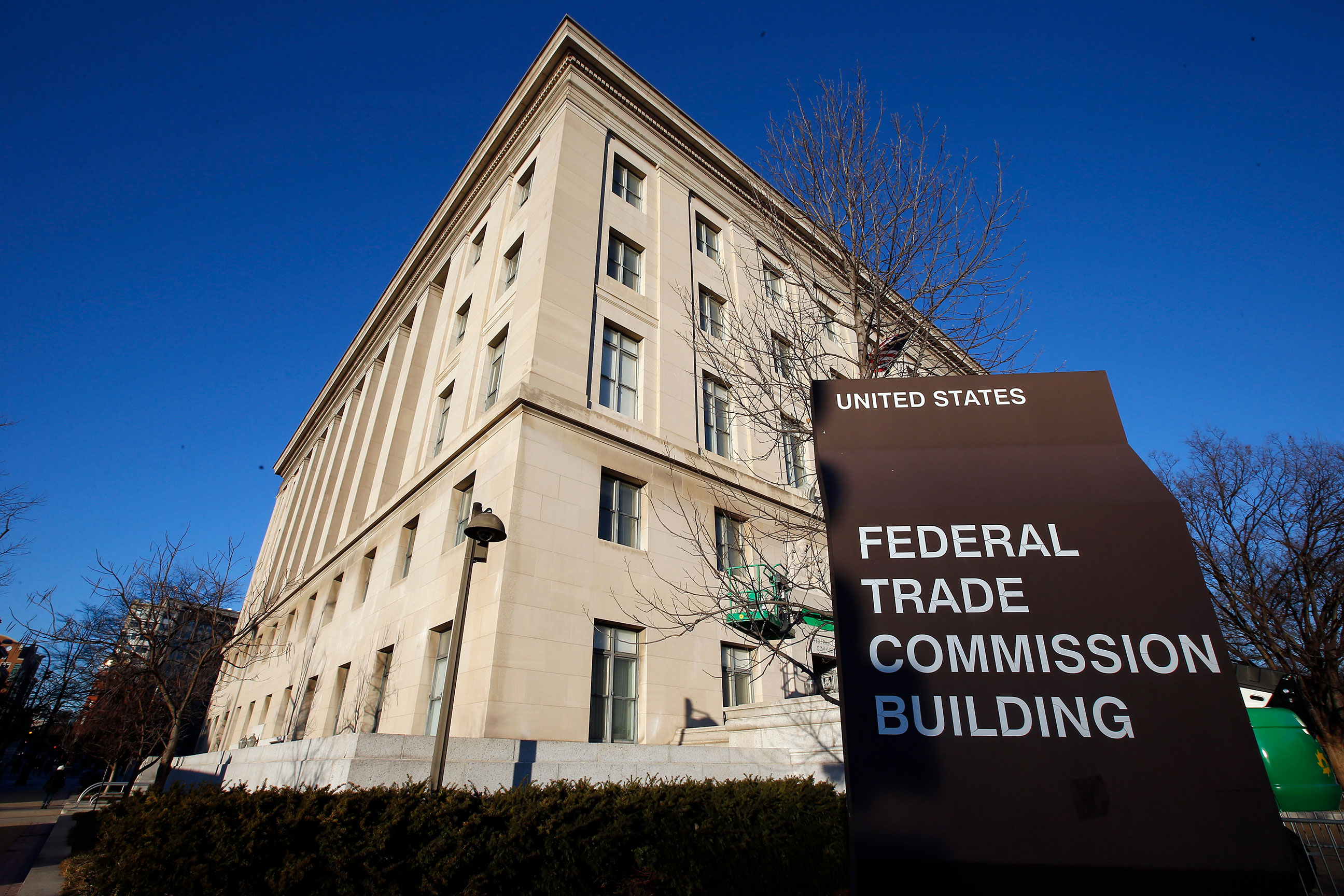
Federal Trade Commission building

Not pictured: revolving door at front entrance

As The Hill’s Harper Neidig points out: Sean Royall, Facebook’s head counsel in these proceedings, was deputy director at the FTC’s Competition Bureau (not the Bureau of Consumer Protection, which led this action) from 2001-2003. His boss at the bureau then was Joseph Simons — the current chairman of the FTC.

It’s probably just a coincidence.

9. It changes nothing, and endorses Facebook’s continued monetization of mass surveillance

Nothing in this order challenges the fundamental problem that over the last decade has increasingly caused friction between Facebook and both its users and (supposed) regulators: that its business model is predicated on mass collection of personal data on its users, which it distills then sells to advertisers.

That’s a business model that should give any consumer protection regulator pause, and yet this settlement is a tacit endorsement of it. The order really amounts to little more than additional paperwork for Facebook to fill out while it pursues its original course without any divergence.

To be fair, the FTC is a reactive agency and as such is limited by in how much it can really require proactively. But it doesn’t seem like they were testing those limits today. The decision not to litigate, the unimaginative penalty amount, and the eye-popping immunity grant suggest the agency is working comfortably within them and just wanted to get this thing out the door.

The requirements of the settlement were barely even considered on today’s earnings call, on which there appeared to be an understanding that it wouldn’t affect much if anything at all. Even the fear that Zuckerberg voiced earlier today that it would require hiring a thousand people who might otherwise be working on new products (a questionable claim, incidentally) went unaddressed.

This was an opportunity for the FTC to demonstrate that the U.S. is a venue where global internet companies like Facebook can still be held accountable for their actions. It was made clear today that not only will a big check change that, but that the check doesn’t even have to be that big.

Robinhood stored passwords in plaintext, so change yours now

Investment and stock trading app Robinhood stored some user credentials, including passwords, in plaintext on internal systems, the company revealed today. This particularly dangerous security misstep could have seriously exposed its users, though it says that it has no evidence the data was accessed improperly. Better change your password now.

Sensitive data like passwords and personal information are generally kept encrypted at all times. That way if the worst came to pass and a company’s databases were exposed, all the attacker would get is a bunch of gibberish. Unfortunately it seems that there might have been a few exceptions to that rule.

A number of users, including CNET’s Justin Cauchon, received the following notice from Robinhood in an email:

When you set a password for your Robinhood account, we use an industry-standard process that prevents anyone at our company from reading it. On Monday night, we discovered that some user credentials were stored in a readable format within our internal systems. We wanted to let you know that your password may have been included.

We resolved this issue, and after thorough review, found no evidence that this information was accessed by anyone outside of our response team.

It seems that if it were truly “industry-standard,” then the rest of the industry would also have stored passwords in plaintext. Come to think of it, that would explain a lot, since Google, Facebook, Twitter, and others have all managed to make this same mistake recently.

A Robinhood representative stressed the rapidity of the company’s response to the issue, though they would not comment on how it was first discovered, nor how long the data was stored that way, nor what deviation from these industry norms caused the problem, nor how many users were affected, nor whether answers to these questions would ever be forthcoming. They did offer the following statement:

We swiftly resolved this information logging issue. After a thorough review, we found no evidence that this customer information was accessed by anyone outside of our response team. Out of an abundance of caution, we have notified customers who may have been impacted and encouraged them to reset their passwords. We take our responsibility to customers seriously and place an immense focus on working to ensure their information is secure.

If you got an email, you were among the unlucky few many majority handful some, so change your password. If you didn’t get an email… also change your password. You can never be too careful.

Tesla focuses on service with 25 new service centers in Q2, rate of new openings to ‘increase’

Tesla is set to aggressively ramp up the rate at which it opens new service facilities, according to CEO Elon Musk’s guidance on the company’s Q2 2019 earnings call. In total, Tesla opened 25 new service centers during the quarter, and added 100 new service vehicles to its existing fleet — which is in contrast to an earlier statement made by Musk that they’d look to close most of their physical stores in an effort to reduce costs.

Notably, Musk referred to the locations only as “service centers” during his comments on the subject on Wednesday’s earnings call, and never as stores — asked about “retail locations,” he corrected the analyst asking and again said that what Tesla opened were “service centers” specifically. He also emphasized the importance of ensuring that service scales in line with the size of Tesla’s overall fleet of vehicles in active use. Musk mentioned that the number of Tesla cars on the road doubled in the last year alone, meaning it’s seeing exponential growth in terms of the total size of the fleet it needs to service.

“Service scales not just with new production, but as the whole fleet sales,” Musk said, adding that they want to grow their service capabilities in a way that’s responsible when it comes to cost, but that that is “quite difficult” when it comes to the rate at which the company’s sales and shipments are increasing.

Even so, Tesla is taking on still more of its service work itself, rather than outsourcing to external vendors.

“We’ve in-sourced a great deal of the collision repair activities, which I think had quite a good impact on customer happiness,” Musk said. “This will continue in the months to come.” Musk also noted that the company is working hard to reset its processes in order to ensure that parts are available on-hand when and where needed for service, which is a gap that has prompted customer complaints in the past.

The Tesla CEO said that he meets with the Tesla service team “multiple times a week” to “get updates on the reliability of the vehicle,” noting the best service possible is “no service” because that would represent maximum reliability (and of course, lowest possible ongoing costs for Tesla). He also said that they’ve seen “fewer and fewer service visits for the most recent cars that we’re building, so we’re on a good trend there.”

Jerome Guillen, President of Automotive at Tesla also noted that the number one reason for service visits is actually people looking to learn how to use Autopilot, and in general education represents a high percentage of visits.

Tesla CFO Zach Kirkhorn addressed a question about the service center expansion later in the call, adding that the company is pursuing a path of systematic “focus on service and supercharging, as opposed to a retail presence.” He also noted that he believes efforts to improve their parts distribution, with a focus on ensuring that parts are available on-hand in inventory at the service centers where they’re needed will actually help bring down costs overall versus housing them centrally or ordering on-demand from suppliers and Tesla’s own fabrication facilities.

How startups can make the open office work, for employers and employees

Alejandra Albarrán
Contributor

Alejandra Albarrán is ROOM’s Director of Design and Innovation, responsible for shaping the company’s iconic approach to creating products that make the open office open to more.

The open office plan was intended to help collaboration and productivity across employees and teams while better utilizing less square feet per person. But the results haven’t always proven to be very successful, based on years of analysis.

Yet it is still the norm for tech companies of all sizes, and will likely stay that way.

Based on my years of experience working with hundreds of companies, I’ll lay out a basic framework below to help you think through how to adapt an open-office situation to best meet your needs.

I’ll also walk you through the example of a growing venture-backed startup that’s staffing up in one of the tougher office markets in the world: Manhattan.

But first, take a look at the data. Studies have shown that open floor plans can inhibit productivity and health. Open office workers take 62% more sick days than those in private offices, and a mere three hours of steady noise can cause measurable distress and a decrease in motivation. Face-to-face communication has been observed to actually decrease in open plan environments, with a measurable negative impact on productivity.

Considering that 70% of Americans today work in an open office, the issue of constant noise and distraction is ubiquitous across the country. The result is a bad rap—one doesn’t need to look very far to find one of the many articles online criticizing the design.

TravelPerk launches flexible refunds to help businesses save on cancelled trips

Fresh from topping up its Series C with a whopping $60 million, business travel booking platform TravelPerk is launching a new product it hopes will make customers keep singing its praises by shaving further friction off of programming work trips.

The Barcelona-based SaaS startup has been on a mission to make booking business travel suck less since 2015 — bagging around $133 million in VC in the process. It’s now saying it wants to surpass the flexibility and convenience of consumer travel, which is the driving force behind today’s launch, according to co-founder and CEO Avi Meir.

“The offer is actually very simple,” he says. “We want to give business travelers unprecedented flexibility to cancel and get a refund on any booking — hotels, trains, Airbnb, cars and flights — without any hassle.”

TravelPerk’s new feature — called FlexiPerk — lets users cancel all legs and elements of their trip and obtain a full refund, minus a 10% fee added to each booked element (though TravelPerk says 90% is the minimum guaranteed refund; if it can get more it pledges to pass that back to the customer too).

Meir contrasts that with what he says is the typical choice for businesses saddled with legacy travel booking platforms: Paying over the odds for a flexible fare (he claims that on average these cost 60% more than standard fares), or being forced to go through “complex and time-consuming refund processes.”

So, basically, for a tenth of the price of the trip the FlexiPerk promise is full flexibility to cancel — even just a couple of hours prior to when you were supposed to leave.

Although — one restriction — users cannot pick and choose when they want to add a refund buffer to a trip.

Instead they have to sign up for a FlexiPerk contract, which requires seven days written notice to cancel. The contract commits them to paying the 10% fee on every booking component that’s refundable. 

So, essentially, the product adds a 10% premium to the price of all booked trips for users not to have to worry if they need to move or cancel some of their travel.

Meir describes the process of getting a refund on a FlexiPerk booking as “super straightforward,” saying users can cancel from the app in just “two clicks.” Refunds are processed automatically by the platform.

“By automatically making every booking refundable, at a fraction of the cost, FlexiPerk solves [the cost vs flexibility] problem for good,” is the grand claim for the product — which TravelPerk also touts as “something no other provider has offered before.” 

Though it’s perhaps better thought of as akin to paying for a separate business travel insurance product that will refund you if you need to cancel trips (though the latter likely with restrictions, based on the reasons for cancelling).

TravelPerk also claims there’s no fine print further complicating the product offer. Though there are a few variables to bear in mind, depending on the trip elements booked — so, for instance, you do need to have not already checked into your flight to get the refund.

“You can cancel for any reason up to two hours before your departure, or until you have checked into your flight, hotel stay or car rental,” says Meir. “For hotels, we require that refund requests come before 4 p.m. local time on the first day of the stay.

“There are no limitations to the number of cancellations a traveler can make. As long as you booked a trip as a ‘FlexiPerk Trip,’ you can cancel it. We do limit you to €5,000 per passenger, and €30,000 refund per trip.”

He says the goal is to serve businesses’ needs by removing the rigidity which has characterized legacy business travel booking platforms. And essentially they’re doing that by splitting the costs associated with refunds and cancellations via a universal 10% premium applied to all bookings.

“One of the biggest pain-points for business travel is the lack of flexibility. GBTA/Sabre listed it as the third most influential aspect of booking travel for EMEA travelers. Most of us throughout the company have seen first-hand the stress and expense of unpredictable schedules,” Meir tells TechCrunch.

“Additionally, FlexiPerk is a direct response to our customer’s wants and needs. As we’ve grown, we’ve been able to analyze more and more travel behaviour data, and the high amount of cancelled/rearranged trips (20%) along with the number of ‘Flexi’ fares booked, but never changed, stuck out. That’s where the idea for FlexiPerk came from.”

“Traditional travel has always been anything but flexible,” he adds. “From complex airline fee structures to unfriendly refund policies, the industry is built around the idea that travel plans will stay the same. But that’s just not how business works, particularly in the kind of fast-growing businesses that are our core market.

“Changes or cancellations are often unavoidable in a fast-paced organisation: in fact, our own data tells us that more than 20% of business trips booked are subsequently postponed, rearranged or cancelled.”

Data is key to TravelPerk being able to offer a fully flexible refund product, according to Meir — lots and lots of data fed into machine learning algorithms to determine the pricing structure for FlexiPerk.

“Our strategy has always been to first build the world’s largest business travel one-stop-shop, so that we process every business trip for our customers. Because we have trip data for millions of trips, we’re able to group them together, and to use machine learning to very accurately predict the risk of cancellation or change, while taking each ticket’s cancellation and change conditions/penalties into account.

“FlexiPerk is so significant because it’s only possible to deliver this kind of product if you’re selling literally millions of trips per year, and using machine learning to build an accurate model to price it correctly.”

Based on its own data, TravelPerk says that more than 20% of business trips are subsequently postponed, rearranged or cancelled.

So as its customers weigh up the cost versus benefits of signing up for FlexiPerk, the suggestion is they’ll make savings by paying the small added fee.

Indeed, TravelPerk claims beta customers have seen “significant” savings from using the product — saying on average they’ve saved 26% (versus paying for flexible fares and shelling out for last-minute cancellation fees).

The FlexiPerk product is launching today — as a wait-list for signups to what’s still a beta product.

This follows a period of closed testing with a handful of existing TravelPerk customers, including Sumup and Picnic. In supporting statements in a press release about the launch, the two praised FlexiPerk for saving their businesses time and worry related to travel fees and refund processes.

“Now we can book anything with the peace of mind that we’ll get our money back if plans change,” said Picnic people associate, Elise Baeriswyl. “Using FlexiPerk has meant that we can focus on continued innovation in the financial space, rather than worrying about the cost of changing our travel plans,” added Sumup’s head of ops, Matabato Kimani.

“We’re rolling it out to as many people and markets as fast as we can,” Meir also told us of FlexiPerk’s availability. “We expect to move out of beta later this year.”

Tesla co-founder and CTO JB Straubel stepping down

Tesla co-founder and CTO JB Straubel is stepping down from his day-to-day role as an executive at the automaker, CEO Elon Musk announced during a conference call with analysts Wednesday.

Drew Baglino, vice president of technology, will take over his duties, Musk said. Straubel will stay on in a senior advisor role.

“I want to thank JB for his fundamental role in creating and building Tesla,” Musk said during the call. “If we hadn’t had lunch in 2003, Tesla wouldn’t exist, basically,” Musk added.

Straubel described his time at Tesla as an adventurous 16 years.

“I’m not disappearing, and I just wanted to make sure that people understand that this was not some, you know, lack of confidence in the company or the team or anything like that,” Straubel said, adding that he loves the company.

Straubel’s role at Tesla cannot be understated. The executive was responsible for some of the company’s most important technology, notably around batteries. His understated yet steady presence along with his technological acumen gave provided stability even when its CEO became embroiled in controversy.

His departure is the latest in a long string of high-profile executives to leave Tesla in the past year, most recently Steve McManus, a vice president in charge of engineering for car interiors and exteriors at Tesla, who joined Apple. Two other former Tesla executives, Michael Schwekutsch, and chief engineer Doug Field, have also left to join Apple.

Straubel is involved in another company called Redwood Materials, which emerged in 2017. An SEC filing in 2017 a $2 million initial investment in the Redwood City, Calif.-based company that describes itself at its site as focused on “advanced technology and process development for materials recycling, remanufacturing, and reuse.”

The filing lists Straubel and Andrew Stevenson, the former head of special projects at Tesla, as executive officers. Stevenson is now CFO at Redwood Materials. 

Tesla has begun preparations for Model Y production at its Fremont factory

Tesla has already started the preparations required to get production started on its forthcoming Model Y compact all-electric SUV, according to Tesla CEO Elon Musk . During his introductory comments on the automaker’s Q2 2019 earnings call, Musk noted that prep had started at its facility in Fremont, confirming a report from CNBC from March.

In Tesla’s first earnings call for 2019, Musk said that it was in the process of deciding between Fremont and its Gigafactory in Nevada for production of the Model Y, which is going to be based on the Model 3 platform and will share some of its componentry, something that Musk noted will help reduce its cost of production.

The Model Y, revealed in March, looks quite similar at first glance to the Model 3. It has a slightly higher profile, however, putting it in this compact SUV range. It has similar interior features to the Model 3, including the horizontal 15-inch touchscreen, and also features a panoramic roof more like its larger Model X premium all-electric SUV sibling. Pricing for the Model Y will begin at $39,000, and that version will have a 230-mile range. It’s currently planned to ship sometime in the fall of 2020.

Tesla should be able to get to around 7,500 to 8,000 Model Ys produced at Fremont by the end of the year, Musk confirmed in response to a question from an analyst on the call.

Tesla ‘on track’ to begin Model 3 production at China factory by end of year

Tesla said Wednesday that Model 3 production is on track to begin at its Shanghai factory by the end of the year — a critical milestone for the automaker if it hopes to continue to increase sales and avoid the high cost of shipping and tariffs.

The Gigfactory Shanghai “continues to take shape,” Tesla wrote in its quarterly earnings letter to shareholders. Machinery was moved into the factory during the second quarter in preparation for the first phase of production.

“Depending on the timing of the Gigafactory Shanghai ramp, we continue to target production of over 500,000 vehicles globally in the 12-month period ending June 30, 2020,” the company wrote.

That is a rosier outlook than the company provided just three months ago when it said that goal didn’t appear very likely. At the time, Tesla noted that it was “targeting” as many as 500,000 vehicles globally based on reaching volume production early in the fourth quarter. “However, based on what we know today, being able to produce over 500,000 vehicles globally in the 12-month period ending June 30, 2020 does appear very likely,” the company wrote in its first-quarter earnings letter posted April 24.

The production line at the factory in China will have a capacity of 150,000 units annually and will be a simplified, more cost-effective version of the Model 3 line at its Fremont, Calif. factory. Tesla previously said this second-generation Model 3 line will be at least 50% cheaper per unit of capacity than its Model 3-related lines in Fremont and at its Gigafactory in Sparks, Nev.

Tesla is counting on sales in China to continue its sales momentum.

“Given Chinese customers bought well over a half million mid-sized premium sedans last year, this market poses a strong long-term opportunity for Tesla,” the company said Wednesday.

Producing the Model 3 locally would reduce the costs of shipping and tariffs. However, that doesn’t remove every obstacle there.

Automotive sales in China have taken a hit over the past year. The first signs of a recovery were reported earlier this month when preliminary numbers from the China Passenger Car Association showed vehicle sales rose 4.9% to 1.8 million units in June from a year earlier. That’s the first increase since May 2018 for the world’s biggest market.

Uber loses Arianna Huffington and Benchmark’s Matt Cohler as board members

Uber has lost two of its board members today. Arianna Huffington, CEO at Thrive Global, and Benchmark General Partner Matt Cohler‘s resignations from the board went into effect today, according to two Uber filings with the SEC.

“Given Thrive’s growth, it has become clear to me that I will no longer be able to give my Uber board duties the attention they deserve, so I will be stepping down,” Huffington said. “It has been an unforgettable three-year ride, and I’m grateful to have been able to work alongside my fellow board members and witness the incredible work of thousands of Uber employees around the world.”

Cohler, who notified Uber of his resignation yesterday, said he and his partners “have had the privilege of being part of the Uber journey since the Series A nearly a decade ago. I’m thrilled with the company’s position, excited for the road ahead, and extend my deepest thanks to all of Uber’s past and present employees, directors, drivers, and customers.”

Benchmark, one of the largest investors in Uber, now no longer has a seat on Uber’s board of directors. It’s also worth noting that Benchmark at one point filed a lawsuit against former Uber CEO Travis Kalanick, but later dropped it.

In the filings, Uber’s independent chairperson of the board, Ron Sugar, spoke highly of both Huffington and Cohler. Regarding Huffington, Sugar said she was a “dynamic and invaluable board member.” Regarding Cohler, Sugar said Cohler and Benchmark’s “immeasurable contributions have helped make Uber the company it is today.”

Both of the filings noted that neither of their resignations was the result of any disagreements with the company or board of directors. These departures come a couple of months after Uber’s first employee, Ryan Graves, resigned from the board of directors.

Uber closed the day trading at $43.76 per share and is currently trading at $43.60 after hours.

Microsoft in talks to invest in SoftBank’s second Vision Fund

SoftBank is said to be preparing the announcement of a $40 billion investment in its second Vision Fund, according to a new report from The Wall Street Journal. News of the mammoth investment comes after weeks of rumors the Japanese telecom giant was struggling to secure capital for its second fund, citing lukewarm reception from investors of the firm’s initial Vision Fund.

SoftBank declined to comment.

Goldman Sachs and Standard Chartered are amongst the first confirmed investors in the second Vision Fund. SoftBank is reportedly in talks with Microsoft to invest in the fund under the condition that SoftBank encourage its portfolio companies to transition away from Amazon Web Services to Microsoft’s Azure, the company’s cloud platform. Microsoft declined to comment.

The Department of Justice is set to announce its approval of T-Mobile’s merger with Sprint, majority-owned by SoftBank, as soon as this week. Once the merger is confirmed, SoftBank is expected to deploy additional capital to its sophomore Vision Fund.

The debut SoftBank Vision Fund, led by SoftBank CEO Masayoshi Son, has been making headlines since plans for the massive vehicle were announced in late 2016. In May 2017, the firm held a first close on $93 billion, later increasing the fund’s size to $98 billion. The fund has a general focus on global tech companies across industries including IoT, AI, robotics, mobile applications & computing, cloud technologies & software, consumer tech and fintech. To date, it’s invested large sums in Brandless, WeWork, Ola, Grab, Didi Chuxing, Uber, Lemonade and several others.

The debut fund’s largest investors are Saudi Arabia’s sovereign wealth fund and Abu Dhabi’s national wealth fund, a fact that’s ignited a debate across Silicon Valley on the ethics of accepting capital from Saudi Arabia, a country responsible for numerous human rights abuses. Apple, Qualcomm and Foxconn Technology are among the first Vision Fund’s other LPs.

Tesla reports larger-than-expected losses of $408 million in second quarter

Tesla reported Wednesday a wider-than-expected loss of $408 million, or $2.31 per share, and generated $6.3 billion in revenue in the second quarter despite record deliveries of its electric vehicles.

Earlier this month, Tesla reported it delivered 95,200 of its electric vehicles in the second quarter, a dramatic reversal from a disappointing first period. Those numbers have been since adjusted to 95,356 vehicles. The record-breaking figures stood in stark contrast to the company’s first quarter delivery numbers when it reported deliveries of 63,000 vehicles, nearly a one-third drop from the previous period.

Analysts surveyed by FactSet were expecting an adjusted loss of 35 cents a share on revenue of $6.47 billion. The net loss in the second quarter included a $117 million of restructuring and other charges, the company said in its earnings report.

A recovery from Q1

While earnings missed Wall Street expectations, Tesla has recovered since the first quarter of the year when it posted a loss of $702 million, or $4.10 a share, after disappointing delivery numbers, costs and pricing adjustments to its vehicles cut into profits. When adjusted for one-time losses, Tesla lost $494 million, or $2.90 a share in the first quarter.

Revenue has also jumped 40% from $4.5 billion in the first quarter to $6.3 billion in the second period thanks again to the increase in sales, particularly for the Model 3.

The company is also sitting on substantially more capital. Tesla ended the second quarter with $5 billion in cash and cash equivalents — the highest level in Tesla history — a figure that was boosted by a public offering of equity and convertible bonds, which netted $2.4 billion.

Tesla generated free cash flow (operating cash flow less capital expenditures) of $614 million in the second quarter compared to a loss of $920 million in the first quarter.

Tesla’s financial picture has also improved when compared to the same quarter in 2018, when it posted a loss of $718 million, or $4.22 a share, on $4 billion of revenue.

Automotive gross margins

Notably, the company’s automotive gross margins have narrowed to 18.9% in the second quarter compared to 20.6% in the same quarter last year based on generally accepted accounting principles. Tesla said it will continue to make progress reducing the cost of the product, including through volume growth, lowering material cost, reduction of labor hours per vehicle and reduction of logistics costs.

Tesla said that Model S and Model X gross margin were impacted by pricing actions on vehicles with the prior powertrain version. Inventory of these vehicles has decreased materially into the third quarter, the company added.

Tesla has previously said it is targeting 25% automotive gross margins for Model S, Model X and Model 3. But that didn’t happen in the first quarter and it slid further in the second quarter.

Tesla’s margins were buffeted in the past by sales of the higher-priced (and better margin per vehicle) Model S and X. Now Tesla is in an awkward spot where demand for the Model 3 hasn’t been enough to stave off contracting margins caused by a decline in Model S and X sales. Model 3s have a lower profit margin per vehicle than the S or X.

Sticking to guidance

Tesla noted that its Fremont, Calif. factory “has demonstrated capability of a 7,000 Model 3 vehicles per week run rate, which the company says it continues to work to increase. Tesla said it aims to produce 10,000 total vehicles of all models per week by the end of 2019.

Tesla is sticking to its previous guidance of 360,000 to 400,000 vehicle deliveries this year.

The automaker also expects positive quarterly free cash flow with an important caveat that it could reverse into loss around the launch and ramp of new products. Tesla is planning to produce the Model Y by fall 2020 and it has a slate of other products on the docket, including the new Roadster and Tesla Semi.

Tesla has reduced its guidance for capital expenditures to between $1.5 billion and $2 billion.

Facebook says it’s under antitrust investigation by the FTC

Facebook’s investors were not fazed by the announcement of a $5 billion FTC fine after baking it into share price expectations, but Facebook’s admission that it was now under investigation by the FTC over antitrust issues was a surprise.

Facebook detailed in its Q2 earnings release that it has paid the record fine and agreed to certain privacy stipulations, but a short sentence in the release also detailed that the company’s FTC troubles may continue.

“The online technology industry and our company have received increased regulatory scrutiny in the past quarter,” the release read. “In June 2019, we were informed by the FTC that it had opened an antitrust investigation of our company. In addition, in July 2019, the Department of Justice announced that it will begin an antitrust review of market-leading online platforms.”

Just yesterday, the U.S. Department of Justice announced that its antitrust division had opened an investigation into the country’s big tech companies.

We’ll have more details from the company’s earnings call starting shortly.

Lyft poaches Bird’s head of vehicle product

Shared electric bike and scooter services are constantly at war with each other — whether it’s battling for an operating permit in a highly coveted market, raising a massive round of funding or making a key hire. Today, the war continues with Lyft’s recent hiring of Eugene Kwak, Bird’s now-former head of vehicle product. Kwak’s first day as Lyft’s head of hardware product for bikes and scooters was this past Monday.

Bird has been on a tear as of late, between actively raising a massive D round at a $2.5 billion valuation and having been one of the first scooter startups to deploy its own custom-built scooter. The in-house scooters, previously overseen by Kwak, have proven to have a positive impact on Bird’s unit economics.

“Eugene was a member of our very robust vehicle design and engineering team that is lead by Scott Rushforth, Bird’s Chief Vehicle Officer, a Bird spokesperson said in a statement to TechCrunch. “We wish Eugene all the very best in his future endeavors.”

Lyft, on the other hand, is still relying on Segway for its scooters. This hire, however, signals Lyft’s shift to deploying scooters built in-house.

In addition to Kwak’s hire, Lyft has spent the last couple of months beefing up its bikes and scooters hardware team in order to keep iterating on its products. Earlier this month, Lyft also brought on Marc Fenigstein, co-founder of the now-defunct electric motorcycle company Alta Motors. Fenigstein is Lyft’s product lead for new vehicles.

Last month, Lyft brought on Mark Holveck from Tesla, where he served as a senior manager for the technology research and development team. At Lyft, Holveck is the head of hardware technology.

“We couldn’t be more excited to add these three leaders to take our hardware team to the next level,” Lyft Head of Bikes and Scooters Dor Levi said in a statement to TechCrunch. “They bring experience from some of the top hardware technology companies in the industry, and we look forward to continue offering best-in-class mobility solutions to our riders to help them easily get around their cities.”

Lyft is undoubtedly hitting its stride as a multi-modal transportation provider. To date, Lyft operates its bikes and scooters in 20 markets. Just last week, Lyft had a major legal win when a judge granted the company a preliminary injunction to prevent San Francisco from offering permits to other bike-share services.

Although Lyft is newer to the micromobility space than Bird, it’s noteworthy that the company poached a key member of one of its major competitor’s teams. Given the relative newness of this space, any little bit of a leg up on the competition will surely help.

I’ve reached out to Bird and will update this story if I hear back.