YouTube’s Neal Mohan is coming to Disrupt SF

YouTube has found itself front-and-center in the recent debates about free speech, the internet and how the online world is shaping our offline lives.

There’s no denying the site’s tremendous reach and influence, but that’s also why it has faced so much criticism for the role it can play in spreading misinformation, harassment and hate speech — not to mention questions about whether it’s truly a safe environment for kids.

This week, CEO Susan Wojcicki tried to address these issues in her quarterly letter to creators, where she laid out a goal of “preserving openness through responsibility.” And Chief Product Officer Neal Mohan made a similar point in a recent interview, where he emphasized the importance of “an open platform.”

At the same time, YouTube has been trying to improve, with product fixes like labeling videos uploaded by government-funded publishers (to create more transparency around content that might serve as government propaganda), trying to limit the spread of conspiracy theory videos and disabling comments on kids videos because of predatory behavior.

And while all this is happening, the company is also trying to find its place in the increasingly crowded landscape of subscription streaming. The strategy seems to be changing, with its previously paywalled YouTube Originals content becoming free and ad-supported this fall.

So there will be plenty to talk about when Mohan joins us at Disrupt SF. He’s been at YouTube’s parent company Google for more than a decade, leading the display and video ad teams before taking on his current role in 2015, where he’s responsible for YouTube’s product and user experience across all devices.

We’ll be talking to Mohan about how YouTube has tried to face these recent challenges, how it balances openness and responsibility and how the platform will continue to evolve.

Disrupt SF runs October 2 to October 4 at the Moscone Center in San Francisco. Tickets are available here.

You can now share music from Spotify to Facebook Stories

Spotify this morning announced a new way for you to share music with friends (or fans, if you’re an artist) — by way of a new Facebook Stories integration that includes 15-second song previews. Viewers can also optionally tap on the “Play on Spotify” button in the Story to be redirected to the Spotify app to hear more.

The feature is designed largely with artists and their teams in mind, as it gives them another way to promote their new music across Facebook’s social network. Musicians and their managers often today use the Spotify app’s sharing feature to post their content across social media, including to Instagram, Twitter, WhatsApp, and elsewhere.

Last year, Spotify introduced a way to share music to Instagram Stories, including their albums, tracks, and playlists, as part of Facebook’s announcement that it was opening up sharing to Facebook and Instagram Stories from other, third-party apps.

At the time, the company said an integration with Facebook Stories was coming soon.

Since its launch on Instagram, the sharing feature has been mutually beneficial for both Spotify and Instagram alike, as it made users’ Stories more engaging while also sending traffic back to the Spotify app for further music discovery.

Add some music to your story ?
Audio sharing to Facebook Stories is now available. pic.twitter.com/HSBgmxYd8G

— Spotify (@Spotify) August 30, 2019

There’s likely not as much demand for sharing to Facebook Stories, however.

In order to share the 15-second clips to Facebook Stories, you’ll tap the “Share” button from the Spotify app and choose Facebook as the destination.

Side note: We’re not seeing the option to share to News Feed as the picture Spotify published shows (see above. Instead, tapping “Facebook” launches you right into the Story interface, as shown in the tweet above. 

You can then customize your Story as you would normally using the Story editing tools and post it to your profile. Viewers will get to hear the 15-second song clip, and can then tap to go to Spotify to hear more.

Spotify had offered Facebook Story sharing in the past, but the access was later pulled.

Hi there! We're afraid the "Share to Facebook Stories" feature is no longer supported on Spotify. Give us a shout if you have other questions /MT

— SpotifyCares (@SpotifyCares) January 30, 2019

These song previews only work when you’re sharing a single track to Stories. If you choose to share other content, like albums, playlists, or an artist profile page, viewers can click into that content, but won’t hear any preview, Spotify says.

Minecraft Earth closed beta goes live on Android in five cities

When the beta for Minecraft Earth (think the building concepts of Minecraft mashed up with the real-world wandering/augmented reality/collecting concepts of Pokémon GO) first went live back in July, it did so with a catch or two: it only worked on iOS, and only players in Seattle or London were actually able to play.

The beta pool is expanding dramatically this morning, with players on Android finally being invited to jump in. Meanwhile, the region locks have expanded over the past few weeks to include Tokyo, Stockholm and Mexico City (along with Seattle and London).

Curiously, those new Android users will immediately get access to a fledgling feature that iOS players haven’t: the in-game currency, rubies. Rubies can be earned or bought, and allow players to buy more build plates upon which they can piece together their blocky creations. In a blog post on the beta expansion, the company promises that any rubies acquired during the beta will follow the player into the eventual public release, and that iOS support for rubies is coming “very soon.”

Alas, you can’t just hop in the Google Play store, hit download and get to building. It’s still a closed beta, so you’ll have to sign up and be invited in before you’ll be able to start.

We went hands-on with an early build of Minecraft Earth right after it was announced — check out our early impressions here.

Disrupt SF prices increase tonight

Nobody likes them, but price hikes happen, people. Price hikes happen. And the early-bird price for passes to Disrupt San Francisco 2019 disappears tonight, August 30 at 11:59 p.m. (PST). Avoid the pain of paying more and enjoy saving up to $1,300. You have only a few hours left. Buy your Disrupt SF passes right now.

Why attend Disrupt SF? It’s simply the place to be for members of the early-stage startup ecosystem — no matter what your role. Take it from Luke Heron, CEO of TestCard Diagnostics. His company exhibited in Startup Alley at Disrupt SF ’17 and again at Disrupt Berlin ’18 — and recently closed on $1.7 million in funding.

“If you’re a startup founder or an entrepreneur,” said Heron, “attending Disrupt is a no-brainer.”

Need more reasons? Okay, we’ll break it down for you.

  • Programming across four stages, workshops, Q&A Sessions, panel discussions and a roster of speakers representing a veritable who’s who of tech leaders, icons, makers and doers. Check out the Disrupt agenda.
  • Startup Battlefield, where 15-30 outstanding early-stage startups launch on a world stage and vie for a $100,000 cash prize.
  • Startup Alley, featuring more than 1,000 early-stage startups — and don’t forget to meet our hand-picked TC Top Picks — 45 incredible startups made the cut this year.
  • Networking — especially but not exclusively in Startup Alley — is practically a contact sport at Disrupt events. And by that we mean you’ll find plenty of contacts to help drive your business forward. We even have a tool to help you… read the next bullet.
  • CrunchMatch, a free, business match-making service that can help you cut through the thousands of people to find and connect with founders and investors who share similar business goals.
  • The TC Hackathon, where up to 800 talented makers will compete for a $10,000 top prize, plus thousands more in cash and prizes from sponsored contests.

Disrupt San Francisco 2019 takes place October 2-4, and you have just a few short hours left to take advantage of early-bird pricing and save up to $1,300. Price hikes happen. Don’t let them happen to you. Buy your passes before 11:59 p.m. (PST) tonight, August 30.

Is your company interested in sponsoring or exhibiting at Disrupt San Francisco 2019? Contact our sponsorship sales team by filling out this form.

YouTube Kids launches on the web

Kid-friendly YouTube content now has its own website, youtubekids.com. The website will offer a similar experience to the existing YouTube Kids mobile app, where parents will be able to direct their child to videos that are age-appropriate, as well as track their child’s watch history and flag content missed by YouTube’s filters. At launch, the site won’t offer a sign-in option, but that will roll out at a later date, the company says.

The website’s imminent launch was quietly disclosed earlier this week by YouTube, and comes ahead of the official announcement of an FTC settlement which is said to include a multimillion-dollar penalty against the Google-owned video platform for its violations of U.S. children’s privacy laws, COPPA.

The FTC ruling, when announced, will not be without precedent.

The regulator earlier this year hit Musical.ly (now TikTok) with a record $5.7 million fine and forced it to implement an age-gate on its app.

The FTC’s YouTube ruling will likely also require the same sort of age-gate, designed to redirect children under the age of 13 to a kid-safe, COPPA-compliant YouTube website where children’s personal information isn’t collected without parental consent.

The new website is only one of several changes YouTube has made in recent days, ahead of the FTC announcement.

The company also this week introduced new age groupings on YouTube Kids to now include a “Preschool” filter for those age 4 and younger, in addition to a “Younger” group for ages 5 to 7, and an “Older” group for kids over 7.
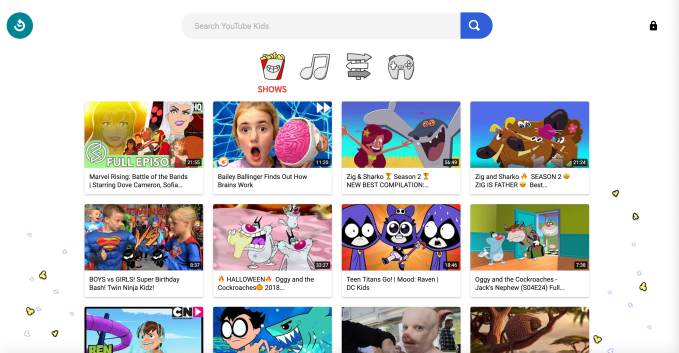
Screen Shot 2019 08 30 at 10.15.23 AM

YouTube Kids (“Older” age group)

And last week, the company expanded its child safety policies to remove — instead of only restrict, as it did before — any “misleading family content, including videos that target younger minors and their families, those that contain sexual themes, violence, obscene, or other mature themes not suitable for younger audiences.”

YouTube had come under fire in 2017 for hosting a number of bizarre and disturbing videos that were using keywords and the YouTube algorithms to target children.

For example, videos of popular kids’ cartoon characters like Peppa Pig drinking bleach or getting her teeth violently yanked were showing up when children sought out Peppa Pig videos. These sorts of issues had been going on for years, in fact, but YouTube only addressed the situation by age-restricting the videos after receiving high-profile press coverage. It also cut off monetization to some videos.

But the bigger problem with YouTube, as consumer advocacy groups have argued, isn’t just that YouTube can be inappropriate for kids — it’s actually breaking the law.
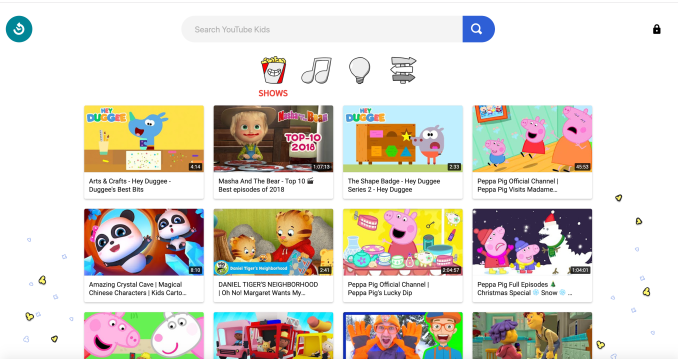
Screen Shot 2019 08 30 at 10.16.05 AM

YouTube Kids (“Preschool” age group)

Organizations like the Campaign for a Commercial-Free Childhood (CCFC) and the Center for Digital Democracy (CDD) had asked the FTC to investigate YouTube, claiming that the company has been collecting personal information from nearly 25 million U.S. children for a number of years, and has been using this data to engage in “very sophisticated marketing techniques.”

The groups said YouTube hides behind its terms of service, which state its site is only meant for those 13 and up, while doing nothing from preventing younger users from gaining entry. (And clearly, younger users are on YouTube — after all, that’s why YouTube was able to spin out a subset of its content into its own YouTube Kids app in the first place.)

With the YouTube Kids website in place, now it’s only a matter of waiting for the FTC’s official ruling.

The Washington Post says the details of that ruling have been finalized, and noted a multimillion-dollar fine was included. A report from Politico today said the fine could be up to $200 million. And according to Bloomberg, YouTube will end targeted ads on videos aimed at kids.

But based on YouTube’s existing YouTube Kids Privacy Policy linked from the new website, that has yet come to pass.

It also remains to be seen whether the kid-safe content will actually be pulled from YouTube.com and placed on YouTube Kids alone, as the advocacy groups believe would be best.

It’s unclear why YouTube has taken to making these very big, impactful announcements on YouTube’s Help forums instead of on the official YouTube Blog, and without alerting the press, as it did with the children’s content policy change, pre-announcement of the Kids website, change to age filters and now the website’s launch news.

That said, it’s certainly focused on letting YouTube users know of its Kids product — a big pop-up banner now appears upon every launch of YouTube.com, which has frustrated users who don’t have children.
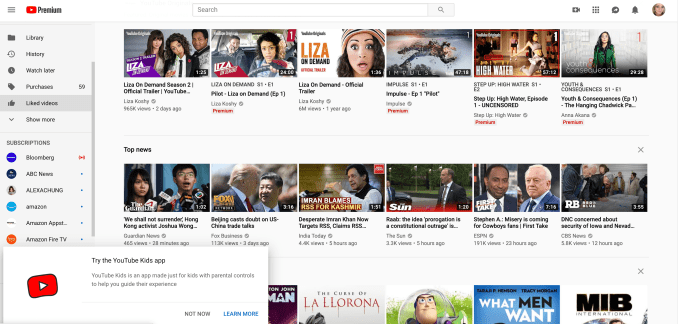
Screen Shot 2019 08 30 at 10.31.46 AM

As for the new Kids website itself, there’s not much new to report. The content is organized as in the app, in categories like Shows, Music, Explore and Gaming. Parents can set a passcode of their own to keep kids out of the settings. However, it’s still missing some of the app’s more advanced features, like profiles, whitelisting and timers. Those will likely roll out over time.

“We built YouTube Kids to create a safer environment for kids to explore their interests and curiosity, while giving parents the tools to customize the experience for their kids. We continue to improve the app based on feedback from parents and experts,” says YouTube.

September’s Mate 30 launch could be a major test for Huawei

Apple isn’t the only smartphone manufacturer planning a big September launch. Huawei’s got a big event on the books as well, set for September 18 in Munich, just over a week after the new iPhones are unveiled. For Huawei, however, the Mate 30 announcement is about more than just smartphones.

The event is effectively the first big handset launch since the embattled Chinese manufacturer was added to the U.S. trade blacklist. The move had seemingly been a longtime coming, after years of allegations ranging from spying to sanctions violations, but with the ban in place, the move will mark a key moment of truth for a company that has so far been dependent on offerings from U.S. companies like Google.

The Mate 30, which also marks a push into 5G, could potentially launch without Google apps. The recent U.S. government reprieve only applied to already announced products, according to a statement Google gave to Reuters. Trump has suggested the ban on Huawei products could be lifted with a new U.S.-China trade deal, further clouding the suggestion that the move was made purely out of concerns for security.

The smartphone maker gave its own comment to Reuters, noting, “Huawei will continue to use the Android OS and ecosystem if the U.S. government allows us to do so. Otherwise, we will continue to develop our own operating system and ecosystem.”

That last bit is a clear allusion to HarmonyOS. The recently unveiled operating system is largely limited to low-end handsets and IoT devices, but Huawei is also certainly readying itself for a long-term life after Google.

Meanwhile, CNBC is citing a source that suggests the phone will launch with or without Google apps, depending on how things shake out over the next few weeks. That would likely amount to a minor nuisance, requiring users to download them after purchase, while a full-out Android brand would prove far more harmful to its bottom line.

It seems quite unlikely at the moment, however, that the company would attempt to launch such a high-end device with its own partially baked operation system.

Didi Chuxing to launch self-driving rides in Shanghai and expand them beyond China by 2021

Didi Chuxing will begin picking up ride-hailing passengers with self-driving cars in Shanghai in just a few months, according to company CTO Zhang Bo (via Reuters). The plan is to roll out autonomous pick-ups in Shanghai first, starting in one district of the city, and then expand the program from there — finally culminating in the deployment of self-driving vehicles outside of China by 2021.

Like Uber’s autonomous test vehicles, Didi’s cars will be staffed with a human driver on board during the initial launch period, which awaits a few remaining licenses before it can actually begin serving human passengers. Self-driving rides will be free for customers, and Zhang said that more than 30 different vehicles will be offered for self-driving trips as part of the pilot.

After its initial pilot launch in Shanghai, Didi will look to expand its offerings to Beijing and Shenzhen as well, with hopes to be live in all three cities by 2020.

Didi is the largest ride-hailing company in China, and beat out an attempt by Uber to establish a presence in the market, resulting in Uber selling its Chinese business to Didi and exiting the market in 2016 (in exchange for a minority stake). We spoke to Didi’s CTO (who asked to be identified as “Bob” at the time, hence the lower-third in the video below) later that same year about why the company believes it has an advantage when it comes to data-driven technology development relative to Uber and other ride-hailing companies.

Aside from a general sense in the industry that autonomy is a likely, if not inevitable end goal for ride-hailing and other mobility services with a technological focus, Didi is also likely motivated by a need for drivers to meet demand — and drivers who can provide a safe and secure experience for passengers. The company revealed in July that it had proved more than 300,000 drivers didn’t meet its safety standards after overhauling those standards last year.

Earlier this month, Didi also announced that it was spinning out its autonomous driving unit as a separate company, with Zhang as CEO. It’ll look to develop tech for its own fleet, and work in partnership with automakers, including Toyota, in pursuit of commercializing and deploying autonomous driving.