Help TechCrunch offer a valuable new tool for startups (by taking this quick survey)

It’s hard to find the expert help you need right at the clutch moment when you’re building your startup. We’re trying to solve that problem through a product we’ve been developing this year, called Verified Experts — and we’d like to get some more input on it from startup people like you.

As in real life, where you ask your professional network for recommendations, we’re asking startup founders to tell us who the lawyers, growth marketers, brand designers and other experts are who have made/are making a big difference for their company. We use these collective recommendations plus our own research to identify the best experts. Then we publish profiles on the site about them, run guest columns from them that readers have been loving, on topics like growth tactics, immigration tips and term sheet issues.

Now, we’re ramping up this effort — and we’d like to get a little more detail from you about the way that you find and work with startup service providers today.

Please take this 2-minute survey and tell us more.

Beyond helping us to create something that can support startup founders everywhere, you’ll also get a discount to Extra Crunch — and two lucky winners will get full-access Innovator Pass tickets to Disrupt in SF next month.

Hear how to build a billion-dollar SaaS company at TechCrunch Disrupt

There was a time when brick-and-mortar mom and pops framed their first $1 on the wall, but in the SaaS startup the equivalent milestone is $1 billion revenue run-rate.

Salesforce is the SaaS revenue king reporting $4 billion in revenue for its most recent quarterly report, and there are many other relatively new SaaS companies, such as WorkDay, ServiceNow and Atlassian, that have broken the $1 billion barrier.

This year at TechCrunch Disrupt (tickets here!), we welcome three people to the Extra Crunch stage who know first hand what it takes to join the billion dollar club.

Neeraj Agrawal, a partner at Battery Ventures and seasoned enterprise investor, presented his growth thesis in a widely read article for TechCrunch where he outlined the key milestones for a SaaS company to reach a billion dollars.

Whitney Bouck is COO at HelloSign, a startup that was sold to Dropbox in 2018 for $230 million. Bouck was also an executive at Box, guiding their enterprise business from 2011-2015. Prior to that she was at Documentum, which exited in 2003 to EMC for $1.7 billion.

Jyoti Bansal is currently co-founder & CEO of Harness. Previously, he was founder & CEO of AppDynamics, which Cisco acquired in 2017 for $3.7 billion. Bansal is also an investor as co-founder of venture capital firm Unusual Ventures.

The goal of this panel is to help you understand the tools and strategies that go into ramping to a billion in revenue and beyond. It requires a rare combination of good idea, product-market fit, culture and commitment. It also requires figuring out how to evolve the core idea and recover from inevitable mistakes — all while selling investors on your vision.

We’re amped for this conversation, and we can’t wait to see you there! Buy tickets to Disrupt SF here at an early-bird rate!

Did you know Extra Crunch annual members get 20% off all TechCrunch event tickets? Head over here to get your annual pass, and then email [email protected] to get your 20% discount. Please note that it can take up to 24 hours to issue the discount code.

SexTech, Kobalt, sales efficiency, philanthropy and ethics, Brexit, and startup growth tactics

Tech startups want to destigmatize sex

Sex, despite being one of the most fundamental human experiences, is still one of those businesses that some advertisers reject, banks are hesitant to financially support and some investors don’t want to fund.

That’s TechCrunch’s Megan Rose Dickey discussing the rise of “sextech”, a movement among technologists and product designers to open up one of the most fundamental human experiences to technological innovation. Yet, the often puritanical nature of business means that while some innovations are widely received and lushly funded, other startups remain adrift, struggling to advertise and secure funding.

Megan talks with a range of founders and investors in the space, finding the positive stories along with a heap of frustrating ones. There is a lot more work to do here.

But in reality, it’s hard to say how big that market really is, Founders Fund Partner Cyan Banister, who has invested in a handful of sextech startups, tells TechCrunch.

“It’s hard to gauge and the reason why is these businesses aren’t capable of operating at the same scale a normal business could operate at,” Banister says. “They’re kind of cut off at the knees by not being able to advertise. They can’t be on Twitter, Facebook and Instagram in the way other businesses could… It’s hard to know how big these companies could be if we could change the social norms and stigmas associated with these products.”

Banister has invested in O.School using personal funds, and in Unbound via venture firm Founders Fund . Unbound, a sexual wellness startup for women, focuses on sex toys, accessories and jewelry that doubles as pleasure products. In December 2017, Unbound raised $2.7 million from Founders Fund, Slow Ventures and others.

“The objective has always been to take the category mainstream like Viagra,” Unbound CEO Polly Rodriguez tells TechCrunch.

How Kobalt is simplifying the killer complexities of the music industry

Extra Crunch media columnist Eric Peckham is back with the next part of his three-part EC-1 looking at music infrastructure startup Kobalt. In part one, Eric talked about how a former Swedish saxophonist built and grew what has become one of the most important music industry startups to arise from Europe since Spotify.

Startups Weekly: Part & Parcel plans plus-sized fashion empire

Hello and welcome back to Startups Weekly, a weekend newsletter that dives into the week’s noteworthy startups and venture capital news. Before I jump into today’s topic, let’s catch up a bit. Last week, I wrote about Stripe’s grand plans. Before that, I noted Peloton’s secret weapons

Remember, you can send me tips, suggestions and feedback to [email protected] or on Twitter @KateClarkTweets. If you don’t subscribe to Startups Weekly yet, you can do that here.

Startup spotlight

The best companies are built by people who have personally experienced the problem they’re attempting to solve. Lauren Jonas, the founder and chief executive officer of Part & Parcel, is intimately familiar with the struggles faced by the women she’s building for.

San Francisco-based Part & Parcel is a plus-sized clothing and shoe startup providing dimensional sizing to women across the U.S. The company operates a bit differently than your standard direct-to-consumer business by seeking to include the women who wear and evangelize the Part & Parcel designs by giving them a cut of their sales.

Here’s how it works: Ambassadors sign up to receive signature styles from Part & Parcel, which they then share and sell to women in their network. Ultimately, the sellers are eligible to receive up to 30% of the profit per sale. The out-of-the-box model, which might remind you somewhat of Mary Kay or Tupperware’s business strategy, is meant to encourage a sense of community and usher in a new era in which plus-sized women can facilitate other plus-sized women’s access to great clothes. 

190615 PartandParcel 00 16384

“I bought a brown men’s polyester suit and wore it to an interview,” Jonas, an early employee at Poshmark and the long-time author of the popular blog, ‘The Pear Shape,’ tells TechCrunch. “I was that kid wearing a men’s suit.”

Clothing tailored to plus-sized women has long been missing from the retail market. Increasingly, however, new brands are building thriving businesses by catering precisely to the historically forgotten demographic. Dia&Co., for example, raised another $70 million in venture capital funding last fall from Sequoia and USV. And Walmart recently acquired another brand in the space, ELOQUII, for an undisclosed amount. Part & Parcel, for its part, has raised $4 million in seed funding in a round led by Lightspeed Venture Partners’ Jeremy Liew.

The startup launched earlier this year in Anchorage, “a clothing desert,” and has since grown its network to include women in several other underserved markets. Given her own history struggling to find a fitted woman’s suit, Jonas launched her line with structured pieces, including suits and blouses — though the startup’s biggest success yet, she says, has been its boots, which come in three different calf width options.

“Seventy percent of women in this country are plus-sized,” Jonas said. “I’m bringing plus out of the dark corner of the department store.”

This week in VC

sex tech 1

Image: Bryce Durbin / TechCrunch

Must read

TechCrunch’s Megan Rose Dickey published a highly anticipated deep dive on the state of sex tech this week. The piece provides new data on funding in sex tech and wellness companies, analysis on sex tech startup’s battle for public advertising and responses from industry leaders on how we can destigmatize sex with technology. Here’s a short passage from the story:

Cindy Gallop sees a market opportunity in every type of business obstacle she encounters. That’s why All The Sky will also seek to invest in startups that tackle the infrastructural tools needed to fuel sextech, like payments, hosting providers and e-commerce sites.

“I want to fund the sextech ecosystem to maintain and sustain a portfolio for All the Skies, to create a bloody huge sextech ecosystem and three, to monopolistically build out the ecosystem to be a multi-trillion-dollar market,” Gallop says.

On my radar

I swung by Contrary Capital‘s Demo Day this week, in which a number of startups gave a 4- to 5-minute pitch. Next on my list is Alchemist‘s Demo Day in Menlo Park. The accelerator welcomes enterprise startups for a six-month program focused on early customer adoption, company development and mentorship.

Also on my radar is Females To The Front. The event began this week in Palm Springs and if I were based in SoCal, I would have swung by. Led by Amy Margolis, the event is said to be the largest gathering of female cannabis founders and funders to date. Here’s how the group describes the event: “Females to the Front Retreat will mix immersive and hands-on workshops, pitch training, investment deck preparation and business skill set education with investor meetings and plenty of shared meals, pool time, yoga, connections, rest and rejuvenation. Every workshop is built to directly engage attendees instead of powerpoint and panels. Be prepared to return home inspired, engaged and with so many more tools in your toolbox.”

For the record, I don’t advertise events in my newsletter just wanted to give props to this one because it’s a great development for the cannabis tech ecosystem.

33880884864 9f2f7a02dc k

Time to Disrupt

We are just weeks away from our flagship conference, TechCrunch Disrupt San Francisco. We have dozens of amazing speakers lined up. In addition to taking in the great line-up of speakers, ticket holders can roam around Startup Alley to catch the more than 1,000 companies showcasing their products and technologies. And, of course, you’ll get the opportunity to watch the Startup Battlefield competition live. Past competitors include Dropbox, Cloudflare and Mint… You never know which future unicorn will compete next.

You can take a look at the full agenda here. And if you still need convincing, here’s five reasons to attend this year’s conference from our COO himself.

And finally… #EquityPod

This week, the lovely Alex Wilhelm, editor-in-chief of Crunchbase News, and I gathered to discuss a number of topics including WeWork’s IPO and Uber’s attempts to bypass a new law meant to protect gig workers. Listen here.

Cloudflare co-founder Michelle Zatlyn on the company’s IPO today, its unique dual class structure, and what’s next

Shares of Cloudflare rose 20% today in its first day of trading on the public market, opening trading at $18 after it priced its IPO at $15 a share yesterday and holding steady through the day.

Put another way, the performance of the nine-year-old company — which provides cloud-based network services to enterprises — was relatively undramatic as these things go. That’s a good thing, given that first-day “pops” often signal that a company has left money on the table. Indeed, Cloudflare had initially indicated that its shares would be priced between $10 and $12, before adjusting the price upward, which suggests its underwriters, led by Goldman Sachs, fairly accurately gauged demand for the offering.

Of course, it was still a very big day for Cloudlfare’s 1,069 employees and especially for Cloudflare’s founders Matthew Prince, its CEO, and Michelle Zatlyn, its COO. We talked with Zatlyn today in the hours after the duo rang the opening bell to ask about the experience, and how the IPO impacts the company going forward. Our chat has been edited lightly for length and clarity.

TC: Thanks for making time for us on a busy day.

MZ: Of course! [TechCrunch’s] Battlefield [competition, in which Cloudflare competed in 2011] is such an integral part of our funding story. Thank you for giving us the stage to launch our company.

TC: Did you get any sleep last night?

MZ: I was so exhausted that I got a great night’s sleep. This whole process has been so incredible, so special. I didn’t know what to expect, and it’s been way better than I could have imagined. There are 150 of our teammates, early employees, family members, board members, champions and other friends here with us [in New York at the NYSE]. We also live-streamed [our debut] to our offices around the world so they could share this moment with us.

TC: How are you feeling about today? The stock is up 20%. There’s always banter afterward about whether a listing was priced right, whether any money was left on the table.

MZ: At this point, we’ve raised almost a billion dollars between today and all of the money we’ve raised from venture investors. We have a great team. We’re really happy. The markets are going to react how they react, but it’s part of our DNA to provide more value than we capture. We think that’s the way to build an enduring company.

TC: You have a liquid currency now. Do you imagine Cloudflare might become more acquisitive as a public company?

MZ: We’ve done some acquisitions on the smaller side and of course, we have a team that’s always looking at different opportunities. But we’re really engineering-driven, and we think we have many products and services left to build, so we’ll continue to invest in our products and in R&D development, as well as in our customer relationships.

TC: Retaining employees is a challenge that some newly public companies worry about. How will you address this in the coming days and months as lock-up periods expire?

MZ: I’m so proud of where we are today and of our whole team, and we’re just getting started. [Matthew and I will] show up Monday morning and get back to work and so will our employees, because they want to make the company [an even greater business].

TC: The company went public with a dual-class structure that gives not just management but all employees 10 times the voting rights of the shares sold to the public. Why was this structure important to Cloudflare, and did it give investors pause?

MZ: There are more than 1,000 people around the world who are building the product and working with customers, and we think it’s important for them to have that 10:1 structure, so it’s something we put in place a few years ago with the encouragement of some of our earlier investors.

TC: Were you modeling this after another company? Is there a precedent for it?

MZ: I don’t know of another one — there may be — but we weren’t inspired by another company. We just felt passionately about this being the right corporate structure and [I don’t think it was harder for us to tell the story of Cloudflare because of it]. Over the last two weeks, in talking with investors across the world, it wasn’t in the top 10 topics that came up, so I think we did a good job of describing it in our S-1.

TC: What was the roadshow like? What surprised you most?

MZ: Don’t get me wrong, there’s a ton of work involved from all kinds of people, in finance, our legal teams … But roadshows have a bad rap in that people think they’re grueling and that, by the end, you’ll be exhausted. That was my expectation. But it was really fun. It was a huge privilege to represent Cloudflare to all these investors who were incredibly smart and well-prepared. We traveled all over and people told us ‘You look better than most teams.’
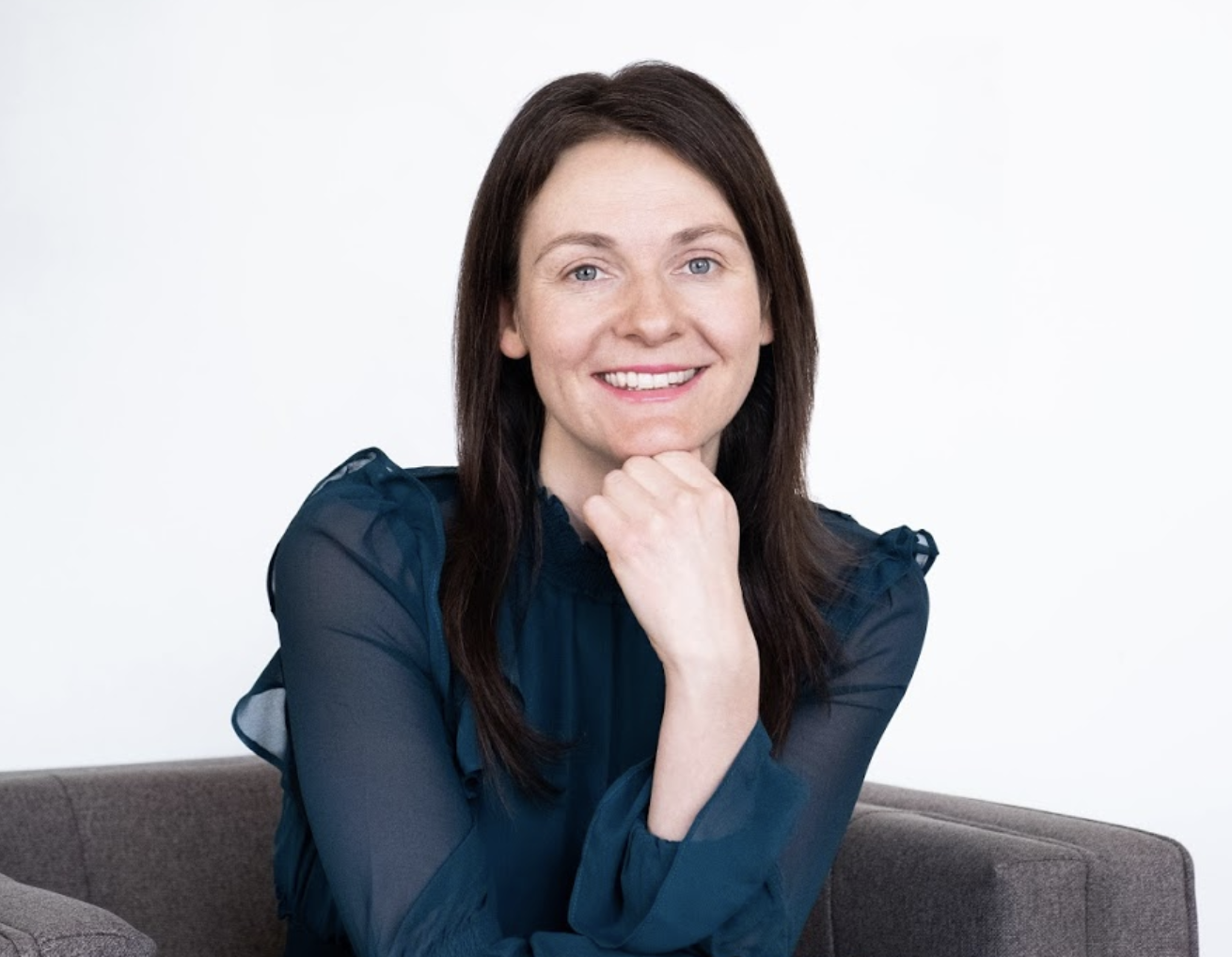
Michelle Zatlyn

TC: Where does one go for these roadshows?

MZ: You have the usual suspects; there’s a travel roadshow circuit, with some variations based on people’s vacation schedules, but New York, San Francisco, Boston, Chicago, Baltimore is common, Kansas City, Indianapolis, Toronto. You go in person to some places and in others, people dial in. But the whole thing gave me new insight into these pools of capital after venture capital. It was really interesting.

TC: Cloudflare said in a recent amendment to its S-1 that it was in touch with the U.S. Treasury’s Office of Foreign Assets Control back in May after determining that its products were used by individuals and entities that have been blacklisted by the U.S. Did this new revelation slow anything down?

MZ: There was no impact. Your group of advisors expands when you go through a public offering, and lawyers dot every ‘i’ and cross every ‘t,’ and you become a better company for it.

We deliver cybersecurity solutions that are made broadly available to businesses, entrepreneurs and nonprofits, and that’s incredible, but there are also some unsavory actors online, and we’ve always been a transparent organization [about having to grapple with this].

TC: How will Cloudflare handle requests for service by embargoed and restricted entities going forward? As a public company, does that process change in any way?

MZ: We have a really good process today. I think people think that we let anyone use Cloudflare and that’s it. But if customers are breaking the law, we remove them from our network and that’s not new and we publish transparency reports on it.

Sometimes, [you’re confronting] things that aren’t illegal but they’re gross, and the question is whose job is it to take it offline. But I work with some of the smartest minds on this and we try to be very transparent about how we figure this out. The conversation is so much better than it was a few years ago, too, with policy makers and academics and the business community engaging on this. People around the world are talking about where the lines can be drawn, but these are tricky, heady conversations.

TC: They certainly put Cloudflare in a precarious spot sometimes, as when the company banned the internet forum 8chan earlier this year after it was learned that the site was used by a gunman to post an anti-immigration rant. Can we expect that Cloudflare will continue to make decisions like this on a case-by-case basis?

MZ: Freedom of speech is such a fundamental part of this nation. Citizens should want the lawmakers to decide what the law should be, and if lawmakers could do this, it would be much better. On the other side, these are new issues that are arising so we shouldn’t rush. Lots of opinions need to be weighed and conversations are much further along than they once were, but there’s still work to be done, and Cloudflare is one [participant] in a much broader conversation.


Disney CEO Bob Iger resigns from Apple’s board of directors

Disney CEO Bob Iger has resigned from Apple’s board of directors, according to a just-published SEC filing.

Neither company has given any reason for the departure — the explanatory text of the SEC filing is literally just “On September 10, 2019, Bob Iger resigned from the Board of Directors of Apple Inc.” — but with Disney and Apple both prepping to launch their own video streaming services in November, it may be that there’s starting to be too much overlap. Given that the services are called “Disney+” and “Apple TV+” respectively, it’s easy to see where things might start to get too muddled.

Iger originally joined Apple’s board in November of 2011.

Apple’s Board of Directors now has seven members: Chairman Arthur D. Levinson (CEO of Alphabet’s biotech R&D company Calico), James A. Bell (the former CFO of Boeing), Al Gore, Andrea Jung (CEO of Grameen America), Ronald Sugar (Former CEO Northtrop Grumman), Susan L. Wagner (Co-Founder of BlackRock), and Apple CEO Tim Cook.

We’ve reached out to the companies for comment, and will update if we hear back.


[Image Credit: Axelle/Bauer-Griffin / Contributor from Getty Images]