California Governor Gavin Newsom signs gig worker bill AB-5 into law

California Governor Gavin Newsom has signed into law gig worker protections bill AB-5. This comes shortly after AB-5 passed in the California State Assembly and Senate.

“Today, we are disrupting the status quo and taking a bold step forward to rebuild our middle class and reshape the future of workers as we know it,” bill author and Assemblyperson Lorena Gonzalez said in a statement. “As one of the strongest economies in the world, California is now setting the global standard for worker protections for other states and countries to follow.”

AB-5 will help to ensure gig economy workers are entitled to minimum wage, workers’ compensation and other benefits by requiring employers to apply the ABC test. The bill, first introduced in December 2018, aims to codify the ruling established in Dynamex Operations West, Inc. v Superior Court of Los Angeles. In that case, the court applied the ABC test and decided Dynamex wrongfully classified its workers as independent contractors.

According to the ABC test, in order for a hiring entity to legally classify a worker as an independent contractor, it must prove the worker is free from the control and direction of the hiring entity, performs work outside the scope of the entity’s business and is regularly engaged in work of some independently established trade or other similar business.

“We agree with Gov. Newsom that California still has an opportunity to support the overwhelming majority of rideshare drivers who want a thoughtful solution that balances flexibility with earnings guarantees and protections,” Lyft spokesperson Adrian Durbin said in a statement to TechCrunch. “We are confident that with his leadership we can reach a historic agreement, but if necessary we are prepared to take this issue to the voters to preserve the freedom and access drivers and passengers want.”

Last week, Uber made it clear it plans to do whatever it takes to keep its drivers independent contractors.

“We will continue to advocate for a compromise agreement,” Uber Chief Legal Officer Tony West said on a press call last week.

As Uber outlined last month, the company is pushing for a framework that would establish a guaranteed earnings minimum while on a trip, offer portable benefits and enable drivers to “have a collective voice.”

He went on to say that Uber is continuing to explore several legal and political options to lay the groundwork for a statewide ballot initiative in 2020. Uber and Lyft announced a $60 million joint initiative last month, and now West is saying Uber is open to investing even more money in that committee account.

“This is not our first choice,” West said. “At the same time, we need to make sure we are exploring all options and all alternatives to put forward a framework that works for the 21st-century economy, and we believe we have a framework that does that.”

Despite opposition from Uber and other gig economy companies, the law will go into effect January 1, 2020.


Out of the box influencer strategies to accelerate awareness for your startup

Kamiu Lee
Contributor

Kamiu Lee is CEO at Activate, an influencer marketing technology platform and agency that partners with brands and influencers to tell engaging and compelling stories across social media at scale.

For new brands, growing awareness and gaining the trust and credibility of consumers are two of the most important yet challenging marketing objectives. As an added constraint, most startups don’t have the budgetary flexibility to activate mega-influencers and celebrities that have national attention at their fingertips. However, new research from ACTIVATE found that smaller-tier, more accessible influencers are a top choice for marketers – they enable brands to tap into niche communities and offer superior engagement rates.

Surveying over 110 brand marketers, PR professionals, social media managers and agency executives, we found that 64 percent of marketers are choosing to utilize micro-influencers very often, as opposed to larger creators, mega influencers and celebrities. We also found that more than 44 percent of marketers are repurposing influencer-created content following a sponsorship, a practice that extends the ROI of an influencer campaign and can help startups attain valuable visual assets for future marketing use.

While mega-influencer content rights are often negotiated to steep rates, those of smaller tier influencers are more affordable, as the influencers themselves also benefit from the added exposure.

With this in mind, when developing an influencer campaign, it’s critical not to feel constrained to the most popular creators, and instead think out of the box and consider what factors will be most important to the audience you’re specifically trying to reach. When being thoughtful about how you’re implementing influencers, smaller creators can be just as impactful as their larger counterparts.

Let’s go through some of the most impactful emerging influencer strategies, to grow awareness, without growing debt.

Key influencer casting strategies to drive targeted impact

Daily Crunch: Facebook announces Portal TV

The Daily Crunch is TechCrunch’s roundup of our biggest and most important stories. If you’d like to get this delivered to your inbox every day at around 9am Pacific, you can subscribe here.

1. Facebook launches Portal TV, a $149 video chat set-top box

The Portal TV lets you hang out with friends using your home’s biggest screen. It’s part of a new line of Portal devices that bring the platform’s auto-zooming AI camera, in-house voice assistant speaker, Messenger video chat and end-to-end encrypted WhatsApp video calls to smaller form factors.

Facebook says it also will provide a lot more clarity around privacy — although human review of voice recordings is still turned on by default.

2. Apple Watch Series 5 review

The Apple Watch Series 5 doesn’t include any hardware additions quite as flashy as the LTE functionality and ECG monitor it introduced with previous updates. But taken as a whole, the new features maintain the device’s spot at the top of the smartwatch heap.

3. Google Fi gets an unlimited plan

For the longest time, Google Fi didn’t play the unlimited calls, text and data game. That’s changing this week.

simone gertz

4. Roboticist and YouTube star Simone Giertz is coming to Disrupt SF

With 1.92 million YouTube subscribers, Giertz is best known for her “shitty” robotic creations, including arms that serve soup and breakfast, draw holiday cards and apply lipstick — to hilariously uneven results.

5. Documents reveal how Russia taps phone companies for surveillance

Documents reviewed by TechCrunch offer new insight into the scope and scale of the Russian surveillance system known as SORM, and how Russian authorities gain access to the calls, messages and data of customers of the country’s largest phone provider.

6. Podcast app Pocket Casts is now available for free, with an optional $0.99 subscription

Previously, you had to pay a one-time fee of $3.99 to access the Android or iOS apps, but CEO Owen Grover said this approach seemed increasingly at odds with Pocket Casts’ goals, and with the vision of the public radio organizations that acquired it last year.

7. In a social media world, here’s what you need to know about UGC and privacy

For a brand, is it worth the effort to incorporate UGC into their marketing strategy? And if so, how can they do it within the rules — and more importantly, in adherence with the expectations of consumers? (Extra Crunch membership required.)

Startup growth hacks, high-frequency trading, startup security, privacy and Adobe

Full Disrupt SF agenda posted

We have an amazing slate of speakers stopping by TechCrunch Disrupt SF this year, including two full days scheduled for the debut of our Extra Crunch stage, which will focus on how founders can overcome the challenges they face through discussions of tactics with some of the most successful founders and leaders in our industry.

Want to learn how to raise your first dollars with Russ Heddleston at DocSend? How to get into Y Combinator with YC CEO Michael Siebel? How to iterate your product with the chief product officers of Uber, Tinder, Okta, and Instagram? How to evaluate talent with Ray Dalio? These and almost two dozen more panels are waiting for attendees on the EC stage.

Be sure to grab your tickets soon. And if you are an annual EC subscriber, be sure to use your 20% membership discount by emailing [email protected].

How to get your ads working, and whether PR is worth it

Growth expert Julian Shapiro of BellCurve.com launched a new series of articles for Extra Crunch members on how to grow your startup using battle-tested growth hacks and techniques from heads of growth across Silicon Valley. His first piece came out on Friday on how to work with influencers, and now in this second edition, he investigates advertising and how to evaluate the value of PR firms.

How to make Snapchat ads profitable

Based on insights from Tim Chard.

  • Snap has niche audiences you’ll want to take advantage of. Examples include “people with digestive issues.” Facebook doesn’t have that. Plus, ad clicks on Snap can be cheap ($0.30 USD isn’t uncommon).
  • However, Snap traffic typically converts poorly once it arrives on your site or app.
  • Here’s a technique to mitigate that: cross-target your Snap traffic. Meaning, use unique UTM tags on your Snap ad links. Then, in Facebook/Instagram, detect that unique UTM to create a custom audience of Snap visitors. Finally, retarget those visitors with FB/IG ads, which tend to convert much better than Snap.

How to get people to open your emails

In Julian’s third edition of the Growth Report, he offers even more tips on how to increase open rates, whether you should use Bing Ads(!), and whether and how to handle multi-touch attribution.

GitHub acquires code analysis tool Semmle

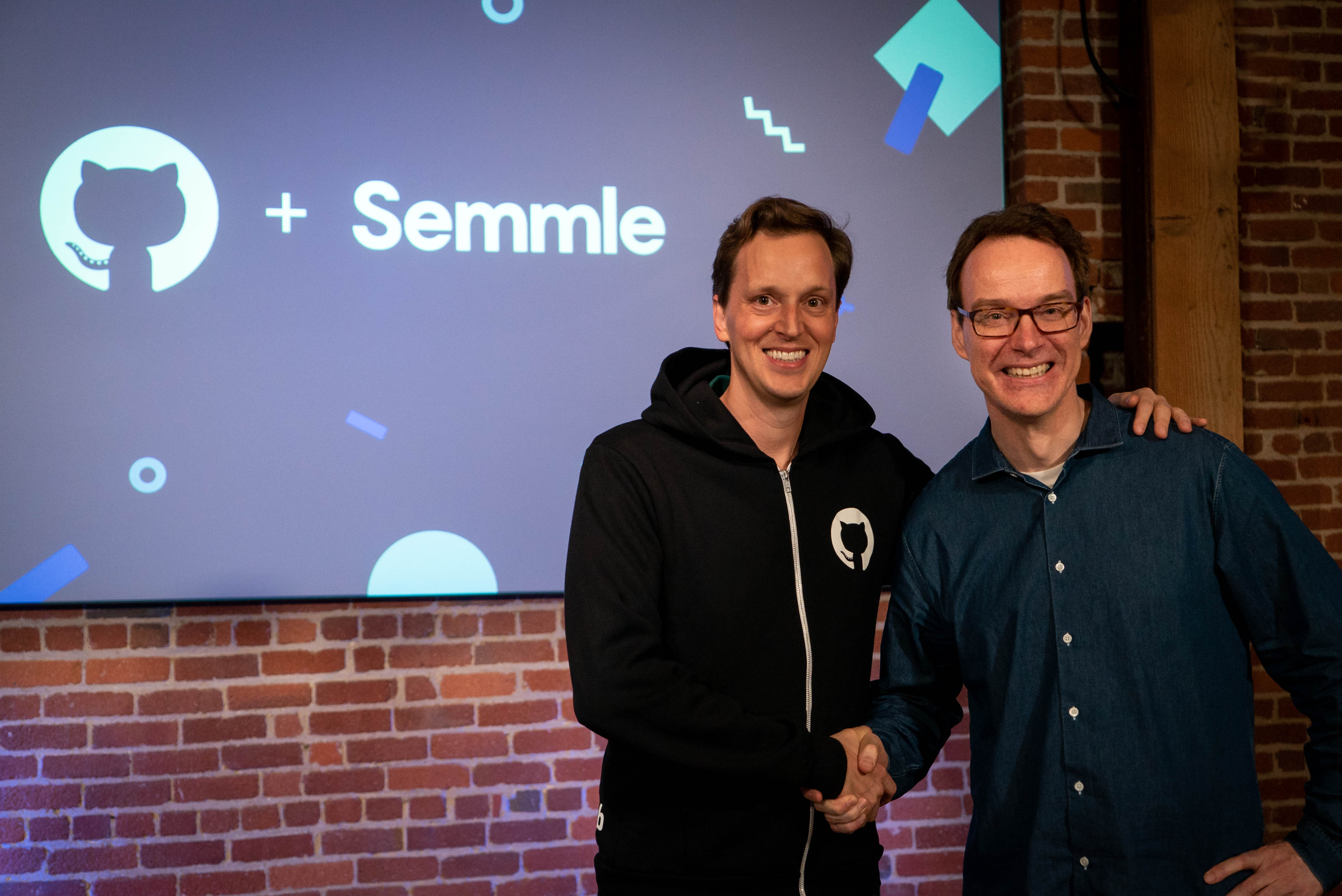
Microsoft’s GitHub today announced that it has acquired Semmle, a code analysis tool that helps developers and security researchers discover potential vulnerabilities in their code. Semmle takes a lot of the manual work out of security testing and instead offers a query language that allows researchers to test their code, using the service’s analysis engine. Over time, the GitHub team plans to integrate Semmle closely into the GitHub workflow.

GitHub did not disclose the price of the acquisition, but Semmle, which was originally spun out of research done at Oxford University, officially launched last year, with a $21 million Series B round led by Accel. In total, the company raised $31 million before this acquisition.

Nat Oege6

“Just as relational databases make it simple to ask very sophisticated questions about data, Semmle makes it much easier for researchers to identify security vulnerabilities in large code bases quickly,” writes Shanku Niyogi, GitHub’s SVP of Product, in today’s announcement.” Many vulnerabilities have the same type of coding mistake as their root cause. With Semmle, you can find all variations of a mistake, eradicating a whole class of vulnerabilities. Furthermore, this approach makes Semmle far more effective, finding dramatically more issues and with far fewer false positives.”

Current Semmle users include the likes of Uber, NASA, Microsoft and Google, and the company’s core analysis platform, with automated code reviews, project tracking and, of course, security alerts, is available for free for open-source projects.

“GitHub is the one place where the community meets, where security experts and open-source maintainers collaborate, and where the consumers of open source find their building blocks,” says Semmle CEO and co-founder Oege De Moor. “GitHub’s recent moves to secure the ecosystem (with maintainer security advisories, automated security fixes, token scanning and many other advances in secure development) are all pieces of the same puzzle. The Semmle vision and technology belong at GitHub.”

image003 1

GitHub CEO Nat Friedman echoes this in a blog post today and notes that he believes that GitHub has a “unique opportunity and responsibility to provide the tools, best practices, and infrastructure to make software development secure.”

As part of this overall mission, GitHub also today announced that it is now a Common Vulnerabilities and Exposures (CVE) Numbering Authority. With this, maintainers will now be able to report vulnerabilities from their repositories and GitHub will handle assigning IDs and adding the issues to the National Vulnerability Database (NVD). Ideally, this should mean that developers will disclose more vulnerabilities (as it’s now significantly easier) and that others who use this code will get alerts sooner.

Video ad company Eyeview names Rob Deichert as its new CEO

After 13 years at the helm of video advertising company Eyeview, founder Oren Harnevo is stepping down as CEO.

The company’s new chief executive is Rob Deichert, who was most recently COO at digital advertising company 33Across. The company is also announcing two other new hires — Sean Simon as senior vice president of sales and Risa Crandell as vice president of sales.

Harnevo, meanwhile, will remain on Eyeview’s board of directors.

“It’s been a long and incredible ride for the last 13 years since I co-founded Eyeview, and I feel it’s time to let a new leader help propel Eyeview to its next chapter,” he said in a statement. “2019 has been a great year for Eyeview. With strong revenue growth, and seasoned additions to our leadership team, it’s the perfect time to bring on [ad] industry veterans like Rob, Sean and Risa to accelerate our business as I depart to work on my next venture while supporting Eyeview on the board of directors.”

Deichert acknowledged that it can be challenging to step into the shoes of a company’s founder, but he said he consulted with Harnevo before taking the job.

“I was just emailing with him today,” he added. “He’s going to be a great partner going forward.”

Rob Deichert

Rob Deichert

Deichert also said he has a standard on-boarding process when he joins a new company, which involves holding 30-minute, one-on-one meetings with every single person. (In this case, that means holding nearly 100 meetings.)

And while Eyeview has been around for more than a decade, Deichert suggested that there’s still plenty of room for its “outcome-based video marketing” (its specialty is video ads that are personalized based on viewer data) to grow.

In particular, he predicted that as direct-to-consumer brands are “maxing out on Facebook,” they’ll start turning back to traditional ad channels like television. With Eyeview, they can do that without losing the measurement and customization of online video.

Stephen Curry Brings SC30 Inc. to Disrupt SF

Startup founders are hard-pressed to find the right investors — not only to fund their businesses but to help their businesses grow. These days, investors represent a variety of backgrounds and industries — traditional venture capital, Hollywood, even the NBA.

When Golden State Warriors point guard and two-time MVP Stephen Curry isn’t playing basketball, he’s working with his business partner and former college basketball teammate Bryant Barr. Together, Barr and Curry run SC30 Inc., which manages Curry’s investment, media, philanthropy and brand partnership interests.

SC30 Inc.’s third investment came in December 2018, when the fund participated in hotel-booking platform SnapTravel’s $21.2 million Series A round.

Curry’s foray into the tech ecosystem started when he co-founded marketing automation platform Slyce. Since then, Curry has taken a more structured approach to investing through SC30 Inc., where the portfolio has grown to eight investments in companies such as TSM and Palm.

It’s worth noting Curry is not the only baller in the tech investment game. There are his former teammates Andre Igoudala, an investor in Lime and board member of Jumia, and Kevin Durant, an investor in a number of startups through his fund Thirty Five Ventures.

At Disrupt SF 2019, listen as the three-time NBA champion Stephen Curry and SC30 Inc. President Bryant Barr discuss SC30 Inc. investments, featuring SnapTravel CEO Hussein Fazal as he shares how he determined SC30 Inc. would make a good strategic investor. We’ll also talk to Curry about his general investment strategy and overall ambitions in tech.

Disrupt SF runs October 2 – 4 at the Moscone Center in the heart of San Francisco. Passes are available here.

Google’s parental control software Family Link gains much-needed features

Google’s parental control software, Family Link, is getting a noteworthy update today with the addition of new features that will allow parents to limit screen time per app, instead of the device as a whole, as well as let them more easily extend screen time as needed. The features were first announced at Google’s I/O developer conference this spring, and help to make Family Link a more complete parental control and screen-time solution.

While the simplest way to manage screen time is to just not give kids a device in the first place, it’s not the most realistic. As parents, we need to teach our kids to navigate the world — and that means we have to show them how to establish a healthy, non-addictive relationship with technology, too. Certain apps make that more difficult, as they’ve been intentionally designed to steal our focus for long periods of time. Even as adults, many of us struggle with this same problem.

For years, platform makers like Apple and Google were complicit with regard to users’ app addictions. They were thrilled about the success of the third-party developers and the money they brought in. Only more recently have these companies realized that their popular devices are starting to be seen as the digital equivalent of junk food — sure, it fuels you. But it’s bad for your health and should be limited. And that, of course, is bad for business. Hence, the arrival of screen-time and digital well-being features.

Family Link is not a perfect system, but it now comes built-in to Android devices with Android 10 and up, and can be downloaded as a standalone app from Google Play if you don’t have it available. It’s to Google’s credit that it has integrated it now into the core mobile OS, where it’s easier to find and use.

family link

Already, it’s able to do things like set device “bedtimes,” track activity per app, set daily limits, view the device’s location on the map and ring it (you’ll need Family Link for this feature alone) and more.

But what was sorely lacking was the ability to more narrowly define how a child’s screen time should be used.

Today, there are plenty of educational apps — from flashcards to study guides to Kindle books — that kids don’t deserve to be locked out from just because they’ve used their phone over a certain number of hours per day. And as a parent myself, I was hesitant to enforce daily limits in Family Link because it locked my child out of her phone entirely, except for the ability to make calls. She just as often uses texting to reach me, so I didn’t want to cut her off from that ability.

With the new per-app limits, you’ll be able to limit how long each individual app on the device can be used.

That means I can drastically trim the number of hours per week she spends on TikTok and YouTube (sorry, not sorry, Google!), or in mobile games. It also now means that chores around the house aren’t tied to “screen time” as a whole, but time in a favorite app, like Roblox. (Oh, the motivation!)

However, per-app limits will require a lot of manual labor on parents’ part. I don’t mind the extra work, because I appreciate the granular control, but a lot of parents would be better-served by category-based limits. (e.g. “mobile gaming.”) This could be something Google addresses in a future update.

bonus time

The other update rolling out today is Bonus Time, which lets you up the amount of screen time in sort of a one-off situation.

For example, if the child is in the middle of something and just needs a few more minutes, you can now grant this extra time without having to disable the screen-time setting. You’ll know screen time is running out because the child gets warnings at 15 minutes, 5 minutes and 1 minute. And they’ll be sure to tell you about this.

These updates are rolling out today to the cross-platform Family Link service. Parents can control Family Link settings from their Android or iOS device, and the child can use an Android or Chrome device.

On-demand plant food startup Simple Feast raises $33M B round to push its climate credentials

As Greta Thunberg heads back to Europe from the U.S. after radicalizing a generation, entrepreneurs are quickly realizing there is a zeitgeist to be gotten hold of here. With food production a major contributor to climate change, it’s no surprise then that on-demand food startups are appearing to cater to this new audience.

Simple Feast launched its plant-based food product in early 2017 and since then has developed a fast-food range that is catching the climate and taste fashion wave.

The company has now raised a total of $33 million in a Series B round led by U.S.-based venture capital firm 14W, with a number of other existing investors participating, including Europe’s Balderton Capital, which is increasing their investment in the business.

The company was partly self-funded in the beginning, then added Sweet Capital (London/Stockholm) and byFounders (CPH/SF) as the first VCs. Later, Balderton Capital (London) and 14W (NYC) joined in the Series A and B. The total funding to date is now north of $50 million.

The founders are Jakob Jønck and Thomas Ambus; Jønck was co-founder of Endomondo, acquired by MyFitnessPal.

Jønck says: “The future of food does not just belong to plants, but will be both plant-based and unprocessed. This movement is pivotal to save not only our planet, but also human health. With this investment, we can continue our journey and bring our products to more people, in existing as well as new markets, while also strengthening our R&D efforts in new food innovation.”

Simple Feast is ticking the climate agenda boxes, with packaging made solely by FSC-approved cardboard boxes, to the cooling element they use to keep the food fresh (frozen tap water in drinkable cartons) and their use of all-organic produce.

Alex Zubillaga from 14W commented: “Over the past year since first investing in Simple Feast, we have continued to be impressed by the caliber and deep operational experience of the management team that Jakob Jønck has built around him… We believe Simple Feast has the opportunity to become a global, category-defining brand as they expand to the U.S. early next year.”

Typical customers are meat-eating families in their 30s and 40s who are trying to cut down on their meat consumption. They are well-educated, have a middle or high income and demand high quality and transparency in the food they consume. Their main competitors are restaurants, meal-kits and take-away. The idea is not to compromise on taste or quality, nor convenience or packaging.

Plex partners with Lionsgate to expand its ad-supported video library

Plex has added a new content partner for its soon-to-launch ad-supported video service. The company announced this morning its service will now also include movies from Lionsgate, which will join Plex’s existing partner Warner Bros. Domestic Television Distribution in helping to fill out the forthcoming video-on-demand library.

However, unlike with Warner Bros., whose videos will be limited to U.S. viewers, the deal with Lionsgate is for worldwide streaming. (There may be a few titles with geo-restrictions, Plex noted.)

“Lionsgate is one of the biggest names in the business and we know our millions of users will enjoy free access to their library of movies,” said Keith Valory, CEO of Plex, in a statement. “Plex caters to the most passionate and discerning media lovers all over the world, so it is important for us to be able to bring great content like this together in one beautiful app for all of our users across the globe.”

TechCrunch first reported on Plex’s plans to enter the ad-supported movies market back in January. The company described a strategy that is similar to Roku’s — that is, instead of just facilitating streaming through its platform, it will actually broker deals that bring a selection of free content directly to its users. It can then tap into the ad revenue that’s generated to boost its bottom line as Roku does with The Roku Channel.

Though Plex began as a media organizer, it has, in recent years, expanded to focus on becoming a one-stop-shop for all your media needs. This includes streaming and recording from live TV, streaming music by way of a TIDAL partnership, plus access to podcastsnews and web series.

Plex now has 20 million users, and while it doesn’t detail its subscriber numbers, it has achieved profitability.

That said, the one media organization challenge it hasn’t yet solved is helping users search for, discover and track the shows and movies they want to watch outside of live TV or its ad-supported streams. Plex did once say it’s looking into paid subscriptions further down the road, as it’s a natural next step beyond the ad-supported streaming deals.

Plex says its video-on-demand library will launch later this year.

Hear how to hire at breakneck speed at TechCrunch Disrupt SF

Nothing can get built without talented people with the right skillsets, which is why startups hitting their growth phases have to go from hiring a smattering of employees to building systems that can hire dozens to hundreds of people per year. How can startups double and triple headcount year after year in a sustainable way, all while not losing the culture that made them what they are in the first place?

We’ve got an incredible discussion lined up on the Extra Crunch stage at TechCrunch Disrupt SF this year that answers that prompt from some of the most knowledgeable people in the business.

First, we have Harj Taggar of Triplebyte, a platform designed to accelerate the hiring of quality and vetted engineers for tech startups. Taggar was the first partner to join Y Combinator, where he spent five years helping some of the most successful startups in the world grow from humble origins to debuting at the New York Stock Exchange. Taggar brings a wealth of experience of observing high-growth companies hire, and also brings significant expertise from Triplebyte on what works and what doesn’t at scale for startup hiring.

Next, we have Liz Wessel, CEO and co-founder of WayUp, a platform for student professionals to connect with new jobs and opportunities that has raised more than $27 million in venture capital from Trinity and General Catalyst. Wessel brings a deep operational background to the discussion, not just hiring dozens of people for her own startup, but also seeing how hiring operates horizontally across industries and sectors through her employment platform.

Finally, we have Scott Cutler, CEO and co-founder of StockX, an ecommerce platform for buying and selling sneakers as well as streetwear, handbags and more. StockX has raised $160 million across several rounds of venture capital, and has hundreds of employees. Before he founded StockX, Cutler was head of the Americas for eBay and president of StubHub. He brings both a large tech and a rapidly-growing startup perspective to the discussion.

We’re amped for this conversation, and we can’t wait to see you there! Buy tickets to Disrupt SF here at an early-bird rate!

Did you know Extra Crunch annual members get 20% off all TechCrunch event tickets? Head over here to get your annual pass, and then email [email protected] to get your 20% discount. Please note that it can take up to 24 hours to issue the discount code.

Walmart launches two new credit cards offering 5% back on digital purchases

Walmart is partnering with Capital One to launch a new credit card program, which rolls out on September 24, and includes both co-branded and private-label cards. The former, the Capital One Walmart Mastercard, includes 5% back on purchases made on Walmart.com or paid for in-store using Walmart Pay (the latter for the first 12 months). The private label card, the Walmart Rewards Card, will offer those same perks, but is limited to being used only in Walmart stores and on Walmart.com.

After the 12-month introductory period, the co-branded Mastercard will drop to 2% on Walmart purchases in stores, instead of 5%. However, it will continue to offer 5% on Walmart.com purchases, including Walmart Grocery.

It also offers 2% back on restaurants and travel and 1% back everywhere else. The card doesn’t include any annual fee or foreign transaction fees, and its rewards can be used any time, Walmart says.

Customers can apply for the new card via Walmart’s website or app, or through CapitalOne.com. The application itself can be filled out using a mobile device and, once approved, customers gain access to the card immediately. They also can load the card into Walmart Pay or into the Walmart app before the physical card arrives in the mail — similar to how Apple’s new Apple Card works.

Through Capital One, customers will receive purchase notifications, security alerts, 0% fraud liability and the ability to lock/unlock a lost or stolen card from the Capital One app.

The new Walmart store card, meanwhile, also offers 5% back on purchases on Walmart.com, in the Walmart app and on Walmart Pay in-store purchases during the introductory period. It then offers 2% back on Walmart purchases afterward. It also earns 2% back at Walmart Fuel Stations.

Current Walmart cardholders will be converted to the Capital One Walmart Rewards Mastercard or the Walmart Rewards Card, starting October 11, with physical cards arriving in November. They’ll also earn 5% back through Walmart Pay through October 14, 2020.

Walmart’s prior card, from Synchrony Bank, offered smaller rewards, noted Sara Rathner, credit cards expert at NerdWallet, in a statement published this morning.

“The Capital One Walmart Rewards Mastercard is definitely helping to cement 5% back as the gold standard among retail cards. We already see this rewards rate with the Amazon Prime Rewards Visa card and the Target REDcard. The previous Walmart card issued by Synchrony Bank only offered 3% back on Walmart.com and a paltry 1% back in-store, so the new card is a huge step up,” she said.

Credit card partnerships are an area of importance to major retailers, including Walmart’s chief rival, Amazon. Its credit card program includes a variety of options, including store cards, travel cards, prepaid cards, no annual fee cards, reward points cards and more. And of course both retailers today are, to some extent, challenged by Apple, which just entered the credit card space, too.

Branded store cards not only help to increase customer loyalty, they also drive more purchases, reduce credit card processing fees, create additional profit in the form of interest and generate records of customer purchases that can be used for targeted advertising.

“As our company has evolved to serve customers shopping in stores, online, and on the Walmart apps, we also recognized the need to fully digitally enable the cardholder experience,” said Daniel Eckert, senior vice president, Walmart services and digital acceleration, in a statement. “That’s why we’ve worked with Capital One to make it possible for cardholders to manage essentially every interaction with the program right from the palm of their hands,” he said.

Afore Capital raises second pre-seed venture capital fund

As expectations from seed investors intensify, a new stage of investment has established itself earlier in the venture-backed company life cycle.

Known as “pre-seed” investing, one of the first legitimate outfits to double down on the stage has refueled, closing its second fund on $77 million.

Afore Capital’s sophomore fund is likely the largest pool of venture capital yet to focus exclusively on pre-seed companies, or pre-product businesses seeking their first bout of institutional capital. In many cases, a pre-seed startup may even be “pre-idea,” yet to fully incorporate. While some funds are happy to invest that early, Afore seeks slightly more mature companies.

Afore invests between $500,000 and $1 million in nascent startups. As it kicks off its second fund, founding partners Anamitra Banerji and Gaurav Jain tell TechCrunch they plan to lead all of their investments.

We have the opportunity to build a firm that defines a category. – Afore founding partner Anamitra Banerji

Standouts in Afore’s existing portfolio include the no-fee credit card company Petal — which has raised roughly $50 million to date — mobile executive coaching business BetterUp, childcare information platform Winnie and Modern Health, a B2B mental wellness platform.

Afore portfolio companies have raised more than $360 million in follow-on funding, with an aggregate market cap of $1.5 billion, Jain, the founding product manager at Android Nexus and former principal at Founder Collective, tells TechCrunch. “These are high-quality teams with high-quality projects and ideas.”

Jain and Banerji — a founding product manager at Twitter and former partner at Foundation Capital — began raising capital for Afore’s $47 million debut fund in 2016. Since then, the landscape for seed investing has shifted. Early-stage investors have begun funneling larger sums of capital to standout teams at the seed, while billion-dollar venture capital funds set aside capital for serial entrepreneurs working on their next big idea. As a result, deal sizes have swelled and deal count has shrunk simultaneously.

“Pre-seed has replaced seed in the venture ecosystem,” Banerji tells TechCrunch. “We saw this early as a result of both of us having been at funds. We knew that this was going to be a massive category just like seed was before it. Now we think it’s clearly here to stay and we have the opportunity to build a firm that defines a category.”

Since launching the firm, the pair explain they’ve noticed more and more founders explicitly stating that they are in the market for a pre-seed round, a statement you wouldn’t have heard as recently as two years ago.

This is a result of Afore’s efforts to legitimize the stage through investments and programming, including its annual Pre-Seed Summit. Though Afore is certainly not the only VC fund focused on the earliest stage of startup investing — other firms deploying capital at the stage include Hustle Fund, which closed an $11.8 million debut fund last year, plus the $20 million immigrant-focused pre-seed fund Unshackled Ventures and the predominant seed and pre-seed stage firm Precursor Ventures, which announced a $31 million second fund earlier this year.

In the past year alone, more than $200 million has been dedicated to the pre-seed stage, with at least nine new funds launching to nurture early-stage startups.

More and more firms are setting up shop at the pre-seed stage as competition at the seed stage reaches new heights. As we’ve previously reported, monster funds are becoming increasingly active at the seed stage, muscling seed funds out of top deals with less dilutive offers. While the pre-seed stage, for the most part, remains protected from competition at the later stage, these firms still have to compete.

“Nobody wants to lose sight of a deal, so they are willing to toss small amounts of capital very early behind interesting founders,” Jain said. “But frankly, we aren’t sure if it’s good for a company to raise that much capital that early in their life cycle.”

Working with a fund that isn’t passionate about what you are building or familiar with the plights of the stage of your business is terrible for founders, adds Jain. Pairing with a focused fund like Afore, on the other hand, allows for “incentive alignment.”

Afore invests across all industries, preferring to back startups in categories “before they are categories.”

“What we are looking for is deep authenticity and passion around the product they are building,” says Banerji. “Ideas on their own aren’t enough. Founder resumes on their own aren’t enough. While we do care about all of those aspects, we get crazy about their clarity of thought in the short term.”

“We don’t take the point of view of ‘here is some money, it’s OK to lose it,’ ” he adds. “For us to invest, the founder must be all in. And we generally don’t invest in celebrity founders; we are going after the underdog founder.”

North now offers Focals smart glasses fittings and purchases via app

North’s Focals smart glasses are the first in the category to even approach mainstream appeal, but to date, the only way to get a pair has been to go into a physical North showroom and get a custom fitting, then return once they’re ready for a pickup and final adjustment. Now, North has released its Showroom app, which makes Focals available across the U.S. and Canada without an in-person appointment.

This approach reduces considerable friction, and it’s able to do so thanks to technology available on board the iPhone X or later — essentially the same tech that makes Face ID possible. People can go through the sizing and fitting process using these later model iPhones (and you can borrow a friend’s if you’re on Android or an older iOS device) and then North takes those measurements and can produce either prescription or non-prescription Focals, shipped directly to your door after a few weeks.

The Showroom app also includes an AR-powered virtual try-on feature for making sure you like the look of the frames, and for picking out your favorite color. Once the Focals show up at your door, the final fitting process is also something you can do at home, guided by the app’s directions for getting the fit just right.

Should you still want to hit an actual physical showroom, North’s still going to be operating its Brooklyn and Toronto storefronts, and will be operating pop-ups across North America as well.

Focals began shipping earlier this year, bringing practical smart notification, guidance and other software experiences to your field of view via a tiny projector and in-lens transparent display. North, which previously existed as Thalmic Labs and created the Myo gesture control armband, recognized that they were building control devices optimized for exactly this kind of application, but also found that no one was yet getting wearable tech like smart glasses right. Last year, Thalmic Labs pivoted to become North and focus on Focals as a result.

Since launching its smart glasses to consumers, it’s been iterating the software to consistently add new features, and making them more accessible to customers. An early price drop significantly lessened sticker shock, and now removing the requirement to actually visit a location in person to both order and collect the glasses should help expand their customer base further still.

Indonesia’s Julo raises $10M to expand its P2P lending platform

Julo, a peer-to-peer lending platform in Indonesia, said on Wednesday it has extended its $5 million Series A raise to $15 million as it looks to scale its business in the key Southeast Asian market.

The $10 million Series A2 round for the Jakarta-headquartered startup was led by Quona Capital, with Skystar, East Ventures, Provident, Gobi Partners and Convergence participating. The two-year-old startup, which has raised about $16 million to date, is now closing the round, Adrianus Hitijahubessy, co-founder and CEO of Julo, told TechCrunch in an interview.

Through its eponymous Android app, Julo provides loans of about $300 to users at aggressively competitive rate of 3-5% per month — one of its key differentiating factors. Julo has managed to keep its interest rate low because its credit scoring system is more efficient than those of its rivals, claimed Hitijahubessy, who has amassed more than a decade of experience in credit scoring systems using alternative data from his previous stints.

“There are lots of players in this market. Not just Indonesia, but globally. But it comes down to who actually knows what they are doing. The bar is becoming higher and it is increasingly becoming difficult for digital lending companies to just launch an app and charge a high interest rate,” he said.

Julo works with banks and individuals to finance loans to customers. It says it has disbursed about $50 million to date.

Hitijahubessy said Julo will use the fresh capital to expand the team and enhance its credit score system. The startup intends to focus on growing its business in Indonesia itself.

In a statement, Ganesh Rengaswamy, co-founder and partner of Quona Capital, said, “a significant majority of JULO’s loans are used for productive purposes that can enhance the economic well-being of families and small businesses — driving financial inclusion in Indonesia, which is a cornerstone of Quona’s focus.”

Digital lending is becoming an increasingly crowded space in South Asian markets. In India, for instance, a growing number of digital mobile wallets, including Paytm and MobiKwik, have recently started to offer credits to customers.