Fleets, like the 100,000 delivery vans the retailer ordered from startup Rivian, will make electrics seem more commonplace, and easier to charge.
Category: Tech news
hacking,system security,protection against hackers,tech-news,gadgets,gaming
Want to crush competitors? Forget SoftBank, Blackstone suggests; it can write $500 million checks, too
Back in January, Blackstone — the investment firm whose assets under management surpassed a jaw-dropping half a trillion dollars earlier this year — quietly began piecing together a new, growth equity platform called Blackstone Growth, or BXG. Step one was hiring away Jon Korngold from General Atlantic, where he’d spent the previous 18 years, including as a managing director and a member of its management committee.
Step two has been for Korngold, who is responsible for running the new program, to build a team, which he has been doing throughout the year, bringing in “people who speak the language of Blackstone,” he says, including from TCV, Andreessen Horowitz, Carlyle, Vista Private Equity, NEA, and SoftBank .
Apparently, the group is now ready for business. It has already closed on two deals from existing pools of capital with Blackstone, including acquiring outright the mobile ad company Vungle. According to Korngold, two more term sheets “are being signed imminently.”
We talked with him last week for more information about what the group is shopping for, what size checks it is willing to write, and which firms it views as its biggest rivals for deals (and more). Our chat has been edited for length and clarity.
TC: You’ve been hiring throughout the year people who have large-scale growth equity backgrounds. Are many of them women?
JK: Blackstone is one of the most diverse organizations [in terms of] gender or ethnicity. In general, it’s a huge priority for the firm and within our group of 20 people, 40 percent are female, a number we hope to get to 50 percent. Hiring is still in process, but it’s a really healthy culture.
TC: How many people does Blackstone employ altogether?
JK: There are 2,600 altogether across 24 offices.
TC: Is your group investing a discreet pool of capital?
JK: At some point, we’ll have a dedicated pool of capital, but as a firm, we’ve been investing in growth equity for some time [so have relied on other funds within Blackstone to date].
TC: There’s no shortage of growth equity in the world right now. What is Blackstone building that’s so different?
JK: The sheer scale of the operation is different. We have nearly 100 operating professionals — employees of Blackstone — who were hired because they are functional experts — from pricing experts to process engineering experts to human capital and procurement and digital marketing experts — and who can advise our companies.
Also, Blackstone can holistically assist a company through [our] growth equity and real estate and procurement and debt [groups] and other related infrastructure support, enabling companies to fight way above their weight class. We have 600,000 people across our portfolio, and that provides an interesting opportunity for our companies to cross pollinate [and to cross-sell to] one another.
Unlike most growth equity firms, we also have a significant number of data scientists who do three things: identify proprietary signals across asset classes to help instruct where we should be hunting; help our companies monetize their data; and help us in our diligence. They’ll access raw data feeds and almost see the matrix, if you will.
TC: How many data scientists are we talking about?
JK: A couple dozen [across Blackstone].
TC: Blackstone must be competing against fast-growing tech companies for data scientists. How do you convince them that work for an investing giant is the better gig?
JK: If you’re an intellectually curious individual, there are so many signals [coming through Blackstone] that it’s almost a proxy for the world. It’s like manna from heaven. It’s not like they’re doing a single-threaded approach. The nature of the challenges across our companies is so vast and so varying that whether you’re looking at a fast-growing retailer or a cell phone tower in another country, the nature of the tasks is always changing.
TC: SoftBank seems to have shaken things up a bit when it came on to the scene, given the size checks it is writing. Your boss, Steven Schwarzman, who recently talked with us about this bigger new push into growth equity, made sure to note that there are few organizations that can write $500 million checks.
JK: [Laughs.] Everyone in Silicon Valley wants to talk about SoftBank. We celebrate a lot of what SoftBank has done. They’ve validated the thesis that there’s an opportunity for growth equity on a scale that hasn’t traditionally been available.
It’s similar to the way we’re set up. SoftBank was never meant to compete with the venture community; they’re competing with the capital markets, and as private companies look to stay private longer market, SoftBank wants to support their development.
TC: And . . .
JK: I think the reality is that a lot of businesses have unproven business models and unit economics, and they’re garnering massive amounts of capital from different constituents. It’s less about who is staying private longer but are they sustainable over the long run, whether public or private. I think a lot of companies right now now that have unproven business models have been flooded by cash at too small a scale where they aren’t ready to handle it, and it masks weaknesses.
TC: Where is that most acute, in your view?
JK: I see that at the smaller growth equity phase — the $25 million to $150 million [per firm per check] range — where most growth equity resides because you have every VC firm there now. Many of the growth funds that have moved downstream. You also have crossover funds like DST and Coatue and Tiger, along with corporate venture capital. That huge flood of capital has created these massive valuations and it has compressed the due diligence involved.
If you look at Lyft and Uber — and Snap was in this category — the market is starting to speak. Public market shareholders are willing to give you the benefit of the doubt for a while but not indefinitely. You can’t feed the machine for growth’s sake.
TC: So what type of deals are you searching out?
JK: We won’t step into a situation where unit economics aren’t proven from day one. You won’t see us in a company that’s selling $1 for 80 cents and hoping someday that works. We’re Inherently more binary in profile. We’re capital-preservation minded while looking for asymmetric upside, and that’s where we have a disproportionate advantage. You’ll see us do deals where we can put our thumb on the scale, because of our real estate holdings or buyout assets or because [search across our] portfolio for help with procurement costs or insurance or R&D or a company’s go-to-market strategy.
TC: What have you done that proves all these bells and whistles make a difference?
JK: We have a couple of signed deals, including [the mobile ad company] Vungle [for a reported $750 million-ish], though we’re more often looking for growth-equity minority ownership positions. [Think] companies that are looking for a partner and not an owner. We’ll do growth buyouts but the vast majority will be significant minority positions.
We have a couple of other deals that will be signed imminently that we can’t discuss just yet.
TC: Are you hoping to take these companies public? Flip them to another private equity firm? Relatedly, do you have any thoughts about the public market and whether more companies should be going out?
JK: We’ll only look to an IPO if there’s a reason for it. Oftentimes, companies shouldn’t be public; sometimes, they should be, including if they need an acquisition currency or [to better establish their] branding. But the idea of, let’s rush to the door [is not our style].
TC: Who are your most direct competitors? Not Vista Private Equity, since it seems to prefer buying companies whole.
JK: Vista is going exclusively for control buyouts, massive turnarounds. It descends upon a company and says, ‘This is the playbook you will follow.’ It also uses a lot of leverage, where the vast majority or our [deals] are un-levered. We don’t use much debt. Vista and Silver Lake are much more competitors with each other.
TC: KKR then? Carlyle?
KR: They’re also multi-asset managers, but as it relates to growth equity, we’ve really found ourselves in slightly more rarefied air. Blackstone has demonstrated that it can use its scale to create an operational advantage, and virtually no other company — or few — can contemplate checks like we can.
TC: What do you want for these checks, other than a minority position? How involved are you and what size stake, exactly, are you aiming to buy?
JK: We want to have a relevant voice, so we want to be in the boardroom, but there is no target range. It can be 10 or 20 or 30 percent. It can be 80 percent. Ideally you want to be the main outside pool of capital along with management team.
A Developer Deletes His Code to Protest Its Use by ICE
Seth Vargo removed a tool used by customers of his former employer, Chef. The company quickly restored it, because the software is open source.
‘Inside Bill’s Brain’ Calls BS on Malcolm Gladwell’s ‘Outliers’ Theory
The author and pundit claimed he knew the formula for the Microsoft cofounder’s genius. Davis Guggenheim’s Netflix doc shows a much more logical equation.
Chef CEO says he’ll continue to work with ICE in spite of protests
Yesterday, software development tool maker Chef found itself in the middle of a firestorm after a Tweet called them out for doing business with DHS/ICE. Eventually it led to an influential open-source developer removing a couple of key pieces of software from the project, bringing down some parts of Chef’s commercial business.
Chef intends to fulfill its contract with ICE, in spite of calls to cancel it. In a blog post published this morning, Chef CEO Barry Crist defended the decision. “I do not believe that it is appropriate, practical, or within our mission to examine specific government projects with the purpose of selecting which U.S. agencies we should or should not do business.”
He stood by the company’s decision this afternoon in an interview with TechCrunch, while acknowledging that it was a difficult and emotional decision for everyone involved. “For some portion of the community, and some portion of our company, this is a super, super-charged lightning rod, and this has been very difficult. It’s something that we spent a lot of time on, and I want to represent that there are portions of [our company] that do not agree with this, but I as a leader of the company, along with the executive team, made a decision that we would honor the contracts and those relationships that were formed and work with them over time,” he said.
He added, “I think our challenge as leadership right now is how do we collectively navigate through times like this, and through emotionally-charged issues like the ICE contract.”
The deal with ICE, which is a $95,000-a-year contract for software development tools, dates back to the Obama administration when the then DHS CIO wanted to move the department toward more modern agile/DevOps development workflows, according Christ.
He said for people who might think it’s a purely economic decision, the money represents a fraction of the company’s more than $50 million annual revenue (according to Crunchbase data), but he says it’s about a long-term business arrangement with the government that transcends individual administration policies. “It’s not about the $100,000, it’s about decisions we’ve made to engage the government. And I appreciate that not everyone in our world feels the same way or would make that same decision, but that’s the decision that we made as a leadership team,” Crist said.
Shortly after word of Chef’s ICE contract appeared on Twitter, according to a report in The Register, former Chef employee Seth Vargo removed a couple of key pieces of open-source software from the repository, telling The Register that “software engineers have to operate by some kind of moral compass.” This move brought down part of Chef’s commercial software and it took them 24 hours to get those services fully restored, according to Chef CTO Corey Scobie.
Crist says he wants to be clear that his decision does not mean he supports current ICE policies. “I certainly don’t want to be viewed as I’m taking a strong stand in support of ICE. What we’re taking a strong stand on is our consistency with working with our customers, and again, our work with DHS started in the previous administration on things that we feel very good about,” he said.
The Area 51 Raid Was the Worst Way to Spot an Alien or UFO
Dozens of revelers gathered near the top-secret base, purportedly hoping to glimpse some extraterrestrial life—but all they got were memes and selfies.
Get advice on the latest growth tactics from Demand Curve at Disrupt SF
We’re going to try something new at Disrupt this year, based on the great response we’ve been getting to our startup how-to coverage. We’re going to put service provider experts on our Q&A stage, where you can talk to them directly in-person about key topics like growth, fundraising and recruiting.
To help kick off this experiment, we’ve asked growth marketing expert Asher King Abramson to lead a session where he’ll tear down your landing pages and Facebook/Instagram ads in front of a live audience. He’ll deconstruct how effective they are at (1) conveying what you do (2) and doing so enticingly — so that people click.
If you’re attending Disrupt and want to participate, you can submit your assets to [email protected] for him to consider.
Get your Disrupt tickets here (you’ll also get a very large discount on an Extra Crunch subscription).
If you’re not familiar, Abramson is the cofounder of Bell Curve, a growth marketing agency widely used by Y Combinator companies and others around Silicon Valley and the world, the cofounder of Demand Curve (YC s19), and a frequent industry speaker on growth (you can see some of his webinars here). We recently named Bell Curve to Verified Experts, our growing list of service providers who startups love to work with, based on founder recommendations. You may also be familiar with his cofounder, Julian Shapiro, a columnist here at TechCrunch who has covered topics for us including trends in paid channel ad prices, how well different sectors monetize and now a regular column featuring tips from across top growth marketers.
This focus on growth is part of our larger orientation towards building great companies via coverage in our new Extra Crunch subscription product.
Matchstick Ventures raises $30M to back startups in the northern US and the Rockies
Matchstick Ventures, a seed-stage firm that says it invests in “rapidly growing, yet underserved startup ecosystems,” announced this week that it has raised $30 million for its second fund.
That’s a lot more money than the firm’s $5 million seed round. This time, Matchstick says it will write initial checks of around $500,000, and in some cases make follow-on investments of $1 million or $2 million.
The firm’s partners, Ryan Broshar and Natty Zola, are based in Minneapolis-St Paul. and Boulder, respectively, and they said the underserved ecosystems they’re focused on include “the North, the Rockies, and companies across the Techstars ecosystem.” This is the first fund Matchstick has raised since Zola (the co-founder of Everlater, acquired by our parent company AOL) joined as a partner last year.
And even though Broshar and Zola only recently closed and announced the fund, they’ve already used it to make a number of investments, backing Onward (San Francisco), Soona (Denver), Upsie (Minneapolis), Pana (Denver) and Ordermark (Los Angeles).
The investors in the fund include Foundry Group, which discussed the relationship between the two firms in a blog post:
We’ve co-invested and served on boards with them and [Foundry Group Managing Director] Seth Levine has been an official advisor to Matchstick since inception. As we’ve gotten to know Natty and Ryan, we’ve also seen the ecosystems in which they operate — the North and the Rockies — begin to really thrive and gain momentum … We believe great companies can be built anywhere and are excited about Matchstick’s opportunity to leverage Natty and Ryan’s positions within their respective communities to partner with incredible founders and build their firm.
Why It Matters That YouTube Changed Its Verification System
For creators, the move is just another example of a giant corporation forcing its whims and experiments on their work.
Take cover, it’s a drone with a nail gun!
The FAA has warned against equipping your drone with weapons such as flamethrowers and handguns. But can a nail gun really be considered a weapon — that is, outside of Quake? Let’s hope not, because roboticists at the University of Michigan have made a roofing drone that uses that tool to autonomously nail shingles into place.
In a video shot in UM’s special drone testing habitat, the craft flies up, approaches its bit of roof, and gingerly applies the nail gun before backing off and doing it a couple more times.
It’s very much just a tech demonstration right now, with lots of room to improve. For one thing, the drone doesn’t use onboard cameras, but rather a system of static cameras and markers nearby that can tell exactly where the drone is and where it needs to go.
This is simpler to start with, but eventually such a drone should be able to use its own vision system to find the point where to touch down. Compared with a lot of the computer vision tasks being accomplished out there, finding the corner of a roof tile is pretty tame.
Currently the drone is also free flying and uses an electric nail gun; this limits its flight time to about 10 minutes and a few dozen nails. It would be better for it to use a tether carrying power and air cables, so it could stay aloft indefinitely and use a more powerful pneumatic nail gun.
Drones are already used for lots of industrial applications, from inspecting buildings to planting trees, and this experiment shows one more area where they could be put to work. Roofing can be both dull and dangerous, and rote work like attaching shingles may as well be done by a drone overseen by an expert as by that experts’ own hands.
The drone is the subject of a paper (“Nailed it: Autonomous Roofing with a Nailgun-Equipped Octocopter”) by UM’s Matthew Romano and others, submitted for the International Conference on Robotics and Automation later this year.
Publicis Sapient’s John Maeda explains how big companies can think like startups
John Maeda has been a professor at the MIT Media Lab, president of the Rhode Island School of Design, designer partner at venture firm Kleiner Perkins and most recently served as the head of computational design and inclusion at Automattic.
So perhaps it’s no surprise that he made another big leap with his latest job, becoming chief experience officer at Publicis Sapient — the consulting arm of advertising giant Publicis Groupe.
At the time he took the job, Maeda said he’d become more interested in working with “end-ups,” his term for larger companies that “serve the lives of human beings, regular people, non-tech people.”
An admirable sentiment — but it’s easier to talk about large-scale digital transformation that it is make it a reality. So after Maeda had been on-the-job for a few weeks, we met up to discuss how things are going.
While Maeda didn’t talk about his work with specific clients, he only seemed more convinced than ever that he’d made the right decision, and that “grown-up companies have gotten a bad rap.”
At the same time, Maeda sees some key ways in which these companies need to change, like becoming “dataful” — i.e., “leveraging quantifiable data to iterate faster.”
He added, “The CEO needs to run at exponential speed, because they know that the water is already above their head.”
Maeda also discussed his upcoming book “How To Speak Machine,” how companies can collect user data without violating user privacy and why he built his own app during his first 25 days on the job. You can read a transcript of our conversation, edited and condensed for clarity, below.
TechCrunch: So you’re 25 days in. Before you started, you said you were excited to work with what you called end-ups — these larger companies that are the opposite of startups. How has your idea of what the job was going to be compared to those first 25 days?
John Maeda: It really fits what I thought it was going to be. The startup-endup terminology came from — I wrote something for Gigaom with my partner in crime back then (Becky Bermont, now at Ideo) about startups and end-ups.
I think the end-up company is like this Mother Earth or Father Earth that everyone needs to be healthy. Even the startups need it! They’re talking about disrupt, disrupt, disrupt, and you know, maybe a few are brand new ideas, but the rest of kind of like, “You know, I wouldn’t mind being acquired by [a larger company].”
TC: Right, their long-term plan is to be acquired by one of the companies that they’re disrupting.
JM: So I think the end-up — I’m wondering if we should call it a grown-up company. And I think grown-up companies have gotten a bad rap.
YouTube CEO says it ‘missed the mark’ with verification overhaul
Less than 24 hours after YouTube announced that it would be changing its creator verification process, CEO Susan Wojcicki admitted that the news hasn’t gone over very well.
“To our creators & users – I’m sorry for the frustration & hurt that we caused with our new approach to verification,” Wojcicki tweeted. “While trying to make improvements, we missed the mark. As I write this, we’re working to address your concerns & we’ll have more updates soon.”
The stated goal of the changes was to make it clear that verification isn’t an endorsement from YouTube, but simply a statement that the creator really is who they claim to be. This distinction became increasingly important as YouTube faced criticism for allowing the spread of hate speech and misinformation, with executives then defending the service as an open platform.
So moving forward, YouTube said it would focus on verifying public figures, famous brands and well-known creators — rather than allowing any account with more than 100,000 subscribers to request verification.
Been doing Youtube for 5 years, I post 2 videos a week, 950,000 subscribers…. YouTube emails me today that my channel has been “unverified” because the verified badge is only for well known channels with a large following
@TeamYouTube literally no one asked for this
— Sierra Schultzzie (@Schultzzie) September 19, 2019

As a result of the new policy, numerous YouTube creators (including some with millions of subscribers) were notified they would be losing their verified status. Naturally, they went public with their unhappiness. (The news also led to some false alarms, like complaints that popular YouTuber PewDiePie had lost his checkmark, when he had not.)
While it remains to be seen how extensively YouTube will be revising or reversing its plans — and whether creators will be satisfied — this still seems like a clear mea culpa from YouTube leadership.
Update, September 21: YouTube offered more details about its new plans, saying that channels with a verification badge will keep that badge without needing to appeal, and that channels with more than 100,000 subscribers will still be able to apply for verification.
Here are the security sessions you can’t miss at Disrupt SF
Security is in everything, it’s everywhere and it’s everyone’s responsibility. What part are you playing?
At TechCrunch Disrupt SF on October 2-4, we’re proud to have onstage some of the smartest security executives and highest-ranking officials ready to talk shop. Security will be front and center of Disrupt SF, with our panels and experts ready to discuss a range of topics. You can’t afford to miss out.
If you haven’t booked your ticket to Disrupt SF in two weeks, here are three reasons why you should.
Onstage we’ll talk to Homeland Security assistant director Jeanette Manfra to understand some of the greatest threats that face the United States today. As one of Homeland Security’s most senior cybersecurity officials, Manfra will discuss election hacking, how to defend against nation-state attackers and what companies can do to be prepared.
We will also have former NSA director Mike Rogers and Team8 founder Nadav Zafrir onstage to dive into the murky world of intelligence. Rogers, a career-long cybersecurity official and former head of the National Security Agency, will discuss his time at NSA and how the landscape of cybersecurity threats has changed, and what he brings to the private sector as a senior advisor to Team8, a cybersecurity think tank and company creation platform. Zafrir, a former Israeli intelligence chief who now heads the think tank, will join Rogers to talk about their most recent venture — security startups.
And, speaking of which, how do you build a secure startup without slowing growth? Companies are hungry to launch and grow, but scale often comes with a trade-off — security, or lack of. We have three leading experts who will join us on the Extra Crunch stage to discuss how to build a secure startup without compromising on scale.
Heather Adkins, Google’s director of security and privacy, will join IOActive chief executive Jennifer Sunshine Steffens and Duo’s Dug Song to talk security. How do you keep your customer data safe? How do you defend against unknown threats? How do you stay ahead of the bad guys?
Whether you’re a security professional, a founder or investor, or a startup decision maker, there’s something for everyone.
Disrupt SF runs October 2 to October 4 at the Moscone Center in San Francisco. Need tickets? Head on over here to pick some up.
‘Am I as brave as I think I am?’ MIT Media Lab student Arwa Mboya on the aftermath of a scandal
It’s been another hard week at MIT. Our campus has been divided by revelations of inappropriate fundraising, coverups, and the harboring of far too many tech geniuses who seemingly put their own interests and careers over the safety of women, among other marginalized groups.
As a chaplain to students and faculty at the Institute, but also as an opinion writer on the ethics of technology who is supposed to be on sabbatical from the chaplaincy to focus on the writing, I’ve been torn all week as to what to say. If you don’t know what a chaplain is, and you would hardly be alone in any ignorance there, it is a position that emphasizes confidentiality and trust. I know there are a lot of people on MIT’s campus who are scared, sad, and hurting for various reasons, and I wouldn’t want any of them to feel less able to speak with someone like me because I’ve chosen to speak out publicly.
At other times, in the midst of other campus controversies, I’ve personally opted to remain relatively silent, leaning into the part of my job that is, officially, one of quiet service to a university as a whole. I’ve been critical of a lot of big institutions over the years, including much of religion, but also a lot of organized atheism.
But as a chaplain at big educational institutions, I’ve rarely felt comfortable being too critical of those institutions, the universities, which at least in my judgement have more power and influence (not to mention more money, though they don’t really pay it to me) than even the oldest and grandest of churches and temples.
Maybe I was wrong in some of those cases; at other times, maybe I was able to do some good by keeping quiet. I reflect on this out loud not because anyone reading it should particularly care about my situation or my inner conflict. You most likely shouldn’t.
I share my own ambivalence, however, because I know countless executives, administrators, and other kinds of leaders have been through similar thought processes. It’s not my place to speak. If I do speak, maybe they’ll fire me, and then I can’t do anyone any good. Even if they don’t fire me, I’m supposed to be ‘objective;’ if I enter the fray, I’ll lose the trust and confidence of half the community.
But then I think about the students and faculty who need support the most. What they need are educators, peers, and administrators who are willing to join them in taking some risk to do what is right.
I was proud, last week, to share the first half of an exclusive interview with an MIT student named Arwa Mboya who brilliantly and bravely spoke out, helping bring about the resignation of one of the world’s most influential tech ethicists, former MIT Media Lab Director Joi Ito. As I said on Twitter, for my money Mboya has been the biggest of the many heroes in this Media Lab scandal.
For her efforts, Mboya was awarded a “Bold Prize,” and celebrating students for their bravery seems unequivocally good. Leaving them alone with their courage, however, by remaining silent in the name of “objectivity,” would be a moral failing.
I’m not sure it’s my place to use this space to call on MIT President Rafael Reif to resign for his own role in allowing Jeffrey Epstein’s donations to the Institute — a role Reif acknowledged this week at an MIT faculty meeting in which he said, “I understand that I have let you down and damaged your trust in me, and that our actions have injured both the Institute’s reputation and the fabric of our community.”
Maybe there are ways forward where MIT is able to heal with Reif still at the helm, though personally I have a hard time envisioning them. But at the very least, we must support students.
And by that I mean, people like me need to publicly and visibly support tech students who feel an ethical obligation to call for the resignation of their own university’s leader over his publicly acknowledged role in not only tolerating but greenwashing human trafficking and serial pedophilia. Just like the drafters and 60+ signers of this powerful letter from women on MIT’s faculty have done.
Will Reif resign? Will more information come out that makes his resignation seem even more inevitable? Or will the “independent review” he has put in place exonerate him in some way? Time will tell.
Meanwhile, as MIT sought to distance itself from Jeffrey Epstein and the broader social questions his case raises, this hard week did bring at least one piece of good news: the resignation of Richard Stallman. A MacArthur “Genius” Fellow and major figure in the history of computing, Stallman has long been a stain on the reputation of institutions with which he has affiliated, for troublingly sexist comments and stances.
Richard Stallman of MIT, an Epstein defender, believes that pedophilia is fine if the child is willing. Hold on to that tidbit for a second. https://t.co/RiGvhJW9hR
— Angus Johnston (@studentactivism) September 14, 2019
The Overton Window on someone like Stallman has now shifted, however, once again thanks to outspoken students, most often young women of color. Like Selam Gano, a recent MIT graduate in robotics engineering, who “arguably set Stallman’s departure in motion,” by speaking out last week on Medium. Gano’s post, entitled “Remove Richard Stallman and Everyone Else Horrible in Tech,” followed an email Stallman had sent to a Listserv affiliated with MIT’s renowned CSAIL research laboratory.
I forgot to share. Here’s the latest. ?@selamjie? a grateful MIT thanks you for your bravery. https://t.co/SLiBFuGVcN
— Amanuella (?????) (@AmanuellaM) September 18, 2019
“There is no single person that is so deserving of praise their comments deprecating others should be allowed to slide,” Gano wrote. “Particularly when those comments are excuses about rape, assault, and child sex trafficking.
Child.
Sex.
Trafficking.”
Gano’s drawn-out emphasis on the nature of the crime in question is entirely appropriate. After all, “human trafficking is the single largest illegal industry in the world,” as the framers of this additional recent petition for resignations of prominent MIT officials made clear. Human trafficking, they wrote, far eclipses even the international drug trade, and continues to inflict incomprehensible suffering on women, children, and families around the world.
In calling for leaders to leave, Gano, like Mboya before her, is not harming MIT or damaging its reputation. To the contrary. Both women have expressed, publicly and privately, a great and ongoing love for the school and what it represents.
In fact, it’s not coincidental that both of these whistleblowers have even described MIT as the best place in the world for them educationally, the site of some of their happiest memories and proudest moments. It’s that kind of true pride that leads morally upstanding people to say, “enough.” Because they want and need to continue to be proud. And because they understand that true pride is the opposite of a coverup. It is the opposite of clinging to power.
As Selam Gano wrote in her Medium post, “I know, now, that if prominent technology institutions won’t start firing their problematic men left right and center, we will do nothing. Ever.” Gano, Mboya, and other students and educators I admire are unwilling to allow an extraordinary institution like MIT to do nothing, or to do so little of consequence that it would essentially be nothing.
These people are, to the extent that a large research university is like a nation-state, true patriots. It might be scary to join them and walk alongside them publicly. Taking a stand might threaten our privilege and expose us to risk. That’s what being brave is all about.
Your move, President Reif and MIT.
“Okay, this girl was asked to change her religion at gunpoint and she didn’t do it,” MIT Media Lab student Arwa Mboya told me at the end of Part One of my interview with her, about a young woman she’d read about in a book called Beneath The Tamarind Tree. The book, by former CNN anchor Isha Sesay, is a skillful account of the 276 girls abducted from Chibok in Nigeria, which launched the “Bring Back Our Girls” campaign.
Mboya’s outspokenness in the face of the Jeffrey (no fucking relation, thank you!) Epstein scandal, inspired in part by her reading of Sesay, was among the bravest demonstrations I’ve seen by a student in 15 years as a university chaplain.
Previously, Mboya and I discussed her decision process for taking a leap which earned her a “Bold Prize” of, to this date, over $13,000 of crowd-funded money. But even more importantly, we discussed the life experiences which inspired Mboya’s courage in the first place — namely her love and radical hopefulness for the youth of her native Africa, and her passion to inspire those young people with the best tech has to offer.
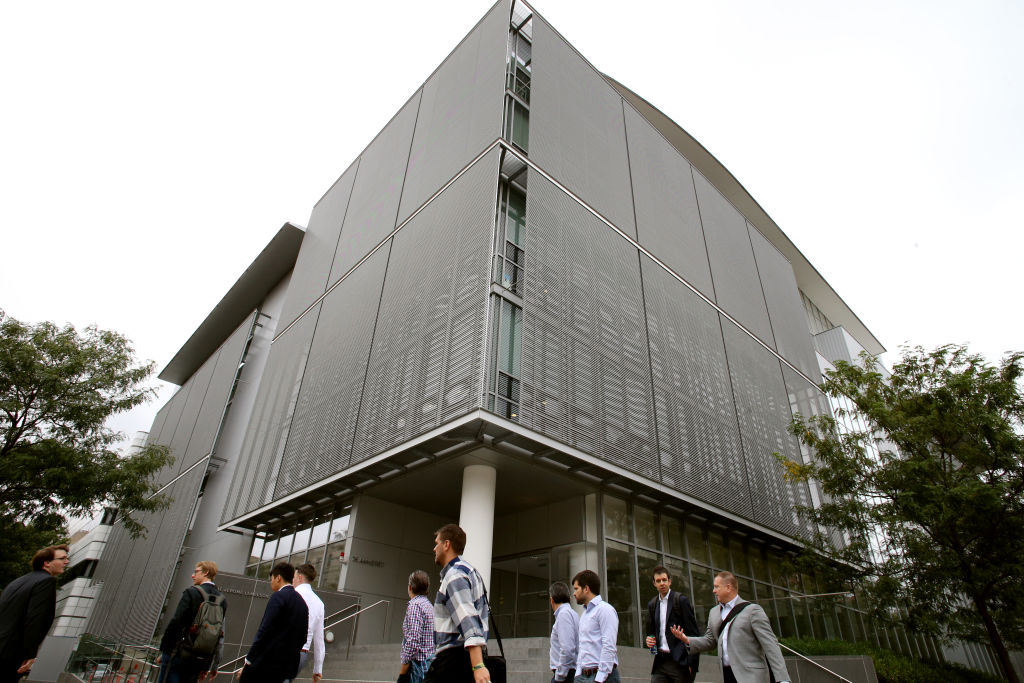
(Photo by Craig F. Walker/The Boston Globe via Getty Images)
In this second and final portion of my conversation with Mboya, we pick up where Part One left off, discussing human trafficking in Africa and in the United States, and how the two phenomena are more closely related than many might imagine. We then get into reading (or not) the comments on her now-famous op-ed calling on Joi Ito to resign; her reaction to receiving the crowd-funded “Bold Prize;” her feelings toward Joi Ito today; and how radical imagination can breakthrough systematic oppression, in Africa and beyond.
“She believed that much,” Arwa said to me about the young woman from Chibok, “that even at gunpoint, even with a risk of rape, with a risk of death, with the risk of all the other nasty things, she stood up for what she believed in.”
It’s not hard to see how that kind of perspective and wisdom might have enabled Mboya to do something exceptional.
Arwa Mboya: The activist who started the Bring Back Our Girls Campaign hounded the government down – and the Nigerian government is scary. I was like, “Okay, these people can do that. I have power to just speak out. Am I really what I think I am? Am I as strong, as brave as I [think I] am?”
A Major Legal Battle May Change How Digital Game Sales Work
Valve’s Steam platform is currently appealing a case in France over consumers’ ability to resell games.