Why Maxar CTO Walter Scott thinks now is the time to address the orbital traffic boom

The number of objects in orbit around Earth has been growing, and growing fast. Before 1957, of course, there were a total of zero human-made objects in the orbital region of outer space just beyond Earth’s atmosphere. There were 4,987 satellites orbiting the globe at the start of this year, according to the U.N. Office for Outer Space Affairs, which is up nearly three percent from the year before. 2017 was a record year for orbital object launches, but with ambitious new satellite constellations planned by SpaceX and others, that’s a record that’s likely to be beat in relatively short order.

Nor are all of those satellites equipped with modern technology: All told, 8,378 objects have been launched to orbit according to the UNOOSA records, and a sizeable percentage of those spacecraft are more than a few years old.

In fact, earlier this month, Bigelow Airspace was informed by the U.S. Air Force that there’s a 5.6 percent chance that one of its satellites could collide with a Russian ‘zombie’ satellite no longer in operation, and one of Starlink’s satellites had a near-miss with one operated by the European Space Agency.

A new industry organization called the Space Safety Coalition has just issued guidelines outlining best practices for companies operating spacecraft in low-Earth orbit, with signees including Immarsat, Iridium, Planet, Rocket Lab, Virgin Orbit and more.

I spoke with Walter Scott, the Chief Technical Officer of publically-traded space tech company Maxar Technologies, about the new initiative, in which longtime space operator Maxar is a founding member, and why now is the right time for the satellite industry to self-regulate when it comes to sharing low-Earth orbital space.

“The best time to solve a problem is before it’s a crisis, even though that doesn’t seem to be normal human behavior,” he told me.

Get your pitchdeck analyzed by top investors and experts at Disrupt SF next week

…And see other pitchdecks get the teardown treatment from top early-stage investors Charles Hudson (Precursor Ventures), Anu Duggal (Female Founders Fund) and Russ Heddleston (CEO of DocSend). If you’re attending Disrupt, you’ll get an email with instructions on how you can submit your deck and if you are selected, you can get feedback directly from them in a workshop setting.

If we use your deck, we’ll also provide you a free ticket to any TechCrunch event of your choosing next year. 

This is part of a new project to make Disrupt even more focused on founders. We’re already offering the Extra Crunch stage, where you’ll get lots of time to ask questions yourselves in addition to hearing their interviews. For this additional project, we’re setting up workshops with experts on our Q&A stage where they’ll be going over the actual founder problems.

These folks have seen everything, so they will have a gut sense for how generalized advice can be applied to your specific team and market — the nuance that can compellingly explain your strengths and weaknesses. Hudson and Duggal have written some of the first checks for some of the most interesting startups today. The Athletic, Clearbanc, Incredible Health, Sudo and Pico are names you may recognize from the Precursor portfolio; Tala, BentoBox, Thrive Global and WayUp are a few of the many on Female Founder Fund’s list.

Heddleston, meanwhile, is a repeat founder who now has some of the best insight into trends in funding through his current company, DocSend . As you may have read on TechCrunch already, the company provides document management for a large portion of startup founders out there, allowing them to share anonymized data with DocSend about how investors are reading their pitch decks. He’ll provide a data-driven founder perspective.

Attendees will be notified via email on how to submit their pitch deck. If you want to submit your deck for review, get your pass to the event here and we’ll send out an email with instructions on how to submit your deck.

Please note: The workshop is open to conference attendees and is officially on the record. Other investors and members of the media may be in the workshop and see what you have in your deck, so plan accordingly.

Nintendo’s more portable Switch gets matching 8BitDo controllers

In a way, these new wireless controllers from 8BitDo kind of defeat the purpose of the Switch Lite. So, why do I kind of want them? Honestly, I’m pretty enamored with the new, more portable version of Nintendo’s wildly successful console. As I noted in a recent review, it’s exactly the take on the Switch I was looking for as a TV-less frequent traveler.

The idea of an accessory that’s roughly half the size of the Lite kind of goes against the whole bit about “built-in” Joy-Cons. Also, the Lite doesn’t have a built-in kickstand, so you’re either finding a way to prop it up or playing it flat on a table. Neither scenario is ideal, and yet here I am, thinking about shelling out $25 to augment my setup with a matching turquoise version.

Life comes at you fast.

The controller actually sports two D-pads, rather than sticks, which is nice for all of those NES and SNES titles that have been added to Switch Online. Honestly, my Switch playing has been like 95% A Link to the Past since I started testing the Lite. The controller is up for pre-order now through Amazon and set to start shipping at the end of October — plenty of time for me to come to my senses.

TC’s Greg Epstein and Kate Clark talk mental health startups and the ‘Cult of the Founder’

Some weeks, tech ethics is in the news. And some weeks, it IS the news. This week was one of the latter.

There were so many ethically fraught news stories about technology companies over these past few days, I had trouble keeping track of them all. So I’m delighted that my latest interviewee for this series on ethics and technology is TechCrunch’s own Kate Clark, a reporter covering startups and venture capital.

Kate is one of the tech reporters on whom I rely most heavily for insight into what the hell is going on in Silicon Valley, and not just because she’s prolific, a fine writer, and so hardworking she seems to attend every VC dinner and startup product launch in Northern California (though she is all of those things).

I also turn to her (well actually, I turn to her Twitter — we’ve never met in person) because, though she would never claim to have any special training or authority in ethics, she has three of the top qualities I look for in an ethical leader: a passion for equitable inclusion; a well-modulated bullshit detector; and enough compassion for humanity to expect better of us all.

When Kate and I spoke on Wednesday afternoon, she was as harried as you might expect, at least based on her tweets.

image1 1

Image via Twitter / Kate Clark / @KateClarkTweets

Alright anyone else that tries to generate headlines today is selfish and rude and must be stopped!!!

— Kate Clark (@KateClarkTweets) September 25, 2019

Greg Epstein: I’ve been looking forward to talking to you for a while now, and I certainly picked a busy day.

Kate Clark: Not as bad as yesterday.

Epstein: I follow your work closely; it informs mine. I’m sitting here in Cambridge, Massachusetts, where I work, and I’m thinking about the ethics of technology.

HTC’s new CEO Yves Maitre is coming to Disrupt San Francisco

Earlier this month, HTC co-founder Cher Wang stepped down from her role as CEO. In her place, former Orange EVP Yves Maitre has taken up the reins for the Taipei-based smartphone maker.

One of Maitre’s first acts as the head of HTC will be to join us at Disrupt in October. The interview — and his new role — comes at a tenuous time for HTC. The company has been harder hit than most by several years of stagnant smartphone sales.

In spite of a $1.1 billion deal in 2017 that gave Google access to most of the Taiwanese company’s R&D resources, the following year still saw massive layoffs. All the while, it has looked to emerging technologies like VR and blockchain as a potential way forward in an oversaturated market. In his first public interview, Maitre will discuss how HTC got here and what the company can and will do to help turn the ship around.

Maitre joins an incredible speaker lineup, which includes Steph Curry, Rachel Haurwitz from Caribou Bioscience, Joseph Gordon-Levitt and Zoox’s Aicha Evans. Still need tickets? You can pick those up right here. 


YouTube Music will be preinstalled on Android 10 and new Android 9 devices

Here’s one way to play catch-up in the competitive streaming music market: preinstall your app on millions of Android handsets. That’s what Google will now be doing with YouTube Music. The company announced today the app will come preinstalled on all new devices launching with Android 10, as well as Android 9, including its own Pixel series of smartphones.

The move comes at a time when the company’s music strategy is in need of change.

Since the launch of YouTube Music in November 2015, Google has operated two separate music services — the other being Google Play Music, launched in 2011. To add to the confusion, YouTube also offered a subscription tier, originally called YouTube Red and rebranded later to YouTube Premium, which would provide access to both Google Play Music and YouTube Music. Plus, Google Play’s subscribers would also receive access to YouTube Premium. Oh, and as of last May, Google also allowed you to buy YouTube Music separately, if you’d prefer.

Did you follow all that?

Okay, sure, this wasn’t as bad as Google’s bizarre messaging app strategy, but it was still a mess.

This April, Google finally confirmed that it would replace Google Play Music with YouTube Music, explaining that the closure of Google Play’s Artist Hub was a part of a broader strategy to merge the two music services.

But despite today’s news that YouTube Music is being added to the list of preinstalled apps that ship with Android, and is now the new default, the Google Play Music shutdown has not yet occurred.

Instead, the company says that Google Play Music listeners with Android 10 devices can continue to use the service by downloading the app directly from the Play Store, if desired.

And those without a new Android (9 or 10) handset can continue to seek out YouTube Music from the Play Store, if they choose.

YouTube’s streaming music service is fairly competitive (in terms of feature set) with its larger rivals, like Apple Music and Spotify. Like most in the space, it also offers the ability to discover and stream music, but in its case, this includes albums, live performances and remixes. With a paid subscription, YouTube Music users can listen ad-free and offline. It also just introduced its own version of Spotify’s Discover Weekly with the launch of its own Discover Mix.

But because YouTube Music has had to compete with Android’s built-in music app for subscribers, it’s been lagging in subscribers, compared with Spotify and Apple. This is made worse by the fact that there’s not been a way to import a Google Play Music user’s playlists and liked songs, curated over years, to YouTube Music.

YouTube Music, in May, had some 15 million subscribers. For comparison’s sake, Spotify said it had 232 million monthly active users and 108 million paying subscribers at the end of June, and Apple Music in June surpassed 60 million subscribers.

The plan to replace Google Play Music is still in the works, Google says. It just hasn’t happened yet.

“As we’ve previously announced, eventually we plan to replace Google Play Music with YouTube Music. As part of the transition, YouTube Music will replace Google Play Music and come preinstalled on new Android Q devices,” a YouTube spokesperson confirmed.

The Galaxy Fold is now available for purchase in the US

This is, surely, the moment some loyal fans have waited for. And understandably so. The Galaxy Fold is, by all measures, an exciting phone. It’s the sort of bold brashness that has helped Samsung set itself apart from the competition. Many of us laughed at the Galaxy Note, too, and yet here we are, with larger phones across the board.

Five months after originally planned, the Galaxy Fold goes on sale today in the U.S. The handset has had its share of setbacks, of course. The first round ran into problems from several reviewers for a variety of reasons. And as I outlined yesterday, I ran into my own issues with the reinforced version of the handset.

Even in its current version, the Galaxy Fold is a fragile thing. That’s something Samsung has been abundantly cautious about disclosing, through a video pleading to “just use a light touch” and a lot of paperwork that ships with the device. I’ll be giving more thoughts on my time with the product in an upcoming write-up. In the meantime, however, anyone thinking of plunking down the $2,000 (and up) needs to factor that into the equation.

But this is a phone, not a Fabergé egg. It will be interesting to see how wider availability plays out. There is still a sense around the launch that we’re dealing with a sort of wider-scale beta phase here. It would be silly to suggest that the foldable category will live or die by this launch, but it will surely be the most closely watched device release in recent memory.

Also out today is the Galaxy Watch Active 2. I’ve been wearing that device around as well. More on that soon, but so far, so good.

To curb lobbying power, Elizabeth Warren wants to reinstate the Office of Technology Assessment

In a move to correct the imbalance of power between technologically sophisticated corporations and the lawmakers who regulate them, presidential candidate Senator Elizabeth Warren is proposing that Congress reinstate the Office of Technology Assessment.

It’s a move that gets deep into the weeds of how policy making in Washington works, but it’s something that Warren sees as essential to leveling the playing field between well-paid corporate lobbyists who are experts in their fields and over-worked, under-staffed congressional members who lack independent analysts to explain highly technical issues.

“Lobbyists are filling in the gaps in congressional resources and expertise by providing Congress information from the perspective of their paying corporate clients. So let’s fix it,” writes Warren.

It’s one of the key planks in Warren’s latest policy proposal and an attempt to tip the scales against corporations and their lobbyists. With the move, Warren clearly has her eye on technology companies and their representatives, who often are the very people congressional lawmakers rely on to explain how rule-making would impact their industries.

“[Members] of Congress aren’t just dependent on corporate lobbyist propaganda because they’re bought and paid for. It’s also because of a successful, decades-long campaign to starve Congress of the resources and expertise needed to independently evaluate complex public policy questions,” Warren writes.

“For every bad faith actor in Congress bought off by the big banks, there are others who are genuinely trying to grapple with the technical aspects of financial reform. But as the issues facing Congress have grown more complex, resources to objectively and independently analyze them have been slashed. Republicans eliminated an independent office of experts dedicated to advising Congress on technical and scientific information,” the Senator says.

The lack of independent analysis stymies congressional oversight in areas from banking and finance reform, to the oversight of technology companies, to the potential to effectively pass laws that will respond to the threat of climate change. Committees that oversee science and technology have seen their staff levels fall by more than 40% in the past decade, according to Warren, and staff salaries have failed to keep up with inflation, meaning that policymakers in Washington can’t compete for the same level of talent that private companies and lobbyists can afford several times over.

Sen. Warren saw this firsthand when she worked at the Consumer Financial Protection Bureau .

“Financial reform was complicated, and the bank lobbyists used a clever technique: They bombarded the members of Congress with complex arguments filled with obscure terms. Whenever a congressman pushed back on an idea, the lobbyists would explain that although the congressman seemed to be making a good point, he didn’t really understand the complex financial system,” she writes. “And keep in mind, the lobbyists would tell the congressman, that if you get this wrong, you will bring down the global economy.”

The inability of lawmakers to understand basic facts about the technologies they’re tasked with regulating was on full display during the Senate hearings into the role technology companies played in the Russian interference in the 2016 election.

Issues from net neutrality to end-to-end encryption, or online advertising to the reduction of carbon emissions, all rely on Congress having a sound understanding of those issues and how regulation may change an industry.

Right now, it’s a case of which multibillion-dollar company can buy the best lobbyists — as is the case with Alphabet and Yelp or Facebook and Snap.

Under the auspices of Warren’s anti-corruption plan, the senator is calling for the reinstatement and modernization of the Congressional Office of Technology Assessment, a significant increase to salaries for congressional staffers and stronger funding for agencies that support congressional lawmaking.

The OTA was created in the seventies to help members of Congress understand science and technology issues that they’d be regulating. Over the tenure of the agency, it created more than 750 reports — including two landmark studies on the impacts of greenhouse gas emissions and global warming in the 1990s, which brought it to the attention of conservative lawmakers, who defunded it in 1995.

At the time, House Speaker Newt Gingrich, said the agency was “used by liberals to cover up political ideology.”

Under Warren’s plan, the OTA would be led by an independent director to avoid partisan manipulation. The newly re-formed agency would have the power to commission its own reports and respond to requests from lawmakers to weigh in on rule-making, help congressional legislators prepare for hearings and write regulatory letters.

Warren also calls for funding to be increased for the other congressional support agencies — the Congressional Research Service, the Congressional Budget Office and the Government Accountability Office. Combined, these agencies have lost half of their staff.

Money for the increased activities of the agencies would come from a tax on “excessive lobbying.” The goal would be “to reverse these cuts and further strengthen support agencies that members of Congress rely on for independent information,” according to the Warren plan.

“These reforms are vital parts of my plan to free our government from the grip of lobbyists – and restore the public’s trust in its government in the process,” Warren writes.

Director Ang Lee explains why he built a digital Will Smith in ‘Gemini Man’

Before showing “Gemini Man” to a group of reporters last week, director Ang Lee described the movie as a “leap of faith.” Then, to illustrate how nervous he was, he pretended to bite his nails.

Was Lee just being self-effacing? Maybe. But afterwards, when we got a chance to grill him about the production, he had a single question in return: “Did you believe in Junior?” When we answered yes, his relief was palpable.

That’s because Lee is doing something — several things — genuinely new here.

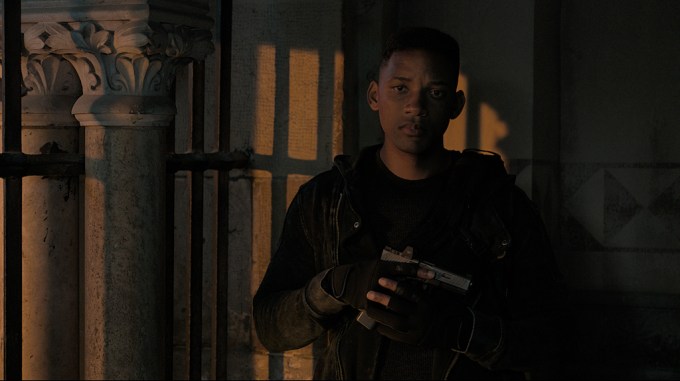
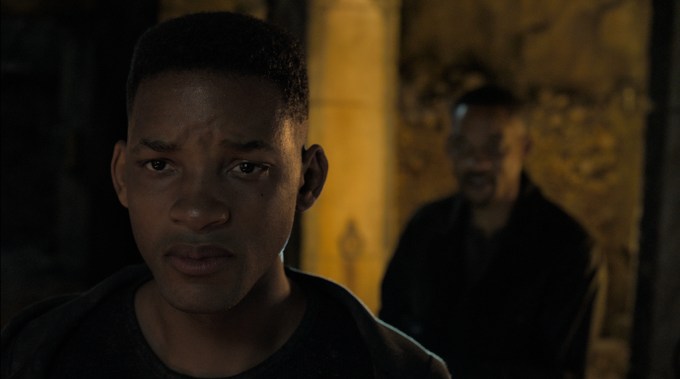
Will Smith plays two characters in “Gemini Man”: a middle-aged government assassin named Henry Brogan, and his younger clone, Junior, who’s sent to kill his older self. Stuntmen stood in for Junior during many of the action sequences, and Smith contributed to the character through performance capture, but ultimately, Junior is a computer-generated creation from the team at effects house Weta Digital.

Lee contrasted Weta’s approach to the way other movies have experimented with using visual effects to de-age stars — he described them as just brushing away actors’ wrinkles: “When you do that, you take away all the details … Aging is much [more] complicated, it’s life.”
gmff001k

Will Smith as “Junior” in Gemini Man from Paramount Pictures, Skydance and Jerry Bruckheimer Films

Where other movies have limited this process to a handful of scenes (think Robert Downey, Jr. briefly playing a younger version of himself in “Captain America: Civil War”), Lee noted that in “Gemini Man,” Junior is one of two lead characters. That meant he needed to be more than a “gimmick” — and it would have been prohibitively expensive to apply that “handcrafted brushing” to so many shots.

Lee made things even harder for himself by shooting the movie in 3D, at 120 frames per second. In that format, everything looks more clear and detailed than in traditional film, so an unconvincing effect would be even more obvious.

“You see through people like light,” Lee said. “With that requirement, I just don’t think something that erases age will do. You have to create it from zero.”

Apparently, that creation process took two years. And while I wouldn’t describe the results on-screen as completely photo-real, I thought they worked: I never forgot that Junior was an effect, but I also believed in him as a living, breathing character.

Lee added, “One of the hardest things, if not the hardest thing, in animation is: How do you get the secret of him getting paid the big bucks?” In other words, how do you capture Will Smith’s charm?

In his younger days as a director, Lee said he would have only been concerned with making Junior a convincing character, but now, “I’ve made movies long enough to learn to respect that a movie star is not just an actor, it’s something else. He has a contract with people.”

Lee recalled that during rehearsal, Smith was “very generous about sharing what makes Will Smith Will Smith.” Still, he argued, “You cannot retrieve [that charm] from his old movies. You can use that as reference, but what drives it, what final touches [make it work]?”
gmff035 0 1

Will Smith in Gemini Man from Paramount Pictures, Skydance and Jerry Bruckheimer Films

The challenge of capturing that, he said, is one of the main reasons he wanted to make the film: “When you do the digital face and the body, it’s like a microscopic study of what drama is, what moving is, how does it connect with emotion … and what age does to you, cell-by-cell.”

Lee said there were two other big things that “absorbed” him in making “Gemini Man.” First, there was his aim of creating a more real, more “messy” style of shooting and staging action; he argued that in other films, the action is so heavily choreographed that it’s basically “dancing.” (And this is coming from the director of “Crouching Tiger, Hidden Dragon.”)

Secondly, he wanted to explore “the beauty of this kind of media, digital cinema.” That’s why he shot “Gemini Man” at the aforementioned 120 frames per second. He’s clearly enamored with the format, having shot his last movie “Billy Lynn’s Long Halftime Walk” at a high frame rate as well, but he acknowledged that it’s something audiences still have to get used to. (When it doesn’t work, it can be hard to distinguish from bad TV.)

Lee’s “dream” is that one day, this approach will no longer be called “high frame rate” — instead, it’s the standard 24 frames per second that should be called “low frame rate,” because the default will have changed.

“You don’t call it color film, right?” he said. “You say silent film, you say black-and-white.”

And if “Gemini Man” is commercially successful, Lee is hoping other filmmakers will join him to “explore this new world” and further develop the technology. In the process, they might give audiences a reason to come back to theaters.

“People think 3D … or anything high-tech is the opposite of art and soul, and I don’t buy that,” Lee said. “I have to deliver action and spectacle — I’m delighted to do it — but I think the biggest gain [is] studying the human face close up.”

That, in turn, could lead to a different style of acting: “[In] this media, you read through people. They cannot fake it; they have to fake it differently, rather. They have to upgrade their skills.”

“Gemini Man” opens in theaters in October 11. Before then, you can watch Lee and Smith discuss the movie next week at Disrupt SF.

Peloton, WeWork, Vox, Bodega, Kapwing and oh boy are we tired

Hello and welcome back to Equity, TechCrunch’s venture capital-focused podcast, where we unpack the numbers behind the headlines.

As with yesterday, Kate and Alex were both on-site at TechCrunch’s San Francisco headquarters to chat over the latest. Unlike yesterday, however, Equity brought along a guest: Sean Dempsey from Merus Capital. (Merus writes seed and Series A checks, with a focus on enterprise companies.)

And thus the three dove into the news. Early-stage first, to shake things up.

Early-stage

Kate wrote a story this week about a startup you might have forgotten about but who’s name probably rings a bell. Bodega! The company now goes by Stockwell, actually, and they’ve raised a whopping total of $45 million in VC funding. But what’s in a name after all? We debate.

Next we turned to an interesting company called Kapwing. What’s that you ask? “It’s a laymen’s Adobe Creative Suite built for what people actually do on the internet: make memes and remix media,” says TechCrunch’s Josh Constine. We’re intrigued.

Late-stage and beyond

This week Peloton priced and went public. The firm’s $29 per-share IPO price was top of its proposed range ($26 to $29). The public markets, however, decided that the unicorn had reached too high.

So, shares of the high-end exercise company dropped, wrapping the day down about 11%. A good IPO first day this was not, though the company did manage to raise more capital than it might have with more conservative pricing. (Peloton has a yucky multi-class share structure that we touched on as well; it seems that all the big companies these days are opposed to regular governance.)

Next we turned to the Vox-NYMag merger. It’s a bit out of our territory but it’s a digital media deal, so we were interested. After all, the two of us have spent our entire careers in digital media and we have a vested interest in these companies surviving.

WeWork (Redux)

We honestly tried to get all the WeWork out of our system yesterday. We wanted to include zero WeWork content on this episode. But WeWork keeps doing things, so here we are.

Keeping things as brief as we can, WeWork is going to divest some companies that it bought (more on what we thought it was up to, here) including its jet, and the firm is looking to take on more capital. Unsurprisingly.

All that and we’re done for this week. Chat you all at Disrupt!

Equity drops every Friday at 6:00 am PT, so subscribe to us on Apple PodcastsOvercastSpotify, Pocket Casts, Downcast and all the casts.

Last year’s Gatwick drone attack involved at least two drones, say police

A major drone incident at the UK’s second business airport last year continues to baffle police.

Last December a series of drone sightings near Gatwick Airport caused chaos as scores of flights were grounded and thousands of travellers had their holiday plans disrupted.

The incident, which took place during a peak travel period ahead of Christmas, led to the airport being closed for 30 hours, disrupting 1,000 flights and more than 140,000 passengers.

Today Sussex Police have released an update on their multi-month investigation into who was operating the drones — with thin findings, saying they have “identified, researched and ruled out 96 people ‘of interest’”.

Although they are now sure that drones played a part in the disruption. The report confirms that at least two drones were involved. The police are also convinced the perpetrator or perpetrators had detailed knowledge of the airport.

“The police investigation has centred on 129 separate sightings of drone activity, 109 of these from credible witnesses used to working in a complex airport environment including a pilot, airport workers and airport police,” the force writes.

“Witness statements show activity happened in ‘groupings’ across the three days on 12 separate occasions, varying in length from between seven and 45 minutes. On six of these occasions, witnesses clearly saw two drones operating simultaneously.”

“The incident was not deemed terror-related and there is no evidence to suggest it was either state-sponsored, campaign or interest-group led. No further arrests have been made,” it adds.

The policing operation during the disruption and subsequent investigation has cost £790,000 so far.

Sussex Police is drawing a line under its investigation at this point, saying without new information coming to light “there are no further realistic lines of enquiry at this time”. 

The chaos caused by drones shutting Gatwick led to sharp criticism of the government which rushed through tighter restrictions on drone flights near airports.

Shortly after the Gatwick debacle drone maker DJI also updated its geofencing system across Europe.

A comprehensive UK drone bill — intended to beef up police powers to curb drone misuse, and which could contain policy on flight information notification systems — has remained stalled.

In a ‘future of drones’ report published at the start of this year ministers said they intended to bring the bill forward this year. But the government is fast running out of parliamentary time to do so.

It had already made provision to introduce mandatory drone registration.

From November 30 it will be a legal requirement for all UK drone operators to register, as well as for drone pilots to complete an online pilot competency test.

While Sussex Police have ruled out the Gatwick drone incident being related to a campaign or interest-group, earlier this month an environmental group attempted to shut down Heathrow using toy drones flown at head height in the legal restriction zone.

The Heathrow Pause protest action did not result in any disruption to flights. Police arrested a number of activists before and after they flew drones.