Rocket Lab launch switcheroo shows the flexibility of the new orbital economy

New Zealand-based launch provider Rocket Lab has announced its next commercial mission, “As The Crow Flies,” taking an Astro Digital satellite to orbit in October. Interestingly, this launch originally had a different payload, but was switched out on fairly short notice — not exactly a common practice in this business.

The launch, scheduled for a two-week window starting October 15, will take a single spacecraft created by Astro to low Earth orbit. Corvus — the genus to which crows and ravens belong — is the name of the series of imaging satellites the company has already put up there; hence the name of the mission.

But this mission wasn’t scheduled to launch for some time yet. October’s launch, the fifth this year from Rocket Lab, was set to be another customer’s, but that customer seems to have needed a bit of extra time to prepare — and simply requested a later launch date.

And because the weather is fine, and one Electron rocket is much like another, Rocket Lab and Astro Digital just decided to use that launch window anyway and head to orbit a bit early.

This kind of thing really isn’t done much in the world of launch services. There are so many moving parts and so much red tape, not to mention weather, labor and everything else involved, that launch dates are often set years in advance, frequently delayed anyway, and then either lift off or sit on the launchpad until they do. But flexibility is fundamental to the Rocket Lab business model, as founder and CEO Peter Beck has said repeatedly.

“Electron is a launch on demand service — we’re ready when the launch customer is,” he told TechCrunch regarding today’s announcement. “Electron is designed for standardized, rapid production — we don’t build to tail numbers. This ensures we can have launch vehicles on standby, ready to be assigned a payload for launch on demand.”

When the inevitable delays happen, whether for product, funding or regulatory reasons, both provider and customer have to be ready to work with one another.

“The systems are complex and everything has to be right before launch, so we always want to ensure our customers have the flexibility to make launch timing work for them,” Beck said. “We’re accommodating that reality but allowing our customers to adjust their launch schedule as required, without causing disruption to the other missions on our manifest.”

As the new space economy grows, the old methods and infrastructure are increasingly unable to keep up, necessitating this kind of flexibility. Other launch providers are building toward small scales and adjustable time frames as well, and there’s a line around the globe of small satellite makers who are waiting to take advantage.

You’ll be able to watch the launch from the M?hia Peninsula complex live whenever weather permits takeoff, sometime after October 14.

AWS IQ matches AWS customers with certified service providers

AWS has a lot going on, and it’s not always easy for customers to deal with the breadth of its service offerings on its own. Today, the company announced a new service called AWS IQ that is designed to connect customers with certified service providers.

“Today I would like to tell you about AWS IQ, a new service that will help you to engage with AWS Certified third party experts for project work,” AWS’s Jeff Barr wrote in a blog post introducing the new feature. This could involve training, support, managed services, professional services or consulting. All of the companies available to help have received associate, specialty or professional certification from AWS, according to the post.

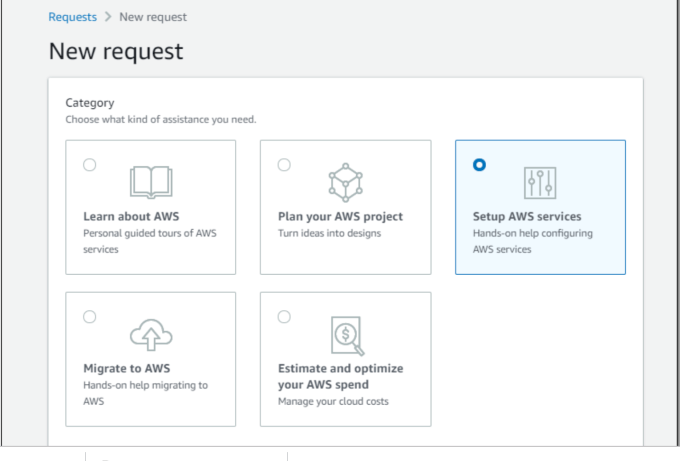
You start by selecting the type of service you are looking for, such as training or professional services, then the tool walks you through the process of defining your needs, including providing a title, description and what you are willing to pay for these services. The service then connects the requestor with a set of providers that match the requirements. From there, the requestor can review expert profiles and compare the ratings and offerings in a kind of online marketplace.

AWS IQ start screen

You start by selecting the type of service you want to engage

Swami Sivasubramanian, vice president at AWS, says they wanted to offer a way for customers and service providers to get together. “We built AWS IQ to serve as a bridge between our customers and experts, enabling them to get to work on new projects faster and easier, and removing many of the hassles and roadblocks that both groups usually encounter when dealing with project-based work,” he said in a statement.

The company sees this as a particularly valuable tool for small and medium-sized vendors, which might lack the expertise to find help with AWS services. The end result is that everyone should win. Customers get direct access to this community of experts, and the experts can more easily connect with potential customers to build their AWS consulting practice.

SpaceX details Starship and Super Heavy in new website

After CEO Elon Musk shared new details about its in-development Starship spacecraft on Saturday, SpaceX has updated its website with a new section dedicated to the fully reusable cargo and passenger vehicle. The new Starship website also provides a bunch of info about Super Heavy, the first-stage booster that will propel Starship to orbital altitudes and beyond.

Starship, once complete, will be “world’s most powerful launch vehicle,” according to SpaceX, with a cargo capacity of 100 metric tons (that’s over 220,000 lbs) to Earth orbit. With orbital refueling, it’ll also be able to take its freight — and passengers — to the Moon, Mars and beyond.

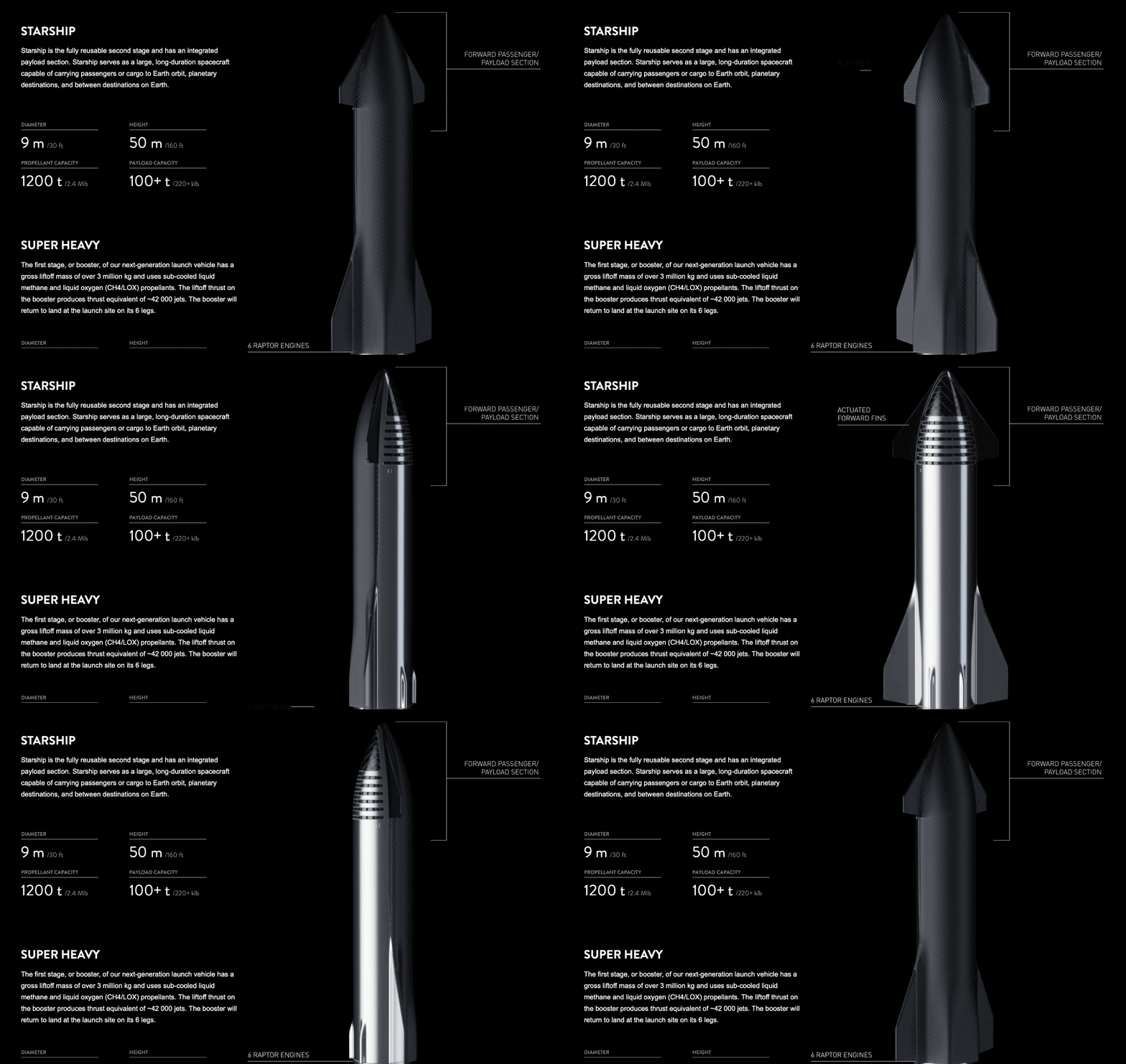
Per the new Starship site, the final vehicle will be 160 feet tall (without the booster) and 30 feet in diameter, with a propellant capacity of 1,200 metric tons of liquid methane and liquid oxygen. Payload, and crew depending on configuration, will occupy the top third of the rocket, while the bottom two-thirds will house the propellant and six Raptor engines, including three for atmospheric flight and three for propulsion in space. At the top of the rocket there are two actuated (meaning you can control their movement) fins that will move to orient the rocket for re-entry and landing. At the bottom, two large fins will also help produce drag, crucial for its controlled descent. Starship will be made of stainless steel, and one half of its surface will be covered in glass tiles to take the brunt of the worst of the heat upon atmospheric entry.

starship

As for Super Heavy, it’ll have the same 30-foot diameter, but be much taller, at 223 feet, with a propellant capacity of a massive 3,300 metric tons, and a thrust capability of 72 meganewtons (MN) (the thrust of the Saturn V rocket was only 35 MN, by comparison). Actuated grid fins near the top of the rocket will be used for its controlled landing, much like those found on the Falcon 9 boosters SpaceX uses today. The bigger booster will have 37 Raptor engines, however, and six landing legs for stability when it comes back down to be readied for re-use. It’ll be made entirely of stainless steel.

SpaceX notes that Starship is used to deliver satellites at “a lower marginal cost per launch” compared to Falcon, and that the design of its cargo compartment will provide the largest potential cargo fairing of any current planned space freight vehicle. This will allow it to carry even very large objects like assembled space telescopes, the company notes.

It’s also designed to continue to service the International Space Station with cargo resupply, and would be able to transport a lot more cargo in one go than the current Dragon capsules SpaceX uses. It’s also designed to be able to deliver cargo and people to the Moon and other planets, and to return for multiple trips.

SpaceX also provided updated specs for the Raptor engine that will power the Starship system. Each Raptor will be 4 feet in diameter, 10.2 feet high and have a thrust capability of 2 MN (which is just over the thrust force of the Space Shuttle’s main engine during takeoff, coincidentally).

On the site, SpaceX says it’s targeting orbital flight for Starship in 2020, and at the event Musk went further still, saying that Starship should attain this milestone in less than  six months — and even allowed for the possibility that it could fly with people on board in one year.

European early-stage VC firm ‘Project A’ on Europe’s startup scene taking the next step

Project A, the Berlin-based VC, just raised a new $200 million fund (€180 million) to continue backing European startups at Seed and Series A stage.

In addition, the firm — whose investments include WorldRemit, Catawiki, Voi and Uberall — announced it will now have a presence in London and Stockholm in order to put people on the ground in what it says are “two of its favorite ecosystems.”

What better time, therefore, to catch up with the team at Project A, where we talked investment thesis, why Stockholm and London, and the increasing interest in Europe from U.S. LPs and VCs. Other subjects we touched on include diversity in venture, and, of course, Brexit!

TechCrunch: You last raised a fund in 2016, totaling €140 million, what changes have you noticed since then with regards to the types of companies you are seeing and the European ecosystem as a whole?

Uwe Horstmann: Entrepreneurs definitely matured a lot over the last few years. We see more and more of serial founders who combine drive with experience delivering great results. We also noticed an increase in more tech / product-centric and in B2B models.

This doesn’t come as a surprise as the market for consumer-oriented models started developing much earlier and is now reaching its limits after a few years. Many entrepreneurs gained experience in the Old Economy or have been consulting companies for a few years, learned about the struggle with products and processes first-hand and developed solutions specifically tailored to the industry’s needs.

We also notice a rise in professionalism in company setups and a higher ambition level in founding teams. This is probably also due to a more professional angel and micro fund scene that has developed in Europe.

TC: I note that you have U.S. LPs in the new fund, which I think is a first for Project A, and more broadly we are seeing a lot more interest from U.S. VCs in Europe these days. Why do you think that is, and how does this change the competitive landscape for deal-flow and the ambition of European founders?

Thies Sander: Having our first U.S. LPs on board makes us proud. LPs have noticed that European VC returns have really picked up during recent fund cohorts.

Microsoft OneDrive Personal Vault rolls out worldwide, launches expandable storage

Earlier this summer, Microsoft introduced an extra layer of security to its Dropbox competitor, OneDrive. The security features, called OneDrive Personal Vault, allow users to protect their files with two-step verification, like a fingerprint or facial recognition, PIN code or a one-time code sent through email, SMS or Microsoft Authenticator. At the time of launch, however, the feature was only available to select markets. Today, it’s rolling out worldwide and introducing new features, including expandable storage.

The company said OneDrive Personal Vault would initially be available to Australia, New Zealand and Canada, but would reach all OneDrive users by the end of the year.

With today’s expansion, it’s a little ahead of schedule, as it’s just now the end of September.

Personal Vault is available to all OneDrive users, with some limitations.

For those using OneDrive’s free or standalone 100GB storage plan, you’re able to store up to three files in Personal Vault. Office 365 subscribers can store as many files as they want, up to their storage limits.

Stronger authentication is the key selling point for Personal Vault, but it also comes with additional security measures. This includes “Scan and Shoot,” which lets you scan documents or shoot photos directly to Personal Vault, bypassing your device storage, like the camera roll. Personal Vault will also automatically lock files after a period of inactivity, restrict sharing on the files saved to prevent accidental shares and automatically sync files to a BitLocker-encrypted area of the hard drive on Windows 10 PCs.

ba2d0566 5e67 43ce 998a fa1aa6517dbeIn addition to the global launch of Personal Vault, Microsoft also today introduced new storage options for One Drive, plus new features like PC Folder backup and dark mode.

Starting today, OneDrive users will now be able to add storage to their plans in 200GB increments, starting at $1.99 per month.

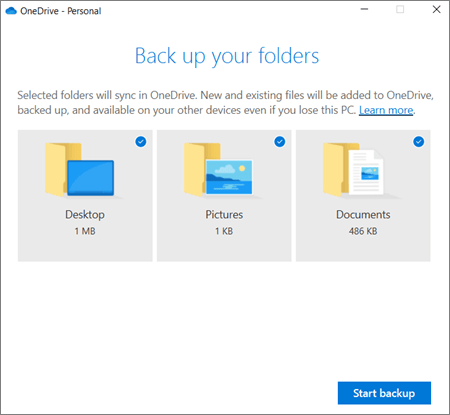
Meanwhile, PC Folder backup will allow OneDrive to back up your desktop, documents and picture folders from your Windows PC to the cloud, similar to rival desktop apps from Dropbox and Google Drive, for example. This option is available to Windows 7, 8 and 10 PCs. On Windows 10, it’s integrated so users can even opt to enable it during Windows setup or updates.

And OneDrive will now support a dark mode on iOS 13.

Personal Vault is live globally, as of today.

Daily Crunch: Facebook faces VR challenges

The Daily Crunch is TechCrunch’s roundup of our biggest and most important stories. If you’d like to get this delivered to your inbox every day at around 9am Pacific, you can subscribe here.

1. Not all is predictable on Facebook’s social Horizon

Last week, Facebook unveiled Horizon, a massively multiplayer VR world that’s scheduled to launch in 2020. This might seem to play to Facebook’s software strengths, but Lucas Matney argues that the social networking giant may not actually have much of an advantage against smaller game studios.

For example, the team at Against Gravity has already built a network inside VR called Rec Room that’s been maturing over the past few years, with rich environments and toolsets for multiplayer interactions. (Extra Crunch membership required.)

2. Spotify now lets you add podcasts to playlists

Users can create their own custom playlists of their favorite podcasts, or even those that combine music and audio — similar to Spotify’s newly launched playlist “Your Daily Drive.”

3. Kickstarter darling EcoFlow Delta battery generator is not what it seems

The EcoFlow Delta is a new battery generator available on Kickstarter with incredible features claimed. Most are true, some are not.

4. YouTube TV is now available on Fire TV devices

Earlier this year, Google and Amazon reached an agreement to bring their streaming video apps to each other’s platforms. The YouTube app launched on Fire TV in July, and now Google is adding its live TV streaming service.

5. Amboss, the knowledge platform for medical professionals, scores €30M Series B

Launched in 2014 as a study platform for medical students, Amboss has since evolved to offer what it claims is the “most comprehensive and technologically-advanced” knowledge platform for medical professionals.

6. Learn everything you can about mobility at Disrupt SF

We’re bringing some of the industry’s leaders onstage at Disrupt SF — including Bird founder and CEO Travis VanderZanden, Kitty Hawk CEO Sebastian Thrun and Zoox CEO Aicha Evans.

7. This week’s TechCrunch podcasts

The latest episode of Equity kicks off with the reemergence of the much-criticized startup Bodega, which is now known as Stockwell and has raised a total of $45 million in funding. Meanwhile, Original Content reviews “Between Two Ferns: The Movie” on Netflix.

Verizon picks up the assets of Disney-backed VR startup Jaunt

After raising $100 million, virtual reality content startup Jaunt has been in a precarious position for a few years now. It seems like the saga has finally come to a close as the startup announced that Verizon has purchased the company’s technology.

The studio rode the wave of VR hype following Facebook’s acquisition of Oculus, but after years of trying to find a business in immersive entertainment, spanning software and camera hardware, the company has spent its past year trying to sell off its VR assets while pursuing a business focused on augmented reality and what it calls the “distribution of volumetric video of humans.”

A deal with Spinview Global to purchase the company’s VR tech that was reported last year never happened, a spokesperson tells TechCrunch. Verizon is walking away with Jaunt’s technology assets here, which is inclusive of their VR tech and their newer AR efforts. It doesn’t sound like any employees are coming onboard as part of the transition, but there will be some Jaunt folks helping to bring the tech onboard for a brief period.

The company’s spokesperson opted not to comment when asked whether the startup was winding down following the deal.

Why does Verizon want these assets? Verizon Media (of which TechCrunch is apart of) already has some assets in the VR space, including the virtual reality content studio RYOT, which has been playing around with 360 content and general AR/VR content. The company’s Envrnmnt arm is basically focusing on making AR and VR apps run more efficiently on mobile, which is something Jaunt has had to be mindful of as they’ve tried to focus on broadcasters that need to deal with bandwidth strains.

We don’t have a price tag on the deal, but the startup raised $100 million from investors, including GV and Disney. In October of last year, the company laid off a “significant portion of its employees” and by the end of the year they were auctioning off office furniture.

Google brings its Jacquard wearables tech to Levi’s Trucker Jacket

Back in 2015, Google’s ATAP team demoed a new kind of wearable tech at Google I/O that used functional fabrics and conductive yarns to allow you to interact with your clothing and, by extension, the phone in your pocket. The company then released a jacket with Levi’s in 2017, but that was expensive, at $350, and never really quite caught on. Now, however, Jacquard is back. A few weeks ago, Saint Laurent launched a backpack with Jacquard support, but at $1,000, that was very much a luxury product. Today, however, Google and Levi’s are announcing their latest collaboration: Jacquard-enabled versions of Levi’s Trucker Jacket.

These jackets, which will come in different styles, including the Classic Trucker and the Sherpa Trucker, and in men’s and women’s versions, will retail for $198 for the Classic Trucker and $248 for the Sherpa Trucker. In addition to the U.S., it’ll be available in Australia, France, Germany, Italy, Japan and the U.K.

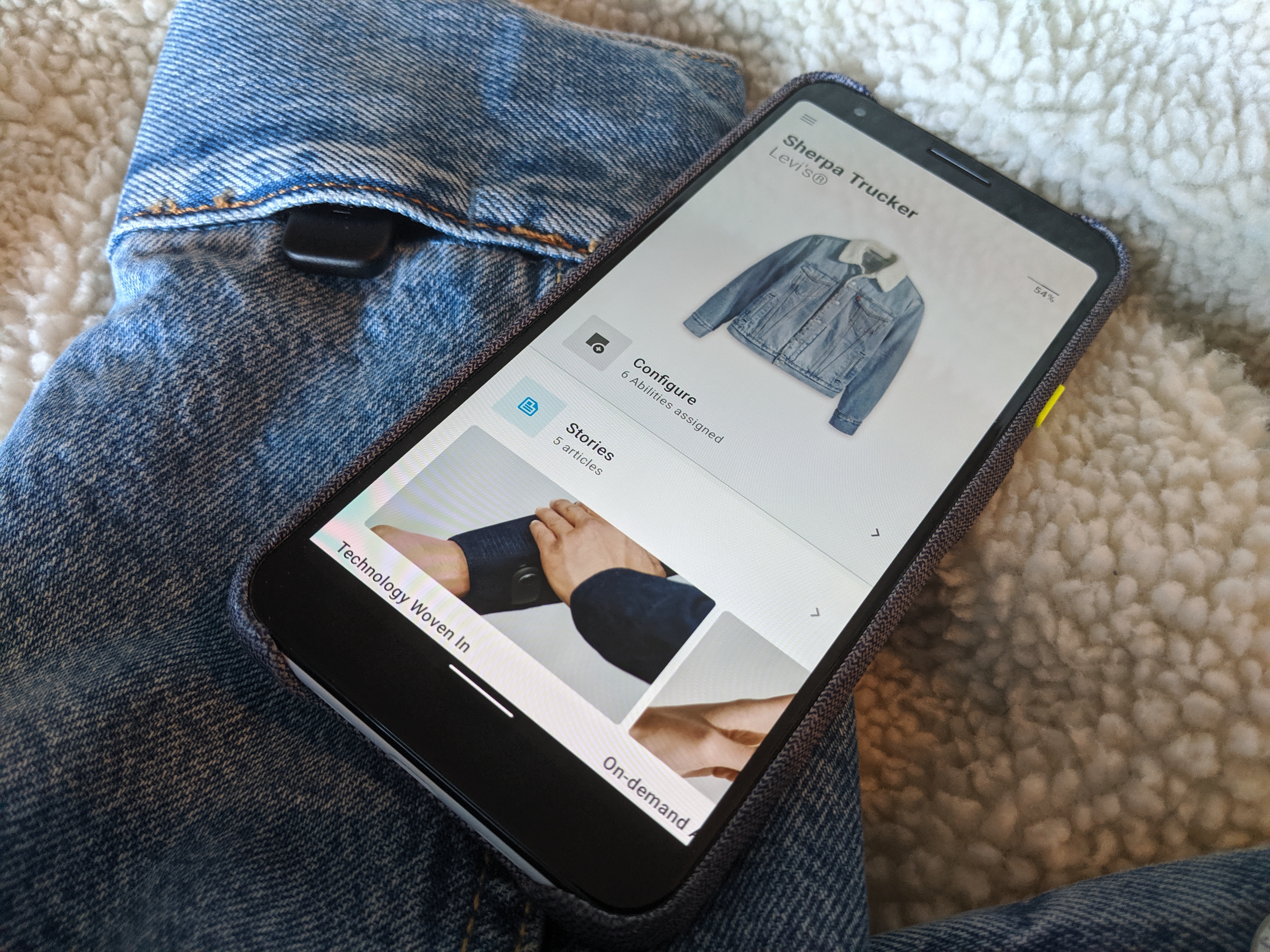
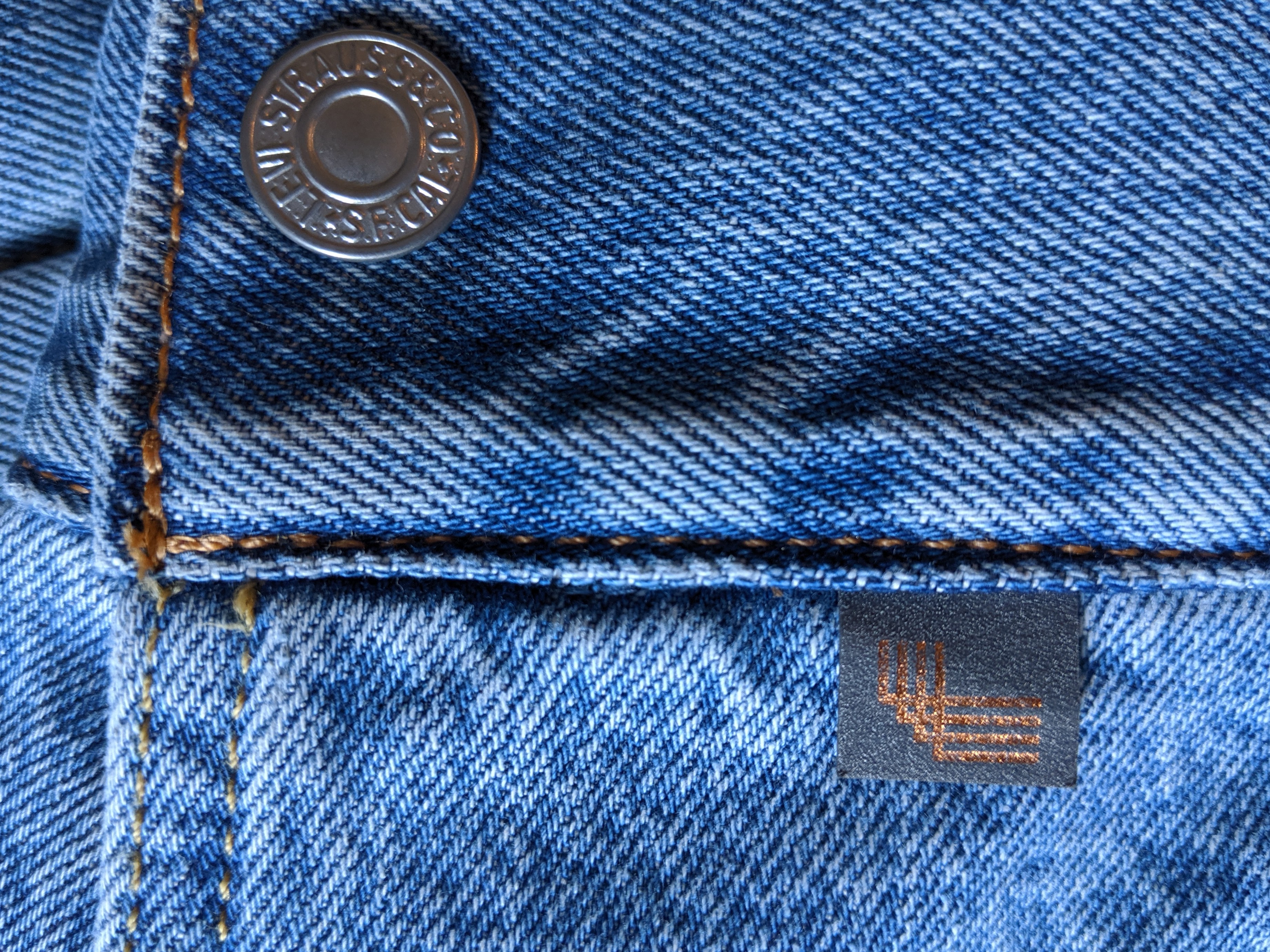
The idea here is simple and hasn’t changed since the original launch: a dongle in your jacket’s cuff connects to conductive yarns in your jacket. You can then swipe over your cuff, tap it or hold your hand over it to issue commands to your phone. You use the Jacquard phone app for iOS or Android to set up what each gesture does, with commands ranging from saving your location to bringing up the Google Assistant in your headphones, from skipping to the next song to controlling your camera for selfies or simply counting things during the day, like the coffees you drink on the go. If you have Bose noise-canceling headphones, the app also lets you set a gesture to turn your noise cancellation on or off. In total, there are currently 19 abilities available, and the dongle also includes a vibration motor for notifications.

2019 09 30 0946 1

What’s maybe most important, though, is that this (re-)launch sets up Jacquard as a more modular technology that Google and its partners hope will take it from a bit of a gimmick to something you’ll see in more places over the next few months and years.

“Since we launched the first product with Levi’s at the end of 2017, we were focused on trying to understand and working really hard on how we can take the technology from a single product […] to create a real technology platform that can be used by multiple brands and by multiple collaborators,” Ivan Poupyrev, the head of Jacquard by Google told me. He noted that the idea behind projects like Jacquard is to take things we use every day, like backpacks, jackets and shoes, and make them better with technology. He argued that, for the most part, technology hasn’t really been added to these things that we use every day. He wants to work with companies like Levi’s to “give people the opportunity to create new digital touchpoints to their digital life through things they already have and own and use every day.”

What’s also important about Jacquard 2.0 is that you can take the dongle from garment to garment. For the original jacket, the dongle only worked with this one specific type of jacket; now, you’ll be able to take it with you and use it in other wearables as well. The dongle, too, is significantly smaller and more powerful. It also now has more memory to support multiple products. Yet, in my own testing, its battery still lasts for a few days of occasional use, with plenty of standby time.
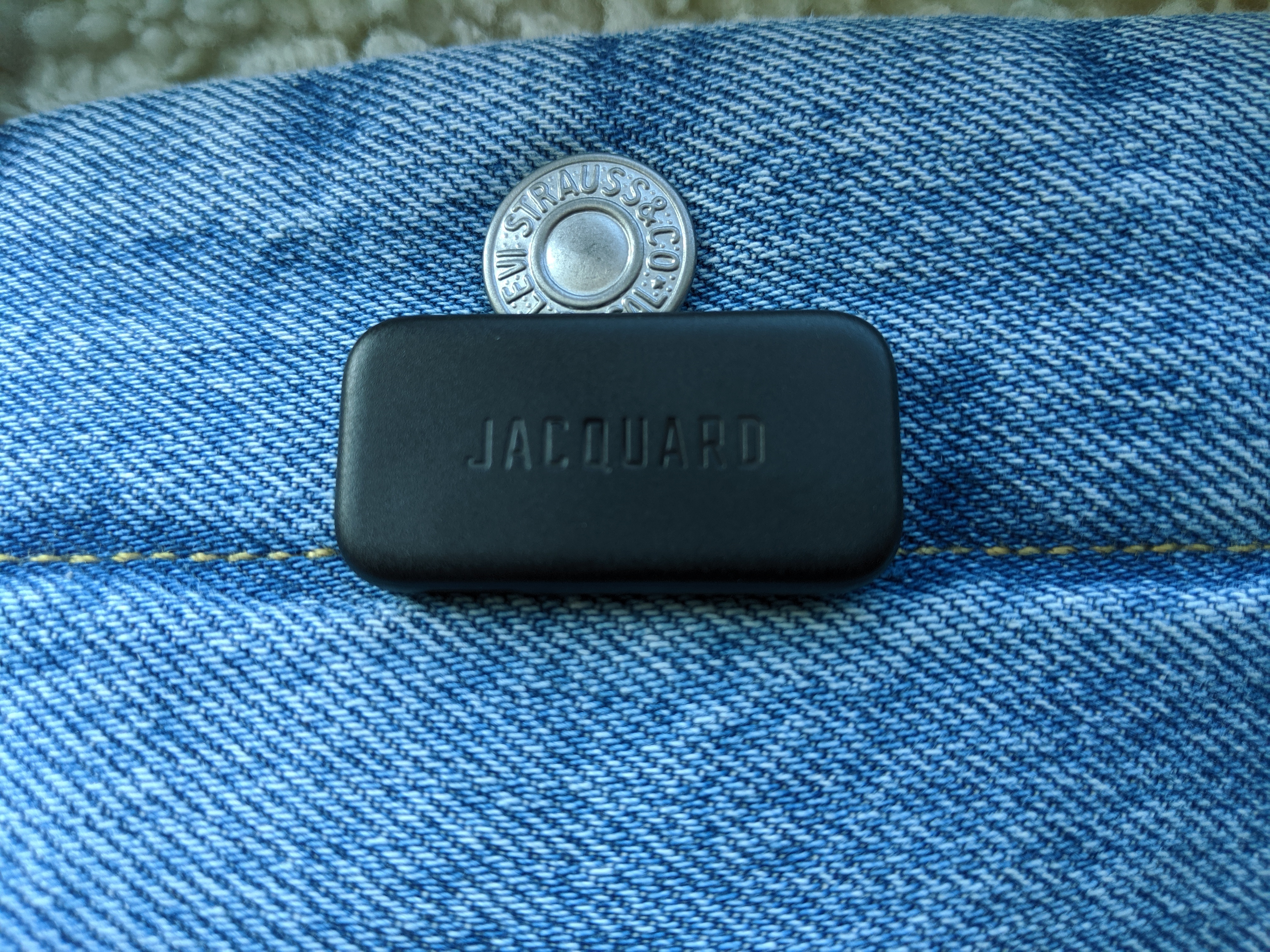
jacquard dongle

Poupyrev also noted that the team focused on reducing cost, “in order to bring the technology into a price range where it’s more attractive to consumers.” The team also made lots of changes to the software that runs on the device and, more importantly, in the cloud to allow it to configure itself for every product it’s being used in and to make it easier for the team to add new functionality over time (when was the last time your jacket got a software upgrade?).

He actually hopes that over time, people will forget that Google was involved in this. He wants the technology to fade into the background. Levi’s, on the other hand, obviously hopes that this technology will enable it to reach a new market. The 2017 version only included the Levi’s Commuter Trucker Jacket. Now, the company is going broader with different styles.

“We had gone out with a really sharp focus on trying to adapt the technology to meet the needs of our commuter customer, which a collection of Levi’s focused on urban cyclists,” Paul Dillinger, the VP of Global Product Innovation at Levi’s, told me when I asked him about the company’s original efforts around Jacquard. But there was a lot of interest beyond that community, he said, yet the built-in features were very much meant to serve the needs of this specific audience and not necessarily relevant to the lifestyles of other users. The jackets, of course, were also pretty expensive. “There was an appetite for the technology to do more and be more accessible,” he said — and the results of that work are these new jackets.
IMG 20190930 102524

Dillinger also noted that this changes the relationship his company has with the consumer, because Levi’s can now upgrade the technology in your jacket after you bought it. “This is a really new experience,” he said. “And it’s a completely different approach to fashion. The normal fashion promise from other companies really is that we promise that in six months, we’re going to try to sell you something else. Levi’s prides itself on creating enduring, lasting value in style and we are able to actually improve the value of the garment that was already in the consumer’s closet.”

I spent about a week with the Sherpa jacket before today’s launch. It does exactly what it promises to do. Pairing my phone and jacket took less than a minute and the connection between the two has been perfectly stable. The gesture recognition worked very well — maybe better than I expected. What it can do, it does well, and I appreciate that the team kept the functionality pretty narrow.

Whether Jacquard is for you may depend on your lifestyle, though. I think the ideal user is somebody who is out and about a lot, wearing headphones, given that music controls are one of the main features here. But you don’t have to be wearing headphones to get value out of Jacquard. I almost never wear headphones in public, but I used it to quickly tag where I parked my car, for example, and when I used it with headphones, I found using my jacket’s cuffs easier to forward to the next song than doing the same on my headphones. Your mileage may vary, of course, and while I like the idea of using this kind of tech so you need to take out your phone less often, I wonder if that ship hasn’t sailed at this point — and whether the controls on your headphones can’t do most of the things Jacquard can. Google surely wants Jacquard to be more than a gimmick, but at this stage, it kind of still is.
IMG 20190930 104137IMG 20190930 104137

‘Stranger Things 4’ takes Netflix’s hit retro sci-fi show beyond Hawkins

“Stranger Things 4” got its first teaser today, courtesy of the official Stranger Things Twitter account. The Netflix series, which is in its fourth season (although the creators, brothers Matt and Ross Duffer, maintain that each installment isn’t really a “season” in the traditional TV sense, but rather more like a movie broken up across multiple episodes), is being renewed alongside an overall film and TV deal with a nine-figure value for the Duffers at Netflix.

“Stranger Things” manages a unique blend of sci-fi, horror, 1980s-era nostalgia and coming-of-age teen buddy comedy. It’s among the most successful of Netflix’s original content creations, by most accounts, and also one of the most critically acclaimed. Details about this fourth series are scarce for now, but based on the teaser we can expect the action to move out of Hawkins, the sleepy town that has provided the backdrop for all of the action thus far (minus a very strange outing for main character Elle back in season two).

we're not in hawkins anymore pic.twitter.com/Y4hayuPKvu

— Stranger Things (@Stranger_Things) September 30, 2019

Judging strictly from this preview, we also can probably safely assume that a lot of the action will take place in the “Upside Down,” the fictional dark mirror dimension from where the series villain monsters originate. It’ll be interesting to see if “Stranger Things 4” can spend a whole season in this realm, which seems to mostly be filled with moss, slime, dust and spores of some kind.

Hyundai is getting into the flying car business

Hyundai Motor Group has launched a new air mobility division aimed at developing technology for the commercialization of flying cars, the latest company to dive into the emerging industry.

The division will be led by Dr. Jaiwon Shin, an aeronautics engineer who most recently led the Aeronautics Research Mission Directorate at NASA. While at NASA, Shin oversaw a $725 million program into aeronautics research initiatives, such as a supersonic X-plane, the electrification of aircraft, UAS traffic management and urban air mobility.

The South Korean automaker said the business unit led by Shin will “develop core technologies and innovative solutions for safe and efficient airborne travel.” Shin’s expertise centers on airframe, engine, aviation safety and air traffic management — technologies that Hyundai says will allow it to take a lead in the urban air mobility sector.

That urban air sector is expected to grow into a market worth $1.5 trillion within the next 20 years, according to Shin.

Of course, there are many others pursuing various kinds of air taxis, including Uber, Kitty Hawk Corp., Terrafugia and Volocopter, to name just a few.

All of these companies, including Hyundai, see the flying cars as a way to solve the traffic problems on the ground. Flying cars could merely move that congestion to the skies, which is why technologies around airspace traffic management — which Shin has experience in — is just as important as developing the aircraft.

Instagram launches a ‘creators’ account to encourage more… creation

Instagram deployed a new tool today that should help it continue to build a more viable alternative to YouTube for individual creators looking to try a different platform. It’s a dedicated account called @creators, which will deliver tips and tricks for people hoping to become more active on the platform.

Based on the pinned FAQ story that Instagram has posted to the account, and a brief explainer with some testimonials from actual creators using the platform, one of the questions that Instagram answers is how to get verified — which must be asked so incredibly frequently by this particular set of folks.

The grid posts of @creators include some helpful tips, like pointing out that 60% of people listen to stories on the platform with the sound on. Clearly, the account is geared toward pushing video creation tips and tools, which makes sense, given that’s an area of growth for the company, and a way for it to win over disaffected YouTubers and younger creators who are looking for their new home on the web.

This could be a huge potential opportunity for Instagram, in fact, and this account, while a small part of an overall approach to wooing creators, is a good one.

SmartNews’ head of product on how the news discovery app wants to free readers from filter bubbles

Since launching in the United States five years ago, SmartNews, the news aggregation app that recently hit unicorn status, has quietly built a reputation for presenting reliable information from a wide range of publishers. The company straddles two very different markets: the U.S. and its home country of Japan, where it is one of the leading news apps.

SmartNews wants readers to see it as a way to break out of their filter bubbles, says Jeannie Yang, its senior vice president of product, especially as the American presidential election heats up. For example, it recently launched a feature, called “News From All Sides,” that lets people see how media outlets from across the political spectrum are covering a specific topic.

The app is driven by machine-learning algorithms, but it also has an editorial team led by Rich Jaroslovsky, the first managing editor of WSJ.com and founder of the Online News Association. One of SmartNews’ goal is to surface news that its users might not seek out on their own, but it must balance that with audience retention in a market that is crowded with many ways to consume content online, including competing news aggregation apps, Facebook and Google Search.

In a wide-ranging interview with Extra Crunch, Yang talked about SmartNews’ place in the media ecosystem, creating recommendation algorithms that don’t reinforce biases, the difference between its Japanese and American users and the challenges of presenting political news in a highly polarized environment.

Catherine Shu: One of the reasons why SmartNews is interesting is because there are a lot of news aggregation apps in America, but there hasn’t been one huge breakout app like SmartNews is in Japan or Toutiao in China. But at the same time, there are obviously a lot of issues in the publishing and news industry in the United States that a good dominant news app might be able to help, ranging from monetization to fake news.

Jeannie Yang: I think that’s definitely a challenge for everybody in the U.S. With SmartNews, we really want to see how we can help create a healthier media ecosystem and actually have publishers thrive as well. SmartNews has such respect for the publishers and the industry and we want to be good partners, but also really understand the challenges of the business model, as well as the challenges for users and thinking of how we can create a healthier ecosystem.

Microsoft’s Windows Virtual Desktop service is now generally available

Microsoft today announced that Windows Virtual Desktop (WVD), its Azure-based system for virtualizing the Windows and Office user experience it announced last September, is now generally available. Using WVD, enterprises can give their employees access to virtualized applications and remote desktops, including the ability to provide multi-session Windows 10 experiences, something that sets Microsoft’s own apart from that of other vendors that offer virtualized Windows desktops and applications.

In addition to making the service generally available, Microsoft is also rolling it out globally, whereas the preview was U.S.-only and the original plan was to slowly roll it out globally. Scott Manchester, the principal engineering lead for WVD, also told me that more than 20,000 companies signed up for the preview. He also noted that Microsoft Teams is getting enhanced support in WVD with a significantly improved video conferencing experience.

Shortly after announcing the preview of WVD, Microsoft acquired a company called FSLogix, which specialized in provisioning the same kind of virtualized Windows environments that Microsoft offers through WVD. As Microsoft’s corporate VP for Microsoft 365 told me ahead of today’s announcement, the company took a lot of the know-how from FSLogix to ensure that the user experience on WVD is as smooth as possible.

Brad Anderson, CVP of Microsoft 365, noted that just as enterprises are getting more comfortable with moving some of their infrastructure to the cloud (and have others worry about managing it), there is now also growing demand from organizations that want this same experience for their desktop experiences. “They look at the cloud as a way of saying, ‘listen, let the experts manage the infrastructure. They can optimize it; they can fine-tune it; they can make sure that it’s all done right.’ And then I’ll just have a first-party service — in this case Microsoft — that I can leverage to simplify my life and enable me to spin up and down capacity on demand,” Anderson said. He also noted, though, that making sure that these services are always available is maybe even more critical than for other workloads that have moved to the cloud. If your desktop stops working, you can’t get much done, after all.

Anderson also stressed that if a customer wants a multi-session Windows 10 environment in the cloud, WVD is the only way to go because that is the only way to get a license to do so. “We’ve built the operating system, we built the public cloud, so that combination is going to be unique and this gives us the ability to make sure that that Windows 10 experience is the absolute best on top of that public cloud,” he noted.

He also stressed that the FSLogix acquisition enabled his team to work with the Office team to optimize the user experience there. Thanks to this, when you spin up a new virtualized version of Outlook, for example, it’ll just take a second or two to load instead of almost a minute.

A number of companies are also still looking to upgrade their old Windows 7 deployments. Microsoft will stop providing free security patches for them very soon, but on WVD, these users will still be able to get access to virtualized Windows 7 desktops with free extended security updates until January 2023. Anderson does not believe that this will be a major driver for WVD adoption, but he does see “pockets of customers who are working on their transition.”

Enterprises can access Windows 10 Enterprise and Windows 7 Enterprise on WVD at no additional licensing cost (though, of course, the Azure resources they consume will cost them) if they have an eligible Windows 10 Enterprise or Microsoft 365 license.


PayPal to enter China through GoPay acquisition

The People’s Bank of China has approved PayPal’s acquisition of a 70% equity state in GoPay (Guofubao Information Technology Co. [GoPay], Ltd.), which will make PayPal the first foreign payment platform to provide online payment services in China. GoPay has licenses for online and mobile transactions, and mainly provides payment products for industries including e-commerce, cross-border commerce, aviation tourism and others.

According to a statement from Guofubao, PayPal acquired the controlling stake through the Shanghai-based subsidiary Yinbaobao Information Technology (Shanghai) Co., Ltd.

The companies did not disclose deal terms.

The news of PayPal’s entry into China comes at a time when there’s increased tension between the U.S. and China, with The White House reportedly now considering curbing some U.S. investments in China amid the trade dispute between the countries.

Though China’s payments market today is led by local players, including eWallet providers like AliPay and WeChat Pay on the mobile side, there’s still plenty of room for it to grow — which would benefit PayPal.

On the mobile payments side alone, the market is expected to grow 21.8%, from 2017 to $96.73 trillion in 2023, driven partly by increasing demand for e-commerce, a report from Frost & Sullivan found. The market has also seen an increase in cross-border transactions, particularly in sectors like e-commerce, travel and overseas education. These reached $6.66 trillion in 2016.

The report additionally said the total number of active mobile payment customers is expected to reach 956 million by 2023, up from 562 million in 2017.

Last year, China’s central bank said it would open up further to foreign payment companies.

U.S. firms in the financial services market have for a long time struggled to enter China. Notably, American Express became the first U.S. card network to gain permission to set up card-clearing services in China last November, and Mastercard this year said it would try to set up a joint venture with another local player to gain entry.

PayPal said the transaction is expected to close in Q4 2019 and is subject to customary closing conditions.

The company’s full statement on the acquisition is below:

The People’s Bank of China has approved PayPal Information Technologies Co., Ltd.’s acquisition of a 70% equity interest in Guofubao Information Technology Co. (GoPay), Ltd., a holder of a payment business license in China. We are honored to become the first foreign payment platform to be licensed to provide online payment services in China. We look forward to partnering with China’s financial institutions and technology platforms, providing a more comprehensive set of payment solutions to businesses and consumers, both in China and globally. The transaction is expected to close in the fourth quarter of 2019 and is subject to customary closing conditions.

WeWork withdraws its S-1 filing, will delay its IPO

WeWork’s parent organization The We Company just announced that it’s withdrawing the S-1 filing for its IPO.

The co-working company has had a turbulent month since the filing went public, around both the general state of its finances and the behavior of co-founder/CEO Adam Neumann.

As a result, Neumann stepped down down as CEO last week (he will continue to serve as non-executive chairman). In addition, the company is looking to focus on its core co-working business, which means it’s planning major layoffs and even reportedly looking to sell some of the companies it acquired over the last couple of years — namely Managed by Q, Conductor and Meetup.

So it was widely expected that The We Company would delay its IPO. Today, it made things official with the release of a statement from new co-CEOs Artie Minson and Sebastian Gunningham:

We have decided to postpone our IPO to focus on our core business, the fundamentals of which remain strong. We are as committed as ever to serving our members, enterprise customers, landlord partners, employees and shareholders. We have every intention to operate WeWork as a public company and look forward to revisiting the public equity markets in the future.