The Yeti X brings real-time level monitoring to the popular USB mic

It’s clear why Logitech bought Blue back in July 2018. The Southern Californian audio company (an acronym for “Baltic Latvian Universal Electronics,” incidentally) has become synonymous with USB microphones since releasing the first Snowball back in 2005.

What seemed like a niche at the time has since become a cultural touchstone, positioning the company well to be embraced first by podcasters and then Twitch streamers. Blue’s USB mics aren’t the highest quality one can purchase for these purposes, but the plug and play functionality felt fairly revolutionary when it first hit the scene.

The company recently issued a long overdue update to its best-selling Yeti. The Yeti X is, for most intents and purposes a pretty subtle update. I’ve been using it a bit here and there for a couple of week now. I recorded the outro to the latest episode of my podcast on the thing and lent it to Anthony for a couple of episodes of Original Content.

Blue Yeti X

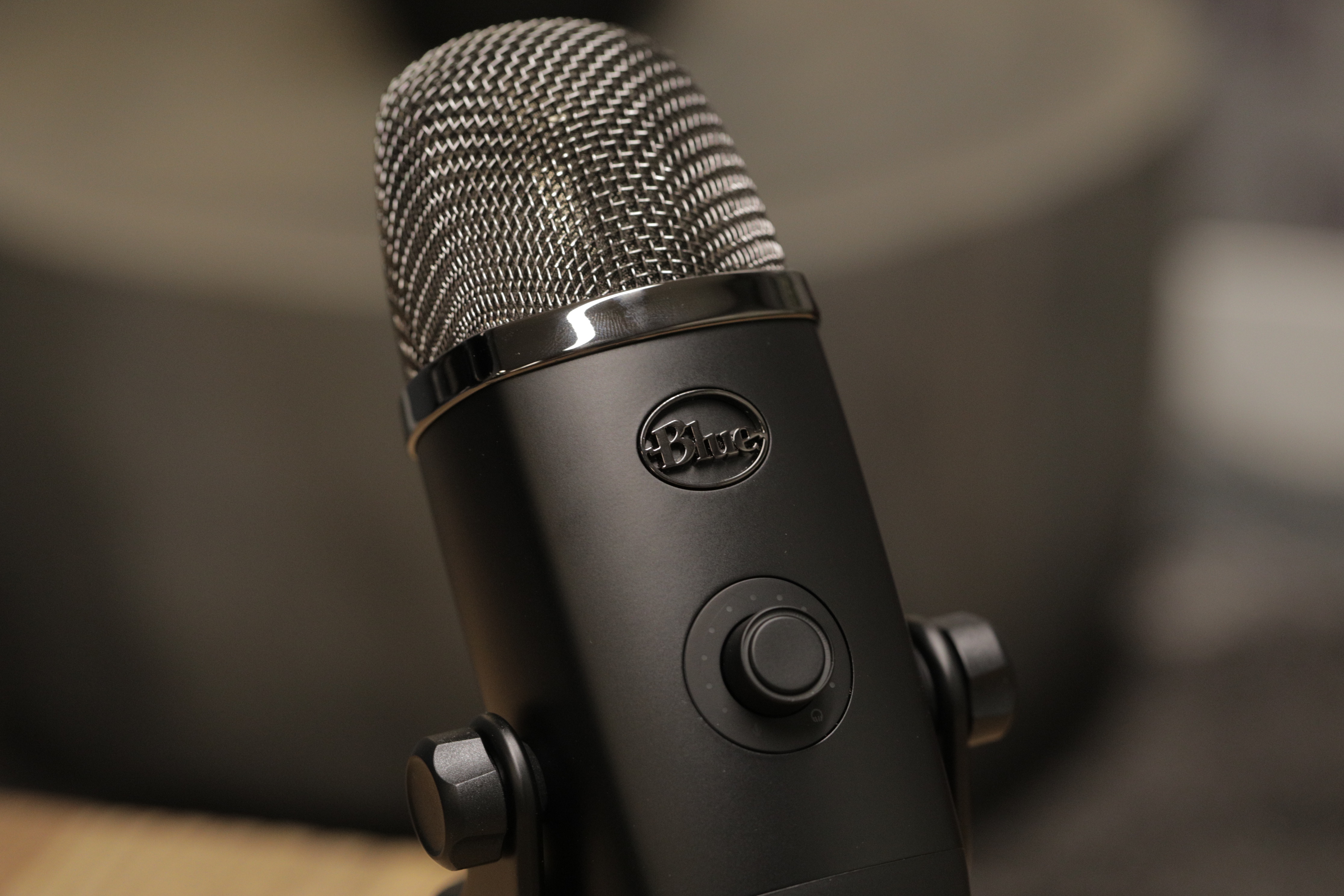
Aside from from the spiffy black paint job, the biggest aesthetic change is the addition of a real-time LED meter that’s housed around the illuminating volume nob. It’s a small touch, but an important one for live streamers. This matter of monitoring is largely missing or a pain to access in many streaming apps, so there’s a lot to be said for being able to your levels on the fly, adjusting things back down if you peak into the red.

The sound has been improved, from three to four-capsule condensers. Yeti’s sound was already solid for the world of USB microphones, and it’s nice to see the company continue to up its game there. Some of its recent mics like the Yeti Nano have honestly felt like a step backward. The X sounds crisp, and I fully plan to use it for an upcoming remote podcasting project I have in the pipeline.


Likely I’ll look into some sort of pop filter as well — those Ps can sound pretty harsh.

It still can’t replace a good quality studio microphone, but that’s never really been the point. If you have the means and desire to create real a home podcasting studio, you’re probably looking elsewhere for your mic needs. The Yeti exists for a large and broadening category of home broadcasters — part-time Twitch streamers and podcast hobbyist will find a lot to like here.

CMB 8101

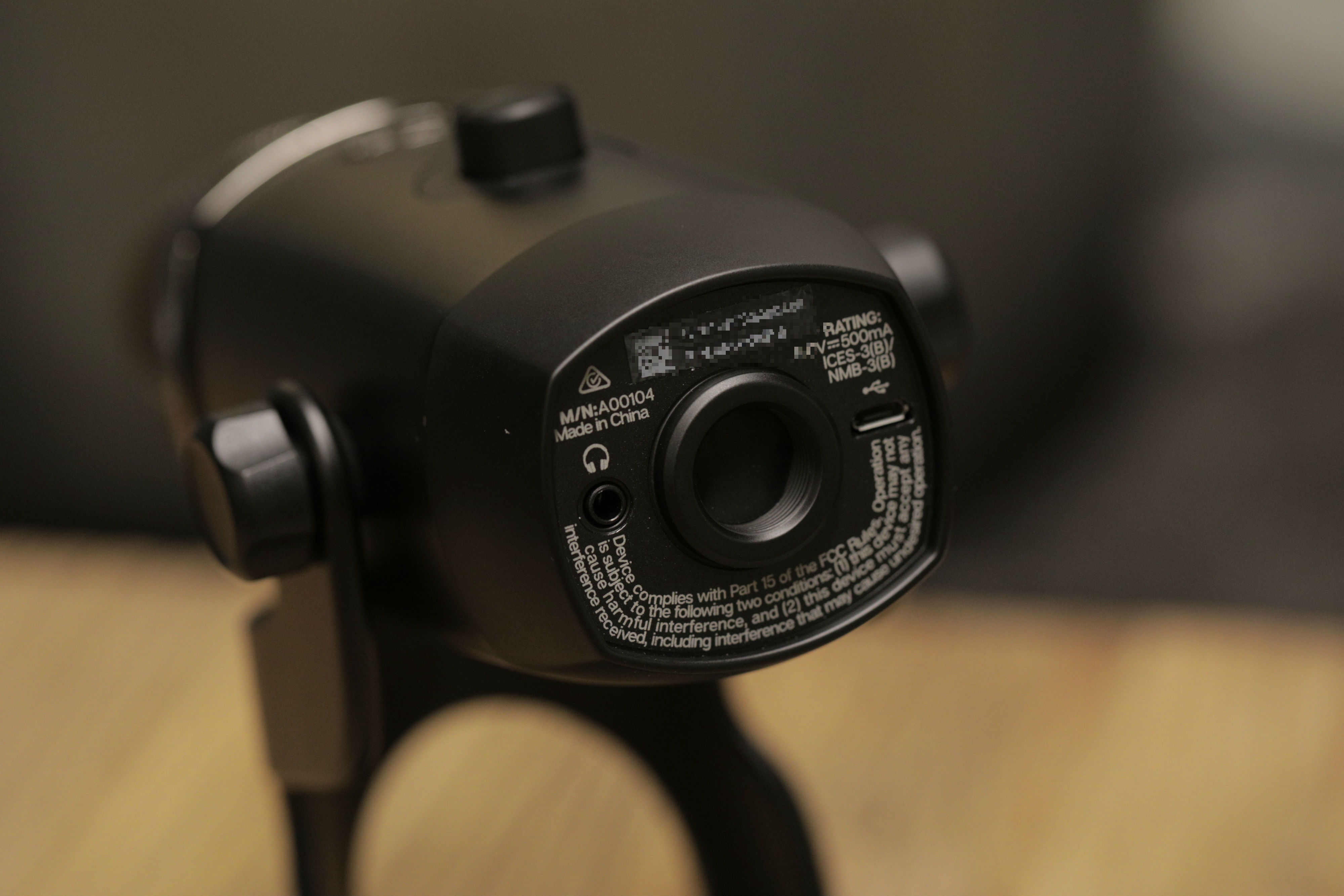
Blue has its own software for tweaking setting, but the key is honestly the ability to essentially use it straight out of the box. Per the instructions, however, make sure to point the top of the mic straight up, rather than toward your face as you might otherwise logically do.the standard four settings on the back: stereo, cardioid, omnidirectional and bidirectional. For most podcast style applications, you’re going to want to go with the second. The oddest oversight here is the decision to stick with microUSB over the USB-C. Shipping with a dual sided USB-C cable would go a ways toward future proofing the product.

At $169, the Yeti X is positioned pretty reasonable for beginnings and is certainly a better long term investment than the $70 Snowball.

Startups Weekly: YC grad Revel’s plan to connect women over 50

Hello and welcome back to Startups Weekly, a weekend newsletter that dives into the week’s noteworthy news pertaining to startups and venture capital. Before I jump into today’s topic, let’s catch up a bit. I’ve been on a bit of a startup profile kick as of late. Last week, I was tired from Disrupt. Before that, I wrote about up and coming telemedicine company Alpha Medical.

Remember, you can send me tips, suggestions and feedback to [email protected] or on Twitter @KateClarkTweets. If you don’t subscribe to Startups Weekly yet, you can do that here.


Startup Spotlight

Y Combinator’s latest batch concluded two months ago, which means my inbox is beginning to fill with pitches from companies ready to talk about the first rounds of fundraising. We’ve profiled many of the companies already, like Tandem, Narrator, SannTek Labs and more to come.

This week, I have some notes on Revel, a recent grad from the hot accelerator network that plans to create a nationwide subscription-based network tailored to women over the age of 50. The startup’s founders, Harvard Business School graduates Lisa Marrone and Alexa Wahr, say there are no good existing options in the market to help women in this demographic foster new relationships.

Revel

“I think a lot of the things that exist are nonprofits that are a little antiquated now,” Marrone tells TechCrunch. “I think we saw that those are really serving the need of our members’ parents’ generation, but they haven’t really adapted as much to the modern age.”

Women 50 years and older can become a member of Revel. For now, the service is free, though the company plans to charge a $100 annual fee in the coming months. Currently, Revel’s community includes 500 women. With a $2.5 million funding led by Forerunner Ventures’ Kirsten Green, the small team plans to expand within the Bay Area. They said they won’t begin establishing Revel outside the region until they raise a Series A.

It’s hard to imagine women will stay committed to paying an annual Revel membership, considering the real value comes from the company’s ability to facilitate introductions to like-minded women. Once those introductions have been made, women can discontinue their membership and develop relationships outside the service. Forerunner Ventures, however, is known for backing successful and prominent brands, like Glossier, Warby Parker and Outdoor Voices. My guess is Revel has ambitions to become the brand representing women over 50 seeking meaningful connections.

“We want to take this wide in a short number of years because we feel there is a need and opportunity to build this strong community for women of this age; venture capital in that sense was rocket fuel,” adds Marrone.


VC rounds


M&A

  • Uber plans to buy a majority stake in a Latin American grocery delivery business called Cornershop. The Chilean startup was founded in 2015 by Oskar Hjertonsson, Daniel Undurraga and Juan Pablo Cuevas. It will continue to operate under that leadership in its current form for now, says Uber.
  • To beat Amazon Go, Standard Cognition is buying DeepMagic, a pioneer in autonomous retail kiosks. “The $86 million-funded Standard Cognition is racing to equip storefronts with an independent alternative using cameras to track what customers grab and charge them. But Amazon’s early start in the space poses a risk that it could patent troll the startup,” writes TechCrunch’s Josh Constine.

Extra Crunch

Extra Crunch subscribers have a lot to chew on this week. Reminder, if you haven’t yet signed up for our premium content service, you still can here.

This week, I wrote about the importance of having a culture expert on staff at a venture capital firm. Increasingly, startups are being judged for their cultures, diversity of staff and more. VCs, for the most part, are unprepared to help their companies foster more inclusive environments, and that’s a problem. One firm, True Ventures, has taken a big step toward holding their companies accountable for culture and giving them real resources to help them improve things early. I talked to True Ventures’ Madeline Kolbe Saltzman about her new title, VP of Culture.


Equity

I took a break from Equity this week, but my co-host Alex Wilhelm was in studio with IPO expert James Clark. Listen to the excellent conversation here.

Equity drops every Friday at 6:00 am PT, so subscribe to us on Apple Podcasts, Overcast, Spotify and all the casts.

VC Brad Feld on WeWork, SoftBank, and why venture firms may have to slow down their pacing in 2020

Yesterday, we had a chance to talk with longtime venture investor Brad Feld of Foundry Group, whose book “Venture Deals” was recently republished for the fourth time, and for good reason. It’s a storehouse of knowledge, from how venture funds really work to term sheet terms, from negotiation tactics to how to choose (and pay for) the right investment banker.

Feld was generous with his time and his advice to founders, many dozens of whom had dialed in, conference-call style. In fact, you can find a full transcript of our conversation right here if you’re a member of Extra Crunch.

In the meantime, we thought we’d highlight some of our favorite parts of the conversation. One of these touches on SoftBank, an organization that Feld knows a little better than many other investors. We also discussed what happened at WeWork and specifically the difference between a cult-like leader and a visionary — and why it’s not always clear right away whether a founder is one or the other.  These excerpts have been edited for length and clarity.

TC: We were just talking about startups raising too much money, and speaking of which, you were involved with SoftBank long ago. Your software company had raised capital from SoftBank, then you later worked for the company as an investor. This way predates the Vision Fund, but you did know Masayoshi Son, which makes me wonder: what do you think of how they’ve been investing their capital?

BF: Just for factual reference, I was initially affiliated with SoftBank with a couple of other VCs; Fred Wilson, Rich Levandov and at the time Jerry Colonna, who now runs a company called Reboot. During that period of time, a subset of us ended up starting a fund that eventually became called Mobius Venture Capital, but it was originally called SoftBank Venture Capital or SoftBank Technology Ventures. We were essentially a fund sponsored by SoftBank, so we had SoftBank money. The partners ran the fund, but we were a central part of the SoftBank ecosystem at the time. I’d say that was probably ’95, ’96 to ’99, 2000. We changed the name of the firm to Mobius in 2001 because it was endlessly getting confused with the other [SoftBank] fund activity.

I do know a handful of the senior principals at SoftBank today very well, and I have enormous respect for them. Ron Fisher [the vice chairman of SoftBank Group] is the person I’m closest to. I have enormous respect for Ron. He’s one of my mentors and somebody I have enormous affection for.

There are endless piles of ink spilled on SoftBank, and there are loads of perspectives on Masa and about the Vision Fund. I would make the observation that the biggest dissonance in everything that’s talked about is timeframe, because even in the 1990s, Masa was talking about a 300-year vision. Whether you take it literally or figuratively, one of Masa’s powers is this incredible long arc that he operates on. Yet the analysis that we have on a continual basis externally is very short term — it’s days, weeks, months.

What Masa and the Vision Fund conceptually are playing is a very, very long-term game. Is the strategy an effective strategy? I have no idea . . .  but when you start being a VC, it takes a long time to know whether you’re any good at it or not. It takes maybe a decade really before you actually know. You get a signal in five or six years. The Vision Fund is very young . . . It’s [also] a different strategy than any strategy that’s ever been executed before at that magnitude, so it will take a while to know whether it’s a success or not. One of the things that could cause that success to be inhibited would be having too short a view on it.

If a brand-new VC or a brand new fund is measured two years in in terms of its performance, and investors look at that and that’s how they decide what to do with the VC going forward, there would be no VCs. They’d all be out of business because the first two years of a brand-new VC, with very few exceptions, is usually a time period that it’s completely indeterminate as to whether or not they’re going to be successful.

TC: So many funds — not just the Vision Fund — are deploying their funds in two years, where it used to be four or five years, that it’s a bit harder. When you deploy all your capital, you then need to raise funding and it’s [too soon] to know how your bets are going to play out.

BF: One comment on that, Connie, because I think it’s a really good one: When I started, in the ’90s, it used to be a five-year fund cycle, which is why most LP docs have a five-year commitment period for VC funds. You literally have five years to commit the capital. In the internet bubble, it shortened to about three years, and in some cases it shortened to 12 months. At Mobius, we raised a fund in 1999 and a fund in 2000, so we had the experience of that compression.

When we set out the raise Foundry, we decided that our fund cycle would be three years and we would be really disciplined about that. We had a model for how we were going to deploy capital from each of our funds over that period of time. It turned out that when we look back in hindsight, we raised a new fund every three years and eventually we lost a year in that cycle. We have a 2016 vintage and a 2018 vintage and it’s because we really deployed the capital over 2.75 to three years . . .It eventually caught up with us.

I think the discipline of trying to have time diversity against the capital that you have is super important. If you talk to LPs today, there is a lot of anxiety about the increased pace at which funds have been deployed, and there has been a two year cycle in the last kind of two iterations of this. I think you’re going to start seeing that stretch back out to three years. From a time diversity perspective three years is plenty [of time] against portfolio construction. When it gets shorter, you actually don’t get enough time diversity in the portfolio and it starts to inhibit you.

TC: Very separately, you wrote a post about WeWork where you used the term cult of personality. For those who didn’t read that post — even for those who did — could you explain what you were saying?

BF: What I tried to abstract was the separation between cults of personality and thought leadership. Thought leadership is incredibly important. I think it’s important for entrepreneurs. I think it’s important for CEOs. I think it’s important for leaders, and I think it’s important for people around the system.

I’m a participant in the system, right? I’m a VC. There are lots of different ways for me to contribute, and I think personally, rather than creating a cult of personality around myself, as a contribution factor, I think it’s much better to try to provide thought leadership, including running lots of experiments, trying lots of things, being wrong a lot, and learning from it. One of the things about thought leadership that’s so powerful from my frame of reference is that people who exhibit thought leadership are truly curious, are trying to learn, are looking for data, and are building feedback loops from what they’re learning that then allows them to be more effective leaders in whatever role they have.

Cult of personality a lot of times masquerades as thought leadership . . . [but it tends] to be self-reinforcing around the awesomeness that is that person or the importance that is that person, or the correctness of the vision that person has. And what happens with cult of personality is that you very often, not always, but very often, lose the signal that allows you to iterate and change and evolve and modify so that you build something that’s stronger over time.

In some cases, it goes totally off the rails. I mean, just call it what it is: what business does a private company have, regardless of how much revenue it has, to buy a Gulfstream V or whatever [WeWork] bought? It’s crazy. ..

From an entrepreneurial perspective, I think being a leader with thought leadership and introspection around what’s working and what’s not working is much, much more powerful over a long period of time than the entrepreneur or the leader who gets wrapped in the cult of personality [and is] inhaling [his or her] own exhaust.

TC: Have you been in that situation yourself as a VC? Could VCs have done something sooner in this case or is that not possible when dealing with a strong personality?

BF: One of the difficult things to do, not just as an investor, but as a board member — and it’s frankly also difficult for entrepreneurs — is to deal with the spectrum that you’re on, where one end of the spectrum as an investor or board member is dictating to the charismatic, incredibly hard-driving founder who is the CEO  what they should do, and, at the other end, letting them be unconstrained so that they do whatever they want to do.

One of the challenges of a lot of VCs is that, when things are going great, it’s hard to be internally critical about it. And so a lot of times, you don’t focus as much on the character. Every company, as it’s growing the leadership, the founders, the CEO, the other executives, have to evolve. [Yet] a lot of times for various reasons, and it’s a wide spectrum, there are moments in time where it’s easier to not pay attention to that as an investor or board member. There’s a lot of investors and board members who are afraid to confront it. And there’s a lot of situations where, because you don’t set up the governance structure of the company in a certain way, because as an investor you wanted to get into the deal, or the entrepreneurs insist on [on a certain structure], or you don’t have enough influence because of when you invested, it’s very, very hard. If the entrepreneur is not willing to engage collaboratively, it’s very hard to do something about it.

Again, if you’re an Extra Crunch subscriber, you can read our unedited and wide-ranging conversation here.

Pegging Libra to just the $ could soothe regulators, a16z says

What if Libra wasn’t backed by a basket of international currencies, but only the dollar?

Regulatory pushback to the Facebook-led cryptocurrency Libra has caused major partners — including Visa, Mastercard, PayPal and eBay — to pull out of the Libra Association. But one of the remaining members has floated a major change to the stablecoin that could calm concerns that Libra could hurt the world economy by challenging national currencies for supremacy.

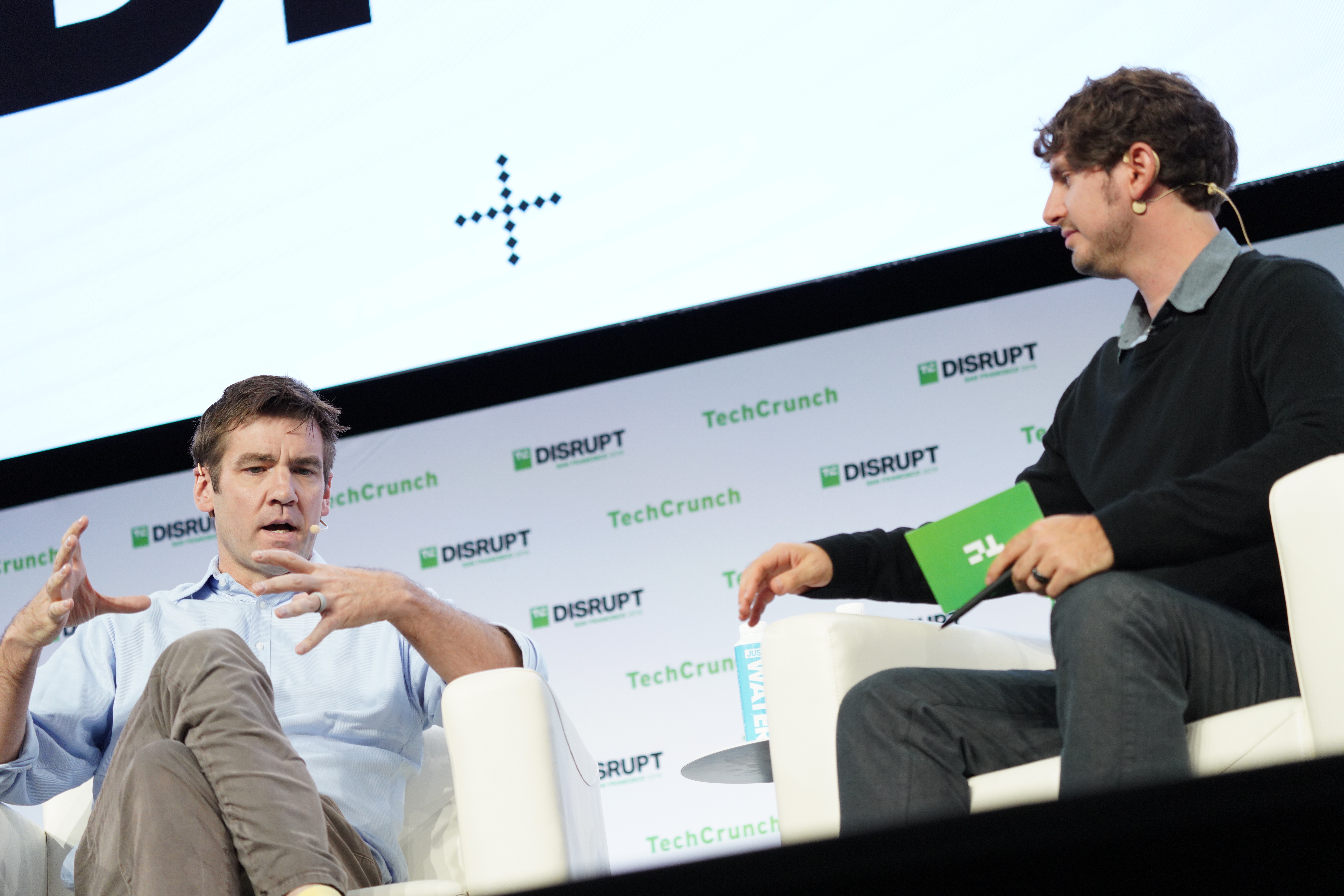
Last week, venture partner Chris Dixon of Andreessen Horowitz’s a16z Crypto, one of the remaining members of the governing Libra Association, spoke  onstage at TechCrunch Disrupt. He said he still believed Libra will launch, but it might require some changes to get the green light from governments. When I asked what changes might assuage regulators, he told me, “For example, denominating the currency in U.S. dollars. I’m giving a hypothetical example. My understanding is the intention was never to create a new currency. It’s much focused on the payment rails.”

We understand that Dixon meant that Libra could be pegged directly to the U.S. dollar instead of to a basket of international currencies as is the plan for Libra.

Chris Dixon (a16z) says that Libra could be denominated in USD to soothe regulators #TCDisrupt pic.twitter.com/BvQr2N0W0h

— TechCrunch (@TechCrunch) October 3, 2019

Originally, Libra was slated to be denominated in…Libra, using the unicode symbol ?. It would be a stablecoin backed 1:1 with a basket of the world’s top currencies that Reuters says Der Spiegel reports Facebook told a German legislator would be made up of 50% U.S. dollar, 18% Euro, 14% Japanese Yen, 11% British pound and 7% Singaporean dollar.

The purpose of the basket was to make Libra’s value more consistent. A spike or decline in value of any currency in the basket would have limited impact on Libra’s value, and the basket could be altered in makeup to further protect it from fluctuations.

Libra cryptocurrency logo

But if it was denominated in $, the U.S. regulators in particular might be less worried that citizens might choose to use the Libra instead of the dollar. This might demonstrate that Libra sees itself as deferential to the American economic system and government Facebook must answer to.

Conversely, the Libra would become vulnerable to shifts in value of the U.S. dollar. But since many international currencies and financial systems are also linked to the dollar, there at least would be more precedent for how Libra would operate. The move could make foreign governments less skiddish about the cryptocurrency since their national currencies wouldn’t be directly influenced.

On Monday, the Libra Association will meet to finalize its membership, elect a board and create a charter governing its efforts. How Libra is denominated could be reviewed at this meeting.

Denominating in dollars could quell another worry about the cryptocurrency — that if it became popular and the Libra Association decided to change the basket’s components or remove one currency, it could significantly impact that currency’s value.

The French Finance Minister Bruno Le Maire previously said, “the monetary sovereignty of countries is at stake from a possible privatisation of money . . . we cannot authorise the development of Libra on European soil.”

Facebook’s head of Libra David Marcus has tried to dispel this idea, saying Libra is designed to run “on top of existing currencies . . . there’s no new money creation, which will strictly remain the province of sovereign Nations.” Yet regulators are still largely opposed to its planned launch in 2020.

Pegging Libra to the dollar would give the Libra Association less flexibility to maintain a steady value, but also less power. Governments wouldn’t fear that they’d need to maintain a positive relationship with the Libra Association for fear of their currency being ejected from the basket. It would put Libra more directly in competition with other stablecoins like Tether that are locked to the U.S. dollar.

Chris Dixon DSC02399

a16z Crypto’s Chris Dixon (left) speaks with TechCrunch’s Josh Constine at Disrupt SF 2019

Dixon also announced that Andreessen Horowitz is launching the a16z Crypto Startup School, which will offer a free, zero-equity educational program for blockchain entrepreneurs. The goal is to pass knowledge from seasoned cryptocurrency startup founders to newer entrants to the space.

Dixon says the hope is that the best students would seek investment from the fund, but that won’t be required. Those interested can sign up for more info on how to apply when it’s available, though videos of the school’s sessions will be available.

Andreessen Horowitz’s commitment to cryptocurrency could make it less likely to abandon the Libra Association than some other payments companies more firmly rooted in the status quo financial system. That loyalty will only pay off if Libra ever passes muster with regulators and actually reaches the market.

Amid security concerns, the European Union puts 5G — and Huawei — under the microscope

The European Union is putting under the microscope the rollout of new, high-speed mobile networking technologies known as 5G in a move that could affect the technology’s dominant company — Huawei.

Regulators focused on specific security threats linked to technology providers headquartered in countries with “no democratic and legal restrictions in place,” according to a report in The Wall Street Journal

The news follows the release of a public report from the European Union that enumerated a number of challenges with 5G technology.

Heightened scrutiny of 5G implementation on European shores actually began back in March as member states wrestled with how to address American pressure to block Huawei from building out new telecommunications infrastructure on the continent.

The report from earlier in the week identified three security concerns that relate to the reliance on vendors linked to technology coming from individual suppliers — especially if that supplier represents a high degree of risk given its relationship to the government in its native country.

The new, private assessment reviewed by the WSJ is raising particular concerns about Huawei, according to the latest report.

“These vulnerabilities are not ones which can be remedied by making small technical changes, but are strategic and lasting in nature,” a source familiar with the discussions told the WSJ.

According to the WSJ report, concerns raised by the new EU analysis include: the insertion of concealed hardware, software or flaws into the 5G network; or the risk of uncontrolled software updates, backdoors or undocumented testing features left in the production version of the networking products.

U.S. security experts have long been concerned about Huawei’s dominance over the new telecommunications technology. Indeed, security officials and U.S. regulators have begun advocating for a combined public-private response to the threat Huawei poses (in concert with European allies).

As trade talks resume between the U.S. and China in an effort to end the ongoing trade war between the two countries, the hard-line stance that the U.S. government has taken on China’s telecommunications and networking technology powerhouse may be changing.

Yesterday The New York Times reported that the U.S. government would allow some companies to resume selling to Huawei, reversing course on a ban on technology sales that had been imposed over the summer.

Now, with a preliminary trade deal apparently in place, the fate of Huawei’s 5G ambitions remain up in the air. Both the U.S. and the European Union have significant concerns, but China is likely to bring up Huawei’s ability to sell into foreign markets as part of any agreement.

Confirmed: Nike has picked up Russell Wilson’s Tally/TraceMe in a rare acquisition

Nike has long been synonymous with premium sneakers and other sports gear, but now the company could be extending its brand into another area — digital media — thanks to the rumored acquisition of a Seattle-based startup.

TechCrunch has learned and confirmed that the multibillion-dollar sports giant has acquired TraceMe, which originally built an app to let fans engage with sports stars and other celebrities before later pivoting into a service called Tally, a platform aimed at sports teams, broadcasters and venues to help fans engage around sporting events.

TraceMe was originally founded by Russell Wilson, the champion quarterback of the Seattle Seahawks, who was the executive chairman of the startup. The company had raised at least $9 million from investors that included the Seattle-based Madrona Venture Group and Bezos Expeditions (Amazon CEO Jeff Bezos’ fund), as well as YouTube co-founder Chad Hurley and others, and it was last valued, in 2017, at $60 million.

Nike confirmed the acquisition to us in a short statement: “NIKE, Inc. has acquired TraceMe to supplement the company’s content strategy on Nike-owned platforms,” a spokesperson said in an email.

Our source said the deal closed in recent weeks and that “it was a good outcome” for the company and investors. It involved both IP — the main interest, the source said, was in TraceMe’s tech rather than Tally’s — and the team.

Indeed, at least eight of them, including TraceMe’s CEO Jason LeeKeenan, an ex-Hulu executive, are now listing Nike as their place of employment. LeeKeenan describes his new role as the head of Nike Seattle. Others on the team now have taken roles that include software engineers, head of product and product designers.

No one at TraceMe responded to our requests for comment. GeekWire (which likely got the same tip we did) published a post noting that it had a source that confirmed the deal.

The athletic footwear giant Nike is no stranger to the world of technology: it has been a longtime collaborator with the likes of Apple to develop apps for its devices and has been an early mover on the concept of bringing and integrating cutting-edge (yes, possibly gimmicky) tech into its footwear and other gear. And that’s before you consider Nike as an e-commerce force.

But while the dalliance between sports, tech and fashion is well established, this deal opens up a different frontier for the company.

It’s very rare for Nike to make an acquisition, but it makes sense that if it were going to do some M&A, it would be in the area of digital media and picking up engineers to execute on a wider vision in that area.

The company is best known, of course, for its shoes and related sporty clothes, which it has for a long time created in co-branding with the biggest sports stars and has more recently started to extend to a wider circle of celebrities and hot fashion labels in a spirit of sporty street style. These have included the likes of so-cool Supreme, Travis Scott and seemingly other tentative forays into music culture.

Nike overshadows all other sports shoe brands in size, with its current market cap at nearly $117 billion, more than twice that of its closest competitor, Adidas . But Adidas has been stealing a march when it comes to partnerships with a wide network of celebrities (even if Drake prefers checks over stripes).

While it isn’t clear yet how and if Nike will be using the startup’s existing services, you could see how a deal like this could help Nike start to think about how it might leverage the collaborations and endorsements it already has in place into experiences beyond shoes, advertising and athletic performance.

In this age of Instagram and influencers playing a massive role in shifting consumer sentiment (and dollars), this could give Nike a shot at building its own media platform, independent of these, on its own terms.

This is a bigger trend that we’re seeing across other consumer categories. Consider how companies like Spotify have extended beyond simple music streaming, investing in building tools to help artists on its platform with marketing and expanding their brands. Selling shoes means selling a concept, and that concept needs to have a foothold in a wider digital experience. 

Updated with comment from Apple.

Apple creates its own TV studio, will produce WWII drama ‘Masters of Air’

While Apple has a long list of new programming lined up for its TV+ subscription streaming service, the company won’t actually own any of the announced shows — until now.

That’s changing because Apple has formed its own in-house studio, which will produce “Masters of Air,” a follow-up to “Band of Brothers” and “The Pacific,” based on Donald L. Miller’s nonfiction book “Masters of the Air: America’s Bomber Boys Who Fought the Air War Against Nazi Germany.” The show will be executive produced by Tom Hanks, Gary Goetzman and Steven Spielberg.

The distinction between TV+ shows that are and aren’t produced by Apple’s studio will probably be lost on most viewers. That’s fair enough — especially because in the streaming world, the “original” label encompasses a number of different types of content.

For example, Netflix Originals include shows like “House of Cards” and “Orange Is the New Black,” which are produced by other studios, with Netflix paying for the exclusive rights (in some cases, those rights are limited to certain geographies).

And then there are shows like “Stranger Things,” which Netflix produces and owns itself. Those self-produced shows will probably be a growing part of Netflix’s original content mix moving forward.

Similarly, by creating its own studio, Apple can own some of its TV+ content outright, lessening the need to negotiate licensing fees with other studios, and also giving it the rights for things like merchandise.

According to The Hollywood Reporter, the studio doesn’t have a name yet, but it will be led by Apple’s Worldwide Video heads Zack Van Amburg and Jamie Erlicht, who previously led Sony Pictures TV.

Cryptocurrency’s bad day continues as the SEC blocks Telegram’s $1.7 billion planned token sale

Cryptocurrency’s bad news day continues to get worse as the U.S. Securities and Exchange Commission has said it has filed an emergency action and received a restraining order for the $1.7 billion planned token offering of Telegram’s blockchain.

The move from the SEC follows the continued dissolution of the corporate alliance that was supporting Facebook’s planned Libra cryptocurrency.

Telegram’s ambitious founder Pavel Durov was hoping to launch the Telegram Open Network as a payment option that would exist apart from the global regulatory system in much the same way that Libra would have done, according to initial TechCrunch reporting.

While the Telegram offering had been in the works since January 2018, it had run into problems by the middle of last year and the future of the protocol was already in jeopardy.

According to the SEC complaint, Telegram Group and its TON Issuer subsidiary began raising capital in January 2018 to finance the company’s business, including the development of the TON blockchain and Messenger .

The defendants sold 2.9 billion tokens at discounted prices to 171 initial investors, including more than 1 billion of the company’s tokens to 39 U.S. buyers.

Telegram said it would deliver the tokens to the purchasers by no later than October 31, 209 and the purchasers would be able to sell them into the market. According to the SEC complaint Telgram failed to register their offers and sales of the tokens, which the SEC considers to be securities.

“Our emergency action today is intended to prevent Telegram from flooding the U.S. markets with digital tokens that we allege were unlawfully sold,” said Stephanie Avakian, Co-Director of the SEC’s Division of Enforcement, in a statement. “We allege that the defendants have failed to provide investors with information regarding Grams and Telegram’s business operations, financial condition, risk factors, and management that the securities laws require.”

Why it might have been time for new leadership at SAP

SAP CEO Bill McDermott announced he was stepping down last night after a decade at the helm in an announcement that shocked many. It’s always tough to measure the performance of an enterprise leader when he or she leaves. Some people look at stock price over their tenure. Some at culture. Some at the acquisitions made. Whatever the measure, it will be up to the new co-CEOs Jennifer Morgan and Christian Klein to put their own mark on the company.

What form that will take remains to be seen. McDermott’s tenure ended without much warning, but it also happened against a wider backdrop that includes other top executives and board members leaving the company over the last year, an activist investor coming on board and some controversial licensing changes in recent years.

Why now?

The timing certainly felt sudden. McDermott, who was interviewed at TechCrunch Sessions: Enterprise last month sounded more like a man who was fully engaged in the job, not one ready to leave, but a month later he’s gone.

But as McDermott told our own Frederic Lardinois last night, after 10 years, it seemed like the right time to leave. “The consensus was 10 years is about the right amount of time for a CEO because you’ve accomplished a lot of things if you did the job well, but you certainly didn’t stay too long. And if you did really well, you had a fantastic success plan,” he said in the interview.

There is no reason to doubt that, but you should at least look at context and get a sense of what has been going in the company. As the new co-CEOs take over for McDermott, several other executives including SAP SuccessFactors COO Brigette McInnis-Day, Robert Enslin, president of its cloud business and a board member, CTO Björn Goerke and Bernd Leukert, a member of the executive board have all left this year.

Alexa now speaks Spanish, including in multi-lingual mode

At Amazon’s hardware event last month in Seattle, the company announced plans to launch multi-lingual modes for its Alexa devices in the U.S., Canada, and India, where the smart voice assistant would be able to speak a combination of English and Spanish, French and English, and Hindi and English, respectively. Today, Amazon says the multi-lingual mode for U.S. speakers is officially live across the country, allowing users of both Echo and Alexa-powered devices to switch between Spanish and English. Alexa can also be set to speak only Spanish in the Alexa app settings.

The new support also means developers can build skills for the platform that target Spanish language speakers.

The experience introduces a new Spanish voice for Alexa, plus local knowledge, hundreds of Spanish skills including those form Univision and Telemundo, and more.

To use Alexa in Spanish mode, U.S. users will be able to toggle to “Español (Estados Unidos)” in the Alexa app. They can then speak to Alexa in Spanish to get news, weather, control their smart home devices, set reminders, and launch skills.

However, the more interesting addition is the multi-lingual mode option, which allows customers to seamlessly switch between Spanish and English.

For example, you could ask Alexa in English for the weather, and she’ll reply in English. But if you speak in Spanish, she replies in Spanish. This makes the device more useful in multi-lingual households where a mix of both languages is spoken.

To complement the new Spanish-language support, Amazon Music listeners in the U.S. will be able to ask Alexa for several newly launched Latin music playlists in U.S. Spanish, including Sin Filtro (urban artists), Tierra Tropical (bachata, salsa, cumbias), Puro Reggaeton, and Fierro Pariente (Regional Mexicano).

Amazon said the other multi-lingual modes for Canada and India (French and Hindi, combined with English), will also be available, but didn’t say when they would be fully rolled out.


EBay, Stripe and Mastercard drop out of Facebook’s Libra Association

Oof — a week after PayPal announced plans to part ways with Facebook’s Libra cryptocurrency project and the related association of the same name, three more names are reportedly breaking away: eBay, Stripe and Mastercard. (Update: and now Visa!)

In a comment to TechCrunch, a Stripe spokesperson leaves the door open for them to potentially work with Libra in the future — but not right now:

“Stripe is supportive of projects that aim to make online commerce more accessible for people around the world. Libra has this potential. We will follow its progress closely and remain open to working with the Libra Association at a later stage.”

Word of eBay’s exit comes via Reuters, which quotes an eBay spokesperson as saying:

“We highly respect the vision of the Libra Association; however, eBay has made the decision to not move forward as a founding member.”

Mastercard’s looming departure, meanwhile, just broke in the WSJ.

This is a fairly massive hit for the project, with three flagship partners all bailing simultaneously. It all happens just days after reports that regulatory pressure behind the scenes was causing a number of members to reconsider their support.

Update: Visa has now backed out as well, citing regulatory concerns directly:

Visa has decided not to join the Libra Association at this time. We will continue to evaluate and our ultimate decision will be determined by a number of factors, including the Association’s ability to fully satisfy all requisite regulatory expectations.

Story developing..

Life with the Samsung Galaxy Fold

Avoid pressing hard on the screen.

Tap lightly to keep it safe.

Your Galaxy Fold isn’t water or dust resistant.

Don’t allow any liquids or foreign objects to enter it.

Don’t attach anything to the main screen, such as a screen protector.

So begins your journey. It’s the story of one of the most fascinating product releases in recent memory. It’s also the story of the most polarizing product I’ve ever reviewed…twice.

The Galaxy Fold is at once a hopeful glimpse into the future and a fascinating mess. It’s a product I can’t recommend anyone purchase, but it’s one I’m still glad Samsung had the guts to make.

CMB 8166

What’s perhaps most frustrating are the glimpses you get using the device, those moments it transcends lovely and is legitimately useful. And when you leave the device at home, you actually start to miss the 7.3-inch display.

Two scenarios in particular have really highlighted the value of Samsung’s strong-headed approach to pushing boundaries.

First is the gym. Unfolding the device and propping it up on the control panel of a piece of exercise equipment is a beautiful thing. Full-screen Netflix, baseball games from MLB At Bat. Watch the minutes and the calories just fly away. The Fold also works great with the Galaxy Buds, which are legitimately one of the best hardware products Samsung has produced in ages.

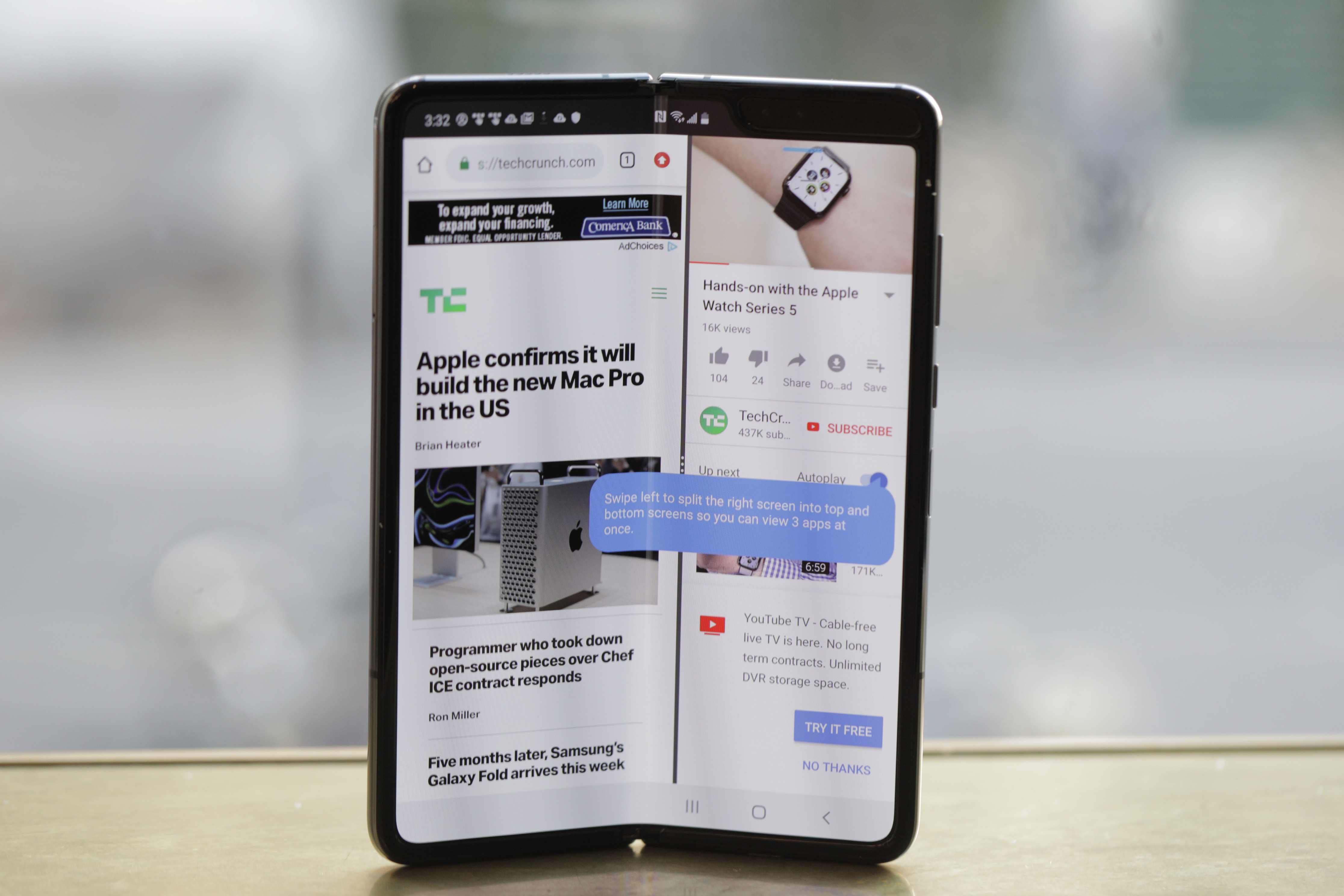
Second is the subway. I’ve been prepping for interviews by reading Pocket stories on the train, with the Notes app open in a side window. This is great. Like a seriously awesome thing. And this is coming from someone who still has trouble embracing smartphones as serious productivity devices. There are just too many limitations to that small screen. When I want to get work done, the laptop comes out. I’m not suggesting the Fold completely changes the math here, but it does edge ever closer, blurring that line a bit in the process.

Samsung Galaxy Fold

So there you go. That’s two distinct examples, covering both entertainment and productivity. The fact is the same as ever: big screens are good. The question is how we get there. It’s a true fact, of course, that plenty mocked Samsung with the first Note device. It seems hard to believe, but in 2011, 5.3 inches seemed impossibly large for a phone. By 2018, however, 5.5 inches was the most popular screen size for handsets. And that number appears to still be growing.

Clearly Samsung was right on that one, and the Note played an outsized role in pushing those boundaries.

After years of teasing flexible and foldable displays, the tech world was understandably excited when the Galaxy Fold finally arrived. Honestly, there were long stretches of time when it felt like the handset would never arrive. As such, it feels strange to suggest that the product was somehow rushed to market.

It’s important to remember, of course, that part of the mainstreaming of big phones has been the technologies supporting the large screen. Samsung, Apple, Huawei, et al. have done a good job consistently increasing screen to body ratios. The new Notes may have bigger screens than ever, but other breakthroughs in manufacturing means we’re not walking around with bricks.

Similarly, this decidedly first-generation device is big and thick. Anecdotally, reactions have been…mixed. The two separate rounds of review devices I’ve received from the company (round two, for reasons we’ll get into in a second involved two devices) have coincided with big TechCrunch-hosted events in San Francisco. First TC Sessions: Robotics in April and then Disrupt last week.

Samsung Galaxy Fold

Take some of this with a grain of salt, because my co-workers can be pretty damn cynical about new technologies (and yes, I’ve been at this long enough to include myself in this). Reactions ranged from genuinely wowed to disappointed bafflement. There was also one co-worker who repeatedly threatened to eat the device because she said it looked like an ice cream sandwich, but that’s a story for another blog post.

There are plenty of things to be critical from a design standpoint. The “first-gen” feel runs very deep with the device. When closed it’s quite thick — like two phones stacked atop one another. The crease is visible, as has often been reported. And the front display isn’t particularly useful. I get why it’s there, of course. There are plenty of moments when you just want to check a quick notification, bit it’s incredibly narrow and sandwiched between two massive bezels.   

None of those really matter much compared to the device’s fragility. The Fold will forever be the device whose release date was pushed back after multiple reviewers sent back broken devices. Mine worked fine. The company went back to the drawing board for several months and came back with a more robust device that patched up some holes and reinforced the folding mechanism. Mine broke.

CMB 8200

After about 27 hours with the device, I opened it up in line at CVS and noticed something weird about the screen. Sitting between the butterfly wings was a mass of pixels I referred to as an “amorphous blob.” I’d been fairly gentle with the thing, but, as I put it in a followup, “a phone is not a Fabergé egg.” In other words, it’s understandable that the product isn’t designed to, say, survive a drop onto hard concrete or a dunk in the toilet.

While it’s true that many other modern phones have evolved over generations to withstand such accidental bumbles, it’s also understandable that the Fold is a little more fragile. We can’t say Samsung didn’t warn us, and I do appreciate that Samsung was able to go back to the drawing board before wide release, but there’s a pretty strong argument to be made that a smartphone that needs to literally ship with warnings like the ones stated up top isn’t fully ready for prime time.

CNET recently got its hands on a folding machine and found that the handset could withstand 120,000 fold. That’s a little more than half of the promised 200,000. Another third-party test found similar results. Not ideal, but not terrible. It’s about three years’ worth of folds. If you’re dropping $2,000+ on a phone, you may well want it to last closer to the promised five years — though if you have that sort of disposable income, who knows?

Samsung Galaxy Fold

I would honestly be more concerned with the kind of day to day issues that could potentially result in damage like what I saw. It’s possible that mine had a defect. I’ve been using a replacement that Samsung dropped off after collecting mine to send back to Korea for testing. Granted, I’ve been using it even more gingerly than its predecessor, but so far, so good.

This morning I saw a report of a user experiencing what appears to be the same defect in the same spot. A commenter astutely pointed out the placement of a screw discovered during a recent teardown that could be the source of these issues. As ever, it will be interesting to see how this all…unfolds.

I’m not going to get too far into the other specs here. I wrote thousands of words in my original review. Nothing about the underlying technology has changed between versions one and two. All of the big updates have been to the folding mechanism and keeping the device more robust.

It’s fitting, I think that my model had 5G built-in. Both technologies feel like a glimpse into the future, but there’s little to recommend plunking down the requisite money to purchase either in 2019. The clear difference is that slow saturation of next-generation cellular technology is a bit more understood at this point. Telling someone that their fingernails can damage their $2,000 phone is a different conversation entirely.

Samsung Galaxy Fold

I do think that Samsung’s committed to the Galaxy Fold long-term. And I do believe that there will eventually be a place for the products in the market.

The biggest short-term concern is all the negative press following the first wave of devices. The FlexPai felt more like a prototype than consumer device. The Fold feels like something of an extended public beta. And the Huawei Mate X, which, although incredibly promising, is still MIA, as the company does another pass on the product. Global availability is another question entirely — though, that’s due to…other issues…

Knowing Samsung, the company will return from all of this with a much stronger offering in generation 2. There are a LOT of learnings to be gleaned from the product. And while it offers a glimpse into the promise of foldable, you’re better off waiting until that vision is more fully realized.

Brad Feld: what founders need to know about recent changes in VC deal terms

Extra Crunch offers members the opportunity to tune into conference calls led and moderated by the TechCrunch writers you read every day. This week, TechCrunch’s Connie Loizos hopped on the line with prominent investor, entrepreneur, thought leader, and Techstars co-founder Brad Feld to chat about the latest edition of his book “Venture Deals,” his advice to founders and investors, and his take on hot-button issues of the day.

In their conversation, Brad and Connie discuss the need to know information when it comes to preparing for, structuring and executing venture deals, and how that information has changed over the past several decades. Feld walks through the major topics that have been added in the latest edition of the book, such as how to handle venture debt, along with tactical attributes that aren’t currently in the book, such as secondary market trading.

Brad also shares his take on the most effective fundraising tactics for founders, and which common pieces of advice might be overblown.

Brad Feld: “I think the approach to the amount of money that you’re raising is both nuanced and evolves based on what financing round you’re at. So if you’re in an early round, some of the characteristics are different than if you’re in a later round. But I think the general truism… that I like to use when people say, ‘Well, how much money should I raise?’

I start with two variables and you the entrepreneur get to define those two variables. The two variables are: the amount of money you raise and what getting to the next level means. The amount of money you should raise is the amount of money that you need to get your business to the next level. There are lots of different ways to define what next level is and by forcing yourself internally to define next level and then define what you need in terms of capital to get to that next level… when you’re raising that first round of financing or even the second or third round of financing, it helps you size rationally what you need versus reactively to whatever the market characteristics are.

I actually encourage entrepreneurs to raise the least amount of money they need to get to the next level, or at least that’s the number that they go out to market with. Not a range, not a big number because you’re trying to drive some kind of valuation characteristic off a big number, but the amount of money that you actually think you need to get to the next level. Then if you can be oversubscribed, that’s an awesome situation.”

Feld and Connie dive deeper into current issues in the startup and venture landscape, including Brad’s take on the impact of the SoftBank Vision Fund, what went down internally and externally at both WeWork and Uber, as well as how boards, executives and founders can manage cult of personality and static company cultures.

For access to the full transcription and the call audio — and for the opportunity to participate in future conference calls — become a member of Extra Crunch. Learn more and try it for free. 

Connie Loizos: I think the last time I saw you in person was out here in San Francisco at an event I was hosting and that was maybe two years ago?

Brad Feld: Yup, that’s right. That was at the Autodesk Lab if I remember correctly.

Loizos: Yes. It’s good to hear your voice, and thank you for joining us on this call. We have a lot of readers who are big fans of yours that are on the line and are eager to learn about your book “Venture Deals” and your broader thoughts about the current state of the market. That said — and I know you only have so much time — let’s dive first into the book. So Wiley, your publisher has just put out the fourth edition of this book “Venture Deals,” and it’s really easy to appreciate why. I was looking through it and it’s so incredibly instructive how venture deals come together and possible pitfalls to avoid. And given there are always new entrepreneurs emerging, it continues to be highly relevant.

How do you go about updating a book like this, given that some things change and some things stay the same?

Electric moped startup Revel could expand to Texas next

Revel, the New York-based shared electric moped startup, appears to be preparing to expand into Texas, according to job listings first spotted and reported by Thinknum Alternative Data.

The expansion into Texas would be Revel’s fourth market and its first west of the Mississippi River, a move that would be consistent with comments CEO and co-founder Frank Reig made earlier this week to TechCrunch.

Revel, which launched in 2018, has more than 1,400 mopeds in Washington, D.C., and Brooklyn and Queens, New York. The company announced Thursday that it raised $27.6 million in a Series A round led by Ibex Investors. The equity round included newcomer Toyota AI Ventures and further investments from Blue Collective, Launch Capital and Maniv Mobility.

Revel plans to use the funds to expand its fleet of scooters within the cities it currently operates as well as  into new markets. Reig wouldn’t name where Revel will launch next. However, he provided a few hints.

Revel is targeting about 10 cities by mid-2020, Reig said in an interview earlier this week. He added that likely candidates would be major U.S. cities with temperate weather conditions. That puts cities in Florida, Texas, Arizona and California as likely destinations.

Thinknum, which tracks companies and creates data sets that measure hiring, revenue and other factors, charted out job listings at Revel. What the company found was nearly a dozen jobs posted since July that will be based in Texas.

While Revel’s job listings point to Texas, the company isn’t ready to talk.

“We can’t confirm specific launch timelines right now, but Revel is having productive conversations with markets in Texas among other places,” a company spokesperson said in response to TechCrunch’s inquiry. “We look forward to bringing our service to new cities in the coming months.”

Revel is different from other shared mobility-as-a-service providers, especially scooter companies, because it doesn’t use gig economy or contract workers. It only employs full-time workers. This would suggest that Revel isn’t merely experimenting with Texas; it has intentions to build out operations there.

The job listings include openings for a manager, mechanic and customer service support. Some of these jobs actually list Texas City, Texas as the destination. It’s not clear if this is actually where Revel will deploy. Texas City is about 42 miles southeast of Houston.

Instacart shoppers are organizing a nationwide protest

Instacart has long been at odds with its shoppers — the people who go to the grocery store on behalf of customers. From November 3-5, thousands of Instacart shoppers plan to protest with three demands. They want Instacart to change the default tip amount to at least 10%, ditch the service fee and commit to always giving 100% of the tip to the shopper.

“We did not arrive at the 10% figure arbitrarily, rather this is what the default tip amount was back when I and many others started working for Instacart,” Vanessa Bain, an Instacart shopper wrote on Medium this week. “We are simply demanding the restoration of what was originally promised.”

In order to get as many participants as possible, Bain told TechCrunch it suggests each person shares the details of the protest with at least five shoppers in person.

“We are fortunate enough to have pockets of a centralized work space in grocery stores where we can connect with fellow workers,” Bain said.

Back in 2016, Instacart removed the option to tip in favor of guaranteeing its workers higher delivery commissions. About a month later, following pressure from its workers, the company reintroduced tipping. Then, in April 2018, Instacart began suggesting a 5% default tip and reduced its service fee from a 10% waivable fee to a 5% fixed fee.

“We take the feedback of the shopper community very seriously and remain committed to listening to and using that feedback to improve their experience,” an Instacart spokesperson told TechCrunch.

This protest is on the heels of a class-action lawsuit over wages and tips, as well as a tipping debacle where Instacart included tips in its base pay for shoppers. Instacart, however, has since stopped that practice and provided shoppers with back pay. Though, Fast Company recently reported that Instacart delivery drivers’ tips are mysteriously decreasing.

But it’s a new day for gig economy workers — at least in California. Last month, California Governor Gavin Newsom signed into law gig worker protections bill AB-5. This legislation will make it harder for gig economy companies to classify their workers as 1099 independent contractors when it goes into effect in January. The victory came after gig workers made their voices heard through protests and other direct actions.

What’s clear at this point is that workers are refusing to stay silent and are more than willing to advocate for themselves. Organizers of the Instacart protest have outlined three ways for shoppers to get involved. The more active approach would entail shoppers signing up for as many hours as possible from November 3 -5, but keep letting the batches time out. The more passive approach entails not signing up for any hours at all, and not accepting any on-demand batches.

“What’s driving us to do this is a perpetual tug of war shoppers have been engaged in with Instacart for over three years now,” Bain said. “We’ve held actions annually to maintain the pressure and continue the momentum of our organizing. Right now, workers are in the worst financial position we have ever been in. The introduction of algorithmic pay, coupled with their rolling out of On Demand batches (instant offers that don’t require being on schedule to accept) have led to variability in pay, and the decline of pay to unprecedented levels.”

*This story has been updated with comment from Bain.