Apple has killed off the Dashboard in macOS Catalina. At least one person will miss it dearly.
Category: Tech news
hacking,system security,protection against hackers,tech-news,gadgets,gaming
How Salesforce Closed the Pay Gap Between Men and Women
In an excerpt from his new book, Marc Benioff says he initially didn’t believe any pay gap was pervasive in the first place.
Ancestry Branches Out Into Genetic Health Screening
AncestryHealth offers a test for hereditary conditions such as breast cancer or heart disease, building on the company’s tools for tracking family history.
This Technique Can Make It Easier for AI to Understand Videos
A staggering amount of video is shared online. Researchers are teaching artificial intelligence to process more—while using less power.
A Trove of Mouse Data Points Toward Brain-Computer Interfaces
Some 850 gigabytes of mouse brain data just got released. That’s great for reading the minds of mice now, and for building brain-controlled computers later.
Cambridge Analytica, Whistle-Blowers, and Tech’s Dark Appeal
Christopher Wylie was the architect of Cambridge Analytica’s big plans and also its whistle-blower. His new book explores how he ended up being both.
It’s Time to Push Tech Forward, and Rebuild What It Broke
Making progress means making (sometimes devastating) mistakes. And then learning from them.
WIRED25: Stories of People Who Are Racing to Save Us
Humanity is facing thorny problems on all fronts. These folks are working to solve them—and trying to avoid the unintended consequences this time.
Libra’s Ranks Shrink Again As Crypto Group Appoints a Board
A seventh member exits the body that is supposed to administer Facebook’s cryptocurrency, which has set “interim” rules and put together its board.
Watch Live: Google’s Pixel 4 Hardware Event
New Pixel phones are on the way, and possibly some other hardware surprises. Tune into the live video stream.
AI-based firefighter safety startup Prometeo wins IBM Call for Code Challenge
During an event at the United Nations Delegates Dining Room in New York City, IBM unveiled the winners to its annual Call for Code Global Challenge. The competition, which is targeted at computing solutions for global problems, crowned five winners, ranging from first responders to health care info.
Prometeo took the top price for its Watson-based AI solution targeted at firefighters. The team, which is lead by a 33-year firefighting veteran, has developed a tool designed to monitor health and safety in the industry, both long term and in real-time. The Spanish startup developed a smartphone-sized device that straps onto the wearer’s arm to gauge things like temperature, smoke and humidity.
“If the color signal is green, the health of the firefighter is okay,” cofounder Salomé Valero explains on IBM’s site. “But if the color signal is yellow or red, the command center must do something. They must take immediate action in order to rescue or remove the firefighter from the fire.”
The team is working to roll out the device for testing in Spain, but is currently seeking funding for the project. The $200,000 prize from IBM ought to help out a bit.
The second place price went to India/China/US-based Sparrow, which has developed a platform for addressing physical and psychological health during natural disasters. U.C.L.A. team, Rove scored third place with a similar concept.
Call for Code is a five year program that aims to hand out $30 million for teams addressing widespread societal issues.
Why each Libra member’s mutiny hurts Facebook
There’s a strategic cost to the defection of Visa, Stripe, eBay, and more from the Facebook -led cryptocurrency Libra Association . They’re not just names dropping off a list. Each potentially made Libra more useful, ubiquitous, or reputable. Now they could become obstacles to the token’s launch or growth.
Fearing regulators’ inquiries not just into their Libra involvement but the rest of their businesses, these companies are pulling out at least for now. None had made precise commitments to integrating Libra into their products, and they’ve said they could still get involved later. But their exit clouds the project’s future and leaves Facebook to absorb more of the blowback.
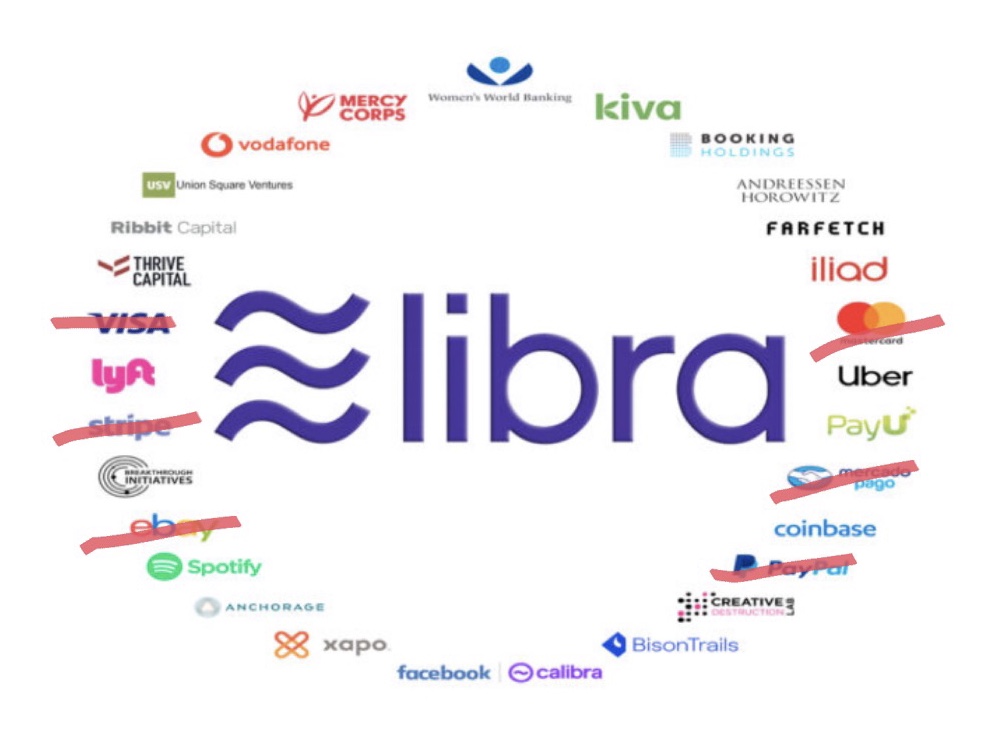
Here’s what each of the departing Libra Association members brought to the table and how they could spawn new challenges for the cryptocurrency:
Visa
With one of most widely-accepted payment methods, Visa could have helped make Libra universally spendable. It’s also one of the most prestigious names in finance, lending deep credibility to the project. Visa’s departure leaves Libra looking more like tech companies barging into payments, conjuring fears of their move fast, break things approach that could cause financial ruin if Libra runs into problems. It also could leave Libra with a much weaker presence in brick-and-mortar shops. No one will want to own a cryptocurrency that doesn’t appreciate in value and can’t be easily spent.
MasterCard
The involvement of MasterCard alongside Visa made Libra look like the incumbents adapting to modern technologies. This made it less threatening, and gave cryptocurrency an air of inevitability. MasterCard would have also brought an even wider network of locations where Libra could one day be used for payment. Now MasterCard and Visa might actively work against Libra to prevent their payment methods being made obsolete by Libra and its elimination of transaction fees through the blockchain. Two of Libras biggest allies could become its biggest foes.
PayPal
Facebook has repeatedly told regulators that its Calibra app plus integrations into Messenger and WhatsApp would not be the only Libra wallets, pointing to PayPal . Facebook’s head of Libra David Marcus told Congress when asked about the social network’s outsized power to exploit Libra through its own Calibra wallet that “you have companies like PayPal and others that will, of course, collaborate, but [also] compete with us”. Now Facebook won’t have a scaled payment method it doesn’t own to point to as a likely alternative for people who don’t want to trust Facebook’s Calibra, Messenger, or WhatsApp to be their Libra wallet. The Libra Association also loses PayPal’s enormous network of online merchants that accept it, plus the inroad to integration into its peer-to-peer payback app Venmo. PayPal convinced the mainstream public to trust online payments — the exact kind of trust Facebook desperately needs. The fact that Marcus was also the former president of PayPal but couldn’t keep it in the association raises concerns about the group’s coalition-building prowess.
Stripe
Stripe’s enormous popularity with ecommerce vendors made it a valuable Libra Association member. Together with PayPal, Stripe facilitates a huge portion of online transactions outside of China. Its ease of integration made it a top pick for developers Facebook surely hoped would build atop Libra. Stripe’s exit destroys a critical bridge to the fintech startup ecosystem that could have helped institutionalize Libra. Now the association will have to work on engineering payment widgets from scratch without Stripe’s assistance, which could slow adoption if it ever launches.
There’s a clear reason all these payment processors bailed. Senators Brian Schatz (D-HI) and Sherrod Brown (D-OH) wrote a letter to Visa, MasterCard, and Stripe’s CEOs this week explaining that “If you take this on, you can expect a high level of scrutiny from regulators not only on Libra-related activities, but on all payment activities.”
eBay
As one of the longest standing ecommerce companies, eBay bolstered beliefs that Libra could be used to power transactions between untrusted strangers without a costly middleman. It might have also put Libra into practice on one of the top western online marketplaces outside of Amazon. Without destinations like eBay onboard, average netizens will have fewer opportunities to be exposed to Libra’s potential to eliminate transaction fees.
Mercado Pago
One of the lesser-known Libra Association members, Mercado Pago helps merchants receive payments via email or in installments. The idea of connecting financially underserved populations has been core to Facebook’s pitch for why Libra should exist. The Libra Association has been light on the details of how exactly it serves this demographic, relying on the inclusion of partners like Mercado Pago to help it figure this out later. Mercado Pago’s departure leaves Libra looking more like a financial power grab rather than a tool to assist the disadvantaged.
Who’s Left?
On Monday, the remaining Libra Association members will meet to finalize the initial member list, elect a board, and create a charter to govern the project. This forced the hands of the companies above, who had their last chance to depart this week before being pulled deeper into Libra.
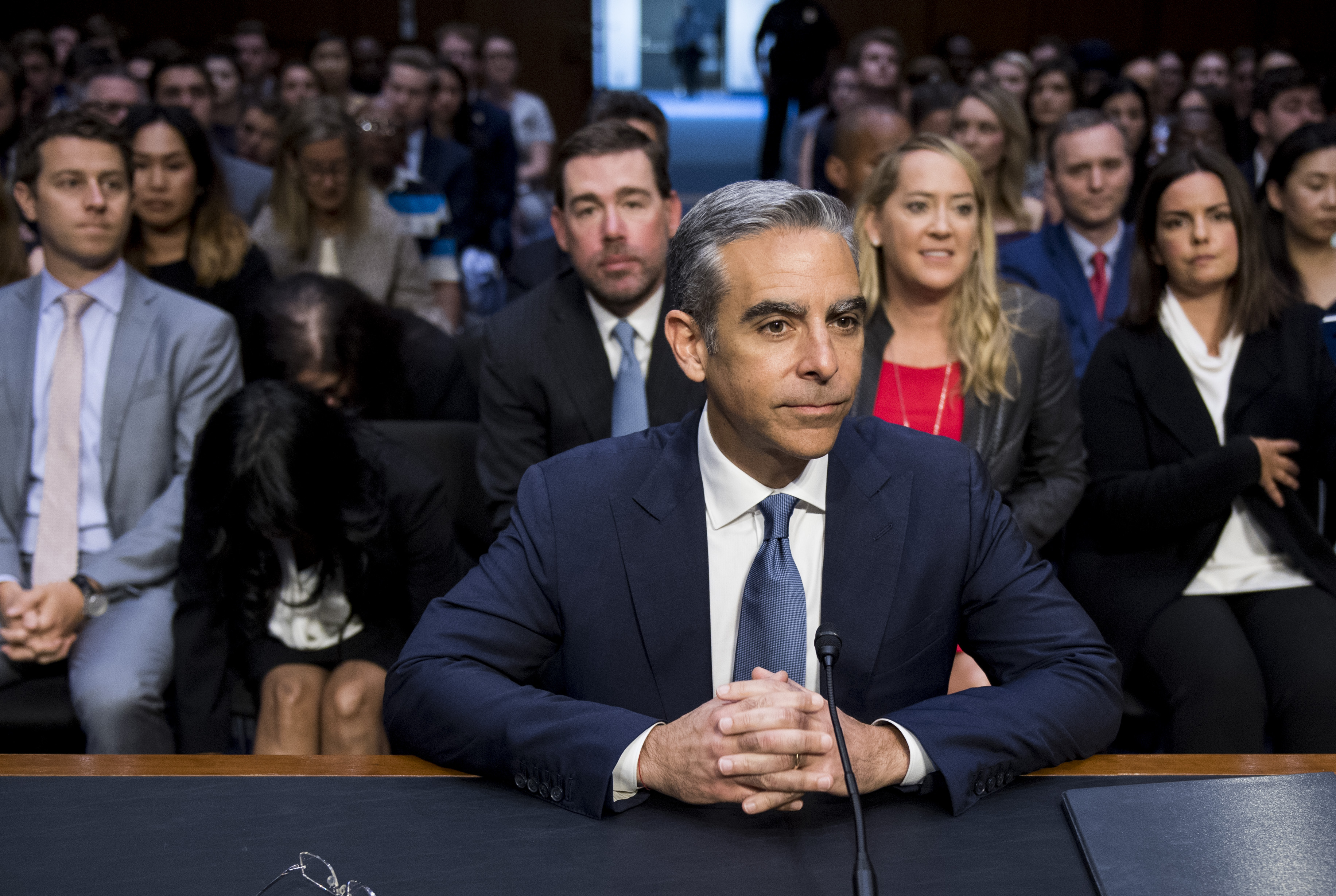
UNITED STATES – JULY 16: David Marcus, head of Facebook’s Calibra digital wallet service, prepares to testify during the Senate Banking, Housing and Urban Affairs Committee hearing on “Examining Facebook’s Proposed Digital Currency and Data Privacy Considerations” on Tuesday, July 16, 2019. (Photo By Bill Clark/CQ Roll Call)
Who’s left includes venture capital firms, ride sharing companies, non-profits, and cryptocurrency companies. They are less tied up with the status quo of payment processing, and therefore had less to lose. The blockchain-specific companies were likely hoping to piggyback on financial giants like Visa to get Libra approved and create more legitimacy for their industry as a whole.
These partners could help fund an ecosystem of Libra developers, create daily use cases, spread the system in the developing world, and push for alliances between Libra and cryptocurrency players. Facebook will need to fight to keep them aboard if it wants to avoid Libra looking like a unilateral disruption of the economy.
For Libra to actually launch, Facebook needs to make serious concessions and divert from its initial vision. Otherwise if it continues to butt heads with regulators, more members could flee. One option floated by Libra Association member Andreessen Horowitz’s a16z Crypto partner Chris Dixon was for Libra to be denominated in US dollars instead of a basket of international currencies. That might lessen fears that Libra intends to compete directly with the dollar.
It’s become apparent that Facebook will not get its ideal cryptocurrency out the door. This is the brand tax of 100 scandals coming back to bite it. Now the best it can hope for is to get even a watered-down version launched, prove it can actually help the underbanked, and then hope to convince regulators it’s well-intentioned.
Google’s Pixel 4 briefly went up for preorder on Best Buy Canada
The Pixel 4 is set to be unveiled at an event on Tuesday. This much we know for sure. We know a bunch more, too, (as outlined in this rumor roundup from yesterday), thanks to both official reveals and unofficial leaks. How much of this was planned is hard to say, but Google seemingly doesn’t mind building up the hype cycle.
Earlier today, Best Buy Canada made what may well be the most egregious reveal today (granted, there are three more days left to leak). The big box store posted up a preorder page for the upcoming smartphone. As expected, the listing was taken down, but not before 9to5Google managed to snap some screen shots.
From the looks of things, the rumors are pretty spot on. The device will come in both standard and XL versions, at 5.7 and 6.3 inches, respectively. Both models sport a Snapdradon 855, 6GB of RAM and 64GB of storage, along with a new Face Unlock feature. There are dual camera on each, per the listing — 12 and 16 megapixels — in the iPhone 11-esque square configuration.
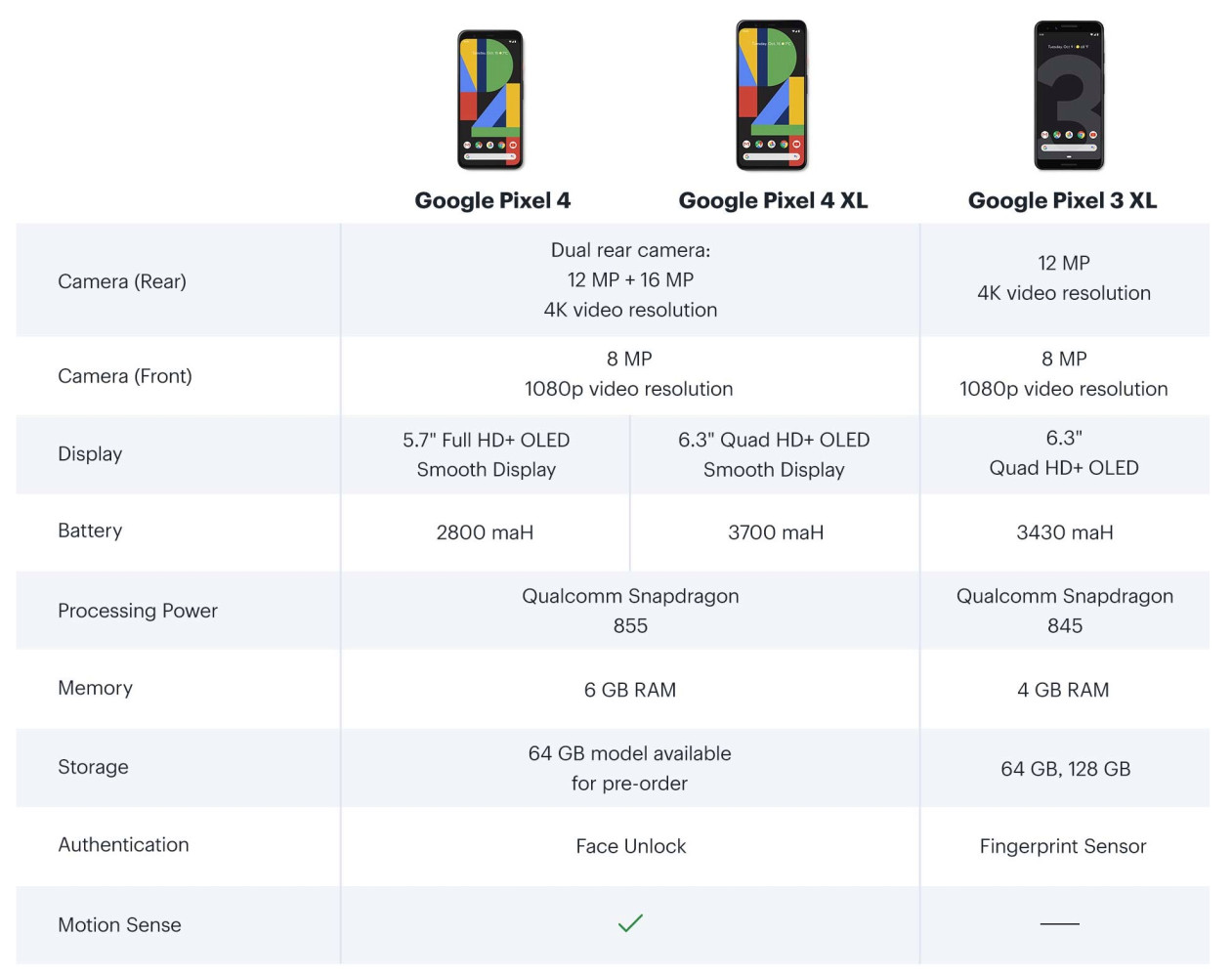
There’s a single front-facing 8 megapixel camera on each, and a 2,800 and 3,700mAh battery on the Pixel 4 and Pixel 4 XL. Other highlights including the expected addition of “Quick Gestures,” which use use a wave of the hand to interact with the device — similar to features we’ve seen on other handsets before.
Conspicuously missing from the preorder, however, is the expected “Oh So Orange” color. Could be a preorder thing or maybe Best Buy Canadian customers will have to settle for Just Black and Clearly White. Maybe the company is saving some surprises for Tuesday’s event. Maybe.

Samsung’s Galaxy Watch Active 2 is a solid smartwatch for Android users
Samsung makes good, underrated smartwatches. It’s just been difficult to get much attention in a category so utterly dominated by a single player. Even still, the company has managed to hold onto the number two spot in global market share, according to recentish numbers. At 11.1 percent, it’s a little less than a third of what Apple’s been able to generate.
The line has been a fairly stark contrast to Apple’s offerings. Samsung’s smartwatch philosophy is in line with its mobile counterpart: offer variety and don’t be afraid to try new things. Compare that to the Apple Watch’s annual improvements. The company offers one, key product, opting to make a little bit better, piece by piece.
Announced at the Unpacked event that gave us the S10 back in February, the Galaxy Watch Active presented a streamlining of the line. And simplified —and, most notably, cheaper — take on the Tizen-powered wearable line. Honestly, that $200 price point was really the key, putting the device in line with Fitbit’s relatively recent foray into the category.
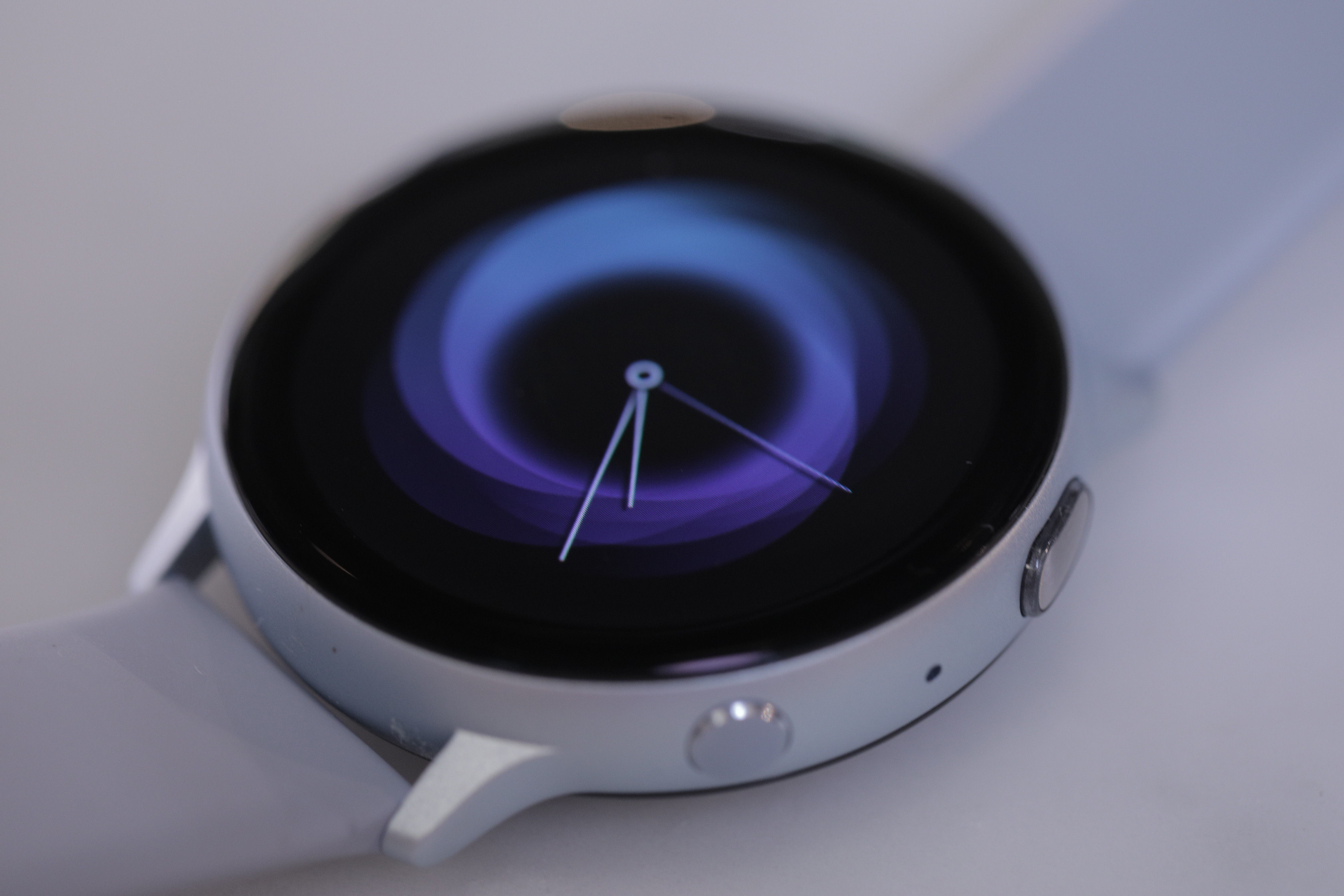
A mere six months later, it returned with the Galaxy Watch Active 2. The device brings a smattering of upgrades, including improved heart rate monitoring (with the ECG sensor currently still in beta) and the addition of both an LTE model and a larger 44mm version. Thankfully, it maintains a streamlined design that’s a welcome alternative to some of Samsung’s bigger, bulkier offerings.
Oddly, the company has opted to move away from the rotating mechanical bezel with the Active line, which has long been Samsung’s key differentiator in the category — perhaps in the spirit of maintaining that kind of minimalism, The rotating mechanical bezel is, simply put, the best way I’ve come across for interfacing with smartwatches, including Apple’s crown.
The Active 2 attempts to adapt the feature into a digital version with haptic feedback. Essentially you swipe around the outer edge f the device and haptics simulate the clicking of the wheel. It works better than I’d initially anticipated, but the lack of the original feature is still pretty glaring. Here’s hoping the company rethinks the omission for future versions.
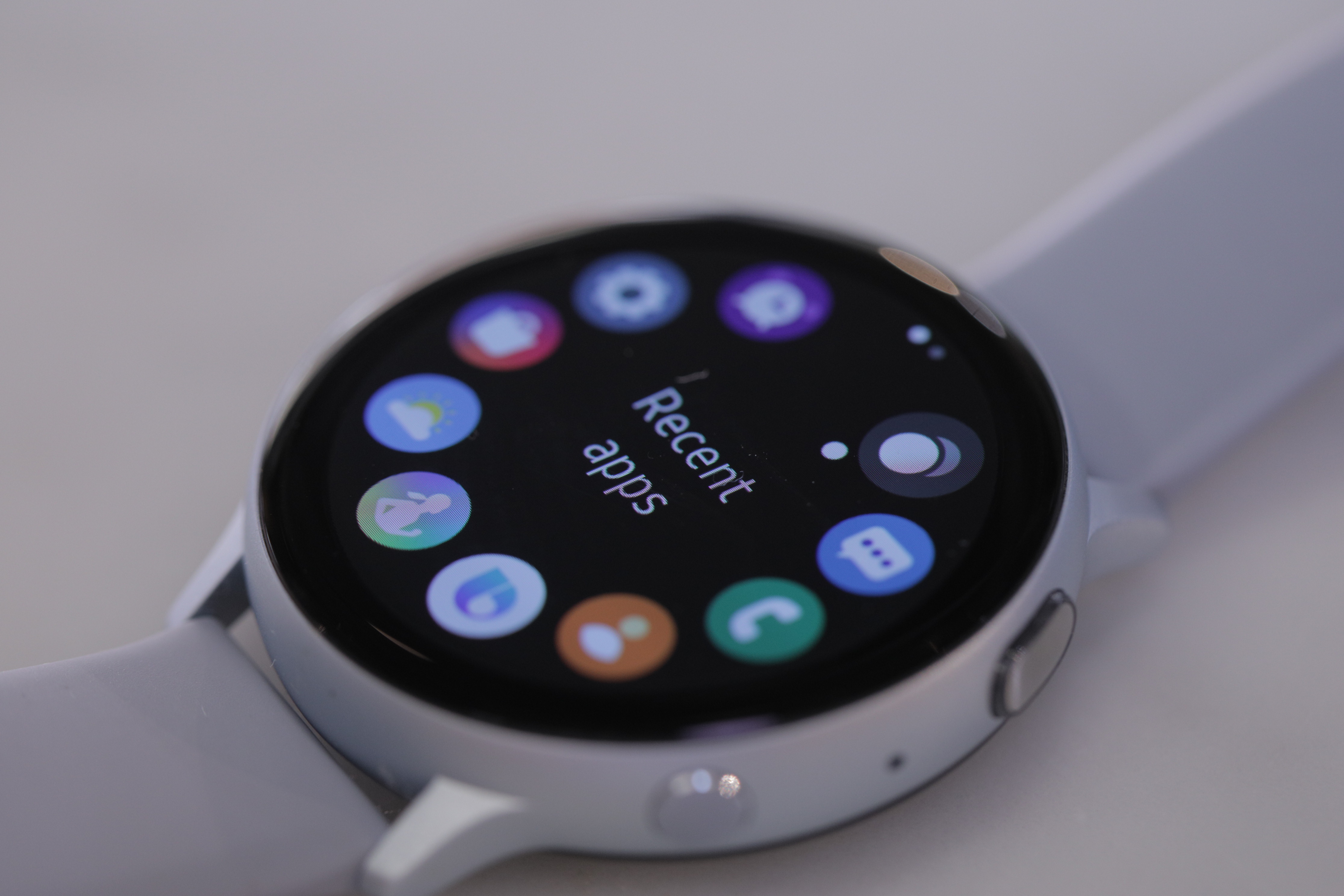
As with the latest Apple Watch, there’s an always on screen option, though it’s going to take its toll on battery life. With the feature off, however, I was able to get more than two days life on a single charge, which isn’t too shabby. That’s better than Apple, though both companies are still well behind what Fitbit’s able to get out of a device.
Honestly, in 2019, all smartphone makers should be pushing for ways to get more life on a charge — especially those offering some form of sleep tracking. Now that other features like ECG have begun to become ubiquitous, this ought to be the next big push for the industry at large.
My Style is a fun, but ultimately unnecessary trick, wherein the app lets you tailor the color of a watch face using a smartphone photo of what you’re wearing. The app selection is still pretty limited, compared to Apple’s offering, though some key features like Spotify are here. That now includes offline playlists. Other key apps like YouTube have been improved as well.
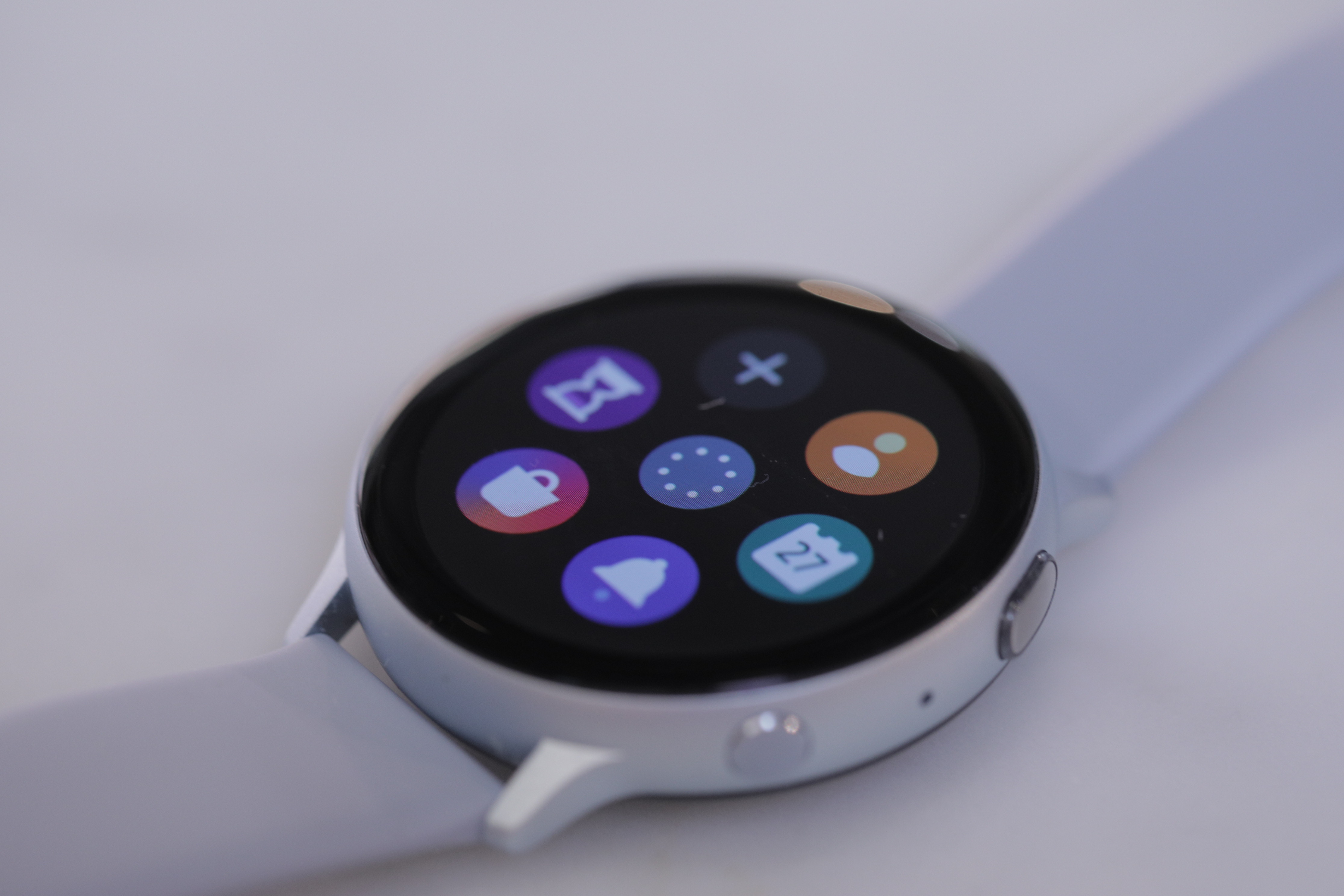
It’s hard to imagine the company catching up to an Apple on the third-party app side, but Samsung’s long had one key advantage over the Apple Watch: Android compatibility. And with Google’s Wear OS being fairly consistently underwhelming, Samsung’s got some real opportunity to capture even more marketshare.
It would be nice if the Active Watch 2 was a bit more aggressively priced. Apple’s decision to keep older units around means you can pick up, say the Series 3 for $200. There’s also the $200 Fitbit Versa 2. Some may find the $280 price point worth it for the (forthcoming) addition of things like ECG, but for most consumers, the $200 original Watch Active continues to be the better deal.
California’s Privacy Act: What you need to know now
This week California’s attorney general, Xavier Becerra, published draft guidance for enforcing the state’s landmark privacy legislation.
The draft text of the regulations under the California Consumer Privacy Act (CCPA) will undergo a public consultation period, including a number of public hearings, with submissions open until December 6 this year.
The CCPA itself will take effect in the state on January 1, with a further six months’ grace period before enforcement of the law begins.
“The proposed regulations are intended to operationalize the CCPA and provide practical guidance to consumers and businesses subject to the law,” writes the State of California’s Department of Justice in a press release announcing the draft text. “The regulations would address some of the open issues raised by the CCPA and would be subject to enforcement by the Department of Justice with remedies provided under the law.”
Translation: Here’s the extra detail we think is needed to make the law work.
The CCPA was signed into law in June 2018 — enshrining protections for a sub-set of US citizens against their data being collected and sold without their knowledge.
The law requires businesses over a certain user and/or revenue threshold to disclose what personal data they collect; the purposes they intend to use the data for; and any third parties it will be shared with; as well as requiring that they provide a discrimination-free opt-out to personal data being sold or shared.
Businesses must also comply with consumer requests for their data to be deleted.