Where are US fintech’s next billion-dollar startups?

As fintech investments soar to new heights, investors are looking at the bottom and top levels of the services stack to find the next billion-dollar startups.

That’s the word from seasoned investors like Andreessen Horowitz’s managing director, Angela Strange, who has invested in a number of successful financial services technology companies. For Strange and Chris Britt, co-founder and chief executive of financial services startup Chime Bank, the best opportunities are in customer-facing financial services and specific infrastructure opportunities that can support those  businesses.

For many large companies, financial services are already entering a twilight period. Markets like consumer and student lending, banking and financial management and business lending are becoming more crowded, and companies like Affirm, Betterment, Brex, Chime Bank, CommonBond, Kabbage, Robinhood, SoFi, Wealthfront and many others have raised hundreds of millions so they can take on established players in banking and finance.

Investments into financial technology companies in the U.S. exploded in 2019 with at least $12.7 billion flowing in the first half of the year alone. That figure — a 60% jump in dollars committed — came even as the number of deals remained relatively steady, according to data from Accenture.

Increasing capital commitments were even more pronounced in Europe and the United Kingdom, where a fintech boom has nearly doubled the amount of money committed to startups over the first half of 2019 from a year-ago period.

Alphabet’s Wing begins making first commercial drone deliveries in the US

Alphabet -owned drone delivery spin-out Wing is starting to service U.S. customers, after becoming the first drone delivery company to get the federal go-ahead to do so earlier this year. Wing is working with FedEx Express and Walgreens on this pilot, and their first customers are Michael and Kelly Collver, who will get a “cough and cold pack,” which includes Tylenol, cough drops, facial tissues, Emergen-C and bottled water (do people who have colds need bottled water?).

The Collvers are receiving their package in Christianburg, Va., which is where Wing and Walgreens will run this inaugural pilot of the drone delivery service. Walgreens gets a noteworthy credit in the bargain, becoming the first U.S. retailer to do a store-to-customer doorstep delivery via drone, while FedEx will be the first logistics provider to deliver an e-commerce drone delivery with a separate shipment.

Wing is also working with Virginia’s Sugar Magnolia, a retailer local to the state, and that part of the equation is focused on proving out how Wing and drone delivery can service last-mile e-commerce customers at their homes. Sugar Magnolia customers can get small items, including chocolates and paper goods, delivered directly to them via drone through the new pilot.

Wing drone delivery 3

Wing was able to do this with a new Air Carrier Certificate from the FAA that clears it for expanded service, specifically allowing Wing’s pilots to manage multiple aircraft flying without any human pilot on board at the same time, while providing service to the public.

It’s a big milestone when it comes to U.S.-based drone delivery, and another sign that people should get ready for these services to start to be a more regular fixture. Earlier this month, UPS also secured FAA approval to operate a commercial drone delivery service, so the trials will probably come fast and furious at this point — though widespread service is probably still quite a ways off as both regulators and operators look to learn from their first limited deployments.

Daily Crunch: Zuckerberg has thoughts on free speech

The Daily Crunch is TechCrunch’s roundup of our biggest and most important stories. If you’d like to get this delivered to your inbox every day at around 9am Pacific, you can subscribe here.

1. Zuckerberg on Chinese censorship: Is that the internet we want?

The Facebook CEO spoke yesterday at Georgetown University, sharing his thoughts on speech and “how we might address the challenges that more voice and the internet introduce, and the major threats to free expression around the world.”

Among his arguments: China is exporting its social values, political ads are an important part of free expression and the definition of dangerous speech must be kept in check.

2. Atlassian acquires Code Barrel, makers of Automation for Jira

Sydney-based Code Barrel was founded by two of the first engineers who built Jira at Atlassian, Nick Menere and Andreas Knecht. With this acquisition, they are returning to Atlassian after four years in startup land.

3. Swarm gets green light from FCC for its 150-satellite constellation

Swarm Technologies aims to connect smart devices around the world with a low-bandwidth but ever-present network provided by satellites — and it just got approval from the FCC to do so. Apparently the agency is no longer worried that Swarm’s sandwich-sized satellites are too small to be tracked.

4. Nintendo Switch hits another sales milestone

Nintendo’s North American Switch unit sales have already surpassed the lifetime worldwide unit sales of the Wii U. The company announced Thursday that they had sold 15 million units of the popular handheld console in North America.

5. HBO Max scores all 21 Studio Ghibli films

WarnerMedia has been on a shopping spree for its HBO Max service. It bought the rights to “Friends” and “The Big Bang Theory,” and now it’s using its outsized checkbook to bring beloved Japanese animation group Studio Ghibli’s films onto the web exclusively on its platform for U.S. subscribers.

6. Volvo creates a dedicated business for autonomous industrial and commercial transport

The vehicle-maker has already been active in putting autonomous technology to work in various industries, with self-driving projects at quarries and mines, and in the busy port located at Gothenburg, Sweden.

7. How Unity built the world’s most popular game engine

Unity’s growth is a case study of Clayton Christensen’s theory of disruptive innovation. While other game engines targeted the big AAA game makers at the top of the console and PC markets, Unity went after independent developers with a less robust product that was better suited to their needs and budget. (Extra Crunch membership required.)

Harley-Davidson has resumed production of the LiveWire

Harley-Davidson has resumed production and deliveries of its electric LiveWire motorcycle after determining an issue with charging was isolated to a single vehicle.

Harley-Davidson halted production and delivery of its first electric motorcycle earlier this week after discovering what it described at the time as a “non-standard condition.” Harley-Davidson didn’t recall any of the LiveWire motorcycles already on the road, but it did stop production and deliveries, and began additional testing and analysis.

At the time, Harley-Davidson didn’t explain what the non-standard issue was, but TechCrunch has since learned that it was a charging-related problem on one motorcycle.

“After completing rigorous analysis this week, we have resumed LiveWire production and deliveries,” Harley-Davidson said in a comment emailed to TechCrunch. “Customers may continue riding their LiveWire motorcycle and are able to charge the motorcycle through all methods. Temporarily stopping LiveWire production allowed us to confirm that the non-standard condition identified on one motorcycle was a singular occurrence.”

The company added that this incident shows that its quality assurance measures are working as designed.

The production stoppage put a damper on Harley-Davidson’s first foray into electrification just weeks after deliveries of LiveWire began to ramp up. The $29,799, 105 horsepower electric motorcycle was to be the first of a future line-up of EVs from Harley-Davidson spanning motorcycles, bicycles and scooters.

The LiveWire, which is meant to complement, not replace, Harley-Davidson’s premium internal-combustion cruiser motorcycles, went into production in 2019. Delivery to dealers began September 27.

Who will own the future of transportation?

Autonomous vehicles are often painted as a utopian-like technology that will transform parking lots into parks and eliminate traffic fatalities — a number that reached 1.35 million globally in 2018.

Even if, as many predict, autonomous vehicles are deployed en masse, the road to that future promises to be long, chaotic and complex. The emergence of ride-hailing, car-sharing and micromobility hints at some of the speed bumps between today’s modes of transportation and more futuristic means, like AVs and flying cars. Entire industries face disruption in this new mobility world, perhaps none so thoroughly as automotive.

Autonomous-vehicle ubiquity may be decades away, but automakers, startups and tech companies are already clambering to be king of the ‘future of transportation’ hill.

How does a company, city or country “own” this future of transportation? While there’s no clear winner today, companies as well as local and federal governments can take actions and make investments today to make sure they’re not left behind, according to Zoox CEO Aicha Evans and former Michigan Gov. Jennifer Granholm, who spoke about the future of cities on stage this month at Disrupt SF. 

Local = opportunity

Evolution in mobility is occurring at a global scale, but transportation is also very local, Evans said. Because every local transit system is tailored to the geography and the needs of its residents, these unique requirements create opportunities at a local level and encourages partnerships between different companies.

This is no longer just a Silicon Valley versus Detroit story; Europe, China, Singapore have all piled in as well. Instead of one mobility company that will rule them all, Evans and Granholm predict more partnerships between companies, governments and even economic and tech strongholds like Silicon Valley.

We’re already seeing examples of this in the world of autonomous vehicles. For instance, Ford invested $1 billion into AV startup Argo AI in 2017. Two years later, VW Group announced a partnership with Ford that covers a number of areas, including autonomy (via a new investment by VW in Argo AI) and collaboration on development of electric vehicles.

BMW and Daimler, which agreed in 2018 to merge their urban mobility services into a single holding company, announced in February plans to unify these services and sink $1.1 billion into the effort. The two companies are also part of a consortium that includes Audi, Intel, Continental and Bosch, that owns mapping and location data service company HERE.

There are numerous other examples of companies collaborating after concluding that going it alone wasn’t as feasible as they once thought.

$35B face data lawsuit against Facebook will proceed

Facebook just lost a battle in its war to stop a $35 billion class action lawsuit regarding alleged misuse of facial recognition data in Illinois. Today it was denied its request for an en banc hearing before the full slate of ninth circuit judges that could have halted the case. Now the case will go to trial unless the Supreme Court intercedes.

The suit alleges that Illinois citizens didn’t consent to having their uploaded photos scanned with facial recognition and weren’t informed of how long the data would be saved when the mapping started in 2011. Facebook could face $1,000 to $5,000 in penalties per user for 7 million people, which could sum to a maximum of $35 billion.

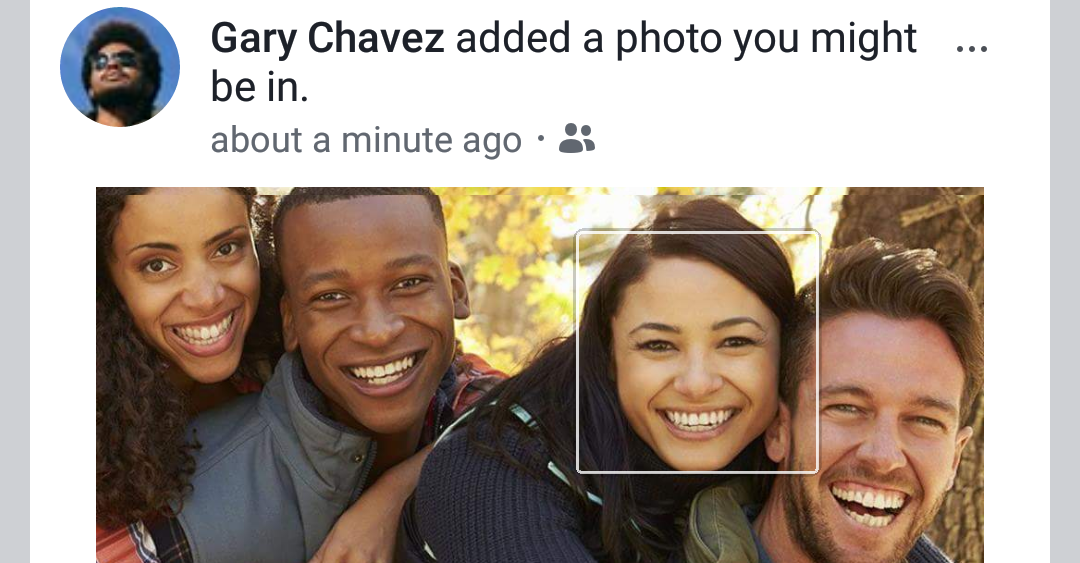
facebook facial recognition photo review

A three-judge panel of ninth circuit judges rejected Facebook’s motion to dismiss the case and its appeal of the class certification of the plaintiffs back in August. One of those judges said that it “seems likely” that the Facebook facial recognition data could be used to identify them in surveillance footage or even unlock a biometrically secured cell phone. Facebook had originally built the feature to power photo-tag suggestions, asking users if it’s them or a particular friend in an untagged photo.

Nicholas Iovino spotted the announcement today that we’ve obtained and embedded below. When asked for comment, a Facebook spokesperson responded, “Facebook has always told people about its use of face recognition technology and given them control over whether it’s used for them. We are reviewing our options and will continue to defend ourselves vigorously.”

Filed in 2015, Facebook has done everything to try to block the class action case, from objecting to definitions of tons of words in the suit to lobbying against the underlying Biometric Information Privacy Act.

The class action poses an even greater penalty than the record-breaking $5 billion settlement Facebook agreed to over violations of its FTC consent decree. Though that payment amounts to a fraction of the $55 billion in revenue Facebook earned last year, it’s also been saddled with tons of new data privacy and transparency requirements. The $35 billion threat coming into focus contributed to a 2.25% share price drop for Facebook today.

[Image Credit: Mike MacKenzie]

Additional reporting by Zack Whittaker

Bloomberg Beta, now six years old, closes its third $75 million fund

Bloomberg Beta, a San Francisco-based outfit that uses Bloomberg LP’s money to make bets on startups, has closed its third fund with $75 million, according to Roy Bahat, who’d previously run the online media company IGN and who operates the fund as an equal partnership with Karin Klein and James Chan. (Klein formerly ran Bloomberg’s new initiatives; Chan was formerly a principal with Trinity Ventures.)

We talked with Bahat briefly last night about the new vehicle to ask how its capital will be deployed. Bahat stressed that the idea is to continue on the firm’s current path, which is to write checks of between $500,000 to $1 million initially; to loosely target ownership of around 10% in the startups it backs; and to fund companies that are focused on the future of work, which has long been an area of interest for Bahat and his colleagues.

That can mean an instant messaging platform like Slack, in which Bloomberg Beta had and continues to have a small stake, following its direct offering. It also can mean backing a company like Flexport, a San Francisco-based freight forwarding and customs brokerage company that appears to be among Bloomberg Beta’s biggest bets. (According to Crunchbase, the outfit has backed Flexport — valued most recently at $3.2 billion — at its seed, Series A and Series B rounds.)

Others of Bloomberg Beta’s portfolio companies include the augmented writing platform Textio; the insurance broker Newfront Insurance; the continuous delivery platform LaunchDarkly; and Netlify, a cloud computing company that sells hosting and serverless backend services for static websites.

What it won’t back: financial tech startups. Given where its money comes from, it’s “too close to home,” says Bahat.

In late August, California Governor Gavin Newsom announced that Bahat would be part of his Future of Work Commission, which will be “tasked with making recommendations to help California leaders think through how to create inclusive, long-term economic growth and ensure workers and their families share in that success.”

As part of his role on that commission, and as an investor in some companies that cater to independent contractors, we asked Bahat what he makes of AB 5, the new California law for contract workers that aims to address inequality in the workplace but has been met with resistance from numerous industries and players. Uber, Lyft and DoorDash are even preparing to file a ballot initiative to exempt themselves from the law.

Bahat suggested he’s not sure what to think quite yet, either. “How workers get classified is one of the issues” the commission will be studying, he said.

“We haven’t figured out how to make it all work; this story is still unfolding.”

YellowHeart allows musicians and concert organizers to take more control of resold tickets

YellowHeart is trying to solve a problem that should be familiar to anyone who’s ever tried to buy a ticket for a popular concert: Those tickets will often get snatched up by scalpers, who then resell them at a much higher price.

In fact, the startup’s CEO, Josh Katz, said he founded the company because he’s a music “megafan” himself, and he was “just tired of getting ripped off by scalpers.” At the same time, he said this isn’t just a problem for concertgoers. Instead, he painted it as a “lose-lose for the fan and the artist,” because the musicians aren’t sharing in the profits from the marked-up tickets, either.

So YellowHeart can allow a musician, concert venue or other “event initiator” to set up rules for how their tickets are resold. Katz said he’s hoping that some brave artists will simply say their tickets can’t be sold at a marked-up price, but he predicted that many more will set price ceilings and dictate that any resale profits are then split between the seller, the artist and/or a charity of the artist’s choosing.

“No matter where the tickets are sold, they have to abide by those rules,” Katz added. That’s because the ticket sales run on a public blockchain, and “all transactions go through YellowHeart, all the revenue flows through YellowHeart.”

The plan is to launch the ticketing platform in the second quarter of next year. Katz said users should be able to sell their tickets on any marketplace that works with YellowHeart’s smart contracts — but he acknowledged that it will take some time to bring partners on-board and for those integrations to go live.

Katz argued that the blockchain approach has other benefits, like the fact that each ticket will have “a unique key that is tied to a user’s identity and sits in their virtual wallet,” which should eliminate forgery. (The ticketing process, by the way, will be “fully digital end-to-end,” except that venues will have the option to print tickets at the box office.)

Katz has a background in the music industry, having previously founded El Media Group, which creates custom playlists for hotels, restaurants and other clients. He founded YellowHeart with The Chainsmokers, along with their manager Adam Alpert, who’s also CEO of Disruptor Records.

“With The Chainsmokers, we’ve been outspoken about the issue of scalpers for years, and are excited to partner with YellowHeart to provide a smart and effective solution that gives control back to artists and fans,” Alpert said in a statement.

And Katz suggested that YellowHeart’s platform could eventually be used in any other kind of event ticketing.

“I am anticipating this being a great platform for sports and theater as well,” he said. “Myself and Adam and Drew [Taggart] and Alex [Pall of The Chainsmokers] come out of music, so that’s where we’re starting.”

Exclusive: 2019 HAX report reveals hardware startup trends

Hardware startups are expanding from the world of consumer tech; global hardware accelerator HAX knows this better than most and details the latest trends in its yearly report. One of the most active early-stage hardware investors, the group today released exclusively to TechCrunch its yearly report with insights on hardware startups.

The report highlighted several vital insights: hardware companies are increasingly entering the public market, and more privately-held hardware startups are exceeding a valuation of $1 billion. Of those unicorns, more than 50% are Chinese hardware companies.

Former Oracle co-CEO Mark Hurd has passed away

Mark Hurd, who until last month was one of two CEOs leading the database software giant Oracle, has passed away at age 62, one month after telling employees in a letter that he was taking a leave of absence owing to health reasons.

Staffers, who were notified that Hurd died earlier this morning, have been offering their condolences on Twitter.

Hurd joined Oracle nine years ago, after spending five years with Hewlett-Packard, where he was CEO, president and, ultimately, board chairman, all roles from which he was pressured to resign in 2010 after submitting inaccurate expense reports that concealed his personal relationship with an outside consultant to the company.

At the time, Allen Lind, a professor of leadership at Duke’s Fuqua School of Business, told Time magazine: “People don’t like their leaders to have frailties. That’s just the way it works.”

The very next month, Larry Ellison, a friend of Hurd, named him the co-president of Oracle, the company Ellison had himself founded in the summer of 1977. Said then-CEO Ellison in a statement relating to the move, “Mark did a brilliant job at H-P, and I expect he’ll do even better at Oracle. There is no executive in the I.T. world with more relevant experience than Mark.”

Indeed, when Ellison stepped down as the CEO of Oracle in 2014 to become the company’s chief technology officer instead, he promoted Hurd to the role of CEO, a role he had since shared with Oracle’s former CFO, Safra Catz.

When Hurd left last month, Catz, who has been an executive with Oracle since 1999, became the sole CEO of Oracle, though Ellison has indicated that she won’t be operating the company single-handedly for long. Instead, he told analysts last month that though some people find it “weird,” Oracle plans to keep its dual-CEO structure, in part owing to situations as with Hurd where life throws an executive team a curveball.

According to Business Insider, Ellison has already promised the board of directors the names of numerous internal candidates, including Don Johnson, the executive vice president of Oracle Cloud Infrastructure.

Said Ellison at Oracle’s OpenWorld event in San Francisco last month: “I believe in a dual-CEO structure. The normal case would be dual CEO here for obvious reasons. That it’s good to have capacity and good to have specialization. And then, God forbid, if something untoward should happen, you have capacity; you are not incapacitated.”

Hurd attended Baylor University in Waco, Texas on a tennis scholarship and reportedly dabbled on the professional tennis circuit immediately after graduating. He began his career at NCR Corp., where he was promoted to chief operating officer 22 years into his tenure with the company, and to the role of CEO the following year, in 2003.

Two years later, H-P brought him aboard.

Hurd is survived by his wife, Paula, and daughters Kathryn and Kelly.

Ellison released a statement just now about the development. It reads:

It is with a profound sense of sadness and loss that I tell everyone here at Oracle that Mark Hurd passed away early this morning. Mark was my close and irreplaceable friend, and trusted colleague. Oracle has lost a brilliant and beloved leader who personally touched the lives of so many of us during his decade at Oracle. All of us will miss Mark’s keen mind and rare ability to analyze, simplify and solve problems quickly. Some of us will miss his friendship and mentorship. I will miss his kindness and sense of humor. Mark leaves his beloved wife Paula, two wonderful daughters who were the joy of his life, and his much larger extended family here at Oracle who came to love him. I know that many of us are inconsolable right now, but we are left with memories and a sense of gratitude…that we had the opportunity to get know Mark, the opportunity to work with him…and become his friend.

A set of new tools can decrypt files locked by Stop, a highly active ransomware

Thousands of ransomware victims may finally get some long-awaited relief.

New Zealand-based security company Emsisoft has built a set of decryption tools for Stop, a family of ransomware that includes Djvu and Puma, which they say could help victims recover some of their files.

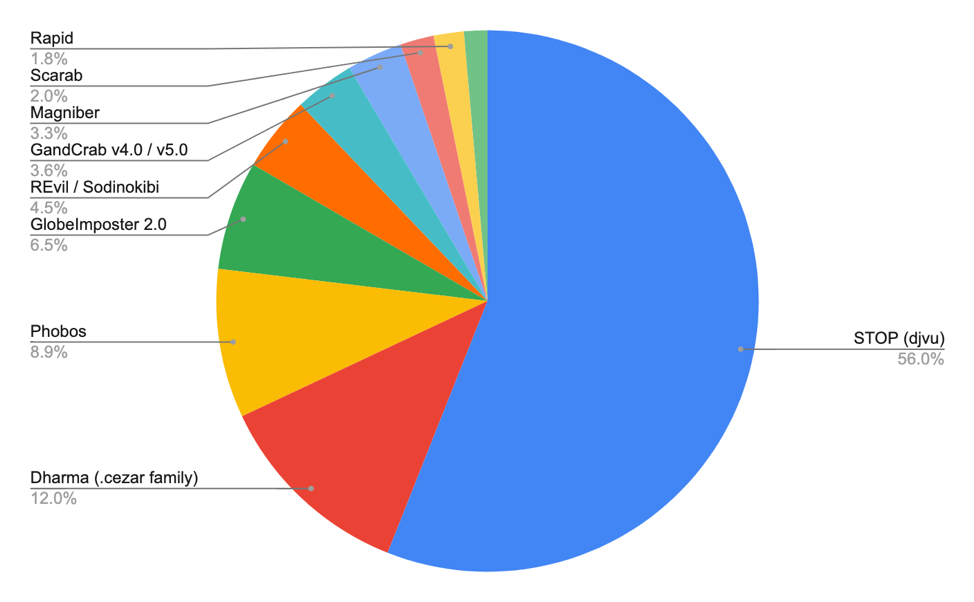
Stop is believed to be the most active ransomware in the world, accounting for more than half of all ransomware infections, according to figures from ID-Ransomware, a free site that helps identify infections. But Emsisoft said that figure is likely to be far higher.

If you’ve never had ransomware, you’re one of the lucky ones. Ransomware is one of the more common ways nowadays for some criminals to make money by infecting computers with malware that locks files using encryption. Once the Stop ransomware infects, it renames a user’s files with one of any number of extensions, replacing .jpg and .png files with .radman, .djvu and .puma, for example. Victims can unlock their files in exchange for a ransom demand — usually a few hundred dollars in cryptocurrency.

Not all ransomware is created equally. Some security experts have been able to unlock some victims’ files without paying up by finding vulnerabilities in the code that powers the ransomware, allowing them in some cases to reverse the encryption and return a victim’s files back to normal.

Stop is the latest ransomware that researchers at Emsisoft have been able to crack.

“The latest known victim count is about 116,000. It’s estimated that’s about one-quarter of the total number of victims.”
Emsisoft

“It’s more of a complicated decryption tool than you would normally get,” said Michael Gillespie, the tools’ developer and a researcher at Emsisoft. “It is a very complicated ransomware,” he said.

In Stop’s case, it encrypts user files with either an online key that’s pulled from the attacker’s server, or an offline key, which encrypts users’ files when it can’t communicate with the server. Gillespie said many victims have been infected with offline keys because the attackers’ web infrastructure was often down or inaccessible to the infected computer.

Here are how the tools work.

The ransomware attackers give each victim a “master key,” said Gillespie. That master key is combined with the first five bytes of each file that the ransomware encrypts. Some filetypes, like .png image files, share the same five bytes in every .png file. By comparing an original file with an encrypted file and applying some mathematical computations, he can decrypt not only that .png file but other .png of the same filetype.

Some filetypes share the same initial five bytes. Most modern Microsoft Office documents, like .docx and .pptx, share the same five bytes as .zip files. With any before and after file, any one of these filetypes can decrypt the others.

There’s a catch. The decryption tool is “not a cure-all” for your infected computer, said Gillespie.

“The victim has to find a good before and after of basically every format that they want to recover,” he said.

Once the system is clean of the ransomware, he said victims should try to look for any files that were backed up. That could be default Windows wallpapers, or it can mean going through your email and finding an original file that you sent and matching it with the now-encrypted file.

When the user uploads a “before and after” pair of files to the submission portal, the server will do the math and figure out if the pair of files are compatible and will spit back which extensions can be decrypted.

But there are pitfalls, said Gillespie.

“Any infections after the end of August 2019, unfortunately there’s not much we can do unless it was encrypted with the offline key,” he said. If an online key was pulled from the attacker’s server, victims are out of luck. He added that files submitted to the portal have to be above 150 kilobytes in size or the decryption tools won’t work, because that’s how much of the file the ransomware encrypts. And some file extensions will be difficult if not impossible to recover because each file extension handles the first five bytes of the file differently.

“The victim really needs to put in some effort,” he said.
top 10 commentary

The current share of worldwide ransomware infections (Image: Emsisoft)

This isn’t Gillespie’s first rodeo. For a time, he was manually processing decryption keys for victims whose files had been encrypted with an offline key. He built a rudimentary decryption tool, the aptly named STOPDecrypter, which decrypted some victims’ files. But keeping the tool up to date was a cat and mouse game he was playing with the ransomware attackers. Every time he found a workaround, the attackers would push out new encrypted file extensions in an effort to outwit him.

“They were keeping me on my toes constantly,” he said.

Since the launch of STOPDecrypter, Gillespie has received thousands of messages from people whose systems have been encrypted by the Stop ransomware. By posting on the Bleeping Computer forums, he has been able to keep victims up to date with his findings and updates to his decryption tool.

But as some victims became more desperate to get their files back, Gillespie has faced the brunt of their frustrations.

“The site’s moderators were patiently responding. They’ve kept the peace,” he said. “A couple of other volunteers on the forums have also been helping explain things to victims.”

“There’s been a lot of community support trying to help in every little small bit,” he said.

Gillespie said the tool will also be fed into Europol’s No More Ransom Project so that future victims will be notified that a decryption tool is available.


Three of the best tackle the thorny issue of Brexit for startups at Disrupt Berlin

The turbulence of Brexit has left both U.K. and European startups alike wondering about the best path forward. From recruiting to acquiring investment to scaling into other parts of Europe, the challenges seem to be mounting. By December, who knows what will have happened on the Brexit landscape, such is the chaos.

At Disrupt Berlin in December, we’ll hear from investor Bindi Karia, who has deep European ties; founder Glenn Shoosmith, who’s expanding his startup internationally; and German-born but U.K.-domiciled VC Volker Hirsch on how to make the right decisions in the face of these obstacles.

Bindi Karia works as a venture partner at large London-based VC Draper Esprit, and has held positions in and around the tech industry for as long as she’s been working. She’s been a consultant at PwC Consulting, worked in corporate environments like Microsoft Ventures, served within a startup at Trayport and was an advisor across a number of organizations (Startup Europe, Techstars Startup Weekend, Tech London Advocates, European Innovation Council, WEF). She’s been a banker with Silicon Valley Bank and currently invests as a partner at a large London-based VC firm, as well as serving on the advisory board for seven different startups. She brings a wealth of knowledge to the conversation and understands the differing perspectives involved in each startup’s journey to success.

Volker Hirsch will bring us not only his perspective as a former entrepreneur-turned-VC but also as a German-born citizen living in the U.K. and dealing with Brexit. He is a partner at Amadeus, working on its early-stage funds, whose investment focus is on artificial intelligence and machine learning, autonomous systems, human-machine interfaces, cybersecurity, enterprise SaaS, digital health and medical technologies.

Volker has founded or co-founded a total of six companies to date. He is currently co-founder of Blue Beck, a 40-strong mobile development house, and a venture partner at Emerge Education, Europe’s leading early-stage edtech investor.

Prior to joining Amadeus Capital, Volker was amongst the first angel investors in companies like Pi-Top, Bibblio (where he is also chairman), Aula Education and Wonde. His personal investment portfolio comprises about a dozen investments with companies based across Europe and the U.S.

Previously, Volker was the chief strategy officer at Scoreloop, a mobile social gaming platform, which he helped grow from (almost) inception to 450 million users at its peak. When the company was acquired by BlackBerry in 2011, he served as BlackBerry’s global head of Business Development – Games.

Lastly, Glenn Shoosmith will bring his perspective as a founder with a substantial operation in the U.K. but who recently expanded into the U.S. Originally founded as BookingBug in 2008, the renamed JRNI (pronounced “journey”) has become one of the market-leading multichannel appointment scheduling and customer journey platforms, helping leading global retailers, banks, central and local governments enhance their customer experience and save costs. JRNI has a team of more than 100 based in London, Boston and Sydney.

Glenn has been a passionate advocate for London and the U.K. as a technology hub within Europe, and in the past has helped shape government policy toward innovation and technology, both as an early advocate for Tech City, and as an advisor and representative of the government nationally and internationally.

Buy your ticket to Disrupt Berlin to listen to this discussion — and many others. The conference will take place December 11-12.

T-Mobile partners with Jeffrey Katzenberg’s mobile streaming service Quibi

On the heels of getting the FCC’s proposal to merge with Sprint, T-Mobile announced a plan to partner with Jeffrey Katzenberg’s mobile streaming service, Quibi. According to statements provided to the LA Times, and confirmed by Variety, Quibi CEO Meg Whitman specifically called out T-Mobile’s “impressive 5G road map” as a good fit for the soon-to-launch streaming service.

The partnership will give T-Mobile’s 83.1 million customers access to Quibi’s premium content, but no details as to how it would be bundled into the carrier’s plans are currently available. It’s possible that Quibi will either be offered at a discount for T-Mobile users, or it could be available as an add-on or available with a special bundle deal.

The deal will present a new competitor to AT&T’s streaming services, AT&T TV Now (previously DirecTV Now) and low-cost WatchTV, as well as its upcoming premium service, HBO Max. Verizon (TechCrunch’s parent company) also dabbled with mobile streaming with go90, but that service was shut down last year after failing to gain adoption.

The news of the T-Mobile deal comes on the heels of a series of rapid-fire announcements about the shows and celebs who will be contributing to Quibi, which will provide a range of programming, including news, lifestyle, comedy, drama, horror, reality, action and more. And all is broken up into shorter-form bits — or “quick bites,” hence the service’s name.

As for the programming, Quibi has brought in big names like Sam Raimi, Guillermo del Toro, Antoine Fuqua and producer Jason Blum, Liam Hemsworth, Lorne Michaels, Steven Speilberg, Tyra Banks, Idris Elba, Trevor Noah, Queen Latifah, Sophie Turner and others.

“Quibi will deliver premium video content for millennials on a technology platform that is built exclusively for mobile, so a telecommunications partner like T-Mobile, with their broad coverage today and impressive 5G road map, is the perfect fit,” Quibi chief executive Meg Whitman said in a statement run by the LA Times.

“Quibi is leading the way on how video content is made and experienced in a mobile-first world,” said Mike Sievert, president and chief operating officer of T-Mobile. “That’s why our partnership makes perfect sense — two mobile-centric disrupters coming together to give customers something new and remarkable.”

Terms of the deal were not disclosed.

The companies confirmed the news to TechCrunch, following the L.A. Times report.

Greylock GP Sarah Guo is as bullish on SaaS as ever

Hello and welcome back to Equity, TechCrunch’s venture capital-focused podcast, where each week we discuss other people’s money and what sense their investment choices make (or don’t).

This week was honestly a treat. We had Kate Clark in the studio along with Alex Wilhelm and a special guest, Sarah Guo from Greylock Partners, a venture firm (obviously). Guo has the distinction of having the best-ever fun fact on the show.

We kicked off with Grammarly, a company that recently put $90 million into its accounts. We chatted about for whom it was built, and if we use it today. One thing that felt clear was that consumers are more willing than before to pay for their tooling. And that means that companies like Grammarly may prove strong investment candidates.

Next, we hit on two more rounds, namely Tiger Global’s investment into Lattice and Clari’s $60 million Series D. Starting with Lattice, a performance management company founded by none other than Sam Altman’s brother, Jack. The startup raised $25 million from Tiger Global; read more about that here.

Clari led us to a discussion of vertical SaaS, and Guo’s views on the future of SaaS products (she’s bullish). Alex and Guo had a lot to say on this subject.

After talking over a few rounds, the discussion turned to the Q3 venture market. A few things stood out from the data and projections. First, that early-stage fundraising was a little light in the quarter. It could be a single-quarter wobble, but the data was worth chewing on all the same. And, second, that seed deal and dollar volume were hot once again.

And we wrapped with a discussion of Tempest, a new sobriety-focused startup that raised a $10 million round. Honestly, we aren’t sure how we feel about the business model. Please let us know if you have thoughts.

It was a good time. A big thanks to Guo for coming on the show, and a shout-out to the team that makes Equity happen: Chris Gates and Henry Pickavet.

Equity drops every Friday at 6:00 am PT, so subscribe to us on iTunesOvercast, Pocketcast, Downcast and all the casts.

Volvo creates a dedicated business for autonomous industrial and commercial transport

Volvo Group has established a new dedicated business group focused on autonomous transportation, with a mandate that covers industry segments like mining, ports and moving goods between logistics hubs of all kinds. The vehicle maker has already been active in putting autonomous technology to work in these industries, with self-driving projects — including at a few quarries and mines, and in the busy port located at Gothenburg, Sweden.

The company sees demand for this kind of autonomous technology use growing, and decided to establish an entire business unit to address it. The newly formed group will be called Volvo Autonomous Solutions, and its official mission is to “accelerate the development, commercialization and sales of autonomous transport solutions,” focused on the kind of transportation “where there is a need to move large volumes of goods and material on pre-defined routes, in receptive flows.”

Their anticipation of the growth of this sector comes in part from direct customer feedback, the automaker notes. It’s seen “significant increase in inquires from customers,” according to a statement from Martin Lundstedt, Volvo Group’s president and CEO.

Officially, Volvo Autonomous Solutions won’t be a formal new business area under its parent company until January 2020, but the company is looking for a new head of the unit already, and it’s clear they see a lot of potential in this burgeoning market.

Unlike autonomous driving for consumer automobiles, this kind of self-driving for fixed-route goods transportation is a nice match to the capabilities of technology as they exist today. These industrial applications eliminate a lot of the chaos and complexity of driving in, say, urban environments and with a lot of other human-driven vehicles on the road, and their routes are predictable and repeatable.