Lotame unveils Cartographer, its new approach to tracking user identity

Lotame, a company offering data management tools for publishers and marketers, today unveiled a new product called Cartographer — described by CMO Adam Solomon as “our new people-based ID solution.”

In other words, it’s Lotame’s offering to help businesses connect their visitor and customer data across platforms and devices.

We’ve written about plenty of other cross-device targeting technologies — and in fact, Lotame acquired one of them, AdMobius, in 2014. But Solomon said the landscape has become more challenging given privacy regulations and especially updated browsers that place new limits on the types of cookies that can be used to track users.

“There’s been an explosion of first-party cookies,” Solomon said, referring to cookies that are stored on the domain you’re actually visiting (as opposed to third-party cookies, which are increasingly blocked).

He argued that these “short-lived” cookies then create problems for publishers: “If you’re in Safari visiting the same site every day, a new ID could be generated” each day. So Cartographer deals with this by using data science and machine learning to attempt to “cluster” different IDs together that likely belong to the same user.

“Every day when we see an ID, we’ll capture it,” Solomon said. “We’re graphing those cookies together, these dozens or hundreds of cookies that we believe, based on our technology, that these cookies belong to the same individual.”

He also said that connecting IDs in this way is crucial to the whole “Russian nesting doll” of how a publisher or advertiser understands identity on the internet: “Cookies ladder up to devices, devices ladder up to people, people ladder up to households.” So by connecting cookies to people, Lotame can also offer better household-level data.

And far from being an attempt to circumvent privacy restrictions, Solomon argued that Cartographer actually makes it easier for publishers to stay compliant with Europe’s GDPR and California’s CCPA rules, because they can do a better job of storing a customer’s privacy preferences.

Grant Whitmore, chief digital officer at Lotame customer Tribune Publications, made a similar point: “One of the things that I think all publishers are wrestling with right now is really the disconnect that is occurring in the adtech landscape and the legislative landscape and really managing the persistence of that consent.”

Whitmore continued, “One of the unintended consequences of that legislation and some of what is happening in the browser space is that we could be forced into a position where we are having to ask you every single time you visit a site whether it’s okay to sell your data, whether it’s okay to track.”

And he said that’s one of the big reasons Tribune is deploying Cartographer across all its properties, including its nine core newspaper sites. Though he acknowledged that it’s more broadly useful too.

“From the standpoint of our core business, getting a more complete picture of who a user is across these device types … That is of ongoing importance to us,” Whitmore said. “As we fight in this very competitive landscape, our ability to bring our understanding of who a user is, what their interests are … and providing good solutions — whether on the advertising front or whether that’s handling digital subscription offers — is just table stakes at this point.”

Solomon, meanwhile, said that Cartographer’s benefits go beyond “just figuring which IDs cluster together to represent an individual,” because it’s also ensuring that there’s proper ID synchronization with other data and ad-buying platforms.

“We make sure there’s maximum connectivity, maximum dial tone, with all the ecosystem participants,” he said.

GameClub offers mobile gaming’s greatest hits for $5 per month

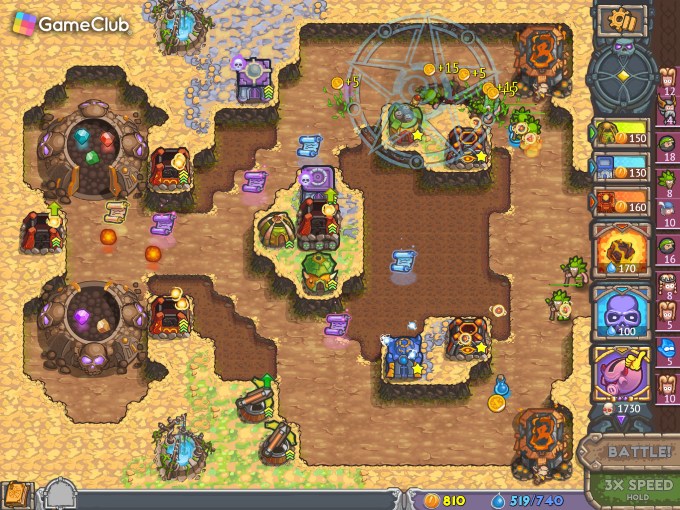
Apple Arcade introduced the idea of all-you-can-eat subscription-based mobile gaming to the mainstream. Google Play Pass soon followed as a way to subscribe to a sizable collection of both apps and games on Android devices. Today, a startup called GameClub is launching in the U.S. to offer an alternative. For $4.99 per month, mobile consumers will be able to access a library that includes some of the best games to have ever hit the App Store.

To be clear, GameClub is not a cloud gaming platform, like Google Stadia. It’s a way to subscribe to actual App Store games, similar to Arcade. In GameClub’s case, however, the focus is not on new releases but on quality games that already have proven track records and high ratings.

In fact, many GameClub games have made Apple’s own editorially selected “Game of the Year” lists in years past. And like the games offered on Apple Arcade, they don’t have ads or any in-app purchases.
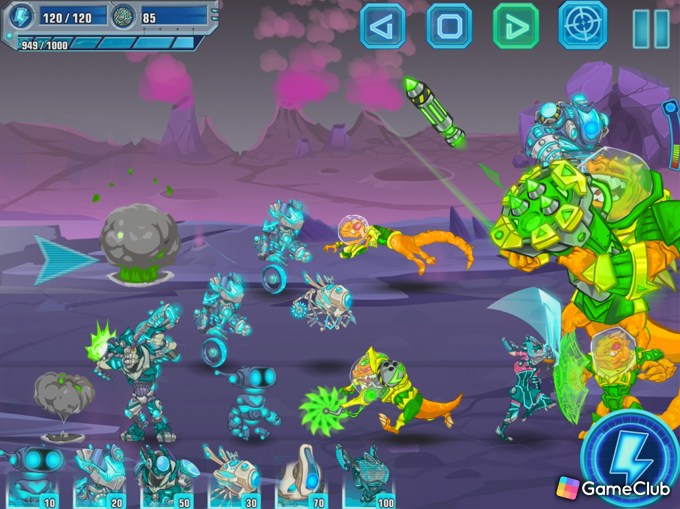
LegendaryWars2

At launch, GameClub’s library includes more than 100 titles, with around half that available for play today. More titles will roll out on a weekly basis in the months ahead. Combined, the games have over 100 million collective downloads, the company says.

On GameClub, you’ll find games like: Super Crate Box, Hook Champ, Mage Gauntlet, Space Miner, Forget-Me-Not, MiniSquadron, Plunderland, Pocket RPG, Sword of Fargoal, Incoboto, Tales of the Adventure Company, Hook Worlds, Orc: Vengeance, Mr. Particle-Man, Legendary Wars, Deathbat, The Path to Luma, Grimm, Zombie Match, Faif, iBlast Moki 2, Kano, Baby Lava Bounce, Run Roo Run, Gears and many others.

It’s a selection that extends across gaming categories, like Action, Arcade, Puzzle, Adventure, Platformer, Retro, Role Playing, Simulation, Strategy and more.

To use the service, you first download the main GameClub app, which becomes the hub for your GameClub activities. You then sign up for the $4.99 per month subscription, which includes a 30-day free trial. Within the main app, you can browse the available titles as well as read editorial content like in-depth overviews and histories, get tips and learn about gaming strategies.

MiniSquadron2

The startup was founded last year by game industry vets Dan Sherman and Oliver Pedersen.

Sherman, GameClub CEO, has worked in the gaming industry for around 17 years, including time spent at EA and his own startup, Tilting Point. His experience has involved, predominantly, signing content partnerships with game creators. Pedersen, meanwhile, built backend systems and platforms for games, including at Yahoo Games.

Though GameClub is seemingly arriving after Apple Arcade’s debut, it actually began before that. The startup was founded in 2018, ahead of any Apple Arcade rumors. It went live on iOS outside the U.S. before Arcade launched.

HookWorlds2W

The founders say they were inspired to address the issues caused by the free-to-play model that has infiltrated the gaming industry. In addition, they had witnessed a decline in consumers’ willingness to purchase content upfront, which was impacting the industry.

“I was seeing all these amazing game developers leave mobile because the types of games they make are not the types of games that monetize through in-app purchases and ads,” Sherman tells TechCrunch. “The free-to-play model actually only works for a handful of genres,” he explains. “A lot of companies make a lot of money through a very small number of genres and game experiences — to the exclusion of a lot of other types of genres that GameClub is bringing back — action, adventures, arcade, tower defense — anything that can be completed.”

With free-to-play, games are built around perpetual retention loops. “And the freemium model comes out of the casino industry, not the premium game industry,” Sherman points out.

But because this is how games could make money, it led to homogeneity in the marketplace, he says.

SuperQuickHook1

GameClub aims to offer a subscription to the premium games that got left behind.

They are meant to be wholesome and fun, not overly addictive. They’re not designed to manipulate you into spending money. You simply pay your subscription fee every month to access the catalog, then play unencumbered.

Thanks to Apple Arcade and Google Play Pass, consumers are now comfortable with the idea of the subscription model for mobile games. And other services — like Spotify Netflix, and Xbox Game Pass, for example — have pushed the idea of subscription access to content across platforms and genres.

SleepingPrince1W

GameClub is different from Arcade, however, because it’s not funding the development of content upfront — at least, not yet. Instead, it’s forging agreements with largely indie developers to release their existing IP as a GameClub exclusive.

This may include bringing an older game into the 64-bit era — something GameClub handles on their behalf.

“Many of [the GameClub titles] have been gone for many years,” says Sherman. “It’s with our team, our technology and our developers that they’ve been brought back. And they’ve been brought back in a way that is 100% using the original code and the exact same design…but making them look and feel new, with higher resolution, Retina Display assets and by optimizing for the latest screen sizes and configurations,” he adds.

The company doesn’t discuss the business model for GameClub, but it’s not the same as Apple Arcade’s pay-upfront model.
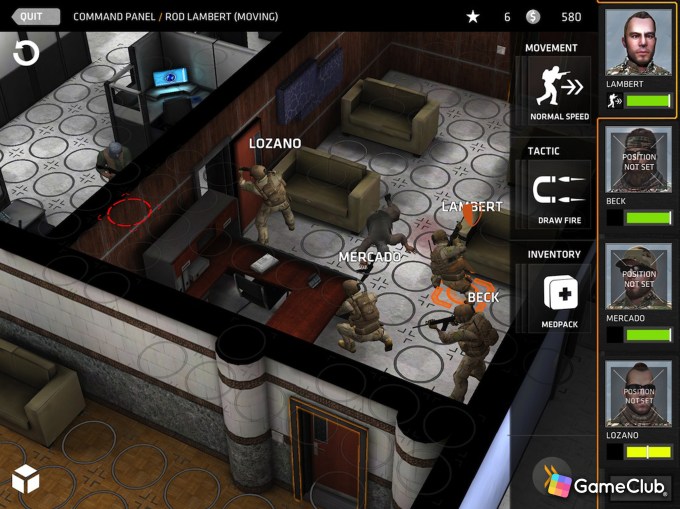
BreachAndClear2W

What Sherman could say is that the more important the game is to the GameClub service, the more money the creator makes. Additionally, GameClub says it’s transparent with developers about its subscription revenue, so there’s no question about which games are earning or why.

The same can’t be said for Apple Arcade, which is a total black box to the point that consumers don’t know which Arcade games are most popular, developers can’t see how they’re doing compared with others and third-party measurement firms have no data.

Of course, there could be concerns that GameClub exists in a gray area, with regard to App Store policy. Those with longer memories may recall that Apple banned app-stores-within-a-store starting back in 2012. The company had kicked out apps that recommended other apps like AppHero, FreeAppADay, Daily App Dream, AppShopper and more. It also banned the more popular app recommendation service AppGratis the following year.

But Apple’s concern was that these apps were leveraging their power to manipulate App Store charts and rankings, often charging for that service. GameClub, on the other hand, plays fairly. Its service also benefits Apple, by offering subscription access to quality games that couldn’t thrive as free-to-play titles.
CursedTreasure2W

Longer-term, GameClub wants to produce its own original content and offer its service across platforms, starting with Google Play, but eventually tackling PC and console gaming.

The startup is headquartered in New York City, with offices in Copenhagen. In addition to the founders, it includes Eli Hodapp, the former editor-in-chief of the popular game news and review site TouchArcade, and COO Britt Myers, the former chief product officer of subscription-based edtech apps platform Homer.

With the close of a seed round last week, GameClub is backed by $4.6 million in funding.

Investors from a round that closed last year include GC VR Gaming Tracker Fund, CRCM Ventures, Watertower Ventures, Ride Ventures, BreakawayGrowth Fund and others. New investors include GFR Fund, Gramercy Fund, CentreGold Capital, and AET Fund.

GameClub is available on the App Store.

YC grad Taskade raises $5M to take on Notion with a more collaborative productivity platform

Enterprise software tool startups are so often birthed to either un-bundle or re-bundle what came before them. In an age where “consumerization of the enterprise” is a trendy phrase for investors, it was natural a startup would come along to bundle its take on some of the trendiest startup tools.

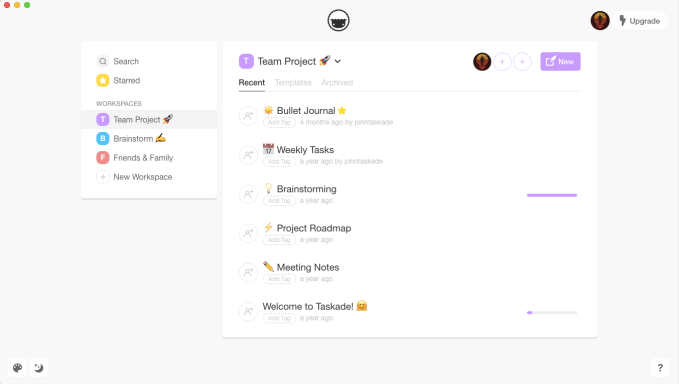
Taskade appears to be the love child of Notion, Slack and Asana. It’s a tool for startup teams to collaborate around projects that can be re-organized based on how the individual user best works through tasks. The startup graduated from YC in the most recent batch and has now locked down $5 million in seed funding from Grishin Robotics and Y Combinator, Taskade CEO John Xie tells TechCrunch.

It’s a platform that tries to meet an awful lot of needs at once. You can take notes, designate tasks, chat with co-workers, set goals and visualize everything you’ve already completed.

The startup certainly seems to take a page or two from Notion, where you can re-visualize databases in tables or Kanban boards with ease. Taskade has built this framework into a more collaborative tool, while trying to place limits on itself so that users aren’t left with an endless amount of customizations, something that can be both a blessing (to the technically minded) and a curse (to those who don’t find exploring a piece of software deeply enjoyable).

Taskade’s platform is organized around tasks arranged inside projects. Rather than being organized around pages, which can contain multiple data sets and perspectives, Taskade’s projects are limited strictly to one database each. It’s certainly a limitation, but one that probably cuts down on confusion and the temptation to stuff pages with as much as you can think of.

mac

Notion is a beautiful product, I think at some point it just gets extremely hard to manage all the hierarchy with the cross-linking and whatnot,” Xie told TechCrunch. “For us, we just wanted to make it much simpler and more workspace-driven so you are able to collaborate with multiple teams.”

The collaboration is another distinguishing factor of the platform. The team has built a commenting stream that lives inside each project so that a project can have its own ongoing dialog without forcing users into another Slack channel. You also can fire up video chats inside the project pages and chat through the data without opening another app or sending another invite.

The startups that Taskade is taking on feel ubiquitous. Slack went public this summer and is sitting on a $11.4 billion market cap. Asana has raised north of $210 million from investors. Notion, the youngin’ of the group, recently nabbed new funding at an $800 million valuation.

The team at Taskade is still quite small; there are just six employees at the company right now, organized remotely, but the focus is on using this funding to build out the product over time rather than pumping cash into sales and marketing, Xie tells me. The company has largely been building up early customers through word-of-mouth and has taken a particular foothold among creative agency customers.

1564554192

The product has free and paid tiers, priced at $10 per month per user. Taskade is still flirting with how they want the relationship between their free and paid tiers to look. Xie tells me they’re hoping to transition to a usage-based free model rather than one that leaves certain features pay-walled.

The platform is available on Windows, Mac, Android, iOS and the web.

Stewart Butterfield says Microsoft sees Slack as existential threat

In a wide ranging interview with The Wall Street Journal’s global technology editor Jason Dean yesterday, Slack CEO and co-founder Stewart Butterfield had some strong words regarding Microsoft, saying the software giant saw his company as an existential threat.

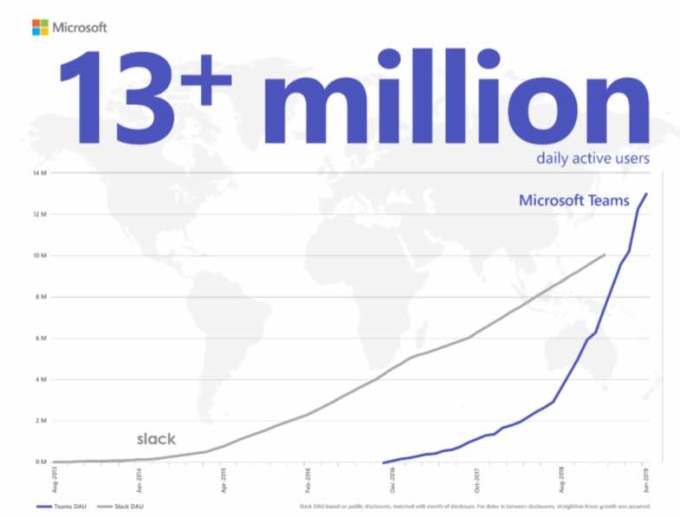
The interview took place at the WSJ Tech Live event. When Butterfield was asked about a chart Microsoft released in July during the Slack quiet period, which showed Microsoft Teams had 13 million daily active users compared to 12 million for Slack, Butterfield appeared taken aback by the chart.

Microsoft Teams chart

Chart: Microsoft

“The bigger point is that’s kind of crazy for Microsoft to do, especially during the quiet period. I had someone say it was unprecedented since the [Steve] Ballmer era. I think it’s more like unprecedented since the Gates’ 98-99 era. I think they feel like we’re an existential threat,” he told Dean.

It’s worth noting, that as Dean pointed out, you could flip that existential threat statement. Microsoft is a much bigger business with a trillion-dollar market cap versus Slack’s $400 million. It also has the benefit of linking Microsoft Teams to Office 365 subscriptions, but Butterfield says the smaller company with the better idea has often won in the past.

For starters, Butterfield noted that of his biggest customers, more than two-thirds are actually using Slack and Office 365 in combination. “When we look at our top 50 biggest customers, 70% of them are not only Office 365 users, but they’re Office 365 users who use the integrations with Slack,” he said.

He went on to say that smaller companies have taken on giants before and won. As examples, he held up Microsoft itself, which in the 1980s was a young upstart taking on established players like IBM. In the late 1990s, Google prevailed as the primary search engine in spite of the fact that Microsoft controlled most of the operating system and browser market at the time. Google then tried to go after Facebook with its social tools, all of which have failed over the years. “And so the lesson we take from that is, often the small startup with real traction with customers has an advantage versus the large incumbent with multiple lines of business,” he said.

When asked by Dean if Microsoft, which ran afoul with the Justice Department in the late 1990s, should be the subject of more regulatory scrutiny for its bundling practices, Butterfield admitted he wasn’t a legal expert, but joked that it was “surprisingly unsportsmanlike conduct.” He added more seriously, “We see things like offering to pay companies to use Teams and that definitely leans on a lot of existing market power. Having said that, we have been asked many times, and maybe it’s something we should have looked at, but we haven’t taken any action.”

Why per-seat pricing needs to die in the age of AI

Jake Saper
Contributor

Jake Saper is a partner at Emergence Capital.
More posts by this contributor

Pricing is the most important, least-discussed element of the software industry. In the past, founders could get away with giving pricing short shrift under the mantra, “the best product will ultimately win.” No more.

In the age of AI-enabled software, pricing and product are linked; pricing fundamentally impacts usage, which directly informs product quality. 

Therefore, pricing models that limit usage, like the predominant per-seat per month structure, limit quality. And thus limit companies.

For the first time in 20 years, there is a compelling argument to make for changing the way that SaaS is priced. For those selling AI-enabled software, it’s time to examine new pricing models. And since AI is currently the best-funded technology in the software industry — by far — pricing could soon be changing at a number of vendors.

Why per-seat pricing needs to die in the age of AI

Per-seat pricing makes AI-based products worse. Traditionally, the functionality of software hasn’t changed with usage. Features are there whether users take advantage of them or not — your CRM doesn’t sprout new bells and whistles when more employees log in; it’s static software. And since it’s priced per-user, a customer incurs more costs with every user for whom it’s licensed.

AI, on the other hand, is dynamic. It learns from every data point it’s fed, and users are its main source of information; usage of the product makes the product itself better. Why, then, should AI software vendors charge per user, when doing so inherently disincentivizes usage? Instead, they should design pricing models that maximize product usage, and therefore, product value.

Per-seat pricing hinders AI-based products from capturing value they create

AI-enabled software promises to make people and businesses far more efficient, transforming every aspect of the enterprise through personalization. Software tailored to the specific needs of the user has been able to command a significant premium relative to generic competitors; for example, Salesforce offers a horizontal CRM that must serve users from Fortune 100s to SMBs across every industry. Veeva, which provides a CRM optimized for the life sciences vertical, commands a subscription price many multiples higher, in large part because it has been tailored to the pharma user’s end needs.

AI-enabled software will be even more tailored to the individual context of each end-user, and thus, should command an even higher price. Relying on per-seat pricing gives buyers an easy point of comparison ($/seat is universalizable) and immediately puts the AI vendor on the defensive. Moving away from per-seat pricing allows the AI vendor to avoid apples-to-apples comparisons and sell their product on its own unique merits. There will be some buyer education required to move to a new model, but the winners in the AI era will use these discussions to better understand and serve their customers.

Per-seat pricing will ultimately cause AI vendors to cannibalize themselves

Probably the most important upsell lever software vendors have traditionally used is tying themselves to the growth of their customers. As their customers grow, the logic goes, so should the vendors’ contract (presumably because the vendor had some part in driving this growth). 

Tethering yourself to per-seat pricing will make contract expansion much harder.

However, effective AI-based software makes workers significantly more efficient. As such, seat counts should not need to grow linearly with company growth, as they have in the era of static software. Tethering yourself to per-seat pricing will make contract expansion much harder. Indeed, it could result in a world where the very success of the AI software will entail contract contraction.

How to price software in the age of AI

Here are some key ideas to keep top of mind when thinking about pricing AI software:

  • Start by using ROI analysis to figure out how much to charge

This is the same place to start as in static software land. (Check out my primer on this approach here.) Work with customers to quantify the value your software delivers across all dimensions. A good rule of thumb is that you should capture 10-30% of the value you create. In dynamic software land, that value may actually increase over time as the product is used more and the dataset improves. It’s best to calculate ROI after the product gets to initial scale deployment within a company (not at the beginning). It’s also worth recalculating after a year or two of use and potentially adjusting pricing. Tracking traditionally consumer usage metrics like DAU/MAU becomes absolutely critical in enterprise AI, as usage is arguably the core driver of ROI.

While ROI is a good way to determine how much to charge, do not use ROI as the mechanism for how to charge. Tying your pricing model directly to ROI created can cause lots of confusion and anxiety when it comes time to settle up at year-end. This can create issues with establishing causality and sets up an unnecessarily antagonistic dynamic with the customer. Instead, use ROI as a level-setting tool and other mechanisms to determine how to arrive at specific pricing.

NASA Administrator Jim Bridenstine explains how startups can help with Artemis Moon missions

At this week’s International Astronautical Congress, where the space industry, international space agencies and researchers from around the world convene to discuss the state of space technology and business, I asked NASA Administrator Jim Bridenstine about what role he sees for startups in contributing to his agency’s ambitious Artemis program. Artemis (named after Apollo’s twin sister, one of the gods of Greek mythology) is NASA’s mission to return human beings to the surface of the Moon — this time to stay — and to use that as a staging ground for further exploration to Mars and beyond.

Bridenstine, fielding the question during a press Q+A about Artemis, said the program is incredibly welcoming of contributions from startups large and small, and that it sees a number of different areas where contributions from younger space companies can have a big impact.

“When we talk about entrepreneurs, there are big entrepreneurs and there are small entrepreneurs, but know this: What we’re building in the [Lunar] Gateway is open architecture, and we want to go with commercial partners,” Bridenstine said. “So there are in fact, a number of companies here [at IAC], big companies that have said they want to go to the Moon, they want to go sustainably, they want to be part of Artemis, and the Gateway is available to them.”

gateway orion approaching 1

Artist’s concept of NASA’s Lunar Gateway with the Orion capsule approaching to dock

The Lunar Gateway is a station NASA intends to put in orbit around the Moon to act as a staging ground for its vehicles, a key step to ensure the process of landing things on the Moon once they reach lunar orbit is more easily accomplished. Bridenstine pointed out that in the Broad Agency Agreement (BAA) that NASA originally put out for the Artemis program, it went further still and said that it welcomed proposals from private space companies that involve going directly to the Moon, bypassing the Gateway entirely.

Actually getting to the Moon has been taken on by some of the deeper-pocketed and more well-established entrepreneurs among the so-called “New Space” companies, including SpaceX . But Artemis participation goes well beyond the high-priced task of building vehicles capable of getting from Earth to lunar orbit, according to Bridenstine.

“We’re going to need cargo on the surface of the Moon,” he said, noting that the Space Launch System (SLS) and Orion crew capsule Artemis will use to take humans to the Moon in 2024 will lean on advance payloads to better ensure mission success. “[W]hen we talk about aggregating a lander at the gateway — when we talk about, maybe even putting hardware on the surface the Moon, including science hardware, like the Viper neutron spectrometer, an IR spectrometer helping us understand the regolith and the water ice, what’s there on the surface of the Moon, where it is and in what quantities […] we’re going to need those science instruments delivered to the surface of the Moon.”

Blue Origin’s Blue Moon lander

Indeed, there are companies poised to deliver cargo via lunar landers in advance of, or in time with, NASA’s 2024 target for a human landing, including Astrobotic’s Peregrine Moon lander, which is looking to launch in 2021, and Blue Origin’s Blue Moon lander. Both these landers, and the payloads they carry, could include startup-designed equipment and systems to pave the way for sustainable human occupation of our large natural satellite. In fact, Bridenstine suggested some potential payloads that could be even more wild than advance data-gathering hardware.

“Maybe even — again it depends on budgets, and I’m not promising anything between now and 2024 — but maybe even an inflatable habitat on the surface of the Moon so that when our astronauts get there they have a place to go, and they can stay for longer periods of time,” he said. “Is that in the realm of possibility? Absolutely.”

Bridenstine continued that the agency is already working with many smaller, entrepreneurial businesses, and intends to continue exploring partnerships with more. There’s a clear and growing need for lunar cargo from NASA, in increasing volumes, the Administrator pointed out.

“On top of SLS and Orion we need additional capability, there are opportunities there for all kinds of commercial companies entrepreneurs,” he said. “We also have small business investment and research that NASA is involved in, and we’re on-ramping small businesses all the time. In fact, right now we have the Commercial Lunar Payload Services [CLPS] program underway. We have nine companies that have signed up […] two of them now have task orders to deliver to the Moon in 2021 […] We’re on-ramping, not only those nine companies, but we want to on-ramp additional companies, and maybe even bigger companies for larger landing opportunities because, like I said, we’re going to have a lot more needs in the future for cargo on the surface of the Moon.”

Fair, the SoftBank-backed car subscription startup, lays off 40% of staff, sacks CFO

As the market continues to turn against the wave of highly valued venture-backed startups operating with little end in sight to their huge losses — Uber and WeWork being two prime examples — another startup is taking a proactive step to get ahead of the story, by cutting costs and restructuring before public opinion forces the issue on them.

Fair.com, a startup building a flexible car ownership business that is valued at $1.2 billion — backed by some $500 million in equity from SoftBank and others, plus billions more dollars in debt funding — said today that it will be laying off 40% of its staff. On top of this, it is removing its CFO, Tyler Painter, the brother of the CEO and co-founder (and car business veteran) Scott Painter. He’s being replaced in the interim by Kirk Shryoc.

It’s not clear how many people 40% translates to in terms of headcount, nor which areas of the business will be affected. Fair’s CEO Painter is not disclosing the full number of employees the company has across the U.S., or which parts of the business are going to be restructured. (As a marker though, there are some 539 employees listed on LinkedIn, which would work out at about 215 people.)

He did note that the business is not planning on shuttering any specific operations: leasing services for those driving for on-demand services, and its consumer-focused service, will both remain operational, even as certain geographies and certain segments of the markets that Fair is serving are proving to be unprofitable.

This is one area where the CFO change will play.

“As Fair has grown, the skill sets needed to drive the business forward change. Kirk has a decade of experience running treasury and capital markets for large fleet companies, and is well known on the capital markets side,” the company said in a separate statement. “We’ve been working with him over the course of this year, and given our renewed focus on our acquisition and financing approach, now was the right time to ask him to step in to manage our upstream banking relationships and the fleet management.”

The full internal memo that Painter sent out to staff is included below.

Painter (the CEO) said in an interview earlier today that the reason for the move was to proactively come out to make changes to help the company become more profitable at a time when the “capital markets” are focused on profitability — perhaps more than the over-focus on growth that has fueled a lot of the biggest investments in recent years.

“It’s hard building a sustainable company and these are the choices you have to make,” he said of the news.

Fair has been growing at a fast clip in the last couple of years, at a rate of 5x, Painter said. In 2018, ahead of its funding from SoftBank, the company picked up the unprofitable leasing business of Uber; and earlier this year it picked up Canvas, a car leasing business previously owned by Ford. In both cases, the terms of the deals were undisclosed.

At the time of the Canvas deal, Fair said it had about 45,000 subscribers currently in the U.S., with 3.2 million downloads across 30 markets, adding some 3,800 subscribers coming on from Canvas.

It’s notable that Fair is backed by the same investor that helped propel both WeWork and Uber to giant valuations ahead of the companies seeing their fortunes change: Uber’s in the public markets where it’s been pounded for its losses and WeWork before it ever got to its IPO (the company had to withdraw its filing and just this week saw SoftBank scoop up 80% of its business at a cut price in order to keep the whole thing from going under).

Cautionary tales for Fair, which is only profitable in certain parts of its business and is now turning its attention to fixing that.

Painter maintained that this was a proactive move, made not because SoftBank or another investor leaned on it to do so. It’s notable that the last time the company raised equity funding was close to one year ago, so this could help put it in a healthier position were it considering to raise again.

“Softbank is a big shareholder and supporting my focus, and that is the reality right now,” Painter said. “Leaning on us is not the term,” he added in response to my multiple questions of whether SoftBank pressured it to make these changes. “They are supporting us — there is a big difference,” he stressed.

“There’s no question that the world is changing and there is a lot of noise in system, but for us we are doing this proactively, on our terms. We recognise what we are seeing so we are being proactive to avoid this. We wouldn’t have the ability were it not for capital partners like SoftBank. Despite all this noise they remain a steadfast believer in Fair.”

Last week’s big story was about how Airbnb, which has reportedly been planning to go public next year, has seen a widening loss. Today’s news could be a sign that we will see more of these rationalizations to come.

Memo here:

As we discussed at our last Fair Family Lunch, today’s companies must demonstrate a path to sustainable growth and profitability. Fair is no different. As one of the pioneers in automotive fintech, we now need to focus on being a profitable company. Our technology, our simple product design, and our focus on the customer are second to none. While we are proud of our growth, we are here for the long term. This means that we’ve decided to take proactive steps now to ensure we are a profitable public company later.

With the help and guidance of our leadership team, I’ve decided to focus the company’s resources on strengthening Fair’s core technology and reducing costs associated with the capital-intensive supply side of our business. Going forward, Fair will be a smaller team, focused on doing fewer things well. As part of the process of achieving profitability, we’re reducing our headcount across the business.

While these are the decisions that every entrepreneur dreads making, these are important for us to be able to safeguard the future of the business we’ve all worked so hard to build.

I remain grateful for this team’s hard work and optimistic for the future. We have created an entirely new category that consumers love. We’ve served tens of thousands of customers. We’ve powered Uber drivers’ livelihoods. We’ve helped everyone get access to the car they want, when they want, for how long they want — all on their phone and without taking on debt. We all did this together. We should all be proud of these achievements and I am personally grateful to all those who have given their time and expertise to deliver the future we set out to build.

Now, we will set out to transform the supply side of our business over the coming months, focus on building a profitable model, and operating with the rigor of a publicly traded company.

I expect everyone to have questions about what this means for them and the health of Fair, and while I can’t promise to have all the answers, I commit to keeping you informed along the way. These types of changes are painful, as I know from my previous experiences building companies. Our leadership team is responsible for the long-term sustainability of Fair, and no matter how difficult these decisions are, we believe they are the right steps in ensuring we have a bright future as a company. We thank you for being on this journey with us.

-Scott

SoftBank says it has now invested $18.5 billion in WeWork, ‘more than the GDP’ of Bolivia, which has 11.5 million people

Yesterday, in addressing nervous WeWork employees at an all-hands, the company’s new chairman, SoftBank executive Marcelo Claure, told those gathered that their days of worrying are over, says Recode, which obtained a leaked recording of the meeting.

In comments that may stun industry observers who haven’t done the math — and upset at least some percentage of SoftBank investors — Claure is quoted as telling employees: “We have guaranteed the future of WeWork, but more importantly is we’re putting the future back into our hands. There’s no more days needed to go fundraising. There’s no more days needed to go prove to the investor community that we’re a viable company. The size of the commitment that SoftBank has made to this company in the past and now is $18.5 billion. To put the things in context, that is bigger than the GDP of my country where I came from. That’s a country where there’s 11 million people.”

Claure, a native of Bolivia who was named chairman as part of SoftBank’s rescue of the beleaguered co-working company, has been a SoftBank lieutenant for the last five years, and currently holds a variety of titles on its behalf, including COO of SoftBank Group Corp, CEO of SoftBank Group International and CEO of SoftBank Latin America.

He has said he first met SoftBank founder Masayoshi Son after building up his own business, Brightstar — a  cellphone reseller — then selling 57% of it to SoftBank in 2013 in a deal that valued the company at $2.2 billion. SoftBank later acquired more of the company before deciding to explore a sale of the low-margin business last year for $1 billion.

By then, Claure was running Sprint, a SoftBank-backed property that installed Claure as CEO in 2014, where he presided over a massive share slide that began before he joined the company and ended only last year when T-Mobile and Sprint agreed to merge. (The deal has been green-lit by the FCC and the Department of Justice, but it’s still facing a lawsuit from several state attorneys general who are trying to block the deal, saying it could hamper competition and drive prices higher. Claure stepped away from running the company and into the role of Sprint’s executive chairman in May of last year to become COO of SoftBank. Sprint’s shares have meanwhile held mostly steady for the past year.)

In talking with WeWork employees, Claure painted a rosy picture of his own career. (“Masa told me, ‘You’re a great entrepreneur. You built a company from scratch, very successful.’ He says, ‘You’re a good operator. You fixed Sprint.’ “)

To assuage fears, he also underscored repeatedly the gamble that SoftBank is taking on WeWork, telling employees, “We’ve had many, many endless nights with Masa in terms of what was the next thing to do with WeWork. I would say that 99% of advice that we got is to cut your losses and run away, but Masa absolutely is a believer in WeWork and the mission and disruption.

“You say why, right? The easy thing was just run away. There were no need. We didn’t have to come in and make an investment of this size. We’re basically betting SoftBank. We’re betting our reputation and we’re betting everything we have that this is going to be a success story. We want people to look at this move as not a failure, but we want this move as a genius move. We had many, many nights of debate. Everything that we look at the business, the more we dig, the more we love the business, the more community managers we interact with, the more we love the business.”

As for how WeWork saves the business, that’s not clear yet, said Claure.

“My goal in the next 30 days is to work with this management team, to work with Artie, Sebastian, and all the incredibly talented members of the team to basically set up a plan,” he said. “This plan is going to be very clear. We’re all going to know what each one of us is supposed to do. I’m going to make sure that it’s not an empty plan. I’m going to make sure there’s numbers. I’m going to make sure that we can measure. I’m going to make sure that we can hold people accountable.”

One possible hitch that Claure understandably didn’t raise yesterday — one in addition to the countless obvious challenges WeWork faces in trying to generate forward momentum, including convincing corporate customers not to look elsewhere for office space — is the Committee on Foreign Investment in the U.S., or CFIUS.

As Bloomberg reported last night, SoftBank will seek national security approval from CFIUS for its takeover, and the committee has stymied the Japanese conglomerate before.

It put conditions on SoftBank’s majority ownership of Sprint; it restricted its control of the investment firm Fortress Investment Group, for which it paid $3.3 billion in late 2017; it also held up SoftBank when it wanted to fill two board seats after it sunk billions into Uber. Indeed, SoftBank was never able to fill those spots, noted Bloomberg. Once the rideshare company went public, it voided some of its obligations to SoftBank.

Lawmakers ask US intelligence chief to investigate if TikTok is a national security threat

Two lawmakers have asked the government’s most senior U.S. intelligence official to assess if video-sharing app TikTok could pose “national security risks” to the United States.

In a letter by Sens. Charles Schumer (D-NY) and Tom Cotton (R-AR), the lawmakers asked the acting director of national intelligence Joseph Maguire if the app maker could be compelled to turn Americans’ data over to the Chinese authorities.

TikTok has some 110 million downloads to date and has spiked in popularity for its ability to record short, snappy videos that are sharable across social media networks. But the lawmakers say because TikTok is owned by a Beijing-based company, it could be compelled by the Chinese government to turn over user data — such as location data, cookies, metadata and more — even if it’s stored on servers it owns in the United States.

Both Schumer and Cotton warn that TikTok’s parent company, ByteDance, is “still required to adhere” to Chinese law.

“Security experts have voiced concerns that China’s vague patchwork of intelligence, national security, and cybersecurity laws compel Chinese companies to support and cooperate with intelligence work controlled by the Chinese Communist Party,” the letter, dated Wednesday, said. “Without an independent judiciary to review requests made by the Chinese government for data or other actions, there is no legal mechanism for Chinese companies to appeal if they disagree with a request.”

That same legal principle works both ways. U.S. companies have been shut out, or had their access limited, in some nation states — including China — over fears that they could be compelled to spy on behalf of the U.S. government.

In the aftermath of the Edward Snowden disclosures, which revealed the U.S. government’s vast surveillance operation, several major tech companies were all dropped from China’s approved state purchases list amid fear of U.S. cooperation in surveillance.

The senators also said they are concerned that the app was censoring content “deemed politically sensitive” to Beijing. In September, The Guardian revealed that the app’s moderators actively censor content relating to Tibetan independence, the Tiananmen Square massacre and the banned religious group Falun Gong.

They also said the app could pose a “counterintelligence” threat as it could be used as a foreign influence tool as seen in the 2016 U.S. presidential election.

When reached, a spokesperson for the Office of the Director of National Intelligence would not comment.

TikTok said it was “carefully reviewing” the letter.

“We will not be offering any further comment on it at this time other than to reaffirm that TikTok is committed to being a trusted and responsible corporate citizen in the U.S., which includes working with Congress and all relevant regulatory agencies,” said TikTok spokesperson Josh Gartner.

Swiftmile will become the ‘gas station’ for electric bikes and scooters in Austin

Anyone who has tried to ride an electric scooter knows the likelihood of finding one with a charged battery is quite low. Swiftmile, which just landed a contract with the city of Austin, supplies cities and private operators with docks equipped to park and charge both scooters and e-bikes.

What Swiftmile offers serves as a win for operators, riders and cities alike. Operators can provide a better (charged) product to their customers, the likelihood of finding a charged scooter increases and cities can better control sidewalk clutter and issues pertaining to improper parking. Unfortunately, the downside falls on those relying on charging scooters to make extra income.

When Swiftmile deploys in Austin, the plan is to start with 10 stations, which comes out to about 80 parking slips. The company hopes to do this by the end of the year. Austin has become a major micromobility hub, with seven providers operating a total of 17,600 vehicles in the city. In fact, it’s become known as a place that many other cities look to for regulation.

“What we do with cities is we get permission from them, we get an encroachment permit and then it’s up to us to monetize off the scooter providers,” Swiftmile co-founder and CEO Colin Roche told TechCrunch. “What we do is put our system down and, you can think of it like a gas station in the middle of where all the scooters are. You don’t want a lot of people having to drive in to pick all these scooters up. I think that’s going to diminish more. If the asset is in the field right there, then you incentivize a rider to ride to the station with credit.”

From there, Swiftmile charges the operators by the minute, but not to exceed a certain amount, depending on the market. Initially, the docking system will be open to all operators in order to show them how it works and how beneficial it can be. After a certain period of time, Swiftmile will only charge its customers’ scooters.

“Here’s the key piece,” Roche said. “Our system is really intelligent, so we have the ability to detect whose scooter it is. When it gets plugged in, we pulse the system and it tells us what kind of scooter it is.”

That makes it so a rider could still park any scooter there, but only Swiftmile customers will get their scooters charged.

In addition to Austin, Swiftmile has also launched a mobility hub in Berlin, and plans to deploy more. On the operator side, Swiftmile has partnered with Spin to create branded charging hubs exclusively for Spin scooters. In the U.S., Swiftmile has deployed more than 50 stations. In Austin, however, the charging hubs are vehicle agnostic and will mark Swiftmile’s first public system.

The same will go for Pittsburgh, where Swiftmile will deploy about 50 stations in early 2020. That’s all part of the Pittsburgh Micromobility Collective, which includes Spin, Zipcar, Ford Mobility, Waze and Swiftmile.

Swiftmile got its start as a bike-share operator for private companies, including Tesla and Google. To date, the company has raised a little more than $5 million from Sinai Ventures, Verizon Ventures and others. Additionally, Swiftmile just received a term sheet for a $12 million Series A round.

*Verizon owns TechCrunch, but has no influence on our coverage.

Here’s what the Pixel 4’s radar chip looks like

I’ve been tearing my gadgets apart for as long as I can remember. Consoles, phones, printers, whatever — I’ve always needed to see what makes it all work. Sometimes they even work when I put them back together.

As soon as Google announced that the new Pixel 4 had friggin’ radar built-in for detecting hand gestures, I needed to see under the hood. While I haven’t picked up a Pixel 4 yet, our friends over at iFixit busted out the heat guns and did what they do best, tearing the Pixel 4 XL down to parts and uncovering the Project Soli radar chip along the way.

iFixit 2

Image Source: iFixit

That board you’re looking at contains a good amount of stuff beyond the Soli chip — it’s also where you’ll find the earpiece speaker and the ambient light sensor, for example. The Soli chip seems to be that little greenish box in the upper-right area.

Alas, there’s… not a ton to learn just from looking at it. Google has spent the last few years working on this, and they’ve ended up with something that’s honestly a bit wild. With no moving parts, and without line of sight, these chips are able to do things like detect when people are near the device (and how many), whether they’re standing or sitting, how they’re moving their hands and more. As iFixit so succinctly puts it, “TL;DR: magic rectangle knows your every move.”

For anyone looking to tear apart the Pixel 4 XL themselves, be it to make repairs or just out of curiosity, make sure you know what you’re getting into. iFixit gives the device a relatively paltry 4 out of 10 on its repairability score, citing easily breakable pull tabs and particularly strong adhesives as obstacles along the way. You can find their full teardown here.

iFixit

Image Source: iFixit

Daily Crunch: Twitter revenue disappoints

The Daily Crunch is TechCrunch’s roundup of our biggest and most important stories. If you’d like to get this delivered to your inbox every day at around 9am Pacific, you can subscribe here.

1. Twitter Q3 misses big on revenues of $824M and EPS of $0.05 on the back of adtech glitches

Twitter said the huge drop in performance “was impacted by revenue product issues, which we believe reduced year-over-year growth by approximately 3 or more percentage points, and greater-than-expected seasonality.”

The company has made a significant shift in the last year to tracking a new user metric of its own making — monetizable daily active users, which is the number of users who are being served ads. More established metrics like daily and monthly active users have stagnated and even declined in recent years.

2. Lowlights from Zuckerberg’s Libra testimony in Congress

“I don’t control Libra” was the central theme of Facebook CEO Mark Zuckerberg’s testimony yesterday, while the House of Representatives unleashed critiques of his approach to cryptocurrency, privacy, encryption and running a giant corporation.

3. Announcing the Disrupt Berlin 2019 agenda

Disrupt Berlin will run on December 11 and December 12, when we’ll sit down with CEOs from big-name companies such as Away, UIPath and Naspers, as well as leading investors from Atomico, SoftBank and GV. (Tickets are available here.)

4. By tweeting from a SCIF, House lawmakers put national security at risk

If you thought storming into a highly secured government facility with your electronics but without permission was a smart idea, you’d be wrong. But that didn’t stop Rep. Matt Gaetz and close to three-dozen of his Republican colleagues from doing exactly that.

5. Virgin Galactic becomes the first public space tourism company on Monday

The company’s shareholders have approved a merger with Chamath Palihapitiya’s special Social Capital Hedosophia holding company, with a debut on the NYSE for the newly merged public entity scheduled for Monday.

6. Cybersecurity automation startup Tines scores $4.1M Series A led by Blossom Capital

Tines automates many of the repetitive manual tasks faced by security analysts so they can focus on other high-priority work. The founders have bootstrapped the company until now.

7. Bill McDermott aims to grow ServiceNow like he did SAP

During the company’s earnings call, outgoing CEO John Donahoe said that McDermott met all of the board’s criteria for its next leader — all in the service of building toward a $10 billion revenue goal. (Extra Crunch membership required.)

Caffeine signs streaming deal with rapper Offset

Caffeine, the live streaming service founded by former Apple designers Ben Keighran and Sam Roberts, has signed an exclusive streaming deal with Offset.

The startup has been relatively quiet since raising nearly $150 million in funding last year, but Keighran (who previously co-founded Chomp and then served as product design lead for Apple TV) told me that’s going to start changing as the company prepares to leave beta testing.

Keighran also pointed to the Offset deal as exemplifying several aspects of his vision for how Caffeine can become “the future of live TV.”

As part of the deal, Offset will host two exclusive shows on his Caffeine channel — a weekly stream at 6pm Pacific on Sundays where he’ll play his favorite games and try out new games suggested by fans, plus a second show called “Bet with Set,” where he’ll compete with celebrity guests on a variety of a challenges.

“With Caffeine, I can create my content in an organic way that lets me make real connections with my community,” Offset said in a statement. “They have created new technology that takes the lag out of online interactions and it makes me reachable in a way that other platforms simply can’t. Caffeine allows me to be myself so I’m trying to reach these kids to show them that everybody is a part of a team and we’re all one.”

Other Caffeine streamers include basketball player LaMelo Ball, rapper The Game and rapper Lil Xan, as well as game streamers Cartoonz, Ohmwrecker and Cranier. The streams are then monetized by allowing fans to purchase and send virtual gifts.

Keighran said that game streaming will be a key part of Caffeine’s appeal, but he suggested that compared to the currently dominant Twitch (owned by Amazon), Caffeine will have an easier time expanding beyond gaming.

He added that not only is Caffeine designed for a wide range of live-streaming content, but it also has the advantage of backing from 21st Century Fox and its new owner Disney, which was presumably a big part of how it acquired the streaming rights to sports content from Fox Sports and Disney-owned ESPN.

“We’re getting content rights from Fox and Disney that Google and Amazon would love to have,” Keighran said. “That’s part of the secret sauce that attracts athletes and hip hop artists — they can stream sports content and video games with a better community filter, chat, new monetization with no ads. I think Offset is the perfect example.”

Modern Animal raises $13.5 million to make going to the vet suck less

Modern Animal just raised a $13.5 million seed round of funding to fuel its mission of offering pets, humans and veterinarians a better experience. Led by Founders Fund, with participation from Upfront Ventures, Susa Ventures and others, the round will enable Modern Animal to open its first location in Los Angeles early next year.

Founded by Steven Eidelman, who previously founded dog-tracking startup Whistle and sold it to Mars Petcare, Modern Animal pegs itself as the next-generation veterinary care platform. You can think of it as a One Medical model for pets, where all of the vets are full-time and receive equity in the company.

“If you think about similarities, we are committed to using technology and design to reinvent the way pet care is delivered,” Eidelman told TechCrunch. “There are lots of similarities with One Medical.”

Modern Animal will be led by Dr. Christie Long, DVM, the former director of veterinary medicine at Petco. For a $100 yearly membership fee, Modern Animal offers unlimited exams, 24/7 virtual care, in-app prescription requests and delivery and more. However, there is a charge for additional services.

“Our goal is to be at parity with the market,” Eidelman said. “We’re not trying to create a high-end experience. We want to build the most efficient system that allows us to deliver the best care. Those efficiencies should funnel into long-term lower cost of care.”

Modern Animal’s first location will have a dental and surgery suite, but does not do any overnight services.

“We’re not trying to operate as an emergency room nor are we hiring specialists,” Eidelman said. “If animals need a more complex level of care, we’ll refer them to the best ER or specialist.”

In the next five years, Modern Animal envisions operating 50 locations throughout the U.S. Each location will continue to be designed with environmental considerations, like no ringing phones at the front desk, and keeping dogs and cats in separate areas. That last piece is key for humans who may be allergic to cats or dogs, and for animals who don’t like to interact with different species.

“The idea is to create a really safe and comfortable environment for the animal,” Eidelman said. “But the only way we can get them great care is if we also take care of humans.”

To scale subscription startups, obsess over what your customer wants next

The crowded world of subscription businesses offers ongoing opportunities to screw up your relationship with subscribers.

At Disrupt San Francisco 2019, I spoke with Forerunner Ventures’ Eurie Kim, Lola CEO Alex Friedman and KiwiCo CEO Sandra Oh Lin about key issues and priorities for scaling a subscription service post-launch. A primary theme: building relationships with customers who’ll help you decide where to look for your next product.

“The first product just has to work or else you’re just not gonna have a company. But to be a big company, you have to have much more than just the product, it has to be the full experience and the full relationship that you have,” says Kim. “And then certainly you have to have the muscles on your team to be able to listen, evolve, test, and grow. So we’re obviously searching for companies… where the founders know so much about their customer that for the first few years, you have a very clear line of, you know, path forward. It’s not complicated. It’s just execution. And that’s hard to do. But you need to have a pulse on that customer.”

Instead of striving to meet the needs of every customer, entrepreneurs should focus on trying to understand the subscribers they’ve zeroed in on by being purposeful — instead of throwing a bunch of ideas against the wall to see which ones stick.

“What’s hard is your cash constraints. So you’re starting with one or two products. It’s not like an amazing experience, because it’s one or two products,” Kim said onstage. “You have to have like that laser-sharp product that is actually solving so much of the need that someone’s like, ‘well, it’s only one product, but it’s like a really good product. And so I’m going to start there, I’m going to trust Lola, and I’ll get this tampon. And then if I like it, I’m going to stick with it. I’ll sign up for the subscription, because I do need it monthly. And then hey, maybe I’ll buy something else.’ And so the brand relationship builds over the course of time naturally.”

Lola, which makes women’s health products, launched with an organic cotton tampon that shipped to users monthly. After entering that space, the startup’s co-founders strategized about how expand their offerings.

“We figured, okay, there’s this opportunity to build an end-to-end experience here,” says Friedman. “Where do we start? Obviously, there are a lot of different categories and moments. So how can we be there for [our customer] at every stage with products and content and community. And so after period care, we went to sexual wellness, because that is very resonant with our current customer base.”