Stochastic disaster

As I write this, massive fires are erupting all over California, and massive protests are erupting all over the world. Is the former a facet of the climate crisis? Is the latter a symptom of hyperpolarization caused by hyperconnectivity? Yes, I mean no, I mean it’s impossible to say. That’s what it means to live in a stochastic age.

During the past few weeks there has been an extraordinary outburst of popular protests in all corners of the world.

Here's a map of the locations, and primary causes, of recent unrest around the world. @gzeromedia pic.twitter.com/V7Lelxw9kj

— Xavi Ruiz ?? (@xruiztru) October 23, 2019

This is an era of stochastic terrorism: “The use of mass public communication, usually against a particular individual or group, which incites or inspires acts of terrorism which are statistically probable but happen seemingly at random.” It is also an era of climate crisis as a stochastic disaster, causing a whole spectrum of ‘random’ natural disasters to become ever more probable and terrible.

Is ours also an era of stochastic political strife? Does the world’s increased connectivity, aided by social media’s inherent amplification of outrage, have second-, third-, or fourth-order effects which heat rhetoric and protest, triggering secession movements and massive rejection of the status quo? Is our hyperconnectivity the political equivalent of global warming?

If so, it would explain a lot. The baffling and horrifying rise of neo-Nazis and white supremacy around the world. The increasing political polarization of seemingly every polity. The growing dearth of anything like a political middle ground. The huge protests scattered across the globe, against almost every form of government.

But let’s not be too quick to diagnose this. This might be somehow periodic: terrorism and protests were both more common (per capita) in the late 60s and early 70s than they are today. It might just be a symptom of, and backlash against, a global trend of neoliberalism-morphing-towards-antidemocratic-oligarchy, which, sadly, is the recent economic / political history of much of the world.

The hypothesis is that this stochastic strife has something to do with technology and hyperconnectivity, that across the world we’re experiencing the political equivalent of global warming. Intriguing, but far from proven. How might we test or measure it?

The obvious test is to introduce a control group, A/B across a representative slice of the planet — but that seems pretty unlikely, and I’m not aware of any reliable quantitative measures of political strife, and either way it suffers from the inevitable problem that it’s impossible to tease out just one of the myriad factors which accumulate (or not) into political fury and protest.

— At least it’s impossible at any given moment. But we do know that connectivity is likely to just keep increasing, especially across the developing world, and that averaged across nations it is likely to change faster than almost any other factor at play.

So if this hypothesis is correct, we ain’t seen nothin’ yet. Political outrage, massive protests, and secession movements will continue to grow worldwide, eventually at a pace which makes California wildfires seem leisurely.

Let’s hope that either the hypothesis is proved wrong, or that we find a new way, transcending traditional nation-states, to distribute political power … before all those eruptions turn into conflagrations.

China Roundup: Xi’s power on bitcoin, the rise of Alibaba’s new rival

Welcome back to TechCrunch’s China roundup, a digest of the latest events that happened at major Chinese tech companies and what they mean to tech founders and executives around the world.

Alibaba’s nemesis

Alibaba’s new rival is shaking up China’s internet landscape.

This week, four-year-old e-commerce upstart Pinduoduo displaced JD.com to be the fourth-most valuable internet company in the country. Its market capitalization of $47.6 billion on Friday put it just behind e-commerce leader Alibaba, social networking behemoth Tencent and food delivery titan Meituan in China. Baidu, the search equivalent of Google in China, has fallen off the top-three club, ending a decade of unshakable dominance of Baidu, Alibaba, and Tencent (the “BAT”) on the Chinese internet.

The story of Pinduoduo comes down to growing internet penetration and the rise of social commerce. Pinduoduo, which is known for selling ultra-cheap products, is particularly popular with price-sensitive residents in small towns and rural regions, a market relatively underserved by online retail pioneers Alibaba and JD.com . However, Pinduoduo has set about targeting more urban consumers by heavily subsidizing big-ticket items such as iPhones.

Its seamless integration with WeChat, the ubiquitous messaging app owned by Pinduoduo investor Tencent, contributes to adaptability among a less tech-savvy population. WeChat users can access Pinduoduo via the messenger’s built-in lite app, skipping app downloads; they also get deals from group-buying, thus the name Pinduoduo, which means “shop more together” in Chinese.

Earlier this month, Pinduoduo founder and chief executive Colin Huang, a 39-year-old former Google engineer of few words, gave a 45-minute speech at the company’s anniversary, according to a summary published by local tech media Late News. He announced that Pinduoduo has surpassed JD.com in gross merchandise volume, or the total dollar value of goods sold. It’s unclear whether the companies use the same set of metrics for GMV, for instance, whether the figure includes refunded items.

While its rivalry with JD.com is nuanced as both companies are backed by Tencent, Pinduoduo’s competition against Alibaba is more blatant. In his missive to staff, Huang acknowledged that Pinduoduo is “standing on a giant’s shoulders,” hinting at Alibaba’s sheer size. When it comes to fighting the impending battle during the upcoming Single’s Day shopping festival (11/11), the founder sounded poised. “Pinduoduo should not feel pressured. The one who should is our peer.”

Also worth your attention

  • 82% of Chinese adults used digital payments in 2018, up about 5%; among those living in rural China, 72% made transactions via online banking, telephone banking, the point-of-sale system, ATM or other digital channels, said a new report released by the People’s Bank of China. Beijing’s push for rural areas to go cash-free is in part what gives rise to such flourishing e-commerce businesses as Pinduoduo.
  • Few things move the bitcoin market like President Xi Jinping’s endorsement of blockchain. Speaking at a politburo meeting on Thursday, Xi called for China to “take blockchain as an important breakthrough to achieve independence of core technologies” (in Chinese). Bitcoin price soared more than 10% in response. But as industry experts cautioned, when China, where crypto exchanges are banned, speaks of “blockchain” it usually means the encrypted technology that not only undergirds cryptocurrencies but can revolutionize a whole range of sectors like finance, manufacturing and agriculture. Expect all corners of Chinese society to capitalize on the blockchain concept with even greater force.

Xi: Blockchain, Blockchain, Blockchain (undertone is not Bitcoin as usual)

Market: pumped Bitcoin 13%

???

More reads below – pic.twitter.com/RayGwbtKkv

— Dovey Wan ? ? (@DoveyWan) October 25, 2019

  • One of China’s most prominent venture investors just closed $352 million for the first fund of his new financial vehicle. JP Gan, a former managing partner at Qiming Venture Partners, recently started Ince Capital Partners with internet veteran and venture investor Steven Hu. Having backed noted companies including Xiaomi, Meituan, Ctrip, Musical.ly, to name just a few, Gan will continue to fund early to growth-stage startups in China’s internet, consumer and artificial intelligence sectors.
  • Smartphone maker Xiaomi hired leading voice recognition expert Daniel Povey. The researcher who was part of the team to develop the widely used open-source speech recognition toolkit Kaldi announced his next move on Twitter. Before this, Povey declined an offer from Facebook after he was fired by John Hopkins University for attempting to break up a student sit-in. He told The Baltimore Sun earlier that he intended to join a Chinese company because “they don’t have American-style social justice warriors” and he would feel “more relaxed among the Chinese.” Many Chinese tech companies have research and development operations in the U.S. including Xiaomi, which set up a U.S. R&D center in 2017 (in Chinese) to deepen collaboration with chipmaking giant Qualcomm.
  • NetEase’s e-learning unit Youdao began trading at $13.50 per ADS in the U.S. on Friday amid increased regulatory scrutiny on Chinese IPOs. Youdao, which operates a suite of popular online educational products from dictionaries to MOOC-style courses, had over 100 million monthly active users by the first half of 2019, shows its prospectus. It’s one of the many attempts by NetEase founder Ding Lei, once China’s richest man back in 2003, to add momentum to his 22-year-old company. These days NetEase makes the bulk of its revenue from video games and ranks only behind Tencent in China’s booming gaming sector. In September, it sold its once-hopeful cross-border e-commerce business Kaola to Alibaba for $2 billion. 

Meet Utah’s next unicorn

Weave, a developer of patient communications software focused on the dental and optometry market, was the first Utah-headquartered company to graduate from Y Combinator in 2014. Now, it’s poised to enter a small but growing class startups in the ‘Silicon Slopes’ to garner ‘unicorn’ status.

The business announced a $70 million Series D last week at a valuation of $970 million. Tiger Global Management led the round, with participation from existing backers Catalyst Investors, Bessemer Venture Partners, Crosslink Capital, Pelion Venture Partners and LeadEdge Capital.

The company was founded in 2011 and fully bootstrapped until enrolling in the Silicon Valley accelerator program five years ago. Since then, it’s raised a total of $156 million in private funding, tripling its valuation with the latest infusion of capital.

Weave

“Our aim with this funding round is to exceed our customers’ expectations at every touchpoint, investing heavily in the products we create, the markets we serve and the overall customer experience we provide,” Weave co-founder and chief executive officer Brandon Rodman said in a statement. “We will continue to invest in our customers, our products and our people to build a solid, sustainable, and scalable business.”

Weave charges its customers, small and medium-sized businesses, upwards of $500 per month for access to its Voice Over IP-based unified communications service. Rodman previously launched a scheduling service for dentists and realized the opportunity to integrate texting, phone service, fax and reviews to facilitate the patient-provider relationship.

While his second effort, Weave, has long been targeting the dentistry and optometry market, Rodman told Venture Beat last year the opportunities for the company are endless: “Ultimately, if a business needs to communicate with their customer, we see that as a possible future customer of Weave.”

Based in Lehi, Weave added 250 employees this year with total headcount now reaching 550. The company claims to have doubled its revenue in 2018, too. While we don’t have any real insight into its financials, given the interest it’s garnered amongst Bay Area investors, we’re guessings it’s posting some pretty attractive numbers.

“Weave has some of the best retention numbers we’ve ever seen for an SMB SaaS company,” Catalyst partner Tyler Newton said in a statement. “We’re continually impressed by their accelerated growth and results.”

Week in Review: You break it, you buy it

Hey everyone. Thank you for welcoming me into you inbox yet again.

Last week, I talked about Zuckerberg’s quest to tell us that Facebook has governing principles when he’s really just building the stairs one step at a time.

If you’re reading this on the TechCrunch site, you can get this in your inbox here, and follow my tweets here.


The big story

Plenty of ink has been spilled on WeWork and SoftBank and WeWork’s Adam Neumann, and yet it still feels like not nearly enough people are talking about it.

The startup’s post-S1 saga has just been just so messy that it’s understandable one could only grab a sneaking glance of headlines before having to look way.

One reason everyone is talking about it because Neumann’s maneuverings have created an anthology of sketchy founder dealings that’s nearly cartoon villain worthy. He’s got the eccentricities of Jack Dorsey, the frattiness of Evan Spiegel and the “change the world” delusions of Elizabeth Holmes. Critiques of WeWork weren’t all that sparse preceding its S-1, and yet many of venture capital’s talking heads had some kind of founder-friendly admiration for someone that seemed to had bent the world’s heftiest venture capital fund to his will.

It’s far beyond the pleasantries now, what happens to WeWork could deeply shape how late-stage venture capital operates. SoftBank was raising the second vision fund just as WeWork’s shit hit the fan and now it’s the fund’s deepest embarrassment and a financial commitment they’ve poured $18.5 billion into. If WeWork craters, that second vision could fall far short of its aspirations. Plenty of Silicon Valley’s investors would be happy to see control shift to more even-handed institutional forces who did not have capital commands that could set terms with a glance. Nevertheless, there are an awful lot of unicorns that have depended on SoftBank’s growth capital up to this point who would be in danger of being left high and dry.

At this point, SoftBank’s sunk costs have led the desperate fund to go all-in on a sans-Neumann WeWork. They will have to shape the business on their own. They enabled Neumann and now they are left with the task of reverse engineering a disaster into a great turnaround story.

Send me feedback
on Twitter @lucasmtny or email
[email protected]

On to the rest of the week’s news.

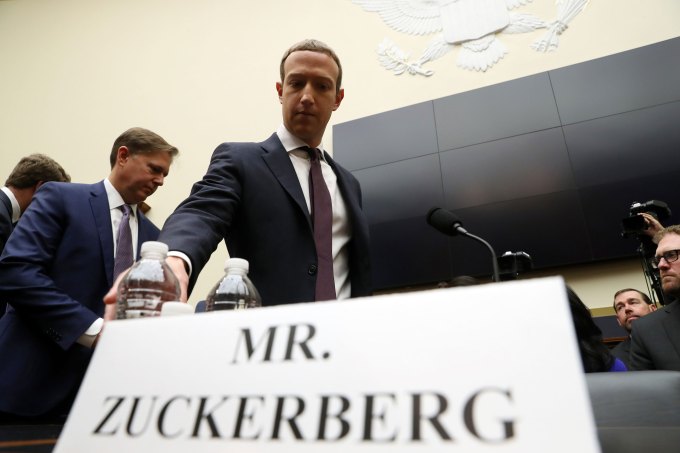
Facebook CEO Mark Zuckerberg Testifies Before The House Financial Services Committee

(Photo by Chip Somodevilla/Getty Images)

Trends of the week

Here are a few big news items from big companies, with green links to all the sweet, sweet added context:

  • Extra! Extra!
    Facebook is getting into the news game once again, paying publishers and building an Apple News-like product called Facebook News that is determined to give America access to trusted news. Facebook is doing great fresh out of the gate by giving Breitbart the distinction as a trusted news source. Kudos, Mark. What could go wrong?
  • Netflix keeps racking up the bills
    Hit TV shows don’t feel like they should be as expensive as building a quantum computer and yet Netflix’s hefty original content spending is still chugging along. The streaming company announced this week they’re raising $2 billion in debt to fund its next efforts, which may or may not include another 14 seasons of Stranger Things.
  • Antitrust attorneys general
    This week was another rough one for Facebook, a New York antitrust investigation picked up the support of a whole lot of other states as the probe seeks out anticompetitive practices. There are now 47 attorneys general taking part.

facebook newspaper dollars

GAFA Gaffes

How did the top tech companies screw up this week? This clearly needs its own section, in order of badness:

  1. Facebook is still publisher enemy #1:
    [Why the Facebook News Tab shouldn’t be trusted]
  2. Google’s emoji puritanism:
    [Google’s Play Store is giving an age rating finger to Fleksy, a Gboard rival]

Disrupt Berlin

DISRUPT SF 530X350 V2 berlin

It’s hard to believe it’s already that time of the year again, but we just announced the agenda for Disrupt Berlin and we’ve got some all-stars making their way to the stage. I’ll be there this year, get some tickets and come say hey!

Sign up for more newsletters in your inbox (including this one) here.

Zamna raises $5M to automate airport security checks between agencies using blockchain

Zamna — which uses a blockchain to securely share and verify data between airlines and travel authorities to check passenger identities — has raised a $5m seed funding round led by VC firms LocalGlobe and Oxford Capital, alongside Seedcamp, the London Co-Investment Fund (LCIF), Telefonica, and a number of angel investors.

Participation has also come from existing investor IAG (International Airlines Group), which is now its first commercial client. The company is also changed its name from VChain Technology to Zamna.

When VChain-now-Zamna first appeared, I must admit I was confused. Using blockchain to verify passenger data seemed like a hammer to crack a nut. But it turns out to have some surprisingly useful applications.

The idea is to use it to verify and connect the passenger data sets which are currently silo-ed between airlines, governments and security agencies. By doing this, says Zamna, you can reduce the need for manual or other checks by up to 90 percent. If that’s the case, then it’s quite a leap in efficiency.

In theory, as more passenger identities are verified digitally over time and shared securely between parties, using a blockchain in the middle to maintain data security and passenger privacy, the airport security process could become virtually seamless and allow passengers to sail through airports without needing physical documentation or repeated ID checks. Sounds good to me.

Zamna says its proprietary Advance Passenger Information (API) validation platform for biographic and biometric data, is already being deployed by some airlines and immigration authorities. It recently started working with Emirates Airline and the UAE’s General Directorate of Residency and Foreigners (GDRFA) to deliver check-in and transit checks.

Here’s how it works: Zamna’s platform is built on algorithms that check the accuracy of Advanced Passenger Information or biometric data, without having to share any of that data with third parties, because it attaches an anonymous token to the already verified data. Airlines, airports and governments can then access that secure, immutable and distributed network of validated tokens without having actually needing to ‘see’ the data an agency, or competing airline, holds. Zamna’s technology can then be used by any of these parties to validate passengers’ biographic and biometric data, using cryptography to check you are who you say you are.

So, what was wrong with the previous security measures in airports for airlines and border control that Zamna might be fixing?

Speaking to TechCrunch, Irra Ariella Khi, co-founder and CEO of Zamna, says: “There is a preconception that when you arrive at the airport somehow – as if by magic – the airline knows who you are, the security agencies know who you are, and the governments of departure and destination both know that you are flying between their countries and have established that it is both legitimate and secure for you to do so. You may even assume that the respective security authorities have exchanged some intelligence about you as a passenger, to establish that both you and your fellow passengers are safe to board the same plane.”

“However,” she says, “the reality is far from this. There is no easy and secure way for airlines and government agencies to share or cross-reference your data – which remains siloed (for valid data protection reasons). They must, therefore, repeat manual one-off data checks each time you travel. Even if you have provided your identity data and checked in advance, and if you travel from the same airport on the same airline many times over, you will find that you are still subject to the same one-off passenger processing (which you have probably already experienced many times before). Importantly, there is an ‘identity verification event’, whereby the airline must check both the document of identity which you carry, as well as establish that it belongs to your physical identity.”

There are three main trends in this space. Governments are demanding more accurate passenger data from airlines (for both departure and destination) – and increasing the regulatory fines imposed for incorrect data provided to them by the airlines. Secondly, Airlines also have to manage the repatriation of passengers and luggage if they are refused entry by a government due to incorrect data, which is costly. And thirdly, ETA (electronic transit authorizations, such as eVisas) are on the rise, and governments and airlines will need to satisfy themselves that a passenger’s data matches exactly that of their relevant ETA in order to establish that they have correct status to travel. This is the case with ESTAs for all US-bound travelers. Many other countries have similar requirements. Critically for UK travelers – this will also be the case for all passengers traveling into Europe under the incoming ETIAS regulations.

The upshot is that airlines are imposing increased document and identity checks at the airports – regardless of whether the passenger has been a regular flier, and irrespective of whether they have checked-in in advance.

Zamna’s data verification platform pulls together multiple stakeholders (airlines, governments, security agencies) with a way to validate and revalidate passenger identity and data (both biographic and biometric), and to securely establish data ownership – before passengers arrive at the airport.

It doesn’t require any new infrastructure at the airport, and none of these entities have to share data, because the ‘sharing without sharing’ is performed by Zamna’s blockchain platform in the middle of all the data sources.

Remus Brett, Partner at LocalGlobe, says: “With passenger numbers expected to double in the next 20 years, new technology-driven solutions are the only way airlines, airports and governments will be able to cope. We’re delighted to be working with the Zamna team and believe they can play a key role in addressing these challenges.” Dupsy Abiola, Global Head of Innovation at International Airlines Group, adds: “Zamna is working with IAG on a digital transformation project involving British Airways and the other IAG carriers. It’s very exciting.”

Zamna is a strategic partner to the International Air Transport Association (IATA) and an active member of IATA’s “One ID” working group.

Original Content podcast: If you haven’t watched ‘Succession’ yet, what are you even doing?

You’ve probably already heard that HBO’s “Succession” (which recently completed its second season) is amazing. And as three East Coast tech reporters, we were probably the easiest targets for the show’s many charms.

Still, we felt like we had to talk about it. In fact, our “Succession” review on this episode of the Original Content podcast is perhaps our most epic discussion so far. And we probably would have gone for even longer, if we thought anyone would still be listening.

The series revolves around the Roy family, whose patriarch Logan Roy (played by Brian Cox) founded and still leads the Waystar Royco media empire. Throughout the course of the two seasons, his four children — heir apparent Kendall (Jeremy Strong), political fixer Shiv (Sarah Snook), snarky smart aleck Roman (Kieran Culkin) and libertarian weirdo Connor (Alan Ruck) — all take turns vying for their father’s attention and scheming against him.

All three of us loved “Succession,” but even without a long argument about the show’s merits, there was still plenty for us to debate: How a story with such morally bankrupt characters can still be so compelling, to what extend those characters are motivated by love versus hate versus greed (and whether they can even tell the difference) and who, in the end, deserves to sit on the corporate throne.

We also discuss next week’s launch of Apple TV+ (and the launch of Disney+ shortly after) and which shows we’re most excited about finally watching.

You can listen in the player below, subscribe using Apple Podcasts or find us in your podcast player of choice. If you like the show, please let us know by leaving a review on Apple. You can also send us feedback directly. (Or suggest shows and movies for us to review!)

And if you want to skip ahead, here’s how the episode breaks down:
0:00 Intro
0:41 Apple/Disney discussion
10:16 “Succession” spoiler-free review
25:50 “Succession” spoiler discussion

The European SpaceTech industry is firing up its booster rockets

A new space race is forming globally, energized by venture capital and the hype around companies like Elon Musk’s SpaceX and Jeff Bezos’ Blue Origin. The privately-funded space industry is still in its infancy, but there has been an explosion of startups and investors in the sector, and the fever has, in the last few years, spread to Europe. The development of SpaceTech startups will be crucial to the advancement of services we have come to rely on in our daily lives, be it navigation, delivery services or more.

For the past ten years, the SpaceTech sector has seen over $9 billion invested in it, roughly 60% of the space industry’s investments. This is in part because the ‘delivery’ mechanisms (basically, rockets) are now delivering enough capacity to meet demand. So what you put up in the sky and what you ‘get out of the sky’ is now the new focus of the industry. And in Europe, the European Space Agency has been increasingly effective at providing significant amounts of grant funding to innovative startups, even as venture capital ramps up its own interest.


STRUCTURE OF THE INDUSTRY
The European SpaceTech industry has structured itself across two main sectors. The first is the components manufacturers (thrusters, antennas, sensors, etc). The second is the huge and booming area of the data analytics market which is the underlying value of satellites.

This Week in Apps: TikTok security check, app store cleanups, GameClub takes on Apple Arcade

Welcome back to This Week in Apps, the Extra Crunch series that recaps the latest OS news, the applications they support, and the money that flows through it all.

The app industry in 2018 saw 194 billion downloads and more than $100 billion in purchases. This past quarter, consumer spending exceeded $23 billion and installs topped 31 billion. And there’s no sign of the app economy slowing down.

But with app marketplaces growing this large and powerful, they’re also now coming under more scrutiny from government officials as this intersection between apps and politics can no longer be overlooked.

This week, U.S. Senators asked for a TikTok security check, Google hosted its Android Developer Summit, a whole bunch of malicious apps got booted off Google Play (and a few on the App Store, too.) Plus, a great alternative to Apple Arcade launched; it’s called GameClub and delivers some of the best App Store games for $5 per month.

Headlines

TikTok comes under more political pressure

The world’s most downloaded app, TikTok, continues to draw attention not for its fun skits and lip-synced songs, but for censorship issues and potential security risks. This week, Senate Democratic Leader Chuck Schumer (D-NY) and Senator Tom Cotton (R-AR) sent a letter (PDF) to Acting Director of National Intelligence Joseph Maguire, formally requesting that the Intelligence Community conduct an assessment of the national security risks posed by TikTok and other China-owned content platforms in the U.S.

GettyImages 1073256498 1

Their concerns revolved around the storage of U.S. TikTok user data (TikTok parent company ByteDance claims it’s in the U.S.), its data collection capabilities, censorship concerns, and the potential for the app to be a counterintelligence threat. As a Chinese-owned company, TikTok still has to adhere to Chinese law. That’s a potential problem. 

By the way, a press release circulated about the letter, which said the senators claimed TikTok was a “national security threat.” They actually did not write those words in the letter — and it’s a step beyond what they were claiming. The senators wanted a risk assessment performed.

The Office of the Director of National Intelligence declined to comment. TikTok said it was “carefully reviewing” the letter. Good thing they just hired those lawyers.

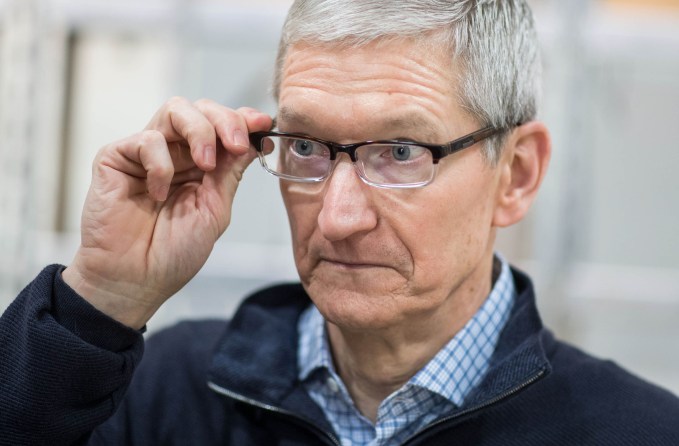
Apple CEO Tim Cook is now the top advisor to a business school called China’s Harvard

The issues around the App Store’s intersection with U.S. politics aren’t limited to TikTok.

Apple, already under scrutiny for removing a crowdsourced mapping app that showed police presence in Hong Kong, last week attracted a letter from a bipartisan group of U.S. lawmakers who urged to have the app reinstated. 

Now (with a lack of concern over the optics apparently), Apple CEO Tim Cook has been appointed as chairman of Tsinghua University’s business school advisory board. The university is known as “China’s Harvard,” and is one of the most country’s most elite institutions; Chinese President Xi Jinping is a noted alumnus. The university has a history of relationships with Western leaders — last year, Mark Zuckerberg, Elon Musk, and Satya Nadella were listed as board members, and its previous chairman was American VC Jim Breyer.

But given the issues around Apple’s capitulation to China’s demands to censor its App Store in the region — not to mention the U.S.-China trade war, or how Apple had told Apple TV+ showrunners not to anger China — everyone pretty much agrees it was not the best timing for this news.

Unfortunately for Apple, it can’t abandon China now, as it’s grown too dependent on its business there. As Vox recently reported:

Unlike tech companies that haven’t broken into the country or only do minor business in it, Apple is now so deep in China that leaving it could be catastrophic. Even if the company was willing to forgo the $44 billion a year in sales it makes in China, it can’t leave the deep network of suppliers and assemblers that build hundreds of millions of iPhones every year.

Millions of malicious apps get booted from Google Play…and malicious apps spotted on the App Store, too

Malicious apps were found on both Google Play and the App Store this week. But these stories are not at all the same.

Security researchers found dozens of Android apps in the Google Play store serving ads to unsuspecting victims as part of a money-making scheme. The 42 apps containing adware had been downloaded more than 8 million times since they first launched in July 2018. The apps were also sending back data about the user’s device, TechCrunch reported — including if certain apps are installed and if the device allows apps from non-app store sources — which could be used to install more malicious software.

Sadly, this kind of thing happens a lot on Google Play.

What’s less common, however, is to find malware on the App Store — which happened this week, when 17 malicious apps were removed.

Screen Shot 2019 10 22 at 12.52.56 PM 1024x502