Vinted, the second-hand clothes marketplace, raises $141M at a $1B+ valuation

The market for second-hand clothes — the “circular economy” as it’s sometimes called — has been on the rise in the last several years, fuelled by economic crunches, a desire to make more responsible and less wasteful fashion choices, and a wave of digital platforms that are bringing the selling and buying of used clothes outside the charity shop. Today, one of the bigger companies in Europe working in the third of these areas is announcing a huge round of funding to double down on the trend.

Vinted, a site where consumers can sell and buy second-hand fashion, has raised €128 million (around $140.9 million) in a round that is being led by Lightspeed Venture Partners, with previous backers Sprints Capital, Insight Venture Partners, Accel and Burda Principal Investments also participating.

With this investment, the startup — founded and headquartered out of Vilnius, Lithuania — has passed a valuation of $1 billion (it is not specifying an exact amount), making it one of the biggest startups to come out of the country (but not the Baltics’ first unicorn… Estonian Uber competitor Bolt, formerly known as Taxify, is also valued at over $1 billion.)

The company is going to use the money to continue expanding in Europe, and building out more features on its platform to improve the buying and selling process, while sticking to its goal of providing a platform for consumers to list and buy used fashion.

“We want to make sure we don’t have new products,” CEO Thomas Plantenga said in an interview earlier. “All our sellers are regular people.” Some 75% of Vinted’s customers have never bought or sold second hand clothes in their lives before coming to the platform, he added. “The stigma is no longer there.”

Vinted’s growth comes on the heels of a remarkable turnaround for the startup. Founded in 2008 by Milda Mitkute and Justas Janauskas as a way to help Mitkute clear out here wardrobe before a house move, the company expanded fast, but at a price: by 2016, it was close to running out of money and business had slowed down to a crawl. Investors brought in Plantenga to turn it around.

“We changed the business model in 2016 to make the costs as low as possible for users to list clothes,” Pantenga said today. “That produced a dramatic change in our growth trajectory.”

The company, more specifically, went through some drastic changes. First, it clawed back a lot of its pricey international expansion strategy (and along with that a lot of the costs associated with it); and second, it removed all listing fees to encourage more people to list. Now, Vinted charges a 5% commission only if you conduct transactions on Vinted itself, bundling in buyer protection and shipping to sweeten the deal. (You can still post, sell and buy for free if you pay offline but you don’t get those perks.)

The turnaround worked, and the company bounced back, and two years later, in 2018, it went on to raise €50 million. Today, Vinted has some 180 million products live on its platform, 25 million registered users in 12 markets in Europe (but not the US) and 300 employees. It expects to sell €1.3 billion in clothes in 2019, has seen sales grow 4x in the last 17 months.

From fast fashion to fashion that lasts

Vinted’s rise has matched a wider trend in the region.

Europe is the home to some of the world’s biggest “fast fashion” businesses: companies like H&M, Zara and Primark have built huge brands around making quick copies of the hottest styles off the fashion presses, and selling them for prices that will not break the bank (or at least, no more than you might have previously paid to buy a pair of average jeans on the discount rack of a Gap).

But it turns out that it’s also home to a very thriving market in second-hand clothes. One estimate has it that two out of every three Europeans has bought a second-hand good, and 6 out of 10 have sold their belongings using platforms dedicated to second-hand trade.

Even as the company continues to hold back on expanding into the US — perhaps burned a little too much by its previous efforts there; or simply aware of the wide competition from the likes of Ebay, OfferUp, Letgo, Poshmark, and many more — Vinted’s growth in Europe has caught the eye of investors in the that market.

“At Lightspeed, we look for outlier management teams building generational companies. We’ve been impressed by the team’s ability to build an incredible product and value proposition for their community, and adapt and expand their business along the way,” said Brad Twohig, a partner at Lightspeed. “Vinted is defining its market and has built a global brand in C2C commerce and communities. We’re proud to partner with Vinted and leverage our global platform and resources to help them continue to build on their success and achieve their goals.”

While charity shops have traditionally dominated this market, sites like eBay, followed by a secondary wave of platforms like Vinted and another competitor in this space, Depop, have made selling and buying items into an established, low-barrier business.

All the same, given that extending the life of one’s goods feeds into a do-good ethos, it’s noticeable to me that Vinted hasn’t quite replaced the Salvation Army: there is virtually no way to sell on Vinted and give the proceeds to charity, if you so choose.

It appears that this might be something Vinted will try to address in the future.

“We are looking at making fashion circular for our users so that clothing that they bought doesn’t go to waste,” Plantenga said. “[Giving proceeds to charity] is super interesting and we should explore it as part of our growth story. To be honest, those things have been in the background and not developed because we’ve just been trying to keep up with everything, but the idea fits into our culture.”

E-commerce — in particular startups nipping at the heels of bigger players like Amazon and eBay by focusing on specific areas of the market that aren’t as well served by them — has had a bumper day in Europe, after brick-and-mortar marketplace Trouva earlier today also raised a sizeable round.
Revolut supports direct debits in the UK

Fintech startup Revolut is adding a key feature for users who want to replace their traditional bank account altogether. You can now pay with GBP direct debits. Revolut already added EUR direct debits last year.

While most people use cards to pay for goods and services in the U.K., some businesses require you to pay with direct debit. It can be a utility bill, a gym membership or a phone contract for instance.

Compared to card transactions, direct debits pull money directly from your account and transfer it to the recipient’s account. It doesn’t go through Mastercard or Visa. Some businesses love direct debits because it’s usually cheaper than card processing fees. Direct debits also don’t have an expiry date, unlike cards.

Customers from the European Economic Area can now share their GBP account details for direct debits in the U.K. Direct debits are protected against some fraud and payment errors by the U.K. Direct Debit Guarantee.

Revolut has partnered with Modulr for this feature as it uses Modulr’s API. Business customers will also be able to take advantage of direct debits. You can now pay suppliers with your account details, which could be convenient for large sums of money for instance.

Gift Guide: Photography accessories for the shutterbug in your life

Looking for some gift ideas for the photographer in your life? Look no further. Though shooters amateur and professional tend to take care of their own needs pretty well, there are plenty of things you can given them that they’ll appreciate. But you might have to be ready to spend a bit — people don’t pick up this hobby because it’s so cheap.

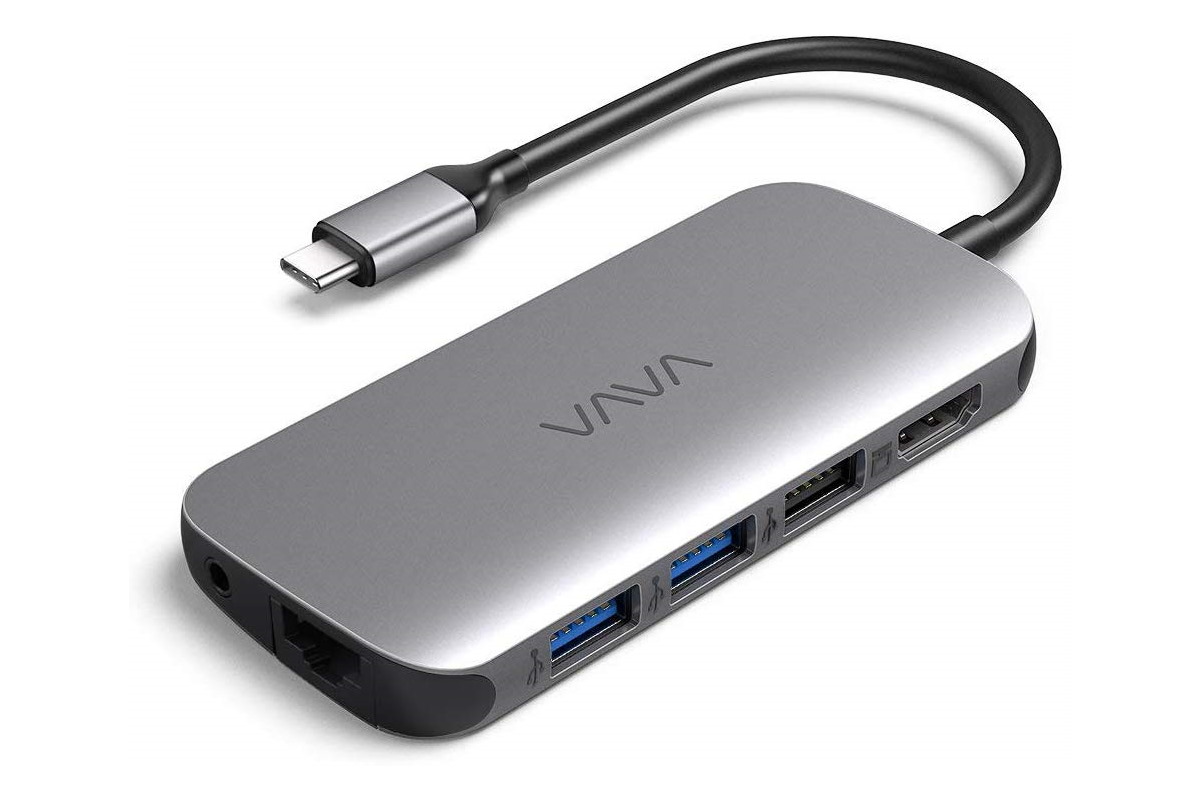
USB-C Hub – $40-$60

A lot of the latest laptops are eschewing a variety of ports for more or only USB-C. Some like this trend, and some hate it, but one way or another you’ve got to deal with it. Photographers especially. This Vava hub has pretty much everything your average shooter needs, including old-type USB ports for legacy gear, an SD card reader, and a headphone jack for reviewing video. This one is $60 but there are bigger and smaller ones if you happen to know they use Ethernet, microSD, and so on. Just stay away from the bargain bin ones — you don’t want to mess around when it comes to carrying lots of power.

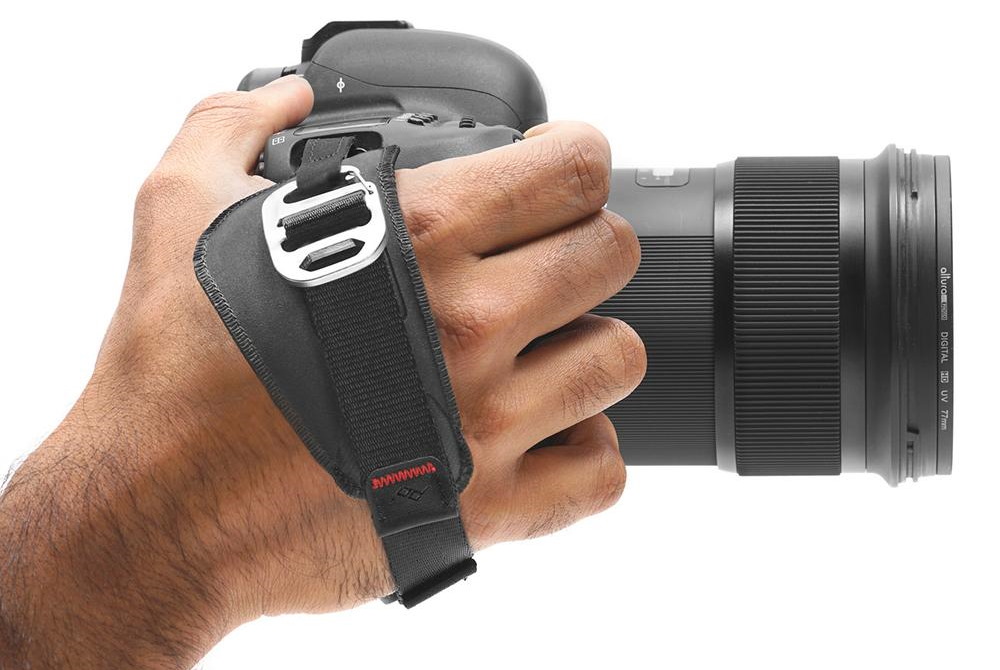
Hand strap – $10-$40

Everyone has a neck strap for their camera because they always come with one. But not everyone wants to use them — the included ones are cheap and even good ones can be annoying. A hand strap is a good alternative that adds a lot of security very simply. For a smaller camera like a mirrorless, a simple, high quality strap like Gordy’s is a good option. And for heavier bodies like DSLRs with big lenses, Peak Design’s Clutch is a solid one that works across many brands. Many camera manufacturers make their own as well, but we’ve found that Peak often makes meaningful improvements on suchstandard models.

Extra SD cards and a carry case – $30-40

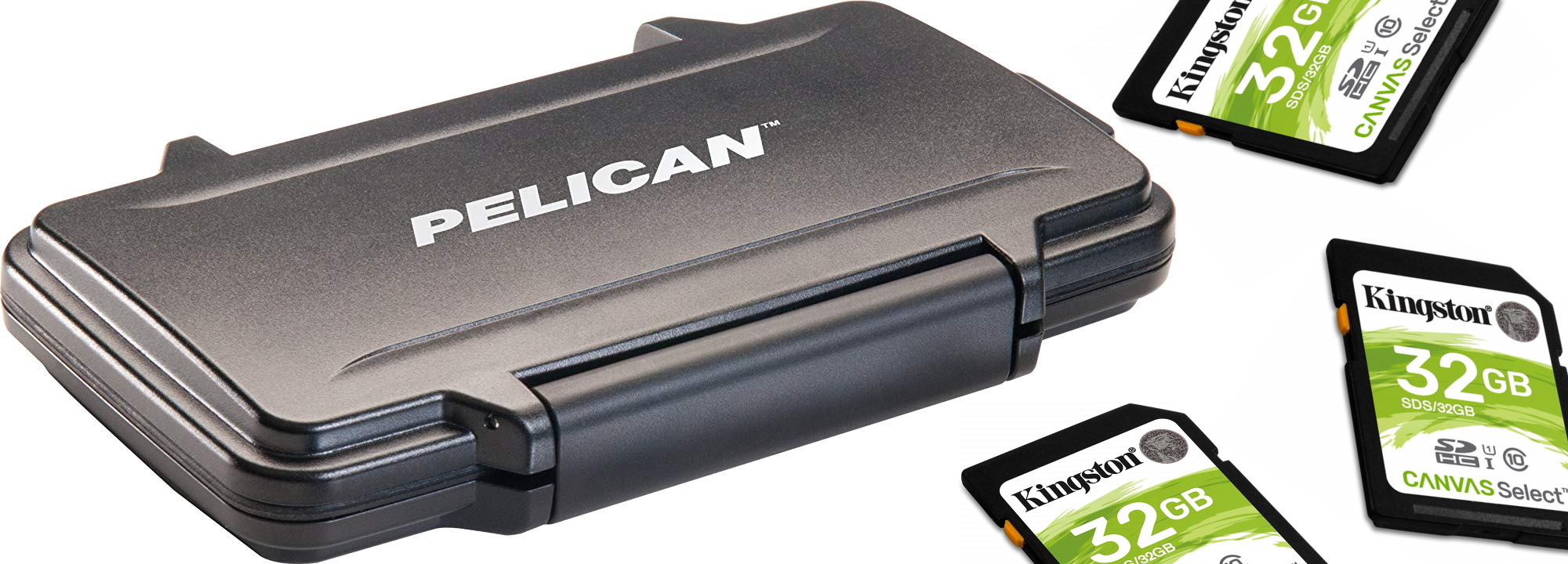
A photographer can never have too many cards, and a good case never goes amiss, either. You can’t go wrong with Pelican when it comes to cases, even if $30 seems a lot to spend on a little plastic clamshell with foam inside. As for SD cards, 32 gigabytes is a nice safe number. Just make sure you stick to known brands like Sandisk and Kingston, and make sure it’s a “Class 10” card — lower numbers mean slower transfer speeds.

A year of Adobe – $120

This is a tough one. Lots of photographers use Lightroom and Photoshop, and it would be nice to be able to gift them a few months or a year’s worth of subscription to Adobe’s platform. But Adobe makes this so hard to do that we can’t actually figure out a good way to do it. Nevertheless, if you can figure out a creative way to go about this, your photographer friend will appreciate it. Adobe, if you’re reading this, make this work!

Microfiber wipes – $10-15

One thing you can never have too many of as a photographer is lens wipes. Some prefer the disposable type and/or a little air puff, but a pack of small microfiber ones will also be welcome, as they can be used for glasses, laptop screens, and everything else as well. They’re all pretty much the same and you can get a dozen small ones for less than ten bucks.

A decent bag – $100-400

waxed messengers 28

It’s amazing how often a photographer will spend a thousand bucks on a lens but have their gear sloshing around in some old backpack. A good bag helps keep your gear safe but also makes you a better shooter by making you organize, inventory, and keep things accessible. There are a lot of great bags to choose from out there, which is why we have Bag Week, but I’m partial to Ona for waxed and vintage style camera bags and Peak Design for a more modern, synthetic style.

Soft shutter release – $25

A soft shutter release is definitely a niche gift, but if you have someone on the list who shoots one of Fujifilm’s rangefinder-style cameras, or a Leica if they’re really fancy, a soft shutter release is an awesome, inexpensive stocking stuffer. The Match Technical Boop-O pictured above on an X-T3 camera adds a very nice, easy-to-squeeze ergonomic shutter control to the existing flat button. It screws into a hole that’s already built in to Fuji cameras that support this, including the X100-series and the X-T series cameras, to name just a few popular options. Stick-on soft shutter releases are also available for cameras that don’t have this mount built-in.

Portable lighting – $70-$500

If you think photographic lighting is just about on-camera flash, then you probably haven’t done enough experimenting with the variety of smart lightening accessories out there. Two great options are the Lume Cube line of products (Lume Cube Air pictured, left above) and the Profoto C1 and C1+. These serve different needs, but can both be used to help you do really fun stuff with both smartphone and dedicated camera-based photography. The price ranges vary, but Profoto’s offering is aimed more at pros who want portable lighting that approaches what you can get out of much more expensive studio setups, while Lume Cube is better suited to the action and drone photography set.

Gnarbox – $500-$900

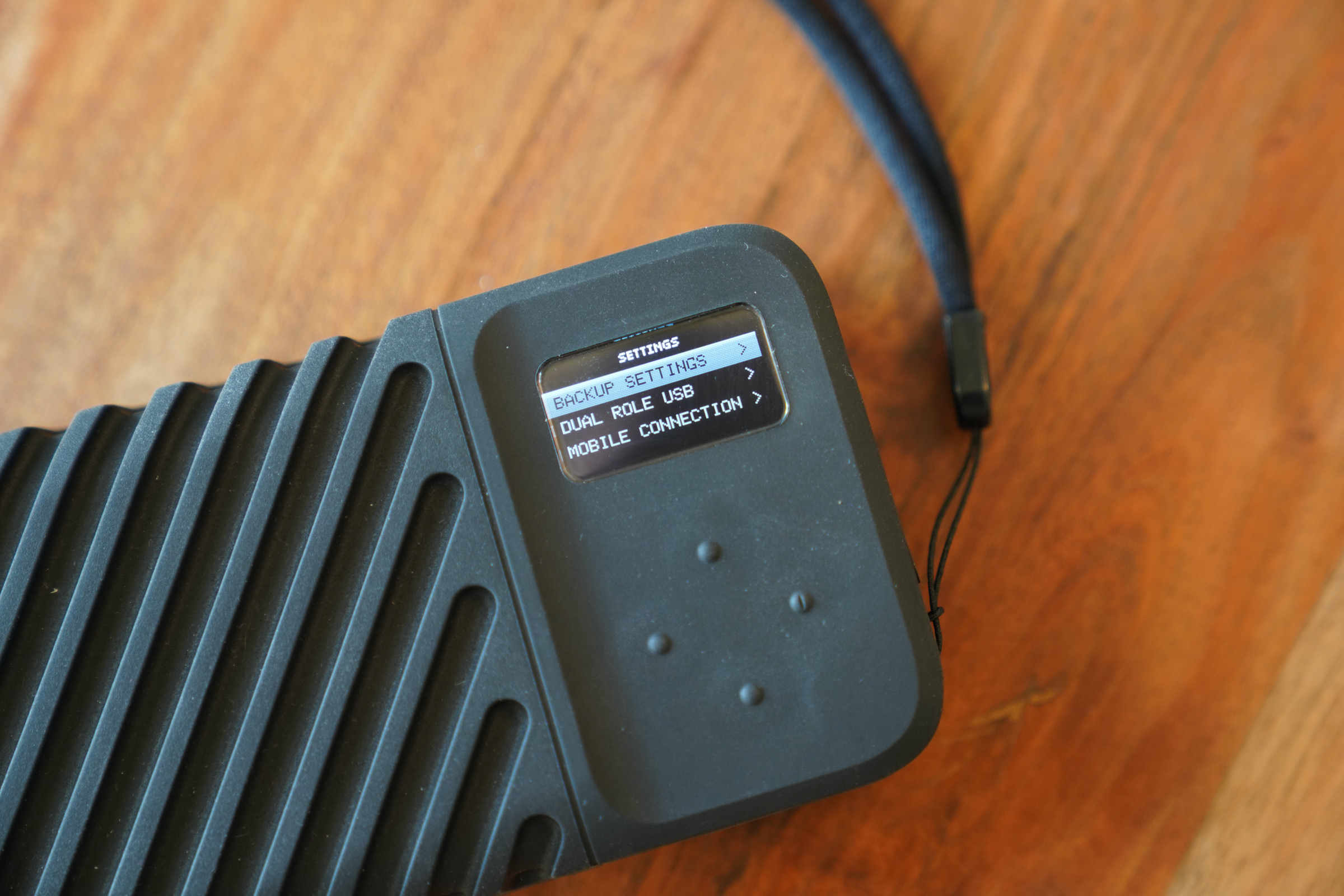
Gnarbox 2.0 6This is definitely a gift reserved only for the people who merit big ticket purchases on your list, given its price. It’s also designed specifically to suit the needs of creative professionals, so it’s probably too much gear for most people. That said, if there is a pro photographer or videographer in your life who you really care deeply about, this is likely to be a gift that they’ll value – even if they already have one, since it’s the kind of gear where more = better. The Gnarbox provides easy SD backup and file management for photos and videos, so that you can keep shooting longer in the field and work with the files on the go. The 2.0 version is finally shipping, which offers SSD-based storage for much faster transfer and working speeds.

Mini tripod – $12 – $35

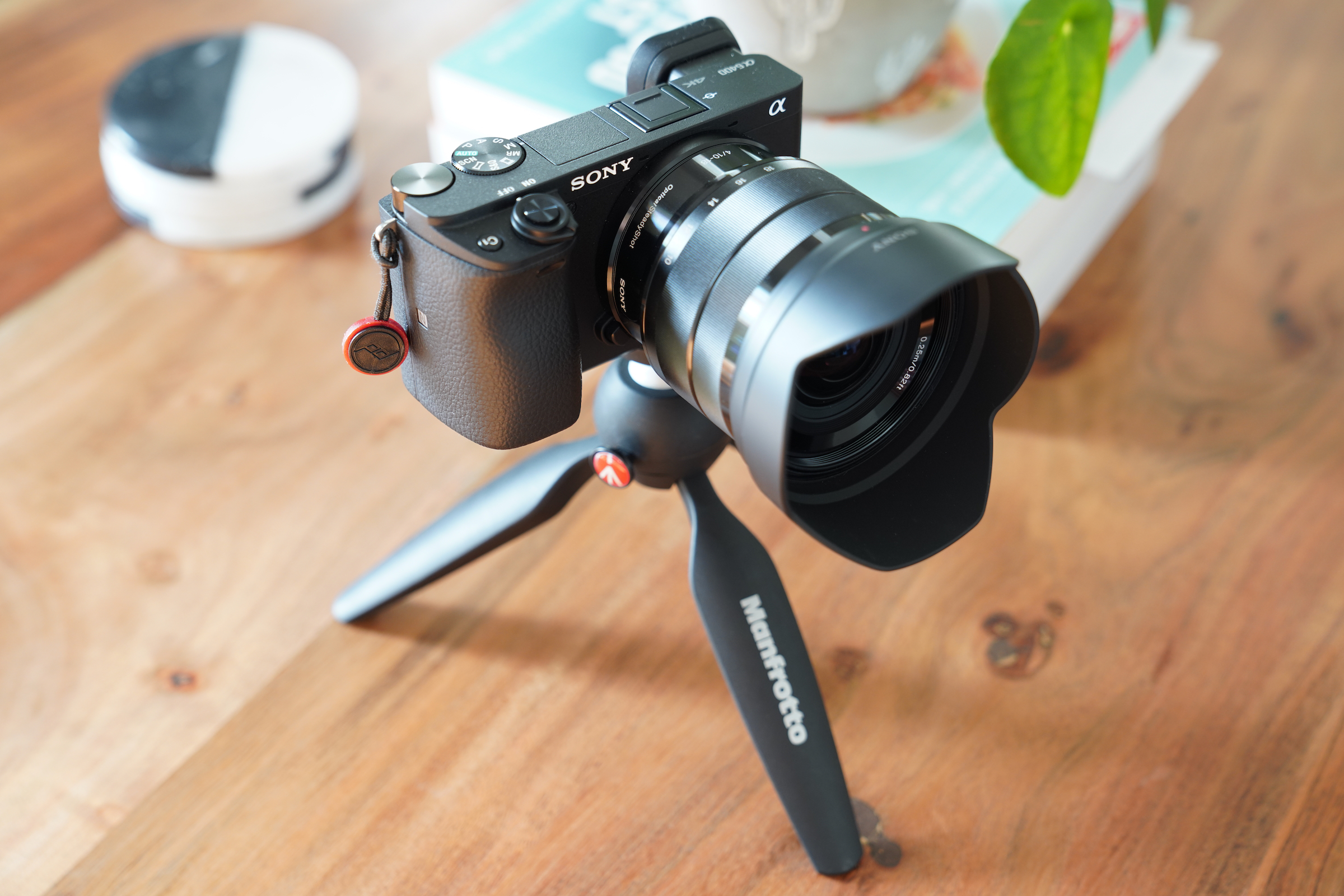
A mini tripod is a great addition to any photography kit, and there are a range of options available to suit different sizes and types of cameras, from smartphones all the way up to big DSLRs. The best value for money just might be the Manfrotto PIXI lineup, however, which itself comes in a range of options. The basic PIXI Mini Tripod is probably plenty enough for most, and can really help make sure that you get great travel shots and selfies while keeping your pack light. The PIXI EVO gives you a bit more flexibility with extendable legs for a bit more money.

Top mobility VCs discuss their current investment strategies

The mobility industry is rapidly shifting to readjust for an electric and autonomous future.

Automotive companies are increasingly looking outside the manufacturing sector to fuel growth, and companies that used to bank on selling vehicles are now building mobility apps, scooters, and subscription services. Detroit is turning to to Silicon Valley for fresh ideas while Silicon Valley is studying Detroit for proven methods.

We surveyed top VCs in the mobility sector to see where they’re putting their money, and one thing quickly became apparent — investors are funding startups that bring connectivity to mobility. From automobile components to social apps, connectivity is critical to investors and the industry alike.

Reilly Brennan, general partner, Trucks VC
Michael Granoff, managing partner, Maniv Mobility
Jim Adler, founding managing director, Toyota AI Ventures
Dr. Ulrich Quay, managing partner, BMW i Ventures

Answers were edited for clarity.

Reilly Brennan, general partner, Trucks VC

Where are you investing in the automotive space?

We invest in startups that make transportation safer, cleaner, and more accessible. Anything that moves goods or people is interesting to us. We are first interested in exceptional founders, then exceptional ideas. For example, we just invested in a new type of car wash that doesn’t use any soap or chemicals; although it was never our intent to seek out that idea, we really believed in the founders’ vision for making it happen.

Which areas in automotive offer the most opportunity for startups?

There are many big opportunities across transportation — such is the case when you’re operating in markets measured in trillions. Right now, I am more convinced than ever that there is a 10-figure opportunity for a new navigation app — it’s one of the few/only transportation-related apps on everyone’s home screen. Still, the leaders are mostly incumbents (Apple Maps, Google Maps), where the products are good but haven’t made fundamental leaps in years or an app like Waze, which is high utility but low user experience. Other than YouTube, Waze is probably Google’s only social network, although I doubt they think of it like that. For how important navigation is and will be, we’ve been surprised more founders don’t create more there because the value is high. If you are working on something in this space, please email me! [email protected]

What makes a startup attractive for investment from OEMs?
Most OEMs are interested in companies that support their future product vision. Every once in a while, you will find an OEM with an alternative strategy that does not invest in supporting their products, but these are quite rare. As a result, startups who are actively selling in the auto supply chain are the best positioned for auto investment. Remember that many OEMs passed on investing in Uber in the early days.

Dr. Ulrich Quay, managing partner, BMW i Ventures

Simple Contacts has a new service letting users cheaply switch contact lens prescriptions

Simple Contacts has launched a new service letting users try out new contact lenses for as little as $3.

The company launched a little over three years ago as a way for contact lens wearers to slash their refill costs, has now expanded into a service that offers users a chance to try out different lenses to see what might be a better fit.

Contact lenses are a big business. Just ask Warby Parker,<a href=”https://www.warbyparker.com/contacts”> which recently entered the market with their “Scout” brand for contacts.

“Warby will get a lot of people thinking about dailies, and that’s a great thing for eye health,” says Joel Wish, the founder and chief executive of Simple Contacts. “There are a lot of choices in the market already, and we help patients navigate that by giving them a a personalized lens recommendation and issuing a prescription all online.”

Users who want to try out a new contact lens prescription can take an online test and give certain information about the contacts they currently wear, according to Bharat Ayyar, the general manager at Simple Contacts. Once the test is complete, and the company is assured that a user’s prescription hasn’t changed, Simple Contacts will recommend a daily disposable lens that would be the right fit for a user.

“If you have any questions or issues you can text the doctor,” says Bharat. “You test to see that you see clearly. If you like them you subscribe to them and it’s super easy if you don’t like them you can go back to your old lenses.”

Simple Contacts argues that the price is far more affordable than a visit to the optometrist. In person consultations can cost as much as $200. “Going from $200 plus to get lenses to $3 to get lenses, it’s a huge difference,” says Bharat.

The launch of its new contact lens product isn’t the only change afoot at Simple Contacts. The company has also begun offering a broader array of prescription services under the Simple Health brand as it expands into other aspects of the health care market and looks to compete with companies like Hims, Roman, and NuRX.

“We started delivering birth control last November,” says Wish. “It’s a natural extension of what we’re doing. Our mission is to increase access to care. We’re doing that by making it more cost effective and convenient to get care online. Birth control is another product that’s restricted by the doctor.”

Using influencer marketing on YouTube, Instagram, Vimeo and TikTok, Simple Health has grown its subscriber base quickly over the course of the past year, says Wish.

“We do not need to be the first mover to win,” says Wish of the incredible competition from other prescription drug providers online. “Only a few hundred thousand patients getting birth control are getting it online out of 10 million.”

The market is massive and already Simple Health is generating revenue in the seven figures per-month, according to the company’s chief executive.

It’s all part of the plan to expand upon the technology stack for remote consultations that Simple Contacts built as it was growing the contact lens business.

“Adding other verticals is something we can add to the existing system,” says Wish. “We bought simplehealth.com first. The idea was that we could give you access to medications for chronic conditions. Contact lenses are unique in t hat they don’t require a pharmacy and are less complicated and it allowed us to build the infrastructure for virtual pharmacies.”


Apple and Google Maps accommodate Russia’s annexation of Crimea

Global politics are difficult to navigate ordinarily, but in times of conflict companies that aim to provide an unbiased service, such as a map or search function, may have to come down on one side or another. Apple just came down at least partly on the side of Russia in its controversial annexation of Crimea from Ukraine, and Google has accommodated Russian interests as well.

The large peninsula on the north side of the Black Sea was brought under Russian control in 2014 during political unrest there concerning Crimea’s status within Ukraine. World leaders decried the move, saying that Russia had deliberately helped instigate the crisis there in order to take advantage of it, and violated Ukraine’s sovereignty with its military presence.

While the controversy surrounding these events are ongoing (indeed, the events themselves are too, in a way), companies like Apple and Google don’t have the luxury of waiting for history’s judgment to do things like update their maps.

Both, for instance, have in the past labeled locations in Crimea as being part of Ukraine. But Russia has made official complaints to the companies and warned them that it is considered a criminal act to refer to Crimea as other than a Russian territory. Now both companies have made concessions to Russian demands.

Apple in its Maps and Weather app now shows locations in Crimea as being part of Russia, when being viewed from that country. Russian authorities today said that “Apple fulfilled its obligations and brought the applications on its devices in compliance with the requirements of the Russian legislation.”

If you’re viewing from the U.S., both Apple and Google appear to take something of a neutral stance, if any stance can be said to be neutral. The Crimean peninsula appears as neither Russian nor Ukrainian on both Apple and Google Maps, with some rather strange gymnastics to accomplish it.

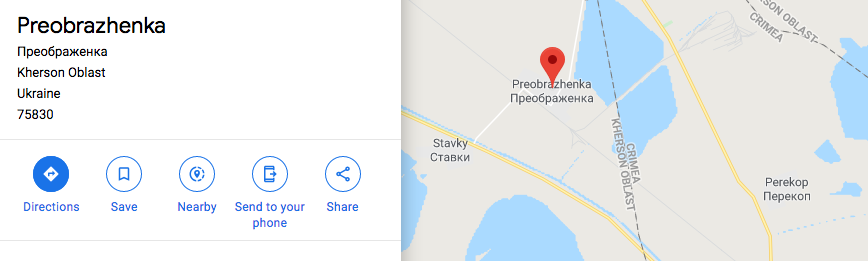
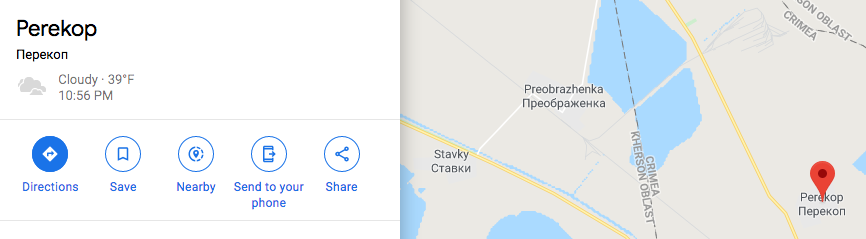
For example, in Google Maps there is a prominent border on the north side dividing Crimea from Kherson Oblast (a Ukrainian province), much heavier than lines between other provinces. Clicking Kherson Oblast on the border brings up a description and outline, while clicking Crimea seems to do nothing at all. On cities and random locations located in Crimea, there is no country at all in the space where it is normally displayed:

On both Apple and Google Maps, there is no border at all between Crimea and Russia where it would normally appear, across Taman Bay. Yet on one side of the bay locations are prominently labeled as Russian, while on the other they are devoid of a country affiliation.

I’ve asked Google and Apple for comment on when and how they decided to implement their current maps and will update this post if I hear back. It’s very likely that both will justify these decisions with the fact that they must adhere to local laws. But what happens when two sets of local laws diverge in the same location?

Update: A Google spokesperson says: “We make every effort to objectively depict the disputed regions, and where we have local versions of Google Maps, we follow local legislation when displaying names and borders.”

My point here is not to take sides for or against any of these representations, but to show that companies like Apple and Google are in a tight spot when it comes to these situations, and their information is far from complete or authoritative. In this case we see that they have different results for different places, concessions for some governments in spite of international concern, and the reduction of some services to a non-functional state (comparatively) in order to avoid controversy.

Just something to keep in mind whenever you look up information on services provided by global companies — they’re not objective sources, though of course arguably nothing is.

Gift Guide: Essential security and privacy gifts to help protect your friends and family

There’s no such thing as perfect privacy or security, but there’s a lot you can do to lock down your online life. And the holiday season is a great time to encourage others to do the same. Some people are more likely to take security into their own hands if they’re given a nudge along the way.

Here we have a selection of gift ideas — from helpful security solutions to unique and interesting gadgets that will keep your information safe, but without breaking the bank.

A hardware security key for two-factor

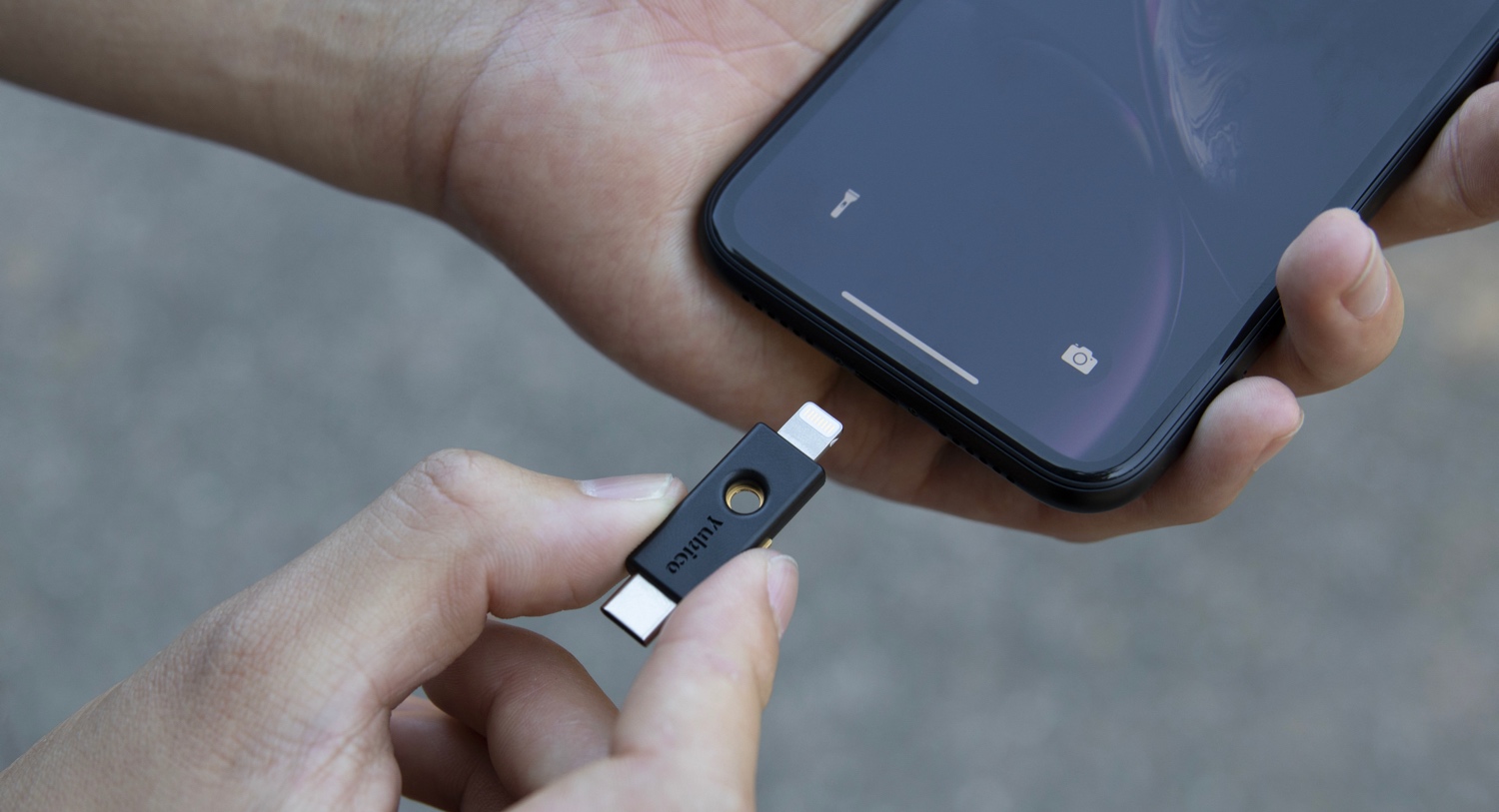
Your online accounts have everything about you and you’d want to keep them safe. Two-factor authentication is great, but for the more security minded there’s an even stronger solution. A security key is a physical hardware key that’s even stronger than having a two-factor code going to your phone. These keys plug into your USB port on your computer (or the charger port on your phone) to prove to online services, like Facebook, Google, and Twitter, that you are who you say you are. Google’s own data shows security keys offer near-unbeatable protection against even the most powerful and resourced nation-state hackers. Yubikeys are our favorite and come in all shapes and sizes. They’re also cheap. Google also has a range of its own branded Titan security keys, one of which also offers Bluetooth connectivity.

Price: from $20.
Available from: Yubico Store | Google Store

Webcam cover

Surveillance-focused malware, like remote access trojans, can infect computers and remotely switch on your webcam without your permission. Most computer webcams these days have an indicator light that shows you when the camera is active. But what if your camera is blocked, preventing any accidental exposure in the first place? Enter the simple but humble webcam blocker. It slides open when you need to access your camera, and slides to cover the lens when you don’t. Support local businesses and non-profits — you can search for unique and interesting webcam covers on Etsy

Price: from $5 – $10.
Available from: Etsy | Electronic Frontier Foundation

A microphone blocker

Now you have you webcam cover, what about your microphone? Just as hackers can tap into your webcam, they can also pick up on your audio. Microphone blockers contain a semiconductor that tricks your computer or device into thinking that it’s a working microphone, when in fact it’s not able to pick up any audio. Anyone hacking into your device won’t hear a thing. Some modern Macs already come with a new Apple T2 security chip which prevents hackers from snooping on your microphone when your laptop’s lid is shut. But a microphone blocker will work all the time, even when the lid is open.

Price: $6.99 – $16.99.
Available from: Nope Blocker | Mic Lock

A USB data blocker

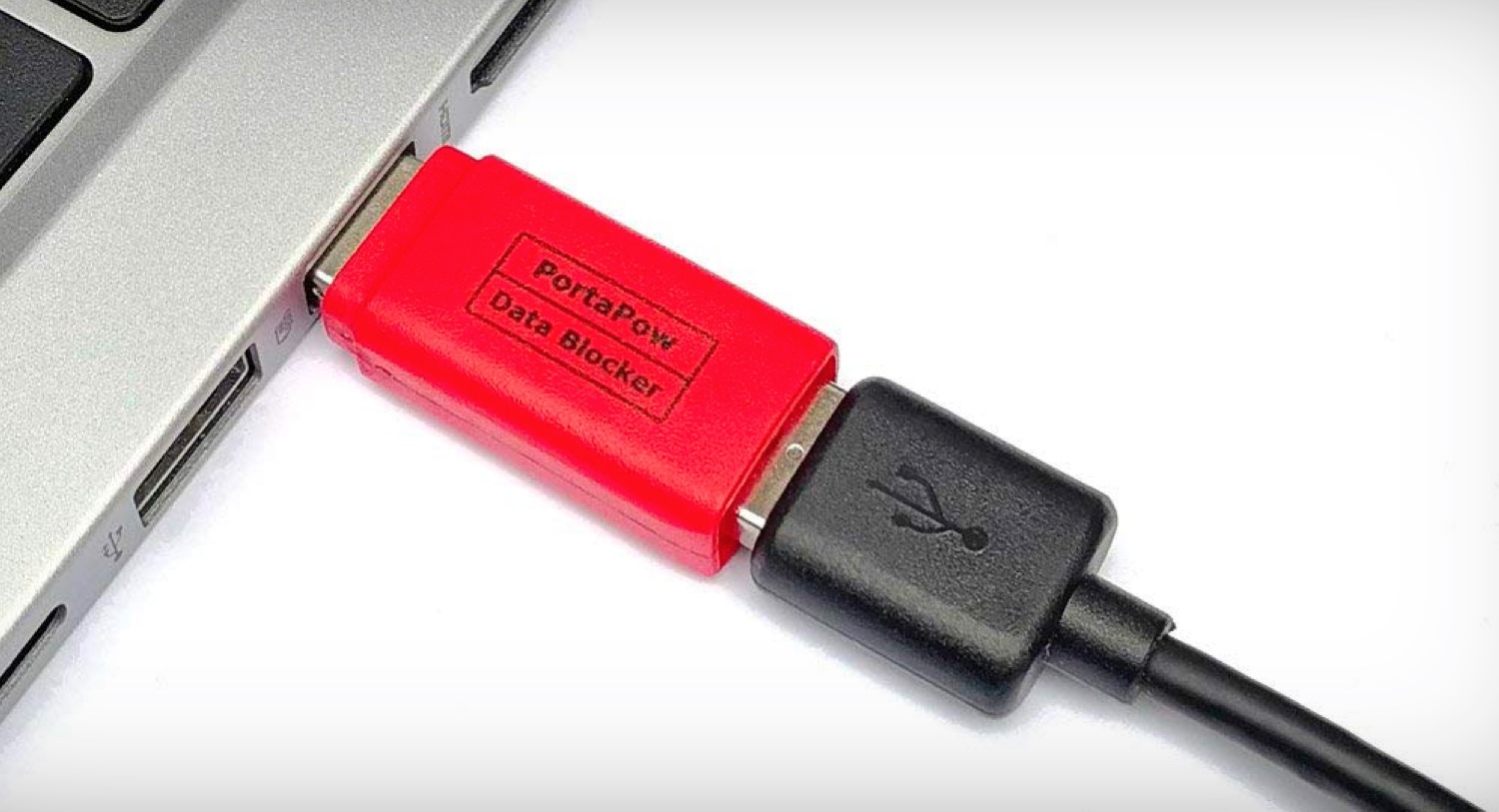
You might have heard about “juice-jacking,” where hackers plant malicious implants in USB outlets, which steal a person’s device data when an unsuspecting victim plugs in. It’s a threat that’s almost unheard of, but proof-of-concepts have shown how easy it is to implant malicious components in legitimate-looking cables. A USB data blocker essentially acts as a data barrier, preventing any information going in or out of your device, while letting power through to charge your battery. They’re cheap but effective.

Price: from $6.99 and $11.49.
Available from: Amazon | SyncStop

A privacy screen for your computer or phone

How often have you seen someone’s private messages or document as you look over their shoulder, or see them in the next aisle over? Privacy screens can protect you from “visual hacking.” These screens make it near-impossible for anyone other than the device user to snoop at what you’re working on. And, you can get them for all kinds of devices and displays — including phones. But make sure you get the right size!

Price: from about $17.
Available from: Amazon

A password manager subscription

Password managers are a real lifesaver. One strong, unique password lets you into your entire bank of passwords. They’re great for storing your passwords, but also for encouraging you to use better, stronger, unique passwords. And because many are cross-platform, you can bring your passwords with you. Plenty of password managers exist — from LastPass, Lockbox, and Dashlane, to open-source versions like KeePass. Many are free, but a premium subscription often comes with benefits and better features. And if you’re a journalist, 1Password has a free subscription for you.

Price: Many free, premium offerings start at $35.88 – $44.28 annually
Available from: 1Password | LastPass | Dashlane | KeePass

Anti-surveillance clothing

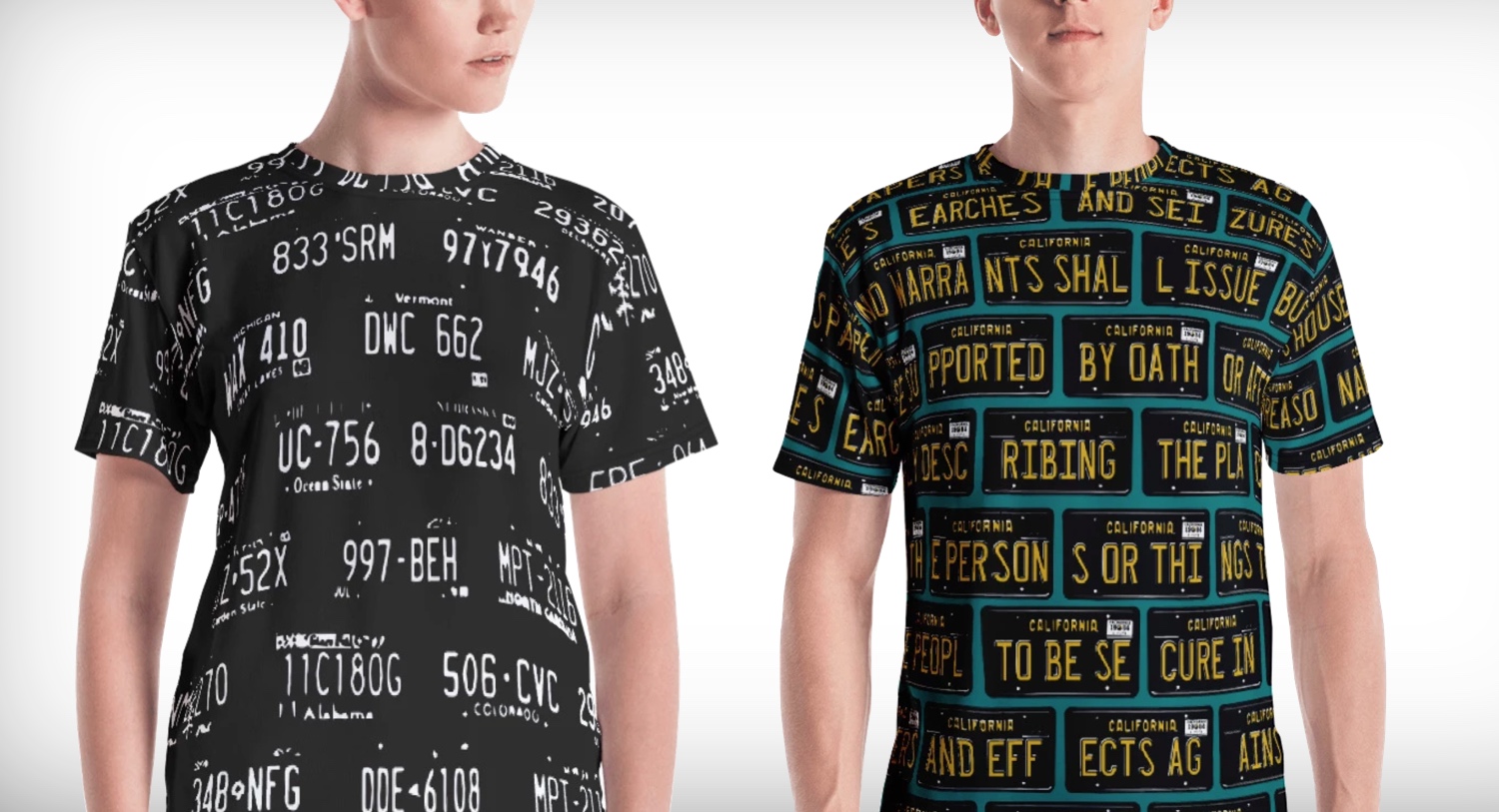
Whether you’re lawfully protesting or just want to stay in “incognito mode,” there are — believe it or not — fashion lines that can help prevent facial recognition and other surveillance systems from identifying you. This clothing uses a kind of camouflage that confuses surveillance technology by giving them more interesting things to detect, like license plates and other detectable patterns.

Price: $35.99.
Available from: Adversarial Fashion

Pi-hole

Think of a Pi-hole as a “hardware ad-blocker.” A Pi-hole is a essentially a Raspberry Pi mini-computer that runs ad-blocking technology as a box that sits on your network. It means that everyone on your home network benefits from ad blocking. Ads may generate revenue for websites but online ads are notorious for tracking users across the web. Until ads can behave properly, a Pi-hole is a great way to capture and sinkhole bad ad traffic. The hardware may be cheap, but the ad-blocking software is free. Donations to the cause are welcome.

Price: From $35.
Available from: Pi-hole | Raspberry Pi

And finally, some light reading…

There are two must-read books this year. NSA whistleblower Edward Snowden’s “Permanent Record” autobiography covers his time as he left the shadowy U.S. intelligence agency to Hong Kong, where he spilled thousands of highly classified government documents to reporters about the scope and scale of its massive global surveillance partnerships and programs. And, Andy Greenberg’s book on “Sandworm”, a beautifully written deep-dive into a group of Russian hackers blamed for the most disruptive cyberattack in history, NotPetya, This incredibly detailed investigative book leaves no stone unturned, unravelling the work of a highly secretive group that caused billions of dollars of damage.

Price: From $14.99.
Available from: Amazon (Permanent Record) | Amazon (Sandworm)

Twitter tests new conversation features from twttr prototype, rollout planned for 2020

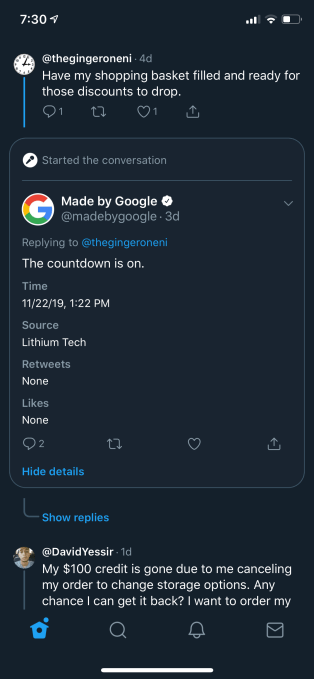
Twttr, the prototype app Twitter launched earlier this year, has been testing new ways to display conversations, including through the use of threaded replies and other visual cues. Now, those features have been spotted on Twitter.com, giving the service a message board-like feel where replies are connected to original tweeter and others in a thread by way of thin, gray lines.

As you may recall, the goal with twttr was to give Twitter a place outside of its main app to publicly experiment with more radical changes to the Twitter user interface, gain feedback, then iterate as needed, before the changes were rolled out to Twitter’s main user base. Since its arrival in March, the prototype twttr app has focused mainly on how threaded conversations would work, sometimes including different ways of labeling the posters in a thread, as well.

Currently, for example, twttr labels the original poster — meaning the person who started a conversation — with a little microphone icon, similar to Reddit. It’s also testing a way to view the tweet details in a card-style layout you can activate with a tap.

But its main focus continues to be on the display of the threads themselves.

Following its launch, the work on twttr slowed as did the excitement over its exclusive, invite-only Twitter experience. Instead of being a continual testbed of new ideas, twttr mostly rolled out small tweaks to threads. And it never branched out beyond conversation redesigns to test entirely new features, like Twitter’s recently launched Topics, for example.

In August, Sara Haider, who had been heading up the design of Conversations on Twitter — a role that included running twttr — announced she would be moving to a new team at the company. Meanwhile, Suzanne Xie, who had just joined Twitter by way of the Lightwell acquisition, stepped in to lead Conversations instead. She confirmed at the time that part of her role would be working with the twttr team to bring its best parts to the main Twitter app.

That work now appears to be underway.

Noted reverse engineer Jane Manchun Wong spotted a conversation tree layout being developed on Twitter.com, identical to the one found on twttr.

Twitter Web App is testing reddit-like conversation tree

The concept first appeared on its experimental Twttr iOS app, and now it might come to the web app too! It helps keeping track of the flow of conversation pic.twitter.com/wlOvTR4IWP

— Jane Manchun Wong (@wongmjane) November 8, 2019

And just this week, the feature was tweaked a bit more to include the ability to focus on a specific tweet, even from a permalink — also similar to twttr’s card-style layout, which highlights tweets you tap within a thread in the same way.

Twitter continues working on Conversation Tree

now with the ability to focus a specific tweet, even from a permalink pic.twitter.com/CVadSqbFDP

— Jane Manchun Wong (@wongmjane) November 26, 2019

Wong wasn’t opted into an A/B test on Twitter.com to view this feature but rather found it through her investigative techniques, we understand.

Twitter confirmed what she found is part of the company’s broader plan to bring twttr’s features to Twitter — a rollout that will take place next year, a spokesperson said. However, not all the features discovered by Wong will be a part of the launch — just the “best parts” of twttr. (Meaning, the conversation threads, but not necessarily the other tweaks.)

In addition, the company is considering how to use the twttr app to experiment with other features going forward, it says.


Twitter to add a way to ‘memorialize’ accounts for deceased users before removing inactive ones

Twitter has changed its tune regarding inactive accounts after receiving a lot of user feedback: It will now be developing a way to “memorialize” user accounts for those who have passed away, before proceeding with a plan it confirmed this week to deactivate accounts that are inactive in order to “present more accurate, credible information” on the service.

To the company’s credit, it reacted swiftly after receiving a significant amount of negative feedback on this move, and it seems like the case of deceased users simply wasn’t considered in the decision to proceed with terminating dormant accounts.

After Twitter confirmed the inactive account (those that haven’t tweeted in more than six months) cleanup on Tuesday, a number of users noted that this would also have the effect of erasing the content of accounts whose owners have passed away. TechCrunch alum Drew Olanoff wrote about this impact from a personal perspective, asking Twitter to reconsider their move in light of the human impact and potential emotional cost.

In a thread today detailing their new thinking around inactive accounts, Twitter explained that its current inactive account policy has actually always been in place, but that they haven’t been diligent about enforcing it. They’re going to begin doing so in the European Union partly in accordance with local privacy laws, citing GDPR specifically. But the company also says it will now not be removing any inactive accounts before first implementing a way for inactive accounts belonging to deceased users to be “memorialized,” which presumably means preserving their content.

Twitter went on to say that it might expand or refine its inactive account policy to ensure it works with global privacy regulations, but will be sure to communicate these changes broadly before they go into effect.

It’s not yet clear what Twitter will do to offer this ‘memorialization’ of accounts, but there is some precedent they can look to for cues: Facebook has a ‘memorialized accounts’ feature that it introduced for similar reasons.

Latin America roundup: Neobanks raise $205M+; Softbank backs VTEX

Argentina’s Ualá became the most recent Latin American fintech to receive a growth-stage funding ($150 million) from Asian investors, Tencent and Softbank. 

This marks Tencent’s second round of investment in Ualá, the first coming in April 2019. Tencent also invested $180M in Brazil’s leading neobank, Nubank in 2018. With Ualá, Tencent and Softbank will join a team of investors including Soros, Goldman Sachs, Endeavor, Monashees, Ribbit Capital, and Jefferies LLC, who have backed Ualá since it was founded in 2016. Ualá has provided over 1.3M accounts for unbanked and under-banked Argentine customers in the past two years and recently launched new products for lending and savings. 

Ualá was not the only neobank celebrating a significant round this month; Brazil’s Neon raised a $94M Series B round from Banco Votorantim and General Atlantic just one week earlier. Neon offers a fully-digital bank card to almost 2M customers across Brazil, mostly concentrated in Rio de Janeiro and São Paulo. The round will enable Neon to expand beyond Brazil’s biggest cities and double its user base in 2020. 

Neon has raised $121M to date, with previous investors Quona Capital, Propel Venture Partners, Omidyar Network, and Monashees, also joining their most recent round. The two-year-old startup has been expanding its product offerings to include credit, investment, and most recently, a personal lending line in July 2019.

Neon’s products are helping to bring banking services to a famously complex and competitive market in Brazil. Brazil’s largest neobank, Nubank, is valued at $10B+, has 10M customers in Brazil and Mexico, and is now the most-downloaded neobank in the world. Brazil’s banking sector is one of the most lucrative in the world, with credit card interest rates reaching triple digits, whereas Nubank and competitors offer more US-style rates, putting Brazilian banks on the defensive against disruptors like Nubank and Neon who will drive competition. 

With strong funding from Asia, Brazilian, and US-based backers, these neobanks are gaining traction across the region to provide banking services to the 50% of Latin America’s population that is still excluded from traditional financial institutions. 

Softbank invests $140M in VTEX

VTEX, a Brazilian cloud e-commerce platform for large companies, joined the growing list of Softbank’s Brazilian portfolio companies, including QuintoAndar, MadeiraMadeira, Creditas, Buser, Gympass, and Loggi. The Japanese investor is supporting VTEX with a $140M investment to help the startup expand internationally and develop new products. 

VTEX already has 14 offices in Latin America, Europe, and the US, and serves over 2500 global clients including Ambev, Nestle, North Face, Coca Cola, and General Electric. VTEX’s solution involves a comprehensive digital commerce platform including order management, B2B marketplaces, web and in-store points of commerce, and customer service. As the back-end for some of the world’s largest companies, VTEX provides an enormous opportunity for integration with other marketplaces and platforms. 

LinkedIn expands to Mexico

Mexico is Latin America’s second-largest market after Brazil for many US tech companies like Uber and Facebook. In November 2019, both LinkedIn and Stripe announced their intention to expand into the Mexican market with offices and operations. Over 13 million of Linkedin’s 92 million total clients are in Mexico, making this country a logical place for Linkedin’s second Latin America office. Linkedin opened their first Latin America offices in São Paulo in 2013. 

The Mexican office will open in July 2020 and will help LinkedIn produce more Spanish-language content, as well as bring users closer to large clients like BBVA and Aeromexico. 

Notable Rounds and Acquisitions from November

  • Brazilian bank Itaú acquired growth-hacking and digital consulting startup, Zup, for a $140M deal that will be disbursed over four years. Zup will help the bank improve and develop digital channels for customer acquisition and management. Although Itaú now owns 51% of Zup, the two companies will continue to operate separately and under different brands for the foreseeable future. Acquisitions of this size are still very rare in Latin America and provide liquidity into the startup ecosystem that can promote the development of a more dynamic environment for tech companies. 
  • MUY Tech, a Colombia cloud kitchen startup, raised $15M this month to expand into Mexico and Brazil. MUY uses AI technology to predict food trends and create less waste, allowing users to order personalized meals from MUY’s physical restaurants or through a mobile app. The startup currently serves more than 200,000 meals per month, according to founder Jose Calderon, who previously exited Domicilios to Delivery Hero. Mexican investor ALLVP led the round with support from previous investor Seeya.
  • Brazilian mobility startup Kovi raised a $30M Series B led by Global Founders Capital and Quona Capital, with support from previous investors Monashees, Maya Capital, Kevin Efrusy, Y Combinator, Broadhaven Ventures, Justin Mateen, and ONEVC. Kovi rents cars to drivers that work for rideshare companies like Uber, Didi, or Cabify to make quality vehicles available to these potential gig-economy workers. They will use this investment to grow the team and fleet, as well as exploring new geographies. 
  • Mexico’s virtual supermarket, Justo, raised $10M in a seed round from Foundation Capital to continue growing in the local market. Justo is the first grocery store in Mexico with no physical branches, using a D2C model that has been increasing in popularity in Latin America. The startup was founded by Ricardo Weder, the former president of Cabify, earlier in 2019 to disrupt the wasteful grocery industry. 
  • Brazil’s identity verification startup, idwall, raised $10M from Qualcomm Ventures to continue developing facial recognition software that helps large companies like Loggi, 99, and OLX to verify the identity of their employees and customers.

Looking ahead to December, Latin American financial institutions are on the lookout for a shaky future based on the recent unrest in countries like Chile, Bolivia, Ecuador, and Colombia. This instability might provide a competitive edge for fintech startups who can use real-time data to adapt more quickly to the changing situation. 

What to watch next? International investors have not pulled out of the region despite recent political turmoil and many are willing to wait out this period to support their startups. While we may not have access to Q4 2019 for a few months, it will be interesting to see if growth and investment have been rocked by the changes of the past two months. Certainly the status quo for the traditional players in Latin America is rapidly changing, potentially leaving room for startups to take over more market share and compete for disgruntled customers.

Box looks to balance growth and profitability as it matures

Prevailing wisdom states that as an enterprise SaaS company evolves, there’s a tendency to sacrifice profitability for growth — understandably so, especially in the early days of the company. At some point, however, a company needs to become profitable.

Box has struggled to reach that goal since going public in 2015, but yesterday, it delivered a mostly positive earnings report. Wall Street seemed to approve, with the stock up 6.75% as we published this article.

Box CEO Aaron Levie says the goal moving forward is to find better balance between growth and profitability. In his post-report call with analysts, Levie pointed to some positive numbers.

“As we shared in October [at BoxWorks], we are focused on driving a balance of long-term growth and improved profitability as measured by the combination of revenue growth plus free cash flow margin. On this combined metric, we expect to deliver a significant increase in FY ’21 to at least 25% and eventually reaching at least 35% in FY ’23,” Levie said.

Growing the platform

Part of the maturation and drive to profitability is spurred by the fact that Box now has a more complete product platform. While many struggle to understand the company’s business model, it provides content management in the cloud and modernizing that aspect of enterprise software. As a result, there are few pure-play content management vendors that can do what Box does in a cloud context.

This robot scientist has conducted 100,000 experiments in a year

Science is exciting in theory, but it can also be dreadfully dull. Some experiments require hundreds or thousands of repetitions or trials — an excellent opportunity to automate. That’s just what MIT scientists have done, creating a robot that performs a certain experiment, observes the results, and plans a follow-up… and has now done so 100,000 times in the year it’s been operating.

The field of fluid dynamics involves a lot of complex and unpredictable forces, and sometimes the best way to understand them is to repeat things over and over until patterns emerge. (Well, it’s a little more complex than that, but this is neither the time nor the place to delve into the general mysteries of fluid dynamics.)

One of the observations that needs to be performed is of “vortex-induced vibration,” a kind of disturbance that matters a lot to designing ships that travel through water efficiently. It involves close observation of an object moving through water… over, and over, and over.

Turns out it’s also a perfect duty for a robot to take over. But the Intelligent Tow Tank, as they call this robotic experimentation platform, is designed not just to do the mechanical work of dragging something through the water, but to intelligently observe the results, change the setup accordingly to pursue further information, and continue doing that until it has something worth reporting.

“The ITT has already conducted about 100,000 experiments, essentially completing the equivalent of all of a Ph.D. student’s experiments every 2 weeks,” say the researchers in their paper, published today in Science Robotics.

The hard part, of course, was not designing the robot (though that was undoubtedly difficult as well) but the logic that lets it understand, at a surface level so to speak, the currents and flows of the fluid system and conduct follow-up experiments that produce useful results.

Normally a human (probably a grad student) would have to observe every trial — the parameters of which may be essentially random — and decide how to move forward. But this is rote work — not the kind of thing an ambitious researcher would like to spend their time doing.

So it’s a blessing that this robot, and others like it, could soon take over the grunt work while humans focus on high-level concepts and ideas. The paper notes other robots at CMU and elsewhere that have demonstrated how automation of such work could proceed.

“This constitutes a potential paradigm shift in conducting experimental research, where robots, computers, and humans collaborate to accelerate discovery and to search expeditiously and effectively large parametric spaces that are impracticable with the traditional approach,” the team writes.

You can read the paper describing the Intelligent Tow Tank here.

Daily Crunch: Twitter will delete dormant accounts

The Daily Crunch is TechCrunch’s roundup of our biggest and most important stories. If you’d like to get this delivered to your inbox every day at around 9am Pacific, you can subscribe here.

1. Twitter will free up handles by deleting inactive accounts

“As part of our commitment to serve the public conversation, we’re working to clean up inactive accounts to present more accurate, credible information people can trust across Twitter,” the company said.

Sounds like a smart move, with one big catch: If someone with a Twitter account died more than six months prior and no one else has their login, their account will be deleted. So hopefully, Twitter will come up with a way to memorialize these accounts.

2. Facebook buys VR studio behind Beat Saber

Virtual reality doesn’t have many hit games yet, but Facebook is buying the studio behind one of the medium’s biggest titles. It says Beat Games will join Oculus Studio but will continue to operate independently.

3. Indian scooter rental startup Bounce raises $150M

Bounce, formerly known as Metro Bikes, allows customers to rent a scooter for as little as Rs 1 (0.1 cents) per kilometer and Rs 1.5 per hour. Sources told us the new financing round values the startup “well over $500 million.”

4. Netflix leases New York’s Paris Theatre

Netflix is expanding its theatrical presence by signing a long-term lease for a historic single-screen venue in New York City. This follows reports that the streaming company is also working to buy the Egyptian Theatre in Los Angeles.

5. Cloudflare CEO Matthew Prince is coming to Disrupt Berlin

Back in 2010, web performance and security company Cloudflare launched on-stage at our Disrupt SF Battlefield. And as Prince loves to remind us, the company came in second.

6. Gift Guide: STEM toys for your builders-in-training

Yep, it’s gift guide season. Here’s our updated roundup of the latest wares clamoring to entice and inspire kids with coding tricks and electronic wizardry.

7. We’re democratizing information about startups with Extra Crunch

The Daily Crunch includes links to Extra Crunch stories just about every day. But if you’re still wondering what exactly TechCrunch’s premium membership program offers, here’s a 45-second video explaining everything you need to know.

Fabric’s new app helps parents with the hard stuff, including wills, life insurance & shared finances

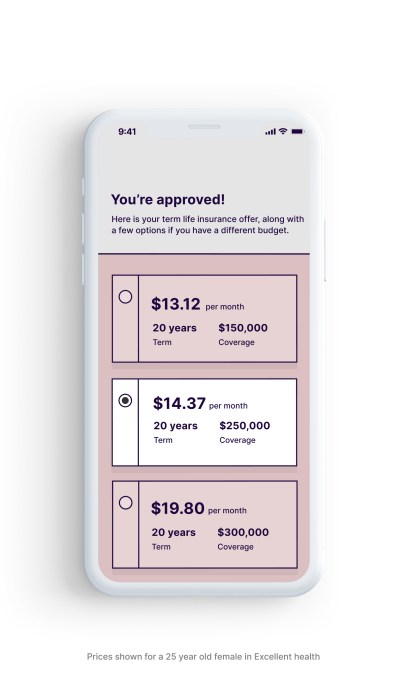
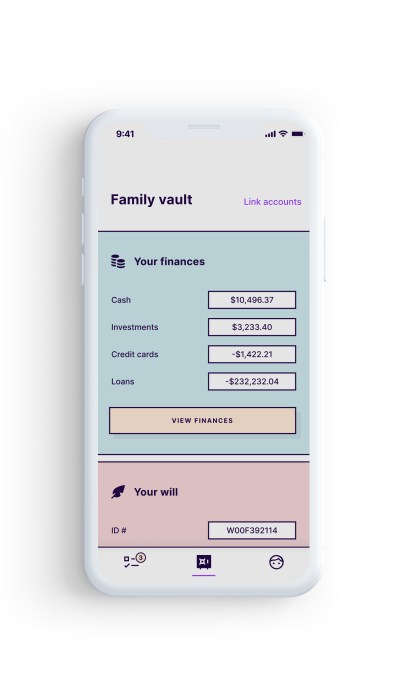
A new app called Fabric aims to make it simpler for parents to plan for their family’s long-term financial well-being. The goal is to offer parents a one-stop-shop that includes the ability to ability for term life insurance from their phone, create a free will in about five minutes, and collaborate with a spouse or partner to organize key financial accounts or other important documents. In addition, parents are able to coordinate with beneficiaries, children’s guardians, attorneys, financial advisors, and others right from the app.

Fabric was originally founded in 2015 by Adam Erlebacher, previously the COO at online bank Simple, and Steven Surgnier, previously the Director of Data at Simple. The company last year raised a $10 million Series A led by Bessemer Venture Partners, after having sold life insurance coverage to thousands of families.

Since launch, Fabric has expanded beyond life insurance to offer other services, like easy will creation and the addition of tools that help families organize their financial and legal information in one place. The idea, the company explained at the time, was to offer today’s busy parents a better alternative to meetings with agents to discuss complicated life insurance products. Instead, the company offers a simple, 10-minute life insurance application and the option to connect with a licensed team if they need additional help, as well as a similarly simplified will creation workflow.

As with the founders’ earlier company, Simple, which offered a better front-end to banking while actual bank accounts were held elsewhere, Fabric’s life insurance policies are issued by “A” rated insurer, Vantis Life, not Fabric itself.

However, until now, Fabric’s suite of services were only available on the web. They’re now offered in an app for added convenience. The app is initially available on iOS with an Android version in the works.

“Money can be especially stressful when you’re trying to build a family and a career,” said Fabric co-founder and CEO Adam Erlebacher. “In one survey by Everyday Health, 52% of respondents said financial issues regularly stress them out, and people between the ages of 38 to 53 were the most stressed out financially. Parents want to have more control over their families’ long-term financial well-being and today’s dusty old products and tools are failing them,” he added.

Using the Fabric app, parents can take advantage of any of its offerings, including the option to apply for life insurance from the phone and get immediate approval. The app also makes it possible to share the policy information with beneficiaries, so it doesn’t get lost.

Another feature lets you create your will for free, and share that information with key people as well, including the witnesses you need to coordinate with in order to finalize the will, for example. And a spouse can choose to mirror your will, which speeds up the process of creating a second one with the same set of choices.

Fabric also helps to address an issue that often only comes up after it’s too late or in other emergency situations — organizing both parents’ finances in a single place. Many working adults today have not just a bank account, but also have investment accounts, 401Ks, IRAs, and credit cards, or a combination of those. But their partner may not know where to find this information or where the accounts are held.

The app, which we put through its paces (but didn’t purchase life insurance through), is very easy to use. It starts off with a short quiz to get a handle on your financial picture. It then delivers you to a personalized homescreen with a checklist of suggestions of what to do next. Naturally, this includes the life insurance application, as this is where Fabric’s revenue lies. And if you’re lacking a will and have other fiances to organize, these are featured, too.

The online forms are easy to fill out, despite the smartphone’s reduced screen space compared with a web browser, and Fabric has taken the time to get the small touches right — like when you enter a phone number, the numeric keypad appears, for example, or the integration of address lookup so you can just tap on the match and have the rest autofill. It also saves your work in progress, so you can finish later in case you get interrupted — as parents often do. And it explains terms, like “executor,” so you know what sort of rights you’re assigning.

Given its focus, Fabric protects user information with bank-grade security, including 256-bit encryption, two-factor authentication, automatic lockouts, biometrics, and other adaptive security features.

Fabric isn’t alone in helping parents and others financially plan wills and more from their iPhone. Other apps exist in this space, including will planning apps from Tomorrow, LegalZoom, Qwill, and others. Plus many insurers offer a mobile experience. Fabric is unique because it puts wills, insurance, and other tools into a single destination, without complicating the user interface.

Fabric’s app is a free download on the App Store. 

Only a few 2020 US presidential candidates are using a basic email security feature

Just one-third of the 2020 U.S. presidential candidates are using an email security feature that could prevent a similar attack that hobbled the Democrats during the 2016 election.

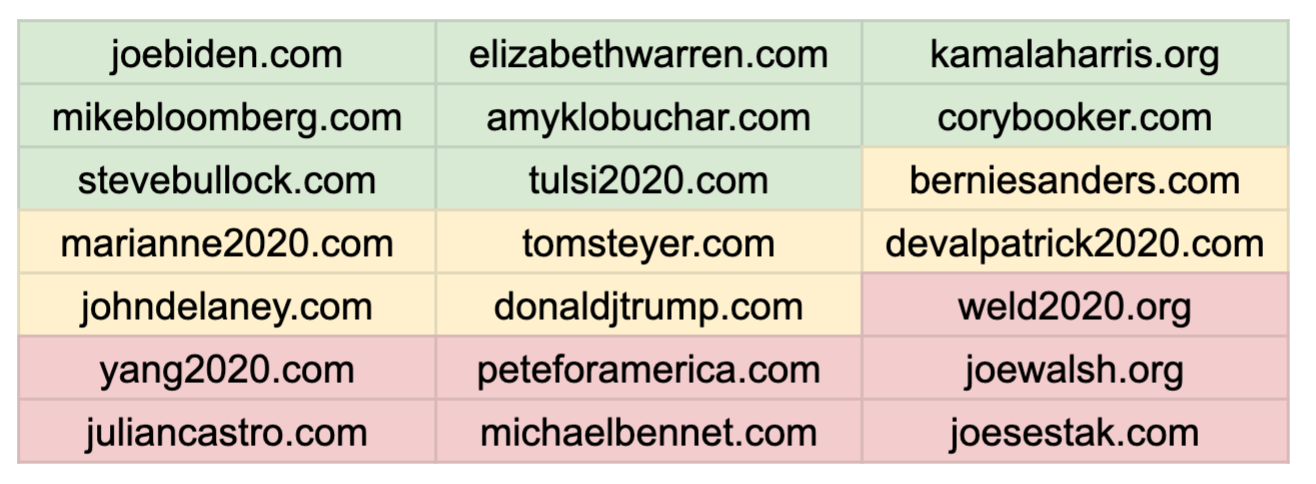
Out of the 21 presidential candidates in the race according to Reuters, only seven Democrats are using and enforcing DMARC, an email security protocol that verifies the authenticity of a sender’s email and rejects spoofed emails, which hackers often use to try to trick victims into opening malicious links from seemingly known individuals.

It’s a marked increase from April, where only Elizabeth Warren’s campaign had employed the technology. Now, the Democratic campaigns of Joe Biden, Kamala Harris, Michael Bloomberg, Amy Klobuchar, Cory Booker, Tulsi Gabbard and Steve Bullock have all improved their email security.

The remaining candidates, including presidential incumbent Donald Trump, are not rejecting spoofed emails. Another seven candidates are not using DMARC at all.

That, experts say, puts their campaigns at risk from foreign influence campaigns and cyberattacks.

“When a campaign doesn’t have the basics in place, they are leaving their front door unlocked,” said Armen Najarian, chief identity officer at Agari, an email security company. “Campaigns have to have both email authentication set at an enforcement policy of reject and advanced email security in place to be protected against socially-engineered covert attacks,” he said.

Green indicates a reject/quarantine policy, while yellow indicates a non-enforced policy. (Image: TechCrunch)

DMARC, which is free and fairly easy to implement, can prevent attackers from impersonating a candidate’s campaign but also prevent the same kind of targeted phishing attacks against the candidate’s network that resulted in the breach and theft of thousands of emails from the Democrats.

In the run-up to the 2016 presidential election, Russian hackers sent an email to Hillary Clinton campaign manager John Podesta, posing as a Google security warning. The phishing email, which was published by WikiLeaks along the rest of the email cache, tricked Podesta into clicking a link that took over his account, allowing hackers to steal tens of thousands of private emails.

A properly enforced DMARC policy would have rejected the phishing email from Podesta’s inbox altogether, though DMARC does not protect against every kind of highly sophisticated cyberattack. The breach was bruising for the Democrats, one that led to high-profile resignations and harmed public perceptions of the Clinton presidential campaign — one she ultimately lost.

“It’s perplexing that the campaigns are not aggressively jumping on this issue,” said Najarian.

An earlier version of this story identified Steve Bullock as a Republican, when he is a Democrat.