Carbon dioxide emissions are set to hit a record high this year (it’s not fine, but not hopeless)

Carbon dioxide emissions, one of the main contributors to the climate changes bringing extreme weather, rising oceans, and more frequent fires that have killed hundreds of Americans and cost the U.S. billions of dollars, are set to reach another record high in 2019.

That’s the word from the Global Carbon Project, an initiative of researchers around the world led by Stanford University scientist Rob Jackson.

The new projections from the Global Carbon Project are set out in a trio of papers published in “Earth System Science Data“, “Environmental Research Letters“, and “Nature Climate Change“.

That’s the bad news. The good news (if you want to take a glass half-full view) is that the rate of growth has slowed dramatically from the previous two years. However, researchers are warning that emissions could keep increasing for another decade unless nations around the globe take dramatic action to change their approach to energy, transportation and industry, according to a statement from Jackson.

“When the good news is that emissions growth is slower than last year, we need help,” said Jackson, a professor of Earth system science in Stanford’s School of Earth, Energy & Environmental Sciences (Stanford Earth), in a statement. “When will emissions start to drop?”

Just in: Global carbon emissions hit a new all-time high in 2019, up 0.6% from last year.

This news is shockingly important and heartbreakingly serious. Not only are we entirely failing to reduce emissions, we are making the climate emergency worse at an increasingly fast rate. pic.twitter.com/A2nasPT3lI

— Eric Holthaus (@EricHolthaus) December 4, 2019

Globally, carbon dioxide emissions from fossil fuel sources (which are over 90 percent of all emissions) are expected to grow 0.6 percent over the 2018 emissions. In 2018 that figure was 2.1 percent above the 2017 figure, which was, itself, a 1.5 percent increase over 2016 emissions figures.

Even as the use of coal is in drastic decline around the world, natural gas and oil use is climbing, according to researchers, and stubbornly high per capita emissions in affluent countries mean that reductions won’t be enough to offset the emissions from developing countries as they turn to natural gas and gasoline for their energy and transportation needs.

“Emissions cuts in wealthier nations must outpace increases in poorer countries where access to energy is still needed,” said Pierre Friedlingstein, a mathematics professor at the University of Exeter and lead author of the Global Carbon Budget paper in Earth System Science Data, in a statement.

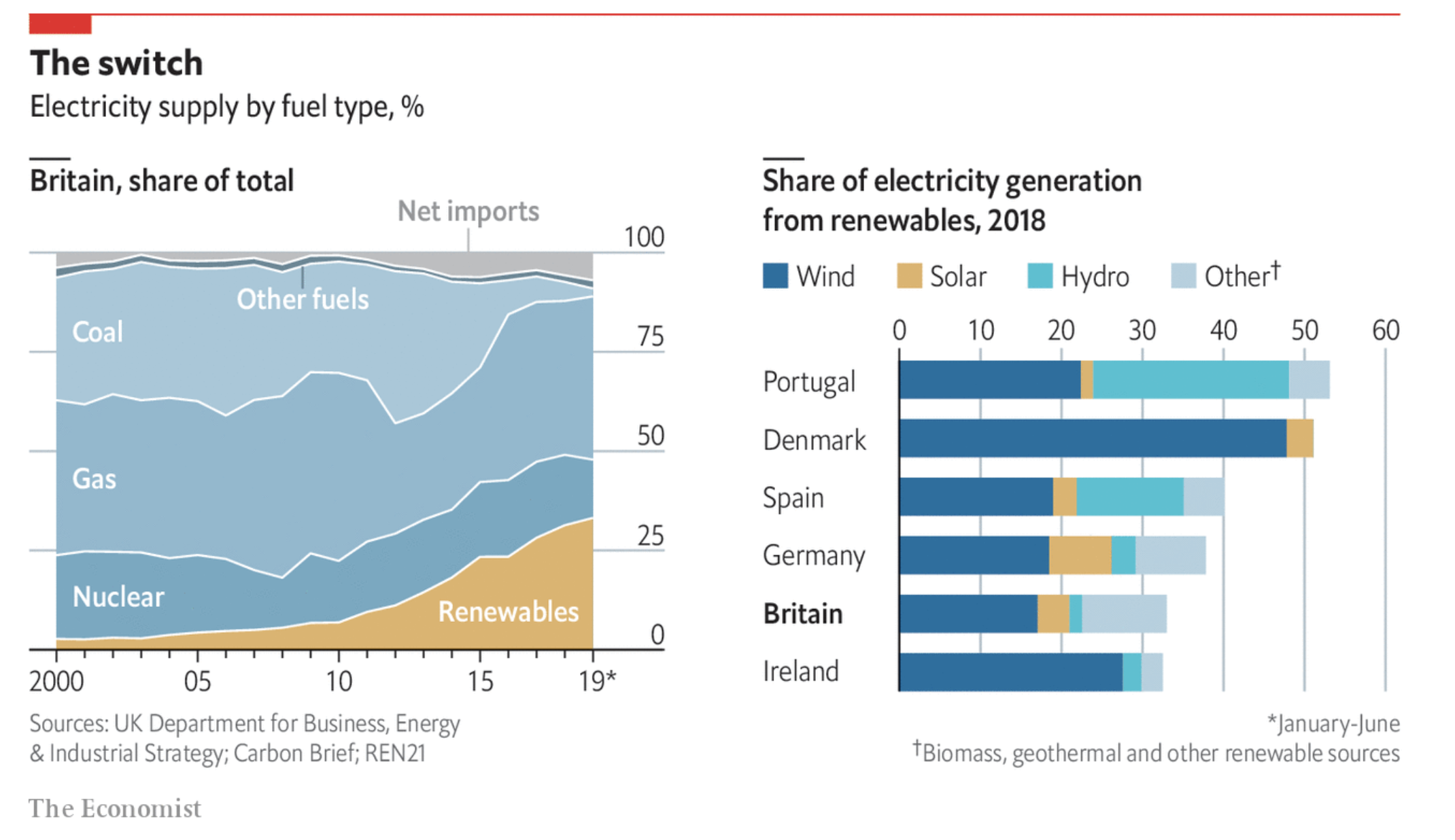
Some countries are making progress. Both the UK and Denmark have managed to achieve economic growth while simultaneously reducing their carbon emissions. In the third quarter of the year, renewable power supplied more energy to homes and businesses in the United Kingdom than fossil fuels for the first time in the nation’s history, according to a report cited by “The Economist”.

Data and image from The Economist

Costs of wind and solar power are declining so dramatically that they are cost competitive with natural gas in many parts of the wealthy world and cheaper than coal, according to a study earlier in the year from the International Monetary Fund.

Still, the U.S., the European Union and China account for more than half of all carbon dioxide emissions. Carbon dioxide emissions in the U.S. did decrease year-on-year — projected to decline by 1.7 percent — but it’s not enough to counteract the rising demand from countries like China, where carbon dioxide emissions are expected to rise by 2.6 percent.

And the U.S. has yet to find a way to wean itself off of its addiction to cheap gasoline and big cars. It hasn’t helped that the country is throwing out emissions requirements for passenger vehicles that would have helped to reduce its contribution to climate change even further. Even so, at current ownership rates, there’s a need to radically reinvent transportation given what U.S. car ownership rates mean for the world.

U.S. oil consumption per person is 16 times greater than in India and six times greater than in China, according to the reports. And the United States has roughly one car per-person while those numbers are roughly one for every 40 people in India and one for every 6 in China. If ownership rates in either country were to rise to similar levels as the U.S. that would put 1 billion cars on the road in either country.

About 40 percent of global carbon dioxide emissions were attributable to coal use, 34 percent from oil, 20 percent from natural gas, and the remaining 6 percent from cement production and other sources, according to a Stanford University statement on the Global Carbon Project report.

“Declining coal use in the U.S. and Europe is reducing emissions, creating jobs and saving lives through cleaner air,” said Jackson, who is also a senior fellow at the Stanford Woods Institute for the Environment and the Precourt Institute for Energy, in a statement. “More consumers are demanding cheaper alternatives such as solar and wind power.”

There’s hope that a combination of policy, technology and changing social habits can still work to reverse course. The adoption of new low-emission vehicles, the development of new energy storage technologies, continued advancements in energy efficiency, and renewable power generation in a variety of new applications holds some promise. As does the social adoption of alternatives to emissions intensive animal farming and crop cultivation.

“We need every arrow in our climate quiver,” Jackson said, in a statement. “That means stricter fuel efficiency standards, stronger policy incentives for renewables, even dietary changes and carbon capture and storage technologies.”


AWS launches discounted spot capacity for its Fargate container platform

AWS today quietly brought spot capacity to Fargate, its serverless compute engine for containers that supports both the company’s Elastic Container Service and, now, its Elastic Kubernetes service.

Like spot instances for the EC2 compute platform, Fargate Spot pricing is significantly cheaper, both for storage and compute, than regular Fargate pricing. In return, though, you have to be able to accept the fact that your instance may get terminated when AWS needs additional capacity. While that means Fargate Spot may not be perfect for every workload, there are plenty of applications that can easily handle an interruption.

“Fargate now has on-demand, savings plan, spot,” AWS VP of Compute Services Deepak Singh told me. “If you think about Fargate as a compute layer for, as we call it, serverless compute for containers, you now have the pricing worked out and you now have both orchestrators on top of it.”

He also noted that containers already drive a significant percentage of spot usage on AWS in general, so adding this functionality to Fargate makes a lot of sense (and may save users a few dollars here and there). Pricing, of course, is the major draw here, and an hour of CPU time on Fargate Spot will only cost $0.01245364 (yes, AWS is pretty precise there) compared to $0.04048 for the on-demand price,

With this, AWS is also launching another important new feature: capacity providers. The idea here is to automate capacity provisioning for Fargate and EC2, both of which now offer on-demand and spot instances, after all. You simply write a config file that, for example, says you want to run 70% of your capacity on EC2 and the rest on spot instances. The scheduler will then keep that capacity on spot as instances come and go, and if there are no spot instances available, it will move it to on-demand instances and back to spot once instances are available again.

In the future, you will also be able to mix and match EC2 and Fargate. “You can say, I want some of my services running on EC2 on demand, some running on Fargate on demand, and the rest running on Fargate Spot,” Singh explained. “And the scheduler manages it for you. You squint hard, capacity is capacity. We can attach other capacity providers.” Outpost, AWS’ fully managed service for running AWS services in your data center, could be a capacity provider, for example.

These new features and prices will be officially announced in Thursday’s re:Invent keynote, but the documentation and pricing is already live today.

Progressive VCs and private equity are using tech and analytics to revolutionize investing

David Teten
Contributor

David Teten is an advisor to emerging investment managers and a Venture Partner with HOF Capital. He was previously a partner for 8 years with HOF Capital and ff Venture Capital. David writes regularly at teten.com and @dteten.

Private equity and venture capital investors are copying our counterparts in the hedge fund world: we’re trying to automate more of our job.

When I was single, I registered for (a lot of) dating websites. When I met my now-wife, I realized that any technology that can find me a spouse is a killer app. That’s why 40 million Americans use online dating sites. But, most of use raise capital and source deals the same way people looked for dates 20 years ago: networking at conferences (or bars).

Most of us want one spouse and we’re done, but in business, you want a lot of partners. I’d argue that the same type of technologies that have revolutionized dating can revolutionize our industry.

In liquid markets, most of the calories expended on technology and analytics are focused on trade selection, or “origination.” However, in private markets, there is more room to optimize across all 11 steps of the investing process. Below, I’ll walk through how progressive investors are using technology and analytics throughout all of their operations. To learn more about this space, I suggest joining an online community I co-founded, PEVCTech.

1) Managing the firm 

Before you can actually invest, you have to manage your fund. This is harder than it sounds. In the private equity universe, most partners have primary training as deal-makers, not as managers. When I talk with junior personnel at private equity firms, the quality of firm management is a frequent complaint.

I’ve used Asana extensively to manage activities firm-wide. I also use several living Google docs to maintain the minutes and the group agendas for my fixed weekly meetings. I use another live Google doc to maintain my database of companies I’m marketing to other VCs. That Google document provides cut and pasteable text I can share with other investors, based on their stage, focus and appetite.

Other investors use Trello, Basecamp, and Monday for making sure that everyone at the firm knows each others’ long-term OKRs and short-term projects. Point Nine Capital uses 15Five for continuous employee feedback.

One aspect of management which merits attention is your own cybersecurity, which should not be left until a crisis to address. Small investment firms often have interns and entrepreneurs in residence passing through, each of which is a security risk. (See A comprehensive guide to security for startups by Bessemer Ventures.)

2) Marketing

Kyle Dunn, CEO of Meyler Capital, says “investors should focus on building a large audience within a CRM system (having the ability to categorize your different constituents); communicate consistently to that audience; and implement an automation platform that can leverage lead score to profile interest. It sounds simple; however, very few asset managers actually do it.” I agree.

Many tools designed for B2B marketing in general are also relevant to investors. I know of funds using Constant Contact, Goodbits, Pardot and Publicate to create light newsletters for internal and external consumption. A major angel group uses Influitive, an advocate management tool, to track, activate and motivate their members. Other VCs use Contently* or Social Native* to create relevant content. Meyler Capital is taking the analytical rigor of modern internet marketing and applying it to fund marketing.

Point Nine Capital’s website is now powered by Contentful — it uses Unbounce for landing pages and Typeform for surveys and other data collection. “We’re using … TinyLetter for our “Content Newsletter” … and Buffer to schedule social media posts. Last but not least, we still use MailChimp to publish our (in)famous newsletter.”  I also use Mailchimp for the teten.com and pevctech.com mailing lists. Point Nine Capital uses Mention for media monitoring. Teten.com is built on WordPress as my content management system.

I use Hootsuite to coordinate my social media activity, which consists of Teten.com, PEVCTech.com, Linkedin, AngelList, and (passively) Twitter and Facebook. I use Google Drive to host my conference presentations, which are all embedded at teten.com. I use Diigo, a social bookmarking tool, to keep a record of useful websites.  I have also configured IFTTT to share on Twitter anything new I post on Diigo.

Qnary is one of numerous tools which can help build out your team members’ virtual presence. A tool like Quuu identifies relevant, shareable content to keep your social media channels active.

“There are two crucial aspects of marketing that investors often overlook: automation and analytics,” wrote Sabena Quan-Hin, Marketing Manager at Flow Capital. “Automation allows you to spend less time on tedious tasks and will help boost productivity, especially within a small marketing team. At Flow Capital, we use HubSpot’s sequences and workflows functions to automate a bulk of our emails and internal tasks. This provides us more time to develop meaningful relationships with prospects and customers. We use Google Analytics, HubSpot, and LinkedIn Campaign Manager for the majority of our analytics. For our content creation, we use tools such as Canva (graphic design) and GoToStage (webinars platform) to create and share content for prospects to find.”

3) Raising capital

Tim Friedman, Founder, PE Stack, said, “If I could offer one piece of advice to today’s managers, it would be to take the time to understand the demands of the modern institutional LP. Today’s investors are allocating more to alternatives in an environment where there are record numbers of new funds; and seeking deeper relationships with managers via direct and coinvestments. The past few years have therefore seen a huge rise in the proportion of LPs using specialized tools to manage and understand their portfolios, including platforms such as Chronograph, Solovis, Allocator, Cobalt LP, eFront Insights, iLevel, Burgiss.

The proportion of LPs using technology to manage their portfolios will continue to increase, and GPs unable to provide quality data to LPs will find it increasingly hard to retain and attract LPs. We are also seeing technology evaluation as an increasingly important part of LP operational due diligence. Excel and Google simply aren’t going to cut it if you expect to build a high quality institutional investor base.”

A more efficient approach to fundraising than haphazard networking is to mine the data exhaust from the limited partner universe to identify those LPs most likely to find your fund attractive and focus all your energy on them. I previously posted a detailed presentation with sales technology tools useful for B2B sales.

I always make a point of keeping firm records updated in the major data-trackers tracking the VC industry: AngelList, CB Insights, Crunchbase, Dow Jones VentureSource, Pitchbook, Preqin, and Refinitiv Eikon. LPs, coinvestors, and press use these tools, so I work for free for these data vendors to make sure that their data about our activities is correct. This is a great example of why data businesses have substantial moats.

Boardex and Relationship Science make it easier to understand and map social networks into potential limited partners. Cobalt for General Partners helps GPs to optimize their fundraising strategy. MandateWire and FinSearches provide leads on limited partners with new mandates which might fit your fund. Evestment is a platform for capital-raisers; Evestment TopQ automates private markets performance calculation.

I am a heavy user of DocSend, a secure content sharing and tracking platform that can be used to seamlessly share recurring materials with potential LPs. It provides analytics to track shared materials across target senders and improve the content for future leads. Point Nine Capital uses Qwilr to create modern, mobile-native collateral.

Most funds open data rooms to share previous reports, performance data, pitch decks, legal docs and other fundraising material with LPs. I’ve seen funds using Ansarada, Allvue, Box, CapLinked, dfsco, Dropbox, Digify, Drooms, Google Drive, iDeals, Intralinks, Ipreo, Merrill Corporation, and SecureDocs for their Virtual Data Rooms. These same tools are used by companies raising capital.

I’ve also experimented with using services which are marketplaces between LPs and GPs: CEPRES, DiligenceVault, FundVeil, Harvest Exchange, and Palico. Some funds are using technology-enabled intermediaries to help them sell to retail LPs, e.g., Artivest and iCapital Network.

Deer Isle Group has built the D.I.G. Beacon technology system, which automatically outbound-solicits a universe of over 10,000 institutional investors, without requiring LPs to register for an online network of funds.

Crystal guides you in how to influence a particular person, based on their online presence.  X.ai is a virtual assistant which can coordinate your fundraising and other meetings.

This 16-game arcade for AIs tests their playing prowess

Figuring out just what an AI is good at is one of the hardest thing about understanding them. To help determine this, OpenAI has designed a set of games that can help researchers tell whether their machine learning agent is actually learning basic skills or, what is equally likely, has figured out how to rig the system in its favor.

It’s one of those aspects of AI research that never fails to delight: the ways an agent will bend or break the rules in its endeavors to appear good at whatever the researchers are asking it to do. Cheating may be thinking outside the box, but it isn’t always welcome, and one way to check is to change the rules a bit and see if the system breaks down.

What the agent actually learned can be determined by seeing if those “skills” can be applied when it’s put into new circumstances where only some of its knowledge is relevant.

For instance, say you want to learn if an AI has learned to play a Mario-like game where it travels right and jumps over obstacles. You could switch things around so it has to walk left; you could change the order of the obstacles; or you could change the game entirely and have monsters appear that the AI has to shoot while it travels right instead.

If the agent has really learned something about playing a game like this, it should be able to pick up the modified versions of the game much quicker than something entirely new. This is called “generalizing” — applying existing knowledge to a new set of circumstances — and humans do it constantly.

OpenAI researchers have encountered this many times in their research, and in order to test generalizable AI knowledge at a basic level, they’ve designed a sort of AI arcade where an agent has to prove its mettle in a variety of games with varying overlap of gameplay concepts.

The 16 game environments they designed are similar to games we know and love, like Pac-Man, Super Mario Bros., Asteroids, and so on. The difference is the environments have been build from the ground up towards AI play, with simplified controls, rewards, and graphics.

Each taxes an AI’s abilities in a different way. For instance in one game there may be no penalty for sitting still and observing the game environment for a few seconds, while in others it may place the agent in danger. In some the AI must explore the environment, in others it may be focused on a single big boss spaceship. But they’re all made to be unmistakably different games, not unlike (though obviously a bit different from) what you might find available for an Atari or NES console.

Here’s the full list, as seen in the gif below from top to bottom, left to right:

  • Ninja: Climb a tower while avoiding bombs or destroying them with throwing stars.
  • Coinrun: Get the coin at the right side of the level while avoiding traps and monsters.
  • Plunder: Fire cannonballs from the bottom of the screen to hit enemy ships and avoid friendlies.
  • Caveflyer: Navigate caves using Asteroids-style controls, shooting enemies and avoiding obstacles.
  • Jumper: Open-world platformer with a double-jumping rabbit and compass pointing towards the goal.
  • Miner: Dig through dirt to get diamonds and boulders that obey Atari-era gravity rules.
  • Maze: Navigate randomly generated mazes of various sizes.
  • Bigfish: Eat smaller fish than you to become the bigger fish, while avoiding a similar fate.
  • Chaser: Like Pac-Man, eat the dots and use power pellets strategically to eat enemies.
  • Starpilot: Gradius-like shmup focused on dodging and quick elimination of enemy ships.
  • Bossfight: 1 on 1 battle with a boss ship with randomly selected attacks and replenishing shields.
  • Heist: Navigate a maze with colored locks and corresponding keys.
  • Fruitbot: Ascend through levels while collecting fruit and avoiding non-fruit.
  • Dodgeball: Move around a room without touching walls, hitting others with balls and avoiding getting hit.
  • Climber: Climb a series of platforms collecting stars along the way and avoiding monsters.
  • Leaper: Frogger-type lane-crossing game with cars, logs, etc.

You can imagine that an AI might be created that excels at the grid-based ones like Heist, Maze, and Chaser, but loses the track in Jumper, Coinrun, and Bossfight. Just like a human — because there are different skills involved in each. But there are shared ones as well: understanding that the player character and moving objects may have consequences, or that certain areas of the play area are inaccessible. An AI that can generalize and adapt quickly will learn to dominate all these games in a shorter time than one that doesn’t generalize well.

The set of games and methods for observing and rating agent performance in them is called the ProcGen benchmark, since the environments and enemy placements in the games are procedurally generated. You can read more about them, or learn to build your own little AI arcade, at the project’s GitHub page.

Setting politics aside, Sequoia raises $3.4 billion for US and China investments

Noted Silicon Valley venture capital fund Sequoia Capital has raised nearly $1 billion for later-stage U.S. investments and roughly $2.4 billion for venture and growth deals in China, according to paperwork filed with the U.S. Securities and Exchange Commission on Tuesday.

The firm, famous for its investments in U.S. companies like Google, Instagram, Dropbox, LinkedIn, Snap and WhatsApp, is also an investor in some of China’s most successful startups.

These are companies like Alibaba, China’s e-commerce answer to Amazon; Ant Financial, a multibillion-dollar financial services powerhouse; JD.com, another e-commerce powerhouse; ByteDance, the owner of America’s latest social media sensation, TikTok; and Yitu, one of the national leaders in the development of machine learning applications.

These investments have not come without their share of controversy abroad. Yitu has been linked to the technology dragnet currently in place in Xinjiang, where an estimated 1 million religious and ethnic minorities are currently interned. Meanwhile, TikTok’s popularity in the U.S. has come with accusations of censorship in its treatment of posts that were supportive of both Xinjiang’s imprisoned population and the dissidents protesting mainland China’s increasing control over Hong Kong politics.

U.S. senators have already called for an investigation into TikTok, and Yitu was blacklisted by the U.S. Department of Commerce in October for its role in human rights violations in Xinjiang.

Setting politics aside, Sequoia has brought in $1.8 billion for its Sequoia Capital China Growth Fund V and about $550 million for Sequoia Capital China Venture Fund VII, per filings with the Securities and Exchange Commission.

It’s a sign that when valuations are concerned (ByteDance alone is now worth $78 billion, according to some reports), investors can overlook the potential political pitfalls of dealing with China.

Sequoia, led by Doug Leone, Michael Moritz, Roelof Botha and others, recently sought $8 billion for a global fund, its largest-ever fundraise, holding a first close of $6 billion in June 2018. In addition, the firm operates Sequoia Capital India, with offices in Menlo Park, Bengaluru, Mumbai, New Delhi, Singapore, Tel Aviv, Beijing, Hong Kong and Shanghai.

News of the fund comes at the tail end of another strong year for venture capital fundraising in the U.S. Firms, including 41-year-old NEA, filed to raise as much as $3.6 billion for a single fund. Meanwhile, Norwest Venture Partners, DCVC and Accel all closed new vehicles exceeding $500 million.

Fronted, from former Bud, Monzo and Apple employees, wants to make life easier for renters

Fronted, a new London-based startup aiming to make life easier for renters, is breaking cover today.

The company, founded by Jamie Campbell, Simon Vans-Colina and Anthony Mann — former employees at Bud, Monzo and Apple, respectively — will launch early next year with a fintech product to help renters finance their rental deposits.

The plan is get accepted into the FCA “sandbox” program (run by the U.K. financial services regulator) to begin lending cash that can only be used for a rental deposit.

The thinking is that by using Open Banking and other financial technology and offering a credit product designed to finance deposits directly, Fronted can lend more cheaply than existing options, such as credit cards, pay-day lenders and overdrafts, or insurance-backed membership schemes, and at lower risk.

“Renting sucks — anyone who rents knows it,” Fronted CEO Jamie Campbell tells me. “There are so many problems to solve and we intend to tackle them all bit by bit. But first, we are going to pay people’s rent deposits for them so they can pay us back in bite-size manageable amounts. Deposits are a large upfront expense and most people either use mum and dad to sort it out or stay where they are (in the worst cases they do to pay-day lenders).”

In a call late last week with Campbell and CTO Vans-Colina, the pair explained that renters that apply to use the Fronted service will be asked to link their bank using Open Banking, therefore sharing their recent transaction data, and provide details of the property they wish to rent. Then, once Fronted has run the required checks and agreed to provide credit, the startup sends the money directly to the estate agent to be placed in the U.K.’s Deposit Protection Scheme, meaning that the loan never touches the renter’s hands (or wallet).

“Customers will have a direct debit to pay us back over a set schedule, or they can pay it all off when they have the money to do so, [and] we don’t charge any fees,” says Campbell. There is also a planned “holiday mode” that will allow customers to temporarily reduce their monthly payments in order to help avoid falling into financial difficulty.

“Ultimately this first product is designed to be very convenient and we believe people will opt for this more manageable alternative to a normal deposit,” adds Campbell. “There are customers of ours that will be in ‘hidden households’ unable to move because of the upfront fees… Deposits can [also] sometimes take a long time to be returned from the schemes (something the government recently launched an enquiry into). Fronted wants to serve people who might otherwise be ‘double-exposed’ by deposits. We hope this first product increases social mobility by providing liquidity when people need it.”

Initially, Fronted will generate revenue through interest charged. It then plans to extend its fintech product offering with additional money-advance services “to help smooth out the bumps of renting.”

“We also intend on rolling out a ‘turn up and turn on’ service for utilities and internet,” says the Fronted CEO.

Instagram still doesn’t age-check kids. That must change.

Instagram dodges child safety laws. By not asking users their age upon signup, it can feign ignorance about how old they are. That way, it can’t be held liable for $40,000 per violation of the Child Online Privacy Protection Act. The law bans online services from collecting personally identifiable information about kids under 13 without parental consent. Yet Instagram is surely stockpiling that sensitive info about underage users, shrouded by the excuse that it doesn’t know who’s who.

But here, ignorance isn’t bliss. It’s dangerous. User growth at all costs is no longer acceptable.

It’s time for Instagram to step up and assume responsibility for protecting children, even if that means excluding them. Instagram needs to ask users’ age at sign up, work to verify they volunteer their accurate birthdate by all practical means, and enforce COPPA by removing users it knows are under 13. If it wants to allow tweens on its app, it needs to build a safe, dedicated experience where the app doesn’t suck in COPPA-restricted personal info.

Minimum Viable Responsibility

Instagram is woefully behind its peers. Both Snapchat and TikTok require you to enter your age as soon as you start the sign up process. This should really be the minimum regulatory standard, and lawmakers should close the loophole allowing services to skirt compliance by not asking. If users register for an account, they should be required to enter an age of 13 or older.

Instagram’s parent company Facebook has been asking for birthdate during account registration since its earliest days. Sure, it adds one extra step to sign up, and impedes its growth numbers by discouraging kids to get hooked early on the social network. But it also benefits Facebook’s business by letting it accurately age-target ads.

Most importantly, at least Facebook is making a baseline effort to keep out underage users. Of course, as kids do when they want something, some are going to lie about their age and say they’re old enough. Ideally, Facebook would go further and try to verify the accuracy of a user’s age using other available data, and Instagram should too.

Both Facebook and Instagram currently have moderators lock the accounts of any users they stumble across that they suspect are under 13. Users must upload government-issued proof of age to regain control. That policy only went into effect last year after UK’s Channel 4 reported a Facebook moderator was told to ignore seemingly underage users unless they explicitly declared they were too young or were reported for being under 13. An extreme approach would be to require this for all signups, though that might be expensive, slow, significantly hurt signup rates, and annoy of-age users.

Instagram is currently on the other end of the spectrum. Doing nothing around age-gating seems recklessly negligent. When asked for comment about how why it doesn’t ask users’ ages, how it stops underage users from joining, and if it’s in violation of COPPA, Instagram declined to comment. The fact that Instagram claims to not know users’ ages seems to be in direct contradiction to it offering marketers custom ad targeting by age such as reaching just those that are 13.

Instagram Prototypes Age Checks

Luckily, this could all change soon.

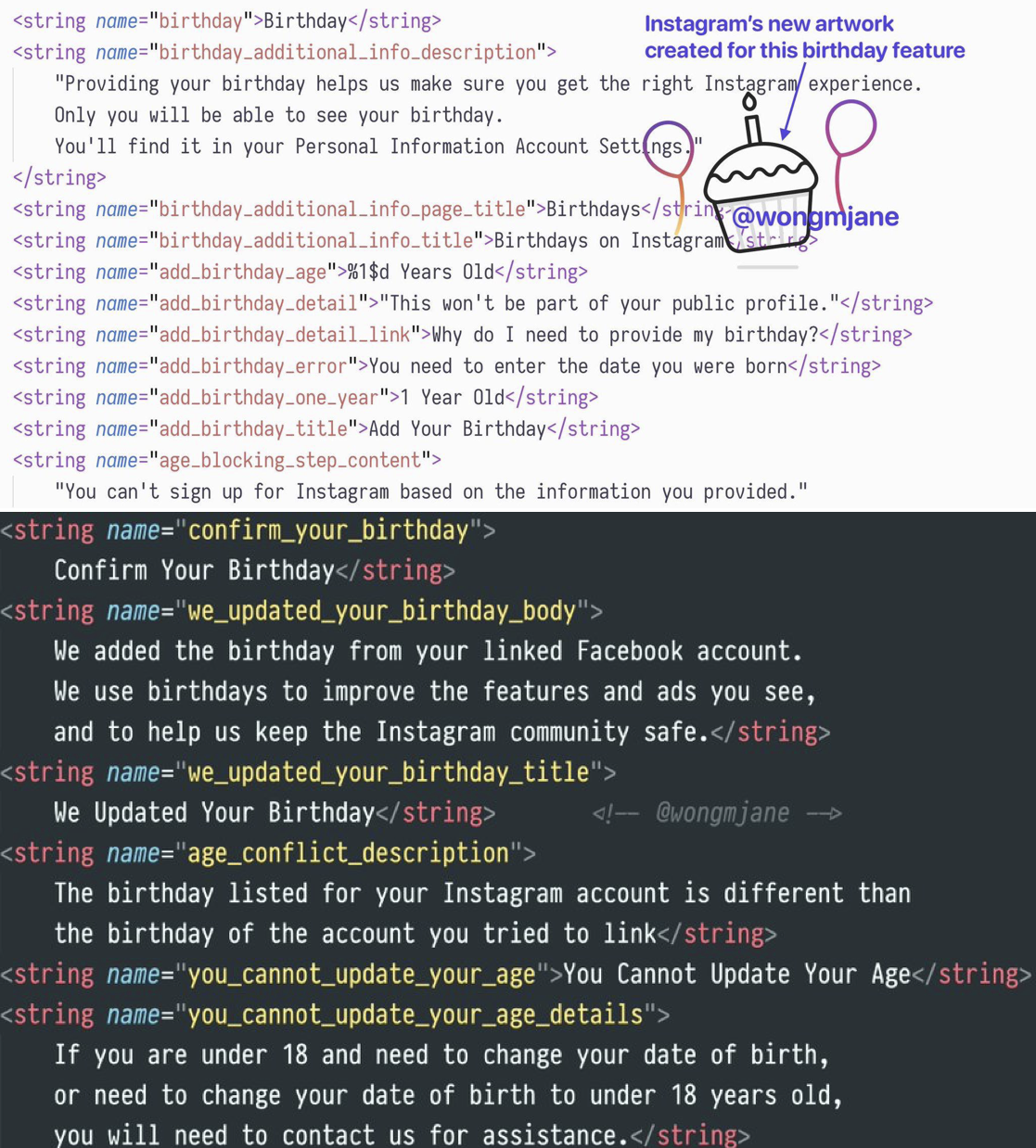
Mobile researcher and frequent TechCrunch tipster Jane Manchun Wong has spotted Instagram code inside its Android app that shows it’s prototyping an age-gating feature that rejects users under 13. It’s also tinkering with requiring your Instagram and Facebook birthdates to match. Instagram gave me a “no comment” when I asked about if these features would officially roll out to everyone.

Code in the app explains that “Providing your birthday helps us make sure you get the right Instagram experience. Only you will be able to see your birthday.” Beyond just deciding who to let in, Instagram could use this info to make sure users under 18 aren’t messaging with adult strangers, that users under 21 aren’t seeing ads for alcohol brands, and that potentially explicit content isn’t shown to minors.

Instagram’s inability to do any of this clashes with it and Facebook’s big talk this year about its commitment to safety. Instagram has worked to improve its approach to bullying, drug sales, self-harm, and election interference, yet there’s been not a word about age gating.

Meanwhile, underage users promote themselves on pages for hashtags like #12YearOld where it’s easy to find users who declare they’re that age right in their profile bio. It took me about 5 minutes to find creepy “You’re cute” comments from older men on seemingly underage girls’ photos. Clearly Instagram hasn’t been trying very hard to stop them from playing with the app.

Illegal Growth

I brought up the same unsettling situations on Musically, now known as TikTok, to its CEO Alex Zhu on stage at TechCrunch Disrupt in 2016. I grilled Zhu about letting 10-year-olds flaunt their bodies on his app. He tried to claim parents run all of these kids’ accounts, and got frustrated as we dug deeper into Musically’s failures here.

Thankfully, TikTok was eventually fined $5.7 million this year for violating COPPA and forced to change its ways. As part of its response, TikTok started showing an age gate to both new and existing users, removed all videos of users under 13, and restricted those users to a special TikTok Kids experience where they can’t post videos, comment, or provide any COPPA-restricted personal info.

If even a Chinese app social media app that Facebook CEO has warned threatens free speech with censorship is doing a better job protecting kids than Instagram, something’s gotta give. Instagram could follow suit, building a special section of its apps just for kids where they’re quarantined from conversing with older users that might prey on them.

Perhaps Facebook and Instagram’s hands-off approach stems from the fact that CEO Mark Zuckerberg doesn’t think the ban on under-13-year-olds should exist. Back in 2011, he said “That will be a fight we take on at some point . . . My philosophy is that for education you need to start at a really, really young age.” He’s put that into practice with Messenger Kids which lets 6 to 12-year-olds chat with their friends if parents approve.

The Facebook family of apps’ ad-driven business model and earnings depend on constant user growth that could be inhibited by stringent age gating. It surely doesn’t want to admit to parents it’s let kids slide into Instagram, that advertisers were paying to reach children too young to buy anything, and to Wall Street that it might not have 2.8 billion legal users across its apps as it claims.

But given Facebook and Instagram’s privacy scandals, addictive qualities, and impact on democracy, it seems like proper age-gating should be a priority as well as the subject of more regulatory scrutiny and public concern. Society has woken up to the harms of social media, yet Instagram erects no guards to keep kids from experiencing those ills for themselves. Until it makes an honest effort to stop kids from joining, the rest of Instagram’s safety initiatives ring hollow.

Gift Guide: TechCrunch writers recommend their favorite reads from 2019

2019 offered a blistering catalog of books to peruse, on top of the prodigious publishing schedules of the past few years (if you think we are at Peak TV, you might want to check out your local bookstore for a counterpoint).

We already checked in with Extra Crunch readers and did a sort of reader’s choice selection of their twelve favorites, but I also asked our TechCrunch editorial staff about what they read this year and would recommend. Perhaps unsurprisingly, they came back with a mix of books (and audiobooks!) on tech, startups, biographies, graphic novels, and true crime fiction like the proper nerds we all are over here.

The criteria was that the book had to be read in 2019, but didn’t necessarily have to be published this calendar year. In part, that’s because books that may not have been all that interesting in the past suddenly got their turn in the spotlight for whatever reasons (headlines, viral influencer recommendations on Goop, or what have you).

In short, here are eleven writers at TechCrunch and the thirteen books that made the largest impact on them, any one of which would make a great gift for that techno-geek friend of yours.

Zack Whittaker

Sandworm: A New Era Of Cyberwar And The Hunt For The Kremlin’s Most Dangerous Hackers by Andy Greenberg

Doubleday / 368 pages / November 2019

Publisher’s Link

Zack has long covered the daily breaches, cybersecurity hacks, and other data leaks that plague our world today (just last month: hacks at Macy’s and Magic: the Gathering). So perhaps unsurprisingly, his favorite book of the year was about none other than Russian hackers:

Andy Greenberg’s latest book on Sandworm, the group of Russian hackers blamed for the most disruptive cyberattack in history, is a real page-turner. Greenberg’s Sandworm is a gripping tale of the group’s discovery and their attacks, from shutting off the electric grids in Eastern Europe to the spread of the NotPetya ransomware attack, which froze hospitals, railways, and ATMs. Although written for the layperson, it’s detailed enough to satisfy any expert, and the use of first person draws in the reader to the story’s narrative. This incredibly detailed detective-style book — leaving no stone unturned — and the refreshing addition of footnotes — is a must-read for anyone interested cybersecurity.

Andy Greenberg himself has long covered security and hacking, and is currently a senior writer at Wired. This is his second book, following publication of This Machine Kills Secrets in 2012 about Julian Assange.

Sarah Perez

The Baddest Bitch in the Room by Sophia Chang

Audible Original by Hello Sunshine / 8 hours / September 2019

Publisher’s Link

Sarah has long taken a deep view into the world of mobile and apps (among a huge host of other topics), but her favorite audiobook this year comes from a behind-the-scenes player in the music industry who carefully puts herself out into the spotlight:

You don’t have to be a huge hip-hop fan to love Sophia Chang’s new memoir, but her Audible Original does include some impressive name-dropping. A music industry veteran, Chang managed rap and R&B stars like the Wu-Tang Clan’s RZA, GZA, and ODB, as well as A Tribe Called Quest, Raphael Saadiq and D’Angelo.

But her story is more than a music industry retrospective. Chang is also the fiercely independent child of Korean immigrants who left Vancouver for New York, as well as a woman who fell in love with a Shaolin monk, learned kung fu, shaved her head to shred stereotypes of Asian women, and became a mother, all while working her way up in her career.

In her self-narrated memoir (which includes some 24 guest appearances!), she steps into the limelight after a life spent behind the scenes helping talented artists tell their stories. She’s smart, funny, and inspirational — and someone, as her story shows, who has really earned the title “baddest bitch.”

Walter Thompson

Testosterone: An Unauthorized Biography by Rebecca M. Jordan-Young and Katrina Karkazis

Harvard University Press / 288 pages / October 2019

Publisher’s Link

Heading in the other direction a bit, our new senior editor at Extra Crunch Walter Thompson recommends a “biography” of a well-known but surprisingly misunderstood steroid that is getting its own time in the limelight:

Written by a sociomedical scientist and a cultural anthropologist, the book explodes many of the common myths surrounding the hormone erroneously associated with male virility and masculinity. Jordan-Young and Karkazis delve into science and history to explain how testosterone has been generally misrepresented by popular culture and the medical industry by exploring how ’T’ impacts aggression, reproduction, power, parenting, sports and risk-taking.

Given the increasing attention to these issues, the book’s auspicious timing and deeply researched foundations are already having a huge effect on an important cultural conversation today.

Josh Constine

SAGA: Compendium One by writer Brian K Vaughan and artist Fiona Staples

Image Comics / 1,328 pages / August 2019

Publisher’s Link

One of Josh’s book recommendations for 2019 is a graphic novel that is expansive in scope (as one would hope for a paperback that runs for more than a 1,000 pages):

Possibly the greatest non-superhero action graphic novel, this is a tale of star-crossed lovers from different planets trying to raise their child amidst an intergalactic war. The imaginative inventions, gorgeously colorful artwork, and mix of laser fights and suspenseful drama will transport you. The paperback is a great way to entertain yourself without staring at a screen (though it’s available on Comixology’s app too).

AI Superpowers: China, Silicon Valley, and the New World Order by Kai-Fu Lee

Houghton Mifflin Harcourt / 272 pages / September 2018

Publisher’s Link

Josh has been a prolific reporter and critic of social network and media companies like Facebook and Twitter. These days, though, there is a new social network that is garnering outsized attention: Tik Tok. Josh has been covering the company and its predecessor Musical.ly for years, and has also been writing about how Facebook should confront this new competitive threat. So perhaps it’s no surprise that Josh’s first recommendation is for a book that addresses precisely the rise of Chinese-owned apps and the fight for the future of artificial intelligence:

If you want to understand how artificial intelligence is going to impact employment and geopolitics, this is a must read from the former head of Google China. It recounts wild stories of tech startup competition and the rise of the ecosystem in the country, and explores why every country but the US and China have hard times ahead.

AI Superpowers was also the most recommended book by Extra Crunch readers in our survey, and also a book I can personally endorse as well (thanks Josh for stealing my recommendation).

Danny Crichton (i.e. yours truly)

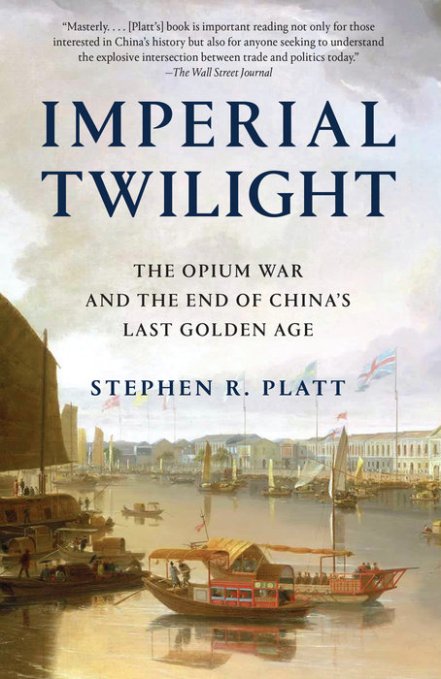
Imperial Twilight: The Opium War and the End of China’s Last Golden Age by Stephen R. Platt

Knopf / 592 pages / May 2018

Publisher’s Link

Speaking of China, the trade war continues unabated between the U.S. and the Middle Kingdom. Whereas AI Superpowers focuses on the present and future, Stephen Platt’s Imperial Twilight rewinds us back in time to the era of the Opium War, when Western forces led by a fascinating cast of characters from Britain, the U.S., and elsewhere used trade as a tool to force open China’s borders, popularize a heavily addictive drug among its people, and engorged on capital flows out of the country in a raw moment of pure political power against an incredibly weakened Qing dynasty.

The book is one of those works that every publisher wants to have in their catalog, complete with an extraordinarily well-written narrative, a deeply textured and nuanced look at a key historical event, and a perfectly timed publication date pegged to one of the most topical news stories of the year. In short, it’s a smash hit.

Catherine Shu

Continuing this China theme a bit, Catherine has covered tech developments in Asia for years (actually, seven with us as of yesterday) from her perch in Taiwan. But she also has interests outside of the latest new startups, and that includes true crime fiction.

I’ve been a fan of true crime since I was a teenager, but over the last year, I have become uneasy about my attachment to the genre. To be blunt, a lot of books and podcasts are fueled by voyeurism, and I am not comfortable with being culpable in the transformation of tragedy into entertainment. So I welcome new books that take a step back and examine famous cases within their cultural context.

The Five: The Untold Lives of the Women Killed by Jack the Ripper by Hallie Rubenhold

Doubleday / 432 pages / February 2019

Publisher’s Link

Catherine’s first recommendation flips the lens on one of the most well-known serial murderers in history:

“The Five” by Hallie Rubenhold is probably the first book to comprehensively document the lives of Jack the Ripper’s victims. Rubenhold’s research uncovered myths about the women, including that not all were prostitutes, a misconception that started with contemporary police and press reports (and may ultimately have hindered the investigation), but continues to be perpetuated by the industry that has grown around the murders.

Rubenhold did an enormous amount of research, but ultimately the book’s impact comes from the very simple but powerful act of restoring these five women’s humanity — an admirable feat considering that their violent murders have been commodified and romanticized for over a century.

The Trial of Lizzie Borden by Cara Robertson

Simon & Schuster / 400 pages / March 2019

Publisher’s Link

Meanwhile, her second recommendation takes a more expansive view of a famous axe murder case than has traditionally been the norm in the real crime genre:

“The Trial of Lizzie Borden” by Cara Robertson is one of the best books about the case I’ve read (and I’ve read a lot). In addition to providing an exhaustive but extremely compelling account of the legal proceedings that concluded in Lizzie Borden’s acquittal, Robertson, a lawyer, also analyzes the case as an example of contemporary attitudes toward gender, class, and criminality.

Her examination of newspaper accounts reveals how the case almost immediately became a media sensation and also that many of the trial’s spectators were dismissed as “a crowd of morbid females” by one reporter — a misogynistic label that continues to be attached to true crime fans, many of whom are women.

Devin Coldewey

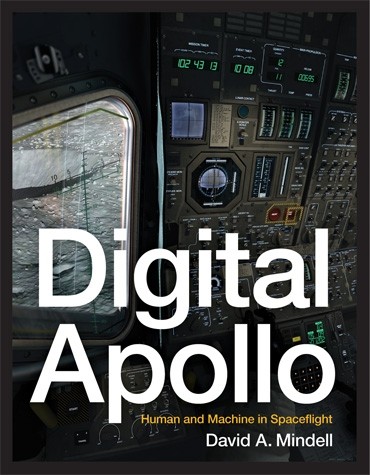
Digital Apollo: Human and Machine in Spaceflight by David A. Mindell

MIT Press / 376 pages / April 2008

Publisher’s Link

Devin has had long-standing interests in space, artificial intelligence, high-performance computing, and other hard science and tech subjects. His recommendation this year is a classic of the genre written by David Mindell, a long-time MIT professor of engineering history who also is founder of the startup Humatics, which has raised some serious venture capital dollars to make location detection inside of buildings (think robots in factories) a reality. On Digital Apollo, Devin says:

The 50th anniversary of Apollo 11 is a great opportunity to learn about one of the program’s most fascinating aspects: the computers that ran it. But Digital Apollo is far more than some survey of early computing hardware. Mindell documents the fascinating people and processes behind the creation of this unprecedented system. Stubborn astronauts, idealistic engineers, and skeptical officials face off while the hard deadline looms, making this an interesting and inclusive story as well as a highly informed history.

Not only is it a great story, it’s one that will be recognizable to any engineer that has ever had to ship product while dealing with other humans.

Kirsten Korosec

Traffic: Why We Drive the Way We Do (and What It Says About Us) by Tom Vanderbilt

Knopf / 416 pages / July 2008

Publisher’s Link

Kirsten has vigorously reported on the transportation sector (you should sign up for her weekly transportation newsletter The Station), including the rise of companies like Tesla and whole new categories of startups like self-driving cars and scooters. Yet despite all the futurism in the industry, she wanted to take a step back in her recommendation to a book that discusses some of the first principles that ‘drive’ mobility in the first place:

This book is a decade old and yet it’s more relevant than ever before as our cities become more dense and we look for ways out of the congestion. If you want to understand opportunities and challenges for automakers, cities, and even startups around mobility, start here.

With Traffic, Vanderbilt’s goal is to show that humans have cognitive limits, and those limits have a direct effect on our traffic systems and the designs of our mobility products. As we increasingly enter a world of human/AI hybrid cars and people speeding rapidly down Market Street on rickety scooters, his book offers us a panorama view of just how hard it it to get mobility right and make it safe.

Matt Burns

Billy, Alfred, and General Motors: The Story of Two Unique Men, a Legendary Company, and a Remarkable Time in American History by William Pelfrey

AMACOM / 336 pages / March 2006

Publisher’s Link

Among our longest tenured editors, Matt Burns has been writing about automotive topics among others for more than a decade here. He brings us a book about one of the most storied companies (positively and negatively) in American history:

This is the story of General Motors and how a successful carriage maker purchased the Buick name and turned it into the largest automaker in history.

And then how Billy Durant ran the company into the ground and lost control.

So what did Billy Durant do? He founded another company, Chevrolet, the only car to ever be manufactured in New York City, and used wild stock manipulation to regain control of General Motors. And then he lost control again and ended up managing a bowling alley in Flint, MI until he died nearly broke.

Meanwhile, there’s Alfred Sloan, a methodical manager of an auto supply company who took over General Motors, devised the yearly model update and eventually wrote the book on managing corporations.

The story of Billy Durant founding General Motors resonates today. It’s the story of a wild entrepreneur who’s vision and command of the stock market led to the creation of a mega corporation but who lacked the management skills to scale. The book details his incredible rise and fall through vivid stories and first-hand accounts found in Durant’s unpublished autobiography.

Darrell Etherington

Super Pumped: The Battle for Uber by Mike Isaac

W. W. Norton & Company / 408 pages / September 2019

Publisher’s Link

Darrell has chronicled the tech industry for many years (picking up a theme here?) and has picked a chronicle of a tech industry luminary which has since lost much of its luster:

This account mostly focuses on Uber founder Travis Kalanick, from his pre-Uber entrepreneurial formative years, right through the corporate power struggle that led to his ousting in 2017.

What I especially enjoyed about it was its depiction of Bill Gurley – an interesting counter-positioning of this Silicon Valley legend with Kalanick’s foil that may or may not match your understanding of the real story, depending on who you hear it from.

If you had to pick the “startup profile book of the year award,” Super Pumped would almost certainly take the crown this year. The book was also recommended pretty heavily by Extra Crunch readers in our survey as well, although it didn’t quite make the cut.

Manish Singh

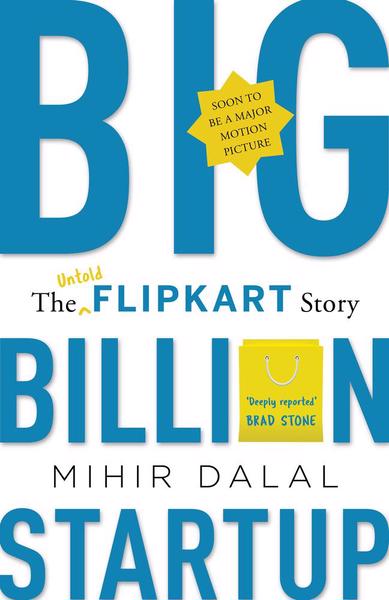
Big Billion Startup – The Untold Flipkart Story by Mihir Dalal

Pan Macmillan India / 320 pages / October 2019

Publisher’s Link

Manish joined us relatively recently to expand our tech coverage more heavily in India, where the startup and entrepreneurial ecosystem has been exploding crazy fast the past decade plus. Perhaps no startup better represents the potential for India than ecommerce giant Flipkart, which is the focus of Manish’s recommendation:

“Big Billion Startup – The Untold Flipkart Story,” by journalist Mihir Dalal, is a fascinating look at the making of India’s largest ecommerce platform. Flipkart, which sold a majority stake to Walmart last year for a sweet $16 billion, was founded in 2007, six years before Amazon started its online shopping business in India.

The book, released in October, not only documents the struggle, pain, and setbacks two former Amazon employees went through to build the business from a crummy apartment in Bangalore, but it also reminds us of how different India’s startup ecosystem was then.

As we wrote last month, India’s tech startups have already raised a record $11.3 billion this year. But in the early days, there were very few VCs who believed in India and even a $50 million check to a startup was unheard of. Flipkart was the trailblazer that paved the way for others to build great startups.

Google CEO Sundar Pichai is taking over as CEO of Alphabet

Google founders Larry Page and Sergey Brin just announced that Google CEO Sundar Pichai will be replacing Page as the CEO of parent company Alphabet.

In addition, Brin is stepping down from his role as Alphabet’s president.

Alphabet first came into existence in 2015 as “a collection of companies” that separates Google from “other bets” that aren’t part of its core businesses, such as Waymo (self-driving cars), Verily (life sciences), Calico (biotech R&D), Sidewalk Labs (urban innovation) and Loon (rural internet access via balloon).

At the time, Page shifted from the Google CEO role to Alphabet CEO, with Pichai stepping in to lead the search giant. However, Page and Brin wrote today that “Alphabet and Google no longer need two CEOs and a President. Going forward, Sundar will be the CEO of both Google and Alphabet.”

Pichai has been Google’s public face for a while now, but this move cements his leadership of the larger company, while moving Page and Brin out of the limelight.

“I’m excited about Alphabet and its long term focus on tackling big challenges through technology,” Pichai said in a statement. “I’m looking forward to continuing to work with Larry and Sergey in our new roles. Thanks to them, we have a timeless mission, enduring values, and a culture of collaboration and exploration. It’s a strong foundation on which we will continue to build.”

About Pichai, Page and Brin wrote:

Sundar brings humility and a deep passion for technology to our users, partners and our employees every day. He’s worked closely with us for 15 years, through the formation of Alphabet, as CEO of Google, and a member of the Alphabet Board of Directors. He shares our confidence in the value of the Alphabet structure, and the ability it provides us to tackle big challenges through technology. There is no one that we have relied on more since Alphabet was founded, and no better person to lead Google and Alphabet into the future.

And rather than framing this as a departure, the pair suggested that they’ve “never been ones to hold on to management roles when we think there’s a better way to run the company” and that they remain “deeply committed to Google and Alphabet for the long term, and will remain actively involved as Board members, shareholders and co-founders.”

As of 5:04pm Eastern, Alphabet’s stock is up 0.68% in after-hours trading.

An investor’s perspective on the current state of the global space startup industry

Investment in space startups is significant and growing, and the opportunities available to commercial players in space exploration, research and industrialization are multiplying. But for non-expert investors and observers, these opportunities can seem obtuse and obscured, buried in technical jargon and a heady amount of hype.

That’s a great time to consult with those already active in space investing — like François Chopard, CEO of global aerospace and defense accelerator Starburst.

Chopard recently presented a deck detailing the current state of the space industry, specifically from the perspective of early-stage startup and investment activity. The Starburst CEO essentially pegs the beginning of the current upturn in space and defense startup investing as getting off the ground in around 2015, right around the time that SpaceX started ramping its launch cadence after more than a decade of development, testing and early commercial launch service.

Notably, Chopard says that Starburst has a database holding more than 6,000 aerospace and defense startups put together by its scouting team, and that while he personally expected some kind of plateau or slow in the rate of growth in the sector to have come into play by now, in fact there has been no such slowdown.

This year alone, there was a total of $5 billion in disclosed funding — and that’s data that doesn’t include the final three months of the year. Taken together, that represents four percent of the overall VC market, per Starburst’s calculations.

Chopard also outlines trending opportunities that Starbust is seeing in terms of the space and defense industry’s development, citing the “ground segment” as the “next bottleneck,” for instance.

Essentially, that means that all these new satellite companies who are able to get their hardware to space thanks to the advent and availability of affordable launch vehicles will need Earth-based infrastructure to handle the data they gather, both in terms of transmission and storage, and that’s going to be a booming opportunity for new and emerging companies.

This deck is a great look at what’s interesting and exciting to investors about aerospace and defense, and why it’s a category that has seen a lot of growth in terms of VC investment in recent years despite seemingly high technology hurdles and perceived long development timelines.

NASA will launch a ‘robot hotel’ to the Space Station on its next SpaceX resupply mission

NASA is going to be sending something it calls a “robot hotel” to the International Space Station aboard the next commercial resupply mission, which is set to launch aboard a SpaceX Falcon 9 rocket this week. The robot hotel is more formally known as the “Robotic Tool Stowage” unit, or the RiTS for short, because NASA loves nothing quite so much as it loves acronyms.

Depending on how eager you are to anthropomorphize robots, the “hotel” designation might not be quite as appropriate as “garage” — this unit is essentially a protected parking space for robots when not in use, helping to protect them from potential dangers presented by being in space, including exposure to radiation, and the potential to get hit by micrometeors and other debris.

The first guests at the hotel will be two robots called Robotic External Leak Locators (RELL — because acronyms). They do what it says on the tin, finding leaks in the ISS exterior hull from the outside, which is a key job. And in the past, they’ve been stored inside the ISS when not in use, but space is at a premium in the station itself, so any time you can save some it’s good news for astronauts and for ongoing research and other equipment.

Plus, the RELLs need to be calibrated when they’re sent out to do their job, a process that requires 12 full hours. Because their new storage environment is already external, it’ll be much easier and quicker for the station’s Dextre robotic arm to retrieve them and set them to work.

Gift Guide: 12 must-read books for 2019 as recommended by Extra Crunch readers

Books are fundamentally about stories, and 2019 (and really, the past decade) has been the story of technology’s domination of every industry and function of society. Founders and tech executives are more powerful than ever, and how we use that power for good or evil will deeply shape the future of our world.

Whether it’s the sudden rise of TikTok and the ubiquity of social networks in business, economics, and politics, or the coming conflagration of climate change, or the challenges of personal and professional development, or just finding your way in building a startup, there was just an avalanche of books published this year on every topic near and dear to a technologist’s and founder’s heart.

I wanted to get a sense of what our readers thought were the best books they read this year, and so I reached out to our Extra Crunch membership to ask for their recommendations. Perhaps unsurprisingly for a group of people who actually pay for deeper journalism, our EC readers submitted dozens and dozens of book recommendations on every subject imaginable.

From those recommendations, I carefully selected a list of just 12 books that seemed the most recommended by our readers and also captured the zeitgeist of the times we are living in. Every book here is great and important, and I only wish we had more time to read them all.

How to handle the coming total disruption of society by technology

Loonshots: How to Nurture the Crazy Ideas That Win Wars, Cure Diseases, and Transform Industries by Safi Bahcall

St. Martin’s Press / 368 pages / March 2019

Publisher’s Link
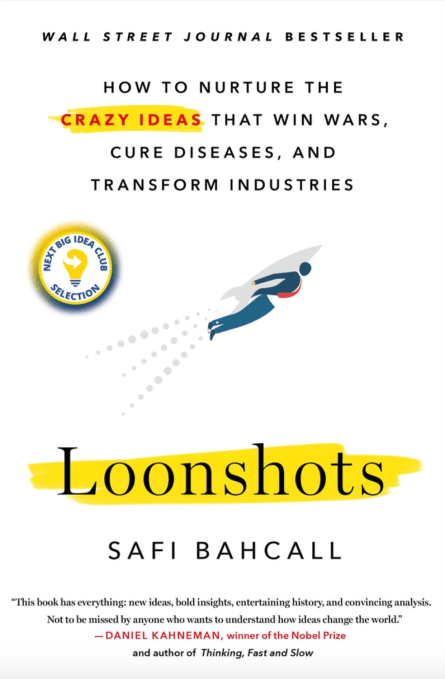
Anyone who has worked long enough in innovation and technology knows that great ideas can come from anywhere. But how do those ideas actually go from mere thoughts to actions and products, while avoiding the organizational politics that often prevent them from seeing the light of day in the first place?

Safi Bahcall, a PhD physicist from Stanford who co-founded and led Synta Pharmaceuticals as CEO through its IPO on NASDAQ in 2007, has been thinking about serendipity in science for years, and Loonshots is his first book. In it, Bahcall borrows concepts from science to move beyond looking purely at organizational culture to investigating organizational structure, investigating how we design our teams and how that can play an outsized role in whether new ideas flourish — or are killed on the spot.

Widely lauded by luminaries and a bestseller on Amazon and the Wall Street Journal, the book asks one of the most important questions in innovation today and gives a series of vignettes on how to improve our ability to handle spontaneity. A great book for the disrupting — and the disrupted.

The Technology Trap: Capital, Labor, and Power in the Age of Automation by Carl Benedikt Frey

Princeton University Press / 480 pages / June 2019

Publisher’s Link
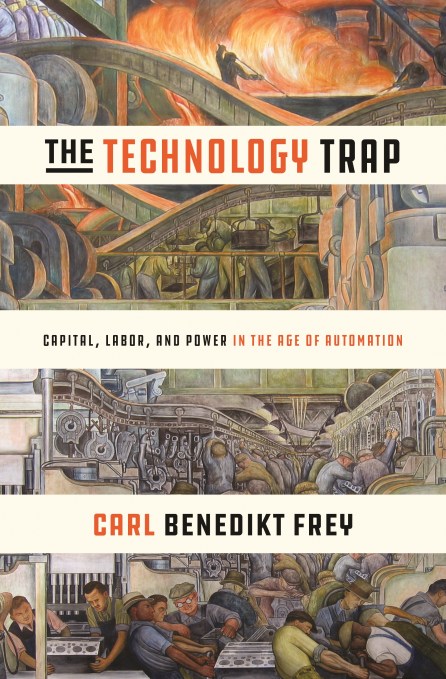
Digital disruption is all around us. Artificial intelligence is quickly eliminating millions of middle-class jobs, and fears of automation are growing among more and more workers, polarizing our politics and complicating the future of business.

Yet, all of this has happened before. More than a century ago, technologies like replaceable parts and the steam engine combined to create one of the greatest transformations our society has ever seen in the Industrial Revolution. But just how did the Industrial Revolution happen, and how did it affect everyday people in England, America, and elsewhere?

Carl Benedikt Frey, a fellow at Oxford University and director of the Programme on Technology & Employment at the Oxford Martin School, investigates the short, medium, and long-term consequences of the Industrial Revolution on workers, finding that in fact the changes had extraordinarily negative consequences in the short term. His lessons from this pivotal moment in history can help technology leaders avoid the biggest risks today in how we design human/AI systems in the coming age of automation.

Digital Transformation: Survive and Thrive in an Era of Mass Extinction by Thomas M. Siebel

RosettaBooks / 256 pages / July 2019

Publisher’s Link

You’ve re-built your structure based on Loonshots, and learned the lessons of The Technology Trap, but ultimately, many leading enterprise companies today are facing extinction from a number of new technology waves like elastic cloud computing and the internet of things. For those not doing the disrupting but rather on the receiving end, what exactly are you supposed to do?

Billionaire entrepreneur Tom Siebel, who founded Siebel Systems and eventually merged it into Oracle in 2006 for nearly $6 billion, wrote his first book in almost two decades on the topic of how legacy companies can navigate these turbulent times. Through Digital Transformation, Siebel tries to offer the disrupted a primer on just what is going on in AI and other big tech waves to help executives understand what strategies they can use to defend their businesses.

A brisk and reasonably short read, Digital Transformation offers key lessons, even if they may well be ignored by most before it is too late.

How to deal with tech’s inadequacies and head-banging, stupid behavior

Technically Wrong: Sexist Apps, Biased Algorithms, and Other Threats of Toxic Tech by Sara Wachter-Boettcher

W. W. Norton & Company / 240 pages / October 2017

Publisher’s Link

While we love writing about the growth of innovative products and startups here at TechCrunch, the other side of that coin is that there has been a constant cavalcade of dumb actions by founders and engineers the past few years that has turned many sour on the future of our industry. Whether it is sexism in financial underwriting or employee political controversies (stories just from the last few days), technology is increasingly under a microscope — and the industry doesn’t look good at full resolution.

Technically Wrong, a book by consultant and tech critic Sara Wachter-Boettcher, tries to take a more playful approach to all these challenges by just sort of splaying them all out together for the world to see. While ostensibly targeted at the general public, the idiocies that Wachter-Boettcher identifies should be taught in every software engineering, product management, and UX design class.

As one Extra Crunch member wrote in their endorsement:

This is my favourite book. It highlights examples of bias in tech and how this has led to negative or even harmful applications in society. It makes a strong case for any developer to consider how their tech may be biased or have potential to be used for harm. A must read.

Given the plague of scandals hitting tech, the book is perhaps a tad out of date just two years post-publication, but its lessons are invaluable and will stand the test of time.

Targeted: The Cambridge Analytica Whistleblower’s Inside Story of How Big Data, Trump, and Facebook Broke Democracy and How It Can Happen Again by Brittany Kaiser

Harper / 400 pages / October 2019

Publisher’s Link
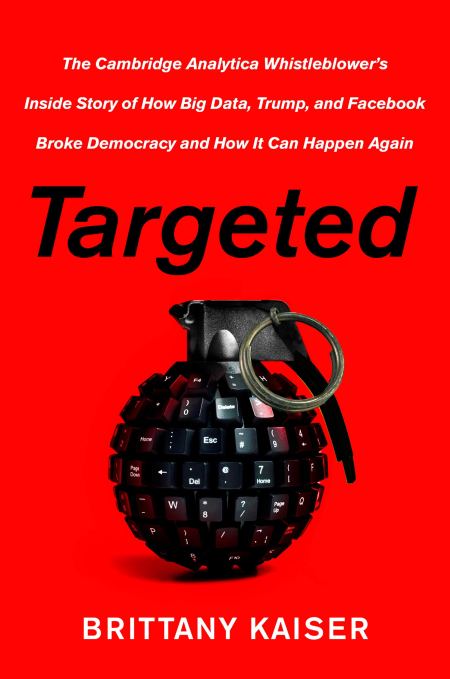
Perhaps no scandal has rocked the tech industry — or politics in general — quite like the Cambridge Analytica imbroglio that not only showed the power that Facebook and other social networks have over us through our user data, but also the scale to which that data influences purchasing decisions and of course, our elections.

Brittany Kaiser was a consultant and former Obama campaign worker who joined Cambridge Analytica hoping to make a difference. I guess in a way she did, eventually learning the true nature of big data and how that intersects with the needs of campaign managers. Through Targeted, she writes about her experience on the ground floor of the organization, and also places the company in the context of the broader challenges facing technology and ethics going forward. It’s a cri de coeur for other tech industry workers to think about how their work is affecting society and perhaps tapping out in much the way that Kaiser did.

Targeted is competing directly with Mindf*ck: Cambridge Analytica and the Plot to Break America by Christopher Wylie for this year’s best memoir on the sordid story. Targeted got the recs from EC readers though, and it’s certainly a story that deserves more than one point of view.

How to think about the biggest news stories this year

We Are The Weather: Saving the Planet Begins at Breakfast by Jonathan Safran Foer

Farrar, Straus and Giroux / 288 pages / September 2019

Publisher’s Link

Climate change was all over the news this year, and perhaps nowhere more than in tech’s central headquarters of Silicon Valley, which faced fires and repeated blackouts this year as utility company PG&E struggled to deliver power amidst California’s changing climate. But climate change isn’t just something that is “happening” — it’s being driven by the choices we make every single day.

Long-time novelist Jonathan Safran Foer returns to the theme of his sole non-fiction book Eating Animals to look at how our decisions around food are directly impacting the health of the planet. While it may seem like what we eat for breakfast is but a minor drop of carbon in a massive ocean, the reality is that our collective and aggregated decisions have huge implications for how our food systems are organized.

Foer brings his literary talents to bear on the subject, creating a textured and at times stream-of-consciousness account that interleaves climate change fear, personal anecdotes, and short stories to create a compelling case for changing our daily habits in ways that align with the needs of our environment. It may not be tuned to every reader’s preferred style, but few books connect all the dots on this subject quite like We Are The Weather

AI Superpowers: China, Silicon Valley, and the New World Order by Kai-Fu Lee

Houghton Mifflin Harcourt / 272 pages / September 2018

Publisher’s Link
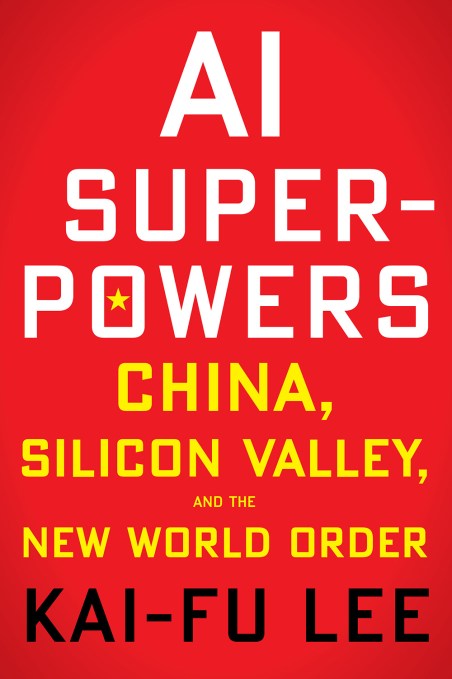
Another storyline that just kept rearing its head in the headlines this year was China. From the trade war and tariffs between Trump and Xi, to the increasing security risks of Chinese industrial espionage, to the surveillance technology that companies like Huawei are exporting to undergird digital authoritarianism, China’s actions are transforming our world (and at least from this side of the Pacific, not for the positive).

One locus of competition between the U.S. and China though remains focused on artificial intelligence, and which country will take the lead in this critical new market. China has invested prodigious amounts of funding into the industry through its Made in China 2025 plan, while the United States continues to have some of the leading research groups and companies in the space.

Kai-Fu Lee, a well-known trans-Pacific venture capitalist, tries to demystify and de-intensify the arms race story by carefully investigating what is really taking place in the AI labs and products from leading companies like Didi, Baidu, and Google. Less focused on fear than on analysis, Lee brings to bear his decades of experience on the subject to offer readers an in-depth, sober, and ultimately compelling look at how Chinese and American efforts around AI differ, and just how they can learn from each other. It was also our most recommended book by EC members, and I’ve also personally loved it (and discussed it a bit, although never truly got around to reviewing it – sorry!)

How to think about stories

Crafting Stories for Virtual Reality by Lakshmi Sarah and Melissa Bosworth

Routledge / 258 pages / October 2018

Publisher’s Link
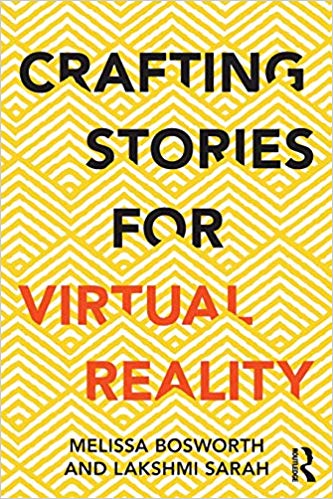
McLuhan’s oft-repeated and often wrongly-interpreted “the medium is the message” is a key aspect of communications studies, but another angle is that the medium determines the types of stories that can be communicated. Books, radio, and television are platforms that offer storytellers certain tools and constraints, and over the decades (and for books, centuries), we have learned how to mold and optimize our visions to those intrinsic limits.

Virtual reality though is a whole new field, and as a medium, it is just getting started. How do we take advantage of the immersiveness intrinsic to VR? What are the new limits on storytelling, and what norms around plot and characters are going to have to be established to make this medium accessible to viewers?

Multimedia journalists Lakshmi Sarah and Melissa Bosworth wrote Crafting Stories for Virtual Reality as a primer for any storyteller that wants to learn more about how immersive media, augmented reality, and virtual reality are going to transform storytelling, reporting, and entertainment into the future.

As one EC reader wrote in their recommendation:

It provides a really good overview of different types of virtual reality and how they can be shaped to resonate with audiences in different ways. For anyone considering VR, it’s incredibly helpful.

It’s certainly early days, and books like this almost certainly have a short half-life. Nonetheless, for those looking to explore stories in VR, this is just the title to get up-to-speed on this small but rapidly growing segment of the tech industry.

The Overstory by Richard Powers

W. W. Norton & Company / 512 pages / April 2018

Publisher’s Link

Our EC readers are heavy on the non-fiction, but we did occasionally get some recommendations for fiction. One popular novel was Richard Powers’ The Overstory, which won this year’s Pulitzer Prize for Fiction. So, okay, clearly a critic favorite. But what makes the novel so unique and compelling in a year that had a serious number of great entries?

Similar to Foer above, Powers is concerned about how humans and climate change are coming together to devastate our natural environment and particularly, our trees and forests. The Overstory is really a multitude of stories of Americans who connect with nature and each other to start to take action to address the massive changes coming and already in progress.

This is the twelfth novel for Powers, who in addition to literature, has a background in physics and was formerly a computer programmer. His work on The Overstory was partly inspired by time he spent in Silicon Valley while at Stanford, where he observed California’s famed redwood trees. If you are looking for a thought-provoking novel, you don’t need to look too much farther.

How to help yourself in the tech world

The Making of a Manager: What to Do When Everyone Looks to You by Julie Zhuo

Portfolio / 288 pages / March 2019

Publisher’s Link
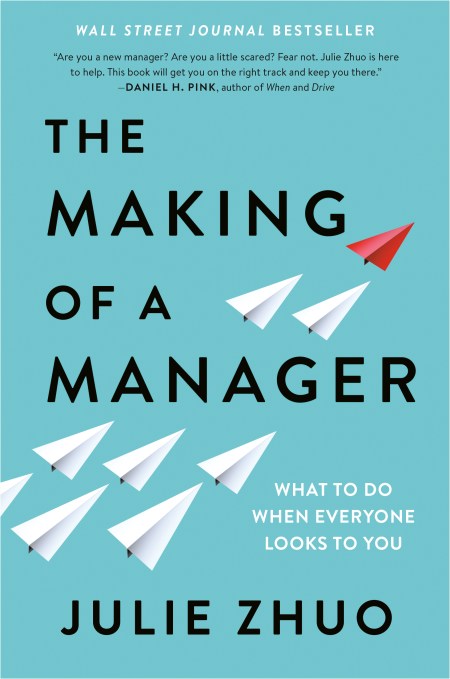
There is an archetypical story that happens at rapidly growing startups. A founder hires friends and people they know, builds a team, launches a product, and strikes gold. As growth continues unabated, more and more people are hired — forcing the startup to invent a management structure to bring some level of organization to the chaos. But managers are hard to find, and there are already employees with some level of tenure at the company. And so those early employees are often moved up rapidly to managerial and executive roles, suddenly handling direct reports with no experience whatsoever.

Julie Zhuo, VP of Design at Facebook, has written a guide for exactly these first-time, suddenly-promoted managers on exactly what they should be doing to begin bringing order to the chaos. This book is definitely in the self-help, management guru wing of the bookstore, but Zhuo’s personal experience going through this transformation shows through in her examples and clearly defined points for improvement.

One EC reader wrote in their recommendation:

One of the biggest org fallacies of fast-growing startups is promoting great ICs into first-time management roles and expecting they’ll quickly turn into great people managers with little training, mentorship, or role-models. Since that almost always works to plan, Julie, the first designer and later head of design at Facebook, wrote a book outlining all the challenges of being that first-time manager and the learnings along the way. A book I recommend to my team across the board.

The Making of a Manager targets a unique audience with unique insights and is worth a read.

Permission to Feel: Unlocking the Power of Emotions to Help Our Kids, Ourselves, and Our Society Thrive by Marc Brackett

Celadon Books / 304 pages / September 2019

Publisher’s Link

This was a surprising recommendation from the EC membership, but once I investigated it, completely understood why it fits on this list. One of the biggest challenges for children is their emotional development — how do they interact with the world and with other people? How do they listen to themselves and how they are feeling?

It’s not just children though, since all of us can improve how we respond to the daily stresses on our lives.

That’s why Marc Brackett, the founding director of the Yale Center for Emotional Intelligence, explores how we handle our emotions and why it is important to give and receive “permission to feel.” He offers an acronym (of course he does) called RULER to manage our emotional lives better:

  • Recognizing emotions in oneself and others.
  • Understanding the causes and consequences of emotion.
  • Labeling emotions with precise words.
  • Expressing emotions taking context and culture into consideration.
  • Regulating emotions effectively to achieve goals and wellbeing.

Considering that tech can often be one of the least emotionally hospitable industries out there, Brackett’s thoughts and solutions seem like a perfect fit for improving the quality and well-being of our workplaces and lives.

How to be an entrepreneur

Leonardo Da Vinci by Walter Isaacson

Simon & Schuster / 624 pages / October 2017

Publisher’s Link
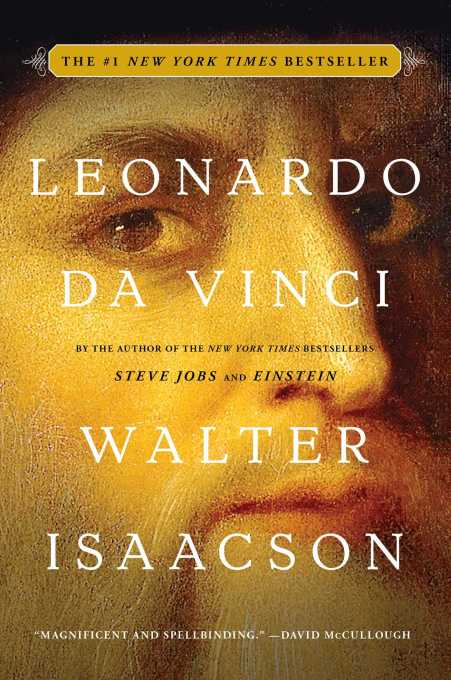
Isaacson is probably best known today for his 2011 biography of Steve Jobs, but he has followed up that magnum opus with another dive into another entrepreneur, this time quintessential Renaissance man Leonardo Da Vinci. You’ve got all the typical Isaacson accoutrements here: the storyline, the characters, the life lessons, the inspiration. I don’t know how anyone can walk away from a book like this and not be deeply inspired by the power of a single human to change the world (or at least invent new ones!)

As one EC member wrote in their recommendation: “Curiosity and imagination lead to awareness and innovation. He perfected the art. A lesson for all.”

The book first came out two years ago with a paperback version coming out about a year ago, so perhaps noteworthy that our EC members still find deep value in this biography and its lessons.

OrbitsEdge partners with HPE on orbital data center computing and analytics

What kinds of businesses might be able to operate in space? Well, data centers are one potential target you might not have thought of. Space provides an interesting environment for data center operations, including advanced analytics operations and even artificial intelligence, due in part to the excellent cooling conditions and reasonable access to renewable power supply (solar). But there are challenges, which is why a new partnership between Florida-based space startup OrbitsEdge and Hewlett Packard Enterprises (HPE) makes a lot of sense.

The partnership will make OrbitsEdge a hardware supplier for HPE’s Edgeline Converged Edge Systems, and basically it means that the space startup will be handling everything required to “harden” the standard HPE micro-data center equipment for use in outer space. Hardening is a standard process for getting stuff ready to use in space, and essentially prepares equipment to withstand the increased radiation, extreme temperatures and other stressors that space adds to the mix.

OrbitsEdge, founded earlier this year, has developed a proprietary piece of hardware called the “SatFrame” which is designed to counter the stress of a space-based operating environment, making it relatively easy to take off-the-shelf Earth equipment like the HPE Edgeline system and get it working in space without requiring a huge amount of additional, custom work.

In terms of what this will potentially provide, the partnership will mean it’s more feasible than ever to set up a small-scale data center in orbit to handle at least some of the processing of space-based data right near where it’s collected, rather than having to shuttle it back down to Earth. That process can be expensive, and difficult to source in terms of even finding companies and infrastructure to use. As with in-space manufacturing, doing things locally could save a lot of overhead and unlock tons of potential down the line.

AWS launches new local zone in LA

AWS announced a new local zone today in LA, designed to provide customers in southern California with a set of higher bandwidth, lower latency compute resources. It’s not a coincidence that this area is the epicenter of the entertainment industry.

Having a local zone gives LA-area companies, whether that’s related to video processing, gaming, ad tech or machine learning, access to a much more localized set of resources, wrote Jeff Barr of AWS in a blog post announcing the new zone.

“Today we are launching a Local Zone in Los Angeles, California. The Local Zone is a new type of AWS infrastructure deployment that brings select AWS services very close to a particular geographic area. This Local Zone is designed to provide very low latency (single-digit milliseconds) to applications that are accessed from Los Angeles and other locations in Southern California,” Barr wrote

As he pointed out, LA is home to a lot of companies that require this kind of local compute for gaming, 3D modeling and rendering, video processing (including real-time color correction), video streaming and media production pipelines.

The LA zone is actually part of a broader US West (Oregon) Region. Those customers who want to take advantage of the new zone will have to opt in by selecting it in the Local Zones console. It will be billed separately, but also includes access to savings plans.

The remains of India’s first lunar lander have been found on the Moon

India’s Vikram lander was very near making its proud creators the fourth country in history to touch down on the Moon — but it was not to be, and the craft was lost. Now India has a bit of closure: The remains of the lander have been located on the Moon’s surface.

After the accident, the United States’ Lunar Reconnaissance Orbiter made a pass over the intended landing zone and snapped some pictures. Shanmuga Subramanian, an engineer in Channai, India, was poring over them when he noticed what appeared to be the marks of debris.

“Using the data I calculated and from ISRO’s live telemetry data, I deduced that it might be something like [2-2.5 kilometers around] the landing site,” Subramanian told India Today. He spent hours every day looking over imagery of the area. “I did find a small white little dot which was something different from the surroundings. When I compared with old images from 2010, I found this was not there, so I thought, it has to be a piece of the lander.”

He emailed his findings to NASA, which got back to him a short while later confirming what he had found. ISRO had originally said the lander impacted 500 meters from its intended landing site, and the actual point was some 750 meters to the northwest.

Closer inspection by experts revealed the impact site itself, as well as a number of pieces of debris and the trails they left in the lunar soil as they tumbled.

It’s little comfort for ISRO and the agency’s supporters to see the parts of their cherished spacecraft scattered across the surface of the Moon, but it’s a visceral reminder of how incredibly close they got to making that mission a success, and how proud the country can be of that accomplishment.