Raising VC in Silicon Valley as a female POC

Nathan Beckord
Contributor

Nathan Beckord is CEO of Foundersuite.com, a software platform for raising capital and managing investors that has helped entrepreneurs raise over $2 billion since 2016. He is also the host of Foundersuite’s How I Raised It podcast.

As the world grows increasingly digital, the craving for face-to-face connections is surging. Squad, an invite-only community and app, is trying to fill the need for offline connections by curating tight-knit events for Gen Z and Millennials.

“It mimics building relationships in real life,” says founder and CEO Isa Watson.

It’s an idea that investors are already backing: Squad closed a $3.5 million seed round and plans to raise its Series A in early 2020, but the road to securing that round was anything but easy. During a conversation on the How I Raised It podcast, Watson shared the ups and downs of her unique path to fundraising.

Establish credibility for a few years before fundraising

She started by putting some of the earliest capital into the business herself with support from her family. She then worked her way through more than 200 meetings in Silicon Valley to build up her credibility as a founder — a step that she can’t stress enough — before Squad even started its official seed round.

“Despite the fact that I went to MIT, despite the fact that I managed a billion-dollar product at JPMorgan Chase and even built a huge digital product, I was still a Silicon Valley outsider,” Watson says.

People sometimes have the perception that being an alumni at a top U.S. university will mean they can go to Silicon Valley and just be “in,” Watson explains, but that’s not quite how it works.

“It takes a lot of work and a lot of credibility building,” she says. “That’s what I was doing for a few years before we actually did our official seed round. By the time I did it, it was like my reputation preceded me and there was enough familiarity with me.”

isa watson squad ceo

Isa Watson, Squad founder and CEO

Don’t do the cold outreach thing — warm introductions only

Despite taking more than 200 meetings in her efforts to crack Silicon Valley, Watson never took a cold meeting.

“Cold outreach is a tactic that I see a lot of founders using,” she says, “whereas I would argue that the more effective introduction comes from someone who knows someone.”

Leveraging the connections she built was critical in connecting Watson to her eventual funders. “They’re all referring you to the next three people to talk to,” Watson says. “It becomes like tree branches and then a network that’s growing in a multiplicative fashion.”

One of Squad’s earliest investors was Steven Aldrich, who at the time was working as chief product officer at GoDaddy . Both Aldrich and Watson grew up in North Carolina, and Steven’s father shared hometown roots with her, which helped her make the initial connection.

“It was about consistently making connections like that,” she says. “Steven introduced me to three people, and then those three other people introduced me to two people. And that’s essentially how I got the ball rolling.”

Not all meetings need to be about meeting for coffees or lunches, either — Watson took plenty of calls while expanding her network, as well. But the important step was making those connections, which was “a really hard hustle and grind, head down,” for the first two years.

Be really specific when asking for advice

When meeting people in Silicon Valley or expanding her network of prospective funders, Watson didn’t tease future funding rounds or send off vague meeting requests.

In trying to build out her network, she first researched a couple of key things: who did she need to know in order to build a really strong product, and who did she need to know in order to have solid distribution or growth marketing? Once she identified those folks, she would reach out to them individually and ask them for specific advice in their area of expertise.

“People always say, ‘When you want money, ask for advice. If you want advice, ask for money,’” Watson says. “Being super-explicit in the ask and explaining how you’ll spend their time and their brain space is super important.” No one has time for a generic request like, “Hey, can I pick your brain?”

When you’ve connected with someone, you should always ask them for recommendations for experts in specific areas — like growth marketing, product, etc. If they volunteer a few names, ask if you can send an email that they could forward on to introduce you to those individuals.

Following the introductions, it’s important to remember that it’s not just a “one and done,” as she says. Once you’ve met with someone through an introduction, follow up: let them know how the meetings went and thank them again.

“It’s like really, really intense relationship management, and it’s something that people with the highest EQ do best,” says Watson. “I would identify my needs, make specific asks … and then I would make sure to explicitly ask if they did not offer for three other intros for people that could be helpful, that would be excited about what we’re doing.”

Secret weapon: your fundraising quarterback

When she realized it was time to start raising money for Squad, her first move was to identify her “quarterback for fundraising” — in this case, Charles Hudson from Precursor Ventures. It’s helpful, according to Watson, to not have “too many cooks in the kitchen,” or else you’ll end up with far too many opinions that don’t align.

Hudson had already invested a small amount of money in Squad at the time, but he quickly became the person Watson went to for feedback on her pitches. He counseled her on other aspects of running a process.

“One thing Charles tells me is that, with fundraising, you’re likely only going to be successful if that’s your core focus at that time,” Watson says. “It’s not something you can do passively.”

So Hudson and Watson sat down and came up with a list of 35 target venture capitalists. He introduced her to five who she didn’t expect to be a good fit. They first went with the ones they didn’t expect would be a perfect match so she could gather feedback and see if Squad was actually ready to raise capital.

Of those first five meetings, one or two “were complete dings” and turned Squad down outright — but Watson made it to partner meetings in the three other meetings, a sign that VCs were seriously considering Squad.

Based on that feedback, Hudson introduced Watson to 10 more VCs — and shortly after, she met Michael Dearing at Harrison Metal, who led Squad’s seed round.

Choose your seed funders carefully

After Dearing offered up a term sheet of $3 million, Watson quickly had offers from other VCs.

“It’s funny because it took me deliberately being in the market for fundraising for like two and a half months to get that ‘yes’ from Michael. Before that, I had no cash really committed,” she says. “And then after just a few days of letting people know I had a term sheet for $3 million, I had like $6 million on a table. VCs are such followers.”

With that many offers on the table following Dearing’s lead, Watson was in the enviable position of needing to pick who she’d let into the seed round. So how did she choose?

“The first thing is value add,” Watson says. She asked herself: “did I feel like I had the right assortment of value? I maybe want someone in there who’s really strong on product; I may want someone who’s really strong at growth, strong at marketing.”

Her second criteria for making the decision was a less resume-focused. Simply put, she went with her gut.

“One thing that founders really, really underestimate is — is this person a good human being? I went with the people that I had felt most comfortable with, the people who I felt I could trust based on my interactions with them, and who were just supportive along the way.”


Daily Crunch: Uber reveals sexual assault numbers

The Daily Crunch is TechCrunch’s roundup of our biggest and most important stories. If you’d like to get this delivered to your inbox every day at around 9am Pacific, you can subscribe here.

1. Uber reveals thousands of sexual assault reports last year

Uber just released its first-ever safety report, stating that it received 2,936 reports pertaining to sexual assault in 2017, which went up to 3,045 in 2018 (these are U.S.-specific numbers). At the same time, Uber says there was a 16% decrease in the average incident rate.

While traditional taxis also have their safety risks, those numbers are still quite troubling. It’s worth noting, though, that the company has implemented some safety measures designed to help prevent sexual assault.

2. Niantic is working with Qualcomm on augmented reality glasses

To be clear, you’re not going to be booting up Pokémon GO on a pair of Qualcomm/Niantic AR glasses this Christmas. Moving forward, though, Niantic will be working with Qualcomm to flesh out the reference hardware for augmented reality glasses.

3. Netflix earmarks $420M to fight Disney in India

“This year and next year, we plan to spend about Rs 3,000 crores developing and licensing content and you will start to see a lot of stuff hit the screens,” said CEO Reed Hastings at a conference in New Delhi.

4. Airbnb officially bans all open-invite parties and events

The new policy seeks to prevent certain guests from hosting events not approved by hosts — such as a recent Halloween party hosted at a California Airbnb rental in which five people were killed.

5. Inside VSCO, a Gen Z-approved photo-sharing app, with CEO Joel Flory

Known to many only because of this year’s “VSCO girl” meme explosion, the company has long been coaxing the creative community to its freemium platform. Turns out, if you can provide the disillusioned teens of Gen Z respite from the horrors of social media — they’ll pay money for it.

6. This Lego Cybertruck is one even Elon can love

While Lego’s take on the Tesla Cybertruck design seemed to be purely for the LOLs, a remarkably faithful representation has been submitted to the official Lego Ideas crowdsourcing website.

7. Scammers peddling Islamophobic clickbait is business as usual at Facebook

A network of scammers used a ring of established right-wing Facebook pages to stoke Islamophobia and make a quick buck in the process, according to a new report from The Guardian. But Devin Coldewey argues that this is less a vast international conspiracy and simply more evidence that Facebook is unable to police its platform to prevent even the most elementary scams. (Extra Crunch membership required.)

Gift Guide: VR gear you won’t feel stupid for buying

Welcome to TechCrunch’s 2019 Holiday Gift Guide! Need help with gift ideas? We’re here to help! We’ll be rolling out gift guides from now through the end of December. You can find our other guides right here.

There have been holiday gift guides for VR for the past five years or so, and, for most of that time, buying a VR headset was generally a bad call.

There were still fun experiences to be had, but the gear was expensive and the troubleshooting was not for the faint of heart. I’ve played around with most of the gear that’s out there; honestly, most of it isn’t ready for consumers, but if there’s someone in your life dying to get into VR, here are some earnest recommendations.

This article contains links to affiliate partners where available. When you buy through these links, TechCrunch may earn an affiliate commission.

The best headset for 99.5% of people

This year, Facebook released the Oculus Quest for $399 and, honestly, it’s the only headset made by Oculus or anyone else that I’ve been able to give a full-throated recommendation. Setup and upkeep are both simple and benefited by its standalone mobile form factor — this one just works by itself, no PC required. There’s a worthy amount of content for something in its price range and it’s overall not a purchase you’ll feel dumb later for making.

Is $399 a little steep for a Christmas present? Obviously that’s understandable, but I would honestly just not go for a VR gift if that’s the case. Most VR gear below this price point is relatively clunky (with the caveat that for PlayStation owners, the PlayStation VR is still a great deal… though I think I’d still recommend the Quest if you’re willing to drop the extra money. It’s just such an easy system to love.)

Price: $399 from Oculus

To help you see better: prescription inserts

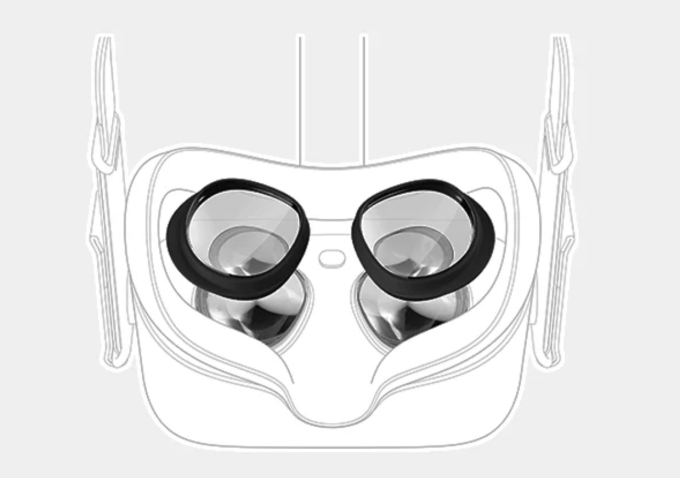
All of Oculus’s new headsets have a good amount of space in the headset to accommodate users that wear glasses, but if you’re the main person using the headset, it’s a lot more comfortable to just get prescription inserts made. It’s a little extreme, sure, but comfort is a big deal in VR, so you won’t regret it if you’re already logging some decent mileage on your headset.

Price: $80 from FramesDirect

To help you be less gross: VR Cover

If you’re using your VR device as a device to get you moving and you’re regularly sweating while playing some of the more intense titles, I guarantee that headset is getting pretty nasty. VR Cover has been making masks that cover up the section your face touching the headset, and they’re pretty decent quality and available for most popular headsets. These are great if you’re a bit sweaty or are regularly showing friends your new headset.

Price: $19 on Amazon

To help you get mobile: carrying case

The Quest is a portable console, but that doesn’t mean you just want to toss it into your bag without any cares. It still is rather sensitive, and if you scratch the lenses or tracking cameras, you are probably in for a bad time. The first-party Oculus Quest case is a pretty solid purchase, with room for your headset and controllers, but not much else.

Price: $40 on Amazon

To help you get immersed: some solid wired headphones

If you’re the owner of a new Quest, Go or Rift S, you also will probably want to be the owner of some decent wired headphones. The stereo speakers embedded in the headsets are good in a pinch, but your experience is going to be a lot better with some decent headphones, and the Quest doesn’t allow for Bluetooth headsets, so, sorry, no AirPods.

There are two schools of thought for which headphones are best for VR, ones that cut you off completely or ones that let you hear what’s going on a bit so that you’re at least somewhat aware of your surroundings. But be reasonable, you shouldn’t be basing your headphones purchase on what works for VR, so get some noise-cancelling headphones you’d also want while you’re traveling or some on-ear headphones you’d also use for at-home listening.

I’m a big fan of Grado headphones even though they aren’t all that comfortable for long sessions, but you can’t go wrong with an $80 pair of Grado SR60e headphones. I never miss a chance to recommend them. I’ve always been a Bose user when it comes to noise-cancelling headphones, but I also haven’t owned many pairs, and I know most audiophiles will point you in Sony’s direction, so maybe a classic pair like their WH-1000XM3 will do (though remember, you’ll have to use the included wire with most VR headsets.)

Price: Grado SR60e (Wired), $80 on Amazon | Sony WH-1000XM3 (Wireless), $278 on Amazon

The best headset for die-hards


If the best headset for 99.5% of people is the Oculus Quest, for the rest it’s the Valve Index. The PC headset is about as high-end as you would reasonably want as a consumer, though you are still definitely investing in a more complicated solution than the Quest. No other products on the market have the well-thought-out feature set that the Index does. It’s less approachable, but its feature set screams high-end even if most VR games can’t make the most of what it offers. For PC gamers, there aren’t many good choices out there these days, but if you’re going to take a step beyond the Quest, you should get the Index (though it’s worth noting this is on pretty hefty back-order and won’t ship pre-Christmas.)

Price: $999 from Valve


Report: Magic Leap’s early device sales aren’t looking good

Magic Leap just announced that they’re in the midst of closing a Series E round of funding, but it sounds like they’re going to have to clinch that investment with some pretty troubling sales numbers for their only device on the market.

The Information‘s Alex Heath is reporting that Magic Leap managed to sell just 6,000 units of its $2,300 Magic Leap One headset in its first six months on sale, a figure made worse by CEO Rony Abovitz’s internal claims that he wanted the startup to sell at least one million units of the device in the first year, a goal the report states he was later convinced to rethink — Abovitz later projected the company would sell 100,000 units in the first year.

We reached out to the company for comment.

Given the company’s long much-hyped road to the release of the Magic Leap One, such low early reported sales are anything but encouraging for their ultimate goals of building a pair of augmented reality glasses that can rival the efforts of Apple and Microsoft. There aren’t many sales figures out there being shared for existing AR headsets on the market, but Magic Leap has also raised and spent more than any other startup to release their first device.

The company has now raised around $2.6 billion in venture funding from firms like Google, Alibaba and a slew of other investors. The story also reports that Google — and now Alphabet — CEO Sundar Pichai stepped down from the board and was replaced by another Google executive.

Dutch startup Meatable is developing lab-grown pork and has $10 million in new financing to do it

Meatable, the Dutch startup developing cruelty-free technologies for manufacturing cultured meat, is pivoting to pork production as a swine flu epidemic ravages one quarter of the world’s pork supply — and has raised $10 million in financing to support its new direction.

When the company unveiled its technology last year, it was one of several companies working on the production of meat derived from animal cells — a method of meat production that theoretically has a far smaller carbon emissions footprint and is better for the environment than traditional animal farming.

At the time, it was one of several companies — including Memphis Meats, Future Meat Technologies, Aleph Farms, HigherSteaks and many, many pursuing technologies — to bring cultured beef to market. Now, as pork prices rise globally, Meatable becomes one of the first companies to publicly shift gears and turn its attention to the other white meat.

That’s not the only way the company is setting itself apart from its peers in the market. Meatable is also an early claimant to a commercially viable, patented process for manufacturing meat cells without the need to kill an animal as a prerequisite for cell differentiation and growth.

Other companies have relied on fetal bovine serum or Chinese hamster ovaries to stimulate cell division and production, but Meatable says it has developed a process where it can sample tissue from an animal, revert that tissue to a pluripotent stem cell, then culture that cell sample into muscle and fat to produce the pork products that palates around the world crave.

We know which DNA sequence is responsible for moving an early-stage cell to a muscle cell,” says Meatable chief executive Krijn De Nood. 

To pursue its new path, the company has raised $7 million from a slew of angel and institutional investors and a $3 million grant from the European Commission . Angel investors include Taavet Hinrikus, the chief executive and co-founder of TransferWise, and Albert Wenger, a managing partner at the New York-based venture firm Union Square Ventures.

Meatable’s De Nood says that the new cash will be used to accelerate the development of its prototype. The small-scale bioreactor the company had initially targeted for development in 2021 will now be ready by 2020 and the company is hoping to have an industry-scale plant online manufacturing thousands of kilograms of meat by 2025, according to De Nood.

Industrial farming is responsible for between 14% and 18% of the greenhouse gas emissions linked to global climate change and Meatable argues that cultured (lab-grown) meat has the potential to use 96% less water and 99% less land than industrial farming. Powering facilities using renewable energy could further reduce emissions associated with meat production, according to Meatable.

Move over Slack — Space is a new project management platform for developers

While file sharing, time tracking, email integration, Gantt charts and budget management are usually some of the most requested features in the average project management platform, we still have a proliferation of tools taking a multiplicity of approaches to the problem of just managing something.

Most people in tech are by now familiar with Slack, Asana, Notion, Trello, Azure DevOps, GitLab and GitHub. But the sector is still booming. Last month, Microsoft Teams had more than 20 million active users, up from 13 million in July. Slack reported more than 10 million daily active users in the second quarter. Adobe just launched a collaboration tool, Notion is super hot, Frame.io raised $50 million and Microsoft has Fluid. Even WordPress is getting in on the act.

(When is someone going to make something for journalists? Oh, we’re poor. I forgot).

And yet. And yet… project management for developers remains a rising area for startups.

Now a new product has been launched to address this space. And how ironic is it that’s called Space?

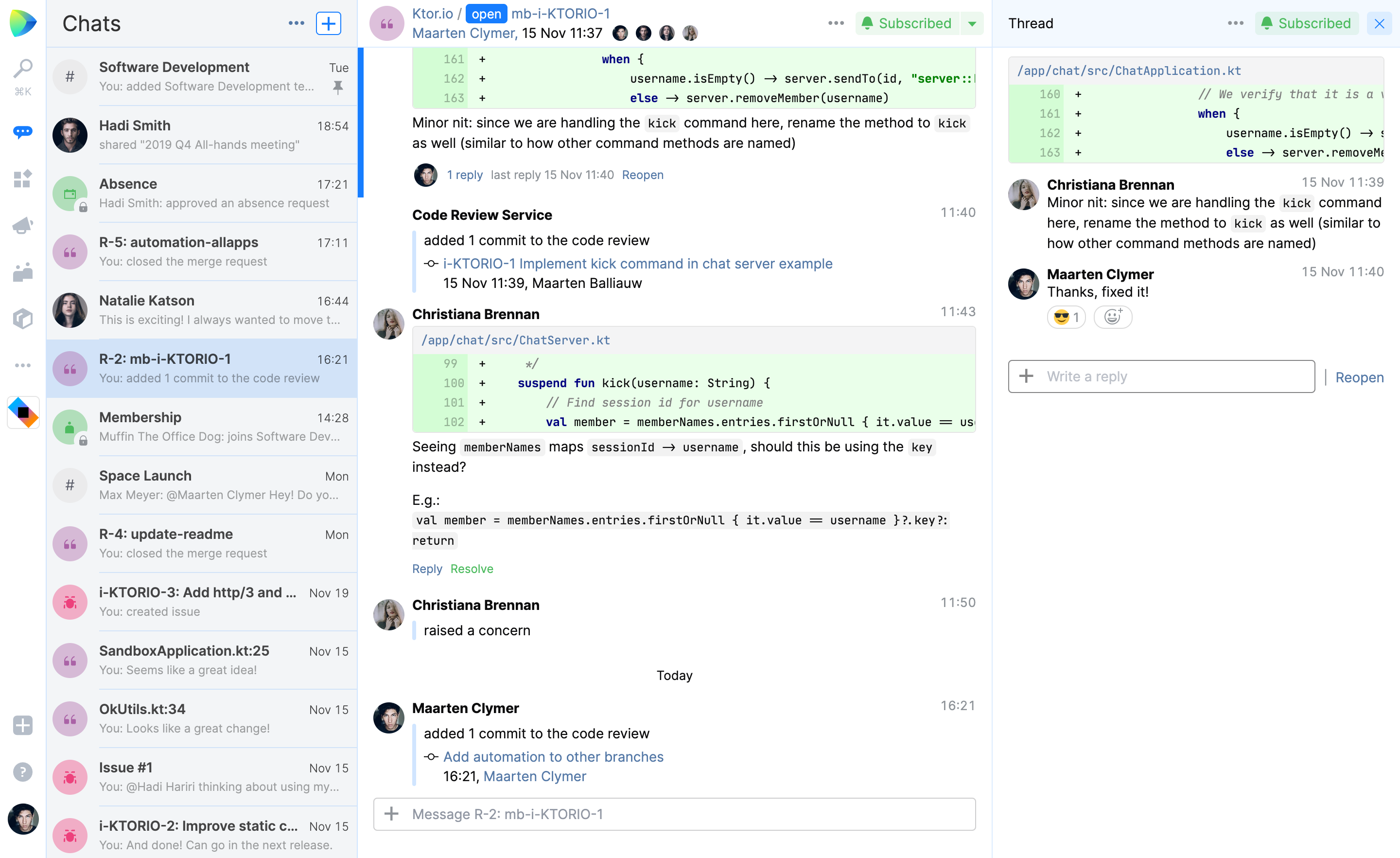
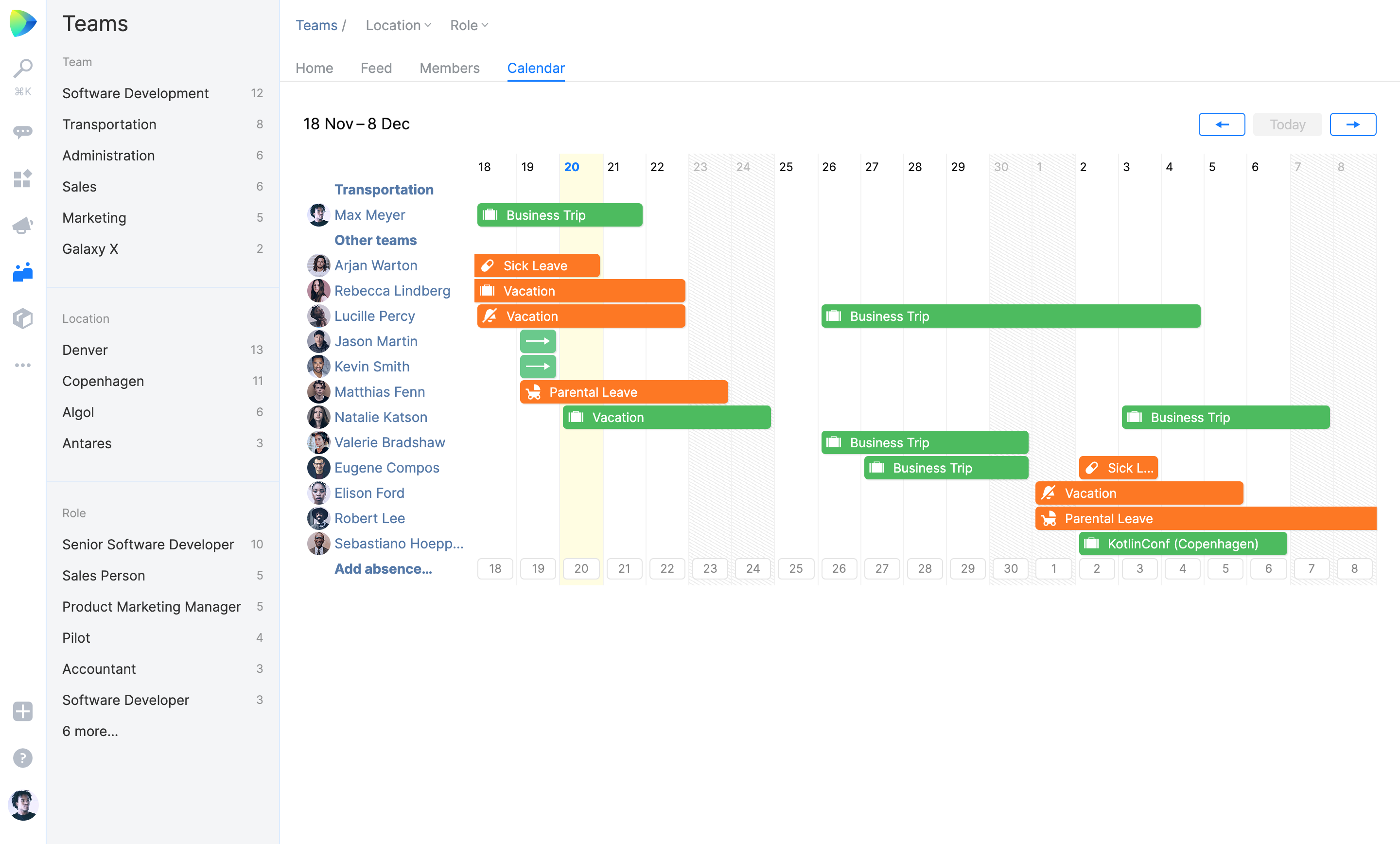
Space is billed as an integrated team environment that provides a toolset that combines into a single platform messaging, team and project management, internal blogs, meeting scheduling and software development processes.

It’s now available for early users, who will get an Organization plan free of charge. This includes 25 GB storage per user, a monthly limit of 10,000 CI credits and 125 GB data transfer per user.

With Space, all the data a team needs to work is stored in one place, while software development tools (source code management, code review and browsing, continuous integration, delivery and deployment, package repositories, issue tracking, planning tools and project documentation) are integrated with communication and identity support.

The idea is that any workflow can be automated, from onboarding new employees to configuring rules for merging requests to CI/CD pipelines. You also can schedule meetings, projects, tasks, commits, code reviews, etc.

Space is a bootstrapped spin-out from JetBrains, the company behind Kotlin, a semi-official language of Android. While Java is the official language of Android development, it has a steep learning curve. When JetBrains created Kotlin, it was so successful that it became a secondary “official” Java language. So, in theory, they ought to know their stuff.

JetBrains CEO Maxim Shafirov says “Most digital collaboration environments are in fact a mixed bag of solutions tackling different problems, from development tools to task management ones. This leaves people switching tools and tabs, manually copying information, and generally losing time and creative flow. JetBrains Space is changing this — and thus changing the foundation of creative work, software development included.”

JetBrains Space is available through a subscription model with a freemium starting tier, while the paid plans start at $8 per active user per month. The ultimate goal for Space is to provide a unified company-wide platform expanded to a wider range of creative teams, including designers, marketers, sales, accounting and more.

Time will tell if Space takes off (LOL) and can start to put the heat on products like Slack. As a Slack hater, I do hope so.

Essential tools for today’s digital nomad

Dave Williams
Contributor

A serial entrepreneur in the digital marketing, advertising, and ad tech industries, Dave Williams founded and sold 360i, IgnitionOne, BLiNQ Media, and other ventures and is now the CEO and Co-founder of NOMADX, with his base in Lisbon, Portugal.

The world isn’t ready for the digital nomad movement.

If projections are to be believed, the growing trend in how people choose to live and work is fast outpacing the service and policy enhancements needed to keep up with a borderless workforce bound only by its need for a reliable Wi-Fi connection. But that’s not slowing down the nomads.

The Economist theorizes that there could be as many as one billion remote workers by 2035. Such a movement has implications for entities ranging from banks and insurance companies to national governments — but few organizations are in the habit of looking 15 years down the road and altering course appropriately. But even short-term, the numbers deserve our attention: about 59 million people are considering joining the digital nomad movement in the next two to three years.

Put another way: in the next 24 to 36 months, roughly the population of Italy plans to sever traditional workplace ties so they can go mobile. How are our global services and infrastructures going to accommodate these individuals?

Having spent more than six years as a digital nomad myself, I can tell you that there’s a steep learning curve to this lifestyle. While it’s one that I’ve found well worth the effort, tapping into the networks and services needed to sustain my professional and personal networks hasn’t always been easy. Looking back to when I first gave into my wanderlust, after starting my career in the late ‘90s dot-com era as a serial entrepreneur in the U.S. digital marketing and ad tech industries, I can’t help but muse that I wish I knew then what I know now.

So for all of those aspiring or early stage nomads out there, in hopes that your own transitions to the nomadic lifestyle might be easier than my own, I’m here to tell you what I know now. While we can expect to see a great deal of change over the next couple decades, as the world economy races to catch up to the digital nomad movement, these are the essential considerations — and your best options — when it comes to the core elements needed to sustain yourself in your nomadic ramblings today.

Accommodations

Let’s start with the basics: where to live.

It’s almost impossible for digital nomads to find suitable accommodations at fair prices within major U.S. metropolitan areas that foster the standard of living they’re seeking. That’s one of the main reasons why so many nomads are ending up in Asian countries and other economical international destinations. In addition to being lower-cost, these destinations offer desirable alternatives to city environments where the standard 9-5 is required to afford everything the city has to offer.

When it comes to finding a place to live, whether for a few days or many months, there are a lot of options. The one that makes the most sense has a lot to do with your individual situation and preferences. Most important is having a place to stay with strong Wi-Fi. Consider:

Airbnb: Given its popularity for vacation rentals, a lot of new nomads initially turn here. While it allows for a more “at home” feel in a rental (because it is someone’s home), it can quickly become cost-prohibitive. Airbnb is great for short-term rentals, but comparatively expensive for anything more than a couple weeks.

Booking and Agoda: Similar to Airbnb, but these sites are more professional in that they’re mostly used by professionally-run apartments, hotels and resorts. All are great for those who are looking for more services with their accommodations. But they don’t always have the home-like feel that many nomads crave, and like Airbnb, they can get expensive fast.

Facebook Groups: A number of Facebook Groups for digital nomads have emerged recently. These groups can be handy because they let guests and hosts connect directly and come to mutually agreeable arrangements. However, these groups aren’t a rental platform. Guests don’t have access to reviews or an easy way to issue payments confidently. So while accommodations can be a bit more affordable when organized through groups, it’s hard to know what you’re going to get.

Hostels: As any rambling college student can attest, hostels are an affordable, social way to see the world. But living at a hostel offers little privacy and near-constant disruption, often of the drunken partying variety. It’s not a terribly viable route for nomadic couples or anyone looking for living space that can also double as an office. 

Hotels: On the flip side, hotels are great for couples. But for nomads spending weeks or even months abroad, they’re expensive and can be isolating for people looking to truly immerse themselves in new local cultures. Hotels are best reserved for short-term expeditions.

VIP hostels (e.g., Selina): This new breed of the hostel experience offers a great combination of co-working and social connections that help nomads connect with like-minded people. They provide some level of privacy, but these accommodations — like others — become expensive in the long term if you want your own bedroom.

Co-living spaces: As with co-working spaces, there’s a growing movement in which digital nomads come together to share the cost of living accommodations, which range from multi-bedroom apartments to large-scale co-living buildings complete with kitchens, shared and private bathrooms, working and community spaces. These environments are great for making connections while having access to privacy when needed, but branded co-living spaces will still cost more than a local midterm apartment.

Midterm rental platforms: For nomads looking to stay in one place for a month or more and truly soak in the culture, midterm rental platforms represent a more-affordable alternative to platforms like Airbnb. These platforms (full disclosure: I now operate one of them, by the name of NomadX) offer affordable month-to-month options with fast Wi-Fi in everyday neighborhoods, which enables you to connect more deeply with the local community without an overly long commitment. That said, this category is still quite new, so midterm rental inventory might be limited or nonexistent in the market you’re considering.

Couchsurfing: Finally, I’d be remiss not to mention Couchsurfing, a social network for travelers and nomads that makes it possible to connect directly with locals and even crash on their sofas for free. That said, Couchsurfing is only designed for short-term stays, it’s not very professional and it’s quickly evolving into more of a dating/hook-up platform than anything else.

Also, a quick note on Wi-Fi: No matter where you stay, you’ll need to ensure you can always be connected in order to stay on top of work. While you can check with your current mobile provider on international roaming plans, the coverage might be limited and ultimately become expensive. You might instead want to consider buying a local SIM card in every country and using it with your smartphone. That way, you can use your phone as a hotspot and get internet on your laptop. In a pinch, though, it’s good to have a backup mobile hotspot option. (For example, I travel with a Skyroam Solis.)

Insurance

We digital nomads are risk takers by nature, but that doesn’t mean we don’t want or appreciate a safety net. After all, having an accident isn’t a choice. Unfortunately, if nomads can’t get coverage for a fair price, many opt to forego insurance altogether and end up resorting to crowdfunding if they end up in a bad situation. I’ve had several friends get into accidents in foreign countries, and they couldn’t get proper medical treatment until they’d crowdfunded the needed resources. This is a worst-case scenario, and it’s one that I hope becomes a thing of the past as more borderless options for insurance emerge.

Canva introduces video editing, has big plans for 2020

Canva, the design company with nearly $250 million in funding, has today announced a variety of new features, including a video editing tool.

The company has also announced Canva Apps, which allows developers and customers alike to build on top of Canva. Thus far, Dropbox, Google Drive, PhotoMosh and Instagram are already in the Canva Apps suite, with a total of 30 apps available at launch.

The video editing tool allows for easy editing with no previous experience required, and also offers video templates, access to a stock content library with videos, music, etc. and easy-to-use animation tools.

Meanwhile, Canva is taking the approach of winning customers when they’re young, with the launch of Canva for Education. It’s a totally free product that has launched in beta with Australian schools, integrating with GSuite and Google Classroom to allow students to build out projects, and teachers to mark them up and review them.

Canva has also announced the launch of Canva for Desktop.

As design becomes more important to the way every organization functions and operates, one of the only barriers to the growth of the category is the pace at which new designers can emerge and enter the workforce.

Canva has positioned itself as the non-designer’s design tool, making it easy to create something beautiful with little to no design experience. The launch of the video editing tool and Canva for Education strengthen that stance, not only creating more users for the platform itself but fostering an environment for the maturation of new designers to join the ecosystem as a whole.

Alongside the announcement, Canva CEO Melanie Perkins has announced that Canva will join the 1% pledge, dedicating 1% of equity, profit, time and resources to making the world a better place.

Here’s what she had to say about it, in a prepared statement:

Companies have a huge role to play in helping to shape the world we live in and we feel like the 1% Pledge is an incredible program which will help us to use our company’s time, resources, product and equity to do just that. We believe the old adage ‘do no evil’ is no longer enough today and hope to live up to our value to ‘Be a Force for Good’.

Interestingly, Canva’s position at the top of the design funnel hasn’t slowed growth. Indeed, Canva recently launched Canva for Enterprise to let all the folks in the organization outside of the design department step up to bat and create their own decks, presentations, materials, etc., all within the parameter’s of the design system and brand aesthetic.

A billion designs have been created on Canva in 2019, with 2 billion designs created since the launch of the platform.

Closing the race and gender funding gap

Hello and welcome back to Equity, TechCrunch’s venture capital-focused podcast, where we unpack the numbers behind the headlines.

This week was a bit different than usual. First, we managed to come close to our old time target (20 minutes) instead of our regular length (30 minutes). And, second, Alex is coming back to TechCrunch starting next week!

Expect more Equity and, from Alex, writing for Extra Crunch. But don’t worry, we’ve got you covered. If you aren’t an Extra Crunch subscriber yet you can use the code “EQUITY” and save a bundle. (Woo!)

That done, let’s dig into the news that Kate and Alex discussed, starting with Harlem Capital’s $40.3 million new fund. The New York-based outfit has a focus on investing in minority entrepreneurs, who receive significantly less than their white male counterparts. This is one of the largest funds with a diversity mandate to date, and that’s something to be stoked about.

Next we turned to Mike Cagney’s canny fundraising ability. The former SoFi CEO, ousted for bad behavior, is putting together another huge funding round for his startup, Figure Technologies. The expected $103 million round comes after the company raised $120 million before.

With more than $50 million raised of the more than $100 million it expects, covering Figure is partially a financial story. However, due to Cagney’s part in the project, it’s also a story of how fast money forgives.

Pivoting to Europe, Kate and Alex chewed into the latest report on European venture capital, pulling from Atomico and Forbes. The headlines are pretty simple: There are more EU-based unicorns than ever, more money invested in the region and the money is mostly finding male hands. 

Disappointing diversity metrics aside, it’s an encouraging set of metrics for a region that has long found itself left to the side when major startup markets are discussed. 

And finally, Alex wanted to talk about two impending U.S.-listed technology IPOs. Coming in the wake of the WeWork fiasco and sporting similar share prices but divergent growth profiles, the debuts of Bill.com and Sprout Social are events.

Equity drops every Friday at 6:00 am PT, so subscribe to us on Apple Podcasts, Overcast, Spotify and all the casts.