Coral raises $4.3M to build an at-home manicure machine

Coral is a company that wants to “simplify the personal care space through smart automation,” and they’ve raised $4.3 million to get it done. Their first goal? An at-home, fully automated machine for painting your nails. Stick a finger in, press down, wait a few seconds and you’ve got a fully painted and dried nail. More than once in our conversations, the team referred to the idea as a “Keurig coffee machine, but for nails.”

It’s still early days for the company. While they’ve got a functional machine (pictured above), they’re quite clear about it being a prototype.

As such, they’re still staying pretty hush hush about the details, declining to say much about how it actually works. They did tell me that it paints one finger at a time, taking about 10 minutes to go from bare nails to all fingers painted and dried. To speed up drying time while ensuring a durable paint job, it’ll require Coral’s proprietary nail polish — so don’t expect to be able to pop open a bottle of nail polish and pour it in. Coral’s polish will come in pods (so the Keurig comparison is particularly fitting), which the user will be able to buy individually or get via subscription. Under the hood is a camera and some proprietary computer vision algorithms, allowing the machine to paint the nail accurately without requiring manual nail cleanup from the user after the fact.

Also still under wraps — or, more accurately, not determined yet — is the price. While Coral co-founder Ramya Venkateswaran tells me that she expects it to be a “premium device,” they haven’t nailed down an exact price just yet.

While we’ve seen all sorts of nail painting machines over the years (including ones that can do all kinds of wild art, like this one we saw at CES earlier this year), Coral says its system is the only one that works without requiring the user to first prime their nails with a base coat or clear coat it after. All you need here is a bare fingernail.

Coral’s team is currently made up of eight people — mostly mechanical, chemical and software engineers. Both co-founders, meanwhile, have backgrounds in hardware; Venkateswaran previously worked as a product strategy manager at Dolby, where she helped launch the Dolby Conference Phone. Her co-founder, Bradley Leong, raised around $800,000 on Kickstarter to ship Brydge (one of the earliest takes on a laptop-style iPad keyboard) back in 2012 before becoming a partner at the seed-stage venture fund Tandem Capital. It was during some industrial hardware research there, he tells me, when he found “the innovation that this machine is based off of.”

Vankateswaran tells me the team has raised $4.3 million to date from CrossLink Capital, Root Ventures, Tandem Capital and Y Combinator . The company is part of Y Combinator’s ongoing Winter 2020 class, so I’d expect to hear more about them as this batch’s demo day approaches in March of next year.

So what’s next? They’ll be working on turning the prototype into a consumer-ready device, and plan to spend the next few months running a small beta program (which you can sign up for here.)


Snopes rolls its own crowdfunding infrastructure to prepare for 2020’s disinformation warfare

2020 will likely be one of the most bitter and hard-fought elections in decades, not just on pulpits and stages, but on the true battleground of modern politics: the internet. And veteran fact-checker Snopes is girding itself for the fight with a crowdfunding effort it hopes will free it from a dependence on internet platforms for which the truth is a secondary consideration.

The last we heard from the company, it was emerging from a — disastrous is too strong a word, but perhaps we could say ineffectual — fact-checking partnership with Facebook. The obvious mismatch in priorities made Snopes think hard about its future and how to guarantee it could pursue its mission without begging for coins from companies that so obviously cared little for what they could provide.

The new plan is to see whether the site’s sizable readership will be willing to put a bit of cash on the table for a service they may have been using for years for free. Right now there’s a standard rewards-based backing scheme ($40 gets you a shirt and mug, etc.), but subscriptions and other means of support are coming soon.

“Everything about the site since its inception has been a long, slow, evolutionary process, from what it looked like to the material we covered to how it was funded. This is just another part of that process,” said founder David Mikkelson. “We’re just going where the road leads us.”

And the last couple of years have made it clear that the road leads nowhere near the sites that actually deliver news to users: Google, Facebook, Apple and so on.

VP of operations Vinny Green, who spearheaded the new direction Snopes is headed, called what those companies are doing right now “credibility theater.”

“The fact that Facebook has more people on their PR staff than there are formal fact checkers in the world demonstrates the disproportionality of the situation,” he said. “Apple News and Google News don’t have the mission or the mandate to ensure we have a healthy discourse online. Someone has to step up who has an interest in making sure the content flowing through the pipes is credible and reliable — so we’re stepping up. But our only access to capital and reach is what we grow ourselves.”

To that end, Green and the team at Snopes have put together their own crowdfunding infrastructure, eschewing the likes of Kickstarter and Patreon to make something that fits their purposes better. The resulting product will be familiar to anyone who has backed a project on those other sites, but is extensible on their side to serve as an all-purpose system for soliciting from and rewarding their community.

They’ve had a thousand backers already since the campaign launched a couple days ago, only half of which wanted anything in return. This first effort is intended to get the word out and shake the bugs out, while subscriptions and new project-specific funding options will appear early in 2020.

“There are fact-checking organizations, but there aren’t a lot of fact-checking businesses,” he said. Companies tend to give their information away or meekly agree to “partnerships” like Facebook’s, where the fabulously rich and influential company paid a pittance of money and attention so it could claim to be taking a stand against disinformation.

“You really have to wonder, why is the multi-billion-dollar platform paying fact checkers, you know, like $30,000 a month to check 30 things?” said Mikkelson. “It’s clear that the primary objective of the Facebook fact-checking partnership was not to curb the appearance or reach of false information on that platform. That was a secondary or tertiary objective. Presenting only credible information is contrary to their business model… while it’s exactly inline with ours.”

The traffic and feedback show that Snopes is valued by many people out there — why can’t it support itself directly?

“2020 is going to be bonkers in terms of debunking this information, but the business model isn’t going to get better,” said Green. “There will be increased traffic and it’ll be bigger in traditional metrics, but I think there will also be an appetite for a venue online where you can consume information without vitriol or spin.”

A browser extension is also planned

To that end they hope that the crowdfunding infrastructure will allow for a few things. First, it could directly support investigative work like the recent report on a fraudulent network of Facebook pages and fake accounts seemingly linked to right-wing outlet the Epoch Times. Facebook today announced it was taking the network down, saying “our investigation linked this activity to Epoch Media Group, a US-based media organization, and individuals in Vietnam working on its behalf.”

No mention of Snopes, though the company points out its email describing the network was opened “hundreds” of times. That should give you an idea of relations between the companies.

Having readers chip in $5 toward a follow-up or expenses related to an investigation like this could be a great way to create small but noticeable change. They could also submit relevant information and tips.

Second, it could justify and power a news aggregator curated by Snopes staff, who sort through an immense amount of information for their work. “It’s not going to be comprehensive, but what we do put in there, we can back,” Green said. An early version will launch in the spring.

Other improvements are on the roadmap, such as a progressive web app version of the site and a better method for feedback and sourcing data from the community.

“We don’t have 2 billion users, we may not be some unicorn company, but damn, we can be something,” he said.

If ad revenue is drying up and the site finds itself in an adversarial relationship with potential funders, what are the other options? With less than a dozen people in its newsroom, Snopes is a pretty small operation. It may be that there’s room in the overtaxed hearts of users for one more subscription, if it’s for a service they’ve been using on and off already for two decades.

Do more startups die of indigestion or starvation?

Hello and welcome back to our regular morning look at private companies, public markets and the grey space in between.

Today, we’re weighing a standard bit of startup wisdom that recently reemerged against some surprising, contrasting evidence. Does too much money hurt a startup more than it helps, or is that standard view actually mistaken? We’ll start with the traditional view, which was re-upped this month by venture capitalist Fred Wilson, along with some supporting arguments proffered by a Boston-based venture firm.

Afterwards, we’ll dig into a grip of contrasting data that should provide plenty to chew on over the holidays. Ready?

Fit to burst

Union Square Ventures‘ Fred Wilson wrote earlier in December (citing an excellent Crunchbase News piece by occasional TechCrunch contributor Jason D. Rowley) that he was curious if startups that raise huge ($100 million and greater) early-stage rounds do better or worse than their cohorts that raised only smaller sums.

Underpinning his question is Wilson’s belief that “performance of VC backed companies is inversely correlated to how much money they raise.” This makes good sense. And if anyone has enough anecdotal evidence to support the view, it’s Wilson who has been a venture capitalist since the late 1980s.

The idea that too much money is bad for startups isn’t hard to understand: startups need to focus and run fast; too much money can lead to both bloated operations, diffuse product direction and useless dalliances in cruft.

Startups also die when they have too little money, of course. But the concept that there is a midpoint between insufficient funds and an ocean of capital that is optimal has lots of credibility amongst the venture class. (I believe this is my favorite phrasing of the concept, that “more startups die of indigestion than starvation.”)

A 2016-era TechCrunch article written by some of the folks from Founders Collective makes the point plainly:

By examining the technology IPOs of the past five years, we found that the enriched (well capitalized) companies do not meaningfully outperform their efficient (lightly capitalized) peers up to the IPO event and actually underperform after the IPO.

Raising a huge sum of money is a requirement to join the unicorn herd, but a close look at the best outcomes in the technology industry suggests that a well-stocked war chest doesn’t have correlation with success.

In the spirit of fairness, I’ve long agreed with the above views.

My views on the question of too much money ruining organizations came from a different field, but are worth sharing for context. My father once told me an analogous story about a small poetry magazine, a publication that operated on the proverbial shoestring and was always weeks away from shutting down. But it limped along, barely keeping the lights on as it produced brilliant work.

Then, someone died and left the magazine a pile of money in their will — but the sudden influx of capital wrecked the publication and it eventually shut down.

In many cases, raising too much money too early can hurt a team or cause it to lose track of its mission. But for tech startups, on average, is that really correct?

Maybe not

Adtech told to keep calm and fix its ‘lawfulness’ problem

Six months after warning that the real-time bidding (RTB) component of programmatic online advertising is wildly out of control — i.e. in a breaking the law sense — the U.K.’s data protection watchdog has marked half a year’s regulatory inaction with a blog post that entreats the adtech industry to come up with a solution to an “industry problem.” 

Casual readers of the ICO’s pre-Christmas message for European law-flouting adtech might be forgiven for thinking it looks a lot like the regulator telling the industry to “keep calm and carry on regulating yourselves.”

More informed readers, who understand that RTB is a process which (currently) entails systematic, privacy eviscerating high-velocity trading of people’s personal data for the purpose of targeting them with ads, might feel moved to point out that self-regulation is a core part of why adtech is in the abject mess it’s in.

Ergo, a data protection regulator calling for more of the same systemic failure does look rather, uh, uninspiring.

In the mildly worded blog post, Simon McDougall, the ICO’s executive director for technology and innovation — who does not appear to work anywhere near an enforcement department — includes such grand suggestions for adtech law-breakers as: “keep engaging with your trade associations.”

You’ll have to forgive us for not being overly convinced such a step will lead to any paradigm tilts to privacy — or “solutions that combine innovation and privacy,” as McDougall puts it — given episodes like this.

Another of the big ideas he has for the industry to get with the legal program is to suggest people working in adtech “challenge” senior management to “review their approach.”

Now we know employee activism is rather in vogue right now — at least at certain monopolistic tech giants who’ve scaled so big, and employ such large armies of lawyers, they’re essentially immune to moral and societal operational norms — but we’re not sure it’s the greatest look for the U.K.’s data watchdog to be encouraging adtech professionals to put their own jobs on the line instead of, y’know, doing its job and enforcing the law.

It’s possible that McDougall, a relatively recent recruit to the regulator, may not yet know it from his perch in the “technology and innovation” unit, but the ICO does have a powerful toolbox at its disposal these days. Including the ability, under the pan-EU General Data Protection Regulation framework, to levy fines of up to 4% of global turnover on entities it finds seriously violating the law.

It also can order a stop to law-violating data processing. And what better way to end the mass-scale privacy violations attached to programmatic advertising than by ordering personal data be stripped out of RTB requests, you might wonder?

It wouldn’t mean an end to being able to target ads online. Contextual targeting doesn’t require personal data — and has been used successfully by the likes of non-tracking search engine DuckDuckGo for years (and profitably so). It would just mean an end to the really creepy, stalkerish stuff. The stuff consumers hate — which also serves up horribly damaging societal effects, given that the mass profiling of internet users enables push-button discrimination and exploitation of the vulnerable at vast scale.

Microtargeted ads are also, as we now know all too well, a pre-greased electronic conduit for attacks on democracy and society — enabling the spread of malicious disinformation.

Since folks with an eye on these topics are retweeting this, here are a few things I’ve written this year about the negative externalities of behavioral targeting. 1/3 https://t.co/n8i7QyCeR0 pic.twitter.com/g3a4X1bbpi

— Josh Braun (@josh_braun) December 20, 2019

The societal stakes couldn’t be higher. Yet the ICO appears content to keep calm and let the adtech industry carry on — no enforcement, just biannual reminders of “concerns” about “lawfulness.”

To wit: “We have significant concerns about the lawfulness of the processing of special category data which we’ve seen in the industry, and the lack of explicit consent for that processing,” as McDougall admits in the post.

“We also have concerns about whether reliance on contractual clauses to justify onward data sharing is sufficient to comply with the law. We have not seen case studies that appear to adequately justify this.”

Set tone to: “Oopsy.”

The title of the ICO’s blog post — Adtech and the data protection debate – where next? — also incorporates contradictory framing as if to imply there is “debate” as to whether the industry needs to comply with data protection law. (Given the ICO’s own findings of “concern” that framing is itself concerning.)

So what can the adtech industry expect the ICO to actually do if it continues to fail to embed a “privacy by design approach in its use of RTB” (another of the blog post’s big suggestions) — and therefore keeps on, er, breaking the law?

Well, the ICO plans to make like a sponge over the “coming weeks,” per McDougall, who says it will spend time “absorbing all the information gathered and the rich conversations we’ve had throughout the year” and then shift into first gear — where it will be “evaluating all of the options available to us.”

No rush, eh.

A “further update” will then be put out in “early 2020” which will set out the ICO’s position — third time lucky perhaps?!

This update, we are informed, will also include “any action we’re taking.” So possibly still nothing, then.

“The future of RTB is both in the balance and in the hands of all the organisations involved,” McDougall writes — as if regulatory enforcement requires industry buy-in.

U.K. taxpayers should be forgiven for wondering what exactly their data protection regulator is for at this point. Hopefully they’ll find out in a few months’ time.

Regulator confuses blogging with enforcement https://t.co/0QJxyDT10X Next up perhaps @iconew will hold an adtech roundtable where they don't serve tea & biscuits

— Natasha (@riptari) December 20, 2019

The sorry state of AR startups in 2019

Even when Apple telegraphs its hardware strategy, it’s proving to be nearly impossible for startups to beat them.

The company’s executives have been motioning interest in following their runaway success on mobile with hefty investments in augmented reality, something that has led to the rise of dozens of venture-backed startups hoping to beat Apple to the punch by creating their own AR headsets.

In 2019, this vision collapsed for some of the most recognizable AR startups as reality proved less predictable than executives at these startups had imagined. A trio of shutdowns this year painted the root cause — overreach, framed by high burn rates and an overly optimistic attitude toward respective software ecosystems taking off.

My prediction earlier this year of a rough 2019 is exactly what happened.


ODG

At the beginning of the year, I reported on the collapse of Osterhout Design Group. The augmented reality startup was an early pioneer in the AR space that capitalized on industry excitement to raise a $58 million Series A in 2016. Following that raise, the company overreached, expanding its product lines even as it failed to squash manufacturing bugs in its current generation products.

“That’s a little bit the story of ODG and Ralph, in general: everything is a prototype, nothing is finished, and before one thing is 60 percent done, you’re already onto the next one,” a former employee told TechCrunch at the time. “I think the heart of ODG’s downfall was its lack of focus.”

The company laid off employees as acquisition talks with Facebook and Magic Leap fell through, sources told TechCrunch, before it was forced to sell off assets to an undisclosed buyer earlier this year.

Meta CTO Kari Pulli wearing the company’s latest headset.

Meta

One of the more bizarre stories in the AR headset space was the folding and reincorporated unfolding of Meta, a Y Combinator-backed AR headset company that was also an early entrant which decided to ramp up its spending as Apple and others began to invest in the technology.

The SEC wants to expand on who is allowed to invest in private securities

As the number of privately held companies continues to grow — and privately held companies stay private longer than ever — public market shareholders who’d earlier benefited from the growth of companies like Google and Amazon are missing out, fears the Securities & Exchange Commission.

Toward that end, the agency today proposed amendments to the definition of “accredited investor” and the definition of “qualified institutional buyer” that would expand the list of people and institutions currently capable of investing in the private capital markets — meaning startups, hedge funds, venture funds and private equity funds.

What would change? Right now, as the SEC defines accredited investors, a person has to have at least $1 million in liquid assets and $200,000 in annual income.

The SEC’s new proposal would enable investors with an entry-level stockbroker’s license or other credentials issued by an accredited educational institution to invest in private securities; “knowledgeable” employees of funds who might not currently meet the SEC’s wealth thresholds; family offices with at least $5 million in assets under management and their family clients; and “spousal equivalents” who could pool their assets for the purposes of qualifying as accredited investors.

The proposed amendments would also add limited liability companies and RBICs to the types of entities that are eligible for qualified institutional buyer status if they meet the $100 million in securities owned and investment threshold in the definition. And the SEC wants to add a new category for any entity, including Indian tribes, that owns “investments,” as defined in Rule 2a51-1(b) under the Investment Company Act, that are valued at more than $5 million and that weren’t formed for the specific purpose of investing in the securities offered.

The proposal is now open to a 60-day comment period. In the meantime, expect there to be strong arguments both for and against the SEC’s moves to expand the private investing pool.

On the one hand, parties focused on investor protection will surely argue that vulnerable investors will be taken advantage of by startups that already have access to more than enough capital (especially startups worth funding). On the other side, expect to hear from the growing number of voices concerned that mom and pop investors have been shut out of American’s innovation economy, and that income inequality is worsening quickly because of it.

You can check out the SEC’s specific proposals here, as well as find instructions on where to submit a comment.

Goldman Sachs leads $15M investment in Indian fintech startup ZestMoney

One of America’s largest banks has just poured some money to help millions of Indians without a credit score secure loans and make purchases online for the first time in their lives.

Bangalore-based ZestMoney announced today that it has raised $15 million from Goldman Sachs and existing investors Naspers Fintech, Quona Capital, and Omidyar Network. Lizzie Chapman, co-founder and chief executive of ZestMoney, told TechCrunch in an interview that the new investment is part of an extended Series B round, the first tranche of which was announced in April this year.

The extended Series B round brings ZestMoney’s total raise to-date to $63 million, she said.

The penetration of credit cards remains very low in India; roughly three in 100 people in the country have a credit card. This has meant that very few people in the nation have a traditional credit score, which banks heavily rely on to establish one’s credit worthiness before issuing them a loan.

Moreover, small loans don’t generate lucrative returns for banks, giving them less incentive to write such cheques. In recent years, a growing number of Indian startups has stepped in to address this void.

ZestMoney assesses other data points and uses AI to help these people build a profile and become credit-worthy. The startup has partnered with over 3,000 merchants — up from some 800 in late April — including Flipkart, Amazon, and Paytm to offer financing options to customers at point-of-sale.

It has amassed more than 6 million users, who can access credit of $140 to $3,000. To make the deal even better, many of these merchants offer interest-free option to customers, provided they could pay back in a specified amount of time.

The startup, which maintains partnership with nearly every online payments processor in the nation including Razorpay, BillDesk, Cashfree, CCAvenue, and PayU, has also made a push in the brick and mortar market by inking deals with Chinese smartphone maker Xiaomi, and Pine Labs, which has deployed over 300,000 point-of-sale machines across the country.

ZestMoney has also raised an unspecified amount of debt, which it uses to finance credit to customers. It recently entered in a strategic partnership with Credit Saison, a Japanese financial services company affiliated to Mizuho Financial Group, to deploy $100 million toward expanding digital lending in the country.

Philip Aldis, a managing director at Goldman Sachs, said the firm’s investment in ZestMoney would enable more households in India to access credit. “We look forward to leveraging our global experience and network for the continued growth of ZestMoney,” he said in a statement.

Goldman Sachs has written checks to a handful of startups in India, including logistics startup BlackBuck, home rental platform NextAway, news aggregator DailyHunt, and online furniture store PepperFry.

The New York-headquartered firm, one of the world’s largest trading banks, has also invested in a number of financial startups including NuBank, a Brazilian firm that offers digital credit card to smartphone users. It is also the banking partner for Apple Card.

ZestMoney aims to disburse credit of worth $1 billion in 18 months and reach 300 million users one day.

Uber agrees to pay $4.4 million to settle EEOC sexual harassment and retaliation charge

Uber has agreed to pay a $4.4 million fine to settle a 2017 charge from the U.S. Equal Employment Opportunity Commission pertaining to sex discrimination and retaliation.

The investigation found reasonable cause to believe that Uber “permitted a culture of sexual harassment and retaliation against individuals who complained about such harassment,” the EEOC wrote in a press release today. The EEOC launched the investigation following reports pertaining to Uber’s workplace while under the leadership of then CEO Travis Kalanick.

“We’ve worked hard to ensure that all employees can thrive at Uber by putting fairness and accountability at the heart of who we are and what we do,” Uber Chief Legal Officer Tony West said in a statement. “I am extremely pleased that we were able to work jointly with the EEOC in continuing to strengthen these efforts.”

As part of the settlement, Uber will divvy up the $4.4 million to anyone who the EEOC determines experienced sexual harassment and/or retaliation at Uber after January 1, 2014. Uber also agreed to establish a system to identify employees who have been the subject of more than one harassment complaint, as well as identify managers who have not responded to sexual harassment concerns in a timely manner.

For the next three years, Uber will also face monitoring by former EEOC Commissioner Fred Alvarez.

“This agreement holds Uber accountable, and, going forward, positions the company to innovate and transform the tech industry by modeling effective measures against sexual harassment and retaliation,” EEOC Commissioner Victoria Lipnic said in a statement.

Now, a claims administrator will send notices to every female employee who worked at Uber at any point between January 1, 2014 and June 30, 2019. If that’s you, you’ll be able to respond to that notice to make your claim. The EEOC will then determine who is eligible for monetary relief.

Gift Guide: 10 gadgets for a smarter smart home

Welcome to TechCrunch’s 2019 Holiday Gift Guide! Need help with gift ideas? We’re here to help! We’ll be rolling out gift guides from now through the end of December. You can find our other guides right here.

When it comes to smart home stuff, once you start, it’s hard to stop. As soon as you’ve got one light that you can turn on and off from your phone, you’ll want five.

As such, smart home gear can make great gifts for anyone who’s already started making their way down that rabbit hole.

Alas, there’s a lot of bad smart home hardware out there — mystery devices from brands no one has heard of, with apps that hardly work out of the box and will probably just silently stop working altogether the next time there’s a big iOS or Android update.

Looking to help someone make their already smart home a little smarter? Here’s some of the stuff we liked this year:

This article contains links to affiliate partners where available. When you buy through these links, TechCrunch may earn an affiliate commission.

TP-Link Kasa Plug

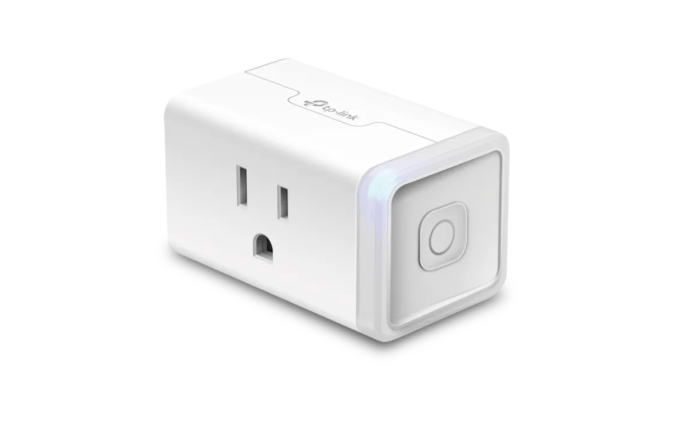
Smart plugs are a great way to introduce a person to the connected home. The TP-Link Kasa plugs are inexpensive but work with every popular voice assistant and smart phone. Smart plugs let you turn a basic lamp or coffee maker into a smart device without replacing anything.

Price: $28 for a two-pack on Amazon

Wyze Cam Pan

The Wyze Cam Pan packs a lot of features for the price. At $35, the small 1080p camera pans, tilts and zooms, and sports a low-light mode. Best of all, the Wyze cam works with Amazon Alexa and Google Assistant for things like “Alexa, show me a view of the living room on my office TV.” It’s by far the best smart home camera for the price.

(If you don’t need it to tilt/pan/etc. on command, there’s also a $25 version without all that.)

Price: $35 on Amazon

Echo Dot with Clock

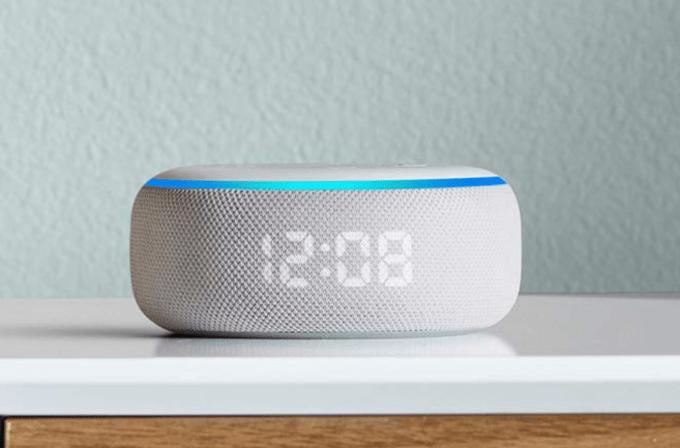
The Echo Dot with Clock is part of the Amazon Alexa family. It’s slightly more expensive than the ubiquitous Echo Dot… but it has a built-in clock! The clock makes this thing way more useful when you’re not actually talking to it — and, fortunately, unlike the Echo Spot, there’s no built-in camera to make it extra weird to put on your bedside table. One catch: these keep going in and out of stock, so they might be a pain to get this late in the game.

Price: $35 on Amazon

Nanoleaf Canvas

The Nanoleaf Canvas is a new type of wall art. It’s an interactive, fun way to splash a wall with light and design. The panels snap together, allowing the owner to create and recreate designs to fit their life and space.

Price: $180 for a starter kit of 9 tiles

Ember

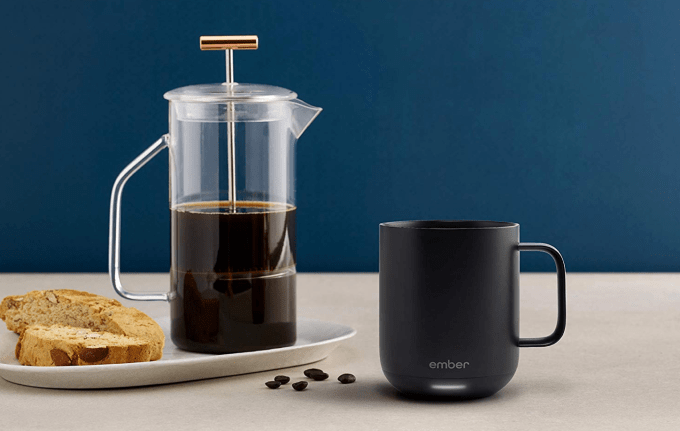
The Ember is a smart coffee mug. No, really. The Ember uses an internal heater to keep the drink at an ideal temperature as set by the user via a companion app. If the coffee drinker in your life is more of an all-day coffee sipper, the Ember should bring joy to their life.

Price: $100 on Amazon

Dewplanter

Some people love plants but hate watering. That’s where the Dewplanter comes in by capturing and filtering water in the air. It works as a dehumidifier — but instead of dumping excess water into a bin, it waters a plant. A control panel allows the owner to set the desired water amount. Set it and forget it and get a green thumb without any skill. Low-maintenance plants like evergreens, ferns, violets and aloe plants work best.

Price: $50 

Furbo

It’d be nice if we could all be home with our dogs 100% of the time — but for most people, that’s just not the case. Furbo is part web cam and part treat dispenser. Using a smartphone app, dog owners can monitor and interact with their pets, remotely tossing out treats when your pup does something good. Dog-friendly color signals and sounds are designed to get attention, while real-time updates and a camera let owners gain insight in their pet’s life from afar. Need to know when Mr. Boots starts barking so the neighbors don’t complain? Furbo can listen for barking and send you notifications accordingly.

Price: $134

iGrill

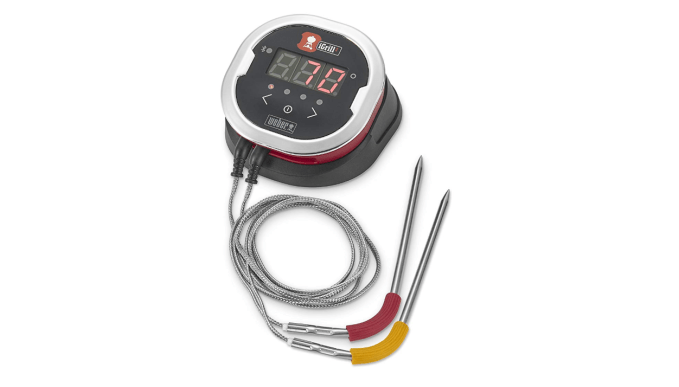
The Weber iGrill is a fantastic thermometer designed for grilling. Wireless connectivity brings the grill into the modern era, allowing the user to check the meat’s temperature from a smartphone and without opening the grill. A magnetic base sticks the control unit to the side of the grill and the probes are designed to withstand searing heat.

The iGrill Mini is around $50 and includes Bluetooth connectivity. The slightly more expensive iGrill 2 adds a LED display to the base unit and an extra probe, while the priciest model, iGrill 3, has more battery life and the extra probe but is only designed to be permanently mounted directly on the side of specific Weber grills.

Price: iGrill Mini, $45 on Amazon | iGrill 2, $65 on Amazon | iGrill 3, $80 on Amazon

Casper Glow Light

The Casper Glow Light makes going to bed and waking up a bit easier. The light is warm, and gradually dims to assist in falling asleep. Likewise, there’s an alarm function that slowly turns on to help knock the sleeper out of a deep slumber. The $129 Casper stands apart from other light-alarm clocks in several ways. One, it works as a lantern, allowing the owner to carry it throughout the home, and recharges using a bed-side dock. The Glow Light’s design is simple and durable; it can likely survive a fall off a table. Most importantly, the clock is managed with a smartphone app, eliminating the need to use clunky, on-device controls.

Price: $129 

Sonos Move

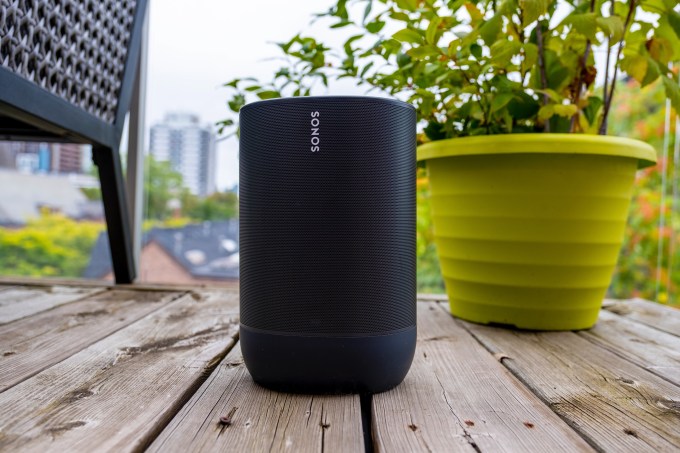
Sonos Move 11

For the Sonos lover in your life, the Move speaker fills a massive hole that existed in Sonos’ lineup for far too long: portable speakers. The Move brings all of Sonos’ features to a speaker designed to move around the owner’s house. And it sounds great, too, with full, expansive sound able to fill any room. At $399 the Move is more expensive than competitors, but for someone who has already embraced the Sonos concept, the connectivity and ecosystem is worth the price of admission.

Price: $399 on Amazon

Share Now, the Daimler and BMW-owned car sharing service, is exiting North America and three European cities

Blaming the “volatile state of the global mobility landscape” and rising infrastructure costs, Share Now, the car sharing service owned by Daimler and BMW, has announced that it is pulling out of North America as of February 29, 2020.

On the same date — citing “low adoption rates” — Share Now will also cease operating in three European cities: Florence, London and Brussels. Instead, the focus will switch to remaining European cities where it operates and where it thinks the service remains viable.

In North America, Share Now (formerly car2go) operated in Montreal, New York, Seattle, Washington, D.C. and Vancouver.

“This decision was made based on two extremely complicated realities,” says Share Now. “The first being the volatile state of the global mobility landscape, and the second being the rising infrastructure complexities facing North American transportation today and the associated costs needed to sustain operations here.”

The Daimler AG and The BMW Group joint entity says it had remained hopeful that it would be able to come to a solution over the last few months, but that ultimately it was not in a position “to commit to the level of investment necessary” to make the North American market successful “both in the near and long term.”

An email sent to London customers of DriveNow — the name for Share Now in the U.K. capital city — echoes a similar sentiment, with the company saying “the decision was not made lightly.” It says the number of customers in London and demand for its car sharing service was below expectations and lower than other Share Now cities. The company also blames local factors, citing the high costs of operation and the different circumstances in the individual London boroughs:

We started in London in December 2014 with the vision to change urban mobility and offer a flexible and attractive mobility solution which is in combination with public transport and is an alternative to the private car.

Although more and more Londoners integrated our service in their daily mobility behaviour we had to face the hard reality that we could still not convince enough people to do so. To make our car sharing service successful in a city strongly depends on the respective market circumstances.

The number of customers in London and their demand for our car sharing service was below our expectations and lower than in other SHARE NOW cities. Furthermore, we had to face local factors, like the high costs of operation and the different circumstances in the individual boroughs.

We are saddened by this decision and deeply apologize for the inconvenience that this will cause you when service ends. We especially want to thank you for using our service in the last years and for your loyalty.

Amazon will establish a new headquarters for its Kuiper satellite broadband project

Amazon is ramping operations for its Kuiper project, its forthcoming high-speed satellite internet product, with a new HQ and R&D facility. From a small satellite constellation operating in low Earth orbit, Kuiper will provide internet connectivity to underserved communities — and in some cases, to people without any access at all.

If that tune sounds familiar, it’s because it’s a common enough goal these days — SpaceX is already launching satellites that will make up its Starlink constellation to provide similar service, first in North America and then eventually globally. OneWeb is launching satellites to provide global coverage, and is hoping to get started deploying its constellation in January. Google (or rather Alphabet, but they’re looking more like the same company than ever before these days) is looking to provide similar connectivity services in hard to reach areas through its Loon high-atmosphere balloon project, too.

Amazon’s approach involves launching thousands of satellites to low Earth orbit, over the course of multiple launches spanning multiple years. Using multiple, smaller satellites instead of large, single or small volume geostationary satellites (as has been the primary approach for satellite internet in the past) means you can potentially offer better service, with wider reach, and at a lower ultimate cost.

Kuiper doesn’t yet have a timeline around deployment or availability for customers, but Amazon is clearly investing in the project with this new dedicated facility, which will be located in Redmond, Wash., near Amazon’s overall home base in Seattle. All told, the new facility will cover 219,000 square feet across two separate buildings, and it’ll house R&D labs, office space and even prototype manufacturing for onsite satellite hardware production. Amazon anticipates Kuiper team members will start moving into the new site sometime next year.

Three SaaS companies we think will make it to $1B in revenue

What’s the most successful pure SaaS company of all time? The answer is Salesforce, and it’s no contest — the company closed the year on an $18 billion run rate, placing it in a category no other company born in the cloud can touch.

That Salesforce is on such an impressive run rate might suggest that reaching a billion in revenue is a fairly easy proposition for an enterprise SaaS company, but firms in this category grow or drive revenue like Salesforce. Some, in fact, find themselves growing much more slowly than anyone thought, but keep slugging it out as they inch steadily toward the $1 billion mark. This happens to public and private SaaS companies alike, which means that we can look at few public ones thanks to their regular earnings disclosures.

It’s a good time to look back at the year and analyze a few firms that should reach the mythical $1 billion in revenue at some point. Today we’re examining Zuora, a SaaS player focused on building and managing subscription-based services. GuideWire, a company transitioning to SaaS with big ambitions and Box, a well-known SaaS player caught somewhere between big and a billion.

Zuora: betting on SaaS

We’ll start with the smallest company that caught our eye, Zuora . We’ll proceed from here going up in revenue terms.

Zuora is as pure a SaaS company as you can imagine. The San Mateo-based company raised nearly a quarter billion dollars while private to build out the technology that other companies use to help build their own subscription-based businesses. To some degree, Zuora’s success can be viewed as a proxy for SaaS as a whole.

However, while SaaS has chugged along admirably, Zuora has seen its share price fall by more than half in recent quarters.

At issue is the firm’s slowing growth:

  • In the quarter detailed on March 21, 2019, Zuora’s subscription revenue growth slowed to 35% compared to the prior year period. Total revenue growth grew an even slower at 29%.
  • In the quarter announced on May 30, 2019, Zuora’s subscription revenue grew 32% while its total revenue expanded 22%.
  • Moving forward in time, the company’s quarter reported on August 28, 2019 saw subscription revenue growth of 24% and total revenue growth of 21% compared to the year-ago quarter.
  • Finally, in its most recent quarterly report earlier this month, Zuora reported marginally better 25% subscription revenue growth, but slower total revenue growth of 17%.

Why is Zuora’s growth slowing? There’s no single reason to point out. Reading through coverage of the firm’s earnings report reveals a number of issues that the company has dealt with this year, including slow sales rep ramp and some technology complaints. Add in Stripe’s meteoric rise (the unicorn added tools for subscription billing in 2018, expanding the product to Europe earlier this year) and you can see why Zuora has had a tough year.

Adding to its difficulties, the company has lost more money while its growth has slowed. Zuora’s net loss expanded from $53.6 million in the three calendar quarters of 2018. That rose to $59.9 million over the same period in 2019. But the news is not all bad.

In spite of these numbers, Zuora is still growing; the company expects around $276 to $278 million in revenue in its current fiscal year and between $206 and $207 million in subscription top-line revenue over the same period.

At the revenue growth pace set in its most recent quarter (17% in the third quarter of its fiscal 2020) the company is eight years from reaching $1 billion in revenue. However, Zuora’s rising subscription growth rate in the same period is very encouraging. And, the company’s cash burn is declining. Indeed, in the most recent quarter Zuora’s operations generated cash. That improvement led to the firm’s free cash flow improving by half in the first three calendar quarters of 2019.

It also has pedigree on its side. Founder and CEO Tien Tzuo was employee number 11 at Salesforce when the company launched in 1999. He left the company in 2007 to start Zuora after realizing that traditional accounting methods designed to account for selling a widget wouldn’t work in the subscription world.

Zuora’s subscription revenue is high-margin, but the rest of its revenue (services, mostly) is not. So, with less thirst for cash and modestly improving subscription revenue growth, Zuora is still on the path towards the next revenue threshold despite a rough past year.

Guidewire: going SaaS the hard way