Boeing’s Starliner crew spacecraft will attempt a landing on Sunday

Boeing launched its Starliner CST-100 commercial crew spacecraft to the International Space Station (ISS) for the first time on Friday morning in an uncrewed test, and while an error with the onboard mission clock meant that the Starliner didn’t reach its target orbit as intended and subsequently didn’t have enough fuel on board to actually meet up and dock with the ISS, it’s still doing as much testing as it can to complete other mission objectives. One of those objectives is landing the Starliner spacecraft, and Boeing and NASA have scheduled that landing for Sunday at 7:57 AM EST (4:57 AM PST).

The landing will take place at White Sands, New Mexico, and will involve a controlled de-orbit and descent of the Starliner capsule. The spacecraft will begin its de-orbit burn at 7:23 AM EST if all goes to plan, and NASA will begin a live broadcast of the entire landing attempt starting at 6:45 AM EST (3:45 AM PST) on Sunday morning if you want to tune in to the stream embedded below.

Boeing and NASA held a press conference today to provide updates about the mission status after the unplanned mission timer incident on Friday. Boeing SVP of Space and Launch Jim Chilton said during the conference that the team has managed to successfully run a number of its test objective with the mission despite the setback, including extending the docking system to see that it performs as expected, and testing the abort system on board the crew capsule.

The landing is another key test, and could even be more crucial to crew safety in terms of its execution. Both NASA and Boeing have said that were astronauts on board the Starliner during this mission, the mission clock timer incident that occurred would not have put them in any actual danger at any time. Problems with the automated landing sequence would be a different story, potentially – though astronauts are trained to do everything manually in case of any issues encountered while they’re actually in the spacecraft.

Should anything warrant skipping the first attempt at landing tomorrow, NASA and Boeing have a back-up landing opportunity about eight hours after the first. Tune in tomorrow to see how this spacecraft, which will still hopefully carry its first human passengers next year, does with its landing maneuvers.

Luminance and Omnius are bringing AI to legacy industries

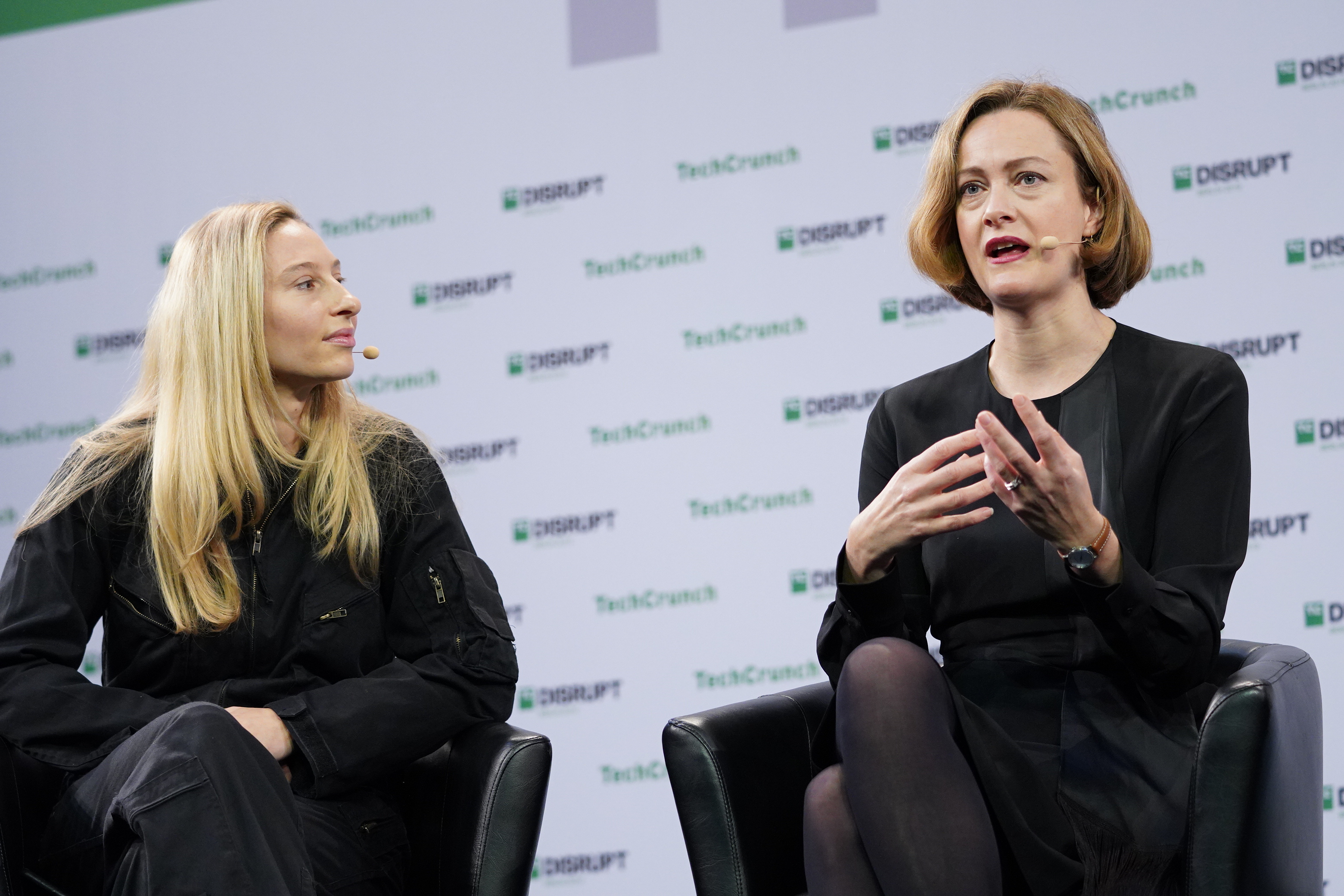
Artificial intelligence is a powerful tool, but it’s not a magic wand. Applying the technology requires thought and dedication, especially with legacy industries like law and insurance, which are being taken on in this way by Luminance and Omnius respectively. The companies’ founders, Emily Foges and Sofie Quidenus-Wahlforss, spoke with great insight on this on stage at Disrupt Berlin.

Luminance uses AI and natural language processing to help law firms process documents more quickly, not replacing the lawyer but providing additional intelligence and analysis of what may be hundreds or thousands of pages and saving time and money. Omnius applies AI not just to the text of insurance claims, but to the process of handling them, ensuring rapidity not only in documentation but in results like payouts.

Omnius has raised about $30 million in multiple small rounds and grants, while Luminance has raised some $23M mainly in its A and B rounds.

I’ve edited and contextualized our conversation here, but you can also watch the full panel below. I’ve made some slight changes for readability but left things mostly intact. Pull quotes belonging to Emily are on the left, Sofie’s are on the right.

The first thing I wanted to hear from the founders was why they chose these industries, and why now? After all, law and insurance are notoriously old-fashioned, some would even say backwards in many ways. How could they be sure this was an opportunity, and not a folly?

Emily Foges (Luminance): It had more to do with the capabilities of the technology, actually. We started with technology that can read a lot of language, and then we looked at what industry would benefit most from that. It was that way around.

I think the timing is 80 percent of the battle; The fact that the legal profession had got to a point of being ready to accept the use of that kind of technology was more luck than anything. But there’s been such an explosion in enterprise data that lawyers just can’t possibly cope with reading and all of the documentation that they need to — so the market was ready.

Sofie Quidenus-Wahlforss (Omnius): I think we come from a very similar background. We started on a horizontal level, with deep document understanding, and at some point we understood, if you really want to ship business value, you need to dive into one vertical.

We have different verticals to choose: manufacturing, legal, pharma… so then we were like, okay, which area is the biggest that is not transformed yet? And do we see decision makers aware of the of the need to do something? And do they have money?

The insuretech world is of course making a lot of pressure, all the new insurance companies like Lemonade, WeFox, Coya, because they claim to settle a claim in minutes. So the big guys like Alliance, they got nervous. And on the other hand you see, on the technology side, improvements in the areas of computing power, way more access to data, more flexible models. So we thought, the industry is ready, the technology’s ready, I was ready to build a big company. It’s my fourth company and I was like, this time I’ll build something huge. So everything fell into place.


They don’t call them legacy industries for nothing, though. These domains, and some companies, that have existed for decades or even a century or more. That means legacy systems and legacy people, to put it kindly, that may not be amenable to change. Emily had some surprising stats on that, while Sofie advocated an AI-like approach to classifying and selecting clients.

Emily: Some of them are more ready than others, and I think the ones who aren’t ready need to really catch up, because we got to critical mass really quickly. We’re only three and a half years old, but we’ve got 185 law firms around the world signed up. The interesting thing was the most ready people were the law firms outside of the UK, outside of the US. It was European law firms, APAC-based law firms, South and Central American law firms who got on board first. They were more ready because to be honest, the commercial pressure was greater. And then the pressure on the US and UK law firms came from them.

This is something I can really recommend for every startup trying to transform an industry from scratch: classifying your customers. We had 16-17 criteria, how we defined the companies we really want to spend time with.

Sofie: We thought, cool, the transformation is happening already. But after a while, 2018, we were like, okay, this market is not moving as fast as we thought . We looked at our proof of concept, our pilots we did with insurance companies and were like, wow, every big insurance company in Europe wants to have an AI pilot project but who’s really ready to start with AI full production?

And this is something I can really recommend for every startup trying to transform an industry from scratch: classifying your customers. Who is a laggard, who is an early adopter, who is early mainstream, is an innovator? Then we decided together with the board, okay, we’ll only focus on innovators and early adopters, and the rest should wait, or we can both wait for each other — but we cannot waste our time.

Should you pay $50K for your pitch deck? Yes, why the hell not?

Every once in a while on VC Twitter, a comment or statement seems so outlandish, so completely outrageous, that it must be — certainly has to be — false. Such as it was for Primary Ventures investor Jason Shuman, who commented on the recent prices for pitch deck advice in the Valley today:

Founder friend just told me that SF deck designers have quoted him between $20K to $40K + the right to invest up to $250K…my mind is officially blown

— Jason Shuman ? (@BoatShuman) December 20, 2019

You can almost hear that plaintive scream, “My mind is officially blown” (Shuman doesn’t scream, mind you). And indeed, in a world where more and more founders are worried about a bubble; assets are more, let’s say, Notionally expensive than ever before; and everything just seems a little bit crazy these days, it seems downright, fucking insane to think that a PowerPoint file and some “thoughts” are worth tens of thousands of dollars, and a goddamn term sheet to boot.

But they are.

Or at the very least, they can be. And I say that as the guy who wrote an article last week entitled, “How to avoid the startup trap of the parasitic consultant.”

For sure, not every pitch deck consultant is worth top dollar, any more than not every croissant in New York’s West Village is worth $10. But some are, and certainly an elect chosen set of consultants are worth every penny they demand.

The best consultants are not luxuries to plaster on your WeWork’s walls, but critical tools to invest in your startup. Framing a startup’s thesis, product, team, and market exactly right is a qualitative skill that can’t be learned from reading a book or scanning through a founder friend’s deck or two. Get a single slide wrong, or hell, a single bullet point wrong and the whole thing can blow up in a pitch meeting in thirty seconds or less.

Trust me. As a former VC investor, I have gotten hung up on single sentences before. A founder has put their life’s work into a company, synoptically condensed it to a handful of slides, and I am stuck on eight words. But those eight words make no sense, and once something doesn’t make sense, the whole edifice of excitement and confidence comes crashing down. Eight words — one badly chosen verb and adjective.

A good pitch deck consultant may barely move the needle on a fundraise, while a superstar may not just get you a better term sheet, they may fundamentally transform the entire course of your startup’s trajectory. Those are the stakes.

And of course, it’s not just pitch deck consultants who can do this. The right PR consultants can potentially get you traction that no one else can. The right sales consultants may lock in those critical early design customers that represent the difference between an orderly liquidation and a massive Series A. The right product marketing specialists or pricing experts may be what drives conversions and eliminates churn.

What’s so hard today for founders is that the Valley has indeed matured, and all these consultants and more are available. There are the hucksters and the tricksters, the bon vivants thriving on naive capital, the idiot clowns cloaked in their own compelling pitch decks.

But as the market has expanded for these services, at least some superstars are emerging from the marketplace, people who can offer more value for you in a week or two than the mediocrities can in a year.

Your job as founder is to constantly probe and find those diamonds, and get them working on your idea at any cost — even costs that might at times seem insane.

The thing with tech startups today is that they are built upon strata of superstardom. Superstar talents lead to superstar products, superstar VC capital, and ultimately, superstar exits. Superstar momentum is real. Yes, yes, yes, not every time, and every stage in the pipeline is multiplied by a stochastic chance of failure, for sure. But idiocy has rarely been a path to success.

And so as with all parts of innovation, it’s all about making the right investments in the right people and the right ideas. $50K or even $500K for a consultant won’t do anything if they are the wrong person working on the wrong idea — parasites are parasites after all. But leverage that early seed capital into the right people working on the right problems, and that’s where the magic happens.

And so I can understand some of the outrage over these figures, as well as the lingering presumption behind them that VCs care more about a startup’s deck than the underlying startup itself. Those frustrations are palpable and not insane, but let’s not avoid the tough question: everything has some value attached to it. It shouldn’t surprise anyone that top experts in their fields, who understand their own leverage, would take advantage of their expertise and drive their own prices higher.

Paying tens of thousands of dollars for a pitch deck consultant isn’t a prerequisite for securing a venture capital round. There are founders whose entire skill is securing capital for their companies who have never paid a penny for this skill.

Yet ultimately, all early-stage startups face the same challenge: too many activities, too little time. Something, somewhere is going to have to get outsourced today and the quality of that external work is largely going to be determined by how much you are willing to pay for it. What you choose to spend whatever capital you have will determine the trajectory of your startup. So whether it is pitch decks or another activity, never blink from those top dollars. It may very well be what gets you the top dollar in the end.

Original Content podcast: ‘The Rise of Skywalker’ makes some questionable choices

“Star Wars: The Rise of Skywalker” opened Friday to mediocre reviews, though it’s not clear whether those reviews will put any real damper on audience enthusiasm.

In the meantime, all three of your hosts of the Original Content podcast have seen the movie. And we all agree that “The Rise of Skywalker,” while flawed, is a largely entertaining and satisfying experience.

Things get a little more complicated in our spoiler discussion, where we weigh in on the film’s big reveals. The trilogy’s previous installment, “The Last Jedi,” polarized fans with its bold storytelling choices (bold for Star Wars, at least). But we’re squarely in the pro-“Last Jedi” camp, so we were disappointed to see “The Rise of Skywalker” back away from some of those choices.

Our discussion also unearths a key piece of Star Wars history — the fact that while developing his now-formidable writing talents, our co-host Darrell Etherington wrote an extended piece of fanfiction with the tantalizing title “Reign of the Empress.” If you’d like to help us pressure Darrell into reading the story on a future episode of the podcast, please email or tweet at us!

It’s an Adam Driver-centric episode this week. In addition to discussing Driver’s Star Wars arc, we also review “Marriage Story,” the Netflix film where he and Scarlett Johansson play a divorcing couple. At least one of us thinks “Marriage Story” might be the best movie of the year, while others were a little more reserved in their praise.

You can listen in the player below, subscribe using Apple Podcasts or find us in your podcast player of choice. If you like the show, please let us know by leaving a review on Apple. You can also send us feedback directly. (Or suggest shows and movies for us to review!)

And if you want to skip ahead, here’s how the episode breaks down:
0:00 Intro
1:15 “The Mandalorian” listener response
8:50 “Marriage Story” review (mild spoilers)
27:42 “Star Wars: The Rise of Skywalker” review
45:52 “The Rise of Skywalker” spoiler discussion

This Week in Apps: The year and decade in review, gaming acquisitions and a Facebook OS

Welcome back to This Week in Apps, the Extra Crunch series that recaps the latest OS news, the applications they support and the money that flows through it all.

The app industry is as hot as ever, with 194 billion downloads last year and more than $100 billion in consumer spending. People spend 90% of their mobile time in apps and more time using their mobile devices than watching TV. Apps aren’t just a way to waste idle hours — they’re big business, one that often seems to change overnight.
In this Extra Crunch series, we help you to keep up with the latest news from the world of apps, delivered on a weekly basis.

Headlines

The top apps of the year… and the decade

App Annie this week released its list of the year’s top apps. And this time around, it also included the top apps of the past 10 years in its analysis. Outside of games, Facebook dominated the decade, the firm reported. It ran the four most-downloaded apps of the decade, including Facebook (#1), Messenger (#2), WhatsApp (#3), and Instagram (#4). Other communication and social media apps were also among the most popular over the past 10 years, claiming seven out of the 10 top spots, including Snapchat (#5), Skype (#6) and Twitter (#10). Social video platforms TikTok and YouTube also placed on the list at #7 and #9, respectively. And yes, it’s pretty notable that TikTok — an app that only launched outside of China in 2017 — is one of the most-downloaded apps of the past decade. Meanwhile, even though dating app Tinder was the most profitable app this year, Netflix was the No. 1 app by all-time consumer spend over the past decade.

2019 app downloads and consumer spending

Related to its round-up of the top apps, App Annie also offered some preliminary data on downloads and consumer spending in 2019. Its current figures don’t include calculations from third-party app stores in China, (like those referenced above), which App Annie tends to provide in its annual State of Mobile report. Instead, App Annie reports we’re on track to see 120 billion apps from Apple’s App Store and Google Play by the end of 2019, a 5% increase from 2018. Consumer spending was also up 15% year-over-year to reach $90 billion, it says. Expect a full analysis to come in Q1 2020.

Facebook still sat at the top of the charts for 2019. The company’s Messenger app was the most downloaded non-game app of 2019, followed by Facebook’s main app, then WhatsApp. Tinder switched places with Netflix for the No. 1 spot on this chart — last year, it was the other way around. (For more details, TechCrunch’s full review is here.)

2019 in Mobile Gaming

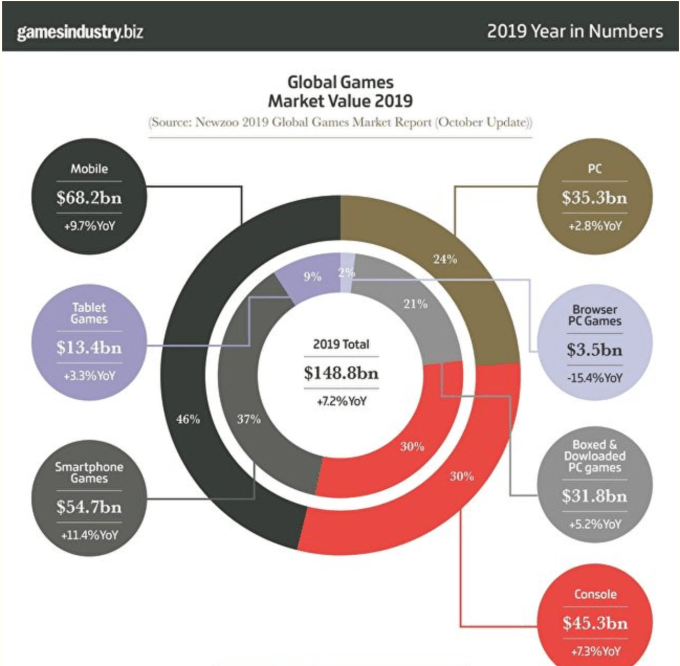
According to a year-end report by GamesIndustry.biz, mobile gaming grew 9.7% year-over-year in 2019 to reach a market value of $68.2 billion. The gaming market as a whole was worth $148.8 billion, the report said. Smartphone games were the biggest piece of this figure, at $54.7 billion, compared with $13.4 billion for tablet games. That means smartphone games are still bigger than PC, browser PC games, boxed and downloaded PC games, and console games.

Big moves in cloud gaming

To beef up its new cloud gaming service Stadia, Google this week bought game development firm Typhoon Studios, who were set to release their cross-platform title and first game, Journey to the Savage Planet. Google had said it wants to build out a few different first-party studios to release content on Stadia, which is where this acquisition fits in. Meanwhile, Facebook this week acquired the cloud gaming startup, PlayGiga, which had been working with telcos to create streaming game technology for 5G.

Stadia has a big mobile component, as its controller can play games on compatible mobile devices like Pixel phones. Gaming has been a big part of Facebook’s mobile efforts, as not only a platform where games can be played, but also a place to watch live game streams, similar to Twitch. But the big gaming trend of the past year (which will continue into 2020) is cross-platform gaming — thanks to games like Fortnite, Roblox and PUBG Mobile, as well as devices like Nintendo Switch, gamers expect to continue playing no matter what screen they happen to be using at the time.

Apple Developer app expands support for China

Apple launched a dedicated mobile app for its developer community in November, with the arrival of the Apple Developer app, which was an upgraded and rebranded version of Apple’s existing WWDC app. The app lets developers access resources like technical and design articles, as well as read news, watch developer videos, and enroll in the Apple Developer program. Now that the program is open to China through the app, Apple announced this week.

From the app, developers in China can start and complete their Apple Developer membership and pay with a local payment method on their iPhone or iPad. They can also renew their membership, to keep their account active. Apple has been heavily investing in growing its international developer community by launching developer academies and accelerators in key regions, among other initiatives. Over the past year, Apple grew its developer community in China by 17%, the company earlier said.

So much for nostalgia, Rewound gets yanked from the App Store

We hope you downloaded this fun app when we told you to in last week’s column! Because now it’s gone.

Rewound, briefly, was a clever music player app that turns your iPhone into a 2000’s era iPod, complete with click wheel nav. The developer was able to sneak the app into the App Store by not including the actual iPod UI, which infringes on Apple’s own product design. Instead, the UI pieces were hosted off-site — on Twitter accounts, for example. Users could find them and download them after they installed the app. Technically, that means the App Store app itself wasn’t infringing, but Apple still kicked it out. The developer also charged a fee to access the Apple Music features, which may have been another reason for its removal.

It’s no surprise Apple took this step, but the developer seems confused as to how the app could be approved then pulled later on, even though it hadn’t changed. That’s actually par for the course for Apple’s subjective, editorial decisions over its App Store, however. Now Rewound, which has 170K+ users after only a few days, will focus on a web app and Android version.

Facebook is building its own OS so it can ditch Android

TikTok’s national security scrutiny tightens as U.S. Navy reportedly bans popular social app

TikTok may be the fastest-growing social network in the history of the internet, but it is also quickly becoming the fastest-growing security threat and thorn in the side of U.S. China hawks.

The latest, according to a notice published by the U.S. Navy this past week and reported on by Reuters and the South China Morning Post, is that TikTok will no longer be allowed to be installed on service members’ devices, or they may face expulsion from the military service’s intranet.

It’s just the latest example of the challenges facing the extremely popular app. Recently, Congress led by Missouri senator Josh Hawley demanded a national security review of TikTok and its Sequoia-backed parent company ByteDance, along with other tech companies that may share data with foreign governments like China. Concerns over the leaking of confidential communications recently led the U.S. government to demand the unwinding of the acquisition of gay social network app Grindr from its Chinese owner Beijing Kunlun.

The intensity of criticism on both sides of the Pacific has made it increasingly challenging to manage tech companies across the divide. As I recently discussed here on TechCrunch, Shutterstock has actively made it harder and harder to find photos deemed controversial by the Chinese government on its stock photography platform, a play to avoid losing a critical source of revenue.

We saw similar challenges with Google and its Project Dragonfly China-focused search engine as well as with the NBA.

What’s interesting here though is that companies on both sides are struggling with policy on both sides. Chinese companies like ByteDance are increasingly being targeted and stricken out of the U.S. market, while American companies have long struggled to get a foothold in the Middle Kingdom. That might be a more equal playing field than it has been in the past, but it is certainly a less free market than it could be.

While the trade fight between China and the U.S. continues, the damage will continue to fall on companies that fail to draw within the lines set by policymakers in both countries. Whether any tech company can bridge that divide in the future unfortunately remains to be seen.

Tesla nears land deal for German gigafactory outside of Berlin

Tesla is making progress on its plan to build its European gigafactory in Berlin, Bloomberg reports. The Elon Musk-run automaker is working with state officials in Brandenburg on the contract to secure around 740 acres of land just outside Berlin in Gruenheide, and the government has agreed to the contract as currently written and is now awaiting Tesla’s final sign-off.

On top of the contract, Tesla has also filed the requisite documents with local environmental monitoring authorities that outline the impact of the factory build, a required step in order to secure approval to break ground.

Musk revealed that he had selected an area just outside of Berlin as the site of the company’s European Gigafactory during an awards acceptance ceremony in November. The location is near the new Berlin airport, which has been under construction for many years and will replace Berlin’s aging and cramped Tegel airport once completed.

The Berlin Gigafactory will be building vehicles, starting with the forthcoming Tesla Model Y compact SUV, but it will also build batteries and powertrains, Musk said on Twitter at the time. Eventually, the new facility could employ as many as 10,000 people and produce up to 500,000 new vehicles per year, Bild reported previously.

A highly subjective list of some of this year’s notable young startups

I’m not a venture capitalist. I don’t play one on TV, either (though I might if anyone asked!). Still, after many years of covering startups, including as an editor with TechCrunch, in a daily newsletter I publish called StrictlyVC, and at numerous media outlets before that (anyone remember the early years of Red Herring magazine?), there have always been startups that stand out a little more than others.

This is not to say that what I find intriguing will be a predictor of success. A lot of great ideas never find a broad or lucrative base customer base. Some perish owing to mismanagement or misadventure(!) or good-old competition. Note, too, that what I’m about to feature is a small sampling of a much broader pool of companies I’d include if I had all the time in the world and you did, too.

I’m also keeping the focus on fairly young companies — they’re mostly only seed-funded at this point — that represent a wide variety of industries and markets and that (with one exception) disclosed their funding in the last couple of months, as did many hundreds of other startups.

What is interesting, and not intentional, is how few of these picks are based in the Bay Area — an amazing region in many ways but also one that’s lost its earlier stranglehold on talent and great ideas.

Herewith, 10 recent standouts, at least to this particular brain.


Xilis. This Durham, North Carolina company just yesterday announced a $3 million seed round to continue working on its microfluidic organoid technology. What’s that mean? In this case, the company says its tech creates 10,000 micro tumors from a single cancer biopsy, then tests which cancer treatments will or won’t work for a patient — presumably expediting the time it takes to find the most effective treatment for that person. Can it cure cancer? Who knows, but the company was founded by Duke professors who are medical oncologists. They say that they’re also finding success already in clinical trials. My colleague Jon wrote about the company here.


Terradepth. It’s a 16-month-old, Austin, Tex.-based company that was founded by two ex-Navy SEALs and aims to use autonomous submersible vehicles to provide access to deep-ocean information on a data-as-a-service basis, which I’d guess plenty of industries could use. The company just raised $8 million in funding led by Seagate Technology, the hardware company, and it has number of competitors, but I like this idea directionally. Let’s face it —  oceans do cover roughly 70 percent of the Earth’s surface. Darrell wrote about this one earlier this week.


Apostrophe, an eight-year-old, Oakland, Ca.-based dermatology telemedicine startup that makes it easier to receive medications and treatments over the phone, announced $6 million in seed funding earlier this month led by SignalFire, with participation from FJ Labs. There are at least half a dozen other telemedicine companies focused on dermatology. I don’t pretend to know which is best. But given that skin is the largest organ we humans have, combined with fact that ultraviolet radiation reaching Earth’s surface has steadily increased in recent decades owing to decreasing levels of stratospheric ozone, enabling people to get examined as quickly and conveniently as possible just makes sense. (By the way, if you’re wondering how Apostrophe specifically makes money, it also has a mail-order pharmacy.) Jordan wrote about Apostrophe here.


Conservation Labs. This one is a 3.5-year-old, Pittsburgh, Pa.-based startup whose tech takes measurements from a building’s pipes, then translates those signals to assess water flow estimates and detect leaks. The company has raised $1.7 million in seed funding, including from the Amazon Alexa Fund, and I like that it’s good for the world, good for building owners, and tackling a very big industry. As the company itself is quick to note, there are more than three trillion gallons of water wasted each year in the U.S alone, costing the country $70 billion.


Aircam. People are both vain and impatient, two reasons why on a very superficial level, I like this roughly two-year-old, Santa Monica, Ca.-based startup that allows anyone to get instant access to pictures taken by professional photographers at weddings, parties and other events. That its founders are brothers who sold their last company to Apple inspires some confidence, too. So far, the company has raised $6.5 million in seed funding led by Upfront Ventures, with participation from Comcast Ventures, and Anthony wrote about it last month.


BuildOps. This is a 1.5-year-old, Santa Monica, Ca.-based maker of a field service and business process software platform for small and mid-size subcontractors working in commercial real estate that has raised $5.8 million across two tranches of seed funding, including a round that closed this fall. BuildOps is one of an astonishing number of startups trying to take a bite out of the commercial construction industry, on which hundreds of billions of dollars are spent each year in the U.S. alone. It’s also targeting a segment of the market where there is no go-to player yet. While lots of architects, property owners, and large general contractors are already reliant on different software packages, the small and medium-size contractors and subcontractors who work on buildings typically still operate in distinct silos, and they — along with building owners — could benefit greatly from software that brings together the overall picture so unnecessary missteps, miscommunications, and expenses can be avoided. Jon had covered this one, too.


Medinas is a two-year-old, Berkeley, Ca.-based marketplace for reusable medical equipment, which is right now largely sold directly by equipment companies that mostly just list what they’re looking to sell in what seems like an awfully clunky approach. Medina instead works with dozens of medical centers to assess what they have, what they need, and what they need to ditch, then handles all aspects of the sale, from early inventory checks to shipment and reinstallation. It’s a surprisingly big market (almost $38 billion, according to one market research group), but I also like that it’s helping developing regions in need of equipment, as Crunchbase News noted when it wrote about the company in October. Think CT scanners sent off to Cambodia, ventilators shipped to India, and defibrillators packed off to Mexico. Medinas raised $5 million in seed funding a couple of months ago, led by NFX.


Mable. This year-old, Boston-based wholesale commerce platform is trying to help small food and grocery businesses stock their shelves with local and emerging brands, which sounds kind of quaint — even boring — but is actually a huge opportunity as envisioned by Arik Keller, whose last company was acquired by Facebook. Small to medium-size grocery stores, brands, and distributors are part of a $650 billion market that comprises roughly 150,000 independently owned grocery and convenience stores — and most of them apparently buy goods and restock their shelves through phone calls, emails and texts. Keller, a former PayPal product director who later bought a grocery store, realized that if he can persuade these business owners to use a mobile app that helps them manage their procurement, he can make their lives easier, as well as more defensible against companies like Amazon and Walmart. As for Mable’s revenue, some grocers pay a monthly fee for the service; in other cases, Mable is getting a cut from brands like new specialty food companies that it’s helping find their way into new locations. So far, the company has raised $3.1 million in seed funding.


Phylagen. It’s a 4.5-year-old, San Francisco-based data analytics startup that says it’s creating a microbial map of the world for everything from food to textiles to counterfeit goods to determine from where they came. It’s basically looking for an item’s ‘DNA footprint,’ meaning the unique combination of bacteria, fungi and pollen that adheres to a product wherever it’s made (and also to its packaging). It’s a big and growing opportunity that it’s targeting. According to Allied Market Research, the food traceability market alone is expected to become a $14 billion market by next year.  Worth noting, Phylagen is a little further along in its fundraising ‘journey.’ It closed on $14 million in Series A funding earlier this year, including from Cultivian Sandbox, Breakout Ventures and Working Capital.


Bunch is a 2.5-year-old, San Francisco-based app that, once downloaded, can connect friends via audio or video chat with friends who are playing mobile games. On its face, it might seems like a lightweight idea compared to, say, Tissium, a company that’s further along along the funding front and building a vascular sealant out of synthetic polymers (which is also pretty neat). But in a society where people are increasingly “apart together” — and study after study shows that social ties boost our longevity — the app has wide appeal from not just an entertainment but a wellness standpoint. The fact that this startup raised seed funding — $3.85 million in November — from top game makers, including Supercell, Tencent, Riot Games, Miniclip and Colopl Next, also means a lot. Specifically, it means (I think) that these companies would prefer to partner with Bunch than to ice it out. Jordan had covered this one, too.

Will audio livestreaming take off in America?

For many podcast listeners, following their favorite shows is a solitary experience.

A recent survey of 2,000 users by the University of Florida College of Journalism and Communications found they listened to podcasts most often at home, during commutes or while exercising. Over the past couple of years, however, a new trend, audio livestreaming, has taken off in China. The medium is basically a combination of podcasting and talk radio, with mobile apps enabling interactive features like live chats with other listeners, call-in requests and emoji reactions.

If it follows other formats that gained traction in China before becoming popular elsewhere, like short-form video apps (including TikTok) and video livestreams, it may give podcasts in other markets a new way to reach more listeners and monetize.

Castbox, a podcast app headquartered in San Francisco with an engineering office in Beijing, launched Livecasts in July. Available in its mobile and desktop apps, which have 20 million users around the world, the feature allows hosts to launch audio livestreams in private or public channels.

While communities of fans have grown around many popular podcasts, interacting with hosts and other listeners is still a fragmented experience that takes place through Facebook groups, Twitter hashtags, online forums like Reddit or, more occasionally, podcast players like Castbox that have comments sections. Sometimes podcasts are recorded live, either in front of an audience or while it streams online, but even then the user experience is still relatively passive, focused on listening instead of interacting.

Audio livestreams give hosts a more immediate way to engage with listeners. In China, all three of the most popular audio content apps — Ximalaya, Lychee and Dragonfly — include audio livestreams, covering topics ranging from politics and current events to relationships and parenting.

About almost half of the users of Castbox’s app, a podcast player that also has original programming, are from the United States, but the company’s engineering base in China means it is well-positioned to introduce Chinese internet trends to new markets.

Yicheng Ruan, Castbox product manager, tells Extra Crunch that audio livestreams are like much more interactive versions of talk radio shows. Castbox’s Livecast includes many of the same features that have become popular in China, including the ability to stream a live audio chat with multiple hosts, in-channel messaging rooms, call-in requests and virtual gifts paid for with in-app currency that can be exchanged for real money.

Vape lung is on the decline as CDC report fixes blame on oily additive

The CDC has issued a set of reports showing that the lung disease associated with vaping seems to be declining from peak rates, and that Vitamin E acetate seems — as speculated early on — to be the prime suspect for the epidemic. The affliction has cost at least 54 lives and affected 2,506 people across the nation.

The condition now officially known as EVALI (E-cigarette, or Vaping, Product Use-Associated Lung Injury) appeared over the summer, with hundreds of people reporting chest pains, shortness of breath and other symptoms. When state medical authorities and the CDC began comparing notes, it became clear that vaping was the common theme between the cases — especially using THC products.

Before long the CDC recommended ceasing all vape product usage and was collating reports and soliciting samples from around the country. Their medical authorities have now issued several reports on the disease. The most significant finding echoes earlier indications that Vitamin E acetate, an oily substance that was apparently being used as a cutting agent in low-quality vaping cartridges, is at the very least a major contributor to the condition:

Building upon a previous study, CDC analyzed bronchoalveolar lavage (BAL) fluid from a larger number of EVALI patients from 16 states and compared them to BAL fluid from healthy people. Vitamin E acetate, also found in product samples tested by the FDA and state laboratories, was identified in BAL fluid from 48 of 51 EVALI patients and was not found in any of the BAL fluids of healthy people.

That’s pretty clear cut, but importantly it does not exonerate any other, perhaps even worse additives that may not have been so widespread. It seems clear that vaping product producers will need to reestablish trust in the wake of this fatal blunder, and part of that will have to be transparency and regulation.

Vaping rose to prominence quickly and has proven difficult to effectively regulate. The shady companies that were selling stamped-on cartridges filled with what would prove to be a lethal adulterant have probably already picked up and moved on to the next scam.

The good news is the scale of the epidemic seems to have reached its maximum. There are still cases coming in, but the number of new patients is not rising sharply every month. Perhaps this indicates that people are taking the CDC’s advice and not vaping as much or at all, or perhaps the products using the additive have been quietly slipped off the market.

2019’s 10 defining moments in venture capital

Every year, the tech industry experiences moments that serve as guideposts for future entrepreneurs and investors looking to profit from the wisdom of the past.

In 2017, Susan Fowler published her heroic blog post criticizing Uber for its culture of sexual harassment, helping spark the #MeToo movement within the tech industry; 2018 was the year of the scooter, in which venture capitalists raced to pour buckets of cash into startups like Bird, Lime and Spin, hoping consumer adoption of micro-mobility would make the rushed deals worth it.

These last twelve months have been replete with scandals, new and interesting upstarts, fallen CEOs and big fundraises. Theranos founder Elizabeth Holmes finally got a court date, SoftBank’s Masayoshi Son admitted defeat (see: “In the case of WeWork, I made a mistake”), venture capitalist Bill Gurley advocated for direct listings and denounced big banks’ underwriting skills, sperm storage startups battled for funding and Away’s dirty laundry was aired in an investigation conducted by The Verge.

The list of top moments and over-arching trends that defined this year is long. Below, I’ve noted what I think best represent the largest conversations that occurred in Silicon Valley this year, with a particular focus on venture capital, followed by honorable mentions. As always, you can email me ([email protected]) if you have thoughts, opposing opinions, strong feelings or relevant anecdotes.

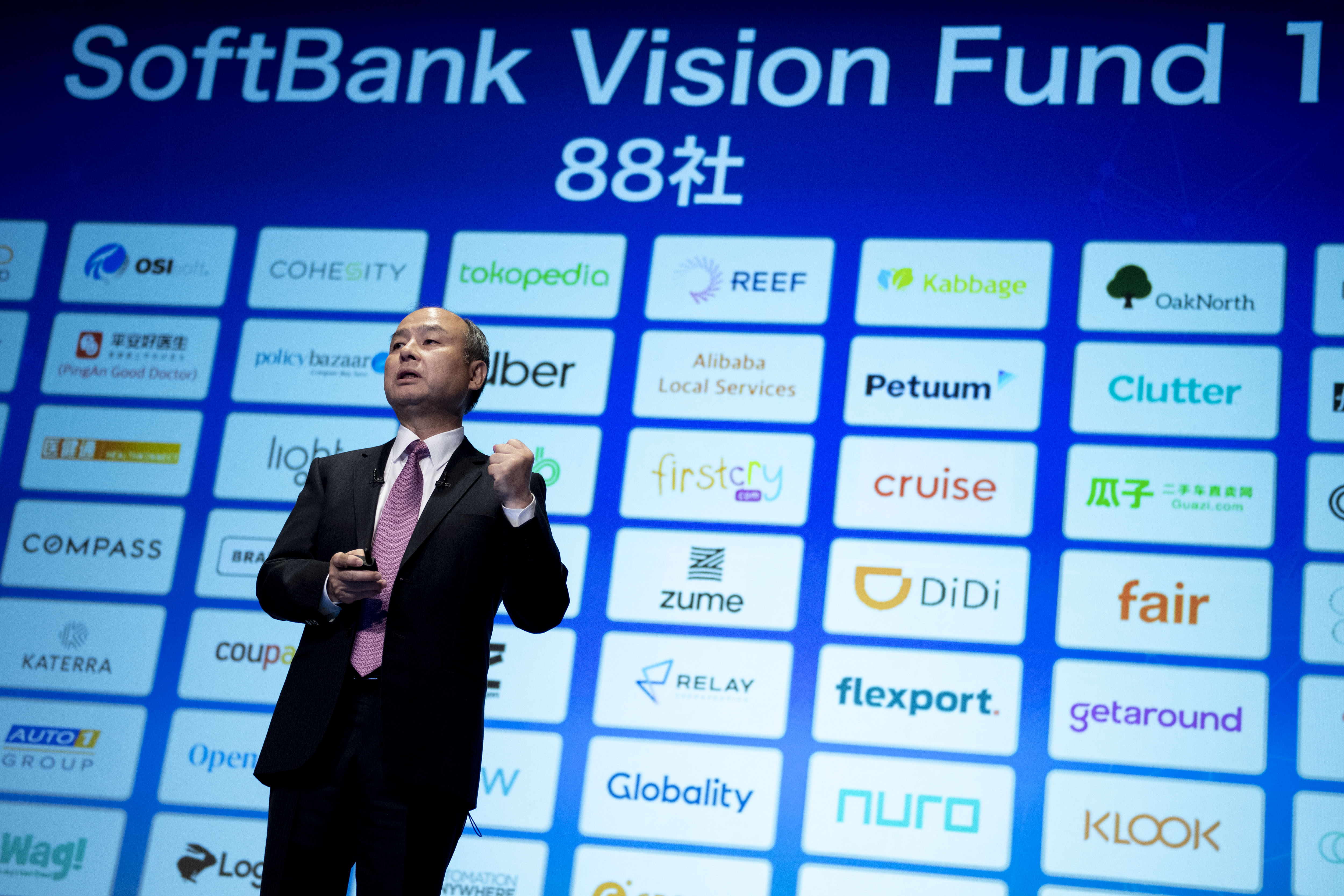
SoftBank Group Corp. chairman and CEO Masayoshi Son speaks during a press conference on November 6, 2019 in Tokyo, Japan. (Photo by Alessandro Di Ciommo/NurPhoto via Getty Images)

1. SoftBank admitted failure: We’ll get to WeWork in a moment, but first, let’s talk about its multi-billion-dollar backer. SoftBank announced its Vision Fund in 2016, holding its first major close a year later. Ultimately, the Japanese telecom giant raised roughly $100 billion to invest in technology startups across the globe, upending the venture capital model entirely with its ability to write $500 million checks at the flip of a switch. It was an ambitious plan and many were skeptical; as it turns out, that model doesn’t work too well. Not only has WeWork struggled despite billions in funding from SoftBank, several other of the firm’s bets have wavered under pressure. Most recently, SoftBank confirmed it was selling its stake in Wag, the dog-walking business back to the company, nearly two years after funneling a whopping $300 million in the then-three-year-old startup. Wag failed to accumulate value and was struck by scandal, leading to SoftBank’s exit. Why it matters: ditching one of its more high profile bets out of the monstrous Vision Fund wasn’t even the first time this year SoftBank admitted defeat. Once an unstoppable giant, SoftBank has been forced to return to reality after years of prolific dealmaking. No longer a leader in VC or even a threat to other top venture capitalists, SoftBank’s deal activity has become a cautionary tale. Here’s more on SoftBank’s other uncertain bets.

2. WeWork pulled its IPO. The biggest story of 2019 was WeWork. Another SoftBank portfolio, in fact the former star of its portfolio, WeWork filed to go public in 2019 and gave everyone full access to its financials in its IPO prospectus. In August, the business disclosed revenue of about $1.5 billion in the six months ending June 30 on losses of $905 million. The IPO was poised to become the second-largest offering of the year behind only Uber, but what happened instead was much different: WeWork scrapped its IPO after ousting its founding CEO Adam Neumann, whose eccentric personality, expensive habits, alleged drug use, desire to become Israel’s prime minister and other aspirations led to his well-publicized ouster. There’s a lot more to this story, click here for more coverage of the 2019 WeWork saga. Why it matters: WeWork’s unforgiving IPO prospectus painted a picture of a high-spending company with no path to profit in sight. For years, Silicon Valley (or New York, where WeWork is headquartered) has allowed high-growth companies to raise larger and larger rounds of venture capital, understanding that eventually their revenues would outgrow their expenses and they would achieve profitability. WeWork, however, and its fellow ‘unicorn,’ Uber, made it all the way to IPO without carving out a strategy of reaching profitability. These IPOs ignited a wide-reaching debate in the tech industry: does Wall Street care about profitability? Should startups prioritize profits? Many said yes. Meanwhile, the threat of a downturn had startups across industries cutting back and putting cash aside for a rainy day. For the first time in years, and as The New York Times put it, Silicon Valley began trying out a new mantra: make a profit.

3. A whole bunch of CEOs stepped down: Adam Neumann wasn’t the only high profile CEO to move on from their company this year. In a move tied to The Verge’s investigation, Away co-founder and CEO Steph Korey stepped down from the luggage company, instead becoming its executive chairman. Lime’s CEO Toby Sun stepped down, shifting to another role within the company. On the public end of the ecosystem, McDonald’s, REI, Rite Aid and many others replaced their leaders. According to CNBC, nearly 150 CEOs left their post in November alone, setting up 2019 to break records for CEO departures with nearly 1,500 recorded already. Why it matters: All of these departures were caused by varying factors. I will focus on WeWork and Away, which took center stage of the startups and venture capital universe. The recent Away debacle reinforces the role of the tech media and its ability to present well-reported facts to the public and enact significant change to business as a result. Similarly, much of Adam Neumann’s ouster came as a result of strong reporting from outlets like The Wall Street Journal, Bloomberg and more. From facilitating a toxic, cutthroat culture to paying millions in company dollars for an unnecessary private jet, Away and WeWork’s situations proved standards for startup CEOs has shifted. Whether that shift is here to stay is still up for debate.

Ah the list we've all been waiting for. pic.twitter.com/PndSjQf8yt

— Kate Clark (@KateClarkTweets) December 3, 2019

4. The IPO market was unforgiving to unicorns: WeWork never made it to the stock markets, but Uber, another scandal-ridden unicorn, did. The company (NYSE: UBER), previously valued at $72 billion, priced its stock at $45 apiece in May for a valuation of $82.4 billion. It began trading at $42 apiece, only to close even lower at $41.57, or down 7.6% from its IPO price. Not stellar, in fact, quite bad for one of the largest venture-backed companies of all time. Uber, however, wasn’t the only one to struggle with its IPO and first few months on the stock market. Other companies like Lyft and Peloton had disappointing results this year confirming the damage inflated valuations can cause startups-turned-public companies. Though a rocky IPO doesn’t mark the end of a company, it does tell you a lot about Wall Street’s appetite for Silicon Valley’s top companies. Why it matters: 2019’s tech IPOs illustrated a disconnect between the public markets and venture capitalists, whose cash determines the value of these high-flying companies. Wall Street has realized these stocks, which NYT journalist Erin Griffith recently described as “Publicly Listed Unicorns Miserably Performing,” are far less magical than previously assumed. As a result, many companies, particularly consumer tech businesses, may delay planned offerings, waiting until the markets stabilize and become hungry again for big-dreaming tech companies.

Just because it’s legal, it doesn’t mean it’s right

Polina Arsentyeva
Contributor

Polina Arsentyeva, a former commercial litigator, is a data privacy attorney who counsels fintech and startup clients on how to innovate using data in a transparent and privacy-forward way.

Companies often tout their compliance with industry standards — I’m sure you’ve seen the logos, stamps and “Privacy Shield Compliant” declarations. As we, and the FTC, were reminded a few months ago, that label does not mean that the criteria was met initially, much less years later when finally subjected to government review.

Alastair Mactaggart — an activist who helped promote the California Consumer Privacy Act (CCPA) — has threatened a ballot initiative allowing companies to voluntarily certify compliance with CCPA 2.0 to the still-unformed agency. While that kind of advertising seems like a no-brainer for companies looking to stay competitive in a market that values privacy and security, is it actually? Business considerations aside, is there a moral obligation to comply with all existing privacy laws, and is a company unethical for relying on exemptions from such laws?

I reject the notion that compliance with the law and morality are the same thing — or that one denotes the other. In reality, it’s a nuanced decision based on cost, client base, risk tolerance and other factors. Moreover, giving voluntary compliance the appearance of additional trust or altruism is actually harmful to consumers because our current system does not permit effective or timely oversight and the type of remedies available after the fact do not address the actual harms suffered.

It’s not unethical to rely on an exemption

Compliance is not tied to morality.

At its heart is a cost analysis, and a nuanced analysis at that. Privacy laws — as much as legislators want to believe otherwise — are not black and white in their implementation. Not all unregulated data collection is nefarious and not all companies that comply (voluntarily or otherwise) are purely altruistic. While penalties have a financial cost, data collection is a revenue source for many because of the knowledge and insights gained from large stores of varied data — and other companies’ need to access that data.

They balance the cost of building compliant systems and processes and amending existing agreements with often thousands of service providers with the loss of business of not being able to provide those services to consumers covered by those laws.

There is also the matter of applicable laws. Complying with a law may interfere or lessen the protections offered by the laws you follow that make you exempt in the first place, for instance, where one law prohibits you from sharing certain information for security purposes and another would require you to disclose it and make both the data and the person less secure.

Strict compliance also allows companies to rest on their laurels while taking advantage of a privacy-first reputation. The law is the minimum standard, while ethics are meant to prescribe the maximum. Complying, even with an inapplicable law, is quite literally the least the company can do. It also then puts them in a position to not make additional choices or innovate because they have already done more than what is expected. This is particularly true with technology-based laws, where legislation often lags behind the industry and its capabilities.

Moreover, who decides what is ethical varies by time, culture and power dynamics. Complying with the strict letter of a law meant to cover everyone does not take into account that companies in different industries use data differently. Companies are trying to fit into a framework without even answering the question of which framework they should voluntarily comply with. I can hear you now: “That’s easy! The one with the highest/strongest/strictest standard for collection.”  These are all adjectives that get thrown around when talking about a federal privacy law. However, “highest,” “most,” and “strongest,” are all subjective and do not live in a vacuum, especially if states start coming out with their own patchwork of privacy laws.

I’m sure there are people that say that Massachusetts — which prohibits a company from providing any details to an impacted consumer — offers the “most” consumer protection, while there is a camp that believes providing as much detailed information as possible — like California and its sample template — provides the “most” protection. Who is right? This does not even take into account that data collection can happen across multiple states. In those instances, which law would cover that individual?

Government agencies can’t currently provide sufficient oversight

Slapping a certification onto your website that you know you don’t meet has been treated as an unfair and deceptive practice by the FTC. However, the FTC generally does not have fining authority on a first-time violation. And while it can force companies to compensate consumers, damages can be very difficult to calculate.
Unfortunately, damages for privacy violations are even harder to prove in court; funds that are obtained go disproportionately to counsel, with each individual receiving a de minimis payout, if they even make it to court. The Supreme Court has indicated through their holdings in Clapper v. Amnesty Intern., USA. 133 S. Ct. 1138 (2013), and Spokeo, Inc. v. Robins, 136 S. Ct. 1540 (2016), that damages like the potential of fraud or ramifications form data loss or misuse are too speculative to have standing to maintain a lawsuit.

This puts the FTC in a weaker negotiating position to get results with as few resources expended as possible, particularly as the FTC can only do so much — it has limited jurisdiction and no control over banks or nonprofits. To echo Commissioner Noah Phillips, this won’t change without a federal privacy law that sets clear limits on data use and damages and gives the FTC greater power to enforce these limits in litigation.

Finally, in addition to these legal constraints, the FTC is understaffed in privacy, with approximately 40 full-time staff members dedicated to protecting the privacy of more than 320 million Americans. To adequately police privacy, the FTC needs more lawyers, more investigators, more technologists and state-of-the-art tech tools. Otherwise, it will continue to fund certain investigations at the cost of understaffing others.

Outsourcing oversight to a private company may not fare any better — for the simple fact that such certification will come at a high price (especially in the beginning), leaving medium and small-sized businesses at a competitive disadvantage. Further, unlike a company’s privacy professionals and legal team, a certification firm is more likely to look to compliance with the letter of the law — putting form over substance — instead of addressing the nuances of any particular business’ data use models.

Existing remedies don’t address consumer harms

Say an agency does come down with an enforcement action, the types of penalty powers that those agencies have currently do not adequately address the consumer harm. That is largely because compliance with a privacy legislation is not an on-off switch and the current regime is focused more on financial restitution.
Even where there are prescribed actions to come into compliance with the law, that compliance takes years and does not address the ramifications of historic non-compliant data use.

Take CNIL’s formal notice against Vectuary for failing to collect informed, affirmative consent. Vectuary collected geolocation data from mobile app users to provide marketing services to retailers using a consent management platform that it developed implementing the IAB (a self-regulating association) Transparency and Consent Framework. This notice warrants particular attention because Vectuary was following an established trade association guideline, and yet its consent was deemed invalid.

As a result, CNIL put Vectuary on notice to cease processing data this way and to delete data collected during that period. And while this can be counted as a victory because the decision forced the company to rebuild their systems  — how many companies would have the budget to do this, if they didn’t have the resources to comply in the first place? Further, this will take time, so what happens to their business model in the meantime? Can they continue to be non-compliant, in theory until the agency-set deadline for compliance is met? Even if the underlying data is deleted — none of the parties they shared the data with or the inferences they built on it were impacted.

The water is even murkier when you’re examining remedies for false Privacy Shield self-certification. A Privacy Shield logo on a company’s site essentially says that the company believes that its cross-border data transfers are adequately secured and the transfers are limited to parties the company believes has responsible data practices. So if a company is found to have falsely made those underlying representations (or failed to comply with another requirement), they would have to stop conducting those transfers and if that is part of how their services are provided, do they just have to stop providing those services to their customers immediately?

It seems in practice that choosing not to comply with an otherwise inapplicable law is not a matter of not caring about your customers or about moral failings, it is quite literally just “not how anything works,” nor is there any added consumer benefit in trying to — and isn’t that what counts in the end — consumers?

Opinions expressed in this article are those of the author and not of her firm, investors, clients or others.

Hardware IPOs continue to struggle

Now that the final technology IPOs of 2019 have touched down, it’s a good time to start looking back at what happened during the year. We’re hunting for trends as the clock winds down. Here’s one that’s obvious: Hardware startups are still struggling.

It’s cliché to note in startupland that hardware is hard. Everyone knows it. Making hardware is difficult by itself, but as all tech hardware requires software, hardware shops wind up needing wider domain expertise than pure-software startups. And that’s hard.

But even if a nuts-and-bolts tech company hits scale, it seems difficult to keep that momentum up.

This year we saw Peloton, a hybrid hardware and digital services company, go public and struggle. Despite a recent public market resurgence, the company is slipping back toward its IPO price. Today its equity is trading down about 6% to around $30 per share. The company’s IPO price of $29 is uncomfortably close to its current value.

2019’s IPO crop also included EHang, a late entry to the market (more here on its debut) that quickly began to lose altitude after it started to float. EHang traded up today, but the firm is still worth less than its IPO valuation, a reduced figure that was dinged during the China-based drone company’s march toward the public markets.

So, Peloton is about flat and EHang is down. That’s not a great mix of results for a year’s IPO class of hardware companies. Looking back in time, things don’t get much better.

NIO, a China-based electric car company (despite making this thing of beauty), has deleted about two-thirds of its value since its late-2018 U.S.-listed IPO. After going public at $6.25, shares of NIO are worth just $2.70 today.

Sonos also went public in the United States in 2018. It traded above its IPO price of $15 at first. Then it fell under $10 per share as 2018 came to a close. The smart speaker and stereo company spent 2019 recovering. It’s now worth its IPO price again, closing trading today worth about $14.80 per share.

If you go back to 2017, however, Roku has kicked ass. After pricing at $14 per share, the TV hardware and digital services firm is trading for $137 per share, a nearly 10x gain. But Roku was moving away from hardware at the time of its IPO, making it a somewhat poor example. Hardware revenues for Roku were just 31% of revenue in its most recent quarter, for example. That figure was 42% in the year-ago quarter. It will continue to fall.

We don’t need to go over what happened to Fitbit and GoPro, I don’t think.

Hardware can make a lot of money. Samsung and Apple make oceans of money from their hardware. Microsoft has managed to make Surface into a real business, with billions of dollars in yearly revenue. Amazon has a big hardware business with both consumer reading gadgets and consumer surveillance devices. Even Google is taking its new phone seriously enough to buy out a chunk of the NBA’s ad slots (I think it’s this one), according to my extensive in-market testing. Facebook is the laggard of the group.

But for smaller hardware companies going public, unless I’m missing a number of recent of IPOs — and I don’t think that I am — it’s a tough world out there.

F5 acquires Shape Security for $1B

F5 got an expensive holiday present today, snagging startup Shape Security for approximately $1 billion.

What the networking company gets with a shiny red ribbon is a security product that helps stop automated attacks like credential stuffing. In an article earlier this year, Shape CTO Shuman Ghosemajumder explained what the company does:

We’re an enterprise-focused company that protects the majority of large U.S. banks, the majority of the largest airlines, similar kinds of profiles with major retailers, hotel chains, government agencies and so on. We specifically protect them against automated fraud and abuse on their consumer-facing applications — their websites and their mobile apps.

F5 president and CEO François Locoh-Donou sees a way to protect his customers in a comprehensive way. “With Shape, we will deliver end-to-end application protection, which means revenue generating, brand-anchoring applications are protected from the point at which they are created through to the point where consumers interact with them—from code to customer,” Locoh-Donou said in a statement.

As for Shape, CEO Derek Smith said that it wasn’t a huge coincidence that F5 was the buyer, given his company was seeing F5 consistently in its customers. Now they can work together as a single platform.

Shape launched in 2011 and raised $183 million, according to Crunchbase data. Investors included Kleiner Perkins, Tomorrow Partners, Norwest Venture Partners, Baseline Ventures and C5 Capital. In its most recent round in September, the company raised $51 million on a valuation of $1 billion.

F5 has been in a spending mood this year. It also acquired NGINX in March for $670 million. NGINX is the commercial company behind the open-source web server of the same name. It’s worth noting that prior to that, F5 had not made an acquisition since 2014.

It was a big year in security M&A. Consider that in June, four security companies sold in one three-day period. That included Insight Partners buying Recorded Future for $780 million and FireEye buying Verodin for $250 million. Palo Alto Networks bought two companies in the period: Twistlock for $400 million and PureSec for between $60 and $70 million.

This deal is expected to close in mid-2020, and is of course, subject to standard regulatory approval. Upon closing Shape’s Smith will join the F5 management team and Shape employees will be folded into F5. The company will remain in its Santa Clara headquarters.

Negotiate for ‘better’ stock in equity-funded acquisitions

Timothy R. Bowers
Contributor

Timothy R. Bowers is the Managing Partner of VLP Law Group LLP.

Andrew P. Dixon
Contributor

Andrew P. Dixon serves as Counsel with VLP Law Group LLP.

For many founders, building and selling a successful venture-backed company for cash is the ultimate goal. However, the reality is that some companies will instead receive an equity-funded acquisition proposal in which equity of another private venture-backed company, rather than cash, represents all or a significant portion of the purchase price.

Because all equity is not created equal, it is important for founders to understand how to negotiate for better equity in the context of such an acquisition proposal. This article explores what better equity looks like and some strategies founders can use to negotiate for that equity.

What is “better” equity?

To know what “better” equity is for the seller, it is necessary to understand what the “worst” and “best” stock is in the context an equity-funded acquisition by a private company buyer. The “worst” stock is plain common stock which does not enjoy any special rights and is subject to contractual restrictions which diminish its liquidity profile. Common stock sits at the bottom of the priority stack (after debt and preferred equity) in the event the company dissolves or is sold — thus, it is least valuable. Variations of transfer restrictions (e.g., a prohibition on private secondary sales) may further diminish the desirability of common stock by making it difficult or impossible for the holder to achieve liquidity outside of an M&A event or initial public offering (IPO).

In contrast, the “best” stock is (1) the acquirer’s most senior series of preferred stock, coupled with (2) additional contractual rights enhancing such stock’s liquidity profile. For our purposes here, we’ll call this “enhanced preferred stock.” All things being equal, founders and VCs should have a strong preference for enhanced preferred stock in an equity-funded acquisition for several reasons:

  • Usually, the most senior series of preferred stock will enjoy a liquidation preference ensuring that a certain amount of proceeds (commonly equal to invested capital) from a sale of the company flow to stockholders of that series before proceeds are distributed to junior preferred and common stockholders.
  • Unique contractual rights not shared by common stockholders, like special voting rights with respect to major events and transactions, unique information rights, pro rata investment rights with respect to future financings, rights of first refusal and co-sale rights, increase the stock’s relative value.
  • Beyond the standard set of rights that are usually enjoyed by all preferred stockholders, additional contractual rights of and reduced restrictions on enhanced preferred stock make it more likely that the holder of such equity will achieve liquidity of some or all of its holdings prior to an M&A event or IPO. Such additional rights may include one or more of the following: time or event-based redemption rights (i.e., the right to force the acquirer to redeem equity at a specified price in the future), other liquidity rights tied to future financings or commercial transactions (e.g., the right to sell stock to the investors in the next equity financing), covenants of the acquirer to permit and support private secondary sales and registration rights (i.e., the right to force the acquirer to register stock with the SEC, thereby allowing for unrestricted resale by the holder).

“Better” stock lies somewhere on the continuum between the common stock and enhanced preferred stock poles, with the type of stock and bundle of rights associated with such equity determining its precise location. Additional contractual rights and reduced restrictions may significantly improve the desirability of common stock and perhaps place the holder in a better position than it would have been as a preferred stockholder. For example, a seller able to negotiate the right to sell a certain amount of common stock to investors in the acquirer’s next preferred stock equity financing could be more favorably positioned than the holder of senior preferred stock without any enhanced preferred rights.

Negotiating for better stock. With a framework for understanding what better stock means, below are several strategies sellers can employ in M&A negotiations to obtain better stock than that initially offered by the buyer.

Avoiding dire situations and preserving leverage. Leverage matters in every negotiation and any strategy that ignores this reality is doomed to fail. To state the obvious, the first strategy to negotiate for better stock in an equity-funded acquisition is the first strategy in preparing for any M&A event: companies should do all they can to avoid being in a dire fire sale situation when a buyer comes knocking on their door. If the seller is a failing company seeking a sale as a last ditch effort to avoid shutting its doors, even the best strategies may be useless in negotiation since as soon as the buyer says “no”, the seller will likely fold its hand and agree to the deal offered.