The four corners of the new space economy

It’s gotten to the point now where a handful of angel investors can put a space company on the map. But the same changes that have made the industry accessible have made it increasingly complex to track its trends. By default, all space startups are exciting, but companies vary widely in risk, capital intensity and maturity. Here’s what you need to know about the four main areas of the new space economy.

Launch: playground of billionaires and forward thinkers

Perhaps simply the most exciting industry to be a part of today, orbital launch service has gone from a government-funded niche dominated by a handful of primes to a vibrant, growing community serving insatiable demand.

There’s a good reason why it was dominated for so long by the likes of ULA, whose Delta rockets took up a huge majority of missions for decades. The barrier to entry for launch is huge.

As such there are three ways to enter the sector: brute force, stealth, and novelty.

Brute force is how SpaceX and Blue Origin have managed to accomplish what they have. With billions in investment from people who don’t actually care whether money is made in the short term (or with Bezos, even in the long term), they can perform the research and engineering necessary to make a full-scale launch platform. Few of these can ever really exist, and participation is limited when they do. Fortunately we all reap the benefits when billionaires compete for space superiority.

Stealth, perhaps better described as smart positioning, is where you’ll find Rocket Lab. This New Zealand-based company didn’t appear out of nowhere — look at its timeline and you’ll see scaled-down tests being conducted more than a decade ago. But what founder Peter Beck and his crew did was anticipate the market and work doggedly towards a specific solution.

Rocket Lab is focused on small payloads, delivered with short turnaround time. This avoids the trouble of competing against billionaires and decades-old space dynasties because, really, this market didn’t exist until very recently.

“Responsive space, or launch on demand, is going to be increasingly important,” Beck said. “All satellites are vulnerable, be it from natural, accidental, or deliberate actions. As we see the growth and aging of small sat constellations, the need for replenishment will increase, leading to demand for single spacecraft to unique orbits. The ability to deploy new satellites to precise orbits in a matter of hours, not months or years, is critical to government and commercial satellite operators alike.”

Rocket Lab’s tenth launch, nicknamed “Running Out of Fingers.”

Investing in Rocket Lab early on would have seemed unexciting as for year after year they made measured progress but took on no cargo and made no money. Patience is the primary virtue here. But investors with foresight are looking back now on the company’s many successful launches and bright future and marveling that they ever doubted it.

The third category of launch is novelty: entirely new launch techniques like SpinLaunch or Leo Aerospace. The term may not inspire confidence, and that’s deliberate. Companies taking this approach are high-risk, high-reward propositions that often need serious funding before they can even prove the basic physical possibility of their launch technique. That’s not an investment everyone is comfortable making.

On the other hand, these are companies that, should they prove viable, may upend and collect a significant portion of the new and growing launch market. Here patience is not so much required as extra diligence and outside expertise to help separate the wheat from the chaff. Something like SpinLaunch may sound outlandish at first, but the Saturn V rocket still seems outlandish now, decades after it was built. Leaving the confines of established methods is how we move forward — but investors should be careful they don’t end up just blasting their cash into orbit.

Russia starts testing its own internal internet

Russia has begun testing a national internet system that would function as an alternative to the broader web, according to local news reports. Exactly what stage the country has reached is unclear, but certainly the goal of a resilient — and perhaps more easily controlled — internet is being pursued.

The internet, of course, is made up of a global web of infrastructure that must interface physically, virtually and, increasingly, politically with the countries to which it connects. Some countries, like China, have opted to very carefully regulate that interface, controlling which websites, apps and services can be accessed from the local side of that interface.

Russia has increasingly leaned toward that approach, with President Putin signing a law earlier this year there, Runet, which would build the necessary infrastructure to maintain, essentially, a separate internal internet should such a thing become necessary (or convenient).

Speaking earlier this week to the state-owned news outlet Tass, Putin explained that this was purely a defensive play.

Runet, he said, “is aimed only at preventing adverse consequences of global disconnection from the global network, which is largely controlled from abroad. This is the point, this is what sovereignty is — to have our resources that can be turned on so that we would not be cut from the Internet.”

More recent reports, in Tass and Pravda as relayed by the BBC, indicated that this effort has gone beyond the theoretical to the practical. Tests were done on the vulnerability of the so-called Internet of Things, which must have been disheartening if Russian IoT devices have security practices as poor as U.S. ones. Whether the local net could stand up against “external negative influences,” whatever those are, was also looked into.

It’s no small task, what Russia is attempting here, and while the talk is ostensibly of sovereignty and robust infrastructure, the tensions between the U.S., Russia, China, North Korea and other countries with advanced cyberwarfare capabilities are unmistakably also part of it.

A Russian internet disconnected from the world would probably right now be almost non-functional. Russia, like everyone else, relies on resources located elsewhere in the world constantly, and duplication of many of those resources would be necessary to make it possible for the internet to work anything like normally, should the country decide to retreat into its shell for whatever reason.

A separate DNS system would be necessary, as would physical infrastructure connecting parts of the country directly to the rest, which at present must do so through international connections. And that’s just to create the basic possibility of a working Russian intranet.

It’s hard to object to the idea of a robust “sovereign internet” should such a thing become necessary, but it’s hard not to think of it as preparation for conflict to come rather than simple investment in national infrastructure.

That said, what exactly Runet will grow to be and how it will be used are still a matter of speculation until we receive more specific reports of its capabilities and intended purposes.

The FAA proposes remote ID technology for drones

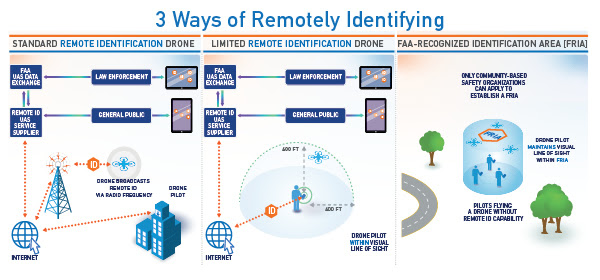
The Federal Aviation Administration this week issued proposed rules for the remote identification of drones in the U.S. The “next exciting step in safe drone integration” (their words) aims to offer a kind of license plate analog to identify the some 1.5 million drones currently registered with the governmental body.

The document is currently available online through the Federal Register in a kind of draft form, as part of a 60-day comment period. The FAA is using the two months to solicit feedback from drone operators, enthusiasts and general aviation safety wonks.

“Drones are the fastest growing segment of transportation in our nation and it is vitally important that they are safely integrated into the national airspace,” Transportation Secretary Elaine Chao said in a statement.

The rules are clearly an attempt to not only address ongoing safety concerns in high-risk areas like airports and stadiums, but also to get out in front of ever-crowding skies. Between hobbyists and commercial interests like UPS and Amazon, it’s not difficult to imagine even more issues, going forward.

Per the draft:

This is an important building block in the unmanned traffic management ecosystem. For example, the ability to identify and locate UAS operating in the airspace of the United States provides additional situational awareness to manned and unmanned aircraft. This will become even more important as the number of UAS operations in all classes of airspace increases. In addition, the ability to identify and locate UAS provides critical information to law enforcement and other officials charged with ensuring public safety.

DJI says it’s “currently reviewing” the proposal, though the drone giant notes that it implemented its own AeroScope remote ID technology some two years ago, in order to address pilots flying too close to problem areas.

“DJI has long advocated for a Remote Identification system that would provide safety, security and accountability for authorities,” VP Brendan Schulman said in a release. “As we review the FAA’s proposal, we will be guided by the principle, recognized by the FAA’s own Aviation Rulemaking Committee in 2017, that Remote Identification will not be successful if the burdens and costs to drone operators are not minimized.”

VCs from Accel and SoftBank talk Europe’s startup scene, what they expect in 2020, and the future of SoftBank

If you haven’t noticed, Europe’s startup scene is in full bloom, with more than $30 billion deployed in startups across the continent over the last 12 months and more than 20 countries now home to a so-called unicorn company.

Investors around the globe are jumping into the pool, too. Consider that the Ontario Municipal Employees Retirement System (OMERS) is currently investing a €300 million fund in Europe. Abu Dhabi’s state investor, Mubadala, last year announced it was launching a $400 million fund to back European startups. And that’s saying nothing of the many Europe-based venture investors who are either raising new funds or recently closed them.

Atomico, for example, one of the continent’s biggest early-stage firms, closed its most recent fund with $765 million in 2017 and is reportedly out fundraising again. Others of all different sizes have recently announced new vehicles, including Balderton Capital, which last month closed a new $400 million fund; United Ventures, a 6.5-year-old, Milan-based early-stage venture capital firm that last week closed its second fund with €120 million in capital commitments (nearly double the €70 million it raised for its debut fund); MiddleGame Ventures, a 1.5-year-old, Luxembourg-based fintech-focused investment firm that recently held a first close on a fund that’s targeting €150 million altogether; Northzone, a 23-year-old, London-based venture capital firm that closed on $500 million in capital commitments for its ninth fund (its largest to date); Ada Ventures, a new London-based seed-stage venture firm that just closed its debut fund with $34 million; and Dawn Capital, a nearly 13-year-old, U.K.-based early-stage venture firm that in summer raised $125 million for an opportunities-type fund.

To find out more about what’s happening on the ground, we sat down at Disrupt Berlin earlier this month with two London-based investors —  Carolina Brochado, who late last year left Atomico to join SoftBank’s Vision Fund, and Andrei Brasoveanu of Accel — to discuss where the money is coming from, which European cities are becoming more interesting to both of them, and some of the challenges they face in covering so many different regions.

We also talked specifically with Brochado about whether SoftBank is changing up its tactics in light of some bets that aren’t panning out as intended — and whether she has any qualms about the outfit’s biggest investor. Our conversation, edited lightly for length and clarity, follows.

TC: We’re all meeting for the first time, and I thought we could do everyone here a service who wants to understand both of you better by talking a little bit about who you are and what you focus on. Do you want to start Carolina? I know you studied in the U.S…

CB: Yes, so I’m originally from Brazil. I moved to the U.S. for university, spent over 10 years in the U.S., [and I] have worked in in large cap private equity, have worked at a pre launch, launch, [then failed] startup, and then have spent a lot of my time in Europe, which has been seven years now, at an earlier stage VC firm called Atomico . . . and for the last year, I’ve been at SoftBank Vision Fund, investing at the growth stage.

AB: I’ve been with Accel for six years. I’m originally from Romania and spent 10 years in the states like Carolina, studying and working in New York in high frequency trading. At Accel, I’ve been focused most of my time on enterprise software and financial services and I’ve been very excited to back European founders from London all the way to Bucharest. Accel is one of the few Valley-based venture firms with on-the-tground presence in Europe. We’ve been here for 20 years, and we really believe in having a local approach to investing.

TC: Carolina, you switched from Atomico to SoftBank this year. Why?

CB: There’s a lot of push and pull with these sort of things. Europe is such an incredibly exciting place right now, and to be totally honest, back [when I moved here] in 2013, I didn’t totally see it, but over the years, you realize how many incredible entrepreneurs [are here], how many incredible teams, and the opportunity that lies ahead. And firms like Accel and Atomico were paving the path of the capital structure in Europe, which is actually very young; maybe the past 15 years, there’s been VC in Europe, and now you starting to see the fruits of that and the exits.

So for me, part of it was while there are great funds at the early stage, there’s still a lot of underfunding at that later stage, so I was really excited about doing growth in Europe and putting significant amounts of capital behind founders who want to go for the really big outcomes.

TC: You now have an insider’s view of these two very important firms. What are some of the biggest differences between Atomico and SoftBank, aside from the different stages at which they invest — how do maybe the processes differ?

CB: There’s obviously a difference in size — Atomico was 70 people and SoftBank is a 500-person organization. There is an interesting founder-led approach to both organizations. They are both very mission- driven by founders who want to change the world and by founders who want to be the best at what they do, which is really exciting.

One of the key differences at SoftBank is that it’s really global firm [with] offices everywhere. We have offices in the U.S. We have offices in Asia. We have offices in Europe. For me, it has been a really interesting platform to see what other great founders are doing in other places of the world.

And then, just because of the sheer size of the organization, you have a group of 50-plus operating partners who may have really deep areas of domain expertise like talent but who are also helping our companies do business development, and who can look at our ecosystem — which today is over 85 portfolio companies —  and make connections, and win business and actually win profitability for companies across and within that ecosystem.

TC: You’re both [in Berlin right now] from London. Andrei, do you run into each other in deals, or are your worlds vastly different?

AB: I would say we have quite different focus areas, we’re very much early-stage focused as our sweet spot [though] some of our companies, when they get to that mature stage, may benefit from working with SoftBank.

CB: We try to stay very close to the great companies at Accel, so they’ll nudge us [when it’s the right time].

TC: Who are you seeing coming into deals who you might not have when you joined Accel in 2014?

AB: It’s interesting. Since I joined Accel, the quality of investors in Europe has increased dramatically. So we’ve seen quite a few former operators, for example, [meaning] very successful founders who are now starting the starting their own funds. We’ve seen more family offices enter the industry. We’ve seen more U.S. capital in the market. And in general, I think [all] has helped raise the bar in terms of the quality of capital available to founders across Europe. And many of these folks, especially the local players, have been good partners for us.

Bill Gates played Secret Santa to a Michigander, sending 81 pounds of goodies tailored just for her

Since roughly 2012, billionaire Bill Gates has been participating in Reddit’s annual Secret Santa gift exchange, which matches Reddit users with internet strangers who give them presents.

He seems to relish the role. For example, in 2017, he was matched with a cat lover, sending off a giant load of feline-themed gifts, including a large stuffed cartoon cat and $750 in donations to her favorite animal charities. Last year, his gift recipient was a self-described miniature horse owner who loves yarn, natural fibers, and card-making. Gates sent him a bounty of yarn, decorating tape, pencils, postcards, sketchbooks, a custom-made blanket for his horse, and a signed copy of a “An Absolutely Remarkable Thing” by Hank Green, the man’s favorite author.

This year, the lucky Redditor who found herself on the receiving end of 81 pounds of gifts from Gates was a 33-year-old, Detroit-area marketer who told MarketWatch yesterday, “I always thought it would be super cool to be matched with him some day, but I never really would have expected this to happen to me.”

The woman — whose Reddit profile features a picture of her hugging the “Star Wars” character Chewbacca and that refers to Harry Potter and other books and video games — was also reportedly sent a Harry Potter Santa hat; Lego building sets that include a giant Hogwarts castle; a handmade quilt depicting scenes from Nintendo’s “Legend of Zelda” game series; and “Twin Peaks” memorabilia, including an L.L. Bean jacket worn by one of the crew members.

Gates, a renowned book lover who regularly shares his book recommendations, also sent her a bound manuscript of F. Scott Fitzgerald’s “The Great Gatsby,” lines from which the woman had incorporated into her wedding earlier this year.

Making the gift even more special, it came with scans of Fitzgerald’s handwritten notes as he was working on the now classic novel.

Gates has been a pioneer on the charitable front for many years. According to the Chronicle of Philanthropy, Gates and wife Melinda Gates donated an estimated $4.78 billion dollars in 2018, bringing the total they’ve given through their foundation and other family foundations to $45.5 billion.

Gates also famously created The Giving Pledge with billionaire Warren Buffett. The pledge invites billionaires to commit to giving away most of their fortunes to charity.

Even while only one Redditor benefits from Gate’s munificence each holiday season, plenty of others of the platform’s users benefit from being part of its Secret Santa community.

Among some of the presents sent: Google gifted one user a Pixel 4 phone. Another received a 3D printer from their “fantastic” Secret Santa. Yet another Redditor received a handmade Captain America shield — along with a smaller handmade shield for his dog.

Daily Crunch: Travis Kalanick is leaving Uber’s board

The Daily Crunch is TechCrunch’s roundup of our biggest and most important stories. If you’d like to get this delivered to your inbox every day at around 9am Pacific, you can subscribe here.

1. Uber founder Travis Kalanick is leaving the company’s board of directors

Uber founder and former CEO Travis Kalanick will officially resign from the board as of December 31, to “focus on his new business and philanthropic endeavors,” according to a company press release.

Kalanick, who was forced out as Uber CEO and eventually replaced by Dara Khosrowshahi, has been in the process of selling off his considerable ownership stake in the company. In fact, it looks like Kalanick has now sold all his remaining stock.

2. Plenty of Fish app was leaking users’ hidden names and postal codes

Dating app Plenty of Fish has pushed out a fix for its app after a security researcher found it was leaking information that users had set to “private” on their profiles. Before the fix, the app was silently returning users’ first names and postal ZIP codes, according to The App Analyst.

3. As DraftKings finds an exit, a reminder of what could have been

DraftKings, a betting service focused on fantasy sports, will go public via a reverse merger. Not too long ago DraftKings and its erstwhile rival FanDuel were ubiquitous on television; now the two companies are fractions of what they once were. (Extra Crunch membership required.)

4. Gift Guide: 13 last-minute subscription gifts for the people you totally didn’t forget

It’s too late to order things online, and brick-and-mortar stores are either closed for the week or absolutely slammed. So what can you do? Subscriptions!

5. Fyre Festival meets Mr. Bone Saw

Connie Loizos looks at the controversy around the three-day-long MDL Beast Festival in Riyadh, Saudi Arabia. The event, promoted by a number of celebrities and social media influencers, aimed to promote the efforts of its de facto ruler, Crown Prince Mohammed bin Salman (known as MBS).

6. A false start for foldables in 2019

A year from now, the Samsung Galaxy Fold’s turbulent takeoff may well be a footnote in the largest story of foldables. For now, however, it’s an important caveat that will come up in every conversation about the nascent product category. (Extra Crunch membership required.)

7. Micro-angelo? This 3D-printed ‘David’ is just one millimeter tall

3D printing has proven itself useful in so many industries that it’s no longer necessary to show off, but some people just can’t help themselves. Case in point: this millimeter-tall rendition of Michelangelo’s famous “David” printed with copper using a newly developed technique.

Pyka and its autonomous, electric crop-spraying drone land $11M seed round

Modern agriculture involves fields of mind-boggling size, and spraying them efficiently is a serious operational challenge. Pyka is taking on the largely human-powered spray business with an autonomous winged craft and, crucially, regulatory approval.

Just as we’ve seen with DroneSeed, this type of flying is risky for pilots, who must fly very close to the ground and other obstacles, yet also highly susceptible to automation; That’s because it involves lots of repetitive flight patterns that must be executed perfectly, over and over.

Pyka’s approach is unlike that of many in the drone industry, which has tended to use multirotor craft for their maneuverability and easy take-off and landing. But those drones can’t carry the weight and volume of pesticides and other chemicals that (unfortunately) need to be deployed at large scales.

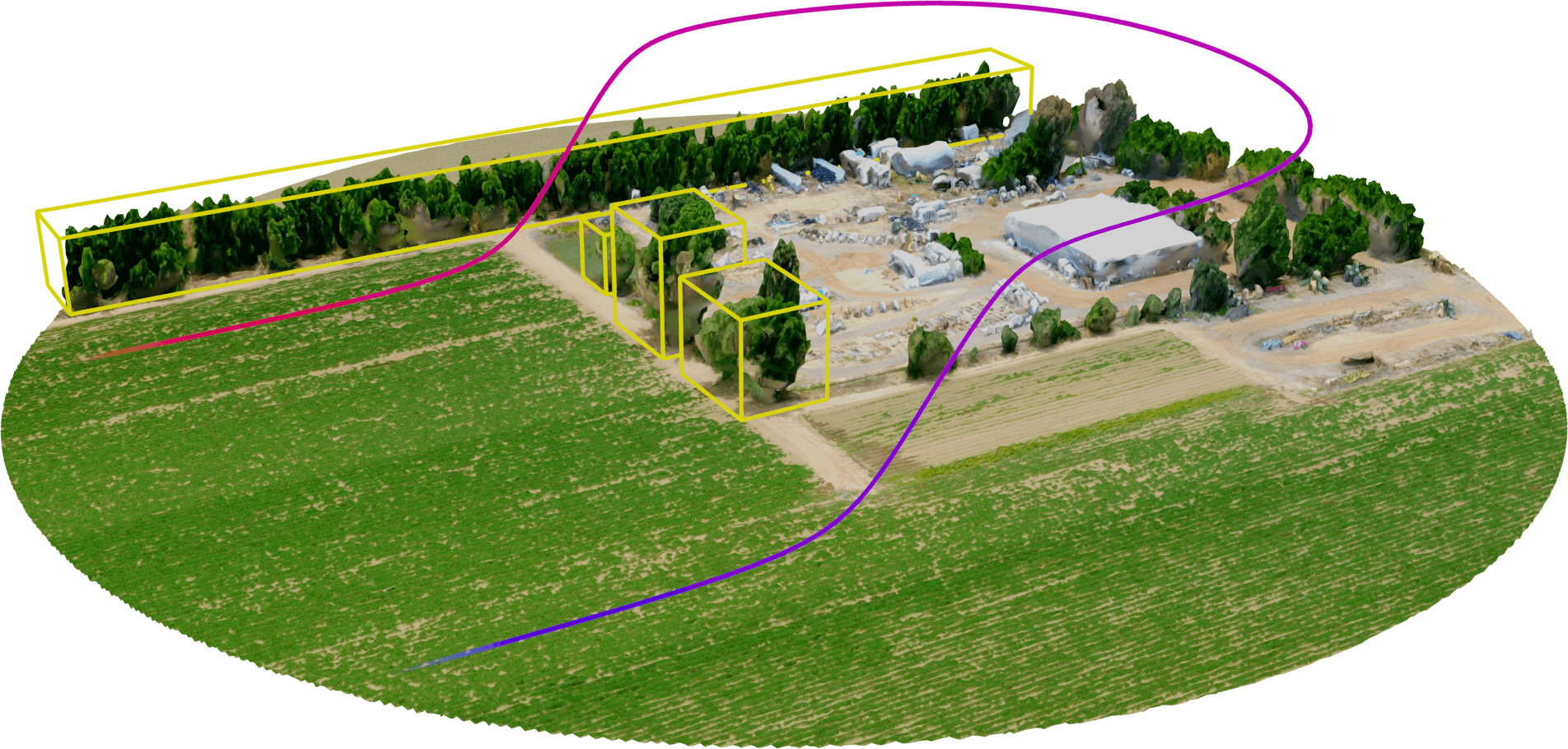
The craft Pyka has built is more traditional, resembling a traditional one-seater crop dusting plane but lacking the cockpit. It’s driven by a trio of propellers, and most of the interior is given over to payload (it can carry about 450 pounds) and batteries. Of course, there is also a sensing suite and onboard computer to handle the immediate demands of automated flight.

Pyka can take off or land on a 150-foot stretch of flat land, so you don’t have to worry about setting up a runway and wasting energy getting to the target area. Of course, it’ll eventually need to swap out batteries, which is part of the ground crew’s responsibilities. They’ll also be designing the overall course for the craft, though the actual flight path and moment-to-moment decisions are handled by the flight computer.

Example of a flight path accounting for obstacles without human input

All this means the plane, apparently called the Egret, can spray about a hundred acres per hour, about the same as a helicopter. But the autonomous craft provides improved precision (it flies lower) and safety (no human pulling difficult maneuvers every minute or two).

Perhaps more importantly, the feds don’t mind it. Pyka claims to be the only company in the world with a commercially approved large autonomous electric aircraft. Small ones like drones have been approved left and right, but the Egret is approaching the size of a traditional “small aircraft,” like a Piper Cub.

Of course, that’s just the craft — other regulatory hurdles hinder wide deployment, like communicating with air traffic management and other craft; certification of the craft in other ways; a more robust long-range sense and avoid system and so on. But Pyka’s Egret has already flown thousands of miles at test farms that pay for the privilege. (Pyka declined to comment on its business model, customers or revenues.)

The company’s founding team — Michael Norcia, Chuma Ogunwole, Kyle Moore and Nathan White — comes from a variety of well-known companies working in adjacent spaces: Cora, Kittyhawk, Joby Aviation, Google X, Waymo and Morgan Stanley (that’s the COO).

The $11 million seed round was led by Prime Movers Lab, with participation from Y Combinator, Greycroft, Data Collective and Bold Capital Partners.

A Twitter app bug was used to match 17 million phone numbers to user accounts

A security researcher said he has matched 17 million phone numbers to Twitter user accounts by exploiting a flaw in Twitter’s Android app.

Ibrahim Balic found that it was possible to upload entire lists of generated phone numbers through Twitter’s contacts upload feature. “If you upload your phone number, it fetches user data in return,” he told TechCrunch.

He said Twitter’s contact upload feature doesn’t accept lists of phone numbers in sequential format — likely as a way to prevent this kind of matching. Instead, he generated more than two billion phone numbers, one after the other, then randomized the numbers, and uploaded them to Twitter through the Android app. (Balic said the bug did not exist in the web-based upload feature.)

Over a two-month period, Balic said he matched records from users in Israel, Turkey, Iran, Greece, Armenia, France and Germany, he said, but stopped after Twitter blocked the effort on December 20.

Balic provided TechCrunch with a sample of the phone numbers he matched. Using the site’s password reset feature, we verified his findings by comparing a random selection of usernames with the phone numbers that were provided.

In one case, TechCrunch was able to identify a senior Israeli politician using their matched phone number.

While he did not alert Twitter to the vulnerability, he took many of the phone numbers of high-profile Twitter users — including politicians and officials — to a WhatsApp group in an effort to warn users directly.

It’s not believed Balic’s efforts are related to a Twitter blog post published this week, which confirmed a bug could have allowed “a bad actor to see nonpublic account information or to control your account,” such as tweets, direct messages and location information.

A Twitter spokesperson told TechCrunch the company was working to “ensure this bug cannot be exploited again.”

“Upon learning of this bug, we suspended the accounts used to inappropriately access people’s personal information. Protecting the privacy and safety of the people who use Twitter is our number one priority and we remain focused on rapidly stopping spam and abuse originating from use of Twitter’s APIs,” the spokesperson said.

It’s the latest security lapse involving Twitter data in the past year. In May, Twitter admitted it gave account location data to one of its partners, even if the user had opted-out of having their data shared. In August, the company said it inadvertently gave its ad partners more data than it should have. And just last month, Twitter confirmed it used phone numbers provided by users for two-factor authentication for serving targeted ads.

Balic is previously known for identifying a security flaw breach that affected Apple’s developer center in 2013.

Micro-angelo? This 3D-printed ‘David’ is just one millimeter tall

3D printing has proven itself useful in so many industries that it’s no longer necessary to show off, but some people just can’t help themselves. Case in point: this millimeter-tall rendition of Michelangelo’s famous “David” printed with copper using a newly developed technique.

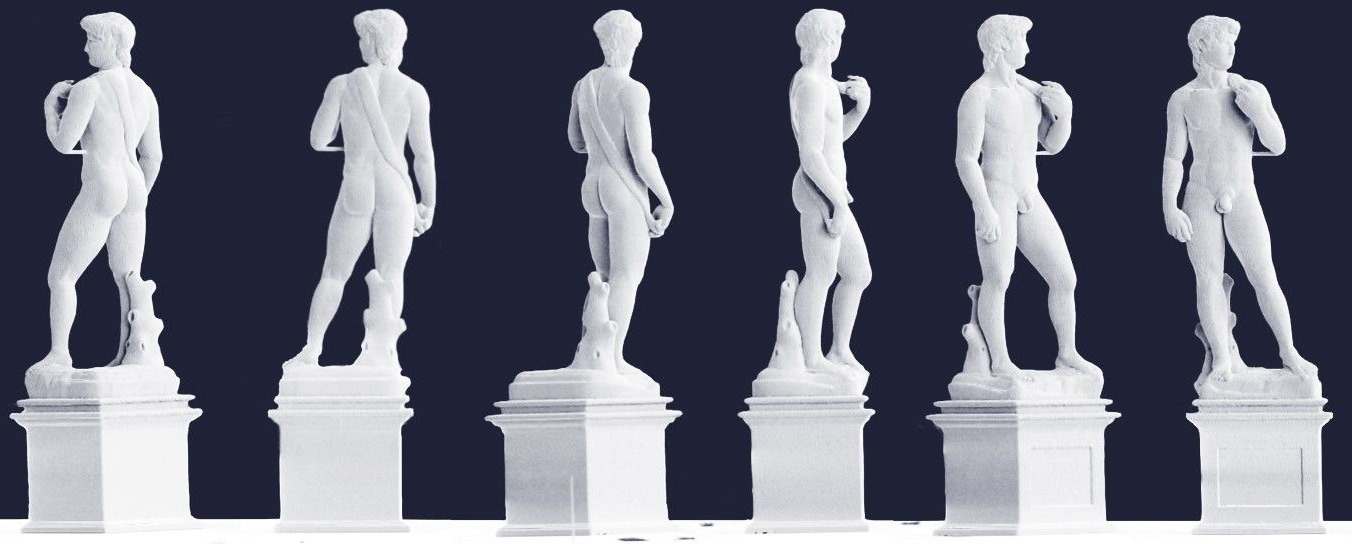
The aptly named “Tiny David” was created by Exaddon, a spin-off company from another spin-off company, Cytosurge, spun off from Swiss research university ETH Zurich. It’s only a fraction of a millimeter wide and weighs two micrograms.

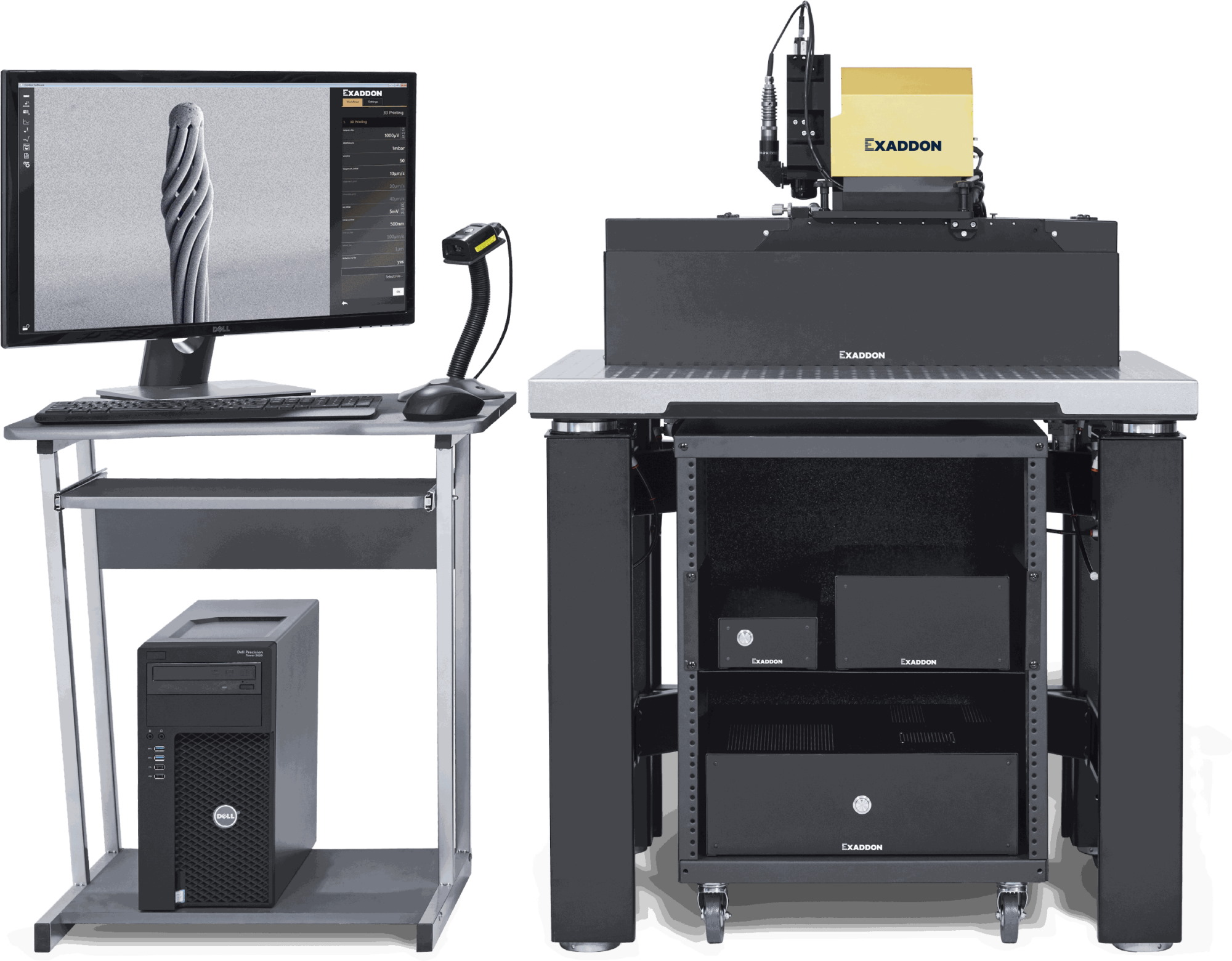
It was created using Exaddon’s “CERES” 3D printer, which lays down a stream of ionized liquid copper at a rate of as little as femtoliters per second, forming a rigid structure with features as small as a micrometer across. The Tiny David took about 12 hours to print, though something a little simpler in structure could probably be done much quicker.

As it is, the level of detail is pretty amazing. Although, obviously, you can’t recreate every nuance of Michelangelo’s masterpiece, even small textures like the hair and muscle tone are reproduced quite well. No finishing buff or support struts required.

Of course, we can create much smaller structures at the nanometer level with advanced lithography techniques, but that’s a complex, sensitive process that must be engineered carefully by experts. This printer can take an arbitrary 3D model and spit it out in a few hours, and at room temperature.

The CERES printer.

But the researchers do point out that there is some work involved.

“It is more than just a copy and downsized model of Michelangelo’s David,” said Exaddon’s Giorgio Ercolano in a company blog post. “Our deep understanding of the printing process has led to a new way of processing the 3D computer model of the statue and then converting it into machine code. This object has been sliced from an open-source CAD file and afterwards was sent directly to the printer. This slicing method enables an entirely new way to print designs with the CERES additive micromanufacturing system.”

Much smaller than that doesn’t work, though — Micro-David starts looking like he’s made of Play-Doh snakes. That’s fine, they’ll get there eventually.

The team published the details of their newly refined technique (it was pioneered a few years ago but is much better now) in the journal Micromachines.

What’s worse than Christmas music? Bitcoin Christmas music

The holiday season can be a lot. You might need something to make you feel better. This post doesn’t have it. But it does have some pretty terrible bitcoin Christmas music parodies that you can endure!

Enjoy:

In fact, the same account has made a bunch of similar pieces of musical fanfiction, proving the point that bitcoin fans are like other traders, but with fewer friends.

Take one for the road:

Now go get offline and spend time with someone you love.

Public investors loved SaaS stocks in 2019, and startups should be thankful

Hello and welcome back to our regular morning look at private companies, public markets and the gray space in between.

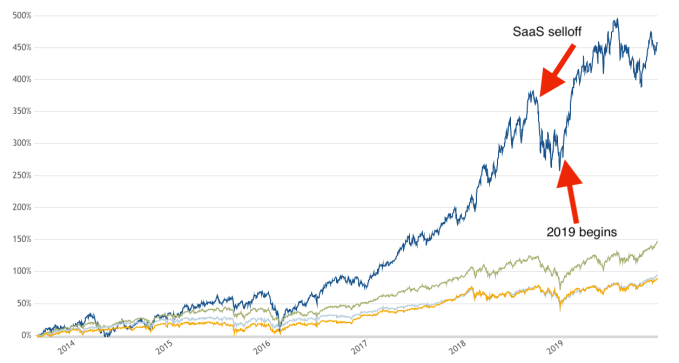
Today, something short. Continuing our loose collection of looks back of the past year, it’s worth remembering two related facts. First, that this time last year SaaS stocks were getting beat up. And, second, that in the ensuing year they’ve risen mightily.

If you are in a hurry, the gist of our point is that the recovery in value of SaaS stocks probably made a number of 2019 IPOs possible. And, given that SaaS shares have recovered well as a group, that the 2020 IPO season should be active as all heck, provided that things don’t change.

Let’s not forget how slack the public markets were a year ago for a startup category vital to venture capital returns.

Last year

We’re depending on Bessemer’s cloud index today, renamed the “BVP Nasdaq Emerging Cloud Index” when it was rebuilt in October. The Cloud Index is a collection of SaaS and cloud companies that are trackable as a unit, helping provide good data on the value of modern software and tooling concerns.

If the index rises, it’s generally good news for startups as it implies that investors are bidding up the value of SaaS companies as they grow; if the index falls, it implies that revenue multiples are contracting amongst the public comps of SaaS startups.*

Ultimately, startups want public companies that look like them (comps) to have sky-high revenue multiples (price/sales multiples, basically). That helps startups argue for a better valuation during their next round; or it helps them defend their current valuation as they grow.

Given that it’s Christmas Eve, I’m going to present you with a somewhat ugly chart. Today I can do no better. Please excuse the annotation fidelity as well:

Uber founder Travis Kalanick is leaving the company’s board of directors

Uber founder and former CEO Travis Kalanick is leaving the company’s board of directors, the ride-hailing company announced today. Kalanick will officially resign from the board as of December 31, to “focus on his new business and philanthropic endeavors,” according to a press release issued by Uber.

Kalanick, who was forced out as Uber CEO and eventually replaced by Dara Khosrowshahi through shareholder action, with support of the board, in 2017, has been in the process of selling off his considerable ownership stake in the company through successive sales of his shares. Just last week, Kalanick sold around $383 million in shares and reduced his overall stake to less than 10%, per an SEC filing.

UPDATE 7:35 AM PT: In fact, it looks like Kalanick has actually sold all his remaining stock, with the SEC filings to show up on the web likely after the Christmas holiday, per the FT.

The share sales started when Uber’s restriction on the sale of stock for private investors and employees expired six months after the company’s IPO. Kalanick at one time owned a total of 98 million shares in the company. Kalanick has since made a play in the on-demand food industry that his former company helped jump-start with CloudKitchens, a startup focused on picking up cheap properties and turning them into restaurant operations without a counter, seating or walk-in service designed exclusively to fill demand for courier-based restaurant delivery apps.