Spotify to ‘pause’ running political ads, citing lack of proper review

Ever since the run up to the 2016 U.S. Presidential Election (and, arguably, well before that), political ads have become a major sticking point on social media sites looking to crack down on misinformation. Facebook has grappled with the issue to the satisfaction of virtually no one, while Twitter has shut them down altogether.

Ad Age noted this week that Spotify is going to follow in the footsteps of the latter — for the time being. The world’s premier music streaming service is pumping the breaks on political ads amid the 2020 presidential race.

The company confirmed the (in)decision in a statement provided to TechCrunch:

Beginning in early 2020, Spotify will pause the selling of political advertising. This will include political advertising content in our ad-supported tier and in Spotify original and exclusive podcasts. At this point in time, we do not yet have the necessary level of robustness in our processes, systems and tools to responsibly validate and review this content. We will reassess this decision as we continue to evolve our capabilities.

There’s certainly something to be said for knowing one’s limitations. And because so much of the company’s revenue derives from ads run on its free offering, Spotify should be commended for opting to pull the plug on a solid revenue stream as the campaign is entering the primary season. Spotify wouldn’t comment on how much money is being left on the table, but as Ad Age notes, political organizations ranging from the Bernie Sanders campaign to the RNC use the platform to get the word out. 

Daily Crunch: The startups we lost in 2019

The Daily Crunch is TechCrunch’s roundup of our biggest and most important stories. If you’d like to get this delivered to your inbox every day at around 9am Pacific, you can subscribe here.

1. Remembering the startups we lost in 2019

This year’s batch doesn’t include any story quite as spectacular as last year’s big Theranos flameout, which gave us a best-selling book, documentary, podcast series and upcoming Adam McKay/Jennifer Lawrence film. Some, like MoviePass, however, may have come close.

And for every Theranos, there are dozens of stories of hardworking founders with promising products that simply couldn’t make it to the finish line.

2. Huawei reportedly got by with a lot of help from the Chinese government

For those following Huawei’s substantial rise over the past several years, it’ll come as no surprise that the Chinese government played an important role in fostering the hardware maker. Even so, the actual numbers behind the ascent are still a bit jaw-dropping — at least according to a piece published by The Wall Street Journal.

3. Russia starts testing its own internal internet

Russia has begun testing a national internet system that would function as an alternative to the broader web, according to local news reports. Exactly what stage the country has reached is unclear, however.

4. Fintech’s next decade will look radically different

Nik Milanovic argues that in the next 10 years, fintech will become portable and ubiquitous, as it both moves into the background and creates a centralized place where our money is managed for us.

5. Wikimedia Foundation expresses deep concerns about India’s proposed intermediary liability rules

Wikimedia Foundation, the nonprofit group that operates Wikipedia, is urging the Indian government to rethink proposed changes to the nation’s intermediary liability rules. Under the proposal, the Indian Ministry of Electronics and IT requires “intermediary” apps — a category that includes any service with more than 5 million users — to set up a local office and have a senior executive in the nation who can be held responsible for any legal issues.

6. The FAA proposes remote ID technology for drones

According to the FAA, the “next exciting step in safe drone integration” aims to offer a kind of license plate analog to identify the approximately 1.5 million drones currently registered with the governmental body.

7. The year of the gig worker uprising

2019 was a momentous year for gig workers. While the likes of Uber, Lyft, Instacart and DoorDash rely on these workers for their respective core services, the pay does not match how much those workers are worth — which is a lot. It’s this issue that lies at the root of gig workers’ demands. (Extra Crunch membership required.)

2020 will be the beginning of the tech industry’s radical revisioning of the physical world

These days it’s easy to bemoan the state of innovation and the dynamism coming from America’s cradle of technological development in Silicon Valley.

The same companies that were praised for reimagining how people organized and accessed knowledge, interacted publicly, shopped for goods and services, conducted business, and even the devices on which all of these things are done, now find themselves criticized for the ways in which they’ve abused the tools they’ve created to become some of the most profitable and wealthiest ventures in human history.

Before the decade was even half over, the concern over the poverty of purpose inherent in Silicon Valley’s inventions were given voice by Peter Thiel — a man who has made billions financing the creation of the technologies whose paucity he then bemoaned.

“We are no longer living in a technologically accelerating world,” Thiel told an audience at Yale University in 2013. “There is an incredible sense of deceleration.”

In the six years since Thiel spoke to that audience, the only acceleration has been the pace of technology’s contribution to the world’s decline.

However, there are some investors who think that the next wave of big technological breakthroughs are just around the corner — and that 2020 will be the year that they enter the public consciousness in a real way.

These are the venture capitalists who invest in companies that develop so-called “frontier technologies” (or “deep tech”) — things like computational biology, artificial intelligence or machine learning, robotics, the space industry, advanced manufacturing using 3D printing, and quantum computing.

Continued advancements in computational power, data management, imaging and sensing technologies, and materials science are bridging researchers’ ability to observe and understand phenomena with the potential to manipulate them in commercially viable ways.

As a result increasing numbers of technology investors are seeing less risk and more rewards in the formerly arcane areas of investing in innovations.

“Established funds will spin up deep tech teams and more funds will be founded to address this market, especially where deep tech meets sustainability,” according to Fifty Years investor, Seth Bannon. “This shift will be driven from the bottom up (it’s where the best founder talent is heading) and also from the top down (as more and more institutional LPs want to allocate capital to this space).”

In some ways, these investments are going to be driven by political necessity as much as technological advancement, according to Matt Ocko, a managing partner at the venture firm DCVC.

Earlier this year, DCVC closed on $725 million for two investment funds focused on deep technology investing. For Ocko, the geopolitical reality of continuing tensions with China will drive adoption of new technologies that will remake the American industrial economy.

“Whether we like it or not, US-government-driven scrutiny of China-based technology will continue in 2020. Less of it will be allowed to be deployed in the US, especially in areas of security, networking, autonomous transportation and space intelligence,” writes Ocko, in an email. “At the same time, US DoD efforts to streamline procurement processes will result in increasingly tighter partnerships between the DoD and tech sector. The need to bring complex manufacturing, comms, and semiconductor technology home to the US will support a renaissance in distributed manufacturing/advanced manufacturing tech and a strong wave of semiconductor and robotic innovation.”

TechCrunch’s Favorite Things of 2019

Each year the TechCrunch staff gathers together to make a big ol’ list of our Favorite Things from that year.

As always, we’re keeping the definition of “thing” very… open. Maybe it’s a physical thing. Maybe it’s a thing you listen to, or watch. Maybe it’s a thought, or a genre, or a mode. We didn’t worry too much about it. It’s a list of things that, in a sea of things, stood out to us at the end of the year.

This is our list for 2019.

Greg Kumparak, Editor

Parasite

THIS MOVIE. Oh wow. It’s hard to write much without spoiling anything — and really, you want to go in knowing as little as possible, so skip the trailer if you can. Director Bong Joon-ho (The Host, Snowpiercer) is really flexing here, showing his mastery of cinema by sneakily shapeshifting this film from genre to genre as the plot unfolds. Be aware that it gets pretty brutal at times — it’s hard to pin any one genre on this one, but a “Family” movie it is not.

The Office Ladies Podcast

The Office is on a near constant loop in my house, and I thought I knew just about everything there is to know about this show. Then Office co-stars Jenna Fischer (Pam!) and Angela Kinsey (Angela!) decided to re-watch the whole thing a decade later and chat about one episode each week, and it’s just an endless fountain of insight.

While there are a few fun surprise appearances from other Office stars in some episodes, the real gems come out when they hop on the phone with the production crew. I could listen to the show’s prop master Phil Shea talk about the work that goes into even the most seemingly simple of props — like, say, a big cardboard box for Dwight to hide in — all day.

The Mandalorian

I was excited for The Mandalorian, but wary. Would Star Wars work as a live action TV series? Turns out: absolutely, positively, yes.

This is the most “Star Wars-y” a new Star Wars thing has felt to me in decades. Give Jon Favreau more Star Wars, please. I don’t even mind that they’re releasing it weekly instead of letting me binge the whole season at once! To be honest, I … sort of prefer it..

Anthony Ha, Writer

The Criterion Channel

Criterion Channel

It can be hard to believe that The Criterion Channel exists.

While giant media companies are throwing billions of dollars into acquiring recent hits and creating seemingly endless slates of new shows and movies, The Criterion Channel feels humbler and worthier, a $9.99 per month streaming service designed to keep some of cinema’s greatest achievements in view. In some ways, my Criterion membership can feel like a gentle rebuke to all the bad habits I’ve developed on Netflix — how can I justify spending hours on a dumb reality show when I could be making my way through a great director’s filmography? And if all this sounds forbiddingly arty, I will also note that the service includes fun, smart programming — things like double features and interviews with current filmmakers — designed to make the movies more accessible.

The Void

When a friend and I walked into The Void’s Malaysia location back in January, I was pretty skeptical of anything involving VR. Sure, I’d had some interesting and/or promising experiences, but nothing that really made me feel like I understood why some people are so convinced that VR is the future. Then, after signing up for “Secrets of the Empire,” I walked out a believer.

Thanks to The Void’s combination of VR and physical environments, I came closer than I ever have to feeling like I was really in the world of Star Wars, infiltrating an Empire base and trying to dodge stormtrooper laser blasts. Naturally, when I heard that The Void had opened a pop-up in New York and was selling tickets to its newest title (“Avengers: Damage Control”), I had to try again. Some of the novelty had worn off, but the experience was still a delight — once again, The Void succeeded in transporting me to another world.

Bryce Durbin, Illustrator

Steven Universe

This Cartoon Network series premiered in 2013, but it wasn’t until this past summer that my kids and I devoured the entire five seasons, then waited patiently till “Steven Universe: The Movie” arrived in the fall.

The series, about a family of aliens with super abilities known as the Crystal Gems (including the titular character, who is half-human) has a delightful mix of humor, action, pathos and downright weirdness while exploring ideas of identity, moral obligations and familial bonds. And any cartoon whose recurring cast includes Tom Scharpling, Charlyne Yi and Joel Hodgson has to be good, right? A separate “epilogue series,” Steven Universe Future, began earlier this month.

Nintendo Labo VR
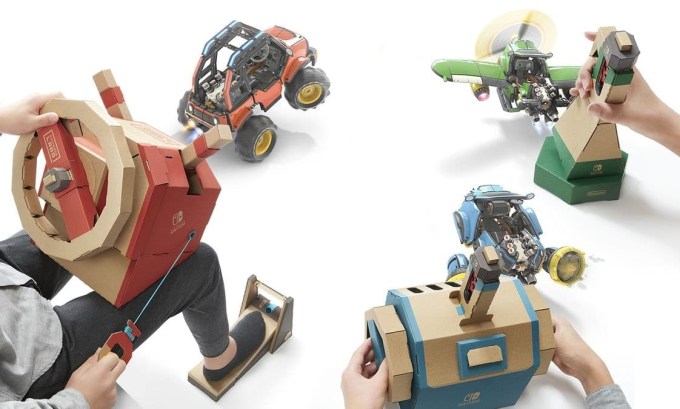
I reviewed Nintendo’s foray into VR back in April. It’s a fun, affordable introduction to VR gaming, and part of the fun is building the novel cardboard toys that house the Switch’s Joy-Con controllers. The games are whimsical and accessible in the classic Nintendo style. To be honest, I’ve hardly played in the second half of the year, but it was such a memorable experience that I haven’t stopped thinking about it.

Untitled Goose Game

You play a goose whose only purpose is to cause grief for the people in a small town for your own amusement. Nuff said.

Brian Heater, Hardware Editor

Weyes Blood – Titanic Rising

Rich, lush and haunting, Natalie Mering’s fourth album under the Weyes Blood moniker has one foot firmly planted in the winding drives of ’70s Laurel Canyon and another unstuck in time. Titanic Rising’s biggest shortcoming is its too brief 40-minute runtime. But that brevity only serves to underscore how much the Southern Californian musician has managed to pack into each of its 10 tracks.

AirPods Pro

Airpods Pro

I’m in the habit of caveat gadget recommendations. Every so often, however, devices come along that I feel fully comfortable recommending to just about anyone who asks — even those who already own the original AirPods.

Apple’s first generation cracked the code for fully wireless earbuds. The second gen improved the experience ever so slightly, but these pricey additions to the family perfect it. The AirPods Pro haven’t left my side since I first picked them up.

Succession

The perfect TV series for the moment. The Roys are the Murdochs and the Trumps and the Kochs and the Redstones and the Kushners. They’re the ruthless billionaires and the corporate-owned media and the armies of failed sons we’ve inherited amidst the gasps of late capitalism. The family of billionaires flashes the occasional glimmer of likability, but it’s far more the exception than the rule amidst Machiavellian overtones and bumbling decision making, all of which might otherwise be completely insufferable were it not so consistently funny. If the fact that the world was gifted Kendall Roy’s “L to the O.G.” a week after The Righteous Gemstone’s “running ’round the house with a pickle in my mouth” doesn’t convince you we’re living in television’s golden age, I don’t know what to tell you.

On Cinema At the Cinema

This is long-form comedy at its finest.

Spread out over a podcast, an 11-season (so far) Adult Swim series, a four-part mock trial and this year’s feature film Mister America, there’s a strong case to be made that the rich, deep lore of the On Cinema universe is the defining comedic statement of our time.

Natasha Lomas, Writer

Twelve South Curve MacBook Stand

The MacBook Pro’s broken keyboard has had one positive impact this year — forcing me to switch to a (reliable) external keyboard that also convinced me it was long overdue to fix my working screen height by using a laptop stand. But which stand to buy? I wanted something simple that, er, “just works” (to coin a phrase).

Turns out there’s an awful lot of over-engineered product trying to convince you to shell out for fancy, adjustable metal. So I was pretty happy when I came across Twelve South’s Curve elegant single-piece design. It’s a shaped metal bar topped with a little padded rubber to coddle the laptop. Gravity does the rest.  The height of the stand isn’t adjustable, but I figured I could always stick it on some books if I needed to (I haven’t). The relative lack of metal in the design is a major plus; less being more from a sustainability point of view. But it’s also just good design, as it allows for free airflow around the laptop. This means it’s helpful in summer for keeping the machine cool. Lastly you get a neat concealed space on your desk, under the laptop, where you can cram some unsightly junk. Win-win all round.

The Irishman

Screen Shot 2019 07 31 at 11.02.45 AM

De-aging technology lets Martin Scorsese be a time-thief with “The Irishman,” serving us another choice cut of De Niro, a fillet of Pacino and a full side of Joe Pesci — lured back from unofficial retirement to preside over the 209-minute mobster epic as head of a Philadelphia crime family with his faithful hit man in tow.

I saw the film in the cinema where the de-aging technology was undoubtedly helped by a little fuzzy projection. Suspension of disbelief was quick and easy in such velvet surroundings, even as the film itself ran on and on. If you’re watching on Netflix — the film’s distributor — you’ll inevitably get something a little more uncanny valley; a small(er) screen, detail-filled, more compact and color-saturated view (depending on your TV) lends more of a sickly, otherworldly look to the de-aged faces, at least from clips I’ve seen. But even on the big screen there were moments of disconnect when your brain realizes the younger faces don’t exactly match with how stiffly the bodies of older men move.

Yet it’s petty detail in a masterful tale that sweeps along at Scorsese’s choice of pace, now lingering like a Renaissance painting, now smashing bullet-like through your brain. The best of it were the scenes played for pure absurdity when you wonder whether the genius is really the juxtaposition of such iconic veterans, mellowed and rounded by a lifetime’s experience of telling stories, playing at being young mobsters again but with the lived excess, in brains, bones and bellies, to send up and show up characters wearing digital masks of their younger selves.

Roborock S6

There is domestic life before and after (a good) robot vacuum cleaner. After about half a year with the Roborock S6, it would be hard to give it up now. It’s not that the device can do all the cleaning — and you’ll find yourself tidying stuff out of its way, so it does actually create new tasks — but since it can do the floors so well it feels like it buys you the time to sort out the rest of your household mess. Also, if you have pets, there’s added entertainment in watching them try to ambush it.

Zack Whittaker, Security Editor

Peace and quiet/do not disturb mode

Peace and quiet. In this day and age it’s a rare commodity.

Your phone is constantly buzzing. Social media, that person you hate is getting married. News alert, Trump did a thing. Play this game, check-in for your flight. Buzz, buzz. It’s a never-ending stream of anxiety-inducing notifications. But there is solace knowing you can switch it all off. “Do not disturb” mode will silence your phone more than the mute switch ever could.

It’s bliss — it’s the peace and quiet you crave. But wait — what if I miss something? The fear of missing out is almost worse than the constant stream of goings-on. Do not fear. “Do not disturb” keeps you tethered to your phone — your lifeline in the modern age — without having to be bombarded by the outside world. Enjoy the calm, take a moment, breathe, relax and once you’re ready to see the world again, you can switch it off and go back to the world.

Jake Bright, Writer

Harley-Davidson’s LiveWire

Harley Davidson LiveWire Track

Harley released its 105-horsepower, all-electric, digitally controlled LiveWire in 2019. With this, America’s oldest motorcycle company became the first big gas manufacturer to sell a production e-moto in the U.S. This put Harley on a competitive footing with EV startups (such as Zero) and pre-empted its competitors to create digital, electric and emissions-free motorcycles in the near future.

Devin Coldewey, Writer

Grovemade Task Knife

I used to reach for some scissors or my trusty switchblade or really anything sharp when I needed to open a package, snip off a label and so on, but Grovemade has replaced them all with this beautiful, elegant little object. It’s “just enough knife” as they say, a solid slab of metal with a satisfying heft and grip that looks lovely just sitting around.

Several waxed canvas bags

waxed messengers 28

I got to review several excellent waxed canvas bags for Bag Week 2019, and man, some of these things feel like they’re going to outlive me.

Death Stranding

This game is very good in some ways, and quite bad in other ways, but most importantly it’s totally unique and an attempt to create truly strange and serious Art in the genre of games. Whether it’s successful is a matter of some debate, but there’s simply nothing else like it out there.

Catherine Shu, Writer

OtterBox PopSocket Case

PopSockets are great, but I have trouble getting anything to stay on my iPhone because I live in a humid climate (and also because I tend to use my phone as a fidget spinner). The OtterBox PopSocket case is basically indestructible, so I can continue being really mean to my phone.

Two Dots

This is the only game I have on my phone. I play it because it is visually soothing and the developers constantly release cool new game mechanics. I also enjoy the noises the dots make when you connect them. It’s like popping bubble wrap, but more environmentally friendly.

“Heads Gonna Roll” by Jenny Lewis

I’m not very good at writing about music. It’s hard for me to capture exactly why this track means so much to me. But I’ve listened to it on repeat almost every day over the past year, and each time still feels like the first time I heard it.

Derry Girls

The dark and (very) goofy humor of “Derry Girls” is interspersed with just the right amount of tenderness. The show is about teenagers growing up in Northern Ireland during The Troubles, trying to be ordinary teens during an extraordinary and devastating time. I enjoy the Irish slang (keep the subtitles on) and ridiculous dog pee jokes, but the reason I’ve watched both seasons twice is because these kids are trying to navigate crushes, strict teachers and school-bus feuds in the middle of turmoil they didn’t create and perhaps don’t even fully understand yet — something that still resonates, perhaps now more than ever.

Jon Shieber, Editor

The Watchmen
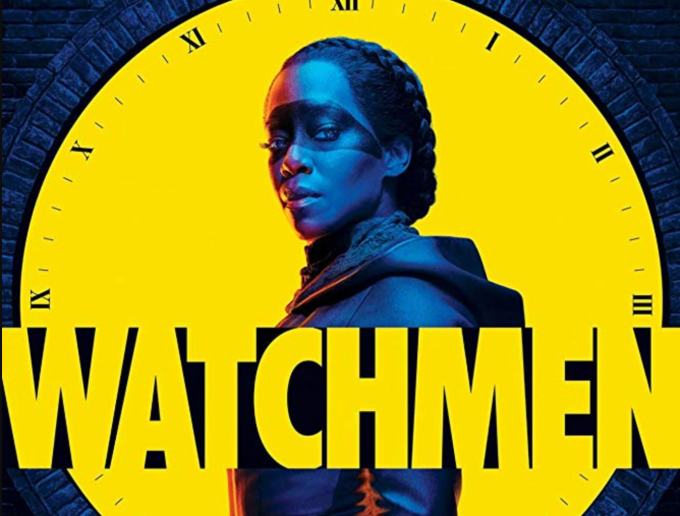
It was original while staying true to the source material. Like all good myths, it put a mirror up to current society to show how cracked it is. It exposed the events of one of the nation’s most horrifying acts of racial violence in the twentieth century and grounded the entire enterprise of superhero mythmaking in its aftermath. It was a merger of pop culture and high art that had “revelation, mystery or genuine emotional danger” that Martin Scorsese says he finds lacking in comic book films.

The New Yorker

Staring at a computer screen for hours at a time reading and writing for work doesn’t give me a lot of downtime in the reading department (especially in the golden age of television). But reading a hard copy of The New Yorker every week (er… almost every week) is a welcome escape from the digital world. It’s still the single-best weekly collection of long-form non-fiction, short fiction and poetry written in English.

David Hammons exhibit at Hauser & Wirth

Going to art galleries is another chance to reset from the work grind. Of all of the ones I saw this year, the David Hammons show at Hauser & Wirth in Los Angeles was the most memorable. Hammons’ installations and individual pieces are beautiful and thought-provoking. And some of the work (like filling the courtyard space of the gallery with tents to call attention to the homeless population living just a few blocks away from its manicured garden and bustling restaurant) was a welcome and powerful reminder of the income inequalities that confront the city and the country.

“Old Town Road” by Lil Nas X

That song was an earworm. It also was the first hit to encapsulate and highlight the power of all the digital tools creators have at their disposal to make and distribute music. Also… that Nine Inch Nails sample is ridiculous.

Steve O’Hear, Writer

Eurorack modular synthesisers

Nearly 20 years late to the party, 2019 was the year that I really discovered modular synthesisers based on the “Eurorack” standard started by Dieter Döpfer in 1995. Over the last 12 months I’ve assembled a modular synthesiser of my own, purchasing modules from mainly boutique manufactures and one-person shops that mostly sell via independent e-commerce stores and online marketplaces like Reverb and Etsy.

The hardware itself is a thriving example of the maker community, which would find it hard to exist without the internet, and I absolutely love unwinding after work making weird and wonderful sounds (and sometimes music) with my Eurorack synth. The year even ended with a Eurorack module being released with my name on it, quite literally).

MyVolts Ripcord

Sometimes companies just “get it,” and Dublin-based MyVolts is one such example. The company sells power adapters — or wall-warts — for just about anything, and has a searchable product database to match the correct gear to the correct power supply.

More recently, MyVolts has ventured into original products of its own, including the Ripcord, which cleverly lets you power a range of devices via USB, such as guitar pedals, drum machines and synths. Use a USB powerbrick at the other end and your music gear becomes portable. The small company even sells a special tip for the Ripcord that lets me power my original 1970s Stylophone via USB instead of its intended 9V PP3 internal battery.

Romain Dillet, Writer

UniFi Dream Machine

How much internet is too much internet? If your answer is that you can never have enough internet, the UniFi Dream Machine is a little box that can get you to the next level. It combines a router, a switch and a rock-solid Wi-Fi access point. But the best part is that everything is configurable, making it both wonderful and scary — if optimizing a local network for maximum performance and optimal security sounds like a great weekend project.

Raspberry Pi 4

The Raspberry Pi started as a simple pocket-sized computer for tinkerers. But that thing has grown up tremendously over the years. The fourth iteration is a powerful, energy-efficient ARM-based computer that can easily replace a home server. You can use it as a file server, as an always-on backup server, as a DNS-based ad-blocker or as a media entertainment machine. You can run a VPN on it, host a web service or turn it into a video game emulation console. Even more than what you can do with it, I just love interacting with it using SSH, spinning up a Docker container and learning how computers work.

My local café/bistro/bar

There’s something wonderful about going to my local café/bistro/bar/you-name-it down the street. Sure, I can meet up with startup founders, grab some lunch, work a bit, read a book and drink until very late with my friends. But what makes it wonderful is that you get to see other people going through happy and sad times, you get to invite complete strangers to join your table for a board game and you get to joke with the staff who very progressively become familiar faces. This is a living place where you can find something that rarely happens on the internet anymore — human coincidences.

Darrel Etherington, Writer

Weiss 38mm Standard Issue Field Watch

This hand-wound watch was a gift to myself this year, and it provided welcome relief from years of wearing an Apple Watch full time. I still keep the Apple Watch for workout tracking, but the Weiss is on my wrist most of the time and manually winding it to top off the power reserve periodically throughout the day is intensely satisfying, and an opportunity to steal a few quiet seconds.

Sony A7RIV

sony alpha a7riv

Sony’s A7RIV came out this year, and I pre-ordered it on a hunch it would deliver. And deliver it has — I’m a long-time Canon shooter, but after using the Sony A7RIV for a few months personally and professionally, I’ve sold all my old gear to finance an investment in top-notch Sony lenses that really show off the A7RIV’s amazing resolution power.

Samsung’s The Frame TV

Samsung’s The Frame QLED TV doesn’t have its best panel, nor is it really the best value for money, but its wall-mount (which comes in the box) is super easy to install, and allows the TV to mount truly flush with the wall. I basically use mine as a large, expensive digital frame, but the 4K resolution and QLED color is ideal for showing off photos snapped with the camera I also included in this list.

“On The Line” by Jenny Lewis

I’m stealing from my colleague Catherine Shu a bit here as she already shouted out “Heads Gonna Roll” from this album — but the album is my favorite of the year, and already a cherished classic for me. Jenny Lewis has a discography that’s hard to find fault with, including her Rilo Kiley days, but this one really stands out.


Animated, interactive digital books may help kids learn better

Digital books may have a few advantages over ordinary ones when it comes to kids remembering their contents, according to a new study. Animations, especially ones keyed to verbal interactions, can significantly improve recall of story details — but they have to be done right.

The research, from psychologist Erik Thiessen at Carnegie Mellon University, evaluated the recall of 30 kids aged 3-5 after being read either an ordinary story book or one with animations for each page.

When asked afterwards about what they remembered, the kids who had seen the animated book tended to remember 15-20% more. The best results were seen when the book was animated in response to the child saying or asking something about it (though this had to be done manually by the reading adult) rather than just automatically.

“Children learn best when they are more involved in the learning process,” explained Thiessen in a CMU news post. “Many digital interfaces are poorly suited to children’s learning capacities, but if we can make them better, children can learn better.”

This is not to say that all books for kids should be animated. Traditional books are always going to have their own advantages, and once you get past the picture-book stage these digital innovations don’t help much.

The point, rather, is to show that digital books can be useful and aren’t a pointless addition to a kid’s library. But it’s important that the digital features are created and tuned with an eye to improving learning, and research must be done to determine exactly how that is best accomplished.

Thiessen’s study was published in the journal Developmental Psychology.

After IPOs and acquisitions, a look at Utah’s biggest venture rounds of 2019

Hello and welcome back to our regular morning look at private companies, public markets and the gray space in between.

This morning we’re dialing into some late-stage venture activity in Utah. Why? Because Utah has become a hotbed of startup activity, yielding both IPOs and huge acquisitions. And as Utah isn’t a media hub in the way that San Francisco and New York City are, it’s often a bit undercovered.

So what better place to cast our eye?

Today we’re going to look at the seven largest venture rounds in the state that have been recorded by Crunchbase in 2019 (no post-IPO action, no grants, no secondaries, no debt, no private equity). We’ll quickly explain each company, look at its investor list, and then ask ourselves how soon we think the company might go public.

Ready?

Countdown

Exploring our seven largest rounds, let’s start from the smallest of the cohort and proceed up in dollar-scale (full list here).

HZO’s $40 million Series D

Based in Draper, Utah, HZO’s tech coats electronics with tiny particles so that the elements can’t wreck them. The startup does more than just coat phones, working with industrial equipment, automotive tech, and IoT tooling.

It’s a business that has attracted well over $100 million in capital to date, according to Crunchbase. That sum includes a $20 million Series B led by Iron Gate Capital, a smaller, $15 million Series C led by Iron Gate Capital, and HZO’s latest $40 million investment led by, you guessed it, Iron Gate Capital. Horizons Ventures has also put money into the company, while Cathay Bank lent it $30 million.

Using our patented gut-check-o-meter, we aren’t expecting an S-1 from HZO soon.

Nav’s $45 million Series C

Another Draper, Utah, company raising large sums this year, Nav is a credit information marketplace for smaller companies. Investigating this morning, Nav feels a bit like Credit Karma, but for SMBs looking at taking on additional credit.

The model has attracted lots of external funding, including a 2015-era Series A from Kleiner that tipped the scales at $8.4 million. Nav’s 2017 Series B weighed in at $37.7 million. And, most recently, it picked up a $44.9 million Series C that was co-led by Experian Ventures, Goldman, and Point72 Ventures.

What’s our IPO guess? Given that it raised a Series C this year, we’d expect at least another round — maybe two — before we see SEC filings of interest from Nav.

Weave’s $70 million Series D

Weave’s Series D is notable in that it valued the company within spitting distance of unicorn status. Indeed, the $70 million round brought its valuation up to $0.97 billion according to Crunchbase.

Report: ClassPass is hunting for unicorn status in a new funding round

The nearly seven-year-old, New York-based fitness subscription app ClassPass is reportedly trying to raise $285 million in a new funding round that would push its valuation to more than $1 billion.

The company will issue 22.7 million Series E shares as part of the funding round, according to a securities filing obtained by Reuters from analytics firm Lagniappe Labs.

We’ve reached out to its press office for more information.

According to TC’s sources, ClassPass has been in fundraising mode since at least early fall.

The company began life as a way for people to book classes across different fitness studios but has more recently been pushing a corporate business that sees it adding ClassPass to employee benefit packages.

It is right now valued at $536.4 million, according to Reuters, which cites the Prime Unicorn Index. Its backers include the Singapore sovereign wealth fund Temasek and Alphabet, along with General Catalyst, Thrive Capital and Acequia Capital.

To date, the company has raised roughly $240 million from investors altogether, according to Crunchbase. It closed its most recent round of funding, an $85 million Series D round, in July 2018.

ClassPass was founded by Payal Kadakia, who is now the company’s executive chairman. She stepped aside in 2017 to make room for Fritz Lanman, the company’s former executive chairman and co-operator and now CEO.

Lanman acknowledged in an interview with Fortune earlier this year that ClassPass has endured some ups and downs in its time. Though it originally charged $99 per month for an unlimited number of fitness classes in New York, it was forced to raise prices before more recently instituting fluctuating class prices based on demand (and the availability of classes) of particular studios. The end result: Customers currently pay between $9 and $199 per month for credits that can be spent on classes.

As for its corporate memberships, it currently promises not just classes and a way to customize programs for employees but also streaming audio and video workouts. The last owes to an investment that ClassPass made in a broadcast studio, from which it built a library of on-demand video workouts. TC covered that development back in 2018.

Tesla to begin delivering China-built Model 3 cars next week

Tesla will start making the first deliveries of its Shanghai-built Model 3 sedans on Monday, Bloomberg reports. The cars are rolling off the assembly line at the new Tesla Shanghai Gigafactory, which is operational but which also will be expanding in the future thanks to a fresh $1.4 billion injection in local funding reported earlier this week.

The Shanghai gigafactory’s construction only began earlier this year, and its turnaround time in terms of construction and actually producing vehicles is impressive. The Model 3 vehicles built in China will provide a price break versus imported vehicles, as cars made in-country enjoy exemption from a 10% tax applied to imported cars. Tesla Model 3s built in China also get a government purchase incentive of as much as $3,600 per car, which should drive even higher sales.

Tesla’s Shanghai factory is its first manufacturing facility outside of the country, though there’s also a gigafactory in the works in Germany just outside of Berlin, and Tesla has teased plans for at least a fifth gigafactory with a location to be revealed later.

Tesla’s production capacity in Shanghai probably isn’t very high-volume to begin with, although the company has said previously it was targeting a production rate of around 1,000 cars per week by year’s end, with potential to ramp up to around 3,000 cars per week. Tax breaks and incentives have helped demand for the Model 3 in China grow significantly in 2019, so any progress on production in-country is bound to help lift global vehicle sales.

Elon Musk says Tesla will add Disney+ to its vehicles ‘soon’

Elon Musk spent some time over this past holiday week answering questions posed by fans on Twitter, and one addressed the growing catalog of entertainment options available in-car via the Tesla Theater software feature: Musk said that Disney+ will be “coming soon” to the list of available streaming services drivers can access in their cars. Tesla Theater was introduced in the V10 software update that went out in September via over-the-air-update, and added streaming media from Netflix and YouTube, as well as Tesla vehicle feature tutorials.

Tesla also issued a new software update that began rolling out just before Christmas, which included the addition of Twitch to Tesla Theater, as well as support for popular farming sim game Stardew Valley, the ability to set dashcam video clips to automatically save whenever you honk the horn, support for voice commands and much more.

Tesla has put a lot of effort into its continuous software updates for vehicles, which are available to all cars in the fleet regardless of generation and which really do add a lot of post-purchase value, especially when compared to the traditional automaker practice of gating new features and improvements to only current and recent model-year releases.

Tesla Theater’s streaming media options are only available when the car is in park and not driving, but it’s a feature that is more valuable to Tesla owners than you might think — especially when you consider that Tesla cars require time to charge at charging stations, meaning even at a high-speed Supercharger you’ll likely be looking at a wait of half-an-hour or more depending on how much you’re looking to charge up.

Via Teslerati

The year of the French unicorns

In September 2019, President Emmanuel Macron was about to wrap up a speech on late-stage investment in France. According to a press briefing and some discussions with a source, everything that he was supposed to announce had been announced.

But he dropped an unexpected number. “I’ll leave you with a goal: there should be 25 French unicorns by 2025,” Macron said. A unicorn is a private company with a valuation of $1 billion or more.

When you mention France in a conversation with foreigners, they don’t immediately think about startups. In December 2018, I covered a two-day roadshow of the French tech ecosystem with 40 partners of international venture capital firms, as well as limited partners, from Andreessen Horowitz to Greylock Partners, Khosla Ventures and more.

The same clichés came up again and again — taxes, labor law, long lunches… You name them. But it doesn’t matter if those clichés are true or not (hint: They aren’t), the French tech ecosystem has been thriving. And 2019 has been a remarkable year when it comes to reaching unicorn status and raising late-stage rounds of funding.

A new group of unicorns

According to a recent report from VC firm Atomico, there are 11 unicorns in France. Some of them have been around for years, such as BlaBlaCar (a ride-sharing marketplace for long distance rides), OVHcloud (a cloud hosting company), Deezer (a music streaming service) and Veepee (an e-commerce company formerly known as Vente-privee.com).

But in 2019 alone, a handful of companies have reached unicorn status. Here are a few examples.

Wikimedia Foundation expresses deep concerns about India’s proposed intermediary liability rules

Wikimedia Foundation, the nonprofit group that operates Wikipedia and a number of other projects, has urged the Indian government to rethink the proposed changes to the nation’s intermediary liability rules that would affect swathes of companies and the way more than half a billion people access information online.

The organization has also urged the Indian government to make public the latest proposed changes to the intermediary rules so that all stakeholders have a chance to participate in a “robust and informed debate about how the internet should be governed in India.”

India proposed changes to intermediary rules (PDF) in late December last year and it is expected to approve it in the coming months. Under the proposal, the Indian Ministry of Electronics and IT requires “intermediary” apps — which as per its definition, includes any service with more than 5 million users — to set up a local office and have a senior executive in the nation who can be held responsible for any legal issues.

Amanda Keton, general counsel of Wikimedia Foundation, said on Thursday that India’s proposed changes to the intermediary rules may have serious impact on Wikipedia’s business — as it operates an open editing model that relies on users to contribute new articles and make changes to existing articles on Wikipedia — as well as those of other organizations.

The rules may also create a “significant financial burden” for nonprofit technology organizations and impede free expression rights for internet users in India, she said. Wikimedia Foundation conveyed its concerns to Ravi Shankar Prasad, the Minister of Electronics and IT in India. The company also published the letter on its blog for the world to see.

India’s latest changes to intermediary rules, which have been drafted to make the internet a safer experience for local residents, also require intermediaries to deploy automated tools “for proactively identifying and removing or disabling public access to unlawful information or content.”

The proposed changes have raised concerns for many. In a joint letter (PDF) earlier this year, Mozilla, Microsoft’s GitHub and Wikimedia had cautioned the Indian government that requiring intermediaries to proactively purge their platforms of unlawful content “would upend the careful balance set out in the existing law which places liability on the bad actors who engage in illegal activities, and only holds companies accountable when they know of such acts.”

The groups also cautioned that drafted measures “would significantly expand surveillance requirements on internet services.” Several trade bodies in India, that represent a number of major firms including Google and Facebook, have also suggested major changes to the proposal.

In the open letter published today, Wikimedia’s Keton reiterated several of those concerns, adding that “neither participants in the consultation nor the public have seen a new draft of these rules since [last year].” She also requested the government to redefine, how it has in another recently proposed set of rules, the way it classifies an entity as an intermediary as the current version seems to have far-reaching scope.

India is the fifth largest market for Wikipedia — more than 771 million users from the country visited the online encyclopaedia last month. Wikimedia has run several programs in India to invite people to expand the online encyclopaedia in Indic languages.

Keton urged the government to rethink the requirement to bring “traceability” on online communication, as doing so would interfere with the ability of Wikipedia contributors to freely participate in the project. (On the point of traceability, WhatsApp has said complying to such requirement would compromise encryption for every user.)

Latin America Roundup: XP’s chart-topping IPO, Wildlife becomes a unicorn, SoftBank backs Konfio

Sophia Wood
Contributor

Sophia Wood is a principal at Magma Partners, a Latin America-focused seed-stage VC firm with offices in Latin America, Asia and the U.S. Sophia is also the co-founder of LatAm List, an English-language Latin American tech news source.

December has been a strong month for Brazilian startups, bringing a big IPO and a new unicorn for local companies. Tech-driven investment firm XP Investimentos went public on the U.S. Stock Exchange in mid-December, raising $1.81 billion in the fourth-largest IPO of 2019. XP’s stock price jumped 30% on its first day of trading, from $27 per share to $34.50.

XP was founded in 2001 to provide brokerage training classes to Brazilians to help them invest in the international stock market. Today, it is a full-service brokerage firm, providing fund management and distribution to more than 1.5 million customers in Brazil.

Notably, XP has outlined a strategy for beating Brazilian banks, among the most profitable in the world, in its 354-page report to the SEC. Brazil’s banking market is highly concentrated, with the top five players dominating 93% of market share. This concentration has led to significant inefficiencies that XP tries to disrupt by offering a variety of financial products through an accessible online platform.

The heavy bureaucracy of these banks will prevent them from innovating quickly enough to compete with newer institutions like XP, whose debt products are attractive to frustrated Brazilian customers. The inefficiency of the Brazilian financial system has opened opportunities for companies like XP, or neobank Nubank, to rapidly attract customers who are disgruntled with the traditional system.

Gaming startup Wildlife becomes a unicorn

Brazil has seen a new unicorn emerge almost every month this year, and December was no exception. Gaming startup Wildlife raised a $60 million Series A round led by U.S.-investor Benchmark Capital at a $1.3 billion valuation to become the country’s eleventh unicorn. This round was big even for Silicon Valley standards, and it is uncommon for startups even in markets like the U.S. or Europe to hit a $1 billion-plus valuation in such an early round.

Wildlife has created more than 60 games since 2011, including Zooba and Tennis Clash, which have both reached global acclaim. Founded by brothers Victor and Arthur Lazarte, Wildlife operates on a freemium model that only charges users for in-app purchases. They plan to use the funding to double their employee base and grow to $2 billion in 2020, continuing the 80% yearly growth they have seen since 2011.

Mexico’s lender Konfio receives $100 million from SoftBank

Konfio provides small business loans in Mexico through an online platform to help SMEs gain liquidity and grow their operations. These small businesses are often overlooked by banks in Mexico and Latin America, which do not know how to price risk for businesses that process less than $10 million per year.

Konfio recently raised $100 million from SoftBank’s Innovation Fund, the third investment that SoftBank has made into Mexico since launching the fund. The capital will go toward financing working capital loans, as well as creating new products for Konfio’s customers. Today, Konfio’s loans average around $12,000, while banks still struggle to loan less than $40,000. The tech-driven platform allows Konfio to disburse loans within 24 hours without requiring collateral.

Small business lending is a tremendous opportunity in Latin America, where banks are among the most profitable and the least competitive in the world. Brazil’s Creditas and Colombia’s OmniBnk are among the other startups providing innovative products that calculate risk more effectively than banks in Latin America’s complex lending environment.

The Albo team has raised $26.4 million to scale its leading neobank.

Albo, Mexico’s leading neobank, raises $19 million

In an extension of a Series A round, Mexico’s albo raised a further $19 million from Valar Ventures to bring their newest round to $26.4 million in total. Albo previously raised $7.4 million from Mountain Nazca, Omidyar Network and Greyhound Capital in January 2019. Albo’s mission is to provide banking services to unbanked and underbanked clients in Mexico. More than half of albo’s customers claim that albo was their first-ever bank account.

Founded by Angel Sahagun in 2016, albo quickly became Mexico’s largest neobank, serving more than 200,000 customers and sending out thousands of new cards every day. The investment from Valar Ventures, founded by Peter Thiel (also an investor in N26 and TransferWise), is a vote of confidence for this Mexican fintech. Albo has also previously received investment from Arkfund, Magma Partners and Mexican angels.

Albo plans to use the capital to develop new products, including savings and credit services, in the coming year. Mexico will likely be a battleground for Latin American neobanks in 2020, as Klar, Nubank and potentially Argentina’s Uala will begin to grow in the region’s second-largest market. While there is room for several competitive neobanks to thrive in Mexico, this industry will be one to watch in 2020.

News and Notes: Mercado Credito, Mimic, Rebel and Rappi

Goldman Sachs loaned $125 million to MercadoLibre to continue developing their credit product, MercadoCredito. MercadoLibre will use the capital to triple its $100 million debt facility for small business loans in Mexico. To date, MercadoCredito has loaned more than $610 million to 270,000 businesses around the region in Mexico, Brazil and Argentina.

Brazilian cloud-kitchen startup Mimic raised $9 million in a seed round led by Monashees to develop a more efficient food delivery model in Brazil. Mimic will exclusively manage the logistics of “dark kitchens,” which exist only for delivery and have no sit-down facilities, saving time and money for clients. Mimic will use the investment to grow its team.

An early-stage online lending startup in Brazil, Rebel, recently raised $10 million from Monashees and Fintech Collective to provide unsecured loans to middle-class Brazilians at affordable rates. Rebel has lowered rates to around 2.9% per month, compared to 40-400% at Brazil’s largest banks. The startup uses a proprietary algorithm to calculate risk for clients and provide loans rapidly through its online platform.

Colombia’s Rappi recently announced an expansion into Ecuador, where it has rapidly reached 100,000 users between Quito and Guayaquil, the country’s two largest cities. Rappi is now active in nine countries and more than 50 cities in Latin America.

2019: A Year in Review

Given the arrival of the SoftBank Innovation Fund, Latin American startup investment in 2019 will likely more than double the $2 billion invested in 2018. Here are a few of the highlights we saw this year:

  1. Record-breaking rounds and Brazilian unicorns: In 2019, Rappi raised $1 billion from SoftBank, beating iFood’s previous record-breaking $500 million from Naspers in 2018. Brazil got at least six new unicorns — Nubank, QuintoAndar, Gympass, Wildlife, Loggi and EBANX — most of whom raised funding from international investors.
  2. Asian investment in Latin American fintechs: Nubank received $400 million-plus in 2019 from investors that included TCV, Tencent, Sequoia, Dragoneer and Ribbit Capital. Argentina’s Uala received $150 million from SoftBank and Tencent in November 2019. SoftBank has been investing in Brazilian and Mexican fintechs including Creditas, Konfio and Clip, throughout the year.
  3. U.S. investors take an interest in LatAm: Many U.S. investors made their first Latin American investments in 2019, including Valar Ventures (albo), Bezos Expeditions (NotCo), SixThirty Cyber (Kriptos) and Homebrew (Habi). This year has also seen large funds like a16z, Sequoia, Accel and others making earlier-stage investments in Latin America, rather than Series B and beyond. This change demonstrates that U.S. funds are becoming more familiar and involved with the Latin American ecosystem, helping early-stage companies grow rather than focusing on international scale-ups as they have in the past.
  4. The Cornershop acquisition: Chilean-Mexican delivery startup, Cornershop, was acquired by Walmart in late 2018 for $225 million, but the deal was blocked by the Mexican government. Four months after the block, Cornershop announced that Uber would take a 51% share of the company for $450 million, representing a 4x growth in valuation since the previous acquisition deal. The Mexican and Chilean governments still have to approve the Uber deal, so all eyes will be on Cornershop through the start of 2020.
  5. The start of the battle for Latin America’s super-app: In China, two companies dominate the mobile market, handling payments, communications, ridesharing, delivery and more within a single app. Events in 2019, such as Rappi’s $1 billion round and the merger between Mexico’s Grin and Brazil’s Yellow, suggest that Latin America may be heading in the same direction toward a few apps that integrate dozens of features. Colombia’s Rappi and Brazil’s Movile are strong competitors for the role, but the rise of a regional super-app still remains far in the future for Latin America.

Latin America’s startup and investment ecosystem has likely more than doubled this year as compared to 2019. As international investors like SoftBank, Andreessen Horowitz, Sequoia, Accel, Tencent and others are taking more bets on the region, more startups than ever have scaled and reached unicorn status. These startups will continue to scale in 2020, taking on a regional presence to provide services to Latin America’s 650 million population.