Helsinki, Los Angeles, Shanghai, Singapore, and other metros have been experimenting with on-demand buses—and not seeing a lot of success.
Category: Tech news
hacking,system security,protection against hackers,tech-news,gadgets,gaming
Mind Control for the Masses—No Implant Needed
A wave of startups wants to make brain-computer interfaces accessible without needing surgery. Just strap on the device and think.
Here’s What the World Will Look Like in 2030 … Right?
These six visions from humans today span space colonies, a genetic panopticon, and straight-up apocalypse.
Cities Race to Slow Climate Change—and Improve Life for All
Mayors across the world say we all need to consider how urban planning and climate intersect with well-being.
Everything You Need to Know About the CCPA
The California Consumer Privacy Act, which goes into effect today, gives state residents some new rights over their data.
Uber and Postmates claim gig worker bill AB-5 is unconstitutional in new lawsuit
Postmates and Uber have filed a complaint in California federal district court, alleging that a bill limiting how companies can label workers as independent contractors is unconstitutional. The complaint, which includes two gig workers as co-plaintiffs, was filed in U.S. District Court on Monday, days before Assembly Bill 5 (AB-5) is due to go into effect on Jan. 1. It asks for a preliminary injunction against AB-5 while the lawsuit is under consideration.
The complaint argues that AB-5 violates several clauses in the U.S. and California constitutions, including equal protection because of how it classifies gig workers for ride-sharing and on-demand delivery companies compared to the exemptions it grants to workers who do “substantively identical work” in more than twenty other industries.
AB-5 was authored by Assemblywoman Lorena Gonzalez, a Democrat representing the 80th Assembly District in southern California and signed into law in September by Governor Gavin Newsom. It is intended to uphold the ruling in Dynamex Operations West Inc. v Superior Court of Los Angeles, a landmark 2018 decision by the California Supreme Court about how employees and independent contractors should be classified, and ensure that gig economy workers are entitled to benefits like minimum wage, health insurance and workers’ compensation.
But the suit’s opponents, which includes tech companies whose business models rely on the gig economy, as well as groups of gig workers and freelance journalists, argue that it restricts their work opportunities and ability to earn money.
In addition to Uber and Postmates, the complaints’ plaintiffs also include Lydia Olson and Miguel Perez, drivers for on-demand companies. In a post on Postmates’ blog, Perez wrote that he joined the suit because AB5 “is threatening the freedom and flexibility I have relied on in recent years to support my family.”
A statement from Postmates said “AB5 is a blunt instrument, which is why lawmakers exempted 24 industries, seemingly at random, from its requirements.”
The company added that does not want to be exempted from AB-5 or reverse the Dynamex standard, but “call for industry and labor talks with the California legislature to modernize a robust safety net designed specifically for the needs of on-demand workers, that establishes a new portable benefits model, creates earnings guarantees higher than minimum age, and gives all workers both the strong voice they need and flexibility they demand—a framework not currently contemplated under state and federal law.”
As proof that AB-5 violates the equal protection clause, the complaint argues that “the vast majority of the statute is a list of exemptions that carve out of the statutory scope dozens of occupations, including direct salespeople, travel agents, grant writers, construction truck drivers, commercial fisherman, and many more. There is no rhyme or reason to these nonsensical exemptions, and some are so ill-defined or entirely undefined that it is impossible to discern what they include or exclude.”
The complaint also alleges that AB-5 violates due process by preventing people from choosing to work for gig companies, and the contracts clause because mandating companies like Uber and Postmates to reclassify contractors as employees will either invalidate or substantially change their existing contracts.
In statement about the lawsuit, Gonzalez said “the one clear thing we know about Uber is they will do anything to try to exempt themselves from state regulations that make us all safer and their driver employees self-sufficient. In the meantime, Uber chief executives will continue to become billionaires while too many of their drivers are forced to sleep in their cars.”
The lawsuit follows several efforts to stop or limit AB-5. In October, a group of drivers for Lyft, Uber and DoorDash announced they had submitted a California ballet initiative for the November 2020 ballot in response to AB-5. The measure which received substantial financial support from those companies, seeks to enable drivers and couriers can continue to be independent contractors while guaranteeing benefits like a minimum wage, expenses, healthcare and insurances.
Earlier this month, several organizations representing freelancer writers filed a lawsuit in federal court in Los Angeles alleging AB5 places unconstitutional restrictions on free speech, the day after Vox Media announced it will cut hundreds of freelance positions in California as it prepares for the bill.
Huawei’s revenue hits record $122B this year despite U.S. sanctions, forecasts ‘difficult’ 2020
Huawei reported resilient revenue for 2019 on Tuesday as the embattled Chinese technology group continues to grow despite prolonged American campaign against its business, but cautioned that growth next year could prove more challenging.
Eric Xu, Huawei’s rotating chairman, wrote in a New Year’s message to employees that the company’s revenue has topped 850 billion Chinese yuan ($122 billion) this year, a new record high for the Chinese group and an 18% increase over the previous year.
Xu said Huawei, the second largest smartphone maker globally, sold 240 million handsets this year, up from 206 million last year.
“These figures are lower than our initial projections, yet business remains solid and we stand strong in the face of adversity,” he wrote.
He acknowledged that Huawei is confronting a “strategic and long-term” campaign against its business by the U.S. government. If the campaign persists for long, it would create even more “difficult” environment for the 32-year-old firm to “survive and thrive,” he said.
Survival would be the company’s first priority in 2020, he said.
The U.S. added Huawei to the Commerce Department’s trade blacklist this year, and placed new restrictions on its ability to sell to — and maintain commercial relations with — American companies. The U.S. government has also urged its allies to not use Huawei products in building the next generation of their telecom network infrastructure, alleging that the Chinese company poses a threat to national security.
In October, U.S. Commerce Secretary Wilbur Ross said in a conference in New Delhi that he hopes that India, the world’s second largest telecom market, “does not inadvertently subject itself to untoward security risk” by using 5G equipment from Huawei.
But not all U.S. allies have heeded its advice. On Monday, Huawei secured a major victory in India, which approved Huawei’s request to participate in trials of its 5G spectrum.
“We thank the Indian government for their continued faith in Huawei,” Jay Chen, the company’s India CEO said in a statement. “We firmly believe that only technology innovations and high quality networks will be the key to rejuvenating the Indian telecom industry,” he added.
The five biggest rounds in tech in 2019 and what they mean
Funding for tech startups has been on an inevitable upswing for years, a result of a virtuous circle where wildly successful tech companies on the public markets whet the appetites of investors and investors’ backers to find more diamonds, a push met by a pull from the rush of talent with entrepreneurial aspirations out to put that money to work. 2019 has felt a bumper year in that longer trend, with 9-figure rounds ($100 million or more) and “unicorn” statuses so prevalent that the numbers have started to cease to be news items in themselves.
With 2020 now just days away, a look at the 50 biggest funding rounds for start-ups in the past year draw out some trends. We’re pulling out the top five below for a closer look, but it’s interesting too to see some of the other trends emerging across the rest of the pack.
Automotive remains a huge pull when it comes to raising big bucks: part of the reason is because the space is capital intensive, as it straddles both software and hardware (that is, not just equipment but cars). Capex is another reason for some of the other big investment rounds of the year, such as the biggest of them all, for an internet data center startup.
Asian companies figure massive in the list, and account for 7 of the 10 biggest rounds in the list.
Small players: there were only three companies in health tech in the top 50, only one in education technology, and only three in the areas of AI and robotics. I don’t know if that means these areas simply don’t require as much capital investment, or if these challenges are simply not as interesting right now for investors as those more squarely focused on revenue generation and business needs. Hopefully the former, as the wider tech world faces a lot of cynicism and skepticism from the public, and could use a better profile from solving actual problems.
Note: for this piece we have focused on investments made in pre-IPO technology companies, and on new equity investments rather than secondary or debt rounds.
In the shadow of Amazon and Microsoft, Seattle startups are having a moment
Venture capital investment exploded across a number of geographies in 2019 despite the constant threat of an economic downturn.
San Francisco, of course, remains the startup epicenter of the world, shutting out all other geographies when it comes to capital invested. Still, other regions continue to grow, raking in more capital this year than ever.
In Utah, a new hotbed for startups, companies like Weave, Divvy and MX Technology raised a collective $370 million from private market investors. In the Northeast, New York City experienced record-breaking deal volume with median deal sizes climbing steadily. Boston is closing out the decade with at least 10 deals larger than $100 million announced this year alone. And in the lovely Pacific Northwest, home to tech heavyweights Amazon and Microsoft, Seattle is experiencing an uptick in VC interest in what could be a sign the town is finally reaching its full potential.
Seattle startups raised a total of $3.5 billion in VC funding across roughly 375 deals this year, according to data collected by PitchBook. That’s up from $3 billion in 2018 across 346 deals and a meager $1.7 billion in 2017 across 348 deals. Much of Seattle’s recent growth can be attributed to a few fast-growing businesses.
Convoy, the digital freight network that connects truckers with shippers, closed a $400 million round last month bringing its valuation to $2.75 billion. The deal was remarkable for a number of reasons. Firstly, it was the largest venture round for a Seattle-based company in a decade, PitchBook claims. And it pushed Convoy to the top of the list of the most valuable companies in the city, surpassing OfferUp, which raised a sizable Series D in 2018 at a $1.4 billion valuation.
Convoy has managed to attract a slew of high-profile investors, including Amazon’s Jeff Bezos, Salesforce CEO Marc Benioff and even U2’s Bono and the Edge. Since it was founded in 2015, the business has raised a total of more than $668 million.
Remitly, another Seattle-headquartered business, has helped bolster Seattle’s startup ecosystem. The fintech company focused on international money transfer raised a $135 million Series E led by Generation Investment Management, and $85 million in debt from Barclays, Bridge Bank, Goldman Sachs and Silicon Valley Bank earlier this year. Owl Rock Capital, Princeville Global, Prudential Financial, Schroder & Co Bank AG and Top Tier Capital Partners, and previous investors DN Capital, Naspers’ PayU and Stripes Group also participated in the equity round, which valued Remitly at nearly $1 billion.
Up-and-coming startups, including co-working space provider The Riveter, real estate business Modus and same-day delivery service Dolly, have recently attracted investment too.
A number of other factors have contributed to Seattle’s long-awaited rise in venture activity. Top-performing companies like Stripe, Airbnb and Dropbox have established engineering offices in Seattle, as has Uber, Twitter, Facebook, Disney and many others. This, of course, has attracted copious engineers, a key ingredient to building a successful tech hub. Plus, the pipeline of engineers provided by the nearby University of Washington (shout-out to my alma mater) means there’s no shortage of brainiacs.
There’s long been plenty of smart people in Seattle, mostly working at Microsoft and Amazon, however. The issue has been a shortage of entrepreneurs, or those willing to exit a well-paying gig in favor of a risky venture. Fortunately for Seattle venture capitalists, new efforts have been made to entice corporate workers to the startup universe. Pioneer Square Labs, which I profiled earlier this year, is a prime example of this movement. On a mission to champion Seattle’s unique entrepreneurial DNA, Pioneer Square Labs cropped up in 2015 to create, launch and fund technology companies headquartered in the Pacific Northwest.
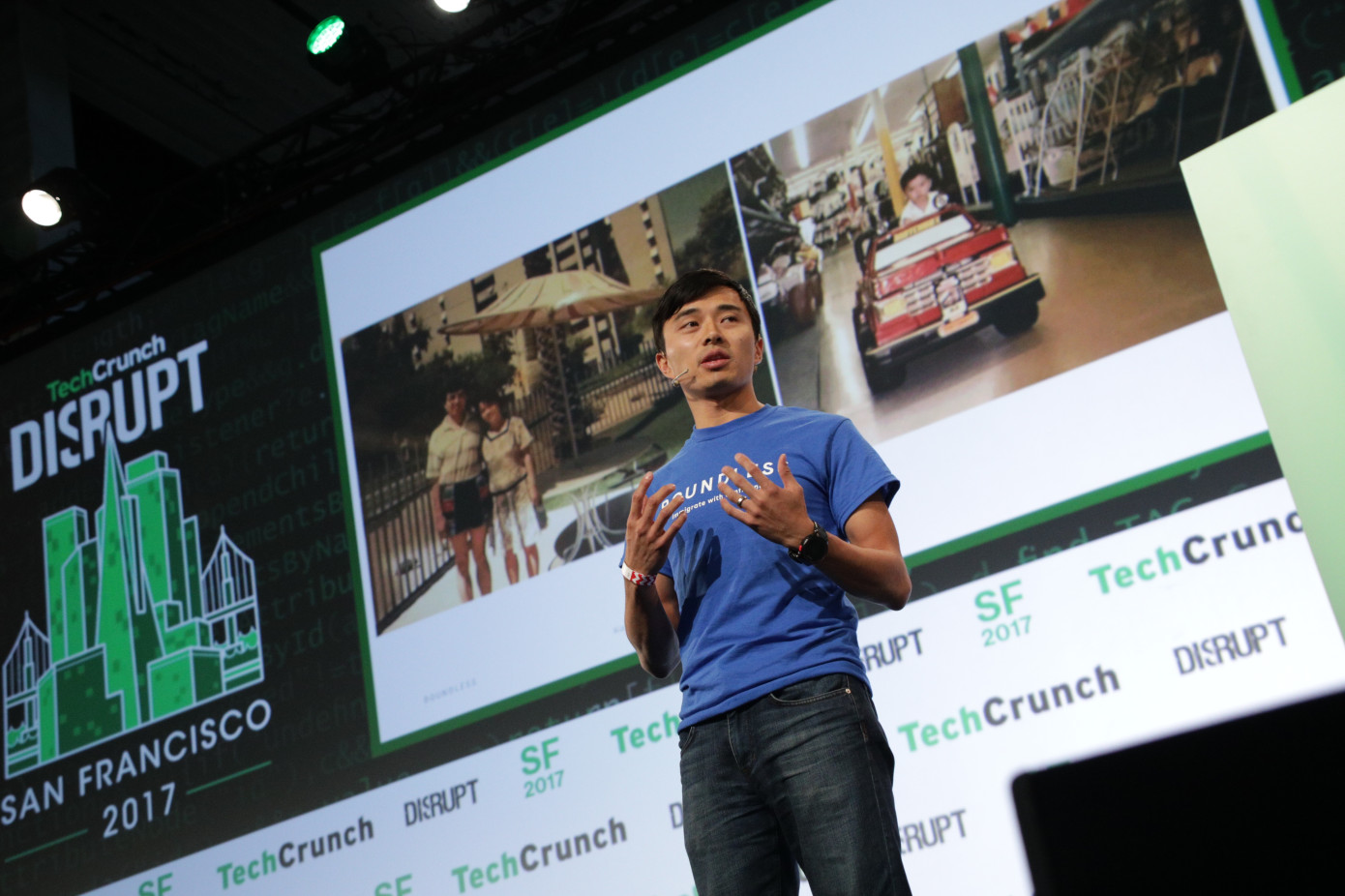
Boundless CEO Xiao Wang at TechCrunch Disrupt 2017
Operating under the startup studio model, PSL’s team of former founders and venture capitalists, including Rover and Mighty AI founder Greg Gottesman, collaborate to craft and incubate startup ideas, then recruit a founding CEO from their network of entrepreneurs to lead the business. Seattle is home to two of the most valuable businesses in the world, but it has not created as many founders as anticipated. PSL hopes that by removing some of the risk, it can encourage prospective founders, like Boundless CEO Xiao Wang, a former senior product manager at Amazon, to build.
“The studio model lends itself really well to people who are 99% there, thinking ‘damn, I want to start a company,’ ” PSL co-founder Ben Gilbert said in March. “These are people that are incredible entrepreneurs but if not for the studio as a catalyst, they may not have [left].”
Boundless is one of several successful PSL spin-outs. The business, which helps families navigate the convoluted green card process, raised a $7.8 million Series A led by Foundry Group earlier this year, with participation from existing investors Trilogy Equity Partners, PSL, Two Sigma Ventures and Founders’ Co-Op.
Years-old institutional funds like Seattle’s Madrona Venture Group have done their part to bolster the Seattle startup community too. Madrona raised a $100 million Acceleration Fund earlier this year, and although it plans to look beyond its backyard for its newest deals, the firm continues to be one of the largest supporters of Pacific Northwest upstarts. Founded in 1995, Madrona’s portfolio includes Amazon, Mighty AI, UiPath, Branch and more.
Voyager Capital, another Seattle-based VC, also raised another $100 million this year to invest in the PNW. Maveron, a venture capital fund co-founded by Starbucks mastermind Howard Schultz, closed on another $180 million to invest in early-stage consumer startups in May. And new efforts like Flying Fish Partners have been busy deploying capital to promising local companies.
There’s a lot more to say about all this. Like the growing role of deep-pocketed angel investors in Seattle have in expanding the startup ecosystem, or the non-local investors, like Silicon Valley’s best, who’ve funneled cash into Seattle’s talent. In short, Seattle deal activity is finally climbing thanks to top talent, new accelerator models and several refueled venture funds. Now we wait to see how the Seattle startup community leverages this growth period and what startups emerge on top.
Commercial space is going mainstream in 2020
2019 was a packed year for commercial space and space startups, but 2020 isn’t likely to see any kind of slowdown. In fact, it’s going to get a lot busier in a few key ways that could have the effect of driving even more enthusiasm, energy and funding into the emerging space tech industry.
The biggest thing happening in space next year is easy to pick out already: NASA’s Commercial Crew program. Both of the partners the agency selected to work with it on returning human launch capabilities to American soil, Boeing and SpaceX, are in the process of accomplishing the last key things they need to get done before actually putting astronauts on board their spacecraft, and it seems very likely that 2020 is when we’ll finally see those missions fly.
Here’s a breakdown of that and other things to watch for 2020 in space tech that will define the industry, and determine whether it continues to be a hotbed of investment and activity, or whether it slows in terms of VC and startup interest.
Crew flights
Like I said, the commercial crew program will be the single most important thing to watch in 2020 in terms of the space industry. That’s not because SpaceX and Boeing/ULA gaining the ability to launch astronauts on behalf of NASA will directly open up opportunities for startups and entrepreneurs: It’s not likely going to, in fact.
Instead, actually successful crew flights from commercial space companies will see as a broad confidence booster and a sign that the infrastructure required for a true space-based startup boom is proceeding apace. Commercial crew flights are primarily intended to give the U.S. a key strategic capability in the global space technology space, but they also open up a new, continuous revenue stream for the larger and more established companies in this ecosystem – Boeing and SpaceX for now, with the potential to open it up even further.
Having two companies with spacecraft certified for human flight in the U.S. will mean those players have more revenue and available capital to re-invest in the ecosystem, including through partners and suppliers, and it also potentially means that private commercial astronauts will have more opportunity to take a ride and embark on missions for commercial research, experimentation and development in space.
Listen to top VCs discuss the next generation of automation startups at TC Sessions: Robotics+AI
Robotics, AI and automation have long been one of the hottest categories for tech investments. After years and decades of talk, however, those big payouts are starting to pay off. Robotics are beginning to dominate nearly every aspect of work, from warehouse fulfillment to agriculture to retail and construction.
Our annual TC Sessions: Robotics+AI event on March 3 affords us the ability to bring together some of the top investors in the category to discuss the hottest startups, best bets and opine on where the industry is going. And this year’s VC panel is arguably our strongest yet:
- Eric Migicovsky is a general partner a Y Combinator. Prior to joining the firm, he co-founded Pebble. The smartwatch pioneer was itself a YC-backed venture, along with raising three of Kickstarter’s all-time top crowdfunding campaigns. Migicovsky joined YC following Fitbit’s acquisition of the startup in 2016.
- DCVC partner Kelly Chen focuses primarily on the AI, robotics, manufacturing and work-related sectors. Her work is generally focused on the world of hardware, along with the transformations of populations and labor.
- Dror Berman co-founded Innovations Ventures in 2010 with former Google CEO Eric Schmidt. A key driver in the firm’s investments in Uber, SoFi and Formlabs, Berman also focuses on robotics, including companies like Blue River Technology and Common Sense Robotics.
TC Sessions: Robotics+AI returns to Berkeley on March 3. Make sure to grab your early-bird tickets today for $275 before prices go up by $100. Startups, book a demo table right here and get in front of 1,000+ of Robotics/AI’s best and brightest — each table comes with four attendee tickets.
Daily Crunch: VMware completes Pivotal acquisition
The Daily Crunch is TechCrunch’s roundup of our biggest and most important stories. If you’d like to get this delivered to your inbox every day at around 9am Pacific, you can subscribe here.
1. VMware completes $2.7 billion Pivotal acquisition
VMware is closing the year with a significant new weapon in its arsenal. (I restrained myself from using a “pivotal” pun here. You’re welcome.)
The acquisition — first announced in August — helps the company in its transformation from a pure virtual machine supplier into a cloud native vendor that can manage infrastructure wherever it lives. It fits alongside the acquisitions of Heptio and Bitnami, two other deals that closed this year.
2. Spotify to ‘pause’ running political ads, citing lack of proper review
The company told us that starting early next year, it will stop selling political ads: “At this point in time, we do not yet have the necessary level of robustness in our processes, systems and tools to responsibly validate and review this content.”
3. ‘The Mandalorian’ returns for Season 2 on Disney+ in fall 2020
The last episode of the first season of “The Mandalorian” went live on Disney+ on Friday, and showrunner Jon Favreau wasted very little time confirming when we can expect season two of the smash hit to land: next fall.
4. 2019 Africa Roundup: Jumia IPOs, China goes digital, Nigeria becomes fintech capital
The last 12 months served as a grande finale to 10 years that saw triple-digit increases in startup formation and VC on the continent. Here’s an overview of the 2019 market events that capped off a decade in African tech.
5. Maxar is selling space robotics company MDA for around $765 million
Maxar’s goal in selling the business is to help alleviate some of its considerable debt. The purchasing entity is a consortium of companies led by private investment firm Northern Private Capital, which will acquire the entirety of MDA’s Canadian operations — responsible for the development of the Canadarm and Canadarm2 robotic manipulators used on the Space Shuttle and the International Space Station, respectively.
6. Cloud gaming is the future of game monetization, not gameplay
Lucas Matney argues that as is so often the case with the next big thing in tech, cloud streaming is much more likely to become the next big feature of a more traditional platform, rather than the entire platform itself. (Extra Crunch membership required.)
7. This week’s TechCrunch podcasts
Equity took the week off, but we kept Original Content going with a review of Netflix’s new fantasy show “The Witcher.”

Just how good was 2019 for wireless headphones? Very, very good.
Companies sold a lot of wireless headphones in 2019. You already knew that though, right? What you probably didn’t know was precisely how many constitutes the aforementioned “a lot.” New numbers from Canalys shed light on those successes. The research firm’s classification of audio products is a little wonky, but it drives the point home nonetheless.
In their terms, we’re talking specifically about “true wireless stereo” products under the umbrella of “smart personal audio devices” — in other words, wireless headphones. Taken as a whole, the category (which also includes tethered wireless earbuds and over/on ear wireless headphones) hit 96.7 million shipments in Q3, making a 53% year over year growth. For the fourth quarter (including the holidays), the number is expected to break 100 million, pushing things to around 350 million for the full year.
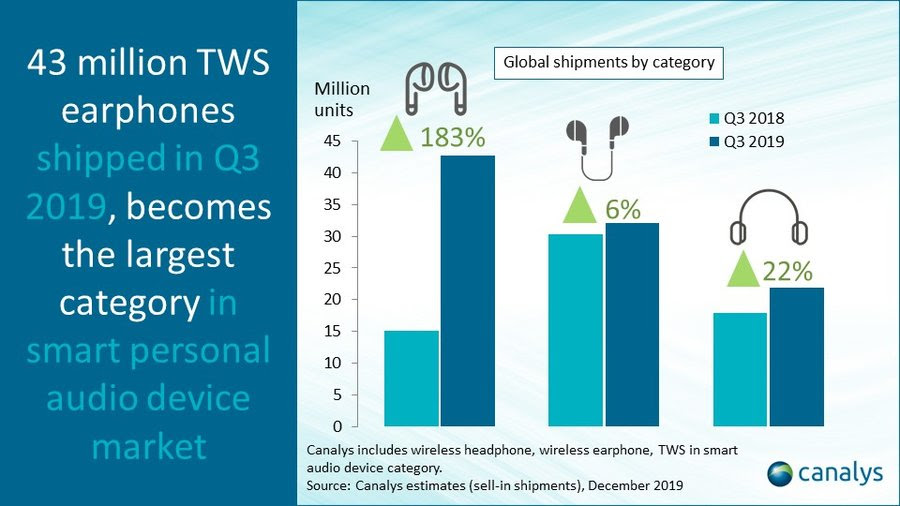
The “true wireless stereo” segment (fully wireless earbuds) saw a 183% growth for the quarter, overtaking wireless earphones and wireless headphones in the process. Another not surprising thing: Apple led the pack, far and away. The company controls 43% of the market, per the firm. Xiaomi and Samsung are a distant second and third, respectively, at 7% and 6%, respectively. And Apple’s numbers will likely continue to look pretty good with the warm reception of the AirPods Pro.
The market is likely to get even more interesting in 2020 with the arrival of new products from giants like Google and Microsoft, coupled with an increased presence of low-cost alternatives. But Apple’s stranglehold, particularly among iOS users, will be a tough one to break.
What’s beyond Beyond Meat and Impossible Foods in the future of food?
The age of alternative meats is upon us.
Beyond Meat is a $5 billion public company selling burgers in Canadian McDonald’s and American Carl’s Jr., breakfast sausages in Dunkin, and even chicken in a limited trial at KFC. Meanwhile, Impossible Foods has become a runaway hit at Burger Kings around the country. And the company is reportedly seeking to raise $300 million and $400 million at a valuation of roughly $3 billion according to reports in Reuters.
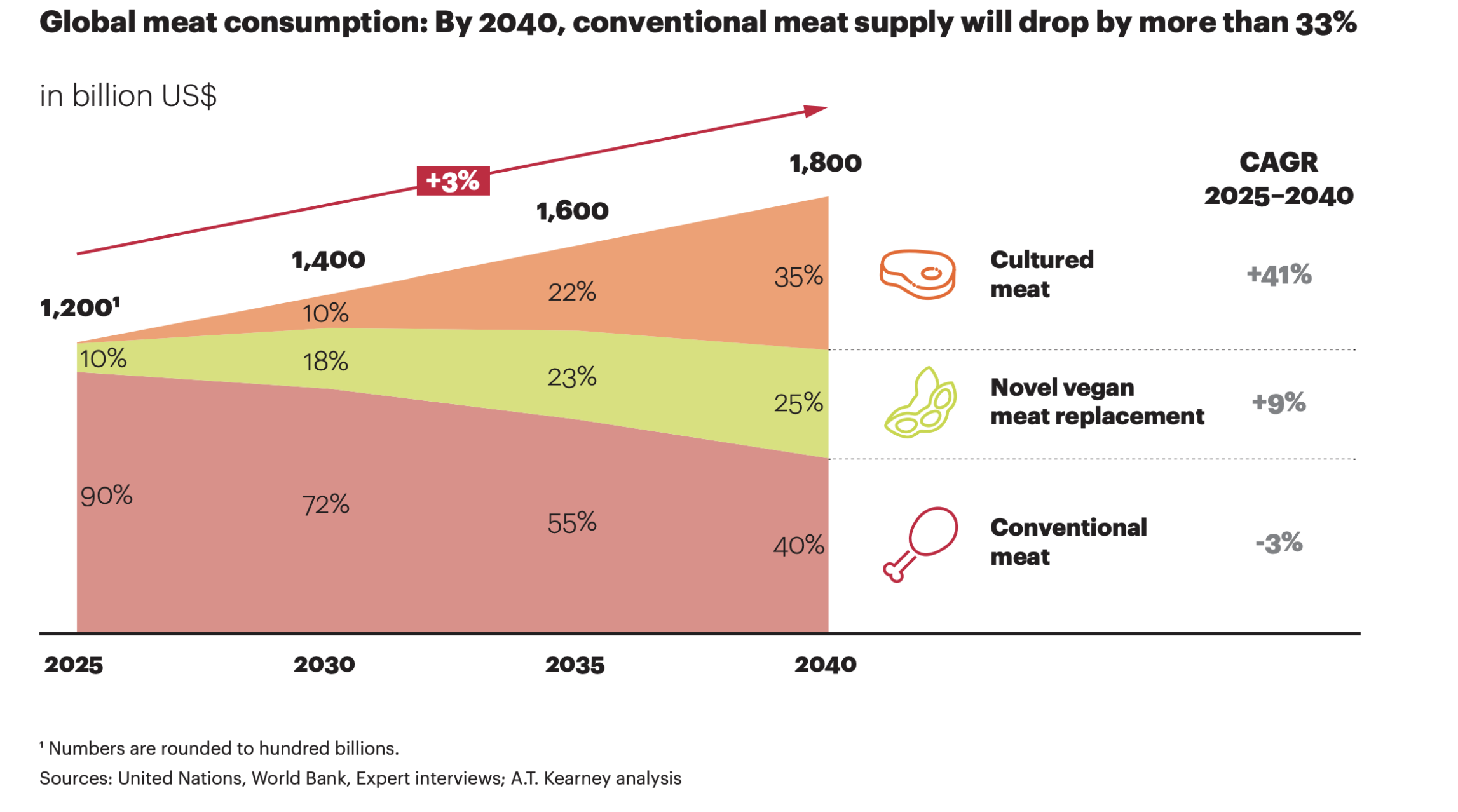
The plant-based up-and-comers have become a big enough threat that the meat industry has hired a marketing hit man to go after the new plant-based contenders to an increasing share of meat’s market. And they have a reason to be worried. By 2040, the conventional meat supply will drop by more than 33%, according to a report from the consulting firm AT Kearney.
As these no-longer-startups bask in the warm glow of success (and the rejuvenation of a sleepy corner of the supermarket) the question is what’s coming next from the research labs and test kitchens that are backed by millions in venture capital dollars.
Where’s the beef?
For the initial wave of investment, driven in part by a desire to appeal to consumers looking for alternatives to animal products, but wary of the cost of cultivating muscle tissue plant-based alternatives seemed obvious. Brown says animals are wholly unnecessary to make products that recreate the taste of a beef steak or a burger — and potentially surpass their flavor, all at a lower price.
Other companies have taken up that challenge as well in the months since Beyond Meat’s historic run in public markets (for a while, the company was the best-performing public offering of 2019). Startups like Rebellyous, Nuggs, and Daring Foods are making chicken replacements (along with big meat producer Tyson Foods through its Raised & Rooted brand).
Meanwhile beef gets its own challengers (outside of Impossible Foods and Beyond Meat) with companies like Nestle’s plant-based pitch Sweet Earth Foods, Tyson Foods, Beyond the Butcher, Hungry Planet and a host of others.
Even shrimp has a plant-based competitor in New Wave Foods, a startup that actually raised cash from Tyson’s venture capital arm earlier this year.
What has set Impossible Foods and Beyond Meat apart from other competitors — at least in the eyes of the investors — is the research and development teams that are working on flavor profiles and products that simply are more direct corollaries to the products they’re looking to supplant.
For Impossible, that’s the use of genetically modified yeast cells that are manufacturing a protein found in soy called leghemoglobin. That’s the core of Impossible’s secret weapon — the use of heme (a protein found in blood) to make its plant products taste meaty.
These same benefits apply to investors’ approach to plant-based dairy alternatives that are trying to one-up soy and almond milks with a more direct one-to-one substitute for dairy.
Typeform Premium is now 25% off for Extra Crunch members
We’re excited to announce a new Extra Crunch community perk from Typeform. Starting today, annual and two-year members of Extra Crunch can get 25% off an annual Typeform Premium plan.
Typeform lets you create beautiful, interactive experiences across your most important customer touchpoints. Everything from slick surveys, friendly forms and quizzes can all be easily made with Typeform. Typeform is great for collecting feedback, generating leads, conducting research, generating event signups, engaging your audience, training team members and more.
What makes Typeform stand out over products like Google Forms is the carefully crafted interface. It’s designed to keep users engaged and focused, so you get better data. You can learn more about Typeform here.
Extra Crunch is a membership program from TechCrunch that features how-tos and interviews on company building, intelligence on the most disruptive opportunities for startups, an experience on TechCrunch.com that’s free of banner ads, discounts on TechCrunch events and several community perks like the one mentioned in this article. Our goal is to democratize information about startups, and we’d love to have you join our community.
You can sign up for Extra Crunch here.
Extra Crunch subscribers get 25% off Typeform Premium yearly plans. All you need to do is create a free Typeform account, and then use the coupon code to upgrade. The coupon code will be provided to Extra Crunch annual and two-year subscribers in the welcome email after signing up for our service.
If you are already an annual or two-year Extra Crunch member, you will receive an email with the offer at some point over the next 24 hours. If you are currently a monthly Extra Crunch subscriber and want to upgrade to annual in order to claim this deal, head over to the “my account” section on TechCrunch.com and click the “upgrade” button.
This is one of several community perks we’ve launched for Extra Crunch annual members. Other community perks include a 20% discount on TechCrunch events, 100,000 Brex rewards points upon credit card sign up and an opportunity to claim $1,000 in AWS credits. For a full list of perks from partners, head here.
If there are other community perks you want to see us add, please let us know by emailing [email protected].
Sign up for an annual Extra Crunch membership today to claim this community perk. You can purchase an annual Extra Crunch membership here.
Disclosure:
This offer is provided as a partnership between TechCrunch and Typeform, but it is not an endorsement from the TechCrunch editorial team. TechCrunch’s business operations remain separate to ensure editorial integrity.