YouTube starts limiting ad targeting and data collection on kids content

YouTube now officially limits the amount of data it and creators can collect on content intended for children, following promises made in November and a costly $170 million FTC fine in September. Considering how lucrative kids’ content is for the company, this could have serious financial ramifications for both it and its biggest creators.

The main change is, as announced in November, that for all content detected or marked as being for kids, viewers will be considered children no matter what. Even if you’re a verified, paying YouTube Premium customer (we know you’re out there) your data will be sanitized as if YouTube thinks you’re a 10-year-old kid.

There are plenty of reasons for this, most of them to do with avoiding liability. It’s just the safer path for the company to make the assumption that anyone viewing kids’ content is a kid — but it comes with unfortunate consequences.

Reduced data collection means no targeted ads. And targeted ads are much more valuable than ordinary ones. So this is effectively a huge revenue hit to anyone making children’s content — for instance YouTube’s current top-earning creator, Ryan Kaji (a kid himself).

It also limits the insights creators can have on their viewers, crucial information for anyone hoping to understand their demographics and improve their metrics. Engagement drivers like comments and notifications are also disabled, to channels’ detriment.

Google for its part says that it is “committed to helping creators navigate this new landscape and to supporting our ecosystem of family content.” How exactly it plans to do that isn’t clear; Many have already complained that the system is not clear and that this could be a death sentence for kids’ channels on YouTube.

Now that the policy is official we’ll probably soon hear exactly how it is impacting creators and what if anything Google actually does to mitigate that.

Sony just announced a car

Today at CES 2020, Sony unveiled a car. I’m surprised too. There are very few details about the Sony Vision-S sedan at this time. We’ll get more once we can see it on the show floor.

According to the press account, Sony partnered with industry leaders to build this prototype, including Bosch, Continental, Genetex, Nvidia, Magna, and Nvidia.

This car is a bit surprising but fits within Sony’s current strategy. Over the last generation, Sony started building and selling key technologies as a supplier. Sony camera sensors are found in many leading smartphones, including the latest iPhone Pro. But before it hits the iPhone, Sony has long produced its own smartphone with similar smartphone sensors.

Expect a similar play with the Vision-S sedan. This concept vehicle is clearly designed to help Sony sell components. Sony doesn’t want to get into auto manufacturing. I think. We’re asking Sony a bunch of questions and will relay the answers.

Not over it: California officials just sued billionaire Vinod Khosla in a now 12-year-long battle over access to a popular beach

One thing is certain: Vinod Khosla will be remembered in California, if not for his work, then for his now 12-year-old battle to keep private a stretch of beach in front of an 89-acre property that the billionaire venture capitalist purchased in 2008.

It has exhausted colleagues and associates, who have privately complained over the unwanted attention it has drawn to Khosla’s investment firm, Khosla Ventures. It has infuriated beachgoers, whose access to the beach has been periodically obstructed. It has even landed a handful of surfers in jail. (You can watch a film about their 2012 arrest here.) Yet astonishingly, the battle over the sandy, crescent-shaped strip known as Martins Beach, just south of Half Moon Bay, continues.

You could hardly be blamed for thinking it was a thing of the past. Last October, the United States Supreme Court refused to hear Khosla’s appeal to overturn a ruling that the beach access path that cuts through his property must remain open. Exhausted onlookers surely heaved a sigh of relief at the decision, along with the Surfrider Foundation and other champions of ensuring Californians have access to the state’s beaches.

But Khosla — who has argued all along that his property rights are being violated —  found a sympathetic ear more recently in an appeals court in San Mateo County. As the L.A. Times explains, it ruled in favor of Khosla on a related case that centered on whether the former property owners of the land he owns had already granted public rights to use the beach — along with the road that leads to it and a parking lot where visitors have long been charged an entrance fee. The panel concluded there was insufficient evidence to show that they — a family that acquired the parcel in 1902 — had.

Now, the state is suing. Specifically, the California State Lands Commission and Coastal Commission is asking the court to consider new evidence from more than 225 people — including photographs, newspaper stories, and personal journal entries — that shows that while the land owners might not have explicitly granted public rights to use the beach, the beach and gated road to it have nevertheless been used by the public since “at least the 1920s.”

Indeed, it argues that a family that lived on the land and managed it for decades on behalf of its longtime owners, had operated a beach store and provided other beach amenities, including restrooms and even, at one point, a restaurant — all with the owners’ consent.

Collectively, these actions and experiences prove “implied dedication,” says the suit.

The filing adds that without court orders, Khosla will “continue to deny, impair and obstruct” the public’s right to use Martins Beach.

What happens now remains to be seen. But the Coastal Commission sees the case as far more than a story between the state and one very resolute property owner who remains unwilling to cut his losses, no matter its impact on the legacy he one day leaves behind.

Steve Padilla, who chairs the Coastal Commission, tells the L.A. Times that as far as the state is concerned, the case “goes to the heart of California’s public access mandate.

“We cannot allow this to be chipped away each time someone purchases beachfront property — it’s a dangerous precedent for the future of public access in California.”

PlayStation 5 announced for holidays 2020

Turns out Sony is still able to pack a surprise or two into its CES press conference. The company just kicked off its event by announcing that the PlayStation 5 will be arriving this holiday season.

Not a lot was revealed about the next-gen console, beyond a few basic features, including 3D audio (because Sony), haptic/adaptive triggers, ultra-high speed SSD, hardware based ray tracing and Blu-Ray (so, yeah, physical media).

|???????????|
PS5 PS5 PS5 PS5
|?___????????__|
(•?•) /
/

| |

See you this holiday.

Sony (@Sony) January 7, 2020

[^Not the new logo, nor a reflection of graphics quality.]

The announcement comes just under a month after the PS5’s chief competitor, the Xbox Series X. Microsoft is set to offer up that system at roughly the same timeframe, meaning that we’re powering head first into another explosive console war at the end of the year.

Given that we’re now less than a year away from the launch of both products, there are still a lot of unanswered questions about both. Look forward to an extremely crazy E3, Gamescom and other gaming conferences in the months to come.

CES 2020 coverage - TechCrunch

Get a load of these Dell PC concepts that you can’t buy

Concept PCs are a lot like concept cars. The idea comes from a decent enough place, but mostly they exist to make you feel bad an inadequate about your current dumb device. It’s a metaphor for life, really.

In that spirit, here are a trio of concept PCs that Dell debuted this week at CES. Honestly, none are too farfetched. One looks an awful lot like an existing product, and the other two are pretty reminiscent of recently announced products from competitors. Any of the three could seemingly have been announced as actual retail devices, but life is an endless stream increasing disappointment culminating in your inevitable, inescapable demise.

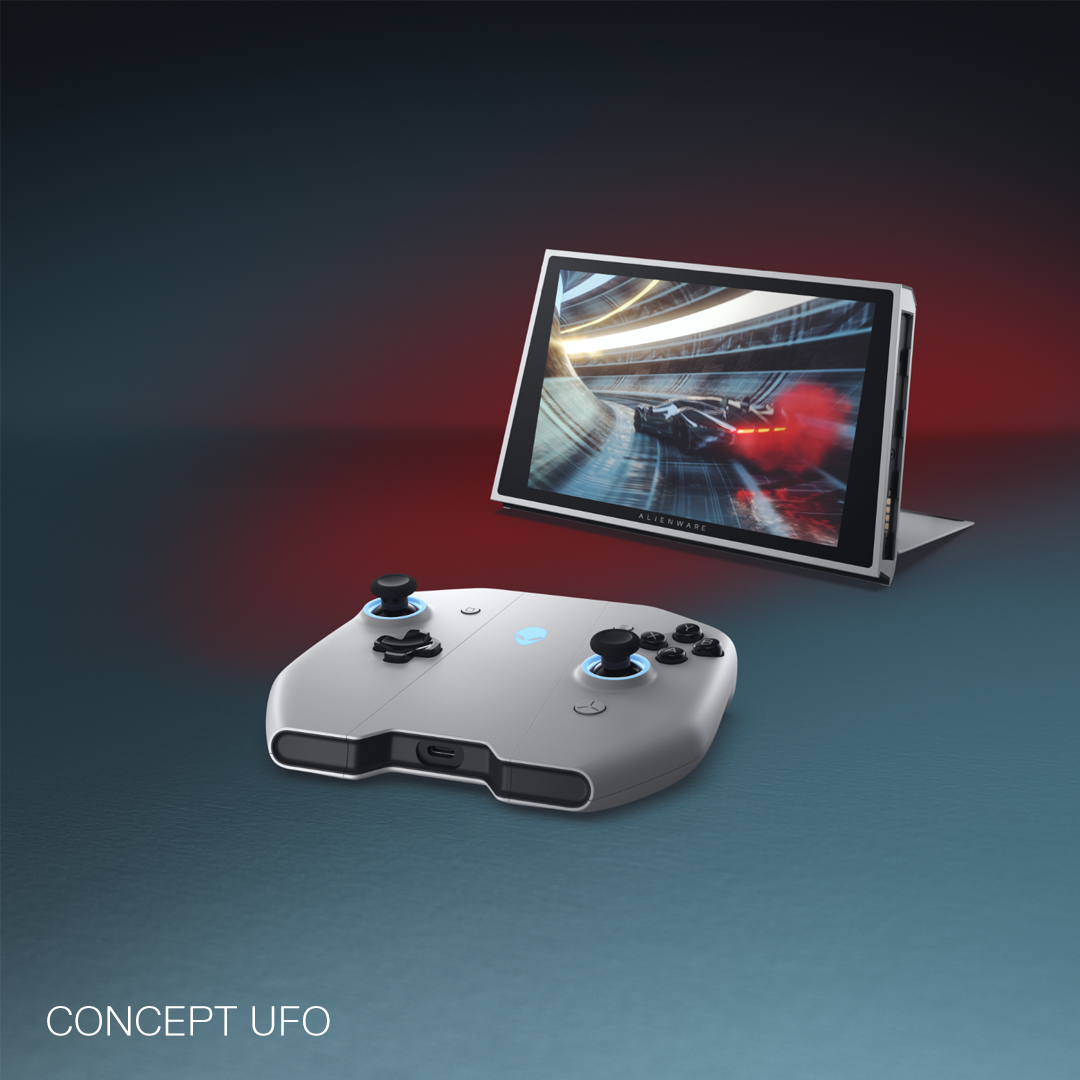
First up is the Alienware-branded UFO. Remember a paragraph ago when I told you that one of the products looked like an existing one? Well, this is that. It’s Alienware’s take on the Nintendo Switch (or any gaming portable, to be honest). Though one assumes that, were it ever to actually come to market, it would feature much beefier specs. One assumes.

Like the Switch, the gaming portable features detachable controllers (sound familiar?) and kickstand, so you can, say, play it on an airplane tray table (wipe it down first, though. Those things are the germiest part of the plane). There’s a 10th gen Intel chip inside this hypothetical product, powering an eight-inch, 1900×1200 display.

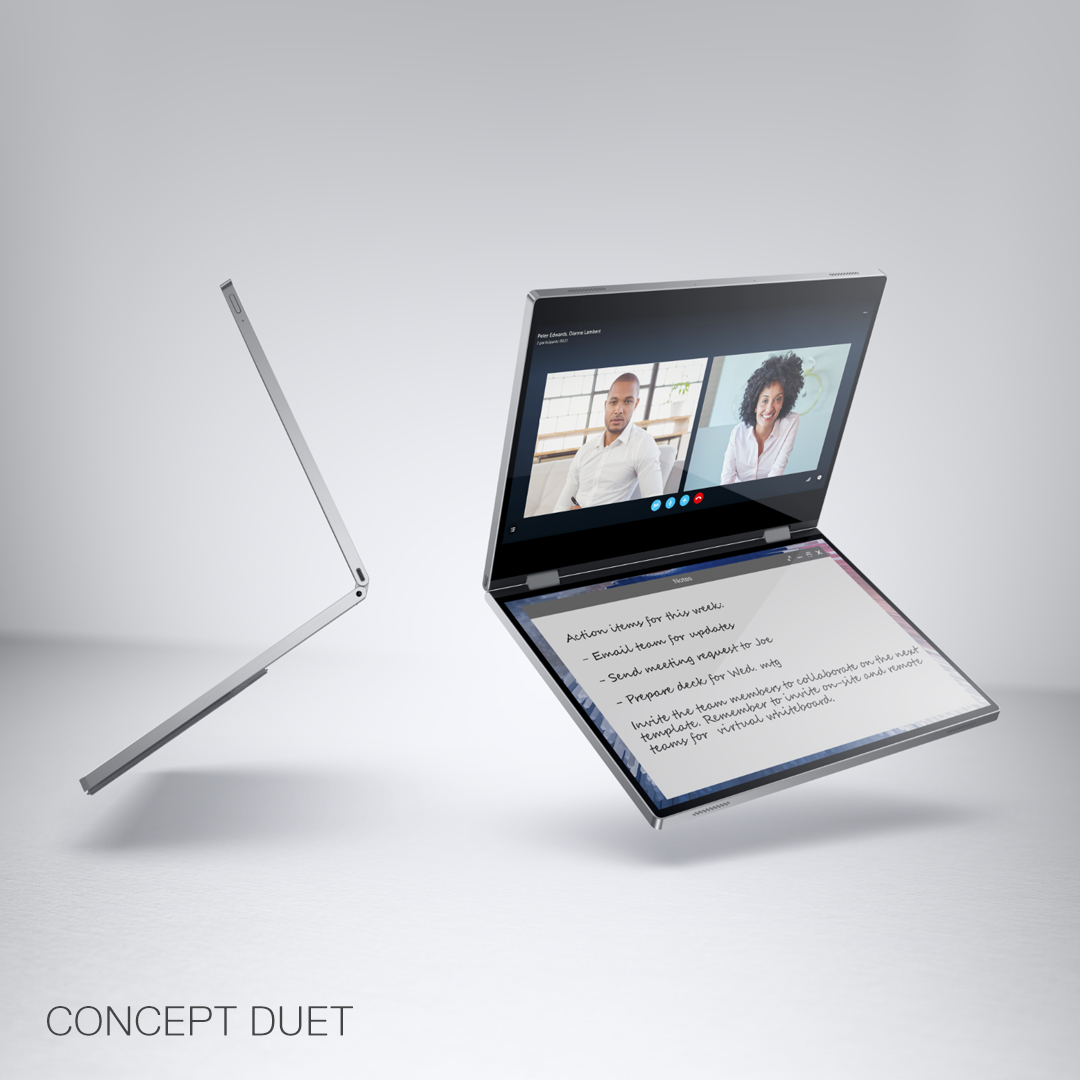
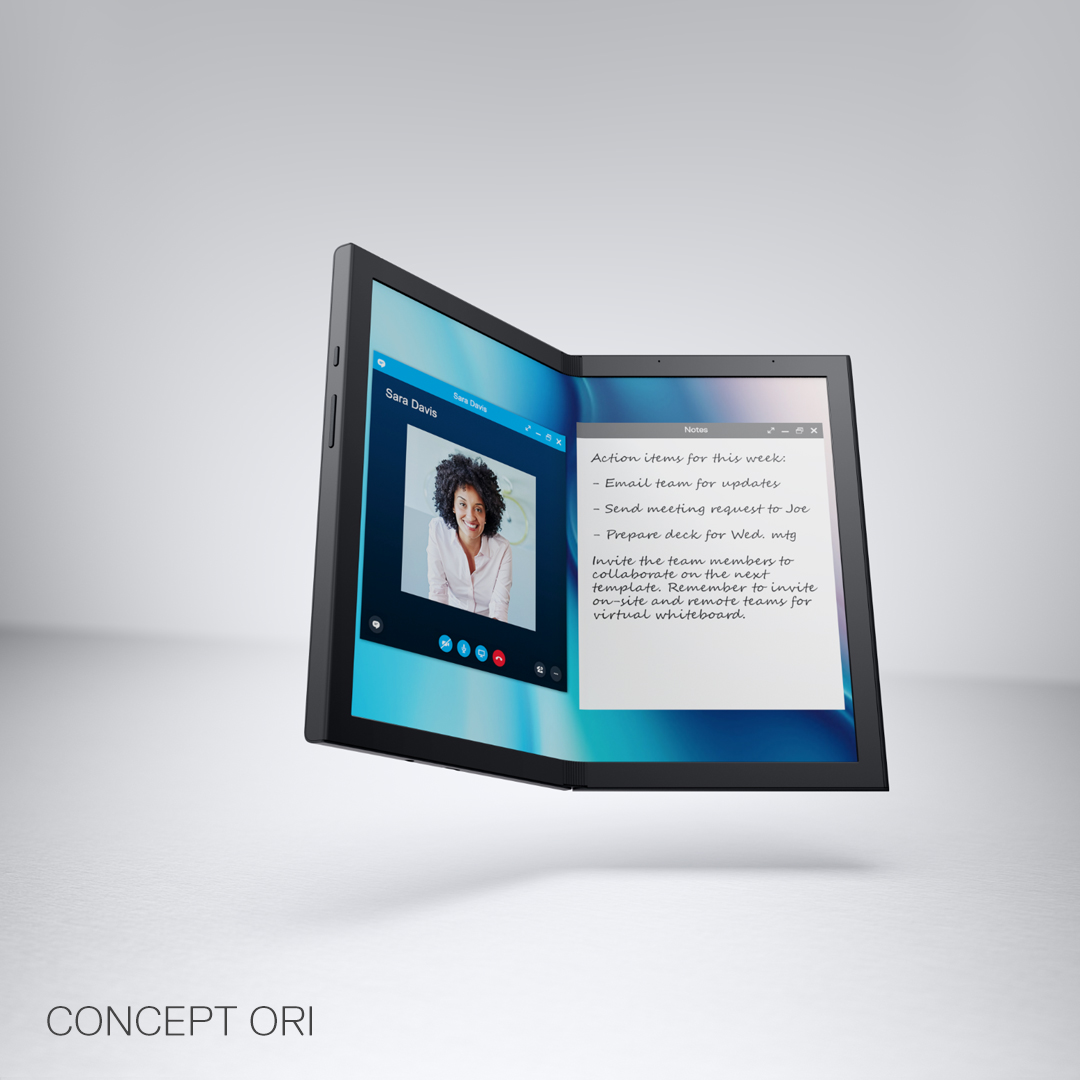
Concept Duet, meanwhile, is the sort of idea a number of PC manufacturers have been flirting with for a while. It’s a standard laptop form factor, only with a 13.4 inch display on either side. The benefits of such a form factor are pretty clear, and like the Lenovo, there appears to be a slip-on keyboard, so you don’t have to type on a touchscreen. The Concept Ori is in-line with the actual ThinkPad X1 Fold announced earlier today by Lenovo. It’s a 13 inch screen that folds in for a significantly more portable form factor.

“I’m excited about our new approach this year at CES, and we hope you enjoy this glimpse into our labs,” CTO Glen Robson says in a blog post. “This is only a small fraction of the ideas, experiences, hardware and software our teams are constantly developing. Who knows, if response is positive, you may see more of our early work in the future.”

Audi AI:ME concept demonstrates innovative safety through lights

The Audi AI:ME is a concept for future urban travel. The little car is autonomous, has a surprisingly spacious interior, and it’s equipped with a host of exterior lights designed to better communicate with the outside world. No, really. There are lights everywhere.

The idea is to surround the vehicle with multi-purpose lights. The front and rear fenders feature an array of lights along their shoulders. You see, this concept is a self-driving vehicle, and the lights demonstrate a possible solution to help autonomous communicate with humans.

Often, when driving, human drivers communicate through split-second glances and waves of the hand. That’s not possible when the computer is driving the vehicle. These arrays of lights could indicate greater detail about the vehicle’s intentions outside of standard blinkers. Their size and design would make them hard to miss even by someone staring at a smartphone.

The fender lights are situated in a way that makes them more visible to those looking down at them — think bikers and pedestrians. Meanwhile, the traditional blinkers are designed to be viewed head-on as if from another vehicle.

Sadly, Audi was unable to demonstrate this system in the demo. Does it work? I’m not sure, but it’s worth mentioning as a practical solution to a future problem.

The AI:ME has a spacious interior. There isn’t a small car on the market with this much space inside. The concept has an utterly hollow interior, but the production version, if it goes into production, would be equipped with airbags, sound deadening, and all sorts of bits missing from this one-off demo vehicle.

Once engaged in autonomous mode, the steering wheel retracts into the dash, and a large wood dash extends for use by the driver. The idea, Audi says, is to give the rider a place for their computer or book or whatever. After all, the vehicle is doing the driving, and they’re just there for the ride.

Or the driver could use the VR system. The Audi AI:ME is equipped with Holoride’s impressive in-vehicle VR system that matches the vehicle’s movements with custom-content on the headset. If the car turns right, the content on the VR headset veers right, too, matching the dynamics correctly.

Holoride launched last year at CES. I was impressed in 2019 with the initial demo, and it’s impressive here again. Holoride’s VR solution is designed mainly for passengers, and this demo shows a future where, perhaps, a driver puts his full trust in a computer and spends a few hours playing VR games while sitting in traffic.

There are no plans to produce the AI:ME. It’s a concept vehicle designed to showcase potential technology and design. The AI:ME is part of Audi’s four-piece concept family that also includes the luxurious Aicon, the sporty AI:RACE, and the rugged AI:Trail.

Intel and Google plot out closer collaboration around Chromebooks and the future of computing

Intel, the chip-making giant, has been on the road of refocusing its strategy in recent months. While it has sold its mobile chip operation to Apple and is reportedly looking for a buyer for its connected home division, it’s also been going through the difficult task of rethinking how best to tackle the longtime bread and butter of its business, the PC.

Part of that latter strategy is getting a big boost this week at CES 2020. Here, Intel is today announcing a deeper partnership with Google to design chips and specifications for Chromebooks built on Project Athena. Project Athena is framework first announced last year that covers both design and technical specs, with the aim of building the high-performance laptops of tomorrow that can be used not just for work, but media streaming, gaming, enterprise applications and more, all on the go — powered by Intel, naturally.

(The specs include things like requiring ‘fast wake’ using fingerprints or push-buttons or lift lids; using Intel Core i5 or i7 processors; “Ice Lake” processor designs; better battery life and charging; WiFi 6; touch displays; 2-in-1 designs; narrow bezels and more.)
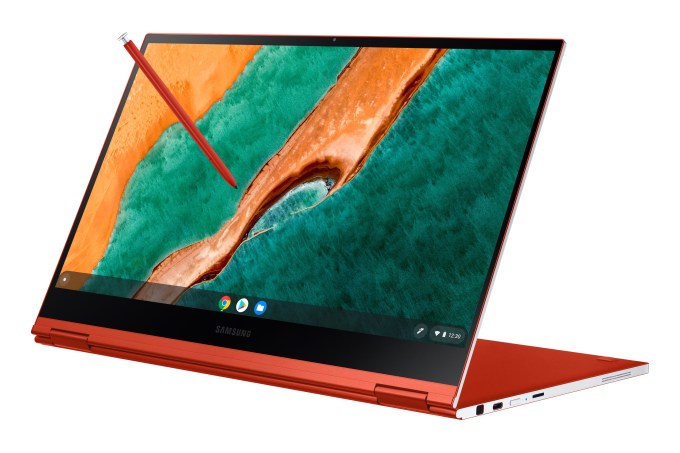
Earlier today, the first two Chromebooks built on those Athena specifications — from Samsung and Asus — were announced by the respective companies, and Intel says that there will be more to come. And on stage, Google joined Intel during its keynote to also cement the two companies’ commitment to the mission.

“We’re going a step further and deepening our partnership with Google to bring Athena to Chromebooks,” Gregory Bryant, the EVP and GM of Intel’s client computing group, said in an interview with TechCrunch ahead of today. “We’ve collaborated very closely with Google [so that device makers] can take advantage of these specs.”

For Intel, having a Chromebook roster using Athena is important because these have been very popular, and it brings its processors into machines used by people who are buying Chromebooks to get access to Google services around security and more, and its apps ecosystem.

But stepping up the specifications for Chromebooks is as important for Google as it is for Intel in terms of the bottom line and growing business.

“This is a significant change for Google,” said John Solomon, Google’s VP of ChromeOS, in an interview ahead of today. “Chromebooks were successful in the education sector initially, but in the next 18 months to two years, our plan is to go broader, expanding to consumer and enterprise users. Those users have greater expectations and a broader idea of how to use these devices. That puts the onus on us to deliver more performance.”

The renewed effort comes at an interesting time. The laptop market is in a generally tight spot these days. Overall, the personal computing market is in a state of decline, and forecast to continue that way for the next several years.

But there is a slightly brighter picture for the kinds of machines that are coming out of collaborations like the one between Intel, Google, and their hardware partners: IDC forecasts that 2-in-1 devices — by which it means convertible PCs and detachable tablets — and ultra-slim notebook PCs “are expected to grow 5% collectively over the same period,” versus a compound annual growth rate of -2.4% between 2019 and 2023. So there is growth, but not a huge amount.

Up against that is the strength of the smartphone market. Granted, it, too, is facing some issues as multiple markets reach smartphone saturation and consumers are slower to upgrade.

All that is to say that there are challenges. And that is why Intel, whose fortunes are so closely linked to those of personal computing devices since it makes the processors for them, has to make a big push around projects like Athena.

Up to this month, all of the laptops built to Athena specs have been Windows PCs — 25 to date — but Intel had always said from the start Chromebooks would be part of the mix, to help bring the total number of Athena-based devices up to 75 by the end of this year (adding 50 in 2020).

Chromebooks are a good area for Intel to be focusing on, as they seem to be outpacing growth for the wider market, despite some notable drawbacks about how Chrome OS has been conceived as a “light” operating system with few native tools and integrations in favor of apps. IDC said that in Q4 of 2019, growth was 19% year-on-year,  and from what I understand the holiday period saw an even stronger rise. In the US, Chromebooks had a market share of around 27% last November, according to NPD/Gfk.

What’s interesting is the collaborative approach that Intel — and Google — are taking to grow. The Apple -style model is to build vertical integration into its hardware business to ensure a disciplined and unified approach to form and function: the specifications of the hardware are there specifically to handle the kinds of services that Apple itself envisions to work on its devices, and in turn, it hands down very specific requirements to third parties to work on those devices when they are not services and apps native to Apple itself.

While Google is not in the business of building laptops or processors (yet?), and Intel is also far from building more than just processors, what the two have created here is an attempt at bringing a kind of disciplined specification that mimics what you might get in a vertically integrated business.

“It’s all about building the best products and delivering the best experience,” Bryant said.

“We can’t do what we do without Intel’s help and this close engineering collaboration over the last 18 months,” Solomon added. “This is the beginning of more to come in this space, with innovation that hasn’t previously been seen.”

Indeed, going forward, interestingly Bryant and Solomon wouldn’t rule out that Athena and their collaboration might extend beyond laptops.

“Our job is to make the PC great. If we give consumers value and a reason to buy a PC we can keep the PC alive,” said Bryant, but he added that Intel is continuing to evolve the specification, too.

“From a form factor you’ll see an expansion of devices that have dual displays or have diff kinds of technology and form factors,” he said. “Our intention is to expand and do variations on what we have shown today.”

CES 2020 coverage - TechCrunch

Qualcomm unveils its Snapdragon Ride platform for all levels of automated driving

Qualcomm today unveiled a new automotive platform called Snapdragon Ride that’s designed to power all levels of automated driving, from today’s active safety systems in passenger cars to the robotaxis that may someday ply city streets.

The scalable platform consists of a Snapdragon Ride system-on-chip, accelerator and autonomous stack.

Qualcomm might be best known for supporting mobile phones, but it also has a family of automotive products, including semiconductors for the telematics systems in cars. Snapdragon Ride is the latest — and perhaps most notable effort to date — to carve out more market share in the already crowded ADAS and automated driving industries. It also puts Qualcomm in competition, once again, with the likes of Nvidia and Intel’s Mobileye subsidiary.

The Snapdragon Ride platform is designed to support the top three industry segments in automated driving, Nakul Duggal, senior vice president of product management at Qualcomm told TechCrunch in a recent interview. It can handle the hardware requirements for the active safety advanced driver assistance systems found in today’s passenger vehicles, including lane keeping, traffic sign recognition and automatic emergency braking. But Duggal says it also can manage the more intensive hardware requirements in so-called Level 2+ systems, such as automated highway driving and self-parking, as well as Level 4, which is a designation given to autonomous urban driving applications like robotaxis.

The platform is built on modular multi-core CPUs, energy-efficient AI and computer vision engines and a GPU, the company said. It’s also thermally efficient and can offer 30 tera operations per second (TOPS) for the lower level active safety systems, up to more than 700 TOPS at 130W for autonomous driving. This means the platform can operate at these various levels without requiring additional liquid-cooled systems, which helps lower the cost and boost reliability, Duggal said, adding it can be particularly useful in electric vehicles.

Snapdragon Ride is expected to be available for pre-development to automakers and Tier-1 suppliers in the first half of 2020. Snapdragon Ride-enabled vehicles are expected to be in production in 2023.

CES 2020 coverage - TechCrunch

Study associates frequency, quality of monthly reports with startup success

“Despite a lot of publicity and social media, number of sign-ups were modest,” reads one of the last monthly reports I sent to my VCs before my startup ceased to exist. “After the initial wave, sign-ups have slowed right down to near pre-launch levels. User acquisition is our number-one priority and my biggest headache.”

Like, I suspect, many other early-stage founders, I hated the monthly chore of writing a short report for investors. We used the PPP format (progress, problems and plans) for these regular missives, but progress was almost always slow and most of the time, problems far outstripped plans.

On good months, I was far more motivated to file our monthly report — it is a very human thing to want to deliver good news — and on bad months I had a million other more important things I thought a CEO should be spending their time on.

However, according to a research conducted by Jan Luca Ernst, a masters student at The University of St. Gallen, I may have been misguided. In his thesis, supported by Prof. Dr. Elgar Fleisch (Professor of Technology Management at University of St. Gallen) and Florian Schweitzer (a partner at VC firm btov), he writes “startups that submit regular, high-quality reports are shown by the statistics to be better investments than other startups.”

The research was based on analysis of hundreds of monthly startup reports submitted to btov Partners by portfolio companies out of its first two funds, which ran between 2006 to 2014. Specifically, researchers looked at 64 startups, covering the performance of startups during the first two years after initial investment from the first fund, and the performance during a single year, 2015, for the second fund.

“Hypotheses on the positive effects of monthly startup reports were tested, using several multivariate regressions,” write the paper’s authors. “As a result, several initial assumptions were discarded.”

For example, the punctuality of startup reports did not appear to indicate whether a startup would be more successful. In contrast, the frequency of reporting (at a confidence level of 95%), as well as the quality of the reporting (at a confidence level of 99%), were identified as contributors to success.

“Overall, the findings emphasize the importance of the post-investment phase and the value added by venture capitalists beyond financial support,” say Ernst, Fleisch and Schweitzer. “One main implication of the findings has an impact on subsequent investment rounds. Startups that submit regular, high-quality reports are shown by the statistics to be better investments than other startups. This may be an indicator that justifies further investment, that, in turn, leads to better performance.”

The authors also suggest that, in the future, investors may ask for “full, unfiltered access” to all past reporting of a startup, including evidence on the quality of reports and regularity of submission. “This would increase transparency and therefore eventually lead to better investment decision making,” they write.

With that said, during a call with btov’s Florian Schweitzer, he conceded that correlation doesn’t necessarily mean cause, but argued that there are many softer, and sometimes hidden, positive outcomes from monthly reports — especially when a founder does them honestly and whole heartedly.

Extra Crunch: What should a monthly report contain?

Florian Schweitzer: We always define what we would like or what we think would be sensible, because for each startup, of course, it is different. In general, the idea is that the founders can do the report in half an hour. Usually, it contains something like eight KPIs, and then some bullet points reflecting on what went well, and what are the challenges right now. And those challenges are a superb opportunity to understand where the founder is struggling, and where we can support them. So it can be a very, very productive agenda for a discussion, which we usually have regularity.

I think it is very good that founders sit back and think for half an hour: what happened during the last 30 days? What did I want to achieve? What did I not achieve? And to be honest about the progress and challenges.

This startup is raising $7 million for a technology that can authenticate people based on their typing style

TypingDNA, a four-year-old startup that was founded in Bucharest, Romania and more recently moved its headquarters to Brooklyn, New York, looks to be raising $7 million in funding for something interesting: AI-driven technology that it says can recognize people based on the way they type, both on their laptops and mobile devices.

A new SEC filing that says the company — which graduated from Techstars NYC in late 2018 and early last year closed on €1.3 million in seed funding — has so far raised $5.25 million toward that goal.

Typing biometrics — the detailed timing information that describes exactly when each key is pressed and released as way to identify the unique person at the keyboard — is apparently not brand new. A two-year-old, PCWorld article says research in the field dates back 20 years. It also says that inaccuracies have kept the technology from being used as a widespread way to authenticate individuals. TypingDNA meanwhile asserts that the typing pattern recognition technology it has developed has an accuracy rate of between 99% and upwards of 99.9%.

The company’s previous backers include GapMinder Venture Partners, a venture outfit based in Amsterdam. We’ve reached out to cofounder and CEO Raul Popa to learn more, but judging by the filing, the fund backing this new round is Gradient Ventures, which is Google’s nearly three-year-old, AI-focused venture group.

When TypingDNA raised its seed round roughly 11 months ago, it said it planned to use the money to improve its tech and expand its presence in both the financial and enterprise sectors, where it’s been trying to strike partnerships with more companies that are focused on identity and fraud prevention.

According to the startup’s site, it has also been working with educational organizations to help ensure they’re giving the right students credit for the work they receive.

Alphabet-backed primary care startup One Medical files to go public

One Medical, a San Francisco-based primary care startup with tech-infused, concierge services filed for an IPO with the Securities and Exchange Commission today.

Internal medicine doctor Tom Lee founded the startup, now valued at well-over $1 billion dollars, in 2007. Lee exited his company in 2017, leaving it in the hands of former UnitedHealth group executive Amir Rubin.

The startup currently operates 72 health clinics in nine major cities throughout the U.S., with three more markets expected to open in 2020 and has raised just over $500 in venture capital from it’s biggest investor, the Carlyle Group (which owns just over a quarter of shares), Alphabet’s GV, J.P. Morgan and others. Google also incorporates One Medical into its campuses and accounts for about 10% of the company revenue, according to the SEC filing. The filing also mentions the company, which is officially incorporated as 1Life Healthcare Inc. ONEM, now plans to raise about $100 million.

Presumably, this money will help the company improve upon its technology and expand to more markets. We’ve reached out to One Medical for more and so far have only been referred to its wire statement.

According to that statement, One Medical has applied for a listing as ticker symbol, ONEM under its common stock on the Nasdaq Global Select Market. We’ll be sure to update you if and when we hear more.


What to Expect from CES 2020

It’s the second most wonderful time of the year. As the rest of the world returns to work, nursing a week-long New Year’s hangover, bright-eyed and bushy-tailed tech journalists will descend upon Sin City to discover the biggest news the tech world has to offer.

CES is about more than just product announcements, however. Granted, it’s MOSTLY about product announcements, but next week in Vegas will also set the tenor of the year’s largest tech trends. From mobile to automotive to robotics to sex tech, CES is the first and, in many cases, the best opportunity for companies to set the stage for the year to come.

As ever, TechCrunch will have a full staff on the ground, covering news as it happens — but here’s a taste of some of the trends we expect out of hardware’s biggest week.

Smart home

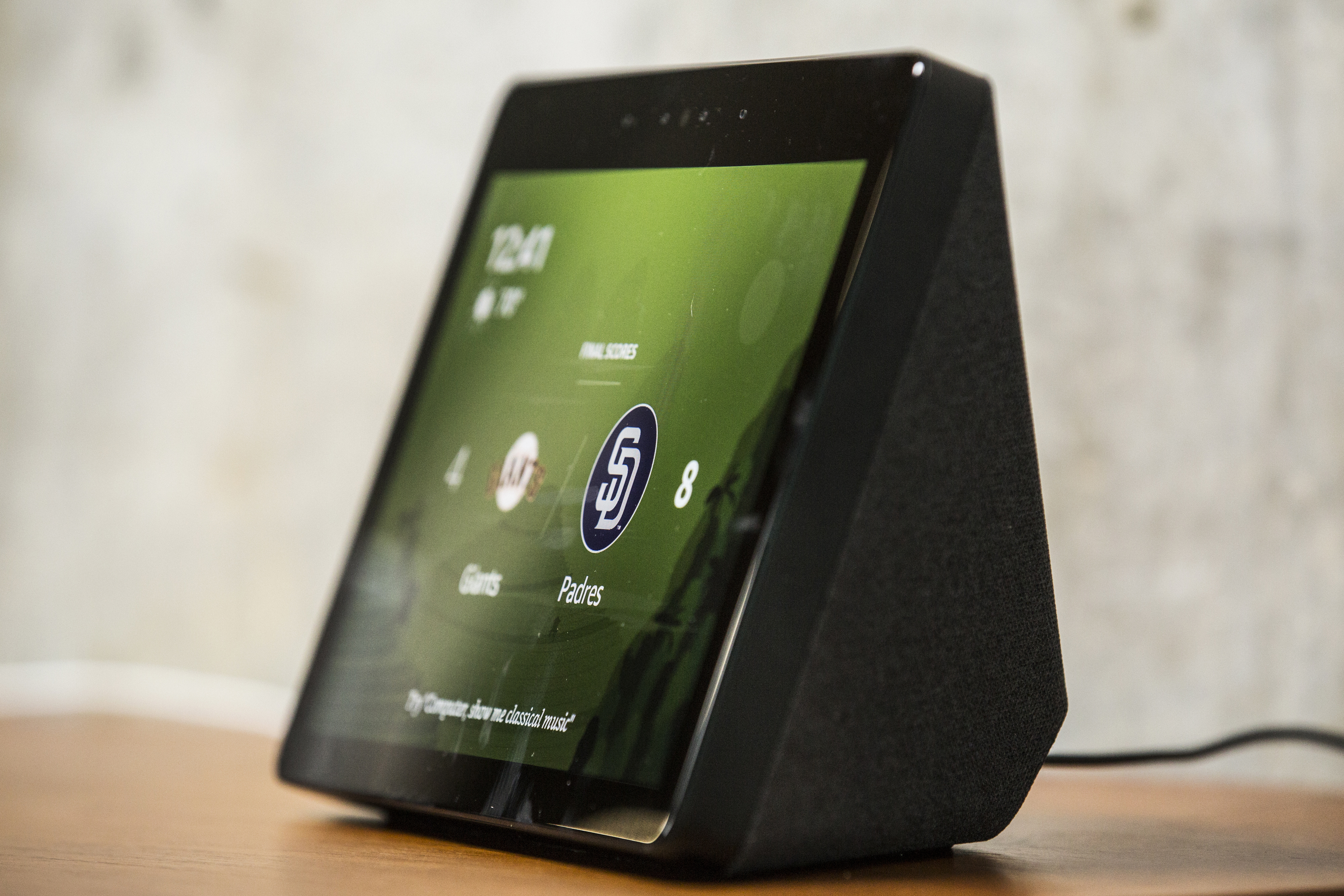
An Amazon Echo Show smart speaker and screen sits on display at the Amazon.com Inc. Spheres headquarters during an unveiling event in Seattle, Washington, U.S., on Thursday, Sept. 20, 2018. Amazon.com Inc. unveiled its vision for smart homes powered by the Alexa voice assistant, with a dizzying array of new gadgets and features for almost every room in the house — from a microwave oven to a security camera and wall clock. Photographer: Andrew Burton/Bloomberg via Getty Images

Connected home technology has dominated the show for several years now, and I don’t expect that to change. Big names like Amazon and Google will likely have a large presence at the show (Amazon made most of its hardware announcements late last year, but Google will no doubt have some on-tap). Expect connected home everything, from locks to ovens to fridges and washing machines to even more bizarre niche products.

Smart displays will no doubt take center stage, as well. We already wrote up one from Lenovo focused on offices — certainly a trend to watch, going forward.

5G and foldables

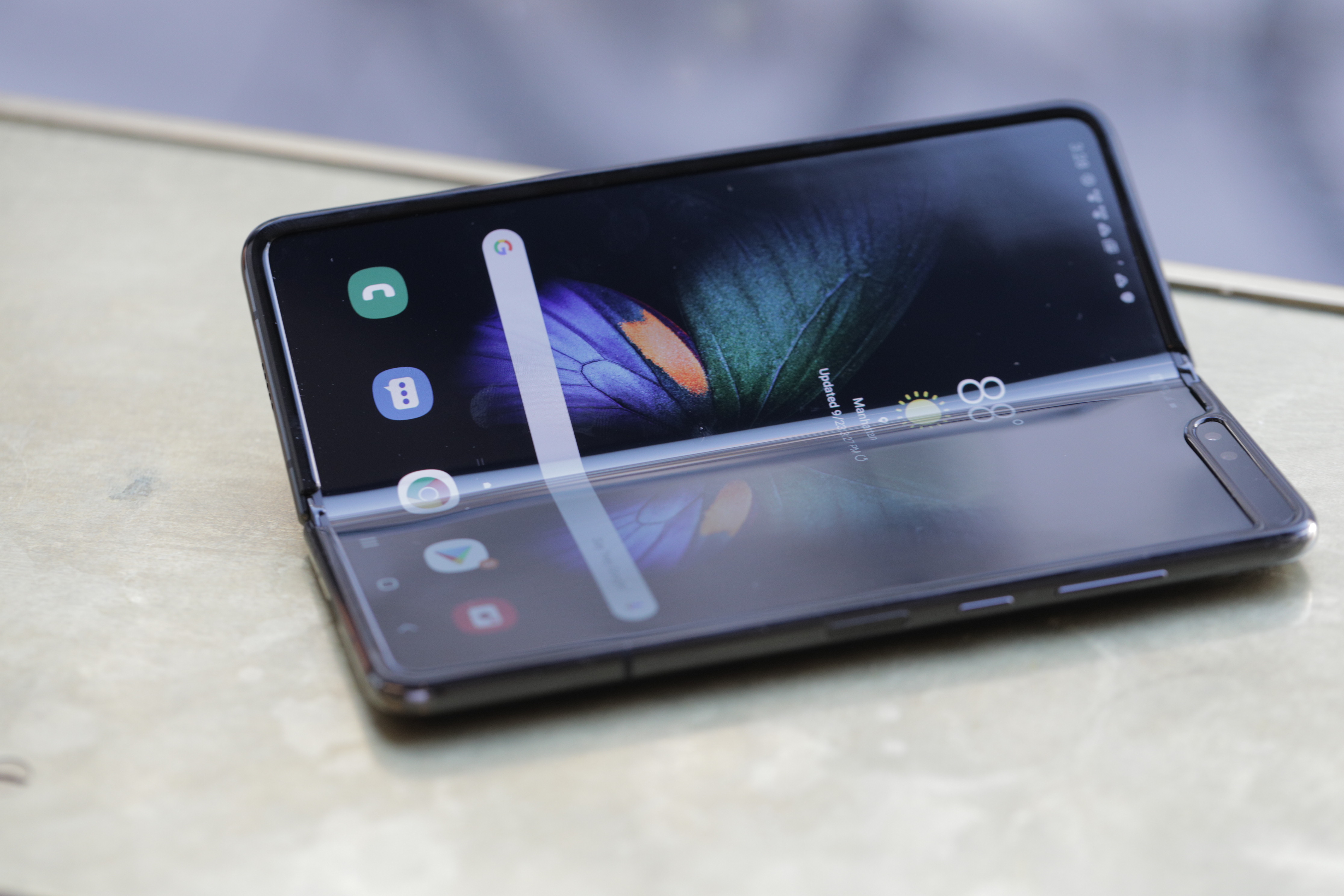
Samsung Galaxy Fold

CES is always a little hit or miss when it comes to mobile. A lot of this can be chalked up to the fact that Mobile World Congress, the biggest smartphone show, is a little over a month later. Add to that the fact that many manufacturers (see: Samsung, Apple, et al.) have opted to hold their own announcements on their own terms.

There will likely be a smattering of foldables on-site, including the already released Samsung Galaxy Fold and the already announced Huawei Mate X — though Huawei’s presence at the U.S.-based show will be…interesting to say the least. I expect most companies will wait until Barcelona for any new announcements on this front.

That said, 2020 is going to be about all things 5G, as carriers finally begin to saturate the market with coverage. Expect a wide range of devices beyond just handsets to sport the next-gen wireless technology.

8K, smart and weird TV form factors

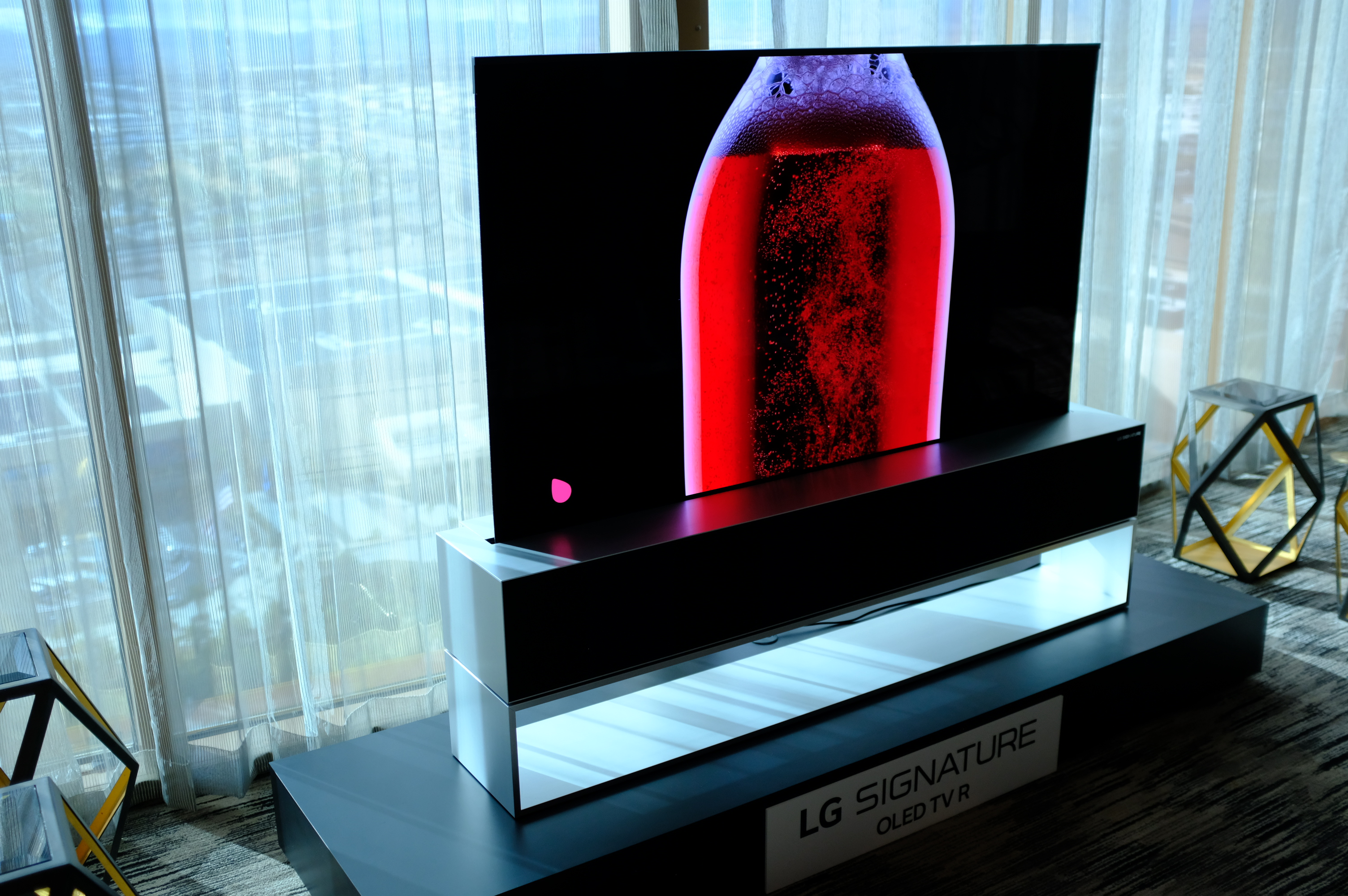
CES has always been a big show for home entertainment. All of the big players will be present, with new ways to get you to spend your hard-earned cash. 8K will be a big theme, even as companies struggle to actually get 8K content to consumers. Last year’s show had some unique form factors, including LG’s rollable display. More of that, this year, though be mindful of the use of words like “concept.”

TVs are another place where assistants like Google and Alexa will be virtual inescapable, along with other factors designed to better integrate them into the smart home.

Sleep tech

The Oura Ring monitors a wearer’s sleep quality

Last year I wrote that “mental well-being took center stage at CES.” More of that this year, as companies look to combat things like screen time with even more technology. Expect that to extend to sleep tech in a major way. From wearables to smart beds, startups are now vying to control your sleep patterns.

Mobility

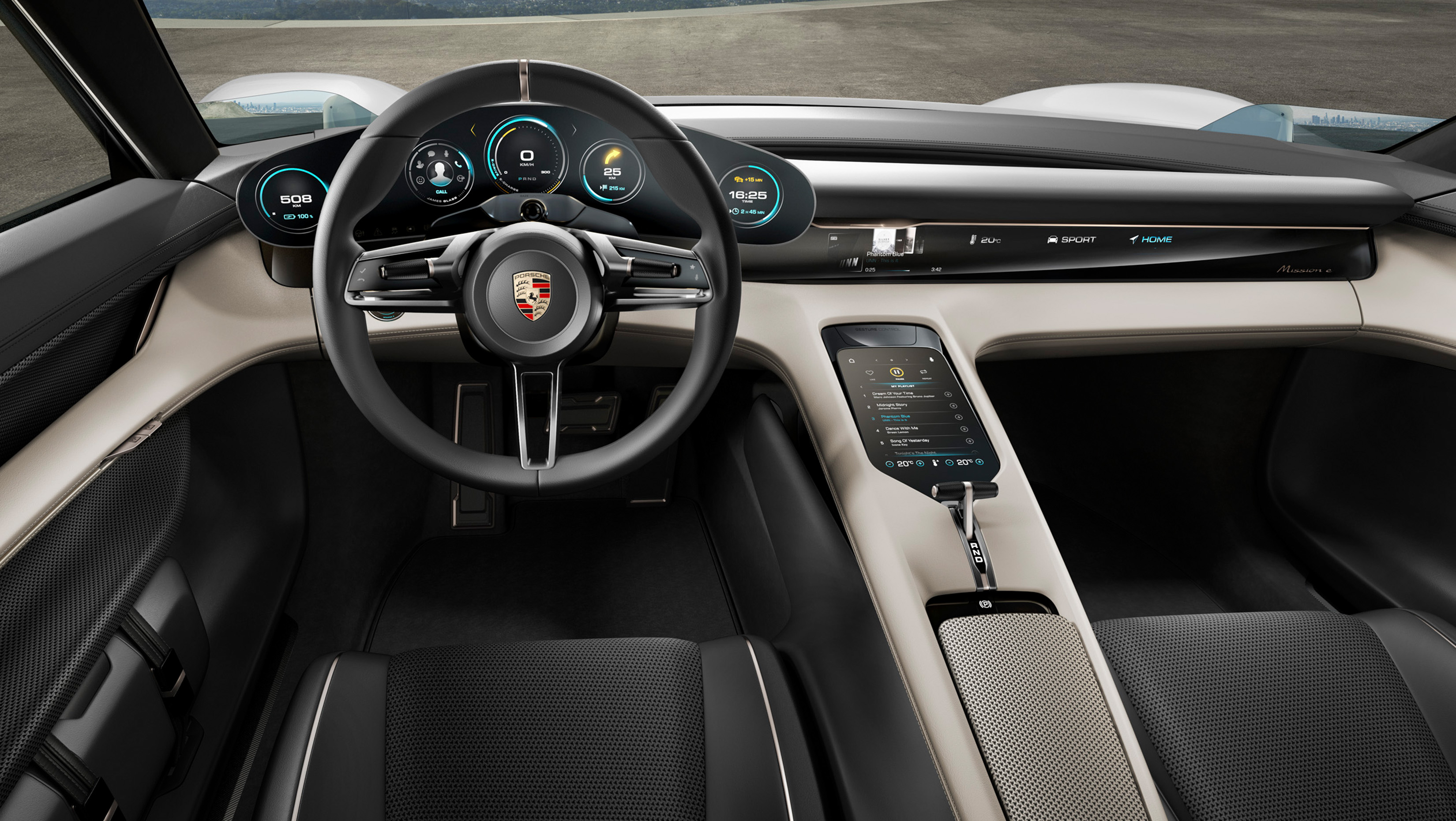
Porsche mission e concept car 2015 porsche ag

The interior of the Mission E concept, which was first shown in September 2015

Two biggies to be on the lookout for here. First is ADAS — that’s Advanced Driver Assistance Systems. In other words, automotive makers taking learnings from autonomous driving to better assistant human drivers. Fully autonomous systems have hit some…roadblocks in recent years, but driver assistant presents both a good opportunity for automakers and a baby step toward self-driving vehicles. And yeah, voice is going to be big here, too. Expect natural voice interaction to play a large role in entertainment systems, as well as other aspects of the driving experience.

Etc.

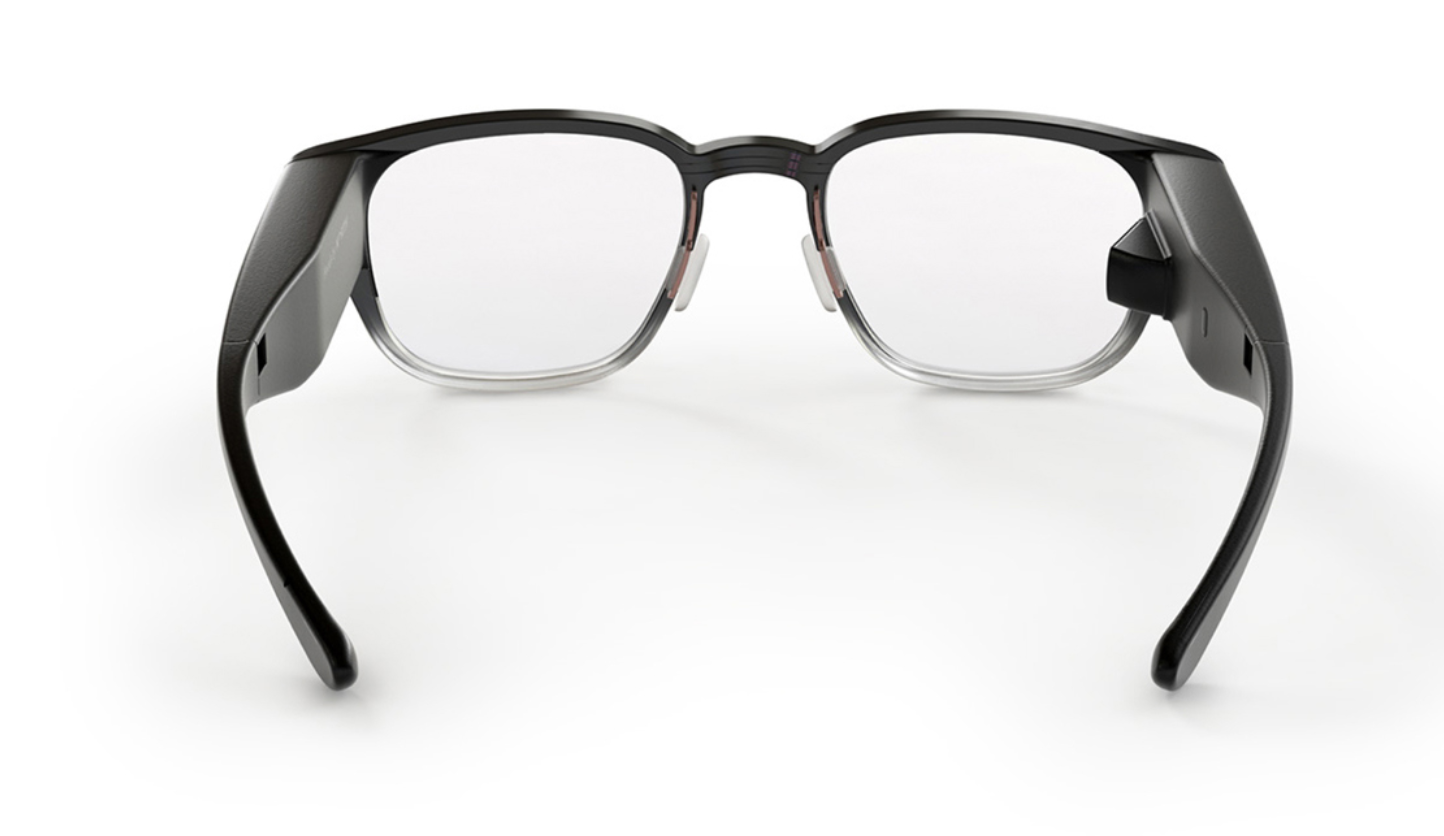
North’s first-generation Focals smart glasses

Wearables will move beyond the exercise band, both into serious health through things like ECG and also to other parts of the body, including heads-up displays. AR (and to a less extent VR) will be a big piece of that puzzle. With Apple and Google making big plays in the category, smaller hardware makers are going to be attempting to stake their claim in the category.

Also be on the lookout for some creative takes on the laptop/tablet hybrid space. Cannabis and sex tech should be super hot-button topics, after CES has attempted to put the kibosh on them in past years. The streaming wars should be playing out on the floor big time, as well.

Oh, and Ivanka Trump will be there for some reason, too. I dunno. It’s CES. Anything can happen. 

CES 2020 coverage - TechCrunch

Adobe CTO says AI will ‘democratize’ creative tools

Adobe CTO Abhay Parasnis sees a shift happening.

A shift in how people share content and who wants to use creative tools. A shift in how users expect these tools to work — especially how much time they take to learn and how quickly they get things done.

I spoke with Parasnis in December to learn more about where Adobe’s products are going and how they’ll get there — even if it means rethinking how it all works today.

“What could we build that makes today’s Photoshop, or today’s Premiere, or today’s Illustrator look irrelevant five years from now?” he asked.

In many cases, that means a lot more artificial intelligence; AI to flatten the learning curve, allowing the user to command apps like Photoshop not only by digging through menus, but by literally telling Photoshop what they want done (as in, with their voice). AI to better understand what the user is doing, helping to eliminate mundane or repetitive tasks. AI to, as Parasnis puts it, “democratize” Adobe’s products.

We’ve seen some hints of this already. Back in November, Adobe announced Photoshop Camera, a free iOS/Android app that repurposes the Photoshop engine into a lightweight but AI-heavy interface that allows for fancy filters and complex effects with minimal effort or learning required of the user. I see it as Adobe’s way of acknowledging (flexing on?) the Snapchats and Instas of the world, saying “oh, don’t worry, we can do that too.”

But the efforts to let AI do more and more of the heavy lifting won’t stop with free apps.

“We think AI has the potential to dramatically reduce the learning curve and make people productive — not at the edges, but 10x, 100x improvement in productivity,” said Parasnis.

“The last decade or two decades of creativity were limited to professionals, people who really were high-end animators, high-end designers… why isn’t it for every student or every consumer that has a story to tell? They shouldn’t be locked out of these powerful tools only because they’re either costly, or they are more complex to learn. We can democratize that by simplifying the workflow.”