This Week in Apps: Apple’s record holiday, Pokémon Go’s staying power, a spying tool gets the boot

Welcome back to This Week in Apps, the Extra Crunch series that recaps the latest OS news, the applications they support and the money that flows through it all.

The app industry is as hot as ever with a record 203 billion downloads in 2019 and $119 billion in consumer spending, according to preliminary year-end data by App Annie. People spend 90% of their mobile time in apps and more time using their mobile devices than watching TV. Apps aren’t just a way to waste idle hours — they’re big business, one that often seems to change overnight.

In this Extra Crunch series, we help you to keep up with the latest news from the world of apps, delivered on a weekly basis.

This week, we’re back to look at the latest headlines from the app world, including Apple’s record holiday 2019 on the App Store, a look at the staying power of AR hit, Pokémon Go, how the app stores handled a UAE spying tool, stalled Instagram growth in the U.S., and more.

The electric scooter wars of 2019

Throughout 2019, a number of mobility companies launched in additional markets, while many pulled out of areas that no longer served them. Meanwhile, transportation startups continued to raise more money even as they laid off employees, a sign that industry consolidation has officially begun.

In October, Bird raised a $275 million Series D round at a $2.5 billion valuation. Prior to that round, Bird raised more than $400 million in funding and reached a valuation of $2 billion last June. Lime also raised more money last year with a $310 million round in February led by Bain Capital. That round valued Lime at $2.4 billion.

Despite Bird’s treasure chest, it laid off up to 5% of its workforce in March, followed by cutting up to a dozen Scoot employees in December. Lyft, similarly, also laid off up to 50 people on its bikes and scooters team in March. So it’s no wonder why Spin employees took the steps to form a union; roughly 40 workers in charge of deployment, charging and repairs are now part of Teamsters Local 665.

At CES, companies slowly start to realize that privacy matters

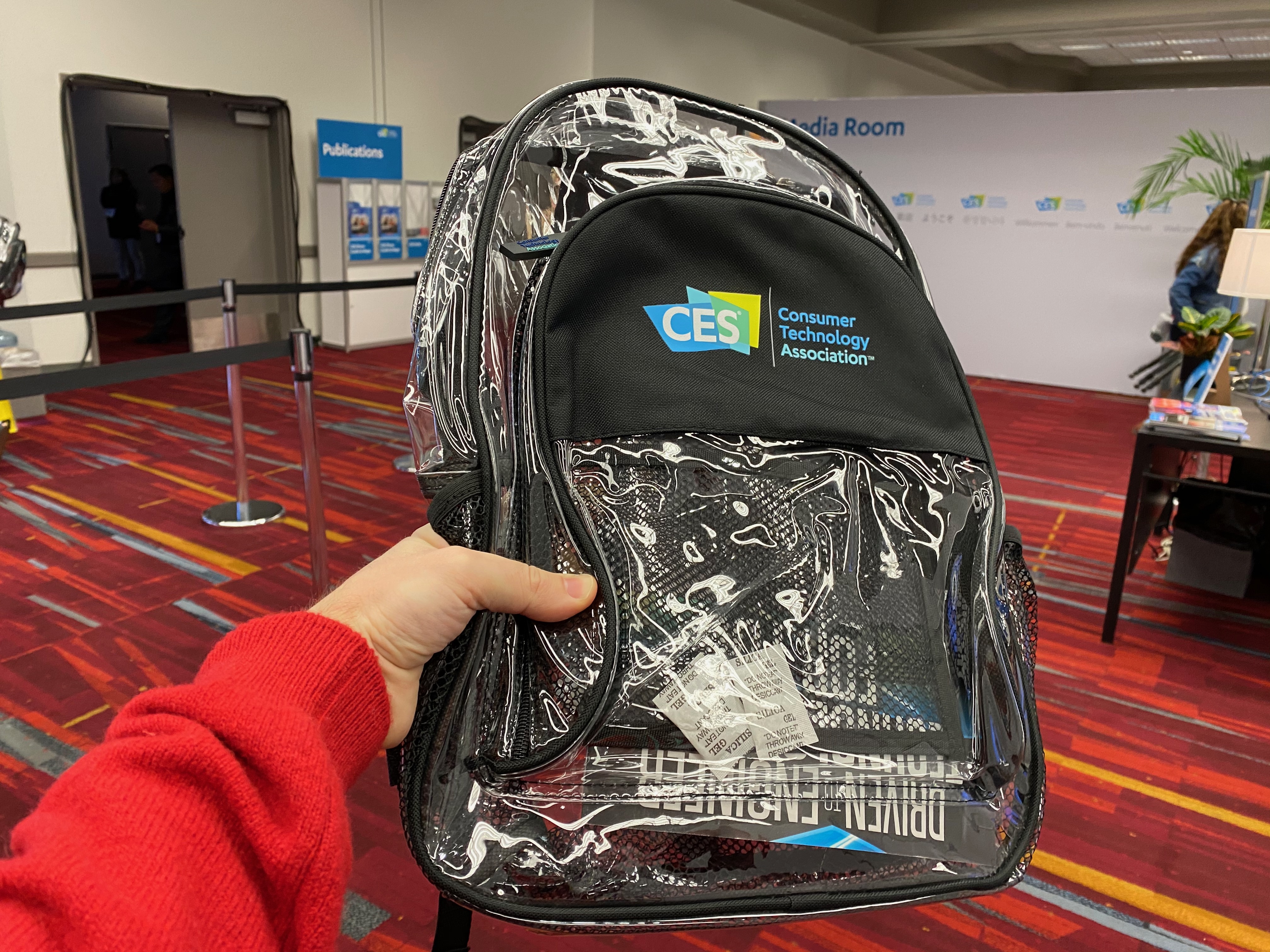
Every year, Consumer Electronics Show attendees receive a branded backpack, but this year’s edition was special; made out of transparent plastic, the bag’s contents were visible without the wearer needing to unzip. It isn’t just a fashion decision. Over the years, security has become more intense and cumbersome, but attendees with transparent backpacks didn’t have to open their bags when entering.

That cheap backpack is a metaphor for an ongoing debate — how many of us are willing to exchange privacy for convenience?

Privacy was on everyone’s mind at this year’s CES in Las Vegas, from CEOs to policymakers, PR agencies and people in charge of programming the panels. For the first time in decades, Apple had a formal presence at the event; Senior Director of Global Privacy Jane Horvath spoke on a panel focused on privacy with other privacy leaders.

Waymo’s Anca Dragan and Ike Robotics CTO Jur van den Berg are coming to TC Sessions: Robotics+AI

The road to “solving” self-driving cars is riddled with challenges, from perception and decision making to figuring out the interaction between humans and robots.

Today we’re announcing that joining us at TC Sessions: Robotics+AI on March 3 at UC Berkeley are two experts who play important roles in the development and deployment of autonomous vehicle technology: Anca Dragan and Jur van den Berg.

Dragan is an assistant professor in UC Berkeley’s electrical engineering and computer sciences department, as well as a senior research scientist and consultant for Waymo, the former Google self-driving project that is now a business under Alphabet. She runs the InterACT Lab at UC Berkeley, which focuses on algorithms for human-robot interaction. Dragan also helped found, and serves on, the steering committee for the Berkeley AI Research Lab, and is co-PI of the Center for Human-Compatible AI.

Last year, Dragan was awarded the Presidential Early Career Award for Scientists and Engineers.

Van den Berg is the co-founder and CTO of Ike Robotics, a self-driving truck startup that last year raised $52 million in a Series A funding round led by Bain Capital  Ventures. Van den Berg has been part of the most important, secretive and even controversial companies in the autonomous vehicle technology industry. He was a senior researcher and developer in Apple’s special projects group, before jumping to self-driving trucks startup Otto. He became a senior autonomy engineer at Uber after the ride-hailing company acquired Otto .

All of this led to Ike, which was founded in 2018 with Nancy Sun and Alden Woodrow, who were also veterans of Apple, Google and Uber Advanced Technologies Group’s self-driving truck program.

TC Sessions: Robotics+AI returns to Berkeley on March 3. Make sure to grab your early-bird tickets today for $275 before prices go up by $100. Students, grab your tickets for just $50 here.

Startups, book a demo table right here and get in front of 1,000+ of Robotics/AI’s best and brightest — each table comes with four attendee tickets.

In the future, everyone will be famous for 15 followers

David Teten
Contributor

David Teten is an advisor to emerging investment managers and a Venture Partner with HOF Capital. He was previously a partner for 8 years with HOF Capital and ff Venture Capital. David writes regularly at teten.com and @dteten.

Many investors — including me — spend most of our day doing the same things people have always done in our job: in my case, due diligence, deal execution, etc. However, being a “microinfluencer” is now part of the job description.

In the future, everyone will be famous for 15 followers. Traditional celebrities or influencers with millions of followers have a large service industry and tech stack to serve their needs. But the standard toolkit of a microinfluencer is still evolving.

The challenge is that my time and money budget for “influencing”–content creation and marketing– is minimal. Also, since I’m not trying to be a full-time marketer, I can’t use some of the standard celebrity techniques. I can’t pick fights on Twitter; date other celebrities; or swear a lot at conferences. These vectors work for a lot of celebrities and for some businesspeople and politicians, but I’m uncomfortable with them and it will impede my ability to do the rest of my job. Plus, my wife doesn’t let me date celebrities.

Amazon fires employees for leaking customer email addresses and phone numbers

Amazon has fired a number of employees after they shared customer email address and phone numbers with a third-party “in violation of our policies.”

The email to customers sent Friday afternoon, seen by TechCrunch, said an employee was “terminated” for sharing the data, and that the company is supporting law enforcement in their prosecution.

Amazon confirmed the incident in an email to TechCrunch. A spokesperson said a number of employees were fired. But little else is known about the employees, when the information was shared and with whom, and how many customers are affected.

“No other information related to your account was shared. This is not a result of anything you have done, and there is no need for you to take any action,” the email read to customers.

An email to Amazon customers, saying an employee was fired. Amazon said multiple employees were fired.

It’s not the first time it has happened. Amazon was just as vague about a similar breach of email addresses last year, in which Amazon declined to comment further.

In a separate incident, Amazon said this week that it fired four employees at Ring, one of the retail giant’s smart camera and door bell subsidiaries. Ring said it fired the employees for improperly viewing video footage from customer cameras.

Updated headline to clarify that an unknown number of employees were fired.


A billion medical images are exposed online, as doctors ignore warnings

This story was reported in partnership with health news site The Mighty.

Every day, millions of new medical images containing the personal health information of patients are spilling out onto the internet.

Hundreds of hospitals, medical offices and imaging centers are running insecure storage systems, allowing anyone with an internet connection and free-to-download software to access over 1 billion medical images of patients across the world.

About half of all the exposed images, which include X-rays, ultrasounds and CT scans, belong to patients in the United States.

Yet despite warnings from security researchers who have spent weeks alerting hospitals and doctors’ offices to the problem, many have ignored their warnings and continue to expose their patients’ private health information.

“It seems to get worse every day,” said Dirk Schrader, who led the research at Germany-based security firm Greenbone Networks, which has been monitoring the number of exposed servers for the past year.

The problem is well-documented. Greenbone found 24 million patient exams storing more than 720 million medical images in September, which first unearthed the scale of the problem as reported by ProPublica. Two months later, the number of exposed servers had increased by more than half, to 35 million patient exams, exposing 1.19 billion scans and representing a considerable violation of patient privacy.

But the problem shows little sign of abating. “The amount of data exposed is still rising, even considering the amount of data taken offline due to our disclosures,” said Schrader.

If doctors fail to take action, he said the number of exposed medical images will hit a new high “in no time.”

Over a billion medical images remain exposed. Experts say the number is getting worse, not better. (Image: supplied)

Researchers say the problem is caused by a common weakness found on the servers used by hospitals, doctors’ offices and radiology centers to store patient medical images.

A decades-old file format and industry standard known as DICOM was designed to make it easier for medical practitioners to store medical images in a single file and share them with other medical practices. DICOM images can be viewed using any of the free-to-use apps, as would any radiologist. DICOM images are typically stored in a picture archiving and communications system, known as a PACS server, allowing for easy storage and sharing. But many doctors’ offices disregard security best practices and connect their PACS server directly to the internet without a password.

These unprotected servers not only expose medical imaging but also patient personal health information. Many patient scans include cover sheets baked into the DICOM file, including the patient’s name, date of birth and sensitive information about their diagnoses. In some cases, hospitals use a patient’s Social Security number to identify patients in these systems.

Lucas Lundgren, a Sweden-based security researcher, spent part of last year looking at the extent of exposed medical image data. In November, he demonstrated to TechCrunch how easy it was for anyone to view medical data from exposed servers. In just a few minutes, he found one of the largest hospitals in Los Angeles exposing tens of thousands of patients’ scans dating back several years. The server was later secured.

Some of the largest hospitals and imaging centers in the United States are the biggest culprits of exposing medical data. Schrader said the exposed data puts patients at risk of becoming “perfect victims for medical insurance fraud.”

Yet, patients are unaware that their data could be exposed on the internet for anyone to find.

The Mighty, which examined the effect on patients, found exposed medical information puts patients at a greater risk of insurance fraud and identity theft. Exposed data can also erode the relationship between patients and their doctors, leading to patients becoming less willing to share potentially pertinent information.

As part of our investigation, we found a number of U.S. imaging centers storing decades of patient scans.

One patient, whose information was exposed following a visit to an emergency room in Florida last year, described her exposed medical data as “scary” and “uncomfortable.” Another with a chronic illness had regular scans at a hospital in California over a period of 30 years. And one unprotected server at one of the largest military hospitals in the United States exposed the names of military personnel and medical images.

But even in cases of patients with only one or a handful of medical images, the exposed data can be used to infer a picture of a person’s health, including illnesses and injuries.

Many patient scans include cover sheets containing personal health information baked into the file. (Image: supplied)

In an effort to get the servers secured, Greenbone contacted more than a hundred organizations last month about their exposed servers. Many of the smaller organizations subsequently secured their systems, resulting in a small drop in the overall number of exposed images. But when the security company contacted the 10 largest organizations, which accounted for about one-in-five of all exposed medical images, Schrader said there was “no response at all.”

Greenbone privately shared names of the organizations to allow TechCrunch to follow up with each medical office, including a health provider with three hospitals in New York, a radiology company in Florida with a dozen locations and a major California-based hospital. (We’re not naming the affected organizations to limit the risk of exposing patient data.)

Only one organization secured its servers. Northeast Radiology, a partner of Alliance Radiology, had the largest cache of exposed medical data in the U.S., according to Greenbone’s data, with more than 61 million images on about 1.2 million patients across its five offices. The server was secured only after TechCrunch followed up a month after Greenbone first warned the organization of the exposure.

Alliance spokesperson Tracy Weise declined to comment.

Schrader said if the remaining affected organizations took their exposed systems off the internet, almost 600 million images would “disappear” from the internet.

Experts who have warned about exposed servers for years say medical practices have few excuses. Yisroel Mirsky, a security researcher who has studied security vulnerabilities in medical equipment, said last year that security features set out by the standards body that created and maintains the DICOM standard have “largely been ignored” by the device manufacturers.

Schrader did not lay blame on the device manufacturers. Instead, he said it was “pure negligence” that doctor’s offices failed to properly configure and secure their servers.

Lucia Savage, a former senior privacy official at the U.S. Department of Health and Human Services, said more has to be done to improve security across the healthcare industry — especially at the level of smaller organizations that lack resources.

“If the data is personal health information, it is required to be secured from unauthorized access, which includes finding it on the internet,” said Savage. “There is an equal obligation to lock the file room that contains your paper medical records as there is to secure digital health information,” she said.

Medical records and personal health data are highly protected under U.S. law. The Health Insurance Portability and Accountability Act (HIPAA) created the “security rule,” which included technical and physical safeguards designed to protect electronic personal health information by ensuring the data is kept private and secure. The law also holds healthcare providers accountable for any security lapses. Running afoul of the law can lead to severe penalties.

“As Health and Human Services aggressively pushes to permit a wider range of parties to have access to the sensitive health information of American patients without traditional privacy protections attaching to that information, HHS’s inattention to this particular incident becomes even more troubling.”
Sen. Mark Warner (D-VA)

The government last year fined one Tennessee-based medical imaging company $3 million for inadvertently exposing a server containing over 300,000 protected patient data.

Deven McGraw, who was the top privacy official in the Health and Human Services’ enforcement arm — the Office of Civil Rights, said if security assistance was more available to smaller providers, the government could focus its enforcement efforts on providers that willfully ignore their security obligations.

“Government enforcement is important, as is guidance and support for lower resourced providers and easy-to-deploy solutions that are built into the technology,” said McGraw. “It may be too big of a problem for any single law enforcement agency to truly put a dent in.”

Since the scale of exposed medical servers was first revealed in September, Sen. Mark Warner (D-VA) called for answers from Health and Human Services. Warner acknowledged that the number of U.S.-based exposed servers had decreased — 16 servers storing 31 million images — but told TechCrunch that “more needs to be done.”

“To my knowledge, Health and Human Services has done nothing about it,” Warner told TechCrunch. “As Health and Human Services aggressively pushes to permit a wider range of parties to have access to the sensitive health information of American patients without traditional privacy protections attached to that information, HHS’s inattention to this particular incident becomes even more troubling,” he added.

Health and Human Services’ Office for Civil Rights said it does not comment on individual cases but defended its enforcement actions.

“OCR has taken enforcement action in the past to address violations concerning unprotected storage servers, and continues robust enforcement of the HIPAA rules,” said the spokesperson.

“We will continue doing our best to improve the global situation of unprotected systems,” said Schrader. But he said there was not much more he can do beyond warn organizations of their exposed servers.

“Then it’s a question for the regulators,” he said.

Cross-border investments aren’t dead, they’re getting smarter

Yohei Nakajima is an investor at Scrum Ventures, an early-stage venture capital fund based in San Francisco, and Senior Vice President at Scrum Studio, helping global corporations connect and work with innovative startups.

In recent years, the venture capital and startup worlds have seen a significant shift towards globalization. More and more startups are going global and breaking borders, such as payments giant Stripe and their recent expansion to Latin America, e-scooter startup Bird’s massive European expansion, or fashion subscription service (an investment in our portfolio) Le Tote’s entrance into China.

Likewise, more VC Funds are spanning geographies in both investment focus and the limited partners, or LPs, who fuel those investments. While Silicon Valley is very much seen as an epicenter for tech — it is no longer the sole proprietor for innovation — with new technology hubs rising across the world from Israel to the UK to Latin America and beyond.

Yet, many have commented on a shift or slowdown of globalization, or “slobalization,” in recent months. Whether it be from the current political climate or other factors, it’s been said that there’s been a marked decrease in cross-border investments of late — leading to the question: Is the world still interested in U.S. startups?
To answer this and better understand the hunger from foreign investors in participating in U.S. funding rounds, both from a geographic and stage perspective, I looked at Crunchbase data in U.S. seed and VC rounds between the years of 2009 to 2018. The data shows that cross-border investments are far from dead — but they are getting smarter and perhaps even more global with the rise of investments from Asia.

Instagram adds Boomerang effects as TikTok looms

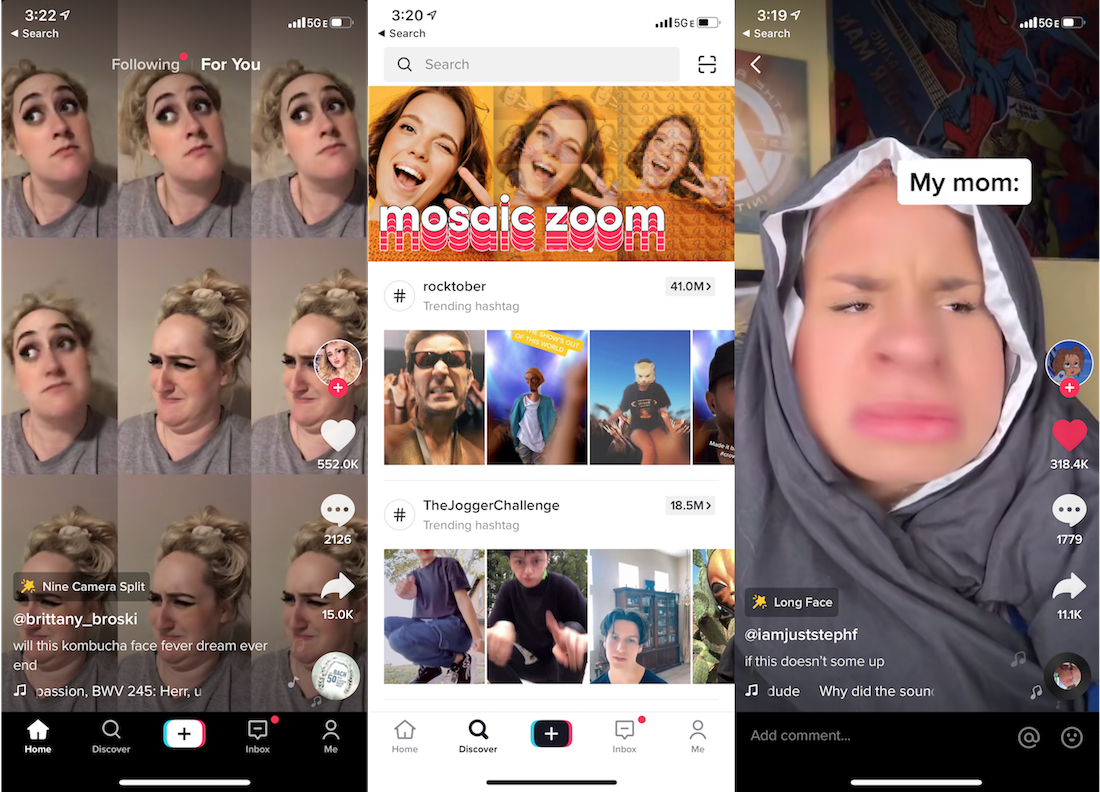
TikTok has spawned countless memes formats from its creative effects, challenging Instagram for the filtered video crown. Now nearly five years after launching Boomerang, Instagram’s back-and-forth video loop maker is finally getting a big update to its own editing options. Users around the globe can now add SlowMo, “Echo” blurring, and “Duo” rapid rewind special effects to their Boomerangs, as well as trim their length. This is the biggest upgrade yet for one of mobile’s most popular video creation tools.

The effects could help keep Instagram interesting. After so many years of Boomerangs, many viewers simply skip past them in Stories after the first loop since they’re so consistent. The extra visual flare of the new effects could keep people’s attention for a few more seconds and unlock new forms of comedy. That’s critical as Instagram tries to compete with TikTok, which has tons of special effects that have spawned their own meme formats.

Starting today, people on Instagram will be able to share new SloMo, Echo and Duo Boomerang modes on Instagram” a Facebook company spokesperson tells TechCrunch. “Your Instagram camera gives you ways to express yourself and easily share what you’re doing, thinking or feeling with your friends. Boomerang is one of the most beloved camera formats and we’re excited to expand the creative ways that you can use Boomerang to turn everyday moments into something fun and unexpected.”

The new Boomerang tools can be found by swiping right on Instagram to open the Stories composer, and then swiping left at the bottom of the screen’s shutter selector. After shooting a Boomerang, an infinity symbol button atop the screen reveals the alternate effects and video trimmer. Mobile researcher Jane Manchun Wong spotted Instagram prototyping new Boomerang filters and the trimmer last year.

Typically, Boomerang captures one second of silent video which is then played forward and then in reverse three times to create a six second loop that can be shared or downloaded as a video. Here are the new effects you can add plus how Instagram described them to me in a statement:

  • SlowMo – Reduces Boomerangs to half-speed so they play for two seconds in each direction instead of one second. “Slows down your Boomerang to capture each detail”
  • Echo – Adds a motion blur effect so a translucent trail appears behind anything moving, almost like you’re drunk or tripping. “Creates a double vision effect.”
  • Duo – Rapidly rewinds the clip to the beginning with a glitchy, digitized look. “Both speeds up and slows down your Boomerang, adding a texturized effect.”
  • Trimming – Shorten your Boomerang with similar controls to iPhone’s camera roll or the Instagram feed video composer. “Edit the length of your Boomerang, and when it starts or ends.”

The effects aren’t entirely original. Snapchat has offered slow-motion and fast-foward video effects since just days after the original launch of Boomerang back in 2015. TikTok meanwhile provides several motion blur filters and pixelated transitions. But since these are all available with traditional video, unlike on Instagram where they’re confined to Boomerangs, there’s more creative flexibility to use the effects to hide cuts between takes or play with people’s voices.

That’s won TikTok a plethora of ingenius memes that rely on these tools. Users high-five themselves using an Echo-esque feature, highlight action-packed moments or loud sounds with Duo-style glitch cuts, and conjure an army of doppelgangers behind them with infinity clones effect. Instagram Stories has instead focused on augmented reality face filters and classier tools like layout.

TikTok Screenshots

Hopefully we’ll see Instagram’s new editing features brought over to its main Stories and video composers. Video trimming would be especially helpful since a boring start to a Story can quickly lead viewers to skip it.

Instagram has had years of domination in the social video space. But with Snapchat finally growing again and TikTok becoming a global phenomenon, Instagram must once again fight to maintain its superiority. Now approaching 10 years old, it’s at risk of becoming stale if it can’t keep giving people ways to make hastily shot phone content compelling.

CES takes half-baked stance on cannabis

A cannabis company won a CES award for 2020. Called Keep, the desktop storage device features biometric security to secure cannabis products, and looks good while doing it. The CTA gave them an Innovations Award Nominee in October and then weeks later told the company they were unable to use the word “cannabis” when exhibiting.

Keep Labs decided to stay home and not exhibit at the massive Consumer Electronics Show, potentially missing out on distribution deals, funding and increased brand awareness.

Vaporizers, cannabis and tobacco alike have long been found on the CES show floor. They’re often hidden under different names, like aromatherapy devices. This year is different. They’re gone from the show floor. I spent hours in the halls of the Las Vegas Convention Center and the Sands Expo center. The vapes are missing from the 2020 show.

That could change, according to a spokesperson for CES. The trade group behind the show is evaluating if cannabis has a place at CES.

The Consumer Technology Association (CTA) runs CES. It’s the largest such trade event in the world and attended by some 200,000 people. After speaking with a CTA spokesperson, it’s clear the trade organization knows its under close scrutiny and yet it’s still willing to blur lines to allow some companies ancillarily to cannabis to exhibit. That is, if they don’t talk about the device’s true intention.

In the past, sex tech was explicitly banned, so companies like OhMiBod exhibited under Health and Wellness. Vaporizers could be categorized as aromatherapy devices. Emails obtained by TechCrunch show the CTA has told cannabis-adjacent companies it can exhibit if cannabis is not mentioned on the show floor.

Keep Labs submitted its cannabis storage device exhibit under the “Home Storage” category. Upon its acceptance, the CTA nominated the device to the coveted Innovation Award and told the company it could present, as long as it doesn’t mention cannabis. You see, to the CTA, Keep Labs’ product is acceptable as it could have another purpose other than storing cannabis gummies; it could, in theory, be used to store candy gummies. Keep Labs told TechCrunch that avoiding saying “cannabis” goes against the company’s best interest, so it decided to skip the show.

Canopy Growth operates several prominent brands in the cannabis space. Like Keep Labs, it feels CES is not the right place to exhibit its wares if true intentions need to be hidden.

The Canadian company announced a new line of vape pens and cartridges in late 2019. With smart features and an app component, it would be perfect fodder among CES’ high-tech exhibits. The company also owns Storz-Bickel, a vaporizer company with historic roots that could exhibit in this CES gray area.

Canopy Growth acknowledges it’s banned from the show while some smaller competitors are able to exhibit by skirting the rules.

Canopy Growth CTO Peter Popplewell tells TechCrunch he still attends CES. It’s essential for him and Canopy Growth’s brands, even if the company isn’t exhibiting. For him, as the CTO, he’s meeting with component makers and suppliers.

“As the largest producer of legally produced medical and recreational cannabis and hemp products, and now a hardware manufacturer, Canopy Growth is constantly looking for ways to provide next-generation innovation to our customers and enhance their cannabis experience,” Popplewell told TechCrunch. “Within its portfolio of brands, Canopy has brought to market five different vaporizer products this fiscal year and our R&D pipeline is full of exciting developments.

“CES is the tradeshow where I am able to meet with a host of component manufacturers that help us develop safety features on our devices — such as accurate temperature control and locking the devices to address the unique needs and concerns of cannabis users,” Popplewell said.

Pax is one of the largest cannabis hardware companies and does not exhibit at CES. To be clear, Pax still has a presence in Las Vegas during CES, even though it’s not at the show itself. Like many companies at CES, Pax holds meetings and attends third-party events during CES. This lets the company bypass the CTA’s rules and still access CES attendees.

Earlier this week Pax released its Era Pro vaporizer that features PodID, a clever feature that brings a lot of information to the user.

Pax VP of Policy Jeff Brown, tells TechCrunch he’s puzzled by the CTA’s stance.

“CTA’s stubborn refusal to allow cannabis companies on the show floor is both comic and puzzling,” Brown said. “Cannabis is fully legal in Las Vegas, and there are multiple dispensaries within a mile of the convention center. Inside, companies offer an open bar in their booth, and hundreds walk the floor with a drink in hand.

“Nobody is asking to consume at CES,” Brown added. “There’s a lot of interesting technology being developed to take the guesswork out of weed. There are vaporizers with apps that tell consumers what they’re smoking, they detail the chemical attributes, and provide controls to measure each dose. There’s even a numeric lock to make the vaporizer unusable by children.”

As he told TechCrunch, this technology is legal, and cannabis itself is legal in 33 states and Canada.

“Unfortunately, you’re not going to learn about it at CES,” Brown said.

Right now, even in 2020, there are ways around the CTA’s ban. In the case of Keep Labs, the CTA granted the company permission to exhibit — as long as cannabis wasn’t mentioned. The company decided that to exhibit without saying “cannabis” wouldn’t do the brand justice. They don’t want to shy away from cannabis.

This is the puzzling part. The CTA will let companies exhibit, as long as their true intentions are hidden. The CTA used to do the same with sex toys, too.

In the run-up to the 2019 show, the CTA awarded sextech maker Lori DiCarlo with an Innovations Award. It later rescinded the award after the trade organization decided it was too sexy for CES. Fallout followed and expanded as the show opened, and sextech was found throughout the show floor, despite the ban affecting Lori DiCarlo. As with cannabis, the CTA allowed sextech under the guise of as “personal massagers” alongside therapy and sports massagers in the Health and Wellness category.

The CTA introduced the Sex Tech category for the 2020 show on a trial basis. I’m told the category will likely live on to future shows, too. This is how the CTA operates, the CTA told TechCrunch. It trials a category, and then if it works out, the category is rolled into the show.

“For us, cannabis is a tough decision,” a CTA spokesperson told TechCrunch. “It’s complicated, and the laws are changing quickly. We are watching closely, and I would not be surprised if, at some point in the future, it was part of the show.”

The CTA tells TechCrunch it continually looks at the regulatory environment, pointing out that cannabis is still an illicit substance at the federal level in the United States. The CTA however acknowledges cannabis is legal in the state of Nevada.

Nevada is one of the 33 states in the United States where cannabis is legal in some form. In Nevada, it’s legal to consume for recreational uses. The state law allows for cannabis consumption in a private residence, making it illegal to consume in a hotel, public space or convention center. There are dozens of cannabis dispensaries within miles of CES.

Cortney Smith’s vaporizer company DaVinci is based in Las Vegas and has exhibited at CES a handful of times. As he tells TechCrunch, the company didn’t have a problem presenting on the show floor, but “didn’t paste pot leaves all over.”

Smith explained that he feels the CTA’s radar has grown more sensitive in part by the vaporizer scare in 2019.

“In the past, [cannabis products weren’t] challenged,” Smith said. “So when we were there, as a cannabis vaporizer, we did not get scrutinized because [the CTA] was not on alert.”

DaVinci isn’t exhibiting this year despite recently launching a new product. The dry herb DaVinci IQ2 just hit the market and is among a new crop of vaporizers designed to bring more transparency to cannabis use. It uses on-device processing to track and record active compounds produced per draw. The sleek device and smartphone app would look at home among the latest gadgets found at CES.

As he puts it, if CES doesn’t want the business, there’s an opportunity for other trade shows to pick up cannabis products and run with it.

“CES has competition,” Smith said. “There are other consumer electronics shows around the world that would love to steal their thunder and star power. And the chance [the CTA] takes when they limit their innovation — like no sex toys or no cannabis — it gives the opportunity to some other electronics show to welcome adult toys or adult devices. So I guess they’re willing to make this compromise to play it safe.”

CES 2020 coverage - TechCrunch

Meet MarsCat, a robot cat with lots of love to give and room to grow

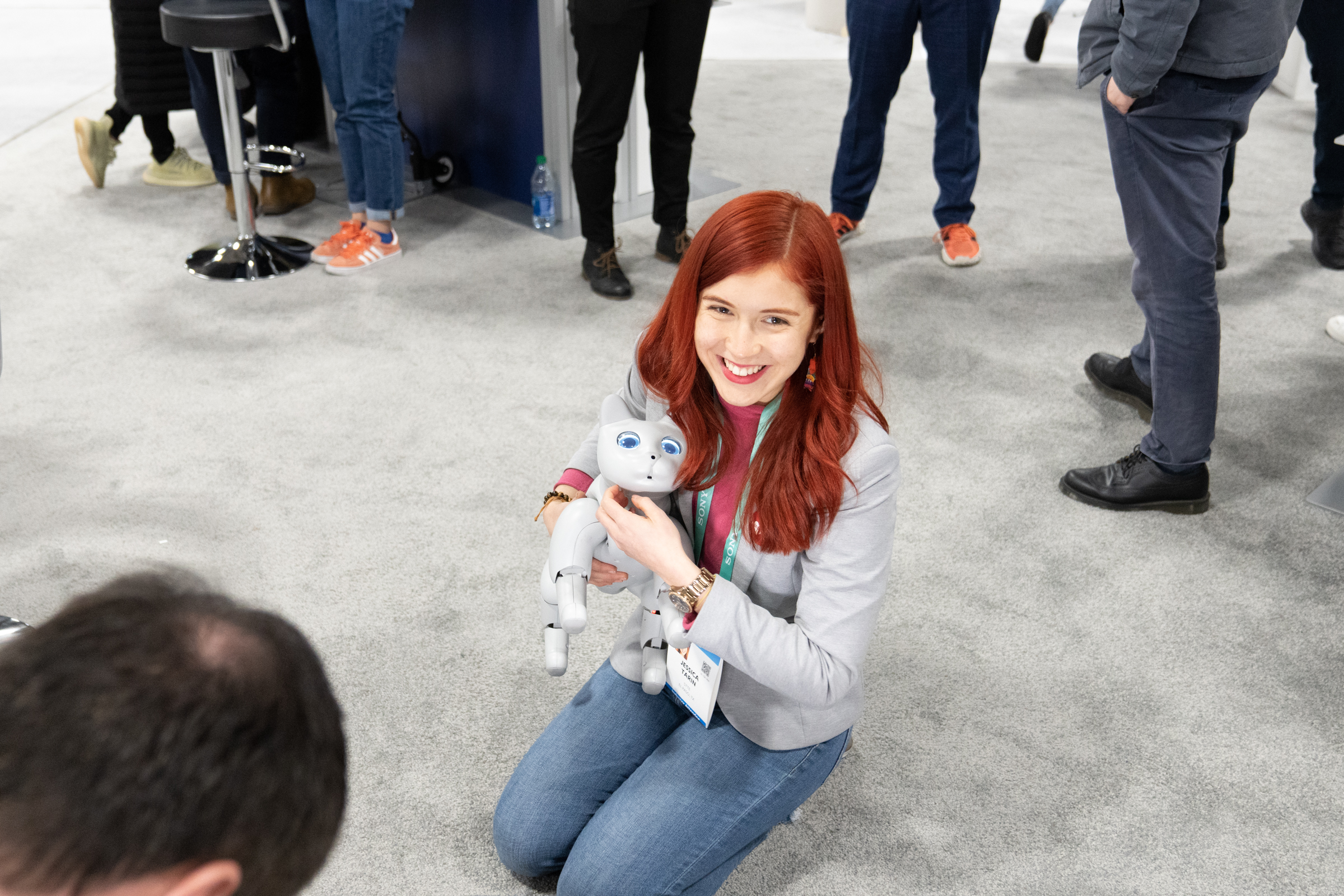
At CES 2020, one of the more well-represented gadget categories was definitely consumer robots – but none was more adorable than MarsCat, a new robo-pet from industrial robot startup Elephant Robotics. This robot pet is a fully autonomous companion that can respond to touch, voice and even play with toys, and it’s hard not to love the thing after spending even just a brief amount of time with it.

MarsCat’s pedigree is a bit unusual, since Elephant Robotics is focused on building what’s known as ‘cobots,’ or industrial robots that are designed to work alongside humans in settings like factories or assembly plants. Elephant, which was founded in 2016, already produces three lines of these collaborative robots and has sold them to client companies around the world, including in Korea, the U.S., Germany and more.

This new product is designed for the home, however, not the factory or the lab. MarsCat is the startup’s first consumer product, but it obviously benefits immensely from the company’s expertise and experience in their industrial robotics business. With its highly articulated legs, tail and head, it can sit up, walk play and watch your movements, all working autonomously without any additional input required.

While MarsCat provides that kind of functionality out of the box, it’s also customizable and programmable by the user. Inside, it’s powered by a Raspberry Pi, and it ships with MarsCat SDK, which is an open software development library that allows you to fully control and program all of the robots functions. This makes it an interesting gadget for STEM education and research, too.

MarsCat is currently up for crowdfunding on Kickstarter, with Elephant having already surpassed its goal of $20,000 and on track to raise at least $100,000 more than that target. Elephant Robotics CEO and co-founder Joey Song told me that it actually plans to ship its first batch of production MarsCats to users in March, too, so backers shouldn’t have to wait long to enjoy their new robotic pet.

There are other robotic pets available on the market, but Song thinks that MarsCat has a unique blend of advanced features at a price point that’s currently unmatched by existing options. The robot can respond to a range of voice commands, and will also evolve its personality over time based on how you interact with it: Talk to it a lot, and it’ll also become ‘chatty;’ play with it frequently and it’ll be a playful kitty. That, combined with the open platform, is a lot to offer for the asking backer price of just $699 to start.

Sony’s Aibo, the canine equivalent of MarsCat, retails for $2,899 in the U.S., so it’s a bargain when considered in that light. And unlike the real thing, MarsCat definitely doesn’t shed, so it’s got that going for it, too.

CES 2020 coverage - TechCrunch

SiriusXM and Pandora test bundle discounts

It’s been less than a year since SiriusXM completed its $3.5 billion acquisition of streaming music service Pandora, but the two companies have already leveraged their collective assets to boost each other’s services. For example, SiriusXM talk shows arrived on Pandora as podcasts, while a Pandora-powered station now streams popular songs for both sets of listeners. Now, the company is considering tying the two services together in a different way — by packaging them as a discounted bundle.

What that bundle deal will look like isn’t yet known.

Pandora today offers four tiers of service: a free ad-supported version, the $4.99/month Pandora Plus service, and the $9.99/month Spotify rival Pandora Premium. It also offers a multi-user Pandora Premium Family plan for $14.99/month.

SiriusXM, meanwhile, also offers its own set of packages, with the most popular being a $5/month plan for the car and home (via an Echo device), an $8.25/month plan for in and out of the car, and an $8/month plan for streaming outside the car only.

Before rolling out a bundle deal, the company wanted to know what sorts of package price points and features customers would respond to best.

The company confirmed it’s been testing different cross-promotions, including those aimed at both Pandora and SiriusXM subscribers that offered discounts if you sign up for the other service. Essentially, the company wants to know what price point makes sense for consumers when it comes to subscribing to both services.

Today, these cross-promotions are aimed only at people who already subscribe to one or the other service, so it’s not really being marketed as a “bundle” deal yet. It’s just a promotion, if you want to get technical about the terminology.

“We would email our Pandora listener base or the SiriusXM listener base — we would test it with different user bases as a promotion,” Chris Phillips, SiriusXM/Pandora Chief Product Officer & Head of Technology, told TechCrunch. “We actually have a formal study going on to do it,” he said.

SiriusXM and Pandora haven’t yet settled on what a potential bundle deal will look like, but it aims to make a decision based on its tests this year.

“The power of the Sirius brand and power of the Pandora brand are very distinct. And people see unique value in the two,” Phillips added.

One challenge, however, is that people don’t understand that SiriusXM and Pandora are now one company, so the promotional emails confused them.

I'm still genuinely confused by @SIRIUSXM trying to bundle a Pandora subscription into my plan with them. Isn't Pandora a direct competitor? Can someone explain? pic.twitter.com/srbuW74DqI

— SoTrumpie (@SoTrumpie) November 22, 2019

Similarly, people often find the language around “Pandora-powered” stations in SiriusXM confusing, as well.

@SIRIUSXM I'm thinking about subscribing. What does it mean "Personalized stations powered by Pandora"? Does it include a subscription to @pandoramusic? Thanks!

— Aaron (@AaronBoehle87) October 5, 2019

One potential solution is to pick one consumer-facing brand and merge assets, including both programming and apps.

When asked if the two apps may merge into one in the future, Phillips said the company is “looking at what those opportunities might be.”

In the meantime, the company continues to explore how it can enhance both products using assets it has from the respective products.

“We are cross-pollinating content and features…into the distinct [user interfaces],” he said.

A recent example of this includes a new button within the SiriusXM app that allows you to launch a Pandora station based on what you’re currently streaming. And this new Pandora-powered station can then play right in the SiriusXM app — you don’t have to launch Pandora separately to hear it.

Efforts like this are aided by the fact that SiriusXM immediately put the two companies’ development groups together following the acquisition.

“We’re giving listeners choice. But when we give them choice, we want them to be able to have the best of what we offer in many places,” noted Phillips, of these sorts of integrations. “In the future, the idea that there’s a single opportunity — we’re looking at what that might be,” he said.

Nothing is yet determined, so all these plans could change, of course.

SiriusXM ended 2019 with around 30 million self-pay satellite radio and a record high of 34.9 million total paid subscribers. In 2020, SiriusXM forecasts revenue of $8.1 billion and earnings of $2.5 billion (adjusted EBITA).

Combined, Pandora and SiriusXM reach 100 million U.S. listeners per month.

How Ring is rethinking privacy and security

Ring is now a major player when it comes to consumer video doorbells, security cameras — and privacy protection.

Amazon acquired the company and promotes its devices heavily on its e-commerce websites. Ring has even become a cultural phenomenon with viral videos being shared on social networks and the RingTV section on the company’s website.

But that massive success has come with a few growing pains; as Motherboard found out, customers don’t have to use two-factor authentication, which means that anybody could connect to their security camera if they re-use the same password everywhere.

When it comes to privacy, Ring’s Neighbors app has attracted a ton of controversy. Some see it as a libertarian take on neighborhood watch that empowers citizens to monitor their communities using surveillance devices.

Others have questioned partnerships between Ring and local police to help law enforcement authorities request videos from Ring users.

In a wide-ranging interview, Ring founder Jamie Siminoff looked back at the past six months, expressed some regrets and defended his company’s vision. The interview was edited for clarity and brevity.


TechCrunch: Let’s talk about news first. You started mostly focused on security cameras, but you’ve expanded way beyond security cameras. And in particular, I think the light bulb that you introduced is pretty interesting. Do you want to go deeper in this area and go head to head against Phillips Hue for instance?

Jamie Siminoff: We try not to ever look at competition — like the company is going head to head with… we’ve always been a company that has invented around a mission of making neighborhoods safer.

Sometimes, that puts us into a place that would be competing with another company. But we try to look at the problem and then come up with a solution and not look at the market and try to come up with a competitive product.

No one was making — and I still don’t think there’s anyone making — a smart outdoor light bulb. We started doing the floodlight camera and we saw how important light was. We literally saw it through our camera. With motion detection, someone will come over a fence, see the light and jump back over. We literally could see the impact of light.

So you don’t think you would have done it if it wasn’t a light bulb that works outside as well as inside?

For sure. We’ve seen the advantage of linking all the lights around your home. When you walk up on a step light and that goes off, then everything goes off at the same time. It’s helpful for your own security and safety and convenience.

The light bulbs are just an extension of the floodlight. Now again, it can be used indoor because there’s no reason why it can’t be used indoor.

Following Amazon’s acquisition, do you think you have more budget, you can hire more people and you can go faster and release all these products?

It’s not a budget issue. Money was never a constraint. If you had good ideas, you could raise money — I think that’s Silicon Valley. So it’s not money. It’s knowledge and being able to reach a critical mass.

As a consumer electronics company, you need to have specialists in different areas. You can’t just get them with money, you kind of need to have a big enough thing. For example, wireless antennas. We had good wireless antennas. We did the best we thought we could do. But we get into Amazon and they have a group that’s super highly focused on each individual area of that. And we make much better antennas today.

Our reviews are up across the board, our products are more liked by our customers than they were before. Jamie Siminoff

Our reviews are up across the board, our products are more liked by our customers than they were before. To me, that’s a good measure — after Amazon, we have made more products and they’re more beloved by our customers. And I think part of that is that we can tap into resources more efficiently.

And would you say the teams are still very separate?

Amazon is kind of cool. I think it’s why a lot of companies that have been bought by Amazon stay for a long time. Amazon itself is almost an amalgamation of a lot of little startups. Internally, almost everyone is a startup CEO — there’s a lot of autonomy there.