The human senses never cease detecting things the brain finds a way to dread.
Category: Tech news
hacking,system security,protection against hackers,tech-news,gadgets,gaming
The Blurred Boundaries of Work-From-Home Parenting
The same technology that’s made working from home easier than ever has fundamentally changed what “home” means to me.
Behind the Scenes at Rotten Tomatoes
Humans, not algorithms, determine those ubiquitous scores. Good ingredients, imperfect recipe.
The Secret History of Facial Recognition
Sixty years ago, a sharecropper’s son invented a technology to identify faces. Then the record of his role all but vanished. Who was Woody Bledsoe, and who was he working for?
Worried About Privacy at Home? There’s an AI for That
How edge AI will provide devices with just enough smarts to get the job done without spilling all your secrets to the mothership.
Week in Review: Forget cord cutting, here comes the stream slashing
Hey everyone, welcome back to Week in Review where I dive deep into a bit of news from the week or just share some thoughts and go over some of the more interesting stories of the week.
If you’re reading this on the TechCrunch site, you can get this in your inbox here, and follow my tweets here.
The big story
“Cord cutting” might still be a major trend for those walking away from cable subscriptions in favor of online streaming services, but the world of online subscription TV is nearly saturated and as 2020 prepares to inundate us with more services, it’s likely growing time for consumers to stop adding services and start prioritizing.
NBCUniversal delivered some more details this week on its Peacock network and earlier this month we heard more about the mobile-only streaming network Quibi . These launches will come along in the spring, arriving just months after the high-profile launches on Apple TV+ and Disney+. Adding four high-spend streaming platforms in a short time frame could rattle the cages of consumers that have been bumbling along with only a couple streaming service subscriptions.
NBCU’s streaming service Peacock launches April 15 for Comcast subscribers, everyone else on July 15
NBCUniversal’s Peacock seems to walk the line between both worlds, leveraging Comcast subscribers without seeming to invest heavily in original content for the service. Their strategy is pinned on the attractiveness of their existing content library which they’re promoting heavily on both free and paid plans. There could be something here, it feels like a marked return to the early Hulu playbook, which could very well be played out.
I still don’t know what to think of Quibi. They are dropping plenty of cash but spending your way into building a Gen Z network seems like a tall order. They’ve already nabbed a big partnership with T Mobile which seems promising when considering their broader industry adoption and yet it still seems like Snapchat Discover Prime. I’ll withhold judgment until launch but other mobile-first video networks have had less than stellar receptions.
Side note: At this point in the streaming video product life cycle, I would imagine cracking down on password-sharing is going to start being a more attractive option for streaming service operators.
We’ll see how this all shakes out, but it’s getting crowded.

Trends of the week
Here are a few big news items from big companies, with green links to all the sweet, sweet added context:
- Visa buys Plaid for $5.2 billion
The biggest acquisition of the week was the very bold purchase of Plaid by Visa. Visa paid up double the banking API startup’s last private valuation. Read more here. - Google acquires Pointy
Google has announced a couple deals in the past few weeks. This week, we heard that they had acquired the Dublin startup Pointy, which builds hardware and software to help physical retailers track product inventory levels. Read more about it in our coverage. - Alphabet is a $1 trillion company
In the current age of big tech, there’s an elite club for public companies worth more than $1 trillion in market cap. This week, Alphabet joined its ranks. Read more here.

Extra Crunch
Our premium subscription business had another great week of content. My colleague Darrell Etherington talked a bit about the next frontier of early-stage space investments.
Space Angels’ Chad Anderson on entering a new decade in the ‘entrepreneurial space age’
“Space as an investment target is trending upwards in the VC community, but specialist firm Space Angels has been focused on the sector longer than most. The network of angel investors just published its most recent quarterly overview of activity in the space startup industry, revealing that investors put nearly $6 billion in capital into space companies across 2019.…”
Sign up for more newsletters, including my colleague Darrell Etherington’s new space-focused newsletter Max Q, here.
Taiwan’s entrepreneurs move forward after tense presidential election
Last Saturday, Taiwanese voters re-elected President Tsai Ing-wen to her second term after an election that split the country among generational and ideological lines. A crucial issue were the differences in how Tsai, a member of the Democratic Progressive Party (DPP), and her main opponent, Han Kuo-yu of the Kuomintang (KMT), approach Taiwan’s fraught relationship with China.
Despite the highly polarizing run-up to the election, however, both the DPP and KMT have taken measures to foster entrepreneurship in Taiwan. Now that Tsai has won, many investors don’t expect a dramatic impact, but instead are keeping an eye on how policies put in motion by both parties will play out. They are also looking for political allies who understand the startup ecosystem in Taiwan, which is often overshadowed by large hardware OEMs and semiconductor companies.
Policy
Joseph Huang, an investment partner at Infinity Ventures, has worked with both the DPP and KMT as limited partners, and says “from our side, they are always asking for how to create more awareness of Taiwan startups, how do we help them with institutions, how do we help them more?”
Original Content podcast: Netflix goes to the Oscars
When this year’s Academy Award nominations were announced on Monday, Netflix received 24 nominations — the most of any Hollywood studio.
That’s thanks in large part to “The Irishman,” which received 10 nominations, and “Marriage Story,” which received six (both films were nominated for Best Picture). As a result, Darrell finally watched Martin Scorsese’s three-and-a-half hour gangster epic — and he wasn’t impressed by the results.
He explains why on the latest episode of the Original Content podcast, in we discuss our reactions to the nominations, including the eyebrow-raising 11 nods for “Joker.” This leads to a broader discussion of why the nominations were so disappointing from a diversity perspective, and what exactly we want from awards like the Oscars anyway.
In addition, we recap the latest details about NBCUniversal’s upcoming streaming service Peacock, and Jordan offers a spoiler-y review of the second season of Netflix’s “You.”
You can listen in the player below, subscribe using Apple Podcasts or find us in your podcast player of choice. If you like the show, please let us know by leaving a review on Apple. You can also send us feedback directly. (Or suggest shows and movies for us to review!)
And if you’d like to skip ahead, here’s how the episode breaks down:
0:00 Intro
1:01 Peacock discussion
14:21 Oscars discussion
53:17 “You” season 2 spoiler review
Startups Weekly: Plaid’s $5.3B acquisition is a textbook Silicon Valley win
Hi everyone, my name is Eric Eldon and I’m the new writer of the Startups Weekly newsletter.
I’ll be picking my favorite explicitly startup-focused articles of the week for you from Extra Crunch (where I’m the editor now), as well as TechCrunch (where I was the co-editor years ago… long story).
Some people tell us that TechCrunch doesn’t cover startups like it used to. I don’t know if that is true, but it is definitely hard to keep track of our startup coverage mixed in with the rest of our news.
This newsletter will highlight the best startup coverage on TechCrunch and Extra Crunch to help fix that.
I probably hate reading bad startup advice and analysis even more than you do, and not only because I’ve had to read a lot of it over the years as an editor. I’ve also started a few companies myself, and I’ve had the chance to experience exits, failures and venture backing.
I’ll be highlighting articles that I think address something significant about building a company, and I’ll tell you why each one is worth a read.
There will also be some experiments. Thanks for reading! And if you want it in your inbox, you can subscribe here.

Everybody loves Plaid
Plaid’s product is beyond boring to most people, but it is already a name brand to its enterprise users and across the greater startup world, as its stats and funding rounds have grown. The $5.3 billion outcome announced this week cements its status as a top SaaS/fintech startup story of this era, in addition to being a popular platform for developers who need to sync user payment data.
Alex Wilhelm was all over the news. He dug into Visa’s presentation explaining the purchase on Extra Crunch — it paid more than twice Plaid’s last valuation — and found the classic tale of a large, slow-moving incumbent strategically buying a hot younger company in order to grow into newer markets. Then he got comments for Extra Crunch from a range of analysts… who basically said the same thing.
You can now tune into the latest TechCrunch Equity episode to hear him talk about it with our resident former VC Danny Crichton.
Atrium gets out of the human law firm business
Closely watched Atrium is shutting down the law firm to focus on the tech company. Founder Justin Kan tells Josh Constine on TechCrunch that this is part of the evolution toward providing a better tech service.
The law firm had been designed to provide the human touch in a way that machines couldn’t, but Kan says that lawyers do that great as third parties.
Many SaaS startups are trying to take on the back office processes of the 20th century. Atrium’s change will be another reason for them to go all-in on software, with humans not included.

PR expert says maybe don’t do PR right now
One of the most loved and feared people in tech communications today, Brooke Hammerling has been in the middle of key stories of the decade with founders young and old. And sometimes on the opposite side of me.
She knows her stuff. Here’s one of my favorite gems from the full interview with Jordan Crook over on Extra Crunch:
If you’re an early-stage company, and you’re an unknown founder, and you’re coming out with your own take on something, you don’t want to spend your money on PR too early.
You want to spend that money on product development and engagement and engineering and so forth.

Big funds do the small funding rounds now
That’s the word on the street from our resident former VC, who was recently out in San Francisco visiting his many friends and professional acquaintances. Danny put his notes together for TechCrunch back in the comfort of his New York apartment, and found that everyone is raising huge rounds [emphasis his] — and it’s all about being there for the future. Plaid’s cap table is a good example.
One of my favorite quotes:
As one VC explained to me last week (paraphrasing), “What’s weird today is that you have firms like Sequoia who show up for seed rounds, but they don’t really care about … anything. Valuation, terms, etc. It’s all a play for those later-stage rounds.” I think that’s a bit of an exaggeration to be clear, but ultimately, those one million-dollar checks are essentially a rounding error for the largest funds. The real return is in the mega rounds down the road.
He also noticed for TechCrunch that VCs today seem to be especially tired. You can tell him what you think about these observations at [email protected].
(Photo by David Becker/Getty Images)
Home robots are making moves at CES
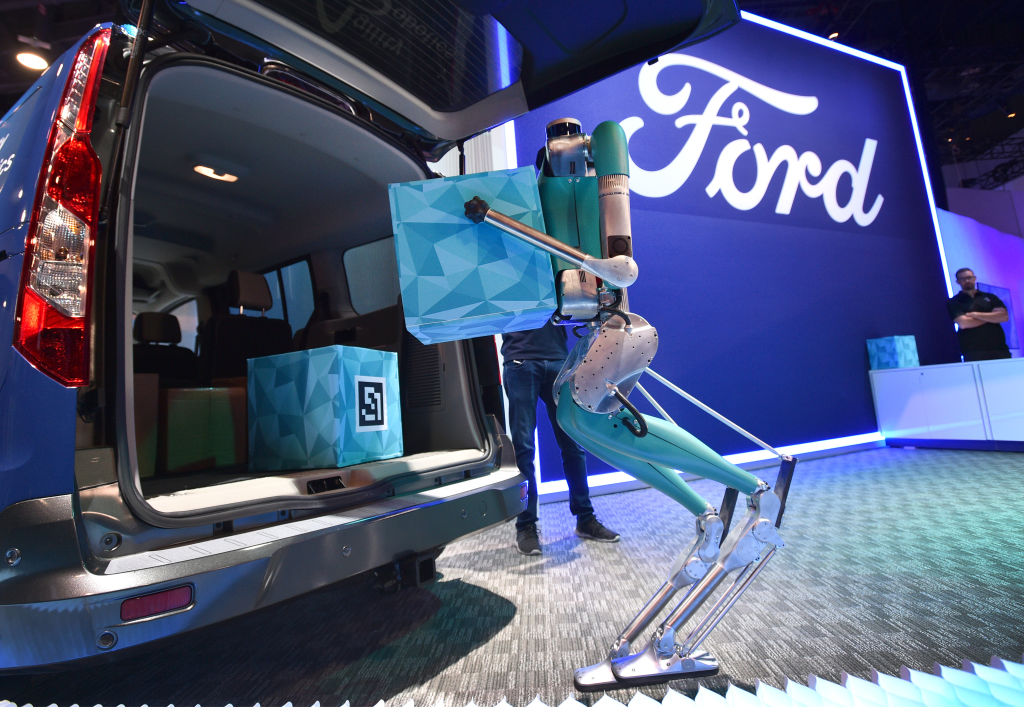
I have never been to CES and don’t plan to go, but Brian Heater always goes and this year he came back thinking that the home robot sector is getting serious.
His takeaway for Extra Crunch:
There’s a cynical (and probably at least partially correct) view that these sorts of deals are publicity stunts — big companies using CES to demonstrate how forward-thinking they are about new technologies. But there’s something to be said for the show’s position at the forefront of such technologies. The products are real, even if wider use is hypothetical. And in an era when Amazon has deployed more than 100,000 robots across its U.S. fulfillment centers to enable next and same-day delivery, we’re well into the realm of real-world use.
Brian is also hosting a one-day TechCrunch conference focused on robotics startups at UC Berkeley in early March, for those who are focused on this space. The event last year was a huge hit and we’re looking forward to the next one. Follow the link to learn more.

Will Silicon Valley win at weed?
Eaze has been one of the highest-profile cannabis distributors, but now it might be running out of cash, report Ingrid Owen and Josh Constine. There are many structural reasons why any cannabis business is very hard, legal or otherwise.
But it’s interesting to take a look at who is succeeding in the consumer cannabis market and why.
One local example is Berner, a high school dropout in San Francisco who became a budtender and partnered with cannabis geneticists to create and promote the Girl Scout Cookies strain, and also became an international rap star (the main topic is his weed) and clothing designer.
These days, he’s opening more and more Cookies retail cannabis outlets, including in Oakland and L.A., and cutting licensing and certification deals with a broad network of partners, (and claims to be turning down huge acquisition offers). Basically, his cannabis is also his modern multi-platform brand and the cool kids are into it. He does not appear to be running out of cash.
The last radio station
North of Silicon Valley, protected by the Point Reyes National Seashore, is the only operational ship-to-shore maritime radio station. Bearing the call sign KPH, the Point Reyes Station is the last of its kind.
KPH is divided between two physical stations: one, knows as the voice, is responsible for transmitting; the other half of the station, known as the ears, was where human operators listened for incoming messages. The voice is located 11 miles north of Point Reyes in the small town of Bolinas, Calif., and the ears reside within the Point Reyes National Seashore boundary nestled in pastures full of cattle and backdropped by the Pacific Ocean.
Stations like this once riddled the California coastline as part of a radio communication network. The operators who ran them were charged with watching over the Pacific Ocean airways, relaying messages to the sailors at sea.
“These guys and women were the best there were, and they had to be,” says Richard Dillman, chief operator at the Maritime Radio Historical Society. “On the ships, you could get away with anything. You could send slow, you could send fast, you could send like you were drunk, you could send like you are beating two spoons together. At the shore side, you had to be able to say, ‘fine, I got it, you can send fast, no problem. Send slow, I’llwait. Send like you are drunk, I can understand you.’ Because every word is revenue for the company because you were charging by the word.”
Dillman, who was never an employee of KPH, but rather a self-described “groupee and radio-obsessed person,” says the operators had to adapt to anything. “They were the best there were. They are our heroes and heroines.”
But once satellite communication became cheaper than paying radio operators, telegraphy became obsolete, and the network of radio stations became all but lost, as they were abandoned, sold and scavenged for parts.
Marin County Congressman Clem Miller saved KPH from this fate by writing and introducing the bill for the establishment of Point Reyes National Seashore. The bill preserved the land from development after operations ended.

A telegraphic timeline
The communications industry in the U.S. has seen several waves of disruption. The first significant innovation was sending a message by transmitting electrical signals over a wire.
In 1843, Samuel Morse, the father of Morse code, received funding from Congress to set up and test his new communication wire from Washington, D.C., to Baltimore. Upon completion, he sent the first official telegraph saying, “What hath God wrought.” What it wrought was money.
Morse received enough funding to string wire across an unsettled American landscape. From 1843 to 1900, wired telegraphy reigned until a new technology disrupted the communication monopoly of Western Union.
On June 2, 1896, Guglielmo Marconi patented a system of wireless telegraphy that would utilize radio waves to transmit Morse’s dits and dahs, making wired communication seem infrastructure-heavy. Plus, wireless telegraphy made maritime and transcontinental communication a lot more simple.
For almost 100 years, Morse code was used to communicate with ships at sea. By 1999 the industry had switched over to the cheaper and more efficient satellite communication systems.
The Point Reyes KPH station ended operations on June 30, 1997. The last day of U.S. commercial use of Morse code was July 12, 1999. The final message sent was the same as Morse’s first: “What hath God wrought.”

‘This was the end’
“It’s just beeps in the air,” says Dillman. “That is all Morse code is. And yet it was so impactful and emotional to these people,” he says about the operators and sailors he was with during the last day of Morse. “Because here they are seeing their career, their way of life, their skills disappearing. This was the end of the line. It used to be that you could take your license and telegraph key and move onto the next station, get a job, no problem. This was the end.”
After the last day of Morse in 1999, two years after KPH shut down, Richard and a few other radiomen drove up to the shuttered KPH station to assess how harsh the elements had been in the two years since it closed.
“Here it was, our life’s work, just handed to us,” Dillman says. “Because here are the ears, in Point Reyes, still living. The voice in Bolinas — dark and cold, but existing. So all we had to do was convince the park service that [restoring the station] was worth doing, and we were the guys to do it. And we are still amazed that they bought our story, and we have not turned back.”
Dillman and the rest of the radio squirrels that hang around KPH can be found every Sunday and more than welcome visitors.
LaunchDarkly CEO Edith Harbaugh explains why her company raised another $54M
This week, LaunchDarkly announced that it has raised another $54 million. Led by Bessemer Venture Partners and backed by the company’s existing investors, it brings the company’s total funding up to $130 million.
For the unfamiliar, LaunchDarkly builds a platform that allows companies to easily roll out new features to only certain customers, providing a dashboard for things like “canary launches” (pushing new stuff to a small group of users to make sure nothing breaks) or launching a feature only in select countries or territories. By productizing an increasingly popular development concept (“feature flagging”) and making it easier to toggle new stuff across different platforms and languages, the company is quickly finding customers in companies that would rather not spend time rolling their own solutions.
I spoke with CEO and co-founder Edith Harbaugh, who filled me in on where the idea for LaunchDarkly came from, how their product is being embraced by product managers and marketing teams and the company’s plans to expand with offices around the world. Here’s our chat, edited lightly for brevity and clarity.
Compound’s Mike Dempsey on virtual influencers and AI characters
In films, TV shows and books — and even in video games where characters are designed to respond to user behavior — we don’t perceive characters as beings with whom we can establish two-way relationships. But that’s poised to change, at least in some use cases.
Interactive characters — fictional, virtual personas capable of personalized interactions — are defining new territory in entertainment. In my guide to the concept of “virtual beings,” I outlined two categories of these characters:
- virtual influencers: fictional characters with real-world social media accounts who build and engage with a mass following of fans.
- virtual companions: AIs oriented toward one-to-one relationships, much like the tech depicted in the films “Her” and “Ex Machina.” They are personalized enough to engage us in entertaining discussions and respond to our behavior (in the physical world or within games) like a human would.
Part 1 of 3: the investor perspective
In a series of three interviews, I’m exploring the startup opportunities in both of these spaces in greater depth. First, Michael Dempsey, a partner at VC firm Compound who has blogged extensively about digital characters, avatars and animation, offers his perspective as an investor hunting for startup opportunities within these spaces.
Microsoft says it will fix an Internet Explorer security bug under active attack
Microsoft has confirmed a security flaw affecting Internet Explorer is currently being used by hackers, but that it has no immediate plans to fix.
In a late-evening tweet, US-CERT, the division of Homeland Security tasked with reporting on major security flaws, tweeted a link to a security advisory detailing the bug, describing it as “being exploited in the wild.”
Microsoft said all supported versions of Windows are affected by the flaw, including Windows 7, which after this week no longer receives security updates.
The vulnerability was found in how Internet Explorer handles memory. An attacker could use the flaw to remotely run malicious code on an affected computer, such as tricking a user into opening a malicious website from a search query or a link sent by email.
It’s believed to be a similar vulnerability as one disclosed by Mozilla, the maker of the Firefox browser, earlier this week. Both Microsoft and Mozilla credited Qihoo 360, a China-based security research team, with finding flaws under active attack. Earlier in the week, Qihoo 360 reportedly deleted a tweet referencing a similar flaw in Internet Explorer.
Neither Qihoo, Microsoft, nor Mozilla said how attackers were exploiting the bug, who the attackers were, or who was being targeted. The U.S. government’s cybersecurity advisory unit also issued a warning about current exploitation.
Microsoft told TechCrunch that it was was “aware of limited targeted attacks” and was “working on a fix,” but that it was unlikely to release a patch until its next round of monthly security fixes — scheduled for February 11.
Microsoft assigned the bug with a common vulnerability identifier, CVE-2020-0674, but specific details of the bug have yet to be released.
When reached, a Microsoft spokesperson did not comment.
Instagram drops IGTV button, but only 1% downloaded the app
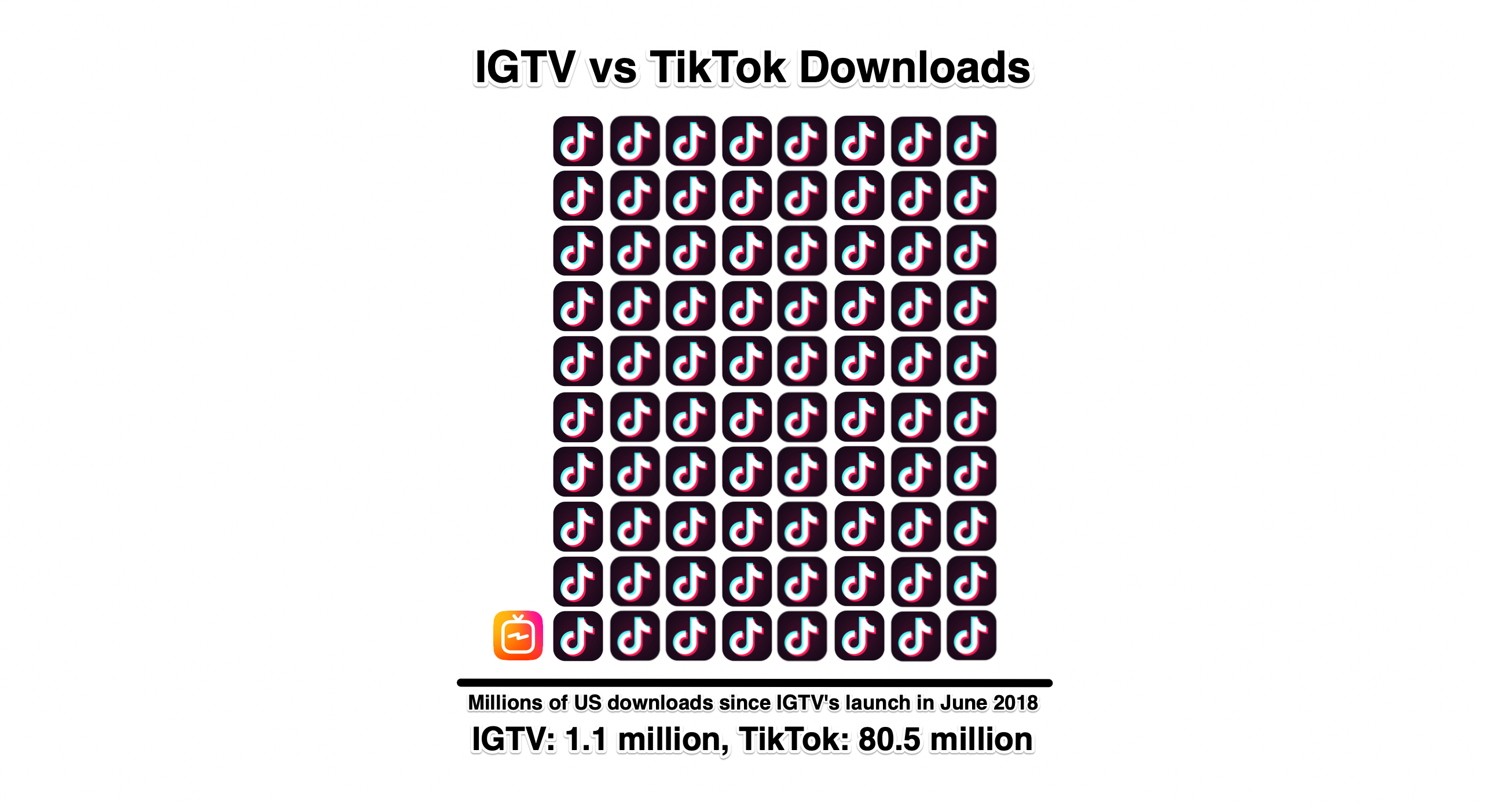
At most, 7 million of Instagram’s 1 billion-plus users have downloaded its standalone IGTV app in the 18 months since launch. And now, Instagram’s main app is removing the annoying orange IGTV button from its home page in what feels like an admission of lackluster results. For reference, TikTok received 1.15 billion downloads in the same period since IGTV launched in June 2018. In just the US, TikTok received 80.5 million downloads compared to IGTV’s 1.1 million since then, according to research commissioned by TechCrunch from Sensor Tower.
To be fair, TikTok has spent huge sums on install ads. But while long-form mobile video might gain steam as the years progress, Instagram hasn’t seemed to crack the code yet.
“As we’ve continued to work on making it easier for people to create and discover IGTV content, we’ve learned that most people are finding IGTV content through previews in Feed, the IGTV channel in Explore, creators’ profiles and the standalone app. Very few are clicking into the IGTV icon in the top right corner of the home screen in the Instagram app” a Facebook company spokesperson tells TechCrunch. “We always aim to keep Instagram as simple as possible, so we’re removing this icon based on these learnings and feedback from our community.”

Instagram users don’t need the separate IGTV app to watch longer videos, as the IGTV experience is embedded in the main app and can be accessed via in-feed teasers, a tab of the Explore page, promo stickers in Stories, and profile tabs. Still, the fact that it wasn’t an appealing enough destination to warrant a home page button shows IGTV hasn’t become a staple like past Instagram launches including video, Stories, augmented reality filters, or Close Friends.
One thing still missing is an open way for Instagram creators to earn money directly from their IGTV videos. Users can’t get an ad revenue share like with YouTube or Facebook Watch. They also can’t receive tips or sell exclusive content subscriptions like on Facebook, Twitch, or Patreon.
The only financial support Facebook and Instagram have offered IGTV creators is reimbursement for production costs for a few celebrities. Those contracts also require creators to avoid making content related to politics, social issues, or elections, according to Bloomberg‘s Lucas Shaw and Sarah Frier.
“In the last few years we’ve offset small production costs for video creators on our platforms and have put certain guidelines in place,” a Facebook spokesperson told Bloomberg. “We believe there’s a fundamental difference between allowing political and issue-based content on our platform and funding it ourselves.” That seems somewhat hypocritical given Facebook CEO Mark Zuckerberg’s criticism of Chinese app TikTok over censorship of political content.
Now users need to tap the IGTV tab inside Instagram Explore to view long-form videoAnother thing absent from IGTV? Large view counts. The first 20 IGTV videos I saw today in its Popular feed all had fewer than 200,000 views. BabyAriel, a creator with nearly 10 million Instagram followers that the company touted as a top IGTV creator has only post 20 of the longer videos to date with only one receiving over 500,000 views.
When the lack of monetization is combined with less than stellar view counts compared to YouTube and TikTok, it’s understandable why some creators might be hesistant to dedicate time to IGTV. Without their content keeping the feature reliably interesting, it’s no surprise users aren’t voluntarily diving in from the home page.
In another sign that Instagram is folding IGTV deeper into its app rather than providing it more breathing room of its own, and that it’s eager for more content, you can now opt to post IGTV videos right from the main Instagram feed post video uploader. AdWeek Social Pro reported this new “long video” upload option yesterday. A Facebook company spokesperson tells me “We want to keep our video upload process as simple as possible” and that “Our goal is to create a central place for video uploads”.

IGTV launched with a zealotish devotion to long-form vertical video despite the fact that little high quality content of this nature was being produced. Landscape orientation is helpful for longer clips that often require establishing shots and fitting multiple people on screen, while vertical was better for quick selfie monologues.
Yet Instagram co-founder Kevin Systrom described IGTV to me in August 2018, declaring that “What I’m most proud of is that Instagram took a stand and tried a brand new thing that is frankly hard to pull off. Full-screen vertical video that’s mobile only. That doesn’t exist anywhere else.”
Now it doesn’t exist on Instagram at all since May 2019 when IGTV retreated from its orthodoxy and began allowing landscape content. I’d recommended it do that from the beginning, or at least offer a cropping tool for helping users turn their landscape videos into coherent vertical ones, but nothing’s been launched there either.

If Instagram still cares about IGTV, it needs to attract more must-see videos by helping creators get paid for their art. Or it needs to pour investment into buying high quality programming like Snapchat Discover’s Shows. If Instagram doesn’t care, it should divert development resources to it’s TikTok clone Reels that actually looks very well made and has a shot at stealing market share in the remixable social entertainment space.
For a company that’s won by betting big and moving fast, IGTV feels half-baked and sluggish. That might have been alright when Snapchat was shrinking and TikTok was still Musically, but Instagram is heading into an era of much stiffer competition. Quibi and more want to consume multi-minute spans of video viewing on mobile, and the space could grow as adults familiarize with the format. But offering the platform isn’t enough for Instagram. It needs to actively assist creators with finding what content works, and how to earn sustainable wages marking it.
This Week in Apps: App trends from 2019, Pinterest tops Snapchat, Disney+ hits No. 1 in Q4
Welcome back to This Week in Apps, the Extra Crunch series that recaps the latest OS news, the applications they support and the money that flows through it all.
The app industry is as hot as ever with a record 204 billion downloads in 2019 and $120 billion in consumer spending in 2019, according to App Annie’s recently released “State of Mobile” annual report. People are now spending 3 hours and 40 minutes per day using apps, rivaling TV. Apps aren’t just a way to pass idle hours — they’re a big business. In 2019, mobile-first companies had a combined $544 billion valuation, 6.5x higher than those without a mobile focus.
In this Extra Crunch series, we help you to keep up with the latest news from the world of apps, delivered on a weekly basis.
This week, we dig into App Annie’s new “State of Mobile 2019” report and other app trends. We’re also seeing big gains for TikTok in 2019 and Disney+ in Q4. Both Apple and Google announced acquisitions this week that have implications for the mobile industry, as well.