Brazil has accused journalist Glenn Greenwald of aiding a hacking ring, with seemingly scant evidence.
Category: Tech news
hacking,system security,protection against hackers,tech-news,gadgets,gaming
A Handy Chrome Feature, a Sonos Update Warning, and More News
Catch up on the most important news from today in two minutes or less.
Adblock Plus’s Till Faida on the shifting shape of ad blocking
Publishers hate ad blockers, but millions of internet users embrace them — and many browsers even bake it in as a feature, including Google’s own Chrome. At the same time, growing numbers of publishers are walling off free content for visitors who hard-block ads, even asking users directly to be whitelisted.
It’s a fight for attention from two very different sides.
Some form of ad blocking is here to stay, so long as advertisements are irritating and the adtech industry remains deaf to genuine privacy reform. Although the nature of the ad-blocking business is generally closer to filtering than blocking, where is it headed?
We chatted with Till Faida, co-founder and CEO of eyeo, maker of Adblock Plus (ABP), to take the temperature of an evolving space that’s never been a stranger to controversy — including fresh calls for his company to face antitrust scrutiny.
India likely to force Facebook, WhatsApp to identify the originator of messages
New Delhi is inching closer to recommending regulations that would require social media companies and instant messaging app providers operating in the nation to help law enforcement agencies identify users who have posted content — or sent messages — it deems questionable, two people familiar with the matter told TechCrunch.
India will submit the suggested change to the local intermediary liability rules to the nation’s apex court later this month. The suggested change, the conditions of which may be altered before it is finalized, currently says that law enforcement agencies will have to produce a court order before exercising such requests, sources who have been briefed on the matter said.
But regardless, asking companies to comply with such a requirement would be “devastating” for international social media companies, a New Delhi-based policy advocate told TechCrunch on the condition of anonymity.
WhatsApp executives have insisted in the past that they would have to compromise end-to-end encryption of every user to meet such a demand — a move they are willing to fight over.
The government did not respond to a request for comment Tuesday evening. Sources spoke under the condition of anonymity as they are not authorized to speak to media.
Scores of companies and security experts have urged New Delhi in recent months to be transparent about the changes it planned to make to the local intermediary liability guidelines.
The Indian government proposed (PDF) a series of changes to its intermediary liability rules in late December 2018 that, if enforced, would require to make significant changes millions of services operated by anyone, from small and medium businesses to large corporate giants such as Facebook and Google.
Among the proposed rules, the government said that intermediaries — which it defines as those services or functions that facilitate communication between two or more users and have five million or more users in India — will have to, among other things, be able to trace the originator of questionable content to avoid assuming full liability for their users’ actions.
At the heart of the changes lies the “safe harbor” laws that technology companies have so far enjoyed in many nations. The laws, currently applicable in the U.S. under the Communications Decency Act and India under its 2000 Information Technology Act, say that tech platforms won’t be held liable for the things their users share on the platform.
Many stakeholders have said in recent months that the Indian government was keeping them in the dark by not sharing the changes it was making to the intermediary liability guidelines.
Nobody outside of a small government circle has seen the proposed changes since January of last year, said Shashi Tharoor, one of India’s most influential opposition politicians, in a recent interview with TechCrunch.
Software Freedom and Law Centre, a New Delhi-based digital advocacy organization, recommended last week that the government should consider removing the traceability requirement from the proposed changes to the law as it was “technically impossible to satisfy for many online intermediaries.”
“No country is demanding such a broad level of traceability as envisaged by the Draft Intermediaries Guidelines,” it added.
TechCrunch could not ascertain other changes the government is recommending.
Netflix adds 8.8M subscribers despite growing competition
Netflix grew by 8.8 million net subscribers in the fourth quarter of 2019, according to its latest earning report, putting its growth well ahead of its forecast of 7.6 million.
The company says it has 167 million paid memberships worldwide, with more than 100 million outside the United States. It also reported stronger-than-expected financials, with revenue of $5.47 billion and earnings per share of $1.30, compared to analyst estimates of $5.45 billion and EPS of 53 cents.
That’s all despite the launch of two major streaming services, Disney+ and Apple TV+, with more competition coming this year from WarnerMedia’s HBOMax and NBCUniversal’s Peacock.
Netflix addresses the competitive landscape in its letter to shareholders, arguing that there’s “ample room for many services to grow as linear TV wanes,” and noting that during Q4, “our viewing per membership grew both globally and in the US on a year over year basis, consistent with recent quarters.”
Netflix also points to Google Search Trends showing much higher interest in its original series “The Witcher” than in Disney+’s “Mandalorian,” Apple TV+’s “Morning Show” or Amazon’s “Jack Ryan.”
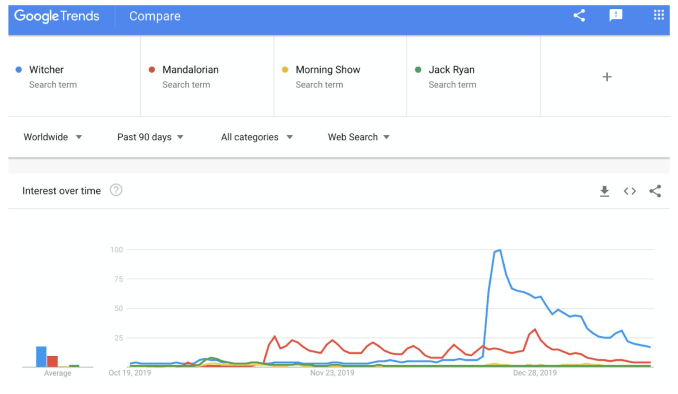
That might seem like an unfair comparison, especially since Disney+ is only available in a handful of countries so far, but Netflix argues, “If Disney+ were global we don’t think the picture would be much different, to judge from the ?NL results? where Disney+ first launched.”
In fact, Netflix says “The Witcher” is on-track to become “our biggest season one TV series ever,” with 76 million member households choosing to watch the show. It also says 83 million households chose to watch the Michael Bay-directed action film “6 Underground.”
If you’re wondering about the slightly awkward “chose to watch” phrasing — yep, Netflix is switching up the (already controversial) way that it reports viewership. While it previously shared the number of accounts that watched at least 70% of an episode or film, it’s now looking at how many members chose to watch a show or movie, and then actually watched for at least two minutes (“long enough to indicate that the choice was intentional”).
The company says this increases viewer counts by an average of 35%.
“Our new methodology is similar to the BBC iPlayer in their rankings? based on ‘requests’ for the title, ‘most popular’ articles on the New York Times which include those who opened the articles, and YouTube view counts,” Netflix says. “This way, short and long titles are treated equally, leveling the playing field for all types of our content including interactive content, which has no fixed length.”
One dark cloud in the earnings report is what appears to be slowing growth, with 7.0 million projected net additions in Q1 of this year, compared to 9.6 million net adds in the first quarter of 2019. Netflix attributes this to “the continued, slightly elevated churn levels we are seeing in the US,” as well as more balance between Q1 and Q2 growth this year, “due in part to the timing of last year’s price changes and a strong upcoming Q2 content slate.”
As of 4:51pm Eastern, Netflix shares were up 0.41% in after-hours trading.
Cruise doubles down on hardware
Ten months ago, Cruise declared it would hire at least 1,000 engineers by the end of the year, an aggressive target — even for a company with a $7.25 billion war chest — in the cutthroat autonomous vehicle industry, where startups, automakers and tech giants are battling over talent.
What Cruise didn’t talk about then — or since — was who it planned to hire. The assumption was that Cruise was aiming for software engineers, the perception, planning and controls, simulation and mapping experts who would help build the “brain” of its self-driving cars. And that has certainly been one objective.
Cruise, a subsidiary of GM that also has backing from SoftBank Vision Fund, automaker Honda and T. Rowe Price & Associates, now employs more than 1,700 people, a considerable chunk of whom are software engineers.
Cruise has embarked on another initiative over the past 18 months that isn’t as well known. The company is building out a team of hardware engineers so large that, if successful, it will get its own building. Today, the first fruits of that mission are toiling away in an ever-expanding lab located in the basement of Cruise’s Bryant Street building in San Francisco.
The basement won’t hold them for long — if Cruise gets its way. The company plans to dedicate the Bryant Street location, a 140,000-square-foot building that once served as its headquarters, to the hardware team, according to sources familiar with Cruise’s plans.
Some software engineers will remain at Bryant Street. But the bulk of Cruise’s software team and other employees will move to 333 Brannan Street, the former Dropbox headquarters that the company took over in 2019.
Cruise wouldn’t provide specific employment numbers for its hardware or software teams. A glimpse at its current job openings, as well as other resources such as LinkedIn, suggests that it has amassed more than 300 employees dedicated to hardware. At least 10% of those people were hired in the past 90 days, according to a review of LinkedIn’s database.
And it’s not done hiring. There are more than 160 open positions posted on Cruise’s website. About 106 are for software-related jobs and 35 are for hardware engineers. The remaining 24 positions are for other departments, including government, communications, office and security.
Hardware HQ
Below the airy, sunlit dining hall and the garage that houses Cruise’s self-driving test vehicles, hundreds of hardware engineers are developing everything from sensors and network systems to the compute and infotainment system for its present and future vehicles.
The upshot: Cruise is developing hardware as aggressively as its software with an eye toward future vehicles. The world will likely get the first glimpse of that future-looking hardware handiwork at Cruise’s “Beyond the Car” event that will be held late Tuesday in San Francisco.

Cruise’s value has largely been wrapped up in its software. Even six years ago, when the company was founded with a plan to develop an aftermarket kit that could be retrofitted to existing cars to give them automated highway driving capabilities, Cruise was a software company.
GM’s venture team had been tracking Cruise since early 2014, according to sources familiar with the company’s early history. But it wouldn’t be until Cruise abandoned its aftermarket kit to focus on developing an autonomous vehicle capable of city driving that the relationship would bloom.
It was then that Cruise realized it needed deeper expertise in integrating hardware and software. By late 2015, talks with GM had progressed beyond fact-finding. GM announced it acquired Cruise in March 2016.
With GM as its parent, Cruise suddenly had access to a manufacturing giant. GM’s Chevrolet Bolt EV would become the platform Cruise would use for its self-driving test vehicles. Today, Cruise has about 180 test vehicles, most of which can be seen on public roads in San Francisco.
Cruise has always employed hardware engineers. But a more focused effort on hardware development and systems integration began in early 2018 after Cruise hired Carl Jenkins as vice president of hardware and Brendan Hermalyn as director of autonomous hardware systems.
Around the same time, GM announced it would build production versions of the Cruise AV — a vehicle that would be built from the ground up to operate on its own with no driver, steering wheel, pedals or manual controls — at its Orion Township assembly plant in Michigan. Roof modules for the self-driving vehicles would be assembled at its Brownstown plant. The automaker said it would invest $100 million in the two Michigan plants to prepare for production. GM’s Orion factory already produces the Chevy Bolt EV and the third-generation test versions of Cruise’s autonomous vehicle.
Six months later, the companies announced that Honda would commit $2.75 billion as part of an exclusive agreement with GM and Cruise to develop and produce a new kind of autonomous vehicle.
Systems approach
Systems integration would become more important than ever. Hermalyn, who previously worked as the camera lead at Waymo, is one of the primary drivers of this pursuit.
To say Hermalyn is passionate about systems integration might be an understatement. In an hour-long interview last year, he frequently leaned on the term, exclaiming at one point, while standing amongst a row of test vehicles, that the “most exciting thing is the integration.” He has also published a blog post that describes Cruise’s philosophy and approach to building a system that can conduct real-time, safety-critical sensing and perception tasks at scale.
The ability to integrate hardware and software is critical for the safe operation of autonomous vehicles, and it is a common pursuit among AV developers. But the scale of Cruise’s effort, along with the fact that the team is developing much of these hardware components in house, illustrates how important this area has become for the company.
Cruise hardware development is focused on the entire AV topology, which includes the sensors, compute, network systems, connectivity, infotainment and UX.
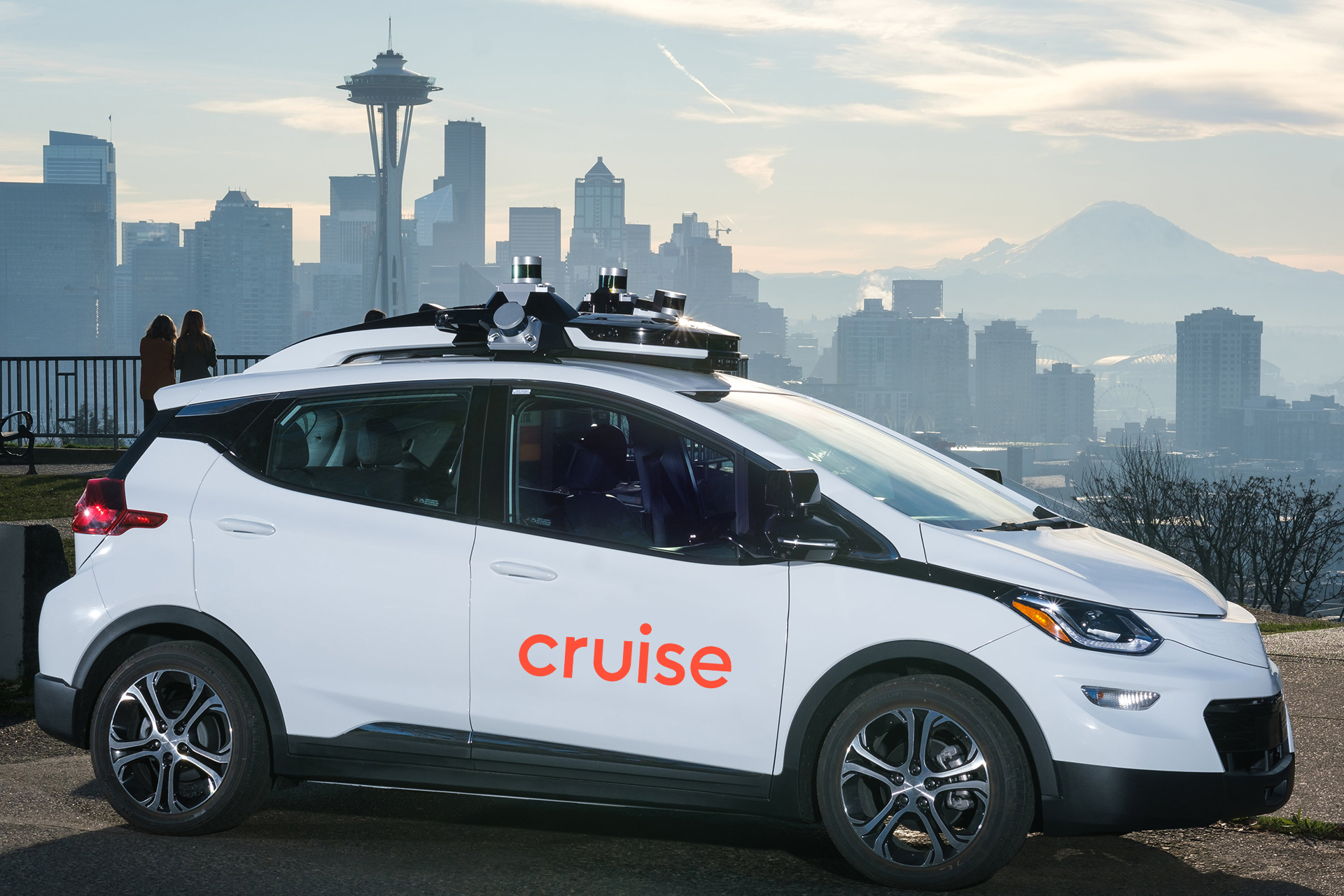
A Cruise autonomous vehicle Saturday, January 12, 2019 in Seattle, Washington. (Photo by Stephen Brashear for Cruise)
While Cruise does some early-stage manufacturing in house, Hermalyn stressed that Cruise isn’t trying to go it alone.
“We’re lucky to have General Motors and Honda as partners,” he said during TechCrunch’s interview with him in October. “We’re able to leverage their expertise in vehicle engineering, and collaborate with them throughout the development process to seamlessly integrate that AV topology into the completed vehicles assembled on the factory production line.”
The baffle on the camera system on Cruise’s vehicle is just one tiny example of this partnership developed with GM. It’s here that a self-cleaning system has been developed and installed. Other hardware development included a bumper that better integrates sensors, mounts and lidar. Cruise acquired lidar startup Strobe in 2017.
“Our goal is to make it the fastest, not to make everything,” Hermalyn later added. “We obviously use a supplier to manufacture them, we don’t want to have the Geppetto problem where we’re stuck making one by one.”
Back in October when TechCrunch visited Cruise’s office, the basement lab was in flux. Certain areas were jammed and preparations to expand had clearly begun.
That lab build-out has continued. The hardware team is particularly focused on sensor development and is conducting some “low volume manufacturing capabilities for rapid maturation of hardware,” he said in a followup email.
“It’s not that different from what the aerospace industry has done,” Hermalyn said of the systems approach. But how you solve that I think is the unique part. With our partners, we’re able to go after these systems problems and be able to address that in the marketplace.”
Corporate relocation startup Shyft raises $15M
Shyft is announcing it has raised $15 million in Series A funding to make the moving process less painful — specifically in the situations where your employer is paying for the move.
Other startups are looking to offer concierge-type services for regular moving — I used a service called Moved last year and liked it. But Shyft co-founder and CEO Alex Alpert (who’s spent years in the moving business) told me there are no direct competitors focused on corporate relocation.
“Even at the highest levels, the process is totally jacked up,” Alpert said. “We saw an opportunity to partner with corporations and relocation management companies to build a customized, tech-driven experience with more choices, more flexibility and to be able to navigate the quoting process seamlessly.”
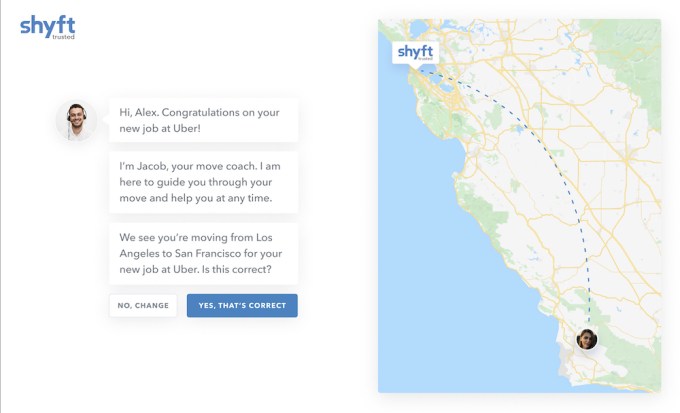
So when a company that uses Shyft decides to relocate you — whether you’re a new hire or just transferring to a new office — you should get an email prompting you to download the Shyft app, where you can chat with a “move coach” who guides you through the process.
You’ll also be able to catalog the items you want to move over a video call and get estimates from movers. And you’ll receive moving-related offers from companies like Airbnb, Wag, Common, Sonder and Home Chef.
And as Alpert noted, Shyft also partners with more traditional relocation companies like Graebel, rather than treating them as competitors.
The company was originally called Crater and focused on building technology for creating accurate moving estimates via video. It changed its name and its business model back in 2018 (Alpert acknowledged, “It wasn’t a very popular pitch in the beginning: ‘Hey, we’re building estimation software for moving companies.’ “), but the technology remains a crucial differentiator.
“Our technology is within 95% accurate at identifying volume and weight of the move,” he said. “When moving companies know the information is reliable, they can bid very aggressively.”
As a result, Alpert said the employer benefits not just from having happier employees, but lower moving costs.
The new funding, meanwhile, was led by Inovia Capital, with participation from Blumberg Capital and FJ Labs.
“There’s a total misalignment between transactional relocation services and the many logistical, social, and lifestyle needs that come with moving to a new city,” Inovia partner Todd Simpson said in a statement. “As businesses shift towards more distributed workforces and talent becomes accustomed to personalized experiences, the demand for a curated moving offering will continue to grow.”
Spotify’s new test lets influencers post Stories to introduce their own playlists
Spotify is testing a new Stories feature that will allow select influencers to incorporate video elements into their public playlists, TechCrunch has learned and Spotify confirmed. The first influencer to test the feature is makeup and fashion YouTube star Summer Mckeen, who currently has a social media fan base that includes 2.33 million YouTube subscribers, 2.1 million Instagram followers and 126,455 Spotify followers. Mckeen is using the new feature to introduce a playlist of her all-time favorite songs, which she’s titled her “all time besties.”
Like other Stories’ products found on social media apps, the Spotify version offers a similar experience that includes short video clips that users can tap on to advance to the next screen. There are also horizontal lines at the top that indicate how many screens still await them.
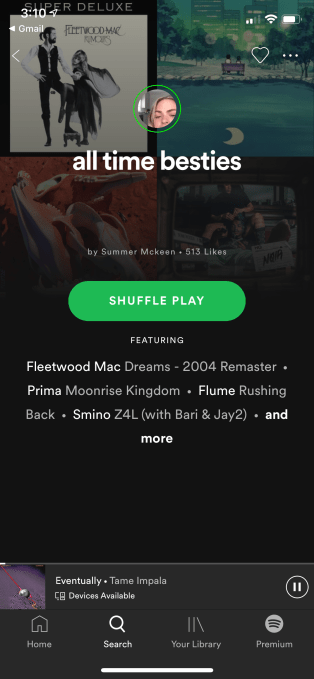
Above: where Stories are found on playlists
Meanwhile, the entry point for the Spotify Story is a circular icon found above the playlist’s title. This has also been designed to catch your attention with an animated preview of the video you’ll see if you tap through.

Above: Mckeen introduces her playlist of favorite songs
Once in the Story, the clips will play and advance automatically and the playlist where you found the Story is featured at the top. You can also tap the “X” to exit at any time.
Spotify’s unique take on the Stories format involves its use of music, of course.
In the new Stories feature, the influencer can also share video clips that contain small song snippets and the album art as a way of previewing the songs in the playlist. In Mckeen’s case, a few of these follow her introduction of the new playlist.
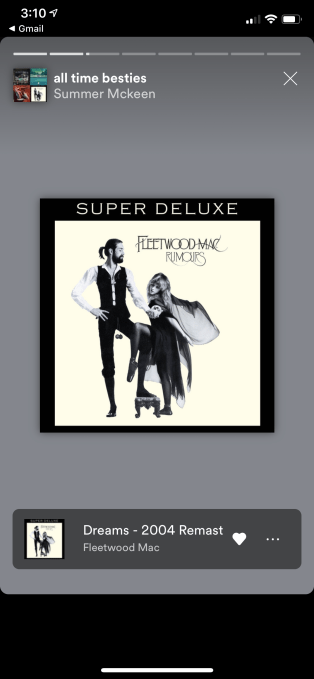
Above: Song clips in Stories
Mckeen is the first influencer to go live on Spotify Stories, but we understand the company is also planning to roll this out to other notable names across the entertainment, lifestyle and music industries in the near future. This initial group of testers is being determined by a variety of factors — including follower count, how engaged their followers are and how active the influencer in question is on Spotify. Mckeen was selected because she’s someone who likes to make playlists on her own and has many user-generated playlists she shares with fans.
Spotify isn’t currently rolling out the feature to its artists, as it’s meant to be more a tool for music discovery, rather than one for promotional purposes. Artists, instead, can reach fans creatively using Canvas — the recently launched looping videos product that can take the place of album art when a song plays. However, the company isn’t ruling out letting artists try the Stories product in the future.
Despite the similarity with other Stories found on apps like Instagram, Facebook, Snapchat and YouTube, Spotify’s goal isn’t to turn its app into another social media platform. Instead, it will rely on the influencers to get the word out to fans themselves using their existing accounts found elsewhere. Mckeen, for example, posted to her Instagram Stories with a deep link directly to the playlist in question.
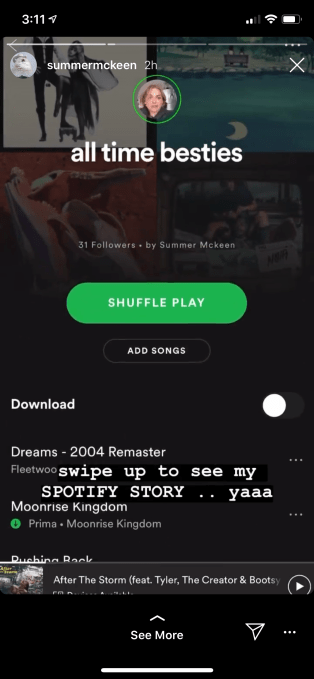
Above: Mckeen’s IG Story
Currently, the Spotify Stories product can only be seen on iOS and Android, not desktop. (Mckeen’s is here.) And it’s available to all Spotify users — free and paid — although that could one day change. Spotify considers the product just a test for now, but is open to considering a broader rollout in the future.
Spotify confirmed the test to TechCrunch and offered a short statement.
“At Spotify, we routinely conduct a number of tests in an effort to improve our user experience. Some of those tests end up paving the path for our broader user experience and others serve only as an important learning,” a Spotify spokesperson said. “We have no further news to share on future plans at this time,” they added.
This is not the first time Spotify has dabbled with a Stories format, however. Last year, Spotify was spotted testing a Stories-like product called Storyline that was similar to “Behind the Lyrics,” but instead allowed artists to share their own insights, inspiration and other details more directly. This can still be found on Spotify on select songs, but hasn’t become broadly available.
2020 will be a moment of truth for foldable devices
Phones were not the centerpiece at the recently wrapped Consumer Electronics Show; I’ll probably repeat this point a few more times over the course of this piece, just so we’re clear. This is due, in no small part, to the fact that Mobile World Congress has mostly usurped that role.
There are always a smattering of announcements at CES, however. Some companies like to get out ahead of the MWC rush or just generally use the opportunity to better spread out news over the course of the year. As with other categories, CES’s timing positions the show nicely as a kind of sneak preview for the year’s biggest trends.
A cursory glance at the biggest smartphone news from the show points to the continuation of a couple of key trends. The first is affordability. Samsung leads the pack here with the introduction of two “Lite” versions of its flagship devices, the Galaxy S10 and Note 10. The addition of the line lent some confusion to Samsung’s strategy amongst a handful of tech analysts around where precisely such devices would slot in the company’s portfolio.
Donald Trump’s ‘National Security’ Impeachment Defense Is a Red Herring
The president’s cry-wolf strategy is straight from Richard Nixon’s playbook.
Apple TV+ scores Julia Louis-Dreyfus and Meryl Streep, announces release dates for new shows
Apple has scored more big names for its newly launched streaming service, Apple TV+, including “Veep” and “Seinfeld” star Julia Louis-Dreyfus, as well as Meryl Streep, the latter who’s attached to an animated short film about Earth Day, set to premiere on April 17. In addition, Apple has now announced several new series for Apple TV+, plus renewals and premiere dates for others.
The upcoming Earth Day film, titled “Here We Are: Notes for Living on Planet Earth,” will also star the voice talents of “Room” actor Jacob Tremblay as a seven-year-old child who learns about the planet, and Chris O’Dowd and Ruth Negga as his parents. Streep will provide the voice-over narration.

Meanwhile, Louis-Dreyfus hasn’t announced specific details of her projects. Apple says she has inked an overall deal with Apple TV+ as both an executive producer and star — her first overall deal with a streaming service. Under the multi-year agreement, Louis-Dreyfus will create multiple new projects exclusively for Apple TV+.
Joked the actress: “I am thrilled about this new partnership with my friends at Apple. Also, many thanks and kudos to my representatives for structuring the deal in such a way that I am paid in AirPods,” she said.
Apple has previously signed other overall deals with names like Alfonso Cuaron, Kerry Ehrin, Jon M. Chu, Justin Lin, Jason Katims, Lee Eisenberg, as well as studios A24 and Imagine Documentaries, and Oprah.
In addition to the big-name talent grabs, Apple also on Friday announced a new documentary series, “Dear…,” from Emmy and Peabody winner R.J. Cutler. Due out this spring, the series will profile internationally known leaders, including Oprah Winfrey, Gloria Steinem, Spike Lee, Lin-Manuel Miranda, Yara Shahidi, Stevie Wonder, Aly Raisman, Misty Copeland, Big Bird (uh, what?) and others.
This is not Apple TV+’s first documentary. It’s currently airing the Peace Award winner “The Elephant Queen,” about a tribe of African elephants. And while not a documentary, per se, the service is also now featuring real life-inspired tales of immigrants in the U.S. in the Apple TV+ anthology series, “Little America” which have a documentary-like vibe. Other documentary series and films in the works include “Visible: Out on Television” “Home,” “Beastie Boys Story” and “Dads.”
Newly announced “Visible…,” exec-produced by Ryan White, Jessica Hargrave, Wanda Sykes and Wilson Cruz, focuses on the LGBTQ movement and its impact on television. Premiering on Valentine’s Day (February 14), the series will also feature narration from Janet Mock, Margaret Cho, Asia Kate Dillon, Neil Patrick Harris and Lena Waithe.
Another new show is “Central Park,” an animated musical comedy from Loren Bouchard (“Bob’s Burgers”), executive producer Josh Gad (“Frozen”) and executive producer Nora Smith (“Bob’s Burgers”), which will arrive this summer. The show features a family that lives in Central Park, the Tillermans, and includes a voice cast with the talents of Josh Gad, Leslie Odom Jr., Kristen Bell, Kathryn Hahn, Tituss Burgess, Daveed Diggs and Stanley Tucci. The animation style has the distinct look of “Bob’s Burgers,” as well.

Apple’s first original series from the U.K., “Trying,” will premiere on May 1st globally. This series stars Rafe Spall and Esther Smith, hails from BBC Studios and was written by Andy Wolton. As the name hints, the story is about a couple — Jason and Nikki — who are trying to have a baby. But Apple describes the show’s larger theme as one about “growing up, settling down and finding someone to love.”

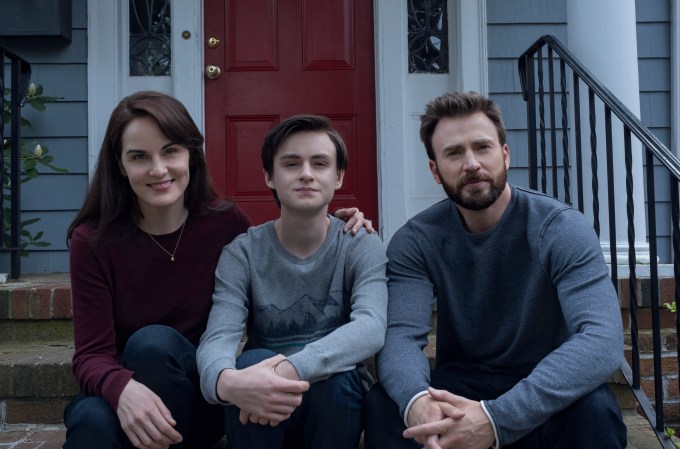
A new thriller, “Defending Jacob,” based on the 2012 NYT bestseller of the same name, will premiere April 24.
The limited series stars Chris Evans, Michelle Dockery, Jaeden Martell, Cherry Jones, Pablo Schreiber, Betty Gabriel and Sakina Jaffrey, and tells of a shocking crime that rocks a small Massachusetts town. The story follows an assistant district attorney who is torn between duty to uphold justice and his love for his son. Academy Award-winner J.K. Simmons guest stars.
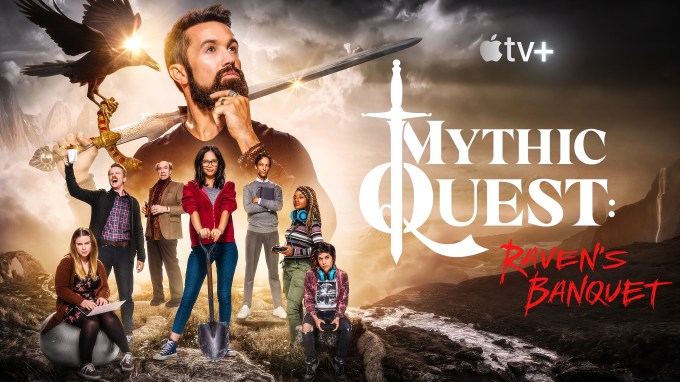
Apple also announced its live-action comedy that follows a team of video game developers, “Mythic Quest: Raven’s Banquet,” has been renewed for a second season ahead of its global premiere date of February 7.
The show was co-created by Rob McElhenney, Charlie Day and Megan Ganz, and also stars McElhenney as the fictional company’s creative director, Ian Grimm.
Other shows awarded a second season include “Little America,” “Dickinson,” “See,” “Servant,” “For All Mankind,” “The Morning Show” and the soon-to-premiere “Home Before Dark.”
Despite not sharing any sort of viewership data — even with the shows’ stars — the renewals speak to Apple’s confidence in its original programming.
“Home Before Dark” is a dramatic mystery series featuring young investigative journalist Hilde Lysiak, and is exec-produced by Jon M. Chu. Based on the real-life kid reporter of the same name, the series takes Hilde’s story into fictional territory by telling a tale of a young girl who moves from Brooklyn to a small lakeside town where she ends up unearthing a cold case that everyone in town, including her dad, has tried to bury. The real Lysiak, however, runs an online news operation, Orange Street News, which made headlines when the then 11-year-old girl scooped local news outlets by being the first to expose a murder in her hometown of Selinsgrove, Pa.

Steven Spielberg’s “Amazing Stories” has also now been given a premiere date of March 6. The rebooted anthology series is run by Eddy Kitsis and Adam Horowitz (“Lost”), and features episode directors Chris Long (“The Americans,” “The Mentalist”), Mark Mylod (“Succession,” “Game of Thrones”), Michael Dinner (“Unbelievable,” “Sneaky Pete”), Susanna Fogel (“Utopia,” “Play By Play”) and Sylvain White (“Stomp the Yard,” “The Rookie”).

Also previously announced, Apple set a premiere date for the new documentary series “Home,” which will air on April 17. The series offers viewers a look inside some of the world’s most innovative homes around the world.

Though only two months old, Apple TV+ has already landed its first Hollywood industry award, as “The Morning Show” star Jennifer Aniston snagged a SAG Award for best female actor in a drama. Co-star Billy Crudup also won a Critics’ Choice Award for best-supporting actor.
“The Morning Show,” meanwhile, had been nominated for three Golden Globes, but didn’t win. However, the Globes largely snubbed streamers this year, with Netflix earning only two wins, despite 34 nominations.
Google Cloud lands Lufthansa Group and Sabre as new customers
Google’s strategy for bringing new customers to its cloud is to focus on the enterprise and specific verticals like healthcare, energy, financial service and retail, among others. Its healthcare efforts recently experienced a bit of a setback, with Epic now telling its customers that it is not moving forward with its plans to support Google Cloud, but in return, Google now got to announce two new customers in the travel business: Lufthansa Group, the world’s largest airline group by revenue, and Sabre, a company that provides backend services to airlines, hotels and travel aggregators.
For Sabre, Google Cloud is now the preferred cloud provider. Like a lot of companies in the travel (and especially the airline) industry, Sabre runs plenty of legacy systems and is currently in the process of modernizing its infrastructure. To do so, it has now entered a 10-year strategic partnership with Google “to improve operational agility while developing new services and creating a new marketplace for its airline, hospitality and travel agency customers.” The promise, here, too, is that these new technologies will allow the company to offer new travel tools for its customers.
When you hear about airline systems going down, it’s often Sabre’s fault, so just being able to avoid that would already bring a lot of value to its customers.
“At Google we build tools to help others, so a big part of our mission is helping other companies realize theirs. We’re so glad that Sabre has chosen to work with us to further their mission of building the future of travel,” said Google CEO Sundar Pichai . “Travelers seek convenience, choice and value. Our capabilities in AI and cloud computing will help Sabre deliver more of what consumers want.”
The same holds true for Google’s deal with Lufthansa Group, which includes German flag carrier Lufthansa itself, but also subsidiaries like Austrian, Swiss, Eurowings and Brussels Airlines, as well as a number of technical and logistics companies that provide services to various airlines.
“By combining Google Cloud’s technology with Lufthansa Group’s operational expertise, we are driving the digitization of our operation even further,” said Dr. Detlef Kayser, member of the executive board of the Lufthansa Group. “This will enable us to identify possible flight irregularities even earlier and implement countermeasures at an early stage.”
Lufthansa Group has selected Google as a strategic partner to “optimized its operations performance.” A team from Google will work directly with Lufthansa to bring this project to life. The idea here is to use Google Cloud to build tools that help the company run its operations as smoothly as possible and to provide recommendations when things go awry due to bad weather, airspace congestion or a strike (which seems to happen rather regularly at Lufthansa these days).
Delta recently launched a similar platform to help its employees.
Why is everyone making OKR software?
Hello and welcome back to our regular morning look at private companies, public markets and the gray space in between.
Today we’re taking a moment to discuss the amount of money going into startups building OKR software. After covering WorkBoard’s recent round, I’ve noticed OKR software and services everywhere, even in Twitter ads that I somehow can’t avoid.
But surely there can’t be too many startups focused on OKR-related software and services? To answer that, let’s take a moment to detail out some of the startups in the space and their venture history. Leaning on my own research and some work by G2, this should be an entertaining way to spend our morning. Doubly so as several startups that we’ll discuss below (WorkBoard and Gtmhub, among others) are growing their ARR by several hundred percent each year, at the moment.
We’ll start with the world’s fastest definition of what OKRs are, and then dive in.
Huawei’s answer to life after Google Maps? TomTom
Losing access to Google software and services understandably threw Huawei for a loop. The Chinese hardware giant has clearly been working on a contingency plan to deal with the loss of access to things like Android and the Play Store, but Google’s offering formed so much of the devices’ software core — as they do so many of its competitors.
Huawei just lined up a pretty big name in its attempts to rebuild a competitive software suite. Dutch mapping giant TomTom has agreed to provide access to its navigation, mapping and traffic information. The two companies finalized a deal this week, per Reuters, letting Huawei use that information to build its own proprietary apps.
TomTom confirmed the deal, but declined to offer additional information. The move comes as the mapping company has taken a step back from hardware offerings in favor of monetizing its software services. Given Huawei’s pretty massive footprint in the global smartphone market, this presents a pretty big deal for TomTom, which had previously provided info for AppleMaps.
Huawei was left reeling from U.S. sanctions that cut off access to U.S.-produced software and components. The company has been working to build its own Android competitor behind the scenes, though what we’ve seen of HarmonyOS has thus far been fairly muted. Rumors have also swirled around Huawei developing its own Maps competitor, so it’s hard to say how much it views this new deal as a stopgap.
Canonical’s Anbox Cloud puts Android in the cloud
Canonical, the company behind the popular Ubuntu Linux distribution, today announced the launch of Anbox Cloud, a new platform that allows enterprises to run Android in the cloud.
On Anbox Cloud, Android becomes the guest operating system that runs containerized applications. This opens up a range of use cases, ranging from bespoke enterprise apps to cloud gaming solutions.
The result is similar to what Google does with Android apps on Chrome OS, though the implementation is quite different and is based on the LXD container manager, as well as a number of Canonical projects like Juju and MAAS for provisioning the containers and automating the deployment. “LXD containers are lightweight, resulting in at least twice the container density compared to Android emulation in virtual machines – depending on streaming quality and/or workload complexity,” the company points out in its announcements.
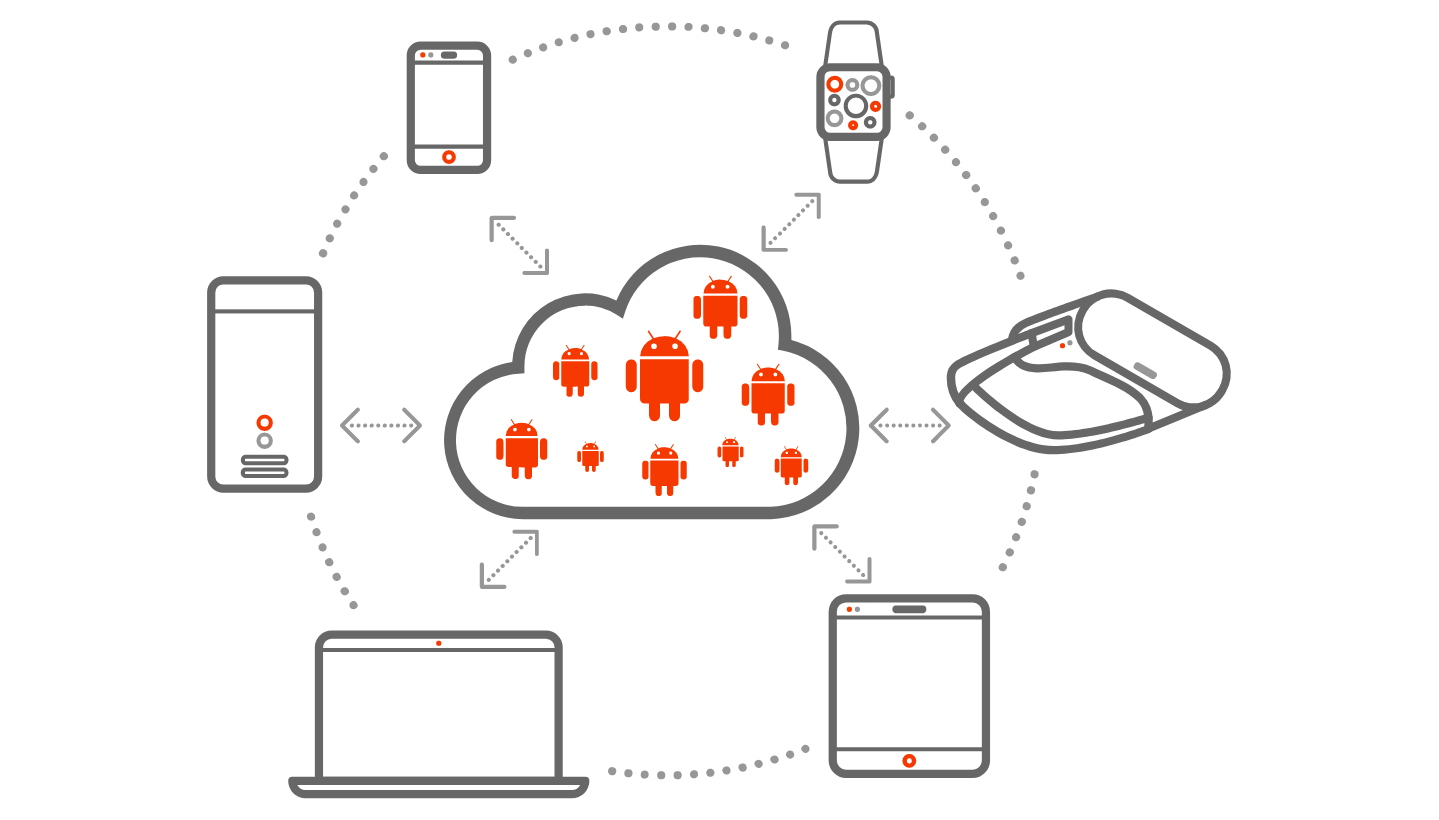 Anbox itself, it’s worth noting, is an open-source project that came out of Canonical and the wider Ubuntu ecosystem. Launched by Canonical engineer Simon Fels in 2017, Anbox runs the full Android system in a container, which in turn allows you to run Android application on any Linux-based platform.
What’s the point of all of this? Canonical argues that it allows enterprises to offload mobile workloads to the cloud and then stream those applications to their employees’ mobile devices. But Canonical is also betting on 5G to enable more use cases, less because of the available bandwidth but more because of the low latencies it enables.
“Driven by emerging 5G networks and edge computing, millions of users will benefit from access to ultra-rich, on-demand Android applications on a platform of their choice,” said Stephan Fabel, director of Product at Canonical, in today’s announcement. “Enterprises are now empowered to deliver high performance, high density computing to any device remotely, with reduced power consumption and in an economical manner.”
Outside of the enterprise, one of the use cases that Canonical seems to be focusing on is gaming and game streaming. A server in the cloud is generally more powerful than a smartphone, after all, though that gap is closing.
Canonical also cites app testing as another use case, given that the platform would allow developers to test apps on thousands of Android devices in parallel. Most developers, though, prefer to test their apps in real — not emulated — devices, given the fragmentation of the Android ecosystem.
Anbox Cloud can run in the public cloud, though Canonical is specifically partnering with edge computing specialist Packet to host it on the edge or on-premise. Silicon partners for the project are Ampere and Intel .