Experts tips and tricks for helping your younglings think critically about what they see on TV and social media.
Category: Tech news
hacking,system security,protection against hackers,tech-news,gadgets,gaming
Today’s Cartoon: Invasion of Privacy
Who’s watching the baby watchers?
Pepe the Frog Foretold the Fraught World of Modern Memes
The new documentary Feels Good Man traces the frog’s evolution from an indie comic to one of the world’s most polarizing symbols.
Apple’s iPad Turns 10: A Look Back at Its First Decade
Here’s what WIRED writers have had to say about Apple’s tablet in the 10 years since its arrival.
I Monitor My Teens’ Electronics, and You Should Too
Kids should have no expectation of privacy on devices given to them by their parents, for better and for worse.
Clayton Christensen, author of “The Innovator’s Dilemma,” has passed away at age 67
Clayton Christensen, a longtime professor at Harvard Business School who became famous worldwide after authoring the best-selling business book, “The Innovator’s Dilemma: When New Technologies Cause Great Firms to Fail,” passed away last night.
The Deseret News reported earlier today that the cause tied to complications from leukemia treatments that Christensen was receiving in Boston. He was 67 years old.
Clayton had suffered from ill health for years, always battling his way back. By the age of 58, Clayton — who was diagnosed with Type 1 diabetes at age 30 — had already suffered a heart attack, cancer, and a stroke, telling Forbes in 2011 that he tried to view such setbacks as opportunities, even, apparently, when they involved intensive speech therapy, which he was undergoing at the time.
Clayton created opportunities for himself and others throughout his career. The business world came to know Christensen after Intel cofounder Andy Grove brought him into the company as an advisor, then announced to the world that “The Innovator’s Dilemma,” published in 1997, was the best book he’d read in 10 years. (This was saying something, given Grove’s own considerable writing skills.) Yet Christensen came from modest means.
According to a 2012 profile in New Yorker magazine, he grew up on the “wrong side of the tracks” in Salt Lake City, in a Mormon household, collecting paper tray liners from fast food restaurants, and stuffing his 6′ 8″ frame into a 1986 Chevy Nova that he drove around town.
According to the profile, Christensen, an excellent student and a popular one (he was student body president), “wanted to go to Harvard or Yale, and got into both, but his mother wanted him to go to Brigham Young. Not knowing what to do, he fasted and prayed, and he discovered that God agreed with his mother. That wasn’t the answer he was looking for, so he fasted and prayed some more, just to make sure he hadn’t misheard or something, but he hadn’t, so he went to Brigham Young.”
There, he studied economics before and after a two-year leave of absence to serve as a volunteer full-time missionary for the LDS Church. Then it was off to Oxford, where he earned a master’s as a Rhodes Scholar, then Harvard Business School. After receiving his MBA, he landed at Boston Consulting Group, and after a few years in the working world, headed back to Harvard for a PhD so he could teach.
Over the ensuing years, Christensen would write 10 books, though none were as ubiquitous as “The Innovator’s Dilemma,” which was timed perfectly in retrospect. It put forth a theory why people buy products that are often cheaper and easier to use than their more sophisticated and more expensive predecessors, and resonated widely as one incumbent after another — Xerox, U.S. Steel, Digital Equipment Corp. — stumbled while other companies began rising in their dust: think Amazon, Google, Apple.
Interestingly, according to the New Yorker, one of Christensen’s rare, bad calls was his prediction that the Apple iPhone wouldn’t be widely adopted because it was too fancy.
Apple cofounder Steve Jobs was a fan nevertheless. According to the Walter Isaacson biography of Jobs published in October 2011, just weeks after Jobs’s death, “The Innovator’s Dilemma” “deeply influenced” him.
If you’re interested in learning more, you might enjoy this conversation between Christensen and investor-entrepreneur Marc Andreessen; it took place in 2016 at the Startup Grind series.
Vine reboot Byte officially launches
Two years after Vine’s co-founder Dom Hofmann announced he was building a successor to the short-form video app, today Byte makes its debut on iOS and Android. Byte lets you shoot or upload and then share six-second videos. The tiny time limit necessitates no-filler content that’s denser than the maximum 1-minute clips on TikTok.
Byte comes equipped with standard social features like a feed, Explore page, notifications, and profiles. For now, though Byte lacks the remixability, augmented reality filters, transition effects, and other bonus features you’ll find in apps like TikTok .
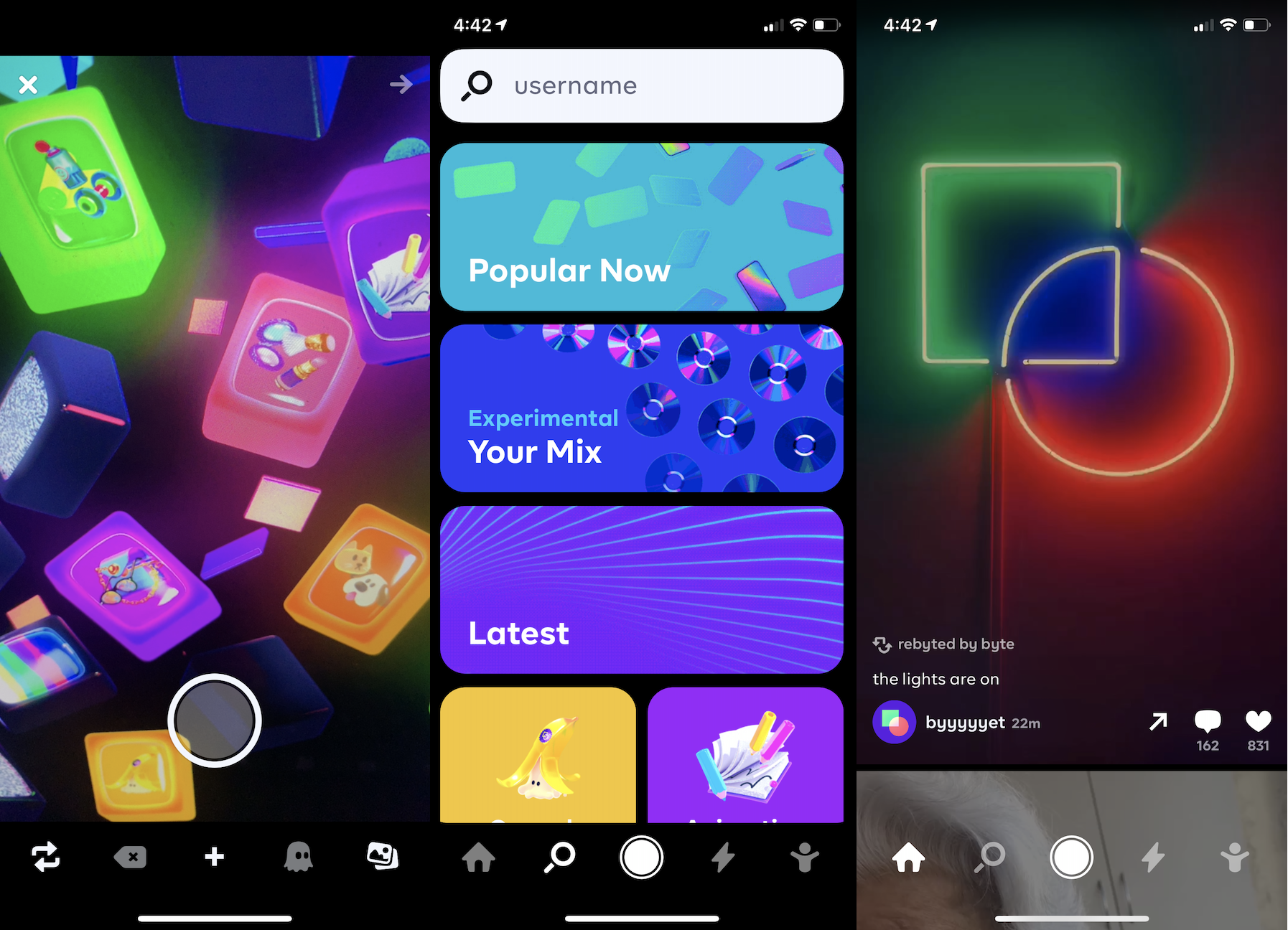
What Hofmann hopes will differentiate Byte is an early focus on helping content creators make money — something TikTok, and other micro-entertainment apps largely don’t offer. The app plans to soon launch a pilot of its partner program for offering monetization options to people proving popular on Byte. When asked if Byte would offer ad revenue sharing, tipping, or other options to partners, Hofmann told me that “We’re looking at all of those, but we’ll be starting with a revenue share + supplementing with our own funds. We’ll have more details about exactly how the pilot program will work soon.”
Many creators who’ve grown popular on apps like TikTok and Snapchat that lack direct monetization have tried to pull their audiences over to YouTube where they can earn a steady ad-share. By getting started paying early, Byte might lure some of those dancers, comedians, and pranksters over to its app and be able to retain them long-term. Former Vine stars turned TikTok stars like Chris Melberger. Joshdarnit, and Lance Stewart are already on Byte.
very soon, we'll introduce a pilot version of our partner program which we will use to pay creators. byte celebrates creativity and community, and compensating creators is one important way we can support both. stay tuned for more info.
— byte (@byte_app) January 25, 2020
Staying connected with Byte’s most loyal users is another way Hofmann hopes to set his app apart. He’s been actively running a beta tester forum since the initial Byte announcement in early 2018, and sees it as a way to find out what features to build next. “It’s always a bummer when the people behind online services and the people that actually use them are disconnected from one another, so we’re trying out these forums to see if we can do a better job at that” Hofmann writes.

Byte founder Dom Hofmann
Byte is a long time coming. To rewind all the way, Hofmann co-founded Vine in June 2012 with Colin Kroll and Rus Yusupov, but it was acquired by Twitter before its launch in January 2013. By that fall, Hofmann had left the company. But 2014 and 2015 saw Vine’s popularity grow thanks to rapid-fire comedy skits and the creativity unlocked by its looping effect. Vine reached over 200 million active users. Then the unthinkable happened. Desperate to cut costs, Twitter shut down Vine’s sharing feed in late 2016 so it wouldn’t have to host any more video content. The creative web mourned.
By then, Hofmann had already built the first version of Byte, which offered more free-form creation. You could pull together photos, GIFs, drawings and more into little shareable creations. But this prototype never gained steam. Hofmann gave Vine fans hope when he announced plans to build a successor called V2 in early 2018, but cancelled it a few months later. Hofmann got more serious about the project by then end of 2018, announcing the name Byte and then beginning beta testing in April 2019.
Now the big question will be whether Byte can take off despite its late start. Between TikTok, Snapchat, Instagram, and more, do people need another short-form video app? Winning here will require seducing high quality creators who can get bigger view counts elsewhere. Considering there’s already a pile of TikTok competitors like Dubsmash, Triller, Firework, and Facebook’s Lasso available in the US, creators seeking stardom on a less competitive network already have plenty of apps to try. Hofmann may have to rely on the soft spot for Vine in people’s memories to get enough activity on Byte to recreate its predecessor’s magic.
As the venture market tightens, a debt lender sees big opportunities
David Spreng spent more than 20 years in venture capital before dipping his toe into the world of revenue-based financing and realizing there was a growing appetite for alternatives to venture capital. Indeed, since forming debt-lending company Runway Growth Capital in mid-2015, Spreng has been busy writing checks to a variety of mostly later-stage companies on behalf of his institutional investors. (One of these, Oak Tree Capital Management in LA, is a publicly-traded credit firm.)
He expects he’ll be even busier in 2020. The reason — if you haven’t noticed already — is a general slowing down in what has been a very long boom cycle. “We’re in the late innings of a very long game,” said Spreng today, calling from Davos, where he has been attending meetings this week. “I don’t think the cycle is going to end this second. But where we went from a growth-at-all-costs mentality, boards are now saying, ‘let’s find a balance between top line growth and capital efficiency — let’s figure out a path to profitability.’ ”
Why is that good for Spreng and his colleagues? Because when a cycle ends, venture capitalists get stingier with their portfolio companies, writing fewer checks to support startups that aren’t hitting it out of the park, and often taking a bigger bite under more onerous terms when they do reinvest to counter the added risk they’re taking.
Google backtracks on search results design
Earlier today, Google announced that it would be redesigning the redesign of its search results as a response to withering criticism from politicians, consumers and the press over the way in which search results displays were made to look like ads.
Google makes money when users of its search service click on ads. It doesn’t make money when people click on an unpaid search result. Making ads look like search results makes Google more money.
It’s also a pretty evil (or at least unethical) business decision by a company whose mantra was “Don’t be evil”(although they gave that up in 2018).
Users began noticing the changes to search results last week, and at least one user flagged the changes earlier this week.
There's something strange about the recent design change to google search results, favicons and extra header text: they all look like ads, which is perhaps the point? pic.twitter.com/TlIvegRct1
— Craig Mod (@craigmod) January 21, 2020
Google responded with a bit of doublespeak from its corporate account about how the redesign was intended to achieve the opposite effect of what it was actually doing.
“Last year, our search results on mobile gained a new look. That’s now rolling out to desktop results this week, presenting site domain names and brand icons prominently, along with a bolded ‘Ad’ label for ads,” the company wrote.
Senator Mark Warner (D-VA) took a break from impeachment hearings to talk to The Washington Post about just how bad the new search redesign was.
“We’ve seen multiple instances over the last few years where Google has made paid advertisements ever more indistinguishable from organic search results,” Warner told the Post. “This is yet another example of a platform exploiting its bottleneck power for commercial gain, to the detriment of both consumers and also small businesses.”
Google’s changes to its search results happened despite the fact that the company is already being investigated by every state in the country for antitrust violations.
Forty-nine states and the District of Columbia are pushing an antitrust investigation against Google
For Google, the rationale is simple. The company’s advertising revenues aren’t growing the way they used to, and the company is looking at a slowdown in its core business. To try and juice the numbers, dark patterns present an attractive way forward.
Indeed, Google’s using the same tricks that it once battled to become the premier search service in the U.S. When the company first launched its search service, ads were clearly demarcated and separated from actual search results returned by Google’s algorithm. Over time, the separation between what was an ad and what wasn’t became increasingly blurred.
Color fade: A history of Google ad labeling in search results https://t.co/guo3jc4kwz pic.twitter.com/LMYqhmgfyE
— Ginny Marvin (@GinnyMarvin) July 25, 2016
“Search results were near-instant and they were just a page of links and summaries – perfection with nothing to add or take away,” user experience expert Harry Brignull (and founder of the watchdog website darkpatterns.org) said of the original Google search results in an interview with TechCrunch.
“The back-propagation algorithm they introduced had never been used to index the web before, and it instantly left the competition in the dust. It was proof that engineers could disrupt the rules of the web without needing any suit-wearing executives. Strip out all the crap. Do one thing and do it well.”
“As Google’s ambitions changed, the tinted box started to fade. It’s completely gone now,” Brignull added.
The company acknowledged that its latest experiment might have gone too far in its latest statement and noted that it will “experiment further” on how it displays results.
Here’s our full statement on why we’re going to experiment further. Our early tests of the design for desktop were positive. But we appreciate the feedback, the trust people place in Google, and we’re dedicating to improving the experience. pic.twitter.com/gy9PwcLqHj
— Google SearchLiaison (@searchliaison) January 24, 2020
The Pentagon pushes back on Huawei ban in bid for ‘balance’
Huawei may have just found itself an ally in the most unexpected of places. According to a new report out of The Wall Street Journal, both the Defense and Treasury Departments are pushing back on a Commerce Department-led ban on sales from the embattled Chinese hardware giant.
That move, in turn, has reportedly led Commerce Department officials to withdraw a proposal set to make it even more difficult for U.S.-based companies to work with Huawei.
Defense Secretary Mark Esper struck a fittingly pragmatic tone while speaking with the paper, noting, “We have to be conscious of sustaining those [technology] companies’ supply chains and those innovators. That’s the balance we have to strike.”
Huawei, already under fire for allegations of flouting sanctions with other countries, has become a centerpiece of a simmering trade war between the Trump White House and China. The smartphone maker has been barred from selling 5G networking equipment due to concerns over its close ties to the Chinese government.
Last year, meanwhile, the government barred Huawei from utilizing software and components from U.S.-based companies, including Google. Huawei is also expected to be a key talking point in upcoming White House discussions, as officials weigh actions against the repercussions they’ll ultimately have for U.S. partners.
The Commerce Department has yet to offer any official announcement related to the report.
Kraftful raises $1M to help smart home companies make better apps
If a thousand companies make their own smart light bulb, do a thousand companies also have to design a light switch app to control them?
Kraftful, a company out of Y Combinator’s Summer 2019 class, doesn’t think so. Kraftful builds the myriad components that an IoT/smart home company might need, puzzle piecing them together into apps for each company without requiring them to reinvent the light switch (or the padlock button, or the smart thermostat dial) for the nth time.
Because no company wants an app that looks identical to a competitor’s, much of what Kraftful produces is built to be tailored to each company’s branding — all the surface-level stuff, like iconography, fonts, colors, etc. are all customizable. Under the hood, though, everything is built to be reusable.
This focus on finding the parts that can be built once makes sense, especially given the team’s background. CEO Yana Welinder and CTO Nicky Leach were previously head of Product and a senior engineer, respectively, at IFTTT — the web service made up of a zillion reusable, interlinking “recipe” applets that let you hook just about anything (Gmail, Instagram, your cat’s litter box, whatever) into anything else to let one trigger actions on the other.
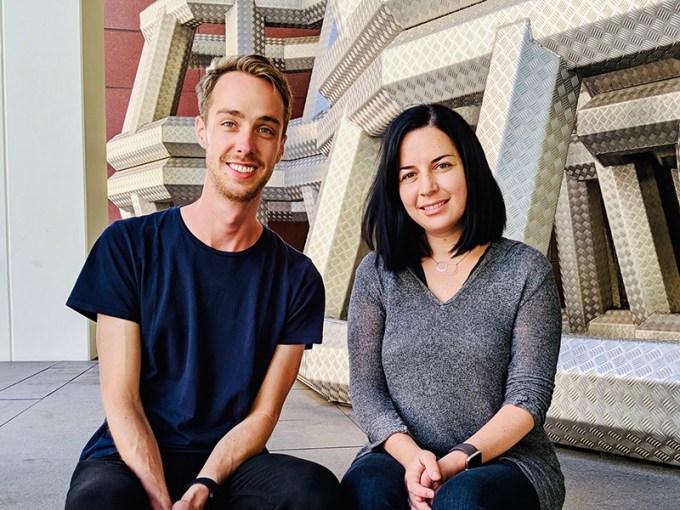
Kraftful founders Nicky Leach and Yana Welinder
So why now? More smart devices are coming onto the market every day, many of them from legacy appliance companies that don’t have much (or any) history in building smartphone apps. Good apps are the exception — the Philips Hue app is one of the better ones out there, and even it’s a little wonky sometimes. Many of them are… really bad.
Bad apps get bad App Store reviews, and bad reviews dent sales. And even for those who dive in and buy it without checking the reviews first, bad apps means returned devices. According to this iQor survey from 2018, 22% of smart home customers give up and return the products before getting them to work.
“We kind of looked around and realized that 80% of all smart home apps have zero, one or two stars on the App Store,” Welinder tells me.
Knowing what’s working and what’s not with buyers is a strength of Kraftful’s approach; behind the scenes, they can run all sorts of analytics on how users are actually interacting with components in the apps they’re powering and adjust all of them accordingly. If they make a tweak to the setup process in one app, do more users actually get all the way through it? Great. Now roll that out everywhere.
“If you look at some of the leading smart lock apps, they all have very… very similar interfaces. They’ve basically gotten to a standardized user experience, but they’ve all be developed individually,” says Welinder. “So all of these companies are spending the resources designing and developing these apps, but they’re not getting the benefit of being standardized across the board and being able to leverage data from all of these apps to be able to improve them all at once”
Kraftful builds the app for both iOS and Android, tailors it to the brand’s needs, offers cloud functionality like push notifications and activity history, provides analytics for insights on how users are actually using an app and keeps everything working as OS updates roll out and as device display sizes grow ever larger.
Of course, the entire concept of a dedicated app for a smart home device has some pretty fierce competition — between Apple’s HomeKit and Google Home, the platform makers themselves seem pretty set on gobbling up much of the functionality. But most buyers still expect their shiny devices to have their own apps — something branded and purpose-built, something for the manual to point them to. Power users, meanwhile, will always want to do things beyond what the all-encompassing solutions like HomeKit/Home are built for.
Folks at Google seem to agree with Kraftful’s approach — the team counts the Google Assistant Investments Program as one of the investors in the $1 million they’ve raised. Other investors include YC, F7 Ventures, Cleo Capital, Julia Collins (co-founder of Zume Pizza and Planet Forward), Lukas Biewald (co-founder of CrowdFlower), Nicolas Pinto (co-founder of Perceptio) and a number of other angel investors.
Welinder tells me they’re already working with multiple companies to start powering their apps; NDAs prevent her from saying who, at this point, but she notes that they’re “some of the largest brands that provide smart lights, plugs/switches, thermostats and other smart home products.”
A founder’s guide to recession planning for startups
Schwark Satyavolu
Contributor
Contributor
Schwark Satyavolu is a general partner at Trinity Ventures where he makes early-stage investments in fintech, security and AI. A serial entrepreneur, he co-founded Yodlee (YDLE) and Truaxis, both of which were acquired. Previously, he held senior executive positions at LifeLock and Mastercard. He is an inventor on 15 patents.
More posts by this contributor
We are living through one of the nation’s longest periods of economic growth. Unfortunately, the good times can’t last forever. A recession is likely on the horizon, even if we can’t pinpoint exactly when. Founders can’t afford to wait until the midst of a downturn to figure out their game plans; that would be like initiating swim lessons only after getting dumped in the open ocean.
When recession inevitably strikes, it will be many founders’ — and even many VCs’ — first experiences navigating a downturn. Every startup executive needs a recession playbook. The time to start building it is now.
While recessions make running any business tough, they don’t necessitate doom. I co-founded two separate startups just before downturns struck, yet I successfully navigated one through the 2000 dot-com bust and the second through the 2008 financial crisis. Both companies not only survived but thrived. One went public and the second was acquired by Mastercard.
I hope my lessons learned prove helpful to building your own recession game plan.
Daily Crunch: Goldman Sachs calls for diverse boards
The Daily Crunch is TechCrunch’s roundup of our biggest and most important stories. If you’d like to get this delivered to your inbox every day at around 9am Pacific, you can subscribe here.
CEO David Solomon told CNBC that beginning this year, Goldman will no longer take companies public if they don’t have at least one “diverse” member on its board of directors.
Some will, perhaps rightly, see the announcement as little more than marketing. After all, it’s already widely viewed as unacceptable for a company to go public without at least one female board member and preferably far more diversity than that.
2. London’s Met Police switches on live facial recognition, flying in face of human rights concerns
The deployment comes after a multi-year period of trials by the Met and police in South Wales. The Met says its use of the controversial technology will be targeted to “specific locations … where intelligence suggests we are most likely to locate serious offenders.”
3. Sonos clarifies how unsupported devices will be treated
If you use a Zone Player, Connect, first-generation Play:5, CR200, Bridge or pre-2015 Connect:Amp, Sonos is still going to drop support for those devices. But at least the company is backing away from its initial decision that your entire ecosystem of Sonos devices would stop receiving updates, as well.
4. Meet the B2B videoconferencing startup that’s gone crazy for online dating
Eyeson’s website touts “no downloads, no lag, no hassle” video calls. But when TechCrunch came across founder Andreas Kröpfl last December, pitching hard in Startup Alley at Disrupt Berlin, he was most keen to talk about something else entirely: video dating.
5. Layoffs hit Q&A startup Quora
Quora, the 10-year-old question-and-answer company based in Mountain View, is laying off staff in its Bay Area and New York offices. CEO Adam D’Angelo did not disclose the scale of the layoffs.
6. As SaaS stocks set new records, Atlassian’s earnings show there’s still room to grow
Atlassian reported earnings after-hours yesterday and the market quickly pushed its shares up by more than 10%. Alex Wilhelm explores why. (Extra Crunch membership required.)
7. Wikipedia now has more than 6 million articles in English
The feat, which comes roughly 19 years after the website was founded, is a testament of “what humans can do together,” said Ryan Merkley, chief of staff at Wikimedia, the nonprofit organization that operates the online encyclopedia.

UPDATE: Los Angeles-based CREXi raises $30 million for its online real estate marketplace
Los Angeles is one of the most desirable locations for commercial real estate in the United States, so it’s little wonder that there’s something of a boom in investments in technology companies servicing the market coming from the region.
It’s one of the reasons that CREXi, the commercial real estate marketplace, was able to establish a strong presence for its digital marketplace and toolkit for buyers, sellers and investors.
Since the company raised its last institutional round in 2018, it has added more than 300,000 properties for sale or lease across the U.S. and increased its user base to 6 million customers, according to a statement.
It has now raised $30 million in new financing from new investors, including Mitsubishi Estate Company (“MEC”), Industry Ventures and Prudence Holdings . Previous investors Lerer Hippeau Ventures and Jackson Square Ventures also participated in the financing.
CREXi makes money three ways. There’s a subscription service for brokers looking to sell or lease property; an auction service where CREXi will earn a fee upon the close of a transaction; and a data and analytics service that allows users to get a view into the latest trends in commercial real estate based on the vast collection of properties on offer through the company’s services.
The company touts its service as the only technology offering that can take a property from marketing to the close of a sale or lease without having to leave the platform.
According to chief executive Mike DeGiorgio, the company is also recession-proof thanks to its auction services. “As more distressed properties hit the market, the best way to sell them is through an online auction,” DeGiorgio says.
So far, the company has seen $700 billion of transactions flow through the platform, and roughly 40% of those deals were exclusive to the company.
“The CRE industry is evolving, and market players, especially younger, digitally native generations are seeking out platforms that provide free and open access to information,” said Gavin Myers, general partner at Prudence Holdings, in a statement. “CREXi directly addresses this market need, providing fair access to a range of CRE information. As CREXi continues to build out its stable of services, features, and functionality, we’re thrilled to partner with them and support the company’s continued momentum.”
CREXi joins the ranks of startups based in Los Angeles that have raised money to reshape the real estate industry. Estimates from Built in LA count roughly 127 companies, which have raised in excess of $2.4 billion, active in the real estate industry in Los Angeles. These companies range from providers of short-term commercial office space, like Knotel, or co-working companies like WeWork, to companies focused on servicing the real estate industry like Luxury Presence, which raised a $5 million round earlier in the year.
Due to inaccurate information provided by the company, an initial version of this story indicated that CREXi had raised $29 million in its Series B round. The correct number is $30 million.
German football league Bundesliga teams with AWS to improve fan experience
Germany’s top soccer (football) league, Bundesliga, announced today it is partnering with AWS to use artificial intelligence to enhance the fan experience during games.
Andreas Heyden, executive vice president for digital sports at the Deutsche Fußball Liga, the entity that runs Bundesliga, says that this could take many forms, depending on whether the fan is watching a broadcast of the game or interacting online.
“We try to use technology in a way to excite a fan more, to engage a fan more, to really take the fan experience to the next level, to show relevant stats at the relevant time through broadcasting, in apps and on the web to personalize the customer experience,” Heyden said.
This could involve delivering personalized content. “In times like this when attention spans are shrinking, when a user opens up the app the first message should be the most relevant message in that context in that time for the specific user,” he said.
It also can help provide advanced statistics to fans in real time, even going so far as to predict the probability of a goal being scored at any particular moment in a game that would have an impact on your team. Heyden thinks of it as telling a story with numbers, rather than reporting what happened after the fact.
“We want to, with the help of technology, tell stories that could not have been told without the technology. There’s no chance that a reporter could come up with a number of what the probability of a shot [scoring in a given moment]. AWS can,” he said.
Werner Vogels, CTO at Amazon, says this about using machine learning and other technologies on the AWS platform to add to the experience of watching the game, which should help attract younger fans, regardless of the sport. “All of these kind of augmented customer fan experiences are crucial in engaging a whole new generation of fans,” Vogels told TechCrunch.
He adds that this kind of experience simply wasn’t possible until recently because the technology didn’t exist. “These things were impossible five or 10 years ago, mostly because now with all the machine learning software, as well as how the [pace of technology] has accelerated at such a [rate] at AWS, we’re now able to do these things in real time for sports fans.”
Bundesliga is not just any football league. It is the second biggest in the world in terms of revenue, and boasts the highest stadium attendance of all football teams worldwide. Today’s announcement is an extension of an ongoing relationship between DFL and AWS, which started in 2015 when Heyden helped move the league’s operations to the cloud on AWS.
Heyden says that it’s not a coincidence he ended up using AWS instead of another cloud company. He has known Vogels (who also happens to be a huge soccer fan) for many years, and has been using AWS for more than a decade, even well before he joined the DFL. Today’s announcement is an extension of that long-term relationship.