Intel’s made two attempts to fix the microprocessor vulnerability it was warned about 18 months ago. Third time’s the charm?
Category: Tech news
hacking,system security,protection against hackers,tech-news,gadgets,gaming
Los Angeles’ AmazeVR raises more cash, heads to Incheon for first location-based VR installation
AmazeVR, the Los Angeles-based virtual reality entertainment distribution service, is taking its first steps into the world of location-based virtual reality experiences with an installation in Seoul’s Incheon International Airport.
The company, which also scored an additional $2.5 million commitment to expand its total funding to around $9 million, made the announcement last week.
The company, which launched last May with backing from the Korean hardware manufacturer LG, has added Partners Investment and YG Investment, the financing arm of YG Entertainment, which manages a stable of Korean pop artists and owns a record label, talent agency, production company and events management and concert production company.
Founded by a cadre of seasoned Korean technology executives, AmazeVR soft-opened an 11,000-square-foot entertainment hub in Incheon’s airtrain station on the way to Terminal 1. It’s a mix of meditation areas and relaxation-focused VR videos, the company said.
There’s also a performance stage to display immersive performances from popular musicians (hence the YG investment) and an indoor playground for kids and the kids-at-heart.
“As leaders in the online VR consumer market, one of our key objectives is to broaden our distribution and expand capabilities towards immersive experiences offline as well,” said Steve Lee, AmazeVR’s chief executive, in a statement. “Through this location-based hub at Incheon International Airport, we can expose an untapped market not just to the great content that AmazeVR produces, but also to the wonders of VR in general. Our investors recognize this and have deep connections within the music and entertainment industries, which will help us develop unique VR experiences with even more incredible content that will extend VR adoption globally.”
The company has inked partnerships with two of the last remaining immersive entertainment studios, Atlas V and Felix & Paul Studios.
“Our mission, is that we believe in the consumer market,” says Earnest Lee, AmazeVR’s chief content officer. “We have seen the VR market is still fairly nascent and we’re moving forward with location-based entertainment. This is a start to get into the location-based industry.”
Boston Dynamics’ new and former CEOs discuss the future of the robotics pioneer
After more than a quarter century, Boston Dynamics has a new CEO. The transition (which quietly occurred late last year), saw founder Marc Raibert step aside to become chairman, as longtime employee Rob Playter took the reins.
The key personnel change comes at a pivotal time for the company, which recently began the process of commercializing a pair of its extremely advanced robots. Along with the C-level shift, Boston Dynamics also announced that it’s making the SDK for its Spot robot available to all via GitHub. Boston Dynamics has already begun producing commercial versions of its quadrupedal robot. Among its earliest adopters is former Mythbuster Adam Savage, who is set to release a series of videos featuring the machine.
Ahead of making all of these announcements official, Raibert and Playter sat down with TechCrunch to discuss their new roles and what the future may hold for Boston Dynamics.
Casper’s valuation could fall 40% in IPO as it reports 2019 results
Hello and welcome back to our regular morning look at private companies, public markets and the gray space in between.
Today we’re taking stock of the latest from Casper, the D2C mattress company that is going public. The unicorn announced its initial IPO price range this morning, targeting a $17 to $19 per-share IPO price range — an interval that dramatically reprices the firm. When Casper first filed to go public, questions regarding its unprofitability, growth rate and economics quickly arose. Whether the firm would be able to go public at a flat price to its final private round was not obvious, and today’s news makes it clear that that is not likely.
Let’s explore the pricing and the company’s new valuation range, then figure out what the hell went wrong. To understand the new pricing, we’ll dig into the company’s preliminary full-year 2019 results. Let’s go!
Prices, ranges
Casper is hoping to sell 8.35 million shares at $17 to $19 apiece, with another 1.25 million shares reserved for its underwriting banks. Without the option, Casper could raise from $142 million to about $159 million. Including the underwriters’ shares boosts those results to $163 million to $182 million.
Get ready to see Spotify’s looping videos on Instagram
Following Spotify’s confirmation of a new Stories feature, initially being tested by social media influencers, the company this morning announced it will now allow artists to reach their Instagram fan bases in a new way, too. However, in this case, they aren’t creating Spotify Stories they can market elsewhere on their social media, but instead are able to share their unique video art from Spotify’s Canvas feature directly to their Instagram.
Canvas launched into beta last fall, allowing artists to replace the album art that appears when a song is playing with a moving, visual experience that plays in a short loop. Canvas videos have had mixed reviews, as some users find the imagery distracting while others seem to prefer it.
Starting today, the thousands of artists in the Canvas beta will be able to share their looping videos to Instagram with just a tap.
From the app’s Artists profile, each track that included a Canvas will have a “Share” icon next to it. By tapping that icon, artists can share the song and its Canvas to Instagram Stories. The post will look like a regular Spotify share, with cover art and a link to play the track on Spotify. However, now their looping video will be the backdrop.
Currently, the Canvas beta is only available to those using the Spotify for Artists app on iOS. Spotify says it’s working to bring the sharing feature to Android users soon.
In addition, fans seeing the Canvas on Instagram aren’t counted in the Canvas metrics, unless they click through to Spotify, the company says.
The feature itself is intended to aid artists who are marketing their new songs to fans on Instagram, as well as for highlighting updates to Canvas — like those that are updated to include clips from a new music video, new art or live performances, for example.
One high-profile artist who’s taking advantage of Canvas is Billie Eilish — the artist who just swept last night’s Grammy Awards by winning the four biggest prizes — best new artist, record of the year, album of the year and song of the year. Eilish has used Canvas to share animated versions of fan art, which helps her to better engage with her fan base.
Spotify claims that adding a high-quality Canvas has increased track shares by up to 200%, in addition to lifting streams, saves and artist profile visits. By expanding Canvas to Instagram, those shares should bump up even higher, the company believes.
Despite its social media media-inspired features, like the new Stories addition or the looping videos of Canvas, Spotify doesn’t intend for its streaming app to become a new social platform. Instead, its focus is on building features that artists and listeners can leverage to better connect with social media fan bases elsewhere — either to help market themselves and their music or to improve discoverability of new music among their followers.
Artists interested in Canvas can sign up for the waitlist here.
Max Q: Lego Space Stations and robot astronauts
Max Q is a new weekly newsletter all about space. Sign up here to receive it weekly on Sundays in your inbox.
This week saw a huge funding round for a new space startup that’s working on the problem of distribution and use of the new data networks made possible by the explosion in the small satellite and satellite constellation industry. But we also saw one of the next wave of launch startups encounter a bit of a setback on their path to actually delivering their first rocket to orbit.
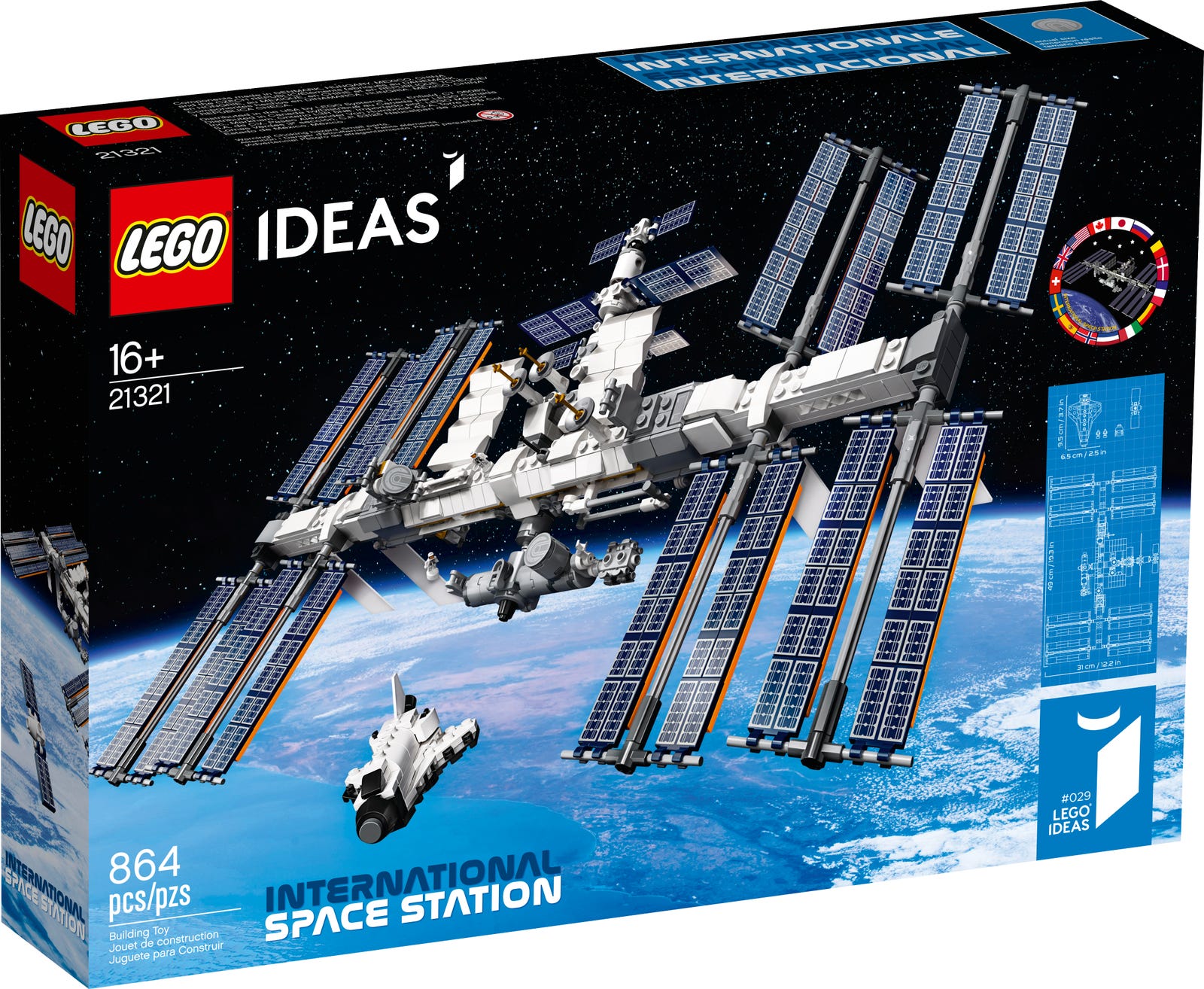
Lego is selling an ISS kit
Lego is putting a new official International Space Station kit up for sale starting next month, after the project was originally suggested on its Ideas crowdsourcing platform. The new kit comes in at an impressive 864 pieces, and includes astronaut mini-figs for simulated spacewalks, plus a Space Shuttle and a capsule.
It’s bound to be a hot item once it’s actually released, so I would say it’s probably best to get an order in fast once this goes on sale in February if you want to pick one up.
Skylo raises $103 million for IoT satellite comms
There’s been a huge increase in the number of satellites and satellite constellations in operation, but that doesn’t mean it’s easy for devices here on Earth to access the data networks many of those new satellites operate. Previously stealth startup Skylo aims to make it much easier for these networks to provide useful services here on Earth, and they’ve raised a new round of $103 million to make that happen, bringing their total raised to $116 million.
ISRO’s path to human spaceflight includes humanoid astrobots
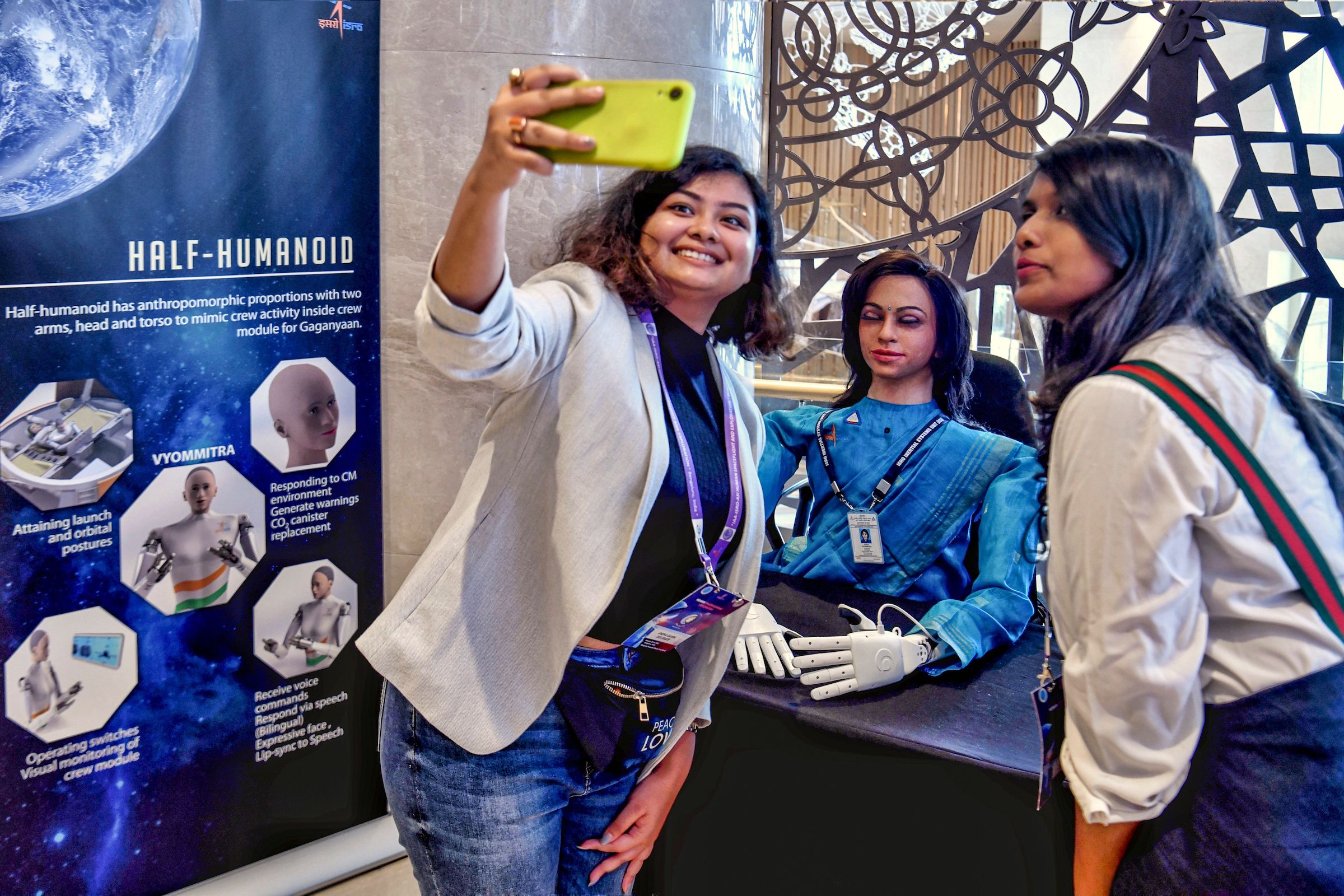
Visitors take selfies with ‘Vyommitra,’ the first prototype half humanoid robot developed by the Inertial Systems Unit of Indian Space Research Organisation (ISRO) for its planned ‘Gaganyaan’ unmanned mission, at an exhibition during a symposium on Human Spaceflight and Exploration – Present Challenges and Future Trends in Bangalore on January 23, 2020. (Photo by Manjunath Kiran / AFP) (Photo by MANJUNATH KIRAN/AFP via Getty Images)
India’s Space Research Organization is getting ready for its first human spacecraft launches, set for 2022. The path to that goal includes sending up a half-humanoid robot called “Vyommitra,” whose face resembles that of a human woman. This robot is able to perform all the in-flight procedures that a real human pilot would be required to do, and will help test the agency’s Gaganyaan spacecraft before any people give it a go.
Firefly Aerospace starts a fire
Launch startup Firefly Aerospace has overcome its fair share of difficulties, including a bankruptcy filing, but now it’s underway with hot-fire testing of its Alpha launch vehicle. Unfortunately, its first test of the engines that power this rocket with the spacecraft assembled resulted in a fire on the launch pad, which will mean an investigation to figure out how not to do that in the future.
NASA sets cargo manifests for first lunar landers

NASA’s first lunar lander missions provided by commercial contractors are set to fly this year — two landers should launch if all goes to plan, including one from Astrobotic and one from Intuitive Machines. Both of these are partners with the agency through its Commercial Lunar Payload Services (CLPS) sourcing program, and their landers will hopefully prove the viability of using private suppliers to get key experiments and cargo to the Moon’s surface ahead of the planned return of human astronauts.
Capella Space has a new and improved Earth observation satellite
Startup Capella Space has a new satellite design that can provide best-in-class resolution on a spacecraft of its size, which should unlock lots of additional demand for its services from clients who want to be able to image parts of the Earth on demand with fast turnaround time and plenty of detail.
Rocket Lab’s first mission of 2020 is for the NRO
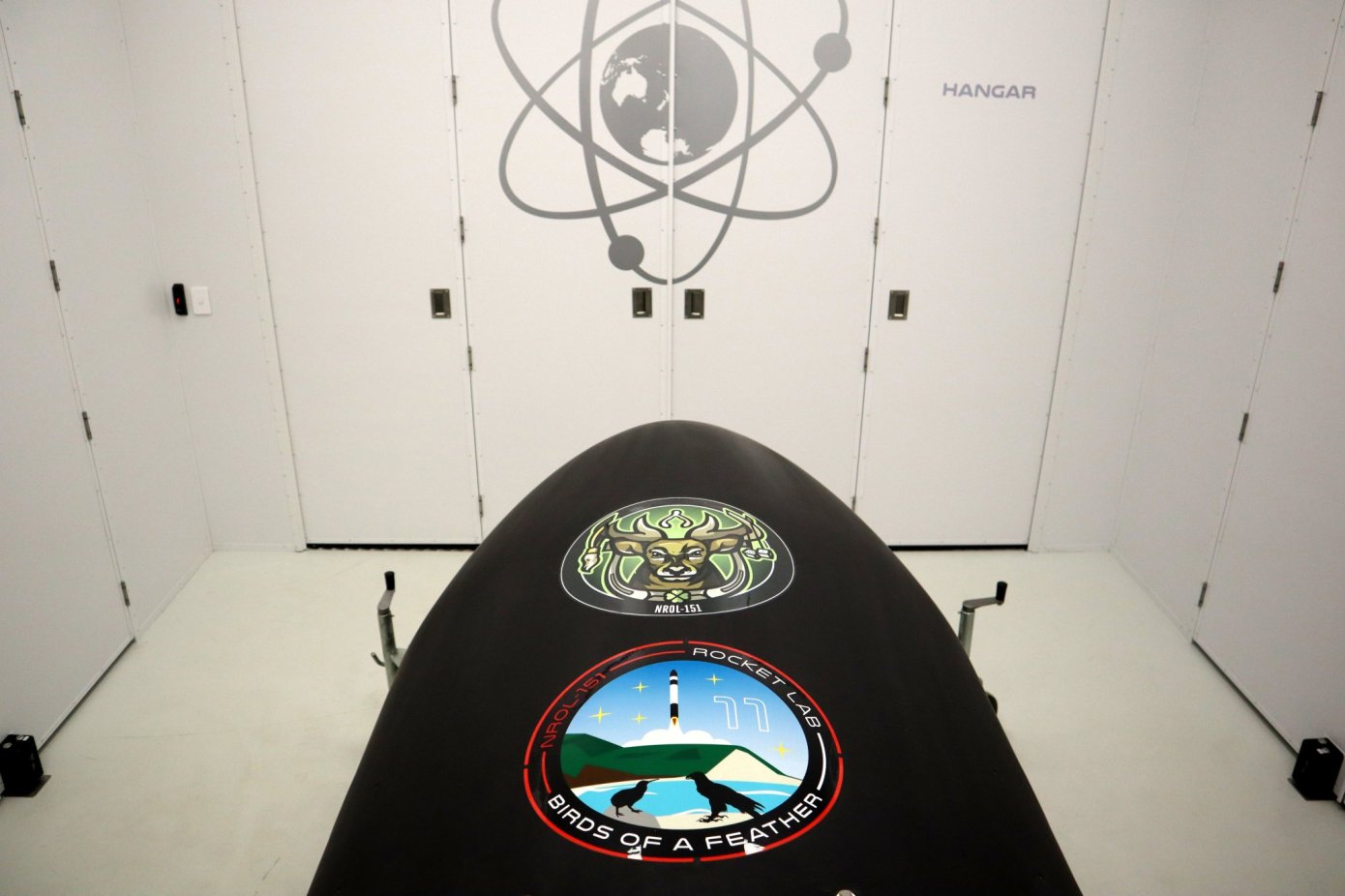
The National Reconnaissance Office is Rocket Lab’s first client of 2020 for a launch, and the mission is set to take off from the company’s New Zealand launch pad at the end of this month. This is also the first mission the NRO has awarded under its Rapid Acquisition of a Small Rocket. or RASR. contract model, which basically aims for cheap and fast launch vehicle sourcing.
Building High-Rises Out of Wood Can Help Save the Planet
Concrete and steel come with massive emissions. So let’s ditch them and build towers out of wood. Yes, wood.
Billie Eilish Cleaned Up at the Grammys
The 18-year-old won five of the six awards for which she was nominated.
Mural raises $23M Series A after history of capital-efficient growth
This morning Mural, a software startup focused on visual collaboration,1 announced that it closed a $23 million Series A round of capital. The funds come after Mural, formerly Mural.ly, had raised just a few million dollars previously. That fact made its round interesting: How did the company raise 10 times its prior total in one round, and why did it pursue so much money in a single shot?
TechCrunch chatted with the company’s CEO, Mariano Suarez-Battan, and Weston Gaddy, the round’s lead investor hailing from Radian Capital, to better understand the investment. Endeavor Catalyst and Google’s Gradient Ventures also put money into the round.
Efficient growth
Around the time when WeWork’s IPO was collapsing under its own hubris, the venture market changed. In a flash, growth lost its shine, and efficient growth became the new hot thing. Mural got there a little earlier than its market, which appears to have put it in a strong position today.
Asked why the company had put together a $23 million round when it did, Suarez-Battan told TechCrunch that after growing the company on the back of customer revenue, it felt in 2019 that it was time to add more capital to the bank.
“We grew with our customers,” the CEO said, going back in time to explain: “Starting in 2014, IBM became our first and biggest customer. And since then we’ve been selling to large firms, [today] most of our revenue comes from large firms.” The CEO went on to cite “six-figure deals and a couple that are more than a million bucks a year” as evidence that his company’s approach to growth has worked.
Where does the new capital come in? According to Suarez-Battan, in 2019, the company started to notice that customers wanted to buy more from it. This was evidence, he said, that the company’s “land-and-expand motion” was working. He says that enterprise momentum was the impetus to bring in a great team to “build a group of people that can help, interact with consultants, and go to market together.”
So on the back of customer momentum and proven demand, the firm is going to staff up. That’s a pretty traditional use of venture capital, but one that, given the firm’s history of capital efficiency, seems to fit the current climate.
Gaddy also answered the why now, and why so much question, saying that Mural is riding a “secular trend in terms of how people are going to produce creative work.” He also said that the company’s user traction, product traction and revenue traction were evidence of product-market fit. Investors love product-market fit.
The market
Mural is a tool that can be seen as a remote-work-friendly service. It’s also workplace collaboration software, putting it smack-dab in the middle of two current trends in Startuplandia.
Remote work is growing, albeit more slowly than its acolytes might have you think, while workplace collaboration tooling has seen tremendous venture interest. Recall that the hottest startup out of the last Y Combinator batch was Tandem, which calls itself a “virtual office for remote teams,” making another company that helps remote staffs and others collaborate.
We haven’t heard much from, or about, Tandem lately, but Mural is certainly now richer than it ever has been. We’ll pester for some growth metrics in a few quarters.
- Object-oriented, remote-friendly, team-work? Team-oriented, object-friendly, work for teams? Digital whiteboards gone mad! You get the idea.
GM commits $3 billion to build electric and autonomous vehicles in Michigan
GM said Monday it will invest $2.2 billion into its Detroit-Hamtramck assembly plant to produce all-electric trucks and SUVs, as well as a self-driving vehicle unveiled by its subsidiary Cruise. The automaker will invest an additional $800 million in supplier tooling and other projects related to the launch of the new electric trucks.
GM will kick off this new program with an all-electric pickup truck that will go into production in late 2021. The Cruise Origin, the electric self-driving shuttle designed for ridesharing, will be the second vehicle to go into production at the Detroit area plant.
Detroit-Hamtramck will be GM’s first fully dedicated electric vehicle assembly plant. When fully operational, the plant will create more than 2,200 jobs, according to GM.
Electric trucks, SUVs and the @Cruise Origin — all built here in our hometown. This is what the future of transportation looks like. #Detroit #ZeroEmissions https://t.co/7Ht4itRIOu pic.twitter.com/1nis05YnuQ
— General Motors (@GM) January 27, 2020
The investment announcement follows a recent spate of electric and autonomous vehicle-related news by GM, including the formation of a joint venture with LG Chem to mass produce battery cells for its electric vehicles. The two companies said in December they will invest up to a total of $2.3 billion into the new joint venture and will establish a battery cell assembly plant on a greenfield manufacturing site in the Lordstown area of Northeast Ohio that will create more than 1,100 new jobs. Groundbreaking is expected to take place in mid-2020.
This joint venture will supply battery cells for the electric vehicles manufactured at Detroit-Hamtramck.
Cruise unveiled January 21 a driverless vehicle called Origin — the product of a multi-year collaboration with parent company GM and investor Honda that is designed for a ridesharing service. The shuttle-like vehicle — branded with Cruise’s trademark orange and black colors — has no steering wheel or pedals and is designed to travel at highway speeds.
“Through this investment, GM is taking a big step forward in making our vision of an all-electric future a reality,” GM president Mark Reuss said during a press event. “Our electric pickup will be the first of multiple electric truck variants we will build at Detroit-Hamtramck over the next few years.”
Detroit-Hamtramck employs 900 people who build the Cadillac CT6 and the Chevrolet Impala. GM plans to idle the plant for several months, starting at the end of February, as renovations begin.
Adding India to your business
Kumar Shah
Contributor
Contributor
Kumar Shah is the founder of Transit Capital, a cross-border VC firm that partners with growth-stage entrepreneurs building global champions.
At the start of recruiting season in business school, a top-tier consulting firm sent an invite to the entire class: “over your career, you will either be sitting with us or across from us. We would like to get to know you.”
If you’re building a large-scale technology startup, sooner or later, you should be having a conversation about the Indian market. India’s growth is often compared to China’s, but the big difference between these two markets is that India has an open internet infrastructure, where the best product wins.
In the last decade, Indian consumers have enjoyed the trifecta of cheap smartphones (courtesy of Android), some of the lowest data rates on the planet (courtesy of Mukesh Ambani’s telecom firm Jio) and rising disposable income. Most consumer startups from the U.S., Europe and China have already seen a large number of users organically adopt their product as hundreds of millions of Indians have come online.
Some examples:
- for most of 2018 and 2019, Tinder was the highest grossing app in India
- Quora and Pinterest are consistently in the top 30 most visited websites
- India is the largest or second-largest user base for Facebook, WhatsApp, YouTube, Linkedin, Twitter, Snapchat and many other platforms
Snapchat, in particular, has seen tremendous growth in the Indian market. In March 2019, Snap launched eight new languages — five of which are spoken in India. Consequently, the company reported in Q3 2019 that 6 million out of the 7 million new Daily Active Users added were from outside the U.S. Snapchat’s stock is up almost 3x in the last year, well ahead of Nasdaq’s performance in the same period.
As a cross-border investment firm investing in U.S. and European companies to help them grow in India, we thought it would be useful to share our conversations with growth-stage entrepreneurs about the Indian market. In this article, we will focus on consumer-facing (B2C and B2B2C) companies.
What segment of India do you want to target first?
While everyone thinks of India as a singular 1.3 billion-consumer market, there are, in fact, multiple sub-segments that have their own characteristics and are acquired differently. The India 1 segment, arguably the most lucrative, constitutes the 25+ million Indians who have credit cards, form the 10 million iPhone install base and were Netflix’s first 500,000 users in the country. The India 2 segment requires products that work in languages other than English and potentially different product features (such as voice input). Snapchat is now focused on acquiring India 2 users with its new language strategy.
What are the best ways to acquire users in this segment?
The short answer is — it depends. If you are in a category (such as gaming) that appeals to a broad demographic and geography, strategic partnerships with mobile OEMs or unicorns building super apps (Paytm and PhonePe for example) will give you a high-volume distribution channel. If you are a wellness app that is focused on India 1 users only, then it makes sense to prioritize channels or partnerships, such as hospital chains in Tier 1 cities, to acquire that segment of users. If you already have organic traction in the country, look at your analytics (for example, cities where your users are based, price range of phone models being used and so on) to understand your initial set of power users.
What is your monetization and pricing strategy?
The monetization strategy that worked in your existing market(s) may not work in the Indian market. From both an addressable base of paying customers (see the install base of credit cards above) to the ARPU, Asian markets have significantly lagged their western counterparts.
The good news is that with the strong adoption of Unified Payments Interface (UPI), a first-of-its-kind payments protocol that can be implemented by third-party applications, there is almost no friction (or costs) to receive payment amounts as small as two cents. When in India, you should be using UPI.
While Tinder found success with subscription billing at U.S. prices, Netflix entered India with a ~$7/month billing plan in line with their global rates but realized that growth would only come through innovations such as mobile-only plans at $2.80/month. Apple and Spotify have been clear that they want to target the mass market and launched with plans that are close to $1.50/month, a significant discount to their U.S. and European plans.
While these companies have found success with subscription billing, more likely monetization models are advertising led (YouTube) or freemium. Are there features in your product that you can charge a premium for while still offering a subset of the product for free (and cover your direct costs through advertising)? Are there partnerships (such as the ones that Netflix and Amazon Video have signed with Indian telcos) where you can get paid indirectly for your core product?
Build your costs in line with your target segment and pricing
Now that you have a better idea of your target market size and expected pricing, you should build a cost structure that is in line with expected revenues. Most of the companies we track have acquired their first five million customers (or more) in India with an initial team of one to three people on the ground. From both a team build out as well as customer acquisition cost point of view, most companies have been disappointed that they have invested in resources well ahead of understanding the size of their target market and expected revenues.
Find a local partner
If you aren’t setting up a local team in the near term, we recommend having a local partner/shareholder that is aligned with your business and plans. From regular follow-ups on strategic conversations to keeping tabs on changes in regulations, having someone local who understands your business is critical to your entry and expansion plans. Similar to the scrutiny that internet companies face in other countries, India is also drafting regulations for localized data storage and mandating a local point of contact for companies that have more than 5 million users.
For entrepreneurs building global champions, having an India strategy is essential and can form the beachhead to expand into Southeast Asia and the Middle East. As Mary Meeker has repeatedly noted in her annual report, India and Indonesia will be the first and third-largest open internet markets in the world.
What excites our team is that India is already home to significant user bases for early and growth-stage private companies such as Truecaller (100 million daily users), Quora (second largest market), Duolingo (10 million users), Brainly (20 million users), Wattpad (3 million users) and Vyng (14 million installs), while others such as FlixBus are actively setting up operations.
We hope you found the above information helpful. And if you are building a global technology company, we would like to get to know you.
Defying Vertigo to Capture Aerials From an Ultralight Plane
A photographer overcame her altitude anxieties to capture canvas-worthy aerials of the French countryside.
AI License Plate Readers Are Cheaper—So Drive Carefully
Police can add computer-vision software to ordinary security cameras for as little as $50 a month.
The Best Dyson Vacuums (2020): V11, V7 Trigger, and More
It’s easy to get sucked into the brand’s vast catalog. Here are the ones that floored us.
Tinder Swipes Right on AI to Help Stop Harassment
The dating app says its new machine-learning tool can help flag potentially offensive messages and encourage more users to report inappropriate behavior.