Why startups are raising more venture debt as VC dollars near all-time records

Hello and welcome back to our regular morning look at private companies, public markets and the gray space in between.

As I write to you, SaaS and cloud stocks are busy setting fresh all-time highs and as we’ve seen, venture interest in modern software companies is pushing more money into the sector. But despite it appearing to be an incredibly good time to raise equity funding, venture debt and revenue-based financing appear to be having a moment.

So why are more folks talking about and raising debt to help power their startups, even when valuations are high and there is a lot of venture capital to be raised?

As with all explorations of complex, evolving trends, there’s no one answer. But, some data from a 2019-era survey on venture debt and a conversation I had with equity-free SaaS finance shop Element Finance’s John Gallagher (Element is a Scaleworks spinout) help explain what’s going on. Let’s start with how big the venture debt world is and how fast it is growing and then turn to what’s powering its expansion.

Rising debt

The data we’re going to discuss is directional and probably pretty accurate, which is just fine for what we want to do today: detail a general trend of rising venture debt volume over the past few years to confirm what we’ve presumed to be a trend for some time.

Thanks to a report from last year undertaken by Kruze (a startup accounting and HR consultancy), what the firm described as the “largest survey of the venture debt market” undertaken, including firms that “control well over half of the venture debt dollars in the United States,” here are estimated totals of domestic venture debt volumes for the past half-decade:

Tesla locks in stock surge with $2B offering at $767 per share

Tesla has priced its secondary common stock offering at $767, a 4.6% discount from Thursday’s share price close, according to a securities filing Friday.

Tesla said in the filing it will sell 2.65 million shares at that discounted price to raise more than $2 billion. Lead underwriters Goldman Sachs and Morgan Stanley have the option to buy an additional 397,500 shares in the offering.

Tesla shares closed at $804 on Thursday. The share price opened lower Friday, jumped as high at $812.97 and has hovered around $802.

The automaker surprised Wall Street on Thursday when it announced plans to raise more than $2 billion through a common stock offering, despite signaling just two weeks ago that it would not seek to raise more cash.

CEO Elon Musk will purchase up to $10 million in shares in the offering, while Oracle co-founder and Tesla board member Larry Ellison will buy up to $1 million worth of Tesla shares, according to the securities filing.

Tesla said it will use the funds to strengthen its balance sheet and for general corporate purposes. In a separate filing Thursday that was posted prior to the stock offering notice, Tesla said capital expenditures could reach as high as $3.5 billion this year.

The stock offering conflicts with statements Musk and CFO Zach Kirkhorn made last month during Tesla’s fourth-quarter earnings call. An institutional investor asked that given the recent run in the share price, why not raise capital now and substantially accelerate the growth in production? At the time, Musk said the company was spending money sensibly and that there is no “artificial hold back on expenditures.”

At the time of Thursday’s announcement, Tesla shares had risen more than 35% since the January 29 earnings call, perhaps proving too tempting of an opportunity to ignore.

Better know a CSO: Dropbox head of security Justin Berman

Justin Berman has one of the most important jobs at Dropbox .

As head of security, he oversees the company’s cybersecurity strategy, its defenses and works daily to keep its more than 600 million users’ data private and secure.

No pressure, then.

Berman joined the file storage and workspace giant a year ago during a period of transition for the company. During its early years, Dropbox was hit by a data breach that saw more than 60 million user passwords stolen during a time where tech giants were entrenched in a “move fast and break things” culture. But things have changed, particularly at Dropbox, which made good on its promise to improve the company’s security and also went far beyond what any Silicon Valley company had done before to better protect security researchers.

In this series, we’ll look at the role of the CSO — the chief security officer — at some of the biggest companies in tech to better understand the role, what it means to keep an organization secure without hindering growth and what advice startups can learn from some of the most experienced security professionals in the industry.

We start with Berman, who discussed in a recent interview what drew him to the company, what it means to be a security chief and what other companies can learn from Dropbox’s groundbreaking security policies.

This interview has been edited for length and clarity.

TechCrunch: You’ve been at Dropbox since June. Before this you were at Zenefits, Flatiron Health and Bridgewater. What brought you to Dropbox?

Justin Berman: First and foremost, I think the people here are amazing. And I think the problems I get to solve here are not the ones that a lot of security leaders find themselves solving. Because the company has had a historical commitment to security, privacy, and trust and risk, I’m not coming in and having to boot the culture of security from the ground up. That culture already exists. And the question we ask ourselves is how do we use that culture to do the right level of things as opposed to just doing as much as possible where you might slow down the business?

Fiddler Labs, SRI and Berkeley experts open up the black box of machine learning at TC Sessions: Robotics+AI

As AI permeates the home, work, and public life, it’s increasingly important to be able to understand why and how it makes its decisions. Explainable AI isn’t just a matter of hitting a switch, though; Experts from UC Berkeley, SRI, and Fiddler Labs will discuss how we should go about it on stage at TC Sessions: Robotics+AI on March 3.

What does explainability really mean? Do we need to start from scratch? How do we avoid exposing proprietary data and methods? Will there be a performance hit? Whose responsibility will it be, and who will ensure it is done properly?

On our panel addressing these questions and more will be two experts, one each from academia and private industry.

Trevor Darrell is a professor at Berkeley’s Computer Science department who helps lead many of the university’s AI-related labs and projects, especially those concerned with the next generation of smart transportation. His research group focuses on perception and human-AI interaction, and he previously led a computer vision group at MIT.

Krishna Gade has passed in his time through Facebook, Pinterest, Twitter and Microsoft, and has seen firsthand how AI is developed privately — and how biases and flawed processes can lead to troubling results. He co-founded Fiddler as an effort to address problems of fairness and transparency by providing an explainable AI framework for enterprise.

Moderating and taking part in the discussion will be SRI International’s Karen Myers, director of the research outfit’s Artificial Intelligence Center and an AI developer herself focused on collaboration, automation, and multi-agent systems.

Save $50 on tickets when you book today. Ticket prices go up at the door and are selling fast. We have two (yes two) Startup Demo Packages Left – book your package now and get your startup in front of 1000+ of today’s leading industry minds. Packages come with 4 tickets – book here.

Sundance: Feels Good Man charts a path of redemption for Pepe

Can a meme be redeemed? That’s the central question in Arthur Jones’ Feels Good Man — a documentary that premiered at Sundance this year charting the course of the creator of Pepe the Frog, a comic book character turned universally recognized meme, as he attempts to reclaim it from racists and shitposters.

The sweet, gentle pacing of the doc fits well with the calm, sensitive demeanor of its creator Matt Furie . Furie is described as “ethereal” by one of his friends in the piece and that’s mostly true. As Pepe is created, then coopted by the residents of 4chan and turned into a meme representing ennui, disenfranchisement and white supremacy in turn, Furie takes it mostly in stride.

But he’s not without passion, as lines begin to be crossed and Pepe becomes registered as hate speech by the Anti-Defamation League, Furie sees an opportunity to try to reclaim his symbol. He’s unsuccessful for the same reason anything is popular on the internet — there are simply too many nerve endings to properly anesthetize them all.

The vast majority of the people that use Pepe are completely unaware of its origins. And the general community of Internet people that communicate via memes go a step beyond that to being un-able to even grasp the concept of ownership. Once something has entered into the cultural bloodstream of the Internet, its origins often dwindle to insignificance.

That doesn’t, of course, stop a creator from existing or caring how their creation is used. And the portrait painted here of a gentle and caring artist forced to watch the subversion and perversion of his creation is heartbreaking and important.

Feels Good Man stands above the pack of docs about internet cultural phenomenon. It peels back enough of the layers of the onion to be effective in ways that analysis of culturally complex idioms born online are often deficient.

Too many times over the years we’ve seen online movements analyzed with an overly simplistic point of view. And the main way they typically fall down is by not including the influence and effect of that staple of online life: trolls. People doing things for the hell of it who then become a part of a larger movement but always have that arms length remove to fall back on, able to claim that it was just a gag.

Jones mentioned during a Q&A after the screening that they wanted Furie’s art to be a character, to have a part to play throughout the film. In addition to scenes of Matt drawing, this is best accomplished by the absolutely gorgeous animation sequences that Jones and a team of animators created of Pepe and the rest of the Boy’s Club characters. They’re delightful and welcome respite from the somewhat hammer-like nature of the dark places Pepe is unwittingly drawn by the various subcultures he is adopted by.

It’s not a perfect film, the sequences with an occultist are goofy in a way that doesn’t fit with the overall flavor of the piece. But it’s probably one of the better documentary films ever made about the Internet era and well worth watching when it gets picked up.

Will Apple, Facebook or Microsoft be the future of augmented reality?

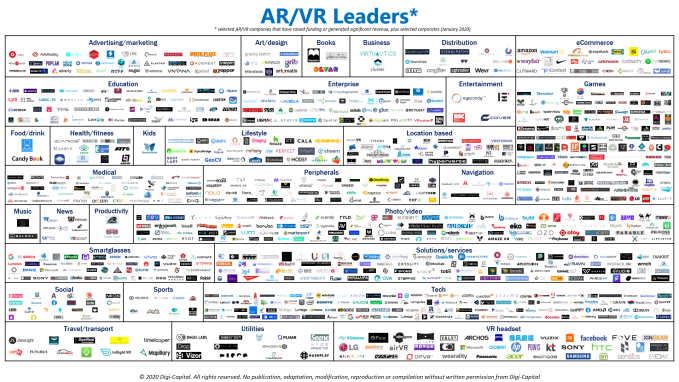
Apple is seen by some as critical to the future of augmented reality, despite limited traction for ARKit so far and its absence from smartglasses (again, so far). Yet Facebook, Microsoft and others are arguably more important to where the market is today.

While there are more AR platforms than just these companies, they represent the top of the pyramid for three different types of AR roadmap. And while startup insurgents could make a huge difference, big platforms can exert disproportionate influence on the future of tech markets. Let’s see what this could mean for the future of AR.


Facebook: The messaging play

Facebook has talked about its long-term potential to launch smartglasses, but in 2020, its primary presence in the AR market is as a mobile AR platform (note: Facebook is also a VR market leader with Oculus). Although there are other ways to define them, mobile AR platforms can be thought of as three broad types:

  1. messaging-based (e.g. Facebook Messenger, Instagram, TikTok, Snapchat, Line)
  2. OS-based (e.g. Apple ARKit, Google ARCore)
  3. web-based (e.g. 8th Wall, Torch, others)

Karma Automotive to lay off 60 more workers at California headquarters

Karma Automotive is laying off 60 workers at its Irvine, Calif., headquarters, just three months after cutting 200 workers, according to documents filed with the California Employment Development Department.

The Chinese-backed California-based startup filed the notice under the Worker Adjustment and Retraining Notification Act, which requires employers to alert the state of mass layoffs. The WARN report was updated Wednesday. The Orange County Register was first to report the layoffs.

A Karma spokesperson confirmed the layoffs and said a majority would be at the headquarters, with a significantly smaller number being impacted at its Moreno Valley, Calif. assembly plant. Karma didn’t provide details on its total employee count, but did say “adjustments” will be made at its Irvine headquarters, Moreno Valley assembly plant and its Detroit Technical Center in Troy, Mich.

Here’s the complete statement from spokesman Dave Barthmuss.

As Karma evolves beyond its initial birth as car company and emerges as a technology-focused innovator, there is a continuous need to adjust the size and skillset of its workforce to fulfill the task at hand. The company has therefore determined it necessary to realign resources in some business functions so it can grow its capabilities beyond just creating and selling luxury electric vehicles.

As Karma builds partnerships with other OEMs and start-ups to speed product development, we must staff appropriately to fully leverage and realize the kinds of efficiencies partnerships and collaborations can provide. The result of that decision is some adjustments at Karma’s Global Headquarters in Irvine, Calif.; the Karma Innovation and Customization Center in Moreno Valley, Calif.; and our Detroit Technical Center in Troy, Mich. Although clearly regrettable for the individuals involved, this action is part of the natural trajectory of a start-up enterprise and underlines Karma’s commitment to remain lean, nimble and focused on building partnerships to encourage success in a changing and hugely competitive marketplace.

The company continues to actively recruit, with emphasis on technology innovation, in functions across the company as we focus on retail deliveries of our current products and developing new vehicle platforms, technologies and business partnerships.

The layoff notice comes just a month after several executive hires at the company, including a chief revenue officer, a new vice president of strategy and vehicle line engineering and a head of supply chain. Karma does have a handful of jobs posted on its website, including 11 positions at its Irvine headquarters and two spots at the Moreno Valley plant.

Karma Automotive launched out of the remnants of Fisker Automotive, the startup led by Henrik Fisker  that ended in bankruptcy in 2013. China’s Wanxiang Group purchased what was left of Fisker in 2014 and Karma Automotive was born.

It hasn’t been the easiest of roads for the company. Karma’s first effort, known as the Revero, wasn’t received warmly. The Revero GT, which has been described as the first fully conceived product under the Karma name, followed with better reviews. The 2020 Revero GT is being delivered to retail customers, according to Karma.

Karma unveiled in November the Revero GTS and a new electric concept car called the SC2, just weeks after it laid off about 200 workers following a restructuring. Production of the GTS is slated for later this year.

The SC2 is a big part of Karma’s restructuring and plan to reinvent itself as a technology and design incubator that supplies other automakers. The company’s new business strategy is to open its engineering, design, customization and manufacturing resources to other companies. The GTS and SC2 were meant to show automakers what it is capable of.

FAA’s proposed remote ID rules should make compliance easy

Jon Hegranes
Contributor

Jon is the CEO and co-founder of Kittyhawk, the leading provider of unmanned software and airspace systems.

When Josh, my co-founder, and I founded Kittyhawk, we saw the need for a new way to aviate with the demands and opportunities that unmanned systems would create. We set out to build the future of programmatic aviation, yet to enable this aviation renaissance we also knew that pragmatic innovation was key.

We didn’t rush into building cool but ineffective technologies. We ignored the lure of flashy solutions looking for problems. We started from day one working, learning and engaging directly with our customers, who are now some of the largest users of aviation. Unless our customers — operators of some of the largest manned and unmanned fleets in the U.S. — can leverage a piece of technology today, its usefulness is muted. Unless our platform can make the entire National Airspace System (NAS) safer for all stakeholders, the effectiveness is diluted.

Our DNA is built on skating where the puck is going, innovating at the edge so that we can move fast and deliver actual capabilities that are impactful from day one with the potential to accrue more value and evolve over time. There’s no better example of this than Remote ID.

More than two years ago, we released our real-time telemetry and tracking of aircraft. Not simple representations of a flight icon on a screen, but live data of aircraft that businesses, governments and public safety workers utilize every day. How we view the future of Remote ID is based on our experience of powering live-flight data and the feedback and learning that we’ve received over the last two years of enabling Remote ID across our user base. We’ve incorporated all of this data and practical experience — along with all of your feedback from our NPRM survey results — to inform our approach to Remote ID.

Below, we’ve attached the full public comments that we’ll submit to the FAA’s notice of proposed rulemaking (NPRM) on Remote ID, but first, let’s begin with a few of our core beliefs that are central to how we operate as a company and the voice that we strive to give all of our users who fly with Kittyhawk:

  • We believe that technology and software innovations should enable flight.
    • Any rules, technologies or regulations that curtail or disenfranchise flight are not well-thought out and fail to appreciate what technology can solve.
  • We believe that technology should be adopted based on its merits and its core utility.
    • Regulating technologies based on the potential for misuse is unprecedented in our nation and has no place in the adoption of unmanned systems.
  • We believe the future of aviation requires new ways of thinking to accomplish scale requirements and the need for mass adoption.
    • Rules or processes that start and end within a traditional mindset are flawed and will fail to result in meaningful impact.
  • We believe the future is now.
    • Safety and speed are not mutually exclusive and there are ways to create a safer NAS today that all aviation users can adopt immediately.

On November 21, 2019, the FAA was rolling out a new batch of LAANC-enabled airports, including Washington Dulles International Airport (KIAD), which represents a huge swath of airspace in the security-sensitive area of Washington, DC. To give you a sense of how excited our users were for this, we began receiving support requests shortly after the strike of midnight as people were anxious to comply and fly in this airspace. Their initial authorization requests, however, were receiving errors, as it wouldn’t be until later that day that the FAA would officially flip the switch for these new airports and we could begin accepting LAANC requests for KIAD.

Moral of the story: If you give operators an easy way to comply, they’ll move faster than regulators to do everything they can to get in the air compliantly.

High-level comments on the NPRM

The current draft of the NPRM is overly complicated, presenting solutions for problems that don’t exist and introducing complexity that won’t solve the problems that do. We can create a baseline for Remote ID today that opens airspace and impacts safety. We can create a system that demands compliance without creating privacy black holes. There is a better way and we can do it in 2020.

No. 1: Leave OEM certification out of the picture completely

There is absolutely no reason that OEMs should be involved in the NPRM on Remote ID. The role of an aircraft is to reliably fly based on the controls it receives, not the other way around.

We do not require DVRs to prevent you from recording the Super Bowl on the off chance that you might redistribute it. We do not require cars to prevent you from driving if you don’t have validated licenses and registrations. Just because a piece of technology has the potential for misuse, it’s unprecedented and un-American to restrict capabilities at the hardware level based simply on what-ifs.

Any hardware requirement for Remote ID introduces unnecessary security concerns and also adds unnecessary time to the path to adoption. The thought of giving this much power to hardware manufacturers to control access to the NAS should scare everyone, and I’m surprised the FAA failed to consider this. OEM control of airspace access via Remote ID greatly expands the target landscape for hackers and data breaches.

By removing OEM requirements and proposals around things like new serial number systems, all current unmanned systems and models alike will not be relegated to the scrap heap. All current recreational and commercial operations will not need to buy new drones or worry about costly retrofits with untold timelines for potential compliance.

Recommendation: Put all the responsibility on the Remote Pilot In Command (RPIC). Delete all OEM manufacturer requirements from the rule.

No. 2: A logical, tiered approach is the only way

A tiered approach to Remote ID makes a lot of sense, but the proposed tiers in the NPRM are misguided and disjointed.

Remote ID tiers should account for different types of flight by different types of operations in different types of airspace. The more timely and rich the Remote ID data, the more freedom to the sky should be enabled, but there should be more tiers with a lower bar to simply get in the air.

To this end, there should be a tier that includes a volume-based Remote ID (like we have in the ASTM and like we’ve already developed and showcased in the open-source InterUSS Remote ID platform). Think LAANC reservation, but for Remote ID, where a user can announce a time/place of flight. This would require no new hardware and no new technology. Every operation from model aircraft to routine Part 107 commercial flights could adopt and comply with this, effective immediately at zero cost.

Additionally, there should be more privileges for sharing real-time data and having a connected operation that can communicate and deviate if required. If Remote ID is going to unlock BVLOS, then the highest tier of Remote ID operations should do just that.

Recommendation: A tiered system that creates a low-friction, zero-cost ability to comply with Remote ID, extending to a more demanding requirement that results in BVLOS without a waiver.

Tier 1 Tier 2 Tier 3
Ceiling (Uncontrolled Airspace) Up to 200ft Up to 400ft Up to 400ft
Ceiling (Controlled Airspace) Up to 100ft* Up to 400ft* Up to 400ft*
Range VLOS VLOS BVLOS
Remote ID Requirements Volume-based reservation of a time/place.

Can be done remotely, up to 90 days in advance.

Volume-based reservation of a time/place.

Plus live sharing of telemetry via broadcast or network.

Volume-based reservation of a time/place.

Plus live sharing of telemetry via broadcast or network.

Plus network connection for aircraft or control stations to send and receive real-time messages.

Process Submitted and processed like LAANC to a USS. Submitted and processed like LAANC to a USS.

Broadcast or network to meet data requirements (see below).

Submitted and processed like LAANC to a USS.

Broadcast or network to meet data requirements (see below).

*Or lower if flying in controlled airspace and LAANC ceiling is lower than the corresponding tier.

No. 3: Tier-based Remote ID data

Remote ID data for public consumption should be separate from law enforcement use cases that may come in the future. Conflating public use cases with law enforcement use cases adds unnecessary complexity and sacrifices privacy.

The objective with Remote ID data is that it’s actionable for other aircraft and flights in the area — and for the public — to understand what is buzzing over them. Yet, the public needs only a few data points to share with law enforcement who can then put the pieces together. The “license plate” is all law enforcement really needs to take action.

Anything else is a bonus and should be optional based on the tier of the flight you want to execute.

In our experience with customers who want to early adopt into Remote ID and from what we’ve seen in our Remote ID survey, people will gladly share more information with law enforcement. People will also gladly share more information if it results in more access to the air. Just as it is the RPIC’s responsibility to comply with Remote ID, it should also be up to the RPIC to control her data.

Recommendation: Fewer data requirements with more optional fields at lower-tier operations, with more demanding data sharing and real-time communications at the highest tier to enable advanced operations.

Tier 1 Tier 2 Tier 3
Aircraft Identity serial number or anonymous session ID** serial number or anonymous session ID** serial number or anonymous session ID**
Aircraft Location N/A real-time LAT/LONG real-time LAT/LONG
Operator Identity optional FAA registration number or anonymous operator ID** FAA registration number or anonymous operator ID**
Operator Location N/A N/A real-time LAT/LONG
Operator Contact Information optional optional required
Flight Plan optional optional Submitted with takeoff, landing, route and emergency landing points.

Updated in real time.

**Generated and stored by a USS.

The FAA remarked in the NPRM at the successful private-public partnership that is LAANC. Let’s build on that infrastructure. We don’t need a new class of USS but simply to extend where and how we announce flights in the NAS. We already see that behavior today where users want to create polygons and announce flights in uncontrolled airspace.

At Kittyhawk, we’re going to continue building this concept of Remote ID into our platform for all of our users and we welcome other USSs and partners who want to join us and bring an actionable form of Remote ID to the NAS.

If you share our vision, please let us know and also let the FAA know with comments on the NPRM. There is a simpler and more effective path to Remote ID and we can do it in 2020.


Peru’s startup scene is ready for more

Greg Mitchell
Contributor

Greg Mitchell is regional director of Angel Ventures, a startup investor and advisor and is the creator of the blog Ruta Startup.

Funding of Latin American startups has doubled each year over the past two years.

And while most of this capital has been directed toward Brazil and Mexico, this surge is starting to have an effect on startups in the region’s smaller markets. The increased availability of capital for later rounds is creating more opportunities for startups to scale both regionally and globally. And while it may not be one of the largest countries in Latin America, Peru continues to have one of the best-performing economies and fastest-growing startup scenes.

In 2019, a new record was set for the amount of capital invested into Peruvian startups, at least $11 million, a 24% increase compared to 2018. Most of the money went to fintech (47%) and edtech (37%) startups. Over the past four years, more than $22.7 million in public funds went toward startup-related projects as well.

The government-backed program Innóvate Perú awarded approximately $13.8 million of its total investments almost exclusively to startups. Total venture capital investment will likely exceed US$25 million in 2020, doubling what was achieved in 2019, and will continue to grow from there.

In 2019, Peru’s development bank, COFIDE, announced a new fund of funds to invest in venture capital firms, mirroring similar entities such as Chile’s CORFO, Colombia’s Bancoldex and Mexico’s NAFIN. While there are plenty of opportunities to secure seed-stage capital in Peru, many startups still have to look abroad for growth capital. Keynua, Xertica, Turismoi and Runa are just a few of the Peruvian startups that sought international investors to lead their rounds over $1 million. Following in the path of similar funds, the fund of funds will invest $20 million in half a dozen venture capital firms, which would in turn invest in approximately 120 startups.

As government support for entrepreneurs continues to pour in, the Peruvian startup ecosystem is entering a new phase. More and more startups are launching, graduating from accelerator programs and seeking ways to reach their next milestone. Local early-stage investors are stepping in to fill the financing gap and have teamed up to form the Peruvian Seed and Venture Capital Association, PECAP, to share investment opportunities and lay a strong foundation for venture capital in Peru. Here’s a look at just a few of the opportunities for more venture capital to step in.

Fueling Peru’s growing fintech sector

A massive fintech boom is playing out across Latin America, with the size of the industry expected to exceed $150 billion by 2021. Peru is home to an estimated 120 fintech startups actively tackling the issues of financial inclusion and better servicing the region’s small and medium-sized businesses. Peru’s economy is still largely informal, with approximately 14 million people underbanked. In 2017, María Laura Cuya started Peru’s Fintech Association to work alongside regulators, academics and other organizations to improve financial literacy and access to financial products, with a focus on Peruvian SMEs.

A few of Peru’s fintech sectors stand out, including factoring and foreign exchange, where a number of startups are quickly gaining traction and already branching out to neighboring markets. Innova Funding, Innova Factoring, Facturedo, Kambista and Rextie are just a few examples. Peru’s membership in the Pacific Alliance also makes it an attractive initial market prior to launching in other Pacific Alliance countries.

In 2019, Peruvian fintechs Keynua and Apurata were selected for the Y Combinator accelerator program, putting them on the international radar. Traditional banks in Peru are also shifting their mindsets and warming up to fintech partnerships. The publicly traded Peruvian bank, Credicorp, for example, recently set up a corporate venture fund called Krealo. The bank made its first investments in Culqi, a local payments gateway, and Independencia, a lending platform.

Impact investing opportunities

Latin America is a top destination for impact investment capital, outpacing many other regions in the world, with a 15% compound annual growth rate over the last five years, according to the Global Impact Investing Network. Edtech represents a rising entry point across the region for impact investors thanks to its potential for both financial and non-financial returns.

According to an OECD report, approximately 30 million young people in Latin America are not participating in any form of education, training or employment, and 76% of this total are women. Laboratoria, co-founded by edtech thought leader Mariana Costa Checa, helps women develop technical skills and has expanded across the region from its headquarters in Lima to train more than 1,000 women so far. The startup has received praise from global companies, including Walmart and Facebook. In 2019, the skills development platform Crehana raised the largest-ever round for a Peruvian startup ($4.5 million) from both regional and global funds.

Peru attracted more impact investment capital than Mexico, a longtime leader in the region, for the first time in 2018. Much of this investment is focused on improving Peru’s education system. Local startups are addressing everything from early childhood education to workforce training, and as more success stories emerge, more resources will be needed to fully tap into Latin America’s large markets for these solutions.

Supporting long-term startup growth

The government-backed program Innóvate Perú has financed more than 3,400 entrepreneurial projects to date, and more than 25 private institutions are now accelerating, incubating and investing in Peruvian startups. New startup creation is at its highest rate ever; however, these companies are outgrowing their angel and seed-stage supporters and are now seeking ways to take their ventures to the next level.

Over the past few years, Latin America has proven that it is a place where startups can scale and succeed. Now, with more startups coming out of the region’s smaller, underserved markets, like Peru, there is an opportunity to deploy capital effectively and bring impactful solutions to millions of people across the region.

*Angel Ventures was an investor in Culqi before it was sold to BCP. Neither Angel Ventures nor Greg Mitchell currently hold any shares.