Do trade shows still matter in the age of online business?

The death of Mobile World Congress 2020 started as a trickle.

First, it was an understandably nervous ZTE. As a Chinese company, it was undoubtedly going to receive extra scrutiny — never mind that ZTE’s Shenzhen headquarters are a two-hour flight from Wuhan. Soon enough, South Korea’s LG backed out, followed by Nvidia and Ericsson.

By the weekend, as deaths from the coronavirus rose to more than 800 (surpassing SARS in the process), event organizers GSMA put strict guidelines in place for approximately 100,000 expected attendees:

  • No travelers from the Hubei province would be permitted access.
  • Attendees were required to prove that they were outside China for 14 days prior to the event (passport stamp, health certificate).
  • Temperature screening was to be implemented.
  • Attendees needed to self-certify they had not been in contact with anyone infected.

Ultimately, it was too late. Soon enough, Amazon was out and the list ballooned to dozens of companies, including AT&T, Intel, Nokia, Sony and Vodafone. Each offered a similar boilerplate response, noting the cost-benefit analysis for sending staff to a large international show amid concerns of a global epidemic.

PCMag’s Sascha Segan wrote a piece worth reading on “snowballing hysteria” around a trade show killed in a country that only had two reported cases at the time of cancellation. It’s a valid point, though speaking purely pragmatically, I can understand why companies felt obligated to back out.

If you want to give them the benefit of the doubt, there are some valid concerns about sending employees into the petri dish of colds and flus that is basically every trade show, coupled with the novelty of a new and still not completely understood virus. It can be difficult to balance concerns for employee safety with the need to resist panicking over media reports that tend to overemphasize threats.

Join the Q&A with top speakers at TC Sessions: Robotics + AI (March 3)

Over the past four years, TechCrunch has brought together some of the biggest names in robotics — founders, CEOs, VCs and researchers — for TC Sessions: Robotics + AI. The show has provided a unique opportunity to explore the future and present of robotics, AI and the automation technologies that will define our professional and personal lives.

While the panels have been curated and hosted by our editorial staff, we’ve also long been interested in providing show-goers an opportunity to engage with guests. For this reason, we introduced the Q&A stage, where some of the biggest names can more directly engage with attendees.

This year, we’ve got top names from SoftBank, Samsung, Sony’s Innovation Fund, Qualcomm, Nvidia and more joining us on the stage to answer questions. Here’s the full agenda of this year’s Q&A stage:

11:30 – 12:00 Russell Book signing
Stuart Russell

12:15 – 1:00 Corporate VC, Partnering and Acquisitions
Carlos Kocher (Qualcomm)<br />
Kass Dawson (SoftBank)
Gen Tsuchikawa (Sony Innovation Fund)

1:15 – 2:00 Founders
Sebastien Boyer (FarmWise)
Noah Campbell-Ready (Built Robotics)

2:15 – 3:00 VC
Jocelyn Goldfein (Zetta Venture Partners)<br />
Rob Coneybeer (Shasta Ventures)
Aaron Jacobson (New Enterprise Associates)

3:15 – 4:00 Building Robotics Platforms
Steven Macenski (Samsung)
Claire Delaunay (Nvidia)

$345 General admission tickets are still on sale — book yours here and join 1,000+ of today’s leading minds in the business for networking and discovery. The earlier you book the better, as prices go up at the door.

Students, save big with a $50 ticket and get full access to the show. Student tickets are available to current students only. Book yours here.

Patreon enters the micro-lending game with Patreon Capital

Patreon, a platform for creators to earn monetary support from fans, is busting out the checkbook. The startup isn’t playing VC quite yet with newly launched Patreon Capital, but they are hocking non-equity cash advances (loans!) for Patreon customers in need of some extra cash for big creative rollouts. Patreon has already made about a dozen of these micro-loans to creators, Hot Pod reports.

Patreon, which has raised $165 million, seems unlikely to massively overhaul its fee structure for its existing user base given the pushback, so its best option forward appears to be leveraging its customer network to sell auxiliary services. A lending arm makes a lot of sense.

Read a deep dive of Patreon on Extra Crunch

For ambitious creators, it’s one more service to entice them to building out their subscriber network through Patreon. For Patreon, it could also be a way to hold onto successful creators that might be tempted to venture out on their own. Plenty of creator efforts aren’t ever going to be capable of delivering venture-sized returns, but these small entities can repay a loan — the issue is obviously landing one.

Patreon has access to data on up-and-comers that it likely feels is too good not to make use of. While betting on influencers likely isn’t worth the headaches for YouTube or Facebook, it’s easy to see why this might be an interesting proposition for startups that can support customers on their platform while also landing returns.

Terms appear to be structured around boosting revenue split fees for Patreon earn-outs, though we don’t know exactly what kind of returns Patreon is aiming to earn from these cash advances.

As Hot Pod reports:

Patreon provided the team with a cash advance of around $75,000 to cover the production budget for the series, with the expectation for Multitude to pay back a slightly greater sum from Next Stop’s Patreon earnings over the next two years. (Neither party disclosed the exact figure that Multitude needed to funnel back.) As a matter of risk mitigation, the Patreon revenues of another Multitude show, Join the Party, will be taken as collateral if Next Stop isn’t able to generate enough return to fully pay Patreon back after the two year period.

TubeMogul, Uber alums launch Arize AI for AI observability

A new startup called Arize AI is building what it calls a real-time analytics platform for “observability” in artificial intelligence and machine learning.

The company is led by CEO Jason Lopatecki, who has also served as chief strategy officer and chief innovation officer at TubeMogul, the video ad company acquired by Adobe. TubeMogul’s co-founder and former CEO Brett Wilson is an investor and board member.

While Arize AI is only coming out of stealth today, it has already raised $4 million in funding led by Foundation Capital, with participation from Wilson and Trinity Ventures.

And it has already made an acquisition: a Y Combinator -backed startup called Monitor ML. The entire Monitor ML team is joining Arize, and its CEO Aparna Dhinakaran (who previously built machine learning infrastructure at Uber) is becoming Arize’s co-founder and chief product officer.

Lopatecki and Dhinakaran said that even when they were leading two separate startups, they were trying to solve similar problems — problems that they both saw at big companies.

“Businesses are deploying these complex models that are hard to understand, they’re not easy to troubleshoot or debug,” Lopatecki said. So if an AI or ML model isn’t delivering the desired results, “The state of the art today is: You file a ticket, the data scientist comes back with a complicated answer, everyone’s scratching their head, everyone hopes the problem’s gone away. As you push more and more models into the organization, that’s just not good enough.”

Similarly Dhinakaran said that at Uber, she saw her team spend a lot of time “answering the question, ‘Hey, is the model performing well?’ And diving into that model performance was really a tough problem.”

To solve it, she said, “The first phase is: How can we make it easier to get these real-time analytics and insights about your model straight to the people who are monitoring it in production, the data scientist or the product manager or engineering team?”

Lopatecki added that Arize AI is providing more than just “a metric that says it’s good or bad,” but rather a wide range of information that can help teams see how a model is performing — and if there are issues, whether those issues are with the data or with the model itself.

Besides giving companies a better handle on how their AI and ML models are doing, Lopatecki said this will also allow customers to make better use of their data scientists: “[You don’t want] the smallest, most expensive team troubleshooting and trying to explain whether it was a correct prediction or not … You want insights surfaced up [to other teams], so your head researcher is doing research, not explaining that research to the rest of the team.”

He compared Arize AI’s tools to Google Analytics, but added, “I don’t want to say it’s an executive dashboard, that’s not the right positioning of the platform. It’s an engineering product, similar to Splunk — it’s really for engineers, not the execs.”

Lopatecki also acknowledged that it can be tough to make sense of the AI and ML landscape right now (“I’m technical, I did EECS at Berkeley, I understand ML extremely well, but even I can be confused by some of the companies in this space”). He argued that while most other companies are trying to tackle the entire AI pipeline, “We’re really focusing on production.”

Dell sells RSA to consortium led by Symphony Technology Group for over $2B

Dell Technologies announced today that it was selling legacy security firm RSA for $2.075 billion to a consortium of investors led by Symphony Technology Group. Other investors include Ontario Teachers’ Pension Plan Board and AlpInvest Partners.

RSA came to Dell when it bought EMC for $67 billion in 2015. EMC bought the company in 2006 for a similar price it was sold for today, $2.1 billion. The deal includes several pieces, including the RSA security conference held each year in San Francisco.

As for products, the consortium gets RSA Archer, RSA NetWitness Platform, RSA SecurID, RSA Fraud and Risk Intelligence — in addition to the conference. At the time of the EMC acquisition, in a letter to customers, Michael Dell actually called out RSA as one of the companies he looked forward to welcoming to the Dell family after the deal was completed:

I am excited to work with the EMC, VMware, Pivotal, VCE, Virtustream and RSA teams, and I am personally committed to the success of our new company, our partners and above all, to you, our customers.

Times change however, and perhaps Dell decided it was simply time to get some cash and jettison the veteran security company to go a bit more modern, as RSA’s approach no longer aligned with Dell’s company-wide security strategy.

“The strategies of RSA and Dell Technologies have evolved to address different business needs with different go-to-market models. The sale of RSA gives us greater flexibility to focus on integrated innovation across Dell Technologies, while allowing RSA to focus on its strategy of providing risk, security and fraud teams with the ability to holistically manage digital risk,” Dell Technology’s chief operating officer and vice chairman Jeff Clarke, wrote in a blog post announcing the deal.

Meanwhile, RSA president Rohit Ghai tried to put a happy spin on the outcome, framing it as the next step in the company’s long and storied history. “The one constant in every episode of our existence has been our focus on the success of our customers and our ability to endure through market disruption by innovating on behalf of our customers,” he wrote in a blog post on the RSA company website.

The deal is subject to the normal kinds of regulatory approval before it is finalized.

Noom competitor OurPath rebrands as Second Nature, raises $10M Series A

Back in 2018, OurPath emerged as a startup in the U.K. tackling the problem of diabetes. The company helped customers fight the disease, and raised a $3 million round of funding by combining advice from health experts with tracking technology via a smartphone app to help people build healthy habits and lose weight.

Now rebranded as Second Nature, it has raised a fresh $10 million in Series A funding.

New investors include Uniqa Ventures, the venture capital fund of Uniqa, a European insurance group, and the founders of mySugr, the digital diabetes management platform, which was acquired by health giant Roche .

The round also secured the backing of existing investors including Connect and Speedinvest, two European seed funds, and Bethnal Green Ventures, the early-stage Impact investor, as well as angels including Taavet Hinrikus, founder of TransferWise.

This new injection takes the total investment in the company to $13 million.

Competitors to the company include Weight Watchers and Noom, which provides a similar program and has raised $114.7 million.

Second Nature claims to have a different, more intensive and personalized approach to create habit change. The startup claims 10,000 of its participants revealed an average weight loss of 5.9kg at the 12-week mark. Separate peer-reviewed scientific data published by the company showed that much of this weight-loss is sustained at the six-month and 12-month mark.

Under its former guise as OurPath, the startup was the first “lifestyle change program” to be commissioned by the NHS for diabetes management.

Second Nature was founded in 2015 by Chris Edson and Mike Gibbs, former healthcare strategy consultants, who designed the program to provide people with personalized support in order to make lifestyle changes.

Participants receive a set of “smart” scales and an activity tracker that links with the app, allowing them to track their weight loss progress and daily step count. They are placed in a peer support group of 15 people starting simultaneously. Each group is coached by a qualified dietitian or nutritionist, who provides participants with daily 1:1 advice, support and motivation via the app. Throughout the 12-week program, people have access to healthy recipes and daily articles covering topics like meal planning, how to sleep better and overcoming emotional eating.

Gibbs said: “Our goal at Second Nature is to solve obesity. We need to rise above the confusing health misinformation to provide clarity about what’s really important: changing habits. Our new brand and investment will help us realize that.”

Philip Edmondson-Jones, investment manager at Beringea, who led the investment and joins the board of directors of Second Nature, said: “Healthcare systems are struggling to cope with spiraling rates of obesity and associated illnesses, which are projected to cost the global economy $1.2 trillion annually by 2025. Second Nature’s pioneering approach to lifestyle change empowers people to address these conditions.”

Pandora’s new Apple Watch app lets you leave your iPhone behind

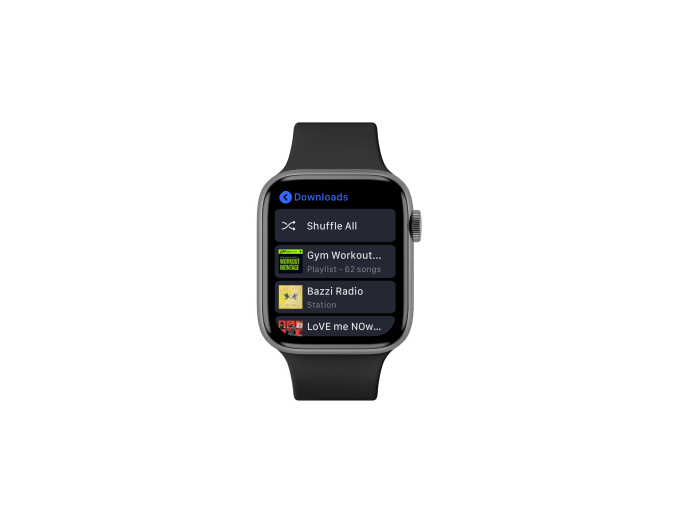
Support for standalone streaming has come to Pandora’s Apple Watch app. The company today announced the official launch of its new standalone app for Apple Watch that lets you listen to music and podcasts on the go, even without your iPhone. The launch makes Pandora the first major third-party — meaning, first besides Apple Music — to offer a standalone app for Apple Watch.

To be clear, Pandora is not the first non-Apple music service to offer an Apple Watch app. Spotify notably debuted its own Watch app in 2018. Others, including SoundCloud, Napster, Deezer and more, also have Apple Watch experiences.

However, Spotify’s app still needs to be tethered to the iPhone in order to work. This has been a sore subject with a core group of Spotify’s customers — particularly those who want to enjoy music on their Apple Watch while exercising, for example, when carrying around an iPhone is more cumbersome. In some cases, these users have even defected to Apple Music, calling Spotify’s watch app a mere “remote control,” as it still hasn’t even implemented offline support. 

Pandora’s new app, on the other hand, lets users leave their phone behind as it supports both streaming and offline downloads.

The app notably takes advantage of the new streaming APIs Apple introduced last year at its annual developer conference. With watchOS 6, app developers can now create independent audio consumption experiences that no longer need to lean on the iPhone.

For Pandora, this change means users can go directly to the App Store on the Apple Watch to download the watch app to log in and start streaming. Even without an iPhone, users can play, pause and skip songs; pick up where they left off on podcasts; thumbs-up their favorite music; adjust the volume; and more.

Pandora Premium subscribers also can search and play specific songs, artists and albums on-demand, right from their wrist.

Meanwhile, offline listening is available to Pandora Plus or Premium paying subscribers, which lets you save tracks for offline play. This is helpful if you’re in an area where you have a poor connection or none at all, like on an airplane or underground train, for instance.

The new Pandora Apple Watch app will roll out to all users who already had the older version installed, as well as to those who updated to the latest version of Pandora’s iPhone app.

Because the app relies on Apple’s new streaming APIs to offer standalone streaming, it requires watchOS 6 to work. This version of Apple Watch software is available to Apple Watch Series 1 and higher users, but only those on Apple Watch Series 3 and higher will have access to standalone streaming, per Apple’s requirements. In addition, both streaming music and downloading require an internet connection, either Wi-Fi or cellular.

News of Pandora’s updated Watch app actually broke last week. But after a number of news reports announced its arrival, the company clarified it was only then rolled out to a small group (1%) of users at that time. Earlier this year, Pandora also rolled out a redesign of its Watch app that included offline playback.

As of today, the updated Apple Watch app should be available to all in the U.S.

Why Kepler is building its full-stack satellite business in Canada

Toronto-based telecommunications startup Kepler Communications surprised many recently when it revealed plans to establish its own satellite assembly and base the operation in its own hometown instead of contracting the work to an existing manufacturer.

It might seem a perplexing and unnecessarily costly choice at first, but I spoke to Kepler CEO and co-founder Mina Mitry about what his startup stands to gain by being based in Canada while the small-satellite industry heats up in the U.S.

“We’ve been running a global survey of available supply chain for this particular type of small satellite for the past two years or so and conducting some pretty extensive experiments, like buying parts, seeing where they end up, etc.,” Mitry told me. “The output of that global survey is really that the supply chain is immature, that it doesn’t exist in a way that’s robust enough to meet our price, performance and timeline expectations. Historically, the type of business that is now delivering on small satellites has been built on selling one-off government contracts or a small component of the satellite, and now they’re transitioning upmarket to try and sell complete satellites and try to do that at scale, which is a totally different problem that they haven’t yet addressed.”

After figuring this out through multiple years of investigation and inquiry, Mitry says it eventually resulted in the realization that meeting the startup’s goals of getting its 440 satellites in orbit in a timely manner would be best served by building them in-house. That’s not unlike the conclusion reached by Elon Musk and SpaceX for many of the components used in developing their own launch vehicles.

“We started to evaluate what countries and where and how that would all get done,” Mitry said. “It ended up that Toronto would make a lot of sense because of the surrounding technical talents we get from the key universities in the area, and then above and beyond that, we’re not doing a whole lot of manual labor in this process. Most of that is outsourced labor to a variety of different locations where they’re building circuit boards, or they’re building like metal machine parts, etc. And then in-house, we’re doing mostly assembly integration and testing, and a lot of that kind of stuff gets automated. So there was no material overhead costs that gets incurred because we’re in Toronto as opposed to any other location.”

Secret’s founder returns with anti-loneliness app Ikaria

“I don’t feel good about that. That sucks,” Chrys Bader-Wechseler reflects when asked about the bullying that went down on the anonymous app Secret he co-founded in 2013. After $35 million raised, 15 million users and a spectacular flame out two years later, the startup was dead. “Since I left Secret I feel alive and aligned with my values and my purpose again.” 

But there was one bright side to Secret letting you post without a name or consequences. People opened up, got vulnerable and felt less alone when comments revealed they weren’t the only person dealing with a certain struggle. What Bader learned from watching Secret’s users “do this in the dark” was the realization that “actually, we need to learn to do this in the light, to have that same kind of dialogue, but do it openly with each other.”

So began the journey to Bader’s new startup Ikaria that’s exclusively revealing itself to the world today on TechCrunch. It’s a different kind of chat app, named after the Greek island where a close-knit community helps extend people’s lifespans. The six-person Santa Monica team is funded by a $1.5 million seed round led by Initialized Capital and Fuel Capital. People can sign up for early beta access here.

During a long interview about the startup, Bader and his co-founder Sean Dadashi were cagey about exactly how Ikaria works, as it’s still in development. Amidst all the philosophical context about the app’s intention, I was able to pull out a few details about what the product will actually look like.

“Basically, since 2004, technology has created this monumental shift in the human social experience. We’re more connected than ever technically but all the studies show we’re lonelier than ever,” Bader explains. “It’s like eating McDonald’s to get healthy. It’s not the right source of nutrition for our social well-being because true connection requires a level of vulnerability, presence, self-disclosure and reciprocity that you don’t really get on these platforms.”

Ikaria isn’t another feed. It’s a safe space where you can chat with close friends and family, or people going through similar life challenges. Members of these group chats will optionally go through guided experiences that help them reflect on and discuss what’s going on in their hearts and minds. This could become a whole new media format where outside creators or mental health professionals could produce and contribute their own guided experiences.
“Part of the reason we’re announcing this is that . . . it’s a call to action to involve all these practitioners and people who are doing these types of things and giving them a platform to allow them to facilitate these kind of group bonding experiences through a platform where they can extend their practices into the digital world,” Bader tells me. What Calm and Headspace did for making meditation more mainstream and accessible, Ikaria wants to do for mental health through online togetherness.

Ikaria already has a sizable closed beta going, which the startup plans to continue until it finds product fit, and it hopes to know its official release timeline by the end of the year. “We’re not going to launch this until we know 40% of people would be disappointed if they couldn’t use it.”

Rather than monetizing by exploiting people’s attention, Ikaria plans to develop a “customer relationship” with users, which could mean subscription access or in-app payments for buying content. Perhaps one user could act as the sponsor and purchase an experience for their whole group chat. Until then, it’s got its seed funding from Initialized, Fuel Capital, F7 Ventures, Ryan Hoover’s Weekend Fund, Backend Capital, Day One Ventures, Shrug, Todd Goldberg and Superhuman’s Rahul Vohra.

“The hope is that eventually this would be an app you use instead of iMessage, to increase your sense of presence,” Bader explains, revealing its grand ambitions. Why would we need to replace our core chat apps? Well for one thing, they don’t understand who really matters to you. If an app understood who your mom is, it could give her messages special prevalence or remind you to contact her.

Bader met Dadashi through an offline men’s group for discussing life, love and everything in the wake of Secret’s collapse and a rough romantic breakup. After just a few weeks of these meetups, they say they felt closer to each other than to most of their friends. Only later did Bader, a designer by trade, discover that Dadashi was a coder who’d been CTO of electronics company MHD Enterprises before starting a travel and lifestyle startup for mental wellness, called Somatic Studios. They tried working together on an app for sharing quotes from your friends but scrapped it.

Together, the pair went on to research the rapid rise of other vulnerability-focused meetup organizations like the one where they met, including EvrymanManKind ProjectQuiltAuthentic RelatingCircling, and T-Groups. Though they knew that to have a chance at impact at scale, they’d need to build a mobile app familiar enough to get people over the hurdle of starting a mindfulness practice. They laid out a few principles to build by: a focus on relationships instead of Likes and followers, conscious design that won’t exploit people’s attention or weaknesses, no ads, and keeping all data private and in control of the user.

There are other startups hoping to address the sad state of mental health from different angles. Talkspace offers a mobile connection to licensed therapists, though it can be pricey at $65 to $99 per week. 7 Cups and TalkLife makes peer-to-peer counseling from volunteers free, though these aren’t professionals. There are also plenty of journaling products, gratitude practice apps and wellness podcasts out there. But Ikaria’s approach, combining mental health content with group chats of people you trust, feels unique.

Having known Bader since the Secret days, it’s obvious that working with Dadashi has made him happier and more centered. Ikaria is an app he can wake up feeling good about each day. “You know, I don’t like to speak ill of David [Byttow, Secret’s CEO who sources say was verbally abusive to employees], but that relationship was very, very toxic and taxing for me. And this time around with Sean, as I’m sure you can tell, is the polar opposite.”

If Ikaria can help people develop the open and honest relationships with friends or peers like building it has done for Bader and Dadashi, it could be a beacon amidst a sea of time unwell spent.


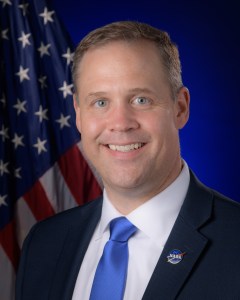
NASA Administrator Jim Bridenstine is coming to TC Sessions: Space 2020

This year marks our first-ever TC Sessions: Space event, and what better way to kick things off than with the head of NASA: Administrator Jim Bridenstine will join us onstage on June 25 in LA. NASA has been more open than ever before to working with startups and entrepreneurs, and we’ll hear directly from the administrator why that’s the case, and what kind of opportunities might be open to founders in the future.

Administrator Bridenstine took over leading the U.S. science and space agency in 2018, and has been leading the charge for many of the organization’s most ambitious goals ever since. Whether working with SpaceX and Boeing on returning astronaut launch capabilities to American soil on American vehicles through the commercial crew program, or preparing the way for a human return to the surface of the Moon through NASA’s Artemis program, he’s encouraged the agency to seek new and innovative partnerships with industry in order to reach further than ever before.

NASA Administrator Jim Bridenstine. Photo Credit: (NASA/Bill Ingalls)

NASA is working with startups for innovative and exciting initiatives like the Commercial Lunar Payload Services (CLPS) program, through which some young companies will begin sending privately designed and built lunar landers to the Moon’s surface to support and prepare for the return of the next American man, and the arrival of the first American woman, to the lunar surface in 2024. And the agency has more recently put out a call to industry for input on both human-rated and robotic rovers to support its Moon and Mars goals, so we’ll hear from Administrator Bridenstine more about the public-private partnerships that are involved in both endeavors.

TC Sessions: Space 2020 is shaping up to be an unparalleled opportunity for startups and young companies in the space industry to meet and learn from the best and brightest in the field, including Administrator Bridenstine, Space Command’s General John W. Raymond, investors like Bessemer Venture Partners VP Tess Hatch and many more. We’ll cover topics ranging from launch services, to orbital operations, to ground station networks and beyond, focusing on where the opportunities in space lie, what kinds of innovative solutions are being brought to bear to unlock them and what still needs founder focus and investment.

Stay tuned for more announcements of the all-star lineup of speakers and panelists coming to the show.

You can get Early-Bird tickets right now, and save $150 before prices go up on May 22 — and you can even get a fifth person free if you bring a group of four from your company. Special discounts for current members of the government/military/nonprofit and student tickets are also available directly on the website. And if you are an early-stage space startup looking to get exposure to decision makers, you can even exhibit for the day for just $2,000.

This event will also feature a space startup pitch-off featuring five early-stage founders selected by TechCrunch editors. Applications open today; apply here.

Is your company interested in partnering at TC Sessions: Space 2020? Click here to talk with us about available opportunities.

Daily Crunch: Apple blames coronavirus for revenue miss

Apple says the coronavirus outbreak will hurt its manufacturing and sales, Jeff Bezos makes a big commitment to fighting climate change and SpaceX launches more Starlink satellites. Here’s your Daily Crunch for February 18, 2020.

1. Apple will miss revenue forecast as coronavirus impacts its manufacturing and sales

In a letter to investors, Apple said that it “do[es] not expect to meet the revenue guidance we provided for the March quarter” due to impacts stemming from the coronavirus that has shuttered large parts of China, and is reverberating through the global economy.

As China’s return to work has proved halting, and the coronavirus itself more intractable than some anticipated, the company’s change in guidance is almost unsurprising — but that hasn’t stopped Apple’s stock price from falling this morning.

2. Jeff Bezos announced a $10 billion fund to fight climate change

Jeff Bezos announced on Instagram that he’s creating a $10 billion fund to combat climate change. He said the Bezos Earth Fund will finance “scientists, activists, NGOs — any effort that offers a real possibility to help preserve and protect the natural world.”

3. SpaceX successfully launches 60 more Starlink satellites but misses booster landing

SpaceX has launched a batch of 60 Starlink satellites into orbit, marking its fifth overall launch of a group of 60 of the small spacecraft, and its third this year alone. This launch brings the total Starlink constellation to 300 satellites in orbit, extending SpaceX’s lead as the largest commercial satellite operator in the world.

4. Redbox enters the free, ad-supported streaming market

Oddly, Redbox Free Live TV isn’t live at all — at least, not in the way that you’d get with a TV streaming service like YouTube TV or Hulu with Live TV. Instead, it offers a curated set of ad-supported movies and TV shows, similar to The Roku Channel, IMDb TV or TiVo Plus.

5. How TikTok decides who to make famous

The co-founders of video startup Trash take a deep dive into the TikTok ecosystem, particularly its extensive content moderation. (Extra Crunch membership required.)

6. Atomico raises new $820M fund to back ‘mission-driven’ European founders at Series A and beyond

The London-headquartered VC firm’s previous fund closed at $765 million, so this is an increase over three years ago. However, the remit remains largely the same. Atomico says it plans to double down on its strategy of backing “mission-driven” European founders at Series A, but with the ability to invest in what it calls “breakout” companies at the Series B and C stage.

7. Black haircare startup Naza Beauty just raised $1 million from Alexis Ohanian’s Initialized Capital

At its most basic level, it’s like Drybar — with a menu of styles — but for women of color. On the tech side, Naza’s software functions as a booking and payments platform, which also learns the styles of each customer and then makes product recommendations.

The Daily Crunch is TechCrunch’s roundup of our biggest and most important stories. If you’d like to get this delivered to your inbox every day at around 9am Pacific, you can subscribe here.