Stocks fall again on continued coronavirus worries

Is it good news to say that stocks fell less sharply than they had on previous days?

That’s the bright side of another turbulent trading day across the Nasdaq and New York Stock Exchange. The major indices were down again — although their declines were less severe than they had been during the week.

Investors appeared to shake off positive labor statistics (the U.S. added 273,000 jobs, ahead of expectations), as the expanding number of coronavirus cases in the U.S. and lack of a coordinated response from the Trump administration took their toll on investor confidence that the impact on the economy would be minimal.

With that said, things could have been worse.

The Dow fell 256.50 points, or just under 1%, to close at 25,864.78, while the S&P stumbled 51.57 points, or 1.7%, to close at 2,972.37 while the Nasdaq slid 1.8%, or 162.98 to close at 8,575.62. The benchmark indices are in the territory of a market correction — hovering at around a 10% loss already on the year.

For startups, it’s important to note that these market pressures can have implications for their businesses. Jittery buyers may be inclined to curb spending and save to conserve cash on their own balance sheets; consumers may rethink priorities and focus on essential purchases as they tighten their own belts.

Sequoia Capital warned in a blog post yesterday that things may change as time rolls along and the global economy stutters.

Here’s their take:

  • Drop in business activity. Some companies have seen their growth rates drop sharply between December and February. Several companies that were on track are now at risk of missing their Q1 2020 plans as the effects of the virus ripple wider.
  • Supply chain disruptions. The unprecedented lockdown in China is directly impacting global supply chains. Hardware, direct-to-consumer and retailing companies may need to find alternative suppliers. Pure software companies are less exposed to supply chain disruptions, but remain at risk due to cascading economic effects.
  • Curtailment of travel and canceled meetings. Many companies have banned all “non-essential” travel and some have banned all international travel. While travel companies are directly impacted, all companies that depend on in-person meetings to conduct sales, business development or partnership discussions are being affected.

This isn’t the first time that one of the country’s most successful venture capital firms has warned its portfolio about the possibility of an economic crisis. In the wake of the 2008 financial crisis the firm issued an infamous slide deck warning “RIP Good Times.”

For financial markets the funeral bells are already tolling in the early part of the year. Now, a reckoning may be coming for startups that were on the edge of the bubble.
Oribi brings its web analytics platform to the US

Oribi, an Israeli startup promising to democratize web analytics, is now launching in the United States.

While we’ve written about a wide range of new or new-ish analytics companies, founder and CEO Iris Shoor said that most of them aren’t built for Oribi’s customers.

“A lot of companies are more focused on the high end,” Shoor told me. “Usually these solutions are very much based on a lot of technical resources and integrations — these are the Mixpanels and Heap Analytics and Adobe Marketing Clouds.”

She said that Oribi, on the other hand, is designed for small and medium businesses that don’t have large technical teams: “They have digital marketing strategies that are worth a few hundred thousand dollars a month, they have very large activity, but they don’t have a team for it. And I would say that all of them are using Google Analytics.”

Shoor described Oribi as designed specifically “to compete with Google Analytics” by allowing everyone on the team to get the data they need without requiring developers to write new code for every event they want to track.

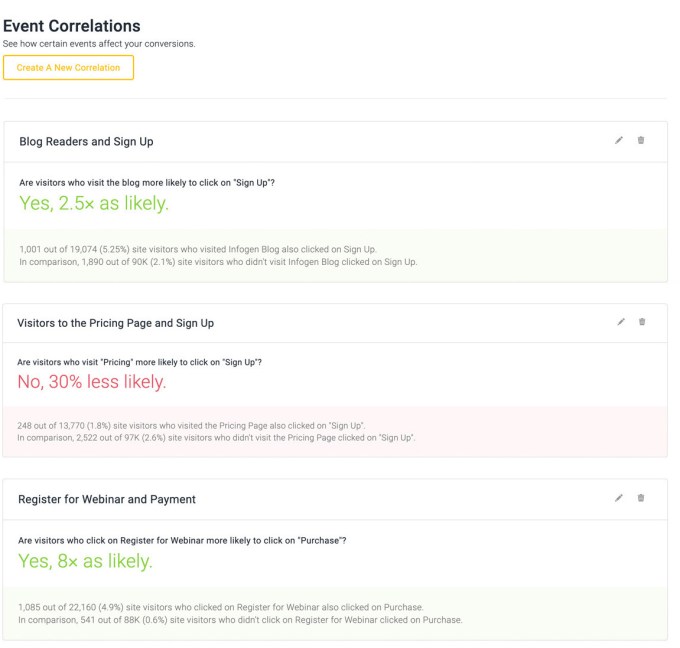
Event Correlations

In fact, if you use Oribi’s plugins for platforms like WordPress and Shopify, there’s no coding at all involved in the process. Apparently, that’s because Oribi is already tracking every major event in the customer journey. It also allows the team to define the conversion goals that they want to focus on — again, with no coding required.

Shoor contrasted Oribi with analytics platforms that simply provide “more and more data” but don’t help customers understand what to do with that data.

“We’ve created something that is much more clean,” she said. “We give them insights of what’s working; in the background, we create all these different queries and correlations about which part of the funnels are broken and where they can optimize.”

There are big businesses using Oribi already — including Audi, Sony and Crowne Plaza — but the company is now turning its attention to U.S. customers. Shoor said Oribi isn’t opening an office in the United States right away, but there are plans to do so in the next year.

SXSW cancels its 400K-person conference due to coronavirus

SXSW has officially announced it will cancel its tech and music conference slated for March 13th to 22nd in Austin, Texas due to concerns around coronavirus, though it’s exploring rescheduling. “Based on the recommendation of our public health officer and our director of public health . . . I’ve gone ahead and declared a local disaster in the city and associated with that, have issued an order that effectively cancels SXSW,” said Austin Mayor Steve Adler at a press conference today.

SXSW writes that it will follow the mayor’s order and cancel its conference. “We are exploring options to reschedule the event and are working to provide a virtual SXSW online experience as soon as possible for 2020 participants, starting with SXSW EDU. For our registrants, clients, and participants we will be in touch as soon as possible and will publish an FAQ.” It’s unclear if attendees or sponsors will receive refunds.

Interim health authority for Austin Dr. Mark Escott said that there are no confirmed cases of COVID-19 in Travis County, but called the cancellation a “proactive step in preparing this community for this storm.” He said that because people would be spending long periods of time near each other at panels and concerts, and because some registered attendees hail from international and domestic areas with COVID-19 exposure, cancelling SXSW was the right move. Not all future events will need to be cancelled, though, Escott explained.

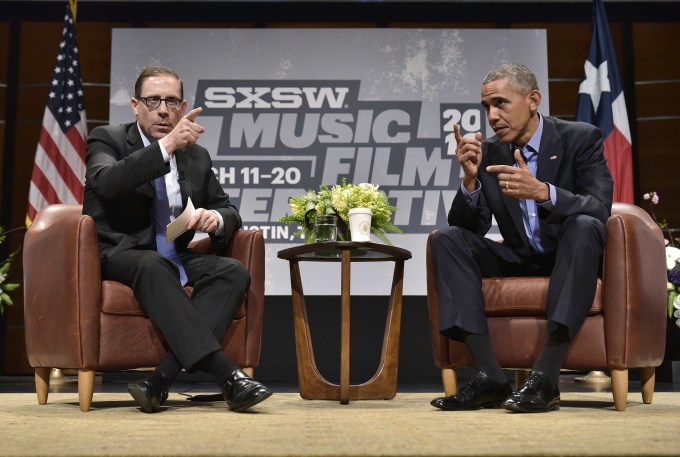
US President Barack Obama speaks during a South by Southwest Interactive with Texas Tribune editor Evan Smith (L) at the Long Center for Performing Arts in Austin, Texas on March 11, 2016. / AFP / MANDEL NGAN

The news comes just three days after Adler held a press conference to announce that, “At this point, there’s no evidence that cancelling SXSW makes us safer.” As of Tuesday, Austin’s Travis County said Thursday that it had zero confirmed cases of COVID-19.

SXSW is known as a central gathering point for the tech, music and media industries that gather to learn from each other while enjoying the Texas weather, beer and barbecue. A decade ago it was the hot place to launch new social apps. Though over the years as the event grew less nerdy and more mainstream, SXSW became more of an exhibition space for well-funded companies to prove that they’re cool.

A petition to cancel the 2020 conference had reached 54,000 signatures. Entrepreneurship influencer Tim Ferris had called on Adler to cancel the event. SXSW had been refusing to offer refunds to trade show booth-buyers and attendees. A full-access platinum badge for the conference currently costs $1,550.

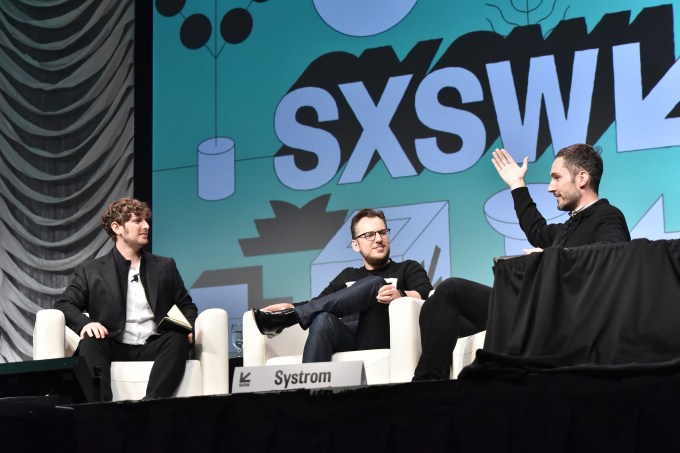
AUSTIN, TX – MARCH 11: Josh Constine, Mike Krieger and Kevin Systrom speak onstage at Interactive Keynote: Instagram founders Kevin Systrom & Mike Krieger with Josh Constine during the 2019 SXSW Conference and Festivals at Austin Convention Center on March 11, 2019 in Austin, Texas. (Photo by Chris Saucedo/Getty Images for SXSW)

The conference was put in a tough position by the pull-out of many of its highest-profile sponsors, speakers and party organizers. Netflix, Apple, Amazon, Twitter, Facebook, LinkedIn, Google, Vevo, TikTok, Warner/HBO and CNN had all cancelled events, product announcements, film premieres and speaking appearances by their employees.

Many other major tech conferences had already cancelled or moved online, including Google I/O, Facebook F8, GDC, Collision Toronto and Mobile World Congress. Music festivals like Ultra in Miami and Tomorrowland in Belgium had cancelled too. Lime president Joe Kraus was slated to hold a fireside chat with me at SXSW but had already cancelled this morning.

But the impact on Austin could be especially pronounced. SXSW isn’t a traditional festival held at one massive site. It’s spread across hundreds of venues across the city that all run panels, parties and concerts simultaneously. For musicians in particular, expensive travel rearrangements and tight touring schedules could make cancellation of SXSW a serious burden on their businesses and something that’s tough to reschedule. The city’s bars, restaurants, venues and hotels that benefit from the hundreds of thousands of attendees could take a significant revenue hit, as well.

FCC looks to mandate anti-robocall tech after prodding from Congress

The FCC is finally going to require wireless carriers to implement an anti-robocalling technology, after asking them nicely for more than a year to do so at their convenience. Of course, the FCC itself is now required to do this after Congress got tired of waiting on them and took action itself.

The technology is called Secure Telephony Identity Revisited / Secure Handling of Asserted information using toKENs, mercifully abbreviated to STIR/SHAKEN, and amounts to a sort of certificate authority for calls that prevents phone numbers from being spoofed. (This is a good technical breakdown if you’re curious.)

STIR/SHAKEN has been talked about for quite some time as a major part of the fight against robocalls, and in 2018 FCC Chairman Ajit Pai said that carriers would have until the end of 2019 to implement it. 2019 came and went, and while the FCC (and indeed carriers) took other actions against robocallers, STIR/SHAKEN went largely undeployed.

Meanwhile, Congress, perhaps tired of receiving scam calls themselves, managed to collectively reach across the aisle and pass the TRACED Act, which essentially empowers the FCC and other departments to take action against robocallers — and prevents carriers from charging for anti-robocall services.

It also ordered the FCC to set a timeline for STIR/SHAKEN implementation, which is what Pai is doing now.

“It’s clear that FCC action is needed to spur across-the-board deployment of this important technology. There is no silver bullet when it comes to eradicating robocalls, but this is a critical shot at the target,” he said in a statement issued today.

There does not, however, appear to be any great hurry. The proposal, which will be voted on at the FCC’s meeting later this month, would require voice service providers to implement STIR/SHAKEN by June 30… of 2021. And one-year extensions will be available to smaller providers who claim difficulty getting the system up and running.

In other words, you can expect to keep receiving strange calls offering discounts on cruises and warning you of IRS penalties for some time to come. Of course, there are some things you can do to stem the flow of scammers — check out our 101 on preventing robocalls for some simple tips to save yourself some aggravation.

Senator urges Uber, Lyft, Instacart and others to offer gig workers financial security in light of COVID-19 concerns

While some gig economy companies have already taken steps to try to prevent the spread of COVID-19 among its workers, Sen. Mark Warner (VA) is encouraging them to go further and consider ensuring workers don’t face financial consequences as a result of the virus.

“I strongly urge that you attempt to address the potential financial hardship for your workers if they are sick or have to self-quarantine during this time,” he wrote. “In order to limit the spread of COVID-19, it is critical that platform companies lead by example by committing that economic uncertainty will not be deterrents to their workers following public health guidance during the response.”

In separate letters to Uber, Lyft, Instacart, Postmates, Grubhub and DoorDash, Sen. Warner laid out a couple of ideas. The first entails creating a special coronavirus health fund that would be available to gig workers if they need to take time off to get tested or self-quarantine. The other idea is to pay workers their regular average pay, even if they can’t work their normal average hours.

“A health emergency for which they bear no responsibility should not place an undue financial burden on workers and their families,” he wrote.

Uber, in a statement to TechCrunch, said it is exploring options to compensate drivers who may be affected.

“We have a dedicated global team, guided by the advice of a consulting public health expert and public health organizations, working to respond as needed in each market where we operate around the world,” an Uber spokesperson said. “This team is also exploring compensation for drivers who have been quarantined or diagnosed with coronavirus, whether independently, through a fund, or in partnership with peer companies. We will keep the Senator updated about our plans and will respond directly to his letter.”

In a statement, a Lyft spokesperson said the company appreciates Sen. Warner’s leadership but did not explicitly mention potential compensation.

“We are focused on taking appropriate actions and are actively planning for multiple scenarios,” the Lyft spokesperson said. “We stand ready to coordinate with government officials.”

DoorDash, meanwhile, says it plans to engage in with Sen. Warner today about “innovative solutions” that help to enhance the welfare of DoorDash’s delivery workers.

“DoorDash’s task force is actively working to develop and implement a comprehensive strategy to protect the safety of our entire community in response to the spread of COVID-19,” a DoorDash spokesperson said. “We will continue to provide the latest public health guidance to consumers, Dashers, and merchants and remind our community in affected areas of the delivery instruction feature, enabling requests for food to be left at the door along with a photo of where the food should be left through the app.”

Postmates, which recently set up contactless delivery options, says it will continue to share information with its fleet of workers as the guidance from the Centers for Disease Control and Prevention evolves. Additionally, Postmates said it plans to brief Sen. Warner’s office with its plans to “invest in the well being of our flexible workforce.”

“Community health and safety is paramount at Postmates, and we continue to issue in-app,  precautionary CDC guidance with those carrying out deliveries so that they are aware of the latest preventative measures,” a Postmates spokesperson said in a statement. “Postmates also announced today an option to designate drop-off of an item without contact; and we will continue to encourage employees, merchants, consumers, and all parts of our community to follow safety protocols  such as washing hands and staying in if you are sick.”

GruhHub, similarily, also says it’s focused on the health and safety of its drivers, customers and restaurant partners.

“We share Senator Warner’s concerns about the safety and welfare of our drivers and look forward to working with the Senator on these important issues,” a GrubHub spokesperson said in a statement,

This focus on the response of gig economy companies comes at a time when many of them are trying to combat a new California gig worker protection law, which would make it harder for these companies to classify workers as independent contractors. If classified as W-2 employees, they would have access to things like health care and paid time off.

Outside of the gig economy, companies like Microsoft and Facebook have been more proactive in this area. Microsoft, for example, has committed to paying hourly workers their regular wages even if they are unable to work as a result of COVID-19 concerns. Facebook, shortly after Microsoft’s announcement, committed to paying its contingent workers who cannot work during this time of concern. SXSW has also just recently cancelled its conference.

TechCrunch has reached out to Instacart . We’ll update this story if we hear back.

Facebook commits to paying ‘contingent’ workers affected by corporate coronavirus response

Last night, in a move that all companies should look to emulate, Microsoft announced that it would continue to pay hourly workers impacted by office closures as the company responds to the coronavirus outbreak in the U.S.

Now, Facebook appears to be following suit, according to a statement from the company:

“We are working closely with our vendors to ensure we prioritize our team’s health and safety. Facebook will pay contingent workers that cannot work due to reduced staffing requirements during voluntary work from home, when we close an office, when we choose to send an employee home, or when they are sick,” Chloe Meyere, a Facebook company spokesperson wrote in an email.

In a blog post announcing Microsoft’s decision, company President Brad Smith wrote:

“While the work to protect public health needs to speed up, the economy can’t afford to slow down. We’re committed as a company to making pubic health our first priority and doing what we can to address the economic and social impact of COVID-19. We appreciate that what’s affordable for a large employer may not be affordable for a small business, but we believe that large employers who can afford to take this type of step should consider doing so.”

Several tech companies have asked employees to work from home in places where COVID-19 cases have been identified, like Washington state and California, including GoogleLyft and Square. Concerns about the COVID-19 have also led to the cancellations of major events, like Mobile World Congress and Google’s I/O developer conference.

Tech companies have created a dual-class worker system in recent years, keeping their more technical and product-oriented staff as full-time workers for the main company, while exporting elements of labor to third-party companies. This nigh-class-based system has raised both eyebrows and ire, especially when tech’s famous buses were under public attack. Moving to comp more, or all workers is not only good PR, though it is also that, it’s simply good ethics.

Perhaps the current situation will help more tech companies bring more of their workforce in-house. Whether it’s Alphabet’s dependence on temps, Facebook’s outsourcing of moderating work, or just hiring other companies to staff their operations, there’s probably too much internal outsourcing going on. But at least hourly folks aren’t going to take a pay cut during a pandemic. A low bar, and not one that all tech companies have cleared so far, but a better step than nothing at all.

Daily Crunch: Jack Dorsey defends his work as Twitter CEO

Twitter’s CEO defends himself from activist investors, Google takes additional coronavirus precautions and a fizzy drink maker raises $30 million. Here’s your Daily Crunch for March 6, 2020.

1. Twitter CEO’s weak argument why investors shouldn’t fire him

Twitter CEO Jack Dorsey spoke yesterday at a Morgan Stanley conference, where he delivered remarks (also shared via Twitter’s investor relations account) that responded obliquely to activist investor Elliott Management’s efforts to pressure Twitter into a slew of reforms, potentially including replacing Dorsey with a new CEO.

Among other things, Dorsey said he might not spend six months a year in Africa after all, claimed the company’s real product development is happening under the hood and offered an excuse for deleting Vine before it could become TikTok.

2. Google recommends Washington State employees work from home, citing coronavirus risk

The software giant has not closed its Washington offices outright, nor is it planning to make an official statement regarding the recommendation, but the news certainly points to a broader trend of serious precautions around the novel coronavirus outbreak. The move follows a similar decision by Lyft, which sent home employees in its San Francisco office.

3. Spindrift, maker of fizzy drinks, has raised $29.8M

Spindrift, founded in 2010, is up against big players, like the beloved and decades-old LaCroix, another sparkling water brand. The company differentiates itself by emphasizing “real fruit” in its drinks — think cucumbers from Michigan, strawberries from California and Alfonso mangoes from India.

4. Airbnb and three other P2P rental platforms agree to share limited pan-EU data

The European Commission announced that it has reached a data-sharing agreement with vacation rental platforms Airbnb, Booking.com, Expedia Group and Tripadvisor — trumpeting the arrangement as a “landmark agreement” which will allow the EU’s statistical office to publish data on short-stay accommodations across the EU.

5. SaaS companies flirt with correction territory as another wild week comes to a close

Stocks are set to fall further today, likely forcing shares in SaaS and cloud companies down yet again. After two wild trading weeks, the high-flying tech category is off over 9% from recent highs before the bell this morning, putting it close to correction territory. (Extra Crunch membership required.)

6. Mark Cuban backs ChatableApps, developer of a hearing assist app that removes background noise

The company has built a smartphone app that provides hearing assistance by removing background noise in near real time. Alongside auditory neural signal processing researcher Dr. Andy Simpson, the company’s co-founders are Brendan O’Driscoll, Aidan Sliney and George Boyle — the original team behind the music discovery app Soundwave.

7. Pex buys Dubset to build YouTube ContentID for TikTok & more

Pex is a royalty attribution startup that scans social networks and other user-generated content sites for rightsholders’ content, then lets them negotiate licensing with the platforms, request a take-down, demand attribution and/or track the consumption statistics. Dubset, meanwhile, has spent 10 years tackling the problem of getting remixes and multi-song DJ sets legalized for streaming.

The Daily Crunch is TechCrunch’s roundup of our biggest and most important stories. If you’d like to get this delivered to your inbox every day at around 9am Pacific, you can subscribe here.

Citing concern over COVID-19, Y Combinator moves demo day online

Startup accelerator Y Combinator announced today that it has moved its demo day online, citing a “growing concern over COVID-19,” or coronavirus. The demo day has historically drawn crowds of Silicon Valley elite, journalists and both national and international venture capitalists to watch more than 100 startups come out to the world. 

“While we won’t be able to recreate every aspect of Demo Day, we’ll try our best to create an amazing experience for our founders and investors,” Y Combinator said in a blog post. Y Combinator’s 30th annual demo day will be pre-recorded and released to investors on Monday March 23, per the post.

Thanks to a mix of history and glamour, demo day is the culminating day of a YC startup’s accelerator experience. It’s a big audience full of check writers and fast typers, and at the least, they’ll get a tweet or a couple of sign-ups. The move to remote, in some way, dims that excitement. 

Brianne Kimmel, the founder of Work Life Ventures, noted that as investor demand for YC companies has grown, “the dozen or so breakout companies get funded weeks before demo day.” Kimmel attended YC’s 2016 Winter batch, and attended the past four demo days as an investor.

“While the entire early stage ecosystem comes together at YC demo day — many investors are there to network and support the companies they’ve backed well before the founder presents on stage,” Kimmel said. Many other major tech events are being cancelled as well, including SXSW.

Kimmel invested in Tandem before demo day last year, and has already invested in Accord, a project management platform, ahead of this year’s demo day.

Beyond digital presentations, YC has said it will “provide additional written background information on each company and access to their decks.” It also will provide software to help investors and founders arrange one-on-one meetings. 

Seth Bannon, a founding investor at Fifty Years and previous YC graduate (S12), said “the face to face human element is incredibly important, as founders try to gauge if they want to partner with an investor for the next tens years and vice versa.”

“At Demo Day you can have hundreds of those quick face to face interactions in hours. That said, I think this is the right decision for YC,” Bannon told TechCrunch. “The safety of founders and the broader community is most important. Good on them for making a really tough decision.”

Chris Woodward, the CEO of Handle (YC W19), said that “while not being able to meet investors in person at demo day could be seen as a blow to the current batches by some people, I see it as a potential opportunity for them to set longer meetings with investors post demo day.”

Other tech conferences have cancelled or moved operations online in an effort to protect against the new coronavirus. Earlier today, Jason Lemkin’s SaaStr postponed its annual conference to September 2020. Another accelerator, 500 Startups, will be live-streaming its separate demo day. YC’s decision to post pre-recorded videos is an attempt to bring deal access to investors, without shutting down all operations.

“For 15 years, startup investors have supported every new batch of YC companies, and we know the same will be true for this batch,” the post said. 

Apply to be a TC Top Pick at Disrupt SF 2020

If you’re an early-stage startup founder with a big vision and even bigger dreams, join us and more than 10,000 other like-minded startuppers at TechCrunch Disrupt San Francisco 2020 on September 14-16. Silicon Valley’s premier early-stage startup extravaganza focuses on founders, investors and startup experts determined to disrupt and reshape technology.

Attending is awesome, but attending and exhibiting at Disrupt — for free — is even better. What magic is this? No hocus-pocus required. Simply apply to our TC Top Picks program. Applying is also free, and it’s easy to do. However, earning that coveted Top Pick designation — not so easy.

TechCrunch editors have a keen eye for the qualities that translate into serious startup success. They’ll thoroughly review every application and then choose up to five stellar startups for each of the following categories: AI, Biotech + Healthtech, Enterprise/SaaS, Fintech, Mobility, Retail + E-commerce, Robotics + Hardware IOT, Security/Privacy, Social Impact + Education, Space.

Pro tip: Keep the phrase “up to five” in mind. If the editors feel only three startups fit the bill for any given category, they’ll stop at three.

Now that you know how to apply, let’s talk about why you should apply. Every Top Pick startup receives a free Startup Alley Exhibitor Package. As a Top Pick VIP, you’ll strut your impressive stuff for a full day in a prime location in Startup Alley, our exhibition floor. The package also includes three complimentary Founder passes to Disrupt SF 2020 — bring your crew and make the most of your time at the show.

Thousands of people, including investors and tech media, pour through Startup Alley, and everyone wants to know who made the Top Pick cut. You’ll reap invaluable exposure to potential customers, partners, mentors and again…investors. Who doesn’t love investors?

Here’s what Francisco Serra-Martins, founder of Australia-based Sonder Designs, says about his Top Pick experience:

“Being a TC Top Pick at Disrupt San Francisco not only helped us close out an additional $1 million investment for our seed round, it was an incredible opportunity to introduce our technology to an international community and to engage with the San Francisco startup ecosystem.”

One of the most exciting parts of earning a Top Pick designation is the media exposure. Hundreds of top media outlets attend Disrupt, and they’re all looking for great stories. And, drum roll please, your media experience also includes being interviewed by a TechCrunch editor live on the Showcase Stage.

We record the interview, edit the video and blast it across our social media networks. It’s a valuable marketing tool that you can use long after Disrupt ends.

Intrigued? Want to know more? Check out who we chose as TC Top Picks at Disrupt SF 2019.

TechCrunch Disrupt San Francisco 2020 takes place on September 14-16 at Moscone West. Take a chance and apply to be a TC Top Pick. If you’re not quite there yet, that’s OK. Come to Disrupt and learn from the best minds in the startup ecosystem. Buy an early-bird ticket here and save up to $1,800.

Is your company interested in sponsoring or exhibiting at Disrupt San Francisco 2020? Contact our sponsorship sales team by filling out this form.

Delivery startups set up contactless delivery options as coronavirus fears grow in U.S.

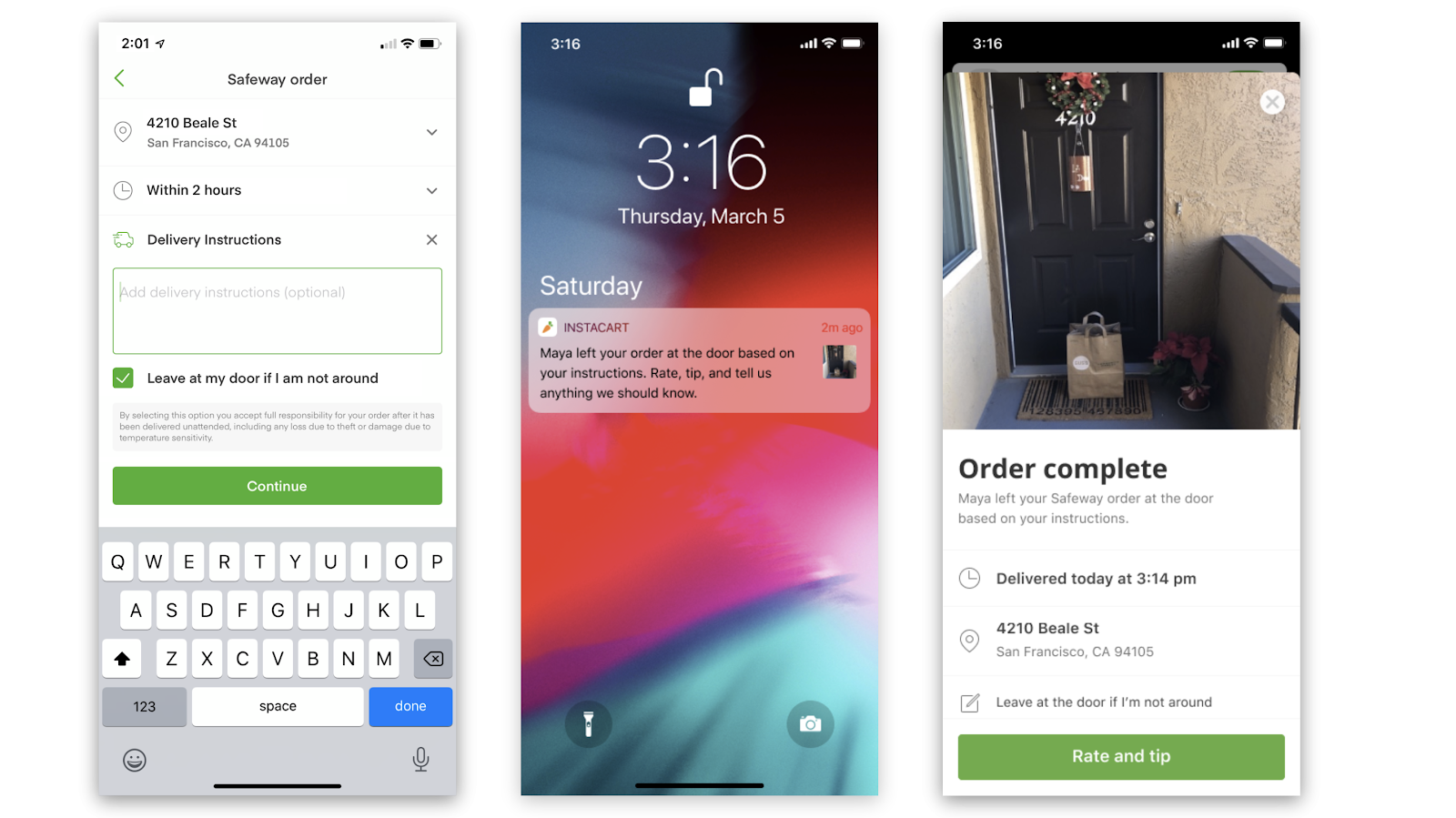
Postmates announced today it would be adding a “non-contact delivery option,” for those concerned about COVID-19 exposure from workers bringing them food. Instacart set up something similar earlier this week, announcing sales were 10x higher this week over last due to coronavirus concerns and rolling out the “leave it at my door” option for customers concerned about coronavirus.

This flu-like virus has already infected nearly 100,000 people worldwide, killing thousands, including one man so far in the Bay Area, the hub of Silicon Valley and the startup world.

Similar services starting offering this contactless option in China last month, where COVID-19 took a stronghold and started spreading from Wuhan. The majority of stores in the area had closed shop, leaving delivery as most people’s only option. The contactless measure seemed aimed at keeping everyone safe and minimizing exposure.

Lmaoo postmates gets it pic.twitter.com/4t1fc5sxzV

— Teal (@teal_xo) March 6, 2020

While plenty of customers have praised this effort, not everyone is pleased, believing this move is just passing the buck to low-wage workers.

This new option from Postmates is the most cynical thing I’ve seen today. Come on, cook at home instead of moving risk down the inequality ladder… pic.twitter.com/AiMIbn5LWy

— Romain Dillet ? (@romaindillet) March 6, 2020

Postmates counters this argument, telling TechCrunch the move is beneficial to both customers and couriers. “Community health and safety is paramount at Postmates, and we have shared precautionary CDC guidance with our Postmates,” a Postmates spokesperson told TechCrunch. “Customers have an option to designate the drop-off of item without contact; and we’ll continue to encourage employees, merchants and consumers to follow preventative measures. While we are operating with business as usual, we are tracking the situation closely and will help provide the resources necessary to mitigate increased risks.”

Instacart mentioned similar sentiment, telling Techcrunch, “Our goal is to continue to work with and serve the entire Instacart community safely, while also ensuring our customers have access to uninterrupted delivery and pickup services for the groceries and household essentials they need.”

For those who like this option and want to use it, just order as normal on Postmates. You’ll then be prompted to select your delivery preference before checking out. The option is similar with your Instacart order.

While we’ve so far only heard this option is being offered by these two delivery startups, we’re likely going to see more contactless rollouts as coronavirus fears continue to change our shopping habits in the next couple of months.

Tesla gets OK to produce long-range Model 3 at China factory

Tesla has received government approval to produce the long-range rear-wheel-drive version of its Model 3 vehicle at its Chinese factory, according to documents posted Friday on the Ministry of Industry and Information Technology website.

Reuters was the first to report the story.

Tesla started producing a standard-range-plus rear-whee-drive version of the Model 3 at its Shanghai factory late last year. The first deliveries began in early January. This approval allows Tesla to add another variant to its Chinese portfolio. Eventually, Tesla plans to manufacture the Model Y electric vehicle at the China factory.

The move is notable because Tesla discontinued production of the long-range RWD Model 3 in the U.S. and now only offers that variant as a dual-motor all-wheel drive. It also appears to be a shift from Tesla’s initial plan to sell a more basic version of the Model 3 in China.

The standard-range-plus Model 3 can travel 276 miles on a single charge, according to Tesla’s China website. The company hasn’t posted a range on its Chinese website for the longer-range variant.

Tesla struck a deal with the Chinese government in July 2018 to build a factory in Shanghai. It was a milestone for Tesla and CEO Elon Musk, who has long viewed China as a crucial market. And it was particularly notable because China agreed for this to be a wholly owned Tesla factory, not a traditional joint venture with the government. Foreign companies have historically had to form a 50-50 joint venture with a local partner to build a factory in China.