Reddit takes on Twitter with its first trending ad product

Reddit, the popular discussion site visited by more than 430 million people per month, is opening up some of its most valuable screen real estate to advertisers with the launch of its first trending ad product, the Trending Takeover. The new ad unit will allow brands to reach visitors on two of the most heavily visited areas of Reddit’s website: the Search tab and the Popular feed.

The ad format allows the brands’ campaigns to run across the largest trends on Reddit’s site for 24 hours, Reddit says. The trends section is where users can see what’s currently buzzing and being discussed across the site, similar to the Trends section on Twitter, which can also be targeted by advertisers.

Reddit already offers advertisers the ability to run campaigns across its site in order to raise brand awareness, drive conversions or generate website traffic, app installs or video views, among other things. But the new Trending Takeover ad product will allow brands to reach even more potential eyeballs, as Reddit says the Popular feed alone is used by a third of the site’s visitors daily, and the Search tab also reaches millions every day.

In addition to the increased visibility, the benefit to this sort of ad format is that a campaign can be designed to align with what’s being talked about in real time during the day it runs. For instance, a brand could run a trending ad on the day their brand became a part of the trending section organically.

According to eMarketer, Reddit was forecast to generate $119 million in net U.S. ad revenues in 2019, giving it a 0.1% of the overall U.S. digital ad market. But the analyst firm believes that figure will more than double, to $261.7 million, by 2021, noting how the company continued to roll out new formats like its autoplay in-stream video, cost-per-click, Top Post Takeover slots and more.

“With millions of searches taking place every day and over one-third of users coming to Reddit’s Popular feed daily, brands can now be part of where cultural trends are born online — Reddit,” said Shariq Rizvi, vice president of Ads Product and Engineering at Reddit, in a statement. “For Reddit, a large focus for 2020 is about maximizing new and premium opportunities for brands to authentically engage with Reddit users,” Rizvi added.

In beta tests of Trending Takeover, Reddit worked with more than 15 partners across entertainment, consumer tech, CPG, automotive and QSR verticals, it says, including SpotifyMethod and Adobe. The company claims these early testers saw both an increase in conversions and click-throughout rates that were two times more than industry standards for social.

For example, Method used a combination of hand-picked keywords and its own custom creative on the Trending Takeover landing page and saw click-throughs at over two times industry standards. It also was able to use the format to drive video views with a completion rate of four times that of Reddit’s usual Promoted Posts format. The brand had specifically targeted communities like r/houseplantsr/gardening and r/malelivingspace for a campaign about its household cleaners.

According to a media buyer cited by AdWeek, Promoted Trends on Twitter can cost around $250,000 per day, although pricing is customized. Reddit’s new Trending Takeover ad would probably be a minimum of around $100,000, they estimated. Reddit was not confirming pricing.

Reddit says it’s now selling Trending Takeovers on a reservation, not programmatic, basis. The ads run on both desktop and mobile.

TV advertising didn’t die, it just moved online

The tradition of sitting through a barrage of ads in exchange for being entertained began with radio, flourished with the arrival of television and followed the mass migration online.

As the massive $35 billion in advertising revenue captured by YouTube and Instagram in the last quarter indicated, online advertising around social media, influencers and streamers already represents roughly half of the total amount spent on television advertising at its 2018 peak of $72.4 billion.

Entertainment businesses are under enormous pressure to create new revenue models as linear advertising becomes less relevant to consumers, a potential harbinger for another boom in advertising technology as companies try to keep audiences engaged.

Instagram’s $20 billion advertising haul, first reported by Bloomberg, comes as Alphabet, Google’s parent company, disclosed advertising revenue of $15.1 billion at its YouTube subsidiary for the first time.

Taken together, those figures mean that the market share of advertising commanded by television may shrink to a quarter of all advertising spending sooner than the 2022 prediction from eMarketer, as reported in MarketingLand. While search on Google and Amazon are clear winners — as is Facebook — other technology companies are likely to see a windfall as advertisers chase consumers to new places.

Facebook Stories tests cross-posting to its pet, Instagram

Facebook’s latest colonization of Instagram has begun. Facebook is testing the option to cross-post Stories to Instagram, instead of just vice-versa. Hopefully, that means the two apps will finally sync up the “already viewed” status of cross-posted Stories so we don’t have to watch re-runs any more, as I harped about in January.

If fully launched, the cross-posting feature could save social media managers and average users time while letting them maximize the views on the content they create. It could also give a little boost to the total Stories available on Instagram so its algorithm has more to choose from when ranking what it shows first.

But the change could also been seen as the most invasive injection of parent company Facebook’s identity into Instagram — which has been steadily increasing since Instagram’s co-founders left the company in late 2018 as their autonomy dwindled. Facebook has already pasted an “Instagram – From Facebook” title screen into the photo-sharing app’s boot-up phase, and added an Open Facebook button to its settings menu. Instagram added cross-posting of its Stories to Facebook in October 2017, allowing its parent to piggyback on the popularity of its ephemeral content.

Facebook Stories, Instagram Stories and WhatsApp Status all had 500 million daily users as of a year ago, while Snapchat as a whole has just 218 million users.

The screenshot of the Facebook-to-Instagram cross-posting feature was generated from the Facebook for Android app code by Jane Manchun Wong. She’s the renowned reverse engineering expert who has furnished TechCrunch with tips on dozens of unreleased features that went on to officially launch. When you’ve shot a Facebook Story and are about to post it, you can tap Privacy to review who you’re sharing with. In addition to the Public, Friends, Custom and Hide From options, Facebook is testing a Share To Instagram toggle that appears to turn on continuous cross-posting of that post and future ones.

A Facebook spokesperson tells me that the company is now formally testing the cross-posting feature to make it easier to share moments with the people who matter to you, as people might have different audiences and followers on Facebook versus Instagram. Facebook will continue to explore options for simplifying and improving how Stories work across its apps. That means it’s out of the internal-only prototyping phase and is now being tested with users in the wild.

With any luck, Facebook and Instagram will eventually sync up data about which Stories you’ve watched on either app, and avoid showing you exact copies of ones you’ve already seen. I made my case for this to Instagram’s leadership at a recent press dinner, noting how reruns waste hundreds of millions of people’s time and lead them to close Stories or the app altogether. I asked Facebook about that specifically; they declined to comment.

Creating two-way interoperability of Stories is a precursor to Facebook’s efforts to unify its Messenger, WhatsApp and Instagram Direct chat features. That could extend end-to-end encryption across the apps, protecting messages from prying eyes. But there’s been government grumbling about how encryption could hide the activity of criminals, and some see intertwining the chat features as a way to make it harder for regulators to break up Facebook.

Coursedog lands $4.2 million to make class scheduling smarter

Two years ago, dormmates Justin Wenig and Nicholas Diao struggled to get into a popular computer science class at Columbia University . The duo eventually got into that class, but after the initial frustration around class scheduling, they decided “it was an obvious problem for a computer to solve.”

Wenig and Diao are the founders of Coursedog, a software startup that wants to create an operating system for universities to better schedule classes, professors and sections based on demand and interest. “Think of it,” Wenig said, “as a Superhuman for class scheduling systems.”

Today, Coursedog announced it has raised $4.2 million from a crop of investors, including First Round’s Josh Kopelman. The company did not disclose any other investors, and there were no board seats taken on during the financing round. The Y Combinator graduate’s total known venture capital funding is now $5.7 million. Investors in the company include FoundersX Venture, EFund and Jinal Jhaveri, the former CEO of SchoolMint, a school enrollment startup.

The funding will be used to build out Coursedog’s product line on projecting course demand, the correct number of seats a school should offer per course and student success.

“A lot of people think higher [education] is a slow institution, but institutions are really thinking about how to promote student success,” Wenig said in an interview with TechCrunch. But instead of adopting any technology, universities are careful about sharing protected data, he continued.

Competition-wise, Wenig said that Blackboard, a learning management startup, continues to be one of the two “big software tools within universities.” Coursedog sits on top of the other software tool: the student information system, used by administrators that need to plan student schedules.

After Wenig and Diao cold-called hundreds of colleges, Columbia Law School was the first contract signed. Since then, the startup has landed deals with more than 60 colleges and universities of all sizes.

Coursedog’s clientele fits a range. The smallest client, per Wenig, is the Laguna School of Art and Design, which has roughly 600 students. Wenig also noted they cater to a mix of public and private schools, with public schools often “being the most innovative.”

“A lot of states offer incentive-based funding,” Wenig said. “In Utah, the amount of funds you might get from the state as a public institution is directly proportional to how well you’re using your space on campus.” He claims that Coursedog helps improve graduation rates by getting more students into the right classes.

“Today, we are just building apps on top of the Student Information System to help schools with scheduling, curriculum planning and catalog publishing and are slowly eating away functionality that schools would normally be doing with spreadsheets and native to the SIS,” he noted.

Coursedog plans to scale to 100 more universities in the next year, and will use the new funding to help “grow up” its production.

The risky first transatlantic flight of a Reaper drone

The Royal Air Force delayed safety warnings about the first transatlantic flight of a new Reaper aircraft in 2018, over fears that they could tip anti-drone protestors to its arrival in the U.K., according to emails seen by TechCrunch.

On July 11, 2018, the General Atomics SkyGuardian, a variant of the U.S. Reaper drone that killed Iranian military leader Qasem Soleimani in January, flew from Grand Forks, N.D., to RAF Fairford in Gloucestershire. This was the first and only time that a drone had made such a journey through U.K. civilian airspace, and it paved the way for an even more ambitious test due to happen in the U.S. later this month. 

The 5.5-metric ton aircraft was remotely piloted throughout its 24-hour journey using satellite communications to relay video, instrument data and air traffic control instructions to pilots at General Atomics’ airbase in North Dakota. 

The historic flight, which passed directly over Hereford and Gloucester, concluded without incident at RAF Fairford, where the drone went on static display during the Royal International Air Tattoo, a military air show. 

General Atomics chief executive Linden Blue said: “The successful flight of the [SkyGuardian] is the culmination of the hard work and innovation of our dedicated employees, and the strong relationships that we enjoy with the RAF, the U.K. Civil Aviation Authority (CAA), the Royal International Air Tattoo and our U.K. industry partners.”

However, emails obtained under U.K. Freedom of Information legislation, and first reported by The Guardian, show that those relationships were tenuous at best, with the CAA distrusting General Atomics, questioning the U.S. Federal Aviation Administration’s oversight of the SkyGuardian and facing sustained pressure from the Ministry of Defence to delay safety measures. 

The CAA, the U.K.’s aviation regulator, supplied more than 1,600 pages of emails regarding the flight. All were heavily redacted, including most names and job titles. 

Plan for the final leg of the SkyGuardian’s transatlantic flight, travelling between Ireland and England, then flying over Wales to land at Fairford airbase (Credit: General Atomics/CAA)

It is unclear who first suggested a high-profile transatlantic Reaper flight to mark the RAF’s centenary and showcase the new drone at the Air Tattoo. But by early February, the CAA was already warning of pressure from the military to allow the flight. 

“We will need to be fully satisfied that the flight can be conducted in a safe manner before we will approve this,” wrote a CAA manager to Mark Swan, then the regulator’s director of Safety. “Note that there is likely to be extensive interest from MoD sources… and hence some higher level pressure focussed on the CAA for this flight to take place.”

That is because the RAF is in the process of procuring 20 next-generation Reaper drones from General Atomics in a deal worth more than £1.1 billion (US$1.4 billion). These drones, which the RAF will call Protector, are a military version of the SkyGuardian that undertook the transatlantic flight. 

The RAF already has 10 Reaper drones, a larger and more heavily armed variant of the Predator. Since 2008, these have been used to carry out hundreds of deadly strikes in Afghanistan, Iraq and Syria. While these drones are remotely controlled by RAF pilots in Nevada and Lincolnshire, the Reapers are not allowed to share civilian airspace with passenger jets. This means that they have to be based very near to where they operate — an expensive and limiting requirement.

A drone like the SkyGuardian that could fly amid commercial aircraft for many thousands of miles would enable the RAF to attack targets across much of the world from the bases in Britain. “A drone that can fly in a civilian airspace is so much more versatile,” says Arthur Holland Michel, co-director of the Center for the Study of the Drone at Bard College in New York.

When the Protector drones enter service in the U.K. in 2024, they will carry two British-made weapons: a GPS- and laser-guided bomb called the Paveway IV; and a semi-autonomous missile called Brimstone. Although the transatlantic drone would be unarmed, the RAF saw it as a potentially lucrative sales demonstration for other countries. 

“The eyes of a number of potential customer nations such as [Australia] and [Canada] will be on the event and the outcome could be significant for UK prosperity,” wrote the RAF’s program manager for Protector in an internal email to the MoD.

The CAA was skeptical from the outset. “The general impression of General Atomics… is that they will try to ‘push the limits’ and over promise in many areas,” wrote a safety official in March. “We need to tread really carefully on this one – the fact that MoD is involved is not a reason for us to roll over and just let this happen.”

The regulator’s concerns were simple. How would the aircraft know where it was? How would pilots thousands of miles away know what was happening around the drone? And how could they ensure they had control of it at all times? 

The CAA has an exhaustive procedure for assessing the safety of aircraft, and another long list of requirements for allowing drones to take to the skies above Britain. There was no way that the SkyGuardian could be properly tested by the U.K. regulator in a few short months before the planned flight in July.

Instead, General Atomics could apply for an overflight exemption — permission for a single flight on a given day. This exemption would rely on another credible organisation attesting to the airworthiness of the aircraft, in this case, the U.S. Federal Aviation Administration (FAA). 

The problem was that the FAA had itself placed severe limits on how and where the SkyGuardian could operate. It usually required the SkyGuardian to have a visual observer spotting for the drone from a nearby chase plane whenever it was below 18,000 feet. The FAA also banned the drone from flying over most densely populated areas. 

“I do not really see how such limitations would… allow the aircraft to commence the first part of its flight out of the United States, let alone over Canada and then into the oceanic system,” wrote a CAA safety official to General Atomics. “The limitation regarding overflight of densely populated areas… will bring in additional problems within the UK (which is already quite densely populated).”

For its part, the FAA insisted that its authority finished at the edge of American airspace. “Whether manned or unmanned, [we] cannot provide any sort of safety statement that would ensure safe operations in UK airspace,” wrote an FAA official to the CAA in March. 

“If General Atomics can’t get the FAA to back up the safety of the aircraft, then why should we be letting it into our airspace?,” wondered one CAA official. 

It seemed as though the same thought had occurred to authorities in Ireland. The shortest route for many transatlantic flights between the U.S. and the U.K. is directly across Ireland. However, a track of the SkyGuardian’s route shows a distinct kink to keep the drone out over the Atlantic and the Irish Sea.

In April, a CAA airspace official reported a phone call with their counterpart at the Irish Aviation Authority: “I explained why the decision was made to route south of Irish landmass… However, due to how the Irish will be segregating the airspace and in addition to the commercial traffic routing across the Atlantic, they have requested that [SkyGuardian] now routes [even] further south.”

In aviation, segregation is when an aircraft does not fly in close proximity to other planes but instead has a corridor carved out for its sole use. Although General Atomics’ ultimate aim is for the SkyGuardian (and the RAF’s Protector) to use advanced sensors to autonomously detect and avoid hazards, the entire transatlantic flight would take place in segregated airspace, at least several miles from other aircraft. 

Even so, the FAA would have had to adjust the SkyGuardian’s domestic certification to allow it to fly over cities, and without a chase plane. “In its current format and limitations there is not a lot the CAA can do with this,” wrote a CAA official. “We need to sit down and discuss this, as there are political forces at play here and [we are] getting a lot of pressure from the MoD.”

Eventually, the FAA relented, relaxing the SkyGuardian’s restrictions for the transatlantic flight. It does not appear that the CAA had any say in setting those conditions, which were redacted in the CAA emails. However, the drone flew directly over the city of Gloucester and did not have a chase plane. 

Following a meeting about the proposed flight in early June, one CAA official reported that the regulator was “simply taking the FAA’s experimental certification and ‘anglicising’ it.”

Now that the flight seemed as if it would actually happen, attention within the RAF and CAA shifted to public relations.

Although the SkyGuardian would be displayed at the Air Tattoo with British bombs and missiles, the RAF wanted the flight and SkyGuardian to sound as innocuous as possible. RAF High Command edited an article intended for the defence publication Jane’s to remove references to the SkyGuardian’s large weapons load and its ability to “greatly [compress] the sensor to shooter kill-chain between detection and an armed response.” 

“I have cut out the weapons bit as this detracts from the article and moves focus from the achievement of the flight to how easily we can kill people,” wrote an RAF officer. The same officer also added a paragraph about how the SkyGuardian could provide humanitarian assistance, disaster relief, coastal surveys, search and rescue and even monitor flood defences.

“This is all part of the narrative that [remote piloted aircraft] are a good thing and I am keen to keep the wind out of the anti-drone lobby sails,” he wrote. 

General Atomics was now excited to announce the upcoming flight as quickly as possible. But on June 11, a CAA official noted that a press release from General Atomics had been blocked by the MoD “due to concerns about the potential for “anti (military) drone” protests hampering the arrival at Fairford if the flight is publicised too early.”

A week later, the MoD suggested that the CAA only announce the 4,300-mile transatlantic crossing just six days before the flight itself.  

“We have significant concerns this is too late,” complained a CAA official to Mark Swan, its head of safety. “[We] endeavour to provide at least 60 days’ notification of large airspace restrictions to notify other airspace users… The longer we leave to notify, the higher the risk of airspace infringements.”

A particular worry was a British Gliding Association competition scheduled to take place just 10 miles from the SkyGuardian’s airspace on the day of its flight. If one of the gliders should stray into the drone’s path, it could risk a catastrophic collision. 

“Sadly, I have had a huge kickback from the RAF regarding going public,” wrote another CAA official. “I have been informed that the RAF [is trying to] delay this as long as possible…. Patience is running thin thanks to the MoD.”

Ultimately, the CAA disregarded the military’s concerns, and issued its airspace warning at the end of June. Only one decision was left to be made: What should the SkyGuardian be called?

One CAA airspace expert suggested calling it nothing at all, with the warning vaguely referencing “a civilian aircraft, certificated and registered through the FAA… to mitigate the risk of anti-drones protests for [the] MoD.”

Another CAA official agreed that the word “drone” should be avoided wherever possible. “[We can] refer to it as either an Unmanned Aircraft or as a Remotely Piloted Aircraft… I believe the terminology of ‘drone’ does not fit this aircraft for a number of reasons.”

RAF High Command concurred, with an RAF officer writing: “It is clear from our teamwork that we are all consistent and clear on each other’s priorities moving forward, particularly with the incorrect use of ‘drone’.”

Experimental SkyGuardian drone flying over the UK on the first ever transatlantic drone flight through civilian airspace (Credit: General Atomics)

At last, the CAA and the RAF could agree on something. Whatever flew uncrewed from America to Britain, with its remote pilot, satellite control and ability to carry multiple precision-guided weapons, it certainly wasn’t a drone. 

The flight itself went pretty much to plan. The SkyGuardian took off from Grand Forks just after midday on 10 July, and flew through the night at 27,000 feet over Canada and the North Atlantic on a meticulously charted route. Pilots in North Dakota, controlling the SkyGuardian in shifts, connected with U.S., Canadian, Irish and British air traffic controllers. 

Arriving off the coast of Wales, the SkyGuardian descended into a holding pattern above Cirencester before coming in to land at Fairford, using an automated landing system. There were no anti-drone protestors waiting to greet it. 

After the Tattoo was over, the SkyGuardian was dismantled and flown back to the U.S. as cargo, its mission complete. 

In January 2019, General Atomics announced that defense contractor BAE Systems was developing a plan for regular RAF Protector operations in U.K. civilian airspace. In November, the Australian government announced that it would spend $1.3 billion Australian dollars (£670 million) to acquire a fleet of SkyGuardians as its next unmanned aerial vehicle. Canada and Greece are also reported to be considering purchasing the aircraft. 

But the jewel in the crown for General Atomics is the U.S. market. On March 23, a SkyGuardian equipped with an experimental autonomous detect-and-avoid system and a cutting-edge surveillance radar will take to the skies above Southern California, fully integrated with normal air traffic control for the first time. According to a filing with the FCC, it will fly for over 100 miles, conducting aerial inspection and surveillance of “critical infrastructure owned by commercial and civil entities.”

“This type of commercial mission has never been done with a [drone] anywhere in the United States,” wrote General Atomics. “It is a first of its kind and will serve as a proof of concept for future… missions.”

If the test goes well, military and commercial Reapers and SkyGuardians could soon start flying over U.S. cities, either on their way to foreign war zones, or with their tireless digital eyes gathering data on America itself. 

Facebook flags Biden video from Trump’s social media director as ‘partly false’

The disinformation wars are heating up as the U.S. barrels toward the 2020 presidential election, leaving tech companies again uncomfortable in the role of referee.

On Monday, Facebook joined Twitter in flagging a video shared by White House Director of Social Media Dan Scavino, marking it as “partly false” and limiting its ability to spread on the platform. In the video, presidential candidate and former Vice President Joe Biden warns about the potential of reelecting Trump, but the viral clip is edited down to a portion that misleadingly makes it sound as though Biden is endorsing Trump.

“Fact-checkers rated this video as partly false, so we are reducing its distribution and showing warning labels with more context for people who see it, try to share it, or already have,” a Facebook spokesperson told TechCrunch. “As we announced last year, the same applies if a politician shares the video, if it was otherwise fact checked when shared by others on Facebook.”

Over the weekend, President Trump retweeted the video to his 73.5 million Twitter followers, stating “I agree with Joe!”

I agree with Joe! https://t.co/h84mD7jVPW

— Donald J. Trump (@realDonaldTrump) March 8, 2020

On Twitter, Scavino insisted “The video was NOT manipulated,” agreeing with a tweet that argued all clips on Facebook would meet the same criteria.

Flagging the video sets an interesting precedent, particularly given that last month both platforms declined to act on a deceptively edited video depicting Speaker of the House Nancy Pelosi ripping up President Trump’s state of the union address. While Pelosi did in fact rip up the address, the video misrepresented the order of events, misleadingly showing Pelosi shredding the speech as Trump honored members of the military.

At the time, Facebook Policy Communications lead Andy Stone aggressively defended Facebook’s decision to let the video spread in a testy exchange with Pelosi Deputy Chief of Staff Drew Hammill, who argued that every day Facebook declined to remove the video “is another reminder that they care more about their shareholders’ interests than the public’s interests.” Stone’s response at the time was combative.

Sorry, are you suggesting the President didn't make those remarks and the Speaker didn't rip the speech?

— Andy Stone (@andymstone) February 7, 2020

TechCrunch has reached out to both platforms to clarify how the Biden video violates their policies while the Pelosi video did not.

As Biden’s campaign ramps after a much-needed shot in the arm from Super Tuesday, the internet is rife with videos of the former vice president’s many gaffes. While critics leverage Biden’s stumbles as evidence that he is unfit for the presidency, an interview earlier this year revealed that at least some of his occasionally faltering speech is likely a result of a lifelong stutter, a disorder characterized by disruptions to the flow of speech.

In a statement prior to Facebook’s decision to label the video on Monday, Biden Campaign Manager Greg Schultz slammed Facebook’s “malfeasance” around disinformation. “Facebook won’t say it, but it is apparent to all who have examined their conduct and policies: they care first and foremost about money and, to that end, are willing to serve as one of the world’s most effective mediums for the spread of vile lies.”

Apple could add mouse cursor support to the iPad

According to a report from 9to5mac, Apple could be working on full cursor support for the next major version of iOS and iPadOS. The report is based on code of an early version of iOS 14 and iPadOS 14.

If Apple ships that new feature, it means that you’ll be able to use a Bluetooth mouse or trackpad with your iPad to move a cursor around the screen. It would work pretty much like a mouse on a desktop computer.

Apple has already added basic support for an external mouse in the current version of iPadOS. It can be enabled in the Accessibility settings. But it basically mimics a finger on the screen.

With full cursor support, you can expect your cursor to change when you hover over a link, for instance. You could right click on some elements, as well.

According to this early version of iOS 14, the cursor will disappear after a few seconds if you don’t move the mouse. It reappears when you move the mouse again. On a Mac, the cursor disappears when you start typing text.

There are also multiple signs that seem to indicate that Apple is working on a new Smart Keyboard for the iPad and trackpad shortcuts — tap to click, tap with two fingers to right click, etc. It could mean that the next Smart Keyboard will feature a trackpad below the keyboard.

Although iOS and iPadOS share the same code base, I wouldn’t expect cursor support on the iPhone. Cursor support seems to be particularly useful on a bigger screen, such as the iPad. You can also connect the most recent iPad Pro models to an external monitor thanks to its USB-C port.

In 2017, with iOS 11, Apple brought many design metaphors from the Mac to the iPad. The company introduced a Dock at the bottom of the screen as well as a new Files app. iOS still feels like a completely different operating system from macOS. But it is interesting to see that some important desktop features also work quite well on an iPad.

MSCHF’s latest stunt is to pirate video from Netflix and Hulu and Disney+ and maybe build a brand

It’s very likely that you don’t know MSCHF. It’s also likely that you’ve come across one of their wild-ass projects. From “Jesus Shoes” filled with holy water to a collar that lets your dog finally tell you what it thinks about you to IRL loot crates that dare you not to open them — MSCHF has been launching highly viral stunts for the past year or so.

Hell, they even got a vanity piece in the Times while they’re still ascendant. Pure magic, given how famous the NYT has been at times for its ability to catch viral trends on the downslope.

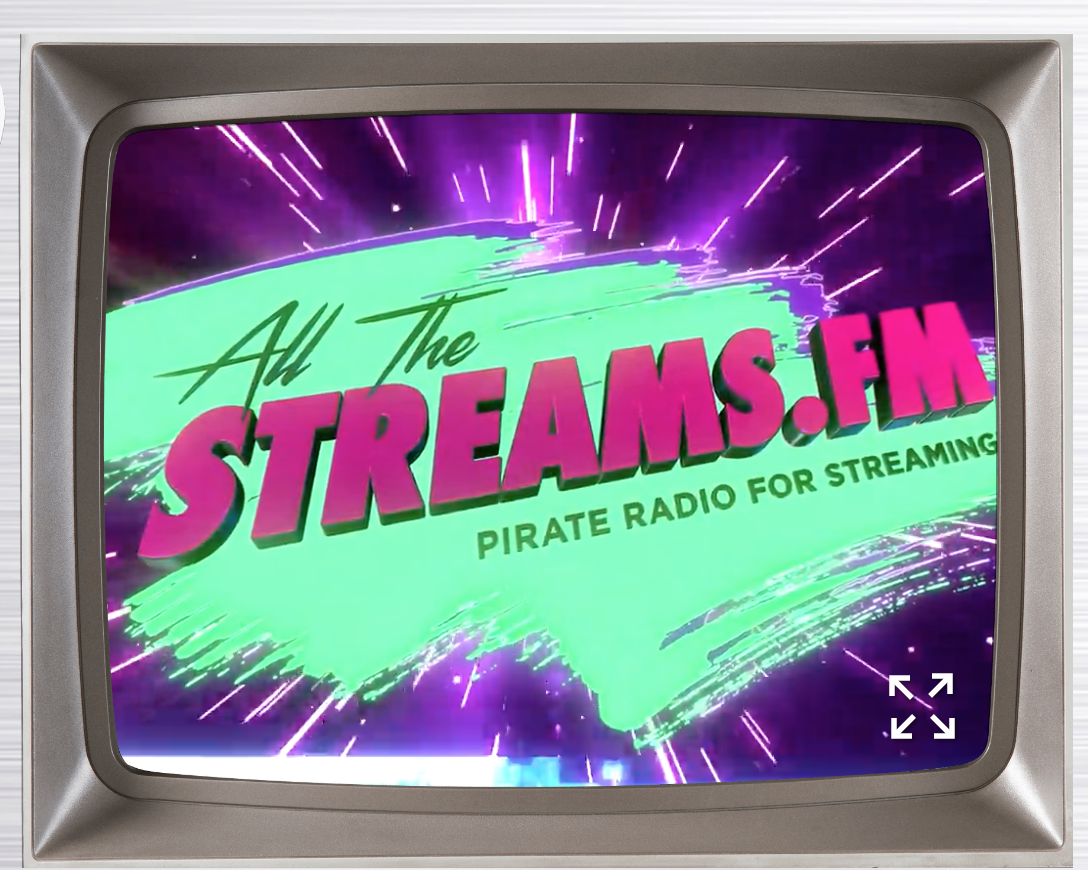
The latest stunt officially launches tomorrow (today for early adopter fans that subscribed via text). It’s a “pirate video” station called Allthestreams.fm and it’s live now.

The premise is that MSCHF has picked up subscriptions to Hulu, Disney+, Netflix, HBONow, Prime Video and Showtime and it is broadcasting a continuous stream of one random program from each, live to anyone who hits the site. At time of publish, more than 100,000 people are currently watching one of the “channels.”

There’s even a pirate radio-esque commercial interstitial that will surprise you if you watch long enough.

If you’re wondering whether this is legal, well, so did I. “We have a standard check with these types of things. Doesn’t mean it’s legal per se, but it means the risk profile is acceptable to us,” says Daniel Greenberg, one of MSCHF’s founding team.

The goal, Greenberg explained in a chat last week, is not to launch a product or company but instead to build a brand that stands for…something. Even MSCHF isn’t quite sure what that will be, though, by design.

Hell, even when asked to provide a succinct summary of what the fuck MSCHF actually is, Greenberg pushes back.

“MSCHF is a multi-angled mirror. Whenever we release something, people see different reflections of the same thing.”

I can’t actually argue, because even the latest stunt defies definition. MSCHF doesn’t earn anything from it, it’s a free stream. Though they have made money off of previous goods releases like the shoes or boxes, the goal is decidedly not to make money right now and instead to spend a great deal of it.

Though they’re reluctant to talk about it, MSCHF has raised $11.5 million in venture led by Laura Chau at Canaan Partners, and others. Money that they seem intent on burning.

The MSCHF plan of attach (yes, attach) is based on a key ideal: that one of the strongest stances any brand could have is “no matter what.”

No matter what they sell, what road they take you down or how weird it is, you’re in. Even if an offering isn’t for you, you’ll be there when it is.

This thinking isn’t super rare these days, though the anarchist viral experiment framework is a new application.

The thought process behind modern brand building is becoming centered around the idea that the audience should come first, providing a reason for the product.

Influencer culture is probably the shorthand people would use the most, but being known for something and then using that to build out a durable direct-to-consumer brand is becoming vital for small creators and entrepreneurs that know that their conduit to their consumer is as fickle as the platforms they sit on. One too many references to reefer or sex and their livelihood could go poof. Not so much if your audience will follow you wherever you go.

A new cluster of slow food brand builders is carving out their own path to this durability.

Even more so as the ad business becomes a media business. Though MSCHF is very decidedly not yet a merchandise brand, it absolutely has marketed and sold merchandise — extremely effectively too.

eCommerce is…

2000s: where the developers are.
2010s: where the plugins are.
2020s: where the audiences are.

— Web Smith (@web) February 26, 2020

But that ability to do so came from not trying to build any real business at all. MSCHF is, by Greenberg’s own admission, just spending money to create attention. No more, no less. What sets it apart from any other marketing effort, in my opinion, is the tone-perfect nature of those experiments.

The average MSCHF stunt (that’s what they are, for sure) is funny, hotly traded in a particular vertical or ideally across several verticals — that have high audience counts and a natural tendency to amplify. The biggest hits of the company so far have traded on the base powers of the internet, like pets and profanity — but every one of them has something super interesting going on.

Each idea comes out of a regular weekly meeting that the team has to throw out potential ideas. They’re then picked out and refined over weeks or months and “dropped” in a manner that resembles limited-edition streetwear or collectibles. Every ounce of a MSCHF stunt is viral muscle, no fat. And every one of them goes over like crazy on the ‘net.

Even the ideals that surround each experiment are loosely held. The cleverness evident here is that by defining the goals too clearly you lose the ability for people to attach their own personal vibes and therefore get invested.

“Streaming is a mass common denominator,” Greenberg offers by way of reason for this particular drop. “We all use it. We all have feelings on it. We all hate paying more and more for it. Why not now?”

There are some interesting things about this particular experiment that bear some pondering, outside of the stunt-based brand building apparatus that MSCHF has set up. In poking around at it I found myself watching several of the brands’ “hot” shows that I never actually got around to seeing.

A “random” button could actually be a nice advertisement for content (Netflix tested a random shuffle feature last year) for any streaming platform, given the well-documented issues people have picking something to watch.

There’s also the side-by-side comparison that you get to draw between the plans of attack of the various entities. Disney is BRAND FIRST, Netflix is new money premium content, Showtime is mostly old with a couple really good ones and HBO is the grandaddy trying to stay relevant.

For what it’s worth, there’s also an interesting side point here in how they gather zero data on watching behavior other than pure traffic — and given MSCHF’s repertoire, the side point is probably also a point.

But, as with all of MSCHF’s projects, the takeaways may just be the things I’m bringing to the table.

That interchange of ideas is one of the things that sets MSCHF apart from a lot of brands that have manufactured interest in their products. It generates brand loyalty no matter what is being sold — which in turn results in durability.

One guarantee is that whatever MSCHF drops next, a metric ton of people are going to be interested. No matter what.

Facebook bans face mask ads to fight coronavirus price gouging

On Friday, Facebook announced that it would further attempt to limit coronavirus-related chaos on its platform by banning commerce listings and advertisements for medical face masks.

“We’re monitoring COVID19 closely and will make necessary updates to our policies if we see people trying to exploit this public health emergency,” Facebook Director of Product Management Rob Leathern said in an update on Twitter. “We’ll start rolling out this change in the days ahead.”

Update: We’re banning ads and commerce listings selling medical face masks. We’re monitoring COVID19 closely and will make necessary updates to our policies if we see people trying to exploit this public health emergency. We’ll start rolling out this change in the days ahead.

— Rob Leathern (@robleathern) March 7, 2020

“We are temporarily banning advertisements and commerce listings that sell medical face masks,” a Facebook spokesperson told TechCrunch. “Our teams are monitoring the COVID19 situation closely and will make necessary updates to our policies if we see people trying to exploit this public health emergency.”

Facebook will also limit any ads for medical products that imply a limited supply or create a sense of urgency among potential buyers, as well as ads that make guarantees for COVID-19 “cures” or prevention. Along with those changes, in the next few days Facebook will begin blocking coronavirus-themed groups and pages from its algorithmic recommendations.

As fears of a novel coronavirus epidemic swell worldwide, online platforms have scrambled to stop price gouging and health misinformation. Amazon is working to eradicate “high priced offers” on products like hand sanitizer and face masks from its marketplace, while Ebay has banned all listings for N95 and N100 face masks, hand sanitizer and alcohol wipes. The online auction site will also reject any listings exploiting terms like “COVID-19” and “coronavirus.”

On Wednesday, Senator Ed Markey (D-MA) wrote an open letter to Amazon’s Jeff Bezos expressing concern over “continued reports of price gouging and a lack of transparency” on the site.

“No one should be allowed to reap a windfall from fear and human suffering,” Markey wrote, adding that online retailers have a “particular responsibility” to protect consumers in the midst of the coronavirus outbreak.

Earlier this week, Facebook announced that coronavirus-related searches on its platform would be greeted with an automatic pop-up featuring information from the World Health Organization and local health authorities.

“Given the developing situation, we’re working with national ministries of health and organizations like the WHO, CDC and UNICEF to help them get out timely, accurate information on the coronavirus,” Mark Zuckerberg wrote in an update on his company’s efforts. “We’re giving the WHO as many free ads as they need for their coronavirus response along with other in-kind support.”

The company is also focused on curtailing potentially life-threatening coronavirus misinformation, removing ads, conspiracy theories and treatment claims with no scientific basis. Facebook’s decision to disable ads for face masks comes at a time when health authorities are urging well people to forgo buying the masks, both because they are not necessary for healthy individuals to wear and because demand for the masks is constricting their supply for the medical workers who need them most.

Watch SpaceX launch the last of its original Dragon spacecraft to resupply the ISS tonight

SpaceX is launching its 20th resupply mission the International Space Station tonight, but this one has a bittersweet twist: It’s the last such mission that will use the first iteration of the Dragon spacecraft that has flown on all of the company’s missions for NASA thus far. Starting this summer, its successor will take its place.

Tonight’s mission will bring a variety of supplies, experiments, and new components to the ISS as usual. Launch is scheduled for 8:50 PM Pacific time, and you can watch it below.

The Dragon spacecraft and Falcon 9 first stage both flew on previous missions, the Dragon on two others, making it the third of its kind to make it to a third mission. And it will also be the last of its kind to do so.

Dragon has spawned two successor craft, Crew Dragon and Cargo Dragon (sometimes with a “2” appended), the former of which has understandably gotten the lion’s share of attention. But the revised cargo spacecraft very well see more use.

The exact differences between the old and new Dragon aren’t completely clear, but we know that there have been significant improvements to the avionics, power systems, onboard software, and of course the general shape of the thing. Naturally there won’t be life support or an escape system on the craft, which isn’t intended in this form to carry passengers.

This new, improved Cargo Dragon has its first commercial mission scheduled for August, and its sister craft, Crew Dragon, may very well by flying by then as well if everything goes according to plan.

Trying to make up for lost time, the CDC will distribute 1.1 million COVID-19 tests by this weekend

In a press conference late on Friday, Vice President Mike Pence said that the government will finally have the capacity to provide over 1 million tests for the novel coronavirus, COVID-19.

Joined by representatives of the Food and Drug Administration, the Centers for Disease Control and Prevention, and the National Institute for Allergy and Infectious Diseases, the vice president detailed the continuing efforts from the White House to coordinate a response to the spread of the coronavirus.

The CDC will distribute test kits capable of testing over 1.1 million people by the end of the weekend, and another 1 million tests will be in quality assurance testing by next week, according to Food and Drug Administration Commissioner Dr. Stephen Hahn.

Initially the White House had hoped to have distributed the test kits by the end of the week, but was not able to ramp up to meet that demand. Now, Pence is saying that the capacity to conduct at least 2.1 million tests will be available by next week — and that a consortium of private testing companies will add still more capacity as time goes by.

Yesterday the White House announced that it had established a consortium of the nation’s largest private testing companies, which are now mobilizing to provide test kits to commercial and private institutional testing facilities around the country. Attendees at the White House meeting yesterday included LabCorp, Quest Diagnostics, Thermo Fisher Scientific, Abbott Laboratories and the Mayo Clinic, according to reporting from Reuters.

Earlier this week Lab Corp said it would begin offering immediate tests for COVID-19, while Quest Diagnostics said it would start testing next week. The two private test manufacturers will be able to charge for their tests, while the ones conducted by the CDC and state run facilities are free.

On Wednesday, the Trump Administration declared that the COVID-19 test would qualify as an essential health benefit — which means Medicaid and Medicare would cover testing costs. Under the Affordable Care Act (which the administration is trying to unwind) large-employer health plans must cover the cost of health benefits like preventive testing — but those tests don’t have to be free, according to CNBC reporting.

Until last week, only labs that were approved by the CDC could administer tests for the coronavirus, but the CDC opened new testing facilities for people potentially infected with the virus after an outcry from state and local governments.

While the government is touting the capacity for testing, the actual numbers are falling far short of official claims, according to a report in The Atlantic.

The report claims that only 1,895 people have been tested for the coronavirus in the U.S., and about 10% of the people tested have contracted the disease. Even with the new tests available to states and local governments, the capacity only allows for several thousand tests to be conducted — not the tens of thousands the White House has hoped for, according to the report.

Meanwhile, official reporting at the CDC is lagging behind other indicators, painting a far different official picture of the spread of the disease than the one that’s reflected by realities in the aggregation of local government reporting. According to the latest data from a disease tracker provided by Johns Hopkins University, there are 299 cases of the coronavirus in the U.S. The CDC is only reporting 164. 

The reason is that the government stopped reporting the total number of cases and has left that to the States. As the Atlantic reports:

 In South Korea, more than 66,650 people were tested within a week of its first case of community transmission, and it quickly became able to test 10,000 people a day. The United Kingdom, which has only 115 positive cases, has so far tested 18,083 people for the virus.

Normally, the job of gathering these types of data in the U.S. would be left to epidemiologists at the CDC. The agency regularly collects and publishes positive and negative test results for several pathogens, including multiple types of the seasonal flu. But earlier this week, the agency announced that it would stop publishing negative results for the coronavirus, an extraordinary step that essentially keeps Americans from knowing how many people have been tested overall.

The CDC has justified its lack of tracking by saying that it couldn’t accurately reflect the number of tests conducted as states take responsibility for their own testing.

“States are reporting results quickly, and in the event of a discrepancy between CDC and state case counts, the state case counts should always be considered more up to date,” said Nancy Messonnier, who is responsible for overseeing CDC’s response and research into respiratory diseases.

Ultimately, the U.S. government seems to be [finally] ramping up its response to the spread of the virus here by providing health officials with the tools they need to accurately test for how widely the disease has spread in the population, while at the same time making it much harder to communicate the information the public would need to make educated choices on how to respond.

New funding round values catering marketplace Hungry at $100M+

Hungry, a catering marketplace that connects businesses with independent chefs, announced this week that it has raised $20 million in Series B funding. Hungry tells me that the funding valued the company at more than $100 million (pre-money).

The investors were also pretty impressive: The round was led by Evolution VC Partners and former Whole Foods co-CEO Walter Robb, who’s joining the startup’s board. Kevin Hart, Jay-Z, Los Angeles Rams running back Todd Gurley, former Obama aide Reggie Love and Seattle Seahawks linebacker Bobby Wagner also participated.

CEO Jeff Grass said that he and his co-founders Eman Pahlavani (COO) and Shy Pahlevani (president) got the idea for the company while working at their previous startup LiveSafe.

“LiveSafe was in a food desert, where the best options were Subway and Ruby Tuesday,” Grass said. “We wanted more authentic food and we started thinking about, ‘Is there a better way that taps into local chefs?’ ”

That eventually led to Hungry, which has built up a network of independent chefs in Washington, D.C., Philadelphia, Boston, New York and Atlanta, providing catering to companies including Amazon, E-Trade, Microsoft and BCG. The chefs are all screened by Hungry, they cook out of “ghost kitchens” (commercial kitchens that aren’t attached to a restaurant) and then the food is delivered by the Hungry team.

“The food is produced at a much lower cost structure than at a restaurant with a retail location,” Grass said. “And yet you’re not sacrificing on quality. These are top chefs cooking their best dishes — you get higher than restaurant-quality food, but produced at a much lower cost.”

He added that this lower cost also allows the startup to be generous. Specifically, for every two meals sold, Hungry is supposed to donate one meal to end hunger in the U.S., and it has donated nearly 500,000 meals already.

As for the funding, Grass and his team will use it to expand into new markets — he hopes to be in 23 cities by the end of 2021.

What to consider when employees need to start working remotely

The COVID-19 crisis is touching all aspects of society, including how we work. In response, many companies are considering asking some percentage of their workforce to work remotely until the crisis abates.

If your organization doesn’t have a great deal of experience with remote work, there are a number of key things to think about as you set up a program. You are going to be under time constraints when it comes to enacting an action plan, so think about ways to leverage the tools, procedures and technologies you already have in place. You won’t have the luxury of conducting a six-month study.

We spoke to a few people who have been looking at the remote working space for more than a decade and asked about the issues companies should bear in mind when a large number of employees suddenly need to work from home.

The lay of the land

Alan Lepofsky, currently VP of Salesforce Quip, has studied the remote work market for more than a decade. He says there are three main pieces to building a remote working strategy. First, managers need to evaluate which tools they’ll be using to allow employees to continue collaborating when they aren’t together.

Big tech commits to paying wages for hourly employees affected by coronavirus plans

Following Microsoft’s lead from late last night, some the biggest technology companies in the U.S. have agreed to pay wages for hourly employees impacted by the ongoing corporate response to the coronavirus outbreak.

It’s the right thing for companies to do, from both a health and safety perspective, and to ensure that the hourly workers who are most impacted by work stoppages and shortages are not adversely affected by events that are beyond their control.

As we reported earlier today, Facebook committed to pay its “contingent” workers. And according to a report in Axios, Amazon, Google and Twitter are joining them. We’ve reached out to Apple but have yet to receive a comment.

In a statement to Axios, Amazon made the same commitment for its employees.

“We will continue to pay all hourly employees that support our campus in Seattle and Bellevue – from food service, to security guards to janitorial staff – during the time our employees are asked to work from home,” the company said in a statement. “In addition, we will subsidize one month of rent for the local small businesses that operate inside our owned buildings to help support them during this period.”

Google and Twitter have reportedly made the same commitments.

Tech companies have taken a lead on the issue and received praise from labor organizations for the stance. But organizers in the Bay Area and beyond are encouraging companies to cushion the blow hourly workers will face from lost wages due to office closures.

Good news: @Facebook, @Twitter, @Microsoft & @Google commit that service workers will be fully paid during coronavirus disruptions. Here’s our statement: pic.twitter.com/S5RIl7Targ

— SiliconValleyRising (@SVRising) March 6, 2020

The issue has even caught the attention of the Democratic Senator Mark Warner from Virginia, who is pressuring gig economy companies Uber, Lyft, Postmates and DoorDash to provide compensation for workers impacted by the coronavirus.

“I strongly urge that you attempt to address the potential financial hardship for your workers if they are sick or have to self-quarantine during this time,” Warner wrote. “In order to limit the spread of COVID-19, it is critical that platform companies lead by example by committing that economic uncertainty will not be deterrents to their workers following public health guidance during the response.”