How big tech is taking on COVID-19

Over the past week, one thing has become painfully clear for U.S. residents: COVID-19 is going to permeate every aspect of our lives for a long time to come. Those of us in and around tech have been noticing this for months now. First through the impact on our friends and colleagues in Asia, who have been facing fallout from the pandemic head-on for some time, and then through the domino effect on tech conferences.

First there was MWC, then Facebook’s F8, E3, WWDC. The list goes on and on. Yesterday, TechCrunch announced that we would be postponing a pair of our own events. It was the right thing to do, and increasingly not really a choice, to be honest, as more and more cities have banned large gatherings.

Tech has been keenly aware of COVID-19’s impact for a while now because being a tech company is being a global company almost by default. Now, however, the virus’s threat has come to nearly everyone’s back door. If you don’t yet know someone who has been infected with the virus, odds are good you will soon. This is our reality, for now, at least.

If there’s hope to be mustered from this event, it’s in the prospect of people helping people. Coming together, separately, at a safe social distance. The response of the current administration leaves much to be desired at the moment. As yesterday’s press conference involved praise of the “private sector” and a parade of high profile executives, the reality is that many of us may have to rely on corporates and execs to help fill in the gaps of gutted government departments.

There will be plenty of time to call out the inevitable opportunism of corporate America (and it looks like I’m going to have a lot more free time on my hands in the coming months to do exactly that), but for now, let’s note some of the folks who are pitching in by donating supplies or easing some of the burden on a strained and uncertain population.

Alibaba co-founder Jack Ma today released a statement noting plans to donate 500,000 test kits and one million face masks. The donation follows similar ones to Japan and Europe, following the devastating impact on his own country.

“Drawing from my own country’s experience, speedy and accurate testing and adequate personal protective equipment for medical professionals are most effective in preventing the spread of the virus,” Ma said in a statement. “We hope that our donation can help Americans fight against the pandemic!”

Yesterday, Zoom CEO Eric Yuan announced that his video conferencing platform would be available for free to K-12 schools in Japan, Italy and the U.S. The move comes as the service is seeing a massive spike in downloads as many businesses and schools are attempting to adapt to working and learning remotely.

Earlier this week, Bill Gates, who recently left his position on Microsoft’s board, announced the Bill & Melinda Gates Foundation was teaming up with Wellcome and Mastercard to fund treatments to the tune of $125 million. Yesterday, Facebook announced it was committing $20 million in donations to support relief efforts. Apple announced a similar $15 million in donations, along with letting customers skip the March payment on their Apple Cards without risking interest payments. ISPs like AT&T, Charter, CenturyLink, Comcast, T-Mobile, Verizon, Sprint and Cox, meanwhile, have promised not to overcharge, charge late fees or terminate service, in an attempt to keep people connected.

Likely we’ll continue to see more such announcements in the coming weeks and months as companies struggle with impact to their workforces and bottom lines. Some will no doubt be more crass that others, but there’s little doubt that such gestures will be a big part of our ability to emerge from one of the scariest and most surreal moments in recent memory.


Apple sets restrictions for COVID-19-related apps

Apple today put in place more COVID-19-related safeguards — this time centered on its App Store. In a note posted to its developer community, the company explains that it will take steps to vet submissions of apps focused on the global pandemic that has begun to impact nearly every aspect of life across the globe.

“To help fulfill these expectations, we’re evaluating apps critically to ensure data sources are reputable and that developers presenting these apps are from recognized entities such as government organizations, health-focused NGOs, companies deeply credentialed in health issues, and medical or educational institutions,” the company explains. “Only developers from one of these recognized entities should submit an app related to COVID-19.”

In addition to assessing content and restricting the number of developers who can submit, the company is also barring the release of entertainment apps and games looking to capitalizing on the ubiquitous and life-threatening subject matter.

Apple has also asked developers to tick the “Time-Sensitive Event” option, in order to help expedite the submission, given that some may be aimed at helping users in time of crisis. The company will also be waiving some annual membership fees for non-profit orgs and government agencies looking to develop apps related to the outbreak.

A cursory search of “COVID” and “coronavirus” finds a number of apps using the terms, ranging from case trackers, news applications, a reminder to wash hands and some gaming titles.

Original Content podcast: ‘Devs’ is a strange and delightful technothriller

Given its name, you might expect “Devs” — which launched earlier this month on the new FX on Hulu — to be a “Silicon Valley”-style sitcom about the tech industry. And there are indeed some delightful moments where “Ex Machina” writer-director Alex Garland pokes fun at San Francisco and tech culture.

But the prevailing mood is one of mystery and dread. The show takes place largely at a fictional quantum computing company called Amaya, run by its brooding CEO Forest (played by Nick Offerman), which employs Lily (Sonoya Mizuno) and her boyfriend Sergei (Karl Glusman) . Amaya is also home to a division known as Devs — a group that’s mysterious enough that most employees don’t even know what the team is working on.

On the latest installment of the Original Content podcast, TechCrunch Events Director Emma Comeau joins us to discuss the three episodes that have aired thus far.

While it’s too early to evaluate how the show will answer its big questions, we’re all fans, thanks to its eerie visuals, impressive performances (particularly from Offerman and Mizuno) and the tantalizing way that it lays out its mysteries — during the spoiler discussion, we spent most of our time puzzling over clues about the ultimate goal of the Devs team.

And although the show is certainly tense, it’s actually something of a relief to spend a few hours worrying about sinister tech companies, rather everything else happening in the world outside.

You can listen in the player below, subscribe using Apple Podcasts or find us in your podcast player of choice. If you like the show, please let us know by leaving a review on Apple. You can also send us feedback directly. (Or suggest shows and movies for us to review!)

If you want to skip ahead, here’s how the episode breaks down:

0:00 Intro
3:26 “Devs” review (mild spoilers)
26:20 “Devs” spoiler review/speculation

Startups Weekly: Investors are excited to write checks during the pandemic

[Editor’s note: Want to get this weekly review of news that startups can use by email? Just subscribe here.] 

Some startup investors are so uncertain about the current economic environment that they are hesitating to give us their forecasts on the record (this never happens). But others tell us they see the huge market gyrations and all the downstream effects of the novel coronavirus creating a great environment for long-term bets in the coming weeks. Why?

“Because with other investors departing the market, deal terms are getting better, the competition is less keen, [many investors] can do more due diligence and there are a lot of companies being built that have great growth prospects and are going to survive this global pandemic,” Danny Crichton detailed on Extra Crunch after calling around to his sources. “It’s the VC equivalent of buy (actually) low and sell high.”

Founders should expect big haircuts on valuation (the 20-30% range), he concludes, but should find plenty of investors considering the explosion of VC funding in recent years — provided the company fundamentals show a path to long-term success. That’s what many other investors told Sarah Buhr on the record in a followup report.

Still trying to understand the economic big picture of the virus and its global impact? Danny teamed up with Alex Wilhelm to put together this primer on TechCrunch covering the last few months in the markets.

Looking to try remote-first fundraising? Natasha Mascarenhas talked to a range of VCs about how they are approaching deals through Zoom (hint: it’s mostly for early-stage investing, if at all).

On that point, the consensus from what our staff hears this week is that most investors are ultimately going to want to meet you in person before making the big decision, still. Because they’ll be working with their portfolios long after this pandemic lasts.

GettyImages 912948496

Image via Getty Images / alashi

Will the coronavirus lead to uncapped data for all? 

Some ISPs today are ready to temporarily ease pricing and lift data caps to avoid shutting the public off during emergencies — and they’re widely expected to do so without overloading their networks and destroying their businesses models. So, once the public sees that the large monopolies/duopolies in the biz can easily handle all of the additional traffic without the aggressive pricing scheme included, will they stand for going back to the old caps?

That’s the intriguing argument made in TechCrunch this week by Devin Coldewey, who believes that the pandemic may end up ushering in a more accessible and connected world for all. Indeed, at least one FCC commissioner is thinking about the same thing.

Zapier and YouNeedABudget share key tactics for the remote-first startup

“What we noticed was that product was getting shipped, customers seemed to be happy, more customers were coming in, revenue was coming in and the team was happy. All the things you kind of look for, to say ‘yeah, this is good…’ none of it seemed to be hindered [by the lack of office]. So we looked at that and said, ‘you know what? I think this remote thing… we should just do it.’”

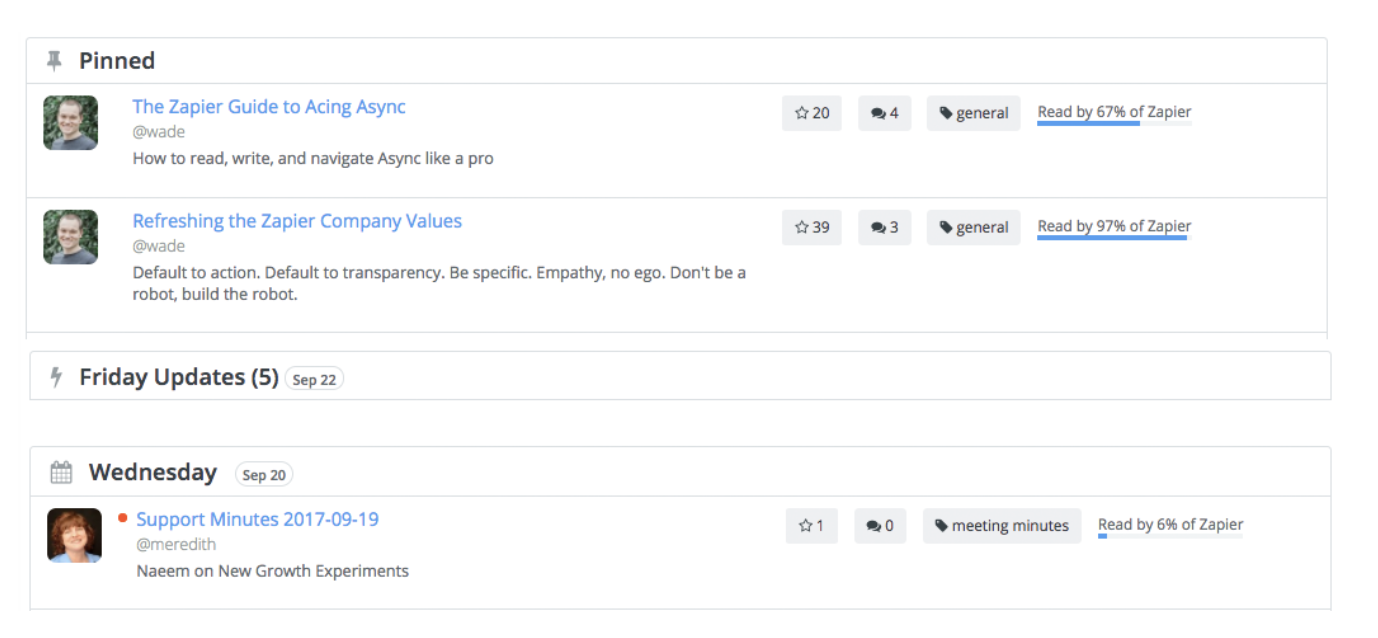
That’s Zapier CEO Wade Foster sharing the backstory of how the web-app integration company has grown to 300 people. In a detailed interview on Extra Crunch with Greg Kumparak, he breaks down the evolution — and shows off an internal tool that they built to be like Slack, but for over weeks not minutes to help solve remote-first strategic communication problems. It’s called, fittingly, Async.

Greg also caught up with YouNeedABudget’s Jesse Mecham about his 115-person remote team. “You get talent,” was the big selling point to him. “You get the best talent. It’s such a game-changer; we get to compete with large companies that have much larger hiring budgets because we accommodate peoples’ locations. It’s such a win for us, and I really hope the big… you know, Apple, Microsoft, Facebook and the like, they have lots of different offices, but I really hope they never embrace being remote completely because it gives us smaller teams with less cash an opportunity to be appealing on a different factor as far as work/life balance goes. Yeah. It’s the hiring, by far.”

We have more tips out this week, including a general guide to considering how to help employees make the remote transition, and a security guide for remote workers.

Stay tuned for ongoing coverage. TechCrunch’s editorial team has been remote-first all decade long, and we’ve been making it a focus as the industry moved in this direction overall more recently.

Yes, TechCrunch events are affected

For those who have been looking at attending our in-person events, and wondering what we’re gonna do….

  • TC Early Stage (San Francisco, originally April 28) has been rescheduled for July 21 at the Hilton Union Square.
  • TC Sessions: Mobility (San Jose, originally May 14) has been rescheduled for October 6 at the San Jose Theater.

Disrupt is still slated for September 14-16 in SF, too. But we are considering all the options that you can imagine we are considering.

However, we are actively accepting applications from startups for Mobility’s Pitch Night event.

We hope to see you in person later this year! See this page for regular updates to event plans based on the course of the pandemic.

Across the week

Extra Crunch

Edtech startups prepare to become ‘not just a teaching tool but a necessity’

How to buy back your startup from a tech giant like WeWork

Why so many robotic startups fail, and what can be done about it

Dear Sophie: Should I marry, or immigrate based on my accomplishments?

Startup founders are building companies on WhatsApp

TechCrunch

All the startups threatened by iOS 14’s new features

China Roundup: Enterprise tech gets a lasting boost from coronavirus outbreak

How the information system industry became enterprise software

Equity Monday: Circuit breakers, seed rounds and startup valuations

How the coronavirus outbreak will stress-test startups

#EquityPod

From Alex:

Here’s what we went over:

White House now says pilot of coronavirus screening site will roll out Monday for Bay Area

After President Trump announced that the government was working with Google to build a coronavirus screening site that was at the core of the administration testing process, Google quickly corrected this and said that it was actually Verily, Alphabet’s health division, that was working on this and that the site wasn’t ready for a nationwide rollout yet.

Today, Vice President Pence provided a bit more detail, tough he didn’t removes all of the confusion around this. A pilot of this screening site will launch for the Bay Area on Monday, March 16, he said, and direct people to local drive-through testing sites if necessary.

He reiterated that the government is working with Google on this (though my guess is that the VP, just like most people, isn’t all that clear on the complicated company structure that is Alphabet) .

“I know Google issued a statement that they are planning to launch a website,” Pence said. “I think they gave a date of Monday, March 16th and we’re working literally around the clock and I know that our whole team is working on the public and private partnership. Couldn’t be more grateful to all at the hard-working people at Google who are helping to put this website together.” He added that the White House will have more to share about this tomorrow, Sunday, at 5pm ET.

Debbie Birx, the White House Coronavirus Response Coordinator, noted that this is not just a simple “checkbox website” but that it actually goes through “critical symptoms and that’s why we’re giving ourselves the weekend to get it put up.”

Separately, the White House also told us that the administration is indeed working with Google to develop this site and most of this lines up with the statement we received from Verily yesterday. Hopefully, we’ll know more details after tomorrow’s briefing.

Update (6:40pm PT):

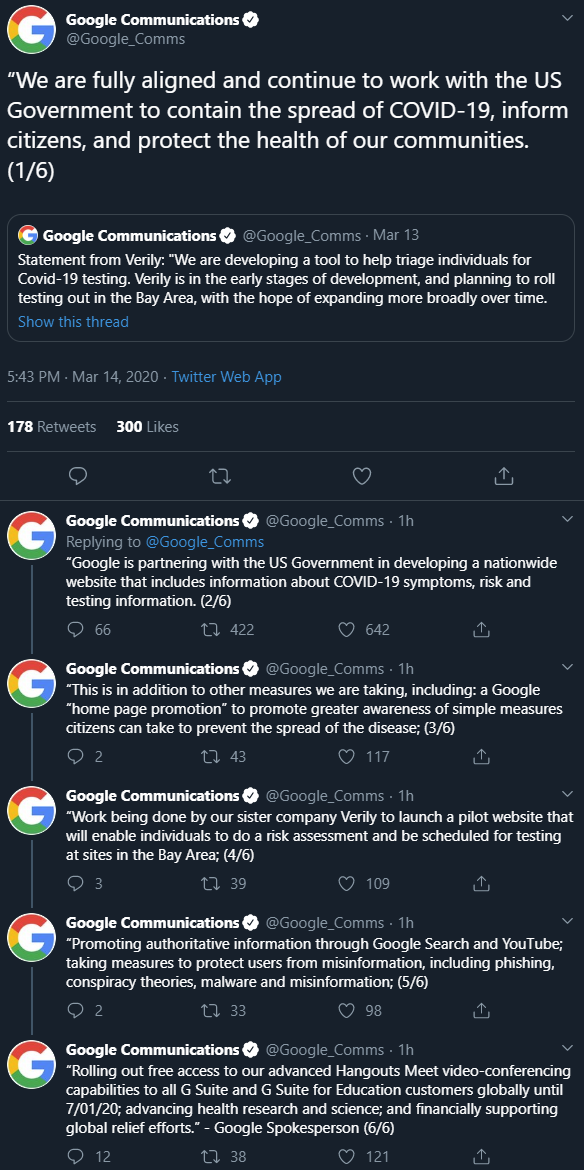
The official Twitter account of Google’s communications department also posted the following statement tonight. In it, Google says it is “partnering with the U.S. government in developing a nationwide website that includes information about COVID-19 symptoms, risk and testing information.” This is not, however, the screening site that Verily is working on, Google stresses.

NASA’s Orion spacecraft completes testing ahead of Artemis 1 Moon mission

NASA has completed the testing process meant to simulate performance in in-space conditions for its Orion crew spacecraft, developed by Lockheed Martin and designed to carry crew on the agency’s Artemis missions. The missions aim to return the next American man and deliver the first American woman to the surface of the Moon. It reportedly “aced” the tests according to NASA, which include thermal vacuum and electromagnetic interference performance checks.

Obviously, it’s not business as usual at NASA amid the ongoing coronavirus situation (it isn’t business as usual anywhere), but NASA still managed to finish up the testing it needed to do at its Glenn research facility in Ohio. Glenn is the site of world-leading testing facilities that simulate flight conditions, including wind tunnels and vacuum chambers, and Orion’s testing completion at the facility means it’s now ready to move on to NASA Kennedy and Florida.

It’ll fly to Kennedy aboard NASA’s Super Guppy aircraft, which is a specially-built cargo aircraft with an extremely wide body designed for the purposes of transporting larger-than-normal cargo just like the Lockheed-built Orion capsule.

LONG BEACH, CA – DECEMBER 09: The B-377-SGT, also known as the “Super Guppy Turbine,” sits at Boeing’s C-17 plant at Long Beach Airport on Tuesday. The Super Guppy is notable for its prominent forehead and enormous mid-section, as well as four turbine engines and propellers. The plane is operated by NASA and used to transport large cargo, such as components for the International Space Station. The Super Guppy’s last visit to Long Beach was during the Apollo missions.
///ADDITIONAL INFORMATION: Slug: SuperGuppy.1210.jag, Day: Tuesday, December 9, 2014 (12/9/14), Time: 10:51:53 AM, Location: Long Beach, California – B-377-SGT, “Super Guppy Turbine” – JEFF GRITCHEN, STAFF PHOTOGRAPHER
(Photo by Jeff Gritchen/Digital First Media/Orange County Register via Getty Images)

NASA in general appears to be progressing with its preparations for both Artemis, as well as for other ongoing key programs like its Commercial Crew program, which will see privately operated rockets fly astronauts to the International Space Station for the first time.

It has taken additional precautions to ensure the health of its astronauts meant to fly on the first crewed Commercial Crew mission, however, and its NASA Marshall facility also announced today that it’s limiting access to “mission-essential personnel” after one staff member tested positive for COVID-19 on Friday night.

This startup got a meeting with Mark Suster by getting clever with Google ads

Startups have done some wild things to get the attention of VCs. In fact, Instacart founder Apoorva Mehta sent YC partner (at the time) Garry Tan a six-pack of beer through the service after missing the deadline for Y Combinator by two months.

Yesterday, the ingenuity of startups struck again.

Tadabase.io, an enterprise startup that offers no-code tools to help businesses automate their processes, has had an ad running that was… well, hyper targeted.

ProductHunt founder and WeekendFund investor Ryan Hoover discovered the ad and shared it on Twitter.

I google'd @msuster’s LinkedIn and this is what I found ? pic.twitter.com/ANMZ2dg6AD

— Ryan Hoover (@rrhoover) March 13, 2020

Hoover told TechCrunch he was Googling Mark Suster to facilitate an introduction between Suster and one of Hoover’s portfolio companies. Instead, he found a Google ad directed squarely at Suster from Tadabase.io.

“Mark Suster, you haven’t invested in nocode” read the paid listing. “Therefore, we put this ad here to get your attention. If you’re not Mark, please don’t click here and save us some money.”

I reached out to Suster, managing partner at UpFront Ventures, to see what he thought of the ad. He told me he “loved it” and has already contacted the CEO to set up a call for next week.

Whether this clever Google ad will result in an actual investment is yet to be determined. Also unclear: will Ryan Hoover get in on the deal?

I reached out to Tadabase founder and CEO Moe Levine via email to ask about the ad, how they went about targeting, and how he feels about his upcoming phone call next week. He hasn’t responded yet. I’ll update if/when he does.

UK and Ireland added to US travel ban amid COVID-19 concerns

In a press conference yesterday, featuring a parade of executives from companies like CVS and Target, Trump hinted at the possibility of adding the U.K. and Ireland to a growing list of countries banned from U.S. travel. During a followup presser today helmed by Presidential COVID-19 point person, Mike, Pence, the additions were made official.

The Vice President noted that the decision was made following “unanimous recommendation” from health officials. “The President has made a decision to suspend all travel to the United Kingdom and Ireland, effective midnight Monday, EST,” Pence announced, adding, “Americans in the UK and Ireland can come home […] but they will be funneled through specific airports and processes.”

Those are the usual caveats for the recent string of bans. In many cases, returning citizens have been subject to screenings to ensure that they’re not harboring the virus. The moves are intended to reflect the spread of the virus.

“If you look at what was formally the main feeder of this outbreak. They have 80,000 cases but only 11 new cases and seven new deaths,” immunologist Anthony Fauci said, following Pence. “Things have switched over from China now and that is what has switched over the travel restrictions. You will see a curve of how the coronavirus outbreak evolved…we’ve seen it already with China and we’re starting to see it with Korea.”

The U.K. and Ireland were previously spared from the 30 day European travel ban. The list previously included, Austria, Belgium, Czech Republic, Denmark, Estonia, Finland, France, Germany, Greece, Hungary, Iceland, Italy, Latvia, Liechtenstein, Lithuania, Luxembourg, Malta, the Netherlands, Norway, Poland, Portugal, Slovakia, Slovenia, Spain, Sweden, and Switzerland.

Microsoft moves its 2020 Build developer conference online

May is traditionally a month of big developer conferences, with Facebook F8, Google I/O and Microsoft Build often happening within the same two-week period. But not this year. After F8 and I/O were already canceled in favor of online events, Microsoft is now unsurprisingly following suit, too, and canceling the in-person element of Build, which was scheduled to run from May 19 to 21, citing concerns over the current coronavirus outbreak.

microsoft build logo“The safety of our community is a top priority. In light of the health safety recommendations for Washington State, we will deliver our annual Microsoft Build event for developers as a digital event, in lieu of an in-person event,” the company said in a statement to The Verge. “We look forward to bringing together our ecosystem of developers in this new virtual format to learn, connect and code together. Stay tuned for more details to come.”

The announcement doesn’t exactly come as a surprise. Indeed, it was really only a question of when Microsoft would make the call and the real surprise was how long it took Microsoft to make this call, especially given how hard Washington state has been hit by the coronavirus outbreak. Currently, a number of Washington state counties have banned events with more than 250 people. That ban was set to expire before Build.

It’s worth noting that Microsoft hasn’t actually updated the Build homepage yet and you can still buy a ticket. If I were you, I wouldn’t do that, though. You’ll get a refund, but it’s not worth the hassle.

Coronavirus could force ISPs to abandon data caps forever

Pressure from the global pandemic has broadband companies loosening the arbitrary restrictions on the connections users pay for — and this may be the beginning of the end for the data caps we’ve lived in fear of for decades. Here’s why.

The coronavirus threat and official policies of “social distancing” are leading millions to stay home, doing meetings via video chat and probably watching Netflix and YouTube the rest of the time. That means a big uptick in bytes going through the tubes, both simultaneously and cumulatively.

ISPs, leery of repeating Verizon’s memorable gaffe of cutting off service during an emergency, are proposing a variety of user-friendly changes to their policies. Comcast is boosting the bandwidth of its low-income Internet Essentials customers to levels that actually qualify as broadband under FCC rules. AT&T is suspending data caps for all its customers until further notice. Verizon has added $500 million to its 5G rollout plans. Wait, how does that help? Unclear, but the company “stands ready” for increases in traffic. (Disclosure: Verizon Media owns TechCrunch but this does not affect our editorial coverage.)

Elsewhere in the world ISPs are taking similar actions, either voluntarily or at the request of the state. In India, for instance, ACT Fibernet has bumped everyone up to 300 Mbps for no cost.

There are two simple truths at play here.

The first is that any company that sends its subscriber a $150 overage fee because they had to work from home for a month and ran over their data cap is going to be radioactive. The optics on that are so bad that my guess is most companies are quietly setting forgiveness policies in place to prevent it from happening — though of course it probably will anyway.

The second is that these caps are completely unnecessary, existing only as a way to squeeze more money from subscribers. Data caps just don’t matter any more. As I pointed out during the whole zero-rating debacle, the very fact that the limits can be lifted at will or certain high-traffic categories (such as a broadband company’s own streaming TV channels) can be exempted fundamentally beggars the concept of these caps.

Think about it: If the internet provider can even temporarily lift the data caps, then there is definitively enough capacity for the network to be used without those caps. If there’s enough capacity, then why did the caps exist in the first place?

Answer: Because they make money.

As with other nonsensical and aggravating fees and practices, ISPs get away with this because they amount to regional monopolies or duopolies and are all running the same basic set of grifts for extra cash on top of your subscription fee.

That may be changing with the coronavirus, because after this very public exception to them it will be obvious to everyone that there is no reason for the caps to exist — including the FCC.

As a result of the #coronavirus people across this country are going to be asked to move work and learning online. So NOW is a really good time for the FCC to take action to get our nation's broadband providers to lift data caps and remove overage fees. https://t.co/1qJV7whVsR

— Jessica Rosenworcel (@JRosenworcel) March 12, 2020

For years ISPs have made excuses that certain “bad actors” and superusers would abuse the system and suck up all the internet, causing congestion and slowdowns for everyone else. Unsurprisingly, this never actually happened, or if it did, it happened many, many years ago when broadband was in its infancy and it was possible to hog the line in your neighborhood.

Now, with 100-megabit and gigabit connections becoming more common by the month (to those on the right side of the digital divide, anyway), you’d be hard pressed to max out your own connection, let alone everyone else’s. In fact, the only person who would notice you’d eaten up 50 times more data than your neighbor would be your ISP.

Yet, strangely, if you were to use this high-speed connection steadily, you’d be punished on extraordinarily short notice. Comcast’s gigabit data plans, for instance, come with a 1-terabye cap. At top speed, you’d hit it in less than three hours. Doesn’t make a lot of sense, does it?

These facts will be material if, in a couple months, the ISPs attempt to re-establish data caps. If the entire country was using the hell out of their connection for months with no ill effects — and no ISP will admit that their superior network couldn’t handle it — why should there be limits at all?

Of course, this is only speculation for now. But once someone like Commissioner Rosenworcel starts talking publicly about this sort of thing, it tends to only go forward, absent serious opposition by the opposing party or industry groups. When it comes to data caps, it’s hard for anyone to justify their continued existence, and the coronavirus situation will only make this more clear.

Crucially, once it becomes clear that data caps are on the outs, it will suddenly become the cool new idea that simultaneously occurs to every ISP that a few months ago was happy to collect overages. I can picture the ad copy now: “What data caps? Binge care-free with the new Freedom Plus plan from AT&T.” “Unlimited data — yes, we mean it.”

Well, they can call it whatever they want, as long as it’s free and the limits are lifted — the way it should have been all this time.

Epic Games buys UK facial mapping startup Cubic Motion

Epic Games announced today that it’s buying Cubic Motion, a computer vision startup that’s been building out a platform for capturing more realistic facial animations with a complex camera rig and software platform.

The game studio behind Fortnite and the Unreal Engine has already done plenty of work with the UK-based startup, creating a number of tech demos over the past several years that have centered on translating an actor’s facial movements to a digital character in real-time. The startup’s Persona product which launched last year bundles both its software and motion capture hardware rig.

Cubic Motion’s technology has been used in recent blockbuster gaming titles like Sony Interactive Entertainment’s God of War and Insomniac Games’ Marvel’s Spider-Man.

The startup raised just over $22 million in funding from NorthEdge Capital. Terms of the deal weren’t disclosed. The startup will continue serving existing customers while also accelerating integrations between the company’s tech and Unreal Engine, the companies said in a press release.

While Epic Games and competitor Unity continue to court large game developers, acquisitions like this signify hopes that the real-time game engines will infiltrate industries outside gaming more deeply. This acquisition will undoubtedly be helpful for helping higher budget game studios craft intricate cut scenes but the integration will likely also serve to court more attention from movie studios interested in bringing real-time rendering into their workflows.

Last year, Epic acquired game studio 3Lateral which built more realistic human avatars. That, partnered with this latest acquisition certainly suggests that Epic sees more realism in human characters and avatars as a category worth investing with.

Amazon asks all employees to work from home, if they can

Amazon issued guidance Thursday in response to the COVID-19 outbreak recommending that global employees who are able to work from home to do so through the end of March.

“We continue to work closely with public and private medical experts to ensure we are taking the right precautions as the situation continues to evolve,” an Amazon spokesperson said in an email statement. “As a result, we are now recommending that all of our employees globally who are able to work from home do so through the end of March.”

Earlier this week, Amazon said it would provide two weeks of extra paid time off for full and part-time employees who are diagnosed with COVID-19 or placed into quarantine. This is in addition to unlimited unpaid time off for all hourly employees through the end of March. The company said it will continue to pay all hourly employees, including food service, janitorial and security staff, who support its offices around the world.

Amazon employs some 798,000 employees. While some Amazon office workers will be able to work from home, the vast majority of its workforce have jobs that require them to be on site. The company is reliant on tens of thousands of delivery drivers and employees who work at the more than 100 order fulfillment centers.

Amazon’s move follows the call from global health officials to take measure to slow the spread of COVID-19, a disease caused by a new virus that is a member of the coronavirus family and a close cousin to the SARS and MERS viruses. COVID-19 has caused governments and companies to cancel tech, business and automotive events around the world, including the NCAA March Madness basketball tournaments, professional sports games in the NBA and NHL, the Geneva International Motor Show, MWC in Barcelona and the SXSW festival in Austin, Texas. Disneyland and California Adventure will close through the end of the month.

It has also prompted companies to recommend its employees to work from home. Google<a href=”https://techcrunch.com/2020/03/10/google-expands-work-from-home-recommendation-to-all-north-american-employees-establishes-covid-19-fund/”> expanded its work-from-home recommendation to include all employees in North America. Box, Lyft, Microsoft and Twitter have also issued memos to employees to recommend or require staff to work from home. In some cases, companies have committed to maintaining wages in spite of reduced hours.

Google employee in Bangalore tests positive for coronavirus

Google said on Thursday that an employee at its office in Bangalore, India has tested positive for the COVID-19 coronavirus and the firm has asked all the other employees in that office to work from home on Friday out of abundance of caution.

“We can confirm that an employee from our Bangalore office has been diagnosed with COVID-19. They were in one of our Bangalore offices for a few hours before developing any symptoms,” a company spokesperson said in a statement, adding that those who were in close contact with the employee have been asked to quarantine themselves.

In an internal email, accessed by TechCrunch, Anand Rangarajan, director of engineering at Google, said the infected “Googler contracted the virus after traveling overseas.”

In recent days, Google has moved to ask all its employees in North America, Europe, and several other regions to work from home. But the company has yet to extend such measure to its employees and contractor workers in Asian markets.

Several startups in India have taken a more proactive approach. Bangalore-based Zerodha, which is the largest stock broker, made it mandatory for all its employees on Thursday to work from home.

Bangalore-based Instamojo, which helps small merchants, education startup Unacademy, mobility firm Bounce, recruiting startup Springworks, and social commerce startup Meesho have all enforced a similar policy.

To date, 74 cases of COVID-19 have been detected in India, up from some 40 late last week. To raise awareness about the infectious disease, telecom operators in the country have started to warn users ahead of each call. On Wednesday, India suspended a vast majority of visas to the country to contain the virus.

The Indian stock markets plunged into bear territory on Thursday, heightening worries for the immediate future prospects of the nation’s already slowing economy. The Nifty plunged 8.3% to 9,590.15, its lowest close in two-and-a-half years, while the Sensex slid about 8% to a near two-year low of 32,778.14.

The last time Indian stock indexes dropped as much was at the height of the global financial crisis in 2008.

Heartbeat Health raises $8.2M to improve cardiovascular care

While you’ve probably spent a lot of today thinking about the COVID-19 pandemic, it’s worth remembering that other health issues aren’t going away — and that heart disease remains the leading cause of death in the United States.

Heartbeat Health is a startup working to improve the way that cardiovascular care is delivered, and it announced today that it has raised $8.2 million in Series A funding.

Dr. Jeffrey Wessler, the startup’s co-founder and CEO, is a cardiologist himself, and he told me that he “stepped off the academic cardiology path” about three years ago because he “saw some of the work being done in digital health space and became incredibly enamored of doing this for heart health.”

Wessler said that the delivery methods for cardiovascular care remain almost entirely unchanged. To a large extent that’s because the existing model works, but there’s still room to do better.

“As of the last seven or so years, we’re in a new era where we’ve figured out how to treat people well once they get sick,” he said. “But we’re doing a very bad job of keeping them healthy.”

To address that, Heartbeat Health has created what Wessler described as a “digital first” layer, allowing patients to talk with experts via telemedicine, who can then direct them to the appropriate provider — who might be a “preferred Heartbeat partner” or not — for in-person care.

This initial interaction can help patients avoid “a lot of inefficiencies,” he said, because it ensures they don’t get sent to the wrong place, and “kick[s] things off right with evidence-based, guideline-based testing, so that they’re not just falling into the individual practice habits of random doctors.”

In addition, Heartbeat Health tries to collect all of a patient’s relevant heart data (which might come from wearable consumer devices like an Apple Watch or Fitbit) in one place, and to track results about which treatments are most effective.

“Ultimately, we want to be the software, the technology powering it all, but we don’t want to leave any patient behind at the beginning,” Wessler said.

He added that the program works with most commercial insurance and is already involved in the care of 10,000 New York-area patients. And apparently it’s been embraced by the cardiologists, who Wessler said always tell him, “We’ve been waiting for that layer to come in and unify this incredibly fragmented system, as long as it works with us and not against us.”

The funding was led by .406 Ventures and Optum Ventures, with participation from Kindred Ventures, Lerer Hippeau, Designer Fund and Max Ventures.

Russian trolls are outsourcing to Africa to stoke US racial tensions

With tech companies wise to many of the tactics that Russia’s now-infamous troll farms used to seed disinformation during the 2016 election, those campaigns are getting creative.

According to a pair of reports out from Facebook and Twitter, a disinformation campaign run by individuals with links to Russia’s Internet Research Agency (IRA) is back and focused on the U.S., but this time it’s being run out of Africa.

“This network was in the early stages of building an audience and was operated by local nationals — some wittingly and some unwittingly — in Ghana and Nigeria on behalf of individuals in Russia,” Facebook explained in its blog post.

CNN apparently conducted its own deep investigation into the operations in Ghana and Nigeria, going so far as to even tour one of the houses where a group of Ghanaians worked to craft posts targeting American social issues.

Surprisingly, Graphika, a social analytics firm that specializes in disinformation, observed that these campaign did not focus on the U.S. election or presidential candidates specifically, but when candidates did come up in the content “it was through the lens of human rights, tolerance and racism.”

Graphika Chief Innovation Officer Camille Francois notes that the Russia-based campaign relied on a Ghana-based NGO as a kind of proxy and that at least some of those involved were likely not aware of the true nature of their work.

“That operation shows us the appetite of foreign actors to use proxy groups in increasingly creative way,” Francois told TechCrunch. “It also shows information operations can be based anywhere”

Most of the accounts were created in the second half of 2019 and the content they generated addressed issues around race, particularly tensions between black and white Americans. According to Facebook, the campaign concentrated on topics like black history and black excellence, but also “content about oppression and injustice, including police brutality.”

Facebook detected 49 Facebook accounts, 69 Facebook Pages and 85 Instagram accounts participating in the campaign. On Facebook, the relatively nascent accounts accumulated roughly 13,500 followers. On Instagram, the accounts had a following of around 265,000.

On Twitter, 71 accounts linked to the Russian-run operations in Ghana and Nigeria spread similar messages in an effort to “sow discord by engaging in conversations about social issues, like race and civil rights.”

It’s alarming — if not surprising — that Russian efforts to inflame existing social divides in the U.S. continue, but Twitter offered a useful reminder that most disinformation in the country comes from within, not from without.

As we’ve seen since 2016, Russia is not alone in its quest to manipulate conversations through social media. In fact, during the 2018 U.S. midterms, we saw more domestic attempts to spread disinformation than foreign.https://t.co/cLpqdzcXyk

— Twitter Safety (@TwitterSafety) March 12, 2020