Volvo’s Polestar begins production of the all-electric Polestar 2 in China

Polestar has started production of its all-electric Polestar 2 vehicle at a plant in China amid the COVID-19 pandemic that has upended the automotive industry and triggered a wave of factory closures throughout the world.

The start of Polestar 2 production is a milestone for Volvo Car Group’s standalone electric performance brand  — and not just because it began in the midst of global upheaval caused by COVID-19, a disease that stems from the coronavirus. It’s also the first all-electric car under a brand that was relaunched just three years ago with a new mission.

Polestar was once a high-performance brand under Volvo Cars. In 2017, the company was recast as an electric performance brand aimed at producing exciting and fun-to-drive electric vehicles — a niche that Tesla was the first to fill and has dominated ever since. Polestar is jointly owned by Volvo Car Group and Zhejiang Geely Holding of China. Volvo was acquired by Geely in 2010.

COVID-19 has affected how Polestar and its parent company operate. Factory closures began in China, where the disease first swept through the population. Now Chinese factories are reopening as the epicenter of COVID-19 moves to Europe and North America. Most automakers have suspended production in Europe and North America.

Polestar CEO Thomas Ingenlath said the company started production under these challenging circumstances with a strong focus on the health and safety of its workers. He added that the Luqiao, China factory is an example of how Polestar has leveraged the expertise of its parent companies.

Extra precautions have been taken because of the outbreak, including frequent disinfecting of work spaces and requiring workers to wear masks and undergo regular temperature screenings, according to the company. Polestar has said that none of its workers in China tested positive for COVID-19 as a result of its efforts.

COVID-19 has also affected Polestar’s timeline. Polestar will only sell its vehicles online and will offer customers subscriptions to the vehicle. It previously revealed plans to open “Polestar Spaces,” a showroom where customers can interact with the product and schedule test drives. These spaces will be standalone facilities and not within existing Volvo retailer showrooms. Polestar had planned to have 60 of these spaces open by 2020, including in Oslo, Los Angeles and Shanghai.

COVID-19 has delayed the opening of the showrooms. The company will have some pop-up stores opening as soon as that situation improves, so people can go see the cars and learn more while the permanent showrooms are still under construction, TechCrunch has learned.

It’s not clear just how many Polestar 2 vehicles will be produced; Polestar has told TechCrunch that it is in the “tens of thousands” of cars per calendar year. Those numbers will also depend on demand for the Polestar 2 and other models that are built in the same factory.

Polestar 2 EV

Image Credits: Screenshot/Polestar

Polestar also isn’t providing the exact number of reservations until it begins deliveries, which are supposed to start this summer in Europe, followed by China and North America. It was confirmed to TechCrunch that reservations are in the “five digits.”

The Polestar 2, which was first revealed in February 2019, has been positioned by the company to go up against Tesla Model 3. (The company’s first vehicle, the Polestar 1, is a plug-in hybrid with two electrical motors powered by three 34-kilowatt-hour battery packs and a turbo and supercharged gas inline 4 up front.)

But it will likely face off against other competitors launching new EVs in 2020 and 2021, including Volkswagen, GM, Ford and startups Lucid Motors and even adventure-focused Rivian.

Polestar is hoping customers are attracted to the tech and the performance of the fastback, which produces 408 horsepower, 487 pound feet of torque and has a 78 kWh battery pack that delivers an estimated range of 292 miles under Europe’s WLTP.

The Polestar 2’s infotainment system will be powered by Android OS and, as a result, bring into the car embedded Google services such as Google Assistant, Google Maps and the Google Play Store. This shouldn’t be confused with Android Auto, which is a secondary interface that lies on top of an operating system. Android OS is modeled after its open-source mobile operating system that runs on Linux. But instead of running smartphones and tablets, Google modified it so it could be used in cars.

YouTube defaults to SD quality worldwide to tame bandwidth surge

YouTube has announced that videos on the site will default to standard definition (SD) quality for the next month in order to cope with demand from the bored, housebound masses. Similar measures were undertaken by the company in Europe last week, and other big consumers of bandwidth are likewise taking steps to minimize their impact.

Bloomberg first reported the new, or rather expanded, policy of limiting stream quality by default. In a statement, Google wrote that “we continue to work closely with governments and network operators around the globe to do our part to minimize stress on the system during this unprecedented situation.”

Users will still be able to select higher-quality streams, but having the default be the considerably lower bandwidth may save quite a few bits and bytes if people don’t notice or mind the difference. The changes should roll out gradually starting today.

There are already plenty of safeguards in place to make sure that YouTube isn’t stressing the pipes. “We have measures in place to automatically adjust our system to use less network capacity,” a YouTube representative told TechCrunch last week.

Netflix, Disney+ and other streaming providers have likewise opted to limit the bandwidth they use to prevent users from experiencing skipping and buffering should demand outstrip supply. Microsoft and Sony are slowing down and delaying game downloads and updates so as not to saturate connections during peak hours.

I’ve reached out to YouTube for more details on the new policy and will update this post when I hear back.

FDA now allows treatment of life-threatening COVID-19 cases using blood from patients who have recovered

The U.S. Food and Drug Administration (FDA) has updated its rules around use of experimental treatments for the ongoing COVID-19 pandemic to include use of “convalescent plasma,” in cases where the patient’s life is seriously or immediately threatened. This isn’t an approval of the procedure as a certified treatment, but rather an emergency clearance that applies only on a case-by-case basis, and only in extreme cases, as a means of helping further research being done into the possible efficacy of plasma collected from patients who have already contracted, and subsequently recovered from, a case of COVID-19.

Plasma is a component of human blood — specifically the liquid part — which contains, among other things, antibodies that contribute to a body’s immune response. Use of plasma, through direct transfusion into a patient, like every other proposed treatment for COVID-19 (and the SARS-CoV-2 virus that causes it), has not undergone the clinical studies needed to show that it’s actually safe and effective in combating the disease.

Despite a lack of completed clinical trials, the FDA has granted this temporary authorization under its Investigational New Drug Applicants (eINDS) exemption, in light of the extent and nature of the current public health threat that COVID-19 represents. A number of pre-clinical and clinical trials around use of plasma from patients who have recovered are underway, however, and there are some promising signs that convalescent plasma could indeed be effective against SARS-CoV-2.

This is hardly the first time that convalescent plasma has been proposed or attempted to fight off a disease. People who have had a virus and subsequently recovered from it typically build up an immunity to it — either long-term, as with chicken pox, or short-term, as with the seasonal flu. Logically, it stands to reason that it should be possible, at least in theory, to take the antibodies from one individual who has already developed them, and transfuse them into a patient whose immune system is not doing a good enough job producing its own.

Convalescent plasma transfusions have been used in previous outbreaks, including against the H1N1 flu, as well as the original SARS and MERS epidemics, with varying results.

A number of research projects are underway regarding use of plasma against COVID-19, including a study by a team of Chinese medical professionals published in pre-print format (prior to any peer review) that studied 10 severe patients who received donations from recently recovered patients. That study found that in five of the 10 cases, the level of antibodies “increased rapidly” immediately post-transfusion (four other patients already had a high level of antibodies, and that persisted), and that within a week, the presence of the virus was undetectable in seven patients.

That still isn’t a formal clinical study, but other small-scale investigations from clinical practice have shown similar results. A group of doctors and researchers have also put together a set of protocols for use by doctors working with both donors and recipients to help align efforts across investigations and ensure that everyone working on this problem in the medical science community is working from the same playbook.

New York Governor Andrew Cuomo announced that state health agencies would be beginning a convalescent plasma trial this week, and it was cited by FDA Director Dr. Stephen Hahn as an area of early promise last week during a White House coronavirus task force briefing.

All donor patients would have to be tested to confirm that they are not at risk of transmitting the virus, and they must also qualify as a blood donor under the existing rules in place by state and federal agencies. While some early studies have shown that plasma transfusions could be effective in prophylactic use (meaning treating healthy people before they encounter the virus), this FDA specifically prohibits any prophylactic use.

As with all the treatments currently under development, this will take a lot of testing and research both to validate, and then to certify for general use — though there are a lot of researchers working on those challenges, because work to date shows this is likely to be more effective as a strategy in cases that haven’t yet progressed to the severe symptom stage. Convalescent plasma treatment isn’t new, or even all that sophisticated, but it does have the advantage of being relatively safe (in line with standard blood transfusions, once a person is confirmed to no longer be carrying any active virus), so this could be something to watch for more active updates versus some of the longer-lead treatment technologies in development.

Swiss startup Creal is building display tech for the next generation of AR/VR headsets

After years of hype, the AR/VR space has certainly grown quieter as of late, but some investors are still coalescing behind a vision that the technologies could one day replace mobile if the technical kinks can be worked out.

Creal is a Swiss startup that’s working on some fundamental display technologies that could make VR and AR headsets more comfortable with more life-like optics.

The startup raised a $7.4 million Series A last year from Investiere and DAA Capital Partners. The company announced this week that they received grant funding from the European Union’s Horizon 2020 research and innovation program to continue working on their light-field display tech.

Light-field displays are a category of displays that are quite a bit different than anything you’ve seen. While existing AR and VR headsets can show you stereoscopic 3D by displaying slightly different images to each of your eyes, future headsets will allow you to change what’s in and out of focus based on where your eyes are looking. The big optics issue this solves for is called the vergence-accommodation conflict, and it allows for interacting with objects closer to your face and functionally makes reading in VR quite a bit more effective as well.

Here’s a “through-the-lens” demo of the startup’s technology from a video posted last year:

There are varying degrees of how the technology is implemented. Magic Leap rolled out a lightweight version of its technology in its headset that leverages a pair of focal planes that are switched between with eye-tracking. This “varifocal” approach is also something that Facebook is investing in; they’ve showcased prototype headsets that allow users to shift their focus between multiple planes.

Creal is having to deal with some of the same struggles as its big company counterparts have when it comes to making sacrifices in order to miniaturize the technology. Integrating their tech into a virtual reality headset is the nearest-term target for the company, though they have ambitions to integrate into lightweight AR headsets within the next several years.

Startups building tech like Creal may be particularly at risk to a global recession, when investment in frontier technologies typically takes a big hit. A prolonged period of economic instability will almost certainly tilt the scales in the favor of big tech companies like Facebook, as startups approaching the same advances will likely be forced to push out roadmaps and cut costs in order to survive.

While Oculus has seen some recent success in expanding the VR market niche, augmented reality hardware has been an incredibly tough sell for startups. A number of companies in the space shut down last year, including Meta, ODG and Daqri. Earlier this month, Bloomberg reported that Magic Leap was positioning itself for a sale after raising billions of dollars in funding.

Game downloads will be throttled to manage internet congestion

For the billions stuck at home during the global effort to flatten the curve, gaming is a welcome escape. But it’s also a bandwidth-heavy one, and Microsoft, Sony and others are working to make sure that millions of people downloading enormous games don’t suck up all the bandwidth. Don’t worry, though, it won’t affect your ping.

A blog post by content delivery network Akamai explained a few things it is doing to help mitigate the tidal wave of traffic that the internet’s infrastructure is experiencing. Although streaming video is of course a major contributor, games are a huge, if more intermittent, burden on the network.

Akamai is “working with leading distributors of software, particularly for the gaming industry, including Microsoft and Sony, to help manage congestion during peak usage periods. This is very important for gaming software downloads, which account for large amounts of internet traffic when an update is released,” the post reads.

Take the new “Call of Duty: Warzone” battle royale game, released last week for free and seeing major engagement. If you didn’t already own the latest CoD title, Warzone was a more than 80-gigabyte download, equivalent to dozens of movies on Netflix . And what’s more, that 80 gigs was likely downloaded at the maximum bandwidth home connections provided; streaming video is limited to a handful of megabits over the duration of the media, nowhere close to saturating your connection.

And Warzone isn’t alone — there are tons of high-profile games being released at a time when many people have nothing to do but sit at home and play games — PC game platform Steam posted a record 20 million concurrent players the other day, and one analysis saw a 400% increase in gaming traffic. So gaming is bigger than ever, while games are bigger than ever themselves.

As a result, gaming downloads will be throttled for the foreseeable future, at least in some markets. “Players may experience somewhat slower or delayed game downloads,” wrote Sony Interactive Entertainment CEO Jim Ryan in a brief blog post. I’ve asked Microsoft, Nintendo and Valve for comment on their approach as well.

It’s important to note that this should not apply to the rest of the gaming experience. Unlike downloading games, playing games is a remarkably low-bandwidth task — it’s important for packets to be traded quickly so players are in sync, but there aren’t a lot of them compared with even a low-resolution streaming video.

The best thing to do is to set your games to be downloaded overnight, as local infrastructure will be less taxed while everyone in your region is asleep. If you have downloads or updates coming during the day, don’t be surprised if they take longer than usual or are queued elsewhere.

Control each other’s apps with new screensharing tool Screen

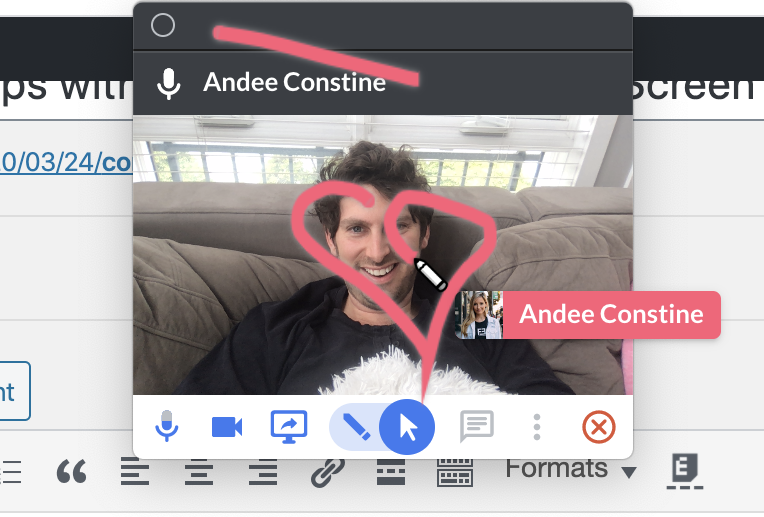
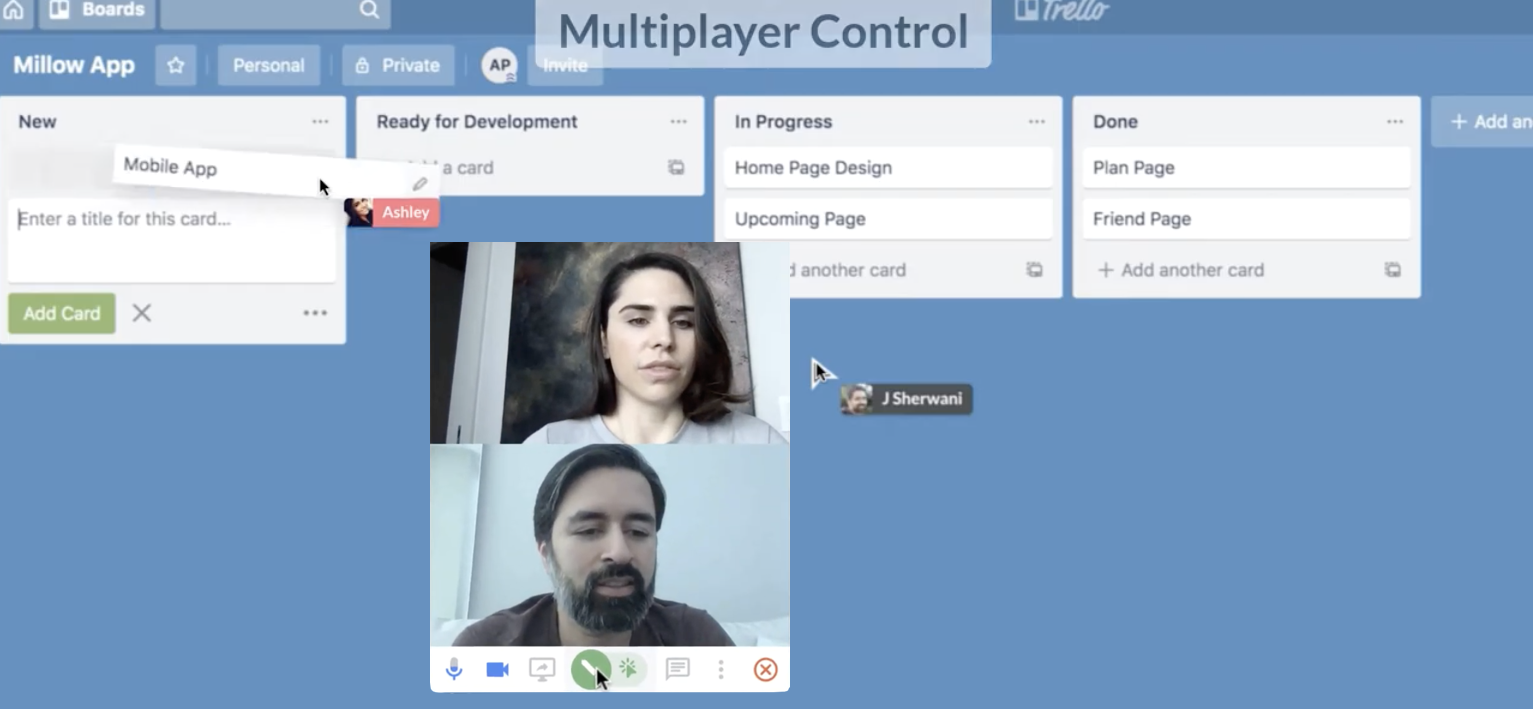
It’s like Google Docs for everything. Screen is a free interactive multiplayer screensharing app that gives everyone a cursor so they can navigate, draw on and even code within the apps of their co-workers while voice or video chatting. Screen makes it easy and fun to co-design content, pair program, code review or debug together, or get feedback from a teacher.

Jahanzeb Sherwani sold his last screensharing tool Screenhero to Slack, but it never performed as well crammed inside the messaging app. Five years later, he’s accelerated the launch of Screen to today and made it free to help all the teams stuck working from home amidst coronavirus shelter-in-place orders. 

Sherwani claims that Screen is “2x-5x faster than other screen sharing tools, and has between 30ms-50ms end-to-end latency. Most other screen sharing tools have between 100ms-150ms.” For being built by just a two-person team, Screen has a remarkable breadth of features that are all responsive and intuitive. Sherwani says the startup is making due with “no funding, 100% bootstrapped, and I’d like to keep it that way” so he can control his destiny rather than being prodded for an exit by investors.

A few things you can do with Screen:

  • Share your screen from desktop on Mac, Windows and Linux while chatting over audio or video calling in a little overlaid window, or join a call and watch from your browser or mobile
  • Use your cursor on someone else’s shared screen so you can control or type anything just like it was your computer
  • Overlay drawing on the screenshare so you can annotate things like “this is misspelled” or “move this there,” with doodles fading away after a few seconds unless your hold down your mouse or turn on caps lock
  • Post ephemeral text comments so you can collaborate even if you have to be quiet
  • Launch Screen meetings from Slack and schedule them with Google Calendar integration
  • Share invite links with anyone with no need to log in or be at the same company, just be careful who you let control your Screen

Normally Screen is free for joining meetings, $10 per month to host them and $20 per person per month for enterprise teams. But Sherwani writes that for now it’s free to host too “so you can stay healthy & productive during the coronavirus outbreak.” If you can afford to pay, you should, though, as “We’re trying this as an experiment in the hope that the number of paid users is sufficient to pay for our running costs to help us stay break-even.”

Sherwani’s new creation could become an acquisition target for video call giants like Zoom, but he might not be so willing to sell this time around. Founded in 2013, Screenhero was incredibly powerful for its time, offering some of the collaboration tools now in Screen. But after it was acquired by Slack after raising just $1.8 million, Screenhero never got the integration it deserved.

“We finally shipped interactive screen sharing almost three years later, but it wasn’t as performant as Screenhero, and was eventually removed in 2019,” Sherwani writes. “Given that it was used by a tiny fraction of Slack’s user-base, and had a high maintenance cost, this was the correct decision for Slack .” Still, he explains why a company like Screen is better off independent. “Embedding one complex piece of software in another imposes a lot more constraints, which makes it more expensive to build. It’s far easier to have a standalone app that just does one thing well.”

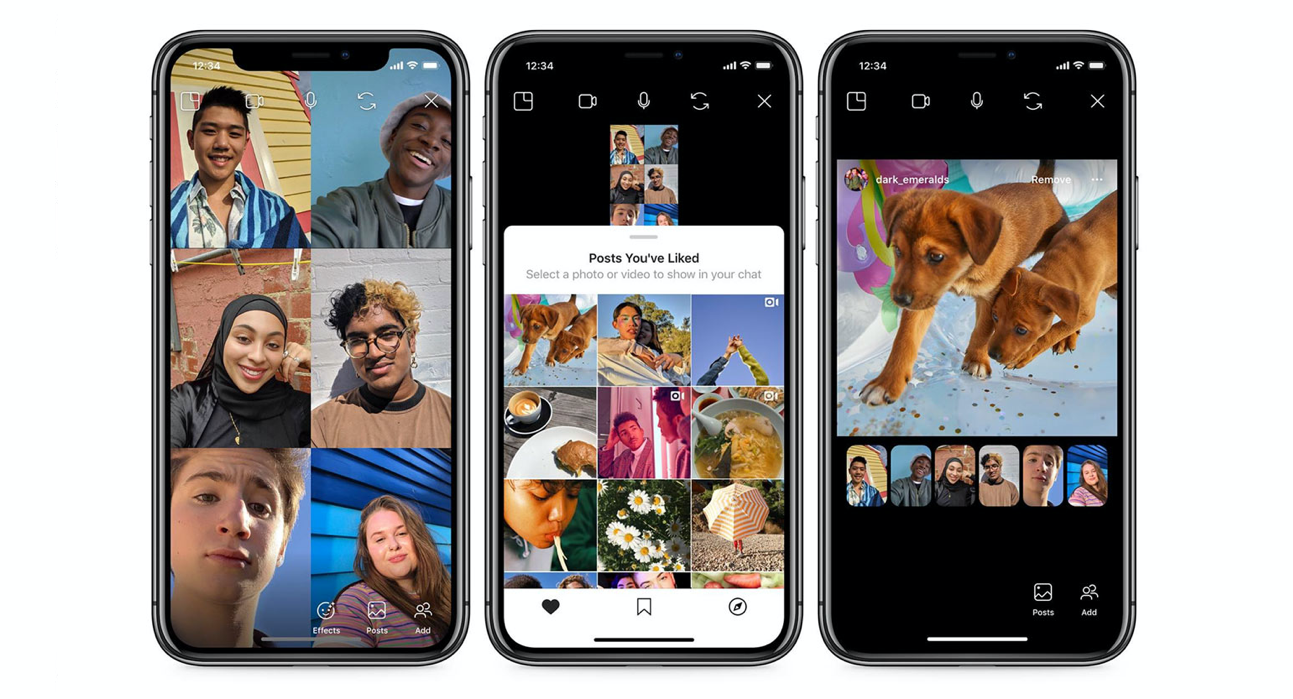
Screen actually does a lot of things well. I tried it with my wife, and the low latency and extensive flexibility made it downright delightful to try co-writing this article. It’s easy to imagine all sorts of social use cases springing up if teens get hold of Screen. The whole concept of screensharing is getting popularized by apps like Squad and Instagram’s new Co-Watching feature that launched today.

The new Co-Watching feature is like screensharing just for Instagram

Eventually, Screen wants to launch a virtual office feature so you can just instantly pull co-workers into meetings. That could make it feel a lot more like collaborating in the same room with someone, where you can start a conversation at any time. Screen could also democratize the remote work landscape by shifting meetings from top-down broadcasts by managers to jam sessions where everyone has a say.

Sherwani concludes, “When working together, everyone needs to have a seat at the table.”

Stocks blast higher on expectation of sweeping federal action

There are no free market fanatics on corporate boards the moment the economy wobbles. Today makes the point, with stocks shooting higher on the back of news that a sweeping federal package of aid and stimulus should soon pass Congress. The goal of the financial package is to blunt the impact of COVID-19-related market disruptions that have led to mass layoffs, and an economy expected to slip into recession.

Today in regular hours the Dow Jones Industrial Average (DJIA) led American indices by climbing over 10%. It was the best day for the venerable Dow since the 2008 crisis in percentage terms, though the index has posted sharper declines in percentage terms in recent days.

Its kin also rose, if less. Here’s the day’s results:

  • DJIA: rose 11.37% to 20,704.91
  • S&P 500: rose 9.38% to 2,447.33
  • Nasdaq composite: rose 8.12% to close at 7,417.86

SaaS shares, as tracked by the BVP Nasdaq Emerging Cloud Index, rose about 7.2% on the day. Bitcoin saw its value jump by 5% in the last 24 hours, and is worth about $6,600 as of the time of writing. The day may not meet the criteria for a market melt up, but it certainly was a welcome respite from recent weeks’ declines.

The next test for the American public markets comes tomorrow. After posting huge gains today, can they be retained? In the past dozen trading sessions, there has been a market habit worth noting in which any sharp action — up or down — was met with a similar, opposite result the following day. Call it Newton’s third law of stonks.

Ride-hailing get a boost

Lyft and Uber were lifted by the broader gains across all major indices. Lyft rose 19.68% to $27.06, while Uber shares increased 17.81% to $27.38. The companies saw increases even as the ride-hailing industry faces continued pressure amid the spread of COVID-19. Both companies have seen a decline in demand, prompting a shift towards delivery and partnerships with non-profit organizations to provide transportation services to health care workers and others who need it during the pandemic.

On Monday, Uber CEO Dara Khosrowshahi sent a letter to the White House, asking lawmakers to include protection and financial support for gig workers in the COVID-19 stimulus packages. Khosrowshahi also argued that there needs to be a third employment classification for gig workers that “would update our labor laws to remove the forced choice between flexibility and protection for millions of American workers.”

Motion website blocker aims to improve your focus online as you WFH

Y Combinator’s latest class of startups arrived to a fairly lukewarm public reception last week as the world melted down in the midst of the accelerator’s virtual demo day. While the startups didn’t anticipate launching into mid-pandemic markets, some seem more poised to succeed in this new environment than others.

For the past several weeks, I’ve been playing around with one of those startups’ tools. Motion, a free Chrome productivity plugin, tries to lead you away from visiting sites that you feel aren’t great for your productivity. It was a nice-to-have tool for the weeks preceding SF’s shelter in place mandate, but since I’ve started working from home full-time, all-the-time, forever, the tool has become a welcome way to separate my for-work online browsing and the for-boredom online browsing after 6pm.

A plugin that blocks websites you don’t want to visit is hardly revolutionary. There are plenty of these plugins already, but as is the case with all software, sometimes a few UX advances make all the difference. With Motion, the differentiation is the underlying psychology of the product, which eschews the central focus on black lists and white lists, instead promoting the idea of helpful pushes more in spirit with OS-level screen-time apps.

After installing Motion, you can set your productive hours and designate the sites you deem as beneficial and harmful to your productivity. For instance, I wanted to cut out Reddit, Facebook and YouTube from my work-hours browsing. Now, going forward, any time that you type in the URL of an offending website, the plugin will throw you a full-page alert that you can dismiss or temporarily hush.

Telling it that you need a minute will actually toss a countdown timer onto the screen, pushing you to get what you “need” out of Facebook or Reddit. Once that timer runs out, you can extend your abbreviated binge or take the preferred route — clicking a button that closes out the tab. The UX of the app makes room for exceptions, but still pushes users to reduce time on those sites, a big differentiator from more absolutist options.

One of Motion’s best features offers a diagnosable snapshot of your web browsing habits when you first open your browser each day. The screen shares the time you spent on each site during the previous day, allowing you to track how the tool has reduced your browsing time on certain sites and identify other URLs that you may also want to block.

Motion as a product is still in its early stages of evolution, and I’ve seen a number of improvements over my few weeks of usage, what I’ll be most curious to see is how the founding team shapes the product into a viable business moving forward. The free Chrome plug-in as a service model hasn’t proven itself yet, but the founding team has ambitions for creating paid tiers and enterprise products down the road, once the core product has been built out a bit more.

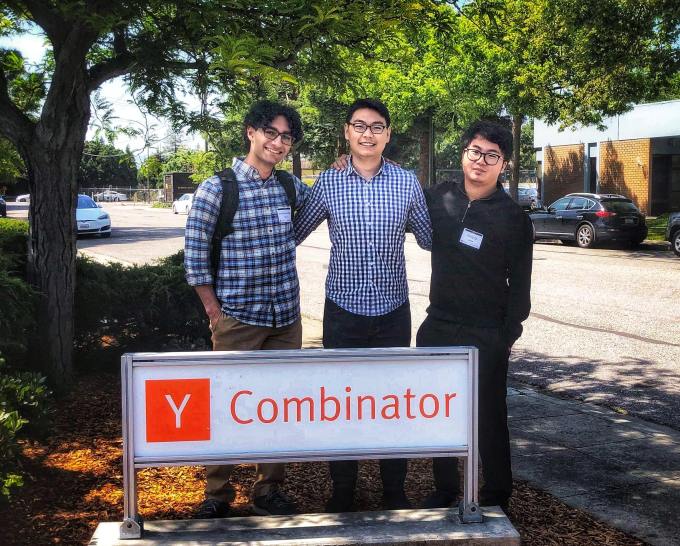
Motion co-founders Omid Rooholfada, Ethan Yu and Harry Qi


Former founders of SocialRank have launched a job board for COVID-19 layoffs

The COVID-19 pandemic has already triggered a number of layoffs across industries, from travel companies to scooter startups. But, as a gray footnote to all tragedies, we’re starting to see innovation pop through the cracks — and hopefully help some people, as well.

Back in November, Alexander Taub and Michael Schonfeld launched Upstream, a social media platform for professionals, to a small group of roughly 800 beta testers. The goal was to give folks a place to network and ask for introductions in a more digitally friendly, mobile-first platform than LinkedIn groups. The company counts Hunter Walk of Homebrew, Olivia Benjamin of Bain Capital Ventures and D’Arcy Coolican of Andreessen Horowitz as beta users. The plan was to launch publicly this summer. 

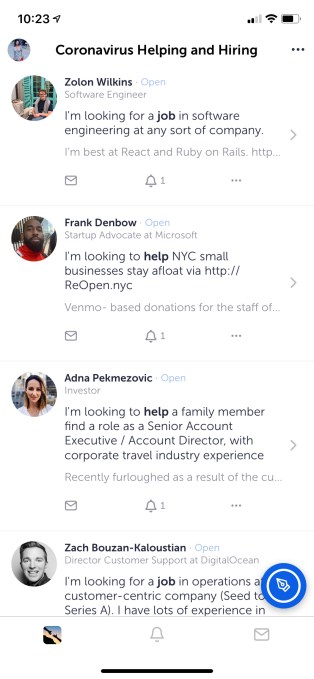
However, as companies have cut staff, the co-founders are launching Upstream to the public earlier than expected, with a specific goal to discuss layoffs from COVID-19. 

“When the coronavirus hit, we were like, oh my god we’re gonna have crazy unemployment,” Taub tells me. “It’s one thing to have a recession depression, but there’s also going to be a zero demand curve because like, we can’t go outside. So this is going to be bad.”

As a result, Taub decided to double down on something he was already seeing happen organically on the platform: job hiring and role recommendations. 

Once a user signs up to the platform, they can join the COVID-19 group. They can then choose what they want to post: looking to hire; looking for a job; or looking to help. Being able to only originate these three types of posts, noted Taub, is part of the reason Upstream is different from a Slack group or LinkedIn.

Once a note is posted, users can directly message other users in the group to follow up on a job posting or warm intro. When I asked Taub how he’s preparing for a potential uptick in usage, he said that “if this blows up…we will put up a gate” to limit the amount of posts that go live each minute. 

Other groups on the platform that are not yet open to the public include Jews in Tech, Business Development and Earlybirds.

Taub said he and Schonfeld launched Upstream with a view to focus on individuals in tech. But in recent months, Taub says he’s noticed group members outside of tech have used it, including small business owners and teachers. 

There has been little innovation in support for layoffs. Most layoff solutions exist in the form of job searching groups on Facebook, communities on Slack and even a plain-old spreadsheet that includes a list of people to hire. Taub is betting that “people want a dedicated place to be more vulnerable…because it’s a little uncomfortable asking for help on Facebook.” 

SF supervisors push for more gig worker protections during the coronavirus pandemic

San Francisco’s Board of Supervisors is pushing a number of legislative bodies to offer more protections and benefits for gig workers during the COVID-19 pandemic. As gig workers are still out delivering food to people and providing rides, supervisors are asking the SF Office of Labor Standards Enforcement to establish enforcement procedures in compliance with Assembly Bill 5, which outlines what types of workers can be legally classified as independent contractors.

This resolution, which Gig Workers Rising and We Drive Progress advocated for the board of supervisors to adopt, comes after Gig Workers Rising urged California lawmakers to enforce AB 5. Earlier this month, Gig Workers Rising sent a letter to California Gov. Gavin Newsom and other state officials asking them to step in and protect workers during this pandemic.

“These companies have been putting drivers and passengers at risk during the coronavirus era and long before,” rideshare driver and Gig Workers Rising member Edan Alva said on a press call today. “These large corporations are preying on the most vulnerable populations.”

He added that drivers often work paycheck to paycheck and therefore have no ability to save money.

“Without health insurance and sick days, we are left with the impossible choice when we get sick,” Alva said. “Drive sick and put ourselves and passengers at risk or stay at home and lose the roof over our heads, our car and our livelihood.”

The supervisors are also asking for both SF City Attorney Dennis Herrera and California Attorney General Xavier Becerra to seek injunctive relief to prevent misclassification of workers as they seek paid sick leave and unemployment insurance.

Additionally, the board of supervisors wants the Department of Public Health to implement minimum health and safety guidelines for ride-hail drivers and delivery workers. Lastly, they want California Labor Secretary Julie Su to offer guidance around accessing benefits for gig workers during this time.

The supervisors outline how, without help, gig workers “face many uncertainties, including housing and food insecurity, no access to health care, exposure to COVID-19 without safety training, sanitation and protective equipment…” Meanwhile, gig economy companies “continue to flout our state and city laws, leaving their misclassified employees without access to unemployment insurance, paid sick leave, medical benefits, workers’ compensation, and other crucial benefits…,” the resolution states.

On a press call today, Supervisor Gordon Mar said denying workers their rights during a public health crisis is “immoral.” Fellow Supervisor Matt Haney added that it’s critical every measure is taken to protect public health.

“Many of us are being told to have your food delivered, have your food dropped off,” Haney said on the press call. “Having workers at these companies is actually becoming essential for us to operate during this time, but at the same time we are not treating these folks fairly…we are putting them in even more marginalized and vulnerable positions economically.”

In many ways, Haney said, gig workers are performing emergency response jobs during this crisis — delivering food to people who can’t go out to the store or driving people from point A to point B.

It’s not that companies like Uber, DoorDash and Instacart have done nothing. Some have offered up to two weeks’ worth of sick leave, for example. But it’s that they’re not doing enough.

“TNCs were designated by Governor Newsom as an integral part of critical transportation systems necessary to deliver essential services during this national emergency,” a Lyft spokesperson said in a statement. “Lyft is playing a crucial role in delivering essential services during this pandemic by connecting people with vital services and goods. Attempting to force TNCs to adopt an employment model in the midst of this crisis would result in the widespread elimination of work for hundreds of thousands and the immediate interruption of essential services for vulnerable populations. It will hurt drivers and at-risk communities at a time when they need our services most.”

On the press call, however, driver Mekela Edwards expressed some concern about Lyft’s healthcare initiatives. Edwards pointed to how drivers are not properly equipped with the skills or training patients might need on their way to the hospital.

“And we definitely don’t have protections such as masks or gloves or things in case we have to help a passenger get in and out of the car,” Edwards said. “As a driver, it really should be something that is looked at closely before a company touts that that’s what they’re offering.”

Meanwhile, there are reports from Uber drivers that their requests for paid sick leave are getting rejected. TechCrunch has reached out to Uber to learn more about that. We’ll update this story if we hear back.