Medtronic is sharing its portable ventilator design specifications and code for free to all

Healthcare and biomedical engineering company Medtronic was in the news recently because Tesla CEO Elon Musk had discussions with the company about the automaker’s potential plans to build ventilator hardware in order to address the COVID-19 crisis. Today it’s doing something potentially far more impactful. Medtronic is making available to anyone the full design specifications, produce manuals, design documents and, in the future, software code for its Puritan Bennett (PB) 560 portable ventilator hardware.

The PB 560 ventilator has a number of advantages, one being that it’s a relatively compact and lightweight piece of equipment that can be easily moved around and installed for use in a range of different healthcare environments and settings. And it’s a design that was originally introduced in 2010, so it has a decade of qualified, safe medical use in treating patients.

There are plenty of efforts underway to produce ventilators and design new ventilators that manufacturers of other devices, like Dyson, can put into production. And others are trying to modify existing hardware to serve more patients. But this move by Medtronic makes freely available everything needed to spin up new production lines at existing manufacturers around the world — without any costs or fees owed to Medtronic.

It’s still obviously true that retooling a production line to build a different product is going to be an undertaking, no matter what kind of design specifications you’re starting with. But this initiative by Medtronic is also intended to provide the resources necessary for anyone looking at what they can build today — a blueprint to spawn new and innovative ideas. Manufacturers might be able to look at Medtronic’s proven design and engineer something they can build at scale relatively quickly that offers the same or similar performance characteristics.

Medtronic says the design is particularly well-suited for “inventors, startups, and academic institutions” looking to spin up production in short order and create their own adapted designs.

“We are sharing the design specifications for the [PB 560] to enable participants across industries to evaluate options for rapid ventilator manufacturing to help doctors and patients dealing with COVID-19,” said John Jordan, External Communications Director at the Minimally Invasive Therapies Group at Medtronic.

He pointed out that while Medtronic produces other, more complex ventilator hardware, including the PB 980 and PB 840, these require “more than 1,500 components” that Medtronic sources from a variety of specialized producers, and rely on “a skilled and specialized workforce” and “an interconnected global supply chain.” While those things remain true even for the PB 560 to some extent, its smaller, simplified design makes it the best candidate for companies newer to the field looking to pivot to ventilator manufacturing with limited or no prior experience.

It’s worth noting that Medtronic isn’t open-sourcing the PB 560’s design exactly: it’s issuing a special “permissive license” specifically for the purposes of addressing this global coronavirus pandemic, and its term ends either when the World Health Organization’s official Public Health Emergency of International Concern (PHEIC) is declared over, or on October 1, 2024, whichever comes first.

Still, it’s a sign of the extent and seriousness of the COVID-19 crisis that for-profit corporations like Medtronic would even consider doing something like making free for broad public use a code technology they’ve developed, even if only for a fixed time frame.

Any startup or hardware maker interested in checking out the plans for the PB 560 and potentially using them to build their own equipment can register here to agree to the license and get access to the files.

Ford, GE Healthcare to produce 50,000 ventilators by July using this tiny company’s design

Ford and GE Healthcare have licensed a ventilator design from Airon Corp and plan to produce as many as 50,000 of them at a Michigan factory by July as part of a broader effort to provide a critical medical device used to treat people with COVID-19.

Ford will initially send a team of engineers to help boost production at Airon’s Florida facility, where it produces just three of its Airon Model A ventilators per day. Ford will also begin to ready its own Rawsonville Components Plant in Ypsilanti, Michigan for large-scale production of the Airon Model A-E ventilator that is expected to begin April 20. Ford said that it will pay 500 United Auto Workers, who have volunteered to work at the factory. Ford has suspended production of its vehicles during the COVID-19 pandemic. 

Ford said Monday that it expects to produce 1,500 Airon ventilators by the end of April, 12,000 by the end of May and 50,000 by July. The automaker also said it will eventually have the capacity to build 30,000 a month.

Ford and GE Healthcare are also working on scaling production of a simplified ventilator design from GE Healthcare.

Monday’s announcement highlights the latest effort by automakers and medical device manufacturers to help ease a shortage of ventilators, a medical device that is used in the treatment of COVID-19, a disease caused by coronavirus. COVID-19 attacks the lungs and can cause acute respiratory distress syndrome and pneumonia. And since there is no clinically proven treatment yet, ventilators are relied upon to help people breathe and fight the disease. There are about 160,000 ventilators in the United States and another 12,700 in the National Strategic Supply, the NYT has reported.

Last week, GM said it would start producing Ventec Life Systems ventilators at its engine plant in Kokomo, Ind., using about 1,000 workers. GM said production will begin in the next seven to 14 days with the first shipments of the FDA-cleared ventilators scheduled to begin in April. Ventec is also trying to ramp up production at its manufacturing facility in Bothell, Wash.

The Ford-GE Healthcare collaboration also brings attention to Airon, a small privately held company that specializes in high-tech pneumatic life support products. The company’s Airon Model A-E ventilator, which GE Healthcare introduced to Ford, operates on air pressure without the need for electricity, according to the companies. Airon has been producing this ventilator since 2004.

The Airon design was chosen for its simplicity, which should allow the Ford to scale production quickly. The FDA-cleared design is expected to meet the needs of most COVID-19 patients with respiratory failure or difficulty breathing, according to Tom Westrick, vice president and chief quality officer at GE Healthcare. Westrick said they consulted clinicians to confirm that the Airon ventilator is well suited to address the urgent needs during the COVID-19 crisis.

Under the partnership, Ford will provide its manufacturing resources and GE Healthcare will license the ventilator design from Airon and lend its clinical expertise.


Local services marketplace Thumbtack lays off 250 employees

Thumbtack CEO Marco Zappacosta announced in a blog post today that the company has laid off 250 employees.

Much has been written about the impact that COVID-19 and the resulting social distancing/shelter in place measures are having on small businesses (and the steps that internet platforms like Facebook and Yelp — which, after all, make money from small businesses advertising — are taking to help).

Similarly, Zappacosta said the local services that Thumbtack showcases in its marketplace are also seeing anything from a “dramatic decline” to an “outright collapse.” Apparently the company’s business has fallen 61% in San Francisco, 55% in Detroit and 50% in New York City.

Thumbtack raised a $150 million round of funding last year, but Zappacosta said, “No business operates with enough of a buffer to sustain prolonged revenue declines of 40%+ without making radical changes.”

Those changes include reduced marketing, a hiring freeze and 25% salary reductions for executives. (Zappacosta said he will not take any salary at all, starting today.) And it also includes big layoffs.

Laid off workers will receive a severance package with both “cash and equity components,” Zappacosta said. He also said Thumbtack is doing what it can to help its service providers, such as “building features that support more remote work with customers — like video consults for a sink replacement that would typically be done onsite.”

WTF is the denominator effect?

The last few weeks have just been dreadful for asset managers. Not only have the markets tanked the past few weeks (if slightly recovered from their lows since the signing of the U.S. stimulus bill), but the daily volatility of different assets is making it very hard to keep portfolios balanced. As an example, the key benchmark for oil is under $20 a barrel in the United States, a level not seen in almost two decades.

So let’s talk about something that is quite stressful for a lot of VCs in this context: the so-called denominator effect.

Before we get to what the denominator effect portends for VCs, let’s define it. In the limited partner world, LPs are allocators of capital, which just means that they invest money in a collection of assets following a strategy. For instance, these LPs might have a strategy of something like: “I want 60% equities, and 40% bonds,” or perhaps something like “40% equities, 30% bonds, 10% VC, 10% hedge funds, and 10% natural resources.”

Every fund has its own goals. Some funds need more immediate liquidity to pay for operations (i.e. college endowments), while others focus much more on the future and don’t mind long hold periods on their assets (i.e. sovereign wealth funds). The role of a portfolio manager is to invest in assets in such a way as to match these objectives.

As part of operating any portfolio, a fund manager regularly rebalances it to make sure that the underlying assets align with the chosen strategy. If you personally use a modern asset management service like Wealthfront, then you are already familiar with this: every period (which could be months, quarters, years, etc.), the service transfers money between your assets to reset your portfolio back to its original strategy. So if you want 60% stocks, but your portfolio is at 70% right now, the service will automatically sell 10% of those assets in order to invest in other assets.

The primary fraction here is (the capital within an asset class) divided by (the total capital of the portfolio). Yes, it’s really simple math.

Here’s where it starts to get complicated though. Let’s say for illustration that you are managing a $1 million portfolio, and you have 70% ($700,000) invested in Nasdaq, which is relatively liquid, and the other 30% ($300,000) is invested in VC funds, which are highly illiquid, as they can take 10 years or more to be returned to you.

Let’s say your fund was balanced as of February 19, when the Nasdaq hit an all-time high close of 9,817.18. Since that time, Nasdaq has lost 20.57% in value, according to Yahoo Finance. That means your overall portfolio is now worth about $856,010, or $556,010 for equities and still $300,000 for VC.

Even though you haven’t increased or decreased your investment in VC, your portfolio is now heavily skewed toward that asset class. Equities represent $556,010 / $856,010 = ~65% of your portfolio, while VC now represents ~35%, up from the intended 30% in your original strategy.

Given that skew, you should rebalance … but you can’t. Because VC funds have a 10-year fund cycle (if not longer), you can’t simply sell some VC assets and buy equities to rebalance your portfolio. The portfolio manager is effectively stuck.

That’s the “denominator effect” — a decline in the value of one asset should result in other assets being sold to properly rebalance a portfolio, but many assets like venture capital, private equity, real estate, natural resources and others can be quite hard to sell in the short-to-medium term.

Fractional ownership

That’s the outline of what the denominator effect is, but what does it mean in practice for VCs and ultimately for founders?

For VCs, the big challenge today is that many of their LPs are precisely in the situation described above, with over-investment in VC as an asset class and a huge liquidity crunch that they have to work through. LPs want (or in some cases, must) scale down their VC investments in order to make their funds function. Not only will they cut back investments in new funds, they don’t even want to invest in the funds they have already committed to.

The irony here is that given the declining valuations for a lot of startups, this is precisely the time to invest more. That’s the fundamental tension of the denominator effect — it isn’t about psychology or investor reticence driven by fear, but rather strategic considerations that are rational for a fund’s key objectives.

LPs have a couple of strategies on how to cope. One is that they sometimes have a bit of flexibility with their general partners to wait out the storm, since they can push them to slow down the pace of investing in order to reduce the volume of capital calls. In addition, they can halt the number of new funds they invest in or just stretch out the time it takes to make a new investment in order to spread their investments more evenly.

And then there is the secondary market, in which LPs sell their VC fund stakes in order to secure liquidity — a sliver of a market, but one that is quite interesting nonetheless. My colleague Connie Loizos talked a bit more about this angle last week, finding that these transactions will take some time to be consummated while the market discovers what startups are currently worth.

In short, due to the denominator effect, LPs are going to do whatever they need to do to rebalance their portfolios in the coming months. If the markets happen to rapidly recover, they might quickly reopen their investments in VC and other alternative assets. But if the markets stay sour for longer, then expect further downward gravitational pull on the VC asset class as portfolio managers reset their portfolios to where they need them. It’s the tyranny of fifth grade mathematics and a complex financial system.

Rebecca Minkoff has some advice for e-commerce companies right now

When Rebecca Minkoff first moved to New York City, the then-18-year-old was making $4.75 an hour.

“I just kept working for this designer and someone was telling me what to do every day. I just didn’t like that. And I thought if I’m going to work as hard, it’s going to be for myself and I want to call my own shots,” she said. “I didn’t want to be told what to do, frankly.”

Self-employment for Minkoff turned out just fine; in 2001, she redesigned the iconic “I Love New York” shirt and it appeared on The Tonight Show. After a shout-out from Jay Leno, Minkoff spent the next eight months making T-shirts on the floor of her apartment and quit her job to start designing full time.

We caught up with Minkoff to learn more about how she grew her brand into a global fashion company with the help of her brother, her problem with the unicorn mentality and why she thinks the “invisible barrier” is the future of retail tech.

This interview was edited for brevity and clarity.

TechCrunch: What gave you the energy and drive to become an entrepreneur?

Rebecca Minkoff: Long story. My mom would sell these cast covers, like decorative covers for people with broken arms at the flea market. And I was like, I am going to have a booth here. So I made all these tie-dye shirts and no one bought anything but it was just this idea of like, I can make something I can sell. My mom always taught that. When I wanted a dress, she taught me how to sew a dress instead of buying the dress. And so, I just got this bug for creating things out of nothing.

The constant thread was, “I’m not going to pay for this. You’re going to learn how to do it.”

Facebook Messenger preps Auto Status location type sharing

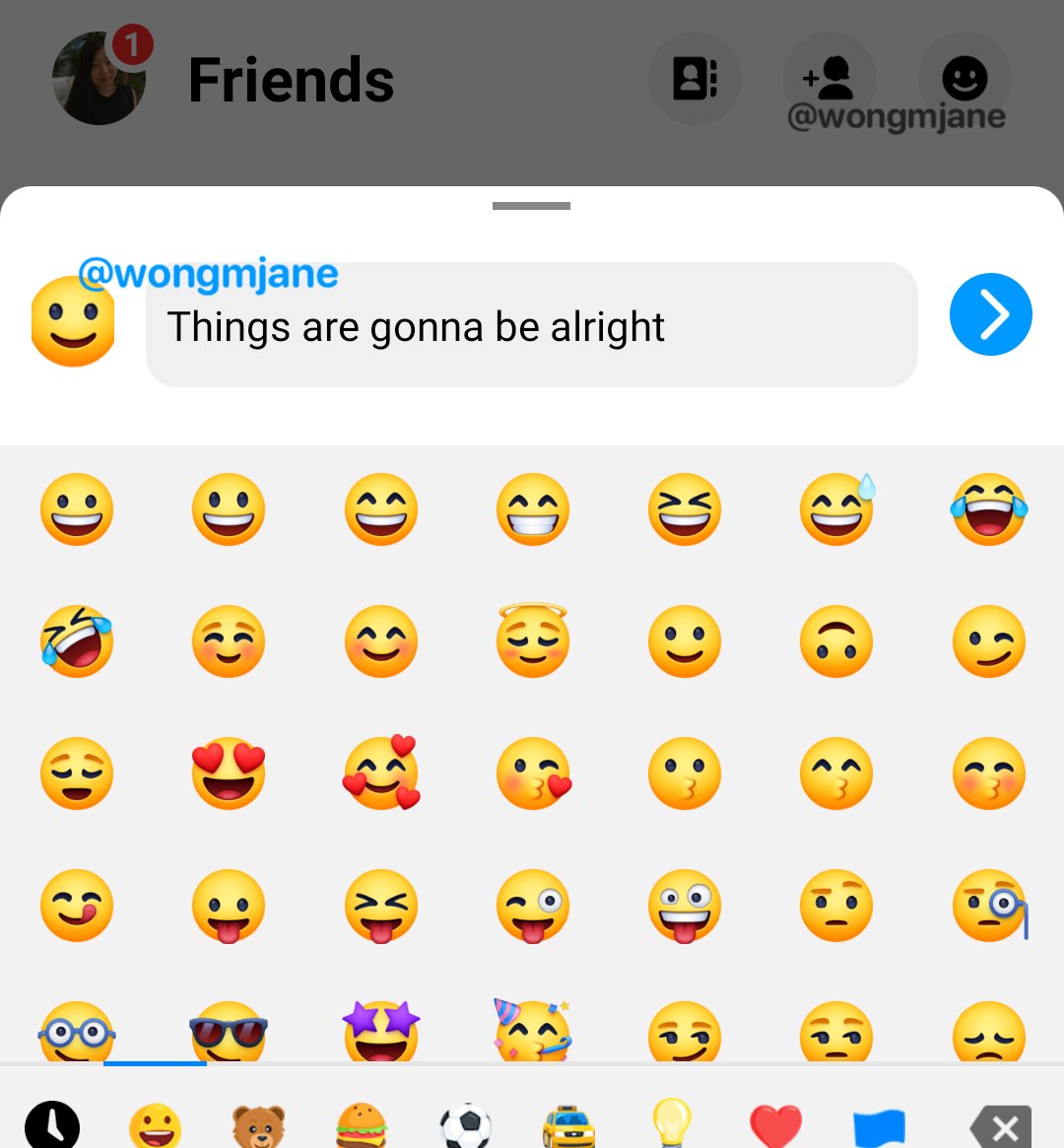
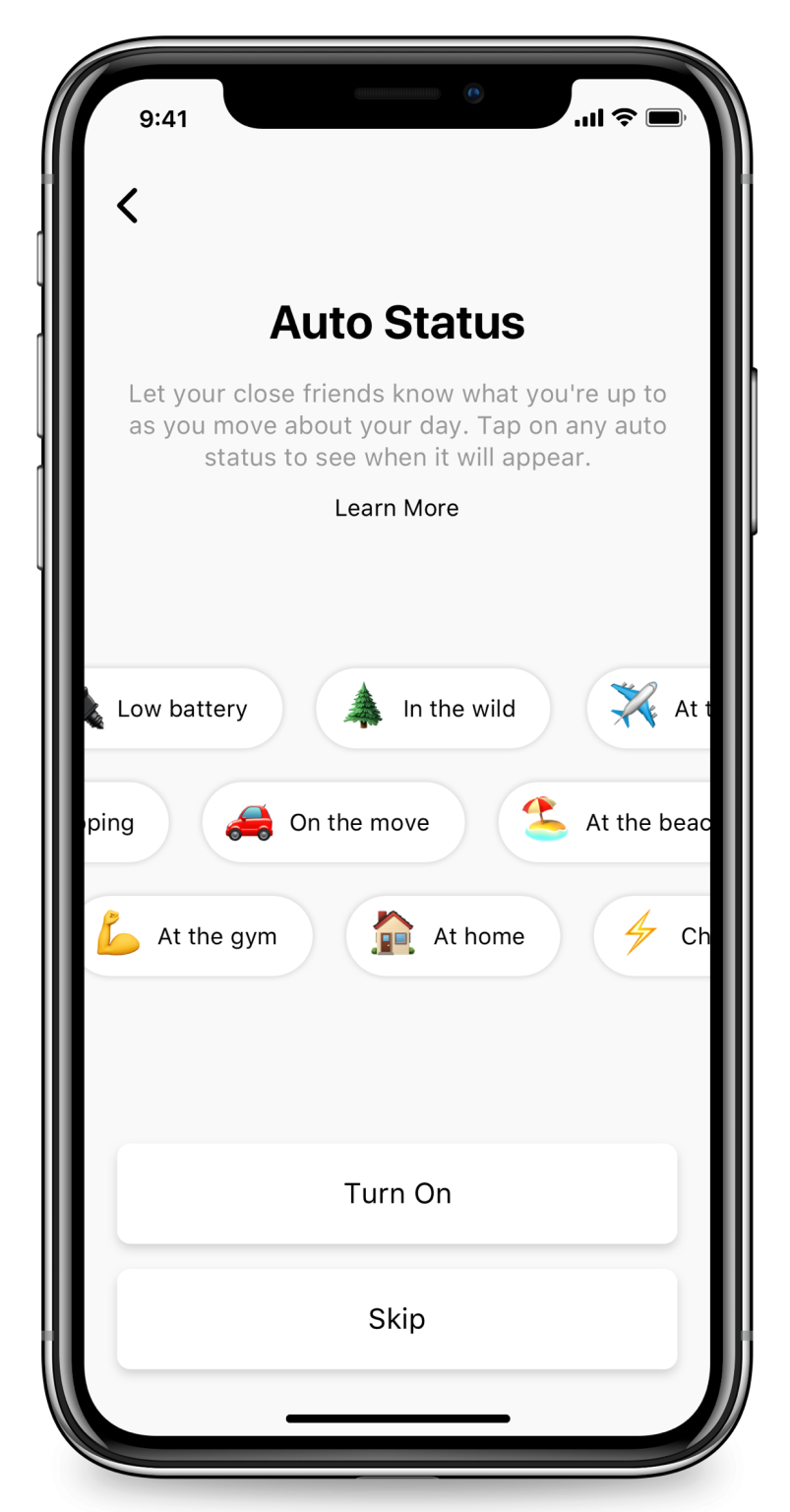
Facebook Messenger could soon automatically tell your closest friends you’re at the gym, driving or in Tokyo. Messenger has been spotted prototyping a ported version of the Instagram close friends-only Threads app’s Auto Status option that launched in October.

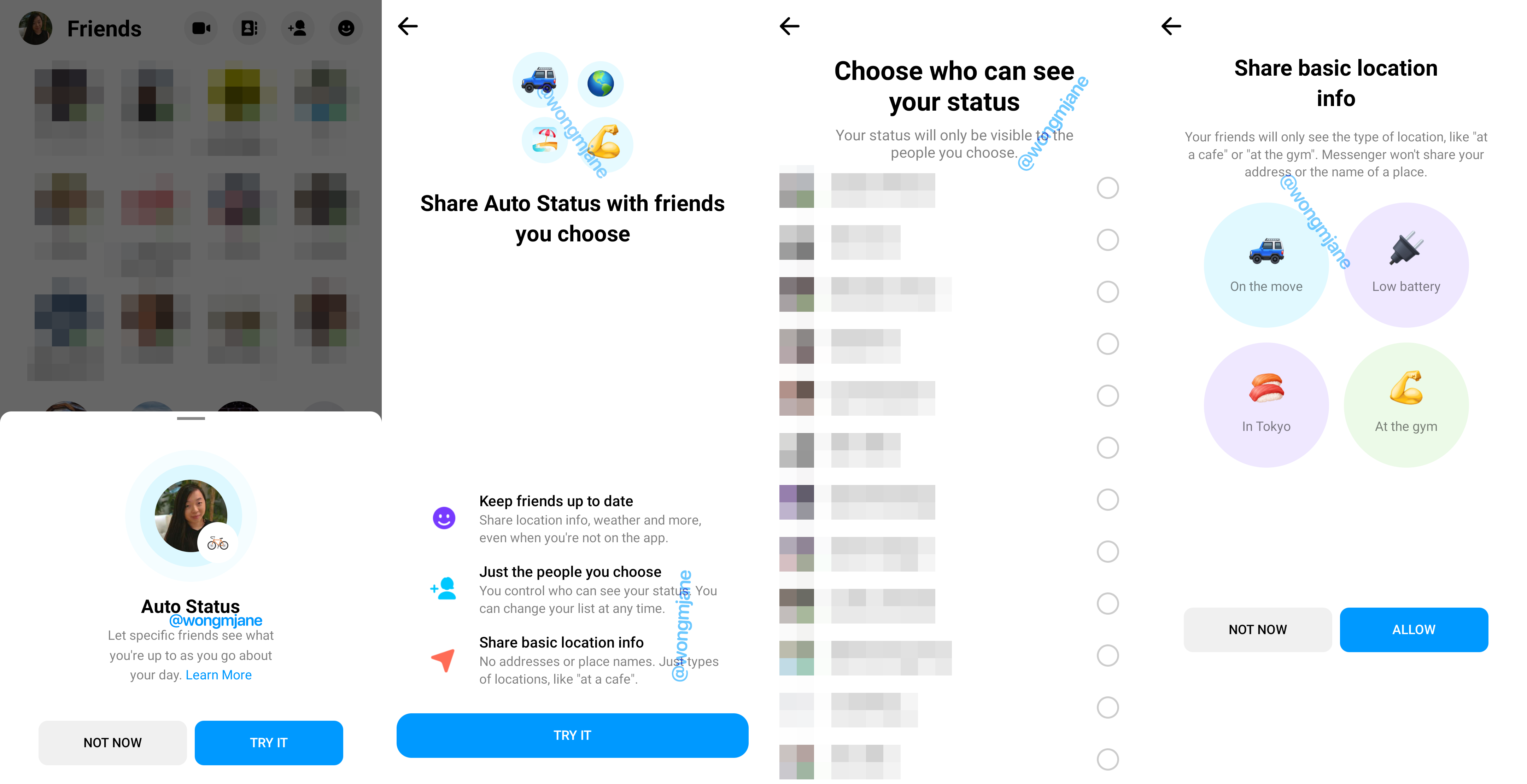
The unreleased Messenger feature would use your location, accelerometer and battery life to determine what you’re up to and share it with a specific subset of your friends. But instead of sharing your exact coordinates, it overlays an emoji on your Messenger profile pic to indicate that you’re at the movies, biking, at the airport or charging your phone.

It’s unclear if or when Messenger might launch Auto Status. But if released, the feature could become Facebook’s version of the AOL Away Message, allowing people to stay in closer touch without the creepiness of exact location sharing. It might also help people coordinate online or offline meetups by revealing what friends are up to. Auto Status creates an ice breaker, so if it says a close friend is “at a cafe,” or “chilling,” you could ask to hang out.

Back in 2016, I wrote about how exact location sharing had failed to become mainstream because knowing where someone is doesn’t tell you their intention. What matters is whether they’re free to interact with you, which none of the social networks offered.

A few products, like Down To Lunch and Free, came and went in the meantime. Snapchat’s Snap Map and its acquisition of Zenly both doubled down on precise location sharing, yet still we’re often stuck home wondering if anyone we care about is similarly bored and might want to hang out.

Facebook has been experimenting in this space since at least early 2018, when its manual Emoji Status was spotted. That allowed you to append an emoji of your choosing to your Messenger profile pic. Then in October, Facebook introduced Auto Status, but only in the Instagram side-app Threads.

Some users were initially creeped out by the idea of Facebook relaying battery status. But Instagram director of Product Management Robby Stein explained to me that because you might not respond to a message if your phone goes dead or is left on the charger, it’s useful info to relay to friends who might be wondering what you’re doing.

Then earlier this month, reverse engineering master and constant TechCrunch tipster Jane Manchun Wong revealed a new, unreleased version of Emoji Status hidden in Messenger’s Android code. Then today, Wong showed off how she similarly spotted Facebook trying to port Auto Status to Messenger. That would bring the feature to more than one billion monthly users compared to the relatively small base for Threads.
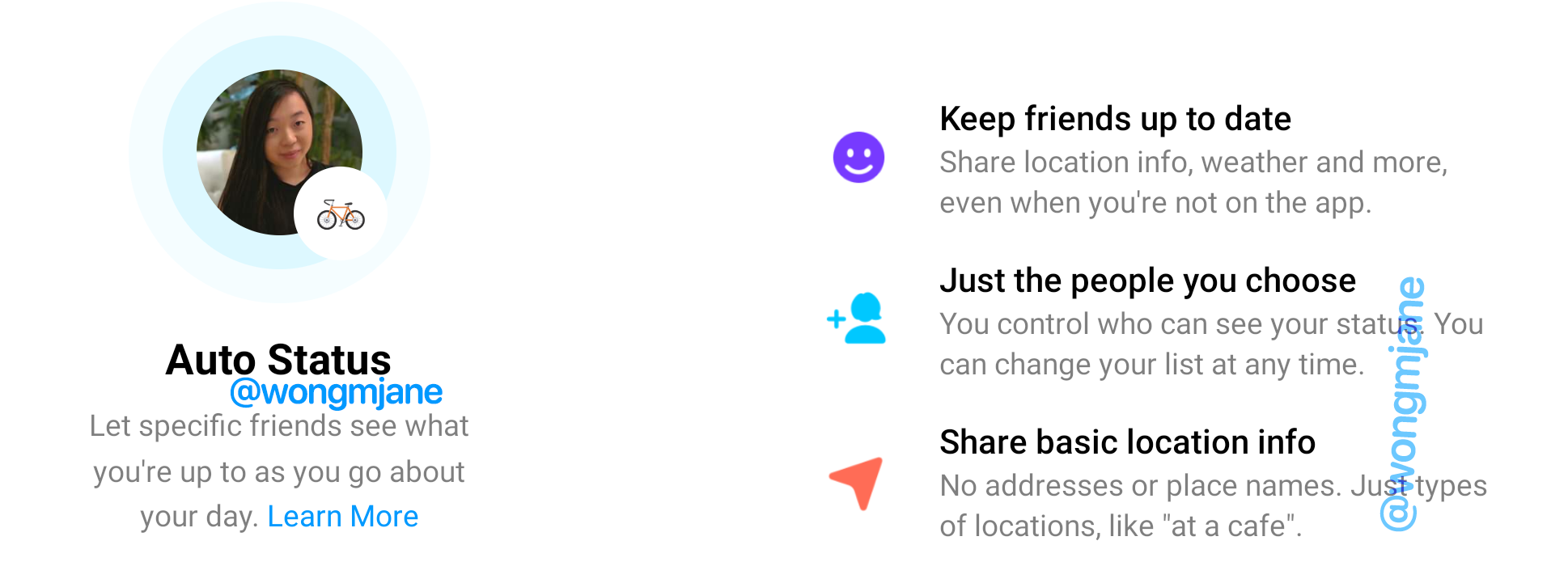
With Auto Status, you can “Let specific friends see what you’re up to as you go about your day. Share location info, weather, and more, even when you’re not in the app.” Auto Status is only visible to a special list of friends you can change at any time, similar to Instagram Close Friends. And the feature shares “no addresses or place names. Just types of locations, like “at a cafe.” Movement (driving, biking, walking), venue (at the movies, airport), cities (in Tokyo) and battery status (low battery, charging) are some of categories of what Auto Status shares.

A Facebook Messenger communications representative confirmed to TechCrunch that the Auto Status feature was being prototyped by Messenger, noting that “We’re always exploring new features to improve your Messenger experience. This feature is still in early development and not externally testing.” The company also tweeted the statement.

One of the biggest unsolved problems in social networking and messaging remains knowing whether friends are free to chat or hang out without having to ask them directly. Reaching out at the wrong time only to be ignored or rejected can feel awkward or intimidating, and can discourage connection later. But if you have a vague idea of what a close friend is up to, you can more deftly plan when to message them, and be more likely to get to spend time together in person or just online.

That could be a cure to the loneliness that endless feed scrolling by ourselves can leave us feeling.

Niantic is updating Pokémon GO and other titles to support indoor gaming

Niantic, the development company behind popular AR mobile games Pokémon GO and Harry Potter: Wizards Unite, is adapting its titles to support at-home gaming in response to the COVID-19 pandemic. Typically, Niantic’s games have encouraged people to go outdoors, explore their world and connect with others in real life as they played. But with government lockdowns and home quarantines under way, it’s no longer safe to play these games as originally intended. 

The company says it will now prioritize making changes to its AR titles to allow people to play inside and around their own homes.

For example, Niantic’s Adventure Sync function will now track your indoor steps as you do things like run on a treadmill, clean your house or make other indoor movements and activities. It’s also enhancing the games’ social features to allow friends to stay in touch virtually, and soon take on Raid Battles together while staying at home.

Instead of discouraging virtual movement inside the game, as Niantic has in the past, players will be able to virtually visit and share memories about their favorite real-world places. And this summer, Niantic will re-imagine its plans for live events to allow players to participate without having to leave home.

These updates aren’t just those made for the consideration of players’ needs during this time of crisis — they’re also necessary changes to ensure Niantic continues to operate both during the pandemic and beyond.

Niantic’s live events have driven big business to the cities that hosted them — nearly $250 million in tourism revenue in 2019, it once said. It also served as a mechanism to drive its own revenues and keep players engaged over time. The plan had worked — Pokémon GO has continued to grow, even though it’s not the hyped-up global phenomenon it was at launch. Last year was its highest-grossing year ever, a report from Sensor Tower found, as the game pulled in nearly $900 million in player spending in 2019. Much of the revenue was due to the game’s significant updates and real-world events, the report noted.

These latest updates aren’t the first changes Niantic has made in response to the COVID-19 outbreak. It had already modified gameplay in Pokémon GO to encourage users to stay inside — including by rewarding players who caught their Pokémon while inside, for example. It also just launched a new form of gameplay called the GO Battle League, which can be played from home, with reduced walking requirements and discounted select items so players wouldn’t have to walk as far to catch Pokémon, among other things.

In Harry Potter: Wizards Unite, the company increased the amount of content that’s near players on the map, so they could progress in the game without traveling far. Potions were also tuned to support people playing from home.

And in both titles, gifts were adjusted to include more helpful content throughout each day.

In Niantic’s first game, Ingress, it has made a few changes, too. Ingress Portals are now tuned to encourage at-home play and it has reduced the need to interact with multiple Portals. Several other changes make it easier to play the game without having to walk around as much.

Niantic has not yet gone so far as to fully eliminate the use of outdoor walks as a means of gameplay, however. Instead, it still encourages people to get outside — in areas where it’s permitted by local authorities to go for walks.

Though Niantic had made earlier changes to its games due to the outbreak, today’s announcement represents a more formal strategy for its business. It also lays out a detailed roadmap of what Niantic has in store. Not all its new features are live. Instead, Niantic says they’ll roll out in the “coming days and weeks,” without committing to an exact time frame.

“We created Niantic with a mission to help people get outside, exercise, and explore the world, with the ultimate goal of helping people connect with others. Today we support a global community of hundreds of millions of people who look to our games for regular entertainment and an opportunity to get outside and connect with friends,” said Niantic founder and CEO John Hanke, on the company blog.

“We have always believed that our games can include elements of indoor play that complement the outdoor, exercise and explore DNA of what we build. Now is the time for us to prioritize this work, with the key challenge of making playing indoors as exciting and innovative as our outdoor gameplay,” he added.

Amazon warehouse workers are walking out and Whole Foods workers are striking

Amazon, the e-commerce giant that has fared well financially amid the COVID-19 pandemic, is facing a bevy of worker strikes. Today, warehouse workers on Staten Island in New York walked off the job in protest of Amazon’s treatment amid the crisis.

#BREAKING: Over 100 Amazon employees at JFK8 warehouse walk off the job over @amazon’s dangerous response to protect workers from COVID19 in Staten Island.

?#AmazonStrike #WhatWeNeed pic.twitter.com/z0mrUWmPfw

— Make the Road NY ? (@MaketheRoadNY) March 30, 2020

“Like all businesses grappling with the ongoing coronavirus pandemic, we are working hard to keep employees safe while serving communities and the most vulnerable,” an Amazon spokesperson told TechCrunch. “We have taken extreme measures to keep people safe, tripling down on deep cleaning, procuring safety supplies that are available, and changing processes to ensure those in our buildings are keeping safe distances. The truth is the vast majority of employees continue to show up and do the heroic work of delivering for customers every day.”

In solidarity with warehouse workers, tech workers at Amazon are demanding the company provide fully paid family leave for people who miss work, provide fully paid leave to all Amazon workers, close facilities immediately following contamination, ensure full paid leave for workers whose jobs are impacted by such closures and ensure everyone has unlimited time to take care of their health.

“Recognizing the urgency of the moment, tech workers are going beyond asking Amazon to take action and are pledging not to work for Amazon if it fails to act,” the DC Tech Workers Coalition wrote in a petition. “We also pledge to ask organizations in our communities such as universities and conferences to not accept Amazon as a sponsor or participant in events.”

Meanwhile, workers at Whole Foods, which is owned by Amazon, are organizing a “sick out” strike tomorrow to demand better protections on the job, Vice reports.

According to Vice, Whole Foods workers will call in sick tomorrow and demand paid sick leave for those who stay at home or self-quarantine during the pandemic. They will also demand free coronavirus testing for employees and hazard pay.

Led by group Whole Worker, the sick-out was originally planned for May 1, but was moved up in response to reports that workers have started getting sick and testing positive for COVID-19.

“As this situation has progressed, our fundamental needs as workers have become more urgent,” the group wrote on its campaign page. “COVID-19 poses a very real threat to the safety of our workforce and our customers. We cannot wait for politicians, institutions, or our own management to step in to protect us.”

This action will come one day after Instacart workers are refusing to shop and deliver groceries until the company meets their demands. Shoppers’ current demands are offering hazard pay of $5 extra per order, changing the default tip to 10%, and extending the sick pay policy to those who have a doctor’s note for a pre-existing condition that may make them more susceptible to contracting the virus.

“For the sake of public health and worker safety, every non-union grocery worker must speak out,” United Food and Commercial Workers International Union President Marc Perrone said in a statement. “If Amazon, Instacart, and Whole Foods are unwilling to do what is right to protect their workers and our communities, the UFCW is ready to listen and do all we can to help protect these brave workers from irresponsible employers who are ignoring the serious threat posed by the rapidly growing coronavirus outbreak.”

Amid concerns that startups could be left out of COVID-19 bailout, investors step up lobbying

The massive bailout package that the U.S. government passed last week to stave off an economic collapse from measures put in place to mitigate the spread of the COVID-19 epidemic is giving out billions to American small businesses. But startups that received venture capital money could be left out.

So the nation’s investment organizations and lobbying firms are stepping up their efforts to get clarification around the specifics of the loan programs established under the Coronavirus Aid, Relief, and Economic Security (CARES) Act.

Their efforts could mean the difference between some of those billions in loans for small businesses going to startup companies or a whole swath of companies left falling through the cracks.

There appear to be two issues for startup entrepreneurs with the different types of loans that companies can receive.

The first is the “Affiliation Rules” that the Small Business Administration (SBA) uses to determine who is eligible for loans. Under the rules, companies could be required to count all of the employees at every company their investors have backed as part of their employee count — pushing the individual companies above the employee size threshold.

“Regardless of the purpose of these rules for traditional 7(a) loans, allowing the rules to exclude some of our country’s most innovative startups in this new loan program is manifestly contrary to the intent of the legislation: to help small businesses keep their lights on and their employees working despite the double financial squeeze created by the economic and financial market downturns,” according to a letter sent to Treasury Secretary Steve Mnuchin and SBA Administrator Jovita Carranza by the NVCA and other startup investment organizations. “Without clear guidance enabling startups and small businesses supported by equity investment to access the loan facility, many of these startups may be rendered ineligible.”

These issues around affiliation and 7(a) loans aren’t the only ones with which startups may contend. Startups could also be eligible for Economic Injury Disaster Loans (EIDL). These loans are part of a $10 billion program within the CARES Act that is also overseen by the SBA. However, these loans have to come with a personal guarantee if they’re over $200,000. And that requirement may be too onerous for startups. 

EIDLs less than $200,000 don’t require a personal guarantee, nor do they require real estate as collateral, and will take a general security interest in business property, according to an article in Forbes. Borrowers for EIDLs can take an emergency cash grant of $10,000 that can be forgiven if spent on things like paid leave, maintaining payroll, increased costs due to supply chain disruptions, mortgage or lease payments or repaying obligations that cannot be met due to revenue loss, according to Forbes.

These loans apply to sole proprietors and independent contractors and employee stock ownership plans with fewer than 500 employees, Forbes wrote. The emergency loans are available to companies that don’t qualify for additional funds — and are based on self-certification and a basic credit score, Alex Contreras, director of Preparedness, Communication, & Coordination at the Office of Disaster Assistance for the SBA told Forbes.

While the EIDLs may be interesting, the biggest issue is the lack of clarity around affiliation rules, Justin Field, NVCA’s senior vice president of government affairs, tells me.

“These rules will make it more difficult for small businesses with equity investors to even understand if they can access the program,” he says. “It’s a tough situation… If you have these non-bright-lined rules it’s going to be tough for anybody that has a company that has minority investors.”

There could be significant implications for the U.S. economy if these startups are ineligible for loans, the NVCA wrote. Companies backed by venture investors are involved in the development of technologies of strategic interest to the U.S. in the long term and are currently working on tools to diagnose, track, monitor and mitigate the spread of COVID-19 in the short term.

“Bottom line: not providing this critical support to startups now will cause both short-term pain and long-term consequences that linger for years,” the organizations wrote. “In 2019 alone, 2.27 million jobs were created in the U.S. by startups across our nation. According to the job site Indeed, 98 percent of firms have fewer than 100 employees and between small and medium sized companies, they jointly employ 55 percent of employees. When implementing the CARES Act, we urge the SBA to issue guidance that makes clear affiliation rules do not arbitrarily exclude our most innovative startups.”

Experience Disrupt SF online with the Disrupt Digital Pro Pass

Earlier this month we announced the launch of the Disrupt Digital Pass for TechCrunch’s flagship Disrupt SF event (September 14-16) as a way to help ensure that, no matter what, TechCrunch fans everywhere would be able to enjoy the big interviews at the show. We also hinted that we were working on a Pro edition of the Digital Pass for people who really want to engage as fully as possible with Disrupt SF, including all the programming on the four primary stages and lots of real-time interaction with fellow attendees, founders in Startup Alley, engaging Q&A sessions and our all important exhibitors and partners. That was trickier to figure out, but we’re there. 

Today we’re happy to unveil the Disrupt Digital Pro Pass that we’ve been working hard to finalize. Here’s what you get with your Disrupt Digital Pro Pass, starting at $245: 

  • Live stream and VOD (video-on-demand) from the Extra Crunch Stage. Live and on-demand access to TechCrunch editors’ discussions with top experts — growth marketers, lawyers, investors, technologists, recruiters — on topics critical to founders’ success. Pass holders, in-person and virtual, may submit questions in real time to the moderator onstage.
  • Live stream and VOD from the Q&A Stage. Virtual pass holders can submit questions during live Q&A sessions with speakers after they have appeared with TechCrunch editors on the Disrupt and Extra Crunch stages. 
  • VOD from the Showcase Stage. Watch top founders exhibiting in Startup Alley pitch and take questions from TechCrunch editors. 
  • Interact with early-stage startups in Startup Alley virtually. Browse the hundreds of exhibiting startups, organized by category, and watch their product demos on demand. Digital Pro pass holders can arrange 1:1 meetings with founders whether they be virtual or exhibiting on the show floor in-person.
  • Video conference networking with CrunchMatch. TechCrunch’s hugely popular platform to connect like-minded attendees will be accessible to Digital Pro pass holders as well as in-person attendees. Find attendees, request a meeting and connect via a private video conference. 
  • Virtual sponsor engagements. We love our sponsors, and they will be front and center for Digital Pro pass holders, whether that’s opportunities to set up 1:1 meetings virtually with sponsor reps or watch sponsors’ presentations. 

In addition, of course, Pro pass holders also have access to the features of the free Disrupt Digital Pass:

  • Live stream and VOD from the Disrupt Stage. Live and on-demand access to all the great interviews TechCrunch’s editors conduct with the biggest names in tech. 

You can expect to see the TechCrunch team at San Francisco’s Moscone Center during Disrupt, but now attendees can join us in person and/or virtually

Innovator, Founder, Investor and Startup Alley pass holders (except Expo Only passes) will also have access to all the Disrupt Digital Pro Pass features, as well as the opportunity to be present with us in San Francisco. 

Sign up for Disrupt SF today. 2020 marks the 10th anniversary of Disrupt SF, and we hope you will join us to celebrate, online or at Moscone. We would love to have you, either way.

WeWork sells off social network Meetup to AlleyCorp and other investors

Meetup, the social networking platform designed to connect people in person, is being spun out from shared office space provider WeWork, the company confirmed on Monday. The site is being sold to AlleyCorp and other private investors for an undisclosed sum, but one that’s reportedly far less than the $156 million acquisition price WeWork paid for the social network back in 2017.

Fortune (paywalled) was first to break the news of Meetup’s sale. The company has also now put out a press release with further details.

Meetup, which has operated for two-and-a-half years as a WeWork subsidiary, will divest itself from its parent company and continue to operate, it says. The site today serves 49 million registered members and more than 230,000 organizers who create an average of 15,000 in-person events per day.

Even before the COVID-19 pandemic, Meetup had been struggling. The company in November announced a round of layoffs amid other cost-cutting measures. And these had followed earlier cuts of 10% of staff during acquisition negotiations.

With the COVID-19 pandemic now in full force, fewer people than ever are willing and able to meet in-person, leading to Meetup to position itself today as a place for groups to meet “online during times of crisis,” its release said. That remains to be seen.

The investor groups in Meetup’s latest acquisition are led by Kevin Ryan’s AlleyCorp and also include other “mission-driven private funds” and “accomplished technology executives,” the company claims.

The deal will see Ryan joining Meetup as chairman of the Board. David Siegel will remain Meetup CEO and board member, and will continue to lead the company.

Meetup groups will continue to operate, as will Meetup’s enterprise business solution, Meetup Pro, which has been used by over 1,500 clients to date, including Adobe, Google, Microsoft Azure, IBM, Twitter and Looker, among others.

“This acquisition provides the long-term capital to ensure that Meetup focuses on what is most important: the organizers who make Meetup successful, our passionate members, and our dedicated employees,” said David Siegel, CEO of Meetup, in a statement. “We are excited to continue on our mission of empowering personal growth through real human connections, and I’m happy to have brought in a team of smart investors who share and support the same values,” he said.

WeWork’s intention to sell off Meetup was previously known. Unfortunately for the longtime social network, it was one of several casualties arising from WeWork’s larger troubles.

It’s unclear, however, what the future holds for Meetup. Though the government lockdown policies may eventually end, consumers’ appetite for getting together in real-life groups with people they first met online may not be as strong as it was before. Meetup may have to shift more of its focus to supporting online-only groups — a market that’s today dominated by Facebook Groups, or niche apps catering to specific categories, like Peanut for moms or Nextdoor for neighbors, for instance.

“We are confident in the enormous potential of the business and Meetup’s mission of bringing people together in substantive ways,” said AlleyCorp’s Ryan, in a statement. “We are very excited to collectively serve and grow Meetup’s extensive and incredibly engaged user base.”

Compete in Startup Battlefield and Launch at Disrupt SF 2020

Early-stage founders: Don’t miss your chance to follow in the footsteps of tech giants. We know COVID-19 has created challenges for startup founders, but fear not. Disrupt SF is still proceeding as scheduled, with a Disrupt Digital Pass Virtual option. Launch your startup in the world’s most famous pitch competition, Startup Battlefield. The smackdown goes down live on the Main Stage at Disrupt San Francisco 2020 on September 14-16. Want a shot at $100,000 and the Disrupt Cup? Fill out your application to compete right here.

Companies such as Fitbit, Cloudflare, Mint.com, Dropbox, Vurb, Yammer and Getaround — to name but a few — trace their origins to the Battlefield competition. The Startup Battlefield Alumni Community — 902 companies strong and counting — has collectively raised $9 billion and produced more than 115 successful exits (IPOs or acquisitions). That’s some impressive company to keep. Why not join their ranks?

Here’s how Startup Battlefield works. First, you apply. (Pro tip: Applying and competing in the Battlefield is free and TechCrunch does not take any equity). Next, TechCrunch’s Battlefield-savvy editorial team pours over every application looking for approximately 20 startups to pitch on the Main Stage.

The TechCrunch team will put all participants through rigorous, weeks-long training to hone pitches, business models, presentation skills and any other startup issues that require tightening. You’ll be in fighting trim and ready to step out onto the Main Stage.

Teams have just six minutes to pitch and present a live demo to a panel of expert judges. After each pitch, the judges (we’re talking folks like Cyan Banister, Kirsten Green, Aileen Lee, Alfred Lin and Roelof Botha) will put each team through a Q&A. No flop-sweat here, thanks to all those weeks of pitch coaching.

The judges will select anywhere from four to six teams to advance to the finals. And that means another pitch and Q&A in front of a fresh set of judges. The winning team takes home $100,000, the coveted Disrupt Cup and they bask in a spotlight of media and investor attention. Startup Battlefield can be a life-changing experience for all competitors — not just the ultimate winner.

The action takes place in front of an enthusiastic audience of thousands. Plus, we live-stream the entire event on TechCrunch.com, once you sign up for the digital pass. If all that’s not enough, consider this. Startup Battlefield competitors receive a VIP Disrupt experience.

You’ll have access to private VIP events like the Startup Battlefield Reception, and each team receives four complimentary event tickets. You get to exhibit at the show for all three days, and you’ll have access to CrunchMatch, TC’s investor-founder networking platform. And you also get a complimentary ticket to all future TC events and free subscriptions to Extra Crunch.

Whew. That’s a whole lot of opportunity and exposure. So, what are you waiting for? Disrupt San Francisco 2020 takes place on September 14-16. Apply to compete in Startup Battlefield for a shot at launching your dream to the world.

TechCrunch is mindful of the COVID-19 issue and its impact on live events. You can follow our updates here.

Is your company interested in sponsoring or exhibiting at Disrupt San Francisco 2020? Contact our sponsorship sales team by filling out this form.