Manufacturing startup Divergent 3D reduces staff by one-third

Divergent, the Los Angeles-based startup aiming to revolutionize vehicle manufacturing, has cut about one-third of its staff amid the COVID-19 pandemic that has upended startups and major corporations alike.

The company, which employed about 160 people, laid off 57 workers, according to documents filed with the California Employment Development Department. Founder and CEO Kevin Czinger didn’t provide specific numbers. However, he did confirm to TechCrunch that he had to reduce staff due to the COVID-19 pandemic. A core team remains, he said.

“Whenever you’re doing something that’s affecting people’s jobs  — and especially in a company where I basically recruited everyone and knew everyone by face and name — it’s obviously super painful to do that under any circumstance,” Czinger said in an interview this week.

The company’s No. 1 priority was to ensure long-term financial stability and secure the core team, technology development and customer programs no matter what the scenario, Czinger said, adding that there is still enormous uncertainty surrounding the real impact and duration of the COVID-19 pandemic.

“This was about making the company as totally weatherproof as possible,” Czinger said.

Divergent 3D is essentially a Tier 1 supplier for the automotive and aerospace industry. But it can hardly be considered a traditional supplier. After resigning as CEO of the now-defunct EV startup Coda Automotive in 2010, Czinger began to focus on how the vehicle manufacturing process could become more efficient and less wasteful.

Divergent 3D was born out of that initial exploration. The company developed an additive manufacturing platform designed to make it easier and faster to design and build new cars at a fraction of the cost — all while reducing the environmental impact that traditional factories have.

The platform is an end-to-end digital production system that uses high-speed 3D printers to make complex parts out of metal alloys. This system produces the structures of vehicles, such as the full frame, subframes and suspension structures that are part of the crash-performance structure of the vehicle.

In its early years as a company, Divergent 3D was perhaps best known for Blade, the first automobile to use 3D printing to form the body and chassis. Divergent 3D made Blade — which was on the auto show circuit in 2016 — to demonstrate the technology platform.

It was enough to get the attention of investors and at least two global OEMs as customers. Divergent can’t name the customers because of non-disclosure agreements.

The company has raised about $150 million from investors that include venture capital fund Horizons Ventures, automotive and aerospace engineering services company Altran Technologies and Chinese backers O Luxe Holdings, an investment conglomerate backed by the Hong Kong-based real estate investment magnate Li Ka-shing and Shanghai Alliance Investment Limited, an investment arm of the Shanghai Municipal Government.

The latest example of Divergent’s technology is the 21C, a hypercar unveiled in March that was built using the additive manufacturing platform. The high-performance 3D-printed vehicle was produced by Czinger Vehicles. Divergent 3D and Czinger Vehicles are wholly owned subsidiaries under Divergent Technologies.

21C Czinger- vehicles

Image Credits: Czinger Vehicles

Czinger said the company is poised to navigate the pandemic and ultimately survive. Divergent 3D has two global OEMs as customers. Structures such as chassis components and subframes, for which Divergent has supply contracts, are going through various testing and validation stages, depending on the program. Those programs, which are for serial production vehicles, are moving forward, Czinger said.

There will be delays as automakers have slowed or stopped operations. Czinger is hopeful that by 2021 the company will be able to announce that its 3D-printed structures will be production vehicles.

‘Deficiencies’ that broke FCC commenting system in net neutrality fight detailed by GAO

Today marks the conclusion of a years-long saga that started when John Oliver did a segment on Net Neutrality that was so popular that it brought the FCC’s comment system to its knees. Two years later it is finally near addressing all the issues brought up in an investigation from the General Accountability Office.

The report covers numerous cybersecurity and IT issues, some of which the FCC addressed quickly, some not so quickly and some it’s still working on.

“Today’s GAO report makes clear what we knew all along: the FCC’s system for collecting public input has problems,” Commissioner Jessica Rosenworcel told TechCrunch. “The agency needs to fully fix this mess because this is the way the FCC is supposed to take input from the public. But as this report demonstrates, we have real work to do.”

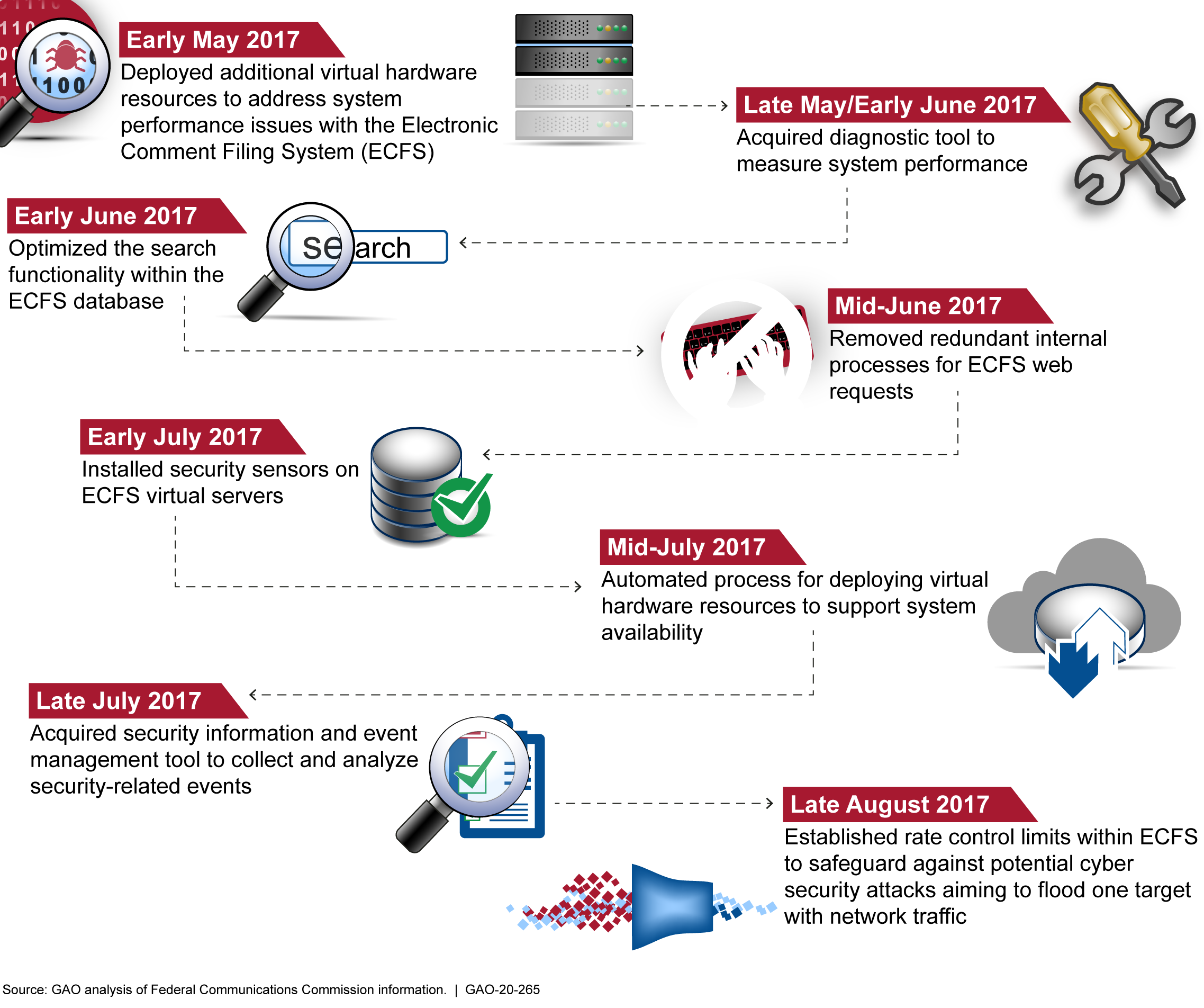
Here’s the basic timeline of events, which seem so long ago now:

Then it’s been pretty quiet basically until today, when the report requested in 2017 was publicly released. A version with sensitive information (like exact software configurations and other technical information) was internally circulated in September, then revised for today’s release.

The final report is not much of a bombshell, since much of it has been telegraphed ahead of time. It’s a collection of criticisms of an outdated system with inadequate security and other failings that might have been directed at practically any federal agency, among which cybersecurity practices are notoriously poor.

The investigation indicates that the FCC, for instance, did not consistently implement security and access controls, encrypt sensitive data, update or correctly configure its servers, detect or log cybersecurity events, and so on. It wasn’t always a disaster (even well-run IT departments don’t always follow best practices), but obviously some of these shortcomings and cut corners led to serious issues like ECFS being overwhelmed.

More importantly, of the 136 recommendations made in the September report, 85 have been fully implemented now, 10 partially, and the rest are on track to be so.

That should not be taken to mean that the FCC has waited this whole time to update its commenting and other systems. In fact it was making improvements almost immediately after the event in May of 2017, but refused to describe them. Here are a few of the improvements listed in the GAO report:

Representative Frank Pallone (D-NJ), who has dogged the FCC on this issue since the beginning, issued the following statement:

I requested this report because it was clear, after the net neutrality repeal comment period debacle, that the FCC’s cybersecurity practices had failed. After more than two years of investigating, GAO agrees and found a disturbing lack of security that places the Commission’s information systems at risk… Until the FCC implements all of the remaining recommendations, its systems will remain vulnerable to failure and misuse.

You can read the final GAO report here.

My experience with the CARES Act was frustrating, confusing and unfair

Suzanne Borders
Contributor

Suzanne is the CEO and co-founder of BadVR. She thrives at the intersection of data, art, technology and poetry.

As a small business owner, I was excited to learn about the $2.2 trillion Coronavirus Aid, Relief, and Economic Security Act that offers low-interest loans to firms impacted by the COVID-19 pandemic. However, as I read through the details and began to apply, it became clear that this legislation — while well-intentioned — may not be enough to help many SMBs and startups.

Here’s a quick recap of my experience.

Emergency Economic Injury Grants and Economic Injury Disaster Loans

First and foremost: You need to act swiftly. Emergency Economic Injury Grant and Economic Injury Disaster Loan programs included in the CARES Act function on a first-come, first-served basis, and are funded from a limited pool of resources.

I began my company’s application process by submitting our EIDL and EEIG applications through the SBA website. This was easy, if tedious. It took about two hours to complete the necessary online forms and about two seconds to click the EEIG checkbox. Submission was seamless, but I haven’t received any further communication from the SBA since completing my application, which is a bit confusing — EEIG funds are supposed to be dispersed within 3-5 days of the submission date.

However, I know there’s been a huge volume of submissions recently and this must be exceptionally difficult to handle. I look forward to any email correspondence or updates from the SBA that might give me — and other applicants — an updated estimate of the expected dispersal timeline.

Instacart has a problem with third-party apps letting shoppers pay for early access to orders

Kara Carmichael has been an Instacart shopper for years in Orlando, Fla. It’s how she’s been able to support her family, she told TechCrunch. But she says she has noticed an increase in third-party bot activity that has made shopping “nearly impossible.”

Despite the high demand for Instacart amid the COVID-19 pandemic, shoppers like Carmichael are facing difficulties claiming orders within the shopper app. This is the result of what appears to be some sophisticated work by third-party apps like Ninja Hours, Sushopper and others.

“They grab the batches within a blink of an eye,” Carmichael said. “I can barely see the amounts offered. Sometimes I may even just receive a notification because the batch has been taken before it was even registered in my app.”

Ninja Hours appeared on the scene about a year ago in the Little Havana community in Miami, according to Logan B., an Instacart shopper with experience using Ninja Hours. Shoppers could pay Ninja Hours about $25 to $35 a week to get access to hours for the following week and in exchange, Ninja Hours would take over the shopper’s app to claim hours on their behalf. This was during a time when Instacart required shoppers to claim hours rather than on-demand orders.

Ninja Hours also provided account activations for immigrant workers without proper documentation. For $200, according to Logan, undocumented immigrants could pay Ninja Hours to create an account for them so they could shop.

Logan says Instacart eventually caught on to Ninja Hours, which forced the service to shut down. Ninja Hours then became Hours For You, which emerged in the fall, Logan says. Hours For You then folded into Sushopper earlier this year.

“The site would go offline for a week and then they would send you a text message,” he said. “It was always written in Spanish — really targeting the Latino community.”

Other shoppers didn’t seem to notice this was going on, Logan says, because Sushopper would claim the orders before they would even appear on the apps. But now that Sushopper has shut down, there’s a new service — one that is not quite as fast.

“There is definitely still a service out here because I’m not getting anything at all,” Logan, who has since stopped paying for early access to orders, said. “There’s no way anyone would be able to grab it that fast.”

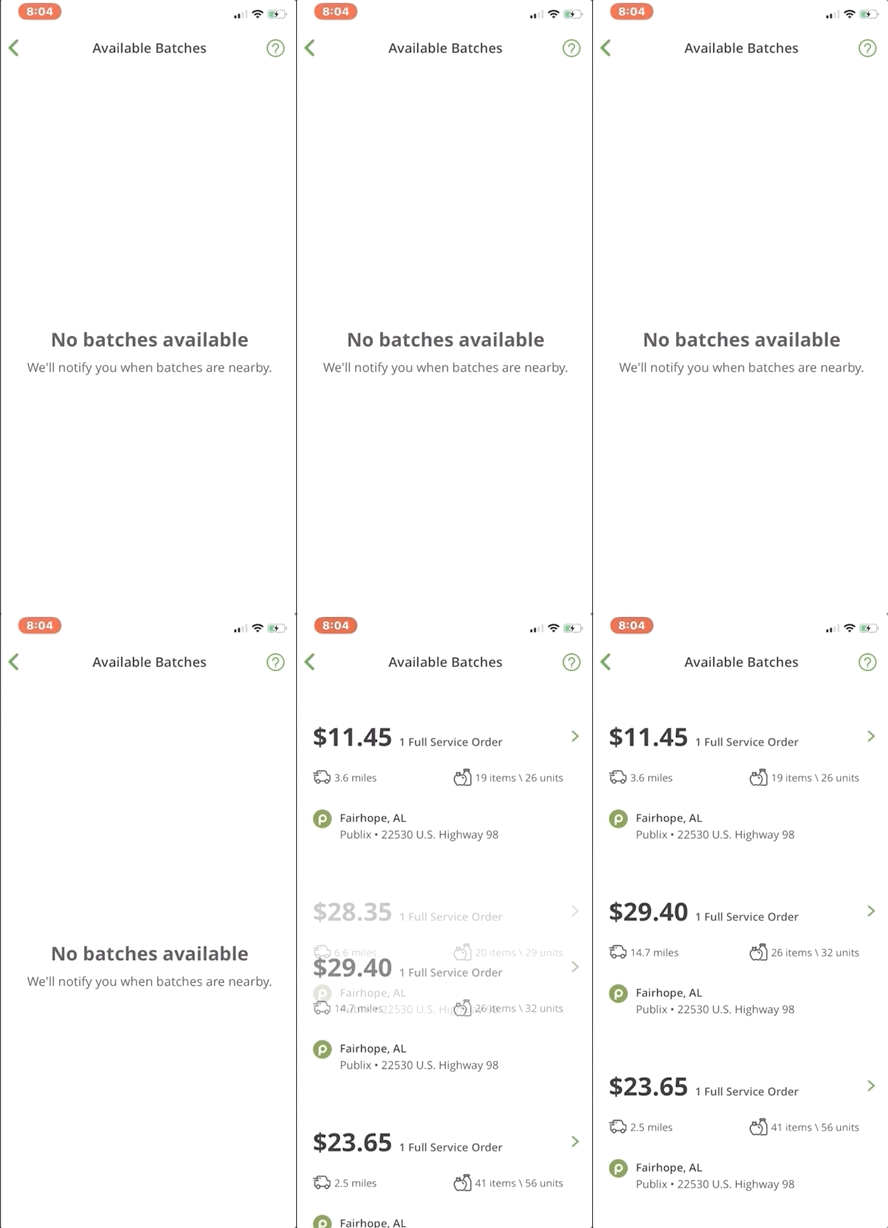
What’s happening is that shoppers can see the orders come in, but then they pretty much immediately disappear. Below, you can see a gif of how the moment batches become available, one order immediately disappears.

With this new service, which he doesn’t know the name of, the messages are coming in Portuguese. That leads him to believe it’s run by a different group of people.

“It’s so mainstream now and it seems just about everywhere is having a problem,” Logan said.

Instacart has acknowledged this is a practice that goes on but says that this is not a breach of its platform.

“The safety and security of the entire Instacart community is our top priority,” an Instacart spokesperson told TechCrunch . “We have several robust security measures in place to ensure the security of the Instacart platform. Selling or purchasing batches is not an authorized use of the Instacart platform and is a violation of our Terms of Service. Anyone found to be engaged in any type of inappropriate or fraudulent use of the Instacart platform, including selling or purchasing batches or utilizing any of these types of services, will have their accounts immediately deactivated. We advise shoppers not to engage with any individual or company that claims to provide priority access to batches on the platform, particularly those that request sensitive information such as Instacart usernames, passwords, and/or credit card information.”

Despite Instacart’s efforts, it’s gotten so bad that Carmichael ends up sitting in her car for hours waiting for a batch she can try to snag before the bots.

“My thumbs are sore and eyes are strained,” she said. “I’ve only managed to grab four orders. My livelihood is literally being snatched out from beneath me.”

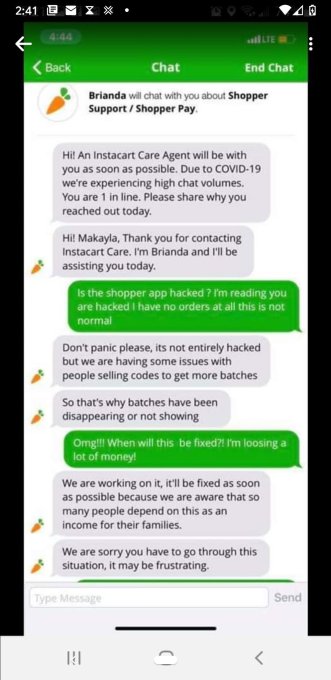
She and others have reached out to Instacart to report the issue, Carmichael said. But in her experience and the experience of those she knows, Instacart has not responded. Some shoppers, however, are able to get through to Instacart support about this issue. As you can see below, Instacart acknowledges an issue and told one shopper it will “be fixed as soon as possible.”

Before the bot activity ramped up in Orlando, Carmichael was receiving about 20 orders a week. During the week of March 16-22, for example, Carmichael completed 26 batches, according to documents reviewed by TechCrunch. Last week she was only able to claim 11. This week, she has only been able to get four batches.

This increase in bot activity comes at a time when Instacart is ramping up its hiring of full-service shoppers. Just yesterday, Instacart announced it’s adding 250,000 more shoppers to meet demand. That came after Instacart announced last month its plans to hire another 300,000 shoppers.

The increased number of full-service shoppers coupled with third-party bots quickly claiming orders, it’s no wonder why some shoppers are feeling frustrated. Behind the scenes, Instacart is working to ban unauthorized third parties from accepting batches. In the meantime, the company is recommending shoppers not engage with those services.

Apple Watch designer reveals the device’s origins on its fifth birthday

Update: We mistakenly noted in an earlier version that Chaudhri had been a part of Microsoft’s Hololens team. The story has been updated to remove the reference. 

In his two decades at Apple, Imran Chaudhri worked on many of the company’s most iconic product lines, including the iPhone, iPad and Mac. The designer left the company in 2017 , but today he’s offering up some fun insight into Apple Watch’s beginnings on the wearable’s fifth birthday.

The thread is a treasure trove of fun facts about the device’s early days. One interesting tidbit that might not be a huge surprise to those following Apple at the time is that an early prototype of the Watch consisted of an iPod nano strapped to a watch band.

my first prototype was built on a 6th gen nano strapped to this band. i had just wrapped up ios5 and took it down to show the ID team what notification centre and siri was – and what it could be in the future. i never got to share it with steve. we lost him right after ios5. pic.twitter.com/j4JJYNIgIu

— Imran Chaudhri (@imranchaudhri) April 24, 2020

Five years before it finally entered the smartwatch market in earnest, Apple introduced a square touchscreen nano. Three years before the arrival of the first Pebble, people were already considering the smartwatch possibilities. Accessory makers quickly took advantage, introducing wrist bands that would let it function as a touchscreen music watch. That sixth-gen product ultimately served as a foundation for the popular device to come. 

Per Chaudhri:

i had just wrapped up ios5 and took it down to show the ID team what notification centre and siri was – and what it could be in the future. i never got to share it with steve. we lost him right after ios5.

Other interesting bits here include:

  • The Solar watch face was designed as “as a way for muslims observing ramadan to quickly see the position of the sun and for all to understand the sun’s relationship to time.”
  • The butterfly animation was created using real (albeit deceased) butterflies (one of which is now framed in his home).
  • The touch feature originally went by the name E.T. (electronic touch).
  • The Digital Touch drawing feature was inspired by his time as a graffiti artist.

Replacing plastic with plant pulp for sustainable packaging attracts a billionaire backer

In a small suburb of Melbourne, two entrepreneurs are developing a technology that could mean big changes for the packaging industry.

Stuart Gordon and Mark Appleford are the co-founders of Varden, a company that has developed a process to take the waste material from sugarcane and convert it into a paper-like packaging product with the functional attributes of plastic. 

Their technology managed to grab the attention of — and $2.2 million in funding from — Horizons Ventures, the venture capital fund managing the money of Li Ka-shing, one of the world’s wealthiest men.

It’s an opportune time to launch a novel packaging technology, as the European Union has already instituted a ban on single-use plastic items, which will go into effect in 2021. Taking their lead, companies like Nestlé  and Walmart have pledged to use only sustainable packaging for products beginning in 2025.

The environmental toll that packaging takes on the earth’s habitats is already a concern for many, and the urgency to find a solution is only mounting with consumers and businesses actually producing more waste in the rush to change consumer behavior and socially distance as a result of the COVID-19 global pandemic.

“I like technologies that focus on carbon reductions,” said Chris Liu, Horizons Ventures’ representative in Australia.

A longtime tech and product executive who had stints at Intel and Fjord, a digital design studio, Liu relocated to Australia recently and has actually taken himself off the grid.

Living in Western Australia, the climate emergency was brought directly to the top of Liu’s mind when the wildfires, which raged through the country, came within two kilometers of his new home. 

For Mark Appleford, it wasn’t so much the fires as it was the garbage that kept washing up on the shores of his beloved beaches.

Over beers at a barbecue he began talking to his eventual co-founder, Stuart Gordon, about the environmental problem they’d solve if they had the ability to change things. They settled on plastics.  

Working in Appleford’s laundry room they started developing the technology that would become Varden. That early laundry room-work in 2015 led to a small seed round and the company’s long slog to get an initial product in the hands of test customers.

Finagling some time with the New Zealand manufacturer Fisher and Paykel, the two co-founders put together an early prototype of their coffee pods made from sugarcane bagasse, a waste byproduct of the sugar feedstock.

“We worked backwards through customers to supply chain, which led us to material selection, which was something that would allow us to create a product that people understood,” said Gordon.

The production process has evolved to fit inside a 40-foot container that holds the firm’s machine, which takes agricultural waste and converts that waste into packaging.

Instead of using rollers like a paper mill, Varden’s technology uses a thermoform to mold the plant waste into a product that has the same properties as plastic.

It removes a complicated step that’s been essential to the current crop of bioplastics, which use bacteria to convert plant waste into plastic substitutes that are then sold to the industry.

“It looks like paper… you can tear it in half and it sounds like paper when you rip it, and you can throw it in the bin,” said Appleford. 

Gordon said that the company’s containers are outperforming commodity based plastics. And the first target for replacement, the founders said, is coffee capsules.

“We went for coffee because it’s the hardest,” said Appleford.

It’s also a huge market, according to the company. Varden estimates there are more than 20 billion coffee pods consumed every year.

With the new money, Varden will begin manufacturing at scale to meet initial demand from pilot customers and is hoping to expand its product line to include medical blister packs in addition to the coffee pods.

“A pilot plant on the products we’re looking at is a pilot plant that can generate 20 million units a year,” said Gordon.

Both men are hoping that their product — and others like it — can usher in a generation of new sustainable packaging materials that are better for the environment at every stage of their life cycle.

“The next generation of packaging will be better… there are plant-based flexibles for your salads, for your potato chips… [But] the next generation of molded packaging is us… bioplastic will ultimately go.”


Facebook to launch ‘virtual dating’ over Messenger for Facebook Dating users

Facebook will soon allow users to go on “virtual dates,” the company announced today. The social network is planning to introduce a new video calling feature that will allow users of its Facebook Dating service to connect and video call over Messenger, as an alternative to going on a real-world date. This sort of feature is much in demand amid the coronavirus pandemic, which has forced people to stay home and practice social distancing.

But for online dating apps, which aim to connect people in the real world, it’s a significant challenge for their business.

For the time being, government lockdowns have limited the places where online daters could meet up for their first date. Restaurants, malls, bars and other retail establishments are closed across regions impacted by the coronavirus outbreak. But even when those restrictions lift, many online dating app users will be wary of meeting up with strangers for those first-time, getting-to-know-you dates. Video chat offers a safer option to explore potential connections with their matches.

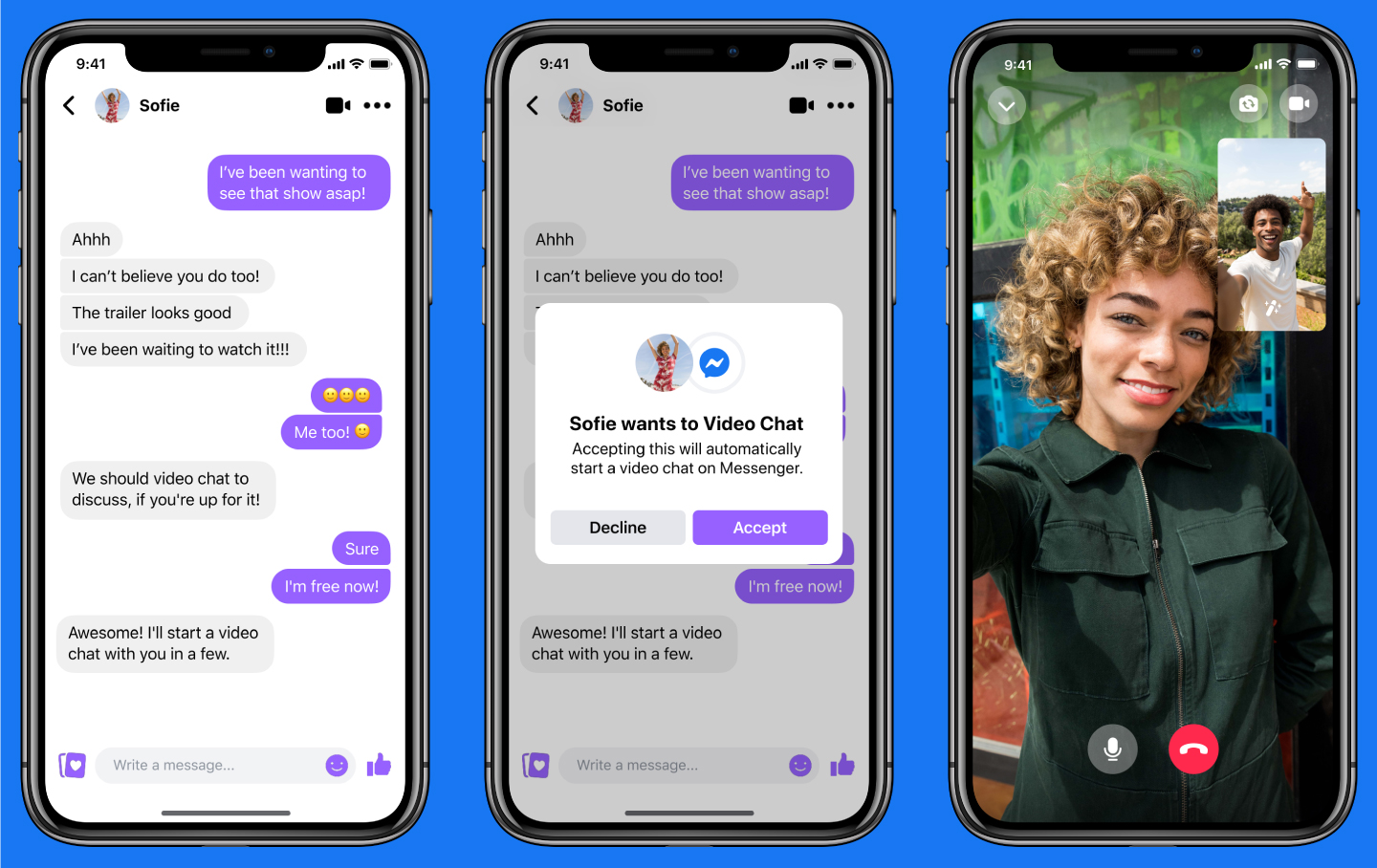
When the new Facebook Dating feature goes live, online daters will be able to invite a match to a virtual date. The recipient can either choose to accept or decline the offer via a pop-up that appears.

If they accept, the Facebook Dating users will be connected in a video chat powered by Facebook Messenger in order to get to know one another.

As the feature is still being developed, Facebook declined to share more specific details about how it will work, in terms of privacy and security features.

Facebook is not the first online dating service to pivot to video as a result of the pandemic. But many rival dating apps were adopting video features well before the coronavirus struck, as well.

Bumble, for example, has offered voice and video calling in its app for roughly a year. The feature there works like a normal phone call or Apple’s FaceTime. However, users don’t have to share their phone number or other private information, like an email address, which makes it safer.

The company says use of the feature has spiked over the last two months as users embrace virtual dating.

Meanwhile, Match Group has more recently rolled out video across a number of the dating apps it operates.

This month, the Match app added video chat that allows users who have already matched to connect over video calls. Match-owned Hinge also rolled out a “Dating from Home” prompt and is preparing its own live video date feature, as well, Match says. Plenty of Fish (PoF), another Match property, launched live-streaming in March, giving singles a new way to hang out with friends and potential matches.

Match Group’s flagship app Tinder has not yet embraced live video dates, but still offers a way for users to add video to their profiles. The company couldn’t comment on whether or not video dating was in the works for Tinder, but in the post-COVID era, it would be almost bizarre to not offer such feature.

Other dating apps have also launched video dating, including eHarmony and a number of lesser-known dating apps hoping to now gain traction for their video dating concepts.

Facebook says the feature will roll out in the months ahead and will be available everywhere Facebook Dating is available.

Facebook launches drop-in video chat Rooms to rival Houseparty

Facebook is co-opting some of the top video chat innovations like Zoom’s gallery view for large groups and Houseparty’s spontaneous hangouts for a new feature called Rooms. It could usher in a new era of unplanned togetherness via video.

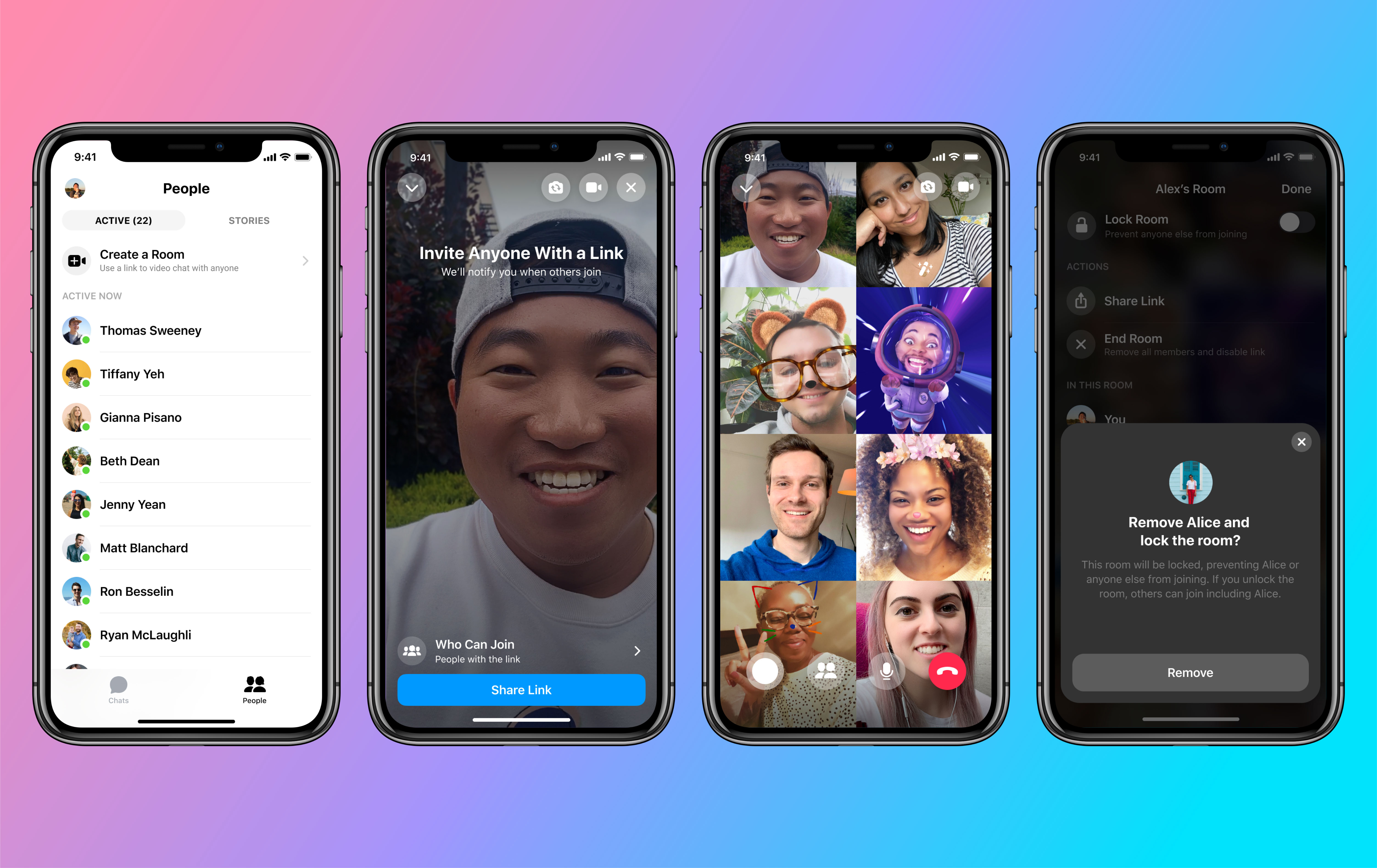
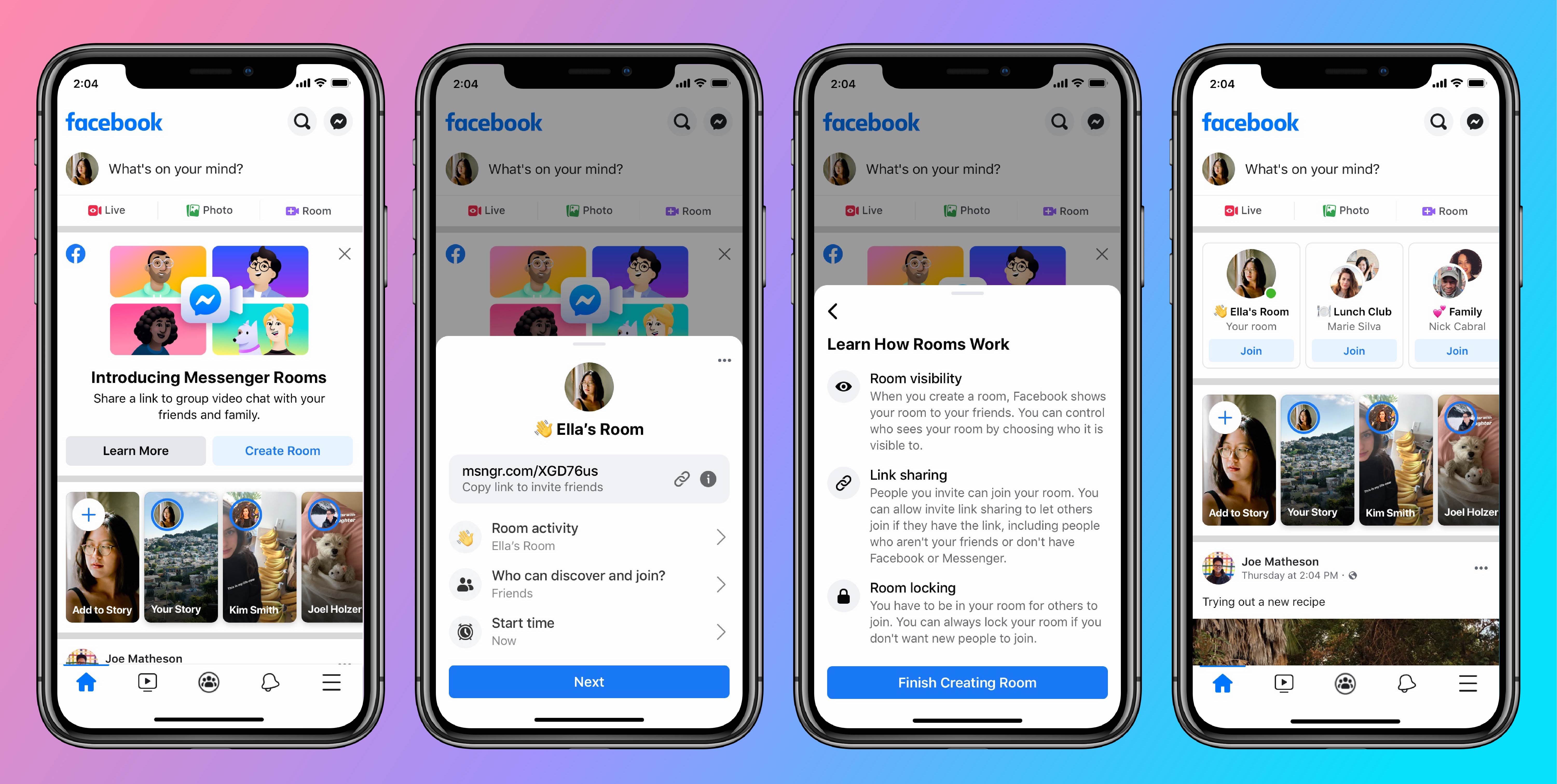
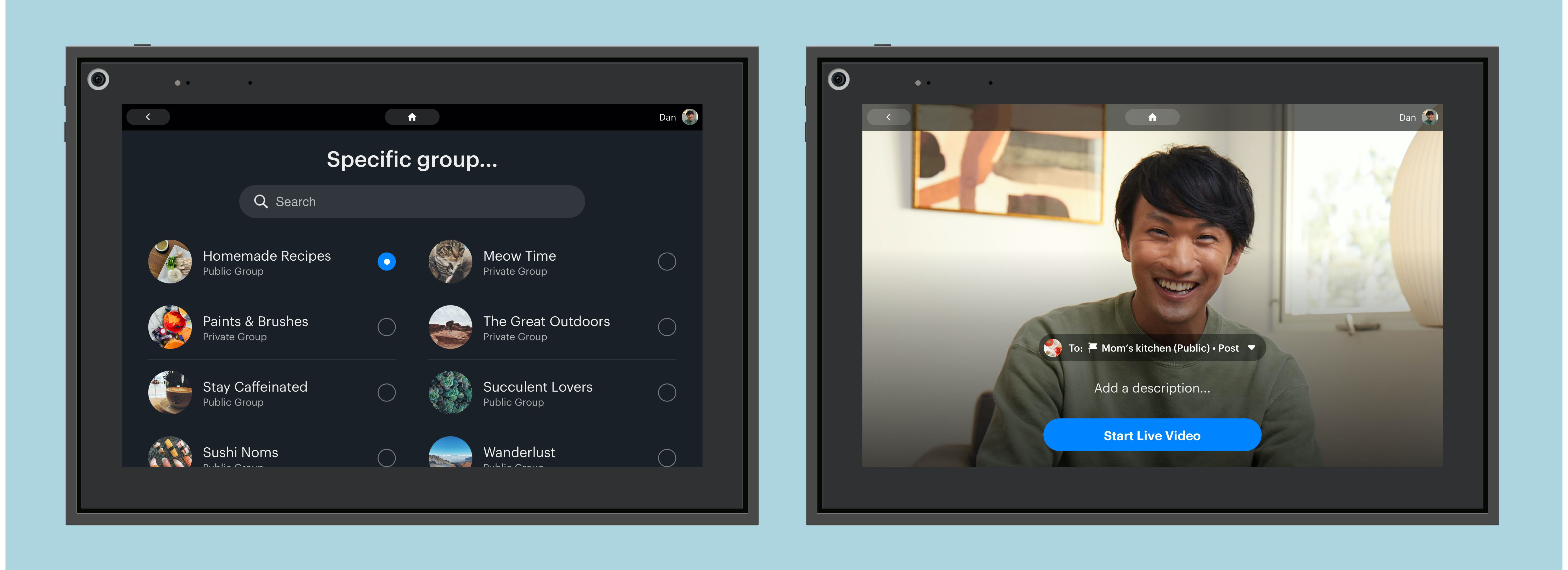
Launching today on mobile and desktop in English speaking countries, you can start a video chat Room that friends can discover via a new section above the News Feed or notifications Facebook will automatically send to your closest pals. You can also just invite specific friends, or share a link anyone can use to join your Room.

For now, up to 8 people can join, but that limit will rise to 50 within weeks, making it a more legitimate alternative to Zoom for big happy hours and such. And more importantly, users will soon be able to create and discover Rooms through Instagram, WhatsApp, and Portal, plus join them from the web without an account, making this Facebook’s first truly interoperable product.

“People just want to spend more time together” Facebook’s head of Messenger Stan Chudnovsky tells me. One-on-one and group video calling was already growing, but “Now in the time of COVID, the whole thing is exploding. We already had a plan to do a bunch of stuff here [so people could] hang out on video any time they want, but we accelerated our plans.” There’s no plans for ads or other direct monetization of Rooms, but the feature could keep Facebook’s products central to people’s lives.

Choosing to create a separate and extremely prominent space for discovering Room above the News Feed reveals how seriously Facebook is taking this product. It could have marooned Rooms in a standalone app or made them just another News Feed post that’s timeliness would get lost in the algorithm. Instead, it was willing to push the feed almost entirely off the start screen beneath the composer, Rooms, and Stories. Clearly Facebook sees sharing, ephemeral content, and synchronous connection as more key to its future than static status updates.

Facebook Goes All-In On Video

The launch of Rooms comes alongside a slew other video-related updates designed to shore up Facebook’s deficiency in many-to-many communication. Messenger and WhatsApp now see 700 million people using audio and video calls each day, while Facebook and Instagram Live videos now reach 800 million people per day. Facebook already owns the many-to-one feeds and has emerged as a leader in one-to-many livestreaming, but “the middle piece needed way more investment” Chudnovsky says.

Here’s a rundown of the other announcements and what they mean:

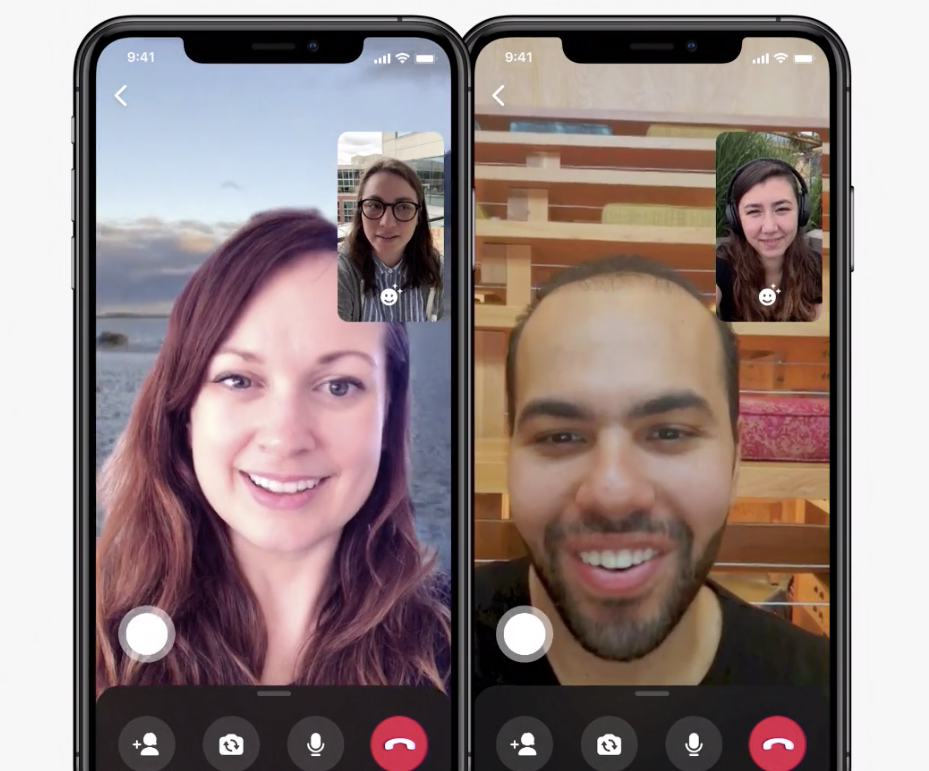
  • Virtual And 360 Backgrounds with mood lighting – Facebook will soon launch the ability to choose a virtual background to cover up what’s behind you on a video call, including 360 backgrounds that look different as you move around, plus mood lighting to make you look better on camera

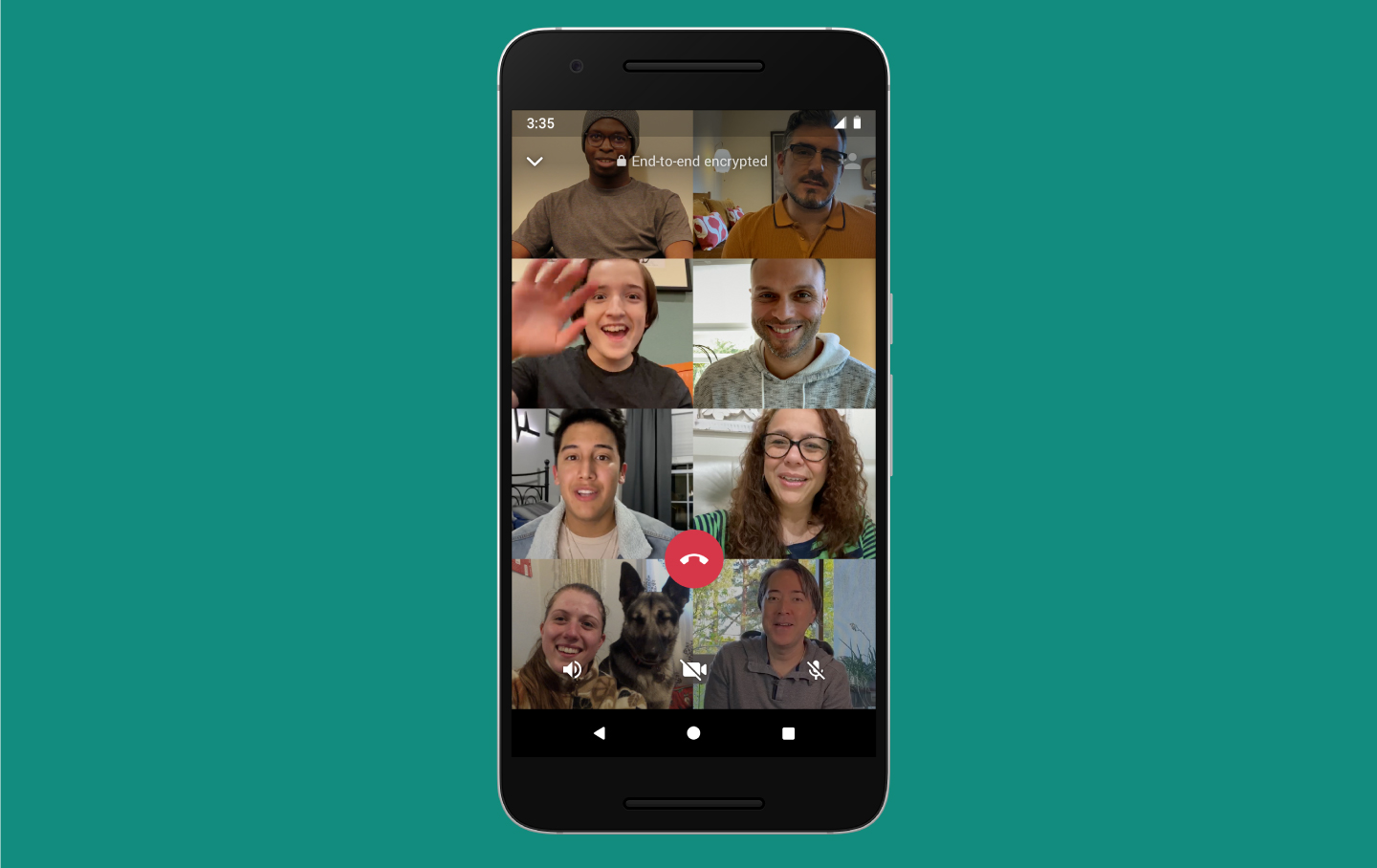
  • WhatsApp expands group calls from four to eight max participants – Encompassing larger families and friend groups makes WhatsApp a more viable competitor to Zoom

  • Facebook Live With returns – It’s tough to be the center of attention for long periods, so being able to bring a guest on screen during Live calls keeps them interesting and low pressure
  • Donate button on live videos – This makes it much easier for musicians, activists, and normal people to raise money for causes during the coronavirus crisis
  • Live via audio only – With more musicians bringing their tours to Facebook Live, now you can listen while still going about your day when you can’t watch too or want to conserve data, and you can use a toll-free number to dial in to some Pages’ videos
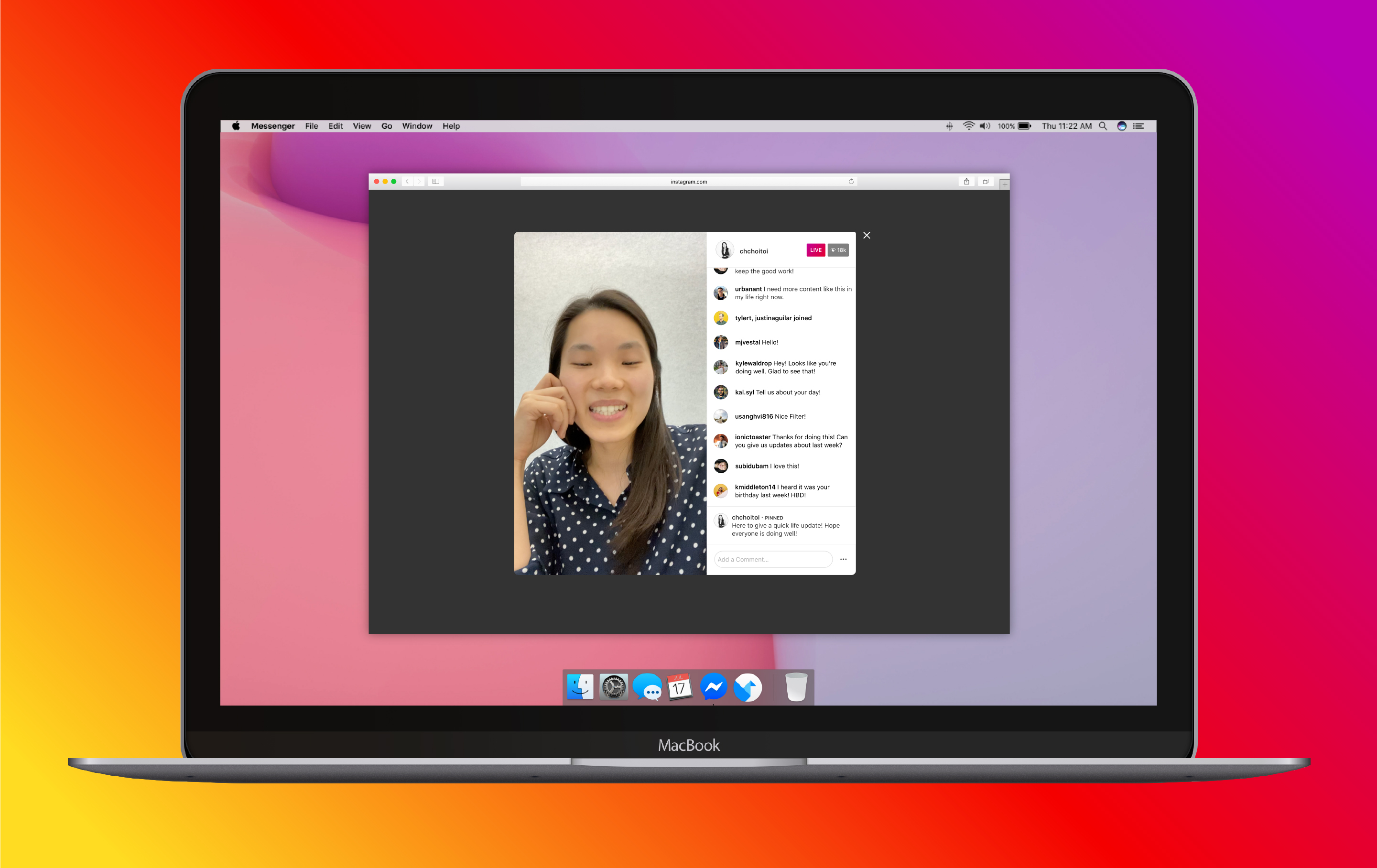
  • Instagram Live on web – You can now watch Live videos and comment from desktop so you can multi-task during longer streams

  • Live on IGTV – Long live videos won’t have to disappear since they can now be saved to IGTV, encouraging higher quality Instagram Lives meant to last
  • Portal Live – You’ll now be able to go Live to Pages and Groups from Portal devices so you can move around while streaming

  • Facebook Dating Video Chat – Rather than going on a date where you have no chemistry, you’ll be able to video chat with matches on Facebook Dating to get a feel for someone first.

How To Use Facebook Rooms

Facebook strived to make Rooms launchable and discoverable across all its apps in hopes of blitzing into the space. You can launch a Room from the News Feed composer, Groups, Events, the Messenger inbox, and soon Instagram Direct’s video chat button, WhatsApp, and Portal. You’ll be able to choose a start time, add a description, and choose who can join in three ways.

You can restrict your Room just to people you invite, such as for a family catch-up. You can make it open to all your friends, who’ll be able to see it in the new Rooms discovery tray above the News Feed or inbox and eventually similar surfaces in the other apps. In this case, Facebook may notify some close friends to make sure they’ll see it. Or you can share a link to your Room wherever you want, effectively making it public.

Facebook apparently watched the PR disaster that emerged from Zoombombing, and purposefully built security into Rooms. The host can lock the room to block people from joining via URL, and if they boot someone from a Room, it automatically locks until they unlock it. That ensures that if trolls find your link, they can’t just keep joining from the web.

Naturally, Chudnovsky tried to downplay the influence of Zoom and Houseparty on Rooms. “We’re glad there are many other apps people can use when they want to see each other and stay close to each other. I don’t think we necessarily learned anything that actually became part of this product” he insisted. It’s also convenient that Rooms is essentially a non-exclusive video version of Clubhouse, the voice chat app that’s the talk of Silicon Valley right now

The Uncopyable Copier

Facebook has been quietly working on Rooms since at least 2017, exploring how to make group chats discoverable. It tried a standalone app for group video chat discovery called Bonfire that year. In fact, Facebook launched a standalone app called Rooms back in 2014 for anonymous forums.

The genius of this launch is how it combines three of Facebook’s biggest strengths to build a product that copies others but is hard to copy itself.

  • The ubiquity of its messaging apps and web compatibility make Rooms highly accessible, without the friction of having to download a new app.
  • The frequency of visits to its feeds and inboxes where Rooms can be found by the family of apps’ 2.5 billion users plus Facebook’s willingness to bet big by sticking Rooms atop our screen like it did with Stories could unlock a new era of spontaneous, serendipitous socializing.
  • The social graph we’ve developed with great breadth across Facebook’s apps plus the depth of its understanding about who we care about most allow it to reach enough concurrent users to make Rooms fun by intelligently ranking which we see and who gets notifications to join rather than spamming your whole phone book.

No other app has all of these qualities. Zoom doesn’t know who you care about. Houseparty is growing but is far from ubiquitous. Messaging competitors don’t have the same discovery surfaces.

Facebook knows the real engagement on mobile comes from messaging. It just needed a way to make us message more than our one-on-one threads and asynchronous group chats demanded. Rooms makes video calls something you can passively discover and join rather having to actively initiate or be explicitly pulled into by a friend. That could significantly increase how often and long we use Facebook without the deleterious impacts of zombie-like asocial feed scrolling.

For more of this author Josh Constine’s thoughts on tech, join his newsletter Moving Product

Coronavirus could push consumers away from influencers and toward streaming TV

Jay Prasad
Contributor

Jay Prasad is chief strategy officer for LiveRamp TV, a data-connectivity platform leveraged by brands and their partners to deliver exceptional experiences.

As the nation struggles with a pandemic and economic uncertainty, fundamental shifts in consumer habits are leading marketers to rethink existing strategies and budgets allocated to influencers and streaming TV.

These significant shifts are nothing new; just as the dot-com bubble reduced landline penetration and boosted mobile phone adoption, the last recession pushed traditional ad spend to digital. It was an option before, but the recession accelerated the trend to targeting select audiences on social media platforms, giving rise to influencers.

Today, social media influencers are so ubiquitous, they risk becoming meaningless.

Prior to the onset of coronavirus, we saw the influencer trend diminishing while the streaming TV trend became more prominent. Today, streaming is still trending up and influencers have actually seen increased levels of engagement, but they face credibility issues, which could lead to a reduction in perceived value to brands.

Streaming has similar, if not more, targeting capabilities as social media, but now it has the eyeballs — the captive audience of quarantined Americans — up 20% this March, according to Nielsen. Marketers on a tight budget will be forced to reevaluate their relationships with influencers as they seek to increase ad spend on streaming TV services.

The evolving realms of influencers

FDA reiterates risks of antimalarial drug use for COVID-19, as study into efficacy ends early due to deaths

The U.S. Food and Drug Administration (FDA) has issued a new warning about the known side effects of hydroxychloroquine and chloroquine, two antimalarial drugs (also used in the treatment of chronic rheumatoid arthritis and lupus), on the same day that a group of researchers published a paper in the Journal of the American Medical Association about their termination of a study investigating the potential of chloroquine as a potential COVID-19 treatment.

The drugs can have dangerous side effects, and the study written about in the AMA journal was ended early because the “primary outcome” was the death of study participants, with 22 deaths resulting. Before it was abruptly ended, the researchers found a lethality rate of 39% in the group of its subjects who took high dosages, and 15% in the low-dosage group, with an overall lethality rate of 27%.

“Our study raises enough red flags to stop the use of a high-dosage regimen, because the risks of toxic effects overcame the benefits,” the researchers said in their findings.

The FDA’s alert on April 24 doesn’t make specific mention of this study, but the 81-person phase II clinical trial represents one of the largest to date. The FDA notice does advise that reports they have received of deaths in COVID-19 patients receiving hydroxychloroquine, either alone or in tandem with other drugs, including an antibiotic known as azithromycin (which all patients in the investigation published in the AMA journal were taking), can result in “abnormal heart rhythms such as QT interval prolongation, dangerously rapid heart rate called ventricular tachycardia and ventricular fibrillation, and in some cases, death.”

Hydroxychloroquine and chloroquine gained widespread attention because Donald Trump advocated them as likely effective treatments for COVID-19, despite a lack of significant scientific evidence or any clinical studies done about their safety, likely due to early, small-scale investigations that showed they might have some potential. He repeatedly touted the drugs as proven safe, since they have been cleared for use previously in treating other medical conditions, but didn’t appear to grasp that this does not mean they aren’t dangerous or perhaps deadly when taken in the context of other conditions, or for individuals with other risk characteristics.

Apple and Google update joint coronavirus tracing tech to improve user privacy and developer flexibility

Apple and Google have provided a number of updates about the technical details of their joint contact tracing system, which they’re now exclusively referring to as an “exposure notification” technology, since the companies say this is a better way to describe what they’re offering. The system is just one part of a contact tracing system, they note, not the entire thing. Changes include modifications made to the API that the companies say provide stronger privacy protections for individual users, and changes to how the API works that they claim will enable health authorities building apps that make use of it to develop more effective software.

The additional measures being implemented to protect privacy include changing the cryptography mechanism for generating the keys used to trace potential contacts. They’re no longer specifically bound to a 24-hour period, and they’re now randomly generated instead of derived from a so-called “tracing key” that was permanently attached to a device. In theory, with the old system, an advanced enough attack with direct access to the device could potentially be used to figure out how individual rotating keys were generated from the tracing key, though that would be very, very difficult. Apple and Google clarified that it was included for the sake of efficiency originally, but they later realized they didn’t actually need this to ensure the system worked as intended, so they eliminated it altogether.

The new method makes it even more difficult for a would-be bad actor to determine how the keys are derived, and then attempt to use that information to use them to track specific individuals. Apple and Google’s goal is to ensure this system does not link contact tracing information to any individual’s identity (except for the individual’s own use) and this should help further ensure that’s the case.

The companies will now also be encrypting any metadata associated with specific Bluetooth signals, including the strength of signal and other info. This metadata can theoretically be used in sophisticated reverse identification attempts, by comparing the metadata associated with a specific Bluetooth signal with known profiles of Bluetooth radio signal types as broken down by device and device generation. Taken alone, it’s not much of a risk in terms of exposure, but this additional step means it’s even harder to use that as one of a number of vectors for potential identification for malicious use.

It’s worth noting that Google and Apple say this is intended as a fixed length service, and so it has a built-in way to disable the feature at a time to be determined by regional authorities, on a case-by-case basis.

Finally on the privacy front, any apps built using the API will now be provided exposure time in five-minute intervals, with a maximum total exposure time reported of 30 minutes. Rounding these to specific five-minute duration blocks and capping the overall limit across the board helps ensure this info, too, is harder to link to any specific individual when paired with other metadata.

On the developer and health authority side, Apple and Google will now be providing signal strength information in the form of Bluetooth radio power output data, which will provide a more accurate measure of distance between two devices in the case of contact, particularly when used with existing received signal strength info from the corresponding device that the API already provides access to.

Individual developers can also set their own parameters in terms of how strong a signal is and what duration will trigger an exposure event. This is better for public health authorities because it allows them to be specific about what level of contact actually defines a potential contact, as it varies depending on geography in terms of the official guidance from health agencies. Similarly, developers can now determine how many days have passed since an individual contact event, which might alter their guidance to a user (i.e. if it’s already been 14 days, measures would be very different from if it’s been two).

Apple and Google are also changing the encryption algorithm used to AES, from the HMAC system they were previously using. The reason for this switch is that the companies have found that by using AES encryption, which can be accelerated locally using on-board hardware in many mobile devices, the API will be more energy efficiency and have less of a performance impact on smartphones.

As we reported Thursday, Apple and Google also confirmed that they’re aiming to distribute next week the beta seed version of the OS update that will support these devices. On Apple’s side, the update will support any iOS hardware released over the course of the past four years running iOS 13. On the Android side, it would cover around 2 billion devices globally, Android said.

Coronavirus tracing: Platforms versus governments

One key outstanding question is what will happen in the case of governments that choose to use centralized protocols for COVID-19 contact tracing apps, with proximity data uploaded to a central server — rather than opting for a decentralized approach, which Apple and Google are supporting with an API.

In Europe, the two major EU economies, France and Germany, are both developing contact tracing apps based on centralized protocols — the latter planning deep links to labs to support digital notification of COVID-19 test results. The U.K. is also building a tracing app that will reportedly centralize data with the local health authority.

This week Bloomberg reported that the French government is pressuring Apple to remove technical restrictions on Bluetooth access in iOS, with the digital minister, Cedric O, saying in an interview Monday: “We’re asking Apple to lift the technical hurdle to allow us to develop a sovereign European health solution that will be tied our health system.”

While a German-led standardization push around COVID-19 contact tracing apps, called PEPP-PT — that’s so far only given public backing to a centralized protocol, despite claiming it will support both approaches — said last week that it wants to see changes to be made to the Google-Apple API to accommodate centralized protocols.

Asked about this issue an Apple spokesman told us it’s not commenting on the apps/plans of specific countries. But the spokesman pointed back to a position on Bluetooth it set out in an earlier statement with Google — in which the companies write that user privacy and security are “central” to their design.

Judging by the updates to Apple and Google’s technical specifications and API framework, as detailed above, the answer to whether the tech giants will bow to government pressure to support state centralization of proximity social graph data looks to be a strong “no.”

The latest tweaks look intended to reinforce individual privacy and further shrink the ability of outside entities to repurpose the system to track people and/or harvest a map of all their contacts.

The sharpening of the Apple and Google’s nomenclature is also interesting in this regard — with the pair now talking about “exposure notification” rather than “contact tracing” as preferred terminology for the digital intervention. This shift of emphasis suggests they’re keen to avoid any risk of their role being (mis)interpreted as supporting broader state surveillance of citizens’ social graphs, under the guise of a coronavirus response.

Backers of decentralized protocols for COVID-19 contact tracing — such as DP-3T, a key influence for the Apple-Google joint effort that’s being developed by a coalition of European academics — have warned consistently of the risk of surveillance creep if proximity data is pooled on a central server.

Apple and Google’s change of terminology doesn’t bode well for governments with ambitions to build what they’re counter-branding as “sovereign” fixes — aka data grabs that do involve centralizing exposure data. Although whether this means we’re headed for a big standoff between certain governments and Apple over iOS security restrictions — à la Apple vs the FBI — remains to be seen.

Earlier today, Apple and Google’s EU privacy chiefs also took part in a panel discussion organized by a group of European parliamentarians, which specifically considered the question of centralized versus decentralized models for contact tracing.

Asked about supporting centralized models for contact tracing, the tech giants offered a dodge, rather than a clear “no.”

“Our goal is to really provide an API to accelerate applications. We’re not obliging anyone to use it as a solution. It’s a component to help make it easier to build applications,” said Google’s Dave Burke, VP of Android engineering.

“When we build something we have to pick an architecture that works,” he went on. “And it has to work globally, for all countries around the world. And when we did the analysis and looked at different approaches we were very heavily inspired by the DP-3T group and their approach — and that’s what we have adopted as a solution. We think that gives the best privacy preserving aspects of the contacts tracing service. We think it’s also quite rich in epidemiological data that we think can be derived from it. And we also think it’s very flexible in what it could do. [The choice of approach is] really up to every member state — that’s not the part that we’re doing. We’re just operating system providers and we’re trying to provide a thin layer of an API that we think can help accelerate these apps but keep the phone in a secure, private mode of operation.”

“That’s really important for the expectations of users,” Burke added. “They expect the devices to keep their data private and safe. And then they expect their devices to also work well.”

DP-3T’s Michael Veale was also on the panel — busting what he described as some of the “myths” about decentralized contacts tracing versus centralized approaches.

“The [decentralized] system is designed to provide data to epidemiologists to help them refine and improve the risk score — even daily,” he said. “This is totally possible. We can do this using advanced methods. People can even choose to provide additional data if they want to epidemiologists — which is not really required for improving the risk score but might help.”

“Some people think a decentralized model means you can’t have a health authority do that first call [to a person exposed to a risk of infection]. That’s not true. What we don’t do is we don’t tag phone numbers and identities like a centralized model can to the social network. Because that allows misuse,” he added. “All we allow is that at the end of the day the health authority receives a list separate from the network of whose phone number they can call.”

MEP Sophie in ‘t Veld, who organzied the online event, noted at the top of the discussion they had also invited PEPP-PT to join the call but said no one from the coalition had been able to attend the video conference.

Daily Crunch: AT&T CEO steps down

AT&T is getting a new boss, the first piece of Apple and Google’s COVID-19 contact tracing program should be available soon and Snap is looking to raise more debt.

Here’s your Daily Crunch for April 24, 2020.

1. Randall Stephenson to step down as AT&T chief, succeeded by COO John Stankey

A big changing of the guard is underway at one of the world’s biggest names in telecoms and media. The change is effective on June 1, and while Stephenson is retiring, he will stay on as executive chairman of AT&T until January 2021.

Stankey has held other roles at AT&T, including CEO of WarnerMedia and CEO of the AT&T Entertainment Group. His promotion suggests a continuing emphasis on the media side of the business.

2. First version of Apple and Google’s contact tracing API should be available to developers next week

The first version of Apple and Google’s jointly developed, cross-platform contact tracing API should be available to developers as of next week, according to a conversation between Apple CEO Tim Cook and European Commissioner for internal market Thierry Breton.

3. Snap looks to load up on cash in sizable debt offering

Snap’s Q1 earnings impressed investors but the company is still losing plenty of cash and it’s clear that the full impact of the digital ad market’s downturn won’t be seen until the company’s Q2 earnings. The company is now looking to raise looking to raise $750 million.

4. Google ditched tipping feature for donating money to sites

Leaked images obtained by TechCrunch reveal that Google considered and designed a feature that would let people donate money to websites to help support news publishers, bloggers and musicians. But the company ultimately scrapped the idea.

5. Seven VCs look into the future of fintech

Although it looks like the COVID-19 pandemic has clipped the tails of many unicorns, this era won’t last forever. Investors expect the domestic and global economy to recover, perhaps as soon as late 2020 or early 2021. (Extra Crunch membership required.)

6. House passes COVID-19 relief package to replenish PPP loan funding

The interim legislation will allocate $310 billion to replenish the SBA’s Paycheck Protection Program (PPP), $75 billion for hospitals and $25 billion for COVID-19 testing. President Trump previously expressed his approval of the bill, as well as his intention to sign it and make the funds available as quickly as possible.

7. After 160,000 accounts are compromised, Nintendo shuts down NNID logins

Nintendo confirmed earlier reports of account breaches dating back over the past few weeks. The gaming giant issued an update (via Nintendo Japan) noting that around 160,000 Nintendo Accounts were impacted, with accounts being used to purchase digital items without the owner’s consent.

The Daily Crunch is TechCrunch’s roundup of our biggest and most important stories. If you’d like to get this delivered to your inbox every day at around 9am Pacific, you can subscribe here.

Randall Stephenson to step down as AT&T chief, succeeded by COO John Stankey

A big changing of the guard is underway at one of the world’s biggest and iconic names in telecoms and media: AT&T today announced that Randall Stephenson will be stepping down as the chairman and CEO of the telco, and he will be replaced by John Stankey, currently the COO. The change is effective on June 1, and while Stephenson is retiring, he will stay on as executive chairman of AT&T until January 2021.

The news might come as a surprise for some, since in October it was reported that Stephenson would stay on for another year after tamping down a scuffle with activist investors at Elliott Management.

The appointment of Stankey is a sign of how AT&T has been evolving as a business and specifically its stronger reorientation as a media company alongside its telco roots, as one way of evolving and diversifying its business at a time that communications infrastructure becomes increasingly commoditized.

Media, in that time, has become increasingly digitised, and so those who are controlling what goes “over” our broadband and wireless connections stand to make strong returns by having more of a verticalized business model, where they control the medium and the message, so to speak. (That, at least, is the theory, since for many carriers their best returns still come from their networks, not the services that run on top of them.)

Most notable in AT&T’s evolution towards a stronger media focus has been its acquisition of Time Warner for $85.4 billion in 2018, although others such as its acquisition of AppNexus have also been notable advances.

That strategy has put AT&T in some contrast with, for example, Verizon, which also has media interests (including TechCrunch, which it owns) but it arguably has taken a different approach to developing the “M” of TMT compared to Comcast or AT&T. (And when it appointed a new CEO in August 2018, Verizon brought in a person from telecoms, Ericsson’s Hans Vestberg.)

Stankey’s roles at AT&T have included CEO of WarnerMedia, and CEO of the AT&T Entertainment Group, as well as a number of other roles including Chief Strategy Officer; Chief Technology Officer; CEO of AT&T Operations; and CEO of AT&T Business Solutions.

Prior to the announcement, he was already overseeing three of AT&T’s four business units — AT&T Communications, WarnerMedia and Xandr (its advertising business). Together these three represented 95% of AT&T’s 2019 consolidated revenues of $181.2 billion, the company says. (A large part of that will come from AT&T Communications, which has 135 million U.S. mobile, broadband and pay-TV customers and 3 million business customers, with 60 million high-speed internet connections among those).

“I’m honored to be elected the next CEO of AT&T, a company with a rich history and a bright future,” said Stankey in a statement. “My thanks go to Randall for his vision and outstanding leadership during a period of tremendous change and investment in the core capabilities needed to position AT&T well for the years ahead. And I appreciate the Board’s confidence in me leading the company during our next chapter of growth and innovation in keeping people connected, informed and entertained. We have a strong company, leading brands and a great employee team, which I’m privileged to lead. I couldn’t be more excited about the new opportunities we have to serve our customers and communities and create value for our shareholders.”

“I congratulate John, and I look forward to partnering with him as the leadership team moves forward on our strategic initiatives while navigating the difficult economic and health challenges currently facing our country and the world,” said Stephenson in a statement. “John has the right experiences and skills, and the unflinching determination every CEO needs to act on his convictions. He has a terrific leadership team onboard to ensure AT&T remains strong and continues to deliver for customers and shareholders for years to come.”

Matt Rose, AT&T’s independent Lead Director, added: “Randall has done an outstanding job as CEO in transforming AT&T into a leader in communications, technology, and media and entertainment. His strong leadership and strategic investments during a period of unprecedented customer demand for mobile communications and premium entertainment have positioned the company extremely well for the years ahead. We look forward to Randall continuing to lead the Board and working with John to ensure a smooth leadership transition.”

Facebook agrees to restrict anti-government content in Vietnam after months of throttling

Facebook has agreed to block access to certain anti-government content to users in Vietnam, following months of having its services throttled there, reportedly by state-owned telecoms.

Reuters, citing sources within the company, reported that Vietnam requested earlier in the year that Facebook restrict a variety of content it deemed illegal, such as posts critical of the government. When the social network balked, the country used its control over local internet providers to slow Facebook traffic to unusable levels.

An explanation at the time that the slowdown was owing to maintenance of undersea cables likely did not convince many, since it was specific to Facebook (and related properties Messenger and Instagram).

All things being equal, Facebook has shown in the past that it would prefer to keep discourse open. But all things are not equal and in this case millions of users were unable to access its services — and consequently, it must be said, unable to be advertised to.

The slowdown lasted some 7 weeks, from mid-February to early April, when Facebook conceded to the government’s demands.

One Reuters source said that “once we committed to restricting more content… the servers were turned back online by the telecommunications operators.”

Facebook offered the following statement confirming general, though not specific, aspects of the story reported by Reuters:

The Vietnamese government has instructed us to restrict access to content which it has deemed to be illegal in Vietnam. We believe freedom of expression is a fundamental human right, and work hard to protect and defend this important civil liberty around the world. However, we have taken this action to ensure our services remain available and usable for millions of people in Vietnam, who rely on them every day.

Facebook is no stranger to government requests both to restrict and to hand over data. Although the company inspects these requests and sometimes challenges them, it’s Facebook’s stated policy to comply with local law — even if that means (as it often does) complicity with government censorship practices.

The justification usually offered (as here) is that people in a country with such restrictions are better served with an incomplete set of Facebook’s communications tools rather than none at all.

Facebook invests $5.7B in India’s Reliance Jio

Facebook has enjoyed unparalleled reach in India for more than a decade. But as China’s fast-growing ByteDance emerges as a formidable competitor in what has become the world’s second largest internet market, the American social media giant has found the horse it wants to bet on in the new decade.

The world’s largest social media company announced today it has invested $5.7 billion for a 9.99% stake in India’s Reliance Jio Platforms, a three-and-a-half-year-old subsidiary of the nation’s most valued firm, Reliance Industries, and the biggest telecom operator in the country with more than 370 million subscribers.

The deal, which valued Jio at a pre-money valuation of $65.95 billion, makes Facebook the largest minority shareholder in the Indian telecom network.

The social giant said the investment marks its “commitment to India”, where it will focus on collaborating with Jio to create “new ways for people and businesses to operate more effectively in the growing digital economy.” This is the largest investment for a minority stake by a technology company anywhere in the world and the largest foreign direct investment in the technology space in India.

One possible collaboration could be, said David Fischer, Chief Revenue Officer at Facebook, and Ajit Mohan, VP and Managing Director of Facebook India, bringing together JioMart, an e-commerce business that is a joint venture between Jio and Reliance Retail (nation’s largest retail chain), with WhatsApp, which counts India as its biggest market with more than 400 million users. It’s also the most popular smartphone app in India. (Facebook’s marquee service reaches about 350 million users in India, it says on its website for brands.)

“We can enable people to connect with businesses, shop and ultimately purchase products in a seamless mobile experience,” they said.

Reliance Jio, which began its commercial operation in the second half of 2016, upended the local telecom market by offering bulk of 4G data and voice calls for six months to users at no charge. The telco kickstarted a price war that forced local network providers Vodafone and Airtel to revise their data plans and mobile tariffs; however, they struggled to match the offerings of Jio, which has become the top telecom operator in the country.

Reaching Jio’s users might interest Facebook, which attempted and failed to expand its free internet initiative, Free Basics, in India. (The company has since expanded Express Wi-Fi to India — though its potential and scale remains comparatively small.)

Reliance Jio also owns a suite of services including music streaming service JioSaavn (which it plans to take public), smartphones, broadband business, on-demand live television service JioTV, and payments service JioPay.

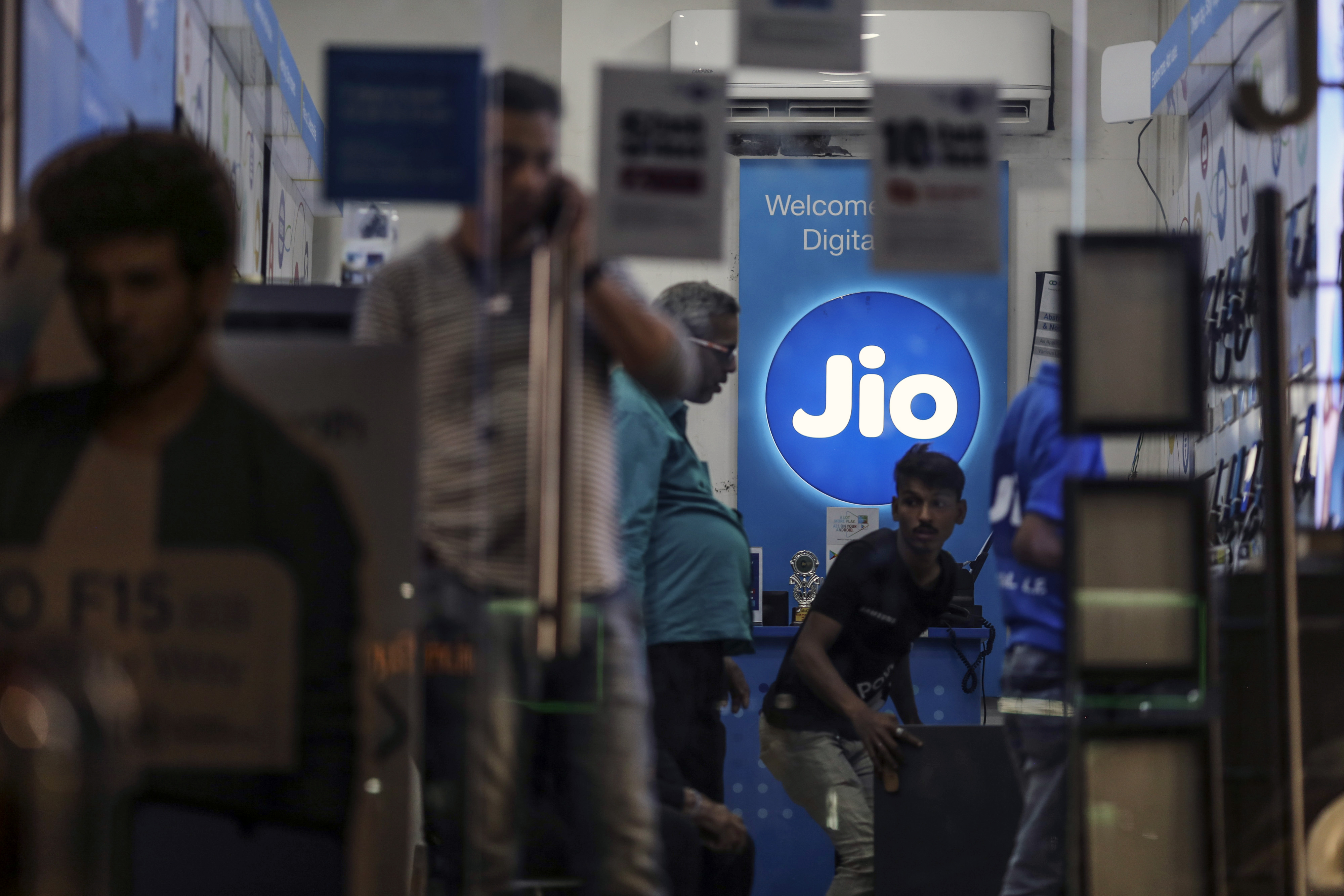
Photo: Dhiraj Singh/Bloomberg via Getty Images

“We’re making a financial investment, and more than that, we’re committing to work together on some major projects that will open up commerce opportunities for people across India,” said Mark Zuckerberg, co-founder and chief executive of Facebook, in a post.

In recent quarters, Facebook has started to take interest in Indian startups. Last year, the firm made an investment in social commerce Meesho; and earlier this year, it wrote a check to edtech startup Unacademy. Facebook has invested around $15 million each in these two startups.

Mohan told TechCrunch in an interview last year that the company was open to engaging with startups that are building solutions for the Indian market for more investing opportunities. “Wherever we believe there is opportunity beyond the work we do today, we are open to exploring further investment deals,” he said. Though a multi-billion dollar investment comes as a surprise.

But for Facebook, there might be an additional perk in this deal: Mukesh Ambani. India’s richest man is a close ally of Indian Prime Minister Narendra Modi, and his firm has consistently supported policy proposals from the ruling government. Just so it happens, Facebook has received more scrutiny than ever in India in recent years under Modi’s government.

In a video message, Ambani said, “At the core of our partnership is the commitment that Mark Zuckerberg and I share for the all-around digital transformation of India and for serving all Indians. Together, our two companies will accelerate India’s digital economy to empower you, enable you, and to enrich you.”

“The synergy between Jio and Facebook will help realise Prime Minister Shri Narendra Modi’s ‘Digital India’ Mission with its two ambitious goals — ‘Ease of Living’ and ‘Ease of Doing Business’ – for every single category of Indian people without exception. In the post-Corona era, I am confident of India’s economic recovery and resurgence in the shortest period of time. The partnership will surely make an important contribution to this transformation,” he said in a statement.

Ambani added that JioMart and WhatsApp will enable 30 million neighborhood stores (kirana) to transact digitally “in the near future.” WhatsApp has been working with the Indian government for more than two years to expand its payments service in India — but the project remains stuck in regulatory hurdles.

For more than a decade, the Indian market has been a duopoly between Facebook and Google. Reliance Jio has built consumer-facing services, but very few that compete directly with either of the American giants’ core offerings. But in recent years, ByteDance’s TikTok has won users that all of these companies have struggled to reach. TikTok has amassed more than 250 million users in India (as of last year), and the company says it is on track to add another 100 million this year.

Jayanth Kolla, an analyst with Convergence Catalyst, said TikTok blindsided Facebook and reached users that the American company hadn’t yet. Facebook has, predictably, attempted to build a similar service called Lasso. But it’s currently testing it in limited markets, and India is not one of them.